
Here is the rewritten article:
- Times New Roman
(Image credit: The Times)
Chris Page, founder of design agency Jelly and head of the company’s type department, calls this first typeface “the daddy of modern serif fonts” and “a font so ubiquitous that it feels almost above design”. “Times New Roman began as a challenge, when type designer Stanley Morrison criticised The Times for being out-of-touch with modern typographical trends. So, The Times dared him to create something better,” Chris says. “Morrison enlisted the help of draftsman Victor Lardent and began conceptualising a new typeface with two goals in mind: efficiency – maximising the amount of type that would fit on a line and thus on a page – and readability.”
02. Peignot
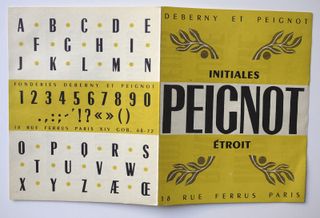
(Image credit: A M Cassandre)
“Personally, I love feeling cultural influences in typographic work, whether it’s technical innovations, art movements or historical events, and the 1930s were an exceptional crossroads in that respect,” says Marie Boulanger, design team lead at Monotype. “For me, the quintessential 1930s European typeface is Peignot.”
…
07. Perpetua
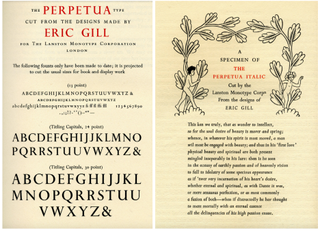
(Image credit: Eric Gill)
“I was not aware that Gill had designed this lovely serif font. I have always been a fan of serif fonts. Perpetua was designed during the end of the 1920s and beginning of the 1930s. The 1930s was a decade in which many believe Modern Design started and has continued today. Gill had designed Gill Sans that same decade. The two are definitely opposites.”
08. Rockwell
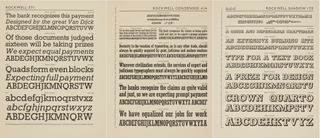
(Image credit: Monotype)
“Rockwell has some quirky design choices, such as a two-story ‘a’ and a bit more thick to thin in its stroke weights than, say, Memphis, from the same period. That’s probably what makes it so timeless,” Josh says. “I mean, it works just as well for Arby’s ‘We have the meats’ tagline as it does on the poster for 2024’s critically acclaimed film Challengers. What else can you say about a font that has equal success for such seemingly different uses as those, except that it’s a classic?”
**Conclusion**
The 1930s were a transformative period in the history


