Home Blog Page 106

OMRON’s Data-Driven Journey with AWS

0

Harnessing the Power of Data and Generative AI with OMRON Europe

This post is co-written with Emrah Kaya and Xinyi Zhou from Omron Europe.

Challenges

Data is one of the most critical assets of many organizations. They’re constantly seeking ways to use their vast amounts of information to gain competitive advantages.

OMRON Corporation is a leading technology provider in industrial automation, healthcare, and electronic components. In their Shaping the Future 2030 (SF2030) strategic plan, OMRON aims to address diverse social issues, drive sustainable business growth, transform business models and capabilities, and accelerate digital transformation. At the heart of this transformation is the OMRON Data & Analytics Platform (ODAP), an innovative initiative designed to revolutionize how the company harnesses its data assets.

This post explores how OMRON Europe is using Amazon Web Services (AWS) to build its advanced ODAP and its progress toward harnessing the power of generative AI.

Challenges

By using advanced data and analytics capabilities, organizations can gain valuable insights into their operations, industry trends, and customer behaviors, leading to more informed strategies and increased insight. This approach is particularly powerful when applied to mission-critical data such as enterprise resource planning (ERP) and customer relationship management (CRM) systems because these contain information about internal processes, supply chain management, and customer interactions. By analyzing their data, organizations can identify patterns in sales cycles, optimize inventory management, or help tailor products or services to meet customer needs more effectively. However, organizations often face significant challenges in realizing these benefits because of:

  • Data silos – Organizations often use multiple systems across regions or departments. Integrating these diverse sources to create a single source of truth is complex, making it difficult to generate unified reports or analyze cross-functional trends.
  • Data governance challenges – Maintaining consistent data governance across different systems is crucial but complex. Implementing uniform policies across different systems and departments presents significant hurdles.
  • Different formats and standards – Systems typically use varied data formats and structures. This disparity complicates data integration and cross-system analysis, requiring significant effort to reconcile and harmonize data for comprehensive insights.

OMRON Data & Analytics Platform

To address these challenges, OMRON Europe (hereinafter “OMRON”) decided to implement an advanced data and analytics platform, ODAP. This innovative solution was designed to serve as a centralized hub for specific data assets, breaking down the barriers between various data sources and systems.

The following diagram shows a simplified architecture and some of the services and architectural patterns used for ODAP.

ODAP aimed to seamlessly integrate data from multiple ERP and CRM systems in addition to other relevant data sources across the organization. Amazon AppFlow was used to facilitate the smooth and secure transfer of data from various sources into ODAP. Additionally, Amazon Simple Storage Service (Amazon S3) served as the central data lake, providing a scalable and cost-effective storage solution for the diverse data types collected from different systems. The robust security features provided by Amazon S3, including encryption and durability, were used to provide data protection. Finally, ODAP was designed to incorporate cutting-edge analytics tools and future AI-powered insights.

Embracing Generative AI with Amazon Bedrock

The company has identified several use cases where generative AI can significantly impact operations, particularly in analytics and business intelligence (BI).

One key initiative is ODAPChat, an AI-powered chat-based assistant employees can use to interact with data using natural language queries. This tool democratizes data access across the organization, enabling even nontechnical users to gain valuable insights.

A standout application is the SQL-to-natural language capability, which translates complex SQL queries into plain English and vice versa, bridging the gap between technical and business teams. To power these advanced AI features, OMRON chose Amazon Bedrock. This fully managed service offers a range of foundation models (FMs), providing the flexibility to select the most suitable model for each use case. The straightforward implementation of Amazon Bedrock, coupled with its scalability to handle growing data volumes and user requests, made it an ideal choice for OMRON. The ability of Amazon Bedrock to support various models from different providers helps make sure that OMRON can always use the most advanced AI capabilities as they evolve.

Results and Future Plans

The implementation of ODAP and ODAPChat on AWS has already yielded significant benefits for OMRON:

  • Optimization of reports, leading to more efficient and insightful analysis
  • SQL-to-natural language capabilities powered by generative AI, making data more accessible to nontechnical users
  • Increased business agility with infrastructure fully deployed in the cloud
  • Data democratization, enabling more employees to use data-driven insights

Looking ahead, OMRON plans to significantly expand its use of AWS services and further use generative AI capabilities. The company aims to integrate additional data sources, including other mission-critical systems, into ODAP. This expansion will be coupled with enhanced data governance measures to help promote data quality and compliance across the growing data solution.

Conclusion

OMRON’s journey with AWS demonstrates the transformative power of cloud-based data solutions and generative AI in overcoming data silos and driving business innovation. By using AWS services such as Amazon AppFlow, Amazon S3, and Amazon Bedrock, OMRON has created a comprehensive, secure, and adaptable data and analytics platform that not only meets its current needs, but also positions the company for future growth and innovation.

About the Authors

Emrah Kaya

Emrah Kaya is Data Engineering Manager at Omron Europe and Platform Lead for ODAP Project. With his extensive background on Cloud & Data Architecture, Emrah leads key OMRON’s technological advancement initiatives, including artificial intelligence, machine learning, or data science.

Xinyi Zhou

Xinyi Zhou is a Data Engineer at Omron Europe, bringing her expertise to the ODAP team led by Emrah Kaya. She specializes in building efficient data pipelines and managing AWS infrastructure, while actively contributing to the implementation of new solutions that advance ODAP’s technological capabilities.

Emel Mendoza

Emel Mendoza is a Senior Solutions Architect at AWS based in the Netherlands. With passion for cloud migrations and application modernization, Emel helps organizations navigate their digital transformation journeys on AWS. Emel leverages his decade of experience to guide customers in adopting AWS services and architecting scalable, efficient solutions.

Jagdeep Singh Soni

Jagdeep Singh Soni is a Senior Partner Solutions Architect at AWS based in the Netherlands. He uses his passion for Generative AI to help customers and partners build GenAI applications using AWS services. Jagdeep has 15 years of experience in innovation, experience engineering, digital transformation, cloud architecture, and ML applications.

FAQs

Q: What are the challenges in realizing the benefits of advanced data and analytics capabilities?

A: Organizations often face significant challenges in realizing the benefits of advanced data and analytics capabilities due to data silos, data governance challenges, and different formats and standards.

Q: What is the OMRON Data & Analytics Platform (ODAP)?

ODAP is an innovative initiative designed to revolutionize how the company harnesses its data assets. It is a centralized hub for specific data assets, breaking down the barriers between various data sources and systems.

Q: What is Amazon Bedrock?

Amazon Bedrock is a fully managed service that offers a range of foundation models (FMs), providing the flexibility to select the most suitable model for each use case.

Q: What are the benefits of using ODAP and ODAPChat on AWS?

The implementation of ODAP and ODAPChat on AWS has already yielded significant benefits for OMRON, including optimization of reports, SQL-to-natural language capabilities, increased business agility, and data democratization.

Massive Week for AI Copyright Debate

US Copyright Office Report: AI-Generated Works Don’t Qualify for Copyright Protection

On Tuesday, the U.S. Copyright Office released Part Two of its report on the copyrightability of AI-generated works. The report’s core message is that human creativity remains the foundation of US copyright law, and AI-generated material, on its own, doesn’t qualify for copyright protection.

The Report’s Findings

The Copyright Office was unambiguous in its findings. Prompts alone, no matter how detailed or imaginative, are not enough to qualify for copyright protection. What matters is authorship, and authorship must involve human originality. If a person curates, edits, or meaningfully transforms an AI output, that contribution may be protected. However, the machine’s output itself does not qualify for copyright protection.

Practical Implications

In practice, this means that someone who generates an image using a text prompt likely doesn’t own it in the traditional sense. The report outlines three narrow scenarios in which copyright might apply: when AI is used assistively, when original human work is perceptibly incorporated, or when a human selects and arranges AI-generated elements in a creative way.

OpenAI’s Stance

Just as the Copyright Office was releasing its report, OpenAI was urging lawmakers in the UK to take a different path. OpenAI submitted its formal response to the UK government’s AI and copyright consultation, arguing for a "broad text and data mining exception" – a legal framework that would allow AI developers to train on publicly available data without first seeking permission from rights holders.

Creative Sector Concerns

The proposed exception has sparked concerns among artists, authors, and publishers. They see the exception as a backdoor license to scrape the web, turning years of human work into fuel for algorithmic engines. Critics argue that even an opt-out model places the burden on creators, not companies, and risks eroding the already fragile economics of professional content.

A Study Raises Questions

A new study from the AI Disclosures Project claims that OpenAI’s newest model, GPT-4o, shows a suspiciously high recognition of paywalled content. This raises questions about the potential impact of AI on the creative sector.

The Studio Ghibli Trend

The release of OpenAI’s image generator has also led to a viral trend, with users generating Studio Ghibli-style images using their selfies. While this may seem fun and harmless, it highlights the blurred boundaries between human and AI creativity.

Conclusion

The debate around AI-generated works and copyright protection is complex and multifaceted. The U.S. Copyright Office’s report affirms that AI-generated material, on its own, does not qualify for copyright protection. However, the proposed exception in the UK and the concerns of the creative sector highlight the need for a nuanced approach to AI and copyright law.

FAQs

Q: What does the U.S. Copyright Office’s report say about AI-generated works?
A: The report states that AI-generated material, on its own, does not qualify for copyright protection. However, human contributions to AI-generated works may be protected.

Q: What is OpenAI’s stance on copyright and AI-generated works?
A: OpenAI argues for a "broad text and data mining exception" that would allow AI developers to train on publicly available data without first seeking permission from rights holders.

Q: What are the concerns of the creative sector?
A: The creative sector is concerned that the proposed exception would allow companies to scrape the web and use human work without permission, eroding the economics of professional content.

Q: What is the impact of AI on the creative sector?
A: The impact of AI on the creative sector is still unknown, but it has the potential to change the way we create and consume content.

No estaba en Estados Unidos

0

El Acuerdo Ganar-Ganar entre Estados Unidos y China

En mi opinión, el único acuerdo ganar-ganar es uno que yo llamaría: hecho en Estados Unidos, por trabajadores estadounidenses, en asociación con tecnología, capital y expertos chinos. Es decir, simplemente invertimos la estrategia que China utilizó para enriquecerse en la década de 1990, que fue: hecho en China, por trabajadores chinos, con tecnología, capital y socios estadounidenses, europeos, coreanos y japoneses.

La Experiencia de China

Así es como me lo explicó Jim McGregor, un consultor empresarial que vivió en China durante 30 años: las grandes multinacionales estadounidenses solían ir a China y hacer una empresa conjunta con una empresa china para entrar en el mercado chino. Ahora las empresas extranjeras vienen a China y les dicen a las multinacionales chinas: si quieres entrar en Europa, haz una empresa conjunta conmigo y trae tu tecnología.

Un Acuerdo Ganar-Ganar para Estados Unidos y China

Deberíamos combinar cualquier arancel sobre China con un tapete de bienvenida para que las empresas chinas ingresen al mercado estadounidense, licenciando sus mejores innovaciones en manufactura a empresas estadounidenses o asociándose con ellas para crear fábricas de manufactura avanzada en empresas conjuntas al 50-50. Sin embargo, las empresas conjuntas chinas en Estados Unidos tendrían que estar obligadas a aumentar gradualmente la proporción de piezas que obtienen localmente, en lugar de simplemente importarlas indefinidamente.

La Consecuencia de No Acordar

Esto, por supuesto, requeriría de un esfuerzo enorme para reconstruir la confianza, que ahora está casi completamente ausente en la relación. Es la única manera de llegar a un comercio razonablemente beneficioso para todos. Sin ella, nos dirigimos a un escenario de perder-perder. Por ejemplo, el 19 de marzo, el Senado de Texas dio su aprobación inicial a un proyecto de ley que prohibiría a los residentes y a las organizaciones con sede en China, Irán, Corea del Norte y Rusia poseer propiedades en Texas. Incluir a China en esa lista es una estupidez: oigan, prohibamos a algunas de las mentes más brillantes del mundo en lugar de ofrecer incentivos y condiciones para que inviertan en Texas.

Conclusión

¿En qué momento nos asustamos tanto? ¿Y en qué momento perdimos tanto de vista el mundo en que vivimos? Puedes denunciar el globalismo todo lo que quieras, pero eso no cambiará el hecho de que las telecomunicaciones, el comercio, la migración y el cambio climático nos han unido, y han unido nuestros destinos.

FAQs

¿Por qué invertir en la cooperación con China? La cooperación con China puede llevar a beneficios económicos y tecnológicos para ambos países.

¿Qué pasaría si no se llega a un acuerdo? Si no se llega a un acuerdo, se podría dirigir a un escenario de perder-perder, con consecuencias negativas para ambas partes.

¿Por qué es importante la confianza en la relación entre Estados Unidos y China? La confianza es fundamental para cualquier acuerdo económico o comercial, y en el caso de Estados Unidos y China, es crucial para garantizar un comercio razonablemente beneficioso para ambos países.

Fine-Tuning e RAG: Personalizing Chatbots with AI

1. Fine-Tuning – Memória de Longo Prazo

Como funciona?

  • Você fornece um conjunto de dados estruturado no formato input → output para o treinamento.
  • O modelo aprende novas informações e padrões, ajustando seus pesos internos – valores numéricos que determinam como a rede neural processa os dados.
  • Esses pesos armazenam o conhecimento adquirido, permitindo que o modelo gere respostas sem precisar consultar uma base de conhecimento externa.

Memória no Fine-Tuning

  • Memória de Longo Prazo
    • O conhecimento aprendido durante o treinamento é armazenado nos pesos da rede neural, que controlam a forma como o modelo transforma entradas em respostas.
    • Após o treinamento, os pesos não mudam automaticamente com novas informações. Isso significa que o modelo não se atualiza dinamicamente – se precisar aprender algo novo, é necessário um novo fine-tuning.

Desvantagens:

  • Não é fácil de atualizar – se novas informações surgirem, é necessário um novo treinamento.
  • Pode ser caro e demorado.

Exemplo de uso:

  • Um chatbot médico treinado para responder perguntas sobre cardiologia com base em milhares de artigos médicos.

2. RAG (Retrieval-Augmented Generation) – Memória de Curto e Longo Prazo

Como funciona?

  • O sistema armazena documentos em um banco de dados vetorial
  • Quando recebe uma pergunta, ele busca os textos mais relevantes e os envia como contexto para o LLM.
  • O modelo usa essa informação para gerar uma resposta precisa.

Memória no RAG

  • Memória de Curto e Longo Prazo
    • Curto Prazo: O modelo recebe o contexto relevante no momento da geração da resposta, mas não "aprende" esse conteúdo permanentemente.
    • Longo Prazo: O armazenamento das informações acontece em uma base vetorial, que pode ser consultada sempre que necessário.
    • O modelo se mantém atualizado sem precisar de um novo treinamento, pois busca sempre os dados mais recentes.

Vantagens:

  • Fácil de atualizar sem precisar re-treinar o modelo.
  • Permite respostas contextualizadas e embasadas em documentos reais.

Desvantagens:

  • Dependente da qualidade da indexação dos dados.
  • Pode aumentar o tempo de resposta devido ao processo de busca.

Exemplo de uso:

  • Um chatbot corporativo que consulta documentos internos para responder dúvidas de funcionários.

Conclusão:

O Fine-Tuning é um método que permite que um modelo aprenda novas informações e armazene conhecimento, mas não é fácil de atualizar. Já o RAG é um método que combina busca e geração de texto para fornecer respostas sempre atualizadas, funcionando como um aluno esperto que sempre consulta as anotações mais atualizadas antes de responder.

FAQs:

Q: What is Fine-Tuning?
A: Fine-Tuning is a method that allows a model to learn new information and store knowledge, but it’s not easy to update.

Q: What is RAG?
A: RAG is a method that combines search and text generation to provide always-updated responses, working like a smart student who always consults the latest notes before responding.

Q: What are the advantages of RAG?
A: RAG allows for easy updating without re-training the model and provides contextualized and document-based responses.

Q: What are the disadvantages of RAG?
A: RAG depends on the quality of data indexing and may increase response time due to the search process.

Q: What is the difference between Fine-Tuning and RAG?
A: Fine-Tuning is a method that stores knowledge in the model’s weights, while RAG combines search and text generation to provide always-updated responses.

Satya Nadella’s Adaptability Revolutionizes Microsoft’s Future

Unlock the Editor’s Digest for Free

Roula Khalaf, Editor of the FT, selects her favourite stories in this weekly newsletter.

The Evolution of Microsoft: A Journey of Adaptation

When Bill Gates and Paul Allen founded Microsoft 50 years ago, it was to sell a version of the Basic computer language for the Altair, the first proto-PC. Their first product set the pattern for what was to follow. Microsoft’s fortunes soared, stagnated, and soared again with the tech industry’s periodic platform shifts. But the heart of its business always lay in providing developers with tools to build their applications and platforms to run them on.

Overcoming Existential Threats

Thirty years ago, when the company was at the height of its PC dominance and heading for a showdown with Washington over its anti-competitive tactics, the rise of the internet loomed as an existential threat. If developers could build their applications to run inside web browsers, as internet pioneer Netscape dreamt, then who would need to pay for Microsoft’s Windows? A PC running on the Linux open-source operating system would do just as well.

Adapting to the Cloud and Generative AI

In the event, Microsoft squashed Netscape — contributing to its antitrust woes. But it wasn’t the web that diluted its dominance over the tech world. Instead, smartphones took centre stage, pushing PCs to the sidelines and bringing a new generation of mobile app developers to the fore. The emergence of the cloud also eroded the importance of the PCs and PC-like servers Microsoft was focused on, leaving its stock price in a protracted lull.

Conclusion

Microsoft’s ability to adapt to changing platform shifts has been a hallmark of its success. Satya Nadella, who became CEO in 2014, has continued this tradition, breaking the company’s reliance on the PC and forging alliances with companies like OpenAI. While it is still too early to judge the full extent of the upheaval from generative AI, Microsoft’s ability to withstand this latest disruption will be crucial to its future success.

FAQs

Q: What was Microsoft’s first product?
A: Microsoft’s first product was a version of the Basic computer language for the Altair, the first proto-PC.

Q: How has Microsoft adapted to changing platform shifts?
A: Microsoft has successfully adapted to changing platform shifts, including the rise of the internet, smartphones, and the cloud.

Q: What is generative AI, and how is it affecting Microsoft?
A: Generative AI refers to a type of AI that can generate human-like language and is affecting Microsoft’s business by potentially commoditizing advanced AI technology and changing the way developers build applications.

Q: How has Microsoft’s stock price performed under Satya Nadella’s leadership?
A: Microsoft’s stock price has soared tenfold since Satya Nadella took over as CEO in 2014, lifting its stock market value to nearly $2.8tn.

AI-Enhanced Online Shopping

Smart, Seamless and Personalized: The Future of Customer Experience

Online shopping puts a world of choices at people’s fingertips, making it convenient for them to purchase and receive orders — all from the comfort of their homes. But too many choices can turn experiences from exciting to exhausting, leaving shoppers struggling to cut through the noise and find exactly what they need.

By tapping into AI agents, retailers can deepen their customer engagement, enhance their offerings and maintain a competitive edge in a rapidly shifting digital marketplace. Every digital interaction results in new data being captured. This valuable customer data can be used to fuel generative AI and agentic AI tools that provide personalized recommendations and boost online sales. According to NVIDIA’s latest State of AI in Retail and Consumer-Packaged Goods report, 64% of respondents investing in AI for digital retail are prioritizing hyper-personalized recommendations.

Smart, Seamless and Personalized: The Future of Customer Experience

AI agents offer a range of benefits that significantly improve the retail customer experience, including:

  • Personalized Experiences: Using customer insights and product information, these digital assistants can deliver the expertise of a company’s best sales associate, stylist or designer — providing tailored product recommendations, enhancing decision-making, and boosting conversion rates and customer satisfaction.
  • Product Knowledge: AI agents enrich product catalogs with explanatory titles, enhanced descriptions and detailed attributes like size, warranty, sustainability and lifestyle uses. This makes products more discoverable and recommendations more personalized and informative, which increases consumer confidence.
  • Omnichannel Support: AI provides seamless integration of online and offline experiences, facilitating smooth transitions between digital and physical retail environments.
  • Virtual Try-On Capabilities: Customers can easily visualize products on themselves or in their homes in real time, helping improve product expectations and potentially lowering return rates.
  • 24/7 Availability: AI agents offer around-the-clock customer support across time zones and languages.

Real-World Applications of AI Agents in Retail

AI is redefining digital commerce, empowering retailers to deliver richer, more intuitive shopping experiences. From enhancing product catalogs with accurate, high-quality data to improving search relevance and offering personalized shopping assistance, AI agents are transforming how customers discover, engage with and purchase products online.

Defining the Essential Traits of a Powerful AI Shopping Agent

Highly skilled AI shopping assistants are designed to be multimodal, understanding text- and image-based prompts, voice and more through large language models (LLMs) and vision language models. These AI agents can search for multiple items simultaneously, complete complicated tasks — such as creating a travel wardrobe — and answer contextual questions, like whether a product is waterproof or requires drycleaning.

This high level of sophistication offers experiences akin to engaging with a company’s best sales associate, delivering information to customers in a natural, intuitive way.

Building the Essential Traits of a Powerful AI Shopping Agent

The building blocks of a powerful retail shopping agent include:

  • Multimodal and Multi-Query Capabilities: These agents can process and respond to queries that combine text and images, making search processes more versatile and user friendly. They can also easily be extended to support other modalities such as voice.
  • Integration With LLMs: Advanced LLMs, such as the NVIDIA Llama Nemotron family, bring reasoning capabilities to AI shopping assistants, enabling them to engage in natural, humanlike interactions.
  • Management of Structured and Unstructured Data: NVIDIA NeMo Retriever microservices provide the ability to ingest, embed and understand retailers’ suites of relevant data sources, such as customer preferences and purchases, product catalog text and image data, and more.
  • Guardrails for Brand Safe, On-Topic Conversations: NVIDIA NeMo Guardrails are implemented to help ensure that conversations with the shopping assistant remain safe and on topic, ultimately protecting brand values and bolstering customer trust.
  • State-of-the-Art Simulation Tools: The NVIDIA Omniverse platform and partner simulation technologies can help visualize products in physically accurate spaces. For example, customers looking to buy a couch could preview how the furniture would look in their own living room.

Conclusion

By using these key technologies, retailers can design AI shopping agents that exceed customer expectations, driving higher satisfaction and improved operational efficiency. Retail organizations that harness AI agents are poised to experience evolving capabilities, such as enhanced predictive analytics for further personalized recommendations.

Frequently Asked Questions

Q: What is the main benefit of using AI agents in retail?
A: AI agents can provide personalized experiences, product knowledge, omnichannel support, virtual try-on capabilities, and 24/7 availability, enhancing the overall customer experience.

Q: How do AI agents improve search relevance?
A: AI agents can search for multiple items simultaneously, complete complicated tasks, and answer contextual questions, making search processes more versatile and user friendly.

Q: What are the key technologies used to build agentic AI applications?
A: The key technologies include multimodal and multi-query capabilities, integration with large language models, management of structured and unstructured data, guardrails for brand safe, on-topic conversations, and state-of-the-art simulation tools.

Q: How can retailers integrate AI with augmented- and virtual-reality technologies?
A: Retailers can integrate AI with augmented- and virtual-reality technologies to create even more immersive and engaging shopping environments, delivering a future where shopping experiences are more immersive, convenient, and customer-focused than ever.

15 Employee Retention Strategies to Help You Retain Critical Talent

0

While the job market has recently favored employers in most industries, every organization has talent they can’t afford to lose—whether it’s a top performer in a critical role or someone with skills and knowledge that are tough to replace. Retention is a top three priority for CEOs in 2025, with 57% saying it’s critical to engage and retain existing employees.

When a key player leaves the organization, HR and affected teams are often left scrambling. Exit interviews may unearth valuable feedback, but at that point—it’s too little, too late. And there’s opportunity to intervene earlier. 62% of employees say they discussed their decision to leave with a manager or coworker prior to leaving.

You need proactive employee retention strategies to identify flight risks among key talent before they turn into resignations. That means having the tools to spot early warning signs, act fast and with context, and make retention a shared responsibility across the organization.

When you combine predictive employee retention analytics with ongoing employee feedback and actionable insights, you can stay ahead of turnover and build a culture that keeps your best people engaged and excited to stay.


What is employee retention?

Employee retention is an organization’s ability to keep their talent and reduce turnover. It’s a vital piece of talent management and a significant factor in driving business success. This metric is represented as the percentage of employees who decide to stay at their organization within a given time period. 

It’s crucial to distinguish between regrettable turnover and strategic turnover.

Regrettable turnover happens when high-performing employees or those in key roles leave, often for reasons that could have been avoided. Losing valuable team members like these can be costly and shake up teams, customer relationships, and business performance. 

Strategic turnover can work in favor of the organization. This type involves the exit of underperforming or misaligned employees, opening the door for new talent and fresh ideas. 

Your retention rate can be a true indicator of business success. When employees are engaged, motivated, and committed to your organization, they’re likely to have a positive impact on the business. Leaders who want to drive results, now and in the future, need to improve their employee retention practices.


Why employee retention is important

Employee retention is critical to business success. When top performers walk out the door, they take critical knowledge with them. The team they leave behind can feel unmoored—less productive, less confident, and stretched too thin. As the role sits unfilled, productivity drops and pressure builds. It’s a recipe for burnout—and more turnover down the line.

Moreover, it’s costly to replace a departing employee. The cost to replace an individual employee can range anywhere from one half to two times the employee’s annual salary. The recruiting, onboarding, and training costs associated with hiring new talent is outright expensive. 


5 step plan for retaining top talent


1. Launch a continuous employee listening program.

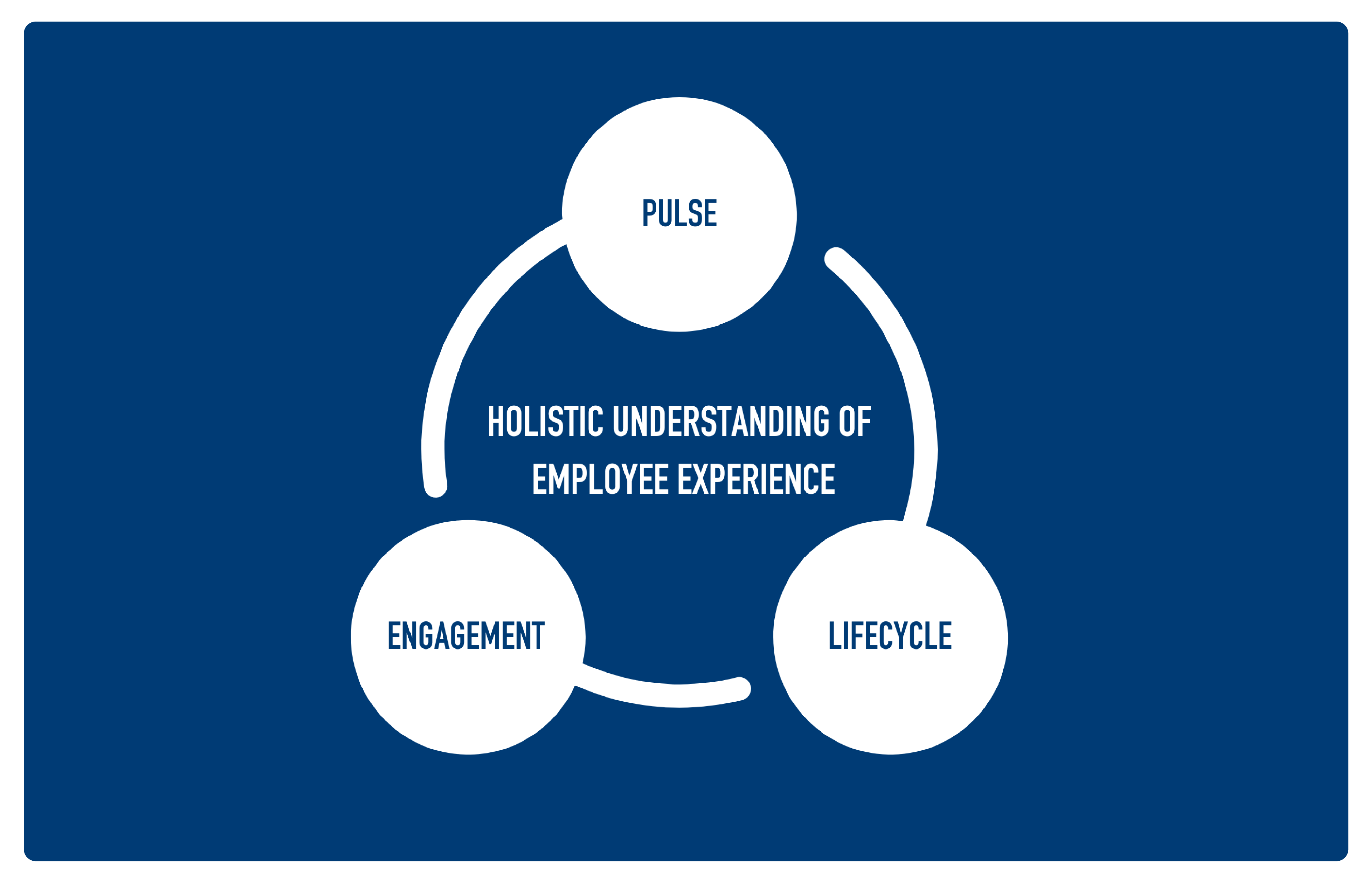
Start by creating a solid employee listening strategy that collects feedback from various touch points, including engagement surveys, pulse surveys, lifecycle surveys, and casual 1-on-1 conversations.

This ongoing flow of employee feedback paints a vivid picture of the employee experience and helps spot retention risks before they become major issues.
employee listening strategy ebook - The Employee Listening Flywheel


2. Implement predictive analytics for talent retention.

The research shows that a lot of regrettable turnover is in fact preventable—1 in 3 employees that leave their organization say their departure was preventable.

Use employee retention analytics to forecast flight risks within your workforce with precision. Predictive analytics help you dive deep into employee data—like feedback, tenure, and performance—to spot who’s most likely to leave and the reasons behind it.

With these insights in hand, it’s possible to take focused action and prevent regrettable turnover before it happens.

“Retention isn’t just something that happens to organizations—it’s something you can get ahead of. Too many leaders think turnover is inevitable. But the data is always there—declining engagement, absenteeism, reduced participation. The organizations that are winning are the ones who see the signals, trust the data, and take action before it’s a crisis.”

💡 Todd Pernicek, Senior Insights Analyst at Quantum Workplace


3. Frequently review employee retention data and insights. 

Once you have employee retention analytics in place, take a deep dive into how well your organization keeps its talent. With easy-to-use dashboards and reports, you can regularly check out trends, focus on specific teams or groups of employees, and spot areas that might need extra care. These insights aren’t just numbers. They’re your roadmap to building a better retention strategy.

“Some employees leave, and it doesn’t impact the business much. Others leave, and you feel the pain immediately—lost knowledge, disrupted workflows, lower morale. The organizations that retain their best people aren’t guessing at who matters most. They’re using performance data, engagement insights, and tenure trends to identify their most critical talent and proactively work to keep them.” 

💡 Meghan Freeman, Product Manager at Quantum Workplace


4. Develop targeted retention programs based on employee feedback and insights.

Avoid a one-size-fits-all approach when it comes to retention. Instead, gather quantitative and qualitative feedback to identify what drives turnover in different workforce segments. With these insights, create tailored retention programs and initiatives that directly tackle those drivers, ensuring a more substantial impact.

Quantum Workplace research has identified three significant factors that contribute to retention risk:

1. Sense of belonging. Do employees feel accepted, respected, and psychologically safe within their teams?

2. Growth and opportunity. Do employees see a clear path forward, whether through career advancement, skill-building, or recognition for their contributions?

3. Connection to the organization. Do employees believe in the company’s culture and advocate for it as a great workplace?

5. Share key insights with team leaders—and hold them accountable.

HR can’t do it all when it comes to keeping talent on board. Empowering team leaders with the same retention analytics and employee feedback is important. They should take action and be held accountable. Coaching can help them create action plans that make a difference. Regularly checking in on their progress can show how they’re tackling turnover risks.

“Managers own retention. They’re the ones having daily interactions, building relationships, and shaping whether an employee feels valued, supported, and heard. But if we don’t equip them with the right tools and data, how can we expect them to act? Retention strategies fail when they take too long to implement. You have to move fast, get the right insights in front of the right people, and make retention everyone’s responsibility.” 💡 Todd Pernicek, Senior Insights Analyst at Quantum Workplace


15 Employee Retention Strategies

While employee retention may seem difficult to understand and navigate. There are strategies that can help. Leverage these top strategies in your approach to employee retention.


1. Make smart hiring decisions

Hiring the right people is more difficult than it sounds. Leaders should not only assess whether candidates are a good fit in terms of skill set and experience, but they should also consider personality and values. 

If the talent you hire doesn’t align with your mission or culture, it will be difficult to keep them from leaving. Your employees should be contributing to a purpose they care about on a day-to-day basis, or you risk burnout and turnover. 

2. Enhance your onboarding process

Your onboarding process should: 

  • Set employees up for success
  • Clarify expectations
  • Outline company culture and norms
  • Explain policies and procedures. 

Employees should be introduced to others outside of their team and be given an outlet to ask questions when they arise.

This process can take up to a year to ensure your employees are fully immersed and comfortable with the organization. But a strong onboarding plan can help employees feel connected faster—which decreases their likelihood to second guess their decision to join your organization. 

3. Provide competitive pay

Let’s face it, if you can’t offer fair, competitive pay that’s on par with industry benchmarks, your ability to attract and retain top talent is weakened. Employees need to be appreciated for their work, and a big part of that is compensation. 

If your employees are putting in full effort but feel like their pay is lacking, they’re likely to burn out and look for opportunities elsewhere. 


4. Provide desirable benefits

Perks are another way, outside of compensation, to show your appreciation for employees and get them to stay. Almost one-fifth of employees say they would stay at their organization if they offered better benefits. 

To stay ahead of the curve, the best organizations are providing unique benefits that better support their employees in a new world of work. Mental health stipends, paid parental leave, paid volunteer time, and technology reimbursement are great benefits that make employees feel valued, supported, cared for, and less likely to look elsewhere. 

5. Communicate openly and often

Employees want and need to be in the know in order to feel connected and to do their jobs well. Managers should regularly connect with employees to address roadblocks, answer questions, and discuss future career goals. Senior leaders should regularly share vision, goals, and progress, and communicate effectively before, during, and after change.

6. Outline opportunities for growth and development

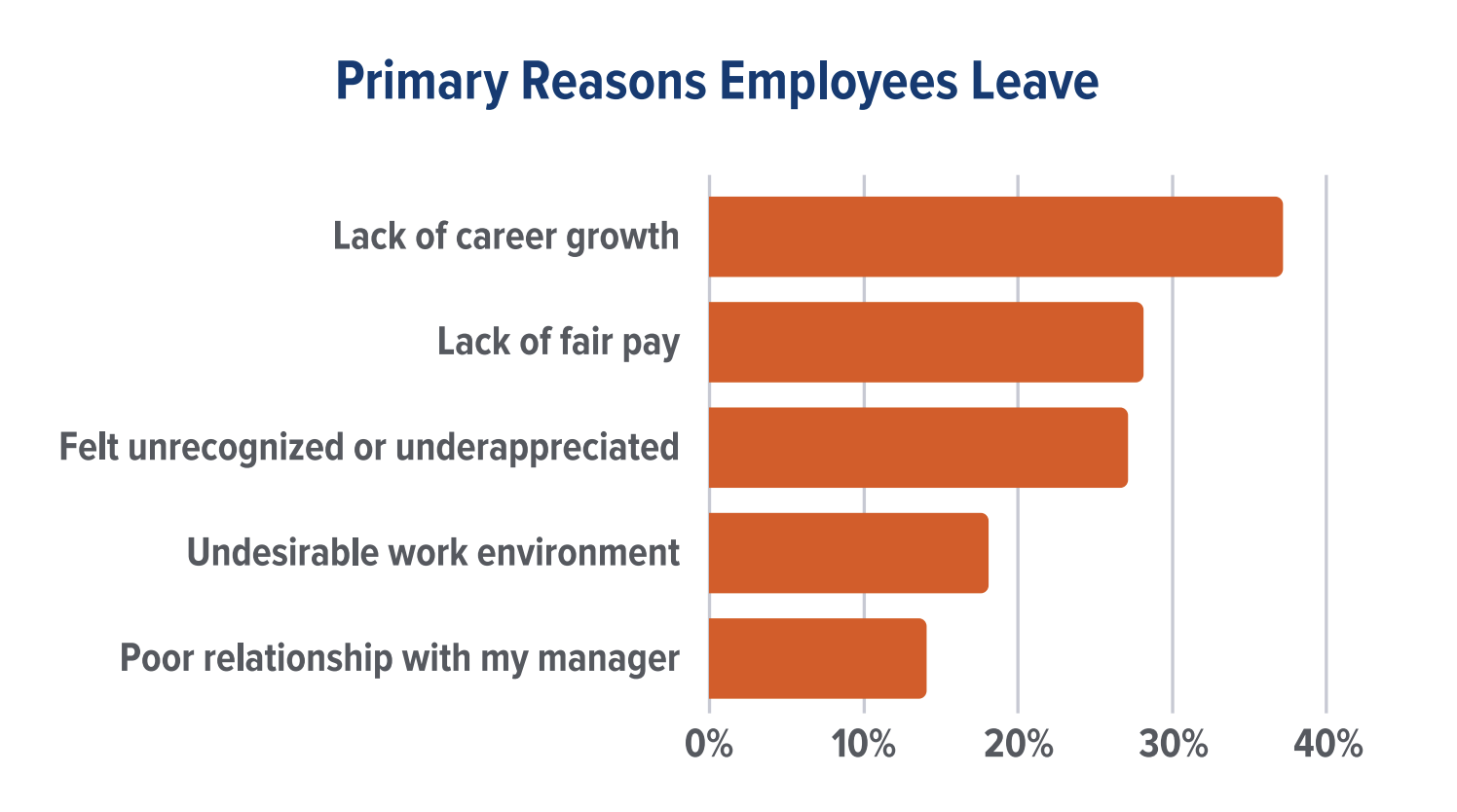
Lack of growth and advancement is the #1 reason employees leave their organizations. If employees feel stagnant in their role, they may feel restless and dissatisfied. 

Give employees ample opportunity to build upon their skills through stretch assignments, cross-training, and seminars. Leverage regular growth conversations to outline a clear path to advancement and outline learning opportunities and actively prevent turnover. 
causes-of-employee-turnover


7. Provide recognition where it’s due

Recognition helps employees feel appreciated and valued for their efforts. If an employee goes above and beyond, and doesn’t receive recognition, they may lack motivation to keep up the hard work. Your employees need validation. Without it, feelings of low engagement may surface that can lead to turnover.

8. Offer flexibility in where—and how—employees work

Organizations that are competitive in attracting and retaining employees give their talent a strong sense of autonomy. While providing remote and hybrid options has become increasingly necessary in the modern workplace, that’s often not enough. 

In today’s climate, employees need to be able to decide how they work. Micromanaging should be avoided. Trust should be the default. And creativity in how work gets done should be applied. If employees consistently perform well, they should be given the freedom to decide how they get their work done when possible. 

9. Create a culture of employee listening

Employee listening should be an ongoing process within your organization. The insights that employees have can give you the tools to take strategic, evidence-based action and improve the employee experience. Gathering employee perceptions is a win-win situation. When you take meaningful action, employees feel heard and your business grows. 


10. Adapt your approach to performance management

The annual performance review isn’t enough. Disjointed and disengaging performance management practices actively drive disconnection and turnover. Employees need aligned goals and ongoing coaching, feedback, and recognition to stay connected and perform their best. It should be crystal clear to employees how their performance is measured and they should be an active partner in discussing and improving their own performance.

11. Promote collaboration and teamwork

Collaboration and teamwork is key to a healthy work environment. Teamwork increases productivity and helps shape valuable workplace relationships. But in a world of remote and hybrid work, many leaders still don’t understand how to promote collaboration when face-to-face interaction isn’t a possibility. 

By setting aligned, collaborative goals, leveraging regular video chats, and creating designated communication channels, your remote employees will have no problem working as a team to drive the outcomes that matter. The relationships formed as a result of collaboration will keep your employees at the organization for the long haul. 

12. Prioritize DE&I

Diversity, equity, and inclusion has become an expectation in the workplace. Leaders should always be thinking of ways to make the workplace more inclusive by eliminating bias and barriers to diversity. Leaders need to view employees on an individual level and create a work environment that supports everyone’s unique needs. 

Constant communication around DE&I, with each employee, will help you understand where your efforts are lacking. And when you take action to promote inclusion, employee well-being improves and innovative business results come to the surface. As employees feel seen and included, they’ll have more initiative to stay.  

13. Handle change effectively

As most leaders know, the workplace is changing at a pace not seen in recent times. And to retain employees, change needs to be navigated effectively and openly. Quantum Workplace research shows that 40% of employees have considered leaving their job due changes in the organization, and 60% had coworkers who quit due to change.

Donut chart-2_change_40%-considered-leaving@2x


To boost retention, leaders should leverage open, regular communication around change so that employees know why it’s happening. When your workforce feels like change is swept under the rug, they are likely to feel a sense of disconnection from the organization and you’ll risk turnover.  

14. Administer two-way feedback

Feedback should go both ways. When only managers provide feedback, it’s easy for employees to feel defensive or inadequate. 

To create a foundation of trust, managers should ask for and welcome employee feedback. This way, they can uncover areas of improvement for themselves and grow in their role. And employees will be more likely to accept and implement manager feedback. 

The connection and growth that both parties will experience as a result of two-way feedback is likely to engage and retain employees. 

15. Leverage exit surveys 

Exit surveys help leaders understand the reasons that employees leave. This way, they can use evidence-based data to take strategic action toward retention. But leaders need to ask the right questions.

Some sample exit survey questions include “Why did you choose to leave this company?” and “What do you value about this company?”  Your questions should give you insight into areas of improvement within the employee experience.

Plus, leaders can use these surveys as benchmarks to uncover which existing employees are at risk for leaving to prevent turnover before it’s too late. 


Sample employee retention plans

An effective employee retention plan should have the following key elements:

  • Key insight: who is at risk of turnover?
  • Context: why are they at risk?
  • Action steps: what will we do to try to prevent turnover?
  • Timeline & ownership: who will do what, by when?

Lack of growth & development

Key insight

Employees in the marketing department, especially those with 2-5 years of tenure, are showing a 30% higher risk of turnover compared to other departments. They cite a lack of growth opportunities as a major factor.

Context

Engagement surveys reveal that employees in the marketing department rate “career development opportunities” 25% lower than the company average. Survey comments highlight concerns like: “I feel stuck in my role with no clear path for advancement” and “There is no transparency about how to grow into a leadership position.”

Action steps

  • Personalized Development Plans: Create individualized career development plans for each employee, clearly outlining potential career paths and opportunities for advancement within the marketing department.
  • Leadership Training: Introduce a formal leadership development program for mid-level employees who show potential for management roles.
  • Cross-Department Collaboration: Offer employees the chance to rotate through different marketing functions (e.g., social media, content creation, analytics) to expand their skills and provide new challenges.
  • Regular Check-Ins: Implement quarterly one-on-one career development check-ins between employees and their managers to assess progress and provide guidance.

Timeline & ownership

  • Develop and roll out within 2 months — HR Manager & Marketing Department Heads
  • Design and implement the program within 3 months — Learning & Development Team
  • Start offering job rotations in 1 month, with ongoing adjustments — Marketing Department Heads
  • Implement immediately, with quarterly evaluations — Managers & HR Manager

Low trust in leadership

Key insight

Employees in the IT department are showing a 40% higher risk of turnover due to decreased trust in leadership following recent organizational changes.

Context

Recent surveys and feedback indicate a 35% drop in “trust in leadership” among IT employees. Employees cited confusion over the direction of the department following recent restructuring and unclear communication from senior leadership. Comments include: “Leadership has been vague about the changes,” and “I don’t know where the department is headed anymore.”

Action steps

  • Transparent Communication: Implement regular town hall meetings (at least bi-monthly) where leadership can directly communicate upcoming changes, departmental goals, and future visions for the company.
  • Feedback Loops: Establish anonymous feedback channels where employees can voice concerns or suggestions related to the changes and leadership. Ensure leadership actively addresses these concerns during team meetings.
  • Leadership Visibility: Senior leaders in the IT department should have monthly office hours, offering employees the opportunity to have informal, one-on-one conversations to foster trust and transparency.
  • Change Management Workshops: Provide training for leadership on effective communication during times of change, including how to listen actively and address employee concerns empathetically.

Timeline & ownership

  • Implement town halls in 1 month, with bi-monthly sessions ongoing — Senior Leadership Team

  • Set up feedback channels in 2 weeks, with ongoing responses from leadership — HR Team & IT Leadership

  • Begin monthly office hours within 1 month — IT Department Heads & Senior Leaders

  • Launch training within 2 months — HR & L&D Team


Low manager effectiveness / team dynamics

Key insight

Employees in the customer service department are showing 25% higher turnover risk, particularly in teams with managers who have received low ratings for team leadership and communication skills.

Context

Engagement surveys indicate that 40% of customer service employees report dissatisfaction with “relationship with manager” and “team collaboration.”

Survey comments cite: “My manager doesn’t communicate clearly about expectations” and “There’s a lack of support from my manager when I need help.” Additionally, performance reviews reveal that managers in these teams are consistently rated low on leadership skills.

Action steps

  • Manager Training: Implement a mandatory leadership training program focused on communication, team dynamics, and conflict resolution for all customer service managers.
  • Team Dynamics Workshops: Conduct quarterly team-building workshops to strengthen collaboration and improve communication within teams. Focus on fostering a culture of open dialogue and mutual respect.
  • Regular Feedback for Managers: Create a process where employees can provide anonymous feedback on their managers quarterly. This feedback should be reviewed by HR and addressed by leadership in one-on-one meetings with managers.
  • Mentoring for Managers: Pair low-rated managers with high-performing senior leaders in other departments for mentoring and coaching on team leadership skills.

Timeline & ownership

  • Develop and implement training within 2 months — HR Manager & L&D Team

  • Schedule and host workshops within 1 month, then quarterly thereafter — Customer Service Leadership Team & HR

  • Roll out feedback process within 1 month, with quarterly reviews — HR Manager & Customer Service Managers

  • Pair managers with mentors within 2 months — HR Manager & Senior Leadership Team


What are some of the benefits of improving employee retention?

1. Cost reduction

Replacing a departing employee is costly. Plus, recruiting and onboarding is time consuming. Your best bet is to shape a solid retention strategy to minimize resource loss.

2. Higher productivity

When your workforce is constantly turning over, it’s difficult  to build teams of productive, knowledgeable, and skilled employees. Ramping up employees toward productivity can take many months, and your other employees will have to pick up the slack. 

3. Better employee experience

Tenured employees have the company expertise needed to solve customer problems and keep them happy. Plus, when you engage employees with an effective retention strategy, they will exude those feelings of happiness to customers.

4. Healthy company culture

Company culture is a key factor behind whether your employees leave or stay. Organizations who have high retention typically have an inclusive culture that celebrates all employees, and you won’t dread logging on or walking into the office everyday. 

5. Increased employee engagement

The relationship between employee engagement and retention is strong. Those with high retention can experience all of the benefits of employee engagement, including reduced absenteeism, better employee health, higher profitability, and happy, satisfied employees. 

6. Improved morale

When your employees leave, it can be a disappointment for remaining employees. But when your retention rate is high, employee morale improves. When morale improves, your workplace will be a better, more positive place to work.

7. Higher revenue and better ROI

It’s difficult to get a sufficient return on your onboarding and recruiting initiatives when experiencing high turnover. But when you have an effective retention strategy, the cost it takes to ramp up employees will seem miniscule in comparison to the outcomes they drive throughout their tenure. 


Retention strategy examples & case studies

Effective retention strategies all share a common thread – intentional listening. When employers invest in understanding what truly matters to their employees, they can create targeted approaches that address the real turnover drivers. The most successful companies don’t rely on assumptions but use data to pinpoint exactly where to focus their retention efforts. 

Benesch Strengthens Culture & Connection

Benesch worked on improving their workplace culture by emphasizing connection and engagement. They implemented a mentorship program that encourages stronger relationships between senior leaders and new hires, fostering a sense of belonging from day one. This initiative helped improve retention rates and strengthened the firm’s internal culture.

Redwire Enhances Employee Engagement with Transparency

Redwire focused on improving employee engagement by increasing transparency in their communication. They shared company goals and progress updates regularly, fostering trust and clarity within their team. This transparency created a more cohesive work environment, which in turn boosted retention.

ODW Logistics Develops People Leaders

ODW Logistics invested in developing strong people leaders within the company. They implemented targeted leadership training programs and created clear pathways for leadership growth. This strategy helped boost employee engagement and reduce turnover by empowering managers to better support and develop their teams.

Mutual of Omaha Leverages Pulse Surveys

Mutual of Omaha leveraged pulse surveys to continuously gauge employee sentiment and identify potential retention risks. By gathering real-time feedback, they were able to address concerns promptly and keep employees engaged, leading to a reduction in turnover.

Sammons Financial Group Increases Listening to Drive Change

Sammons Financial Group focused on improving retention by actively listening to their employees. They implemented regular feedback sessions and used this input to drive meaningful changes in policies and practices, which helped build stronger trust and engagement within their teams.


Maximize the effectiveness of your employee retention strategies with Retention Radar.

Your employees send you departure signals long before they leave. You need to stop critical talent from exiting by catching signals early.

Retention Radar uses AI and predictive analytics to analyze employee feedback, identify risk, and advise you on retention strategies.

Resources for improving your employee retention strategies


Quiz: How strong is your retention strategy?

EMPLOYEE RETENTION QUIZ (2)Take this 5-minute quiz to assess your retention strategy, identify gaps, and get expert guidance on how to retain your most critical talent.

Take the quiz! >>


eBook: How to Keep Your Best Talent

retention ebookWith the right intel, insights, and a roadmap for change, you can build a culture that draws in and retains your best talent.

Get the eBook >>


Get a demo: Retention Radar
Retention Radar HeroSee how Retention Radar can help you get the clarity and confidence you need to show you’re doing everything you can to retain your best people. 

Get the eBook >>


Employee Retention Strategies FAQ

How can HR leaders predict employee turnover?

Forward-thinking companies are tapping into advanced analytics and machine learning to spot employees who might leave before it happens. By diving into data from engagement surveys, performance reviews, compensation records, and even analyzing email sentiment, these AI models can highlight which team members are most likely to make a move in the next 6 to 12 months. This kind of insight sets the stage for proactive retention strategies aimed at keeping the top talent and those at risk of leaving.

What makes an employee retention strategy effective?

Effective retention strategies shine with a few key traits. First, they use predictive analytics to spot retention risks early on, before employees explore other options. They thrive on continuous employee feedback and insights from the voice-of-the-employee, which provide valuable context for understanding the reasons behind turnover risks. Furthermore, these strategies focus on taking action by directing retention efforts toward crucial roles, high performers, and specific demographic groups that may be more likely to leave. Lastly, they empower front-line team leaders by sharing data insights and creating a sense of accountability, allowing them to drive meaningful change.

What role do team leaders play in employee retention?

HR sets the stage for a solid retention strategy, but the real magic happens with team leaders. They’re the ones chatting with employees daily, picking up on team vibes, and managing the work environment that affects how engaged and committed everyone feels. An excellent retention strategy gives these leaders real-time insights about their team’s feelings and potential retention risks. This gives them the tools to have open and honest conversations, create personalized stay plans, and positively impact before any issues become big problems.

What are the main drivers of employee retention?

Recent research highlights several key factors that drive employee retention, and their significance can vary by role, industry, and demographics. The most important drivers include opportunities for growth and development, a good work-life balance with flexibility, and fostering a sense of belonging and inclusion. Additionally, trust and transparency in leadership, fair compensation and rewards, and engaging work that connects to the company’s mission and values play a crucial role. Leading organizations keep an eye on these factors and take action when they discover that employees’ needs aren’t being fully met.

What is the number one way to retain employees?

There isn’t a one-size-fits-all solution, giving employees chances to grow and develop their careers stands out as the top reason they stick around, according to global research. People crave opportunities to learn, tackle new challenges, and hone their skills. But growth doesn’t have to mean climbing a strict corporate ladder. The best employers help create pathways for employees to build expertise in different areas, take on exciting new projects, or even switch careers. The trick is to empower everyone to evolve in ways that match their interests and meet the company’s needs.

Devin’s Pay-As-You-Go Plan

0

Cognition’s New Pricing Plan Aims to Make Devin More Accessible

Introduction

Cognition, the startup behind the viral AI programming tool Devin, has introduced a new low-cost plan to incentivize signups. This move comes after Devin’s initial release last year, which quickly gained popularity for its ability to perform certain software development tasks autonomously.

Devin’s Evolution

When Devin was first released, it quickly blew up on social media for its ability to perform certain software development tasks autonomously. However, it soon became apparent that Devin struggled with more complex coding work. Despite this, the tool garnered praise from AI founders, including Perplexity CEO Aravind Srinivas, which substantially raised Cognition’s profile.

The New Pricing Plan

Devin became generally available for teams at the eye-watering price of $500 per month. However, Cognition has now introduced an entry-level option that costs $20, then transitions to a pay-as-you-go plan. The pay-as-you-go plan could end up being quite costly, depending on how one uses Devin. The initial $20 nets you around 9 ACUs, Cognition’s jargon for computing credits. (ACUs cost $2.25 on the $20 plan, a hike from the $2 they cost on the $500-per-month subscription.)

What Can Devin Do?

The new version of Devin, dubbed Devin 2.0, has seen significant improvements compared to the December release. Like GitHub’s Copilot tool, Devin can now help generate plans for coding projects, as well as answer questions about code with citations and create "wikis" for code with documentation. Silas Alberti, a member of Devin’s development team, states that the tool now "gets twice as much work done as before."

Challenges and Limitations

Those claims are best taken with a grain of salt. Even the best code-generating AI today tends to introduce security vulnerabilities and bugs, studies have found, owing to weaknesses in areas like the ability to understand programming logic. One recent evaluation of Devin found that it completed just three out of 20 tasks successfully.

Conclusion

Cognition’s new pricing plan aims to make Devin more accessible to a wider audience. However, it’s essential to note that Devin still has its limitations and challenges. As with any AI tool, it’s crucial to carefully evaluate its capabilities and limitations before using it in real-world projects.

Frequently Asked Questions

Q: What is Devin?
A: Devin is an AI programming tool developed by Cognition that can perform certain software development tasks autonomously.

Q: What is the new pricing plan for Devin?
A: Devin now offers a $20 entry-level option, which transitions to a pay-as-you-go plan.

Q: How much work can I do with the initial $20?
A: The initial $20 nets you around 9 ACUs, which is equivalent to about 2.25 hours of work.

Q: Has Devin seen any improvements since its initial release?
A: Yes, Devin 2.0 has seen significant improvements, including the ability to generate plans for coding projects, answer questions about code with citations, and create "wikis" for code with documentation.

Q: Are there any limitations to using Devin?
A: Yes, Devin still has limitations and challenges, including the potential to introduce security vulnerabilities and bugs, and difficulty understanding programming logic.

Reviving the Retro Subway

0

The MTA’s New NYC Subway Map: A Fresh Look for Commuters

The Metropolitan Transportation Authority (MTA) has unveiled a brand new map for the NYC subway, and while some commuters are a little hesitant about the change, design fans are delighted by the new look. The new map has been praised for its bright colors and graphic appeal, doing away with the divisive ‘spaghetti diagram’ map created by Michael Hertz in 1979.

A New Era in Design

The best map designs are typically bold, bright, and simple, but that doesn’t mean they can’t be stylish too. Taking inspiration from the beloved NYC subway map design of the late 60s, the new map has an underlying retro feel that expertly balances traditional design with clean contemporary visuals.

Say Goodbye to the “Spaghetti Diagram”

The new NYC subway map features a less literal interpretation of the routes, which some have criticized for its geographical inaccuracy (although let’s face it, Hertz’s design wasn’t 100% accurate either). The new look takes cues from the equally divisive 1972 map designed by Massimo Vignelli, which proved unpopular with commuters but was widely praised by designers, leading Vignelli to become one of the most famous graphic designers of the modernist movement.

Design Fans Rejoice

“It’s Vignelli’s revenge,” one user claimed on the r/transit subreddit. “This looks so clean and well-designed,” another chimed in. Over on X, design fans shared more praise, with one user writing “Long overdue. I’m glad it’s inspired by the iconic 1972 Vignelli map. Beautiful design always makes lives better,” while another added, “The NYC subway map is like pornography to me.”

A Picture is Worth a Thousand Words


Hertz’s 1979 design vs the MTA’s new 2025 map.(Image credit: MTA)

Conclusion

The new NYC subway map is a breath of fresh air for commuters and design fans alike. With its bold, bright, and simple design, it’s a step in the right direction for the MTA. Whether you’re a regular subway rider or just a design enthusiast, the new map is definitely worth checking out.

FAQs

Q: Why did the MTA change the subway map design?
A: The MTA wanted to create a more modern and intuitive design that would make it easier for commuters to navigate the subway system.

Q: Is the new map accurate?
A: While the new map is less literal than the previous design, it’s still accurate and easy to use.

Q: What inspired the new design?
A: The new design takes cues from the beloved NYC subway map design of the late 60s and the 1972 map designed by Massimo Vignelli.

Nintendo Fans Hate New Switch 2 Design

0

Nintendo Switch 2 Box Art Sparks Controversy Among Fans

The Design Dilemma

While the art itself for the new Nintendo Switch 2 game boxes is beautiful, with Donkey Kong Bananza looking particularly striking, many Nintendo fans have taken to Reddit and social media with one gripe – the large red slab across the top of the game boxes and centred logo is a problem.

A Minor Issue Amidst Controversy

Given the controversy around Switch 2 game prices, this feels like a minor issue, but it’s the kind of design ‘fail’ that many die-hard fans pick up on and can’t overlook.

The Upgrade Edition Conundrum

Some fans have even joined the dots that suggest the new Switch 2 box art is bringing back the centred logo design of the old Wii U packaging – a console that was a notorious failure for Nintendo.

Fan Reactions

  • "It is but it’s very obvious they’re trying to differentiate between switch 1 and 2. Don’t want to go the wii u route lol." – snk50 on Reddit
  • "Funny the wii u logo was in the middle too, are we about to witness another console fail (sarcasm)." – SonicHokage on Reddit

Aesthetic Disagreement

I can personally see the point many of these fans are expressing, particularly as the art itself is beautifully rendered and Nintendo has a history of creating impactful illustrations.

Hidden Artwork

To mask and hide this artwork, for new games like Mario Kart World, but particularly Switch 2 Editions of classics like Kirby and the Forgotten Land and Legend of Zelda: Breath of the Wild, feels wrong. The art is hidden behind a slab of red, with a small logo and then caked-over with the kind of disclaimer text usually reserved for the rear of a box.

Conclusion

Many fans are expressing their disappointment with the new Nintendo Switch 2 box art design, particularly with the large red slab and centred logo. While it may be a minor issue amidst the controversy surrounding Switch 2 game prices, it has sparked a heated discussion among fans and collectors.

FAQs

Q: What is the issue with the Nintendo Switch 2 box art?

A: The main issue is the large red slab across the top of the game boxes and centred logo, which many fans feel hides the beautiful artwork and is a departure from the previous Switch box design.

Q: Why do fans prefer the old Switch box design?

A: Fans prefer the old Switch box design because it has a small logo in the corner, which they feel is more understated and allows the art to take center stage.

Q: Is the new Switch 2 box art a nod to the Wii U?

A: Some fans believe the new Switch 2 box art is a nod to the Wii U packaging, which had a centred logo and was not well-received by fans and critics.