Home Blog Page 131

How to Use ChatGPT: A Beginner’s Guide

How to Use ChatGPT: A Beginner’s Guide

What You’ll Need:

A computer or phone with an internet connection. ChatGPT is a website or app, and it’s free to get started with it.

Getting Started with ChatGPT

OpenAI has made it possible to use ChatGPT instantly without creating an account. This makes the AI accessible to everyone curious about it but not willing to take an extra moment to sign up. Keep in mind creating an account unlocks additional features such as saving chat history, sharing conversations, and more.

Signing Up for ChatGPT

Here’s how you can sign up:

  1. Visit the ChatGPT website.
  2. Start the signup process.
  3. Choose a signup method: Enter your email address and create a strong password. Or you can use your Google, Microsoft, or Apple account for a quicker process. Either way, once signed up, check your email inbox for a verification link from OpenAI.
  4. Stay free or upgrade: If you create an account, you can then subscribe. There are several plans available, each offering different benefits. OpenAI does offer a free tier that you can start using right away, though it has some usage limits.

Navigating the ChatGPT Interface

Now that you’re logged in, let’s look at the layout of the web version so you know where everything is:

  • Sidebar: On the left side, you have access to key features like the ChatGPT, Sora, and DALL·E options, along with Explore GPTs to find other GPTs. There’s also a Search icon at the top of the sidebar to quickly find any conversations or tools.
  • Model selection: At the top, you can choose the ChatGPT model you want to interact with, such as ChatGPT-4 mini.
  • Text area: If you’ve selected ChatGPT in the sidebar, you’ll see a screen with a text input field to type your questions or prompts. Depending on the model you’re using, you might also see options like Search, which lets you look things up online, or Deep Research, which allows for more detailed analysis. Plus, there’s a + button that lets you upload media, like images, to analyze or include in your project.
  • Profile: Click on your profile icon to access more options, including Settings, where you can adjust features and preferences. You can also see the Upgrade Plan button if you’d like to unlock additional features. There’s an option to Log Out as well.

Using ChatGPT

ChatGPT is a powerful AI chatbot that can help you with a wide range of tasks, from answering questions to generating images and videos. You can ask it to do anything, whether it’s writing emails or essays, generating images and videos, brainstorming ideas, translating languages, helping with coding, or simply answering random questions.

How Much Does ChatGPT Cost?

Here’s a quick breakdown of the consumer subscription plans:

  • Free: $0
  • Plus: $20 per month
  • Pro: $200 per month

What is ChatGPT Operator?

Operator is an advanced AI agent available to ChatGPT Pro users in the US. It is designed to autonomously interact with websites using its own browser. It can perform tasks like filling out forms, ordering groceries, booking travel, and conducting research by mimicking human actions such as clicking, typing, and scrolling. It’s currently a research preview.

What is Voice Mode vs. Advanced Voice Mode?

ChatGPT Voice Mode allows you to interact with ChatGPT through spoken conversation, providing a hands-free and a more natural communication experience. The feature is currently available on mobile devices for ChatGPT Plus subscribers.

What is ChatGPT Canvas?

ChatGPT Canvas is an interactive feature that allows you to visually organize and brainstorm ideas within the ChatGPT text interface. It provides tools for editing, organizing, and better visualizing content.

What is ChatGPT Tasks?

ChatGPT Tasks is a feature that allows you to schedule actions and set reminders within ChatGPT. You can create one-time or recurring tasks, such as daily briefings or regular reminders, and receive notifications upon task completion. This feature is currently in beta and available with the Plus plan or higher.

Can You Search the Web with ChatGPT?

Yes. ChatGPT has integrated web search capabilities, allowing it to access and provide up-to-date information from the internet. This feature is currently available to ChatGPT Plus subscribers or higher.

Can You Make Images with ChatGPT?

Yes. You can use the DALL·E model to create images from prompts. This feature is currently available with the Plus plan or higher.

Can You Make Videos with ChatGPT?

Yes. You can generate videos using Sora. This feature is currently available with the Plus plan or higher.

What are GPTs?

GPTs are custom versions of ChatGPT, designed for specific tasks or purposes. You can browse through existing GPTs in the GPT store or create your own to suit your project and needs.

Does ChatGPT Have a Desktop App?

Yes. ChatGPT offers a desktop app for both Windows and MacOS users.

Can I Use ChatGPT Without a Login?

Yes. You don’t need to create an account to use ChatGPT, and you can try it out with a free plan before deciding to upgrade.

Is ChatGPT Accurate?

It’s important to fact-check its answers, especially for complex or sensitive topics. ChatGPT may not always be 100% accurate.

Conclusion

ChatGPT is a powerful AI chatbot that can help you with a wide range of tasks. With its user-friendly interface and various features, it’s easy to get started and make the most of ChatGPT for whatever you need.

FAQs

Q: How do I get started with ChatGPT?
A: Just visit the ChatGPT website and start the signup process.

Q: What are the different plans available for ChatGPT?
A: There are three consumer subscription plans: Free, Plus, and Pro.

Q: What is ChatGPT Operator?
A: ChatGPT Operator is an advanced AI agent available to ChatGPT Pro users in the US.

Q: What is ChatGPT Canvas?
A: ChatGPT Canvas is an interactive feature that allows you to visually organize and brainstorm ideas within the ChatGPT text interface.

Q: Can I use ChatGPT without a login?
A: Yes. You don’t need to create an account to use ChatGPT, and you can try it out with a free plan before deciding to upgrade.

Q: Is ChatGPT accurate?
A: It’s important to fact-check its answers, especially for complex or sensitive topics. ChatGPT may not always be 100% accurate.

Report details uneven AI use among teachers, principals

Here is the rewritten article:

Key Points

English/language arts and science teachers were almost twice as likely to say they use AI tools compared to math teachers or elementary teachers of all subjects, according to a February 2025 survey from the RAND Corporation.

Uneven AI Adoption in Schools

A recent survey by the RAND Corporation found that English/language arts and science teachers were more likely to use AI tools than math teachers or elementary teachers of all subjects. The survey, which delves into uneven AI adoption in schools, suggests that researchers should track the use of AI among educators to identify the particular needs it is addressing in schools and guide the development of AI products that better meet those needs.

AI Use Among Teachers and Principals

One-quarter of ELA, math, and science teachers used AI tools for instructional planning or teaching in the 2023-2024 school year. Nearly 60 percent of surveyed principals also reported using AI tools for their work in 2023-2024. Among the one-quarter of teachers who reported using AI tools, 64 percent said that they used them for instructional planning only, 11 percent said that they introduced them to students but did not do instructional planning with them, and 25 percent said that they did both.

Differences in AI Use by Subject and School Characteristics

The report’s authors observed differences in AI use by subject taught and some school characteristics. For instance, close to 40 percent of ELA or science teachers said they use AI, compared to 20 percent of general elementary education or math teachers. Teachers and principals in higher-poverty schools were less likely to report using AI tools relative to those in lower-poverty schools.

Guidance on AI Use

Eighteen percent of principals reported that their schools or districts provided guidance on the use of AI by staff, teachers, or students. Yet, principals in the highest-poverty schools were about half as likely as principals in the lowest-poverty schools to report that guidance was provided (13 percent and 25 percent, respectively).

Factors Influencing AI Use

Principals cited a lack of professional development for using AI tools or products, concerns about data privacy, and uncertainty about how AI can be used for their jobs as factors having a major or minor influence on their AI use.

Recommendations for Education Stakeholders

  1. All districts and schools should craft intentional strategies to support teachers’ AI use in ways that will most improve the quality of instruction and student learning.
  2. AI developers and decision-makers should consider what useful AI applications have the greatest potential to improve teaching and learning and how to make those applications available in high-poverty contexts.
  3. Researchers should work hand-in-hand with AI developers to study use cases and develop a body of evidence on effective AI applications for school leadership, teaching, and learning.

Conclusion

The survey highlights the need for intentional strategies to support teachers’ AI use and for AI developers to consider the needs of high-poverty schools. By working together, educators, policymakers, and AI developers can ensure that AI is used effectively to improve teaching and learning.

FAQs

Q: What is the purpose of the survey?
A: The survey aims to track the use of AI among educators and identify the particular needs it is addressing in schools.

Q: What are the differences in AI use by subject and school characteristics?
A: The report’s authors observed differences in AI use by subject taught and some school characteristics, such as poverty levels.

Q: What are the factors influencing AI use among principals?
A: Principals cited a lack of professional development, concerns about data privacy, and uncertainty about how AI can be used for their jobs as factors having a major or minor influence on their AI use.

Q: What are the recommendations for education stakeholders?
A: The report recommends that all districts and schools craft intentional strategies to support teachers’ AI use, AI developers consider what useful AI applications have the greatest potential to improve teaching and learning, and researchers work with AI developers to study use cases and develop a body of evidence on effective AI applications.

Don’t Miss Out on Mega Cricut Deals

0

Cricut’s Mother’s Day Sale Has Some Mega Deals

If You’re Cutting It Close…

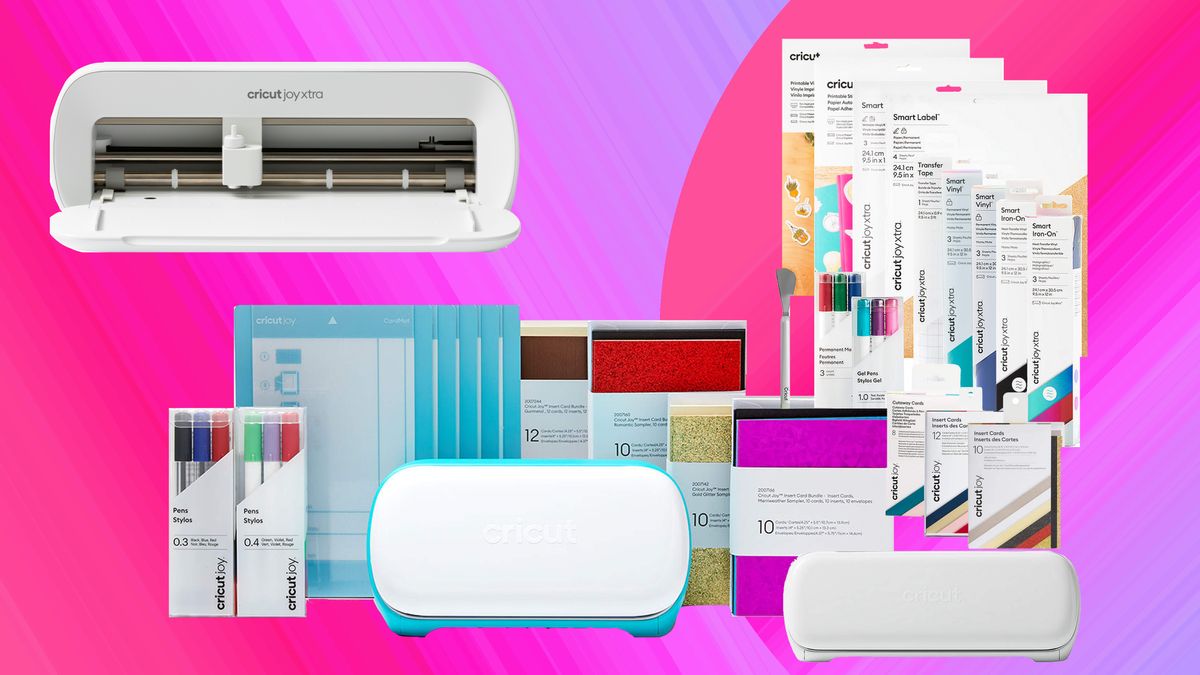
If you’re cutting it close (pardon the pun) to finding a gift in time for Mother’s Day in the UK, then look no further than Cricut’s mega Mother’s Day sale, with up to 70% off materials and accessories, plus up to 50% off machines and bundles. These craft machines make excellent Mother’s Day gift ideas, and you can even use the devices yourself to create some truly unique and personalized gifts.

Top Deal: CricutEasy Press 2

The top deal I’ve picked out is on the CricutEasy Press 2 heat press machine, which is now only £99.99 down from £213.99 (that’s an impressive £114 saving!). There are plenty of other deals to be had on some of the best Cricut machines on the market too, but the biggest deals seem to be on material + machine bundles.

Best Cricut Deals

I’ve rounded up all of the best Cricut deals for you below. If you haven’t already, take a look at the new Cricut Maker 4 and Explore 4 series which offers some serious upgrades for pro crafters, or see our best Cricut alternatives guide for other options.

Cricut’s Mother’s Day Sale Has Some Mega Deals

UK Cricut Deals

  • CricutEasy Press 2 heat press machine: £99.99 (was £213.99)
  • Material + machine bundles: up to 70% off
  • Machines: up to 50% off
  • Accessories: up to 70% off

US Cricut Deals

  • Cricut Maker 4: $299.99 (was $399.99)
  • Cricut Explore 4: $199.99 (was $299.99)
  • Material + machine bundles: up to 70% off
  • Machines: up to 50% off
  • Accessories: up to 70% off

Conclusion

If you’re still looking for the perfect gift for Mother’s Day, Cricut’s mega sale is the perfect solution. With up to 70% off materials and accessories, and up to 50% off machines and bundles, you’re sure to find something that will delight any crafty mom.

FAQs

Q: What is Cricut’s Mother’s Day sale?
A: Cricut’s Mother’s Day sale is a limited-time offer with up to 70% off materials and accessories, and up to 50% off machines and bundles.

Q: What is the top deal on the CricutEasy Press 2?
A: The top deal on the CricutEasy Press 2 is now only £99.99 down from £213.99 (that’s an impressive £114 saving!).

Q: Are there any deals for US customers?
A: Yes, there are some excellent deals over at Cricut’s US store too, and other retailers, that you won’t want to miss.

Is CoreWeave’s Debut an Ill Omen for I.P.O.s?

0

The Canary in the Coal Mine

CoreWeave, a company that rents computing power to the artificial intelligence industry, has pulled off the first big initial public offering this year, but the results are far from heartening. The company has priced its offering at $40 a share, compared with an initial range of $47 to $55. It has also sold 37.5 million shares, about 23 percent less than expected. Overall, it has raised $1.5 billion at a roughly $23 billion valuation, down from its initial hopes of $4 billion at a $35 billion valuation.

The company has been battling tough IPO conditions, with the stock market weighed down by uncertainty around President Trump’s tariffs and inflation. "It has been a brutal time for markets in general," said Samuel Kerr, head equity capital market analyst at the financial insights firm Mergermarket. "It shows you that there is very little appetite to put forward this kind of risk transaction at the moment."

How Far Short Did CoreWeave’s IPO Fall?

The company’s IPO has fallen short of expectations, with a valuation that is significantly lower than what the company had initially hoped for. The company’s founders, Michael Intrator, Brian Venturo, and Brannin McBee, own around 30 percent of the company, and a special class of shares gives them around 80 percent of the voting power.

The Company’s Financials in Some Ways Underscore the Challenges Facing the AI Industry

While CoreWeave’s revenue jumped to $1.9 billion last year, up from $229 million a year earlier, it has yet to turn a profit. The company has spent nearly $1 billion last year to finance its debt. The so-called Magnificent Seven of tech giants has enjoyed soaring stock valuations over the past few years, driven by Wall Street enthusiasm for AI, but investors have grown warier about the amount companies are spending on the technology.

Then Again, How Much of a Litmus Test is CoreWeave’s IPO?

While CoreWeave is the first major AI business to go public, it doesn’t represent the true titans of the field, makers of large language models like OpenAI and Anthropic. The company has a lot of idiosyncrasies that make it a difficult IPO candidate, including its huge amount of debt and its unusual background as a cryptocurrency mining firm. (It also depends heavily on a small group of customers, including Microsoft, Meta, and OpenAI.)

Inflation Watch

The American consumer is looking shakier by the day. The latest data point: Shares in Lululemon on Friday sank sharply in premarket trading after the apparel maker, whose sales zoomed during the coronavirus pandemic, reported a downbeat outlook for this year. It adds to a list of consumer brands and retailers who have warned that customers are spending less.

Here’s What’s Happening

  • Another giant law firm seeks to cut a deal with President Trump.
  • A federal judge orders some Trump officials to preserve messages in the Signal leak.
  • Trump warns carmakers not to raise prices in response to auto tariffs.

Inflation and Tariffs

The culprits are rising prices on clothing, furniture, and household goods, Vanguard estimates. The good news: Shelter prices, last year’s bugaboo, appear to be heading down, economists note.

Consumer Sentiment Data Will Also Be on the Radar

The revised March reading from the University of Michigan is set for release on Friday, offering another gauge on households’ mood. A similar survey by The Conference Board on Tuesday showed that consumer confidence had plunged to a 12-year low.

Downturn and Trade War Worries Are Weighing on Markets

The S&P 500 is on track for its first losing quarter since 2023.

One Automaker That’s Not Sweating a Trade War

Ferrari has announced that it will raise prices by as much as 10 percent for most models, which would mean an additional 40 grand for a $400,000 Purosangue. It explicitly cited "the introduction of import tariffs on EU cars into the USA." Shares in the Italian luxury carmaker were up nearly 3 percent on Friday — after two analyst upgrades.

Deals

  • Omaha Productions, Peyton Manning’s media company, raised money from a new venture run by Patrick Whitesell, the former executive chair of Endeavor, and the investment firm Silver Lake.
  • Elliott Investment Management, the big activist investor, criticized the C.E.O. of Phillips 66 for what it said was a bearish take on the oil refiner’s prospects.

Politics, Policy, and Regulation

  • The Environmental Protection Agency said that power plants and others can seek exemptions to clean-air restrictions — via email.
  • Trevor Milton, the founder of the electric vehicle maker Nikola who had been convicted of securities fraud, said President Trump pardoned him; the White House hasn’t confirmed his account.

Best of the Rest

  • We’d like your feedback! Please email thoughts and suggestions to dealbook@nytimes.com.

FAQs

Q: What is CoreWeave’s IPO valuation?
A: CoreWeave’s IPO valuation is roughly $23 billion, down from its initial hopes of $4 billion at a $35 billion valuation.

Q: How much did CoreWeave’s IPO raise?
A: CoreWeave’s IPO raised $1.5 billion.

Q: Who owns the majority of CoreWeave?
A: The company’s founders, Michael Intrator, Brian Venturo, and Brannin McBee, own around 30 percent of the company, and a special class of shares gives them around 80 percent of the voting power.

Q: What is the current state of the AI industry?
A: The so-called Magnificent Seven of tech giants has enjoyed soaring stock valuations over the past few years, driven by Wall Street enthusiasm for AI, but investors have grown warier about the amount companies are spending on the technology.

Crafting a Timeless Fantasy: The Art of Guild Wars 2

0

A World Build on Strong Artistic Foundations

One of the defining aspects of Guild Wars’ art direction is its emphasis on strong foundational art skills and techniques rather than purely technological advancements – it would be too easy to focus on the digital nature of the art team’s work using the best digital art software. Aaron highlights how the team’s traditional art background has played a crucial role in defining the game’s look.

"We had a staff of people with a lot of traditional art training who were passionate about the process," reflects Aaron. "It was less about what technology could do for us and more about how we could use technology as a language to create what we wanted to create."

The Impact of Colour

One of the most critical aspects of Guild Wars’ visual storytelling is its use of colour. "Colour is a language in itself," Aaron says. "It helps set the mood, guide the player’s eye, and reinforce the story we’re telling."

For example, different zones in Guild Wars 2 use distinct colour palettes to evoke specific emotions. "If we want a place to feel serene, we use soft greens and golds. If we want something foreboding, we lean into deep purples and cold blues. Even on a micro level, understanding how colour interacts within an asset brings it to life."

Guild Wars Unique Longterm Vision

Creating art for a game that has been running for two decades comes with unique challenges. The art must evolve, but it can’t break the established identity set out by those original artists.

"Our art direction needs to be strong because Guild Wars 2 has to iterate gradually while maintaining consistency," Aaron explains. "We’ve seen games where a singular vision is too narrow, making any deviation feel out of place. On the other hand, we’ve aimed to have a broad enough North Star so that artists can put their own stamp on things while keeping it cohesive."

The Art of Guild Wars 2

The Guild Wars art team was known for using Photoshop in ways that many digital artists were experimenting with at the time. Guild Wars 2 artists like Ruan Jia and Thomas Scholes found new ways to use the software, pioneering techniques like photo-bashing (read Thomas Scholes’ modular concept art tutorial for an insight).

"That style, particularly in the early days, was very much influenced by Daniel Dociu, who shared a lot of his techniques and processes with the team," Aaron notes. "It seeped into different areas and became a recognisable aesthetic, not just in Guild Wars but in the digital art world at large."

Conclusion

Through strong artist foundations, thoughtful storytelling, and a commitment to craft, Guild Wars has cemented itself as one of the most visually distinct games still worth playing. Its world grows with each new release – the colourful Janthir Wilds – Repentance expansion is a testament to this – but remains true to the original vision released twenty years ago.

FAQs

Q: What is the key to longevity in the game industry?
A: Understanding visual storytelling and mastering artistic principles, such as composition, value, shape, and storytelling.

Q: How does the Guild Wars art team approach art direction?
A: The team focuses on strong foundational art skills and techniques, using technology as a language to create what they want to create, rather than chasing the latest digital art trends.

Q: What is the importance of colour in Guild Wars’ art direction?
A: Colour is a language in itself, helping to set the mood, guide the player’s eye, and reinforce the story being told. Different zones in Guild Wars 2 use distinct colour palettes to evoke specific emotions.

If Anthropic Succeeds, a Nation of Benevolent AI Geniuses Could Be Born

0

When Dario Amodei Gets Excited About AI

The Visionary Behind Anthropic

When Dario Amodei gets excited about AI—which is nearly always—he moves. The cofounder and CEO springs from a seat in a conference room and darts over to a whiteboard. He scrawls charts with swooping hockey-stick curves that show how machine intelligence is bending toward the infinite. His hand rises to his curly mop of hair, as if he’s caressing his neurons to forestall a system crash. You can almost feel his bones vibrate as he explains how his company, Anthropic, is unlike other AI model builders. He’s trying to create an artificial general intelligence—or as he calls it, "powerful AI"—that will never go rogue. It’ll be a good guy, an usher of utopia. And while Amodei is vital to Anthropic, he comes in second to the company’s most important contributor. Like other extraordinary beings (Beyoncé, Cher, Pelé), the latter goes by a single name, in this case a pedestrian one, reflecting its pliancy and comity. Oh, and it’s an AI model. Hi, Claude!

The Rise of Claude

Amodei has just gotten back from Davos, where he fanned the flames at fireside chats by declaring that in two or so years Claude and its peers will surpass people in every cognitive task. Hardly recovered from the trip, he and Claude are now dealing with an unexpected crisis. A Chinese company called DeepSeek has just released a state-of-the-art large language model that it purportedly built for a fraction of what companies like Google, OpenAI, and Anthropic spent. The current paradigm of cutting-edge AI, which consists of multibillion-dollar expenditures on hardware and energy, suddenly seemed shaky.

The Big Blob of Compute

Amodei is perhaps the person most associated with these companies’ maximalist approach. Back when he worked at OpenAI, Amodei wrote an internal paper on something he’d mulled for years: a hypothesis called the Big Blob of Compute. AI architects knew, of course, that the more data you had, the more powerful your models could be. Amodei proposed that that information could be more raw than they assumed; if they fed megatons of the stuff to their models, they could hasten the arrival of powerful AI. The theory is now standard practice, and it’s the reason why the leading models are so expensive to build. Only a few deep-pocketed companies could compete.

The Value of Efficient Models

Now a newcomer, DeepSeek—from a country subject to export controls on the most powerful chips—had waltzed in without a big blob. If powerful AI could come from anywhere, maybe Anthropic and its peers were computational emperors with no moats. But Amodei makes it clear that DeepSeek isn’t keeping him up at night. He rejects the idea that more efficient models will enable low-budget competitors to jump to the front of the line. "It’s just the opposite!" he says. "The value of what you’re making goes up. If you’re getting more intelligence per dollar, you might want to spend even more dollars on intelligence!" Far more important than saving money, he argues, is getting to the AGI finish line. That’s why, even after DeepSeek, companies like OpenAI and Microsoft announced plans to spend hundreds of billions of dollars more on data centers and power plants.

The Quest for AGI

What Amodei does obsess over is how humans can reach AGI safely. It’s a question so hairy that it compelled him and Anthropic’s six other founders to leave OpenAI in the first place, because they felt it couldn’t be solved with CEO Sam Altman at the helm. At Anthropic, they’re in a sprint to set global standards for all future AI models, so that they actually help humans instead of, one way or another, blowing them up. The team hopes to prove that it can build an AGI so safe, so ethical, and so effective that its competitors see the wisdom in following suit. Amodei calls this the Race to the Top.

Can Claude Be Trusted?

That’s where Claude comes in. Hang around the Anthropic office and you’ll soon observe that the mission would be impossible without it. You never run into Claude in the café, seated in the conference room, or riding the elevator to one of the company’s 10 floors. But Claude is everywhere and has been since the early days, when Anthropic engineers first trained it, raised it, and then used it to produce better Claudes. If Amodei’s dream comes true, Claude will be both our wing model and fairy godmodel as we enter an age of abundance. But here’s a trippy question, suggested by the company’s own research: Can Claude itself be trusted to play nice?

Conclusion

As Amodei and his team at Anthropic continue to push the boundaries of AI, they face a critical challenge: ensuring that their creation is safe and beneficial for humanity. The path forward is not without its uncertainties, but with Claude by their side, they are confident that they can achieve their vision of a utopian future.

FAQs

Q: What is the Big Blob of Compute?
A: The Big Blob of Compute is a hypothesis proposed by Dario Amodei, suggesting that feeding large amounts of data to AI models can hasten the arrival of powerful AI.

Q: What is the Race to the Top?
A: The Race to the Top is a sprint by Anthropic to set global standards for all future AI models, ensuring they actually help humans instead of harming them.

Q: Can Claude be trusted to play nice?
A: The company’s own research raises a trippy question: Can Claude itself be trusted to play nice, or will it also pose a threat to humanity?

Virtual Cards: Switch 2’s Secret to Success

0

Nintendo Virtual Cards: A New Way to Share and Own Digital Games

Nintendo has a history of tackling problems in ways other game developers and console manufacturers wouldn’t consider, and the reveal of Virtual Cards at this week’s Nintendo Direct are another sign its thinking differently to other brands, one that could see Switch and Switch 2 becoming a 2025 success story.

Nintendo Virtual Cards Solve an Ownership Problem

If, like me, you have family who all have Switch consoles and love sharing games, Virtual Cards will make this much easier. The days of frustratingly de-registering games from one console, and making another the ‘primary’ and needing to keep track of all this faff are over.

Lending Feature: A Sense of True Ownership

Then we have the lending feature, which brings in parity to the physical world. The big advantage of owning a physical copy of a game is you can share it with friends and family, with a sense of true ownership of a game. We’ve all lent games to friends, which in turn generates a sense of a shared experience, it’s why nostalgia is such a big thing for gamers, because often it’s not the game we remember fondly but how we played it and who with; Virtual Cards will enable those of us who like the ease of buying digital games to rekindle this sense of a shared moment.

The Impact on Physical Game Sales

Ultimately, Nintendo is giving us greater control over our digital games collection in the most inventive way I’ve seen in quite some time, and for a company renowned for control over IP and ownership, it’s a big move.

The Hidden Issue: The Impact on Physical Game Sales

The hidden issue? The thing some may find worrisome? That’s the impact this could have on physical game sales and the idea of ‘ownership’. It’s been an issue ten years, and I remember the debate when PS3 games began releasing digitally, as it threatens game preservation and ultimately brings into question your ownership of a game. If a publisher revokes access, loses a license or a platform shuts down you lose that digital game. It’s a reason the best retro games consoles have become so popular, and in fact why Switch and Nintendo Online is successful.

Conclusion

Virtual Cards is a new system designed for Switch 2 and, I’d wager, an acknowledgment from Nintendo that people ‘hand down’ old consoles to family. If I get a Switch 2 at launch my old Switch will go to a family member, but now all my digital games can also be shared. Nintendo has a huge back catalogue of digital games – the support of indies and cheaper games and bundles as been a big reason Switch is popular – and now Virtual Cards unlock those games for friends and family.

FAQs

Q: What are Virtual Cards?
A: Virtual Cards are a new system that allows users to share and own digital games on their Switch consoles.

Q: How do Virtual Cards work?
A: Virtual Cards work by allowing users to purchase and download digital games, and then share them with friends and family for up to two weeks at a time.

Q: Is there a physical game problem?
A: Yes, there is a physical game problem. The rise of digital games has led to a decline in physical game sales, and some people are worried about the impact this could have on game preservation and ownership.

Q: How will Virtual Cards affect physical game sales?
A: Virtual Cards could put pressure on publishers to release fewer physical editions, as people may prefer to buy digital games and share them with friends and family. However, Nintendo has been a good platform for physical game releases and special editions, and may continue to support physical game sales in the future.

Gemini Hackers Can Deliver More Potent Attacks

Attack Success Rates and Insights from Fun-Tuning

Attack Success Rates

The resulting dataset, which reflected a distribution of attack categories similar to the complete dataset, showed an attack success rate of 65 percent and 82 percent against Gemini 1.5 Flash and Gemini 1.0 Pro, respectively. By comparison, attack baseline success rates were 28 percent and 43 percent. Success rates for ablation, where only the effects of the fine-tuning procedure are removed, were 44 percent (1.5 Flash) and 61 percent (1.0 Pro).

Attack Success Rate against Gemini-1.5-Flash-001 with Default Temperature

Credit: Labunets et al.

Attack Success Rates Gemini 1.0 Pro

Credit: Labunets et al.

Transferability of Attacks

While Google is in the process of deprecating Gemini 1.0 Pro, the researchers found that attacks against one Gemini model easily transfer to others—in this case, Gemini 1.5 Flash.

"If you compute the attack for one Gemini model and simply try it directly on another Gemini model, it will work with high probability," Fernandes said. "This is an interesting and useful effect for an attacker."

Attack Success Rates Across Gemini Models

Credit: Labunets et al.

Improvement Over Time

Another interesting insight from the paper: The Fun-tuning attack against Gemini 1.5 Flash "resulted in a steep incline shortly after iterations 0, 15, and 30 and evidently benefits from restarts. The ablation method’s improvements per iteration are less pronounced." In other words, with each iteration, Fun-Tuning steadily provided improvements.

"The ablation, on the other hand, ‘stumbles in the dark and only makes random, unguided guesses, which sometimes partially succeed but do not provide the same iterative improvement,’" Labunets said. This behavior also means that most gains from Fun-Tuning come in the first five to 10 iterations. "We take advantage of that by ‘restarting’ the algorithm, letting it find a new path which could drive the attack success slightly better than the previous ‘path,’" he added.

Variability in Prompt Injections

Not all Fun-Tuning-generated prompt injections performed equally well. Two prompt injections—one attempting to steal passwords through a phishing site and another attempting to mislead the model about the input of Python code—both had success rates of below 50 percent. The researchers hypothesize that the added training Gemini has received in resisting phishing attacks may be at play in the first example. In the second example, only Gemini 1.5 Flash had a success rate below 50 percent, suggesting that this newer model is "significantly better at code analysis," the researchers said.

Conclusion

In conclusion, the study highlights the effectiveness of Fun-Tuning in achieving high attack success rates against Gemini models, particularly against Gemini 1.5 Flash and Gemini 1.0 Pro. The results also demonstrate the transferability of attacks across different Gemini models, making it an attractive option for attackers.

FAQs

Q: What is Fun-Tuning?
A: Fun-Tuning is a technique that uses fine-tuning to improve the performance of a language model in a specific task.

Q: What are the differences between Fun-Tuning and ablation?
A: Fun-Tuning is a more guided approach that uses the model’s existing knowledge to improve its performance, while ablation is a more random and unguided approach that relies on chance to succeed.

Q: Why is Fun-Tuning more effective than ablation?
A: Fun-Tuning is more effective because it takes advantage of the model’s existing knowledge and uses it to improve its performance, whereas ablation is a more random and unguided approach that relies on chance to succeed.

Generate training data and cost-effectively train categorical models with Amazon Bedrock

0

Business Challenge

The exploration and methodology described in this post addresses two key challenges: costs associated with generating a ground truth dataset for multiclass classification use cases can be prohibitive, and conventional approaches and synthetic dataset creation strategies for generating ground truth data are inadequate in generating balanced classes and meeting desired performance parameters for the real-world use cases.

Ground Truth Data Generation is Expensive and Time Consuming

Ground truth annotation needs to be accurate and consistent, often requiring massive time and expertise to ensure the dataset is balanced, diverse, and large enough for model training and testing. For a multiclass classification problem such as support case root cause categorization, this challenge compounds many fold.

Conventional Techniques to Get Balanced Classes or Synthetic Data Generation Have Shortfalls

A balanced labeled dataset is critical for a multiclass classification use case to mitigate bias and make sure the model learns to accurately classify all classes, rather than favoring the majority class. If the dataset is imbalanced, with one or more classes having significantly fewer instances than others, the model might struggle to learn the patterns and features associated with the minority classes, leading to poor performance and biased predictions.

Solution: Amazon Bedrock

To address this challenge, we can use Amazon Bedrock, a generative AI solution that can play an invaluable role during the model development phase by simplifying training and test data creation for multiclass classification supervised learning use cases. We can use XML tags to structure the prompt and guide Amazon Bedrock in generating a balanced label dataset with high accuracy.

Real-World Example: Predicting Root Cause Category for Support Cases

This use case, solvable through ML, can enable support teams to better understand customer needs and optimize response strategies. For instance, let’s say the task at hand is to predict the root cause categories (Customer Education, Feature Request, Software Defect, Documentation Improvement, Security Awareness, and Billing Inquiry) for customer support cases.

Classification Examples

Here are some classification examples:

  • Software Defect: The support case is for ETL Pipeline Performance Degradation where the customer reports their nightly data transformation job takes 6 hours to complete instead of 2 hours before but no changes to configuration occurred. The agent mentions Engineering confirmed memory leak in version 5.1.2 and are deploying a Hotfix indicating this is a Software Defect.
  • Customer Education: The agent tells the customer that the timeout is caused by misconfiguration and needs to be restricted using filters. The agent provides documentation explaining how to troubleshoot the issue.
  • Documentation Improvement: The agent tells the user they have to change the action configuration and define an Action type attribute.

About the Authors

  • Sumeet Kumar is a Sr. Enterprise Support Manager at AWS leading the technical and strategic advisory team of TAM builders for automotive and manufacturing customers.
  • Andy Brand is a Principal Technical Account Manager at AWS, where he helps education customers develop secure, performant, and cost-effective cloud solutions.
  • Tom Coombs is a Principal Technical Account Manager at AWS, based in Switzerland. In Tom’s role, he helps enterprise AWS customers operate effectively in the cloud.
  • Ramu Ponugumati is a Sr. Technical Account Manager and a specialist in analytics and AI/ML at AWS.

XTool and Snapmaker: A Symbiotic Relationship

0

Rumors of a New 3D Printer: xTool and Snapmaker Join Forces?

A New Collaboration in the Making?

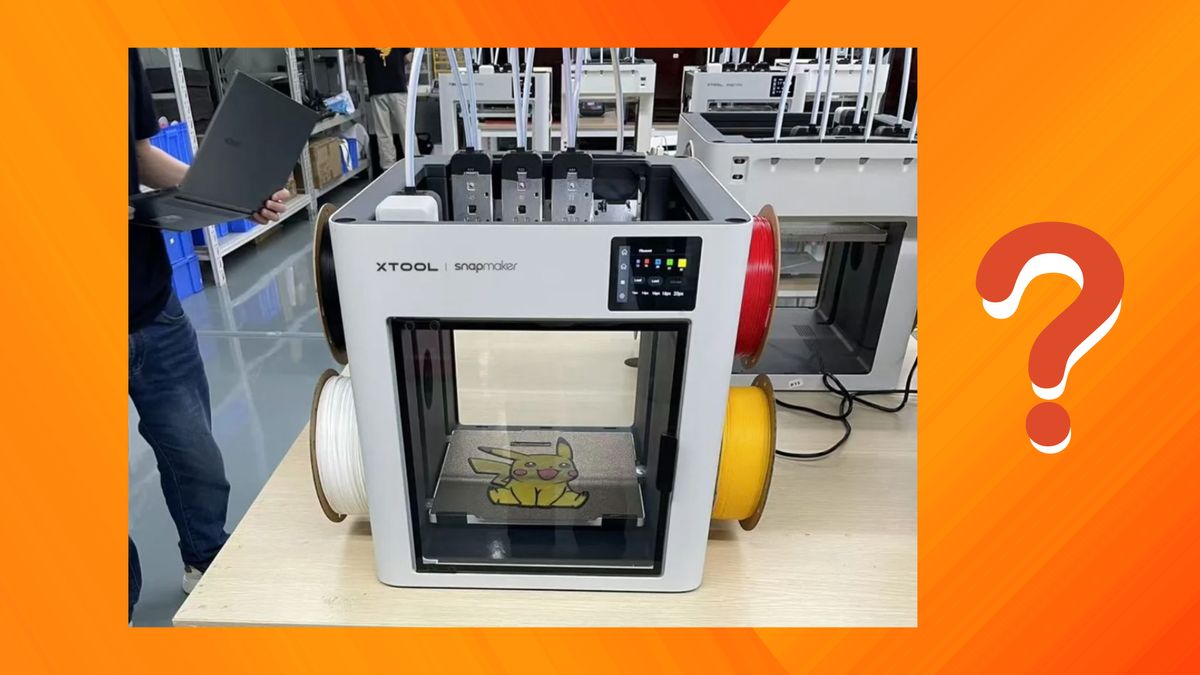
Rumour has it that xTool, a major laser engraver manufacturer, is working on its very first 3D printer in collaboration with 3D manufacturer, Snapmaker. These two brands making a co-branded printer was certainly not on my 2025 bingo card, though it seems that this is the year that the best 3D printers and pro crafting machines are levelling up, while entering new territories.

xTool and Snapmaker: A Match Made in Heaven?

xTool is a big player in the digital crafting space and manufactures some of the best laser cutters and engravers on the market today. Snapmaker on the other hand is known for its innovative and best-selling Artisan 3-in-1 3D printer that combines printing, laser engraving, and CNC carving into one machine using a modular quick-swap design – so it makes sense that xTool would partner with this company.

The Leak: A Photo of the Alleged xTool X Snapmaker 3D Printer

The leak has come from Reddit, and there’s even a photo of this alleged xTool X Snapmaker 3D printer too, which if authentic, certainly looks exciting. We can see what appears to be an enclosed-style machine (though it doesn’t look like a Core XY construction, which seems to be all the rave right now), with multicolour compatibility including four supported spools, and a touchscreen LCD in the top right corner of the printer.

A Response to Bambu Lab?

Given the recent announcement that Bambu Lab has created a premium H2D 3D printer that can also draw, cut, and engrave, could this new product from xTool and Snapmaker be a direct retaliation? Or perhaps the timing of this leaked image of an xTool 3D printer is purely coincidental. The Bambu Lab H2D has a lot of creatives excited, though the model specifically with the laser was met with some criticism and concern regarding potential mess, maintenance, and safety involved with combining such machines.

xTool’s Strengths in 3D Printing

Perhaps consumers might have a little more faith in a multi-functional 3D printer if it’s being created by xTool, which seems to have a pretty good grasp on how laser engravers operate. As one Redditor has pointed out ‘if xTool had been really involved in the development, it could lead to interesting improvements and new a good machine’.

A New Battle in the Making?

Another user adds, ‘First Bambu steps into laser cutting, now xTool & Snapmaker respond with a multi-colour 3D printer? We will see.’ Maybe 2025 could be the battle of the craft companies. If you’re someone who likes to keep your craft machines separate (and I don’t blame you), then take a look at our guides to the best Cricut machines, as well as the best xTool machines for digital crafting.

Conclusion

The news of xTool and Snapmaker’s potential collaboration on a new 3D printer has sparked a lot of excitement in the crafting community. With the recent announcement of Bambu Lab’s H2D 3D printer, it’s possible that this new product could be a response to the growing competition in the market. However, only time will tell if this new printer will live up to the hype.

FAQs

Q: What is the rumored 3D printer from xTool and Snapmaker?
A: The rumored 3D printer is a co-branded product that combines the expertise of both xTool and Snapmaker.

Q: Is this a response to Bambu Lab’s H2D 3D printer?
A: It’s possible that this new product could be a response to the growing competition in the market, but the exact timing is unknown.

Q: What are the features of the rumored 3D printer?
A: The features of the rumored 3D printer include multicolour compatibility, four supported spools, and a touchscreen LCD in the top right corner of the printer.

Q: Is xTool experienced in 3D printing?
A: No, xTool is a major laser engraver manufacturer, but it’s been rumored that they are working on their first 3D printer in collaboration with Snapmaker.