Home Blog Page 150

Former Cruise CEO’s new robotics startup raises $150M

0

The Bot Company Raises $150 Million in New Funding Round

Introduction
The Bot Company, a robotics startup founded by former Cruise co-founder and CEO Kyle Vogt, has raised $150 million in a new funding round led by Greenoaks, according to Reuters, citing unnamed sources.

Founding and Previous Funding
Vogt founded the startup with Paril Jain, who led the AI tech team at Tesla, and former Cruise software engineer Luke Holoubek. The startup launched in May with $150 million from a group of prominent investors, including former GitHub CEO and investor Nat Friedman, Pioneer founder and investor Daniel Gross, Spark Capital general partner Nabeel Hyatt, Stripe CEO Patrick Collison, Stripe co-founder John Collison, and Quiet Capital.

Recent Development
The fresh round of funding comes less than a year since the startup’s launch, and it is aimed at producing a robot focused on household chores. The Bot Company is a relatively new startup, having been founded just five months after Vogt’s resignation as CEO of Cruise, the autonomous vehicle startup that he founded in 2013 and was later acquired by General Motors. Vogt’s resignation followed an October 2 incident that saw a Cruise vehicle run over and drag a pedestrian 20 feet, after the pedestrian had been hit by a human-driven car.

Conclusion
The Bot Company’s recent funding round is a significant milestone for the startup, which is poised to make a significant impact in the robotics industry. With its focus on household chores, the company is well-positioned to capitalize on the growing demand for smart home automation.

Frequently Asked Questions

Q: Who founded The Bot Company?
A: The Bot Company was founded by Kyle Vogt, former co-founder and CEO of Cruise, along with Paril Jain, who led the AI tech team at Tesla, and former Cruise software engineer Luke Holoubek.

Q: How much funding did The Bot Company raise in its initial round?
A: The Bot Company launched with $150 million from a group of prominent investors, including former GitHub CEO and investor Nat Friedman, Pioneer founder and investor Daniel Gross, Spark Capital general partner Nabeel Hyatt, Stripe CEO Patrick Collison, Stripe co-founder John Collison, and Quiet Capital.

Q: What is the focus of The Bot Company’s products?
A: The Bot Company is focused on producing a robot that can assist with household chores.

Google is rolling out Gemini’s real-time AI video features

0

Google Unveils New AI Features for Gemini Live

AI-Powered Screen Reading and Live Video Capabilities

Google has started rolling out new AI features to Gemini Live, allowing it to "see" users’ screens or through their smartphone cameras and answer questions in real-time, according to a Google spokesperson.

Screen-Reading Ability

The feature, which was first demonstrated by Google under the codename "Project Astra," uses AI to read the content on a user’s screen and answer questions about it. A Reddit user recently spotted the feature on their Xiaomi phone and shared a video demonstrating its capabilities.

Live Video Capabilities

The other Astra capability being rolled out is live video, which uses AI to interpret the feed from a user’s smartphone camera in real-time and answer questions about it. In a demonstration video published by Google, a person uses the feature to ask Gemini for help deciding on a paint color for their freshly-glazed pottery.

Release Timeline

The features are expected to start rolling out to Gemini Advanced Subscribers as part of the Google One AI Premium plan later in the month, Google announced in early March.

Conclusion

These new AI features mark a significant advancement in the capabilities of Google’s Gemini Live platform, enabling users to access information and assistance more easily and efficiently. With the ability to read screens and interpret live video feeds, Gemini is poised to become an even more powerful tool for users seeking information and assistance.

Frequently Asked Questions

Q: What is Project Astra?
A: Project Astra is a Google initiative that aims to develop AI-powered features for its Gemini Live platform.

Q: What are the new AI features being rolled out?
A: The new features include screen-reading ability and live video capabilities, which allow Gemini to "see" users’ screens or through their smartphone cameras and answer questions in real-time.

Q: When will the features be available?
A: The features are expected to start rolling out to Gemini Advanced Subscribers as part of the Google One AI Premium plan later in the month.

NVIDIA Unveils Open Physical AI Dataset

Teaching Autonomous Robots and Vehicles How to Interact with the Physical World

Announced at NVIDIA GTC, a global AI conference, NVIDIA is releasing a massive, open-source dataset for building the next generation of physical AI. The dataset, called the NVIDIA Physical AI Dataset, is designed to help researchers and developers create more accurate and robust AI models for autonomous robots and vehicles.

Addressing the Need for Physical AI Data

Collecting, curating, and annotating a dataset that covers diverse scenarios and accurately represents the physics and variation of the real world is time-consuming, presenting a bottleneck for most developers. The NVIDIA Physical AI Dataset is designed to help overcome this challenge by providing a massive, pre-validated dataset that can be used for model pre-training, testing, and validation.

The Dataset

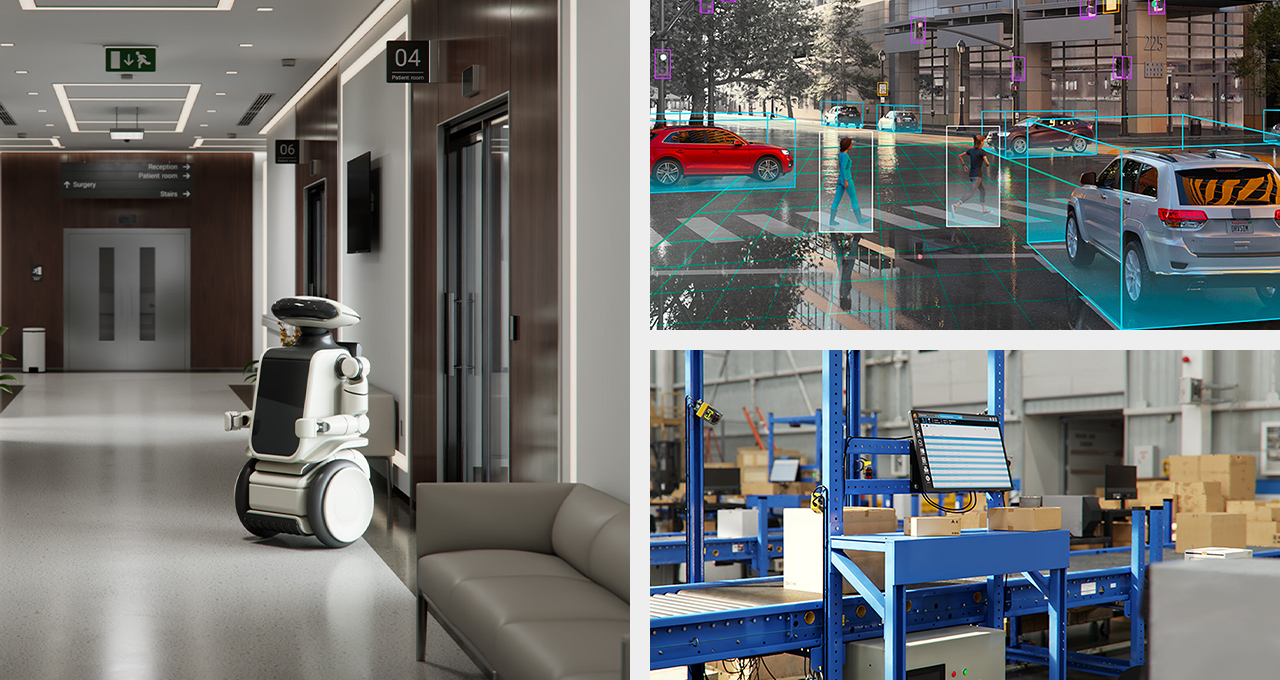
The initial dataset is now available on Hugging Face and includes 15 terabytes of data representing more than 320,000 trajectories for robotics training, plus up to 1,000 Universal Scene Description (OpenUSD) assets, including a SimReady collection. Additionally, dedicated data to support end-to-end autonomous vehicle (AV) development, including 20-second clips of diverse traffic scenarios spanning over 1,000 cities across the U.S. and two dozen European countries, is coming soon.

Early Adopters

The NVIDIA Physical AI Dataset is expected to be adopted by several prominent research institutions, including the Berkeley DeepDrive Center at the University of California, Berkeley, the Carnegie Mellon Safe AI Lab, and the Contextual Robotics Institute at the University of California, San Diego.

Applications

The dataset has a wide range of potential applications, including:

  • Developing AI models to power robots that safely maneuver warehouse environments
  • Creating humanoid robots that support surgeons during procedures
  • Building AVs that can navigate complex traffic scenarios like construction zones

Conclusion

The NVIDIA Physical AI Dataset is a significant step forward in the development of physical AI, providing researchers and developers with a massive, pre-validated dataset that can be used to build more accurate and robust AI models for autonomous robots and vehicles. With its vast scope and diversity, this dataset has the potential to accelerate the development of physical AI and bring us closer to a future where robots and vehicles can interact with the physical world in a more intelligent and autonomous way.

FAQs

Q: What is the NVIDIA Physical AI Dataset?
A: The NVIDIA Physical AI Dataset is a massive, open-source dataset designed to help researchers and developers build the next generation of physical AI for autonomous robots and vehicles.

Q: What does the dataset include?
A: The initial dataset includes 15 terabytes of data representing more than 320,000 trajectories for robotics training, plus up to 1,000 Universal Scene Description (OpenUSD) assets, including a SimReady collection.

Q: Who will be using the dataset?
A: The dataset is expected to be adopted by several prominent research institutions, including the Berkeley DeepDrive Center at the University of California, Berkeley, the Carnegie Mellon Safe AI Lab, and the Contextual Robotics Institute at the University of California, San Diego.

Q: What are the potential applications of the dataset?
A: The dataset has a wide range of potential applications, including developing AI models to power robots that safely maneuver warehouse environments, creating humanoid robots that support surgeons during procedures, and building AVs that can navigate complex traffic scenarios like construction zones.

McDonald’s Leads the No-Logo Movement

0

McDonald’s Latest Ad Campaign: A Break from the Norm

No Logo, No Problem

We’ve seen various brands drop their logo on adverts lately, and McDonald’s is the latest to release a spot with almost no branding at all. The campaign features a series of 30- and 10-second films that show McDonald’s breakfast set to cinematic music, featuring a voiceover that points out how it’s deliberately not going to talk about what’s on screen. The spots end with ‘Breakfast, done properly’ and while they don’t feature a graphic logo, they do include McDonald’s famous audio logo, which is a clever move for anyone not so familiar with McDonald’s hash browns.

Research-Backed Decision

The campaign by Leo Burnett UK follows research that showed that up to 90% of people were able to identify McDonald’s breakfast products without any branding. It’s clear that the agency has taken this insight into account when creating the campaign, which is running across various touchpoints, including TV, OOH, radio, and social, as well as in-store.

Radio Version: A Unique Approach

The radio version is particularly interesting, as obviously there are no images to look at. Instead, a voiceover invites people to "Think of a breakfast muffin with sausage and egg. Yep, that’s the one. Picture it now. Doesn’t it look delicious?" There is also no name of the brand mentioned, though I imagine the audio logo will also be used to guide people.

Creative Directors’ Thoughts

James Hodson and Jason Keet, creative directors at Leo Burnett UK, explain the concept behind the campaign: "There’s nothing on earth like a McDonald’s breakfast. You can spot a McMuffin from miles away. Think of a hash brown. We bet it’s a McDonald’s hash brown. So we thought our job was to just get out of the way. No logo. No product names. No catchy copy. Just the shapes and textures that we all know and love."

Conclusion

McDonald’s latest ad campaign is a clever move that focuses on what the brand is actually offering – food. It’s a bold approach that may not appeal to everyone, but it’s likely to resonate with those who are already fans of the brand. With its unique blend of cinematic music and voiceover, the campaign is sure to make an impact and leave a lasting impression on viewers.

Frequently Asked Questions

Q: What is the purpose of the campaign?
A: The campaign aims to promote McDonald’s breakfast products without featuring any branding or logos.

Q: How does the radio version work?
A: The radio version invites listeners to imagine a breakfast muffin with sausage and egg and to "picture it now. Doesn’t it look delicious?"

Q: Who is behind the campaign?
A: The campaign was created by Leo Burnett UK, in collaboration with McDonald’s.

To Truly Fix Siri, Apple May Have to Backtrack on One Key Thing—Privacy

0

A Tale of Two Halves

The Rise and Fall of Siri

Apple’s acquisition of Siri in 2010 was a major coup for the company, with then-CEO Steve Jobs personally involved in the deal. However, other Apple executives who were around at the time paint a different picture. According to Richard Williamson, a former Apple executive, the early Siri was a "hot mess" that relied on "keyword matching" rather than natural language processing.

A Flawed Digital Assistant

Siri was limited in its functionality, working only within narrow silos and struggling to scale to a large user base. Williamson described it as "super easy to trick" and criticized its lack of contextualization and natural language processing.

The Current State of Siri

Fast forward to today, and Siri still struggles to work effectively in real-world scenarios. Despite advancements in AI, the assistant reportedly remains unreliable. One major confounding factor is Apple’s approach to data collection and processing, which prioritizes user privacy.

The Conflict of Interest

According to Tom Gruber, a cofounder of Siri, Apple’s commitment to privacy may be a major obstacle to the development of a more effective AI-powered Siri. By prioritizing user privacy, Apple may be limiting its ability to collect and process data, which could hinder the development of more advanced AI capabilities.

A Tale of Two Halves

The new Siri is based on two core components: a small language model running on the iPhone and a more complex query system offloaded to OpenAI. Users will need to grant permission for their phone to access OpenAI’s services.

The Power of OpenAI

OpenAI’s GPT-4 model boasts an impressive 1.8 trillion parameters, significantly more than Apple’s on-iPhone AI systems. However, even OpenAI’s more efficient models, such as DeepSeek, still consist of a reported 671 billion parameters.

Conclusion

Apple’s approach to AI is likely to be at odds with the more aggressive data collection and processing methods used by competitors like Amazon and Google. While Apple’s commitment to user privacy is admirable, it may be hindering the development of more advanced AI capabilities. The future of Siri remains uncertain, but one thing is clear: the technology is still a work in progress.

FAQs

  • Q: Why did Apple acquire Siri in 2010?
    A: Apple acquired Siri in 2010 to gain a foothold in the emerging voice assistant market.
  • Q: What were the limitations of early Siri?
    A: Early Siri was limited in its functionality, working only within narrow silos and struggling to scale to a large user base.
  • Q: Why does Apple prioritize user privacy?
    A: Apple prioritizes user privacy as a key part of its brand identity and values.
  • Q: What is the conflict of interest for Apple in developing more advanced AI?
    A: Apple’s commitment to user privacy may create a conflict of interest, as it may limit the company’s ability to collect and process data, which could hinder the development of more advanced AI capabilities.

Surviving Difficult Managers

Understanding Difficult Managers

What surprises me constantly these days is how the socially awkward loner from his college days is now a very socially active individual. I think the best part of the work I do and the career I pursue is having the opportunity to meet incredibly talented and ambitious people. I really like getting to know them, and there is a lot of wonderful and interesting things I get to learn from them.

Protecting Your Mental Space

Before boring you more with my personal philosophies, I would like to start off with a general piece of advice: cease and desist. Please, for the love of God, no job or personal achievement is worth putting your mental well-being in jeopardy. If you can, please quit. Often times we logic ourselves into why we cannot. We become too comfortable with our circumstances. So I would like you to consider trying a mechanism employed by the Stoics called Negative Visualization. Imagine the worst-case scenario you could realistically be in and try to conjure the feelings that would come over you if you were in that situation.

Recognizing Toxic Patterns

Finally, on the offensive side of the situation, it is important to validate our assumptions. We should be comfortable with being wrong. Fortunately, it is a sufficiently documented case. If appealing to their egos already worked, then you know you are on the right track. Let me try and describe some ways to identify difficult managers. Please note I am addressing the behavior and not trying to vilify the person.

When HR Gets Involved

I hope you all agree that all of this is terrible for you and the company. But things often escalate when it eventually gets to you and either side feel it necessary to involve HR. I have not yet personally experienced the full process yet but I have had people close to me go through this. The playbook is roughly the same. There is some form of mediation followed by one of the following three outcomes: either you or your manager admits fault and a course of action is agreed, you switch managers or you get fired.

Call to Community

To conclude, If you are going through this then I am incredibly sorry. If you do not agree with me then I am incredibly curious to know why. Please share your own stories and how you’ve dealt with a difficult boss. I would love to learn from it. One of my biggest fears is being insensitive towards the world around me because of the kind of person I am. Which is why I am actively trying to practice empathy and kindness. I sincerely care about your opinions and hope to hear from you. Please feel free to reach out however you feel comfortable. I hope to be a good listener.

FAQs

Q: What is the best way to deal with a difficult manager?
A: Cease and desist. Prioritize your mental well-being and protect your space.

Q: How do I identify a difficult manager?
A: Look for patterns of behavior such as aggressive guarding of information, lack of psychological safety, and favoritism.

Q: What should I do if I’m going through a difficult situation with my manager?
A: Start collecting evidence, consider quitting, and prioritize your mental well-being.

Q: How can I protect my mental space?
A: Practice negative visualization, take care of your physical and mental health, and prioritize your personal relationships.

Q: What if I don’t agree with the author’s views on difficult managers?
A: Please share your own story and how you’ve dealt with a difficult boss. I would love to learn from it.

NVIDIA Pushes Boundaries of Apache Spark with RAPIDS and Project Aether

Apache Spark and NVIDIA: Accelerating Data Processing with AI-Powered Innovation

Apache Spark: A Brief Overview

Apache Spark is one of the most widely used tools in the big data space. It excels at processing massive datasets for predictive modeling, fraud detection, and real-time analytics. As the demand for processing and understanding data continues to grow, enterprises are seeking more efficient ways to handle ever-increasing workloads.

NVIDIA RAPIDS Accelerator for Apache Spark

Some of the largest companies in the world have turned to NVIDIA RAPIDS Accelerator for Apache Spark to address the growing challenges of processing massive datasets efficiently. The open-source plug-in, built on NVIDIA’s accelerated computing platform, is designed to make the data science and analytics process faster and more effective. Nvidia claims the tool enables users to manage complete data pipelines without requiring any modifications to their existing Spark code.

Introducing Project Aether

This week at the GTC 2025, Nvidia introduced Project Aether to make it even easier for companies to get value out of NVIDIA-accelerated Spark. Project Aether is a set of tools and processes created by the chip manufacturer to streamline data processing, offering substantial time and cost savings, according to the company.

How Project Aether Works

Project Aether automates the myriad steps that companies previously had to do manually, including analyzing all of their Spark jobs to identify the best candidates for GPU acceleration, as well as staging and performing test runs of each job. It uses AI to fine-tune the configuration of each job to obtain the maximum performance.

Benefits of Project Aether

Project Aether simplifies what was once a tedious, manual process of transitioning from CPU-based systems to GPU-powered computing. By utilizing AI, it analyzes and adjusts Spark job configurations to maximize performance. Nvidia claims that the tool allows users to do "year’s worth of work in less than a week".

Case Study: Commonwealth Bank of Australia

Migrating Apache workloads has traditionally been a highly manual process. Users often had to analyze Spark jobs individually, determine which workloads would benefit from GPU acceleration, and then configure and run tests to optimize performance. Staging the selected workloads or adjusting the configuration further added to the complexity.

Now, with Project Aether, users can automate several steps of the process. According to Nvidia, if 100 Spark jobs require an engineer to work the entire year, Project Aether can complete each of the jobs within four days. This includes fine-tuning the configuration of the jobs for maximum Nvidia GPU acceleration.

Conclusion

In conclusion, Project Aether is a revolutionary tool that simplifies the process of transitioning from CPU-based systems to GPU-powered computing. By leveraging AI, it analyzes and adjusts Spark job configurations to maximize performance, allowing users to do "year’s worth of work in less than a week". This innovation has the potential to transform the way companies process and analyze data, making it faster, more efficient, and cost-effective.

FAQs

Q: What is Project Aether?
A: Project Aether is a set of tools and processes created by NVIDIA to streamline data processing, offering substantial time and cost savings.

Q: What are the benefits of Project Aether?
A: Project Aether simplifies the process of transitioning from CPU-based systems to GPU-powered computing, allowing users to do "year’s worth of work in less than a week".

Q: How does Project Aether work?
A: Project Aether automates the process of analyzing Spark jobs, identifying the best candidates for GPU acceleration, staging and performing test runs, and fine-tuning job configurations to obtain maximum performance.

Q: What is the potential impact of Project Aether on data processing?
A: Project Aether has the potential to transform the way companies process and analyze data, making it faster, more efficient, and cost-effective.

Protect Your Packages, No Fees

ZDNET’s Key Takeaways

  • The Eufy Security Video Doorbell E340 is available now for $180.
  • This doorbell features two cameras to give you complete visibility of the person at your door and any packages left on your porch, all with no monthly fees.
  • Although the doorbell comes with 8GB of built-in local storage (enough for up to 60 days of event recordings), you need to add a Eufy Security HomeBase to get the most out of it.

More Buying Choices

The Eufy Security Video Doorbell E340 is on sale for $120 at Amazon, thanks to a lightning deal. That’s 33% off and $30 less than the sale price offered just last week.

What is the Eufy Security Video Doorbell E340?

If you’re looking for a reliable video doorbell that can help protect your home and packages and offers local storage, let me introduce you to the Eufy Security Video Doorbell E340.

Features

  • Two cameras: One camera gives you the traditional visibility of who’s at your front door, and another is pointed downwards to let you know when a package has been delivered.
  • Real-time notifications to your mobile device when a person is detected and a package is delivered.
  • Real-time motion notifications to your mobile device.
  • Option to use two-way talk to communicate with whoever is at the door from your mobile phone or quick replies to automatically respond when they ring the doorbell.
  • Camera above the doorbell button records events in 2048 x 1536 resolution to deliver 2K footage that is clear and gives you a detailed view of whoever is at the door.
  • Two motion-activated lights, one at the top and a second one below, to light the way in the dark and alert visitors or would-be intruders that the camera has been activated.

Benefits

  • Night vision recordings are clear and accurate.
  • The doorbell can correctly determine what motion is a person, animal, vehicle, or just the wind, with very few false alerts.
  • Eufy’s Delivery Guard technology notifies you when packages are delivered and picked up and lets you set up zone restrictions to avoid false alerts.
  • You can set up the Eufy video doorbell E340 to trigger an alarm, a siren, or a voice response when someone approaches a package at your door.

ZDNET’s Buying Advice

You can get the Eufy Security Video Doorbell E340 for $120 at the time of writing. It features 2K-resolution video recording, 8GB of local storage, color night vision with a clear viewing distance of up to 16ft, and, my personal favorite, no monthly fees. The video doorbell E340 is perfect for anyone who wants a doorbell camera to be on the alert when any visitors arrive and one to help protect their packages.

Conclusion

The Eufy Security Video Doorbell E340 is a reliable and feature-rich video doorbell that offers local storage and no monthly fees. With its two cameras, real-time notifications, and motion-activated lights, it’s perfect for anyone who wants to keep an eye on their home and packages.

Frequently Asked Questions

Q: What is the Eufy Security Video Doorbell E340?
A: The Eufy Security Video Doorbell E340 is a video doorbell that features two cameras, real-time notifications, and local storage.

Q: What are the benefits of the Eufy Security Video Doorbell E340?
A: The benefits of the Eufy Security Video Doorbell E340 include clear night vision recordings, accurate motion detection, and the ability to trigger an alarm or siren when someone approaches a package at your door.

Q: Is the Eufy Security Video Doorbell E340 available for purchase?
A: Yes, the Eufy Security Video Doorbell E340 is available for purchase at Amazon for $120, thanks to a lightning deal.

Browser Use

0

Browser Use Raises $17 Million to Make Websites More "Readable" for AI Agents

Founding and Funding

Browser Use, a startup that aims to make websites more "readable" for artificial intelligence (AI) agents, has raised a significant $17 million in seed funding. The company, founded by Magnus Müller and Gregor Zunic, has gained attention from developers and investors alike for its solution that converts websites into a format that AI agents can easily understand.

Background

Müller and Zunic met while pursuing their master’s degrees in data science at ETH Zurich’s Student Project House accelerator. Müller had been working on web-scraping tools for years, and the pair came up with the idea of combining web scraping with data science to prompt a browser to perform a task. They built a demo in just five weeks, which quickly took off, and later open-sourced it.

How Browser Use Works

Browser Use breaks down the buttons and elements of a website into a more digestible, "text-like" format for agents. This helps agents understand the different options and make decisions autonomously. Müller notes that many agents rely on vision-based systems and try to navigate websites through screenshots, but this approach often leads to errors. By converting websites into a format agents can understand, Browser Use’s approach allows for repeated tasks at a lower cost.

Growing Demand for AI Agents

There is a growing need for AI agents to interact with websites more effectively, and Müller believes that Browser Use can become a "fundamental layer" serving this need. More than 20 companies in the current Y Combinator Winter batch have used Browser Use for their own requirements.

Investment and Future Plans

The $17 million seed funding round was led by Felicis’ Astasia Myers, with participation from Paul Graham, A Capital, and Nexus Venture Partners. Myers, who has been actively looking at the AI agents space for several years, notes that Browser Use’s open-source-first approach and founding team sealed the deal. "We think web AI agents are the next frontier that really helps with the end-to-end automation of human tasks," she said.

Conclusion

Browser Use’s solution has the potential to revolutionize the way AI agents interact with websites, making it easier for them to complete tasks and leading to increased efficiency and cost savings. With its significant funding and growing interest from developers and investors, the company is well-positioned to become a key player in the AI agents space.

FAQs

Q: What is Browser Use?
A: Browser Use is a startup that makes websites more "readable" for artificial intelligence (AI) agents.

Q: How does Browser Use work?
A: Browser Use breaks down the buttons and elements of a website into a more digestible, "text-like" format for agents.

Q: Who has invested in Browser Use?
A: The company has received funding from Felicis’ Astasia Myers, Paul Graham, A Capital, and Nexus Venture Partners.

Q: What are the benefits of Browser Use?
A: Browser Use can increase efficiency and reduce costs by allowing AI agents to complete tasks more effectively.

Google Confirms It Deleted Maps Timeline Data For Some

0

Google Accidentally Deletes Timeline Data for Google Maps Users, Offers Limited Recovery Options

Technical Issue Causes Data Loss

Google Maps users have been complaining on online forums, including Reddit, that their Timeline data, which is the app’s historical record of where they’ve been, has disappeared. Google has since confirmed that it accidentally deleted the data and has limited options for recovery.

Google’s Statement on the Issue

According to a statement provided to Android Authority, Google experienced a "technical issue that caused the deletion of Timeline data for some people." The statement also noted that "nearly everyone with encrypted Timeline backups will be able to restore their data; unfortunately, those who did not have backups enabled will not be able to recover lost data."

Recovering Lost Data

For users who have enabled cloud backups, Google has provided instructions for recovering the data. To check if cloud backups are enabled, users can tap their user icon in the iOS or Android Google Maps app, then "Your timeline," and look for a cloud icon with an arrow inside (on) or a line through it (off). Users can tap the icon to change their backup settings.

Google’s Shift to On-Device Storage

Last summer, Google announced that it was switching to on-device storage for Google Maps location data. This change meant that users could keep track of their Maps location history without having it tracked on Google’s servers, which is a priority for privacy. However, as the "technical issue" shows, this change also comes with the risk of data loss.

Conclusion

Google’s accidental deletion of Timeline data has left many users without access to their location history. While Google has offered limited recovery options for users who have enabled cloud backups, those who did not have backups enabled are out of luck. This incident highlights the importance of enabling cloud backups to ensure data security and availability.

Frequently Asked Questions

Q: How do I know if I have enabled cloud backups for my Google Maps Timeline data?
A: To check, tap your user icon in the iOS or Android Google Maps app, then "Your timeline," and look for a cloud icon with an arrow inside (on) or a line through it (off).

Q: Can I recover my lost data if I didn’t enable cloud backups?
A: Unfortunately, no. Google’s statement indicates that users who did not have backups enabled will not be able to recover lost data.

Q: How do I enable cloud backups for my Google Maps Timeline data?
A: To enable cloud backups, tap your user icon in the iOS or Android Google Maps app, then "Your timeline," and toggle the cloud icon switch to the "on" position.