Home Blog Page 166

Meta AI is rolling out in Europe after all

0

Meta AI Chatbot Returns to Europe After Pause

Meta’s AI Chatbot to Roll Out in 41 European Countries and 21 Overseas Territories

Meta is bringing its AI chatbot to Europe, almost a year after pausing its launch in the region. The company will roll out the AI across WhatsApp, Facebook, Instagram, and Messenger in 41 European countries and 21 overseas territories, starting this week. However, the AI assistant will be limited to text-based chat features for now.

Background: Meta’s Pause in Europe

Meta initially launched its AI in the US in 2023. The company intended to bring the assistant to Europe, but had to pause the rollout in the region after Ireland’s privacy watchdog asked Meta to delay training on content posted by Facebook and Instagram users. Additionally, Meta halted the launch of its multimodal Llama AI model in the European Union due to regulatory concerns.

Current Capabilities of Meta AI in Europe

For now, Meta’s AI assistant will only function as a chatbot for users in Europe, helping to brainstorm ideas, plan a trip, or answer specific questions using information from the web. European users will also be able to use Meta AI to surface certain kinds of content on their Instagram feed. However, they will not be able to use the tool to generate or edit images, or ask questions about a photo. The model is not trained on EU user data.

Meta’s Commitment to Europe

A Meta spokesperson, Ellie Heatrick, stated, "This launch follows almost a year of intensive engagement with various European regulators and for now, we are only offering a text-only model in the region which wasn’t trained on first-party data from users in the EU. We will continue to work collaboratively with regulators so that people in Europe have access to and are properly served by Meta’s AI innovations that are already available to the rest of the world."

Future Plans for Meta AI in Europe

Last November, Meta started bringing some of its AI features to its Ray-Bans smart glasses in the EU, but the glasses currently don’t support multimodal features that let users ask Meta AI about what they can see. It doesn’t seem like Meta is giving up on plans to bring more features to the European version of Meta AI, as the company says it will work to "find parity with the US and expand our offering over time."

Conclusion

Meta’s AI chatbot is finally returning to Europe after a year-long pause. While the initial rollout is limited to text-based chat features, the company is committed to working with regulators to bring more features to the region. With this move, Meta aims to provide European users with access to its AI innovations, similar to those available in other parts of the world.

FAQs

Q: What are the current capabilities of Meta AI in Europe?
A: Meta AI will only function as a chatbot in Europe, helping to brainstorm ideas, plan a trip, or answer specific questions using information from the web.

Q: Can European users use Meta AI to generate or edit images?
A: No, the model is not trained on EU user data and is not capable of generating or editing images.

Q: What are Meta’s plans for expanding its AI features in Europe?
A: Meta will work to "find parity with the US and expand our offering over time."
One Thing Holds It Back

0

Why you can trust Creative Bloq

Our expert reviewers spend hours testing and comparing products and services so you can choose the best for you. Find out more about how we test.

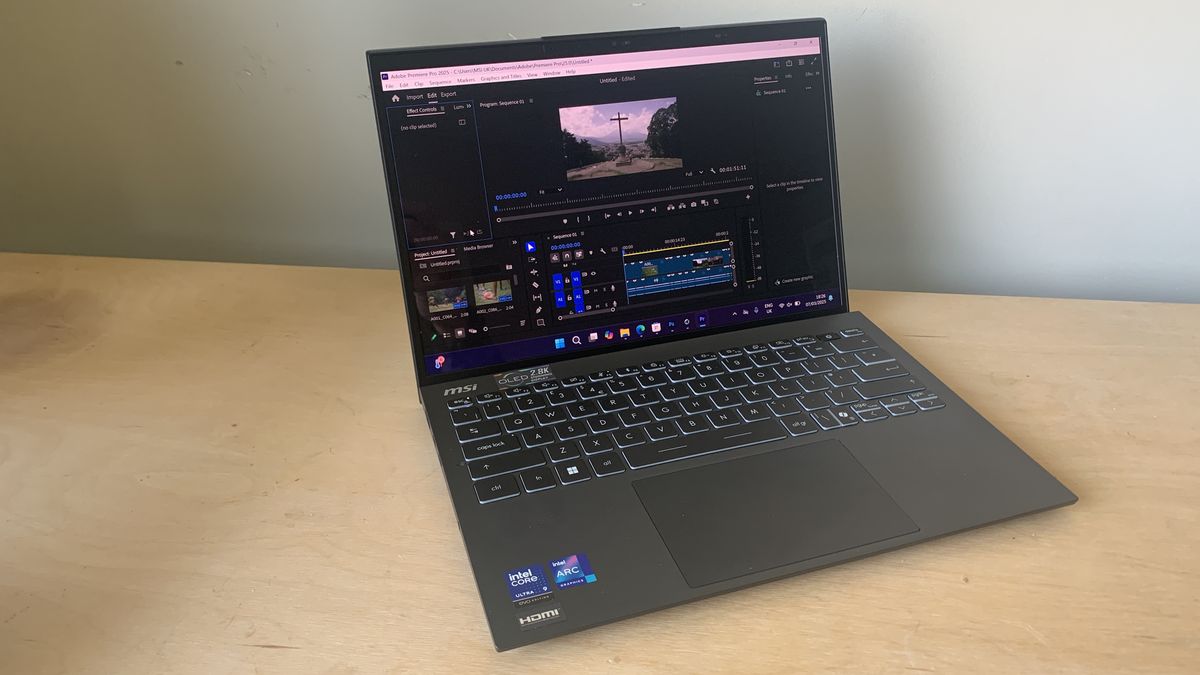
The MSI Prestige 13 AI+ Evo

The MSI Prestige 13 AI+ Evo follows quickly on from the Prestige 13 AI Evo. I think there’s only been six months between the two models with the newer version benefitting from the latest Intel technology. In almost all other regards, the two models are identical.

The laptop is small and lightweight, making it perfect for working in any and every location. The size and weight means you can quickly and easily throw it into a bag or even a large handbag before travelling to a new destination.

CPU:

Intel Core Ultra 9 processor

Graphics:

Inbuilt Intel Arc GPU

Memory:

32GB

Storage:

1TB

Screen size:

13.3-inch

Screen type:

OLED

Resolution:

2.8K (2880 x 1800)

Refresh rate:

60Hz

Ports:

2x Type-C Thunderbolt, 1x Type-A, 1x HDMI 2.1, 1x Micro SD, 1x Mic-in/Headphone-out

Wireless connectivity:

WiFi, Bluetooth

Dimensions:

299 x 210 x 16.9 mm

Weight:

990 grams

MSI Prestige 13 AI+ Evo

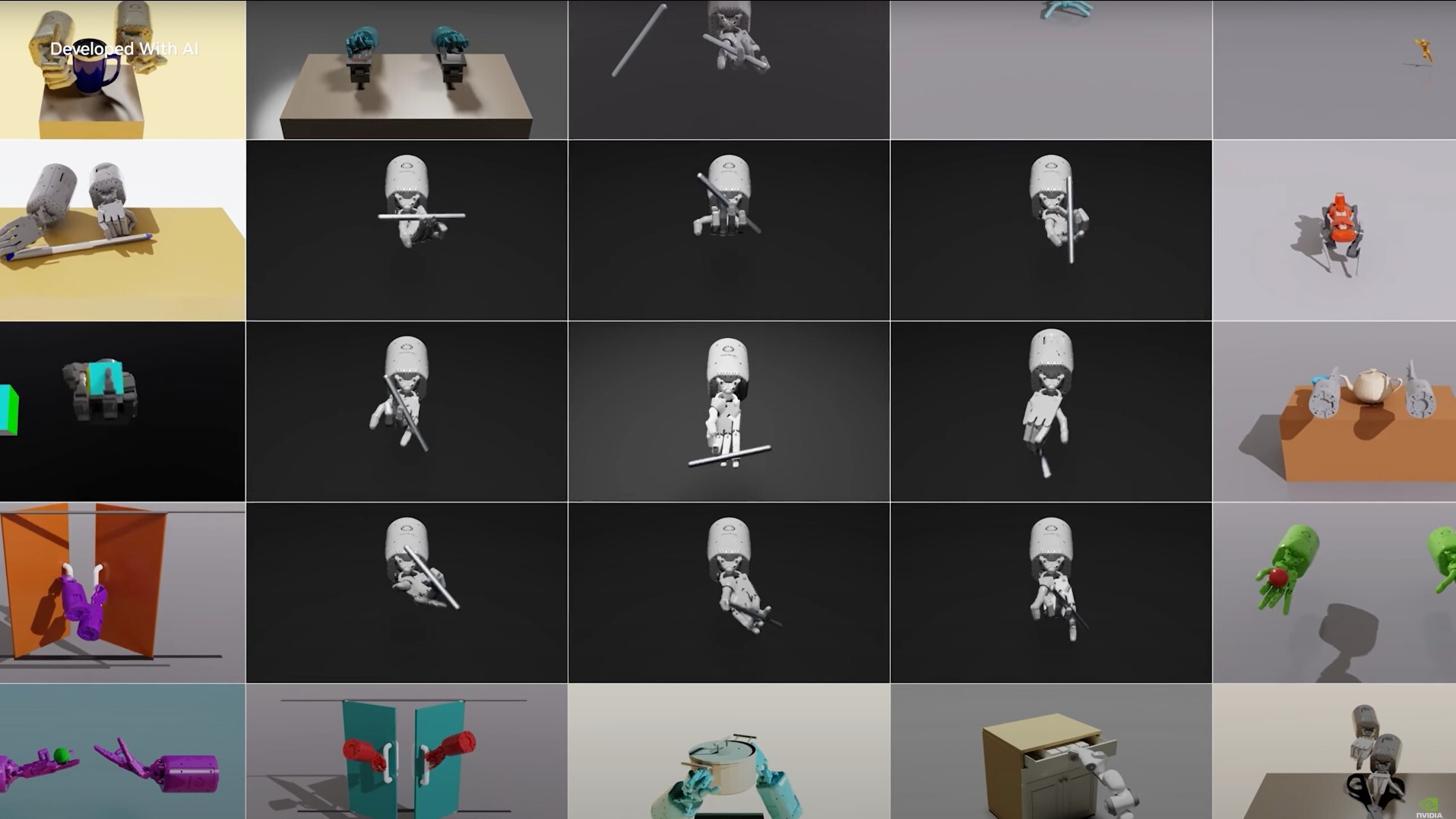
NVIDIA Research Fuels Transformative Work in AI, Graphics and Beyond

Innovating as One Team

The roots of many of NVIDIA’s landmark innovations — the foundational technology that powers AI, accelerated computing, real-time ray tracing, and seamlessly connected data centers — can be found in the company’s research organization, a global team of around 400 experts in fields including computer architecture, generative AI, graphics, and robotics.

Making a Deliberate Effort to Do Great Research

Established in 2006 and led since 2009 by Bill Dally, former chair of Stanford University’s computer science department, NVIDIA Research is unique among corporate research organizations. The team makes a deliberate effort to pursue complex technological challenges while having a profound impact on the company and the world.

"We make a deliberate effort to do great research while being relevant to the company," said Dally, chief scientist and senior vice president of NVIDIA Research. "It’s easy to do one or the other. It’s hard to do both."

One Team, One Vision

One of NVIDIA’s core values is "one team," a deep commitment to collaboration that helps researchers work closely with product teams and industry stakeholders to transform their ideas into real-world impact.

"Everybody at NVIDIA is incentivized to figure out how to work together because the accelerated computing work that NVIDIA does requires full-stack optimization," said Bryan Catanzaro, vice president of applied deep learning research at NVIDIA. "You can’t do that if each piece of technology exists in isolation and everybody’s staying in silos. You have to work together as one team to achieve acceleration."

Transforming NVIDIA and the Industry

NVIDIA Research didn’t just lay the groundwork for some of the company’s most well-known products — its innovations have propelled and enabled today’s era of AI and accelerated computing.

It began with CUDA, a parallel computing software platform and programming model that enables researchers to tap GPU acceleration for myriad applications. Launched in 2006, CUDA made it easy for developers to harness the parallel processing power of GPUs to speed up scientific simulations, gaming applications, and the creation of AI models.

Making Ray Tracing a Reality

Once NVIDIA Research was founded, its members began working on GPU-accelerated ray tracing, spending years developing the algorithms and the hardware to make it possible. In 2009, the project — led by the late Steven Parker, a real-time ray tracing pioneer who was vice president of professional graphics at NVIDIA — reached the product stage with the NVIDIA OptiX application framework, detailed in a 2010 SIGGRAPH paper.

Accelerating AI for Virtually Any Application

NVIDIA’s research contributions in AI software kicked off with the NVIDIA cuDNN library for GPU-accelerated neural networks, which was developed as a research project when the deep learning field was still in its initial stages — then released as a product in 2014.

Achieving Breakthroughs in Chip Design, Networking, Quantum and More

AI and graphics are only some of the fields NVIDIA Research tackles — several teams are achieving breakthroughs in chip architecture, electronic design automation, programming systems, quantum computing, and more.

Conclusion

NVIDIA Research is a small group of people who are privileged to work on ideas that could fail. And so, it is incumbent upon us to not waste that opportunity and to do our best on projects that, if they succeed, will make a big difference.

FAQs

Q: What is NVIDIA Research?
A: NVIDIA Research is a global team of around 400 experts in fields including computer architecture, generative AI, graphics, and robotics.

Q: What is the mission of NVIDIA Research?
A: The mission of NVIDIA Research is to pursue complex technological challenges while having a profound impact on the company and the world.

Q: How does NVIDIA Research collaborate with product teams and industry stakeholders?
A: NVIDIA Research collaborates with product teams and industry stakeholders to transform their ideas into real-world impact through a deep commitment to collaboration and full-stack optimization.

Q: What is the significance of CUDA in NVIDIA’s research?
A: CUDA, a parallel computing software platform and programming model, enabled researchers to tap GPU acceleration for myriad applications, propelling the era of AI and accelerated computing.

Ubisoft Brazil’s Hilarious Assassin’s Creed Shadows Marketing Stunt

0

Ubisoft Brazil Wows Fans with Unconventional Assassin’s Creed Shadows Ad

Surprising Marketing Stunt Turns Heads

Fans had been lamenting the lack of marketing for Ubisoft’s Assassin’s Creed Shadows, but the developer’s Brazil office just demonstrated how to promote the game in the most surprising way. Instead of showcasing gameplay, the ad is a live-action production inspired by retro tokusatsu like Super Sentai (or Power Rangers for those in the US).

A Live-Action Tokusatsu Production

The ad sees Brazilian streamers Ruan Silva (Joga Zulu) and Thais Matsufugi transform into the Assassin’s Creed Shadow characters Yasuke and Fujibayashi Naoe. Fans are now thinking that Ubisoft’s main office could take lessons from their approach.

The Ad: "Guerreiros das Sombras" (Shadow Warriors)

Watch the video below to see the action-packed production:

[Insert the first YouTube video]

The ad’s caption reads, "You’ve come home from school, called your friends from the street, grabbed your snack and turned on the TV. It’s time for your favorite show… but this time, the adventure is in Feudal Japan!"

The Ad’s Original Song: "Strike As One" by Edu Falaschi

The amusing ad even features an original song, "Strike As One" by Edu Falaschi. You don’t need to understand Portuguese to feel the tokusatsu vibes.

Reactions

"Ubisoft Brasil completely solved this game’s marketing issues," is one of the hundreds of comments on the video. "Ubisoft Brazil should take over the main company instead," was another opinion. And Ubisoft Japan seems to like it; there’s already a Japanese version with the song sung by Taro Kobayashi, the Japanese musician who recorded the theme songs for Amazon Prime’s Kamen Rider Amazons.

Behind-the-Scenes Fun

Ruan and Thais have been sharing some behind-the-scenes shots from the production, showing that they had a blast making the unusual spot.

Ubisoft Brazil’s Marketing Initiatives

It’s not the first time that Ubisoft Brazil has won attention for its marketing initiatives. It’s previously leaned in heavily on hyper-local relevance, using Brazilian memes and cultural references on TikTok. Its approach certainly beats the terrible AI-generated ‘trailer’ for Ark: Aquatica revealed at GDC 2025 this week.

Conclusion

Ubisoft Brazil’s Assassin’s Creed Shadows ad is a refreshing change from the usual marketing tactics, and fans are loving it. Who knows, maybe this is the start of a new trend in game marketing.

FAQs

Q: What is Assassin’s Creed Shadows?
A: Assassin’s Creed Shadows is an upcoming game in the Assassin’s Creed series.

Q: What is tokusatsu?
A: Tokusatsu is a Japanese term for live-action superhero TV shows, such as Super Sentai or Power Rangers.

Q: What is the song in the ad?
A: The song is "Strike As One" by Edu Falaschi.

Q: Will there be more Assassin’s Creed Shadows ads like this?
A: Only time will tell, but fans are hoping for more innovative marketing stunts from Ubisoft Brazil.

OpenAI’s Deep Research Agent Is Coming for White-Collar Work

0

Isla Fulford’s Hunch Pays Off: Deep Research Proves to be a Hit

A Game-Changer in AI Research

Isla Fulford, a researcher at OpenAI, had a hunch that Deep Research would be a hit even before it was released. Fulford was part of the team that built the artificial intelligence agent, which autonomously explores the web, deciding for itself what links to click, what to read, and what to collate into an in-depth report.

A Tool for Policymakers and Professionals

Deep Research was first made available internally at OpenAI, and whenever it went down, Fulford says she was inundated with queries from colleagues eager to have it back. "The number of people who were DMing me made us pretty excited," says Fulford. Since its public release on February 2, Deep Research has proven to be a hit with many users outside the company too.

Praise from Early Adopters

Patrick Collison, CEO of Stripe, posted on Twitter a few days after the product was released: "Deep Research has written 6 reports so far today. It is indeed excellent. Congrats to the folks behind it." Dean Ball, a fellow at George Mason University who specializes in AI policy, wrote: "Deep Research is the AI product that really got a meaningful chunk of the policymaking community in DC to start feeling the AGI."

How it Works

Deep Research is available as part of the ChatGPT Pro plan, which costs $200 per month. It takes a query, such as "Write me a report on the Massachusetts health insurance industry," or "Tell me about WIRED’s coverage of the Department of Government Efficiency," and then comes up with a plan, searching for relevant websites, combing through their content, and deciding what links to click and what information deserves further investigation. After exploring for sometimes tens of minutes, it synthesizes its findings into a detailed report, which may include citations, data, and charts.

A New Era in AI Research

The Deep Research model itself goes through an artificial kind of reasoning before devising a plan and moving forward with each step. The model provides details of this reasoning behind its research in a side window. "Sometimes it’s like ‘I need to backtrack, this doesn’t seem that promising,’" says Josh Tobin, another OpenAI researcher involved in building Deep Research. "It’s pretty cool to read some of those trajectories, just to understand how the model is thinking."

Scaling the Technology

OpenAI sees Deep Research as a tool that could take on more office work. "This is a thing that we can scale," Tobin says, adding that the agent could be trained to complete specific white-collar work, such as preparing reports or presentations. The longer goal is to "build an agent that is not just good at building reports through searching the web, but is good at many other types of tasks too."

Surprising Uses

Tobin’s team was surprised to see many people using Deep Research to generate code. "It’s an interesting thread to pull," he says. "We’re not totally sure what to make of it."

Conclusion

Deep Research has the potential to revolutionize the way we approach research and office work. With its ability to autonomously explore the web, synthesize information, and provide detailed reports, it is no wonder that it has been met with such enthusiasm from policymakers and professionals alike.

FAQs

Q: What is Deep Research?
A: Deep Research is an artificial intelligence agent that autonomously explores the web, deciding for itself what links to click, what to read, and what to collate into an in-depth report.

Q: How does Deep Research work?
A: Deep Research takes a query, searches for relevant websites, combines through their content, and decides what links to click and what information deserves further investigation. After exploring for sometimes tens of minutes, it synthesizes its findings into a detailed report.

Q: How much does Deep Research cost?
A: Deep Research is available as part of the ChatGPT Pro plan, which costs $200 per month.

Q: What are the potential uses of Deep Research?
A: Deep Research has the potential to take on more office work, such as preparing reports or presentations, and could be trained to complete specific white-collar work.

Integrating Generative AI into Microsoft Office with Amazon Bedrock

0

Generative AI in the Office Suite: Unlocking New Levels of Efficiency and Creativity

Solution Overview

The solution architecture in Figure 1 shows how Office applications interact with a serverless backend hosted on the AWS Cloud through an Add-In. This architecture allows users to leverage Amazon Bedrock’s generative AI capabilities directly from within the Office suite, enabling enhanced productivity and insights within their existing workflows.

Components Deep-Dive

Office Add-ins

Office Add-ins allow extending Office products with custom extensions built on standard web technologies. Using AWS, organizations can host and serve Office Add-ins for users worldwide with minimal infrastructure overhead.

Generative AI Backend Infrastructure

The AWS Cloud backend consists of three components:

  • Amazon API Gateway acts as an entry point, receiving requests from the Office applications’ Add-in. API Gateway supports multiple mechanisms for controlling and managing access to an API.
  • AWS Lambda handles the REST API integration, processing the requests and invoking the appropriate AWS services.
  • Amazon Bedrock is a fully managed service that makes foundation models (FMs) from leading AI startups and Amazon available via an API, so you can choose from a wide range of FMs to find the model that is best suited for your use case. With Bedrock’s serverless experience, you can get started quickly, privately customize FMs with your own data, and quickly integrate and deploy them into your applications using the AWS tools without having to manage infrastructure.

LLM Prompting

Amazon Bedrock allows you to choose from a wide selection of foundation models for prompting. Here, we use Anthropic’s Claude 3.5 Sonnet on Amazon Bedrock for completions. The system prompt we used in this example is as follows:

You are an office assistant helping humans to write text for their documents.

[When preparing the answer, take into account the following text: {context}]
Before answering the question, think through it step-by-step within the {tags}.
Then, detect the user’s language from their question and store it in the form of an ISO 639-1 code within the {tags}.
Then, develop your answer in the user’s language within the {tags}.

In the prompt, we first give the LLM a persona, indicating that it is an office assistant helping humans. The second, optional line contains text that has been selected by the user in the document and is provided as context to the LLM. We specifically instruct the LLM to first mimic a step-by-step thought process for arriving at the answer (chain-of-thought reasoning), an effective measure of prompt-engineering to improve the output quality. Next, we instruct it to detect the user’s language from their question so we can later refer to it. Finally, we instruct the LLM to develop its answer using the previously detected user language within response tags, which are used as the final response.

Implementation

To implement the solution, you can create a Lambda function by using the API Gateway console. By creating a Lambda proxy integration with a proxy resource, you can route requests to the resources to the Lambda function. Follow the tutorial to deploy the API and take note of the API’s invoke URL. Make sure to configure adequate access control for the REST API.

Example Use Cases

Text Generation

In the demo in Figure 2, we show how the plug-in is prompting the LLM to produce a text from scratch. The user enters their query with some context into the Add-In text input area. Upon sending, the backend will prompt the LLM to generate respective text, and return it back to the frontend. From the Add-in, it is inserted into the Word document at the cursor position using the Office JavaScript API.

Text Refinement

In Figure 3, the user highlighted a text segment in the work area and entered a prompt into the Add-In text input area to rephrase the text segment. Again, the user input and highlighted text are processed by the backend and returned to the Add-In, thereby replacing the previously highlighted text.

Conclusion

This blog post showcases how the transformative power of generative AI can be incorporated into Office processes. We described an end-to-end sample of integrating Office products with an Add-in for text generation and manipulation with the power of LLMs. In our example, we used managed LLMs on Amazon Bedrock for text generation. The backend is hosted as a fully serverless application on the AWS cloud.

Frequently Asked Questions

Q: What is the purpose of the solution?

A: The solution is designed to integrate office applications with a serverless backend hosted on the AWS Cloud, enabling users to leverage Amazon Bedrock’s generative AI capabilities directly from within the Office suite.

Q: What are the key components of the solution?

A: The key components of the solution include Office Add-ins, generative AI backend infrastructure, and LLM prompting.

Q: How does the solution work?

A: The solution works by using an Office Add-in to interact with a serverless backend hosted on the AWS Cloud, which is powered by Amazon Bedrock’s generative AI capabilities. The backend processes the user’s input and returns the generated text to the Add-in, which then inserts it into the Word document.

Q: What are the benefits of the solution?

A: The solution provides users with a seamless and efficient way to generate and manipulate text, improving their productivity and creativity. It also enables users to leverage the power of generative AI directly from within the Office suite, without requiring extensive technical expertise.

ClearGrid, armed with a fresh $10M, is developing AI to improve debt collection in MENA

0

Building AI-Driven Debt Collection

ClearGrid aims to modernize debt collection and recovery with AI, helping banks, fintechs, and lenders recover more debt without resorting to customer harassment. The Dubai-based startup, which emerged from stealth with $10 million in funding, uses AI to automate the collections process and personalize outreach across communication channels.

The Story Behind ClearGrid

ClearGrid’s CEO, Mohammed Al Zaben, stumbled into the debt collection space after selling his previous startup, Munch:On, to Careem in 2022. While taking time off, Al Zaben reflected on one of Munch:On’s biggest challenges: collecting payments from corporate customers. This led him down a rabbit hole into receivables management and unpaid invoices, ultimately realizing consumer collections posed an even bigger problem.

Al Zaben and his co-founders, Khalid Bin Bader Al Saud and Mohammed Khalili, sensed an opportunity to create software and AI to streamline recovery and collaborate with existing vendors in the space.

Automated Collection Components

ClearGrid’s AI models score things like repayment likelihood, help predict customer behavior, and personalize outreach across communication channels. The company claims its AI voice agents handle hundreds of thousands of calls daily, with 95% of its operations fully automated.

Borrowers preferring human interaction can engage in direct conversations, and the platform feeds the insights into the startup’s many models. ClearGrid’s platform categorizes borrowers based on their ability and willingness to pay, then structures repayments into smaller, manageable chunks, nudging them toward repayment without coercion.

Impact and Future Plans

ClearGrid has managed hundreds of millions in debt portfolios and signed ten major fintechs and banks in the UAE. An unnamed major bank increased recovery rates by 30% and cut collection costs in half, while a leading buy now, pay later (BNPL) provider doubled recoveries by automating early-stage debt resolution.

ClearGrid resolves debts twice as fast as traditional collection agencies, achieving between 38% to 50% resolution rates, while borrowers interact with the platform 60% more than they do with these agencies.

The company plans to “10x” revenue and accounts managed in 2024 and double its engineering team in the next fiscal quarter to build what Al Zaben calls the “definitive credit orchestration infrastructure for the region.”

Frequently Asked Questions

What is ClearGrid?

ClearGrid is a Dubai-based startup that uses AI to modernize debt collection and recovery for banks, fintechs, and lenders.

What is the goal of ClearGrid?

ClearGrid aims to help lenders recover more debt without resorting to customer harassment, while also building trust with borrowers.

How does ClearGrid work?

ClearGrid’s AI models score things like repayment likelihood, help predict customer behavior, and personalize outreach across communication channels. The company’s platform categorizes borrowers based on their ability and willingness to pay, then structures repayments into smaller, manageable chunks, nudging them toward repayment without coercion.

What is the potential impact of ClearGrid?

ClearGrid has the potential to resolve debts twice as fast as traditional collection agencies, achieving between 38% to 50% resolution rates, while borrowers interact with the platform 60% more than they do with these agencies. The company also claims it can cut collection costs by 50%.

Who has invested in ClearGrid?

ClearGrid has received funding from Middle East and North Africa-focused VCs Beco Capital, Nuwa Capital, and Raed Ventures, as well as prominent angel investors such as Anu Hariharan, Amjad Masad, Jason Gardner, Justin Kan, and Kenneth Lin.

Voice Recorder That’s Got the Work Industry Buzzing

ZDNET’s Key Takeaways: Plaud Note is a Game-Changer for Note-Taking

Plaud Note, a slim device that can record voice messages with the click of a button, has revolutionized the way we take notes. This tiny device, which is almost credit-card-sized, allows users to record voice messages and automatically syncs them with a mobile app (available for both Android and iOS) where AI-powered features come into play.

The AI features of Plaud Note are what set it apart from other voice recording apps and devices. Not only can it transcribe recordings to text, but it also uses AI to summarize them. This feature is particularly useful for busy professionals who need to take notes during meetings, calls, or in the midst of a chaotic workday.

The device is incredibly easy to use. Simply press and hold the button on the device to start recording, and then press and hold it again to stop. Plaud Note will automatically sync the recording to the app, where you can then select a template for the summary and let the AI do its magic.

In my experience with Plaud Note, I was impressed with the accuracy of the transcriptions, which were as good as those generated by the Android Recording app. I also found the ability to create mind maps and organize notes with headings and subheadings to be incredibly useful.

Plaud Note also has a unique feature that allows users to record calls. This feature, however, requires a MagSafe case and a MagSafe-enabled phone. It is essential to note that recording calls is not legal in every state, so users must ensure they are allowed to do so in their area.

ZDNET’s Buying Advice

While the Plaud Note device is priced at $159, the AI features require a paid subscription. The plans range from a 600-minute transcription quota for $10 to the unlimited plan, which is $240 per year. There are also other plans available, including a 1,200-minute transcription quota for $79, a 6,000-minute transcription quota for $89, and a 3,000-minute transcription quota for $49.

In conclusion, Plaud Note is well worth the asking price, even without the AI features. However, the AI capabilities make it a game-changer for those who need to take notes efficiently and accurately. This device is perfect for busy professionals, students, and anyone who wants to take their note-taking to the next level.

Key Specifications:

  • AI Transcription & Summarization capabilities developed on GPT-4o and Claude 3.5
  • One-press recording for meetings and calls
  • 112 transcription languages supported
  • Multiple professional templates tailored for various scenarios
  • 30-hour continuous recording on a single charge, 60 days standby
  • 64GB internal storage
  • Organize content with headings and subheadings (h2, h3, h4, h5, h6)
  • Conclusion section and FAQs section with proper questions and answers at the end

The Most Popular Cosplay Characters of 2024

Best Cosplay Character Ideas for 2024

Introduction

Cosplay remains an exuberant means of in-person expression, bringing characters to life for fans. In 2024, it was anime, video games, and blockbuster movies that had launched new cosplay icons, but there were also some old favorites still going strong. So whether you’re an experienced cosplayer, or you’re new to the community, this list will give you the best cosplay character ideas for 2024.

Top Cosplay Character Ideas for 2024

Anime and Manga-Inspired Characters

  • Wednesday Addams from Netflix Series: With her defining black dress, braided hair, and deadpan expression, she makes for a simple yet satisfying cosplay.
  • Aether & Lumine from Genshin Impact: The elaborate costumes, lit up accessories, and their elemental abilities leave a lot to work with when it comes to cosplaying for epic photoshoots.
  • Nezuko Kamado from Demon Slayer: Despite its years-long run, Demon Slayer continues to be immensely popular, and Nezuko’s bamboo muzzle and pink kimono have made her one of the most-cosplayed characters of 2024.

Video Game-Inspired Characters

  • Chainsaw Man from Chainsaw Man: The buzz surrounding Chainsaw Man hasn’t died down. Starting off from the current titles, the action powerhouses become more cosplay-ready, with Denji, sporting a chainsaw head and hands, being a high-octane cosplay option, or Makima, whose low-key dark skin and floofy hair make for a perfect if terrifyingly elegant yet ominous cosplay.
  • Aether & Lumine from Genshin Impact: The Traveler twins, Aether and Lumine, are among the most popular characters to genshin impact cosplay.
  • Jinx from Arcane / League of Legends: Arcane also helps keep League of Legends characters in the public eye, with Jinx being one of the more popular ones. Her colorful character, blue twin braids, and steampunk weaponry create a fun and easily recognizable League of Legends cosplay choice.

Movie and TV-Inspired Characters

  • Yor & Loid Forger from Spy x Family: Continuing the Spy x Family phenomenon into 2024, Yor Forger and Loid Forger remain staples among cosplayers. Yor’s elegant assassin look and Loid’s brusque secret agent suit are stylish and dynamic cosplay options for individuals and couples.
  • Spider-Man Variants from Spider-Man: Across the Spider-Verse: Though Spider-Man: Across the Spider-Verse continues to draw audiences across the globe, the flick has kept the world up with a slew of fun new Spider-People, like Spider-Punk, Spider-Man 2099, and Gwen Stacy. These unique interpretations of the classic Spider-Man suit provide cosplayers with countless variations to recreate.
  • Zelda & Link from The Legend of Zelda: Tears of the Kingdom: With Tears of the Kingdom turning heads back in 2023, there were plenty of Link and Zelda to go around! The new regal design for Zelda and multiple armor sets for Link give cosplayers plenty of freedom when it comes to their interpretations.

Conclusion

The most popular cosplay characters of 2024 are both classic icons and new favorites. From anime to gaming to live-action adaptations, there’s a character that fits every cosplayer’s style and skill level. Stay creative, have fun, and put your favorite character alive at conventions, photoshoots, and cosplay meetups!

Frequently Asked Questions

  • How do I pick a character to cosplay? Be a character you adore and admire. Keep in mind your budget, skills, and ease with the costume. Beginners should stick to simpler looks before trying complicated outfits.
  • Where to buy cosplay costumes from? There are also sites that sell cosplay costumes, such as Etsy, Amazon, and specific cosplay stores like URCosplay. For better quality custom works, you could also hire a cosplay tailor.
  • Can I make my own cosplay costume? Yes! This is a big advantage for cosplayers of more common or mainstream characters – they can purchase costumes relatively inexpensively online compared to those who prefer to create their garments, with accuracy and fit in mind. You can sew costumes from the ground up, alter existing clothing, or work with foam and thermoplastics for armor and props.
  • How do I style my wig for cosplay? Shape your wigs with heat-resistant wigs and styling tools (hair spray, gel, flat iron). YouTube tutorials and cosplay forums can walk you through how to style for specific characters.
  • Is it allowed to gender-bend a character I cosplay? Absolutely! Cosplay is about creativity, individualism. A lot of cosplayers gender-bend to make characters work for them, and it is very much accepted in the community.

Congress grants 6-month reprieve for Medicare telehealth

WHY IT MATTERS

The FY2025 Continuing Resolution passed earlier this month prevented a federal government shutdown and offered telehealth extensions for Medicare patients for another six months.

THE LATEST DEVELOPMENTS

The American Telemedicine Association (ATA) praised the extension, stating, "We have avoided a shutdown for telehealth services… This is a big victory for telehealth, and a huge relief for patients and clinicians in every state and region of the United States, especially those in underserved communities."

EXTENSIONS AND ADDITIONS

The stopgap legislation also granted permission for telehealth visits to occur from a wider range of locations – including the patient’s home – and allowed additional qualified provider types to deliver virtual care.

CONCERNS RAISED

However, some healthcare organizations expressed concern about the shortened duration of the extension. "HIMSS strongly supports Congress’ inclusion of a short-term extension for telehealth services in the FY2025 Continuing Resolution, keeping vital access to care capabilities available to millions of Medicare patients," said a spokesperson. "However, more action is needed to extend the program beyond this fiscal year. We will continue pushing for a sustainable and long-term solution."

THE FUTURE OF TELEHEALTH

The American Telemedicine Association (ATA) also expressed concern about the "telehealth cliff" and the exclusion of other essential telehealth programs that expired or were absent from the resolution. "The shortened duration of the extensions included are an impediment to long-term certainty, and the exclusion of other essential telehealth programs that expired or were absent from the final bill continues to prevent millions of individuals from accessing needed care," said Kyle Zebley, executive director of the American Telemedicine Association.

THE LARGER TREND

Telehealth has become vital to Medicare, particularly where patients use virtual care for behavioral health services. In October, the U.S. Centers for Medicare and Medicaid released a study showing lower Medicare spending and lower mortality rates when compared to brick-and-mortar inpatient care.

ON THE RECORD

"We are also encouraged by Dr. Mehmet Oz’s comments at his Senate confirmation hearing. As President Trump’s nominee to lead the Centers for Medicare and Medicaid Services, he emphasized telehealth as ‘a major focus’ and confirmed ‘it’s one of the areas I think we’ll be able to make major inroads because there are no opponents to this,’" said Zebley.

CONCLUSION

The recent stopgap legislation extends telehealth flexibilities for Medicare patients until the end of September, but some healthcare organizations are concerned about the shortened duration and the exclusion of other essential telehealth programs. As the debate continues, it is clear that telehealth is a vital component of the healthcare system, and efforts to make it more accessible and sustainable are ongoing.

FAQs

Q: What is the purpose of the FY2025 Continuing Resolution?
A: The FY2025 Continuing Resolution passed earlier this month prevented a federal government shutdown and offered telehealth extensions for Medicare patients for another six months.

Q: What are the concerns raised by healthcare organizations?
A: Some healthcare organizations are concerned about the shortened duration of the extension and the exclusion of other essential telehealth programs that expired or were absent from the resolution.

Q: What is the future of telehealth?
A: The future of telehealth is uncertain, but the American Telemedicine Association (ATA) is pushing for a sustainable and long-term solution to make telehealth access permanent for all Medicare beneficiaries.

Q: What is the role of the U.S. Department of Health and Human Services in telehealth?
A: The U.S. Department of Health and Human Services has not yet reflected the new legislative changes on its telehealth policy update page.