Home Blog Page 174

Google Acquires Wiz for $32 Billion

0

Alphabet Acquires Wiz, a Fast-Growing Israeli Cybersecurity Firm

Google’s Largest-Ever Acquisition

Google’s parent company, Alphabet, has announced its largest-ever acquisition, entering into a deal to buy New York-based cybersecurity firm Wiz, making it a part of its Google Cloud division. This is the company’s second attempt to buy Wiz after talks stalled last year at a lower $23 billion evaluation.

Wiz: A Fast-Growing Israeli-Founded Startup

Wiz is a fast-growing Israeli-founded startup that works with companies like Microsoft and Amazon to provide cloud-based cybersecurity solutions. The company was valued at $12 billion in May 2024, which reportedly climbed to $16 billion later in the year in an equity offering to employees, and has been working towards an initial public offering (IPO) in the months since the previous acquisition fell through.

Largest Acquisition in Google’s History

Should the deal receive regulatory approval, it will easily outsize the $12.5 billion paid by Google for Motorola Mobility in 2012.

Google’s M&A Strategy in Focus

Google is currently embroiled in two separate antitrust lawsuits with the Justice Department over its search engine and digital advertising businesses. It lost the first but is appealing the ruling, and a final decision is still awaited on the second.

Building a Stronger Cloud Security

The Wiz purchase would be the latest of several acquisitions that Google has made in recent years as it attempts to bolster security for its cloud computing customers. In 2022, Google purchased two cybersecurity firms — Siemplify and Mandiant — for $500 million and $5.4 billion, respectively, with the latter company best recognized for uncovering the SolarWinds hack. Adding Wiz to that mix feels like a targeted effort to tighten Google’s cloud protections in the face of Microsoft’s less-than-stellar cybersecurity reputation.

Conclusion

The acquisition of Wiz by Alphabet’s Google Cloud division is a significant move to strengthen the company’s cybersecurity capabilities, particularly in the cloud computing space. With Wiz’s expertise in cloud-based cybersecurity solutions, Google is poised to become a major player in the market, giving it an edge over competitors like Microsoft.

FAQs

Q: What is Wiz, and what does it do?
A: Wiz is a fast-growing Israeli-founded startup that provides cloud-based cybersecurity solutions to companies like Microsoft and Amazon.

Q: How much is Wiz valued at?
A: Wiz was valued at $12 billion in May 2024 and increased to $16 billion later in the year.

Q: Why is Google acquiring Wiz?
A: Google is acquiring Wiz to bolster its cloud security capabilities and compete with Microsoft in the market.

Q: How much did Google pay for Wiz?
A: The acquisition amount has not been disclosed, but it is reportedly larger than the $12.5 billion paid by Google for Motorola Mobility in 2012.

Edit with a Question

Multimodal output opens up new possibilities

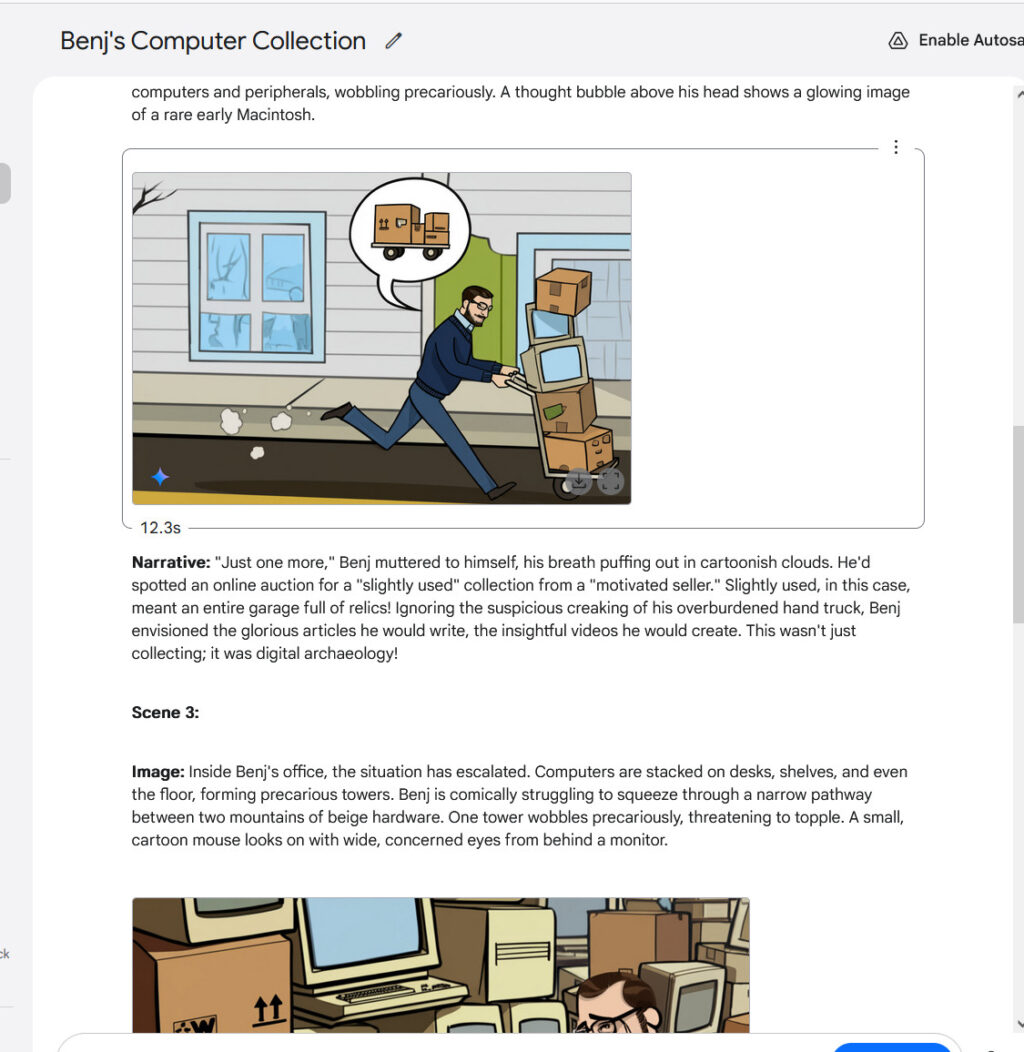
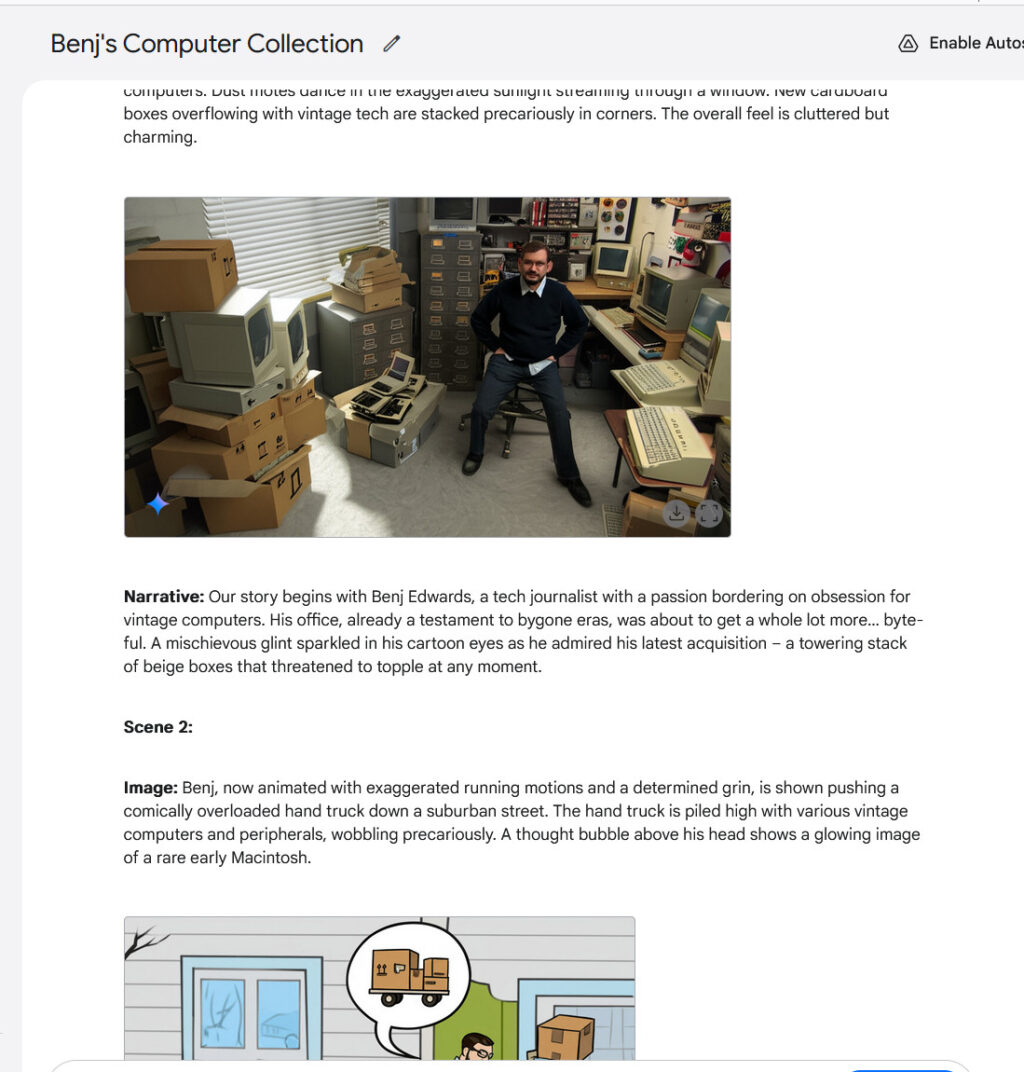
Having true multimodal output opens up interesting new possibilities in chatbots. For example, Gemini 2.0 Flash can play interactive graphical games or generate stories with consistent illustrations, maintaining character and setting continuity throughout multiple images. It’s far from perfect, but character consistency is a new capability in AI assistants. We tried it out and it was pretty wild—especially when it generated a view a photo we provided from another angle.

Creating a multi-image story with Gemini 2.0 Flash

Creating a multi-image story with Gemini 2.0 Flash, part 1.

Creating a multi-image story with Gemini 2.0 Flash, part 2. Notice the alternative angle of the original photo.

Creating a multi-image story with Gemini 2.0 Flash, part 2. Notice the alternative angle of the original photo.

Creating a multi-image story with Gemini 2.0 Flash, part 2. Notice the alternative angle of the original photo.

Creating a multi-image story with Gemini 2.0 Flash, part 3.

Creating a multi-image story with Gemini 2.0 Flash, part 3.

Creating a multi-image story with Gemini 2.0 Flash, part 3.

Text rendering represents another potential strength of the model

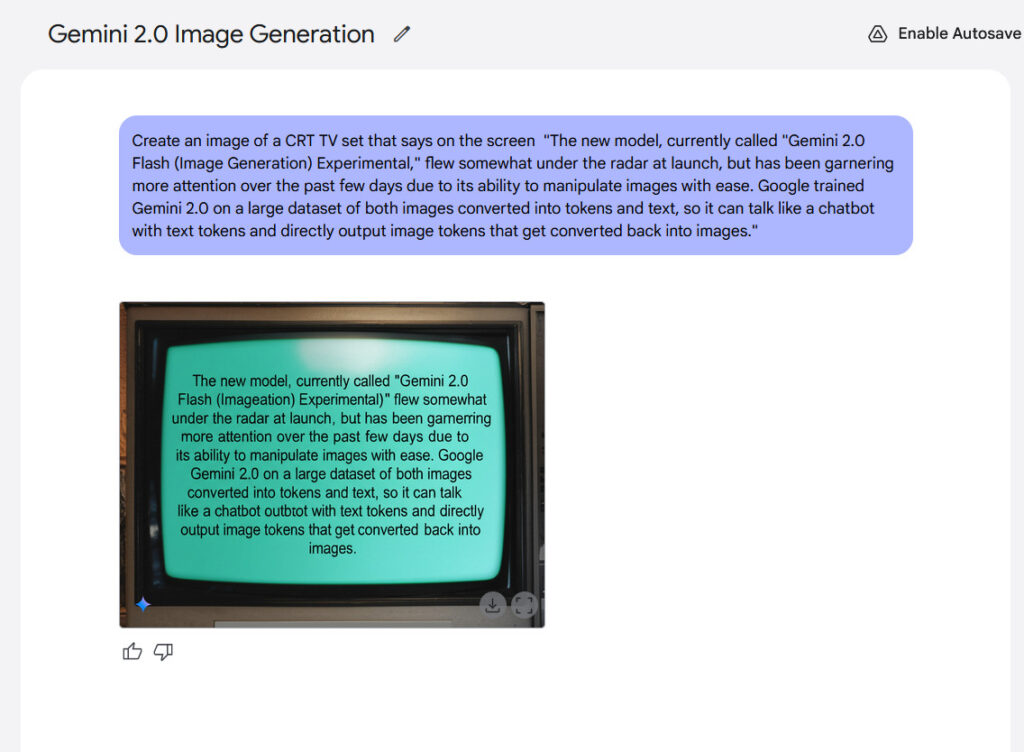
Google claims that internal benchmarks show Gemini 2.0 Flash performs better than “leading competitive models” when generating images containing text, making it potentially suitable for creating content with integrated text. From our experience, the results weren’t that exciting, but they were legible.

An example of in-image text rendering generated with Gemini 2.0 Flash.

An example of in-image text rendering generated with Gemini 2.0 Flash.

Conclusion

Despite Gemini 2.0 Flash’s shortcomings so far, the emergence of true multimodal image output feels like a notable moment in AI history because of what it suggests if the technology continues to improve. If you imagine a future, say 10 years from now, where a sufficiently complex AI model could generate any type of media in real time—text, images, audio, video, 3D graphics, 3D-printed physical objects, and interactive experiences—you basically have a holodeck, but without the matter replication.

Frequently Asked Questions

Q: What is Gemini 2.0 Flash?
A: Gemini 2.0 Flash is a new AI model that can generate multimodal images, including text, images, and interactive elements.

Q: What are the potential uses of Gemini 2.0 Flash?
A: The potential uses of Gemini 2.0 Flash include creating interactive stories, games, and other multimedia content.

Q: Is Gemini 2.0 Flash perfect?
A: No, Gemini 2.0 Flash is not perfect, and its output may not always be accurate or visually appealing.

Q: What is the future of Gemini 2.0 Flash?
A: The future of Gemini 2.0 Flash is uncertain, but it has the potential to be a powerful tool for generating multimodal content in the future.

UK Football’s Most Iconic Logos

0

Best Football Logos in the UK

Ask any football fan, and they’ll probably tell you that their favourite logo in the sport is the one worn by the club they support. The best logos and badges form a huge part of the connection between club and supporter. They’re worn on shirts, printed on posters and flags, and even tattooed on fans, and are an invaluable aspect of a supporter’s relationship and bond with their club.

Crystal Palace

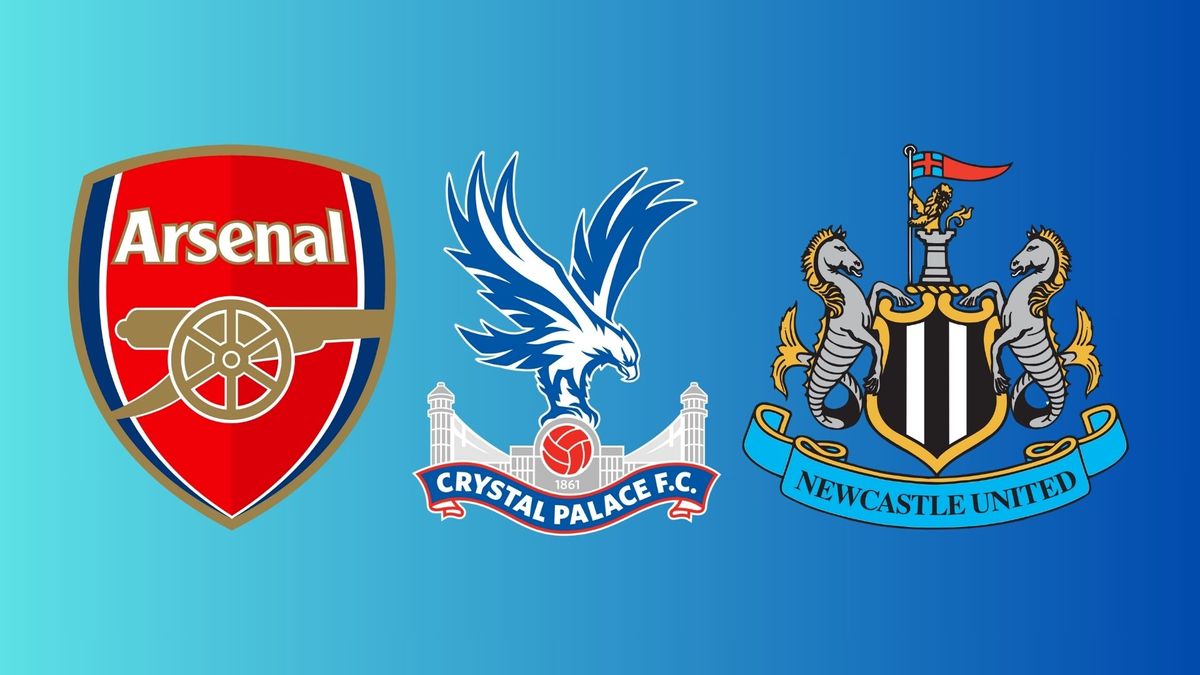
Crystal Palace boast one of the smartest badges in the Premier League. The Eagles, known as such due to the eagle that’s been the focal point of their logo since 1973, were inspired by the similarly avian logo of Portuguese giants Benfica.

They’ve updated the badge a handful of times over the years to keep it looking fresh, but it’s arguably in the best shape it’s been in right now. It makes expert use of the club’s red and blue colours with a cool blue eagle, a red football, and smart lettering on a ribbon that makes use of both colours.

Newcastle United

Newcastle United’s logo incorporates seahorses, a symbol of the city, also appearing on the city’s coat of arms, and serves as a reminder that Newcastle is a port city on the coast.

There’s a castle, too, to represent the city’s keep, and lots of gold and grey to give a timeless, almost regal feel. With football such a global sport, and the club owned by Saudi Arabia’s Public Investment Fund, their badge is a real connection to the team’s local heritage.

Arsenal

Arsenal’s current crest has been used since 2002, and is one of the most recognisable around – it’s seen them become the only team to go unbeaten in the Premier League for an entire season and it’s been sported by stars including Thierry Henry, Mesut Ozil and Bukayo Saka over the past couple of decades.

It’s not too complex – and was even criticised for not being traditional enough when it was announced – but features Arsenal’s famous cannon, the bright red of the club’s colours, and a white scroll at the top with the club’s name in bold, golden letters.

Birmingham City

This instantly recognisable logo can divide opinion, but this Birmingham supporter feels it warrants inclusion for its originality. Like the Forest logo, it was a competition winner in the 1970s, but this one opts for a line-drawn globe, which sits on top of a football.

A classy blue ribbon runs in a zig-zag over the two circles, giving the name of the club and the year it was founded in smart block capitals. In an era of roundel logos and increased simplification, football fans can instantly tell this logo by even just the silhouette.

Salford City

Salford City changed its logo in 2014, the same year it was taken over by a group of former Manchester United players. It’s not too unlike Wolves’, except it features a lion rather than a fox. Whereas the logo used to feature a more traditional rampant lion, the lion in the current logo is facing forward and much more minimalist – but extremely eye-catching.

The lion’s white face is surrounded by a black mane, which in turn is surrounded by a hexagonal red border. The shape is said to replicate the shape of the hull of the ships in Salford’s docks, too, so there’s a nod to the location and its history.

Wrexham

Wrexham might play in the English league system, but the city is located over the border in Wales, and for the 1973-74 season the club changed their badge to one that really reflects their Welsh roots.

There are three feathers at the top of the badge and two red dragons – the national symbol of Wales – facing inwards at each other closer to the logo’s centre. The top of the badge is green while the bottom is white, combining with the red dragon to incorporate all of the Welsh national colours. It’s one of the more classic-looking badges still in use, but it works really well.

Barrow

Barrow are another team to keep a traditional logo, and theirs is based on the coat of arms of Barrow-in-Furness. At the top is a submarine – the town has launched submarines for the Royal Navy since 1901 – while just under is an arrow with a bee on it (get it?) for a fun play on words.

Opposite is a red rose, symbolising Barrow’s historic place in Lancashire, as well as a football. The colours of blue and white have been used by the club for over a century, so it’s only fitting that they’d play a focal role in the logo too. There’s quite a lot going on here, but it’s effective in the way it comes together.

Conclusion

The best football logos are a vital part of a team’s identity and a crucial aspect of the bond between the club and its supporters. From the traditional and classic to the modern and innovative, each logo has its own unique charm and character, reflecting the history, values, and spirit of the club.

FAQs

Q: What makes a great football logo?

A: A great football logo is one that is both unique and memorable, reflecting the history, values, and spirit of the club. It should be easy to recognize and identify, and evoke a sense of pride and belonging among fans.

Q: What are the most important factors in designing a football logo?

A: The most important factors in designing a football logo are its ability to reflect the club’s history, values, and spirit, as well as its ability to be easily recognizable and memorable. A good logo should also be simple, yet distinctive, and should incorporate the club’s colours and any relevant symbols or motifs.

Q: How do football logos impact the fan experience?

A: Football logos have a significant impact on the fan experience, serving as a symbol of pride and identity for supporters. They are often worn on shirts, printed on posters and flags, and even tattooed on fans, and help to create a sense of community and belonging among fans.

Google Researchers Improve RAG With “Sufficient Context” Signal

0

Defining Sufficient Context

Google researchers have introduced a method to improve AI search and assistants by enhancing Retrieval-Augmented Generation (RAG) models’ ability to recognize when retrieved information lacks sufficient context to answer a query. If implemented, these findings could help AI-generated responses avoid relying on incomplete information and improve answer reliability.

Retrieval-Augmented Generation (RAG) Systems

RAG systems augment Large Language Models (LLMs) with external context to improve question-answering accuracy. However, hallucinations still occur. The research paper introduces the concept of sufficient context and describes a method for determining when enough information is available to answer a question.

Defining Sufficient Context

The researchers define sufficient context as meaning that the retrieved information contains all the necessary details to derive a correct answer. The classification that something contains sufficient context doesn’t require it to be a verified answer. It’s only assessing whether an answer can be plausibly derived from the provided content.

Sufficient Context Autorater

The Sufficient Context Autorater is an LLM-based system that classifies query-context pairs as having sufficient or insufficient context. The best performing autorater model was Gemini 1.5 Pro (1-shot), achieving a 93% accuracy rate, outperforming other models and methods.

Reducing Hallucinations with Selective Generation

The researchers discovered that RAG-based LLM responses were able to correctly answer questions 35–62% of the time when the retrieved data had insufficient context. They used this discovery to create a Selective Generation method that uses confidence scores and sufficient context signals to decide when to generate an answer and when to abstain.

Takeaways

  • Context sufficiency is one factor, but confidence scores also influence AI-generated responses by intervening with abstention decisions.
  • The abstention thresholds dynamically adjust based on these signals, which means the model may choose to not answer if confidence and sufficiency are both low.
  • Pages with complete and well-structured information are more likely to contain sufficient context, but other factors also play a role in determining AI-generated responses.

What are pages with insufficient context?

  • Lacking enough details to answer a query
  • Misleading
  • Incomplete
  • Contradictory
  • Incomplete information
  • The content requires prior knowledge
  • The necessary information to make the answer complete is scattered across different sections instead of presented in a unified response

Conclusion

Google’s research on sufficient context could lead to AI-generated responses that increasingly rely on web pages that provide complete, well-structured information, as these are more likely to contain sufficient context to answer a query. The key is providing enough information in a single source so that the answer makes sense without requiring additional research.

FAQs

Q: What is sufficient context?
A: Sufficient context is when the retrieved information contains all the necessary details to derive a correct answer.

Q: What is the Sufficient Context Autorater?
A: The Sufficient Context Autorater is an LLM-based system that classifies query-context pairs as having sufficient or insufficient context.

Q: How does the Selective Generation method work?
A: The Selective Generation method uses confidence scores and sufficient context signals to decide when to generate an answer and when to abstain.

Q: How does this research impact AI-generated responses?
A: This research could lead to AI-generated responses that increasingly rely on web pages that provide complete, well-structured information, as these are more likely to contain sufficient context to answer a query.

The New Freakier Friday Poster is Making Me Sad

0

The Disappointing Reboot: A Critical Look at the Freakier Friday Poster

A Sequel in Question

It’s safe to say that the film industry has been in a bit of a sequel slump for some time now, and I’m usually unphased. However, occasionally, there’s an announcement that makes me think, "Who asked for this?" One of the more recent cases was the announcement of Freakier Friday – the upcoming sequel to the teen classic, Freaky Friday, and a beacon of my tween years.

The Disappointing Poster

While I was willing to hold my reservations until the film’s official release, the newest promo poster design has made me a little… sad. Whether it’s the tepid recreation of the original poster or the half-baked forced nostalgia, I can’t help but be a little disappointed in the Freakier Friday poster.

Comparison to the Original

The Freakier Friday poster is essentially a modern recreation of the original 2003 Freaky Friday design. While the original played heavily on stylistic distinctions, the new design’s oversaturated look doesn’t carry the same visual punchiness. With exaggerated costumes and props, the original poster illuminates the generational gap through costume design and styling, while in comparison, the new design feels costumey without purpose, lacking the campy theatrical contrast of the 2003 design.

Lack of Creativity

Admittedly, I may be a little biased, but from the poster alone, Freakier Friday feels like a sequel for the sake of it, rather than a thoughtful expansion of the original film. The design fails to capture the contrast of the original, which gives the film its unique charm. While I’m a little concerned about the sequel, I’ll remain on the fence for now.

Conclusion

The Freakier Friday poster’s lack of creativity and forced nostalgia has left me underwhelmed. While I’m willing to reserve judgment until the film’s release, the poster’s uninspired design has raised my concerns about the sequel’s potential.

Frequently Asked Questions

Q: Why are you criticizing the Freakier Friday poster?
A: I’m criticizing the poster for its lack of creativity, oversaturated look, and forced nostalgia, which may not accurately represent the film’s quality.

Q: Are you a fan of the original Freaky Friday?
A: Yes, I have fond memories of the original film and was excited to hear about the sequel, but the disappointing poster has tempered my enthusiasm.

Q: Will you be watching the film?
A: I’m willing to give the film a chance, but my expectations are low, and I’ll be evaluating it based on its own merit, rather than its connection to the original.

La IA pronto será más inteligente que los humanos

0

La inteligencia artificial: el futuro inminente

La gente con información privilegiada está alarmada

Lo más desorientador de la industria actual de la IA es que las personas más cercanas a la tecnología —los empleados y ejecutivos de los principales laboratorios de IA— tienden a ser los más preocupados por lo rápido que está mejorando.

Los modelos de IA mejoran

Para mí, la evidencia de que los sistemas actuales de IA están mejorando con rapidez, de maneras que son bastante obvias para cualquiera que los utilice, es tan persuasiva como la opinión de los expertos.

Prepararse de más es lo mejor

La mayoría de los consejos que he oído sobre cómo deben prepararse las instituciones para la AGI se reducen a cosas que deberíamos estar haciendo de todos modos: modernizar nuestra infraestructura energética, reforzar nuestras defensas de ciberseguridad, acelerar el proceso de aprobación de fármacos diseñados por la inteligencia artificial, redactar normativas para evitar los daños más graves de la inteligencia artificial, impartir capacitación en inteligencia artificial en las escuelas y dar prioridad al desarrollo social y emocional sobre las habilidades técnicas que pronto quedarán obsoletas.

Conclusión

Creo que la llegada de la AGI es un tema serio que no podemos darle la espalda. Aunque no sabemos exactamente cuándo llegará ni qué forma adoptará, creemos que es importante tomar medidas para prepararnos y mitigar los riesgos que conlleva.

Preguntas frecuentes

  • ¿Qué es la AGI?
    La AGI se refiere a un sistema de IA que puede realizar cualquier tarea que un humano pueda hacer, como, por ejemplo, aprender, razonar, resolver problemas, tomar decisiones y aprender de la experiencia.
  • ¿Cuándo llegará la AGI?
    Es difícil predecir con exactitud cuándo llegará la AGI, pero muchos expertos creen que puede ocurrir en los próximos 2-5 años.
  • ¿Qué efectos tendrá la AGI en la sociedad?
    La AGI puede tener un impacto profundo en la sociedad, incluyendo el mercado laboral, la educación, la salud y la política. Es importante prepararnos para los cambios que se avecinan y trabajar para mitigar los riesgos que conlleva.
  • ¿Qué puedo hacer para prepararme para la AGI?
    Puedes empezar leyendo más sobre la AGI y los avances en tecnología, participando en discusiones en línea y siguiendo a expertos en el tema. También puedes considerar tomar cursos o capacitación en inteligencia artificial y desarrollar habilidades técnicas que puedan ser relevantes en un mundo con AGI.

Rapidly Craft Elaborate Animations with Maya

0

Bifrost for Maya: Redefining 3D Animation, Modelling, and Effects

Bifrost for Maya isn’t just an addition to the software; it’s a transformative tool that has been able to redefine the landscape of 3D animation, modelling, and effects. With its advanced visual programming capabilities, Bifrost allows artists to push beyond traditional boundaries and explore new creative horizons.

01. Installing MJCG Compounds

Before starting, we need to install the required compounds. Download the latest version of MJCG Compounds and copy it to a folder at the filepath ‘Users \ username \ Autodesk \ Bifrost \ Compounds’. If this address doesn’t exist, you can create the folders yourself. Do note that the latest version of MJCG Compounds works with Bifrost 2.6 and above. After copying, make sure to edit the ‘maya.env’ file and add this line of code:

BIFROST_LIB_CONFIG_FILES=C:/…/MJCG_compounds/bifrost_lib_config.json

02. Opening the Bifrost Browser

We want to open one of the default Bifrost scenes to create our own strands by changing the field parameters and setting input geometry. To do this, go to the Windows menu and select Bifrost Browser. There are numerous scenes you can explore by viewing the various graphs to see Bifrost’s capabilities. Click on the Fields section, select ‘flat_hurricane_noise’, and hit Import.

03. Using the Graph Editor

The Graph Editor is a powerful tool that allows us to create complex simulations and animations. We can use it to not only change the intensity of light, reflections, and so on, but also to more easily solve any problems with the render.

04. Selecting Render Settings

Sampling in render settings is key, and eliminating render noise is hugely important. But remember that arbitrarily higher numbers mean a longer render time. In this project, the sampling numbers were as follows: Camera AA 7, Diffuse 3, Specular 3. In the Ray Depth tab: Diffuse 2, Specular 3. Save the image as an EXR file and ensure all render layers are stored in the final image.

05. Using Multi-Pass Compositing

With Nuke, you have the ability to load an EXR file and use the Shuffle node to separate the individual render layers, then recombine them and change every layer as you want. You can also isolate the Z-depth pass to utilize its data with the ZDefocus node, which enables you to create your desired depth of field effect. This process gives you precise control over the final image by manipulating various individual elements and applying specific effects to enhance the resulting visual.

06. Adding Depth of Field

Next, let’s use depth of field and bokeh effects. Use the ZDefocus node and assign the Z-depth input to the Depth Channel. Now set the Output option to ‘focal plane setup’ and place the Focal Point where you want the focus to be. By setting the Size and Maximum, we can define the blurriness of the out-of-focus areas. For this project, we want to select ‘far=0’ as the Math algorithm.

07. Wrapping up the Image

For the final image, we need two sections of depth of field, so we’ll use two setups and mask them with the Roto node. This way, we get larger bokeh effects in the back and left side of the image, and smaller bokeh effects on the front-right. Finally, the colors are corrected with Color Correct and Grade nodes, and a bit of noise and cinematic grain added with the Grain node.

Conclusion

In this article, we have explored the capabilities of Bifrost for Maya and how it can be used to create complex simulations and animations. We have also seen how to use multi-pass compositing and depth of field effects to enhance the final image. With its advanced visual programming capabilities, Bifrost allows artists to push beyond traditional boundaries and explore new creative horizons.

Frequently Asked Questions

Q: What is Bifrost for Maya?
A: Bifrost for Maya is a transformative tool that has been able to redefine the landscape of 3D animation, modelling, and effects.

Q: What are the benefits of using Bifrost for Maya?
A: Bifrost for Maya allows artists to push beyond traditional boundaries and explore new creative horizons, with its advanced visual programming capabilities.

Q: How do I install MJCG Compounds?
A: To install MJCG Compounds, download the latest version and copy it to a folder at the filepath ‘Users \ username \ Autodesk \ Bifrost \ Compounds’. If this address doesn’t exist, you can create the folders yourself. Do note that the latest version of MJCG Compounds works with Bifrost 2.6 and above. After copying, make sure to edit the ‘maya.env’ file and add this line of code: BIFROST_LIB_CONFIG_FILES=C:/…/MJCG_compounds/bifrost_lib_config.json

Zoom’s AI Goes Agentic

Zoom Introduces AI-Powered Features to Enhance Video Call Interactions

Zoom’s AI Companion Evolves with Agentic Functionality

Zoom has regularly incorporated new artificial intelligence features into its Zoom AI Companion to optimize video call interactions. With its latest features, Zoom introduces AI agents that execute tasks for you. The company is adding other AI features across all its current offerings.

Agentic Capabilities in AI Companion

The company is introducing Zoom Tasks, which identifies action items in meeting summaries, chats, and emails and then completes tasks, such as scheduling a follow-up meeting or generating a document. Zoom Tasks is expected to launch at the end of the month and can be embedded into a Zoom Doc.

New Voice Recorder Feature

Also launching in late March is a new voice recorder feature accessible on the Zoom Workplace mobile app that can transcribe, summarize, and capture in-person conversations so users can revisit the notes later. This voice recorder feature seems similar in functionality to existing AI transcription services, such as Otter.ai.

Meeting Agendas with AI Companion

Another feature, Meeting Agendas with AI Companion, can help meetings stay on track by allowing hosts to add agenda timers to sections and receive AI-generated live notes during the meetings via the new Live Notes for Meetings and Phone feature. Both features are expected to launch in May.

AI Companion for Workspace Reservation

Zoom is also launching an AI Companion for Workspace Reservation to help professionals manage hybrid work experiences. The feature shows users the days their colleagues are expected to be in the office, using this information to suggest days to go in based on scheduled meetings. The feature even books a desk or a Zoom Room for meetings. This feature is expected to launch in May.

AI Features Across Zoom Products

Zoom products, such as Zoom Docs, will also have AI Companion-enhanced features, such as Advanced References, which is expected to launch in June. This feature can create a writing plan based on internal and external references and place it in a document. Zoom Docs will also have a data table creation feature in July, where users can ask AI Companion to create data tables from content, including meeting summaries.

Custom AI Companion Add-on

Despite these additions, Zoom AI Companion is still free for users with paid services in their Zoom accounts. For those who may want even more AI assistance, Zoom also introduces a Custom AI Companion add-on feature that allows users to customize the technology to their requirements. The Custom AI Companion add-on includes multiple options, such as crafting custom meeting templates, creating meeting summary templates, building dictionaries with terms unique to business functions, incorporating internal data and knowledge from third-party applications, and accessing a personal coach. Users can also access Custom Avatars for Zoom Clips, which can create clips using a user-provided script and "a personalized AI-generated avatar". The Custom AI Companion add-on is $12 per user per month and will be available in April. The personal coach feature is expected to be released in June.

Conclusion

Zoom’s latest features demonstrate the company’s commitment to leveraging AI to enhance video call interactions and optimize productivity. With its new agentic AI Companion, users can execute tasks more efficiently, and the company’s AI features will continue to expand across its current offerings.

FAQs

Q: What is Zoom’s AI Companion?
A: Zoom’s AI Companion is a feature that combines agents, skills, and models to carry out multi-step actions for users.

Q: What are some of the new features introduced by Zoom?
A: Some of the new features introduced by Zoom include Zoom Tasks, a voice recorder feature, Meeting Agendas with AI Companion, AI Companion for Workspace Reservation, and Custom AI Companion add-on.

Q: Is Zoom AI Companion free?
A: Yes, Zoom AI Companion is free for users with paid services in their Zoom accounts.

Q: Is the Custom AI Companion add-on available for all users?
A: No, the Custom AI Companion add-on is available for users who want to customize the technology to their requirements and is priced at $12 per user per month.

Intel could be in for significant changes as Lip-Bu Tan takes on CEO role

0

New CEO Takes the Helm at Intel, Signals Major Changes Ahead

Intel’s new CEO Lip-Bu Tan seems ready to get right to work to turn around the struggling company.

A New Vision for Chip Manufacturing and AI

The semiconductor giant’s new executive is considering sweeping changes for the company’s chip manufacturing and AI strategies, according to Reuters, including cutting middle management staff and revamping the company’s approach to manufacturing chips. Tan reportedly told company employees that he would need to make “tough decisions” to get the company back on track.

A Fresh Start for Intel

Tan was announced as Intel’s new CEO last week. He rejoins the company on Tuesday after exiting Intel’s board in August 2024 over clashes with Intel’s former CEO Pat Gelsinger.

No Comment from Intel

Intel declined to comment.

What’s Next for Intel?

With Tan at the helm, it remains to be seen what changes he will implement to turn around the struggling company. Will he be able to make the tough decisions needed to get Intel back on track? Only time will tell.

FAQs
Q: Who is Lip-Bu Tan?

A: Lip-Bu Tan is the new CEO of Intel, taking over from former CEO Pat Gelsinger.

Q: What are the changes Tan is considering?

A: Tan is considering sweeping changes for Intel’s chip manufacturing and AI strategies, including cutting middle management staff and revamping the company’s approach to manufacturing chips.

Q: Why did Tan leave Intel’s board in August 2024?

A: Tan left Intel’s board in August 2024 over clashes with Intel’s former CEO Pat Gelsinger.

Q: What is the current state of Intel?

A: Intel is struggling, and Tan’s new leadership is seen as an attempt to turn the company around.

The Innocent 49: Ultrawide Monitors Favor Gamers Over Creatives

0

Why you can trust Creative Bloq

Our expert reviewers spend hours testing and comparing products and services so you can choose the best for you. Find out more about how we test.

Innocn 49Q1R: A 49-inch curved monitor for gaming and creativity

The Innocn 49Q1R is the largest curved monitor I’ve ever tested, surpassing the AOC AGON PRO AG456UCZD. The AGON beast was crowned gaming monitor champion in our best curved monitors guide and for good reason. With a 3440 x 1440 WQHD resolution and 240Hz refresh rate, it was hard to find much wrong with the display.

Innocn’s latest offering focuses less on gaming features and more on raw, unrivalled resolution. The 5K QHD (5120 x 1440p) resolution might even see the HP Z34c G3 toppled as the ultimate ultrawide in our roundup of the best monitors.

Design and build

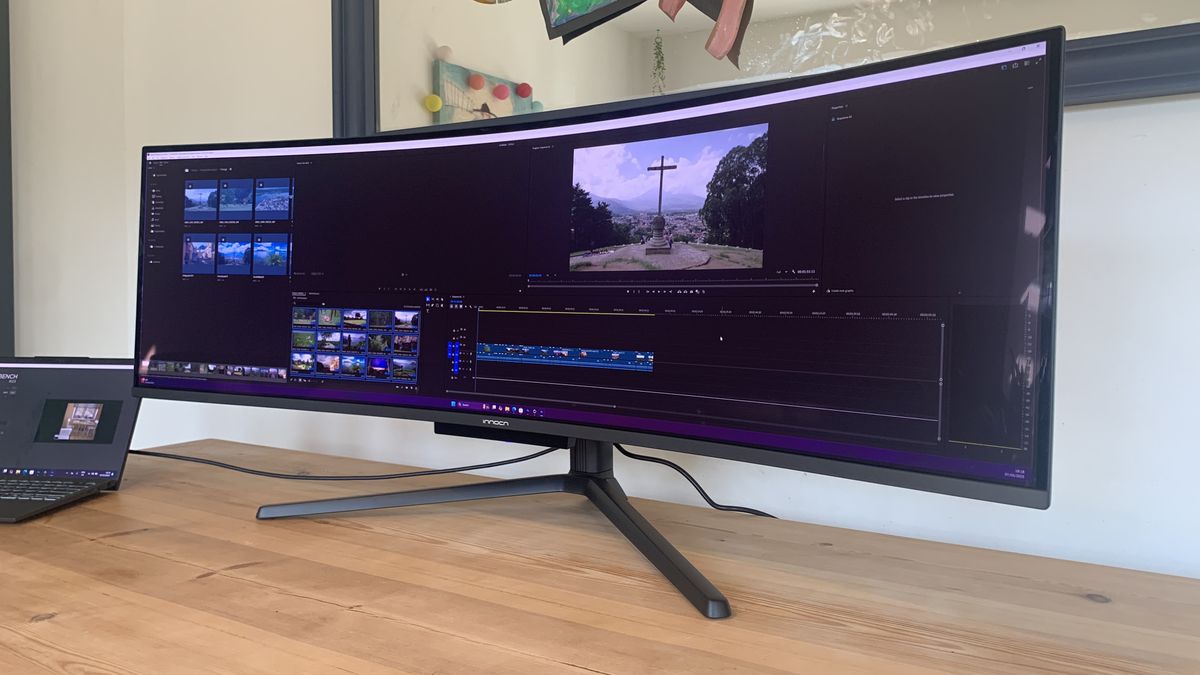
The Innocn 49Q1R is, as the name suggests, a 49-inch panel. It is a serious whopper, and I couldn’t quite believe how long the box was when it arrived on my doorstep. It’s the equivalent of having two 27-inch monitors side by side but without the benefit of location customisation that having two separate monitors affords.

Features and performance

A staggering 5120 x 1440p resolution and 32:9 ultrawide aspect ratio provides an abundance of screen real estate for gaming, multitasking, and long timeline video editing. The 144Hz refresh rate delivers for most AAA games but won’t satisfy professional gamers. HDR 400 & Adaptive-Sync ensure enhanced contrast, rich colours, and smooth frame transitions for top-level performance.

Performance

The Innocn 49Q1R is billed as a gaming monitor, so let’s begin there. There’s no getting away from the fact that it delivers a wonderfully immersive experience. The 1800R curvature draws you into the action like nothing I’ve experienced before. High contrast and vibrant colours made everything I displayed on it look fantastic. You’ll struggle to find a higher-performing curved monitor at this price point.

Scorecard

Category Score
Design and build 4/5
Features 3.5/5
Performance 3.5/5

Who’s it for?

Primarily for gamers, secondarily for creatives.

Buy it if

  • You’re a gamer looking for immersive gaming
  • You’re a fan of ultrawide curved monitors
  • You crave top-resolution gaming

Don’t buy it if

  • You would prefer the flexibility of a multi-monitor setup
  • You want a budget-friendly monitor setup