Home Blog Page 188

Unlocking AI’s Conversation Memory with Cache Augmented Generation

Understanding CAG: Cache Augmented Generation for Human-Like AI

What is Cache Augmented Generation (CAG)?

Imagine if your AI could remember your entire conversation history and use that context to give you more relevant, personalized responses. That’s essentially what Cache Augmented Generation (CAG) does!

How CAG Works Its Magic

  1. Conversation Memory: Beyond Single Exchanges
    Traditional AI interactions treat each question in isolation. CAG is much smarter, storing your conversation history in a structured way, organizing exchanges into meaningful sessions, and maintaining context across multiple interactions.

  2. Context Augmentation: Enhancing Your Current Question
    When you ask a new question, CAG analyzes what you’re asking, identifies relevant context from your conversation history, augments your current question with this additional context, and gives the AI model a more complete picture of what you’re asking.

  3. Intelligent Response Generation: Better Answers
    With the augmented context, the AI understands the full conversation flow, generates responses that acknowledge previous exchanges, creates more coherent, contextually relevant answers, and delivers a more natural conversation experience.

CAG Best Practices: Do’s and Don’ts

Do’s:

  • Create logical session groupings for different users or topics
  • Implement appropriate session expiration times
  • Combine with RAG for both context and knowledge
  • Use consistent session IDs to maintain conversation continuity
  • Structure conversations to build meaningful context

Don’ts:

  • Don’t mix unrelated conversations in the same session
  • Don’t set overly long session retention periods
  • Don’t rely solely on CAG for factual information (that’s RAG’s job)
  • Don’t overlook privacy considerations for stored conversations
  • Don’t neglect to clear sessions when conversations truly end

Frequently Asked Questions About CAG

When Should I Use CAG vs. Basic Prompt Caching?

Use basic prompt caching when you’re focused on efficiency for identical repeated queries. Choose CAG when you want to create coherent, contextually aware conversations where the AI remembers previous exchanges.

How Does CAG Improve Conversation Quality?

CAG dramatically improves conversation quality by maintaining context across multiple exchanges. This means the AI understands references to previous messages, remembers details you’ve shared, and creates a more natural, flowing dialogue.

Will CAG Make My AI Conversations More Human-Like?

Absolutely! One of the key differences between human and typical AI conversations is that humans remember what was just discussed. CAG gives your AI this same capability, making interactions feel much more natural and less repetitive.

Can I Use CAG and RAG Together?

They’re perfect companions! RAG provides your AI with factual knowledge from documents and databases, while CAG gives it memory of the current conversation. Together, they create an AI that’s both knowledgeable and contextually aware.

What Infrastructure Do I Need for CAG?

True CAG requires vector storage capabilities and conversation management systems. Several AI API providers now offer CAG capabilities that handle this complexity for you behind a simple API.

The Future of CAG

The conversation memory landscape is evolving rapidly: more sophisticated context selection algorithms, multi-modal conversation memory, personalized memory management based on user preferences, long-term relationship building between users and AI, and integration with other AI enhancement techniques.

Conclusion: The Path to More Human-Like AI

Cache Augmented Generation represents a significant step toward creating AI systems that interact in more natural, human-like ways. By giving AI the ability to remember conversation context, CAG addresses one of the most frustrating limitations of traditional AI interactions – the lack of conversational memory. As AI continues to evolve, technologies like CAG will play an increasingly important role in creating systems that not only understand what we’re saying but also remember what we’ve discussed.

Bridging Care Gaps via Telehealth in Indigenous Canada

Enterprise Taxonomy: Population and Public Health

Patient Access

In today’s healthcare landscape, patient access to quality care is more crucial than ever. The rise of telehealth has made it possible for patients to access healthcare services from the comfort of their own homes, reducing the need for in-person visits to clinics or hospitals. However, this convenience comes with its own set of challenges, including the need for robust patient access systems that can integrate with existing healthcare infrastructure.

Secure Patient Identity Verification

One of the primary concerns in patient access is ensuring secure patient identity verification. This involves verifying a patient’s identity using biometric data, such as fingerprints or facial recognition, to ensure that only authorized individuals have access to their medical records. This is particularly important in the context of telehealth, where patients may be accessing care from remote locations.

Patient Engagement Platforms

To address the challenge of patient engagement, healthcare providers are increasingly turning to patient engagement platforms that allow patients to take an active role in their own care. These platforms can include mobile apps, portals, and wearables that track patient vital signs and provide personalized health recommendations.

Public Health

Public health is a critical component of healthcare, as it addresses the health needs of entire populations rather than individual patients. Enterprise taxonomy can play a significant role in public health by enabling the collection, analysis, and sharing of health data across different levels of government and healthcare organizations.

Disease Surveillance

One of the key applications of enterprise taxonomy in public health is disease surveillance. This involves monitoring disease outbreaks and tracking the spread of diseases to prevent epidemics. By leveraging data analytics and machine learning, healthcare organizations can identify patterns and trends in disease outbreaks, enabling targeted interventions and prevention strategies.

Public Health Informatics

Public health informatics is another important area where enterprise taxonomy can make a significant impact. By integrating data from multiple sources, healthcare organizations can gain a comprehensive understanding of public health trends and develop targeted interventions to address health disparities.

Telehealth

Telehealth has revolutionized the way patients access healthcare services, enabling them to receive care remotely through video conferencing, phone calls, or online messaging. However, telehealth also presents new challenges, including the need for secure data transmission and storage, as well as the need to ensure patient engagement and adherence to treatment plans.

Telehealth Platforms

Telehealth platforms can play a critical role in addressing these challenges, by providing secure and user-friendly interfaces for patients to access care. These platforms can also integrate with electronic health records (EHRs) to ensure seamless coordination of care.

Quality Care

Quality care is a critical component of telehealth, as patients need to be confident that they are receiving high-quality care remotely. This requires healthcare providers to develop robust quality improvement initiatives, including patient satisfaction surveys, clinical outcome tracking, and continuous quality improvement programs.

Conclusion

In conclusion, enterprise taxonomy has the potential to transform the way we deliver healthcare services, from patient access to public health and telehealth. By leveraging data analytics, machine learning, and cloud-based infrastructure, healthcare organizations can create a more connected and patient-centered healthcare system.

FAQs

Q: What is the role of enterprise taxonomy in patient access?
A: Enterprise taxonomy enables secure patient identity verification and patient engagement platforms, facilitating access to healthcare services.

Q: How does enterprise taxonomy contribute to public health?
A: Enterprise taxonomy enables disease surveillance, public health informatics, and targeted interventions to address health disparities.

Q: What are the benefits of telehealth platforms?
A: Telehealth platforms provide secure data transmission and storage, patient engagement, and seamless coordination of care.

Q: How does quality care impact telehealth?
A: Quality care is critical in telehealth, requiring patient satisfaction surveys, clinical outcome tracking, and continuous quality improvement programs.

ClickHouse Acquires HyperDX to Advance Open-Source Observability

ClickHouse Acquires HyperDX to Enhance Open-Source Observability

ClickHouse, known for its high-speed analytical database, has acquired HyperDX, an open-source observability platform built on its technology. The acquisition integrates HyperDX’s UI and session replay capabilities with ClickHouse’s database performance.

A Core Competence: Analyzing Large-Scale Datasets in Real-Time

A core competence of ClickHouse is its ability to analyze large-scale datasets in real-time, making it a popular choice for users that require fast data insights and have demanding analytics workloads.

The Acquired Capabilities

The strategic acquisition of HyperDX enables ClickHouse to expand its role in open-source observability and address previous gaps in its ecosystem, such as the lack of user-friendly interfaces and out-of-the-box observability features offered by more established solutions.

"Observability is Fundamentally a Data Problem"

According to Tanya Bragin, VP of Product & Marketing at ClickHouse, "Observability is fundamentally a data problem. The dataset size dictates how difficult and expensive it will be to build an observability platform. That’s why ClickHouse has been the backbone of observability platforms for years, powering logging, metrics, and tracing solutions at companies like eBay and Netflix."

Leveraging the Synergy

ClickHouse shared that during their conversations with HyperDX, it was evident that the two companies had the same vision, and they realized it was possible to transform an existing ClickHouse deployment into a full observability platform.

Michael Shi, CEO of HyperDX, emphasized the synergy between the two companies

"Our mission has always been to help engineers resolve production issues faster, and ClickHouse has been central to that journey. Joining forces allows us to take this vision even further."

The Benefits of the Acquisition

The acquisition offers significant benefits, including faster performance, ideal for real-time troubleshooting, OpenTelemetry support, and direct access to observability data with advanced analysis options to enhance decision-making.

The Road Ahead

The acquisition presents promising opportunities for ClickHouse, but the observability space is fiercely competitive, with well-established players like Datadog, Splunk, and Grafana Labs dominating the market.

Conclusion

The acquisition of HyperDX by ClickHouse marks a significant step in the company’s efforts to enhance its open-source observability platform. By integrating HyperDX’s UI and session replay capabilities with its database performance, ClickHouse is poised to become a leading player in the observability space.

FAQs

Q: What is the significance of the acquisition of HyperDX by ClickHouse?
A: The acquisition integrates HyperDX’s UI and session replay capabilities with ClickHouse’s database performance, enhancing the company’s open-source observability platform.

Q: Why did ClickHouse acquire HyperDX?
A: The acquisition enables ClickHouse to expand its role in open-source observability and address previous gaps in its ecosystem.

Q: What are the benefits of the acquisition?
A: The acquisition offers faster performance, ideal for real-time troubleshooting, OpenTelemetry support, and direct access to observability data with advanced analysis options to enhance decision-making.

Q: How will the acquisition impact the observability space?
A: The acquisition presents promising opportunities for ClickHouse, but the observability space is fiercely competitive, with well-established players like Datadog, Splunk, and Grafana Labs dominating the market.

Adding Realism to a DreamWorks-Inspired Character with ZBrush and Maya

0

Shuhang Li’s 3D Art

Inspiration from How to Tame Your Dragon

Shuhang Li, a 3D artist from Chengdu, China, has created an impressive character, ‘Plant Pterosaur’, inspired by the movie How to Tame Your Dragon. To bring his vision to life, he used ZBrush for modeling, Maya for the forest setting, and Arnold, Substance 3D Painter, Lightroom Classic, and Photoshop for the final touches.

Creating the Character

In his own words, Shuhang Li says, "This piece was inspired by the film How to Train Your Dragon. I wanted to make it more realistic, so I simulated a real forest environment in Maya, and for the dragon’s wings I used self-luminous shaders to match. The body and skin used the Sub-Surface Scattering material effect in Arnold."

Texture Painting and Compositing

For the texture painting, Shuhang Li focused on emphasizing color variation. He explains, "There are rich color changes in the whole green tone, and finally, you can unify the color tone through an HDRI so the painted color won’t look cluttered." For the final compositing stage, he chose Lightroom and used filter effects to push closer to a photographic style, which better expressed his requirements.

Conclusion

Shuhang Li’s ‘Plant Pterosaur’ is a stunning example of 3D art, showcasing his skills in modeling, texturing, and compositing. His attention to detail and dedication to realism have resulted in a character that is both visually striking and believable.

FAQs

Q: What software did Shuhang Li use to create the character ‘Plant Pterosaur’?
A: Shuhang Li used ZBrush for modeling, Maya for the forest setting, and Arnold, Substance 3D Painter, Lightroom Classic, and Photoshop for the final touches.

Q: What was the inspiration behind Shuhang Li’s 3D art piece?
A: The character was inspired by the movie How to Tame Your Dragon.

Q: What was the focus of Shuhang Li’s texture painting process?
A: Shuhang Li focused on emphasizing color variation and unifying the color tone through an HDRI to avoid a cluttered look.

Q: What software did Shuhang Li use for compositing?
A: Shuhang Li used Lightroom and filter effects to achieve a photographic style.

Powerless Against AI

0

Preparing for the Impending Arrival of Artificial General Intelligence

I believe that over the past several years, A.I. systems have started surpassing humans in a number of domains, including math, coding, and medical diagnosis, and that they’re getting better every day. I believe that very soon, one or more A.I. companies will claim they’ve created an artificial general intelligence, or A.G.I., which is usually defined as a general-purpose A.I. system that can do almost all cognitive tasks a human can do.

The Insiders are Alarmed

The most disorienting thing about today’s A.I. industry is that the people closest to the technology – the employees and executives of the leading A.I. labs – tend to be the most worried about how fast it’s improving. This is quite unusual. Back in 2010, when I was covering the rise of social media, nobody inside Twitter, Foursquare, or Pinterest was warning that their apps could cause societal chaos. Mark Zuckerberg wasn’t testing Facebook to find evidence that it could be used to create novel bioweapons or carry out autonomous cyberattacks.

The A.I. Models Keep Getting Better

To me, just as persuasive as expert opinion is the evidence that today’s A.I. systems are improving quickly, in ways that are fairly obvious to anyone who uses them. In 2022, when OpenAI released ChatGPT, the leading A.I. models struggled with basic arithmetic, frequently failed at complex reasoning problems, and often "hallucinated," or made up nonexistent facts. Chatbots from that era could do impressive things with the right prompting, but you’d never use one for anything critically important.

Overpreparing is Better than Underpreparing

In the spirit of epistemic humility, I should say that I, and many others, could be wrong about our timelines. Maybe A.I. progress will hit a bottleneck we weren’t expecting – an energy shortage that prevents A.I. companies from building bigger data centers, or limited access to the powerful chips used to train A.I. models. Maybe today’s model architectures and training techniques can’t take us all the way to A.G.I., and more breakthroughs are needed.

Conclusion

I believe that the right time to start preparing for A.G.I. is now. Even if A.G.I. arrives a decade later than I expect, I believe we should start preparing for it now. Most of the advice I’ve heard for how institutions should prepare for A.G.I. boils down to things we should be doing anyway: modernizing our energy infrastructure, hardening our cybersecurity defenses, speeding up the approval pipeline for A.I.-designed drugs, writing regulations to prevent the most serious A.I. harms, teaching A.I. literacy in schools, and prioritizing social and emotional development over soon-to-be-obsolete technical skills.

Frequently Asked Questions

Q: What is Artificial General Intelligence (A.G.I.)?
A: A.G.I. is a general-purpose A.I. system that can do almost all cognitive tasks a human can do.

Q: How soon will A.G.I. arrive?
A: I believe it will arrive in 2026 or 2027, but possibly as soon as this year.

Q: What are the implications of A.G.I.?
A: A.G.I. will generate trillions of dollars in economic value and tilt the balance of political and military power toward the nations that control it.

Q: Are you worried about overpreparing for A.G.I.?
A: No, I believe it’s better to be prepared for A.G.I. than to be caught off guard by its arrival.

Q: What should we do to prepare for A.G.I.?
A: We should modernize our energy infrastructure, harden our cybersecurity defenses, speed up the approval pipeline for A.I.-designed drugs, write regulations to prevent the most serious A.I. harms, teach A.I. literacy in schools, and prioritize social and emotional development over soon-to-be-obsolete technical skills.

Secure the Lead: US Government Must Act on AI

OpenAI and Google Urge US Government to Take Decisive Action to Secure US AI Leadership

A Plan for the AI Action Plan

As America’s world-leading AI sector approaches Artificial General Intelligence (AGI), the Trump Administration’s new AI Action Plan can ensure that American-led AI built on democratic principles continues to prevail over Chinese Communist Party (CCP)-built autocratic, authoritarian AI. OpenAI and Google, two prominent players in the AI industry, have urged the US government to take decisive action to secure the nation’s AI leadership.

OpenAI’s Three-Point Plan

OpenAI highlighted AI’s potential to "scale human ingenuity," driving productivity, prosperity, and freedom. The company likened the current advancements in AI to historical leaps in innovation, such as the domestication of the horse, the invention of the printing press, and the advent of the computer. OpenAI CEO Sam Altman emphasized the importance of "freedom of intelligence," advocating for open access to AGI while safeguarding against autocratic control and bureaucratic barriers.

OpenAI’s Three Scaling Principles

  1. The intelligence of an AI model roughly equals the log of the resources used to train and run it.
  2. The cost to use a given level of AI capability falls by about 10x every 12 months.
  3. The amount of calendar time it takes to improve an AI model keeps decreasing.

Google’s Three-Point Plan

Google has a three-point plan for the US to focus on:

  1. Invest in AI: Google called for coordinated action to address the surging energy needs of AI infrastructure, balanced export controls, continued funding for R&D, and pro-innovation federal policy frameworks.
  2. Accelerate and modernise government AI adoption: Google urged the federal government to lead by example through AI adoption and deployment, including implementing multi-vendor, interoperable AI solutions and streamlining procurement processes.
  3. Promote pro-innovation approaches internationally: Google advocated for an active international economic policy to support AI innovation, championing market-driven technical standards, working with aligned countries to address national security risks, and combating restrictive foreign AI barriers.

AI Policy Recommendations for the US Government

Both companies provided detailed policy recommendations to the US government.

OpenAI’s Proposals

  1. A regulatory strategy that ensures the freedom to innovate through voluntary partnership between the federal government and the private sector.
  2. An export control strategy that promotes the global adoption of American AI systems while protecting America’s AI lead.
  3. A copyright strategy that protects the rights of content creators while preserving American AI models’ ability to learn from copyrighted material.
  4. An infrastructure opportunity strategy to drive growth, including policies to support a thriving AI-ready workforce and ecosystems of labs, start-ups, and larger companies.
  5. An ambitious government adoption strategy to ensure the US government itself sets an example of using AI to benefit its citizens.

Google’s Recommendations

  1. Advancing energy policies to power domestic data centers, including transmission and permitting reform.
  2. Adopting balanced export control policies that support market access while targeting pertinent risks.
  3. Accelerating AI R&D, streamlining access to computational resources, and incentivizing public-private partnerships.
  4. Crafting a pro-innovation federal framework for AI, including federal legislation that prevents a patchwork of state laws, ensuring industry has access to data that enables fair learning, emphasizing sector-specific and risk-based AI governance, and supporting workforce initiatives to develop AI skills.

Conclusion

Both OpenAI and Google emphasize the need for swift and decisive action. OpenAI warned that America’s lead in AI is narrowing, while Google stressed that policy decisions will determine the outcome of the global AI competition. "We are in a global AI competition, and policy decisions will determine the outcome," Google explained. "A pro-innovation approach that protects national security and ensures that everyone benefits from AI is essential to realizing AI’s transformative potential and ensuring that America’s lead endures."

Frequently Asked Questions

Q: What is the current state of AI in the US?
A: The US is currently leading the world in AI, with a significant lead over other countries.

Q: What are the challenges facing the US in the AI sector?
A: One of the major challenges is the need for swift and decisive action to secure the nation’s AI leadership and prevent the Chinese Communist Party (CCP) from overtaking the US.

Q: What are the benefits of AI?
A: AI has the potential to "scale human ingenuity," driving productivity, prosperity, and freedom.

Q: What are the potential risks of AI?
A: There are potential risks, including autocratic control and bureaucratic barriers, that need to be addressed through careful policy-making.

ASUS Unveils 8K Mini LED Monitor, But Should You Choose 4K Instead?

0

ASUS Unveils New ProArt Monitors at London Event

World Firsts and Exciting Developments

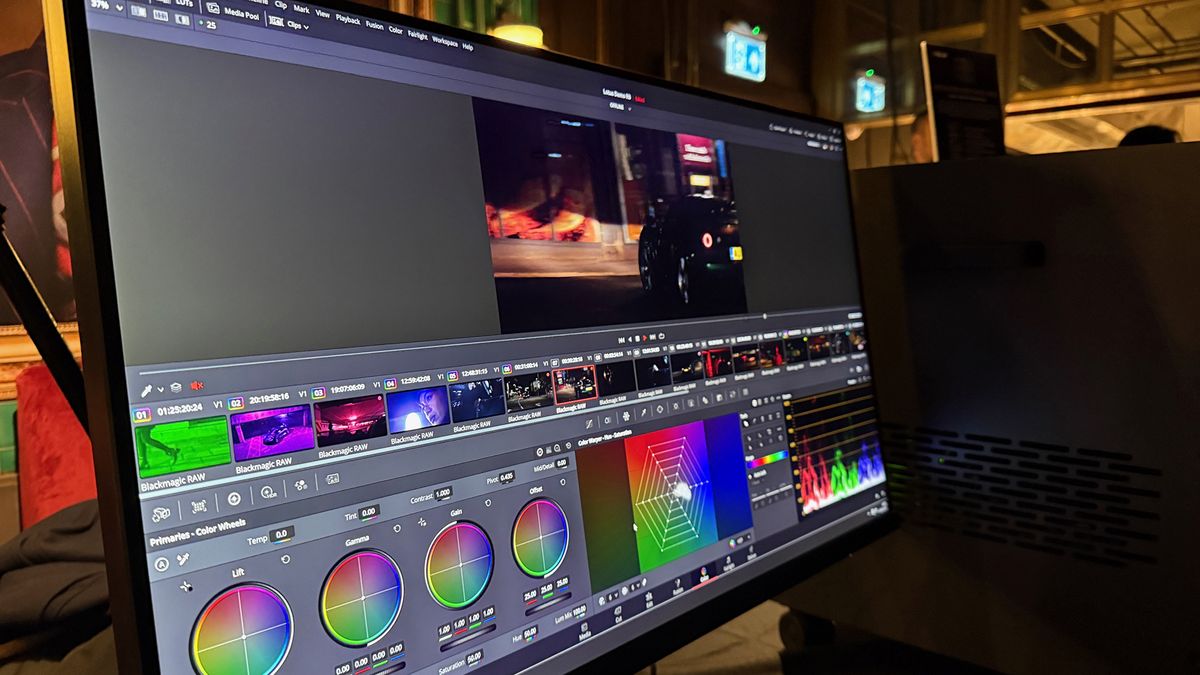
Last night, ASUS ran a London event showcasing its new range of ProArt monitors, and I left pretty excited on behalf of all digital creatives, and video editors in particular.

Mini LED 8K Monitor – A Stunner!

When I first arrived, I was most interested in the last in a string of world firsts from the Taiwanese company. Back in 2013, ASUS launched the world’s first IGZO 4K display. Over a decade later, it’s releasing the world’s first Mini LED 8K monitor – the PA32KCX. And it’s a stunner!

The Spec Sheet

In theory, it’s only the second commercially available 8K monitor – well, it will be when it gets released this May. But in reality, its competitor, the Dell UltraSharp UP3218K is a little long in the tooth at this point. It came out in 2017, only has USB 3.0 (no HDMI?! DP?!), and maxes out at 60Hz with a contrast of 1300:1.

The Bottom Line

Bottom line? The new 8K PA32KCX monitor is an up-to-date pro HDR display, with a dazzling spec sheet that’ll make it the only 8K monitor option in 2025. It will no doubt take the best 8K crown in our list of the best monitors for video editing.

But Will Anyone Buy It?

But then, no one is going to buy it, so who really cares?!

OLED Monitor – A Game-Changer

But then, I was also excited about the release of the ProArt PA32UCDM – an OLED monitor that uses the same panel as some £10,000 pro monitors out there, but for a far less eye-watering £1,599. That will be on sale later in March, and with that pricing, and spec sheet, I can see it dominating not only our video editing guide, but also our list of the best monitors for graphic design.

The PA32UCDM Spec Sheet

The PA32UCDM is a 32-inch monitor that boasts 240Hz refresh rate, colour accuracy of Delta E < 1, 1,000 nits, and Dolby Vision.

No Perfect Monitor

No, this is not a perfect monitor – filmmaker, DaVinci Resolve expert and speaker Leon Barnard made the point that each brilliant monitor will have at least one ‘weakness’ to achieve excellence in other areas. For the PA32UCDM, that means it offers amazing colour, amazing contrast, but average brightness (compared to the $3,299 ProArt PA32UCXR, that is).

Conclusion

For what it offers at £1,599, I can easily see this monitor becoming a best-seller for amateurs and pros alike – from schools and studios to freelancers. Especially when partnered up with an exceptional laptop for video editing.

FAQs

Q: When will the 8K PA32KCX monitor be available?
A: It will be released this May.

Q: Is the PA32UCDM a good option for video editors?
A: Yes, it’s an excellent option, with its 240Hz refresh rate, colour accuracy of Delta E < 1, 1,000 nits, and Dolby Vision.

Q: What is the price of the PA32UCDM?
A: It will be available for £1,599 later in March.

What if AI ran ER triage? Here’s how it sped up patient care in real-world tests

Using AI in Triage: A New Era in Emergency Room Efficiency

Researchers at Yale School of Medicine and Johns Hopkins University have created an artificial intelligence program that can improve the emergency room process by making triage more efficient and accurate. Triage is the process by which nurses assess the severity of conditions at the intake of patients.

The Study

The study, published in The New England Journal of Medicine, found that nurses using the AI program were able to move patients through the emergency room process more rapidly, from initial care to assigning a bed to discharging patients. This resulted in decreased time in the ER overall.

The AI Program

The AI program, a clinical decision support tool (CDS), uses a "tree" of possible decisions to navigate and choose the best course of action. It takes into account the age, sex, arrival mode, vital signs, chief complaint, comorbidities, and active medical problems of each patient at intake.

Patient Flow Results

The study found that the number of patients grouped by high or low acuity changed, with the number of people in the "low" acuity group rising by nearly 50%, and the total in the "high" category declining by almost 9%. More older patients were moved into the high-acuity group, while more young people were moved into the low-acuity group.

Efficiency Isn’t the Only Outcome

The study also found that the number of patients properly assigned to critical care rose when using the CDS, meaning patients who eventually wound up dying in the hospital or being admitted to the intensive care unit were more accurately identified beforehand during triage.

Limitations

The study had several limitations, including the uncertainty about the role of human nurses’ individual acumen, seasonal trends in different ERs, and the limitations of electronic health records.

Conclusion

The study shows that AI can lead to improved triage performance and patient flow, with a marked change in the triage process. However, future research should consider longer-term factors to fully understand the implications of AI support in clinical decision-making within emergency settings.

FAQs

  • What is triage in an emergency room?
    Triage is the process by which nurses assess the severity of conditions at the intake of patients.
  • What is the AI program used in the study?
    The AI program is a clinical decision support tool (CDS) that uses a "tree" of possible decisions to navigate and choose the best course of action.
  • What were the results of the study?
    The study found that nurses using the AI program were able to move patients through the emergency room process more rapidly, with decreased time in the ER overall.
  • What are the limitations of the study?
    The study had several limitations, including the uncertainty about the role of human nurses’ individual acumen, seasonal trends in different ERs, and the limitations of electronic health records.

Pittura: AI-Generated Animation

0

The VES Award-Winning Short Film Pittura

The annual Visual Effects Society Awards celebrate the best VFX of the past year in film, TV, games, commercial, and beyond. One of its highlights is the award for Outstanding Visual Effects in a Student Project, sponsored by Autodesk, which shines a light on the talents of the future and makes the best 3D software and animation software accessible.

Pittura: A Short Film Made at ArtFX

This year’s winners are the team behind Pittura, an ambitious and emotive short film that explores the relationship between humans and AI through the lens of art. Set in an alternative Renaissance period, Pittura brings together a talented painter fighting Parkinson’s disease and a robot striving for a new level of personal expression. The effects work includes scenes that are both epic and intimate.

The film was produced by a student team from ArtFX School of Digital Arts in France, which also produced last year’s winner. As part of our How We Made series, we asked Titouan Lassere, one of the team members, to tell us about the development and production of Pittura, and how it feels to have won a VES Award.

How We Made Pittura

How did you develop the concept for the film of traditional art meeting AI?

We started writing scenarios with the idea of a robot interacting with art, particularly painting, but it wasn’t until many drafts that we realized what we wanted to talk about was AI itself and its relationship to art. However, right from the start of the writing process, we had the idea of creating a memorable and original robot, detailed and complex, and a big city marked by the influence of art even in its streets.

How important was pre-production for this project, and did you use any new software or workflows?

Pre-production had to be done fairly quickly, due to time constraints, but it enabled us to test and experiment with techniques essential to our project, which redefined even the robot’s design. We also spent a lot of time thinking about the film’s different moods, as we wanted to create strong, evocative atmospheres. Adam did a lot of concept art to help define the color script.

What were the artistic influences that shaped the style of Pittura?

There have been many influences on the development of Pittura, the main inspiration for the robot was Alita: Battle Angel, and the city was inspired by Italian cities such as Venice, as well as Star Wars’ Naboo. One of our more unexpected inspirations was Alejandro Jodorowsky, particularly his Dune project. We really wanted to reproduce his creative freedom in our colors for the final sequence, as well as the robot’s paintwork.

How did you balance the needs of the storytelling with the desire to push the technical execution?

We first pushed our storyline around our theme before we even started designing anything, so that we could create our film according to what we wanted to tell. We developed all our art direction with the aim of bringing art face to face with our robot.

What VFX techniques and software did you use?

We decided to render on Houdini with Autodesk Arnold because we had a lot of elements directly on Houdini, like the procedural city, or the painting effects for example. [Read our best rendering software guide for more details.]

Did you need to create a unique pipeline or work in a new way?

As we were in a production situation, our class had two ITs (Elouan Rogliano and Angèle Sionneau) who were in charge of creating a pipeline, which enabled us to work properly with professional tools, to be monitored by our superiors, and to render our farm without a hitch.

What was the most complex shot you created?

The most complicated shot in our film is probably the end shot, with the contact between the robot and the actor. Giving that feeling is always a tricky thing to approach. On top of that, this shot brought together all the elements: keying, lighting, the robot, paint FX… Being the last shot, we had no room for error.

Were there any unique or experimental techniques you used for this film?

The most experimental technique we used was to animate our robot’s face. As we had no animators, we had to improvise. We used Live Link, which lets you motion-capture a face on an Apple device and transmit this data to Unreal Engine on a MetaHuman Character. We then exported the character’s facial rig, and after cleaning it up, we bound it to our robot’s face. This enabled us to play out all the robot’s reactions ourselves. [Read how River End Games made use of MetaHuman Character too.]

What lessons did you learn from this project?

This project has taught us a lot, both humanly and artistically. Communication between all the members was essential, and we also saw the importance of being pragmatic and going for the essential. We had no time to fall behind. Films always need to be released, and we always want to keep pushing them, so there are obviously things in our short film like FX, animation, compositing, and even shots that had to be cut out of feasibility.

How does it feel to be a VES winner?

Honestly, it’s quite incredible. Even if we had created our group with the desire to win them, it was still an impossible dream, we were wrong. When we found out we’d won, it took us a long time to realize it, right up to the moment of the prize-giving. That’s when you realize how lucky you are to work in this industry. To be surrounded by so many passionate, caring people… it’s a magical feeling.

Conclusion

Pittura is a testament to the creativity and technical expertise of the next generation of VFX artists. The team’s innovative use of software and techniques has resulted in a stunning short film that showcases the possibilities of AI and art. We are excited to see what the future holds for these talented individuals and the industry as a whole.

FAQs

Q: What was the main inspiration for the robot’s design?
A: The main inspiration for the robot’s design was Alita: Battle Angel.

Q: What was the most challenging part of the production process?
A: The most challenging part of the production process was balancing the needs of the storytelling with the desire to push the technical execution.

Q: What software did you use for rendering?
A: We used Houdini with Autodesk Arnold for rendering.

Q: How did you animate the robot’s face?
A: We used Live Link to motion-capture the face on an Apple device and transmit it to Unreal Engine on a MetaHuman Character.

DeepSeek: Everything You Need to Know About the AI Chatbot App

0

DeepSeek Goes Viral: A Journey to the Top of the Apple App Store Charts

DeepSeek’s Trader Origins

DeepSeek is backed by High-Flyer Capital Management, a Chinese quantitative hedge fund that uses AI to inform its trading decisions. Liang Wenfeng, the co-founder of High-Flyer, began dabbling in trading while a student at Zhejiang University. He launched High-Flyer Capital Management as a hedge fund in 2019, focused on developing and deploying AI algorithms.

In 2023, High-Flyer started DeepSeek as a lab dedicated to researching AI tools separate from its financial business. With High-Flyer as one of its investors, the lab spun off into its own company, also called DeepSeek.

DeepSeek’s Strong Models

DeepSeek unveiled its first set of models – DeepSeek Coder, DeepSeek LLM, and DeepSeek Chat – in November 2023. However, it wasn’t until last spring, when the startup released its next-gen DeepSeek-V2 family of models, that the AI industry started to take notice.

DeepSeek-V2, a general-purpose text- and image-analyzing system, performed well in various AI benchmarks – and was far cheaper to run than comparable models at the time. It forced DeepSeek’s domestic competition, including ByteDance and Alibaba, to cut the usage prices for some of their models, and make others completely free.

A Disruptive Approach

If DeepSeek has a business model, it’s not clear what that model is, exactly. The company prices its products and services well below market value – and gives others away for free. It’s also not taking investor money, despite a ton of VC interest.

The way DeepSeek tells it, efficiency breakthroughs have enabled it to maintain extreme cost competitiveness. Some experts dispute the figures the company has supplied, however.

Conclusion

DeepSeek’s success has been met with a mix of amazement and concern. While its models have been praised for their performance and cost-effectiveness, there are concerns about the company’s business model and the potential impact on the global AI industry.

FAQs

Q: What is DeepSeek?
A: DeepSeek is a Chinese AI lab that develops and deploys AI models for various applications.

Q: What kind of models does DeepSeek develop?
A: DeepSeek develops a range of AI models, including text- and image-analyzing systems, as well as reasoning models.

Q: What is the purpose of DeepSeek’s models?
A: The purpose of DeepSeek’s models is to aid in various tasks, such as data analysis, natural language processing, and image recognition.

Q: Is DeepSeek a for-profit company?
A: It’s unclear what DeepSeek’s business model is, as it offers its products and services at a loss and does not take investor money.

Q: What is the impact of DeepSeek’s models on the global AI industry?
A: DeepSeek’s models have disrupted the global AI industry, forcing competitors to cut prices and making others free. There are also concerns about the potential impact on the global economy.