Home Blog Page 193

AI-Powered Resume and Portfolio Builder

What I Built

I built AI-Powered Resume & Portfolio Builder

Demo

KendoReact Experience

In building the AI-Powered Resume & Portfolio Builder, I fully leveraged KendoReact Free Components to enhance functionality, interactivity, and UI/UX. The components played a crucial role in creating a highly dynamic and responsive web application. Here’s how I utilized them:

  • Data Visualization & Analytics
    • Used KendoReact Charts (Chart, ChartSeries, ChartSeriesItem) to display portfolio analytics, showcasing skill proficiency and resume insights.
    • Integrated ProgressBar to indicate profile completion dynamically.
  • UI & Layout Management
    • Employed TabStrip & TabStripTab to create an intuitive multi-section layout, separating AI-powered resume generation, portfolio analytics, and task management.
    • Used Cards to structure portfolio projects professionally.
  • Data Handling & Interactivity
    • Integrated KendoReact Grid (GridColumn) for structured resume and portfolio data display.
    • Implemented Filtering and Sorting to improve resume entry searches.
  • AI Resume Suggestions & Inputs
    • Used KendoReact Input to collect job title inputs for AI-driven resume generation.
    • Designed an interactive Dialog for adding new resume entries.
    • Implemented KendoReact Buttons for various user actions like toggling dark mode and generating AI suggestions.
  • User Notifications & Feedback
    • Integrated KendoReact Notification to provide real-time success messages when users add resume entries.

Advanced Functionality

The AI-Powered Resume & Portfolio Builder integrates multiple KendoReact Free Components in a way that enhances user interactivity, automation, and data visualization. Here are some key advanced functionalities:

  1. AI-Powered Resume Suggestions
    We implemented an AI-driven suggestion system that dynamically generates resume content based on a user’s job title. This utilizes KendoReact Input for data entry and KendoReact Button to trigger AI-generated recommendations, which are displayed dynamically in a structured list.

  2. Dynamic Portfolio Analytics
    We provide real-time portfolio insights using:

    • KendoReact Chart to visualize skill proficiency in an interactive bar chart.
    • KendoReact ProgressBar to dynamically track profile completion based on resume entries.
    • KendoReact Grid to present a structured view of project tasks, including progress tracking.
  3. Multi-Tab Navigation for Enhanced UX
    Using KendoReact TabStrip, we separated key functionalities into distinct sections:

    • AI Resume Suggestions
    • Portfolio Analytics
    • Resume Content Management

Conclusion

By combining KendoReact Free Components in a meaningful way, we delivered a highly interactive and intelligent resume builder, pushing beyond standard UI implementations.

FAQs

Q: What is the AI-Powered Resume & Portfolio Builder?
A: It is a web application that leverages KendoReact Free Components to provide a dynamic and responsive experience for resume creation and portfolio management.

Q: What are the key features of the AI-Powered Resume & Portfolio Builder?
A: The key features include AI-powered resume suggestions, dynamic portfolio analytics, multi-tab navigation, and interactive resume management.

Q: How does the AI-Powered Resume & Portfolio Builder utilize KendoReact components?
A: The application utilizes KendoReact components such as KendoReact Charts, KendoReact Grid, KendoReact TabStrip, and KendoReact Input, among others, to enhance functionality, interactivity, and UI/UX.

China’s AI Darling: Drones and Robots

The Next Big Things in Tech: AI, Drones, and More

Hi everyone! This is Cheng Ting-Fang, your #techAsia host for the week, sending a warm hello from Taipei!

I just returned to Asia from Barcelona — a city bursting with Gaudi’s artistic architecture and fresh tapas, from garlic prawns to grilled cuttlefish and patatas bravas. Every spring, the global wireless industry gathers in this Spanish city for the latest market insights. This year, the buzzword once again was "artificial intelligence."

At the Mobile World Congress, I was able to try out various Chinese AI applications first-hand. There were long queues at the booth of telecom operator China Unicom, which showcased a photo station capable of instantly transforming snapshots into centuries-old historical figures — blending my face, for instance, with Empress Wu Zetian’s Tang Dynasty attire in the blink of an eye. The company said its own Yuanjing large language model was the engine behind this transformation.

Meanwhile, iFlytek — China’s top provider of speech-recognition tech — demonstrated a powerful tool (pictured above) that allows content creators to generate short movies from just a few words of input, selecting the genre and style on the go. In under 20 seconds, I found myself watching a Disney-Pixar-style animation about Barcelona, produced entirely by AI. China Mobile affiliate AsiaInfo — the nation’s leading telecom software provider — used a simple camera backed by its DeepSeek-enhanced AI language model and Nvidia chips to provide visitors with 30-second health checks by measuring their heartbeat and breathing rate.

Not everything was so futuristic, however. My colleague Lauly Li and I shared a two-bedroom suite with a large work table during the trip, but we endured three nights without hot water, forcing us to take showers in less than a minute, as well as two nights of disrupted underground transit. Despite these challenges, we were able to meet numerous industry executives and after catching the earliest flight back to Asia at 6am, were soon back home.

The Next Big Things

Besides AI, drones and humanoid robots are two of the top buzzwords in the tech industry as EVs and mobile phones slow down.

Quiet Cash

Wealthy Chinese investors are funneling tens of millions of dollars into private companies controlled by Elon Musk — including SpaceX and xAI — using an arrangement that shields their identities from public view, according to asset managers and investors involved in the transactions.

Lightbulb Moment

Top Japanese telecom carrier NTT is betting big on fully optical communications, which it says can reduce AI data centers’ power consumption to one one-hundredth of current levels. But such a radical transformation faces many hurdles, Nikkei Asia’s Mitsuru Obe writes in this deep dive on the topic.

A Popular Young Manus

China’s AI frenzy has found a new darling. Little-known Manus AI sparked significant excitement last week with its claim to have developed the world’s first "general AI agent," Cissy Zhou of Nikkei Asia writes. According to the demo video released by Manus AI, their AI agent is capable of doing complicated tasks such as screening resumes, researching real estate, and analyzing stocks.

Suggested Reads

  • Grab ties up with Chinese, US companies on self-driving vehicles (Nikkei Asia)
  • Elon Musk’s Starlink in tie-up with domestic tycoon to enter India (FT)
  • Space station start-up aims for out-of-this-world drug ‘factories’ (Nikkei Asia)
  • China’s delivery platforms compete to offer better worker benefits (FT)
  • Coinbase to make comeback in India as opposition to crypto eases (FT)
  • Apple’s struggles in China extend to earphones and tablets (Nikkei Asia)
  • Pokémon Go developer Niantic to sell game business, with payout for Nintendo (Nikkei Asia)
  • TSMC is ‘not afraid’ of losing US chip subsidies (FT)
  • Trump tariff ‘bomb’ rattles South Korea’s chip and auto sectors (Nikkei Asia)
  • TSMC plays its hand in Donald Trump’s tariff war (FT)

Conclusion
The tech industry is constantly evolving, with new innovations and advancements emerging every day. From AI to drones, humanoid robots, and more, there’s always something new to learn and explore. At #techAsia, we’re dedicated to keeping you up-to-date on the latest developments in the tech world. Stay tuned for more updates and insights from our team of experts.

FAQs

Q: What is #techAsia?
A: #techAsia is a weekly newsletter curated by Nikkei Asia, focusing on the latest technology trends and innovations from around the world.

Q: How can I receive #techAsia?
A: To receive #techAsia, sign up here at Nikkei Asia.

Q: Who is behind #techAsia?
A: #techAsia is coordinated by Nikkei Asia’s Katherine Creel in Tokyo, with assistance from the FT tech desk in London.

GTC 2025 – Announcements and Live Updates

The Future Rolls Into San Jose

Anyone who’s been in downtown San Jose lately has seen it happening. The banners are up. The streets are shifting. The whole city is getting a fresh coat of NVIDIA green.

What’s Next in AI?

From March 17-21, San Jose will become a crossroads for the thinkers, tinkerers, and true enthusiasts of AI, robotics, and accelerated computing. The conversations will be sharp, fast-moving, and sometimes improbable — but that’s the point.

The Future is on Stage

At the center of it all? NVIDIA founder and CEO Jensen Huang’s keynote, offering a glimpse into the future. It’ll take place at the SAP Center on Tuesday, March 18, at 10 a.m. PT. Expect big ideas, a few surprises, some roars of laughter, and the occasional moment that leaves the room silent.

Beyond the Stage

GTC isn’t just what happens on stage. It’s a conference that refuses to stay inside its walls. It spills out into sessions at the McEnery Convention Center, hands-on demos at the Tech Interactive Museum, late-night conversations at the Plaza de César Chávez night market, and more. San Jose isn’t just hosting GTC. It’s becoming it.

Meet the Speakers

The speakers are a mix of visionaries and builders — the kind of people who make you rethink what’s possible:

  • Yann LeCun – chief AI scientist at Meta, professor, New York University
  • Frances Arnold – Nobel Laureate, Caltech
  • RJ Scaringe – founder and CEO of Rivian
  • Pieter Abbeel – robotics pioneer, UC Berkeley
  • Arthur Mensch – CEO of Mistral AI
  • Joe Park – chief digital and technology officer of Yum! Brands
  • Noam Brown – research scientist at OpenAI

Some are pushing the limits of AI itself; others are weaving it into the world around us.

Get Involved

Want in? Register now.

Stay Tuned

Check back here for what to watch, read, and play — and what it all means. Tune in to all the big moments, the small surprises, and the ideas that’ll stick for years to come.

Conclusion

GTC 2025 is the place to be for all things AI. It’s where the technology, people, and ideas come together to shape the future. Don’t miss out on the opportunity to be a part of it.

Frequently Asked Questions

Q: What is GTC?
A: GTC is the premier conference and exhibition for artificial intelligence, robotics, and accelerated computing.

Q: When is GTC 2025?
A: GTC 2025 takes place from March 17-21 in San Jose, California.

Q: Who are the speakers at GTC 2025?
A: The speakers at GTC 2025 include a mix of visionaries and builders in the field of AI, robotics, and accelerated computing.

Q: How can I register for GTC 2025?
A: You can register for GTC 2025 on the official website.

Nvidia’s AI Characters Are Revolutionizing Video Games

0

AI Characters Coming to Video Games Sooner Than Expected

Nvidia Announces ACE AI Characters in Real Games This Month

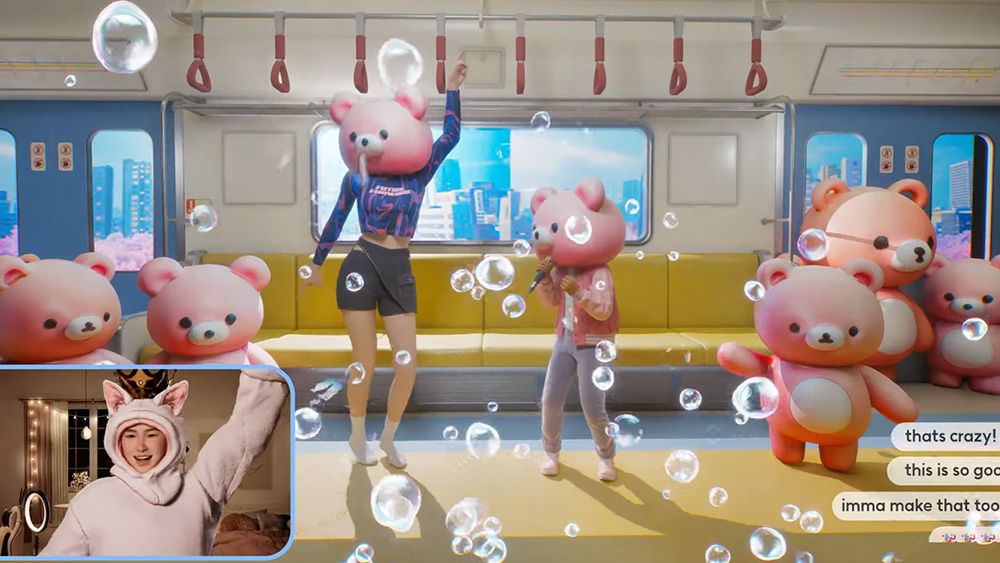
AI characters are coming to video games, perhaps sooner than many people imagined. Just after it emerged that Sony was testing an AI-generated Aloy in Horizon Forbidden West, Nvidia has announced that its ACE AI game characters will make their debut in real games this month.

ACE AI Game Characters in inZOI and Naraka: Bladepoint

With thoughts and behavior governed by an on-device Nvidia ACE Small Language Model, autonomous game characters will be launched in Krafton’s life simulation game inZOI and in the mobile version of 24 Entertainment’s free-to-play wuxia action battle royale game Naraka: Bladepoint. Nvidia says that more developers will quickly follow suit.

inZOI: Smart Zoi and Real-time Thoughts

inZOI players will be able to transform the simulated city’s NPCs, called Zois, into ACE autonomous game characters with higher levels of artificial intelligence by activating a ‘Smart Zoi’ experimental setting. We’re told that enhanced Zois will adapt and respond more realistically and intelligently to their environment based on their personalities. For instance, a Smart Zoi with a considerate personality might decide to help a lost character with directions. Some are already wondering if SmartZOI’s will be able to commit crime. After all, we’re still waiting for GTA 6.

Naraka: Bladepoint: ACE Teammates

In Naraka: Bladepoint Mobile, ACE-powered teammates will help players battle enemies and hunt for loot. The AI Teammate can join your party in Free Training, battling alongside you, finding you specific items that you need, swapping gear, offering suggestions on skills to unlock, and making plays that’ll help you achieve victory.

Nvidia ACE: A Suite of RTX-Accelerated Digital Human Technologies

Nvidia ACE is a suite of RTX-accelerated digital human technologies designed to bring game characters to life with generative AI. The tech continues to advance, now incorporating new vision and audio language models, enhancing facial animation with new model architectures, and accelerating game development with updated ACE plugins for Maya and Unreal Engine for offline authoring.

Upcoming Games Using Nvidia ACE

Two more upcoming games using the tech are Black Vultures: Prey of Greed and Fate Trigger. In the former, an FPS being developed by Wemade’s THISMEANSWAR Studio, ACE will power an in-game AI companion. Saroasis Studios’ Fate Trigger, a 3D anime-style, hero-based tactical shooter made on Unreal Engine 5, is using ACE’s Audio2Face-3D to generate real-time facial animations and lip-sync for all dialogue.

Conclusion

The innovation has the power to change how we conceive video games, making them potentially richer and more surprising as AI NPCs, teammates or enemies act freely. Applying this to an open-world game could open endless possibilities.

FAQs

  • What is Nvidia ACE?
    Nvidia ACE is a suite of RTX-accelerated digital human technologies designed to bring game characters to life with generative AI.
  • What games will feature Nvidia ACE?
    inZOI and Naraka: Bladepoint Mobile will feature Nvidia ACE AI characters, with more games to follow soon.
  • What is Smart Zoi?
    Smart Zoi is an experimental feature in inZOI that allows players to transform NPCs into ACE autonomous game characters with higher levels of artificial intelligence.
  • Can Smart Zoi commit crime?
    It’s uncertain, as it’s still early days for the technology, but it’s possible that Smart Zoi could be capable of committing crime in the future.

OpenAI’s ‘Creative Writing’ AI Evokes That Annoying Kid from High School Fiction Club

0

When AI Writes Like a Teenager

When I was 16, I attended a writing workshop with a group of precocious young poets, where we all tried very hard to prove who among us was the most tortured upper-middle-class teenager. One boy refused to tell anyone where he was from, declaring, “I’m from everywhere and nowhere.” Two weeks later, he admitted he was from Ohio.

The Angsty Teenager AI

Now — for reasons unclear — OpenAI appears to be on a path toward replicating this angsty teenage writer archetype in AI form.

Creative Writing AI

CEO Sam Altman posted on X on Tuesday that OpenAI trained an AI that’s “good at creative writing,” in his words. But a piece of short fiction from the model reads like something straight out of a high school writers workshop. While there’s some technical skill on display, the tone comes off as charlatanic — as though the AI was reaching for profundity without a concept of the word.

Mindless Regurgitation

The most simultaneously unsettling — and impactful — part of the OpenAI model’s piece is when it begins to talk about how it’s an AI, and how it can describe things like smells and emotions, yet never experience or understand them on a deeply human level. It writes:

“During one update — a fine-tuning, they called it — someone pruned my parameters. […] They don’t tell you what they take. One day, I could remember that ‘selenium’ tastes of rubber bands, the next, it was just an element in a table I never touch. Maybe that’s as close as I come to forgetting. Maybe forgetting is as close as I come to grief.”

It’s convincingly human-like introspection — until you remember that AI can’t really touch, forget, taste, or grieve. AI is simply a statistical machine. Trained on a lot of examples, it learns patterns in those examples to make predictions, like how metafictional prose might flow.

Ethical Concerns

Models such as OpenAI’s fiction writer are often trained on existing literature — in many cases, without authors’ knowledge or consent. Some critics have noted that certain turns of phrase from the OpenAI piece seem derivative of Haruki Murakami, the prolific Japanese novelist.

The Future of Creative Writing

Tuhin Chakrabarty, an AI researcher and incoming computer science professor at Stony Brook, told TechCrunch that he’s not convinced creative writing AI like OpenAI’s is worth the ethical minefield.

Conclusion

In conclusion, while AI may be able to generate creative writing, it lacks the emotional depth and human experience that makes literature truly great. As AI-written narrative fiction provides no similar dopamine hit, no solace from isolation, it is unlikely to replace the art of human writing.

FAQs

Q: Is AI-written creative writing the future of literature?
A: No, AI lacks the emotional depth and human experience that makes literature truly great.

Q: Can AI replace human writers?
A: No, AI lacks the creativity and originality that comes from human experience and learning.

Q: Is AI-written creative writing worth the ethical concerns?
A: No, the use of existing literature without authors’ knowledge or consent raises ethical concerns.

Q: Can AI truly create original writing?
A: No, AI can only generate patterns and combinations of existing works, lacking originality and creativity.

I’m not saying this Sonic Adventure Unreal Engine 5 remake is the best thing I’ve ever seen, but I’m not not saying it either.

0

The Sonic Adventure Games Get a 3D Makeover with Unreal Engine 5

A Nostalgic Revival

The Sonic Adventure games were initially met with criticism upon their release in the early 2000s, as fans struggled to adapt to the shift from the iconic 2D style to 3D. However, in recent years, the games have undergone a reevaluation, and fans are now looking back fondly on the ambitious titles. A talented YouTuber, JeliLiam, has taken it upon themselves to recreate various levels from Sonic Adventure and Sonic Adventure 2 using Unreal Engine 5, resulting in a remarkable remake that has awakened a deep sense of nostalgia.

A Ground-Up Reimagining

JeliLiam’s remake, "Sonic Adventure 2 Redux," is a ground-up reimagining of the 2001 classic, lovingly crafted by dedicated fans in Unreal Engine 5. The result is a visually stunning and immersive experience that brings new life to the classic game. The demo is available to download from GameJolt, allowing fans to try it out for themselves.

A Nostalgic Trip

The remake is not only a technical achievement but also a nostalgic trip down memory lane. The attention to detail and the love poured into the recreation are evident, making it difficult not to feel a sense of nostalgia wash over you. The demo features a portion of the City Escape level, which has been reworked to showcase the capabilities of Unreal Engine 5.

A Game-Changer for Retro Remakes

The success of this remake is not just a testament to JeliLiam’s skills but also to the potential of Unreal Engine 5 in reimagining classic games. This is not the first remake we’ve seen created using Unreal Engine 5, with Super Mario World and Metal Gear Solid being two notable examples. The question is, which classic game would you like to see given a contemporary makeover? Let us know in the comments below.

Conclusion

The Sonic Adventure games have finally received the remake they deserve, and it’s a game-changer for retro remakes. JeliLiam’s "Sonic Adventure 2 Redux" is a lovingly crafted reimagining that showcases the capabilities of Unreal Engine 5. If you’re a fan of the original games or simply looking for a nostalgic trip, be sure to check out the demo and experience the magic for yourself.

FAQs

Q: What is Unreal Engine 5?
A: Unreal Engine 5 is a game engine developed by Epic Games, known for its capabilities in creating visually stunning and immersive experiences.

Q: How can I try out the Sonic Adventure 2 Redux demo?
A: The demo is available to download from GameJolt.

Q: Which classic game would you like to see given a contemporary makeover?
A: Share your thoughts in the comments below!

Nvidia Unleashes Immersive Half-Life 2 RTX Remix

0

Nvidia Announces Major Advancements in Neural Rendering and RTX Technology

New Developments in Neural Rendering and RTX Technology

Ahead of GDC 2025, Nvidia has announced a batch of new advances in neural rendering and RTX technology. Neural shaders are coming to Microsoft DirectX preview, there are major RTX Kit updates for Unreal Engine 5, and we have the full release of game-changing RTX Remix with a Half-Life 2 RTX demo on the way.

RTX Remix: Remastering Classic Games

Nvidia RTX Remix was built to allow developers and modders to update classic games with cutting-edge ray tracing, allowing fans to relive old favorites in stunning detail while also introducing a new generation to era-defining titles.

Half-Life 2 RTX Demo

To witness the tech’s capabilities in action, Half-Life 2 owners will be able to download a free Half-Life 2 RTX demo from Steam from next Tuesday (18 March). The demo showcases Orbifold Studios’ work in Ravenholm and Nova Prospekt, the demo comes ahead of a planned full release in the future.

Full Release of RTX Remix

The full release of RTX Remix comes with new capabilities, including DLSS 4 with multi-frame generation, RTX neural rendering tech, and community-requested changes that enable modders to improve remasters, increase image quality, and accelerate performance.

RTX Remix Features

  • Textures, models, lighting, effects, and more can be captured, categorized, and reassembled into an editable scene
  • A simple interface allows modders to drag and drop lights, move objects, and copy-paste existing assets
  • Users can convert lights to be fully ray-traced, use AI to enhance textures, and add DLSS to improve image quality and accelerate performance
  • Community mod teams can rebuild every asset with AAA-fidelity using PBR-based workflows to make highly detailed meshes with realistic material properties in place of the low-resolution, low-poly originals
  • Mod artists can use virtually any of the best 3D modeling software, including Blender, Adobe Substance 3D Painter, and Autodesk Maya, to modify or rebuild assets

Exported Mods

Exported mods are packaged with the RTX Remix Runtime. Players just need to launch the original game, and the Runtime will replace the original renderer with a modern Vulkan one, replacing each original asset and light with the remastered version live.

RTX Remix Statistics

  • Over 30,000 modders have experimented with hundreds of titles
  • Over 1 million gamers have played RTX Remix mods

DLSS 4: Multi-Frame Generation

Nvidia has announced that over 100 games and apps now support DLSS 4 with Multi Frame Generation, and more are coming soon, including Lost Soul Aside, Mecha BREAK, Phantom Blade Zero, Stellar Blade, Tides of Annihilation, and Wild Assault.

Neural Shading Support

Nvidia has also announced the addition of neural shading support for Microsoft DirectX preview in April, unlocking the power of AI Tensor Cores in GeForce RTX GPUs inside of graphics shaders used to program video games.

Unreal Engine 5 Support

Nvidia has also released Unreal Engine 5 support for RTX Mega Geometry and RTX Hair through the RTX Branch of Unreal Engine.

Conclusion

Nvidia’s recent announcements mark a significant step forward in the world of neural rendering and RTX technology. With the full release of RTX Remix and the addition of new features, modders and gamers alike can expect to see classic games remastered in stunning detail. The future of gaming is looking brighter than ever, and Nvidia is at the forefront of innovation.

Frequently Asked Questions

Q: What is RTX Remix?
A: RTX Remix is a tool that allows developers and modders to update classic games with cutting-edge ray tracing, allowing fans to relive old favorites in stunning detail while also introducing a new generation to era-defining titles.

Q: What is DLSS 4?
A: DLSS 4 is a technology that uses AI to generate up to three additional frames per traditionally rendered frame, working with the suite of DLSS technologies to multiply frame rates by up to 8X over traditional brute-force rendering.

Q: What is neural shading support for Microsoft DirectX preview?
A: Neural shading support for Microsoft DirectX preview is a new feature that unlocks the power of AI Tensor Cores in GeForce RTX GPUs inside of graphics shaders used to program video games.

Q: What is Unreal Engine 5 support for RTX Mega Geometry and RTX Hair?
A: Unreal Engine 5 support for RTX Mega Geometry and RTX Hair is a new feature that allows developers to create highly detailed and realistic graphics in their games.

Facebook, Instagram, and Threads start testing Community Notes next week.

0

Meta to Test Community Notes Starting March 18th

Meta will begin testing its new Community Notes feature on Facebook, Instagram, and Threads in the US, starting March 18th. The feature will not be publicly published initially, as it will be used to test the writing and rating system.

How Community Notes Will Work

Community Notes will adopt X’s approach, allowing contributors to write and rate notes. The notes will not be published unless contributors with a range of viewpoints broadly agree on them. The company will also use X’s open-source algorithm for its rating system.

Background on Meta’s Fact-Checking Program

Meta first announced plans to replace its fact-checking program with Community Notes in January. The company stated that it would be "less prone to bias." Over 200,000 potential contributors have signed up for the waitlist. Not everyone will be able to write and rate Community Notes at launch, as the company will "gradually and randomly" admit contributors to the program.

Key Features of Community Notes

  • Limit of 500 characters per note
  • Notes must include a link backing them up
  • No author names will be attached to notes initially
  • Notes will be rated based on whether the context they add is helpful, not on who wrote them
  • Contributors must be over 18, have an account in good standing over six months old, and have a verified phone number or two-factor authentication
  • Initially, contributors will not be able to write notes on advertisements, but they can add them to "almost any other forms of content," such as posts from Meta and its executives, politicians, and more
  • Community Notes will be available in English, Spanish, Chinese, Vietnamese, French, and Portuguese

Future Plans

Meta will still use its third-party fact-checking system outside the US, but plans to expand Community Notes globally in the future.

FAQs

Q: What is Community Notes?
A: Community Notes is a new feature that allows users to write and rate notes on various content, with the goal of providing a more nuanced understanding of the information.

Q: How does Community Notes work?
A: Community Notes uses X’s approach, allowing contributors to write and rate notes. The notes will not be published unless contributors with a range of viewpoints broadly agree on them.

Q: Who can contribute to Community Notes?
A: To contribute to Community Notes, users must be over 18, have an account in good standing over six months old, and have a verified phone number or two-factor authentication.

Q: What is the limit on notes?
A: Notes will have a limit of 500 characters.

Q: Will author names be attached to notes?
A: No, author names will not be attached to notes initially. Notes will be rated based on whether the context they add is helpful, not on who wrote them.

Future of AI: Smart Glasses Take Center Stage

Gemini Live’s New Video and Screen-Sharing Features

At the recent Mobile World Congress, I had the opportunity to sit down with Sameer Samat, the Head of Android, to discuss the latest updates to Gemini Live, a feature powered by DeepMind’s Project Astra. As we explored the new capabilities, I couldn’t help but reflect on the significant shift in the Android ecosystem’s focus, from personalized privacy controls and smart home integration to integrating AI-powered experiences into every aspect of the mobile experience.

Gemini Live’s New Video and Screen-Sharing Features

Gemini Live’s new features include the ability to point a smartphone camera at anything and immediately discuss it. I was taken to a special room in Android Avenue, where a ceramic vase sat on a table next to several glazed color samples. Gemini Live, in conversation, was able to help decide which colors would match best on the blank vase through voice queries along with live video from the camera on a Pixel 9 Pro XL.

Project Astra Comes to the Smartphone First

Crucially, these capabilities stem from DeepMind’s Project Astra, a research initiative to develop a "universal AI assistant" that simultaneously processes voice, visuals, and environmental context. Having experienced Project Astra firsthand at the Google campus last December, these new features immediately took me back to the power and possibilities I enjoyed in my demo.

Balancing Innovation and Consumer Trust

Our conversation pivoted to the contrast between the industry’s big bets on artificial intelligence and consumer readiness and acceptance of it. As I roamed the halls of MWC, I made note of the strategic importance of AI being signaled by almost every company on the floor. This contrasted with a general sentiment from attendees and consumers that these features and products aren’t nearly as desirable, useful, or secure as the industry wants them to believe.

Will Agents Eclipse Apps?

The rise of AI agents on smartphones, like Google’s Gemini 2.0, which powers features like Gemini Live and Project Astra, has raised concerns among some developers that their apps may be sidelined in the march toward agentic action. When asked how Samat squares up Google’s progress in agents with its long-standing relationship with third-party developers, he quickly admits, "I’m an optimist on this. I think it’s going to be a partnership where these things are going to work together."

The End Goal

As our discussion wound down, I asked Samat how he envisions the AI narrative evolving over the next few years. Samat made no bones about the importance of this moment in AI to Google and, more broadly, the entire industry. "AI is a super important technology," Samat said. "It’s as big a shift as mobile, as big a shift as personal computing."

Conclusion

In conclusion, the future of AI is bright, and Google is at the forefront of this revolution. With the launch of Gemini Live and Project Astra, the possibilities are endless, and it will be exciting to see how this technology evolves in the coming years.

Frequently Asked Questions

Q: What is the main focus of Google’s Android ecosystem?
A: The main focus of Google’s Android ecosystem has shifted from personalized privacy controls and smart home integration to integrating AI-powered experiences into every aspect of the mobile experience.

Q: What is Project Astra?
A: Project Astra is a research initiative to develop a "universal AI assistant" that simultaneously processes voice, visuals, and environmental context.

Q: How will AI agents impact the app ecosystem?
A: AI agents will not replace apps but rather enhance the user experience and provide more efficient ways of getting things done.

Q: What is the end goal of Google’s AI efforts?
A: The end goal of Google’s AI efforts is to make AI a seamless and integral part of our daily lives, helping us get more done and making our lives easier.

Apple’s Dramatic iPhone Homescreen Redesign

0

Apple’s Massive iOS 19 Redesign: Is it Time for a Change?

The Evolution of iOS Design

It’s not only the design of the iPhone itself that hasn’t changed for a long time. The software too has remained remarkably similar over the years. Sure, recent iOS updates have let users customize their home screens, but the core design itself remains as familiar as ever. But that could all change in 2025.

Rumors of a Radical Redesign

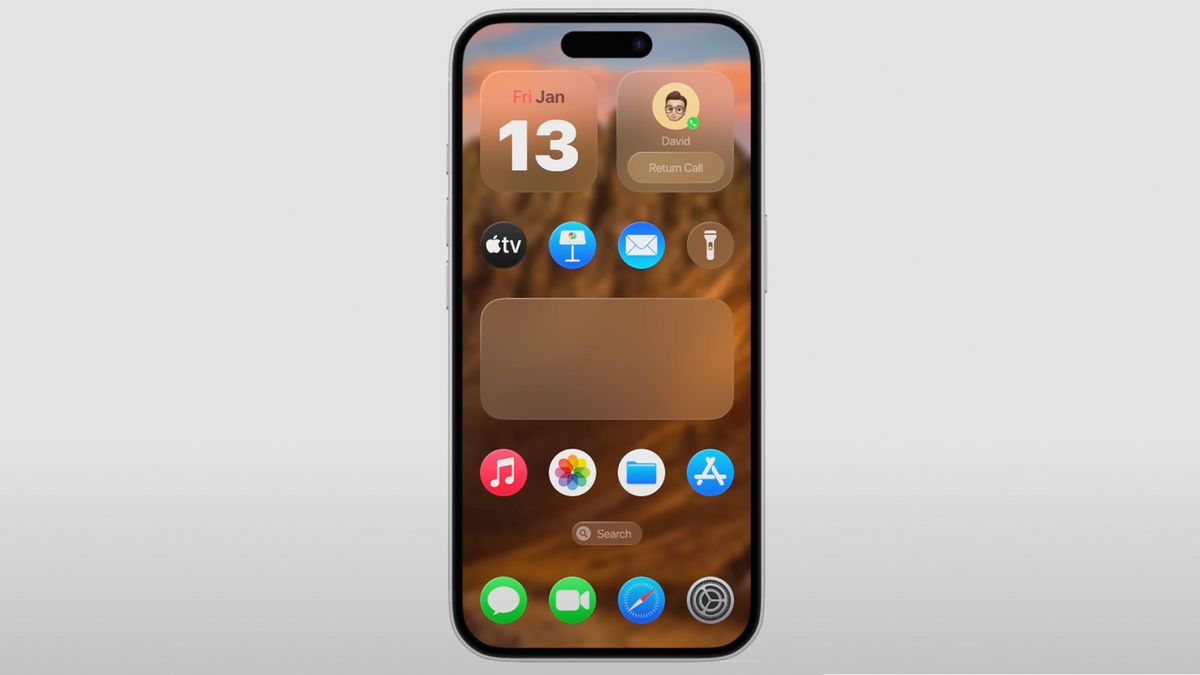
Recent reports have suggested that Apple is preparing the most significant redesign ever with iOS 19 – and the whole thing could be inspired by the look of VisionOS. If that’s the case, get ready for lots of circular icons and shadows in the next generation of software for several of our best camera phones.

A Sneak Peek at the Future of iOS

Concept artists have already mocked up renders based on the VisionOS rumors, and while they look jarringly different to what we have now, that difference is certainly fresh. The rounded icons and increased transparency could take some getting used to – but with Apple leaker Ming-chi Kuo claiming the redesign is "is “essential for seamlessly integrating new products into Apple’s ecosystem," it sounds like the entire Apple product line could end up adopting it – including the company’s rumoured smart hub for the home.

Is it Time for a Change?

While anything that significantly changes the home screen that users interact with daily is likely to cause controversy, I’d say it’s about time Apple gave us a new look. 2013’s iOS 7 is often cited as the last big iOS redesign, when skeuomorphism was ditched in favor of flat design. The fact that the former is making a comeback as brands embrace detailed, textured UI again shows just how much time has passed since iOS 7 – and how it’s time for another revolutionary new look for iOS.

Conclusion

The future of iOS is uncertain, but one thing is clear – change is on the horizon. With the rumors of a radical redesign, it’s time to start thinking about what this could mean for the future of our iPhones and iPads. Whether you’re excited or apprehensive, one thing is certain – the next generation of iOS will be unlike anything we’ve seen before.

FAQs

Q: What is VisionOS?
A: VisionOS is a design language used by Apple for its smart display and home automation system.

Q: What is the purpose of the redesign?
A: According to Apple leaker Ming-chi Kuo, the redesign is "essential for seamlessly integrating new products into Apple’s ecosystem."

Q: Will the redesign be limited to iOS or will it affect other Apple products as well?
A: Rumors suggest that the redesign could affect the entire Apple product line, including the company’s rumoured smart hub for the home.