Home Blog Page 195

ServiceNow Acquires LLM-Powered Chatbot Pioneer Moveworks for $2.85B

Chatbot Pioneer Moveworks Acquired by ServiceNow for $2.85 Billion

Long before ChatGPT ignited the generative AI revolution, a company called Moveworks was busy using a promising new family of language models to help solve tough technological problems in customer service. All that work paid off this week when ServiceNow announced it has agreed to purchase Moveworks for $2.85 billion.

The Early Days of Moveworks

Moveworks was founded in 2016 by Bhavin Shah, Vaibhav Nivargi, Varun Singh, and Jiang Chen to develop conversational interfaces, or chatbots, that companies could use to augment human call-center workers. At the time, the company relied on recurrent neural networks (RNN) techniques, which were not easy to work with.

"That was not the best year to start such a company," CEO Shah acknowledged to BigDATAwire in a 2023 interview. "In 2016, chatbots were declared dead. Most people were skeptical."

The Transformer Architecture

But then something unexpected happened. In 2017, Google invented the transformer architecture, which was based on a fundamentally different approach. It dispensed the convolutions and recurrence that were used in convoluted neural networks (CNNs) and RNNs and relied on something called the attention mechanism, whereby the relative importance of each component in a sequence is calculated relative to the other components in a sequence.

The Rise of Large Language Models

Suddenly, Moveworks had better underlying technology to work with. By the spring of 2021, two years after it came out of stealth, the Mountain View, California company was using early language models, such as Google’s BERT, to build better chatbots and search engines for customers. Specifically, Moveworks realized that if you took a pre-trained model like BERT and fine-tuned it using an enterprise’s own data, then the model could not only exceed its out-of-the-box capability, but it also exceeded the capability of older RNN and NLP techniques.

Building a Business

This new class of language models were very sophisticated, Moveworks Co-founder and CTO Vaibhav Nivargi told BigDATAwire back in June 2022. "They capture a lot of knowledge because they’re trained with hundreds of billions or trillions of parameters now, so it is impressive to see," he said.

Thanks to this realization, the company built a business where it used language models to create custom chatbots and conversational interfaces for companies that were suffering from a shortage of customer service representatives. Nivargi said its AI-powered agents could automate 70% to 80% of the work at large companies.

The Acquisition

Moveworks built chatbots and conversational interfaces for some very large companies, including Hearst, Instacart, Palo Alto Networks, Siemens, Toyota, and Unilever. That not only gave the company exposure to data from many different industries, which helped its technologists get better at serving the next customer, but it also exposed Moveworks to all sorts of backend databases and enterprise applications.

The capabilities of these large language models (LLMs) exploded, as we have documented in these pages and over at our sister site, AIWire, and Moveworks’ business grew too. In early 2024, Moveworks President and Co-founder Varun Singh told BigDATAwire about a copilot that could handle the duties of 36 different human agents.

"It’s completely insane in terms of its ability to discern and do actions across range of different applications and auto selecting the right plugins," Singh said. "It’s working. And frankly, I don’t think that’s too much at this stage, in terms of how far you can push this technology."

Conclusion

Moveworks’ work eventually gained the attention of ServiceNow, the SaaS giant that had $10.9 billion in revenues in 2024 and currently has a market cap of $174 billion. ServiceNow saw that Moveworks could bolster its own AI strategy, so it offered to buy the privately held company for $2.85 billion.

FAQs

Q: What is Moveworks?
A: Moveworks is a company that develops conversational interfaces, or chatbots, to augment human call-center workers.

Q: When was Moveworks founded?
A: Moveworks was founded in 2016.

Q: What is the transformer architecture?
A: The transformer architecture is a type of neural network that dispenses with convolutions and recurrence and relies on an attention mechanism to process input sequences.

Q: What are large language models (LLMs)?
A: LLMs are sophisticated language models that are trained with hundreds of billions or trillions of parameters and can capture a lot of knowledge.

Revisiting Windows 1.0

0

Editor’s Note: Ahead of Microsoft’s 50th anniversary, we’ve revisited our look at an operating system that helped shape personal computing over the years.

Windows 1.0: A Look Back at the Original

Two years ago, when Windows 1.0 celebrated its 25th birthday, we didn’t yet know what the future of Windows would hold. Now that Windows 8 is on the market, the original is more relevant than ever before. Today, Windows 1.0 turns 27, and despite the many ways computing has changed since its debut, the two operating systems have some surprising similarities.

A Brief History of Windows 1.0

On November 10th, 1983, Microsoft announced Windows. For $99, it came with a notepad, calendar, clock, cardfile, terminal application, file manager, a game of Reversi, Windows Write, and Windows Paint. The original press materials, prepared using Windows Write, had this quote from Bill Gates:

"Windows provides unprecedented power to users today and a foundation for hardware and software advancements of the next few years. It is unique software designed for the serious PC user, who places high value on the productivity that a personal computer can bring."

The Launch and Reception of Windows 1.0

As chronicled in the December 1983 issue of BYTE Magazine, Windows was an attempt to make the desktop operating system relatively affordable. When most computers were still primarily text-based, the hardware requirements for a desktop operating system were expensive.

The Tiled Interface: A Blast from the Past

And amusingly enough, part of that new UI is a tiled interface that directly hearkens back to its ancestor. You’re probably familiar with how you can drag windowed programs on top of one another so that they overlap, yes? That functionality was removed from Windows 1.0 by the time it shipped. Instead, applications would appear tiled, each one automatically resizing itself to fit the available space. Stories differ as to whether that was a conscious decision by Microsoft or whether a secret agreement with Apple caused them to remove overlapping windows, but the overlap returned in Windows 2.0 and sparked an Apple lawsuit along the way. And yet, Windows 8 brings back the tiled interface with Windows Snap, and not all apps are functional when resized to smaller proportions. No wonder the Windows logo is back to square one.

The Legacy of Windows 1.0

Windows 1.0 launched to optimistic but middling reviews, and didn’t end up fulfilling its promise to be an affordable, powerful OS. Popular Science liked the idea, but called it relatively slow, noting that "it takes up to 15 seconds to switch from one program to another." Multitasking was a memory hog, too: "my 640-kilobyte computer couldn’t hold more than two medium-sized programs in memory at once," complained the publication. Creative Computing worried about the dearth of compatible graphics cards, and was uncertain whether Windows was a valuable upgrade over DOS. InfoWorld led with the headline "Windows Requires Too Much Power" and gave it a 4.5 (out of 10) score. "It makes such intense demands on the computer’s processing power that it’s just not appropriate for an ordinary 8088-based IBM PC or compatible," wrote the publication. And The New York Times said that "running Windows on a PC with 512K of memory is akin to pouring molasses in the Arctic." It turned out that you really did need that extra memory and that expensive hard disk drive to run Windows at a reasonable pace, and some even suggested a RAM disk like Intel’s Above Board.

The Road to Success

It took two more versions of Windows for the operating system to catch on.

Conclusion

We shouldn’t kid ourselves, though: in the 80s, the PC industry was a wild west, and those days are long gone. The issues that stymied Windows 1.0 when Microsoft was young won’t necessarily block today’s operating system from success, not when every major computer company is churning out compatible Windows 8 machines and the appeal of touchscreens has already been proven.

FAQs

Q: What was the original price of Windows 1.0?
A: $99

Q: What was the original launch date of Windows 1.0?
A: November 10th, 1983

Q: What was the original hardware requirement for Windows 1.0?
A: A 640-kilobyte computer with a hard disk drive

Q: What was the original reception of Windows 1.0?
A: Mixed, with some praising its idea but criticizing its performance and compatibility issues.

Google claims Gemma 3 reaches 98% of DeepSeek’s accuracy

The Economics of Artificial Intelligence: Google’s Gemma 3

A New Open-Source Large Language Model

The economics of artificial intelligence have been a hot topic of late, with startup DeepSeek AI claiming eye-opening economies of scale in deploying GPU chips. Two can play that game. On Wednesday, Google announced its latest open-source large language model, Gemma 3, came close to achieving the accuracy of DeepSeek’s R1 with a fraction of the estimated computing power.

Gemma 3: A Sweet Spot

Google’s balance of compute and Elo score is a "sweet spot," the company claims. Gemma 3 delivers state-of-the-art performance for its size, outperforming Llama-405B, DeepSeek-V3, and o3-mini in preliminary human preference evaluations on LMArena’s leaderboard. This helps you create engaging user experiences that can fit on a single GPU or TPU host.

Gemma 3 vs. R1: A Comparison

Google’s model also tops Meta’s Llama 3’s Elo score, which it estimates would require 16 GPUs. Note that the numbers of H100 chips used by the competition are Google’s estimate; DeepSeek AI has only disclosed an example of using 1,814 of Nvidia’s less-powerful H800 GPUs to serve answers with R1.

The Gemma 3 Models

Gemma 3 models, intended for on-device usage rather than data centers, have a vastly smaller number of parameters, or neural "weights," than R1 and other open-source models. Generally speaking, the greater the number of parameters, the more computing power is required.

Distillation and Quality Control

The main enhancement to make such efficiency possible is a widely used AI technique called distillation, whereby trained model weights from a larger model are extracted from that model and inserted into a smaller model, such as Gemma 3, to give it enhanced powers. The distilled model is also run through three different quality control measures, including Reinforcement Learning from Human Feedback (RLHF) to shape the output of GPT and other large language models to be inoffensive and helpful; as well as Reinforcement Learning from Machine Feedback (RLMF) and Reinforcement Learning from Execution Feedback (RLEF), which Google says improve the model’s math and coding capabilities, respectively.

Optimization Techniques

To optimize the smallest version, the 1 billion model, for mobile devices, Google uses four common AI engineering techniques: quantization, updating the "key-value" cache layouts, improved loading time of certain variables, and "GPU weight sharing."

Comparison with Gemini Models

Gemma 3 generally falls below the accuracy of Gemini 1.5 and Gemini 2.0, but Google calls the results noteworthy, stating that Gemma 3 is "showing competitive performance compared to closed Gemini models." The main advance of Gemma 3 over Gemma 2 is a longer "context window," the number of input tokens that can be held in memory for the model to work on at any given time.

Gemma 3 and Gemini 2 Comparison

Gemma 2 was only 8,000 tokens whereas Gemma 3 is 128,000, which counts as a "long" context window, better suited for working on whole papers or books. (Gemini and other closed-source models are still much more capable, with a context window of 2 million tokens for Gemini 2.0 Pro.)

Multi-Modal Capabilities and Language Support

Gemma 3 is also multi-modal, which Gemma 2 was not. This means it can handle image inputs along with text to serve up replies to queries such as, "What is in this photo?" Gemma 3 supports over 140 languages rather than just the English support in Gemma 2.

Conclusion

Gemma 3 is a significant step forward in the development of open-source large language models, offering a balance of compute and Elo score that is hard to match. It is suitable for on-device usage and supports a wide range of languages. With its multi-modal capabilities and long context window, Gemma 3 is an exciting development in the field of AI.

FAQs

Q: What is Gemma 3?
A: Gemma 3 is an open-source large language model developed by Google.

Q: How does Gemma 3 compare to R1?
A: Gemma 3 comes close to achieving the accuracy of R1 with a fraction of the estimated computing power.

Q: What is the main enhancement of Gemma 3?
A: The main enhancement of Gemma 3 is the use of distillation, a widely used AI technique to make efficiency possible.

Q: How does Gemma 3 compare to Gemini models?
A: Gemma 3 generally falls below the accuracy of Gemini 1.5 and Gemini 2.0, but is showing competitive performance compared to closed Gemini models.

As Intel Welcomes a New CEO

0

Intel Appoints New CEO: Lip-Bu Tan to Lead the Semiconductor Giant

Background

Semiconductor giant Intel hired semiconductor veteran Lip-Bu Tan to be its new CEO. This news comes three months after Pat Gelsinger retired and stepped down from the company’s board, with Intel CFO David Zinsner and executive vice president of client relations Michelle Johnston Holthaus stepping in as co-CEOs.

The New CEO: Lip-Bu Tan

Tan, who was most recently the CEO of Cadence Design Systems, is joining Intel — and rejoining the board — at an interesting time in the Silicon Valley company’s history. Intel has seen its fair share of ups and downs in the past few years — to put it mildly.

Gelsinger’s Tenure

When Gelsinger took the helm in February 2021, Intel was already struggling and was falling far behind its peers in the semiconductor race. At the time, the company was likely still reeling from missing out on the smartphone revolution in addition to missteps when it came to chip fabrication.

Gelsinger’s Modernization Plan

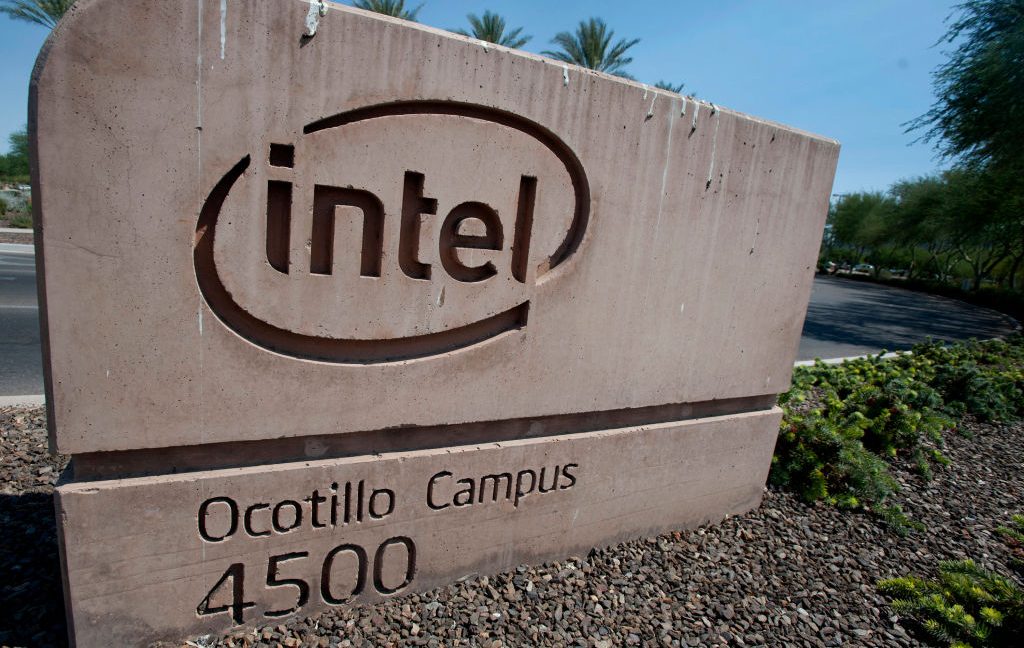
Gelsinger got right to work when he started. He announced a modernization plan for the company, dubbed IDM, or integrated device manufacturing. The first part of the goal was a $20 billion investment to build two new chip manufacturing facilities in Arizona, with plans to boost chip production in the U.S. and beyond.

Post-Gelsinger Era

In the time since Gelsinger’s departure, the company has delayed the opening of its Ohio chip factory — again — and decided not to bring its Falcon Shores AI chips to market. However, things may be starting to head in the right direction. Intel finalized a deal with the U.S. Department of Commerce to receive a $7.865 billion grant for domestic semiconductor manufacturing through the U.S. Chips and Science Act. The company was also able to notch a win when it comes to the popularity of its Arc B580 graphics card, which sold out after positive early reviews.

Conclusion

As Tan takes the lead, Intel is expected to face new challenges and opportunities. With the company’s recent struggles and the current state of the semiconductor industry, it will be interesting to see how Tan navigates the complex landscape and drives the company’s future growth and success.

FAQs

Q: Who is Lip-Bu Tan?
A: Lip-Bu Tan is the new CEO of Intel, previously the CEO of Cadence Design Systems.

Q: What was Gelsinger’s modernization plan for Intel?
A: Gelsinger’s plan was to invest $20 billion in building two new chip manufacturing facilities in Arizona and boost chip production in the U.S. and beyond.

Q: What is the U.S. Chips and Science Act?
A: The U.S. Chips and Science Act is a government program that provides grants to companies to support domestic semiconductor manufacturing. Intel received a $7.865 billion grant from the program.

Q: What is the status of Intel’s Ohio chip factory?
A: The factory has been delayed again, and Intel has decided not to bring its Falcon Shores AI chips to market.

Uber’s Regret: “Wish we had an autonomous ride-sharing product

0

Travis Kalanick Believes Uber’s Autonomous Driving Program was a Mistake

Former CEO Speaks Out on Company’s Decision

Travis Kalanick, the former CEO of Uber, made it clear at the Abundance Summit in L.A. that he believes the company’s decision to abandon its autonomous driving program was a mistake. Kalanick stated, "Look, [new management] killed the autonomous car project we had going on. At the time, we were really only behind Waymo but probably catching up, and we were going to pass them in short order . . . I wasn’t running the company when that happened, but you know, you could say, ‘Wish we had an autonomous ride-sharing product right now. That would be great.’"

The Decision to Sell the Self-Driving Unit

Uber sold its self-driving unit in a reported fire sale to the self-driving tech developer Aurora in 2020, three years after Kalanick was forced to step down. At the time, it made sense; autonomous driving was bleeding cash, and Uber had already spent hundreds of millions of dollars on the effort. Now, Waymo’s self-driving cars are tooling around the Bay Area, Los Angeles, and popping up in new markets.

Partnership with Waymo

Waymo recently partnered with Uber in Austin, and Uber is betting its platform will be critical in growing the service. But business is business, and partnerships falter. If Waymo decides it doesn’t need a middleman, Uber, once the future of transportation, could find itself stuck in reverse.

Conclusion

Kalanick’s comments highlight the significance of the decision to abandon the autonomous driving program. While it may have seemed like a cost-cutting measure at the time, it has ultimately led to Waymo’s dominance in the market. Uber’s partnership with Waymo may be a step in the right direction, but it’s unclear whether it will be enough to help the company regain its footing.

FAQs

Q: Why did Uber decide to sell its self-driving unit?
A: Uber sold its self-driving unit in 2020, three years after Travis Kalanick was forced to step down. At the time, autonomous driving was bleeding cash, and Uber had already spent hundreds of millions of dollars on the effort.

Q: What is Waymo’s current status in the autonomous driving market?
A: Waymo’s self-driving cars are currently operating in the Bay Area, Los Angeles, and popping up in new markets.

Q: What is the significance of the partnership between Uber and Waymo?
A: The partnership between Uber and Waymo is a crucial step in growing the service, but it’s unclear whether it will be enough to help Uber regain its footing in the market.

New Intel CEO to Continue Gelsinger’s Path

New CEO for Intel: Lip-Bu Tan Takes the Reins

Background and Transition

After a little over three months, Intel has a new CEO to replace ousted former CEO Pat Gelsinger. Intel’s board announced that Lip-Bu Tan will begin as Intel CEO on March 18, taking over from interim co-CEOs David Zinsner and Michelle Johnston Holthaus.

Gelsinger’s Departure

Gelsinger was booted from the CEO position by Intel’s board on December 2 after several quarters of losses, rounds of layoffs, and canceled or spun-off side projects. Gelsinger sought to turn Intel into a foundry company that also manufactured chips for fabless third-party chip design companies, putting it into competition with Taiwan Semiconductor Manufacturing Company (TSMC), Samsung, and others, a plan that Intel said it was still committed to when it let Gelsinger go.

Interim Co-CEOs’ Roles

Intel said that Zinsner would stay on as executive vice president and CFO, and Johnston Holthaus would remain CEO of the Intel Products Group, which is mainly responsible for Intel’s consumer products. These were the positions both executives held before serving as interim co-CEOs.

Lip-Bu Tan’s Background

Tan was previously a member of Intel’s board from 2022 to 2024 and has been a board member for several other technology and chip manufacturing companies, including Hewlett Packard Enterprise, Semiconductor Manufacturing International Corporation (SMIC), and Cadence Design Systems.

Conclusion

The transition to new leadership at Intel marks a fresh start for the company, with a new CEO at the helm. With a strong background in the technology and chip manufacturing industry, Lip-Bu Tan is well-equipped to lead Intel forward.

FAQs

Q: Who is the new CEO of Intel?
A: Lip-Bu Tan

Q: Who will replace Tan in the board?
A: The board members will be announced in due course.

Q: What are the roles of interim co-CEOs Zinsner and Johnston Holthaus?
A: Zinsner will remain executive vice president and CFO, and Johnston Holthaus will continue as CEO of the Intel Products Group.

Q: What is the current state of Intel after Gelsinger’s departure?
A: Intel is still committed to its foundry plans, but with a new CEO at the helm, the company is expected to refocus its efforts and adapt to the changing landscape.

Unlocking the Future of Public Finance with Microsoft 365 Copilot

Every day, the work of public finance professionals provides the financial foundation upon which all government activities can be assured, from delivering basic services to ensuring overall economic stability. In a world of rapid change, however, public finance organizations at all levels of government are straining to meet new demands.

Across industry sectors, 80% of finance teams report challenges in their ability to do strategic work beyond operations. For public finance organizations, this is made even more difficult due to the pressures unique to government: budgetary constraints, revenue volatility, public demands for transparency, complex regulations, and workforce challenges, to name just a few.

Modernization plays a major role in helping public governments navigate this landscape. New cloud and AI solutions are helping governments reignite economies by simplifying taxation, improving budgeting, and mitigating fraud and corruption. Now, a new level of impact is at hand with the Microsoft 365 Copilot for Finance, an AI-powered, role-based Copilot agent designed to help government agencies accelerate time to business impact. Copilot for Finance is now in public preview and will be delivered in the coming months.

How Copilot for Finance Empowers Finance Professionals in New Ways

Imagine a typical day for a budget officer or a procurement operations manager. These professionals spend hours each day reviewing emails, preparing for meetings, and analyzing data. Despite their best efforts, much of their time is consumed by drudgery—essential tasks that demand complete and precise attention—time that is not available for more strategic (and satisfying) work.

Generative AI has already proven effective in easing the burden, with Microsoft 365 Copilot delivering significant productivity gains in just its first year. Users reported it made them 29% faster in doing such time-consuming tasks as searching, writing, and summarizing.2 The power to explore financial data with natural language, reduce time spent on financial processes, and turn raw data into presentation-ready visuals and whitepapers—all integrated into everyday productivity applications such as Excel, Outlook, and Microsoft Teams—is truly transformative for public finance.

Copilot for Finance extends the core power of Copilot with new features designed specifically to enhance financial operations. By drawing on a complete range of financial data sources, including enterprise resource planning (ERP) systems and the organization’s complete Microsoft 365 data, it’s built to help professionals and teams accelerate their impact by speeding time to financial insight.

4 Important Benefits of Copilot for Finance for Public Finance

Copilot for Finance is designed to be an everyday assistant for finance professionals to reimagine how they operate and serve the public. Here are four ways it aims to deliver new benefits to improve cost as well as impact.

Optimizing Processes

Copilot for Finance helps automate many labor-intensive tasks that finance professionals typically do manually, such as data consolidation, verification, and updating financial data across systems. This can significantly reduce the time and effort required, freeing people to do more strategic work. For example, during financial period close, Copilot for Finance can streamline data reconciliation by using intelligent data structures comparisons and guided troubleshooting in Excel. It analyzes results with an auto-generated report summary that highlights discrepancies and provides recommendations and actions to resolve them. This not only speeds up the reconciliation process but also helps ensure higher accuracy and reduces the risk of errors.

Controlling Expenses

Beyond saving time and money with optimized processes, Copilot for Finance helps organizations focus better on expense control with AI-powered reconciliation and data set preparation. By using new methods of cost variance identification, analysis, and reporting, teams can find more opportunities to save costs, earlier than they might have otherwise, thanks to variance analysis and insights drawn from myriad supplementary data sources.

Improving Collections

Copilot for Finance gives public finance professionals new ways to work with taxpayers and drive productive communications that lead to better collections and reporting in less time. Drawing on information from multiple sources about an individual’s or organization’s status, a collections manager can quickly review payment history and any issues or details relevant to collection activities. Generative AI summarization can also expedite communication and reporting on multiple fronts.

De-Risking Revenues

Copilot for Finance helps improve the strategies and processes to reduce financial risks associated with revenue streams. With AI monitoring and summarization, it can shift the focus from reporting to planning and forecasting, with less time spent closing books, and more for ad hoc analysis that can lead to better outcomes. Revenue forecasting and budgeting can be improved by more accurately spotting external macro-economy signals and using revenue variance analysis to spot revenue softness earlier and enable macro-analysis collaboration.

Learn More About Copilot for Finance

The future of public finance is here, and for many governments, it’s powered by AI. Copilot for Finance offers a powerful new opportunity for finance teams to operate more successfully and efficiently than ever before. Learn more about how Microsoft is helping governments solve society’s biggest challenges and how we’re helping to drive financial accountability with public finance technology solutions.

Resources

  1. Future of Finance Trends, 2023.
  2. Microsoft Work Trend Index Special Report, 2023.
  3. Internal Microsoft data.

About the Author

Valentina Ion
Public Finance, Customs and Public Transportation Lead
As Director of Public Finance, Valentina leads the Microsoft sales and industry solutions strategy, enabling a strong organization that supports Ministries of Finance, Tax Agencies, Customs and Trade Agencies, National Treasuries as well as Financial Market Regulators, embarking on the digital transformation journey.

Spectre Divide and its developer are shutting down

0

Mountaintop Studios’ Spectre Divide Game Shutting Down Due to Low Player Numbers and Revenue

A Hail Mary Effort Falls Short

Mountaintop Studios, the developer of the game Spectre Divide, has announced that it will be shutting down the game due to low player numbers and revenue. In a post, the studio stated that it had high hopes for the game’s first week, with over 400,000 players and a peak concurrent player count of 10,000 across all platforms. However, as time went on, the studio did not see enough active players and revenue to cover the day-to-day costs of the game and the studio.

Server Issues and Low Player Engagement

In December, Mountaintop CEO Nate Mitchell and Spectre Divide game director Lee Horn told The Verge that the game’s console launch and new season would be its "hail mary play". However, server issues on launch day and a lack of momentum axed its chances of success. Horn admitted that the game "fell over on day one". Mitchell had said that the game needed thousands of concurrent players to survive, but unfortunately, the game’s new season peaked at just over 1,000 concurrent players on Steam, and has been downhill ever since.

Closing the Studio and Refunding Players

Mountaintop Studios expects to take Spectre Divide offline within the next 30 days and will refund all money since the game’s first season, which kicked off on February 25th. The studio will also be closing its doors at the end of the week. In a statement, the studio said, "We pursued every avenue to keep going, including finding a publisher, additional investment, and/or an acquisition. In the end, we weren’t able to make it work. The industry is in a tough spot right now."

Conclusion

Mountaintop Studios’ decision to close Spectre Divide and its doors is a cautionary tale of the challenges faced by small game developers in the industry. Despite its best efforts, the studio was unable to generate enough revenue to sustain itself, and ultimately, the game’s poor performance led to its demise. The closure of the studio and the game serves as a reminder of the importance of careful planning, execution, and market analysis in the competitive gaming industry.

FAQs

Q: Why is Mountaintop Studios shutting down Spectre Divide?
A: Mountaintop Studios is shutting down Spectre Divide due to low player numbers and revenue, which did not cover the day-to-day costs of the game and the studio.

Q: Why did the game experience server issues on launch day?
A: Server issues on launch day axed the game’s momentum, making it difficult for the game to gain traction.

Q: What is the fate of Mountaintop Studios?
A: Mountaintop Studios will be closing its doors at the end of the week, and will refund all money since the game’s first season.

Q: What is the future of the gaming industry?
A: The industry is in a tough spot, making it challenging for small game developers to succeed, as seen in the case of Mountaintop Studios and Spectre Divide.

Intel Names Lip-Bu Tan as New CEO Amid Turnaround Efforts

0

Intel Tries to Revive its Fortunes with New CEO

Background

Intel, a fallen Silicon Valley icon, has named Lip-Bu Tan, a seasoned business and technology leader, as its new chief executive. Tan, 65, will be responsible for reviving the fortunes of a chip-making company that has struggled to innovate and claim a share of the market for chips used in smartphones and artificial intelligence.

The Challenges Ahead

Intel’s problems have been well-documented. In recent years, the company has struggled to keep up with the pace of innovation in the semiconductor industry, leading to a decline in its market share. The company’s share price has fallen 54% over the past year, and it has been forced to cut 15,000 jobs. The US government has also been trying to rebuild the chips industry after the pandemic created a global shortage that forced US auto factories to shut down.

The CHIPS Act and Federal Funding

The company was awarded $8.5 billion in federal funding to build plants in Arizona, Ohio, and New Mexico under the CHIPS Act, a bipartisan law. However, its business challenges have raised questions about its ability to complete those projects.

A Possible Solution

The Trump administration has been meeting with Intel’s leadership to discuss ways to restore the company’s business. One proposal is to have Taiwan Semiconductor Manufacturing Company, the world’s largest chipmaker, assume operations for Intel’s ailing manufacturing business. Frank Yeary, Intel’s chairman, has been open to this idea.

The New CEO’s Task

Now, it will be up to Mr. Tan to direct Intel’s future. The company is one of the last in the world that still both designs and manufactures semiconductors. Its former board members and others in the industry have been calling for the company to split those businesses apart.

Investor Reaction

Investors reacted positively to Mr. Tan’s appointment, causing Intel’s stock price to jump more than 11% in aftermarket trading.

About the New CEO

Mr. Tan has a long history as an investor in Silicon Valley, having served as the chief executive of Cadence Design Systems, one of the two dominant makers of software used in designing chips. He has also been a key player in various small and midsize tech hardware companies and has faced criticism for his investments in Chinese artificial intelligence and semiconductor companies.

Conclusion

Intel’s new CEO, Lip-Bu Tan, has a challenging task ahead of him. With his extensive experience in the industry and his track record of turning around struggling companies, he may be the right person to lead Intel back to success. However, the company’s future will depend on its ability to innovate and adapt to the rapidly changing semiconductor industry.

FAQs

Q: What is the CHIPS Act?
A: The CHIPS Act is a bipartisan law that provides federal funding to rebuild the chips industry in the US.

Q: What is the purpose of the CHIPS Act?
A: The CHIPS Act aims to rebuild the US chips industry, which was severely impacted by the pandemic.

Q: What is the current state of Intel’s business?
A: Intel’s business has been struggling, with a 54% decline in its share price over the past year and the loss of 15,000 jobs.

Q: What is the new CEO’s background?
A: Lip-Bu Tan has a long history as an investor in Silicon Valley and has served as the chief executive of Cadence Design Systems and other companies.

AI: The Creative Boost

The Issue

Many of the most popular AI media generators on the market, including OpenAI’s DALL-E 2, trained their models by scraping the entire internet, including the original work of artists, without asking for their explicit permission. This has led to the loss of control over their work being reproduced, ownership of their creative style, and the extra revenue that AI companies make from reproducing their ideas.

Steps Companies Can Take

AI text-to-media generators offer clear accessibility benefits, enabling anyone to create regardless of skill or resources. Ideally, they should support creators and enrich the ecosystem, not replace it. The first step towards that goal is simple, according to Ed Newton-Rex: "Firstly, you can’t steal stuff."

Some companies have already started to take this approach. For example, Getty Images launched Generative AI by Getty Images, which was trained on Getty’s robust library of stock images and provides ongoing revenue for those whose work was used. Adobe took a similar approach with its Firefly generative model, which is also commercially safer. To train its model, Adobe only used Adobe Stock images, openly licensed content, and public domain content. It also compensates creators whose work was used in the training set.

The Challenge

However, more companies don’t take this approach due to inherent challenges, including accessing and creating a clean dataset, which can be costly and time-consuming. This is especially detrimental for AI companies racing to release the next model and better compete in the AI race.

The Introspective Look

Another factor worth consideration is taking an introspective look at the use case of these models. Since creating content is easier than ever, it can be tempting to flood media platforms with AI-generated content, such as music, images, and videos. Ultimately, Newton-Rex found this could lead to the dilution of the interest in revenues and royalties that people are getting for their work.

Conclusion

The relationship between AI companies, AI models, and artists has been extractive, stripping artists of their life’s work and using it for their own profit. To create a mutually beneficial agreement, AI companies must support creators and enrich the ecosystem, not replace it. By training models on their own content, using open-licensed content, and compensating creators, companies can ensure a fair and sustainable future for both AI and art.

FAQs

Q: Can AI companies train their models on copyrighted materials without permission?
A: Yes, AI companies can legally train their models on copyrighted materials through the concept of Fair Use, which stipulates that you are not violating copyright law if you are using an existing work to inform the creation of something new.

Q: Is it fair to use artists’ work without their permission?
A: No, it is not fair to use artists’ work without their permission. It is considered copyright infringement and can lead to the loss of control over their work being reproduced, ownership of their creative style, and the extra revenue that AI companies make from reproducing their ideas.

Q: How can AI companies support creators and enrich the ecosystem?
A: AI companies can support creators and enrich the ecosystem by training their models on their own content, using open-licensed content, and compensating creators. This approach ensures a fair and sustainable future for both AI and art.