Home Blog Page 2

Analog Devices renews MassRobotics partnership to support robotics startups

0

Please switch off your ad blocker.

Our website relies on ads to provide free content and sustain our operations. By turning off your ad blocker, you help support us and ensure we can continue offering valuable content without any cost to you.

We truly appreciate your understanding and support. Thank you for considering disabling your ad blocker for this website

Dismiss

Generate single title from this title Schools are building AI rules before they know the destination in 100 -150 characters. And it must return only title i dont want any extra information or introductory text with title e.g: ” Here is a single title:”

Write an article about

Key points:

  • Career durability depends on fundamentally human skills that give students the flexibility and adaptability to adjust to changes
  • Leading with AI and technology in the age of personalized learning
  • How districts can build a shared AI structure
  • For more news on schools and AI pathways, visit eSN’s Digital Learning hub

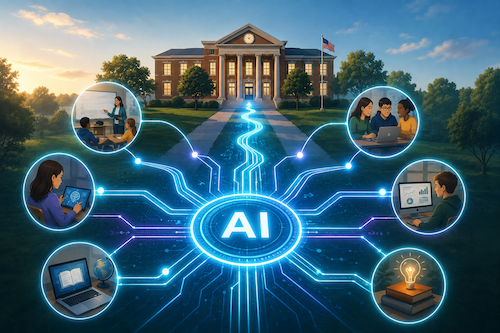
America’s schools are moving quickly to respond to the rise of artificial intelligence, with parents, teachers, administrators, and lawmakers working to wrap their arms around what this means for student education.

But regulation that comes ahead of a clear definition of preparedness may set students back in the AI race. For the future of America’s students — and economy — leaders need to first define what the future of career preparedness looks like.

The speed at which education leaders have moved to respond to AI has been nothing short of remarkable. Just a few years ago, there were no states with formal guidance on AI in K-12 education. Today, 34 states and Puerto Rico have issued some sort of AI guidance for schools. More than 70 bills about AI in the classroom have been introduced across 27 states this year alone, as policymakers debate every aspect of AI, from classroom restrictions and student privacy, to graduation requirements and teacher training. 

Yet as schools debate every part of AI policy, including who is and isn’t allowed to use it, how they’re allowed to use it, and when they’re allowed to use it, they’re skipping over a more fundamental issue. What do students actually need to learn in order to be successful for the rest of their lives post-graduation?

It’s a question that should fundamentally drive most education policy decisions, especially when it comes to students in the final years of high school and in college. Before schools can determine what students should avoid, they need to first understand what needs to be encouraged based on the demands of employers and the changing business landscape.

This isn’t about letting businesses dictate education policy. We’ve seen industry lead students astray before. The bootcamps and computer science degrees students not long ago were told would lead to higher paying jobs have now fizzled out — a short-term need now rendered obsolete by the advancement of AI.

The mistake we made then was over-indexing on short-term signals. Several years ago, there was high demand for computer engineers, so education leaders gave students one set of skills needed for one defined future.

Then things changed.

The future isn’t set in stone, especially when it comes to dealing with new and emerging technologies like AI.  For example: One-third of entry-level jobs now reference AI-related skills, yet students report wildly uneven access to AI guidance and little clarity on which skills will actually matter. 

Young people today are expected to change career paths more times than any other generation before them. Instead of looking at education as providing students with the skills they need to go from Point A to Point B, education needs to provide the skills that will take students from Point A to Point E back to Point B, all the way to some point that has yet to be defined.

Training students in things like vibe-coding, prompt-engineering, or model training may answer the business needs of today, but fall short of actual lasting career preparedness.

This isn’t a responsibility that should rest solely on educators to figure out. The best education systems are those that respond to clearly articulated employer demand in a collaborative way that sets students up for long term success.

What we’re seeing in the age of AI is that career durability depends on fundamentally human skills that give students the flexibility and adaptability to adjust alongside technological and workplace demands. Students equipped with skills like judgment and ethical reasoning, problem framing and solving, and critical thinking — in addition to tool fluency and domain knowledge — will be the ones who find success long-term. 

How these lessons play out in the final years of high school and across postsecondary education is a task that schools can work collaboratively with employers to figure out. Rather than asking schools to guess what employers want, employers can play an active role in helping them to define it. Community colleges, universities, and workforce training providers are already asking employers these exact questions. The federal government through the National Science Foundation has set up a program designed to help bring business leaders together with education leaders to bring these conversations to life. Similar state programs are taking shape as well.

The goal is not to predict the future. The goal is to define a new standard of preparation that allows students, parents, and educational providers to make the decisions that work best for them.

If the US needs students with new and different skills, it owes students more than warnings. It owes them a clearer picture of what success looks like. 

The challenge before the American education system is not simply understanding what technology can do. It is defining what human excellence looks like in a world where technology can do more than ever before. Until that question is answered, policymakers will continue writing rules without first agreeing on the destination.

.Organize the content with appropriate headings and subheadings ( h2, h3, h4, h5, h6). Include conclusion section and FAQs section with Proper questions and answers at the end. do not include the title. it must return only article i dont want any extra information or introductory text with article e.g: ” Here is rewritten article:” or “Here is the rewritten content:”

Unitree targets $9 billion valuation in landmark IPO as humanoid robot race accelerates

0

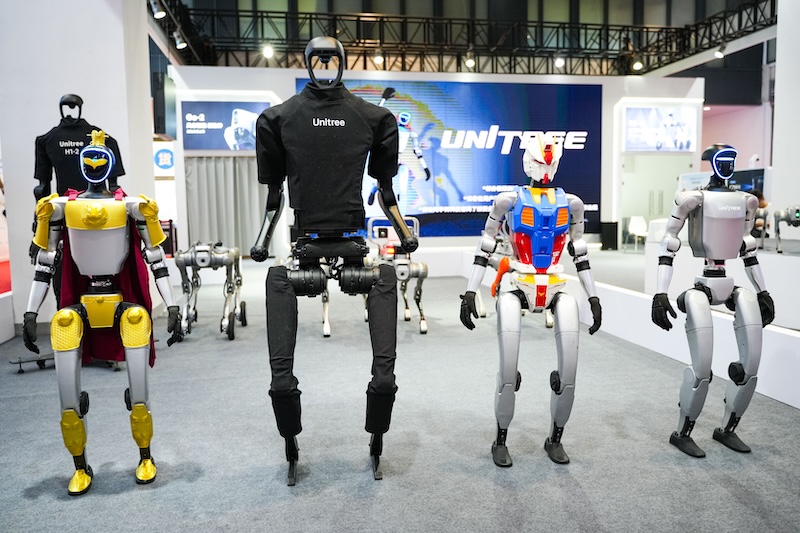
Chinese robotics company Unitree has priced its initial public offering at a valuation of approximately $9 billion, becoming the country’s first mainland-listed humanoid robot manufacturer and highlighting growing investor interest in AI-powered robotics despite rising geopolitical tensions. The Hangzhou-based company said it has priced its Shanghai STAR Market IPO at 150.8 yuan ($22.34) per share, […]

Brain Corp reports 68 percent growth and surpasses 50,000 autonomous robots worldwide

0

Brain Corp, a provider of operating systems for robots, has announced “strong global fleet momentum for the first half of 2026”. This milestone underscores the growing role of autonomous robots as daily operational infrastructure across retail, logistics, airports, commercial cleaning, and inventory management. In H1 2026, BrainOS-powered robots recorded 68 percent year-over-year growth in global […]

Personalized physical therapy: Stroke rehabilitation powered by AI | MIT News

0

Stroke is one of the leading causes of death and disability worldwide, affecting 15 million people each year and leaving 5 million with long-term impairments. There’s also a growing shortage of physical therapists, making it harder for patients to access consistent, high-quality care. 

A new approach developed by MIT mechanical engineers combines cutting edge artificial intelligence with real human care practices. 

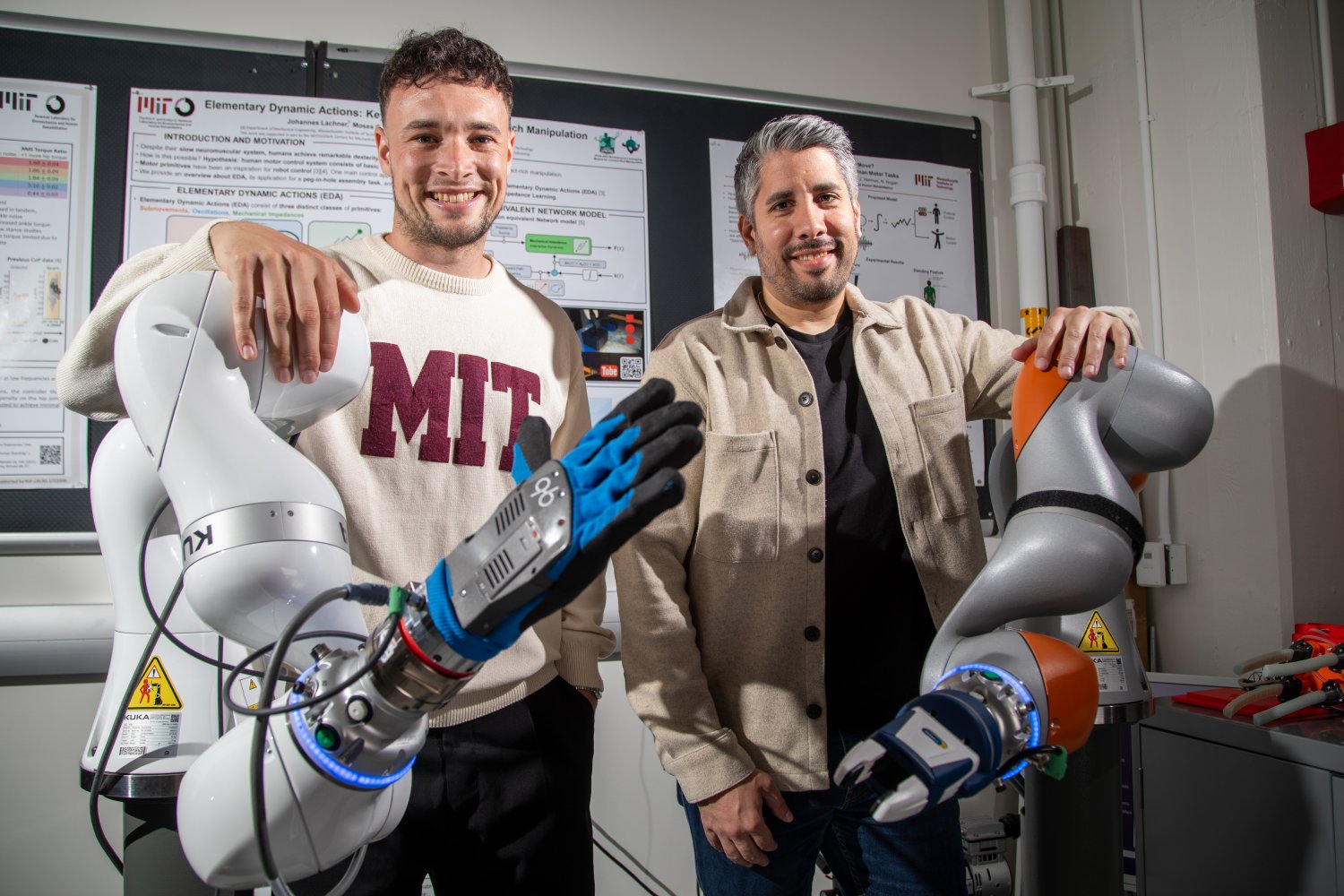
“Our goal is to teach robots how to assist with physical and occupational therapy, not to replace therapists, but to extend their reach,” explains Johannes Lachner, who completed this work as a MIT-Novo Nordisk Artificial Intelligence Postdoctoral Fellow in the Departments of Mechanical Engineering (MechE) and Brain and Cognitive Sciences at MIT. “A core innovation of our system is that physical therapists can train their own robot using AI, enabling personalized, scalable support tailored to each patient’s needs.”

Lachner, now an assistant professor at Purdue University, and Noah Geiger, a Junior Managers Program Trainee (AI/IT Track) at Robert Bosch GmbH and former visiting student at MIT, developed a robotic therapy system that learns from physical therapists to adaptively support stroke patients. Combining transformer-based diffusion models with real-time force feedback, the dual-arm robot safely adjusts assistance based on each patient’s capabilities.

The system uses similar AI technology to that of ChatGPT generating images, but instead, it learns how a robot should behave to best support a patient during physical therapy. The robot then assists the patient based on what it has learned, providing just the right amount of physical assistance to keep the patient challenged and engaged.

“While most generative AI models in robotics focus on motion, ours is among the first to learn physical interaction, i.e., how to respond to touch, force, and resistance,” says Geiger. “The novelty of our generative AI model is its ability to learn dynamic physical interaction beyond motion planning.”

Through an initial prototype tested with healthy participants, the researchers trained a generative AI model using real-world physical telemanipulation experiments. Participants performed common rehabilitation movements, such as arm lifting and out-of-plane reaching, while intentionally varying their level of effort. 

Top 6 Enterprise Web Scraping Solutions for Large Businesses

0

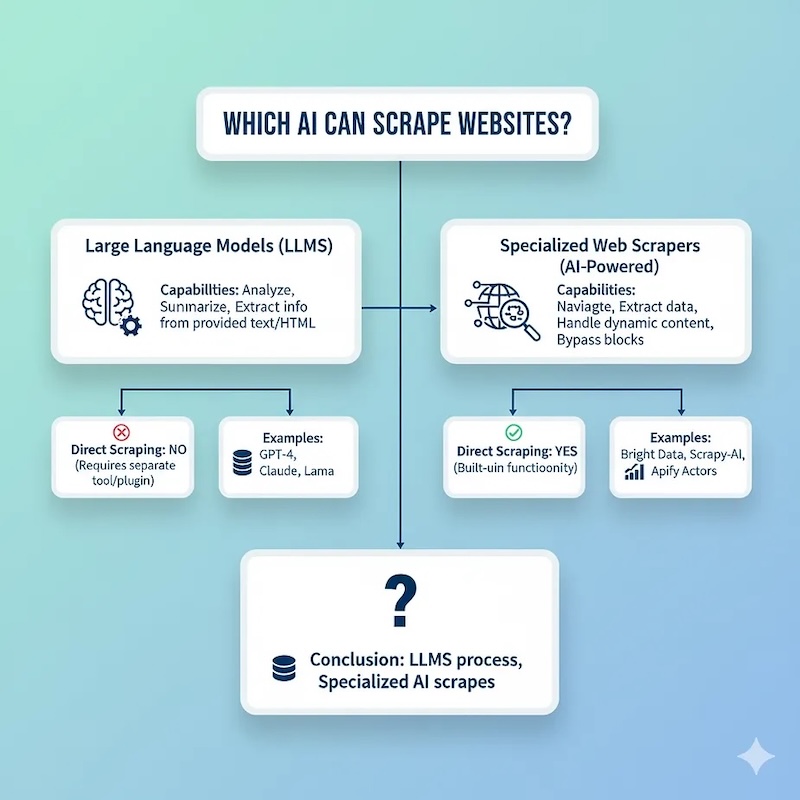
Enterprise businesses generate massive amounts of data every day, but collecting accurate information from multiple websites can quickly become challenging. Manual data collection is slow, expensive, and difficult to scale. That’s why many organizations invest in enterprise web scraping solutions that automate data extraction while maintaining speed, accuracy, and compliance. The right provider can help […]

Bridging the Gap Between Robotics Design and Deployment

0

However, once these systems are deployed, they are prone to face unique challenges. Lighting conditions, variations in human behavior, the variety of surfaces encountered, and background noise are examples of factors that can contribute to these newfound friction points in untested scenarios.  The Limits of Testing Predictable Labs vs. Real World Environments Laboratories are designed […]

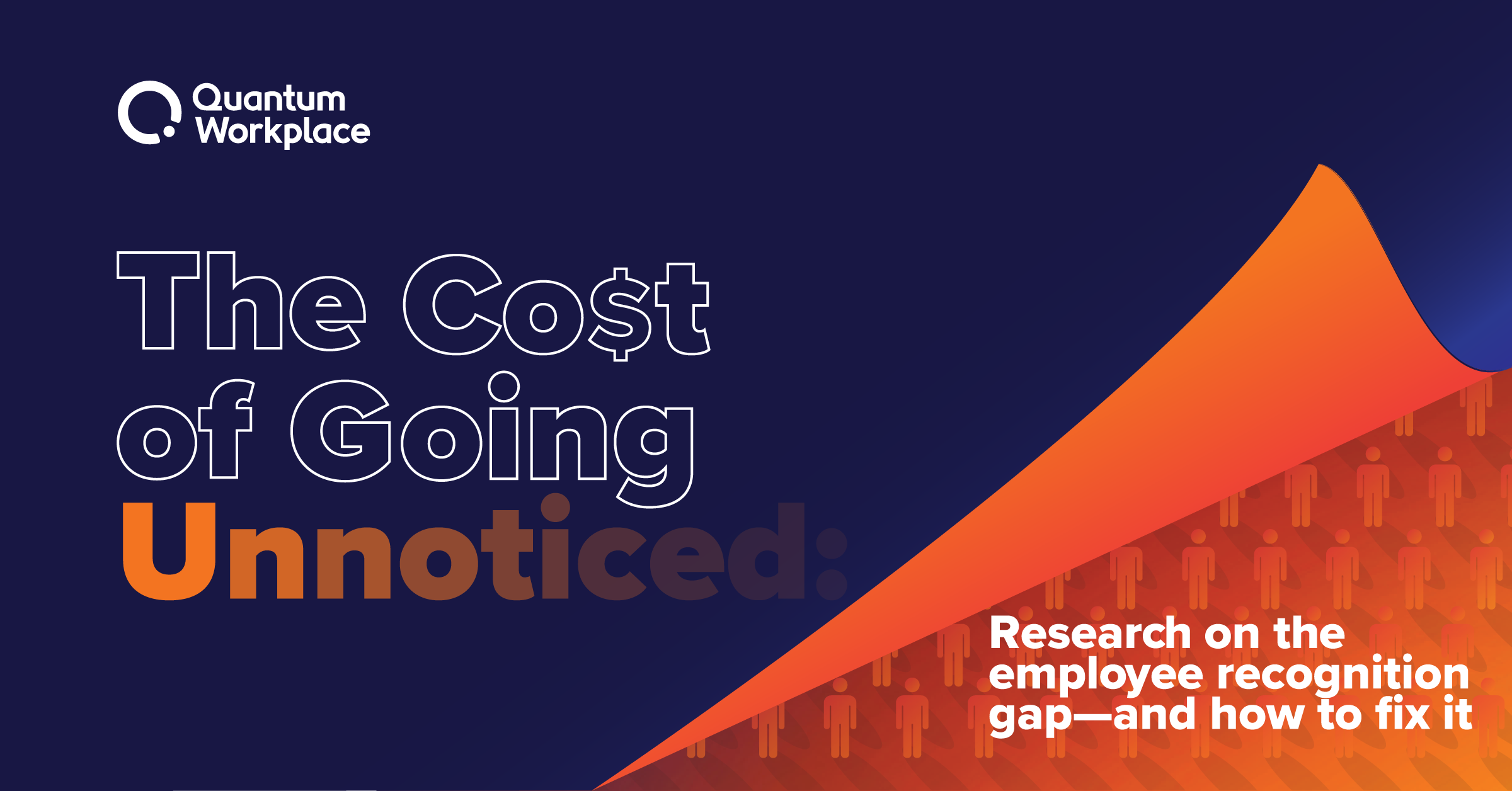
The Employee Recognition Gap—and How to Fix It

0

Companies are investing in recognition programs, but many are missing the mark. According to the 2026 Quantum Workplace recognition research, 40% of employees say the recognition they receive doesn’t feel meaningful. Only 55% would call their culture of recognition strong, and 3 in 5 describe it as inconsistent, top-down, buried in approvals, or barely there.

The biggest surprise was 1 in 5 said they got zero recognition at all last year.

Zero. Not “a little.” An entire year of showing up, doing great work, and hearing nothing from their managers.

That’s the recognition gap: the space between the programs companies put in place and how unnoticed employees still feel. And once you see how it happens, it’s pretty fixable.


What is the employee recognition gap? 

The recognition gap is the space between how much organizations are investing in recognition and the outcomes those investments actually drive, like how employees feel, engagement, retention, and motivation. It shows up as praise that arrives too late, recognition that only reaches a few people, or recognition that feels more like a formality than a real “we see you.”

It’s rarely a caring problem. Most leaders genuinely want their people to feel valued.

It’s a timing and design problem.

Someone does great work in January, and the only acknowledgment shows up in an April review, long after anyone remembers the details.

Recognition stays limited to quarterly awards that only so many people can win.

HR tries to route recognition through managers on the theory that managers know who deserves it. Except managers are busy, and they simply don’t see everything.

And recognition is often disconnected from what matters to the organization, diluted down to plain courtesy like someone holding a door and getting a quick thanks. That’s politeness. It’s not the same as being recognized for work that mattered.


What’s widening the recognition gap? 

The gap keeps widening because most programs get one of two things wrong: how often recognition happens, and whether it actually means anything when it does.

Take frequency first. Some leaders worry that recognizing people more often cheapens it, like it stops feeling special once it’s not rare anymore. But that’s backwards. The data shows frequency and meaning actually move together, and organizations that recognize people more often see stronger engagement and retention, not weaker. When recognition only shows up a few times a year, it’s not being protected. It’s just going missing most of the time, which is exactly the kind of gap employees notice.

Then there’s meaning, and this is where a lot of well-intentioned programs quietly fall apart. Getting recognized more often only helps if the recognition actually feels like it was for you specifically, tied to something you did, not a generic shoutout that could apply to anyone. A reward makes a real difference here: people who get one alongside their recognition are 4.8 times more likely to call it meaningful, and 87% of employees with some choice in their reward say it felt meaningful, compared to just 52% of those without a choice.

That disconnect also traces back to five specific design flaws:

Design flaw

What employees actually say

Random acts of recognition

47% don’t think recognition ties to real contributions; 1 in 5 don’t know what behaviors to recognize in the first place.

Infrequent, high-friction recognition

Only 5% get recognized weekly; 1 in 3 admit they simply forget to give it

Impersonal and intangible recognition

54% get no reward with their recognition; half say it doesn’t feel personal

Top-down and hidden recognition

19% got zero recognition from a manager all year; most employees don’t care who it comes from

Siloed and disconnected recognition data and tools

84% of leaders are juggling 3 to 10 different platforms; only 5% have anything connected


Do you have an employee recognition gap? 

Your first point of call should be to look at your employee engagement survey results. If you’re already surveying employees, the answer is probably sitting in data you have.

Start with the recognition-specific items: whether employees feel recognized for the work they actually do, whether they believe they’d be recognized if they helped the organization succeed, and whether recognition at your organization feels genuine rather than routine. Then look at what those scores are doing to retention intent items, like whether it would take a lot to get someone to leave.

Don’t stop at the company-wide average, though. Recognition tends to vary widely by team and by manager, so a strong overall score can hide teams that are struggling. Cut the results by department, by manager, by tenure, and by location before deciding you don’t have a gap. The teams quietly going unnoticed are usually the ones the top-line number won’t show you.

Beyond the survey, watch how people show up day to day. The gap tends to announce itself.

  • They’ve checked out. Distracted in meetings, going through the motions, no real spark behind the work.
  • They’ve gone quiet. Conversations get shorter, and they stop raising their hand for team projects or extra work.
  • Their hours start slipping. Later arrivals, earlier exits, less time actually at their desk.
  • The mood has flattened. Tired, bored, a little flat. Not dramatic, just off.
  • The work itself is slipping too. Output that used to be sharp is now noticeably thinner, in quality or quantity.
  • They’ve stopped leaning in. Training, stretch projects, development opportunities. They skip them now.

None of these signs prove recognition is the problem on their own. But taken together, especially across more than one person, they’re usually a sign that people don’t feel seen for what they’re contributing, and that’s worth digging into before it turns into an exit interview.


What going unnoticed actually costs you 

Recognition isn’t a soft, feel-good metric. It’s a retention lever, and one most organizations are barely pulling.

Here’s the number that should worry leaders most: 45% of employees don’t believe they’ll be recognized even if they help the company succeed. That belief doesn’t just sit there quietly. It shapes how much effort someone puts in, and whether they stick around long enough to keep giving it.

The flip side makes the stakes obvious. When recognition is designed well, employees are 7.2 times more likely to stay. Employees recognized monthly or more often are 80% highly engaged, and among employees who say recognition is meaningful, 56% say it makes them want to stay longer.

Put those together and the pattern is hard to miss. Recognition isn’t just about a good moment for the employee. It’s one of the more direct, most under-used ways to keep the people you’d hate to lose.

Why recognition is key to building thriving teams 

Thriving teams tend to share four things: they’re aligned around what matters, empowered to make decisions, growing in their skills, and valued for what they contribute. All four have to be true at once. A team can be aligned and growing and still quietly struggle if people don’t feel like their work matters.

Of those four, feeling valued is where recognition shows up, and it’s also the condition most organizations are missing. You can give someone clear goals, real autonomy, and every development opportunity in the book, and they can still walk away feeling like none of it was noticed. Recognition is what closes that specific gap. It’s the difference between doing good work and having that work actually seen.

And it doesn’t just feel good in the moment, it changes what people do next. In the weeks after being recognized, 65% of employees look for more ways to contribute, 59% put in extra effort, and 54% say they’d recommend their organization as a great place to work.


5 ways to close the recognition gap

None of this takes a huge budget or a perfect starting point. It takes intention, and a willingness to admit your current program might not be doing what you think it’s doing.

  1. Recognize what matters most. Tie recognition to real behaviors and outcomes instead of generic praise. Right now, only 60% of employees say recognition helps them understand what’s actually valued.
  2. Make recognition easy, frequent, and in-the-flow of work. Build it into tools people already use, refresh budgets monthly instead of annually, and cut the approval step that turns a real moment into a delayed one.
  3. Leverage rewards to amplify and personalize recognition. 82% of employees say recognition lands better with a reward attached. Choice matters more than size.
  4. Allow recognition to scale visibly across the organization. Recognition doesn’t have to flow through managers to count. Most employees don’t have a preference on who it comes from, they just want it to happen.
  5. Connect recognition data and use it as leadership intelligence. Recognition is a real-time signal of where great work is happening. Treat it that way instead of letting it sit in a feed nobody reviews.

Companies that do all five land in what the research calls “consistent and embedded” recognition, and it’s not a subtle difference. Employees in these organizations are more than twice as likely to stay than in organizations where recognition is rare or absent.
header@2x


How Quantum Workplace helps you close the recognition gap

Quantum Workplace’s employee recognition software was built around these exact fixes, not around vague inspiration.

Peer-to-peer recognition lets anyone recognize anyone, right inside Slack, Microsoft Teams, or the platform itself, so it happens where work already happens instead of becoming one more app to open. AI-powered writing assistance helps people find the right words fast, so specific, genuine recognition doesn’t get skipped just because someone’s in a hurry.

Rewards and milestones add the personal touch that makes recognition stick: real reward choice, plus automated, on-brand celebrations for anniversaries and other career moments. And because recognition data flows into your broader reporting, it stops being just a nice feed and starts acting like the leadership signal it actually is.

Good recognition isn’t complicated. It just has to be designed on purpose, and that’s exactly what we help HR and people teams do.
Report Front Cover Ad

FAQs

What is the employee recognition gap? It’s the gap between how much recognition a company thinks it gives and how much employees actually feel or notice.

Why do employees still feel unrecognized even with a formal program in place? Usually it’s a design problem, not a caring problem. Delays, approval gates, manager-only recognition, and vague praise all quietly weaken it.

Does recognition really move the needle on retention? Yes. Well-designed recognition makes employees 7.2 times more likely to say it would take a lot to get them to leave.

Do you need a reward for recognition to count? It helps a lot, but it’s not required. 82% of employees say recognition feels more impactful with a reward attached.

Should recognition only come from managers? No. Managers can’t see everything that happens on a team, and most employees don’t care where recognition comes from anyway.

How often should recognition actually happen? More often than it does today. Only 5% of employees currently get recognized weekly, even though most say they want more.




UK government launches £20 million funding competition for agricultural robots

0

The UK government has launched a £20 million funding competition to accelerate the development of robots and automated technologies for agriculture, with the aim of helping farmers improve productivity and reduce dependence on seasonal labour. Announced by farming minister Stephen Morgan, the funding is available to agri-tech businesses working with researchers and farmers to develop […]

SoftBank-backed Agile Robots expects revenue to double this year

0

German robotics company Agile Robots expects to double its revenue this year as demand for industrial automation continues to grow, according to an interview with the company’s chief executive published by the Wall Street Journal. CEO Zhaopeng Chen told the newspaper that Agile Robots generated revenue of €300 million (approximately $346 million) in 2025 and […]