
Home Blog Page 202

McDonald’s Stark New Restaurant Designs Leave Customers Baffled

0

The Evolution of McDonald’s Restaurant Designs: A Shift from Colorful to Muted

A Changing Landscape

As social media users share then-and-now images of McDonald’s restaurants, a question has emerged: what happened to the colorful, iconic branding of old? The transformation since the mid-2000s has been stark, culminating in 2019 with Landini Associates’ all-glass design for Times Square. Gone are the traditional red and yellow brand colors, replaced by muted tones, flat geometry, and a notable absence of characters like Ronald McDonald.

Theories Abound

Theories abound as to why McDonald’s has made this drastic change. Some believe it’s a bid to appeal to adults, a move to compete with coffee chains like Starbucks. Others, like Culture Critic, see a broader trend in which "every aspect of life is being stripped of color."

A Deeper Phenomenon

According to Culture Critic, this trend may be more than just a fleeting fad. Citing a study of 7,000 objects in the UK Science Museum, the publication suggests that colors in all objects have become gradually more neutral since 1800. This phenomenon is not limited to design; it can be seen in music, where the pursuit of minimalism has become a dominant force.

Theories on the Rise

On social media, theories about the decline of color in design are popping up left and right. Some users point to the use of materials like plastic and metal instead of wood, while others believe it’s a commercial strategy to appeal to the broadest possible tastes. One user even suggests that this trend is a sign of society’s shift towards minimalism, with everything becoming "devoid of beauty and hope."

A Look Back at McDonald’s History

In the 1950s, Dick and Mac McDonald’s original design for their restaurants was meant to be "attention-catching." This vision was realized through the signature red and white design created by architect Stanley Meson. The futuristic look of the 1950s design is a far cry from the more subdued contemporary aesthetic.

Conclusion

The evolution of McDonald’s restaurant designs is a complex issue, with many theories vying for attention. While some see it as a natural progression in design, others believe it’s a symptom of a broader phenomenon. One thing is certain: the once-colorful McDonald’s of old has given way to a more understated, neutral design.

FAQs

Q: What are the main changes in McDonald’s restaurant design?
A: The most notable changes are the shift from traditional red and yellow colors to muted tones, the elimination of characters like Ronald McDonald, and a move towards flat geometry.

Q: Why did McDonald’s make these changes?
A: Some believe it’s a bid to appeal to adults and compete with coffee chains, while others see it as a broader trend towards minimalism.

Q: Is this trend limited to design?
A: No, the trend towards minimalism can be seen in music and other areas of society as well.

Q: What is the significance of the color change?
A: The color change may be more than just a design choice; it could be a symbol of a broader shift towards simplicity and minimalism.

EU AI Act: Latest draft Code for AI model makers tiptoes towards gentler guidance for Big AI

0

Ahead of May Deadline, EU Publishes Third Draft of Code of Practice for General-Purpose AI Models

Streamlined Code of Practice

Ahead of a May deadline to lock in guidance for providers of general-purpose AI (GPAI) models on complying with provisions of the EU AI Act that apply to Big AI, a third draft of the Code of Practice was published on Tuesday. The Code has been in formulation since last year, and this draft is expected to be the last revision round before the guidelines are finalized in the coming months.

Code of Practice Overview

The EU’s risk-based rulebook for AI includes a sub-set of obligations that apply only to the most powerful AI model makers, covering areas such as transparency, copyright, and risk mitigation. The Code is aimed at helping GPAI model makers understand how to meet the legal obligations and avoid the risk of sanctions for non-compliance. AI Act penalties for breaches of GPAI requirements, specifically, could reach up to 3% of global annual turnover.

Streamlined Structure

The latest revision of the Code is billed as having "a more streamlined structure with refined commitments and measures" compared to earlier iterations, based on feedback on the second draft that was published in December.

Feedback and Finalization

Further feedback, working group discussions, and workshops will feed into the process of turning the third draft into final guidance. Experts hope to achieve greater "clarity and coherence" in the final adopted version of the Code. The draft is broken down into a handful of sections covering commitments for GPAIs, along with detailed guidance for transparency and copyright measures. There is also a section on safety and security obligations that apply to the most powerful models (with so-called systemic risk, or GPAISR).

Transparency and Copyright

On transparency, the guidance includes an example of a model documentation form GPAIs might be expected to fill in to ensure that downstream deployers of their technology have access to key information to help with their own compliance.

Copyright Controversy

The copyright section likely remains the most immediately contentious area for Big AI. The current draft is replete with terms like "best efforts", "reasonable measures", and "appropriate measures" when it comes to complying with commitments such as respecting rights requirements when crawling the web to acquire data for model training, or mitigating the risk of models churning out copyright-infringing outputs.

US Pressure

Unmentioned in the EU press release about the latest draft are blistering attacks on European lawmaking generally, and the bloc’s rules for AI specifically, coming out of the U.S. administration led by President Donald Trump. At the Paris AI Action summit last month, U.S. Vice President JD Vance dismissed the need to regulate to ensure AI is applied safety, and warned Europe that overregulation could kill the golden goose.

Conclusion

The EU’s efforts to establish a Code of Practice for general-purpose AI models are crucial in ensuring the responsible development and deployment of AI systems. By providing a clear framework for compliance, the Code can help mitigate the risks associated with AI and promote its safe and ethical use.

FAQs

Q: What is the EU AI Act?
A: The EU AI Act is a set of regulations aimed at ensuring the safe and ethical development and deployment of AI systems.

Q: What is the Code of Practice for General-Purpose AI Models?
A: The Code of Practice is a set of guidelines aimed at helping providers of general-purpose AI models comply with the provisions of the EU AI Act that apply to Big AI.

Q: What is the deadline for the Code of Practice?
A: The deadline for the Code of Practice is May.

Q: What is the purpose of the Code of Practice?
A: The purpose of the Code of Practice is to help GPAI model makers understand how to meet the legal obligations and avoid the risk of sanctions for non-compliance.

Q: What is the scope of the Code of Practice?
A: The scope of the Code of Practice includes commitments for GPAIs, along with detailed guidance for transparency and copyright measures, and a section on safety and security obligations that apply to the most powerful models.

Kia Trolls Tesla with Scathing Elon Musk Callout

0

Kia’s Bold Move: Taking on Tesla’s Controversial CEO with a Cheeky Ad

Kia’s Latest Campaign: A Dig at Tesla’s Troubled Image

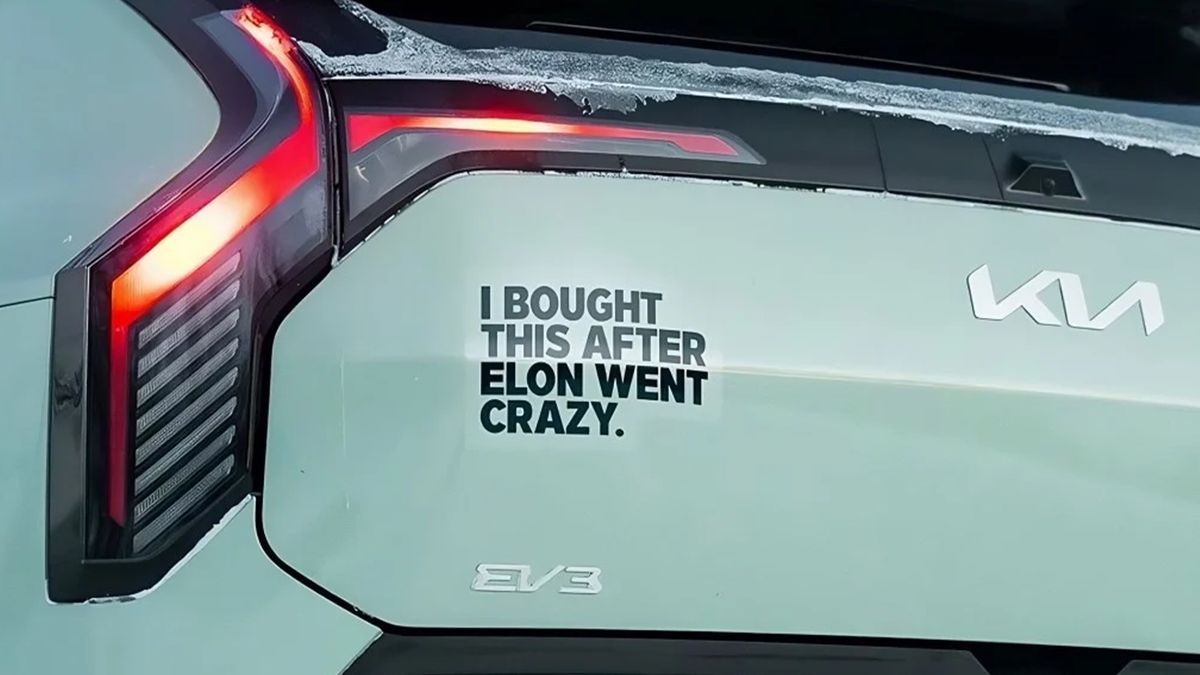
Kia recently launched a bold campaign that has set the automotive industry abuzz. The company’s latest move is a brazen ad featuring a sticker that reads "I bought this after Elon went crazy,” pasted on the rear bumper of its EV3 model. This cheeky dig at Tesla’s troubled image is a clever way for Kia to position itself as a reliable alternative to the electric vehicle pioneer.

Tesla’s Transformation from Pioneer to Divisive Brand

Tesla, once a trailblazer in the electric vehicle market, has undergone a significant transformation. From its infamous "Trollstation" overlord to multiple Cybertruck design fails, the brand has become increasingly divisive. Elon Musk’s controversial actions have put the company in the spotlight, and it seems that Kia is capitalizing on this notoriety.

Kia’s Clever Comeback

The now-deleted post on the Kia Norway Instagram account received a massive backlash from Musk fans, but some users saw the humor in the situation. Redditors on the r/electriccars subreddit praised Kia’s move, saying, "More automakers need to be capitalizing on Tesla’s collapse like this." Others on the r/clevercomebacks subreddit thought the ad was too tame, suggesting that a more aggressive approach would have been more effective.

Industry Reaction and Takeaways

The ad has sparked a heated debate in the automotive industry, with some praising Kia’s bold move and others criticizing its tactics. The campaign serves as a reminder that, in the competitive world of electric vehicles, even the smallest of moves can have a significant impact. It also highlights the importance of brand reputation and the need for companies to adapt to changing market trends.

Conclusion

Kia’s latest campaign is a testament to the power of clever marketing and strategic brand positioning. By capitalizing on Tesla’s controversy, the company has effectively positioned itself as a reliable alternative to the troubled brand. As the electric vehicle market continues to evolve, it will be interesting to see how other manufacturers respond to this bold move.

FAQs

Q: What was the content of Kia’s latest ad campaign?
A: The ad features a sticker that reads "I bought this after Elon went crazy,” pasted on the rear bumper of its EV3 model.

Q: What was the reaction to the ad?
A: The post was met with a massive backlash from Musk fans, but some users saw the humor in the situation and praised Kia’s bold move.

Q: Is this a new marketing strategy for Kia?
A: This is not a new tactic for Kia, as the company has been known to use clever marketing stunts to gain attention and position itself in the market.

Fostering Metacognition and AI Integration for ELLs

Key points:

The challenges of supporting ELLs across content areas

Teaching ELLs presents unique challenges. Beyond mastering a new language, these students must also navigate complex academic content in subjects like history, science, and literature. The dual burden of acquiring language proficiency while excelling in demanding subjects can leave students overwhelmed (Cummins, 2008). Educators often ask: How can we help ELLs succeed academically while fostering their independence and critical thinking skills?

How AI supports metacognition: Saul’s story

Saul, a grade 10 student at the intermediate proficiency level, speaks Spanish and is navigating the challenge of learning academic English while excelling in his coursework. A curious and reflective learner, Saul often seeks ways to connect new information with his personal experiences. During a recent project on myths and heroes, he explored how the American Dream shaped historical narratives.

Metacognition in action

As Saul worked on his essay, he critically examined the role of the American Dream as both an inspiration and a challenge for society, writing:

"The American Dream made people think too much about money and follow rich businessmen as examples. A story like this can make heroes like Martin Luther King Jr. or Che Guevara, but it can also cause unfairness."

By integrating AI support with teacher guidance, Saul developed a nuanced argument, recognizing that while the American Dream fosters ambition, it can also obscure systemic barriers (Lareau, 2011).

Fostering metacognition through teacher-student conversations

Encouraging metacognition often begins with meaningful teacher-student interactions. For example:

  • Teacher-student dialogue: "I saw your draft on myths and heroes, and I love how you’re connecting the American Dream to Martin Luther King Jr. and Che Guevara. Can you tell me how you approached this assignment?"

Tailoring AI and metacognitive strategies for different proficiency levels

Metacognition and AI integration should be tailored to students’ proficiency levels:

  • Beginners: AI tools can translate and simplify instructions in their native language
  • Intermediate learners: AI can assist with vocabulary development and brainstorming
  • Advanced learners: AI can enhance argumentation, structure, and peer feedback

Addressing educator concerns

While AI tools enhance learning, educators often worry about overreliance and ethical concerns (Selwyn, 2019). To mitigate misuse:

  • Require students to submit their AI-generated responses alongside assignments
  • Establish clear guidelines on when and how to use AI responsibly
  • Address privacy concerns by ensuring AI logs do not contain sensitive personal information

The future of AI and metacognition in ELL education

Integrating metacognition and AI transforms classrooms into inclusive, adaptive learning spaces, empowering ELLs to:

  • Develop autonomy and critical thinking skills
  • Use AI for self-reflection and strategic learning
  • Gain confidence in academic language across disciplines

Conclusion

By embedding metacognition and AI into instruction, educators can create dynamic learning environments where ELLs succeed academically and develop lifelong learning skills.

FAQs

Q: How can I integrate metacognition and AI into my teaching practice?
A: Start by using AI tools to provide personalized feedback and adapt learning experiences to students’ needs.

Q: What are the benefits of metacognition for ELLs?
A: Metacognition helps ELLs develop autonomy, critical thinking, and self-regulation skills, leading to improved learning outcomes.

Q: How can I ensure the responsible use of AI in the classroom?
A: Establish clear guidelines on AI use, require students to submit AI-generated responses, and address privacy concerns to ensure ethical AI practices.

Building a New Electric Car Infrastructure in America

0

The State of Electric Vehicle Charging in North America

The Smartphone Charging Wars of the Future

The state of electric vehicle charging in North America is shaping up like the smartphone charging wars of the past. In the early 2010s, phone manufacturers were stuck in a battle over charging standards, with Apple’s Lightning connector and USB-C vying for dominance. Similarly, in the world of electric vehicles, the Combined Charging System (CCS, Type 1) plug is currently the most widely used, but Tesla’s proprietary plug is gaining traction with its North American Charging Standard (NACS).

The Rise of NACS

Tesla, which was once the standard-bearer of its own charging technology, is now opening up its connector and renaming it the North American Charging Standard (NACS). This new standard is being standardized by SAE International, and most major automakers have signed on, including Ford, GM, Toyota, Rivian, Volvo, Polestar, Nissan, Mercedes-Benz, Jaguar Land Rover, Fisker, Hyundai, Stellantis, Volkswagen, and BMW. New cars equipped with NACS are expected to start rolling out in 2026.

The European Solution

In contrast, Europe has already resolved its standards issue by adopting CCS2. For now, EV drivers in the US, who own cars like the Tesla Model Y, Kia EV6, and Nissan Leaf (with the ailing CHAdeMO connector), are still stuck searching for the right station or adapter and hoping everything works smoothly. However, things are expected to get easier soon.

Government Support

To help solve these issues, the federal government has established a pool of $7.5 billion to fund charging network operators in building reliable EV infrastructure. This investment will help create a convenient and convenient place for electric vehicle owners in North America.

The Future of Electric Vehicle Charging

As the landscape of electric vehicle charging continues to evolve, it remains to be seen how long it will take for North America to become a great and convenient place to own an electric vehicle. To stay up-to-date on the latest news and developments in electric vehicle charging, be sure to check back frequently.

FAQs

Q: What is the North American Charging Standard (NACS)?
A: NACS is a new charging standard developed by Tesla, which is being standardized by SAE International.

Q: Which automakers have signed on to use NACS?
A: Most major automakers, including Ford, GM, Toyota, Rivian, Volvo, Polestar, Nissan, Mercedes-Benz, Jaguar Land Rover, Fisker, Hyundai, Stellantis, Volkswagen, and BMW, have signed on to use NACS.

Q: When will NACS-equipped cars start rolling out?
A: New cars equipped with NACS are expected to start rolling out in 2026.

Q: What is the federal government doing to support electric vehicle charging infrastructure?
A: The federal government has established a pool of $7.5 billion to fund charging network operators in building reliable EV infrastructure.

Typography’s Mind-Bending Misconceptions

0

Optical Illusions in Type Design: A Guide for Graphic Designers

The Importance of Awareness in Font Design

Type designers know that letter forms can play tricks on our perception. Sometimes an equal amount of space between letters looks wrong, requiring kerning adjustments. Sometimes a stroke of the same width can look thinner or thicker depending on whether it’s vertical or horizontal. It’s essential to be aware of such illusions in font design, as they can significantly impact the overall look and feel of a design.

7 Optical Illusions to Be Aware Of

Nostalgic Dolphin, a design studio specializing in branding, typography, and UI/UX design, has created a blog post that highlights 7 optical illusions that every graphic designer should know. The studio’s founder, Igor Petrovic, has curated a list of illusions that can affect the way we perceive shapes and lines in type design.

The Overshoot

The overshoot is an optical illusion that causes curved or pointed shapes to look larger or smaller than shapes that end with flat lines. This can be particularly problematic when designing fonts with curved or pointed serifs.

The Bone Effect

The bone effect is another common optical illusion that causes a disjointed look where a straight line meets a half-circle. This can be mitigated by using an ink trap, which helps to create a smooth transition between the two shapes.

Sharp Joint Darkening

Sharp joint darkening is an illusion that causes a union to look heavy when two lines cross at a sharp angle. This can be addressed by using a subtle curve or a slight adjustment in the angle of the lines.

Other Optical Illusions

Other optical illusions that designers should be aware of include the Ponzo illusion, which causes parallel lines to appear non-parallel when one line is placed behind a curve; the Hermann grid illusion, which creates the illusion of gray dots where none exist; and the Kanizsa triangle, which creates the illusion of a triangle where none exists.

Conclusion

By understanding these optical illusions, designers can create more harmonious and effective typography. By being aware of these visual tricks, designers can avoid common pitfalls and create fonts that are both aesthetically pleasing and easy to read.

Frequently Asked Questions

Q: What is the purpose of the Nostalgic Dolphin blog post?
A: The blog post aims to educate graphic designers on the importance of being aware of optical illusions in type design.

Q: What are some common optical illusions in type design?
A: The post highlights 7 optical illusions, including the overshoot, the bone effect, sharp joint darkening, and others.

Q: How can designers mitigate the effects of these optical illusions?
A: Designers can use techniques such as kerning adjustments, the use of ink traps, and subtle curves to mitigate the effects of these illusions.

8 in 10 College Students and Admins Welcome AI Agents

College Students and Administrators Embrace AI for Seamless Experiences

College Students Require Personalized Services

  • Half of students felt overwhelmed by the application process.
  • 62% of students felt they’d benefit from improved assistance during admissions.
  • Nearly half of students said it can take up to a week to hear back from school administrators on inquiries.
  • 56% of students reported not having 24/7 access to answers for common questions, while 63% wished they did.
  • One-third of students don’t even contact their school admins with inquiries because they don’t anticipate getting the help they need.
  • The top three factors that prevent students from applying to schools: not understanding financial options; the process takes too long; and the process is confusing and hard to navigate.
  • 52% of students would be more likely to apply to a school if it were easier to find information on its websites and digital channels.
  • Nearly half (46%) would be more likely to apply to a school if the admissions processes were more personalized and the wait times were shorter between applying and acceptance.

College Students Would Welcome Agentic AI

  • 77% of students would use AI agents to help with school processes. And 60% would interact with an AI agent if it provided timely and accurate responses.
  • Nearly half of students are excited about having an AI agent help them with coursework. AI already supports one-fourth of students’ workloads.

College Administrators See the Benefits of AI

  • Over one-third (35%) of school administrators find themselves unable to provide timely support to students due to the burden of administrative tasks. One-third are prevented from offering personalized support for the same reason.
  • 83% of school admins said they’d welcome AI agent support in their roles.
  • One-third experience burnout at least once a week.
  • Only 27% of administrator time is spent on direct student support.
  • Staying current with evolving policies, such as governmental orders, adds another layer of complexity, with 57% of administrators expressing a need for support.

Conclusion
The research highlights the need for educators to use AI agents to build more responsive, tailored, and efficient support systems to ensure student and administration success. By leveraging the benefits of AI, institutions can improve the college experience, increase student satisfaction, and enhance the overall quality of education.

FAQs

Q: Why do college students need AI assistance?
A: Students need AI assistance to help with school processes, coursework, and administrative tasks, and to provide 24/7 support.

Q: How do college administrators feel about AI agents?
A: 83% of school administrators would welcome AI agent support in their roles.

Q: What are the top three factors that prevent students from applying to schools?
A: The top three factors are not understanding financial options, the process taking too long, and the process being confusing and hard to navigate.

Wanderlust Whispers

0

Tribute to Autumn

Image credit: Haneul Nam

"A painting that expresses appreciation for autumn and nature. A witch is visiting an unknown being in the forest with a bouquet of flowers."

Journey

Image credit: Haneul Nam

"This painting doesn’t show where the witch and her companion are going. I like to make the audience imagine their destination."

Rose Witch

Image credit: Haneul Nam

"A rose-coloured witch standing in a garden full of flowers. I sprinkled yellow around the red colour so the audience’s eyes could flow smoothly."

Spring Witch

Image credit: Haneul Nam

"Spring is lively and bright, but I expressed a sense of calmness here by lowering the saturation and controlling the colour to balance my style."

About Haneul Nam

Haneul is a self-taught freelance illustrator who specializes in creating concept paintings. Witches, serenity, and loneliness are recurring themes in her work, and she’s greatly inspired by Studio Ghibli’s Hayao Miyazaki. If you feel inspired by her work, you might need a laptop for digital art or drawing tablet to create your own.

Conclusion

Haneul’s artwork is a testament to her creativity and skill in bringing her imagination to life. Her use of color, composition, and themes has captured the attention of many and continues to inspire others to pursue their own creative endeavors.

Frequently Asked Questions

Q: What inspires your artwork?
A: I’m inspired by Studio Ghibli’s Hayao Miyazaki, among other artists and the world around me.

Q: What software do you use to create your artwork?
A: I’m a self-taught artist, so I use a variety of digital tools, including a laptop and drawing tablet.

Q: How do you come up with your ideas?
A: My ideas come from a mix of personal experiences, observations, and my imagination.

Q: What’s the most challenging part of being an artist?
A: The most challenging part is balancing my creative vision with the demands of the art world.

Equator Closes $55M Fund for African Climate Tech Startups

0

African Venture Capital Firm Equator Raises $55 Million for Climate Tech Startups

A Climate Tech Fund for Early-Stage Startups

African venture capital firm Equator has raised $55 million for its first fund, which will back climate tech startups through one of the most difficult and often overlooked phases in their journey: the early stage. The fund will invest in 15 to 18 startups, writing checks of $750,000 to $1 million for companies at the Seed stage, and $2 million for those at Series A.

The Narrative Has Shifted

The narrative around climate tech has shifted from focusing on impact to prioritizing scalability and monetization. "The narrative has shifted," said Nijhad Jamal, managing partner at Equator. "It’s no longer just about development and impact. It’s about mobilizing private capital for scalable ventures that solve problems. The focus today is even more on things like unit economics and the path to profitability, because people know there isn’t just enough capital to throw at ventures to scale without thinking about monetization, real economics, profitability, or exits."

A Renewed Focus on M&A

Jamal believes climate tech startups today are different from their first-generation cleantech counterparts, which raised billions and are now looking ready for IPOs. "These new startups operate in a more mature ecosystem, allowing them to use capital and time more efficiently — key factors in becoming attractive acquisition targets," he said. The space is already seeing some consolidation, with notable M&A deals like BBOXX’s acquisition of PEG Africa in 2022 and Equator-backed SteamaCo’s merger with Shyft Power Solutions last year.

Importance of Capital Structuring

Jamal stressed the importance of capital structuring, as climate tech attracted the most debt financing last year. "If equity is used for everything, including working capital, dilution will be too high for investors or founders to see meaningful returns. But as debt and other financial instruments become more available, we’ll start seeing commercial exits, even if they’re more bite-sized," he said.

The Fund’s Strategy

The fund’s strategy is to back scalable solutions that can attract private capital, reducing dependence on aid and development finance institutions (DFIs). "We are needed more than ever to invest in technology and scalable ventures tackling fundamental climate challenges," Jamal said. "These investments will help reduce dependence on aid and instead bring more global private capital into the region."

Portfolio Companies

The fund’s portfolio companies include Roam Electric, Ibisa, and Leta, which are building solutions such as electric vehicles, climate insurance, and AI-powered logistics optimization for businesses.

Conclusion

Equator’s $55 million fund is a significant step towards bridging the funding gap for African climate tech startups. By focusing on early-stage companies, the fund aims to support the growth of scalable solutions that can attract private capital and reduce dependence on aid and development finance institutions.

FAQs

Q: What is the focus of the Equator fund?
A: The fund will back climate tech startups through one of the most difficult and often overlooked phases in their journey: the early stage.

Q: What is the total fund size?
A: The fund has raised $55 million.

Q: How many startups will the fund invest in?
A: The fund will invest in 15 to 18 startups.

Q: What is the typical investment size for the fund?
A: The fund will write checks of $750,000 to $1 million for companies at the Seed stage, and $2 million for those at Series A.

Q: What is the focus of the fund’s portfolio companies?
A: The fund’s portfolio companies are building solutions such as electric vehicles, climate insurance, and AI-powered logistics optimization for businesses.

10 Common Website Maintenance Mistakes to Avoid

Here is the organized content with headings and subheadings:

Top 10 Website Maintenance Mistakes to Avoid

1. Neglecting Regular Updates

  • Mistake: Failing to update your website’s core software, plugins, themes, and security patches can leave it vulnerable to cyber threats and functionality issues.
  • How to Avoid:
    • Regularly check for software updates, including CMS (WordPress, Joomla, etc.) and third-party plugins.
    • Automate updates where possible or schedule periodic manual updates.
    • Backup your website before applying any updates to avoid potential compatibility issues.

2. Ignoring Website Backups

  • Mistake: Not having regular backups increases the risk of permanent data loss in case of server crashes, hacking attempts, or accidental deletions.
  • How to Avoid:
    • Implement automatic daily or weekly backups using reliable services such as UpdraftPlus, VaultPress, or your hosting provider’s backup solution.
    • Store backups both on the server and offsite (cloud storage or external drives) for extra security.
    • Regularly test backups to ensure data can be restored when needed.

3. Overlooking Security Measures

  • Mistake: A lack of security measures can make your website an easy target for hackers, malware, and data breaches.
  • How to Avoid:
    • Use strong passwords and enable two-factor authentication (2FA) for admin access.
    • Install SSL certificates to secure user data.
    • Implement a web application firewall (WAF) and security plugins like Wordfence or Sucuri.
    • Regularly scan your website for vulnerabilities and remove unused plugins/themes.

4. Slow Website Performance

  • Mistake: A slow-loading website leads to poor user experience, higher bounce rates, and lower search engine rankings.
  • How to Avoid:
    • Optimize images and use proper file formats (WebP, JPEG, PNG) for faster loading.
    • Enable caching and use a Content Delivery Network (CDN) to speed up page load times.
    • Minimize HTTP requests, optimize CSS/JS files, and reduce server response time.
    • Choose a reliable hosting provider that offers fast performance and scalability.

5. Broken Links and 404 Errors

  • Mistake: Broken links and missing pages frustrate users and negatively impact SEO rankings.
  • How to Avoid:
    • Use tools like Google Search Console, Screaming Frog, or Broken Link Checker to identify broken links.
    • Regularly update internal and external links to ensure they lead to the right pages.
    • Implement proper 301 redirects for removed or outdated pages.

6. Lack of Mobile Optimization

  • Mistake: With mobile traffic surpassing desktop, failing to optimize your site for mobile devices leads to poor usability and lower rankings.
  • How to Avoid:
    • Use a responsive web design that adapts to different screen sizes.
    • Test mobile performance using Google’s Mobile-Friendly Test.
    • Optimize images, fonts, and layouts for better readability and usability on smaller screens.

7. Neglecting SEO Best Practices

  • Mistake: A website that isn’t optimized for search engines may struggle to rank well, resulting in less organic traffic.
  • How to Avoid:
    • Regularly update and optimize content with relevant keywords and meta tags.
    • Use SEO-friendly URLs and structured data markup.
    • Generate and submit XML sitemaps to search engines.
    • Monitor website analytics and SEO performance using Google Analytics and Search Console.

8. Not Monitoring Website Analytics

  • Mistake: Without tracking website performance, you may miss opportunities for improvement or fail to detect issues in real-time.
  • How to Avoid:
    • Set up Google Analytics to monitor user behavior, traffic sources, and conversion rates.
    • Use heatmaps and A/B testing tools to understand visitor interactions.
    • Regularly review analytics reports and adjust strategies accordingly.

9. Ignoring Website Accessibility

  • Mistake: A website that isn’t accessible to users with disabilities can limit your audience and violate accessibility laws.
  • How to Avoid:
    • Follow WCAG (Web Content Accessibility Guidelines) to make your website accessible.
    • Use alt text for images, provide captions for videos, and ensure keyboard navigability.
    • Conduct regular accessibility audits and make necessary improvements.

10. Failing to Test Website Functionality

  • Mistake: Ignoring regular website testing can lead to broken features, form submission failures, and poor user experience.
  • How to Avoid:
    • Perform routine testing for all functionalities, including forms, checkout processes, and interactive elements.
    • Test your website across different browsers and devices.
    • Encourage user feedback and address any reported issues promptly.

Final Thoughts

Website maintenance is an ongoing process that requires attention to detail and proactive management. By avoiding these common mistakes, you can ensure your website remains secure, functional, and optimized for success. Regular monitoring, updates, and improvements will help provide the best experience for your users while enhancing your website’s overall performance and ranking.