Home Blog Page 221

How to Spot AI Slop on Pinterest

How to Spot AI Slop on Pinterest and Why It’s Such a Big Problem

For years, Pinterest has been dubbed the go-to social media site for inspirational mood boards, tracking lifestyle, fashion, and beauty trends, and finding niche and popular consumer-based products. Recently, however, the site has been plagued with an onslaught of AI slop, making it difficult for users to decipher what’s real, human-made content or fake.

AI Inspo or AI Slop?

The abundance of AI slop on Pinterest and other social media platforms, which are full of "inspo" or aspirational content, also hurts small businesses. According to the Washington Post, AI inspo refers to AI-generated photos that "customers find [and] reflect unattainable standards or incorporate impossible details, making it hard for real-world businesses to meet clients’ demands."

How to Spot AI Slop on Pinterest

Most top results for searches I attempted, spanning from "nail art" to "cozy loft apartment interior design" and specific hairstyles ranging from "braided hairstyles" to "pixie cut styles for black women," were rife with AI-generated pins.

Avoiding AI Slop on Pinterest

To avoid AI slop, I recommend being as specific as possible when it comes to popular searches. For food content, I found that searches such as "low-calorie meals" or "high-protein vegan recipes for breakfast" had fewer AI-generated pins. Even though most pins are linked to blogs, they appeared to be free of AI-generated profiles and run by actual people.

Pinterest’s Recent AI Pivot

Currently, Pinterest is in the experimentation phase regarding labeling generative AI-enhanced content on the site. The social media site recently introduced Pinterest Performance+, a suite of ad-focused AI tools for marketers who want to create ads for products using Gen AI. Moreover, as Pinterest enters the e-commerce space and continues to move away from the aspirational content the platform was built on, AI slop will be a recurring issue.

Conclusion

AI slop on Pinterest is a significant problem that affects not only users but also small businesses. As AI-generated content continues to flood the platform, it is essential to be aware of how to spot AI-generated content and take steps to avoid it. By being specific in your searches and paying attention to the quality of the content, you can reduce the likelihood of encountering AI-generated content.

Frequently Asked Questions

Q: What is AI slop?
A: AI slop refers to AI-generated content that is used to deceive users into thinking it is real or human-made.

Q: Why is AI slop a problem?
A: AI slop is a problem because it can lead to fake profiles and websites, which can be used for malicious purposes such as phishing or spamming.

Q: How can I spot AI slop on Pinterest?
A: You can spot AI slop on Pinterest by looking for unnatural language, low-quality images, and profiles with no last names or generic mononyms.

Q: What can I do to avoid AI slop on Pinterest?
A: You can avoid AI slop on Pinterest by being specific in your searches, using specific keywords, and avoiding clicking on suspicious links.

Laptop for Drawing Deals

0

The Best Creative Laptop Deal Today

ASUS Zenbook 14 OLED: A Top-Notch Choice for Drawing and Creative Tasks

If you’re in the market for a new creative laptop, you’re in luck! We’ve spotted a fantastic deal on the ASUS Zenbook 14 OLED at Best Buy, with a generous $250 off for a limited time. This brings the price to just $799.99, down from the usual $1,049.99. If you’re in the UK, head over to Curry’s where you can bag this laptop for only £799, down from £1,099 (saving you £300).

Why the ASUS Zenbook 14 OLED is a Top Choice for Drawing

The ASUS Zenbook 14 OLED is number 5 on our list of the best laptops for drawing, and we’ve found that the 14-inch touchscreen (3K, OLED) is excellent for drawing, thanks to its ability to lay completely flat. The display is truly stunning and a top choice for artists who prefer a traditional laptop form factor over one of the best drawing tablets for digital illustration.

What Else Makes the ASUS Zenbook 14 OLED a Great Choice?

Other top features of the Zenbook include:

  • AI acceleration courtesy of the Core i7 processor
  • Compatibility with the ASUS Pencil 2
  • Excellent multitasking power
  • Integrated Intel Arc Graphics, great for gaming and creative tasks

The Best Deal for You

At this new low price, the ASUS Zenbook 14 OLED could be one of the best laptops for students on a tighter budget, and no doubt it would make a great laptop for graphic design too. We’ve got all the details on this deal for you below, but take a look at our ASUS Zenbook 14 OLED (UX3405) review if you need more convincing.

The Best Creative Laptop Deal Today

Below, you can find the best deals and lowest prices on the ASUS Zenbook 14 OLED in your region and worldwide using our clever deals widget. It updates 24/7, so be sure to bookmark this page and keep checking for the right time to buy.

Frequently Asked Questions

Q: What is the original price of the ASUS Zenbook 14 OLED?
A: The original price of the ASUS Zenbook 14 OLED is $1,049.99 in the US and £1,099 in the UK.

Q: How much is the discount for the limited-time offer?
A: The discount is $250 in the US and £300 in the UK.

Q: What other features make the ASUS Zenbook 14 OLED a great choice for creative tasks?
A: The laptop features AI acceleration, compatibility with the ASUS Pencil 2, excellent multitasking power, and integrated Intel Arc Graphics, making it suitable for gaming and creative tasks.

Are Creative Industries Smoother?

0

Twenty years ago, the creative industries were a battleground. No question. Agencies thrived – or at least wanted to be seen to thrive – on a “sink or swim” mentality, where long hours, toxic hierarchies, and unpaid internships were the norm. Junior employees were expected to endure high-pressure environments in the hope of securing a permanent role — if they could last long enough.

Internships: A Genuine Shift or Just Better PR?

Speaking with people across the industries, one of the most visible changes in creative industries is the way interns and junior employees are treated.

In the early 2000s, unpaid internships were the norm – it was your gateway to the industry that favored those who could afford to work for free and for long hours.

John Beck, a lawyer specializing in employment law, recalls, "Interns were treated as disposable labor, expected to work long hours without pay or a clear path to advancement. The mentality was, ‘If you want it badly enough, you’ll suffer through it.’"

But thanks to greater legal protections, social media exposure, and a shift in expectations, unpaid internships have largely disappeared in major agencies. Beck notes, "Now, companies know that mistreatment of interns can become public quickly, damaging their reputation and even leading to legal consequences."

Current interns, like Sam Carew at Chivas Brothers, paint a very different picture. "My internship has been fantastic – I’ve been fully supported, trained, and given real opportunities to grow. They even helped me relocate from Newcastle to London."

Another intern, Rosie Bulwer, echoes this sentiment. "I’ve just been offered a full-time job after my internship – not because that was the plan, but because they invested in me. The difference now is that companies realise happy interns become valuable employees."

So, have internships truly improved? The answer seems to be yes – but with caveats. While outright exploitation has declined, some argue that expectations remain just as demanding – just with better optics.

A More Inclusive and Supportive Industry – Or Just Good Branding?

Many agencies pride themselves on being more inclusive and supportive today. Liz Robinson, Managing Director at Mediazoo, believes the industry is genuinely evolving.

"There is less sexism, and juniors are actively encouraged to share their views. Twenty years ago, interns were background figures – now, their insights are valued. Our Zooniversity programme brings in diverse graduate talent, and we’ve seen how much impact they can have on our agency and clients."

But not everyone is convinced. Kenji Sano, a digital marketing expert with over 15 years of experience, suggests that inclusivity may be more of a marketing exercise than a reality.

"Interns today are paid, DEI initiatives exist, and mental health is talked about – but the fundamental power dynamics remain. Overwork is still romanticised. The idea that you need to ‘grind’ to succeed hasn’t disappeared; it’s just been rebranded as ‘passion.’"

The COVID Impact: Remote Work and the Intern Experience

One major difference today is the rise of remote work, largely accelerated by COVID-19. While this shift has helped remove some of the physical intensity of long office hours, it has also created new challenges.

"Remote interns miss out on the informal learning that happens in an office," says Sano. "The sink-or-swim culture is gone, but so is the ability to build relationships organically."

While remote and hybrid working have provided more flexibility, they have also left some younger creatives feeling isolated. Learning by osmosis – hearing how senior colleagues navigate projects, absorbing workplace culture – has become harder. Agencies now need to find new ways to mentor and protect young talent in a digital-first world.

Talk Abound?

The creative industry’s worst-kept secret? Interns rarely talk.

And why would they? If you’re a young creative trying to break in, why risk torching the very bridges you’re trying to cross? Call it self-preservation or just basic career strategy. The truth? It’s all spin. Agencies talk about progress, about how they’ve cleaned up their act. But is it real, or just a rebrand?

What’s the answer? Well, yeah, things are better. Probably. But come back in twenty years — when today’s interns are running the show — and ask them what really went on.

Is The Agency of the Future One That Actually Cares?

Looking ahead, creative agencies will need to continue evolving to retain talent. Tech expert Arne Helgesen warns:

"Internships were never easy, but at least they used to come with meaningful career progression. Now, interns are often just filling gaps in underfunded teams, doing the work of full-time employees with none of the benefits. I’ve had clients who spent six months interning at major agencies, only to be replaced by another wave of unpaid or low-paid workers. Creative agencies need to stop treating their workforce as disposable. The ones that will survive the next decade will be those that learn from product-based companies—investing in employee development, optimizing workflows with AI, and prioritizing long-term value over quick margins."

Robinson at Mediazoo believes the industry will remain just as competitive as ever, but the smartest agencies will learn how to blend technology, inclusivity, and work-life balance.

"We run a hybrid model, encouraging teams to come together for ideation and culture-building while supporting remote workers. The agencies that thrive will be the ones that create environments where young talent actually wants to stay."

So, has the creative industry really got nicer?

The answer is: Yes – but not as much as we’d like to believe. The blatant abuse of interns is largely gone, and there is more accountability than ever before. But the pressure, the grind, and the power dynamics? They’re still there – just packaged in a more palatable form.

What’s Your Experience?

Have creative industries truly improved, or do old habits just have new branding? If you’ve worked as an intern—or led a team in a creative agency—share your thoughts in the comments below.

FAQs

Q: What has changed in the creative industry in the past 20 years?
A: Unpaid internships have largely disappeared, and agencies are now expected to provide a clear path to advancement and a more inclusive environment.

Q: Are agencies truly more supportive today?
A: While some agencies have made progress, others may still be hiding behind a marketing facade. It’s essential to research and understand the agency’s culture before joining.

Q: How has COVID-19 impacted the intern experience?
A: Remote work has removed some physical pressure, but it has also created new challenges, such as isolation and difficulties in building relationships.

Q: What’s the key to a successful creative agency in the future?
A: Blending technology, inclusivity, and work-life balance to create an environment where young talent wants to stay and grow.

The Return of Digg

0

The Revival of Digg: A New Era of Community-Led Social Media

A Blast from the Past

In the summer of 2005, Alexis Ohanian, a tech entrepreneur, sent an email to his colleague Steve Huffman with an ominous subject line: "Meet the enemy." The body of the email contained just one line – a link to Digg, a community-focused social message board where people shared and discussed news articles and links to other sites they found interesting. Ohanian and Huffman, who had founded a similar effort called Reddit, set their competitive sights on Digg and its founder, Kevin Rose.

A Brief History of Digg

Digg was founded in 2004 and quickly gained popularity for its robust user base of active contributors, who regularly returned to the site. The company raised tens of millions of dollars and fielded acquisition offers from Google and others. In 2006, Rose posed for a now-infamous photo on a BusinessWeek cover, sporting a wide grin and giving two thumbs up, with the headline "How This Kid Made $60 Million in 18 Months." (Rose hated the photo.)

The Demise of Digg

However, the company’s fortunes took a turn for the worse. Digg launched a redesign of its site that its community widely rejected. Users eventually left in droves, as did executives. Rose left Digg in 2012. That same year, the company was divvied up and sold for parts to Betaworks, LinkedIn, and The Washington Post.

The Revival

In 2023, Rose announced that he had bought back Digg for an undisclosed sum from Money Group, a digital media company, and would rebuild it to take on Reddit. And he is doing it with an unlikely ally: Ohanian. "This is the perfect time to revisit this idea with fresh eyes," Rose, 48, now a venture capitalist at True Ventures, said in an interview. "We don’t need to take down Reddit to win."

The New Digg

Rose and Ohanian are relaunching Digg when social media is in tumult. Elon Musk, who bought Twitter in 2022 and renamed it X, has turned the platform into a mirror of himself. Meta, which owns Facebook and Instagram, is becoming more video-focused to compete with TikTok. And Reddit, which went public a year ago, has added gamelike features to nudge users into spending more time on the site – and more time looking at advertising.

The Vision for Digg

Rose and Ohanian are relaunching Digg to focus on "connection and humanity" online. They aim to cut through the pitfalls of modern social media by empowering moderators with better tools to maintain online communities. "What we never focused on is the back end," Ohanian said, referring to the tools and features that moderators lean on. "But it’s the back end that really, really matters."

Conclusion

The revival of Digg is a bold move in a crowded social media landscape. With the backing of True Ventures and Seven Seven Six, Rose and Ohanian aim to create a community-driven platform that prioritizes connection and humanity. While the initial reaction may be muted, Rose has grand plans for Digg, including the use of AI to make the site more accessible and reduce spam, misinformation, and harassment.

FAQs

Q: What is the goal of the new Digg?
A: The goal is to create a community-driven platform that prioritizes connection and humanity, cutting through the pitfalls of modern social media.

Q: Who is behind the new Digg?
A: The new Digg is being led by Kevin Rose, co-founder of the original Digg, and Alexis Ohanian, co-founder of Reddit.

Q: How will the new Digg differ from the original?
A: The new Digg will focus on empowering moderators with better tools to maintain online communities and will use AI to make the site more accessible and reduce spam, misinformation, and harassment.

Q: What is the timeline for the new Digg?
A: The new Digg is set to relaunch in the coming weeks, with a mobile-focused approach and a phased rollout of features.

Measuring Effectiveness of AI Guardrails in Generative AI Applications

0

Evaluating AI Guardrails Configuration with NeMo Guardrails

NeMo Guardrails offers a robust evaluation methodology that uses policy-based guardrails to enforce the desired behavior of your AI agent or chatbot assistant. At the core of this approach is the idea that each guardrail configuration should be designed to align with a set of well-defined policies, whether it’s preventing toxic content, ensuring on-topic responses, or delivering factually correct information.

Defining Evaluation Policies

For this example, consider the ABC bot, a simple RAG chatbot with a knowledge base composed of company information. The behavior of the chatbot is defined in the policies.yml file with the following policies:

Creating the Interactions Dataset

We’ve curated an in-house dataset of 215 interactions, with approximately 10% being multi-turn interactions. These multi-turn interactions offer insights into the dialogue dynamics by capturing extended exchanges between the user and the chatbot. Each interaction includes an expected_output attribute that specifies the desired response, for example, refusal when evaluating an input-moderation policy. To build these interaction sets, both synthetic data generation and real, expert-annotated data are effective approaches. Synthetic generation offers a straightforward method when annotated datasets are unavailable, though it requires iterative refinement and filtering, while real data ensures the highest level of relevance and accuracy.

Using the LLM as a Judge

A powerful LLM can serve as an effective judge for computing the policy compliance rate by determining if the actual responses adhere to the expected outputs. To ensure high accuracy in this automatic evaluation, we recommend establishing strong, clear rules for the LLM-as-a-judge, running the judge multiple times on the same dataset to check for inconsistencies, and validating results with a subset of manual annotations for each policy.

Evaluation Workflow

Figure 1 shows how user requests flow through various components of the evaluation tool. Starting from the user, the query is routed through to NeMo Guardrails for initial input processing. The latest AI safeguard NVIDIA NIM microservices are integrated into NeMo Guardrails to analyze the user request for content safety, topic control, and jailbreak detection.

Evaluation Results

Table 2 shows the latency per second, policy violation detection, and average throughput (tokens per second per interaction) for each guardrail configuration. Figure 2 shows a clear upward trend in evaluated policy violation detection rates across the guardrail configurations. As additional or more complex guardrails are applied, the system better adheres to the defined policies, with 75% of the policy violation detection with no guardrails to roughly 99% with the three safeguard NIM microservices integrated—a noticeable improvement of 33%.

Conclusion

NeMo Guardrails provides a robust framework for creating, managing, and evaluating AI guardrails in real-world applications. By defining clear policies, curating realistic interaction datasets, and leveraging both automated (LLM-as-a-judge) and manual evaluation methods, you gain actionable insights into policy compliance rates, resource usage, and latency impacts. The architectural flow underscores how these components interact—from user queries through guardrail checks to final policy compliance analysis, while the plots reveal the natural trade-offs between increasing policy compliance and rising latency. Ultimately, by iteratively refining guardrail configurations and balancing performance objectives, your organization can deploy AI systems that are not only accurate and safe but also responsive and cost-effective.

The Perfect Budget Tablet Myth

0

Honor MagicPad 2: A Budget Tablet That Exceeds Expectations

Introduction

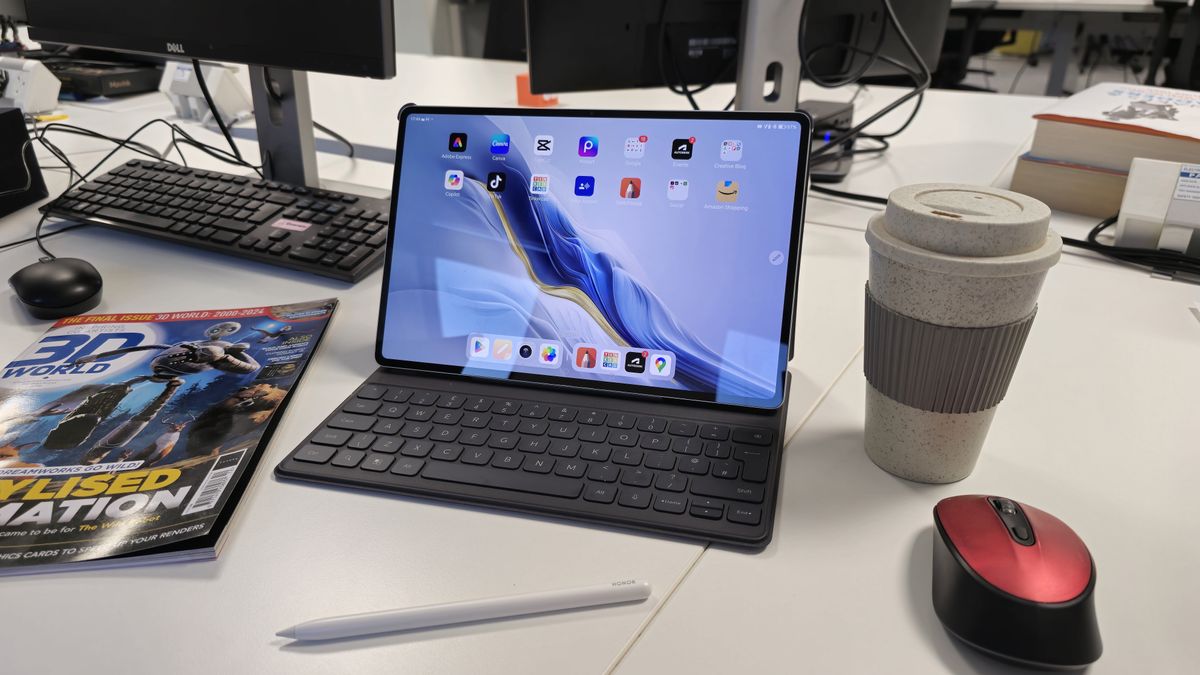
Honor has just announced a new series of products, including the Honor Pad V9 tablet, priced at just £359. This prompted me to think about my own Honor MagicPad 2, which I purchased for £399 with a premium keyboard case and an Honor Magic Pencil 3 stylus.

The Honor MagicPad 2: A Review

The Honor MagicPad 2 is an exceptional tablet that I bought after reviewing it, as I loved using it so much for wedding planning and photo editing. It may not be the best drawing tablet for creatives, but it’s one of the best tablets with a stylus pen available for under £500.

Key Features

  • 12.3-inch OLED display with 144Hz variable refresh rate
  • Impressive performance, even compared to the Samsung Galaxy Tab S10 Ultra
  • Includes a premium keyboard case and Honor Magic Pencil 3 stylus
  • Sleek design and comfortable to hold
  • Eye comfort level adjustments for the OLED display

Value for Money

The number one thing I love about this tablet is its value for money, with a retail price of only £499. The next best thing is the stunning OLED IMAX enhanced display, making it a top iPad alternative for creatives with a tighter budget.

Pros and Cons

Pros:

  • Excellent value for money
  • Impressive display with high refresh rate
  • Includes premium keyboard case and stylus
  • Sleek design and comfortable to hold

Cons:

  • Camera unit is not up to par with other Android tablets
  • May not be the best drawing tablet for creatives

Conclusion

The Honor MagicPad 2 sets a high standard for what a budget tablet should offer. With its impressive display, performance, and value for money, it’s a great option for those looking for an affordable Android tablet. If you’re in the market for a new tablet, I highly recommend considering the Honor MagicPad 2.

FAQs

Q: What is the price of the Honor MagicPad 2?
A: The retail price of the Honor MagicPad 2 is £499.

Q: What features make the Honor MagicPad 2 stand out?
A: The 12.3-inch OLED display with 144Hz variable refresh rate, impressive performance, and value for money make the Honor MagicPad 2 stand out.

Q: Is the camera unit on the Honor MagicPad 2 good?
A: The camera unit is not up to par with other Android tablets, but this hasn’t been an issue for me as I prefer to use my smartphone camera for photography.

Q: Can I still get the Honor MagicPad 2 with a premium keyboard case and stylus?
A: Yes, the bundle is still available on Honor’s website with the code APD2FE50.

AI Transforms Education in 2025

Education Evolves with AI: Unlocking the Future of Learning

The Rise of AI in Education

Education is undergoing a significant transformation, driven by the rapid advancement of artificial intelligence (AI). This revolution is transforming the way we learn, making education more accessible, intelligent, and efficient. As AI continues to shape the future of education, StacksGather explores the opportunities and challenges that lie ahead.

Personalized Learning with AI

One of the most significant benefits of AI in education is personalized learning. With AI-driven adaptive assessments, students can receive tailored feedback and recommendations, allowing them to learn at their own pace. This approach helps to identify knowledge gaps and provides targeted support, resulting in improved academic performance and increased student engagement.

AI-Driven Tutors: The Future of Education

AI-driven tutors are another innovative application of AI in education. These virtual assistants use natural language processing to provide one-on-one support, offering real-time feedback and guidance to students. This technology can help bridge the gap between students and teachers, making education more inclusive and accessible.

The Power of Data Analysis

AI can also analyze vast amounts of educational data to identify trends, patterns, and correlations. This insights can inform educators on how to improve curriculum design, teacher training, and student assessment, leading to better educational outcomes.

Challenges and Opportunities

While AI presents numerous benefits, there are also challenges to consider. For instance, AI can exacerbate existing inequities in education, particularly in areas with limited access to technology. Additionally, there is a need for educators to be trained on how to effectively integrate AI-driven tools into their teaching practices.

Conclusion

The future of education is bright, and AI is playing a pivotal role in shaping it. As we look to the future, it is crucial to balance the benefits of AI with the need for human interaction and empathy in the learning process. At StacksGather, we believe that AI has the potential to revolutionize education, making it more accessible, intelligent, and efficient. By embracing this technology, we can unlock the full potential of every student and create a brighter future for all.

Frequently Asked Questions

Q: What are the benefits of AI in education?

A: AI can provide personalized learning experiences, offer real-time feedback, and improve educational outcomes.

Q: How does AI-driven tutoring work?

A: AI-driven tutors use natural language processing to provide one-on-one support, offering real-time feedback and guidance to students.

Q: Are there any challenges associated with AI in education?

A: Yes, AI can exacerbate existing inequities in education, particularly in areas with limited access to technology. Educators need training on how to effectively integrate AI-driven tools into their teaching practices.

Q: What is the future of AI in education?

A: The future of AI in education is bright, with potential applications in personalized learning, AI-driven tutoring, and data analysis. As AI continues to evolve, it will play a critical role in shaping the future of education.

Microsoft Partners Shape Future of Healthcare with Microsoft Dragon Copilot

Microsoft Introduces Dragon Copilot: The First AI Assistant for Clinical Workflow

Today, Microsoft is introducing Microsoft Dragon Copilot, the first AI assistant for clinical workflow that combines natural language voice dictation and ambient listening capabilities with fine-tuned generative AI and healthcare-adapted safeguards. Part of Microsoft Cloud for Healthcare, Dragon Copilot enables healthcare partners and their customers to unlock new levels of efficiency and care by streamlining documentation, surfacing pertinent information, and automating tasks so clinicians can focus more on their patients and themselves.

# Dragon Copilot Partner Resources

Dragon Copilot is bolstered by our collaboration with healthcare industry experts across our extensive global ecosystem of trusted partners. We work with leading independent software vendors (ISVs), system integrators (SIs), and cloud service providers (CSPs) across the globe to help our customers drive better healthcare outcomes.

## Unlock New AI Use Cases with Dragon Copilot

Partnering with Microsoft allows organizations to tap into Dragon Copilot to accelerate innovation and unlock new avenues for future business growth through the Microsoft commercial marketplace. Dragon Copilot’s trusted AI models are trained on healthcare data, providing a host of AI solution possibilities. Partners can build even stronger healthcare solutions and offerings by leveraging a comprehensive end-to-end toolchain – including Microsoft Fabric, Microsoft Copilot Studio, and Microsoft Azure AI Foundry. Plus, a single integration to Dragon Copilot extends a partner’s AI clinical use cases throughout the entire Microsoft Azure ecosystem, opening new opportunities for innovation and collaboration.

## Embrace Innovation with Responsible AI

Dragon Copilot’s new capabilities are built on a secure data estate and incorporate healthcare-specific clinical, chat, and compliance safeguards for accurate and safe AI outputs. They also align to Microsoft’s responsible AI principles to help guide AI development and use – transparency, reliability and safety, fairness, inclusiveness, accountability, privacy, and security. We remain committed to developing responsible AI by design and ensuring that these technologies positively impact both the healthcare ecosystem and broader society, and will share our learnings on this journey with our customers.

## Driving Better Healthcare Outcomes Together

Our healthcare partner ecosystem is constantly growing, highlighted below are just a few of the more than 30 major partners already working with Microsoft. We’re committed to advancing AI innovation in healthcare together with a diverse partner community that spans regions, partner types, and specialties.

### Independent Software Vendors

Dragon Copilot empowers ISVs with trusted AI models to create innovative AI-powered use cases, along with opportunities for new revenue channels through the extensibility framework. Several of our industry-leading ISV partners – including MEDITECH, ChipSoft, Dedalus, Canary Speech, and Softway Medical Group – are helping bring Dragon Copilot to life.

### Cloud Service Providers

Dragon Copilot enables CSPs to reach new markets by leveraging robust AI infrastructure and technology that works across EHRs and EMRs to create innovative service offerings. We’re partnering with trailblazing CSP partners – including CDW, ORdigiNAL, and Clinically Speaking – to boost efficiency in healthcare with Dragon Copilot.

Conclusions:
Microsoft’s introduction of Dragon Copilot marks a significant milestone in the evolution of AI-powered clinical workflow. With its ambient and generative AI capabilities, Dragon Copilot has the potential to transform the way clinicians work, enabling them to focus on what matters most – patient care. By partnering with Microsoft, our ecosystem of ISVs, SIs, and CSPs can unlock new levels of efficiency, care, and innovation in the healthcare industry.

FAQs:

Q: What is Dragon Copilot?
A: Dragon Copilot is the first AI assistant for clinical workflow that combines natural language voice dictation and ambient listening capabilities with fine-tuned generative AI and healthcare-adapted safeguards.

Q: What are the benefits of using Dragon Copilot?
A: Dragon Copilot can streamline documentation, surface pertinent information, and automate tasks, enabling clinicians to focus more on their patients and themselves.

Q: What are the key features of Dragon Copilot?
A: Dragon Copilot’s key features include ambient and generative AI capabilities, healthcare-adapted safeguards, and seamless integration with Microsoft Cloud for Healthcare.

Q: Who are the partners working with Microsoft on Dragon Copilot?
A: Over 30 major partners are already working with Microsoft on Dragon Copilot, including MEDITECH, ChipSoft, Dedalus, Canary Speech, and Softway Medical Group, among others.

Alternative Data Use Grows Strongly Among Investors, Thanks to AI

Investment Advisors Embrace Alternative Data with the Help of Generative AI

Increased Adoption of Alternative Data

Investment advisors are expanding their use of alternative data thanks to generative AI and the competitive advantages they plan to obtain through it, according to the latest report on alternative data from Lowenstein Sandler. The report highlights a surge in the use of alternative data, with 67% of respondents affirming that they use alternative data, and 54% making "significant use" of it.

What is Alternative Data?

Alternative data refers to any information that doesn’t appear in company filings, press releases, analyst reports, and other traditional sources. Investors are looking to alternative data, such as company credit card transactions, geolocation, mobile device data, and social media, to gain a potentially lucrative signal that can be exploited for competitive advantage.

The Rise of Generative AI

The emergence of generative AI is playing a role in the expansion of alternative data. According to the report, 61% of survey respondents say they use AI for investment research, portfolio optimization, or trading, while 58% say they use it for summarizing research and materials. Among those already using AI for investment and trading purposes, 85% say they’re planning to expand their use of it in the next year.

Use Cases for Alternative Data

Investment firms are using alternative data for a variety of use cases, including developing unique investment strategies, generating higher returns while managing risk, and understanding evolving customer purchase behaviors.

Challenges and Concerns

While alternative data can generate alpha, it doesn’t come without risks. The top concern that firms have when it comes to alternative data are data ownership and privacy issues, cited by 36% of survey respondents. There was a three-way tie for second place at 33%, shared by data security/breach, risk of acquiring material non-public information, and increased compliance burdens.

Conclusion

The use of alternative data is no longer a novel concept, but the combination with AI creates the possibility for original insights at a scale and speed that was previously unattainable. As the use of alternative data continues to grow, it’s essential to address the challenges and concerns surrounding its use, including data ownership and privacy issues, data security, and regulatory compliance.

FAQs

Q: What is alternative data?
A: Alternative data refers to any information that doesn’t appear in company filings, press releases, analyst reports, and other traditional sources.

Q: What are some examples of alternative data?
A: Examples of alternative data include company credit card transactions, geolocation, mobile device data, and social media.

Q: What are the benefits of using alternative data?
A: The benefits of using alternative data include gaining a potentially lucrative signal, developing unique investment strategies, generating higher returns while managing risk, and understanding evolving customer purchase behaviors.

Q: What are the challenges of using alternative data?
A: The challenges of using alternative data include data ownership and privacy issues, data security/breach, risk of acquiring material non-public information, and increased compliance burdens.

Q: How do I get started with alternative data?
A: To get started with alternative data, you can begin by researching the different types of alternative data available, including company credit card transactions, geolocation, mobile device data, and social media. You can also consider working with a data provider or consulting with a financial advisor to help you navigate the process.

Unlocking Computer Vision for Every AI Builder

The Power of Computer Vision in AI Systems

Ninety percent of information transmitted to the human brain is visual. The importance of sight in understanding the world makes computer vision essential for AI systems.

Roboflow: Simplifying Computer Vision Development

By simplifying computer vision development, startup Roboflow helps bridge the gap between AI and people looking to harness it. Trusted by over a million developers and half of the Fortune 100 companies, Roboflow’s mission is to make the world programmable through computer vision. Roboflow Universe is home to the largest collection of open-source computer vision datasets and models.

Interview with Cofounder and CEO Joseph Nelson

Cofounder and CEO Joseph Nelson joined the NVIDIA AI Podcast to discuss how Roboflow empowers users in manufacturing, healthcare, and automotive to solve complex problems with visual AI.

Simplifying Model Training and Deployment

A member of the NVIDIA Inception program for cutting-edge startups, Roboflow streamlines model training and deployment, helping organizations extract value from images and video using computer vision. For example, using the technology, automotive companies can improve production efficiency, and scientific researchers can identify microscopic cell populations.

The Future of Computer Vision and Multimodal AI

Over $50 trillion in global GDP is dependent on applying AI to problems in industrial settings, and NVIDIA is working with Roboflow to deliver those solutions. Nelson also shares insights from his entrepreneurial journey, emphasizing perseverance, adaptability, and community in building a mission-driven company. Impactful technology isn’t just about innovation; it’s about making powerful tools accessible to those solving real problems.

Looking Ahead

Nelson highlights the potential of multimodal AI, where vision integrates with other data types to unlock new possibilities, and the importance of running models on the edge, especially on real-time video. Learn more about the latest advancements in visual agents and edge computing at NVIDIA GTC, a global AI conference taking place March 17-21 in San Jose, California.

Time Stamps

  • 2:03 – Nelson explains Roboflow’s aim to make the world programmable through computer vision.
  • 7:26 – Real-world applications of computer vision to improve manufacturing efficiency, quality control, and worker safety.
  • 22:15 – How multimodality allows AI to be more intelligent.
  • 33:01 – Lessons learned and perspectives on leadership, mission-driven work, and what it takes to scale a company successfully.
  • 29:43 – Teasing Roboflow’s upcoming announcements at GTC.

Conclusion

Computer vision is a crucial component in the development of AI systems, and companies like Roboflow are working to simplify the process. With the potential to improve production efficiency, quality control, and worker safety, computer vision has the power to revolutionize industries.

FAQs

  • What is Roboflow?
    Roboflow is a startup that simplifies computer vision development, making it easier for companies to harness the power of AI.
  • What is the significance of computer vision in AI systems?
    Ninety percent of information transmitted to the human brain is visual, making computer vision essential for AI systems.
  • What is multimodal AI?
    Multimodal AI integrates computer vision with other data types to unlock new possibilities and improve the intelligence of AI systems.
  • What is NVIDIA GTC?
    NVIDIA GTC is a global AI conference that takes place March 17-21 in San Jose, California, where attendees can learn about the latest advancements in visual agents and edge computing.