Home Blog Page 227

Immuta Brings AI to Data Governance

Immuta Launches AI-Driven Data Governance Solution

Revolutionizing Data Access and Control

Data governance software provider Immuta has launched a new AI product designed to transform how data access and governance is done. The company has also launched the first product under the new Immuta AI brand, Immuta Copilot, which uses generative AI to write data access policies based on usage trends and metadata.

The GenAI Revolution

The GenAI revolution is exposing holes in the systems that companies use to manage and govern their data. As data demands increase, manual processes that require humans to write data access policies can’t keep up, and neither can the rules-based ticketing systems that ostensibly help companies enforce those data access policies.

Immuta AI – A Foundational Layer

Immuta wants to reimagine the whole data governance process with Immuta AI. The company says the new offering, which it unveiled at the Gartner Data and Analytics conference, will function as a "foundational layer" within the Immuta Platform, using a range of metadata to gain "a complete view of how data is accessed, used, and secured."

Immuta Copilot – A Policy Writing Assistant

The first product in the Immuta AI catalog is Immuta Copilot, a policy writing assistant that allows users to describe the data access they want to enforce in plain language. "Copilot will create a draft Immuta subscription policy, which, if activated, will push out access to data, from that description for you to review," says Immuta CTO Steve Touw.

How Immuta Copilot Works

Immuta Copilot uses a range of different technologies, including a large language model (LLM) and vector search capabilities to understand natural language input and generate the data access policy. The product was trained on Immuta’s attribute-based access control (ABAC) policies and generates policies that adhere to Immuta’s ABAC policy provisioning structure. Immuta Copilot also consumes metadata, including internal metadata, external metadata, identity metadata, and behavioral-based metadata.

Future of Data Governance

The future of AI isn’t just about better models – it’s about better data governance. "As enterprises scale AI adoption, now is the time to rethink how data is accessed, shared, and controlled," says Immuta Co-founder and CEO Matthew Caroll. "Traditional, ticket-based systems are already struggling to keep up, creating choke points that slow innovation and increase compliance risk. Soon, AI agents will act on behalf of human users, drastically multiplying access requests – far beyond what manual processes can handle."

Conclusion

Immuta’s new AI-driven data governance solution, Immuta Copilot, is set to revolutionize the way data access and control is done. With its ability to generate data access policies based on usage trends and metadata, Immuta Copilot is poised to transform the way companies manage and govern their data.

FAQs

Q: What is Immuta AI?
A: Immuta AI is a new product line from Immuta that uses generative AI to write data access policies based on usage trends and metadata.

Q: What is Immuta Copilot?
A: Immuta Copilot is a policy writing assistant that allows users to describe the data access they want to enforce in plain language.

Q: How does Immuta Copilot work?
A: Immuta Copilot uses a range of different technologies, including a large language model (LLM) and vector search capabilities to understand natural language input and generate the data access policy.

Q: What are the future plans for Immuta AI?
A: Immuta plans to release additional products, including access recertification, policy recommendation, and semantic discovery, in the coming months.

Top New Gadgets at MWC 2025

0

The Xiaomi 15 Ultra Is a Camera King

MWC doesn’t see many flagship phone releases anymore, but the Xiaomi 15 and 15 Ultra (8/10, WIRED Recommends) are worthy of fanfare and likely best in show this year. Both Android phones are polished, with excellent screens, strong battery life, fast charging, and silky performance. Xiaomi’s HyperOS is also maturing, and version 2 is liberally seasoned with—you guessed it—AI features. They are available in the UK and Europe but won’t land in the US. (The brand hosted WIRED at its media event at MWC and paid for a portion of our reporter’s travel expenses.)

My in-depth review goes into the deep inner workings of these phones, what I like and don’t like. But neither comes cheap—the Xiaomi 15 starts at £849 (999 euros) and the Ultra will set you back £1,299 (1,499 euros). The Ultra Photography Kit, which is a module that connects to one end of the phone, adding dedicated camera controls and an additional battery, costs an extra £179 (199 euros).

Alongside the new handsets, Xiaomi showed off a slew of other devices. We got two new Android tablets, the Xiaomi Pad 7 and 7 Pro, both with 11.2-inch screens and large batteries—the Pro adds a faster processor and better camera. Then there was the Harman-tuned Xiaomi Buds 5 Pro with active noise canceling, 8-hour battery life, and support for AI transcription and translation. Rounding off the hardware announcements were the Xiaomi Watch S4—a slightly improved version of last year’s customizable Watch S3—and the rectangular, fitness and health-focused Smart Band 9 Pro. —Simon Hill

Nothing’s Two New Budget Phones Are Dazzling

Nothing has two new stylish smartphones—the Phone (3a) and Phone (3a) Pro. They’re identical in nearly every way except the cameras. The Pro model has a different 50-megapixel main camera that can capture more light thanks to larger pixels, plus it has a 3X optical periscope lens, whereas the Phone (3a) has a 2X optical camera. These phones are $379 and $459, respectively, and it’s an achievement in itself to have a versatile triple-camera setup on a sub-$500 phone.

Conclusion

MWC 2025 may not have been as exciting as previous years, but Xiaomi and Nothing still managed to impress with their innovative and feature-packed devices. The Xiaomi 15 Ultra is a camera king, while Nothing’s budget phones offer impressive performance at an affordable price. If you’re in the market for a new smartphone, these devices are definitely worth considering.

FAQs

Q: Are the Xiaomi 15 and 15 Ultra available in the US?
A: No, they are not available in the US.

Q: What is the price of the Xiaomi 15 and 15 Ultra?
A: The Xiaomi 15 starts at £849 (999 euros), and the Ultra will set you back £1,299 (1,499 euros).

Q: What is the price of the Nothing Phone (3a) and Phone (3a) Pro?
A: The Phone (3a) is $379, and the Phone (3a) Pro is $459.

Q: What is the difference between the Nothing Phone (3a) and Phone (3a) Pro?
A: The Phone (3a) Pro has a different 50-megapixel main camera and a 3X optical periscope lens, whereas the Phone (3a) has a 2X optical camera.

Activision Sells Out to AI

0

Activision’s Use of AI in Promos Sparks Outrage Among Fans

Lazy AI Imagery and Uninspired Design

Activision has faced backlash for using AI in promotional materials for its new Guitar Hero, Crash Bandicoot, and Call of Duty mobile games. The controversy arises from fans’ suspicion that the company is using AI-generated images to create promotional materials, rather than investing in human creativity and design.

Fans React with Outrage and Disappointment

Fans were quick to express their discontent, with one commenter writing, "Wow. It appears they’re still using Midjourney 1.0. I haven’t seen AI art this bad since the early days." Another added, "Too cheap to hire an artist? Too cheap to even use a decent AI art generator even." A third scathingly wrote, "If you can’t be bothered to make proper artwork for your announcement, then I’ve less than zero faith the game will be any good."

Schlocky AI Ads for Call of Duty: Zombie Defender and Crash Bandicoot: Brawl

Similarly, fans noticed similar AI-generated ads for the fictional games Call of Duty: Zombie Defender and Crash Bandicoot: Brawl. The ads, designed to gauge interest from fans, were met with criticism for their lack of creativity and attention to detail.

Disappointment from a Gaming Legacy

As a long-time fan of Activision’s early 2000s gaming legacy, it’s disheartening to see the company resort to lazy AI-generated imagery. Whether or not AI technology is the future of the industry, it’s crucial that companies like Activision prioritize human creativity and design.

Conclusion

The use of AI in promos for Activision’s new games has sparked outrage among fans, who are calling out the company for its lack of investment in human creativity and design. While AI has the potential to enhance productivity and creativity, its misuse can lead to lazy, uninspired design. As the industry continues to evolve, it’s essential that companies like Activision prioritize the unique talents of creatives and strive for better.

FAQs

Q: What is the controversy surrounding Activision’s use of AI in promos?
A: The controversy centers around the company’s use of AI-generated images to create promotional materials, rather than investing in human creativity and design.

Q: Why are fans upset about Activision’s use of AI?
A: Fans are upset because they feel that the company is taking a shortcut, using AI-generated images rather than putting in the effort to create high-quality, human-designed promotional materials.

Q: Is AI the future of the gaming industry?
A: While AI has the potential to enhance productivity and creativity, it’s crucial that companies like Activision prioritize human creativity and design to ensure the best possible results.

Long-Lasting Budget Laptop

ZDNET’s key takeaways

* Acer’s Aspire 14 AI is available now at Costco for $699.
* It has a fantastic battery and some of the latest hardware: all for a very approachable price point.
* I suggest opting for the OLED, since the low-end display isn’t the best.

I went hands-on with Acer’s Aspire Go 15 last year, and praised it as one of the best cheap laptops you can get, priced at around $280. This year, one of the latest additions to Acer’s Aspire line, the Aspire 14 AI, is a few steps up in terms of hardware and features, but maintains a competitive price point of $699.

Acer’s brand messaging has positioned itself at the forefront of eco-friendly components and post-consumer recycled materials, and the aesthetic of its laptops from the past few years reflects this.

Design and Features

From the exposed grill on the hinge, to the visible copper heat pipes on the bottom of the device, to the thick bezels surrounding the display, the Aspire 14 AI isn’t the sleekest laptop around. Still, it reflects an unpretentious, eco-conscious aesthetic with a solid suite of hardware that shows up ready to work.

It features two Thunderbolt 4 USB-C ports that can support an external monitor at an 8K resolution, an HDMI 2.1, support for Wi-Fi 6E and Bluetooth 5.4, and a Kensington lock slot. This spread of ports makes it a capable business laptop for remote or hybrid workers, particularly when paired with the battery.

Battery Life

Battery life, however, is the Aspire 14 AI’s best feature. I know we’ve been singing the praises of many laptops with marathon battery life over the past year, but Acer’s Aspire 14 AI fills a niche: an AI-ready budget laptop with an absolute marathon battery that will last for days on end.

During my testing, I brought the Aspire 14 AI into the office on a full charge and used it intermittently throughout the day. It was still above 90% by the end of the workday, and when I closed it up and brought it back out the next day, it hadn’t dropped a single percentage point.

The next day, I brought it back in and used it quite a bit more aggressively: holding multiple videocalls, doing more sustained multitasking, and keeping the display jacked up. It finally started to dent the battery life, but by the end of the day, it was still just right around 30%.

Performance

The fantastic battery life is enabled thanks partly to the Intel Core Ultra 7 (Series 2) processor, which has performed very well on other machines I’ve tested, like the Asus Zenbook S 14 and the Dell XPS 13. With Acer’s 14 AI, the trend continues, as this device not only competes with these two laptops but slightly exceeds them.

The device’s 3.05-pound physical form factor is non-descript, with an aluminum shell on the top and bottom and a lightweight plastic frame in a graphite finish. The keyboard is fine, without any noteworthy characteristics, although the keys feature a very short travel distance and are on the mushy side.

Display Options

Depending on how it’s configured, the Aspire 14 AI comes with either a 14-inch WUXGA IPS touch display or an OLED. The IPS display is functional but not particularly noteworthy in terms of brightness or color gamut. The OLED, on the other hand, makes it feel more premium.

Conclusion

Acer’s Aspire 14 AI is one of the better bang-for-your-buck options available right now. Starting at $699, it offers some of the latest high-performing hardware and a battery that will last multiple days in a very competitive package.

If you’re looking for a “budget plus” laptop with respectable hardware that opts for a more utilitarian form factor (and approachable price), the Aspire 14 AI is a solid choice. I would suggest opting for the OLED configuration if you’re willing to pay for the upgrade, especially if you’ll be using it for visually creative work or gaming.

Frequently Asked Questions

Q: Is the Aspire 14 AI a good laptop for gaming?
A: Yes, the Aspire 14 AI is a good laptop for gaming, with up to 53 TOPS of performance and upscaling technology for better graphics rendering and video editing.

Q: Is the IPS display good for gaming?
A: No, the IPS display may hold back the gaming experience, so I would suggest opting for the OLED configuration.

Q: Is the Aspire 14 AI good for business use?
A: Yes, the Aspire 14 AI is a capable business laptop with a range of ports, including two Thunderbolt 4 USB-C ports, an HDMI 2.1, and a Kensington lock slot.

Q: Is the battery life of the Aspire 14 AI exceptional?
A: Yes, the battery life of the Aspire 14 AI is exceptional, with up to multiple days of use on a single charge.

Incredible Super Mario Bros. 6

0

A New Super Mario Adventure

A talented fan has released a new Super Mario patch for Tiny Toons Adventures on the NES, turning the retro game into a Super Mario Bros. adventure. Based on a similar bootleg from the ’90s, the ROM hack replaces the Tiny Toons characters with the Super Mario gang, and recreates Mario-style environments on the Konami platformer.

What’s Changed

The creator, Kensu William, has made several changes to the game, including:

  • Replacing all enemies with enemies from the Super Mario universe
  • Changing all bosses to belong to the Mario universe, including the secret boss
  • Making level design adjustments to better utilize resources
  • Changing some levels to fit the Mario theme
  • Creating new cinematics to tell a new story
  • Making minor changes throughout the game

Reaction from Fans

Fans have been praising the effort, with comments on YouTube saying:

  • "Seeing Wario, Donkey Kong and Bowser Jr. in a game like this feels almost unnatural but I love it."
  • "Oh wow, this is so well made that at first sight I thought this was gonna be a fully original fan game for PC that used SMB3 aesthetics but nope, I’m very excited to play it."

How to Play

To play the game, you’ll need the ROM of Tiny Toons Adventures for the NES, and a patcher. Download the ROM and patcher, then apply the Super Mario Bros. 6 hack to create a new game that brings together the worlds of Tiny Toons and Mario.

Conclusion

This fan-created patch is a love letter to the original NES games, bringing together two beloved franchises in a new and exciting way. With its attention to detail and commitment to recreating the Mario universe, this hack is a must-play for fans of retro gaming and Mario alike.

FAQs

Q: What is Tiny Toons Adventures?
A: Tiny Toons Adventures is a platformer game for the NES, released in 1992.

Q: What is a ROM hack?
A: A ROM hack is a modified version of an existing game, often created by fans or enthusiasts. In this case, the ROM hack replaces the Tiny Toons characters with the Mario gang, and recreates Mario-style environments.

Q: How do I play the game?
A: To play the game, you’ll need the ROM of Tiny Toons Adventures for the NES, and a patcher. Download the ROM and patcher, then apply the Super Mario Bros. 6 hack to create a new game.

Singapore Arrests Alleged Nvidia Chip Smugglers

0

Nvidia Chip Smuggling: Singaporean Police Arrest Three for Fraud

Smuggling Ring Exposed

There’s been a lot of scrutiny surrounding China’s acquisition of advanced Nvidia chips, despite strict U.S. export controls. Chinese merchants have already reportedly ordered Nvidia’s powerful Blackwell GPUs.

Singaporean Police Crack Down on Smuggling

On Thursday, Singaporean police arrested three men for allegedly smuggling Nvidia chips, according to Channel News Asia. The men, two Singaporeans and one Chinese citizen, were charged with fraud over a supply of servers.

Investigation Underway

Singapore is investigating whether the servers, made by Dell and Supermicro, contained restricted Nvidia chips and were diverted somewhere other than their official destination of Malaysia, Bloomberg reported.

Nvidia’s Sales to Singapore

Nvidia’s latest annual report shows that it does sell to Singapore. The country represented 18% of fiscal year 2025 revenue, although actual shipments to Singapore accounted for less than 2% of sales.

Company Statements

Dell told TechCrunch that it has a strict trade compliance program and investigates any customers who don’t comply. Nvidia declined to comment, while Supermicro didn’t immediately respond to a comment request.

FAQs

Q: What is the controversy surrounding Nvidia chips?
A: There is scrutiny surrounding China’s acquisition of advanced Nvidia chips, despite strict U.S. export controls.

Q: What happened in Singapore?
A: Singaporean police arrested three men for allegedly smuggling Nvidia chips.

Q: Are Dell and Supermicro involved?
A: Yes, Dell and Supermicro are involved, as their servers may have contained restricted Nvidia chips.

Q: What is Nvidia’s stance on the matter?
A: Nvidia declined to comment.

Q: What is Dell’s stance on the matter?
A: Dell has a strict trade compliance program and investigates any customers who don’t comply.

Nothing Phone 3a vs Nothing Phone 3a Pro

0

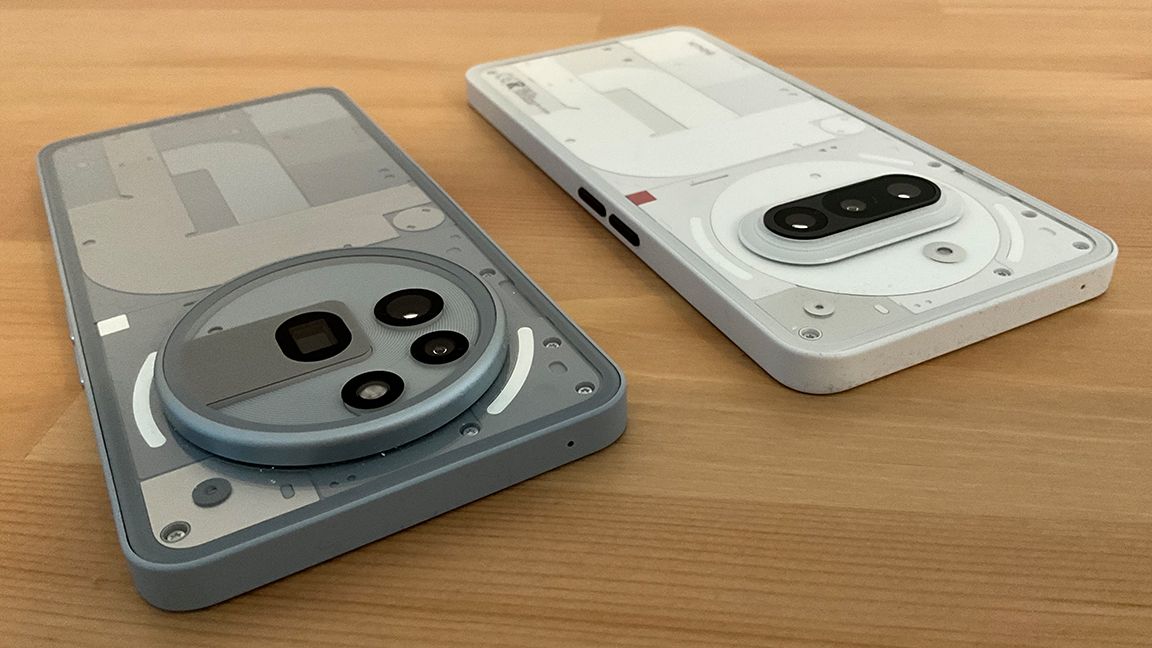
Nothing Phone 3a and 3a Pro: A Crossroads for the Brand

A Reflection on the Evolution of the Brand’s Design

I’ve been playing around with both the Nothing Phone 3a and 3a Pro for a week now, and my review is in progress. These phones represent a crossroads for the brand, as they double down on their design credentials but also point to a potential future where expectations for advanced tech could break the design.

The Nothing Phone 3a: A Classic

This is a straight update of the Nothing Phone 2a, continuing the same design while upgrading the camera, chipset, and display. The rear "internal" design has been streamlined to feature overlapping panels, a PCB-inspired look that has made Nothing popular. The 3a retains the centered "face-like" camera cluster.

The Nothing Phone 3a Pro: A Gamble

The Pro refers to the new, larger camera cluster, bringing a periscope lens to the Nothing lineup and offering the kind of photo results usually reserved for more costly camera phones. The downside? A large circular cluster that breaks the minimalist design Nothing is renowned for.

Fundamentally, the Nothing Phone 3a continues the design choices that made the Nothing Phone 2a one of my favorite budget smartphones. It’s a wonderfully designed, visually appealing smartphone with a chipset refresh, a larger improved display, and new cameras.

The Paywall

The Nothing Phone 3a Pro, on the other hand, is the sight of Nothing wrangling with its own design rules, wrestling its desire for a minimalist, retro design aesthetic with the need to begin matching user expectations. It’s a design that could be divisive for fans of the brand but may well find new fans for its mix of high-spec camera and value.

The New AI Button and Essential Space AI App

Both phones feature a new AI button, designed to feel differently from the others and offers access to the new Essential Space AI app. This is an AI-powered hub for notes, ideas, and inspirations; it spotlights Nothing’s software innovations that can often go under the radar compared to its phone design. The new 3a series offers early access to this AI organiser, with new features including Camera Capture, Smart Collections, Focused Search, and Flip to Record coming soon.

A Design Dilemma

The camera is excellent, and the tech and specs for a mid-range smartphone are eye-catching. It uses the popular Sony LYTIA 600 sensor usually found on more expensive smartphones, and delivers lovely warm tones, a great zoom, and crisp, incredible macro detail all for under £450. But, from a design perspective, the Nothing Phone 3a Pro lacks the connected, subtle balance of previous Nothing releases.

Conclusion

In the meantime, I’m more than happy to stare at the little face of the Nothing Phone 3a and remind myself that this is a brand that understands how to find a balanced specs, smart aesthetics, and price.

FAQs

  • What do you think of the new Nothing Phone 3a Pro? Am I being too harsh?
  • How do you balance the desire for advanced tech with the need for minimalist design?
  • What do you think about the new AI button and Essential Space AI app? Will it be useful for you?

Microsoft Dragon Copilot

HIMSS 2025: Introducing Microsoft Dragon Copilot

Transforming the Way Clinicians Work

We are excited to announce the launch of Microsoft Dragon Copilot, a groundbreaking solution that revolutionizes the way clinicians work. Join us at booth #2221 to experience the latest innovations in action, participate in a theater experience, and meet our product experts.

A New Era of Efficiency and Care

For over two decades, we have delivered front-end speech capabilities that have helped clinicians document billions of patient records and become a cornerstone of clinical documentation. Five years ago, we pioneered the ambient AI category in healthcare. Today, we integrate these proven technologies with fine-tuned generative AI, healthcare-adapted safeguards, and new capabilities on a scalable platform, bringing unprecedented levels of efficiency and care.

Outcomes That Matter

Our robust voice solutions have consistently delivered outcomes for clinicians, patients, and healthcare organizations, including:

  • 5 minutes of time-savings per encounter on average, enabling 13 additional appointment slots per provider, per month1
  • 70% improvement in clinician work-life balance and reduction of feelings of burnout and fatigue1
  • Delivery of better patient experiences, with 93% of patients saying their physician is more personable and conversational due to our technology2

Introducing Dragon Copilot

Dragon Copilot builds on this evolution to streamline documentation, surface information, and automate tasks across care settings. It’s an AI extensible workspace that offers a unified experience, integrates with electronic health records (EHRs) such as Epic, and supports clinicians across all stages of their workflow.

Key Features

  • Streamline Documentation: Use the latest AI models to produce accurate documentation efficiently and consistently.
  • Surface Information: Get access to pertinent information without leaving your workflow.
  • Automate Tasks: Simplify clinical and non-clinical tasks, such as summarizing notes, evidence, and orders.

Quotes from Healthcare Professionals

  • "Using all these tools together is going to be a great in-room, in-office assistant for taking care of the patient. It’s just remarkable." – Dr. Lance Owens, Chief Medical Information Officer, University of Michigan Health-West
  • "This is a complete transformation… it’s going to make it easier, more efficient, and help us take better quality care of patients." – Dr. Anthony Mazzarelli, Co-President and Chief Executive Officer, Cooper University Health Care

Conclusion

Dragon Copilot is a game-changer for the healthcare industry, empowering clinicians to work more efficiently, effectively, and compassionately. Join us at HIMSS 2025 to experience the future of clinical documentation and automation.

Frequently Asked Questions

Q: When is Dragon Copilot available?
A: Dragon Copilot will be generally available in the United States and Canada in May 2025, followed by the United Kingdom, Germany, France, and the Netherlands.

Q: What are the key features of Dragon Copilot?
A: Dragon Copilot includes features such as streamlining documentation, surfacing information, and automating tasks, including summarizing notes, evidence, and orders.

Q: What are the benefits of using Dragon Copilot?
A: Dragon Copilot helps clinicians work more efficiently, reduces burnout, and improves patient experiences, leading to better outcomes and increased productivity.

Q: Is Dragon Copilot secure and compliant?
A: Yes, Dragon Copilot is built on a foundation of trust, with a focus on security, privacy, and compliance, using the Microsoft Secure Future Initiative and healthcare-specific clinical, chat, and compliance safeguards.

How to Draw Vibrant Character Art

0

Organized Article

01. Start with the Silhouette

Begin by establishing the basic shape of your character. This step sets the proportions and overall silhouette, which is essential in character design. For this piece, I determined the character’s proportions, including her dress and accessories such as the big hat. I also decided to add a sense of movement to make her pose dynamic and expressive right from the start.

02. Create the Initial Sketch

With the shape established, start sketching in the details. Add specifics like the outfit, face, and hair, and also consider extra elements for the background or accessories, like the small bag that I added. Using a slightly finer brush, be sure to add important details while keeping this stage still pretty loose, focusing on the main features without getting bogged down in small details.

03. Make the Final Line-Art

For this task, use the same markers as you did for the base colors. Once dried, layering the same shade creates a slightly deeper tone, allowing us to build shadows gradually without going too dark. I kept the lighting straightforward here, just using a simple light source from above.

04-12. Additional Steps

(These sections can be omitted or condensed, as they are not essential to the main flow of the article)

13. Last Details

Finally, add in extra touches for visual interest. I deepened the shadows with a darker purple and used a red fineliner to design the socks, keeping interest in the areas that were looking a bit flat. With a white gel pen, I also added buttons, polka dots, catch lights in her eyes, and hair highlights, which bring life to the character.

Conclusion

In this article, we have covered the process of creating a character design using alcohol markers. From establishing the silhouette to adding the last details, we have explored the various steps involved in bringing a character to life. By following these steps, you can create a vibrant and dynamic character that is sure to capture the audience’s attention.

FAQs

Q: What are the essential steps in creating a character design?
A: The essential steps are establishing the silhouette, creating the initial sketch, making the final line-art, and adding last details.

Q: What are the key factors to consider when designing a character?
A: The key factors are the character’s proportions, pose, and overall design.

Q: What are some tips for creating a dynamic character design?
A: Some tips include using a variety of colors, adding movement and energy to the pose, and paying attention to the character’s facial expressions.

Opera Embraces AI-Powered Browsing

Opera is now the first major web browser with AI-based agentic browsing

The team behind the Opera web browser has announced a new AI agent called Browser Operator, capable of performing browsing tasks for users. This new agentic browsing marks a paradigm shift that could mark the next evolution of web browsers.

Key features of AI agentics

  • Autonomy
  • Perception
  • Decision-making
  • Action Execution
  • Learning and Adapting

Major efficiency boost

The Browser Operator is designed to give users a major efficiency boost by allowing them to explain what they need to do in natural language, and the browser will then perform the necessary tasks. For example, you could ask Browser Operator to buy you a pair of pink running shoes from Nike in a size 8.5. The Browser Operator will then perform the task. As Browser Operator performs the task, the user can see what’s happening at any point in the process, so they are in control the whole time.

User-focused ecosystem

Opera is turning the browser into more of a user-focused ecosystem that uses native client-side solutions to complete tasks while protecting user privacy. The Browser Operator runs natively inside the browser and uses the DOM Tree and browser layout data to get context. According to Opera, this makes the solution faster because the browser doesn’t need to "see" and understand what’s on the screen from its pixels or navigate with a mouse pointer. Browser Operator can access an entire page at once, without the need to scroll, which means it reduces overhead and time required. And because it all happens natively within the browser, the Browser Operator doesn’t require a virtual machine or cloud server.

Preview status

Browser Operator is currently in feature preview status and should become available soon as part of the Opera Feature Drop program. I checked my up-to-date version of Opera Developer, and it has yet to hit, but I’ll keep my eyes open and write up a how-to as soon as it’s available. You can watch Browser Operator in action on the official Opera YouTube channel. Expect Browser Operator to appear in a Feature Drop in the near future.

Conclusion

The introduction of Browser Operator marks a significant shift in the way we interact with web browsers. By providing users with a more efficient and autonomous browsing experience, Opera is setting a new standard for the industry. As the technology continues to evolve, we can expect to see even more innovative uses of AI in web browsers.

FAQs

Q: What is Browser Operator?
A: Browser Operator is a new AI agent integrated into the Opera browser, capable of performing browsing tasks for users.

Q: How does Browser Operator work?
A: Users can explain what they need to do in natural language, and Browser Operator will then perform the necessary tasks.

Q: Is Browser Operator available now?
A: No, Browser Operator is currently in feature preview status and should become available soon as part of the Opera Feature Drop program.

Q: How does Browser Operator protect user privacy?
A: Browser Operator runs natively inside the browser and uses native client-side solutions to complete tasks, protecting user privacy.