Home Blog Page 240

SymbyAI Raises $2.1M Seed to Simplify Science Research

0

SymbyAI Secures $2.1 Million in Seed Funding to Streamline Scientific Research

Overview

SymbyAI, a SaaS platform that uses artificial intelligence to streamline scientific research, has announced a $2.1 million seed round with participation from Drive Capital and CharacterVC, among others. The platform provides organized workspaces for researchers to access papers, code, data, and experiences within one place, helping to track progress and assisting with peer review and replication.

Founding and Mission

Launched just last year by Ashia Livaudais and Michael House, SymbyAI was born out of a personal need to address the inefficiencies in the scientific research process. Livaudais, who has firsthand experience with the archaic system of reviewing and creating science, recognized the need for a more streamlined approach.

How It Works

SymbyAI’s platform is built on a proprietary AI solution, ensuring that users’ intellectual property remains their own and is not used to train the platform’s underlying models. The platform provides a secure and organized workspace for researchers to access and collaborate on research materials, reducing the time and effort required for peer review and replication.

Partnerships and Growth

SymbyAI is working with academic publishers, research organizations, and universities to bring its platform to the scientific community. The company’s early investors include Antler, which took an early chance on Symby by investing in its pre-seed round. With the fresh seed capital, SymbyAI plans to continue building out the company and fulfilling initial partnerships.

Conclusion

SymbyAI’s innovative approach to scientific research has garnered significant attention and investment, and the company is poised for future growth. By providing a secure and efficient platform for researchers, SymbyAI is helping to accelerate the pace of scientific discovery and progress.

Frequently Asked Questions

Q: What is SymbyAI?
A: SymbyAI is a SaaS platform that uses AI to streamline scientific research.

Q: What does SymbyAI do?
A: SymbyAI provides organized workspaces for researchers to access papers, code, data, and experiences within one place, helping to track progress and assist with peer review and replication.

Q: How does SymbyAI ensure data security?
A: SymbyAI is built on a proprietary AI solution, ensuring that users’ intellectual property remains their own and is not used to train the platform’s underlying models.

Q: Who are SymbyAI’s investors?
A: SymbyAI’s investors include Drive Capital and CharacterVC, among others.


Sergey Brin says RTO is key to Google winning the AGI race.

0

Google Co-Founder Urges Employees to Return to Office to Win AGI Race

Increased Productivity for a Competitive Advantage

Google co-founder Sergey Brin has sent a memo to employees urging them to return to the office "at least every weekday" to help the company win the Artificial General Intelligence (AGI) race. According to The New York Times, Brin believes that working 60 hours a week is a "sweet spot" for productivity.

The Pressure to Compete in AI

While Brin’s memo is not an official policy change for Google, which requires workers to come to work in person three days a week, it indicates the pressure Silicon Valley giants are feeling to compete in AI. Google has faced stiff competition from other tech companies, including OpenAI, which released its ChatGPT model in 2022. Google has been working tirelessly to catch up with industry-leading AI models of its own.

Brin’s Return to Google

Brin has reportedly returned to Google in recent years to help the company regain its footing in the AI race. His memo suggests that he believes Google could build an AGI system on par with human intelligence, a goal that has been the subject of much debate and speculation in the tech industry.

Conclusion

In conclusion, Google’s co-founder Sergey Brin’s memo to employees highlights the company’s determination to win the AGI race. By urging employees to return to the office and work long hours, Brin is emphasizing the importance of productivity and innovation in the tech industry. As Google continues to compete with other tech giants, it remains to be seen whether the company’s efforts will pay off.

Frequently Asked Questions

Q: What is Artificial General Intelligence (AGI)?
A: AGI refers to a hypothetical AI system that has the ability to perform any intellectual task that a human can.

Q: What is the significance of Google’s memo to employees?
A: The memo indicates Google’s determination to win the AGI race and highlights the company’s focus on productivity and innovation.

Q: What is the current state of Google’s AI capabilities?
A: Google has been working to catch up with industry-leading AI models, following the release of OpenAI’s ChatGPT in 2022.

It’s a Lemon

0

A Stratospheric Price and a Tech Dead-End

Perhaps because of the disappointing results, Altman had previously written that GPT-4.5 will be the last of OpenAI’s traditional AI models, with GPT-5 planned to be a dynamic combination of “non-reasoning” LLMs and simulated reasoning models like o3.

A Steep Price to Pay

And about that price—it’s a doozy. GPT-4.5 costs $75 per million input tokens and $150 per million output tokens through the API, compared to GPT-4o’s $2.50 per million input tokens and $10 per million output tokens. (Tokens are chunks of data used by AI models for processing). For developers using OpenAI models, this pricing makes GPT-4.5 impractical for many applications where GPT-4o already performs adequately.

A Comparison with o1 and o3

By contrast, OpenAI’s flagship reasoning model, o1 pro, costs $15 per million input tokens and $60 per million output tokens—significantly less than GPT-4.5 despite offering specialized simulated reasoning capabilities. Even more striking, the o3-mini model costs just $1.10 per million input tokens and $4.40 per million output tokens, making it cheaper than even GPT-4o while providing much stronger performance on specific tasks.

A Shift in Focus

OpenAI has likely known about diminishing returns in training LLMs for some time. As a result, the company spent most of last year working on simulated reasoning models like o1 and o3, which use a different inference-time (runtime) approach to improving performance instead of throwing ever-larger amounts of training data at GPT-style AI models.

OpenAI’s Self-Reported Benchmark Results


Credit: OpenAI

A New Era in AI

While this seems like bad news for OpenAI in the short term, competition is thriving in the AI market. Anthropic’s Claude 3.7 Sonnet has demonstrated vastly better performance than GPT-4.5, with a reportedly more efficient architecture. It’s worth noting that Claude 3.7 Sonnet is likely a system of AI models working together behind the scenes, although Anthropic has not provided details about its architecture.

Conclusion

For now, it seems that GPT-4.5 may be the last of its kind—a technological dead-end for an unsupervised learning approach that has paved the way for new architectures in AI models, such as o3’s inference-time reasoning and perhaps even something more novel, like diffusion-based models. Only time will tell how things end up.

FAQs

Q: What is the price of GPT-4.5?
A: GPT-4.5 costs $75 per million input tokens and $150 per million output tokens through the API.

Q: How does GPT-4.5 compare to other OpenAI models?
A: GPT-4.5 is more expensive than other OpenAI models, such as o1 pro and o3-mini, despite offering similar or weaker performance.

Q: What is the future of GPT-style AI models?
A: OpenAI has announced that GPT-5 will be a dynamic combination of “non-reasoning” LLMs and simulated reasoning models like o3, signaling a shift away from traditional unsupervised learning approaches.

The UK will neither confirm nor deny that it’s killing encryption

0

The UK’s War on Encryption: A Global Threat to Personal Data Protection

A Blow to Apple’s Privacy Commitments

The United Kingdom dealt a significant blow in its war on encryption last week, which could have worldwide ramifications for personal data protections. Apple’s decision to pull its Advanced Data Protection (ADP) feature from UK customers is a testament to the company’s commitment to privacy, but it may not be enough to protect users from the UK’s demands.

The UK’s Investigatory Powers Act

The UK’s Investigatory Powers Act (IPA) gives the government the power to demand user data from companies, including worldwide data access, even if it’s tightly encrypted. The 2016 act allows for the creation of technical capability notices, which can force companies to provide backdoors to their services, giving the government access to user data.

Apple’s Compliance

Apple received a technical capability notice under the IPA, demanding it create a backdoor to its iCloud service. The company was forced to pull its ADP feature from the UK market, leaving users without the highest level of data security. The move is a blow to Apple’s commitment to privacy, but it may not be enough to protect users from the UK’s demands.

Other End-to-End Encryption Providers

Other end-to-end encryption providers, such as Meta, Signal, and Telegram, have yet to take a stand on the issue. While some executives have commented on social media, the companies themselves have remained silent. This silence could be due to the fact that few companies offer end-to-end encryption as robust as Apple’s ADP.

The Consequences of Weakening Encryption

Weakening encryption can have serious consequences, including increased hacking, identity theft, and fraud. As Thorin Klosowski, a security and privacy activist, notes, "If a company offered a backdoor without its customers knowing about it, it would be a massive violation of privacy and trust."

The Global Implications

The UK’s actions could set a precedent for other governments to follow, potentially leading to a global erosion of privacy rights. The US is already investigating whether the UK’s Apple notice violated the CLOUD Act, an agreement between the two countries that bars the other from issuing demands for citizen data.

Conclusion

The UK’s war on encryption is a threat to personal data protection globally. Apple’s decision to pull its ADP feature from the UK market is a step in the right direction, but more needs to be done to protect users’ privacy. Other end-to-end encryption providers must take a stand against the UK’s demands and prioritize user privacy.

Frequently Asked Questions

Q: What is the UK’s Investigatory Powers Act?
A: The IPA is a 2016 act that gives the UK government the power to demand user data from companies, including worldwide data access, even if it’s tightly encrypted.

Q: What is a technical capability notice?
A: A technical capability notice is a demand by the UK government for a company to provide a backdoor to its services, giving the government access to user data.

Q: What is Apple’s Advanced Data Protection (ADP) feature?
A: ADP is a feature that provides end-to-end encryption for Apple’s iCloud service, protecting user data from unauthorized access.

Q: Why did Apple pull its ADP feature from the UK market?
A: Apple pulled ADP from the UK market in response to a technical capability notice from the UK government, which demanded the company create a backdoor to its iCloud service.

Q: What is the global impact of the UK’s war on encryption?
A: The UK’s war on encryption could set a precedent for other governments to follow, potentially leading to a global erosion of privacy rights.

CUDA Libraries Boost Cybersecurity with AI

0

Accelerated AI-Powered Cybersecurity

Traditional cybersecurity measures are no longer sufficient to address emerging cyber threats such as malware, ransomware, phishing, and data access attacks. Moreover, future quantum computers pose a security risk to today’s data through ‘harvest now, decrypt later’ attack strategies.

Accelerated AI-Powered Cybersecurity

Modern cybersecurity relies heavily on AI for predictive analytics and automated threat mitigation. NVIDIA GPUs are essential for training and deploying AI models due to their exceptional computational power. They offer:

  • Faster AI model training: GPUs reduce the time required to train machine learning models for tasks like fraud detection or phishing prevention.
  • Real-time inference: AI models running on GPUs can analyze network traffic in real-time to identify zero-day vulnerabilities or advanced persistent threats.
  • Automation at scale: Businesses can automate repetitive security tasks such as log analysis or vulnerability scanning, freeing up human resources for strategic initiatives.

Real-Time Threat Detection and Response

GPUs excel at parallel processing, making them ideal for handling massive computational demands of real-time cybersecurity tasks such as intrusion detection, malware analysis, and anomaly detection. By combining them with high-performance networking software frameworks like NVIDIA DOCA and NVIDIA Morpheus, businesses can:

  • Detect threats faster: GPUs process large datasets in real-time, enabling immediate identification of suspicious activities.
  • Respond proactively: High-speed networking ensures rapid communication between systems, allowing for swift containment of threats.
  • Minimize downtime: Faster response times reduce the impact of cyberattacks on business operations.

Scalability for Growing Infrastructure Cybersecurity Needs

As businesses grow and adopt more connected devices and cloud-based services, the volume of network traffic increases exponentially. Traditional CPU-based systems often struggle to keep up with these demands. GPUs and high-speed networking software provide massive scalability, capable of handling large-scale data processing effortlessly, either on-premises or in the cloud.

Enhanced Data Security Across Distributed Environments

With remote work becoming the norm, businesses must secure sensitive data across a growing number of distributed locations. Distributed computing systems enhance the overall resilience of cybersecurity infrastructure by providing redundancy and fault tolerance, reduced downtime, and data protection for continuous operation and minimum interruption, even during cyber attacks.

Improved Regulatory Compliance

Regulatory frameworks such as GDPR, HIPAA, PCI DSS, and SOC 2 require businesses to implement stringent security measures. GPU-powered cybersecurity solutions and high-speed networking software make compliance easier by ensuring data integrity, providing audit trails, and reducing risk exposure.

Accelerating Post-Quantum Cryptography

Sufficiently large quantum computers can crack the Rivest-Shamir-Adleman (RSA) encryption algorithm underpinning today’s data security solutions. Even though such devices have not yet been built, governing agencies around the world are recommending the use of post-quantum cryptography (PQC) algorithms to protect against attackers that might hoard sensitive data for decryption in the future.

Essentiality of Investing in Modern Cybersecurity Infrastructure

The integration of GPU-powered cybersecurity technology with high-speed networking software represents a paradigm shift in how businesses approach digital protection. By adopting these advanced solutions, businesses can stay ahead of evolving cyber threats while unlocking new opportunities for growth in an increasingly digital economy.

Conclusion

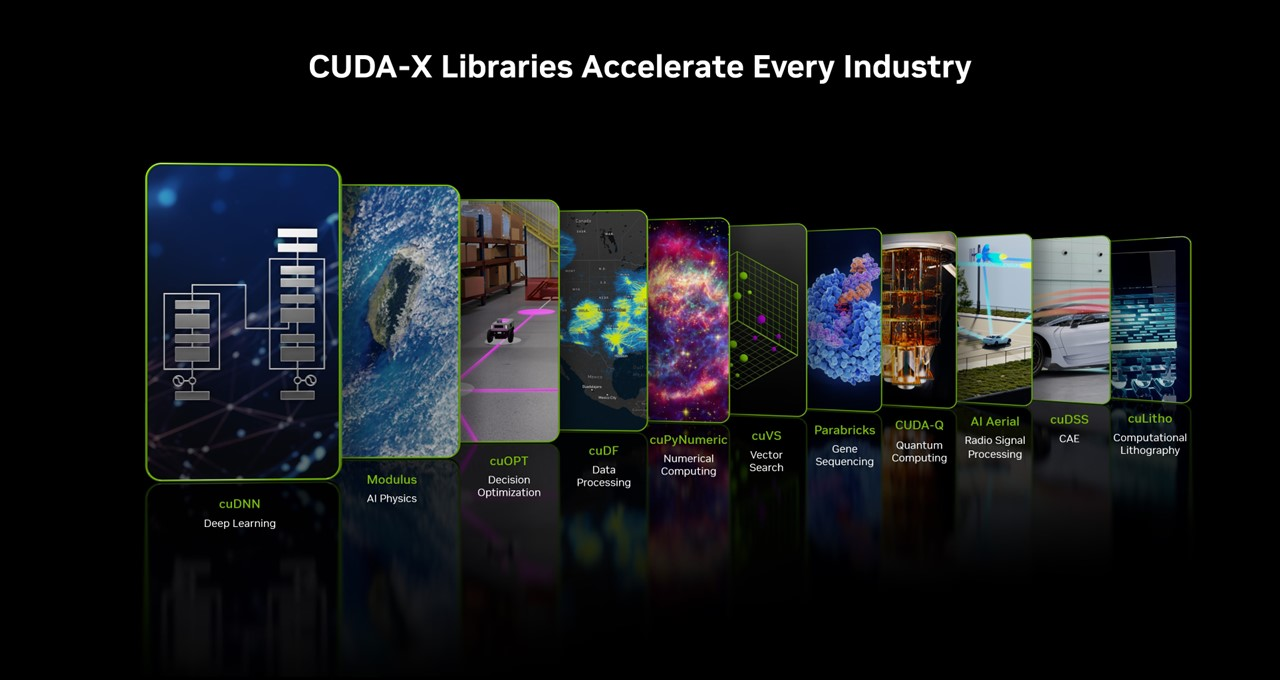
Investing in modern cybersecurity infrastructure is no longer optional but essential. NVIDIA provides over 400 libraries for a variety of use cases, including building cybersecurity infrastructure. New updates continue to be added to the CUDA platform roadmap.

Frequently Asked Questions

Q: What are the key benefits of using GPU-powered cybersecurity technology?
A: Faster AI model training, real-time inference, automation at scale, and improved scalability.

Q: How do GPUs enhance real-time threat detection and response?
A: GPUs excel at parallel processing, making them ideal for handling massive computational demands of real-time cybersecurity tasks.

Q: What are the benefits of using high-speed networking software with GPU-powered cybersecurity technology?
A: Faster response times, reduced downtime, and improved regulatory compliance.

Q: What is the future of cybersecurity, and how is NVIDIA addressing it?
A: The future of cybersecurity involves the integration of GPU-powered technology with high-speed networking software to provide enhanced security, scalability, and compliance. NVIDIA is addressing this future through its CUDA platform, which offers over 400 libraries for a variety of use cases, including building cybersecurity infrastructure.

Adobe slashes 40% off its Creative Cloud All Apps plan just in time for payday

0

Get 40% off Adobe Creative Cloud All Apps Plan

Unbeatable Offer for Creative Professionals

If you work in the creative industries, you’re no doubt familiar with Adobe’s suite of apps and software. Just in time for payday, the company has slashed 40% off the standard price of its Creative Cloud All Apps plan to just $35.99 per month (previously $59.99/mo), which includes access to fan favorites like Photoshop, Illustrator, Lightroom, and Premiere Pro.

What’s Included in the All Apps Plan?

A Creative Cloud subscription isn’t just about the software, with additional perks including:

  • 100GB of cloud storage
  • Access to the latest generative AI tools
  • Step-by-step tutorials
  • A free professional website with Adobe Portfolio
  • The ability to showcase your work via Behance
  • Access to Creative Cloud Libraries to manage your digital assets

Why This Offer is a Bargain

This deal is a total bargain if you don’t already have a Creative Cloud subscription, but plan to incorporate Adobe assets into your workflow. You’ll save around $24 per month, or $288 yearly on the All Apps plan.

Important Details

  • This offer is only valid for individuals on their first year of subscription to the platform.
  • The offer ends on March 3, 2025.
  • Adobe also offers free trials for its advanced software, so you can test out the apps before committing.

Alternative Options

Not sure the All Apps plan is for you? Adobe also has plenty of free trials available for you to test out its advanced software before you fully commit. If you don’t need the full suite of apps, then take a look at our clever deals widget below for the best deals on Adobe software packages in your region right now.

FAQs

Q: What does the All Apps plan include?
A: The All Apps plan includes access to Photoshop, Illustrator, Lightroom, Premiere Pro, and other popular Adobe apps.

Q: How much does the All Apps plan usually cost?
A: The All Apps plan usually costs $59.99 per month.

Q: How much will I save with this offer?
A: You’ll save around $24 per month, or $288 yearly on the All Apps plan.

Q: Is this offer valid for students?
A: No, this offer is only valid for individuals on their first year of subscription to the platform.

Q: When does this offer end?
A: This offer ends on March 3, 2025.

Elon Musk, el hombre más rico del mundo, por qué duerme en una oficina?

0

La Cultura del Trabajo Empresarial: Una Longevidad en la Era de la Automatización

La Orígenes de la Cultura del Trabajo Empresarial

Aunque el ámbito del proyecto de Musk puede ser nuevo, el arquetipo que encarna tiene una larga historia. El economista de origen austriaco Joseph Schumpeter, que enseñó en Harvard desde 1932 hasta su muerte en 1950, contribuyó a popularizar la idea de que los empresarios poseían un conjunto especial de rasgos de personalidad que los diferenciaban de los hombres de negocios y directivos de menor categoría. El espíritu empresarial, según Schumpeter, rompía las rutinas económicas. Eso requería “voluntad y personalidad”. Los verdaderos empresarios generaban “vendavales de destrucción creativa”, según su célebre frase, una noción que adaptó del economista alemán Werner Sombart, quien sostenía en 1909 que los empresarios eran “hombres (¡no mujeres!) dotados para todo de una vitalidad extraordinaria, de la que brota un impulso inusitado para actuar, una alegría apasionada por el trabajo y un deseo irreprimible de poder”. Eran superhéroes.

La Adopción de la Cultura del Trabajo Empresarial en los Estados Unidos

Los líderes empresariales estadounidenses no tardaron en adoptar esta forma de pensar. Les permitió racionalizar su éxito como el resultado natural de su propia productividad, y considerar las cargas de trabajo más pesadas como una forma de potenciar a los empleados en lugar de machacarlos. Cuando en 1960 preguntaron a Georges Doriot, cofundador de una de las primeras grandes empresas estadounidenses de capital riesgo, si tenía previsto contratar a nuevos empleados para mantener el rápido crecimiento de su empresa, él respondió: “No, simplemente trabajaremos todos hasta más tarde por la noche”. Esta mentalidad se extendió a las empresas tecnológicas en las que Doriot invirtió, y conformó la visión del mundo de los ejecutivos de Silicon Valley. A principios de la década de 1980, los empleados que trabajaban a las órdenes de Steve Jobs en la división Macintosh de Apple se hacían camisetas en las que se podía leer “¡90 horas a la semana y me encanta!”.

La Cultura del Trabajo Empresarial en la Era de la Automatización

En las últimas décadas, dos tendencias de la vida estadounidense han sobrealimentado la difusión de esta ética del trabajo empresarial, ayudando a empujar a los multimillonarios ocupados al centro de nuestra política. En primer lugar, cada vez más estadounidenses de a pie aprendieron a considerar el trabajo como algo escaso. A medida que la desindustrialización asolaba amplias franjas del país y la sindicalización disminuía, se acostumbraron a los ciclos de despidos y a la necesidad de incorporarse en nuevas ocupaciones o nuevas industrias. Ahora, en una época en la que más del 70 por ciento de los estadounidenses se preocupan por la disponibilidad de buenos empleos bien remunerados, los jefes de la cúspide de nuestra pirámide de clases perciben correctamente cómo esos empleos se han convertido en un símbolo de estatus: si los ricos de la Edad Dorada tenían un consumo visible, alardeando de ser libres del trabajo, los ricos de nuestra nueva Edad Dorada tienen un trabajo visible. Los vemos trabajar constantemente mientras nosotros buscamos turnos extra o luchamos por encadenar trabajos a tiempo parcial, y nos maravillamos de lo especiales que deben de ser.

La Amenaza de la Automatización y la Consolidación del Poder de los Multimillonarios

Luego está la amenaza inminente de un avance tecnológico de enormes proporciones. Hoy, muchos líderes tecnológicos creen que el desarrollo de la inteligencia artificial está a punto de automatizar la mayoría de los trabajos hasta dejarlos en el olvido. Empresas tecnológicas como Google, Dropbox y Meta ya han recurrido a señalar los avances de la inteligencia artificial para justificar despidos recientes, y más del 40 por ciento de las empresas de todo el mundo prevén seguir su ejemplo en los próximos cinco años, según una encuesta del Foro Económico Mundial. Para quienes impulsan el auge de la IA, esta es una perspectiva esperanzadora. En el mundo automatizado que se avecina, los multimillonarios parecen esperar ser algunos de los últimos trabajadores en pie, encargados de gran parte del único trabajo que imaginan que les quedará por hacer a los humanos: dar órdenes a todos los demás.

Conclusión

La cultura del trabajo empresarial ha sido siempre un factor clave en la construcción de la riqueza y el poder en los Estados Unidos. Sin embargo, en una era en la que la automatización y la inteligencia artificial están cambiando el panorama laboral, es importante reflexionar sobre cómo este arquetipo de trabajo se está consolidando y qué implicaciones tiene para la sociedad en general.

Preguntas y Respuestas

¿Qué es la cultura del trabajo empresarial?
La cultura del trabajo empresarial se refiere a la idea de que los empresarios poseen un conjunto especial de rasgos de personalidad que los diferencian de los hombres de negocios y directivos de menor categoría.

¿Cómo surgió la cultura del trabajo empresarial?
La cultura del trabajo empresarial surgió en la década de 1930, cuando el economista austriaco Joseph Schumpeter popularizó la idea de que los empresarios poseían un conjunto especial de rasgos de personalidad.

¿Cómo se ha extendido la cultura del trabajo empresarial en los Estados Unidos?
La cultura del trabajo empresarial se extendió en los Estados Unidos a través de la formación de empresas tecnológicas como Apple y Silicon Valley, y la creciente conciencia de la escasez de empleos y la necesidad de trabajar más horas para mantener el crecimiento económico.

Microsoft AI ignites telecom innovation and growth

0

The Future of Telecommunications: How AI is Transforming the Industry

Data is the Fuel that Powers AI: Telco Data Model

Telecom networks are recognized for their complex, data-rich environments. This data is the fuel that powers AI and forms the foundation upon which next-generation telecom systems are built. To convert this massive potential into actionable intelligence, organizations need a unified platform that can seamlessly connect, manage, and analyze their data. Microsoft Fabric is the end-to-end data platform designed to power customer AI transformation and help organizations reimagine how they unlock value from their data and revolutionize the services they offer.

Telco Industry Data Model in Microsoft Fabric

Today, we announce the Telco industry data model in Microsoft Fabric, designed to unify all data – from network performance metrics to customer interactions, within a single analytics environment. Telecom providers will be able to use the Telco industry data model to manage and streamline how all their data is ingested, modeled, and analyzed through:

  • Native Fabric integration – a unified pipeline within Fabric’s analytics, governance, and visualization framework means faster time to market, with better insights.
  • Expanded data model – pre-built telecom-specific schemas covering network data, customer insights, and operational metrics drives operational efficiency.
  • Developer and visualization tools – simplified, AI-ready solution building that dramatically reduces development and testing time, making networks more resilient.

Customer Momentum and Partnerships

More than 50% of our telecom customers are leveraging Fabric for real-time business insights to optimize business and network operations. Leading customers like Telefónica, KPN, One NZ, and partners like Accenture, Infosys, and LigaData are using Fabric to achieve business results. The broader customer adoption for Fabric is more than 19,000 customers, including 70% of the Fortune 500.

New Collaborations and Innovations

Telecom customers around the world are taking advantage of the cloud and AI in new and innovative ways. The collaborations we recently announced with KT Corporation, Lumen, Telstra, and Vodafone demonstrate how telecoms are innovating to elevate customer experiences, streamline business operations, modernize networks, and unlock new revenue streams.

Join Us at MWC to Learn More

As the pace of AI impact accelerates, telecoms need a partner they can trust to navigate what’s next. Join us at Mobile World Congress 2025 to learn more about our latest AI innovations in theater sessions, see cutting-edge demos, and meet with our experts. Let’s shape the future of telecom together – powered by AI, inspired by innovation, and built on trust.

Conclusion

The future of telecommunications is being shaped by the power of AI. With the Telco industry data model in Microsoft Fabric, we are empowering telecom providers to unlock the value of their data and revolutionize the services they offer. Our ecosystem of customers and partners are harnessing the power of AI to reimagine customer experiences, modernize networks, automate business operations, and drive growth.

Frequently Asked Questions

Q: What is the Telco industry data model in Microsoft Fabric?
A: The Telco industry data model in Microsoft Fabric is a pre-built, telecom-specific data model that unifies all data – from network performance metrics to customer interactions, within a single analytics environment.

Q: What are the benefits of using the Telco industry data model in Microsoft Fabric?
A: The Telco industry data model in Microsoft Fabric enables telecom providers to manage and streamline how all their data is ingested, modeled, and analyzed, driving operational efficiency and better insights.

Q: What are the key features of the Telco industry data model in Microsoft Fabric?
A: The Telco industry data model in Microsoft Fabric includes native Fabric integration, expanded data model, and developer and visualization tools, making it easier for telecom providers to build AI-ready solutions.

Q: Who are some of the customers using the Telco industry data model in Microsoft Fabric?
A: More than 50% of our telecom customers are leveraging Fabric for real-time business insights to optimize business and network operations, including leading customers like Telefónica, KPN, One NZ, and partners like Accenture, Infosys, and LigaData.

ImagineFX Art Challenge is Back!

0

Brief

ImagineFX Art Challenge 8 has begun! This time, you can create whatever you like, but the community has decided on purple, black, and white as the main color combination.

How to Enter

To submit your entry, simply hashtag your artwork with #IFXPurple on Facebook, Instagram, X, or Threads by 24 March 2025, at 11:59 pm (GMT + 0:00).

Terms & Conditions

A. RELEASE FROM LIABILITY
ImagineFX Art Challenge is being organised and managed by ImagineFX magazine. The Art Challenge is in no way sponsored, endorsed, administered by, or associated with Facebook, Instagram, Threads or [X]. By taking part in this contest, you agree to a complete release of Facebook, Instagram, Threads or [X] from any or all liability in connection with the contest.

B. ENTRY PROCEDURE
Each month, ImagineFX will present an Art Challenge featuring a specific theme and criteria, which can be found via Creative Bloq. Entry is open worldwide to artists of all skill levels and styles. ImagineFX will validate all entries and will determine, at its sole discretion, whether each artwork meets the entry criteria detailed herein for acceptance as an entry into the contest.

C. ARTWORK SELECTION PROCEDURE
Once the monthly deadline has passed, the ImagineFX team will pick a selection of artworks to be featured in the magazine. This will be based on creativity, technical skills, originality, and painting skills, plus how the monthly brief has been interpreted.

D. DATA PROTECTION
The data (real name, email) that is provided by the selected artists when they submit their work will be held by ImagineFX magazine. Submitted artists’ data will not be shared with or sold to any external parties or commercial entities.

E. COPYRIGHT
ImagineFX magazine bears no responsibility for any copyright infringement committed by individual artists. The competition’s aim is solely to inspire participants to produce original works centred around a shared theme. Inquiries concerning specific pieces created for the contest should be addressed directly to the respective artists. Artists retain full copyright ownership of the artwork submitted to the Art Challenge or ImagineFX at all times.

F. AI USAGE
AI will not be allowed in our Art Challenge. It should not be used at any stage of the artwork process. We will ask artists to provide process images so that when we contact those being featured in the magazine, we can verify that AI has not been used. Artists that have used AI will not be picked to be featured in the magazine.

G. NEW ART
Any art entered into the challenge must be newly created, for the challenge. Old and existing art is prohibited. The idea is to push yourself and your skills within the brief, so any existing art will not be accepted.

H. OTHER
ImagineFX magazine reserves the right to modify the Terms & Conditions/Rules of the contest at any time, including during and after the Art Challenge has been launched each month. By taking part in this competition you agree to be bound by these terms and conditions, the competition rules at: www.futureplc.com/competition-rules/ and collection of personal data in accordance with Future’s privacy policy at: www.futureplc.com/privacy-policy/.

Conclusion
The ImagineFX Art Challenge is an opportunity for artists to push their skills and creativity, and to share their work with a global audience. We can’t wait to see what you create!

FAQs

Q: What is the theme of the Art Challenge?
A: The theme is open, but the community has decided on purple, black, and white as the main color combination.

Q: How do I submit my entry?
A: Simply hashtag your artwork with #IFXPurple on Facebook, Instagram, X, or Threads by 24 March 2025, at 11:59 pm (GMT + 0:00).

Q: Can I use AI in my artwork?
A: No, AI will not be allowed in our Art Challenge. It should not be used at any stage of the artwork process.

Q: Can I enter old or existing art?
A: No, any art entered into the challenge must be newly created, for the challenge. Old and existing art is prohibited.

Feature Toggle: A Comprehensive Guide

0

Here is the rewritten article:

What is Feature Toggle?

A Feature Toggle is a mechanism that allows developers to turn specific functionalities on or off without changing the codebase. It acts like a switch, giving flexibility in managing features at runtime.

Why Use Feature Toggles?

✔ Gradual Rollouts: Deploy new features to a subset of users before a full launch.
✔ A/B Testing: Compare different feature implementations and measure impact.
✔ Kill Switch: Instantly disable faulty features without redeploying.
✔ Continuous Deployment: Merge incomplete features into the main branch without affecting users.
✔ Customization: Enable features based on user roles, regions, or preferences.

Types of Feature Toggles

Release Toggles

Used to roll out new features gradually.
Example: A social media app enabling "Stories" only for 10% of users.

Experiment Toggles

Used for A/B testing to compare different versions of a feature.
Example: Testing two checkout page designs to see which converts better.

Ops Toggles (Operational Toggles)

Used to disable features in case of system failure or high load.
Example: Temporarily disabling video uploads during peak traffic.

Permission Toggles

Used to enable features based on user roles or subscription plans.
Example: A SaaS platform providing "Advanced Analytics" only to premium users.

How Feature Toggles Work?

  1. Check Configuration: The system checks whether a feature is enabled or disabled.
  2. Evaluate Conditions: User type, region, A/B testing, or rollout percentage is checked.
  3. Enable/Disable Feature: Based on the toggle state, the feature is activated or hidden.

Use Cases of Feature Toggles

Gradual Rollout

Google releases new Chrome features to a small percentage of users before a global rollout.

A/B Testing

Netflix experiments with different UI layouts before choosing the best one.

Kill Switch for Faulty Features

Facebook disables new updates if they cause unexpected crashes.

User-Specific Features

LinkedIn enables “Career Explorer” only for job seekers.

Handling Heavy Load

… Using database-backed toggles …

Feature Flag Management Tools

🛠 LaunchDarkly – Enterprise-grade feature flag management
🛠 Unleash – Open-source feature toggle system
🛠 Split.io – A/B testing & feature flags
🛠 FF4J – Java-based feature flag management

Conclusion

Feature toggles provide flexibility, safety, and better control over software releases. They help in gradual rollouts, A/B testing, and handling system failures effectively. However, they should be well-managed to avoid complexity and performance overhead.

What’s Next?

  • Implement feature flags in your Spring Boot application
  • Explore LaunchDarkly & Unleash for enterprise-grade management
  • Optimize toggle performance with caching strategies