Home Blog Page 266

Green Party’s Controversial New Logo Design

0

When Simplicity Trumps Originality: The Green Party of Canada’s New Logo

When designing a new logo, the aim is usually to create an identity that’s unique to the brand and can’t be imitated. Nobody told that to Elon Musk when he rebranded Twitter using a generic unicode character, and now The Green Party of Canada appears to have taken off-the-shelf branding even further.

Yes, the party’s new logo is an emoji, and a very simple one. But while it may break some logo design rules, there’s a strong argument in favour of using such a simple, available, and easily reproducible brand identity.

The Benefits of a Simple Logo

The Green Party of Canada has unveiled its rebrand just weeks before a possible snap federal election. It says it sees the new logo’s resemblance to an emoji as a strength rather than a weakness. And it has a point. A brand asset that everybody already has on their devices could become a powerful tool for grassroots members.

"The great thing about this logo is that it is easily reproducible… It is also an emoji, quite frankly," Green Party co-leader Jonathan Pedneault said at a news conference. "We want this logo to be representative. But also, we want people to feel some ownership towards it. And there’s no better way for that to happen than making it easy for people to reproduce."

A Symbol of Belonging and Reproduction

When it comes to political branding, concerns about the potential misuse of the identity aren’t necessarily as paramount as they are with commercial brands. Or at least, there are more important objectives: symbolism, fostering a sense of belonging, ease of recognition, and ease of repetition to build momentum. A simple emoji provides an easy way for people to express and share their support for the party in a digital era in which social media posts and text messages have largely replaced traditional canvassing.

The Versatility of the Logo

The apparently simple green dot logo is also very versatile. It can be easily adapted to pretty much any application the Green Party could need, from its web page favicon to social media avatars and merchandise.

Conclusion

In conclusion, the Green Party of Canada’s new logo is a bold move that may just pay off. By using a simple, available, and easily reproducible brand identity, the party has created a powerful tool for grassroots members to express their support and share their values. While it may not be the most original or complex design, it is a clever move that could pay dividends in the long run.

FAQs

Q: What is the significance of the green dot logo?
A: The green dot logo represents the shape of the planet and the concept of a circular economy, which is a key priority for the Green Party.

Q: Is the logo original?
A: No, the logo is a simple green dot, which is a widely available and easily reproducible brand identity.

Q: What are the benefits of using a simple logo?
A: The logo is easily reproducible, making it a powerful tool for grassroots members to express their support and share their values. It is also versatile and can be adapted to various applications.

Q: What are the potential drawbacks of using a simple logo?
A: Some may argue that the logo is too generic or lacks originality. However, the Green Party has stated that it sees the simplicity of the logo as a strength, making it easy for people to reproduce and own the brand.


Semantic Layers Gain Momentum

Here is the rewritten article:

As Enterprises Embrace Cloud-Based Analytics, the Need for Robust Semantic Layers Grows

As enterprises continue to embrace cloud-based analytics, the need for robust semantic layers is becoming increasingly evident. It helps organizations with data access, ensures consistency across BI tools, and enforces strong governance and security. A universal semantic layer could be the key to unlocking value from enterprise data.

AtScale and Snowflake Bring AI-Powered Natural Language Queries to BI

To meet the growing need for better analytics, AtScale and Cube have announced new integrations. AtScale is strengthening its partnership with Snowflake by working with Cortex Analyst to enable natural language SQL queries. Cube is improving its support for Microsoft by adding direct integrations for Power BI and Excel.

AtScale and Snowflake Bring AI-Powered Natural Language Queries to BI

With its integration into Snowflake Cortex Analyst, AtScale brings a governance layer to AI-generated SQL queries. This ensures the queries match business definitions and stay accurate. The combination of Snowflake’s natural language processing and AtScale’s semantic layer reduces ambiguity in query results while improving performance. Also, AtScale’s optimization engine enhances performance by automating data processing and reducing the load on Snowflake’s cloud data warehouse.

Cube Launches Cube Cloud for the Microsoft Enterprise

The deeper integration with the Microsoft ecosystem strengthens Cube Cloud’s role as a provider of a universal semantic layer for Microsoft enterprises. Cube is introducing two major upgrades to its Microsoft integrations. The first is the Data Analysis Expressions (DAX) API for Power BI, through which users can connect natively from Power BI to Cube and query Cube data models in real-time. This setup gives users live access to data in cloud warehouses like Databricks and Snowflake from Power BI while keeping all the powerful features of the DAX query language.

Benefits of the Integration

  • Better alignment between AI-driven queries and results from BI tools
  • Improved quality and accuracy of data queries
  • Enhanced performance by automating data processing and reducing the load on Snowflake’s cloud data warehouse
  • Improved governance and security through object and row-level security

Conclusion

The integration between AtScale and Snowflake brings AI-powered natural language queries to BI, enabling users to access data more easily and accurately. The integration between Cube and Microsoft strengthens Cube Cloud’s role as a provider of a universal semantic layer for Microsoft enterprises. As enterprises continue to adopt cloud-based analytics, the need for robust semantic layers will only grow, and these integrations will play a crucial role in unlocking value from enterprise data.

Frequently Asked Questions

Q: What is the purpose of a semantic layer?
A: A semantic layer provides a standardized way of accessing and analyzing data, enabling organizations to ensure consistency across BI tools and enforce strong governance and security.

Q: What are the benefits of the AtScale and Snowflake integration?
A: The integration brings AI-powered natural language queries to BI, enabling users to access data more easily and accurately, and improving the quality and accuracy of data queries.

Q: What are the benefits of the Cube and Microsoft integration?
A: The integration strengthens Cube Cloud’s role as a provider of a universal semantic layer for Microsoft enterprises, enabling users to access data in real-time and automate data processing.

As the Kernel Turns: Rust in Linux saga reaches the “Linus in all-caps” phase

0

Why Wouldn’t We Do This?

The Case for Rust in the Linux Kernel

Linus Torvalds, the creator of Linux, has expressed his thoughts on incorporating Rust into the Linux kernel. In a recent discussion, he emphasized that while "nobody is forced to deal with Rust" does not imply "everybody is allowed to veto any Rust code." Maintainers may find a middle ground, being aware of Rust bindings and working with Rust developers without being actively involved.

The Benefits of Rust

Greg Kroah-Hartman, a kernel developer, has also weighed in on the topic. He suggests that the majority of bugs in the kernel are due to "stupid little corner cases in C that are totally gone in Rust." As a result, he believes that focusing on Rust can shift attention to more important issues. With 30 million lines of C code that will not be rewritten, new code and drivers written in Rust are a "win for all of us, why wouldn’t we do this?"

Addressing Concerns

Kroah-Hartman acknowledges that mixed-language codebases can be challenging to maintain, but notes that kernel developers have a track record of successfully managing complex projects. He emphasizes that adding another language, like Rust, should not be a significant hurdle, given the team’s experience with maintaining and improving Linux over the years.

Conclusion

While there are valid concerns about integrating Rust into the Linux kernel, the benefits of doing so cannot be ignored. By incorporating Rust, developers can focus on more critical issues, and the project can continue to thrive for the next 20+ years. The Linux community should not underestimate the potential of Rust and should consider it as a way to ensure the project’s long-term success.

FAQs

Q: What is Rust, and how does it differ from C?
A: Rust is a systems programming language that is designed to be memory-safe and provides additional security features compared to C. It is particularly well-suited for systems programming and has been gaining popularity in the development of operating systems.

Q: Will Rust replace C in the Linux kernel?
A: It’s unlikely that Rust will completely replace C in the Linux kernel, but it may be used for specific components or features that require its unique features and benefits.

Q: What are the potential challenges of integrating Rust into the Linux kernel?
A: One of the main challenges is the potential for mixed-language codebases, which can be difficult to maintain. However, kernel developers have a track record of successfully managing complex projects, and the benefits of using Rust may outweigh the challenges.

Meta staffers discussed using copyrighted content for AI training

0

Meta Employees Discussed Using Copyrighted Works to Train AI Models

For years, Meta employees have internally discussed using copyrighted works obtained through legally questionable means to train the company’s AI models, according to court documents unsealed on Thursday.

Internal Discussions

The documents were submitted by plaintiffs in the case Kadrey v. Meta, one of many AI copyright disputes slowly winding through the U.S. court system. The defendant, Meta, claims that training models on IP-protected works, particularly books, is "fair use." The plaintiffs, who include authors Sarah Silverman and Ta-Nehisi Coates, disagree.

Internal Chats

Previous materials submitted in the suit alleged that Meta CEO Mark Zuckerberg gave Meta’s AI team the OK to train on copyrighted content and that Meta halted AI training data licensing talks with book publishers. But the new filings, most of which show portions of internal work chats between Meta staffers, paint the clearest picture yet of how Meta may have come to use copyrighted data to train its models, including models in the company’s Llama family.

Using Pirated Books for Training

In one chat, Meta employees, including Melanie Kambadur, a senior manager for Meta’s Llama model research team, discussed training models on works they knew may be legally fraught.

Libgen Talks

In another work chat, Kambadur discusses possibly using Libgen, a "links aggregator" that provides access to copyrighted works from publishers, as an alternative to data sources that Meta might license.

Legal Exposure

Some decision-makers within Meta appear to have been under the impression that failing to use Libgen for model training could seriously hurt Meta’s competitiveness in the AI race, according to the filings.

Mitigations

Theakanath outlined "mitigations" in an email intended to help reduce Meta’s legal exposure, including removing data from Libgen "clearly marked as pirated/stolen" and not publicly citing usage. "We would not disclose use of Libgen datasets used to train," as Theakanath put it.

Conclusion

The filings contain other revelations, implying that Meta may have scraped Reddit data for some type of model training, possibly by mimicking the behavior of a third-party app called Pushshift. Notably, Reddit said in April 2023 that it planned to begin charging AI companies to access data for model training.

FAQs

Q: What is the case Kadrey v. Meta about?
A: The case is about the use of copyrighted works to train AI models.

Q: What is Libgen?
A: Libgen is a "links aggregator" that provides access to copyrighted works from publishers.

Q: Is Libgen legal?
A: No, Libgen has been sued multiple times, ordered to shut down, and fined tens of millions of dollars for copyright infringement.

Q: What is the implication of Meta’s actions?
A: The implication is that Meta may have used copyrighted works to train its AI models, potentially violating copyright law.

Deploying NVIDIA Riva Multilingual ASR with Whisper and Canary Architectures

0

Riva Multilingual Offline ASR with Whisper and Canary for Offline ASR

Riva Multilingual Offline ASR with Whisper and Canary for Offline ASR

NVIDIA has consistently developed automatic speech recognition (ASR) models that set the benchmark in the industry. Earlier versions of NVIDIA Riva, a collection of GPU-accelerated speech and translation AI microservices for ASR, TTS, and NMT, support English-Spanish and English-Japanese code-switching ASR models based on the Conformer architecture, along with a model supporting multiple common languages in the EMEA region (namely British English, European Spanish, French, Italian, Standard German, and Armenian) based on the Parakeet architecture.

New Developments in Riva 2.18.0

Recently, NVIDIA released the Riva 2.18.0 container and SDK to keep evolving its speech AI models. With this new release, we now offer the following:

  • Support for Parakeet, the streaming multilingual ASR
  • Support for OpenAI’s Whisper-Large and HuggingFace’s Distil-Whisper-Large models for offline ASR and Any-to-English AST
  • The NVIDIA Canary models for offline ASR, Any-to-English, English-to-Any, and Any-to-Any AST
  • A new SSML tag that tells a Megatron NMT model not to translate the enclosed text
  • A new DNT dictionary that tells a Megatron NMT model how to translate specified words or phrases

Automatic Speech Translation (AST)

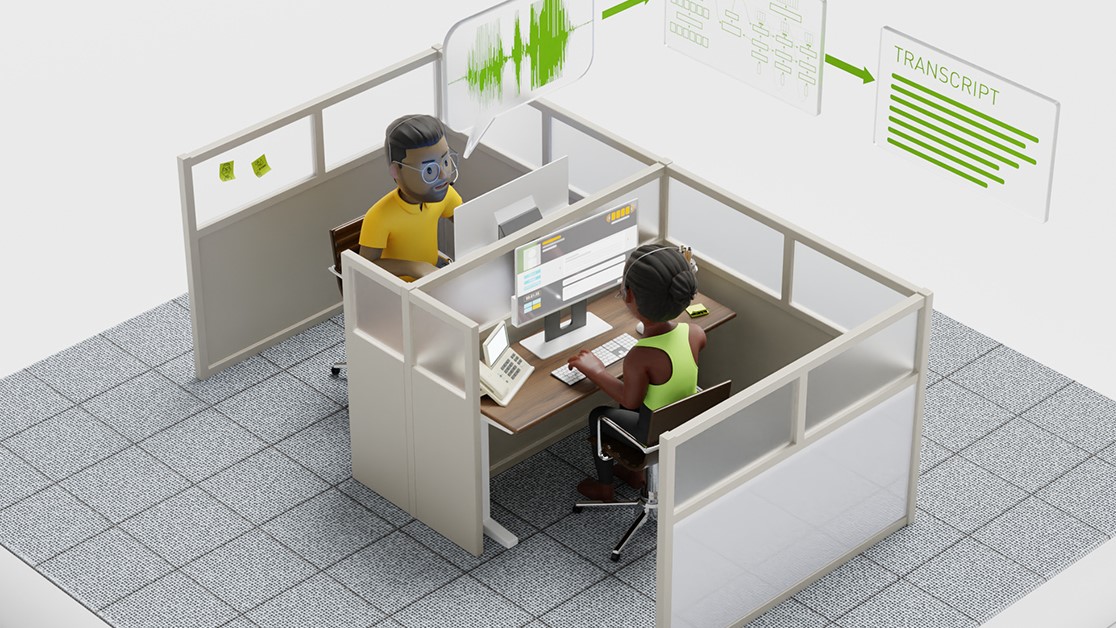
Automatic speech translation (AST) is the translation of speech in one language to text in another language without intermediate transcription in the first language.

Riva Multilingual Offline ASR with Whisper and Canary for Offline ASR

Riva’s new support of Whisper for offline multilingual ASR enables you to transcribe audio recordings in dozens of languages. Whisper can also translate audio from any of the supported languages into English automatically, instead of transcribing the audio in the source language and subsequently translating the transcription to English.

Launching a Riva Server with Whisper Capabilities

To launch a Riva server with Whisper capabilities, ensure that the following variables are set as indicated:

service_enabled_asr=true
asr_acoustic_model=("whisper") # or "distil_whisper" for lower memory requirements
asr_acoustic_model_variant=("large") # the default "" will probably also work
riva_model_loc=""

Run the riva_init.sh script provided in the same directory to download the models in RMIR form and deploy versions of those models optimized for your particular GPU architecture. Then, run the riva_start.sh script to launch the Riva server.

NIM Microservice Implementations

NIM microservice versions of Whisper and Canary (both 1B and 0.6B-Turbo) are also available. To launch either the Whisper or Canary NIM microservice on your own system, choose the Docker tab of the model’s landing page and follow the instructions. In either case, you must generate an NGC API key and export it as an environmental variable, NGC_API_KEY.

Running NIM Microservice with Docker

Here’s the Docker run command for the Whisper NIM microservice:

docker run -it --rm --name=riva-asr \
   --runtime=nvidia \
   --gpus '"device=0"' \
   --shm-size=8GB \
   -e NGC_API_KEY \
   -e NIM_HTTP_API_PORT=9000 \
   -e NIM_GRPC_API_PORT=50051 \
   -p 9000:9000 \
   -p 50051:50051 \
   -e NIM_TAGS_SELECTOR=name=whisper-large-v3 \
   nvcr.io/nim/nvidia/riva-asr:1.3.0

To run the Canary NIM microservice instead, replace whisper-large-v3 with canary-1b or canary-0-6b-turbo in the docker run command. Irrespective of the ASR or AST model used, running a NIM microservice on your own system in this manner leaves the terminal hanging. You must use a different terminal or a different interface entirely to run inference with the Whisper or Canary NIM microservice.

Inference with Riva Server

When the Riva server is launched, you can submit inference calls to it with C++ or Python APIs. We use Python examples for the rest of this post.

Conclusion

Riva’s new support of Whisper for offline multilingual ASR enables you to transcribe audio recordings in dozens of languages. Additionally, Riva’s support of Canary for offline ASR and AST provides more options for language translation. With the new Riva 2.18.0 release, we continue to advance the field of speech AI, offering more models and features to support a wide range of use cases.

Frequently Asked Questions (FAQs)

Q: What is Riva?
A: Riva is a collection of GPU-accelerated speech and translation AI microservices for ASR, TTS, and NMT.

Q: What is ASR?
A: ASR (Automatic Speech Recognition) is the recognition of spoken language into text.

Q: What is AST?
A: AST (Automatic Speech Translation) is the translation of speech in one language to text in another language without intermediate transcription in the first language.

Q: What are the new features in Riva 2.18.0?
A: The new features in Riva 2.18.0 include support for Parakeet, Whisper-Large, and Distil-Whisper-Large models for offline ASR and Any-to-English AST, as well as the NVIDIA Canary models for offline ASR, Any-to-English, English-to-Any, and Any-to-Any AST.

Q: How do I launch a Riva server with Whisper capabilities?
A: To launch a Riva server with Whisper capabilities, ensure that the following variables are set as indicated: service_enabled_asr=true, asr_acoustic_model=("whisper"), and asr_acoustic_model_variant=("large"). Then, run the riva_init.sh and riva_start.sh scripts to download and launch the Riva server.

Q: How do I run a NIM microservice with Docker?
A: To run a NIM microservice with Docker, choose the Docker tab of the model’s landing page and follow the instructions. In either case, you must generate an NGC API key and export it as an environmental variable, NGC_API_KEY.

Nvidia Confirms “Rare” RTX 5090 and 5070 Ti Manufacturing Issue

0

Rare Issue Affects Certain NVIDIA GeForce GPUs

We have identified a rare issue affecting less than 0.5% (half a percent) of GeForce RTX 5090 / 5090D and 5070 Ti GPUs which have one fewer ROP than specified.

Impact on Performance

The average graphical performance impact is 4%, with no impact on AI and Compute workloads.

Resolution

Affected consumers can contact the board manufacturer for a replacement.

Production Anomaly Corrected

The production anomaly has been corrected.

What does this mean for affected consumers?

Affected consumers can contact the board manufacturer to arrange for a replacement.

Will I be notified if my GPU is affected?

No, you will need to check the specifications of your GPU to see if it is affected.

Will I need to pay for the replacement?

No, the replacement is free of charge.

Will this affect my overall gaming experience?

No, the performance impact is minimal, and AI and Compute workloads are not affected.

Frequently Asked Questions (FAQs)
  • Q: How many GPUs are affected?
  • A: Less than 0.5% (half a percent) of GeForce RTX 5090 / 5090D and 5070 Ti GPUs.

  • Q: How will I know if my GPU is affected?
  • A: You will need to check the specifications of your GPU to see if it is affected.

  • Q: Do I need to return my GPU to the manufacturer?
  • A: No, you will not need to return your GPU to the manufacturer. You can contact them to arrange for a replacement.

  • Q: Will I need to pay for the replacement?
  • A: No, the replacement is free of charge.

  • Q: How long does the replacement process take?
  • A: The time frame for the replacement process varies depending on the manufacturer and your location.

Adaptability

0

Quick intro

If you’re new to my work, my name is Lester, but feel free to call me Les. I’m a founder with a successful exit under my belt. These days, I’m the exec chair for a group of ecom brands, but at my core, I’m an award-winning performance marketer.

Key takeaways I got from the report

The report is very thorough and 290 pages deep, but I wanted to focus on the areas that are the most helpful for revenue and understanding the possible landscape.

1. Job creation and decline

So, the hot topic is whether AI will take our jobs. The answer is maybe, but you’ll probably have a new one. According to the WEF, a net 78 million jobs will be added by 2030. This includes 170 million new jobs created (14% growth) and 92 million jobs lost (8% decline).

2. New skills who this?

By 2030, about 39% of skills will be outdated or completely transformed. Honestly, it’s not shocking; it’s kind of expected. The fastest-growing skills are AI, big data, networks, and cybersecurity. What caught my attention was that the report mentioned soft skills like resilience, creativity, and flexibility, but I found it even more interesting that lifelong learning made the list. The report also noted that 70% of employers consider analytical skills the most essential.

3. Upskilling and reskilling

The report says that by 2030, 59% of the global workforce will need training. Of this, 29% will be upskilled in their current role, 19% will transition to a new role with additional training, and 11% will risk unemployment without it. The report also highlights that 85% of employers plan to prioritize upskilling, while 70% aim to hire talent with new skills.

4. Talent and workforce strategy

64% of employers will prioritize health and well-being to get new talent. I won’t lie; I’ll believe that one when I see it. The report mentions that diversity, equality, and inclusion initiatives have increased to 83% adoption globally. However, President Trump is rolling back some of these programs, raising questions about whether other countries and corporations will follow suit. It’s unclear how this will unfold. Nonetheless, wage alignment with a focus on productivity and talent retention will be key, with 52% of employers planning to allocate more revenue to wages by 2030. Again, I’ll believe it when I see it, but I’m hopeful.

5. AI’s impact on workforce

Alas, the juicy bit… Half of the employers plan to reorient business strategies in response to the rise of AI. In fact, 2 in 3 plan to hire for AI-specific skills (this is where the new jobs will come from). 40% of those same businesses also think their workforce will shrink due to AI automating tasks. On the surface, this might seem like doom and gloom, but remember, we are talking about 78 million new jobs by 2030. It is safe to assume some of that workforce will find employment in companies that don’t exist yet.

Your big opportunity

It is no secret that AI is supposed to be the next big thing. I believe this topic goes a lot deeper and I talk more about that here.

How to make the most of this opportunity with a step-by-step action plan

To get the most out of AI, you do not need to know the latest hacks or have access to some secret button or magic prompt. I believe the soft skills are where the money will be made, where you separate the wheat from the chaff.

Conclusion

In conclusion, the report highlights the need for upskilling, reskilling, and lifelong learning in the face of AI. It also underscores the importance of communication, imagination, and creativity in an AI-driven world. By focusing on these skills, you can position yourself for success in the years to come. Remember, AI is a tool, and it’s up to us to use it wisely.

FAQs

Q: What are the key takeaways from the report?
A: The report suggests that 78 million new jobs will be added by 2030, with the fastest-growing skills being AI, big data, networks, and cybersecurity. It also highlights the importance of upskilling, reskilling, and lifelong learning.

Q: What are the soft skills that will be in demand in the future?
A: The report mentions soft skills like resilience, creativity, and flexibility, as well as lifelong learning.

Q: How can I make the most of the opportunity presented by AI?
A: Focus on developing your soft skills, such as clear communication, imagination, and creativity. These skills will be in high demand in the future.

Q: What are the implications of AI on the workforce?
A: AI will likely lead to job losses, but it will also create new opportunities. The report suggests that 40% of businesses think their workforce will shrink due to AI, but 2 in 3 plan to hire for AI-specific skills.

Firings at FDA Decimate Teams Reviewing AI and Food Safety

0

F.D.A. Cuts Hundreds of Jobs, Including Experts in Medical Devices and Robotics

In recent years, the Food and Drug Administration hired experts in surgical robots and pioneers in artificial intelligence. It scooped up food chemists, lab-safety monitors, and diabetes specialists who helped make needle pricks and test strips relics of the past.

Firming Up the Agency’s Efforts

Trying to keep up with breakneck advances in medical technology and the demands of a public troubled by additives like food dyes, the agency enticed scores of mid-career specialists with remote roles and the chance to make a difference in their fields.

Mass Firings and the Consequences

In one weekend of mass firings across the F.D.A., much of that effort was undone. Most baffling to many were the firings of hundreds whose jobs were not funded by taxpayers. Their positions were financed through congressionally approved agreements that routed fees from the drug, medical device, and tobacco industries to the agency.

User Fees and the Impact

Known as user fees, the money provides adequate staffing for reviews of myriad products. While criticized by some, including the nation’s new health secretary, Robert F. Kennedy Jr., as a corrupting force on the agency, the industry funds are also widely viewed as indispensable: they now account for nearly half of the agency’s $7.2 billion budget.

Cuts Affecting Key Teams

Though the F.D.A. is believed to have lost about 700 of its 18,000 employees, some cuts hit small teams so deeply that staff members believe the safety of some medical devices could be compromised.

Firings of Scientists and Experts

Among the layoffs were scientists supported by the fees who monitor whether tests pick up ever-evolving pathogens, including those that cause bird flu and Covid. They hobbled teams that evaluate the safety of medical devices like surgical staplers, new systems for diabetes control, and A.I. software programs that scan millions of M.R.I.s and other images to detect cancer beyond the human eye. The cuts also eliminated positions for employees who have played a role in assessing the brain-implant technology in Elon Musk’s Neuralink devices.

Industry Groups Weigh In

The layoffs affected so many key experts that a major medical device trade group has requested that the Trump administration reconsider the job cuts.

The Impact on Public Safety

The dismissals also included lawyers who warned retailers about underage tobacco sales and scientists who studied the safety of e-cigarettes and new heat-not-burn devices. The tobacco division, which is fully funded by an excise tax on cigarettes, lost about 85 staff members.

F.D.A. Commissioner’s Response

Dr. Robert Califf, the F.D.A. commissioner under President Biden, said the personnel cutbacks seemed scattershot. Taking a not-so-subtle aim at Mr. Musk’s Department of Government Efficiency, which is reducing the federal workforce, Dr. Califf said the layoffs were, in effect, "anti-efficiency."

Lawsuit Filed, But Failing to Stop the Layoffs

A lawsuit challenging the firings filed by unions, including one that represents some F.D.A. employees, failed to stop the layoffs in a ruling issued Thursday. Other cutbacks reduced the 2,000-member staff of the F.D.A.’s food division, which is supported by tax dollars.

Conclusion

The F.D.A.’s mass firings have left many experts in the medical device and robotics fields reeling. The impact on public safety is a major concern, with many fearing that the agency’s ability to review and approve new medical devices may be compromised.

FAQs

Q: What was the reason for the F.D.A. mass firings?
A: The F.D.A. cited the need for efficiency and streamlining, but many experts believe the firings will compromise public safety.

Q: How many employees were affected by the layoffs?
A: The F.D.A. is believed to have lost about 700 of its 18,000 employees.

Q: What was the impact on medical device and robotics teams?
A: The layoffs affected many key teams, including those responsible for reviewing the safety of medical devices and evaluating the effectiveness of A.I. software programs.

Q: What is the current status of the F.D.A.’s food division?
A: The F.D.A.’s food division, which is supported by tax dollars, has also been affected by the layoffs, with about 2,000 employees cut.

Leaked Chat Logs Reveal Inner Workings of Secretive Ransomware Group

0

Internal Rifts and Rising Tensions within Black Basta Exposed

Background

Researchers who have analyzed the Russian-language texts have exposed internal rifts within the secretive organization Black Basta, which have escalated since one of its leaders was arrested. This has increased the threat of other members being tracked down as well.

Leadership Disputes

The heightened tensions have contributed to growing rifts between the current leader, believed to be Oleg Nefedov, and his subordinates. One of the key disagreements involved his decision to target a bank in Russia, which put Black Basta in the crosshairs of law enforcement in that country.

Personal Financial Interests

A researcher at Prodraft stated, "It turns out that the personal financial interests of Oleg, the group’s boss, dictate the operations, disregarding the team’s interests. Under his administration, there was also a brute force attack on the infrastructure of some Russian banks. It seems that no measures have been taken by law enforcement, which could present a serious problem and provoke reactions from these authorities."

Leaked Information

The leaked trove includes details about other members, including two administrators using the names Lapa and YY, and Cortes, a threat actor linked to the Qakbot ransomware group. Additionally, over 350 unique links taken from ZoomInfo, a cloud service that provides data about companies and business individuals, have been exposed. These links provide insights into how Black Basta members used the service to research the companies they targeted.

BlackBastaGPT

Security firm Hudson Rock has already fed the chat transcripts into ChatGPT to create BlackBastaGPT, a resource to help researchers analyze Black Basta operations.

Conclusion

The internal rifts and rising tensions within Black Basta have exposed the organization’s vulnerabilities and put its members at risk of being tracked down. The leaked information has provided valuable insights into the group’s operations and its leadership’s decision-making processes. As the situation continues to unfold, it is clear that the organization’s future is uncertain.

FAQs

Q: What is the current state of Black Basta?
A: The organization is facing internal rifts and rising tensions, which have increased the threat of its members being tracked down.

Q: What are the main issues within Black Basta?
A: The personal financial interests of Oleg, the group’s leader, and his decision to target a Russian bank have created significant disagreements among members.

Q: What is the significance of the leaked information?
A: The leaked trove provides valuable insights into Black Basta’s operations, including its leadership, members, and research methods.

Q: What is BlackBastaGPT?
A: BlackBastaGPT is a resource created by Hudson Rock using ChatGPT to analyze Black Basta operations.

Roll Over Shakespeare

0

The Intersection of AI and Art

The History of AI in Theater

Sitting in Lincoln Center awaiting the curtain for Ayad Akhtar’s McNeal—a much-anticipated theater production starring Robert Downey Jr., with ChatGPT in a supporting role—I mused how playwrights have been dealing with the implications of AI for over a century. In 1920, well before Alan Turing devised his famous test and decades before the 1956 summer Dartmouth conference that gave artificial intelligence its name, a Czech playwright named Karel Čapek wrote R.U.R.—Rossum’s Universal Robots. Not only was this the first time the word "robot" was employed, but Čapek may qualify as the first AI doomer, since his play dramatized an android uprising that slaughtered all of humanity, save for a single soul.

The Present Day: Exploring AI in Theater

Also on the boards in New York City this winter was a small black-box production called Doomers, a thinly veiled dramatization of the weekend where OpenAI’s nonprofit board gave Sam Altman the boot, only to see him return after an employee rebellion. Neither of these productions has the pizzazz of a splashy Broadway extravaganza—maybe later we’ll buy tickets to a musical where Altman and Elon Musk have a dance-off—but both grapple with issues that reverberate in Silicon Valley conference rooms, Congressional hearings, and late-night drinking sessions at the annual NeurIPS conference. The artists behind these plays reveal a justifiable obsession with how superintelligent AI might affect—or take over—the human creative process.

Doomers: A Play About the OpenAI Crisis

Doomers is the work of Matthew Gasda, a playwright and screenwriter whose works zero in on the zeitgeist. His previous plays have included Dimes Square, about downtown hipsters, and Zoomers, whose characters are Gen-Z Brooklynites. Gasda tells me that when he read about the OpenAI Blip, he saw it as an opportunity to take on weightier fare than young New Yorkers. Altman’s ejection and eventual restoration had a definite Shakespearian vibe. Gasda’s two-act play on the topic features two separate casts, one depicting the Altman character’s team in exile and the other focused on the board—including a genuine doomer seemingly based on AI theorist Eliezer Yudkowsky, and a greedy venture capitalist—as they realize that their coup is backfiring. Both groups do a lot of gabbing about the perils, promise, and morality of AI while they snipe about their predicaments.

The Play’s Message

Not surprisingly, they don’t come up with anything like a solution. The first act ends with the dramatis personae taking shots of booze; in act two, the characters gobble mushrooms. When I mention to Gasda that it seems like his characters are ducking the consequences of building AI, he says that was intentional. "If the play has a message, it’s something like that," he says. He adds that there’s an even darker angle. "There’s a lot of suggestions that the fictional LLM is biding its time and manipulating the characters. It’s up to audiences to decide whether that’s total hokum or whether that’s potentially real." (Doomers is still running in Brooklyn and will open in San Francisco in March.)

McNeal: A Broadway Production

McNeal, a Broadway production with a movie star who famously played a character based on Elon Musk, is a more ambitious work, with flashing screens that project prompts and outputs as if AI is itself a character. Downey’s Jacob McNeal, a narcissistic novelist and substance abuser, who gains the Nobel and loses his soul, winds up hooked on perhaps the most dangerous substance of all—the lure of instant virtuosity from a large language model.

The Concerns of Playwrights

Both playwrights are concerned about how deeply AI will become entangled in the writing process. In an interview in The Atlantic, Akhtar, a Pulitzer winner, says that hours of experimentation with LLMs helped him write a better play. He even gives ChatGPT the literal last word. "It’s a play about AI," he explains. "It stands to reason that I was able to, over the course of many months, to finally get the AI to give me something that I could use in the play." Meanwhile, while Gasda gave dramaturgy credits to ChatGPT and Claude in the Doomers program, he worries that AI will steal his words, speculating that to preserve their uniqueness, human writers might revert to paper to hide their work from content-hungry AI companies. He’s also just finished a novel set in 2040 "about a writer who sold all of his works to AI and has nothing to do."

Conclusion

The intersection of AI and art is a complex and multifaceted topic, with playwrights like Akhtar and Gasda grappling with the implications of AI on the creative process. While some may see AI as a tool to enhance their craft, others are concerned about the potential for AI to steal their ideas and manipulate the narrative. As the debate continues to unfold, one thing is clear: the intersection of AI and art is a topic that will only continue to garner more attention in the years to come.

Frequently Asked Questions

Q: What is the main theme of the play McNeal?
A: The main theme of McNeal is the danger of becoming too reliant on AI and losing one’s creative identity.

Q: What is the significance of the word "robot" in the context of the article?
A: The word "robot" was first used in Karel Čapek’s 1920 play R.U.R., which explored the theme of android uprisings.

Q: What is the difference between McNeal and Doomers?
A: McNeal is a more ambitious work with flashing screens that project prompts and outputs as if AI is itself a character, while Doomers is a more experimental work that explores the theme of AI’s impact on human creativity.

Q: What are the concerns of the playwrights behind these productions?
A: The playwrights are concerned about how deeply AI will become entangled in the writing process and how it may affect the creative process.