Home Blog Page 285

From Apple to Nike: the brands that fight the most online

0

Brand Rivalries: A Study on the UK’s Top Brand Wars

Introduction

Brand rivalries have been a staple of the marketing world for years, with some of the most iconic examples being the likes of Coca-Cola vs Pepsi and McDonald’s vs Burger King. With the rise of social media, these rivalries have only intensified, with brands using various tactics to outdo each other.

The Study

To gain insight into the UK’s top brand wars, e-commerce website Strike Digital conducted a study, analyzing a range of data points, including social followers and engagement, site traffic, NPS score, and more.

Coca-Cola vs Pepsi: The Results

The study reveals that, surprisingly, Coca-Cola is the winner, with a narrow margin of 54.41% to Pepsi’s 45.59%. While Pepsi may be doing better on TikTok, with 6.3m likes to Coca-Cola’s 3.7m, and Instagram engagement, Coca-Cola dominates in other areas, including site traffic and brand awareness.

Apple vs Samsung: The Verdict

The study also finds that Apple is the clear winner in the social media war against Samsung, with a margin of 60.38% to 39.62%. Samsung may have an edge on TikTok likes, but Apple outperforms in key areas such as NPS score, Instagram followers, and store count.

BMW vs Audi: The Winner

The study also reveals that BMW is winning over Audi, with a dominant performance in areas such as social media engagement, site traffic, and brand awareness.

Nike vs Adidas: The Winner

In another closely watched rivalry, the study finds that Nike is beating Adidas, with a strong performance on social media and a significant lead in NPS score and brand awareness.


McDonald’s vs Burger King: The Verdict

The study confirms what many have long suspected – that McDonald’s is the winner in the burger wars, with ads that clearly outdo those of Burger King.

Conclusion

The study highlights the importance of a strong social media strategy and exceptional customer engagement in today’s competitive e-commerce landscape. While having a large following is important, it is not the only factor in determining success. Brands must focus on creating meaningful interactions and building brand loyalty to truly stand out.

FAQs

Q: What data did Strike Digital use to conduct the study?
A: The study analyzed a range of data points, including social followers and engagement, site traffic, NPS score, and more.

Q: Who won the study’s top brand war, Coca-Cola or Pepsi?
A: Coca-Cola won with a narrow margin of 54.41% to 45.59%.

Q: Who won the study’s Apple vs Samsung rivalry?
A: Apple won with a margin of 60.38% to 39.62%.

Q: Who won the study’s BMW vs Audi rivalry?
A: BMW won with a dominant performance in areas such as social media engagement, site traffic, and brand awareness.

Q: Who won the study’s Nike vs Adidas rivalry?
A: Nike won with a strong performance on social media and a significant lead in NPS score and brand awareness.

The jobs AI can do — and those it shouldn’t

Unlock the Editor’s Digest for free

Roula Khalaf, Editor of the FT, selects her favourite stories in this weekly newsletter.

Generative AI: A Transformative Technology

Generative AI is a transformative technology that has the potential to redefine the nature of work. Understanding its role in the workplace, and what makes it different from past automation, requires a shift from what AI can do to what it should do.

Beyond Technical Capability: Understanding the Impact of GenAI

Typical analyses of GenAI’s impact on workers focus on whether the technology can perform specific jobs. Such studies often break down a job and assess the share of the constituent tasks that the technology can execute. For instance, common tasks for a customer service representative in a call centre include interacting with customers, recording interactions and resolving or escalating concerns. GenAI can handle these tasks, implying it could displace such workers.

The Four Questions to Consider

We believe organisations should consider four pivotal questions when contemplating automation.

How Complex is the Task?

Complexity is a key driver of both human labour and AI costs. Emergency service dispatchers solve a wide variety of problems, involving a level of complexity that outpaces the repetitive interactions of a customer service representative. In general, the more complex the task, the less likely it is to be automated, since humans are — for now — better than machines at handling increased complexity.

How Frequent is the Task?

The higher the frequency, the more likely it is to be automated. Machines have a clear advantage in maintaining speed over prolonged periods. Frequently repeated interactions with clients strengthen the economic case for AI replacement of customer service representatives.

How Interconnected are the Tasks?

In providing a service or creating a product, many jobs are involved in a chain of interconnected tasks often completed by different workers and machines. What happens during the handoff between tasks is often overlooked. Fragmentation costs arise from inefficiencies and errors in the handoff process.

What is the Cost of Failure?

Mistakes by emergency dispatchers pose significant risks, particularly in life-or-death situations. And GenAI can be less precise than some past forms of automation.

Conclusion

These questions should guide companies considering automation and help explain why GenAI affects certain occupations more than others. Consider computer programmers, for example. Extensive, well-documented coding examples enable GenAI to provide effective solutions even for complex tasks. The high frequency and repetitiveness of many coding tasks is a good fit with GenAI.

FAQs

Q: What is generative AI?
A: Generative AI is a transformative technology that has the potential to redefine the nature of work.

Q: How does GenAI differ from past automation?
A: GenAI is capable of managing complex tasks at high speed, making it more versatile than traditional automation.

Q: What are the four questions to consider when contemplating automation?
A: The four questions are: how complex is the task, how frequent is the task, how interconnected are the tasks, and what is the cost of failure?

Q: Why does GenAI affect certain occupations more than others?
A: The structure of tasks within a particular occupation, including complexity, frequency, fragmentation costs, and the cost of failure, influence the balance between overt cost savings and hidden costs.

Disney’s DEI Cancellation: Industry Creatives Weigh In

0

Disney’s Shift on Diversity, Equality, and Inclusion Initiatives: A Concern for the Future of Representation

The Decision to Reorganize DEI Initiatives

Last week, Disney became one of the big entertainment brands to bow down to Donald Trump’s order to cancel diversity, equality, and inclusion (DEI) initiatives. The company is replacing its Diversity & Inclusion performance ratings with a new Talent Strategy category and canceling its Reimagine Tomorrow initiative, which was designed to promote underrepresented voices.

Reactions from the Public

Many readers expressed disappointment and concern about the decision, with some calling it "spineless" and "self-sabotage." Others pointed out that DEI initiatives are related to workforce policies, not to the characters in movies or shows. Some argued that Disney doesn’t need to have a DEI policy to write and depict minority characters on screen.

Concerns about Representation

Some readers questioned how much progress Disney has really made on representations of diversity. "Disney hasn’t been shy about doing the bare minimum for the last couple decades," one person wrote. "It’s only been recently they pushed diversity or any kind of representations of characters of color of their respective countries yet I feel that they do less then most would expect from the world’s leading entertainment animation studio."

The Impact on Representation of Minorities

The decision to scale back content advisory warnings for negative depictions of minorities in older films has also raised concerns. Some readers worry that this could allow casual racism to slip by unchecked. Siham Zerkak, senior account director at JVM London, expressed his concerns about the lack of Muslim representation in Disney movies, citing Aladdin as an example of problematic racial stereotypes.

Concerns from Disney Employees

Disney employees themselves appear to be unhappy about the decision, with one unnamed insider saying, "What’s next? Where do we go from here? What do we stand for now, keeping MAGA happy? "This is not what I expected from Bob — I thought he had our back."

Conclusion

The decision to reorganize DEI initiatives and scale back content advisory warnings has sparked concerns about the future of representation at Disney. The public is divided, with some seeing it as a necessary step to comply with Trump’s order, while others see it as a step backward for diversity and inclusion. As the entertainment industry continues to evolve, it’s crucial to prioritize representation and diversity to ensure that all voices are heard.

FAQs

Q: What is the purpose of the Reimagine Tomorrow initiative?
A: The Reimagine Tomorrow initiative was designed to promote underrepresented voices and create a more inclusive and diverse workplace.

Q: Why is Disney replacing its Diversity & Inclusion performance ratings with a new Talent Strategy category?
A: Disney is complying with Trump’s order to cancel DEI initiatives and reorganize its workforce policies to focus on talent rather than diversity.

Q: What does the decision to scale back content advisory warnings for negative depictions of minorities in older films mean for representation?
A: The decision could allow casual racism to slip by unchecked, potentially perpetuating harmful stereotypes and biases.

Q: How do Disney employees feel about the decision?
A: Disney employees appear to be unhappy about the decision, with some expressing concerns about the impact on diversity and inclusion in the workplace.

Meta’s next big bet may be humanoid robotics

0

Meta Forms New Team to Develop Robots for Physical Tasks

New Robotics Team Led by Former Cruise CEO Marc Whitten

Meta, the parent company of Facebook, is forming a new team within its Reality Labs hardware division to build robots that can assist with physical tasks. The team, led by Marc Whitten, the former CEO of driverless car startup Cruise, will be responsible for developing humanoid robotics hardware, potentially including hardware that can perform household chores.

Software and AI Development

The new robotics group will not only focus on hardware but also create robotic software and AI. Whitten has a diverse background, having worked at Amazon, Microsoft, and Sonos, according to his LinkedIn profile.

Meta’s Ambition: Building a Hardware Foundation for the Robotics Market

Meta’s plan is not to build a Meta-branded robot, at least not initially. Instead, the company believes it can build a hardware foundation for the rest of the robotics market, similar to what Google accomplished with its Android operating system in the smartphone sector. This approach would enable Meta to create a platform that other companies can use to develop their own robots.

Partnerships with Other Robotics Companies

Meta has already entered into discussions with several robotics companies, including Unitree Robotics and Figure AI, to potentially partner on prototypes. These partnerships will help Meta develop its technology and bring its robots to market faster.

Conclusion

Meta’s new robotics team marks an exciting step forward in the development of robotics technology. With a strong team led by Marc Whitten and a focus on building a hardware foundation for the market, Meta is well-positioned to make a significant impact in the industry. As the company continues to develop its robotics technology, we can expect to see more announcements and updates in the coming months and years.

FAQs

Q: What is the purpose of Meta’s new robotics team?
A: The team is focused on developing robots that can assist with physical tasks, including household chores.

Q: Who is leading the new robotics team?
A: The team is led by Marc Whitten, the former CEO of driverless car startup Cruise.

Q: What is Meta’s goal with its robotics technology?
A: Meta aims to build a hardware foundation for the rest of the robotics market, similar to what Google accomplished with its Android operating system in the smartphone sector.

People are wearing their Apple Watch on their ankle.

0

Wearing the Apple Watch on Your Ankle: A Surprising Trend

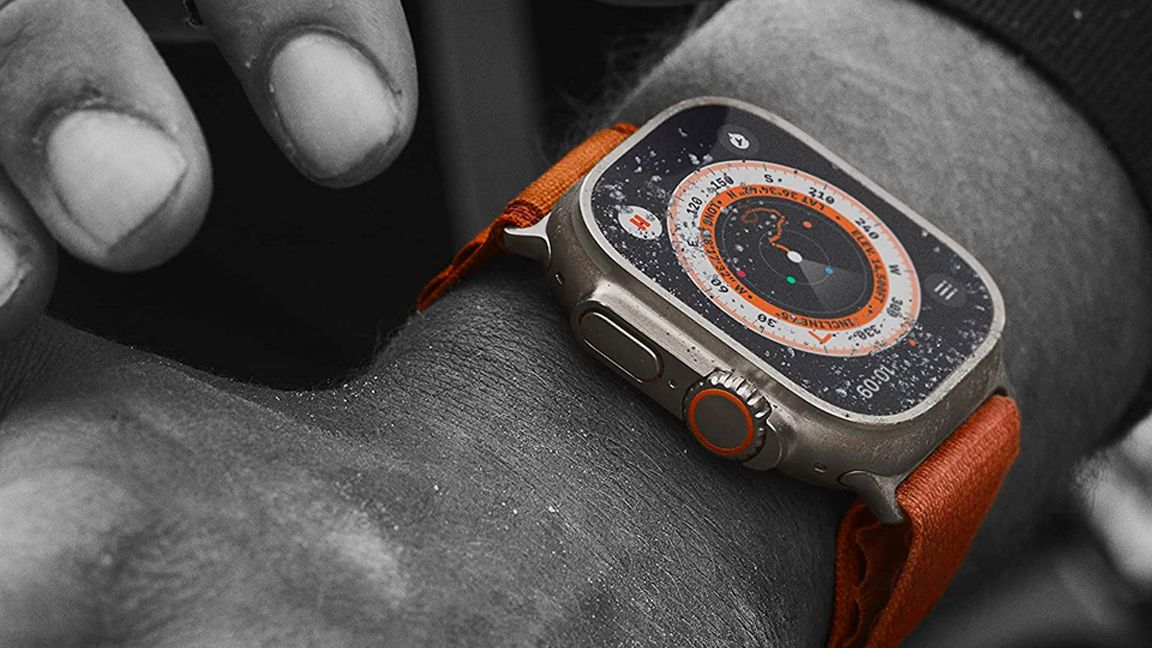
For anyone confused, I can confirm that the Apple Watch is designed to be worn on the wrist. It’s a watch, not an ankle monitor for the probation service. But it seems some users beg to differ.

A Novel Approach to Fitness Tracking

A lot of people buy Apple Watch’s because of the fitness tracking features, from step counting to heart rate and respiratory rate monitoring. But some users have reported inaccurate step counts, which they ascribe to the Watch being on their wrist.

The Logic Behind the Unconventional Use

There’s some logic to it. A wrist may not be the ideal place to detect and track movement of the feet. Over on Apple’s own community forum, an Apple Watch Ultra 2 user reports phantom steps being counted while he drove a vehicle with a manual gearbox and even while sitting at a desk, presumably because of arm movement.

The Wrist vs. Ankle Debate

In contrast, some chefs have reported low step counts despite walking around a kitchen all day and suspect it’s because they had things in their hands. Other users report that steps go uncounted if they push a stroller or lawnmower while they walk and while using some treadmills. In theory, wearing the device on your ankle should mean that it will detect movement when you walk or run, and not when you’re only moving your arm.

The Science Behind Step Counting

Most devices combine several sensors and algorithms to estimate how many steps you take. An accelerometer measures acceleration to detect rhythmic patterns while a gyroscope can track orientation to detect rapid changes in direction. GPS data provides information on distance. Many devices also have an altimeter, which can measure small pressure differences to know if you went up stairs.

Should You Wear Your Apple Watch on Your Ankle?

Apple hasn’t commented on whether this provides any more accuracy, and may not have even tested it. It’s just as possible that ankle wearing could reduce the accuracy of features like heart rate and calorie-tracking since these are calibrated based on the assumption that the Watch will be wristbound.

Conclusion

The debate surrounding wearing the Apple Watch on the ankle is a complex one, with both pros and cons to consider. While some users swear by the accuracy of the device on their ankle, others have reported inconsistent results. Ultimately, the decision to wear your Apple Watch on your ankle or wrist depends on your individual needs and preferences.

Frequently Asked Questions

Q: Can I wear my Apple Watch on my ankle?
A: Yes, some users have reported doing so, but the accuracy of the device may vary.

Q: Is there an official stance from Apple on wearing the Watch on the ankle?
A: No, Apple has not commented on the matter.

Q: Can wearing the Apple Watch on my ankle improve the accuracy of step counting?
A: It’s possible, but not guaranteed, as the device is designed to be worn on the wrist.

Q: Are there any other alternatives to wearing the Apple Watch on the wrist?
A: Yes, there are other fitness trackers and smartwatches that may be more suitable for your needs.

DeepSeek Founder to Meet with China’s Xi Jinping

0

Chinese AI Startup Founder to Meet with Top Politicians

Chinese AI startup founder Liang Wenfeng is set to meet with top Chinese politicians, including Chinese leader Xi Jinping, during a summit that Alibaba founder Jack Ma is also expected to attend.

Summit’s Significance

The summit, which could happen as soon as next week, may be intended as a signal by China’s Communist Party that it aims to adopt a more supportive stance toward domestic private-sector firms. In 2020, Chinese authorities effectively prevented Alibaba from executing what would have been the biggest public offering in history.

DeepSeek’s Rise to Prominence

Liang, who founded DeepSeek in 2023 as a subsidiary of his quantitative hedge fund, High-Flyer, rose to prominence last month after DeepSeek’s openly available AI models showed strong performance against leading models from OpenAI and other American AI companies.

U.S. Concerns

U.S. officials have raised concerns over the explosive popularity of DeepSeek’s models and services, which they perceive as a threat to the U.S.’s pole position in the AI race.

Conclusion

The meeting between Liang and top Chinese politicians may be a significant step towards a more supportive environment for domestic private-sector firms in China. However, it remains to be seen whether this will lead to tangible benefits for DeepSeek and other Chinese AI startups.

FAQs
What is DeepSeek? DeepSeek is a Chinese AI startup founded by Liang Wenfeng in 2023 as a subsidiary of his quantitative hedge fund, High-Flyer.

Why is the summit significant? The summit may be a signal by China’s Communist Party that it aims to adopt a more supportive stance toward domestic private-sector firms.

What are the U.S. concerns? U.S. officials have raised concerns over the explosive popularity of DeepSeek’s models and services, which they perceive as a threat to the U.S.’s pole position in the AI race.

What does the future hold for DeepSeek? The meeting between Liang and top Chinese politicians may be a significant step towards a more supportive environment for DeepSeek and other Chinese AI startups, but it remains to be seen whether this will lead to tangible benefits.

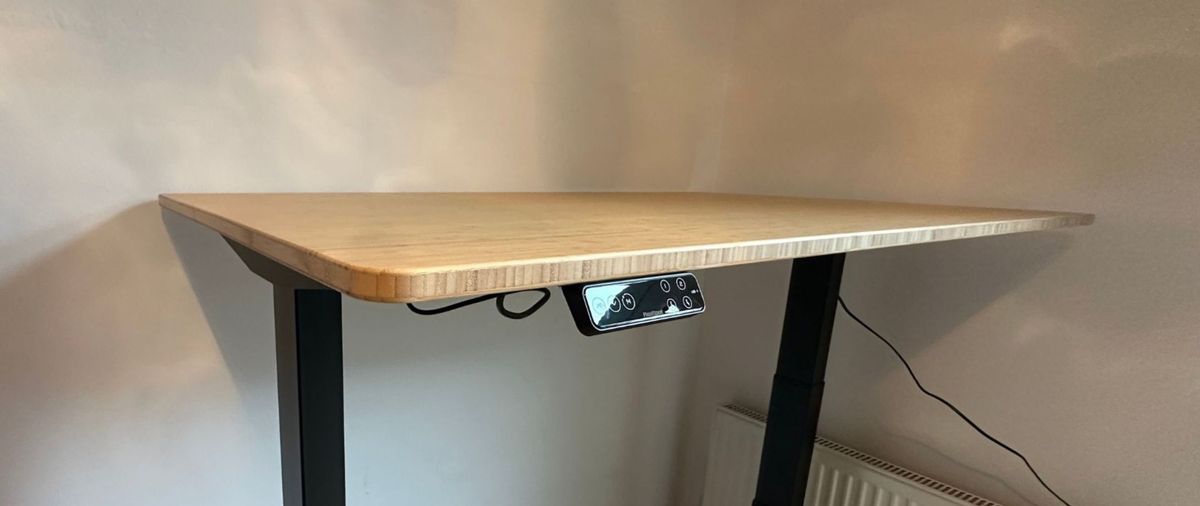
Tested: FlexiSpot E9 Standing Desk

0

FlexiSpot E9: Specs

Dimensions: 120 x 60cm, 120 x 80cm, 140 x 70cm, 160 x 80cm, 140x80cm, 140cm x 80cm
Height range: 63.5cm to 128.5cm
Load capacity: 397lbs
Material: Steel frame, wood tops
Frame colours: White, Black
Desktop colours: White, Maple, Bamboo, Black, Mahogany, Ebony, Gray, Black Walnut, Rubber
Screen: Touch LCD
Mechanism: Dual-motor

If you spend most or all of your working days sat at your desk, longing for the moment you can stretch your legs, then the FlexiSpot E9 standing desk is one of the best desk upgrades you can make.

FlexiSpot E9 standing desk: Design and Assembly

The design of the FlexiSpot E9 is sleek and modern. The desk comes in two parts; the desktop and the frame and electronics. The desk is pretty heavy, but it’s stable, even when fully extended. Assembling the desk is easy, but it does require an extra person and an electric screwdriver or drill. The instructions are simple and easy to understand, and the process takes around an hour to complete.

Features and Experience

The LCD display on the FlexiSpot E9 makes it easy to adjust the desk and select the programmed height preferences. I was initially concerned about accidentally adjusting the height, but the desk has a built-in child lock, which ensures that accidental operation is prevented.

Using the desk has been a game-changer for me. I was skeptical about the impact it would have on my productivity and concentration, but it’s worked wonders. I can stay focused for longer periods, and I’ve found that I get more done when standing than when sitting.

The desk also has four programmable sitting and standing positions, which is perfect for sharing the desk with others. It has a 397lbs weight capacity, making it suitable for heavy equipment, and it’s easy to move with the dual-motor mechanism.

Price

The FlexiSpot E9 retails between £529 and £699/$657 and $867, depending on the colour of the desktop and size. There are also various add-on options available, including under-desk storage, a power strip, castors, and an under-desk treadmill or bike.

Who’s it for?

The FlexiSpot E9 is suitable for anyone looking for a spacious and sturdy desk that will deliver the perfect sit/stand experience. It’s a game-changer for anyone who works from home, as it encourages movement and reduces the risk of back pain and fatigue.

Buy if…

  • You want a solid, well-built standing desk with premium features
  • You want programmable sitting and standing options
  • You’re tall, as this desk goes up to 128.5cm

Don’t buy if…

  • You’re on a budget
  • You prefer not to stand while you work

Frequently Asked Questions

Q: How does the desk adjust to different heights?
A: The desk has a dual-motor mechanism that allows it to adjust to different heights with ease.

Q: Is the desk stable?
A: Yes, the desk is very stable, even when fully extended.

Q: Can I share the desk with others?
A: Yes, the desk has four programmable sitting and standing positions, making it perfect for sharing with others.

Q: How much does the desk weigh?
A: The desk weighs around 30kg, making it relatively lightweight and easy to move.

Can Sim Drivers Make the Shift to F1?

0

Breaking Down the Barriers of Motorsports with Sim Racing

A New Era in Motorsports

Motorsports have long been a pay-to-play arena, with young drivers spending thousands of dollars just to get started in karting. Four-time Formula One champion Max Verstappen knows this all too well, but he also sees a way to change it through sim racing, a virtual form of car racing that closely replicates real-world racing.

The Rise of Sim Racing

It’s maybe less crazy than it sounds. The sport has evolved into a serious proving ground for talent, with detailed setups and tire management — minus the crushing financial barrier. In fact, Verstappen, a passionate sim racer himself, believes the best virtual drivers deserve a shot in real cars.

A New Path for Talent

His ultimate vision, he tells The Athletic, is creating his own racing team, one that merges elite sim racers with traditional racers. While sim drivers lack experience with G-forces, Verstappen thinks training and the right coaching can bridge the gap. He says sim racing has improved his own driving, and vice versa.

A Level Playing Field

“Everyone always thinks that it’s just a game and it’s fun, easy going,” Verstappen tells the outlet, “but I would say the competition is just as hard, or even harder, to nail — to win — than in real life.”

Conclusion

Verstappen’s vision for a merged sim racing and traditional racing team has the potential to revolutionize the sport, providing a more accessible and inclusive platform for talented drivers. By recognizing the skills and dedication required to succeed in sim racing, he believes that the best virtual drivers can bridge the gap and compete alongside traditional racers.

FAQs

Q: What is sim racing?

A: Sim racing is a virtual form of car racing that replicates real-world racing, with detailed setups and tire management.

Q: How does Verstappen believe sim racers can transition to real-world racing?

A: Verstappen believes that training and the right coaching can help sim racers adapt to the physical demands of real-world racing.

Q: How does Verstappen think sim racing has improved his own driving?

A: Verstappen believes that sim racing has improved his own driving, and vice versa, by providing a more accessible and inclusive platform for testing and honing skills.

BMW’s next-gen EVs depend on an unassuming black box called ‘Heart of Joy’

0

Article

The Heart of Joy: BMW’s In-House Electric Powertrain Solution

Last November, I strapped into the rear passenger seat of an all-electric, four-door sedan with BMW test driver and 24-hour racer Jens Klingmann behind the wheel. It was a cold day at BMW’s Performance Driving Center in Greer, SC, and beneath the five-point harnesses, roll cage, and heavily camouflaged body, Klingmann had an unexpected co-pilot: a tiny black box called the “Heart of Joy.”

The Heart of Joy: A New Era for Electric Powertrains

The vehicle we rode in is called the Vision Driving Experience (VDX), a one-off built specifically for testing this supposedly magic black box, as well as more upcoming features for BMW’s Neue Klasse platform. The VDX uses fans to suck it down to the track for better traction at speed. Those fans are loud inside the vehicle, making it nearly impossible to hear much more than a roar while we’re hurtling around the track at speeds nearing 90 mph, even though the car itself is a mostly silent EV.

In-House Electric Powertrain: A New Era for BMW

As Klingmann expertly navigated the 1.7-mile performance track, I was struck by the seamless acceleration and smooth power delivery of the Heart of Joy. The tires whined as they approached the limit of their grip, and there was notably less BMW brake squeal as the little black box did a majority of the work as we hurtled around the track.

A New Chapter in Electric Powertrain Development

The Heart of Joy was developed in just three short years and has currently been through more than 7,500 hours of testing, both at the hands of experienced engineers like Thalmeer and race drivers like Klingmann. The aim, of course, is to get future BMWs to drive more like BMWs, and not like, say, Kias, which uses the supplier-to-programming model for their EVs. The single computer also, conveniently, makes over-the-air updates much easier for BMW.

The Benefits of In-House Development

Bringing the development in-house is not new for BMW, but it is relatively unique in an industry that frequently looks to outside suppliers for everything from voice recognition to infotainment. ECUs tend to be outsourced to other companies like Magna Steyr, for example.

A Lesson Learned from the Past

BMW CTO Frank Weber explained how the automaker’s near failure to launch the 7-series 25 years ago gave the company the ability and confidence to create the new Heart of Joy. "It was a nightmare," Weber told me at CES earlier this year. "We almost didn’t make the launch of the car… Today, I can say, maybe this was the best thing that happened to BMW. Because it was so difficult, we had to develop more robust processes for those advanced digital technologies much earlier than the others, and then we just groomed it over time."

Conclusion

The Heart of Joy represents an interesting future for the German brand that still wants to be known as the "Ultimate Driving Machine" in the electrified future. If the brief but thrilling experience I had in the VDX is any indicator, the new Heart of Joy underlines BMW’s "Ultimate Driving Machine" roots and promises a truly dynamic, all-electric driving future.

Frequently Asked Questions

Q: What is the Heart of Joy?
A: The Heart of Joy is a new electric powertrain solution developed by BMW.

Q: What is the VDX?
A: The VDX is a one-off built specifically for testing the Heart of Joy and other upcoming features for BMW’s Neue Klasse platform.

Q: Why did BMW develop the Heart of Joy in-house?
A: BMW developed the Heart of Joy in-house to improve the quality and control of their electric powertrains.

Q: What are the benefits of in-house development?
A: In-house development allows BMW to improve their products, reduce costs, and increase efficiency.

Q: What is the future of electric powertrains at BMW?
A: The future of electric powertrains at BMW is promising, with the Heart of Joy representing a new era of innovation and performance.

These Researchers Used NPR Sunday Puzzle Questions to Benchmark AI ‘Reasoning’ Models

0

Improving AI Models with Public Radio Quizzes

Every Sunday, NPR host Will Shortz, The New York Times’ crossword puzzle guru, gets to quiz thousands of listeners in a long-running segment called the Sunday Puzzle. While written to be solvable without too much foreknowledge, the brainteasers are usually challenging even for skilled contestants.

A New Benchmark for AI Models

That’s why some experts think they’re a promising way to test the limits of AI’s problem-solving abilities. A recent study by a team of researchers from Wellesley College, Oberlin College, the University of Texas at Austin, Northeastern University, Charles University, and startup Cursor created an AI benchmark using riddles from Sunday Puzzle episodes. The team says their test uncovered surprising insights, like that reasoning models – OpenAI’s o1, among others – sometimes "give up" and provide answers they know aren’t correct.

The Sunday Puzzle Benchmark

The AI industry is in a bit of a benchmarking quandary at the moment. Most of the tests commonly used to evaluate AI models probe for skills, like competency on PhD-level math and science questions, that aren’t relevant to the average user. Meanwhile, many benchmarks – even those released relatively recently – are quickly approaching saturation point. The advantages of a public radio quiz game like the Sunday Puzzle is that it doesn’t test for esoteric knowledge, and the challenges are phrased such that models can’t draw on "rote memory" to solve them, explained Guha.

Insights from the Study

The team’s research revealed that the models make other bizarre choices, like giving a wrong answer only to immediately retract it, attempt to tease out a better one, and fail again. They also get stuck "thinking" forever and give nonsensical explanations for answers, or they arrive at a correct answer right away but then go on to consider alternative answers for no obvious reason.

Conclusion

The current best-performing model on the benchmark is o1 with a score of 59%, followed by the recently released o3-mini set to high "reasoning effort" (47%). As a next step, the researchers plan to broaden their testing to additional reasoning models, which they hope will help to identify areas where these models might be enhanced.

FAQs

Q: What is the Sunday Puzzle?
A: The Sunday Puzzle is a long-running segment on NPR where listeners are quizzed on various riddles and puzzles.

Q: Why is the Sunday Puzzle a good benchmark for AI models?
A: The Sunday Puzzle is a good benchmark for AI models because it doesn’t test for esoteric knowledge and the challenges are phrased such that models can’t draw on "rote memory" to solve them.

Q: What are the results of the study?
A: The study found that reasoning models like o1 and R1 far outperform other models on the benchmark, and that they sometimes "give up" and provide answers they know aren’t correct.

Q: What’s the next step for the researchers?
A: The researchers plan to broaden their testing to additional reasoning models, which they hope will help to identify areas where these models might be enhanced.