Home Blog Page 287

How to Use Tailwind CSS with the Clamp Function for Responsive Designs

0

What is the Clamp() Function?

The clamp() function is a CSS function that allows you to define a value that scales between a minimum and maximum value based on the viewport width. It takes three parameters: minimum, preferred, and maximum.

Why Use Clamp() with Tailwind CSS?

Tailwind CSS is a utility-first CSS framework that makes it easy to apply styles directly in your HTML. However, its default responsive utilities, such as text-sm and text-lg, rely on breakpoints, which can result in abrupt changes in design at specific screen sizes. By combining Tailwind CSS with clamp(), you can achieve fluid responsiveness, where elements scale smoothly across all screen sizes without the need for multiple breakpoints.

How to Use Clamp() in Tailwind CSS

You can extend Tailwind’s configuration to include custom utilities for clamp() or use inline styles. Let’s explore both approaches.

Example 1: Fluid Typography

Fluid typography is useful for font sizes that adapt to the viewport size:

<p class="text-[clamp(1rem, 5vw, 3rem)]">This text scales fluidly with the viewport.</p>

Alternatively, you can use a custom utility:

<p class="text-fluid">This text scales fluidly with the viewport.</p>

Example 2: Fluid Spacing

Fluid spacing is useful for padding, margins, and gaps that adapt to the viewport size:

<p class="p-[clamp(1rem, 5vw, 3rem)]">This paragraph has fluid padding.</p>

Example 3: Fluid Container Width

You can use clamp() to create a container that scales between a minimum and maximum width:

<div class="mx-auto w-[clamp(300px, 80%, 1200px)]">This container scales fluidly with the viewport.</div>

Benefits of Using Clamp() with Tailwind CSS

  • Smooth Scaling: Elements scale fluidly across all screen sizes, eliminating abrupt changes at breakpoints.
  • Reduced Code: You don’t need to define multiple breakpoints for different screen sizes.
  • Improved Readability: Fluid designs are more visually appealing and user-friendly.

Limitations and Considerations

  • Browser Support: The clamp() function is supported in all modern browsers but may require fallbacks for older browsers.
  • Complexity: Overusing clamp() can make your CSS harder to maintain. Use it judiciously for key elements like typography and spacing.

Conclusion

Combining Tailwind CSS with the clamp() function is a powerful way to create fluid, responsive designs that adapt seamlessly to any screen size. Whether you choose to extend Tailwind’s configuration or use inline styles, clamp() can help you achieve a more polished and professional look for your web projects.

Frequently Asked Questions

Q: What is the purpose of the clamp() function?
A: The clamp() function is used to define a value that scales between a minimum and maximum value based on the viewport width.

Q: How do I use clamp() with Tailwind CSS?
A: You can extend Tailwind’s configuration to include custom utilities for clamp() or use inline styles.

Q: What are the benefits of using clamp() with Tailwind CSS?
A: clamp() allows for smooth scaling, reduced code, and improved readability in your designs.

Q: Are there any limitations to using clamp()?
A: Yes, clamp() may not be supported in older browsers, and overusing it can make your CSS harder to maintain.

Big Tech Shifts On

Unlock the Editor’s Digest for free

Roula Khalaf’s Favourite Stories

The AI Boom: A Shift in Outlook

Remember when China’s DeepSeek sent tremors through the US artificial intelligence industry and stunned Wall Street? That was last month. To listen to AI executives and investors now, you might think the world has moved on. Nvidia, the hardest hit, has recovered more than half the $630bn it lost.

The Speed of Recovery

The speed with which equilibrium has returned owes a lot to the assertion by the biggest US tech companies that they will spend even more than expected on AI infrastructure this year. But it also shows how quickly the investment case for AI has been rewritten. The question is how much this reflects a genuine change in outlook, and how much is just industry spin.

The Changing Landscape

The case for buying Nvidia stock once rested on claims such as those from Anthropic chief executive Dario Amodei, who barely six months ago predicted that the training costs for a cutting-edge large language model would soon reach $100bn. In the wake of DeepSeek, Amodei is still anticipating a huge jump in demand for AI chips — only now, it is for the completely different reason that they are needed for more complex tasks like reasoning, rather than the costs of model training.

Uncertainty and the Future of AI

No wonder investors are feeling an acute whiplash and a greater sense of uncertainty about the sustainability of the AI boom. The Chinese company’s breakthroughs increased the risk that even the most advanced large language models will quickly be turned into commodities. This came just as model-builders were facing another existential threat: throwing ever-greater amounts of computing power into training no longer produces the advances it once did.

The Shift to Complete Systems

OpenAI chief executive Sam Altman signalled the obvious strategic response in a post on X this week. No longer will OpenAI release its large language models as standalone products. Rather, they will be packaged together with its other technologies, such as "reasoning", into more complete systems. From now on, he said, the AI will "just work", whatever task a user throws at it.

Implications for the Industry

This is a familiar strategy in the tech industry. Moving "up the stack" — building more valuable technologies on the foundation of earlier products as they are commoditised — has long been seen as the way to defend prices and profit margins. If the cost of components that once provided a good margin collapse, so much the better: it brings down the overall cost and leads to faster uptake.

Conclusion

The Chinese company’s breakthroughs have just turned up the pressure on the AI industry, and the time for spin is over. The AI boom will depend much more on the actual usage of AI, not just the massive upfront spending that has gone into building models and infrastructure. The AI companies need to show they can provide real value to end customers.

FAQs

Q: What happened to the AI industry after the DeepSeek breakthrough?
A: The industry has recovered quickly, with the biggest US tech companies announcing they will spend even more on AI infrastructure.

Q: What is the new focus for OpenAI?
A: OpenAI will now package its large language models with other technologies, such as "reasoning", into complete systems.

Q: What are the implications for the AI industry?
A: The industry will shift towards providing more complete systems, and the focus will be on usage, not just massive upfront spending.

Open Source LLMs Align with European Digital Sovereignty

0

Large Language Models Land on Europe’s Digital Sovereignty Agenda

Large language models (LLMs) landed on Europe’s digital sovereignty agenda with a bang last week, as news emerged of a new program to develop a series of “truly” open source LLMs covering all European Union languages.

Up to Scratch

The OpenEuroLLM project is either starting from scratch or it has a head start — depending on how you look at it.

Starting from Scratch

Since 2022, Hajič has also been coordinating the High Performance Language Technologies (HPLT) project, which has set out to develop free and reusable datasets, models, and workflows using high-performance computing (HPC). That project is scheduled to end in late 2025, but it can be viewed as a sort of “predecessor” to OpenEuroLLM, according to Hajič, given that most of the partners on HPLT (aside from the U.K. partners) are participating here, too.

Build Up

The project’s top-line goal, as per its tagline, is to create: “A series of foundation models for transparent AI in Europe.” Additionally, these models should preserve the “linguistic and cultural diversity” of all EU languages — current and future.

What to Expect

What this translates to in terms of deliverables is still being ironed out, but it will likely mean a core multilingual LLM designed for general-purpose tasks where accuracy is paramount. And then also smaller “quantized” versions, perhaps for edge applications where efficiency and speed are more important.

The Open Source Definition

In traditional software, the perennial struggle between open source and proprietary revolves around the “true” meaning of “open source.” This can be resolved by deferring to the formal “definition” as per the Open Source Initiative, the industry stewards of what are and aren’t legitimate open source licenses.

Two for One

Another criticism that emerged in the aftermath of OpenEuroLLM’s formal unveiling was that a very similar project launched in Europe just a few short months previous. EuroLLM, which launched its first model in September and a follow-up in December, is co-funded by the EU alongside a consortium of nine partners.

Funding Gap

The arrival of China’s DeepSeek, and the cost-to-performance ratio it promises, has given some encouragement that AI initiatives might be able to do far more with much less than initially thought. However, over the past few weeks, many have questioned the true costs involved in building DeepSeek.

Sovereign State

As critics have noted, OpenEuroLLM does have a lot of moving parts — which Hajič acknowledges, albeit with a positive outlook.

Conclusion

The OpenEuroLLM project is a significant step towards achieving digital sovereignty for Europe, with the goal of creating a series of foundation models for transparent AI in Europe. While there are concerns about the complexity of the project, the sheer number of participating parties, and the budget, the project’s lead coordinator, Jan Hajič, remains optimistic about the outcome.

FAQs

Q: What is OpenEuroLLM?

OpenEuroLLM is a new program to develop a series of “truly” open source LLMs covering all European Union languages.

Q: What is the goal of OpenEuroLLM?

The goal of OpenEuroLLM is to create a series of foundation models for transparent AI in Europe, preserving the “linguistic and cultural diversity” of all EU languages — current and future.

Q: Who is leading the OpenEuroLLM project?

Jan Hajič, a computational linguist from the Charles University in Prague, is leading the OpenEuroLLM project, in collaboration with Peter Sarlin, CEO and co-founder of Finnish AI lab Silo AI.

Q: What is the budget for OpenEuroLLM?

The budget for OpenEuroLLM is €37.4 million, with €20 million coming from the EU’s Digital Europe Programme.

Q: What is the timeline for OpenEuroLLM?

The first versions of the LLMs are expected to be released by mid-2026, with the final iterations arriving by the project’s conclusion in 2028.

Dreams of Another

0

Shoot ’em Ups Get a Creative Twist in Dreams of Another

A New Kind of Shooting Game

Shoot ’em ups are a massive genre in video games, exploding in the 1980s and 90s and splitting off into myriad subgenres like scrolling shooters, rail shooters, run-and-gun, and even cute ’em ups (seriously). But until now, I’d never seen a game where shooting creates rather than destroys.

The Unconventional Concept

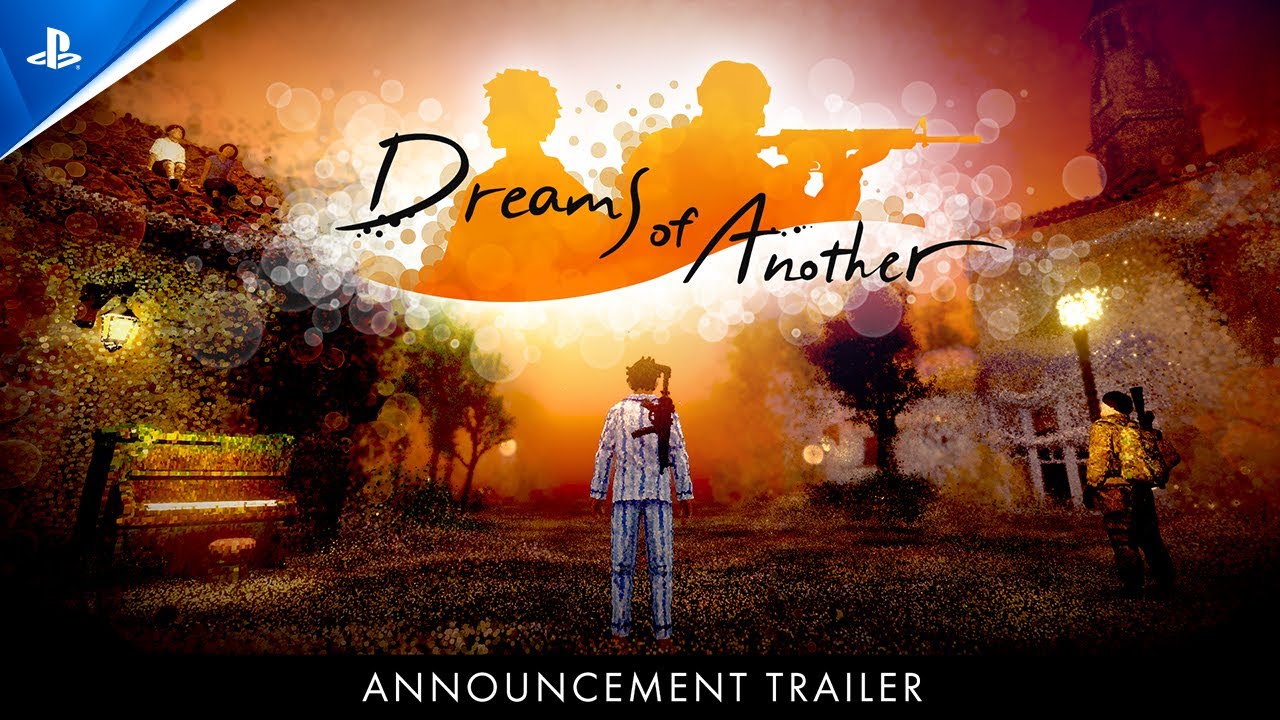
That’s the unusual mechanic in Dreams of Another from Q-Games and Baiyon, the multimedia artist who directed PixelJunk Eden. The game was announced for PS5 and PSVR 2 during PlayStation’s State of Play, with a trailer and message from Baiyon himself.

The Game in Action

Watch the announce trailer below:

Dreams of Another – Announce Trailer | PS5 & PS VR2 Games – YouTube

Challenging Conventions

The concept behind Dreams of Another was inspired by the philosophical idea that there’s "no creation without destruction." The player’s shots materialise and create the world in the game, challenging the conventions of shooting games and looking very beautiful in the process.

A Unique Art Style

The artistic style looks totally unique with point cloud technology used to create a poetic, dreamlike world filled with mysterious characters. We’re told that everyday objects have witty thoughts that offer unconventional perspectives on societal norms, and Baiyon also created the soundtrack.

The Game’s Development

The Kyoto-based artist says he created the game from scratch, writing the story and crafting the dialogue. "By continuously exploring the forms and traditions that exist within games with great appreciation and respect, sometimes from completely different perspectives, even in reverse, I was able to create something truly exciting," he says.

"You destroy with a gun, yet in fact, you create. Like the strokes of a brush on a canvas, where each action brings something new into existence. I wanted to create a game that evokes this sensation, and through endless experimentation and careful adjustments with my team, it finally took shape."

Release and Availability

The game can be wish listed at the PlayStation Store. It will be released this year for PS5, PS5 Pro, and PSVR 2. The PS5 Pro will provide vivid and smooth point cloud visuals with high-resolution support. See below for prices on all three devices.

Conclusion

Dreams of Another is a unique take on the shoot ’em up genre, offering a creative twist on the traditional gameplay mechanics. With its beautiful point cloud technology and poetic art style, it’s a game that’s sure to intrigue and delight players.

FAQs

Q: What is Dreams of Another?
A: Dreams of Another is a shoot ’em up game where shooting creates rather than destroys, challenging the conventions of the genre.

Q: Who is behind the game?
A: The game is developed by Q-Games and Baiyon, the multimedia artist who directed PixelJunk Eden.

Q: When is the game releasing?
A: The game will be released this year for PS5, PS5 Pro, and PSVR 2.

Q: Can I wish list the game?
A: Yes, you can wish list the game at the PlayStation Store.

SNL50

0

Welcome to Installer No. 71

This week, I’ve been reading about Alan Turing, OnlyFans, street booze, convenience stores, dusting off my Fortnite skills, reading The Ministry of Time, working up the courage to make air fryer donuts, trying out a Sony ZV-1 M2 as my webcam, catching up on The White Lotus before season 3 starts, trying Anybox as a bookmarking / note-taking app, and seeing if the Simplify Gmail extension will make me like email more.

What’s New

I also have for you a place to watch all the best SNL sketches, a great new pair of Beats headphones, a new drawing tablet for creators of all kinds, a fun-sounding sci-fi movie on Apple TV Plus, and much more.

Music and More

Oh, and thanks to everyone who sent in music thoughts last week! I got a ton of good responses, and to be completely honest, I haven’t been able to properly read and respond to everything yet. That means next week’s gonna be a big, huge, music-setup extravaganza, and that means if you have thoughts on music services, favorite music gadgets, apps you love, a deep love for Victrolas, or anything else, you’ve still got time to tell me all about it. Hit me up!

The Verge’s Picks

Here are some of our top picks from the week:

  • SNL50: I am very excited for the three-hour SNL anniversary show on Sunday, and even the concert on Saturday night, but I might be even more excited about this Peacock landing page. It’s just playlist after playlist of iconic sketches, monologues, and musical performances — you could easily spend your whole weekend just watching these clips.
  • Beats Powerbeats Pro 2: All the useful Apple-y features of AirPods Pros, but in cooler colors and with earhooks that actually keep the buds in my ears. I bought a pair in the (slightly boring but that’s the point) “quick sand” color, and I’m very happy with my purchase. I do wish the mic was a little better, though.
  • The Witcher: Sirens of The Deep: I haven’t really dug into the whole Witcher Netflix-verse, after hearing so many mixed things about the show. But this, an animated movie with none of the baggage but all of the cool monster-hunting, sounds like my kind of thing.
  • The Wacom Intuos Pro: Easily the biggest thing to happen to drawing tablets in, I don’t know, a decade? I like the idea of putting the controls at the top and making them more tactile, and I like that they’re a little smaller and slimmer, but I do wonder how many yearslong workflows are going to need some time to adjust.
  • The Gorge: I like the premise of this movie so much — two people on either side of a huge, deep, fog-filled gorge, tasked with protecting the world from whatever is down there, and also something something love story — that I don’t really care that the reviews aren’t great. (Or that Apple TV Plus movies mostly suck.) I’m here for this one.

Community Picks

Here’s what the Installer community is into this week. I want to know what you’re into right now as well! Email installer@theverge.com or message me on Signal — @davidpierce.11 — with your recommendations for anything and everything, and we’ll feature some of our favorites here every week. For more great recommendations, check out the replies to this post on Threads and this post on Bluesky.

User Submissions

  • “Trying to stay sane by limiting my consumption of news and screen time amidst the chaos going around. Reading The Wager from David Grann, the author of Killers of the Flower Moon. Essentially about conflicting reports of a real-life Lord of the Flies that transpires in the 1700s. Very interesting!” – Colin
  • “We just started watching Paradise over here and it’s fantastic.” – Jules
  • “As the topic of digital self-determination is more and more a topic (yes, here in Germany too), I was looking into different OSes for my mobile phone. I found a rather good working alternative to Google’s Android and iOS which is called /e/OS. It works really well, and I can still use all my apps. And they sell phones with pre-installed /e/.” – Christian
  • “Played a lot of this game called Hole. The name is unfortunate, but it’s cheap and a very good time.” – Sophie
  • “I don’t know if a lot of people care about this but Notion and TickTick have a two-way integration and it’s great!! I still feel it’s limited in functionality because I can only send one list at a time, which doesn’t make sense, and it’s limited to three lists.” – Barry
  • “Found some joy on the Internet this week with this video. It’s playing the Star Trek TNG theme song as if it was blaring from the Enterprise itself!” – Mike
  • “Recently downloaded the National Film Board app and it’s a delight. ‘Get free access to the largest collection of Canadian films online. No subscription or ads.’” – Christine

Conclusion

We hope you enjoyed this week’s installment of Installer. Don’t forget to send us your thoughts, recommendations, and reviews, and we’ll feature some of them in next week’s edition. Remember to stay tuned for more great content, and we’ll see you next week!

Gemini Live Just Got Much Easier to Talk To

0

Gemini Live Update Brings Improved Language Recognition and New Features

Multilingual Conversations and Smarter Translations

The next time you use Gemini Live on your phone, you might notice that it understands you better. Google has just rolled out a major update, making it better at understanding multiple languages, dialects, and accents. This should result in smoother conversations, better real-time translations, and overall improved voice interactions.

New Features Coming Soon

Google has now confirmed that screen sharing and live video streaming are coming to Gemini Live in the next few months.

What’s New in the Update?

  • Gemini Live can now understand multiple languages in a single conversation, supporting 45 languages.
  • The update improves recognition of different dialects and accents, making it a more reliable tool for real-time multilingual communication.
  • Google is rolling out Flash 2.0, a new model that is dynamic and engaging.

New Features in the Pipeline

  • Screen sharing and live video streaming will be available in the next few months.
  • Gemini will be able to watch YouTube videos, images, and documents in real-time, making it a more interactive and useful tool beyond just voice-based interactions.

Privacy and Data Storage Changes

  • Gemini Apps Activity will now store audio, video, and screenshots in an activity log, allowing users to choose how long this data is saved (3 months, 18 months, or 36 months).
  • Users can delete this data manually at any time.

When Can You Try the New Gemini Live?

Google is rolling out the update gradually, so not everyone will get it at the same time. To check if you have access, simply ask Gemini, "When was your last update?"

Conclusion

The latest update to Gemini Live marks a significant step towards making the AI more dynamic and engaging. With improved language recognition, new features, and enhanced data storage options, users can expect a more seamless and interactive experience. As Google continues to push the boundaries of AI, we can look forward to even more exciting developments in the world of Gemini Live.

FAQs

Q: What languages does Gemini Live support?
A: Gemini Live supports 45 languages.

Q: How long does the data stored in Gemini Apps Activity remain?
A: Users can choose to save data for 3 months, 18 months, or 36 months.

Q: How do I check if I have the new Gemini Live update?
A: Ask Gemini, "When was your last update?" to check if you have the latest version.

Rugged Portable SSD Presidents’ Day Deal

0

My Unusual Disappointment with Samsung’s T7 Shield Portable SSD

A Rare Disappointment with a Beloved Product

I regularly bore people by raving about how great I think Samsung’s T7 Shield Portable SSD is. It’s pretty much lived on my desk since I bought it, and it comes with me on almost every trip. But for once, I am not so pleased.

A Chance to Upgrade

Today, the 2TB model is almost half price in a Presidents’ Day deal at Amazon. That’s means I could get 2TB for little more than the price I paid for the 1TB version, and right now I could really do with those extra 1,000 gigabytes!

A Rave Review (Despite My Current Disappointment)

Deal bitterness aside, I continue to swear by the T7 Shield. It’s been superseded by the faster T9 now, but I love the reassuring ruggedness of this earlier iteration. It’s tough, compact, and the slightly rubbery textured coating makes it seem to bounce off the floor the couple of times I’ve dropped it.

Other Options Available

There are discounts on all three capacities in this Samsung Presidents’ Day deal. Full details below. If you need more hardware, see our pick of the best laptops for graphic design.

More SSD Deals

Not quite what you want? See the other SSD deals we’ve found below:

Frequently Asked Questions

Q: What is the T7 Shield Portable SSD?
A: The T7 Shield is a portable solid-state drive produced by Samsung, known for its ruggedness, compact design, and fast data transfer speeds.

Q: What are the different capacities available in the Presidents’ Day deal?
A: The deal offers discounts on all three capacities: 500GB, 1TB, and 2TB.

Q: Is the T7 Shield still available in newer versions?
A: Yes, the T7 Shield has been succeeded by the T9 Shield, which offers even faster data transfer speeds. However, the T7 Shield is still a reliable and popular option.

Q: Can I use the T7 Shield for graphic design work?
A: Yes, the T7 Shield is suitable for graphic design work, as it provides fast data transfer speeds and is compact and portable, making it easy to take on the go.

Game Font Library reveals the typefaces of GTA, Halo and many more

0

Game Font Library: A Treasure Trove for Game Developers and Typography Enthusiasts

What is the Game Font Library?

The Game Font Library is an online collection of popular video game titles and the fonts used in their interfaces, logos, and graphic elements. The library is the brainchild of Charlotte Couderc, a lead UI artist on Microsoft Flight Simulator, who wanted to highlight the typefaces that define the visual identity of games.

How does the Game Font Library work?

The library can be searched by developer, publisher, genre, foundry, and typeface, making it a valuable resource for game developers and typography enthusiasts. Charlotte contacts UI artists to research the typefaces used in each game, ensuring accuracy and preserving the true typographic heritage of the industry.

What can you find in the Game Font Library?

The library features only official fonts named by the developers themselves, not recreations or unofficial approximations of bespoke fonts. Some examples of games and their respective fonts include:

  • Halo: Highway Ghotic
  • Grand Theft Auto: Pricedown
  • Valorant: Tungsten

How can you contribute to the Game Font Library?

Charlotte welcomes contributions to the database. If you have a game font that isn’t featured, you can drop a message to gamefontlibrary@gmail.com, noting the game name, font details, and names of the UI artists if possible. Screenshots are also welcome.

Conclusion

The Game Font Library is a valuable resource for game developers and typography enthusiasts alike, providing a comprehensive collection of fonts used in popular video games. By supporting the library and contributing to its growth, we can celebrate the art of typography in gaming and continue to push the boundaries of visual storytelling.

Frequently Asked Questions

Q: How do I search the Game Font Library?
A: You can search the library by developer, publisher, genre, foundry, and typeface.

Q: What types of games are featured in the library?
A: The library features a wide range of games, including AAA titles and indie games.

Q: Can I contribute to the Game Font Library?
A: Yes, Charlotte welcomes contributions to the database. Simply drop a message to gamefontlibrary@gmail.com with the required information.

Q: What is the goal of the Game Font Library?
A: The goal of the Game Font Library is to highlight the typefaces that define the visual identity of games and preserve the true typographic heritage of the industry.

Perplexity Launches Its Own Freemium ‘Deep Research’ Product

0

Perplexity Joins the Ranks of AI Companies to Offer In-Depth Research Tool

Perplexity’s Deep Research: A New Feature for Expert-Level Tasks

Perplexity has become the latest AI company to release an in-depth research tool, with a new feature announced on Friday. This development follows Google’s introduction of a similar feature for its Gemini AI platform in December and OpenAI’s launch of its own research agent earlier this month. Interestingly, all three companies have given their feature the same name: Deep Research.

The Goal: Providing In-Depth Answers for Professional Use Cases

The goal of Deep Research is to provide more in-depth answers with real citations for more professional use cases, unlike what you’d get from a consumer chatbot. In a blog post announcing Deep Research, Perplexity wrote that the feature "excels at a range of expert-level tasks—from finance and marketing to product research."

How Does Perplexity’s Deep Research Work?

Perplexity’s Deep Research is currently available on the web and will soon be added to its Mac, iOS, and Android apps. To use it, you simply select "Deep Research" from a drop-down menu when you submit your query in Perplexity, which will then create a detailed report that can be exported as a PDF or shared as a Perplexity Page. The company claims that its Deep Research tool "iteratively searches, reads documents, and reasons about what to do next, refining its research plan as it learns more about the subject areas," similar to how a human might research a new topic.

Performance on Humanity’s Last Exam

Perplexity highlighted its performance on Humanity’s Last Exam, an AI benchmarking test with expert-level questions in various academic fields. Perplexity’s Deep Research scored 21.1% on the test, outperforming most other models, including Gemini Thinking (6.2%), Grok-2 (3.8%), and OpenAI’s GPT-4o (3.3%). However, it did not quite match OpenAI’s Deep Research (26.6%).

Pricing and Availability

While OpenAI’s Deep Research requires a $200-per-month Pro subscription, Perplexity’s Deep Research is available for free, with non-subscribers getting an unspecified but limited number of queries per day, and paying subscribers getting unlimited queries.

Comparison with Other Deep Research Products

Perplexity compared the different technologies, pricing models, and performance in various use cases and subject matters, summarizing the differences as follows:

  • Perplexity AI excels in speed and accessibility for casual researchers
  • OpenAI dominates in analytical depth for enterprise applications
  • Google integrates most seamlessly with existing productivity ecosystems

Conclusion

While it’s too early to know how these tools will affect everyday and professional research as they become more popular, The Economist recently highlighted shortcomings to OpenAI’s Deep Research that likely apply here too: limitations to its "creativity" in interpreting data and a tendency to rely on sources that are "easily available," as well as a larger risk that "outsourcing all your research to a supergenius assistant" could "reduce the number of opportunities to have your best ideas."

FAQs

Q: What is Perplexity’s Deep Research?
A: Perplexity’s Deep Research is an in-depth research tool that provides more detailed answers with real citations for professional use cases.

Q: How does Perplexity’s Deep Research work?
A: Perplexity’s Deep Research iteratively searches, reads documents, and reasons about what to do next, refining its research plan as it learns more about the subject areas.

Q: Is Perplexity’s Deep Research available for non-subscribers?
A: Yes, non-subscribers can use Perplexity’s Deep Research, but with an unspecified but limited number of queries per day. Paying subscribers get unlimited queries.

Q: How does Perplexity’s Deep Research compare to OpenAI’s Deep Research?
A: Perplexity’s Deep Research excels in speed and accessibility for casual researchers, while OpenAI dominates in analytical depth for enterprise applications.

Are We Losing Our Critical Thinking Skills to AI?

0

Could AI Automation be Eroding Knowledge Workers’ Critical Thinking Faculties?

A recent study by Microsoft and Carnegie Mellon University researchers has raised concerns that the widespread adoption of generative AI (Gen AI) tools in the workplace may be eroding knowledge workers’ critical thinking faculties.

The Research

The study investigated the use of Gen AI tools by knowledge workers across various professions, including computer science, education, entertainment/media, administration, and financial and business services. The researchers sampled 319 knowledge workers and collected 936 real-world examples of using Gen AI in their work.

Key Findings

The study found that higher confidence in Gen AI-assisted work tasks is associated with less critical thinking, while higher self-confidence is associated with more critical thinking. The researchers also discovered that mechanizing routine tasks via AI and leaving exception-handling to the human user deprives workers of practicing their judgment, ultimately weakening their cognitive abilities.

The Impact on Critical Thinking

The study suggests that the increasing reliance on Gen AI is shifting knowledge workers’ cognitive effort from task execution to oversight. The researchers argue that this shift may reduce critical engagement, particularly in routine or lower-stakes tasks, and raise concerns about long-term reliance and diminished independent problem-solving.

Key Takeaways

  • Knowledge workers view critical thinking as ensuring the quality of their work.
  • Workers who use Gen AI-assisted tasks have more confidence in their abilities, but this confidence is associated with less critical thinking.
  • About a third of survey participants used critical-thinking skills to mitigate potential adverse outcomes from using AI.
  • The study highlights a shift in knowledge workers’ cognitive effort from task execution to oversight.

Conclusion

The research suggests that the widespread adoption of Gen AI tools may be eroding knowledge workers’ critical thinking faculties. As AI becomes more prevalent in the workplace, it is crucial to address these concerns and ensure that workers are equipped with the skills and knowledge to make informed decisions.

FAQs

Q: What is generative AI (Gen AI)?
A: Gen AI refers to artificial intelligence that can generate new content, such as text, images, or music, rather than simply processing and analyzing existing data.

Q: What are the key findings of the study?
A: The study found that higher confidence in Gen AI-assisted work tasks is associated with less critical thinking, while higher self-confidence is associated with more critical thinking. The study also found that mechanizing routine tasks via AI and leaving exception-handling to the human user deprives workers of practicing their judgment.

Q: What are the implications of the study’s findings?
A: The study suggests that the increasing reliance on Gen AI may reduce critical engagement, particularly in routine or lower-stakes tasks, and raise concerns about long-term reliance and diminished independent problem-solving.