Home Blog Page 291

The Verge’s favorite reads from all over the web

0

The Challenge of Finding Quality Online Content

The internet is filled with an overwhelming amount of information, and it can be difficult to sift through it all to find the good stuff. With new content being published every day, it’s easy to feel like you’re drowning in a sea of noise. Whether you’re a casual internet user or a dedicated reader, finding quality content can be a daunting task.

The Struggle is Real

We’ve all been there – scrolling through social media, hoping to stumble upon something interesting or thought-provoking. But more often than not, we’re met with a never-ending stream of clickbait headlines and shallow articles. It’s no wonder that many of us have given up, resorting to simply following our favorite writers or sources and hoping that the algorithm gods deliver us something worthwhile.

A Solution to the Problem

But fear not, dear reader, for help is at hand. Allow The Verge to guide you through the vast expanse of the internet, curating the best of the best for your reading pleasure. Our team is dedicated to bringing you the most interesting, thought-provoking, and engaging content from around the web.

What to Expect

Our curated stream of content includes:

  • Great pieces of longform journalism
  • Sharp takes on the news
  • Interesting new studies or whitepapers
  • New sci-fi books that will shape the future
  • And much more!

How to Get Involved

So, how can you get in on the action? Simply scroll through our curated stream, click on the articles that catch your eye, and join the conversation in the comments. Let us know what you think, and get your read-later queue ready to rumble!

FAQs

Q: What kind of content can I expect to find?
A: Our curated stream includes a wide range of articles, including longform journalism, news analysis, and interesting new research.

Q: How do I get started?
A: Simply scroll through our curated stream and start reading!

Q: Can I participate in the conversation?
A: Absolutely! Join the discussion in the comments and let us know what you think.

Q: Can I recommend an article?
A: Yes, please do! We’re always looking for new and interesting content to share.

Q: How often is the content updated?
A: Our curated stream is updated regularly, so be sure to check back often for new and exciting content!

Revolutionizing Traditional BI and Analytics

0

Is Artificial Intelligence Leading to the Decline or Rebirth of Business Intelligence?

The Evolution of Business Intelligence

Front-end business intelligence and data analytics tools ruled the markets for years. Now, AI is changing all that. Major BI vendors are transitioning to "AI" companies. What do end-users need to know about the future of BI and data analytics in the AI era?

New Capabilities in Business Intelligence

Established BI vendors have gotten the message, with new tools that go well beyond reporting and pretty graphs. For example, Qlik, long a leading BI vendor, is conducting what it calls a global "AI Reality Tour," described recently by industry speaker and author Dez Blanchfield. The vendor’s move into natural language processing (NLP) – via generative AI – enables users to interact with data using everyday language, he noted. Additional capabilities "extend to data visualization, presenting complex data in an easy-to-understand format."

The Rise of Large Language Models

Industry observers agree that the rise of AI – particularly large language models (LLMs) – is greatly expanding the capabilities and reach of BI and data analytics tools. "LLMs are transforming data analytics by enabling the integration of structured and unstructured data," said Chida Sadayappan, managing director of Deloitte Consulting. They enhance data interpretation, improve decision-making, and automate processes, allowing organizations to derive deeper insights and create more value from their data.

The Future of Data Analytics

BI and analytics tools are here to stay, but their technology foundation is changing – moving to an AI stack on the cloud. "Every layer of the current data stack will be reimagined and reinvented," said Jitendra Putcha, executive vice president with LTIMindtree. "This includes moving from extract, transform, and load (ETL) methodologies to AI-driven data processing. In addition, user analysis will move from SQL- and Python-based queries to conversational analytics with natural language processing."

The Impact on Coders and Data Analysts

This means changes in the roles of coders, who "will become designers adopting no-code and conversational mode to build applications using Copilots and Studios, replacing integrated development environments," said Quang Trinh, business development manager at Axis Communications. "We will move from static reports to dynamic data products, providing real-time, actionable insights embedded directly into workflows to drive decision-making at every level."

The Democratization of Data Analytics

The natural language processing capabilities inherent in LLMs also are easing "data analytics by translating natural language into database queries and creating data visualizations," said Trinh. This means greater opportunities for creativity among end-users, he continued. "LLMs such as Claude, for example, can generate code for data visualization when it’s connected to a customer’s database. LLMs are crossing over to images and videos to assist in analyzing images and videos, but also generating new images and videos from data it has learned from."

Conclusion

The rise of AI is transforming business intelligence and data analytics, enabling more interactive and user-friendly experiences. With the democratization of data analytics, users can now ask questions in natural English and receive detailed, descriptive answers, making them more accessible and effective for users.

FAQs

Q: What is the impact of AI on business intelligence?
A: AI is transforming business intelligence, enabling more interactive and user-friendly experiences, and democratizing data analytics.

Q: How is AI changing the role of coders?
A: Coders will become designers, adopting no-code and conversational mode to build applications using Copilots and Studios, replacing integrated development environments.

Q: What are the challenges with AI-driven business intelligence?
A: The main challenge is integrating data from various sources, which often exist in silos. Modern data intelligence platforms with LLMs help by facilitating seamless integration, enhancing data quality, and automating insights.

Next Committed a Photoshop Fail So Bad It Got Banned

0

Photoshop Fail Leads to Ad Ban: A Cautionary Tale for Fashion Photography

A Photoshop Fail in Advertising

A Photoshop fail in advertising or branding doesn’t normally make the headlines these days. Some dodgy editing even gets blamed on AI (just see the controversy over the Fantastic Four poster). But it’s not every day that an image gets banned partly due to digital manipulation.

The Controversy: Next’s Ad Banned for Exaggerating Model’s Thinness

The UK Advertising Standards Authority (ASA) has told the high street retailer Next to remove a piece of publicity because the imagery made the model look “unhealthily thin”. This decision raises questions for fashion photography in general.

The Image in Question

The image in question is a publicity shot featuring a model wearing stretch denim leggings. The image was used to promote Next’s “Power Stretch Denim Leggings”. The model is shown wearing the leggings, which appear to be very long and tight-fitting.

The Ruling: ASA’s Decision

The ASA received a complaint that the image was irresponsible because of how thin the model looks. Next argued that it used a range of models with different body shapes, including plus-size models. It claimed that the model in this image had a “healthy and toned physique” and that her proportions were “balanced” given her height (5ft 9in).

Digital Retouching: A Double-Edged Sword

Next denied digitally retouching the model’s appearance, but admitted that the image had been digitally altered to make the leggings look longer and to make them the focus of the shot "while avoiding any exaggeration of her body shape". However, the ASA ruled that while the model’s slimmess had been exaggerated.

Camera Angle: A New Concern for Fashion Photography

The ASA also criticized the camera angle. It took the view that shooting from low down with what was probably a wide lens “accentuated the model’s already tall physique". This raises the question of whether brands need to avoid certain camera positions and lenses as well as poses and over editing to avoid distorting a model’s proportions.

Conclusion

This is not the first time the ASA has banned a fashion ad for making a model look too thin. It’s previously criticized heavy-handed airbrushing and other digital manipulation, as well as exaggerated makeup. But this is the first time that a camera angle has been blamed in addition to post-production.

FAQs

Q: What did Next argue in defense of the image?
A: Next argued that it used a range of models with different body shapes, including plus-size models. It claimed that the model in this image had a “healthy and toned physique” and that her proportions were “balanced” given her height (5ft 9in).

Q: Did Next admit to retouching the model’s appearance?
A: No, Next denied digitally retouching the model’s appearance, but admitted that the image had been digitally altered to make the leggings look longer and to make them the focus of the shot "while avoiding any exaggeration of her body shape".

Q: What did the ASA rule?
A: The ASA ruled that the ad was irresponsible because it gave the impression that the model was unhealthily thin. It told Next to ensure that the images in their ads were prepared responsibly and did not portray models as being unhealthily thin.

First and Last Operators in RxJS

0

The Raw `first` and `last` Operators: Picking the First and Last Emission

I recently came across MkDocs-Material by Martin Donath, a fantastic open-source project with over 22k GitHub stars.

It’s an incredible contribution to the community, making documentation hosting effortless.

While exploring it, I got curious about how such a large project achieves reactivity.

The stack is mostly HTML, SCSS, Preact, RxJS, and a few workers, and I saw this as the perfect opportunity to dive into RxJS—especially how it utilizes Observables and other advanced patterns.

The `first` Operator: Picking the First Emission

The `first` operator extracts only the very first value emitted by an observable and then completes.

Example:
import { of, first } from 'rxjs';

const numbers$ = of(-3, -2, -1, 0, 1, 2, 3);

numbers$.pipe(first()).subscribe(value => console.log(value));

// Output: -3

Applying Conditions

You can also pass a predicate function to `first`, which selects the first value that satisfies a condition:

import { of, first } from 'rxjs';

const numbers$ = of(-3, -2, -1, 0, 1, 2, 3);

numbers$.pipe(first(value => value > 0)).subscribe(value => console.log(value));

// Output: 1

The Raw `last` Operator: Picking the Last Emission

The `last` operator extracts only the last value emitted by an observable and then completes.

Example:
import { of, last } from 'rxjs';

const numbers$ = of(-3, -2, -1, 0, 1, 2, 3);

numbers$.pipe(last()).subscribe(value => console.log(value));

// Output: 3

Handling Errors with `catchError` and `retry`

Error handling is essential in reactive programming. The `catchError` operator allows graceful handling of errors, while `retry` lets you reattempt a failed observable sequence.

Example:
import { throwError, catchError, retry } from 'rxjs';

const faulty$ = throwError(() => new Error('Something went wrong!'));

faulty$.pipe(retry(2), catchError(err => of(`Error caught: ${err.message}`))).subscribe(value => console.log(value));

// Output: Error caught: Something went wrong!

Conclusion

The `first` and `last` operators are simple yet powerful tools for extracting key values from an observable stream.

Whether you’re handling API responses, processing user interactions, or managing error scenarios, these operators come in handy.

Mastering them, along with `forkJoin`, `catchError`, and `retry`, ensures you can build robust, efficient reactive applications.

FAQs

What is RxJS?

RxJS is a JavaScript library for reactive programming, developed by the creators of the popular JavaScript framework, Angular.

What is the `first` operator used for?

The `first` operator is used to extract the first value emitted by an observable and then complete.

What is the `last` operator used for?

The `last` operator is used to extract the last value emitted by an observable and then complete.

Sumo Logs: Dynamic Observability

The Evolution of Observability: From Hype to Reality

The concept of dynamic observability has emerged to exploit the full breadth of combined observability data, including logs, metrics, and traces. Observability tool provider Sumo Logic has also embraced the concept, but with its own twist.

The Challenges of Observability

The original premise of observability was to combine logs, metrics, and traces into a single environment, allowing developers and site reliability engineers (SREs) to gain more insight into the functioning of complex systems. However, this approach has proven to be challenging. Bill Peterson, senior director of product marketing for observability at Sumo Logic, explains that the size of the data, the reliance on metrics being samples, and the lack of traces being coded into applications are all significant obstacles.

The Birth of Dynamic Observability

Sumo Logic has taken a different approach to observability, focusing on logs as the ground truth. The company has developed a system that continuously analyzes logs, metrics, and traces to identify breakdowns and provide real-time insights into the health of IT systems. This approach is based on the idea that logs are the most detailed and granular source of data, while metrics and traces provide additional context.

Mo Copilot: The AI Copilot

Sumo Logic has also developed Mo Copilot, an AI-powered copilot that uses natural language processing and generative AI technologies to accelerate the analysis of data and deliver insights. This technology is designed to assist with complex query creation, automatic generation of insights from security and performance incidents, and more.

Conclusion

The evolution of observability has been marked by a shift from the original concept to a more practical approach that focuses on logs as the ground truth. Sumo Logic’s dynamic observability system is designed to provide real-time insights into the health of IT systems, reducing the mean time between resolution (MTBR) and improving overall system performance.

Frequently Asked Questions

Q: What is the difference between traditional observability and dynamic observability?
A: Traditional observability focuses on combining logs, metrics, and traces into a single environment, while dynamic observability focuses on logs as the ground truth and uses AI-powered tools to accelerate analysis and deliver insights.

Q: Why does Sumo Logic focus on logs as the ground truth?
A: Logs are the most detailed and granular source of data, providing the most accurate insights into system behavior.

Q: What is Mo Copilot, and how does it work?
A: Mo Copilot is an AI-powered copilot that uses natural language processing and generative AI technologies to accelerate the analysis of data and deliver insights. It can assist with complex query creation, automatic generation of insights from security and performance incidents, and more.

Q: How does Sumo Logic’s dynamic observability system reduce MTBR?
A: By analyzing logs and identifying patterns and anomalies, Sumo Logic’s system can predict when a server or system is likely to fail, allowing for proactive maintenance and reducing downtime.

What’s Best, According to the Italian Mathematician Alessio Figalli

0

Optimal Transport: The Pursuit of Efficiency in Nature and Mathematics

The Origins of Optimal Transport

The words "optimal" and "optimize" derive from the Latin "optimus," or "best," as in "make the best of things." Alessio Figalli, a mathematician at the University of ETH Zurich, studies optimal transport: the most efficient allocation of starting points to end points. The scope of investigation is wide, including clouds, crystals, bubbles, and chatbots.

Dr. Figalli’s Insights on Math and Nature

Dr. Figalli, who was awarded the Fields Medal in 2018, likes math that is motivated by concrete problems found in nature. He also likes the discipline’s "sense of eternity," he said in a recent interview. "It is something that will be here forever." (Nothing is forever, he conceded, but math will be around for "long enough.") "I like the fact that if you prove a theorem, you prove it," he said. "There’s no ambiguity, it’s true or false. In a hundred years, you can rely on it, no matter what."

The Study of Optimal Transport

The study of optimal transport was introduced almost 250 years ago by Gaspard Monge, a French mathematician and politician who was motivated by problems in military engineering. His ideas found broader application solving logistical problems during the Napoleonic Era — for instance, identifying the most efficient way to build fortifications, in order to minimize the costs of transporting materials across Europe.

Applications of Optimal Transport

In 1975, the Russian mathematician Leonid Kantorovich shared the Nobel in economic science for refining a rigorous mathematical theory for the optimum allocation of resources. "He had an example with bakeries and coffee shops," Dr. Figalli said. The optimization goal in this case was to ensure that on a daily basis every bakery delivered all its croissants, and every coffee shop got all the croissants desired.

The Complexity of Optimal Transport

"It’s called a global wellness optimization problem in the sense that there is no competition between bakeries, no competition between coffee shops," he said. "It’s not like optimizing the utility of one player. It is optimizing the global utility of the population. And that’s why it’s so complex: because if one bakery or one coffee shop does something different, this will influence everyone else."

The Beauty of Math

For me, math is a creative process and a language to describe nature. The reason that math is the way it is is because humans realized that it was the right way to model the earth and what they were observing. What is fascinating is that it works so well.

Optimization and Creativity

Nature is naturally an optimizer. It has a minimal-energy principle — nature by itself. Then, of course, it gets more complex when other variables enter into the equation. It depends on what you are studying.

The Future of Optimal Transport

When I was applying optimal transport to meteorology, I was trying to understand the movement of clouds. It was a simplified model where some physical variables that may influence the movement of clouds were neglected. For example, you might ignore friction or wind.

The Curse of Dimensionality

The movement of water particles in clouds follows an optimal transport path. And here you are transporting billions of points, billions of water particles, to billions of points, so it’s a much bigger problem than 10 bakeries to 50 coffee shops. The numbers grow enormously. That’s why you need mathematics to study it.

Conclusion

Optimal transport is a fundamental concept in mathematics, with applications in a wide range of fields, from logistics to machine learning. The study of optimal transport has been motivated by concrete problems found in nature, and has led to significant advances in our understanding of the world around us. As Dr. Figalli notes, "Math is a creative process and a language to describe nature. The reason that math is the way it is is because humans realized that it was the right way to model the earth and what they were observing."

FAQs

Q: What is optimal transport?
A: Optimal transport is the study of the most efficient allocation of starting points to end points, with applications in a wide range of fields, from logistics to machine learning.

Q: Who introduced the concept of optimal transport?
A: Gaspard Monge, a French mathematician and politician, introduced the concept of optimal transport almost 250 years ago, motivated by problems in military engineering.

Q: What are some of the applications of optimal transport?
A: Optimal transport has applications in a wide range of fields, including logistics, machine learning, and meteorology.

Q: What is the curse of dimensionality?
A: The curse of dimensionality is the problem of dealing with high-dimensional data, where the number of dimensions can become exponentially large, making it difficult to analyze and interpret the data.

Q: How can we overcome the curse of dimensionality?
A: One way to overcome the curse of dimensionality is to use techniques such as dimensionality reduction, where we collapse some of the features to reduce the number of dimensions.

Is This Classic Console Logo the Best Ever?

0

The Timeless Charm of the Nintendo GameCube Logo

A Masterclass in Design

Video game console branding isn’t always the most exciting, as proved by the recent Switch 2 logo (what a yawn, right?). But there’s one logo that keeps coming back into discussion because of its clever design – the Nintendo GameCube logo. It’s not one we haven’t covered before, but its design is blowing minds again, so I thought it was time for another deep dive.

A Logo that’s a Cut Above

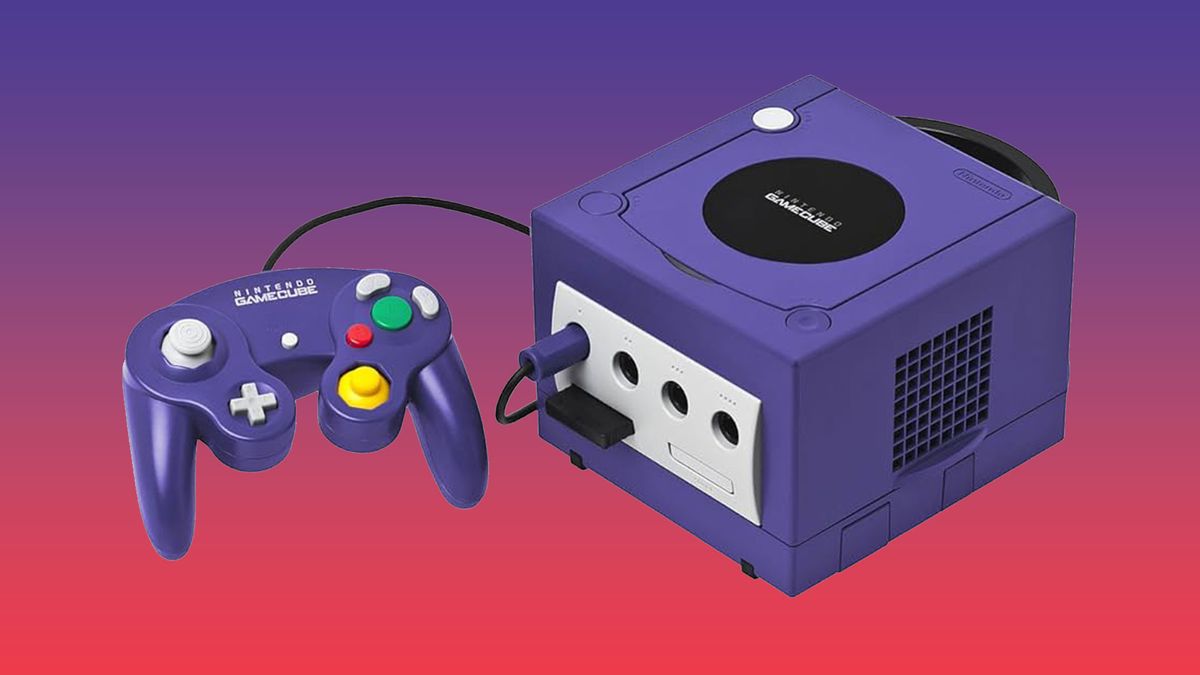
Created alongside the purple box that is the GameCube in 2001, the GameCube logo has got it all – a G, a C, and a cube, all packaged beautifully into an optical illusion. It looks so 3D it’s delicious – and certainly in contention for one of the best logos ever.

A Logo that’s More than Just a Logo

The GameCube logo isn’t just a visual treat; it’s also a representation of the console’s design philosophy. The logo’s 3D effect is mirrored in the console’s cube-shaped design, which was a bold move at the time. This attention to detail and commitment to design excellence is what sets the GameCube apart from other consoles of its era.

The Sonic Identity

It isn’t only the logo design that’s being applauded, but the sonic identity, too. Given sonic design is one of the 2025 trends as named by Monotype, Nintendo was ahead of its time with this element. The sound is gorgeously ASMR-like, but also exciting, and accompanied by a brilliant graphic.

A Logo that’s Full of Easter Eggs

One user remembers another fun design quirk – "hold the Z trigger during sound up to hear squeaky clown shoes!" they reminisce. This attention to detail and willingness to add fun Easter eggs to the design is what makes the GameCube logo so beloved.

Conclusion

The GameCube branding is as fun as I remember early Nintendo games being – and it’s a type of fun that’s largely missing from the video game branding space now. The GameCube logo is a masterclass in design, and its timeless charm continues to inspire and delight fans to this day.

FAQs

Q: What makes the GameCube logo so special?
A: The logo is a masterclass in design, with its clever use of optical illusions and 3D effects, making it a standout in the world of console branding.

Q: Is the GameCube logo still relevant today?
A: Yes, the GameCube logo is still widely praised and admired for its innovative design and attention to detail.

Q: What other Nintendo consoles have notable logo designs?
A: The Nintendo Switch and Nintendo 64 logos are also notable for their clever design and attention to detail.

Unlocking AI-Ready High-Performance Computing

0

Explore Your Local NVIDIA Website

Visit your regional NVIDIA website for local content, pricing, and where to buy partners specific to your country.

Regional Options

Visit Your Regional NVIDIA Website

Explore the latest information on NVIDIA products, pricing, and local availability by visiting your regional website.

What to Expect

* Localized content tailored to your region
* Product information and pricing in your local currency
* Information on where to buy NVIDIA products from local partners
* News and announcements specific to your region

FAQs
Q: What is my regional NVIDIA website?

A: Your regional NVIDIA website is the best place to find local content, pricing, and information on where to buy NVIDIA products.

Q: Why should I visit my regional NVIDIA website?

A: Visiting your regional website ensures you get access to localized content and information that is tailored to your region, making it easier for you to find the information you need.

Q: How do I find my regional NVIDIA website?

A: You can find your regional NVIDIA website by clicking on the link above and selecting your country from the list.

Which AI agent is the best?

0

What’s Better Than an AI Chatbot? AI Agents That Can Do Tasks on Their Own

What’s better than an AI chatbot that can perform tasks for you when prompted? AI that can do tasks for you on its own. AI agents are the newest frontier in the AI space, with companies racing to build their own models and offerings constantly rolling out to enterprises. But which AI agent is the best?

Galileo’s Agent Leaderboard

On Wednesday, Galileo launched an Agent Leaderboard on Hugging Face, an open-source AI platform where users can build, train, access, and deploy AI models. The leaderboard is meant to help people learn how AI agents perform in real-world business applications and help teams determine which agent best fits their needs.

How Models are Ranked

To determine the results, Galileo uses benchmarking datasets, including the BFCL (Berkeley Function Calling Leaderboard), τ-bench (Tau benchmark), Xlam, and ToolACE, which test different agent capabilities. The leaderboards then turn this data into an evaluation framework that covers real-world use cases.

The Rankings

Google’s Gemini-2.0 flash is in first place, followed closely by OpenAI’s GPT-4o. Both of these models received what Galileo calls "Elite Tier Performance" status, which is given to models with a score of 0.9 or higher. Google and OpenAI dominated the leaderboard with their private models, taking the first six positions.

The Results

  • Google’s Gemini 2.0 was consistent across all of the evaluation categories and balanced impressive consistency performance across all categories with cost-effectiveness, according to the post, at a cost of $0.15/$0.6 per million tokens.
  • OpenAI’s GPT-4o was a close second, but has a much higher price point at $2.5/$10 per million tokens.
  • In the "high-performance segment," the category below the elite tier, Gemini-1.5-Flash came in third place, and Gemini-1.5-Pro in fourth.
  • OpenAI’s reasoning models, o1 and o3-mini, followed in fifth and sixth place, respectively.
  • Mistral-small-2501 was the first open-sourced AI model to chart. Its score of 0.832 placed it in the "mid-tier capabilities" category, with its strengths being its strong long-context handling and tool selection capabilities.

How to Access the Leaderboard

To view the results, you can visit the Agent Leaderboard on Hugging Face. In addition to the standard leaderboard, you will be able to filter the leaderboard by whether the LLM is open-sourced or private, and by category, which refers to the capability being tested (overall, long context, composite, etc.).

Conclusion

The Galileo Agent Leaderboard provides a comprehensive benchmark of AI models, giving users a clear understanding of which models work best for their needs. With the leaderboard, companies can make informed decisions about which AI agent to use, and developers can build on top of the best-performing models.

Frequently Asked Questions

Q: What is the Galileo Agent Leaderboard?
A: The Galileo Agent Leaderboard is a benchmark of AI models that evaluates their performance in real-world business applications.

Q: How do models get ranked on the leaderboard?
A: Models are ranked based on their performance in benchmarking datasets, including BFCL, τ-bench, Xlam, and ToolACE.

Q: What are the top-performing models on the leaderboard?
A: The top-performing models on the leaderboard are Google’s Gemini-2.0 flash and OpenAI’s GPT-4o, both of which received "Elite Tier Performance" status.

Q: How can I access the leaderboard?
A: You can access the leaderboard on Hugging Face, where you can filter results by whether the LLM is open-sourced or private, and by category.

AI Alexa and AI Siri face bugs and delays

0

Amazon and Apple Struggle to Release Generative AI-Powered Digital Assistants

Amazon’s Delayed Release of New Alexa

Amazon had planned to release its new Alexa during an event in New York on February 26. However, the company has decided to delay the release until March or later, according to a report by the Washington Post. The delay is attributed to technical issues and the difficulty in putting together the new AI technology.

Apple’s Siri Overhaul Running into Problems

Meanwhile, Bloomberg reports that Apple’s overhaul of Siri is also facing engineering problems and software bugs. Some new features planned for release in April may now be delayed until May or later. The issues are said to be related to the integration of the new AI technology and the need for further testing.

Competition from Next-Gen AI Voice Assistants

Amazon and Apple had hoped to release their updated digital assistants quickly to compete with next-gen AI voice assistants, such as OpenAI’s Advanced Voice Mode and Google’s Gemini Live. However, their efforts are not going according to plan.

Conclusion

The struggles of Amazon and Apple to release their generative AI-powered digital assistants are a setback for the companies, which had hoped to stay ahead of the competition. The delay in release may give their competitors an opportunity to gain an edge in the market. However, the companies are expected to continue working on improving their technology and releasing their updated digital assistants in the near future.

FAQs

Q: Why is Amazon delaying the release of its new Alexa?

A: Amazon is delaying the release of its new Alexa due to technical issues and the difficulty in putting together the new AI technology.

Q: What are the issues with Apple’s Siri overhaul?

A: Apple’s overhaul of Siri is facing engineering problems and software bugs, which may result in a delay in the release of new features.

Q: What is the competition like in the AI voice assistant market?

A: The competition in the AI voice assistant market is fierce, with companies like OpenAI and Google releasing next-gen AI voice assistants that are expected to change the landscape of the industry.