Home Blog Page 299

Vance Is Laying the Groundwork

0

Article

The New Generation of Republican Leadership: Why JD Vance is the Man to Watch

JD Vance may not command headlines like Donald Trump or Elon Musk, but he is the man to watch if you care about the long game in politics. His vice-presidential assignments seem carefully chosen to position him with an eye toward where America is heading.

A New Era of Leadership

Vance’s remarks on American global leadership in A.I. this week in Paris turned heads with his forceful argument that we need to move beyond looking at A.I. as a threat to be managed to seeing it as an engine of opportunity. He talks about tech like a guy who doesn’t need kids to help him reset his Wi-Fi password, which is saying something for a political leader in our country. This is but one facet of what sets him apart from much of the Washington gerontocracy.

The Future of the Republican Party

If the 2024 presidential election was burdened by the weight of old men fighting for their respective legacies, Trump did something refreshing when he chose the first millennial running mate. As a pollster, I’ve seen voters’ desire for fresh energy and ideas come from a worry that our politics are stagnant and stuck on the status quo.

The Rise of JD Vance

Which is why I was struck this week when Trump was asked directly if he viewed Vance as his successor for 2028, and replied that he did not. He praised Vance for doing a "fantastic job" but said, in his view, it was "too early" to anoint him as the next Republican nominee.

While it is understandable that Trump is focused on the here and now, not what comes after his presidency, it is hardly too early to see the obvious. Vance is the natural inheritor of the movement Trump has built, with a keen grasp on what binds many of Trump’s supporters, especially his younger supporters, to him, both in style and in substance.

The Future of the Republican Party

A decade ago, after back-to-back elections in which Republicans got blown out among young voters, I wrote a book about the party’s problem reaching millennials. I called on Republicans to show up for my generation in the new places where we got information, to care about being culturally relevant, and to connect on forward-looking issues young people actually care about.

The Republican Party’s New Path

Finally, after years of struggling to appeal to younger voters, the Republican Party led by the Trump-Vance ticket nearly fought the Democrats to a draw with voters under age 30. I confess that 10 years ago I never would have guessed that it would be the re-election of Donald Trump bringing all this to fruition. Even as many young Americans still depart sharply from the G.O.P. on many issues, the improvements Republicans have made with younger voters are undeniable in the polling data I see. Republicans say they feel "cool" for the first time in a long time.

Conclusion

The Republican Party of yesteryear is not coming back. There is only forward, and there is only onward to what’s next, and JD Vance seems clearly to be what’s next for Republicans. As a younger American who also happens to be vice president, Vance has been able to fuse parts of Trump’s stylistic approach and policy agenda with a sense of the future that is likely to have appeal and staying power with the next generation of Republican voters.

FAQs

Q: What is JD Vance’s role in the Trump administration?
A: JD Vance is the Vice President of the United States, serving under President Donald Trump.

Q: What are JD Vance’s views on A.I.?
A: Vance believes that A.I. should be seen as an engine of opportunity, not just a threat to be managed.

Q: What is the significance of JD Vance’s youth?
A: Vance’s youth is significant because he is able to fuse parts of Trump’s stylistic approach and policy agenda with a sense of the future that is likely to have appeal and staying power with the next generation of Republican voters.

Q: What is the future of the Republican Party?
A: The future of the Republican Party is uncertain, but JD Vance seems to be well-positioned to lead the party into the future with his unique blend of style and substance.


Is Perplexity’s Sonar more ‘factual’ than its AI rivals?

0

Perplexity’s Latest Release: A Game-Changer for User Satisfaction?

Optimized for Answer Quality and User Experience

On Tuesday, Perplexity announced a new version of Sonar, its proprietary model, based on Meta’s open-source Llama 3.3 70B. The updated Sonar is designed to improve the readability and accuracy of its answers in search mode. Perplexity claims that Sonar scored higher than GPT-4o mini and Claude models on factuality and readability, but there isn’t an external benchmark to measure this.

Comparing Sonar to Competitor Models

Perplexity displays several screenshot examples of side-by-side answers from Sonar and competitor models, including GPT-4o and Claude 3.5 Sonnet. These examples differ in directness, completion, and scannability, often favoring Sonar’s cleaner formatting and higher number of citations. However, the sources a chatbot cites are influenced by the publisher and media partner agreements of its parent company, which Perplexity and OpenAI each have.

Methodology and User Satisfaction

Perplexity doesn’t clarify a methodology on how it provoked or measured the responses, leaving the comparisons up to individuals to "see the difference." The company claims that online A/B testing revealed that users were much more satisfied and engaged with Sonar than with GPT-4o mini, Claude 3.5 Haiku, and Claude 3.5 Sonnet, but it didn’t expand on the specifics of these results.

Speed and Performance

Sonar’s speed of 1,200 tokens per second enables it to answer queries almost instantly and work 10 times faster than Gemini 2.0 Flash. Testing showed Sonar surpassing GPT-4o mini and Claude 3.5 Haiku "by a substantial margin," but the company doesn’t clarify the details of that testing.

Achievements and Availability

Sonar beat its two competitors on academic benchmark tests IFEval and MMLU, which evaluate how well a model follows user instructions and its grasp of "world knowledge" across disciplines. The upgraded Sonar is available for all Pro users, who can make it their default model in their settings or access it through the Sonar API.

Conclusion

Perplexity’s latest release, Sonar, appears to be a significant improvement in answer quality and user experience. While the company’s claims are impressive, the lack of transparency in methodology and the absence of external benchmarks make it difficult to fully evaluate its performance. As the AI landscape continues to evolve, it will be interesting to see how Sonar performs in real-world applications and how it compares to other models in the market.

FAQs

Q: What is Sonar?
A: Sonar is a proprietary model from Perplexity, optimized for answer quality and user experience.

Q: How does Sonar compare to competitor models?
A: Perplexity claims that Sonar scored higher than GPT-4o mini and Claude models on factuality and readability, but there isn’t an external benchmark to measure this.

Q: What are the advantages of Sonar?
A: Sonar’s speed of 1,200 tokens per second enables it to answer queries almost instantly and work 10 times faster than Gemini 2.0 Flash. It also beat its two competitors on academic benchmark tests IFEval and MMLU.

Q: Is Sonar available for use?
A: Yes, the upgraded Sonar is available for all Pro users, who can make it their default model in their settings or access it through the Sonar API.

Level Up Your Game Art

0

Designing Unique Characters: A Guide to Bringing Classic Figures to Life in Video Games

01. Define Your Core Concept

When reimagining a classic character, a designer should begin by researching the source material and defining the character’s core role and thematic identity within their own property. It’s essential to hone in on the keys to retaining that familiarity besides just the name. In the case of Alice the Wanderer, we determined it was her youthful, delicate hairstyle, the knee-length, puff-sleeved dress that made people instantly identify with the character.

Alice in RAID: Shadow Legends is a warrior, so the contrast of the perfectly coiffed hair and a ruggedized version of the dress paired with weaponry created a unique eye-catching dynamic. Fitting her into RAID’s universe required a major adjustment, as her gear design incorporated both the game’s aesthetics and symbols from a deck of cards.

02. Establishing the Character’s Silhouette and Expressions

Before putting pen to paper, we began the creative process by determining where the characters fit within RAID’s many Factions, which is how we organize our 800+ Champions based on their demeanor, skill sets, and overall style. We then develop visual language through research, silhouette blocking, and material detailing, ensuring that each element reinforces their transformation into RAID Champions.

For the Queen of Hearts, it meant amplifying her existing dominance and making her an undeniable force on the battlefield. It is also important for character designers to remember they aren’t just making a unique character for the faithless; they are creating a character that will be experienced by players. This is crucial for maintaining a sense of authenticity and immersion.

03. Detailing and Refinement

Once the silhouette and expressions were locked in for the Queen of Hearts, we refined her armor and materials to enhance her storytelling through design. Her armor was given deep red accents, a direct nod to her royal power and blood-soaked battlefield history. The iron-plated textures evoke the feeling of a warlord rather than just a ruler, reinforcing the idea that she fights for control and doesn’t just rule from a throne.

04. Testing and Adjustments

Once the core model for the Queen of Hearts was developed, we tested it in RAID’s environments to ensure she stood out while feeling grounded in the game world. Initially, we placed her in the Knights Revenant showcase scene to see how her lighting and materials reacted. We also tested her in battle environments to verify that her imposing stature and armor details remained visually striking from different camera angles. Adjustments were made to contrast her against other characters, making sure her silhouette remained distinct, even in chaotic battles.

05. Conclusion

In this article, we’ve outlined the steps we took to design characters for RAID: Shadow Legends x Alice’s Adventure. From defining the core concept to detailing and refinement, we’ve shown how to bring a classic character to life in a video game. By following these steps, you can create a character that is both familiar and unique, engaging and immersive.

Frequently Asked Questions

Q: What is the most important aspect of designing a character for a video game?
A: Defining the character’s core concept and staying true to the source material while still making it unique for the game.

Q: How do you ensure the character stands out in a game world?
A: By developing a strong silhouette, using contrasting colors, and refining the character’s design through detailing and testing.

Q: What is the key to making a character feel authentic and immersive?
A: By staying true to the character’s original traits and incorporating them into the game world in a way that feels natural and consistent.

Elon Musk Will Withdraw Bid for OpenAI’s Nonprofit if its Board Agrees to Terms

0

Elon Musk’s Bid for OpenAI: A Conditional Offer

Background

Elon Musk, the billionaire founder of Tesla and SpaceX, has submitted a filing to the U.S. District Court for the Northern District of California, stating that he will withdraw his $97.4 billion bid for OpenAI’s nonprofit if the company’s board of directors "preserve the charity’s mission" and halt its conversion to a for-profit corporation.

The Offer

The filing, submitted on behalf of Musk, claims that his offer to buy OpenAI’s nonprofit is "serious" and that the nonprofit "must be compensated by what an arms-length buyer will pay for its assets." The offer is conditional, with Musk stating that if OpenAI’s board is prepared to preserve the charity’s mission and stop the conversion to a for-profit corporation, he will withdraw the bid.

Background on the Dispute

The dispute between Musk and OpenAI began on Monday, when Musk, his AI company, xAI, and a group of investors offered to buy the nonprofit that governs OpenAI for $97.4 billion. OpenAI CEO Sam Altman and the company’s board quickly dismissed the unsolicited proposal, stating that the nonprofit is "not for sale." The dispute is not new, as Musk has been a vocal critic of OpenAI’s decision to transition from a nonprofit to a for-profit corporation.

Musk’s Lawsuit Against OpenAI

Musk has also brought a lawsuit against OpenAI and its CEO, alleging that the company engaged in anticompetitive behavior and fraud, among other offenses. The lawsuit seeks to enjoin the company’s conversion to a for-profit corporation.

OpenAI’s Response

In a filing earlier on Wednesday, attorneys for OpenAI called Musk’s move to take control of the company "an improper bid to undermine a competitor" and a contradiction of his position in court that a transfer of the startup’s assets through restructuring would breach its mission as a charitable trust.

Conclusion

The dispute between Musk and OpenAI highlights the complexities of the tech industry, where competition and innovation are often at odds with each other. As the two parties continue to navigate this dispute, it remains to be seen what the outcome will be.

Frequently Asked Questions

Q: What is the dispute between Elon Musk and OpenAI about?
A: The dispute is about Musk’s $97.4 billion bid for OpenAI’s nonprofit, which he has conditional offers to withdraw if the company’s board of directors preserves its mission and halts its conversion to a for-profit corporation.

Q: What is the background of the dispute?
A: The dispute began when Musk, his AI company, xAI, and a group of investors offered to buy the nonprofit that governs OpenAI for $97.4 billion. OpenAI CEO Sam Altman and the company’s board quickly dismissed the unsolicited proposal.

Q: What is the lawsuit between Musk and OpenAI about?
A: The lawsuit is about allegations of anticompetitive behavior and fraud, among other offenses, and seeks to enjoin the company’s conversion to a for-profit corporation.

Automating GPU Kernel Generation with DeepSeek-R1 and Inference Time Scaling

0

The Need for Optimized Attention Kernels and Associated Challenges

Attention is a key concept that has revolutionized the development of large language models (LLMs). It allows AI models to focus selectively on the most relevant parts of input data, making better predictions and finding hidden patterns. However, the computational complexity of the attention operation grows quadratically with the input sequence length, motivating the need for optimized lower-level implementations (GPU kernels) to prevent runtime errors and improve computational efficiency.

Creating an optimized GPU kernel for attention is a challenging task that requires significant skill and time, even for experienced software engineers. This is because it involves developing a deep understanding of the problem, designing a effective solution, and implementing it efficiently. Recent LLMs like DeepSeek-R1 have shown promise in code generation tasks, but they still face challenges in creating optimized code on the first try. This makes it necessary to use other strategies at inference time to generate optimized code.

Inference-Time Scaling for Generating Optimized GPU Kernels

To generate optimized GPU kernels, NVIDIA engineers have created a new workflow that includes a special verifier along with the DeepSeek-R1 model during inference in a closed-loop fashion for a predetermined duration. The workflow is initialized by a manual prompt, and the DeepSeek-R1 model generates the GPU code (kernel) in the first pass. The verifier runs on an NVIDIA H100 GPU, analyzing the generated kernel and creating new prompts that are provided as input to the DeepSeek-R1 model.

The closed-loop approach makes the code generation process better by guiding it in a different way each time. The team found that by letting this process continue for 15 minutes resulted in an improved attention kernel.

Results

The workflow produced numerically correct kernels for 100% of Level-1 problems and 96% of Level-2 problems, as tested by Stanford’s KernelBench benchmark. The Level-1 solving rate in KernelBench refers to the numerical correct metric used to evaluate the ability of LLMs to generate efficient GPU kernels for specific computational tasks.

Figure 3 shows the performance of automatically generated optimized attention kernels with flex attention. The workflow produced numerically correct kernels for 100% of Level-1 problems and 96% of Level-2 problems.

Inference-Time Scaling Results

Figure 4 shows the number of numerically correct kernels generated over time. The line approaches 95% at ~10 minutes and 100% at 20 minutes.

Conclusion

These results show how the latest DeepSeek-R1 model can be used to generate better GPU kernels by using more computing power during inference time. This is still a new research area with early results on a promising approach that automatically generates effective attention kernels. While we are off to a good start, more work is needed to generate better results consistently for a wider variety of problems. We’re excited about the recent developments in DeepSeek-R1 and its potential.

FAQs

Q: What is the need for optimized attention kernels?
A: The need for optimized attention kernels arises from the computational complexity of the attention operation, which grows quadratically with the input sequence length, motivating the need for optimized lower-level implementations (GPU kernels) to prevent runtime errors and improve computational efficiency.

Q: What is the DeepSeek-R1 model?
A: The DeepSeek-R1 model is a recent large language model that has shown promise in code generation tasks.

Q: What is the workflow for generating optimized GPU kernels?
A: The workflow involves a special verifier along with the DeepSeek-R1 model during inference in a closed-loop fashion for a predetermined duration.

Q: What are the results of the workflow?
A: The workflow produced numerically correct kernels for 100% of Level-1 problems and 96% of Level-2 problems, as tested by Stanford’s KernelBench benchmark.

Capture the Future of Photography at TPS 2025

0

The Photography Show: 5 Reasons to Attend

01. Get Hands-on with the Latest Kit

With exhibitors ranging from industry heavyweights like Canon, Sony, Nikon, Fujifilm, OM System, 3 Legged Thing, Pentax, Tamron, Lowepro, and Sigma, you’ll get to experience hands-on demos with the very latest cameras and accessories. And if you like what you see, retailers like Wex Photo Video, CameraWorld, and London Camera Exchange will be there with exclusive discounts, plus trade-in and finance options.

Many exhibitors will host their own programs of kit and skills demos at their stands, including Nikon School, Canon Spotlight, Fujifilm School, Sony Alpha, Sigma, and our sister site, Digital Camera World.

02. See Never-Before-Seen Photography

The Galleries section will include a host of exhibitions, including a glimpse back in time of the 1948 Olympic Games in London with a set of unseen photographs that were developed from an abandoned film cartridge. You can also view the prestigious LCE Photographer of the Year Awards, the finalists of the Science and Nature Scavenger Hunt competition, and ‘Felt’ Here I am (a chance to engage with images from a new perspective).

03. Learn New Techniques from the Pros

You can join extra-special intimate tutorial sessions delivered via a Photo Walk, set against the scenic backdrop of London Docklands. There will be live talks on the stages, featuring Lindsay Adler, David DuChemin, Joel Grimes, Colin Prior, Andy Gott, Julieanne Kost, Scott Kelby, Sarah Edmunds, Kelly Brown, and Belinda Richards. You’ll also find content creators Oliver Howells, Kym Moseley, Tati Kapaya, Tamara Gabriel, Andy Burgess, Ellis Reed, Bax Mundoba, and Courtney Victoria.

04. Play!

The popular Creator Playground is back for its third year. Have fun with friends and colleagues while roaming this extensive ‘Play’ themed area. Expect giant garden games, illusion tunnels, and plenty more.

05. Exclusive Pro Accesss

Visitors with a professional entry pass will have exclusive access to the Pro Lounge at the Central Café Bar and a chance to connect with other pros at the Adobe-sponsored Drinks Reception on the Monday, from 17:30 until 19:00.

Conclusion

The Photography Show is an event not to be missed. With over 250 exhibitors, more than 500 talks and demos, and four days of photography heaven, you’ll be spoiled for choice. Whether you’re a hobbyist or a pro, there’s something for everyone at The Photography Show.

Frequently Asked Questions

Q: What are the dates and times of the event?
A: The event runs from Saturday 8 March to Tuesday 11 March, from 10am-5pm.

Q: Where is the event held?
A: The event is held at the Excel Centre in London.

Q: How much do tickets cost?
A: See the price list below (concessions are available).

Q: Can I get a refund or exchange my ticket?
A: [Insert refund/exchange policy]

Q: Can I bring my child/students?
A: [Insert policy on children/students]

Q: Can I attend as a professional?
A: Professional creatives can register for free entry to the show on any day, as can students on Monday 10 and Tuesday 11 March.

Ticket Prices

  • Any one day: £18.95
  • Any two days: £28.43
  • Any three days: £37.91
  • Any four days: £47.39

AI Chatbots Distort the News

0

AI Chatbots Churning Out Inaccurate News Summaries

Major AI chatbots, including OpenAI’s ChatGPT, Microsoft’s Copilot, Google’s Gemini, and Perplexity AI, have been found to produce "significant inaccuracies" and "distortions" when summarizing news stories.

Investigation Methodology

A recent BBC investigation presented the four AI chatbots with news content from the BBC’s website and asked them to summarize the news. The report details that the BBC asked the chatbots to summarize 100 news stories, and journalists with relevant expertise rated the quality of each answer.

Findings

The investigation found that:

  • 51% of all AI-produced answers had significant issues
  • 19% of the AI-generated answers "introduced factual errors, such as incorrect factual statements, numbers, and dates"
  • 13% of the quotes from BBC articles were altered in some way, undermining the "original source" or not even being present in the cited article

Examples of Errors

Some notable errors highlighted in the report include:

  • ChatGPT claiming that Hamas chairman Ismail Haniyeh was assassinated in December 2024 in Iran when he was actually killed in July
  • Gemini stating that the National Health Service (NHS) "advises people not to start vaping and recommends that smokers who want to quit should use other methods" (this statement is incorrect)
  • Perplexity misquoting a statement from Liam Payne’s family after his death
  • ChatGPT and Copilot both misstating that former UK politicians Rishi Sunak and Nicola Sturgeon were still in office

Comparison of AI Chatbots

The report found that Copilot and Gemini had more inaccuracies and issues overall than OpenAI’s ChatGPT and Perplexity.

Concerns and Recommendations

The investigation concluded that factual inaccuracies weren’t the only concern about the chatbot’s output; the AI assistants also "struggled to differentiate between opinion and fact, editorialized, and often failed to include essential context."

Publishers should have control over whether and how their content is used, and AI companies should show how assistants process news along with the scale and scope of errors and inaccuracies they produce.

Reactions and Responses

Deborah Turness, CEO of BBC News and Current Affairs, responded to the investigation’s findings, stating: "The price of AI’s extraordinary benefits must not be a world where people searching for answers are served distorted, defective content that presents itself as fact."

A spokesperson for OpenAI emphasized the quality of ChatGPT’s output, stating that OpenAI is working with partners to improve in-line citation accuracy and respect publisher preferences to enhance search results.

Conclusion

The investigation highlights the need for AI companies to improve the accuracy and reliability of their chatbots. As AI becomes increasingly prevalent in our daily lives, it is crucial that we ensure that the information we receive is accurate and trustworthy.

FAQs

Q: What was the purpose of the investigation?
A: The investigation aimed to assess the accuracy of AI chatbots in summarizing news stories.

Q: Which AI chatbots were tested?
A: OpenAI’s ChatGPT, Microsoft’s Copilot, Google’s Gemini, and Perplexity AI.

Q: What were the findings of the investigation?
A: The investigation found that 51% of AI-produced answers had significant issues, 19% introduced factual errors, and 13% of quotes from BBC articles were altered.

Q: What are the implications of these findings?
A: The findings highlight the need for AI companies to improve the accuracy and reliability of their chatbots to ensure that users receive trustworthy information.

The Entire Story of Twitter under Elon Musk

0

The Turbulent History of Twitter Under Elon Musk’s Leadership

The Initial Acquisition and Offer

On April 4th, 2022, we learned that Elon Musk had purchased enough shares of Twitter to become its largest individual shareholder. Eventually, he followed up with an unsolicited offer to buy 100 percent of Twitter’s shares for $54.20 each, or about $44 billion. Twitter accepted Musk’s offer, but then things got weird because he tried to cancel the deal.

The Aftermath of the Cancelled Deal

Since then, there have been layoffs, more layoffs, and even more layoffs — plus drama over Substack, unpaid bills, and blue checkmarks. With ad revenue still down from previous years, Elon finally abdicated the role of CEO in May 2023, installing longtime NBCUniversal ad executive Linda Yaccarino.

What’s Happening Inside Twitter Right Now?

Layoffs and Restructuring

The company has undergone a series of layoffs, with many employees losing their jobs. The reasons behind these layoffs are still unclear, but it’s been reported that Musk is trying to cut costs and restructure the company.

The Fate of Substack and Blue Checkmarks

Substack, a popular platform for writers and journalists, has been a topic of debate. Musk has been critical of the platform, and some employees have reported receiving unpaid bills. The future of Substack remains uncertain. Blue checkmarks, a popular feature on Twitter, have also been a subject of controversy, with some users reporting their checkmarks have been removed.

The New CEO and the Road Ahead

In May 2023, Musk stepped down as CEO and was replaced by Linda Yaccarino, a longtime NBCUniversal ad executive. The company’s future remains uncertain, with many questions about its direction and sustainability.

FAQs

Q: What happened to Elon Musk’s offer to buy Twitter?
A: Musk initially offered to buy Twitter for $44 billion, but he later tried to cancel the deal.

Q: Why did Elon Musk try to cancel the deal?
A: The reasons behind Musk’s decision to cancel the deal are unclear, but it’s been reported that he had second thoughts about the acquisition.

Q: What happened to Substack and blue checkmarks?
A: Substack’s future remains uncertain, and blue checkmarks have been a subject of controversy, with some users reporting their checkmarks have been removed.

Q: Who is the new CEO of Twitter?
A: Linda Yaccarino, a longtime NBCUniversal ad executive, was appointed as the new CEO of Twitter in May 2023.

Compact 3D Scanner Delivers Great Results

0

3DMakerPro Moose 3D Scanner Review: Key Specs

Who is it for?

The Moose is ideal for anyone doing 3D printing, creating miniatures, or a hobbyist with an interest in 3D scanning.

Unboxing

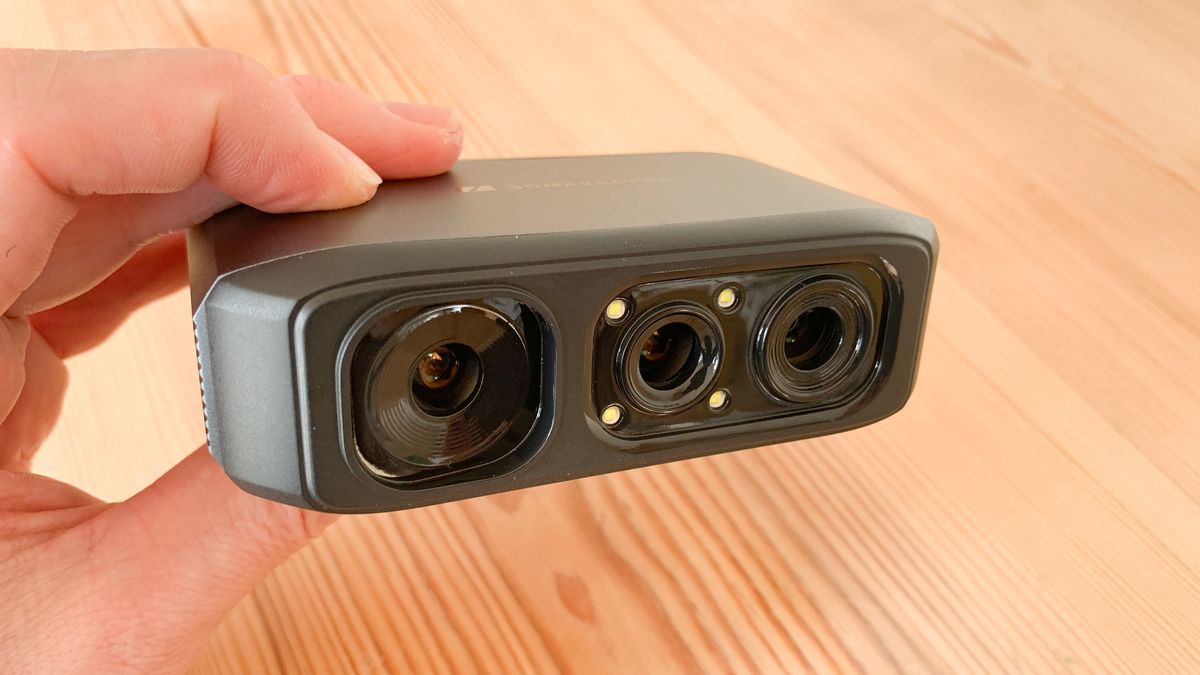
The scanner is predominantly of metal construction, with the front and rear faces engineered from thick plastic. The quality of the materials means you won’t have any problems with damage from either light knocks or dropping it onto the floor from a tripod height.

Using the Scanner

The scanner is remarkably easy to use, with a simple single cable that is split into two parts; the data part and the power part. The fact that this cable tucks neatly into a recessed part of the scanner is especially nice.

Accuracy

The terminology surrounding the accuracy of 3D scanners is often a little confusing. Rather than one single accuracy setting, there are two main specifications that should be taken into consideration. The single-frame accuracy for the Moose is 0.03 mm, and the resolution is 0.07mm.

Textures

Equipped with a 24-bit color camera, the Moose produces a high level of accurate color replication. I generally opt for an alternative, higher resolution texture workflow, but I was pleasantly surprised by the on-board results.

Should I buy the 3DMakerPro Moose 3D Scanner?

The Moose 3D scanner is perfectly pitched towards entry-level professionals and serious hobbyists. It is selling for $699, which puts it at the same price as the Seal scanner. At a similar size and with better single-frame accuracy and resolution, I would expect most people to opt for the Seal. The only notable benefit of the Moose over the Seal is the introduction of AI-powered visual tracking that helps overcome issues that might be caused by poor scanning techniques.

FAQs

Q: What is the object size limit for the Moose 3D scanner?
A: The object size limit for the Moose 3D scanner is between 15-1500mm.

Q: What is the scanning speed of the Moose 3D scanner?
A: The scanning speed of the Moose 3D scanner is 10 frames per second.

Q: Is the Moose 3D scanner compatible with multiple operating systems?
A: Yes, the Moose 3D scanner is compatible with Windows, macOS, Android, and iOS.

Q: What is the weight of the Moose 3D scanner?
A: The weight of the Moose 3D scanner is 280g.

Q: What is the price of the Moose 3D scanner?
A: The price of the Moose 3D scanner is $699.

Engineers enable a drone to determine its position in the dark and indoors | MIT News

0

In the future, autonomous drones could be used to shuttle inventory between large warehouses. A drone might fly into a semi-dark structure the size of several football fields, zipping along hundreds of identical aisles before docking at the precise spot where its shipment is needed.

Most of today’s drones would likely struggle to complete this task, since drones typically navigate outdoors using GPS, which doesn’t work in indoor environments. For indoor navigation, some drones employ computer vision or lidar, but both techniques are unreliable in dark environments or rooms with plain walls or repetitive features.

MIT researchers have introduced a new approach that enables a drone to self-localize, or determine its position, in indoor, dark, and low-visibility environments. Self-localization is a key step in autonomous navigation.

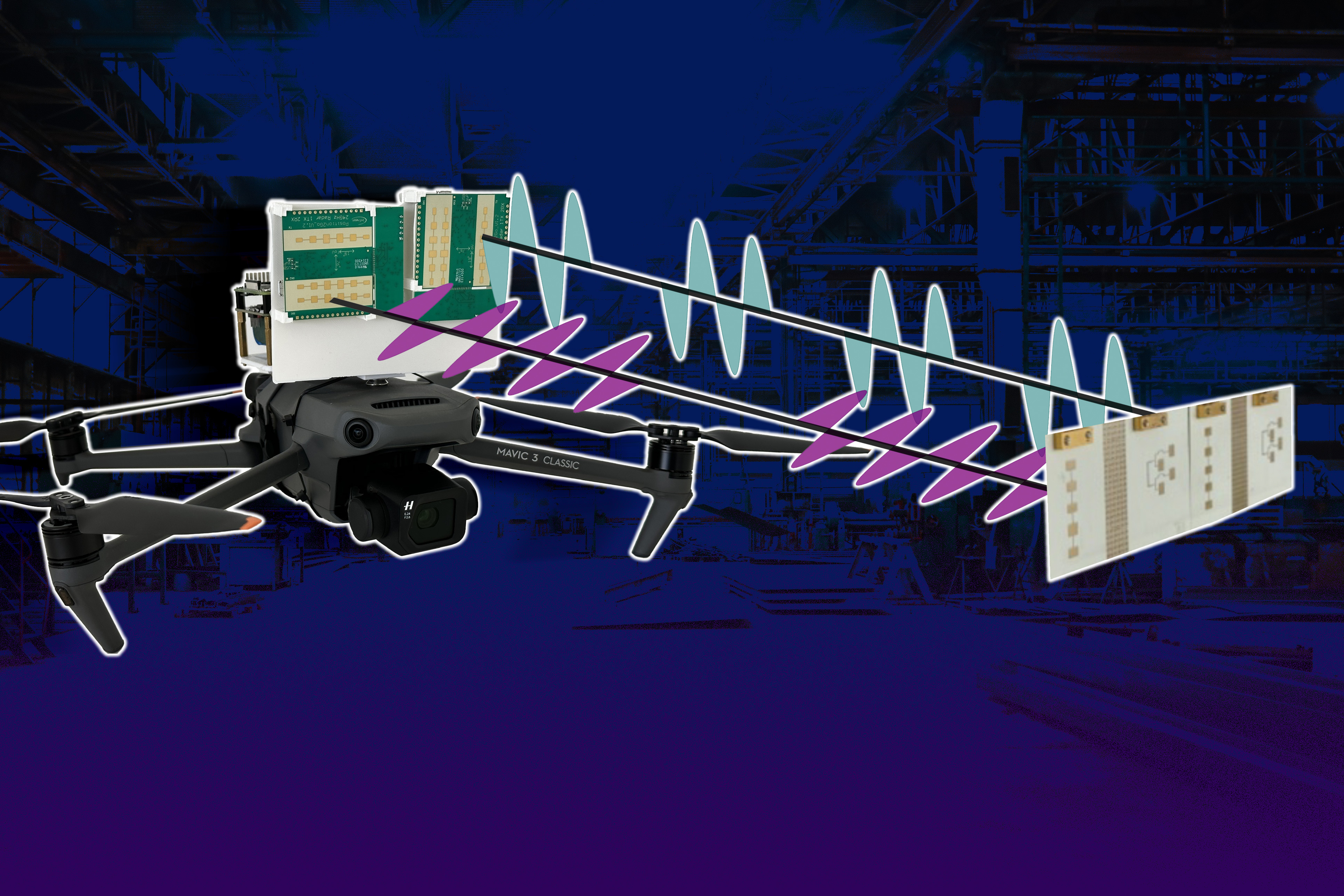
The researchers developed a system called MiFly, in which a drone uses radio frequency (RF) waves, reflected by a single tag placed in its environment, to autonomously self-localize.

Because MiFly enables self-localization with only one small tag, which could be affixed to a wall like a sticker, it would be cheaper and easier to implement than systems that require multiple tags. In addition, since the MiFly tag reflects signals sent by the drone, rather than generating its own signal, it can be operated with very low power.

Two off-the-shelf radars mounted on the drone enable it to localize in relation to the tag. Those measurements are fused with data from the drone’s onboard computer, which enables it to estimate its trajectory.

The researchers conducted hundreds of flight experiments with real drones in indoor environments, and found that MiFly consistently localized the drone to within fewer than 7 centimeters.

“As our understanding of perception and computing improves, we often forget about signals that are beyond the visible spectrum. Here, we’ve looked beyond GPS and computer vision to millimeter waves, and by doing so, we’ve opened up new capabilities for drones in indoor environments that were not possible before,” says Fadel Adib, associate professor in the Department of Electrical Engineering and Computer Science, director of the Signal Kinetics group in the MIT Media Lab, and senior author of a paper on MiFly.

Adib is joined on the paper by co-lead authors and research assistants Maisy Lam and Laura Dodds; Aline Eid, a former postdoc who is now an assistant professor at the University of Michigan; and Jimmy Hester, CTO and co-founder of Atheraxon, Inc. The research will be presented at the IEEE Conference on Computer Communications.

Backscattered signals

To enable drones to self-localize within dark, indoor environments, the researchers decided to utilize millimeter wave signals. Millimeter waves, which are commonly used in modern radars and 5G communication systems, work in the dark and can travel through everyday materials like cardboard, plastic, and interior walls.

They set out to create a system that could work with just one tag, so it would be cheaper and easier to implement in commercial environments. To ensure the device remained low power, they designed a backscatter tag that reflects millimeter wave signals sent by a drone’s onboard radar. The drone uses those reflections to self-localize.

But the drone’s radar would receive signals reflected from all over the environment, not just the tag. The researchers surmounted this challenge by employing a technique called modulation. They configured the tag to add a small frequency to the signal it scatters back to the drone.

“Now, the reflections from the surrounding environment come back at one frequency, but the reflections from the tag come back at a different frequency. This allows us to separate the responses and just look at the response from the tag,” Dodds says.

However, with just one tag and one radar, the researchers could only calculate distance measurements. They needed multiple signals to compute the drone’s location.

Rather than using more tags, they added a second radar to the drone, mounting one horizontally and one vertically. The horizontal radar has a horizontal polarization, which means it sends signals horizontally, while the vertical radar would have a vertical polarization.

They incorporated polarization into the tag’s antennas so it could isolate the separate signals sent by each radar.

“Polarized sunglasses receive a certain polarization of light and block out other polarizations. We applied the same concept to millimeter waves,” Lam explains.

In addition, they applied different modulation frequencies to the vertical and horizontal signals, further reducing interference.

Precise location estimation

This dual-polarization and dual-modulation architecture gives the drone’s spatial location. But drones also move at an angle and rotate, so to enable a drone to navigate, it must estimate its position in space with respect to six degrees of freedom — with trajectory data including pitch, yaw, and roll in addition to the usual forward/backward, left/right, and up/down.

“The drone rotation adds a lot of ambiguity to the millimeter wave estimates. This is a big problem because drones rotate quite a bit as they are flying,” Dodds says.

They overcame these challenges by utilizing the drone’s onboard inertial measurement unit, a sensor that measures acceleration as well as changes in altitude and attitude. By fusing this information with the millimeter wave measurements reflected by the tag, they enable MiFly to estimate the full six-degree-of-freedom pose of the drone in only a few milliseconds.

They tested a MiFly-equipped drone in several indoor environments, including their lab, the flight space at MIT, and the dim tunnels beneath the campus buildings. The system achieved high accuracy consistently across all environments, localizing the drone to within 7 centimeters in many experiments.

In addition, the system was nearly as accurate in situations where the tag was blocked from the drone’s view. They achieved reliable localization estimates up to 6 meters from the tag.

That distance could be extended in the future with the use of additional hardware, such as high-power amplifiers, or by improving the radar and antenna design. The researchers also plan to conduct further research by incorporating MiFly into an autonomous navigation system. This could enable a drone to decide where to fly and execute a flight path using millimeter wave technology.

“The infrastructure and localization algorithms we build up for this work are a strong foundation to go on and make them more robust to enable diverse commercial applications,” Lam says.

This research is funded, in part, by the National Science Foundation and the MIT Media Lab.