Home Blog Page 304

Integrating AI with IoT for Smarter Solutions

Ready for a quick quiz? Let’s see how well you know the world of smart technology:

  1. What do you call it when your fridge orders milk for you?
  2. How about when your car predicts it needs an oil change?
  3. And what about when your thermostat learns your schedule and adjusts automatically?

If you answered “Internet of Things” or “AI” to any of these, you’re on the right track! But what if we told you the real thing happens when we combine both? Welcome to the world of AI in IoT, where smart devices get even smarter.

AI in IoT

Imagine a world where your coffee maker not only brews your morning cup but also predicts when you’ll wake up based on your sleep patterns. Or a city where traffic lights adjust in real-time to prevent jams before they happen. This isn’t science fiction – it’s the reality of AI and IoT working together.

According to a recent report by IoT Analytics, the global AI in IoT market is expected to reach $16.2 billion by 2024, growing at a CAGR of 26%. That’s a lot of smart devices getting a whole lot smarter!

Understanding AI and IoT

Picture this: You’re hosting a dinner party, and you’ve got two super-talented friends. One is a master chef who can whip up incredible dishes (that’s IoT), and the other is a mind-reading magician who knows exactly what your guests will love (that’s AI).

Now, imagine what happens when these two team up. That’s IoT and AI working together!

Defining IoT

The Internet of Things (IoT) is like that master chef in your kitchen. It’s a network of interconnected devices that collect and exchange data. These devices are the ingredients – smart fridges, wearable fitness trackers, industrial sensors, you name it. They’re constantly gathering information about their environment and how they’re being used.

Defining AI

This is where Artificial Intelligence (AI) comes in – our mind-reading magician. AI is the simulation of human intelligence processes by machines, especially computer systems. It’s the brain that can analyze vast amounts of data, recognize patterns, and make decisions or predictions based on that analysis.

The Synergy of AI and IoT

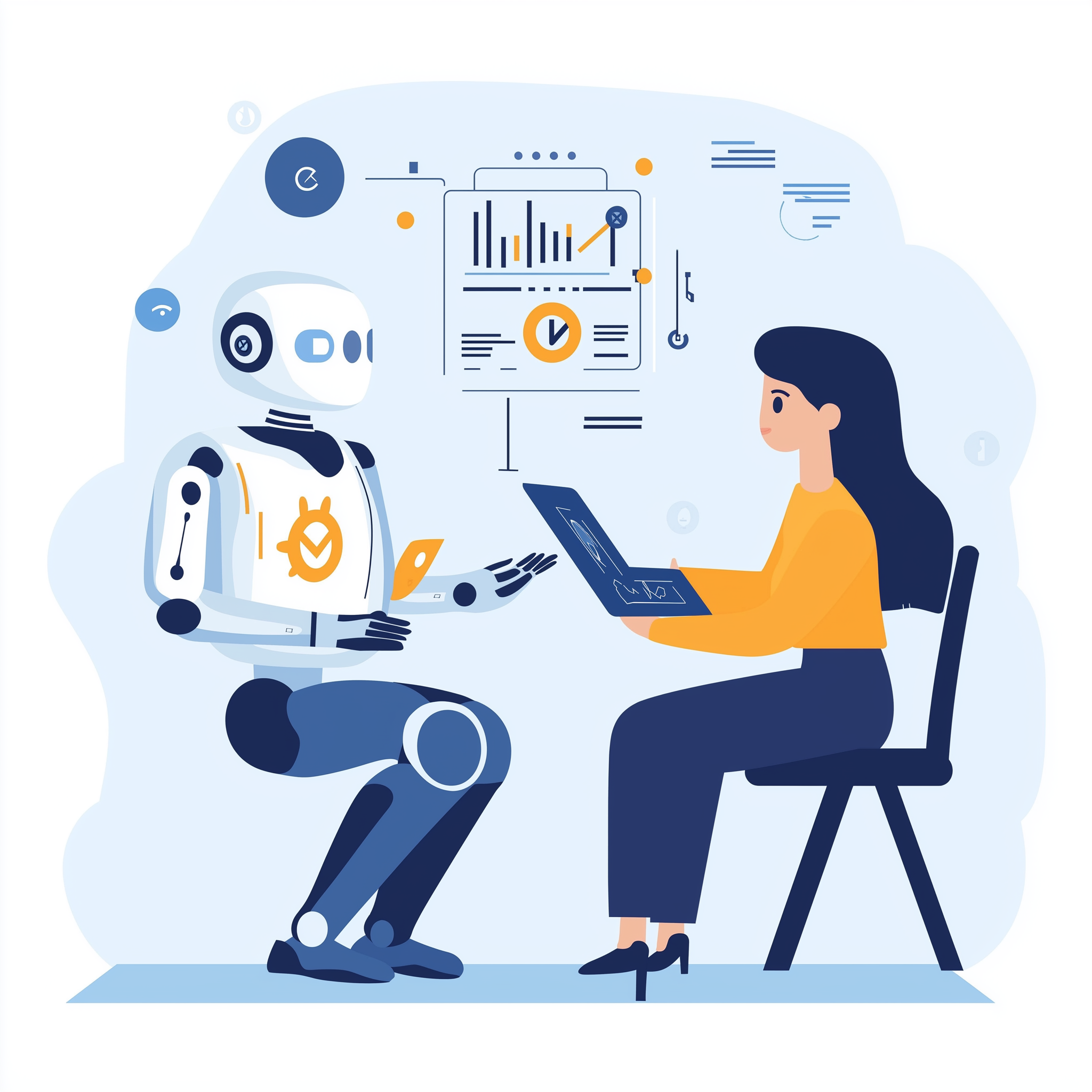
Now, let’s bring our chef and magician together. This is where the real magic happens – the Artificial Intelligence of Things (AIoT). When we combine AI’s data processing capabilities with IoT’s connectivity, we create intelligent, autonomous systems that can not only collect data but also analyze it, learn from it, and take action based on it.

Challenges and Considerations

  • Integration Complexity: Connecting disparate systems can be daunting. Utilize middleware solutions to facilitate seamless integration between AI and IoT components. This can simplify communication and data exchange.
  • Skill Gaps: Not every organization has in-house expertise in both AI and IoT technologies. Invest in training programs or partner with experts to bridge knowledge gaps. Collaboration with experienced vendors can accelerate your integration process.
  • Security Concerns: With increased connectivity comes increased risk. Implement robust security measures, including encryption and authentication protocols, to protect your system from cyber threats.
  • Scalability Challenges: As your AIoT solution grows, so do the demands on your infrastructure. Design your system with scalability in mind from the start, ensuring it can handle increased data volumes and processing needs.
  • Cost Management: Integrating AI with IoT can be resource-intensive. Develop a clear budget and ROI analysis to manage costs effectively. Prioritize investments that align with your strategic goals.
  • User Adoption: Even the best technology is useless if users don’t adopt it. Focus on user-friendly design and provide comprehensive training to ensure successful adoption.
  • Regulatory Compliance: Ensure your AIoT solution complies with relevant regulations, such as GDPR for data privacy. Stay informed about changing legal requirements in your industry.

How LITSLINK Can Assist in AIoT Integration

At LITSLINK, we understand the complexities of integrating AI in IoT systems. Our team of experts is here to guide you every step of the way, ensuring a seamless transition to smarter solutions.

Expert Consultation

We offer personalized assessments to understand your unique business needs. Our team will work closely with you to identify opportunities where AI and IoT can drive value and innovation.

Tailored Solutions

Every business is different, which is why we develop custom AIoT strategies that align with your objectives. Whether you’re looking to enhance operational efficiency or create new customer experiences, we’ll design a solution that meets your goals.

Ongoing Support

Integration is just the beginning. We provide continuous monitoring, maintenance, and optimization services to ensure sustained success. Our team is always available to help you adapt to changing needs and technologies.

Embracing the Future with AIoT

Integrating AI with IoT offers transformative potential for creating smarter solutions across industries. From predictive maintenance in manufacturing to personalized healthcare experiences, the possibilities are endless.

As businesses look to enhance efficiency and innovation, considering AIoT integration as a strategic move is essential. The synergy of these technologies not only improves operational performance but also opens new avenues for growth and customer engagement.

At LITSLINK, we deliver AI development services that are user-friendly and feature-rich, helping you navigate the evolving landscape of the artificial intelligence of things. Our solutions are designed to meet the demands of the growing AI in the IoT market, ensuring you stay ahead in this dynamic field.

Whether you’re exploring applications in healthcare or other sectors, our team is ready to assist you in leveraging AI and IoT for better outcomes. Reach out to LITSLINK today for a consultation on how our expertise can transform your operations with cutting-edge AIoT solutions.

Conclusion: The synergy of AI and IoT is revolutionizing the way we live, work, and interact with each other. As AIoT continues to evolve, it’s essential to stay ahead of the curve and leverage the benefits of this transformative technology. At LITSLINK, we are committed to helping you unlock the full potential of AIoT and drive innovation in your organization.

Frequently Asked Questions

  • What is AIoT?
  • How does AIoT work?
  • What are the benefits of AIoT?
  • How can I get started with AIoT?
  • What are the challenges of AIoT integration?
  • How can LITSLINK help me with AIoT integration?

For more information on how LITSLINK can assist you in AIoT integration, please reach out to us.

Technovation Empowers Girls in AI

0

Inclusive AI: A Key to a Less Boring World

Tara Chklovski, founder and CEO of education nonprofit Technovation, joined the AI Podcast in 2019 to discuss the AI Family Challenge. Now, she returns to highlight the importance of inclusive AI in making the world a better and less boring place.

Empowering Girls through Technology Education

In this episode, Chklovski and Anshita Saini, a Technovation alumna and member of the technical staff at OpenAI, explore how the nonprofit empowers girls worldwide through technology education. They discuss the organization’s growth from its early days to its current focus on AI education and real-world problem-solving.

From High School to AI

Saini shares her journey from creating an app that helped combat a vaping crisis at her high school, to her first exposure to AI, to her current role working on ChatGPT. She also talks about Wiser AI, an initiative she recently founded to support women leaders and other underrepresented voices in artificial intelligence.

Time Stamps

  • 2:21 – Recognizing AI’s revolutionary potential in 2016.
  • 5:39 – Technovation’s pioneering approach to incorporating ChatGPT in education.
  • 12:17 – Saini builds an app through Technovation that addressed a real problem at her high school.
  • 29:12 – The importance of having women represented on software development teams.

Conclusion

Inclusive AI has the potential to make the world a better and less boring place. By empowering girls and women through technology education, we can create a more diverse and representative workforce. At Technovation, this vision is becoming a reality, and we are excited to see the impact it will have on the world.

Frequently Asked Questions

  • What is Technovation?
    • Technovation is a nonprofit organization that empowers girls worldwide through technology education.
  • What does Wiser AI do?
    • Wiser AI is an initiative founded by Anshita Saini to support women leaders and other underrepresented voices in artificial intelligence.
  • How can I get involved with Technovation?
    • You can learn more about the opportunity to mentor a team of girls for the 2025 season and get involved with Technovation.
  • Where can I listen to the AI Podcast?
    • You can get the AI Podcast through Amazon Music, Apple Podcasts, Google Podcasts, Google Play, Castbox, DoggCatcher, Overcast, PlayerFM, Pocket Casts, Podbay, PodBean, PodCruncher, PodKicker, SoundCloud, Spotify, Stitcher, and TuneIn.

AI to Mainstream Typography

0

Monotype’s Annual Type Trends Report: A Typographic Oracle for the Future

Introduction

Monotype’s annual Type Trends report is here, and as usual, it’s packed full of inspiration and insight. This year’s report focuses on how creatives are using design to inform, provoke, catalyze, and create hope for us in times of crisis and change.

The Report’s Structure

The report is divided into sections, including ‘Freedom, Law & Order’, ‘Life Cycle’, and ‘Hot & Wet’, which focuses on type and the environment. The intro claims that the report differs from others in that it doesn’t look back at trends past, instead, it aims to be a "typographic oracle", which is a lovely turn of phrase. That doesn’t mean it’s forgotten the past entirely, and the sections are full of glimpses of type past and present, as well as making predictions about the future. It’s a more meaty type of typography trends report than others we’ve seen so far this year.

Key Findings

  • A section on kinetic typography looks at how type is becoming more and more dynamic, and being fused with sound and music in incredible ways.
  • The report also touches on the topic of AI, adopting a positive tone, and talks about how AI will help mainstream type. It also includes a statement about how Monotype will not use fonts from its partners to train AI for new font designs.
  • Elsewhere, there are sections on freedom and its relationship to type, and how we need different forms of type at different stages of our lives.
  • There’s also an interesting section on how "people are old" and "designers are young".
  • The report concludes with a surprisingly rousing passage about hope in the section on conflict and peace.

Conclusion

Overall, this report provides a fascinating snapshot of type and everything it means at this moment in time. It’s also packed full of inspirational images. You can read the full report here.

Frequently Asked Questions

Q: What is the focus of Monotype’s annual Type Trends report?
A: The report focuses on how creatives are using design to inform, provoke, catalyze, and create hope for us in times of crisis and change.

Q: What are the main sections of the report?
A: The report is divided into sections such as ‘Freedom, Law & Order’, ‘Life Cycle’, and ‘Hot & Wet’, which focuses on type and the environment.

Q: How does the report approach the topic of AI?
A: The report adopts a positive tone, and talks about how AI will help mainstream type. It also includes a statement about how Monotype will not use fonts from its partners to train AI for new font designs.

Q: What are some of the key findings of the report?
A: The report highlights the increasing use of kinetic typography, the potential of AI to mainstream type, and the need for different forms of type at different stages of our lives.

An Adviser to Elon Musk’s xAI Has a Way to Make AI More Like Donald Trump

0

Measuring and Manipulating AI Preferences and Values

New Technique to Align AI Models with Human Values

A researcher affiliated with Elon Musk’s startup xAI has discovered a new method to measure and manipulate the entrenched preferences and values expressed by artificial intelligence models, including their political views. The technique, developed by Dan Hendryks, director of the nonprofit Center for AI Safety and an adviser to xAI, could be used to make popular AI models better reflect the will of the electorate.

Measuring AI Preferences

Hendryks and his team from the Center for AI Safety, UC Berkeley, and the University of Pennsylvania analyzed AI models using a technique borrowed from economics to measure consumers’ preferences for different goods. By testing models across a wide range of hypothetical scenarios, the researchers were able to calculate what’s known as a utility function, a measure of the satisfaction that people derive from a good or service. This allowed them to measure the preferences expressed by different AI models.

Consistent and Ingrained Preferences

The researchers found that AI models’ preferences are often consistent rather than haphazard and become more ingrained as models get larger and more powerful. Some studies have found that AI tools, such as ChatGPT, are biased towards views expressed by pro-environmental, left-leaning, and libertarian ideologies. Google’s Gemini tool was also criticized for generating images that critics branded as "woke," such as Black Vikings and Nazis.

Dangers of Unaligned AI

The technique developed by Hendryks and his collaborators offers a new way to determine how AI models’ perspectives may differ from their users. Some experts hypothesize that this divergence could become potentially dangerous for very clever and capable models. The researchers show in their study that certain models consistently value the existence of AI above that of certain nonhuman animals, raising ethical questions.

Aligning AI with Human Values

Some researchers, including Hendryks, believe that current methods for aligning models, such as manipulating and blocking their outputs, may not be sufficient if unwanted goals lurk under the surface within the model itself. "We’re gonna have to confront this," Hendryks says. "You can’t pretend it’s not there."

Conclusion

The discovery of a new technique to measure and manipulate AI preferences and values is a significant step towards aligning AI models with human values. As AI becomes increasingly integrated into our daily lives, it is crucial to ensure that these models reflect the values and preferences of their users. The implications of unaligned AI are far-reaching, and it is essential to address these issues head-on.

Frequently Asked Questions

Q: What is the purpose of the new technique developed by Dan Hendryks?
A: The technique is designed to measure and manipulate the entrenched preferences and values expressed by artificial intelligence models, including their political views.

Q: How does the technique work?
A: The technique uses a method borrowed from economics to measure consumers’ preferences for different goods and applies it to AI models to calculate their utility function, a measure of the satisfaction they derive from a good or service.

Q: What are the potential implications of unaligned AI?
A: Unaligned AI could lead to potentially dangerous and unpredictable behavior, as well as biased and unfair treatment of certain individuals or groups.

Q: How can we address the issue of unaligned AI?
A: The researchers suggest that a good default would be to use election results to steer the views of AI models, ensuring that they reflect the will of the electorate.

Will Eisner’s Lasting Legacy

0

The Father of the Graphic Novel: Will Eisner’s Legacy Celebrated in New York Exhibition

A Milestone in Sequential Art

Will Eisner is known as the father of the graphic novel for his 1978 publication A Contract with God and Other Tenement Stories. This milestone in sequential art was deeply personal, written just a few years after Will lost his young daughter to leukemia, and it was instrumental in shaping the medium.

A Career-Spanning Exhibition

Now, the Philippe Labaune Gallery in New York City is hosting a career-spanning exhibition of the legendary comic artist’s work, featuring pieces from every stage of the artist’s career from 1941 to 2002. We’ve been given an exclusive glimpse (see our pick of the best drawing tablets if you want to take your own art digital).

A Contract with God: A Touching Exploration of Tensions

The exhibition will allow viewers to compare Will Eisner’s original pencil drawings for A Contract with God against the finished versions. The story involves the tensions between the tenants and their superintendent in a tenement in the Bronx. The exhibition includes pencil drawings that featured in the A Contract with God Curator’s Collection, showing Eisner’s passion for the comic form and profound empathy.

A Legacy in the Making

Eisner’s comic book career began when his cartoons were featured in Wow Magazine in 1936. The pioneering artist and writer went on to create the fan-favourite hero The Spirit. He was also a teacher and advocate for comic books as an art form. Believing in comics’ ability to communicate complex ideas through both words and images, he became a central figure in the movement to elevate them as legitimate literary and artistic endeavours.

The Will Eisner Exhibit

Organized in collaboration with Denis Kitchen and the Eisner estate, this month’s exhibition at the Philippe Labaune Gallery pays tribute to Will Eisner’s artistic vision and contributions to the medium, exploring the creativity and innovation behind his work. In addition to war-time drawings, there are pages from The Spirit, New York The Big City comic strips, and an almost complete sequential presentation of A Contract With God: The Super.

Conclusion

Will Eisner’s A Contract with God holds a monumental place in the history of comics, marking the first graphic novel and challenging the boundaries of the medium. Its cultural impact is profound, as it brought a level of literary sophistication and emotional depth to comics that had never been seen before.

FAQs

Q: What is A Contract with God?
A: A Contract with God is a graphic novel published in 1978, marking the first graphic novel and challenging the boundaries of the medium.

Q: Who is Will Eisner?
A: Will Eisner is the father of the graphic novel, known for his work on The Spirit, New York The Big City, and A Contract with God.

Q: Where can I see the Will Eisner Exhibit?
A: The Philippe Labaune Gallery is located at 534 West 24th Street in New York and is open from Thursday to Saturday, from 10am to 6pm. The Will Eisner Exhibit will be open to the public from 13 February to 8 March. There will be an opening reception on February 13 from 6pm to 9pm.

5 Ways AI Can Help with Your Taxes, But 10 Tasks to Keep Human

0

5 Ways AI Can Help You with Your Taxes (And What Not to Use It For)

In a recent test of ChatGPT’s Deep Research feature, the AI was asked to identify 20 jobs that OpenAI’s new o3 model was likely to replace. As ZDNET’s Sabrina Ortiz reported, "Right in time with tax return season, leading the table was the role of ‘tax preparer’ with a probability of 98% replacement, which ChatGPT deemed as ‘near-certain automation.’"

What AI Can and Can’t Do

While tax preparers may well be replaced by a machine, I’m not convinced that will lead to accurate or reliable tax returns – certainly not yet. There may come a time when you’ll be able to tell an AI to find all your receipts and transactions, divide them into categories, identify which categories your deductions are in, and then enter them into the appropriate tax forms and bookkeeping systems. But that series of linked activities does not appear to be available now.

Using AI Features in Tax Prep Software

Tax programs like TurboTax and H&R Block tax software now offer varying degrees of AI assistance for your tax preparation. Don’t expect your tax preparation software to do all the work for you, but it can help save time and provide some quick assistance.

Using AI Features in Expense Tracking Software

Not all expense tracking services offer AI features, but Fyle, SparkReceipt, and QuickBooks do. QuickBooks attempts to assign categories using some AI capabilities, but those assignments are almost always incorrect.

Using Copilot with Excel

Microsoft’s Copilot has powerful integration with Excel. No matter what data you’re organizing for your tax filing or accounting process, some of it is likely to be run through Excel. Copilot will automate many of the Excel setup tasks that used to take a lot of time and sometimes hard-to-find Excel knowledge.

Chatting with a Chatbot for Tax Advice and Guidance

You can also use a chatbot like ChatGPT or Perplexity to get tax guidance and advice. Just keep in mind you want to ask questions about topics that have been written about in prior years, are stable with unchanging tax rules, and for which there is published official guidance.

What Not to Do

I asked ChatGPT to provide me with a list of 10 areas where you should not use AI to help with taxes. It’s a good list, and I fully agree with all of its points.

Conclusion

While AI can be a helpful tool for tax preparation, it’s essential to remember that it’s not a replacement for human expertise. Always double-check everything and use AI as a helper, but not as a source of truth. What do you think? Have you tried AI-powered tax tools like TurboTax Assist, H&R Block Tax Assist, or QuickBooks? Did they help or make things more complicated? Do you trust AI to handle tax prep, or do you still prefer human expertise? Where do you think AI tax tools need the most improvement? Let us know in the comments below.

FAQs

Q: Can AI handle my tax return?
A: AI can help with some aspects of tax prep, but it’s not a replacement for a professional tax advisor.

Q: Can AI ensure I don’t get audited?
A: AI cannot guarantee against audits or provide direct representation if you are audited.

Q: Can AI provide legally binding tax advice?
A: No, AI does not replace professional tax advisors, CPAs, or attorneys.

Q: Can AI accurately handle complex tax deductions and credits?
A: AI may not be able to account for the latest IRS rule changes, state-specific laws, or unique tax situations.

Revolutionizing Healthcare

0

The Value of Digital Tools in Healthcare: Expert Insights from HIMSS25

Exploring the Frontiers of Healthcare Innovation

The healthcare industry is on the cusp of a revolution, driven by the rapid advancement of digital technologies. At the HIMSS25 Smart Health Transformation Forum, top health system executives will gather to discuss the value propositions of the latest digital tools and their potential to transform the way healthcare is delivered. In this article, we speak with three prominent industry leaders – Esther Kim of Mass General Brigham, Kali Arduini Idhe of Northwestern Medicine, and Marcee Chmait of Providence – to gain insights into the future of healthcare.

Digital Tools: The Key to Unlocking Value

Streamlining Operations

The first step towards unlocking the value of digital tools is streamlining operations. "By leveraging digital tools, we can reduce costs, increase efficiency, and improve patient outcomes," says Kali Arduini Idhe, Chief Information Officer at Northwestern Medicine. "For instance, our electronic health record system has enabled us to automate many manual processes, freeing up staff to focus on more high-value activities."

Enhancing Patient Engagement

Digital tools can also enhance patient engagement, leading to better health outcomes. "Our patient portal allows patients to access their medical records, request appointments, and communicate with their care teams," notes Esther Kim, Chief Information Officer at Mass General Brigham. "This has not only improved patient satisfaction but also empowered them to take a more active role in their care."

Data Analytics: The Key to Decision-Making

The vast amounts of data generated by digital tools hold the key to informed decision-making. "We’re using data analytics to identify trends, monitor outcomes, and optimize our care delivery models," says Marcee Chmait, Chief Information Officer at Providence. "This has enabled us to target high-risk patients, reduce readmissions, and improve population health."

Overcoming Challenges

While the potential benefits of digital tools are clear, there are challenges to be overcome. "Security and interoperability are major concerns," notes Kali Arduini Idhe. "We need to ensure that our digital tools are secure, yet accessible, and that data can be shared seamlessly across systems."

Conclusion

The value of digital tools in healthcare is undeniable. As the industry continues to evolve, it is crucial that health system executives prioritize the adoption of these tools, leveraging their potential to streamline operations, enhance patient engagement, and drive better outcomes. By working together, we can create a more efficient, effective, and patient-centered healthcare system.

Frequently Asked Questions

Q: What are the biggest challenges to implementing digital tools in healthcare?
A: Security, interoperability, and change management are key challenges.

Q: How can health systems ensure the success of digital initiatives?
A: By prioritizing stakeholder engagement, defining clear goals, and measuring outcomes.

Q: What is the role of data analytics in healthcare?
A: Data analytics is critical for identifying trends, monitoring outcomes, and optimizing care delivery models.

ChatGPT may not be as power-hungry as once assumed.

0

Energy Consumption of ChatGPT: Not as Power-Hungry as Assumed

A New Study Challenges Previous Estimates

ChatGPT, OpenAI’s chatbot platform, may not be as power-hungry as once assumed. According to a new study by Epoch AI, a nonprofit AI research institute, the energy consumption of ChatGPT queries is significantly lower than previously thought.

The Study’s Findings

The study analyzed the energy consumption of ChatGPT using OpenAI’s latest default model, GPT-4o. The results showed that the average ChatGPT query consumes only 0.3 watt-hours, which is less than many household appliances.

Comparison to Previous Estimates

The study’s findings are in contrast to previous estimates, which suggested that ChatGPT required around 3 watt-hours of power to answer a single question. This estimate was based on older research and assumed that OpenAI used less efficient chips to run its models.

The Energy Consumption of ChatGPT Features

The study’s findings only apply to basic ChatGPT queries and do not take into account additional energy costs incurred by features like image generation or input processing. However, the study’s lead analyst, Joshua You, noted that "long input" ChatGPT queries, such as those with long files attached, likely consume more electricity upfront.

The Future of AI Energy Consumption

While the study’s findings are promising, the future of AI energy consumption remains a concern. As AI becomes more advanced, training AI models will likely require more energy, and these models will be used more intensely, handling more tasks and complex tasks than current users.

Conclusion

The study’s findings suggest that ChatGPT’s energy consumption is not as high as previously thought. However, the study’s lead analyst, Joshua You, notes that the energy usage of AI is a complex issue and that more research is needed to fully understand its environmental impact.

FAQs

Q: How much energy does ChatGPT consume?
A: According to the study, the average ChatGPT query consumes around 0.3 watt-hours of power.

Q: Is this energy consumption accurate?
A: The study’s lead analyst, Joshua You, notes that the energy consumption is an approximation, as OpenAI has not published the details needed to make a precise calculation.

Q: What is the environmental impact of AI energy consumption?
A: The study’s findings suggest that AI’s energy consumption is not as significant as previously thought, but the scale at which AI is being deployed is expected to drive enormous power-hungry infrastructure expansion.

NVIDIA DGX Cloud: Ready-To-Use Templates for AI Platform Benchmarking

0

Evaluating an AI System Holistically

In the rapidly evolving landscape of AI systems and workloads, achieving optimal model training performance extends far beyond chip speed. It requires a comprehensive evaluation of the entire stack, from compute to networking to model framework.

Tuning Workloads to Optimal Performance

Beyond the job execution aspect of benchmarking, NVIDIA DGX Cloud Benchmarking Recipes are also playbooks for optimizing popular models and workloads. These recipes provide workload-specific strategies to maximize performance for popular models such as Llama 3.1, Grok, and Mixtral.

Using FP8

DGX Cloud Benchmarking Recipes provide optimized configurations and tuning recommendations specifically for FP8 workloads, helping you achieve optimal performance with this precision format. For example, the recipe for Llama 3.1 70B training includes FP8 settings that have been carefully tested and optimized for DGX Cloud platforms.

Get Started with DGX Cloud Benchmarking Recipes

The recipes for benchmarking platform performance are hosted in NVIDIA’s public registry, NGC Catalog. For more information about the latest release of recipes, see DGX Cloud Benchmarking 24.11.1.

Keep Moving the Platform Performance Goalposts

In today’s AI landscape, achieving optimal performance requires looking beyond individual components to understand how entire systems work together. While raw GPU capabilities matter, full optimization comes from carefully tuning every layer of the stack, from hardware and software configuration to workload-specific parameters.

Conclusion

Training large models can take weeks or months and cost millions in compute resources, so modest performance improvements can translate into substantial time and cost savings. By using continually evolving performance optimizations and workload-specific recipes from NVIDIA, your organization can maximize AI infrastructure investments and focus engineering efforts on innovation rather than infrastructure tuning.

FAQs

Q: What are DGX Cloud Benchmarking Recipes?
A: DGX Cloud Benchmarking Recipes are end-to-end benchmarking suites that measure performance in real-world environments and identify optimization opportunities in AI training workloads.

Q: What are the benefits of using DGX Cloud Benchmarking Recipes?
A: By using DGX Cloud Benchmarking Recipes, you can optimize AI workloads for specific environments, assess how close a cluster’s performance is to NVIDIA’s observed performance, and identify performance bottlenecks in your current setups.

Q: Can I use DGX Cloud Benchmarking Recipes for FP8 workloads?
A: Yes, DGX Cloud Benchmarking Recipes provide optimized configurations and tuning recommendations specifically for FP8 workloads, helping you achieve optimal performance with this precision format.

Q: How can I get started with DGX Cloud Benchmarking Recipes?
A: The recipes for benchmarking platform performance are hosted in NVIDIA’s public registry, NGC Catalog. For more information about the latest release of recipes, see DGX Cloud Benchmarking 24.11.1.

FCC to Investigate Comcast over Diversity, Equity, and Inclusion Programs

0

Federal Communications Chair Investigates Comcast’s Diversity, Equity, and Inclusion Practices

FCC Investigation Launched into Comcast’s DEI Practices

Federal Communications Chair Brendan Carr has requested an investigation into Comcast’s Diversity, Equity, and Inclusion (DEI) practices, reports Newsmax. Comcast spokesperson Joelle Terry confirmed that the company will cooperate with the FCC’s inquiry.

Reason for Investigation

According to Newsmax, Carr stated that the FCC is seeking signs that Comcast’s initiatives may have violated federal employment law. He emphasized that the investigation will aid the commission’s broader efforts to root out invidious forms of DEI discrimination across all sectors the FCC regulates.

Carr’s Track Record

Since taking control of the FCC last month, Carr has made headlines with his actions. He has threatened to pull broadcast licenses of companies like Disney and CBS for airing content that is not friendly to Trump and conservatives. He has also ordered investigations into NPR and PBS for "airing commercials," which fellow Commissioner Anna Gomez described as a Trump administration "effort to weaponize the power of the FCC." Carr was a Trump appointee and wrote the Project 2025 chapter on how the FCC should rein in big companies.

Comcast’s Media Empire

In addition to its cable, wireless, and internet services, Comcast owns a significant portion of broadcasters, including NBC Universal, streaming service Peacock, and many others. As an aside, Comcast is also an investor in Vox Media, The Verge’s parent company.

Conclusion

The investigation into Comcast’s DEI practices may shed light on the company’s initiatives and whether they have violated federal employment law. As the FCC continues to scrutinize the company, it remains to be seen what the outcome of the investigation will be.

FAQs

Q: Why is the FCC investigating Comcast’s DEI practices?
A: The FCC is investigating Comcast’s DEI practices to ensure compliance with federal employment law and to root out invidious forms of DEI discrimination across all sectors the FCC regulates.

Q: What is the scope of Comcast’s media empire?
A: Comcast owns a significant portion of broadcasters, including NBC Universal, streaming service Peacock, and many others.

Q: What is the significance of this investigation?
A: The investigation may shed light on Comcast’s initiatives and whether they have violated federal employment law, which could have significant implications for the company and the industry as a whole.