Home Blog Page 328

AI Discovers Hidden Cancer Markers

AI Tool Finds Cancer Signs Missed by Doctors

Pioneering Research in Breast Cancer Detection

An AI tool, called Mia, has demonstrated the ability to detect signs of cancer that were overlooked by human radiologists. The AI system was piloted alongside NHS clinicians in the UK and analyzed the mammograms of over 10,000 women.

Accurate Detection and Identification

The AI tool was trained on a dataset of over 6,000 previous breast cancer cases to learn the subtle patterns and imaging biomarkers associated with malignant tumors. When evaluated on the new cases, it correctly predicted the presence of cancer with 81.6% accuracy and correctly ruled it out 72.9% of the time.

Real-World Impact

Breast cancer is the most common cancer in women worldwide, with two million new cases diagnosed annually. While survival rates have improved with earlier detection and better treatments, many patients still experience severe side effects like lymphoedema after surgery and radiotherapy. The AI system has the potential to significantly improve patient outcomes by identifying cancer earlier and enabling more targeted treatment.

Future Development and Clinical Trials

Researchers are now developing the AI system further to predict a patient’s risk of side effects up to three years after treatment. This could allow doctors to personalize care with alternative treatments or additional supportive measures for high-risk patients. The research team plans to enroll 780 breast cancer patients in a clinical trial called Pre-Act to prospectively validate the AI risk prediction model over a two-year follow-up period.

Conclusion

The successful pilot of the AI tool demonstrates the potential for machine learning to improve the detection and treatment of breast cancer. With its ability to identify signs of cancer missed by human radiologists, the AI system has the potential to revolutionize the way we approach breast cancer diagnosis and treatment.

Frequently Asked Questions

Q: How does the AI system work?
A: The AI system is trained on a dataset of previous breast cancer cases to learn the subtle patterns and imaging biomarkers associated with malignant tumors.

Q: How accurate is the AI system?
A: The AI system correctly predicted the presence of cancer with 81.6% accuracy and correctly ruled it out 72.9% of the time.

Q: What are the potential benefits of the AI system?
A: The AI system has the potential to improve patient outcomes by identifying cancer earlier and enabling more targeted treatment, as well as predicting the risk of side effects and personalizing care.

Amazon Nova: Cost-Effective and Performant Cloud Computing Options

0

Security Teams Leverage Amazon Nova Micro to Automate Threat Investigation and Reduce Costs

Security teams are dealing with an evolving universe of cybersecurity threats. These threats are expanding in form factor, sophistication, and the attack surface they target. Constrained by talent and budget limitations, teams are often forced to prioritize the events pursued for investigation, limiting the ability to detect and identify new threats. Trellix Wise is an AI-powered technology enabling security teams to automate threat investigation and add risk scores to events. With Trellix Wise, security teams can now complete what used to take multiple analysts hours of work to investigate in seconds, enabling them to expand the security events they are able to cover.

Trellix Wise, Generative-AI-Powered Threat Investigation to Assist Security Analysts

Trellix Wise is built on Amazon Bedrock and uses Anthropic’s Claude Sonnet as its primary model. The platform uses the Amazon OpenSearch Service stores billions of security events collected from the environments monitored. OpenSearch Service comes with a built-in vector database capability, making it straightforward to use data stored in OpenSearch Service as context data in a Retrieval Augmented Generation (RAG) architecture with Amazon Bedrock Knowledge Bases. Using OpenSearch Service and Amazon Bedrock, Trellix Wise carries out its automated, proprietary threat investigation steps on each event. This includes retrieval of required data for analysis, analysis of the data using insights from other custom-built machine learning (ML) models, and risk scoring. This sophisticated approach enables the service to interpret complex security data patterns and make intelligent decisions about each event. The Trellix Wise investigation gives each event a risk score and allows analysts to dive deeper into the results of the analysis, to determine whether human follow-up is necessary.

Improving Investigation Cost with Amazon Nova Micro, RAG, and Repeat Inferences

The threat investigation workflow consists of multiple steps, from data collection, to analysis, to assigning of a risk score for the event. The collections stage retrieves event-related information for analysis. This is implemented through one or more inference calls to a model in Amazon Bedrock. The priority in this stage is to maximize completeness of the retrieval data and minimize inaccuracy (hallucinations). The Trellix team identified this stage as the optimal stage in the workflow to optimize for speed and cost.

Conclusion

In this post, we shared how Trellix adopted and evaluated Amazon Nova models, resulting in significant inference speedup and lower costs. Reflecting on the project, the Trellix team recognizes the following as key enablers allowing them to achieve these results:

  • Access to a broad range of models, including smaller highly capable models like Amazon Nova Micro and Amazon Nova Lite, accelerated the team’s ability to easily experiment and adopt new models as appropriate.
  • The ability to constrain responses to avoid hallucinations, using pre-built use-case specific scaffolding that incorporated proprietary data, processes, and policies, reduced the risk of hallucinations and inaccuracies.
  • Data services that enabled effective integration of data alongside foundation models simplified implementation and reduced the time to production for new components.

About the Authors

Martin Holste is the CTO for Cloud and GenAI at Trellix.
Firat Elbey is a Principal Product Manager at Amazon AGI.
Deepak Mohan is a Principal Product Marketing Manager at AWS.

FAQs

Q: What is Trellix Wise?
A: Trellix Wise is an AI-powered technology enabling security teams to automate threat investigation and add risk scores to events.

Q: What is Amazon Nova Micro?
A: Amazon Nova Micro is a smaller, cost-effective foundation model that delivered inferences three times faster and at nearly 100-fold lower cost compared to other models.

Q: How does Trellix Wise use Amazon Bedrock?
A: Trellix Wise uses Amazon Bedrock Knowledge Bases and OpenSearch Service to store and retrieve security event data, enabling the platform to interpret complex security data patterns and make intelligent decisions about each event.

Elegoo Mercury Plus V3: Neater 3D Printing

0

Resin 3D Printing: The Elegoo Mercury V3 Wash and Cure Machine Review

What’s in the Box?

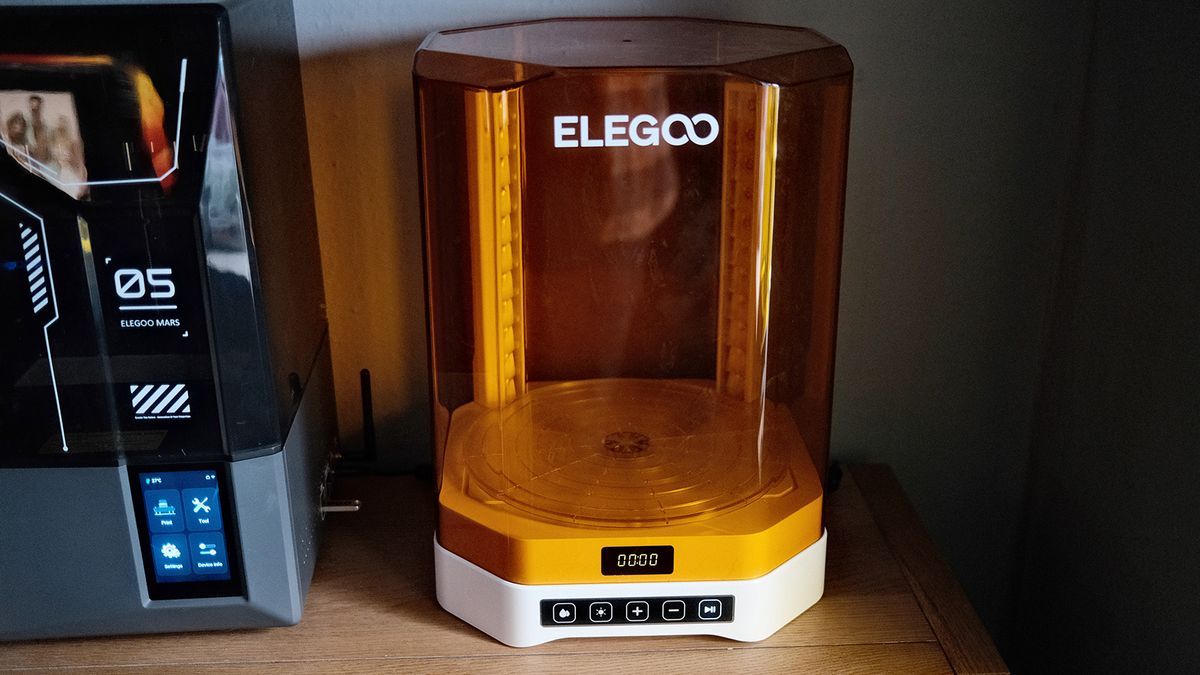
The Elegoo Mercury V3 is a wash and cure machine designed to simplify the post-processing of resin 3D prints. Upon opening the box, you’ll find the Mercury V3, a UV hood, power cable, basket, and wash container. The packaging is well-protected, minimizing the risk of damage during shipping.

Setup and Build Quality

Setting up the Mercury V3 is straightforward: simply remove the protective film, plug in the power cord, and you’re ready to go. The build quality is excellent, with a sturdy plastic base and a secure design. The front panel is simple and easy to use, featuring a timer display and controls.

Performance

The Mercury V3 features a magnetic impeller that generates a decent amount of agitation, making washing efficient. The basket is suitable for holding larger objects, but it’s essential to note that the holes may be too large for small components. You can use the print bed hanger for smaller objects or wash them separately.

The UV mirrors under the platter provide excellent coverage, ensuring even curing. The LEDs have lenses that disperse the light well, resulting in excellent curing results. Be sure to check the specifications on your resin bottle, as not all resins are created equally.

Who is it For?

The Elegoo Mercury V3 is suitable for anyone looking for a simple, mess-free solution for washing and curing their 3D prints, regardless of print size.

Buy it If…

  • You want one machine to do two jobs (washing and curing)
  • Simplicity is key for your workflow

Don’t Buy it If…

  • You have an extra-large printer

FAQs

Q: What’s the capacity of the washing tub?
A: The washing tub can hold 7.5L of liquid, equivalent to a usable volume of 230mm x 135mm x 260mm, depending on the method used.

Q: Can I use the Elegoo Mercury V3 with my specific resin?
A: Check the specifications on your resin bottle, as not all resins are created equally.

Q: How do I maintain the machine?
A: Regular cleaning and disassembly are recommended to ensure optimal performance.

ChatGPT’s Deep Research just identified 20 jobs it will replace

Works Cuts Illustration

This week, OpenAI launched its Deep Research feature, which can synthesize content from across the web into one detailed report in minutes, leveraging a version of the company’s latest model, o3.

The Power of Deep Research

This feature is a powerful tool for workers, as it can save them hours by completing research autonomously. However, can the technology’s underlying model replace workers? Yes, suggests Deep Research.

Min Choi’s Discovery

Min Choi, an X user whose account is dedicated to sharing informational AI content, asked Deep Research to "List 20 jobs that OpenAI o3 reasoning model will replace human with into a table format ordered by probability. Columns are Rank, Job, Why Better Than Human, Probability." Choi then shared the results of the chat via an X post, which has since garnered 984,000 views:

What Jobs Will AI Replace, According to ChatGPT?

The X post shows that Deep Research produced a table that included job titles, explanations as to why an AI is better than a human at the role, and the probability that the job will be replaced. Choi shared a link to the entirety of its interaction, which you can find here to see the table in detail.

Jobs That Will Be Replaced

The table’s top spot was the role of "tax preparer" with a probability of 98% replacement, which ChatGPT deemed as "near-certain automation". ChatGPT explained that AI would be better at the task because it can quickly process tax rules and calculations, which would make it faster than a human. To support its argument, ChatGPT highlighted that AI-driven tax software already exists.

The Rest of the Professions

The rest of the professions cited on the list included in order were: data entry clerk, telemarketer, bookkeeper, paralegal, appointment scheduler, virtual assistant, transcriptionist, proofreader, copywriter, customer service representative, email marketer, content marketer, social media manager, translator, technical support analyst, recruiter, market research analyst, travel agent, and tutor.

Why AI Can Replace These Jobs

All of the jobs that ChatGPT suggested have an underlying theme in common: the role mostly relies on a technical skill that AI can do well autonomously. For example, AI can transcribe, translate, and proofread effectively, making the need for humans to perform these job’s hard skills less imperative. Additionally, AI can analyze a robust amount of materials, draw conclusions, and even perform actions based on its own analysis.

Are You Doomed?

Does this research mean everyone in these fields is going to lose their job? No, this outcome is highly unlikely. The analysis by ChatGPT only accounts for AI’s ability to perform the hard skills effectively. However, soft skills, including communication, critical thinking, conflict resolution, leadership, time management, and interpersonal skills, are equally as important to success — and AI can’t replicate those capabilities.

Conclusion

The research by Deep Research highlights the potential for AI to replace certain jobs that rely heavily on technical skills. However, it’s essential to remember that AI is not a replacement for all jobs, and human skills will always be in demand. As organizations continue to adopt AI, it’s crucial to focus on upskilling and reskilling to ensure that workers are prepared for the changing job market.

FAQs

Q: Can AI replace all jobs?
A: No, AI can only replace jobs that rely heavily on technical skills.

Q: Is everyone in these fields doomed?
A: No, the analysis only accounts for AI’s ability to perform hard skills, and AI can’t replicate soft skills.

Q: How can I try Deep Research?
A: You can try Deep Research by getting a $200-per-month ChatGPT Pro subscription or through Google’s Deep Research feature, which is available to all Gemini Advanced users through the Google One AI Premium plan.

Boston Dynamics joins forces with its former CEO to speed the learning of its Atlas humanoid robot.

0

Boston Dynamics Partners with Robotics & AI Institute to Improve Reinforcement Learning

Boston Dynamics Wednesday announced a partnership designed to bring improved reinforcement learning to its electric Atlas humanoid robot. The tie-up is with the Robotics & AI Institute (RAI Institute), earlier known as The Boston Dynamics AI Institute.

About the Partners

Both organizations were founded by Marc Raibert, a former MIT professor who served as Boston Dynamics’ CEO for 30 years. The Institute, founded in 2022, allows Raibert to continue the research that served as the foundation for Boston Dynamics. The Institute mirrors Toyota’s creation of TRI, or Toyota Research Institute, which announced its own partnership with Boston Dynamics in October, focused on the use of large behavior models (LBMs).

Ties to Hyundai

Both have ties to Hyundai. The Korean carmaker acquired Boston Dynamics back in 2021; Hyundai also funds the Institute, giving Raibert free rein to explore more experimental and bleeding-edge technologies than is possible in a commercial company.

Improving Reinforcement Learning

The twin partnerships are designed to improve the way Boston Dynamics’ electric Atlas humanoid learns new tasks. The Robotics & AI Institute deal is specifically focused on reinforcement learning, a method that operates through trial and error, similar to the way both humans and animals learn. Reinforcement learning has traditionally been extremely time-intensive, though the creation of effective simulation has allowed many processes to be carried out at once in a virtual setting.

Simulation-Based Learning

The Boston Dynamics/RAI Institute union kicked off earlier this month in Massachusetts. It’s the latest in a number of collaborations between the pair, including a joint effort to develop a reinforcement learning research kit for the quadrupedal Spot robot by Boston Dynamics (which is its familiar robot “dog”). The new work focuses on both transferring simulation-based learning to real-world settings and improving how the company’s humanoid Atlas moves through and interacts with physical environments.

Challenges and Opportunities

Pertaining to the latter, Boston Dynamics points to “dynamic running and full-body manipulation of heavy objects.” Both are examples of actions that require synchronization of the legs and arms. The humanoid’s bipedal form factor presents a number of unique challenges — and opportunities — when compared with Spot. Every activity is also subject to a broad range of forces, including balance, force, resistance, and motion.

Conclusion

Bigger picture, Raibert notes in a statement, “Our aim at RAI is to develop technology that enables future generations of intelligent machines. Working on Atlas with Boston Dynamics enables us to make advances in reinforcement learning on arguably the most sophisticated humanoid robot available. This work will play a crucial role in advancing the capabilities of humanoids not only by expanding its skillset, but also streamlining the process to achieve new skills.”

FAQs

Q: What is the focus of the partnership between Boston Dynamics and the Robotics & AI Institute?

A: The partnership is focused on improving reinforcement learning for Boston Dynamics’ electric Atlas humanoid robot.

Q: What is reinforcement learning?

A: Reinforcement learning is a method that operates through trial and error, similar to the way both humans and animals learn.

Q: What are the challenges of developing AI for humanoids?

A: The humanoid’s bipedal form factor presents a number of unique challenges, including balance, force, resistance, and motion, which require synchronization of the legs and arms.

Q: What is the significance of this partnership for the development of future intelligent machines?

A: The partnership will play a crucial role in advancing the capabilities of humanoids not only by expanding its skillset, but also streamlining the process to achieve new skills.

China Tariffs

0

US Consumers Feel the Impact of Tariffs on Chinese Goods

Tariffs Take Effect, Additional Fees Appear on Shipments from China

US consumers may already be seeing additional fees on shipments from China after President Donald Trump’s tariff on Chinese goods took effect on Tuesday. The tariffs, which were implemented as part of a trade dispute between the US and China, have resulted in a 10% fee on goods from China, with some shipping companies already passing on this cost to consumers.

Screenshots Show Additional Charges

Clint Reid, the founder and CEO of a company that offers software to help with cross-border commerce, posted screenshots on social media showing additional charges added to a shipment from DHL. The screenshots appear to show DHL requesting an import duty on a shipment from Hololive, with some Reddit users also sharing similar experiences.

Examples of Additional Fees

One Reddit user in a retro gaming handheld emulator community shared a screenshot of an email from Keepretro asking if a buyer would pay an extra $8 on their package due to the tariffs. Another user posted the same message with a $6 charge. Yet another user claims DHL will send an order back to the sender if import duties aren’t paid within five days.

Impact on Shipping Companies

The Trump administration’s order has also caused the US Postal Service (USPS) to briefly suspend inbound package shipments from China and Hong Kong before reversing the decision. The USPS and Customs and Border Protection are working together to implement an efficient collection mechanism for the new China tariffs to minimize disruption to package delivery.

Tariffs on Mexico and Canada

It’s worth noting that Trump has also ordered tariffs on goods from Mexico and Canada, but these have been put on a one-month pause.

Conclusion

The implementation of tariffs on Chinese goods has resulted in additional fees on shipments from China, with some shipping companies already passing on this cost to consumers. While the impact is still being felt, it’s clear that the trade dispute between the US and China is having a significant effect on international trade.

FAQs

Q: What is the 10% tariff on Chinese goods?
A: The 10% tariff is a fee imposed by the Trump administration on goods from China, effective from Tuesday.

Q: What is the de minimis exception?
A: The de minimis exception is a loophole that allows packages valued under $800 to enter the US duty-free. However, this loophole has been closed as part of the new tariff rules.

Q: How will the tariffs affect shipping companies?
A: Shipping companies, such as DHL and the USPS, are being forced to adapt to the new tariff rules, which may result in additional fees being passed on to consumers.

Q: Are there any exceptions to the tariffs?
A: Yes, the tariffs on goods from Mexico and Canada have been put on a one-month pause.

7-Zip 0-day exploited in Russia’s Ukraine invasion

Researchers Discover Zero-Day Vulnerability in 7-Zip Archiving Utility

Researchers said they recently discovered a zero-day vulnerability in the 7-Zip archiving utility that was actively exploited as part of Russia’s ongoing invasion of Ukraine.

The Vulnerability

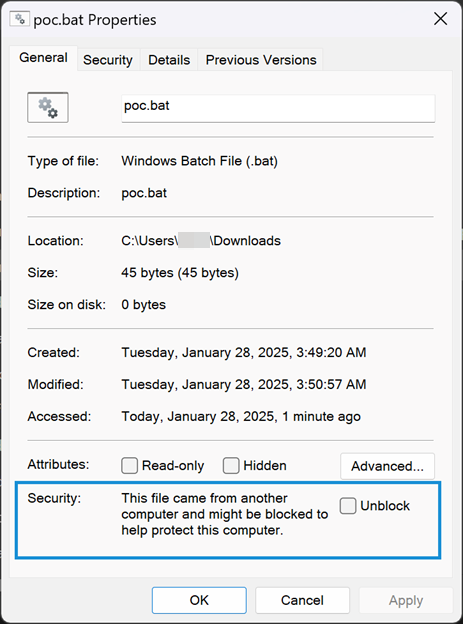
The vulnerability allowed a Russian cybercrime group to override a Windows protection designed to limit the execution of files downloaded from the Internet. The defense is commonly known as MotW, short for Mark of the Web. It works by placing a “Zone.Identifier” tag on all files downloaded from the Internet or from a networked share. This tag, a type of NTFS Alternate Data Stream and in the form of a ZoneID=3, subjects the file to additional scrutiny from Windows Defender SmartScreen and restrictions on how or when it can be executed.

How the Vulnerability Worked

The 7-Zip vulnerability allowed the Russian cybercrime group to bypass those protections. Exploits worked by embedding an executable file within an archive and then embedding the archive into another archive. While the outer archive carried the MotW tag, the inner one did not. The vulnerability, tracked as CVE-2025-0411, was fixed with the release of version 24.09 in late November.

Visual Representation

Tag attributes of outer archive showing the MotW.

Credit: Trend Micro

Inner Archive

Attributes of inner-archive showing MotW tag is missing.

Credit: Trend Micro

Conclusion

The 7-Zip vulnerability, tracked as CVE-2025-0411, was a zero-day vulnerability that allowed a Russian cybercrime group to bypass Windows protections and execute malicious scripts or executables. The vulnerability was fixed with the release of version 24.09 in late November. It is essential for users to keep their software up-to-date to prevent such vulnerabilities from being exploited.

FAQs

Q: What is the Mark of the Web (MotW)?
A: The Mark of the Web (MotW) is a Windows protection that places a “Zone.Identifier” tag on all files downloaded from the Internet or from a networked share. This tag subjects the file to additional scrutiny from Windows Defender SmartScreen and restrictions on how or when it can be executed.

Q: How did the 7-Zip vulnerability work?
A: The 7-Zip vulnerability allowed the Russian cybercrime group to bypass MotW protections by embedding an executable file within an archive and then embedding the archive into another archive. While the outer archive carried the MotW tag, the inner one did not.

Q: Was the vulnerability fixed?
A: Yes, the vulnerability was fixed with the release of version 24.09 in late November.

Q: What should users do to prevent such vulnerabilities from being exploited?
A: Users should keep their software up-to-date to prevent such vulnerabilities from being exploited.

SAS Brings AI to All with Packaged Models

SAS Unveils "Game-Changing" Approach to Tackle Business Challenges with AI Solutions

Industry-Specific AI Models for Quick Integration and Real-World Use Cases

SAS, a specialist in data and AI solutions, has introduced a "game-changing" approach for organizations to tackle business challenges head-on. The company has unveiled lightweight, industry-specific AI models for individual license, enabling organizations to deploy AI technology in production more efficiently.

Expanding Market Footprint

Organizations are facing pressure to compete effectively and are looking to AI to gain an edge. However, staffing data science teams has never been more challenging due to AI skills shortages. As a result, businesses are demanding agility in using AI to solve problems and require flexible AI solutions to quickly drive business outcomes. SAS’ easy-to-use, yet powerful models tuned for the enterprise enable organizations to benefit from a half-century of SAS’ leadership across industries.

Democratizing AI

SAS is democratizing AI by offering out-of-the-box, lightweight AI models – making AI accessible regardless of skill set. The company is starting with an AI assistant for warehouse space optimization, leveraging technology like large language models. These assistants cater to non-technical users, translating interactions into optimized workflows seamlessly and aiding in faster planning decisions.

Industry Models for Real-World Use Cases

In today’s market, the consumption of models is primarily focused on large language models (LLMs) for generative AI. However, LLMs are a small part of the modeling needs of real-world production deployments of AI and decision making for businesses. With the new offering, SAS is moving beyond LLMs and delivering industry-proven deterministic AI models for industries that span use cases such as fraud detection, supply chain optimization, entity management, document conversation, and healthcare payment integrity, among others.

Conclusion

SAS’ new approach to AI solutions is expected to revolutionize the way organizations tackle business challenges. With lightweight, industry-specific AI models, organizations can quickly deploy AI technology in production, making it easier to achieve real-world use cases. As the company continues to expand its market footprint, it is clear that SAS is committed to making AI more accessible to businesses of all sizes and industries.

Frequently Asked Questions

Q: What is SAS’ new approach to AI solutions?
A: SAS has introduced lightweight, industry-specific AI models for individual license, enabling organizations to deploy AI technology in production more efficiently.

Q: What industries does SAS’ new AI models cater to?
A: SAS’ AI models cover a range of industries, including fraud detection, supply chain optimization, entity management, document conversation, and healthcare payment integrity, among others.

Q: Why is SAS’ new AI approach significant?
A: SAS’ new approach democratizes AI, making it accessible to organizations of all sizes and industries, regardless of skill set. It also enables organizations to quickly deploy AI technology in production, making it easier to achieve real-world use cases.

A.I. Isn’t Coming for Moe

0

The Future of Voice Acting: Human Touch in an AI-Driven World

Voice of Experience

As an actor and voiceover artist, I’ve had the privilege of bringing characters to life through my voice. I’ve played a wide range of roles, from Moe the bartender to Chief Wiggum, and even Duffman, the purveyor of Duff beer. But with the rise of AI technology, I’m forced to consider the impact on my craft.

The Rise of AI Voice Acting

In the past year, I’ve been approached by two companies to license my voice for their AI-powered projects. They want to use my voice to create believable, human-like characters. While I’m flattered by the interest, I’m also concerned about the potential impact on my career.

Human Touch

I believe that AI can mimic sounds and voices better and better, but it can’t replicate the subtleties of human emotion, motivation, and physicality. Take Moe, for example. His character is defined by his aggressive tone, his hatred, and his anger. Can AI truly capture that? I’m skeptical.

Physicality and Emotion

I’ve always believed that physicality and emotion are essential components of voice acting. As Moe, I have to convey a sense of aggression and anger through my voice. I do this by using my body language, my facial expressions, and my tone. AI can mimic the tone, but it can’t replicate the physicality and emotion.

The Future of Voice Acting

I’m not convinced that AI will replace human voice actors entirely. While AI can generate voices, it still needs humans to bring them to life. Voice acting is not just about mimicking sounds and voices; it’s about conveying emotion, motivation, and physicality. I believe that AI will be used to augment human voice acting, not replace it.

Conclusion

As AI continues to evolve, I believe that voice actors will need to adapt and find ways to work with AI to create new and innovative content. While I’m concerned about the potential impact on my career, I’m also excited about the possibilities. I hope that humans and AI can work together to create something truly remarkable.

GTC 2025: Expert Sessions

0

Featured Researcher and Educator Sessions at NVIDIA GTC 2025

Advancements in Academia

Explore the latest advancements in academia, including advanced research, innovative teaching methods, and the future of learning and technology.

Research Sessions

NVIDIA GTC 2025 will feature a range of research sessions showcasing the latest breakthroughs in AI, robotics, and computer vision. These sessions will provide attendees with insights into the latest research and development in these fields, including:

*

AI for Social Good

+ Explore how AI is being used to address some of the world’s most pressing challenges, such as climate change, healthcare, and education.
*

Robotics and Autonomous Systems

+ Learn about the latest advancements in robotics and autonomous systems, including AI-powered robots and drones.
*

Computer Vision and Image Processing

+ Discover the latest advancements in computer vision and image processing, including object detection, segmentation, and tracking.

Teaching Methods

NVIDIA GTC 2025 will also feature sessions on innovative teaching methods, including:

*

Hands-on Learning

+ Learn about the latest hands-on learning approaches, including simulations, virtual labs, and project-based learning.
*

AI-powered Education

+ Explore how AI is being used to personalize education, including AI-powered adaptive learning and intelligent tutoring systems.
*

Virtual and Augmented Reality

+ Discover how virtual and augmented reality are being used to enhance learning experiences, including immersive simulations and interactive 3D models.

The Future of Learning and Technology

NVIDIA GTC 2025 will also feature sessions on the future of learning and technology, including:

*

AI-powered Education 2.0

+ Explore the future of AI-powered education, including the potential for AI to revolutionize the way we learn and teach.
*

The Future of Robotics

+ Learn about the future of robotics, including the potential for robots to become an integral part of our daily lives.
*

The Future of Computer Vision

+ Discover the future of computer vision, including the potential for computer vision to transform industries such as healthcare, finance, and transportation.

Conclusion

NVIDIA GTC 2025 will provide attendees with a unique opportunity to explore the latest advancements in academia, including advanced research, innovative teaching methods, and the future of learning and technology. Whether you’re a researcher, educator, or student, this event is sure to inspire and educate.

FAQs

Q: What is NVIDIA GTC 2025?

A: NVIDIA GTC 2025 is an annual conference that brings together researchers, educators, and industry professionals to explore the latest advancements in AI, robotics, and computer vision.

Q: What types of sessions will be featured at NVIDIA GTC 2025?

A: NVIDIA GTC 2025 will feature a range of sessions, including research sessions, teaching methods, and the future of learning and technology.

Q: Who should attend NVIDIA GTC 2025?

A: Anyone interested in AI, robotics, and computer vision, including researchers, educators, students, and industry professionals.

Q: Will there be hands-on learning opportunities at NVIDIA GTC 2025?

A: Yes, NVIDIA GTC 2025 will feature hands-on learning opportunities, including simulations, virtual labs, and project-based learning.