Home Blog Page 338

Which one should you use?

OpenAI offers two versions of its chatbot, ChatGPT-4 and ChatGPT-3.5, each catering to different needs.

ChatGPT-4 is the more advanced option, providing improved accuracy and reasoning, while ChatGPT-3.5 remains a solid choice, especially for those looking for a free AI tool. The right model depends on user needs – whether it’s a more powerful AI for complex tasks or a simple, accessible chatbot for everyday use.

## Who should choose ChatGPT-4?

ChatGPT-4 is designed for users who need a more powerful AI model that can handle both text and image inputs. It can handle longer conversations, making it helpful for users who want thorough, context-rich interactions. It also supports internet browsing in specific plans, allowing for limited real-time information retrieval.

However, this model is only available with subscription plans, which begin at $20 per month for individual users and progress to higher-tier options for teams and enterprises. While these plans offer extra features like a larger context window and better performance, they also require a financial commitment that may be unnecessary for users with basic AI needs.

## Who should choose ChatGPT-3.5?

ChatGPT-3.5 remains a viable alternative for users looking for a free AI chatbot that does not require a subscription. It can perform a variety of general tasks, including answering questions, drafting text, and offering conversational support. While it lacks multimodal capabilities and has a smaller context window than ChatGPT-4, it is still a reliable tool for many common uses. The setup process is straightforward – users simply need to create an OpenAI account to start using the model via the web or through mobile apps. It supports voice interactions on mobile devices, making it more convenient for hands-free use.

## Making the right choice: ChatGPT-4 or ChatGPT-3.5?

For those deciding between the two, the choice largely depends on the intended use. ChatGPT-4 is the better option for users who require higher accuracy and enhanced reasoning. It is well-suited for professionals, researchers, and businesses seeking a more powerful AI tool. In comparison, ChatGPT-3.5 is ideal for users who need a simple and user-friendly AI model capable of handling a wide range of tasks.

## Are there better AI alternatives?

While ChatGPT-4 and ChatGPT-3.5 are both capable AI tools, they may not be everyone’s cup of tea. Users looking for a free, multimodal AI tool with extensive real-time web search capabilities may find other models more suitable. Similarly, people who need AI specifically for coding and development may prefer a model optimised for those tasks. OpenAI’s models are designed to be general-purpose, but they may not meet the needs of users requiring highly specialised AI applications.

For those exploring alternatives, Google Gemini, Anthropic Claude, and Microsoft Copilot are among the top competitors in the AI chatbot space. Google Gemini, previously known as Bard, integrates deeply with Google Search and offers strong multimodal capabilities. Many users appreciate its accessibility and free-tier offerings. Anthropic’s Claude is another option, particularly for those focused on ethical AI development and security. It features one of the largest context windows available, making it suitable for long-form content generation. Meanwhile, Microsoft Copilot integrates with Microsoft 365 applications and Bing, providing an AI assistant that seamlessly fits into productivity and development workflows.

## Conclusion

ChatGPT-4 and ChatGPT-3.5 are two distinct AI chatbots from OpenAI, each catering to different needs and use cases. While ChatGPT-4 is the more advanced option with improved accuracy and reasoning, ChatGPT-3.5 remains a solid choice for users looking for a free AI tool. The choice between the two ultimately depends on the intended use and the level of complexity required.

## FAQs

Q: What is the main difference between ChatGPT-4 and ChatGPT-3.5?
A: ChatGPT-4 is the more advanced option, providing improved accuracy and reasoning, while ChatGPT-3.5 remains a solid choice for users looking for a free AI tool.

Q: Which AI chatbot is better suited for professionals and researchers?
A: ChatGPT-4 is better suited for professionals and researchers due to its advanced features and capabilities.

Q: Can I use ChatGPT-3.5 for free?
A: Yes, ChatGPT-3.5 is available for free, with no subscription required.

Q: What are some alternatives to ChatGPT-4 and ChatGPT-3.5?
A: Some alternatives include Google Gemini, Anthropic Claude, and Microsoft Copilot, each with their own unique features and capabilities.

AI-Powered Efficiency: Simbo AI Now Live on Compulink Marketplace

A Game-Changer for Compulink Clinics

In today’s fast-paced healthcare environment, effective patient communication is essential. Clinics and specialty practices often struggle with high call volumes, administrative overload, and the challenge of providing seamless patient support. That’s why we are thrilled to announce that Simbo AI’s Phone Copilot is now fully integrated with Compulink and officially listed on their partner marketplace!

What Does This Mean for Your Practice?

With Simbo AI’s Phone Copilot, your clinic can:

  • Automate 50+ patient call functions – Handle appointment scheduling, prescription refills, FAQs, and more.
  • Reduce administrative burden – Free up front-desk staff to focus on in-clinic patient care.
  • Enhance patient experience – Provide 24/7 multilingual support with instant responses.
  • Increase revenue – Prioritize new patient inquiries and streamline appointment booking.
  • Cut operational costs by up to 50% – Optimize call management and reduce overhead expenses.

Why Clinics Love Simbo AI

Simbo AI acts like an extra front-desk team, ensuring that every patient call is answered promptly, efficiently, and accurately – even outside of clinic hours. With AI-powered automation, your practice can provide superior patient service without hiring additional staff.

Seamless Integration with Compulink

If your clinic already uses Compulink EHR, adding Simbo AI is a plug-and-play experience. This means:

  • Zero disruption to your current workflow.
  • Minimal setup time.
  • Immediate benefits in efficiency and patient satisfaction.

Conclusion

With Simbo AI and Compulink working together, clinics can finally break free from outdated phone systems and long patient wait times. It’s time to embrace AI-powered efficiency and focus on what matters most – patient care!

Frequently Asked Questions

Q: What is Simbo AI’s Phone Copilot?
A: Simbo AI’s Phone Copilot is a conversational AI-driven phone automation system designed to streamline patient communication.

Q: How does Simbo AI’s Phone Copilot work?
A: Simbo AI’s Phone Copilot automates patient calls, handles appointment scheduling, prescription refills, and FAQs, and provides 24/7 multilingual support.

Q: How does Simbo AI’s Phone Copilot integrate with Compulink EHR?
A: Simbo AI’s Phone Copilot integrates seamlessly with Compulink EHR, providing a plug-and-play experience with zero disruption to your current workflow.

Q: How can I get started with Simbo AI’s Phone Copilot?
A: Contact us at connect@simbo.ai or book a demo today at https://www.simbo.ai/schedule-connect.

Eleven MIT faculty receive Presidential Early Career Awards | MIT News

0

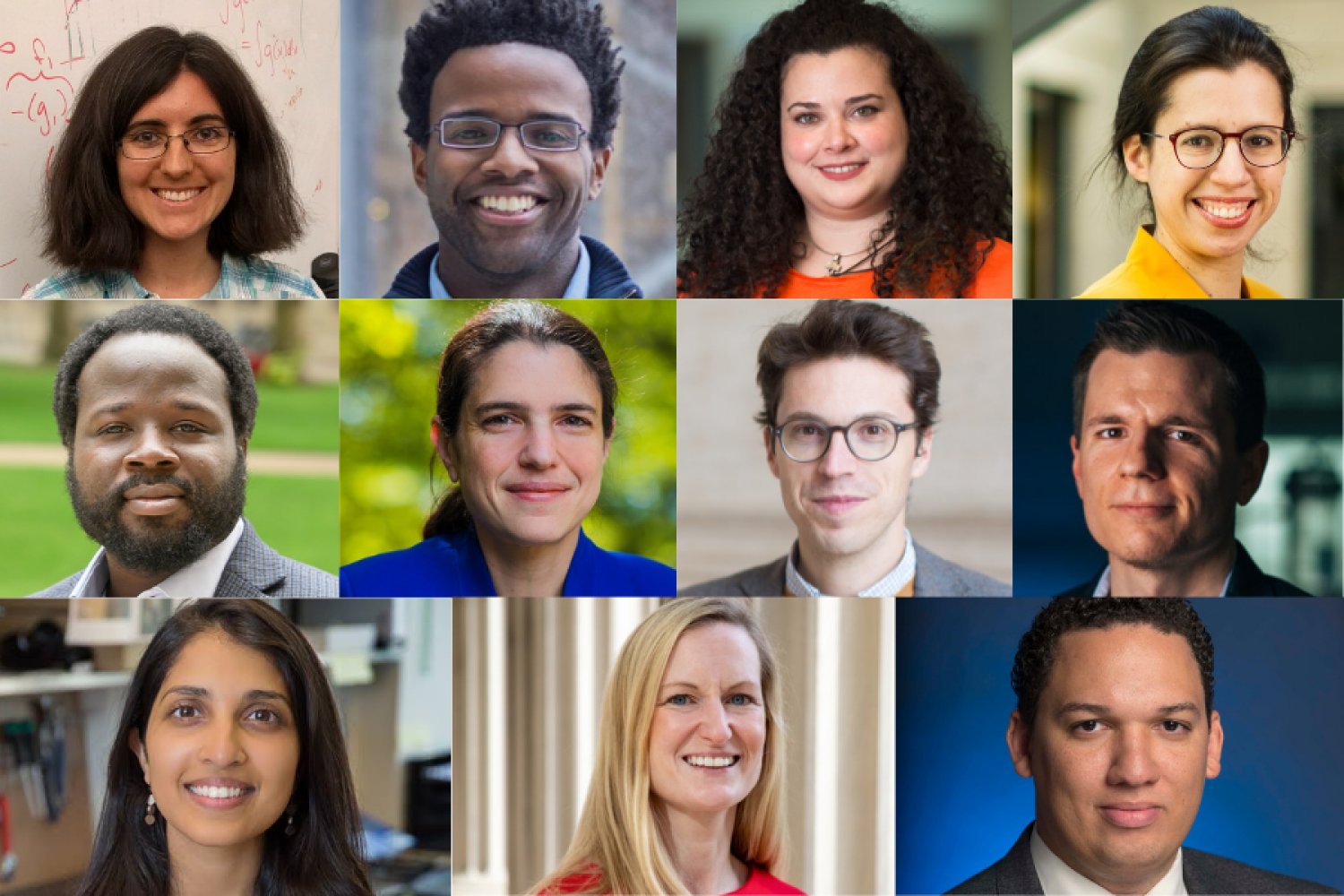
Eleven MIT faculty, including nine from the School of Engineering and two from the School of Science, were awarded the Presidential Early Career Award for Scientists and Engineers (PECASE). More than 15 additional MIT alumni were also honored. 

Established in 1996 by President Bill Clinton, the PECASE is awarded to scientists and engineers “who show exceptional potential for leadership early in their research careers.” The latest recipients were announced by the White House on Jan. 14 under President Joe Biden. Fourteen government agencies recommended researchers for the award.

The MIT faculty and alumni honorees are among 400 scientists and engineers recognized for innovation and scientific contributions. Those from the School of Engineering and School of Science who were honored are:

  • Tamara Broderick, associate professor in the Department of Electrical Engineering and Computer Science (EECS), was nominated by the Office of Naval Research for her project advancing “Lightweight representations for decentralized learning in data-rich environments.”
     
  • Michael James Carbin SM ’09, PhD ’15, associate professor in the Department of EECS, was nominated by the National Science Foundation (NSF) for his CAREER award, a project that developed techniques to execute programs reliably on approximate and unreliable computation substrates.
     
  • Christina Delimitrou, the KDD Career Development Professor in Communications and Technology and associate Professor in the Department of EECS, was nominated by the NSF for her group’s work on redesigning the cloud system stack given new cloud programming frameworks like microservices and serverless compute, as well as designing hardware acceleration techniques that make cloud data centers more predictable and resource-efficient.
     
  • Netta Engelhardt, the Biedenharn Career Development Associate Professor of Physics, was nominated by the Department of Energy for her research on the black hole information paradox and its implications for the fundamental quantum structure of space and time.
     
  • Robert Gilliard Jr., the Novartis Associate Professor of Chemistry, was selected based the results generated from his 2020 National Science Foundation CAREER award entitled: “CAREER: Boracycles with Unusual Bonding as Creative Strategies for Main-Group Functional Materials.”
     
  • Heather Janine Kulik PD ’09, PhD ’09, the Lammot du Pont Professor of Chemical Engineering, was nominated by the NSF for her 2019 proposal entitled “CAREER: Revealing spin-state-dependent reactivity in open-shell single atom catalysts with systematically-improvable computational tools.”
     
  • Nuno Loureiro, professor in the Department of Nuclear Science and Engineering, was nominated by the NSF for his work on the generation and amplification of magnetic fields in the universe.
     
  • Robert Macfarlane, associate professor in the Department of Materials Science and Engineering, was nominated by the Department of Defense (DoD)’s Air Force Office of Scientific Research. His research focuses on making new materials using molecular and nanoscale building blocks.
     
  • Ritu Raman, the Eugene Bell Career Development Professor of Tissue Engineering in the Department of Mechanical Engineering, was nominated by the DoD for her ARO-funded research that explored leveraging biological actuators in next-generation robots that can sense and adapt to their environments.
     
  • Ellen Roche, the Latham Family Career Development Professor and associate department head in the Department of Mechanical Engineering, was nominated by the NSF for her CAREER award, a project that aims to create a cutting-edge benchtop model combining soft robotics and organic tissue to accurately simulate the motions of the heart and diaphragm.
     
  • Justin Wilkerson, a visiting associate professor in the Department of Aeronautics and Astronautics, was nominated by the Air Force Office of Scientific Research (AFOSR) for his research primarily related to the design and optimization of novel multifunctional composite materials that can survive extreme environments.

Additional MIT alumni who were honored include: Elaheh Ahmadi ’20, MNG ’21; Ambika Bajpayee MNG ’07, PhD ’15; Katherine Bouman SM ’13, PhD ’17; Walter Cheng-Wan Lee ’95, MNG ’95, PhD ’05; Ismaila Dabo PhD ’08; Ying Diao SM ’10, PhD ’12; Eno Ebong ’99; Soheil Feizi- Khankandi SM ’10, PhD ’16; Mark Finlayson SM ’01, PhD ’12; Chelsea B. Finn ’14; Grace Xiang Gu SM ’14, PhD ’18; David Michael Isaacson PhD ’06, AF ’16; Lewei Lin ’05; Michelle Sander PhD ’12; Kevin Solomon SM ’08, PhD ’12; and Zhiting Tian PhD ’14.

Can AI-Generated Content Be Copyrighted?

0

Key Findings

Human Authorship Is Essential

The report states that AI-generated output can only receive copyright protection if a human adds significant creative input.

This input might include:

  • Major changes to AI-created material
  • Creative arrangement or selection of AI outputs (like putting together AI-generated text into a collection)
  • Use of AI elements in larger human-created works (such as using AI-generated visuals in a film storyboard)

However, just giving prompts to an AI system without any extra creative input doesn’t qualify for copyright.

No Legal Changes Recommended

The Copyright Office believes current copyright laws can adapt to content made by AI.

They point to past examples of copyright principles changing to accommodate photography, computer code, and other new technologies.

The report doesn’t support immediate changes to the law.

What This Means

Here’s what this means for artists, writers, and businesses using AI tools:

  1. Collaborative Works: Projects that mix AI-generated elements with human-created ones (like AI-assisted designs improved by artists) might get partial copyright protection.
  2. Tool Usage: Using AI for editing, brainstorming, or technical tasks does not take away a work’s copyright eligibility as long as a human shapes the final result.
  3. Prompt Engineers: Those who only create prompts for AI without adding more creative input will not own rights to the AI outputs.

What’s Next?

The Copyright Office will examine issues like AI training data and licensing in future reports.

Ongoing lawsuits might influence how courts interpret these rules.

This report is part of the U.S. Copyright Office’s AI Initiative launched in 2023. The first part focused on digital replicas and voice cloning, while future sections will address AI training data, licensing, and liability.

Conclusion

The report emphasizes the importance of human authorship in AI-generated content, stating that AI can only receive copyright protection if a human adds significant creative input. The Copyright Office believes current copyright laws can adapt to content made by AI, and no immediate changes to the law are recommended.

FAQ: U.S. Copyright Office Report On AI-Generated Content

1. Is current copyright law sufficient to handle AI-generated works?

A: “Questions of copyrightability and AI can be resolved pursuant to existing law, without the need for legislative change.”

2. Can AI-generated material ever be copyrighted?

A: “Copyright does not extend to purely AI-generated material, or material where there is insufficient human control over the expressive elements.”

3. Does using AI tools disqualify a work from copyright protection?

A: “The use of AI tools to assist rather than stand in for human creativity does not affect the availability of copyright protection for the output.”

4. Are prompts enough to claim authorship of AI-generated content?

A: “Prompts alone do not provide sufficient human control to make users of an AI system the authors of the output.”

5. Can human edits to AI outputs qualify for copyright?

A: “Human authors are entitled to copyright in their works of authorship that are perceptible in AI-generated outputs, as well as the creative selection, coordination, or arrangement of material in the outputs, or creative modifications of the outputs.”

6. Should AI systems receive new legal protections?

A: “The case has not been made for additional copyright or sui generis protection for AI-generated content.”

7. What about international competition in AI development?

A: “In the European Union, the majority of member states agreed, in response to a 2024 policy questionnaire on the relationship between generative AI and copyright, that current copyright principles adequately address the copyright eligibility of AI outputs and there is no need to provide new or additional protection.”

8. How does this affect creators with disabilities who use AI tools?

A: “Discussing creators with disabilities, another noted that “AI acts as a tool in the hands of an author,” rather than a source of expressive content. The Office strongly supports the empowerment of all creators, including those with disabilities. We stress that to the extent these functionalities are used as tools to recast, transform, or adapt an author’s expression, copyright protection would be available for the resulting work.”

For More Information

Read the full report and access registration examples at copyright.gov/AI.

ChatGPT Achieves Complex Research Agency

0

OpenAI Unveils Agentic AI Capability for Complex Research Tasks

OpenAI is releasing a powerful agentic capability that enables ChatGPT to conduct complex, multi-step research tasks online. The feature, called Deep Research, reportedly achieves in tens of minutes what could take a human researcher hours or even days.

Agentic AI Enables ChatGPT to Assist with Complex Research

Deep Research empowers ChatGPT to find, analyze, and synthesize information from hundreds of online sources autonomously. With just a prompt from the user, the tool can deliver a comprehensive report, comparable to the output of a research analyst, according to OpenAI.

Built for Real-World Challenges

Deep Research leverages sophisticated training methodologies, grounded in real-world browsing and reasoning tasks across diverse domains. Its model was trained via reinforcement learning to autonomously plan and execute multi-step research processes, including backtracking and adaptively refining its approach as new information becomes available.

Results

OpenAI evaluated Deep Research across a broad set of expert-level exams known as “Humanity’s Last Exam”. The results were impressive, with the model achieving a record-breaking 26.6% accuracy across these domains.

Limitations and Challenges

While the Deep Research agentic AI capability in ChatGPT signifies a bold step forward, OpenAI acknowledges that the technology is still in its early stages and comes with limitations. The system occasionally “hallucinates” facts or offers incorrect inferences, albeit at a notably reduced rate compared to existing GPT models.

Conclusion

Deep Research is a significant milestone in OpenAI’s journey toward artificial general intelligence (AGI). The ability to synthesize knowledge is a prerequisite for creating new knowledge, and this feature marks a significant step toward achieving that goal.

Frequently Asked Questions

Q: What is Deep Research?
A: Deep Research is a powerful agentic capability that enables ChatGPT to conduct complex, multi-step research tasks online.

Q: How does Deep Research work?
A: Deep Research empowers ChatGPT to find, analyze, and synthesize information from hundreds of online sources autonomously.

Q: What are the limitations of Deep Research?
A: The system occasionally “hallucinates” facts or offers incorrect inferences, albeit at a notably reduced rate compared to existing GPT models.

Q: When will Deep Research be available?
A: OpenAI is rolling out the capability gradually, starting with Pro users, who will have access to up to 100 queries per month. Plus and Team tiers will follow suit, with Enterprise access arriving next. UK, Swiss, and European Economic Area residents are not yet able to access the feature, but OpenAI is working on expanding its rollout to these regions.

Pragmatism Over Utopian Dreams

Open-Source AI: Red Hat’s Pragmatic Approach

A New Era for AI

Open-source AI is changing everything people thought they knew about artificial intelligence. Just look at DeepSeek, the Chinese open-source program that blew the financial doors off the AI industry. Red Hat, the world’s leading Linux company, understands the power of open source and AI better than most.

Red Hat’s Approach to Open-Source AI

Red Hat’s pragmatic approach to open-source AI reflects its decades-long commitment to open-source principles while grappling with the unique complexities of modern AI systems. Instead of chasing artificial general intelligence (AGI) dreams, Red Hat balances practical enterprise needs with what AI can deliver today.

The Challenges of Open-Source AI

Simultaneously, Red Hat is acknowledging the ambiguity surrounding "open-source AI." At the Linux Foundation Members Summit in November 2024, Richard Fontana, Red Hat’s principal commercial counsel, highlighted that while traditional open-source software relies on accessible source code, AI introduces challenges with opaque training data and model weights.

What is the Analog to Source Code for AI?

During a panel discussion, Fontana said, "What is the analog to [source code] for AI? That is not clear. Some people believe training data has to be open, but that’s highly impractical for LLMs [large language models]. It suggests open-source AI may be a utopian aim at this stage."

Reconciling Transparency with Competitive and Legal Realities

This tension is evident in models released under licenses that are restrictive yet labeled "open-source." These fake open-source programs include Meta’s LLama, and Fontana criticizes this trend, noting that many licenses discriminate against fields of endeavor or groups while still claiming openness.

Pragmatic Steps Toward Reproducibility

Red Hat CTO Chris Wright emphasizes pragmatic steps toward reproducibility, advocating for open models like Granite LLMs and tools such as InstructLab, which enable community-driven fine-tuning. Wright writes: "InstructLab lets anyone contribute skills to models, making AI truly collaborative. It’s how open source won in software — now we’re doing it for AI."

The Future of AI is Open

Wright frames this as an evolution of Red Hat’s Linux legacy: "Just as Linux standardized IT infrastructure, RHEL AI provides a foundation for enterprise AI — open, flexible, and hybrid by design." Red Hat envisions AI development mirroring open-source software’s collaborative ethos.

Conclusion

The future of AI is open, but it’s a journey. We’re tackling transparency, sustainability, and trust — one open-source project at a time. Fontana’s cautionary perspective grounds this vision, which is that open-source AI must respect competitive and legal realities. The community should refine definitions gradually, not force-fit ideals onto immature technology.

FAQs

Q: What is Red Hat’s approach to open-source AI?
A: Red Hat’s pragmatic approach balances practical enterprise needs with what AI can deliver today.

Q: What are the challenges of open-source AI?
A: AI introduces challenges with opaque training data and model weights.

Q: What is the analog to source code for AI?
A: There is no clear analog to source code for AI, and some people believe training data has to be open, but that’s highly impractical for LLMs.

Q: How does Red Hat approach transparency in AI?
A: Red Hat advocates for openness, but Fontana cautions against rigid definitions requiring full disclosure of training data.

Q: What is Red Hat’s vision for the future of AI?
A: Red Hat envisions AI development mirroring open-source software’s collaborative ethos, with models being open-source artifacts and sharing knowledge being the mission.

Countries and Agencies Banning AI Company’s Tech

0

DeepSeek, the Chinese AI company, has been raising concerns among regulators around the world. The company’s viral AI models and chatbot apps have been banned by several countries and government bodies due to concerns over ethics, privacy, and security practices.

Corporations’ Concerns
Corporations have also been wary of using DeepSeek’s technology, with hundreds reportedly banning its use. The biggest worry is potential data leakage to the Chinese government, as DeepSeek’s privacy policy states that the company stores all user data in China, where local laws require organizations to share data with intelligence officials upon request.

Global Ban
As the list of regions where DeepSeek’s apps are no longer available grows, we will continue to update this roundup. Included below are the public sector departments that have prohibited DeepSeek technology.

Italy

Italy became one of the first countries to ban DeepSeek following an investigation by the country’s privacy watchdog into DeepSeek’s handling of personal data. In late January, Italy’s Data Protection Authority (DPA) launched an investigation into DeepSeek’s data collection practices and compliance with the GDPR, the EU law that governs how personal data is retained and processed in EU territories. The DPA gave DeepSeek 20 days to respond to questions about how and where the company stores user data and what it uses this data for. DeepSeek claimed its apps didn’t call under the jurisdiction of EU law, but Italy’s DPA disagreed and took steps to remove DeepSeek’s apps from the Apple and Google app stores in Italy.

Taiwan

Taiwan’s Ministry of Digital Affairs said that DeepSeek "endangers national information security" and has banned government agencies from using the company’s AI. In a statement, the Taiwan ministry said that public sector workers and critical infrastructure facilities run the risk of "cross-border transmission and information leakage" by using DeepSeek’s technology. The Taiwanese government’s ban applies to employees of government agencies as well as public schools and state-owned enterprises. "DeepSeek AI service is a Chinese product," the Ministry of Digital Affairs’ statement reads. "Its operation involves [several] information security concerns."

U.S. Congress

U.S. congressional offices have reportedly been warned not to use DeepSeek tech. The House’s chief administrative officer (CAO), which provides support services and business solutions to the House of Representatives, sent a notice to congressional offices indicating that DeepSeek’s technology is "under review." The notice said that "threat actors are already exploiting DeepSeek to deliver malicious software and infect devices." To mitigate these risks, the House has taken security measures to restrict DeepSeek’s functionality on all House-issued devices.

Texas

Texas Gov. Greg Abbott issued an order banning software from DeepSeek and other Chinese companies from government-issued devices in the state. In a statement, Abbott said that Texas "will not allow the Chinese Communist Party to infiltrate our state’s critical infrastructure through data-harvesting AI and social media apps. Texas will continue to protect and defend our state from hostile foreign actors."

U.S. Navy

The U.S. Navy has instructed its members not to use DeepSeek apps or technology, according to CNBC. In late January, the Navy sent an email prohibiting service members from using DeepSeek products "in any capacity" due to "potential security and ethical concerns associated with the tech’s origin and usage." The email said that it is "imperative" that members do not use DeepSeek’s AI "for any work-related tasks or personal use" and "refrain from downloading, installing, or using [DeepSeek AI]."

Pentagon

The Pentagon has blocked access to DeepSeek technologies, but not before some staff accessed them, Bloomberg reported. The Defense Information Systems Agency, which is responsible for the Pentagon’s IT networks, moved to ban DeepSeek’s website in January, according to Bloomberg. The decision is said to have come after defense officials raised concerns that Pentagon workers were using DeepSeek’s applications without authorization.

NASA

NASA has also banned employees from using DeepSeek tech. According to CNBC, the agency’s chief AI officer sent a memo informing personnel that DeepSeek’s servers operate outside the U.S., raising national security concerns. The memo said that "DeepSeek and its products and services are not authorized for use with NASA’s data and information or on government-issued devices and networks." NASA has blocked use of DeepSeek apps on "agency-managed devices and networks," CNBC reports.

Conclusion

DeepSeek’s technology has raised significant concerns among regulators, corporations, and government bodies around the world. As the list of banned regions continues to grow, it is clear that the company’s practices have not met the standards of transparency and security. As the tech industry continues to evolve, it is crucial that companies prioritize user data privacy and security to build trust with consumers.

Frequently Asked Questions

Q: Why has DeepSeek been banned in several countries and government bodies?
A: DeepSeek has been banned due to concerns over the company’s ethics, privacy, and security practices.

Q: What is the main worry about DeepSeek’s technology?
A: The biggest worry is potential data leakage to the Chinese government, as DeepSeek’s privacy policy states that the company stores all user data in China.

Q: Has DeepSeek been banned in the United States?
A: Yes, DeepSeek has been banned by the U.S. Congress, Texas, U.S. Navy, Pentagon, and NASA.

Q: Why have corporations banned DeepSeek’s technology?
A: Corporations have banned DeepSeek’s technology due to concerns over potential data leakage and national security risks.

EcoFlow Says Subscriptions Aren’t Required for Advanced Features… Yet

0

EcoFlow’s New PowerStream Features: A Subscription-Based Model

Introducing the PowerStream Balcony Solar System

The PowerStream Balcony Solar System uses solar panels, a large portable battery, smart plugs, and a compact microinverter to deliver cheaper solar-generated power to other devices and appliances around a home using standard wall outlets. With the EcoFlow mobile app, users can specify how much power from the solar panels is used to keep devices like washing machines and coffee machines running, or how much is used to charge up batteries for times when solar power generation is reduced.

Subscription-Based Model for New Features

EcoFlow has announced that it will be offering new features through its mobile app, which will be available only through a subscription model. This approach allows users to access cutting-edge technologies tailored to specific critical needs, without having to pay for advanced features they don’t use. The paid model will also enable the company to continue maintaining and developing these niche but critical new features.

No Plans to Lock Down Existing Features

EcoFlow assures users that it has no plans to lock its apps and other software features already available on its power devices behind a paywall. "All existing features available to PowerStream users remain unaffected. The core functions of these devices will never be subject to payment thresholds, and you will never be required to make additional software payments to use your devices normally."

More Information to Come

Details about the new features being tested for the PowerStream system, including added functionality, when they’ll be available to all users, and how much they’ll cost, haven’t been revealed by EcoFlow.

Frequently Asked Questions

Q: What is the PowerStream Balcony Solar System?
A: The PowerStream Balcony Solar System is a solar-powered system that uses solar panels, a large portable battery, smart plugs, and a compact microinverter to deliver cheaper solar-generated power to other devices and appliances around a home.

Q: How does the subscription-based model work?
A: The subscription-based model allows users to access cutting-edge technologies tailored to specific critical needs, without having to pay for advanced features they don’t use. The paid model enables the company to maintain and develop these niche but critical new features.

Q: Will existing features be locked behind a paywall?
A: No, EcoFlow has no plans to lock its apps and other software features already available on its power devices behind a paywall. The core functions of these devices will never be subject to payment thresholds, and you will never be required to make additional software payments to use your devices normally.

Poor Data Hinders AI in Public Services

Poor Data Structures and Legacy Systems Hinder AI Potential in Public Services

According to Rodolphe Malaguti, Product Strategy and Transformation at Conga, poor data structures and legacy systems are hindering the potential of AI in transforming public services.

Taxpayer-Funded Services Losing Out

Taxpayer-funded services in the UK, from the NHS to local councils, are losing out on potential productivity savings of £45 billion per year due to an overwhelming reliance on outdated technology—a figure equivalent to the total cost of running every primary school in the country for a year.

Inefficient Processes

A report published this week highlights how nearly half of public services are still not accessible online. This forces British citizens to engage in time-consuming and frustrating processes such as applying for support in person, enduring long wait times on hold, or travelling across towns to council offices. Public sector workers are similarly hindered by inefficiencies, such as sifting through mountains of physical letters, which slows down response times and leaves citizens to bear the brunt of government red tape.

Legacy Systems and Data Structures

“As this report has shown, there is clearly a gap between what the government and public bodies intend to achieve with their digital projects and what they actually deliver,” explained Malaguti. “The public sector still relies heavily upon legacy systems and has clearly struggled to tackle existing poor data structures and inefficiencies across key departments. No doubt this has had a clear impact on decision-making and hindered vital services for vulnerable citizens.”

Transforming Public Services

In response to these challenges, Technology Secretary Peter Kyle is announcing an ambitious overhaul of public sector technology to usher in a more modern, efficient, and accessible system. Emphasising the use of AI, digital tools, and “common sense,” the goal is to reform how public services are designed and delivered—streamlining operations across local government, the NHS, and other critical departments.

New Tools and Changes

A package of tools known as ‘Humphrey’ – named after the fictional Whitehall official in popular BBC drama ‘Yes, Minister’ – is set to be made available to all civil servants soon, with some available today. Humphrey includes:

  • Consult: Analyses the thousands of responses received during government consultations within hours, presenting policymakers and experts with interactive dashboards to directly explore public feedback.
  • Parlex: A tool that enables policymakers to search and analyze decades of parliamentary debate, helping them refine their thinking and manage bills more effectively through both the Commons and the Lords.
  • Minute: A secure AI transcription service that creates customisable meeting summaries in the formats needed by public servants. It is currently being used by multiple central departments in meetings with ministers and is undergoing trials with local councils.
  • Redbox: A generative AI tool tailored to assist civil servants with everyday tasks, such as summarising policies and preparing briefings.
  • Lex: A tool designed to support officials in researching the law by providing analysis and summaries of relevant legislation for specific, complex issues.

Conclusion

The government’s upcoming reforms and policy updates, where it is expected to deliver on its ‘AI Opportunities Action Plan,’ will no doubt aim to speed up processes. Public sector leaders need to be more strategic with their investments and approach these projects with a level head, rolling out a programme in a phased manner, considering each phase of their operations.

FAQs

Q: What is the main challenge facing public services in the UK?
A: Poor data structures and legacy systems are hindering the potential of AI in transforming public services.

Q: How much are taxpayer-funded services losing out on due to outdated technology?
A: £45 billion per year, equivalent to the total cost of running every primary school in the country for a year.

Q: What is the goal of the government’s overhaul of public sector technology?
A: To usher in a more modern, efficient, and accessible system, streamlining operations across local government, the NHS, and other critical departments.

Q: What tools are being made available to civil servants as part of the overhaul?
A: A package of tools known as ‘Humphrey’ includes Consult, Parlex, Minute, Redbox, and Lex.

Next-Gen Developer Tools

Here is the rewritten article:

9 Next-Generation Developer Tools to Boost Your Workflow

In the fast-evolving digital world, developers have to face many challenges in managing complicated workflows, integrating various technologies, and meeting tight deadlines. Traditional tools may not suffice to handle daily challenges effectively and thus many developers might require a more dedicated research effort to stay competitive.

1. Sevalla – Cloud Hosting and Deployment

Sevalla is a flexible PaaS platform that simplifies hosting applications, databases, and static sites across many global data centers with its intuitive cloud interface. It eliminates complex infrastructure management, allowing developers to focus on coding while enjoying seamless deployment experiences with robust security and scalability.

Key Features:

  • Global Deployment: deploy applications on 25 global data centers with 260+ Cloudflare PoP servers, reducing latency and improving performance.
  • Flexible Hosting: support for Git & Docker, public/private repositories, auto-environment setup, and zero infrastructure management for seamless hosting.
  • Automatic Scaling: unlimited users & resources, parallel builds, no limiting feature gates, and auto-scaling depending on the application usage.
  • Robust Security: provide applications with Cloudflare DDoS protection, private network connectivity, and strong role-based access control to keep them secure.
  • Continuous Deployment Flow: perform application updates with Kubernetes health checks to make sure your app is always running, with instant rollbacks if needed.

2. Lovable – AI-Powered Web App Development

Lovable is an AI platform that empowers developers and non-technical users to create web applications with just a description of what they need in plain, natural language. It includes AI-powered code generation, automated bug fixes, and powerful workflow capabilities to boost web application development and rapidly prototype ideas.

Key Features:

  • Create modern web applications based on text prompts
  • Supabase integration for back-end databases
  • One-click deployments to publish web applications

3. Buildship – No-Code Backend Development

Buildship is an AI-driven low-code backend builder that assists developers in creating complex workflows and applications without requiring extensive coding. This enables users to visually construct scalable APIs, cloud functions, and automated workflows simply by dragging and dropping components.

Key Features:

  • Build scalable APIs with zero manual configuration
  • Support for complex database and chatbot integrations
  • Deploy backend workflows in a single click

4. Trag – Code Review Automation

Trag automates the process of pull request reviews, detects bugs, and suggests intelligent fixes for engineering teams without committing code directly to the base. Developers can use Trag to save time spent on code reviews, enforce recommended practices, and boost overall code quality with AI-powered semantic analysis.

Key Features:

  • Custom workflows & issue types
  • AI-powered automated bug detection
  • Semantic code understanding capabilities

5. Linear – Software Development Management

Linear is a modern project management tool for software development teams to plan, track, and execute projects with exceptional efficiency and clarity. It offers a clean and intuitive interface, as well as promotes collaboration between the teams on engineering, design, and product management cycles.

Key Features:

  • Flexible issue tracking with custom fields
  • Visual project planning and roadmap management
  • Real-time team collaboration and workflow automation

6. SigNoz – Application Performance Monitoring

SigNoz is an open-source observability platform to help developers inspect and detect the cause of problems in their application performance in real-time. SigNoz provides deep insights into application performance, identifies bottlenecks, and proactively manages system health without vendor lock-in.

Key Features:

  • Comprehensive metrics, logs, and traces
  • User-friendly dashboards and visualizations
  • Customizable alerting and notification system

7. Upstash – Serverless Data Platform

Upstash is a serverless data platform to offer scalable Redis and Kafka services for developers building modern applications requiring high performance. Developers can use it to simplify database operations, and reduce complexity in order to achieve low latency globally without managing the server infrastructure.

Key Features:

  • Global edge computing with millisecond responses
  • Dynamically allocate and scale resources
  • Serverless Redis & Kafka integration

8. Mintlify – Documentation Generation

Mintlify is a documentation platform designed to simplify the creation and maintenance of documentation for software projects, crafted with customizability and collaboration in mind. It comes with web editor, customizable templates and deployment previews, ensuring that your documentation is informative, up-to-date, accessible and visually appealing.

Key Features:

  • Customizable templates for layouts and design
  • Collaborative editing and knowledge sharing
  • Seamless integration with development environments

9. Polypane – Browser for Web Development

Polypane is a browser for web developers that provides the tools to create responsive, accessible, and performant websites. Having multiple synchronized viewports makes it easy for developers to test and debug different screen sizes at the same time.

Key Features:

  • Real-time synchronized interactions across viewports
  • Out-of-the-box accessibility and performance audits
  • Support for various frameworks and integrations

Conclusion:

These 9 next-generation developer tools can help you boost your workflow, improve collaboration, and automate routine tasks. By adopting innovative solutions like these, developers can shift more of their focus to creative problem-solving and creating quality software, thus speeding up development cycles.

FAQs:

Q: What are the key features of Sevalla?
A: Sevalla offers global deployment, flexible hosting, automatic scaling, robust security, and continuous deployment flow.

Q: What is Lovable used for?
A: Lovable is used for AI-powered web app development, allowing developers to create web applications with just a description of what they need in plain, natural language.

Q: What is Buildship used for?
A: Buildship is used for no-code backend development, enabling users to visually construct scalable APIs, cloud functions, and automated workflows.

Q: What is Trag used for?
A: Trag is used for code review automation, detecting bugs, and suggesting intelligent fixes for engineering teams.

Q: What is Linear used for?
A: Linear is used for software development management, offering a clean and intuitive interface, as well as promoting collaboration between the teams on engineering, design, and product management cycles.

Q: What is SigNoz used for?
A: SigNoz is used for application performance monitoring, providing deep insights into application performance, identifying bottlenecks, and proactively managing system health.

Q: What is Upstash used for?
A: Upstash is used for serverless data platform, offering scalable Redis and Kafka services for developers building modern applications requiring high performance.

Q: What is Mintlify used for?
A: Mintlify is used for documentation generation, simplifying the creation and maintenance of documentation for software projects.

Q: What is Polypane used for?
A: Polypane is used for browser for web development, providing the tools to create responsive, accessible, and performant websites.