Home Blog Page 358

DeepSeek R1 Stuns the AI World

The AI World in Turmoil: China’s DeepSeek R1 Model Sends Shockwaves

The Rise of DeepSeek R1

The AI world has been taken by a storm. China’s new open-source reasoning model, the DeepSeek R1, has sparked concerns that advances in AI by Chinese firms could threaten the revenue prospects of tech giants in the West and the AI supremacy long held by the U.S.

A Model That Surpassed Expectations

The model was developed by the Chinese AI startup DeepSeek, a company few would have heard of until last week. Within a few days, however, it has sent shockwaves through the tech world. DeepSeek claims that the R1 model matches or even surpasses the performance of OpenAI’s ChatGPT-4 and Anthropic’s Claude-3.5-Sonnet. These models are widely recognized as some of the most innovative in the industry, but R1 seemingly beat them on certain AI benchmarks.

A Game-Changer in AI Development

According to DeepSeek, R1 was trained for a staggering $5.6 million, in stark contrast to the hundreds of millions of dollars spent by leading U.S. tech companies to develop their models. This cost reduction of 50 times suggests rethinking the "throw more data centers at it" approach used by all the major Foundation Model makers.

A New Era of AI Development

A major appeal of DeepSeek R1 is its fully open-source framework, which enables users to fine-tune and customize the model for specialized purposes. It is also small enough to run on a mobile device or in combination with other models. This surge in popularity has catapulted DeepSeek R1 to the top of the productivity charts on the Apple App Store.

The Impact on the Market

Regardless of what is hype and what is not, the disruption caused by DeepSeek R1 has led to a sharp decline in major US tech stocks. Semiconductor equipment specialists ASML, NVIDIA, Meta, Alphabet, and Microsoft all saw significant stock price drops on Monday. The stock price drops have erased hundreds of billions of dollars in market value, with the S&P 500 losing more than 2 percent and the tech-heavy Nasdaq dropping 3.5 percent.

A Shift in the Balance of Power

The emergence of R1 has resulted in mixed reactions in the tech world. While some have praised the outstanding innovation as a step forward for open-source AI development, others have raised concerns about the geopolitical implications.

Conclusion

DeepSeek R1 has sent shockwaves through the AI community, sparking concerns about the potential impact on the global AI landscape. While the full implications of this development are still unclear, one thing is certain – the AI world will never be the same.

FAQs

Q: What is DeepSeek R1?
A: DeepSeek R1 is a new open-source reasoning model developed by the Chinese AI startup DeepSeek.

Q: How was R1 trained?
A: According to DeepSeek, R1 was trained for a staggering $5.6 million, which is a fraction of the cost of training other AI models.

Q: What are the implications of R1 on the AI industry?
A: The implications of R1 are still unclear, but they could potentially disrupt the balance of power in the AI industry, with Chinese firms gaining an edge over Western tech giants.

Q: What is the significance of R1’s open-source framework?
A: R1’s open-source framework allows users to fine-tune and customize the model for specialized purposes, making it a game-changer in AI development.


Screen Speak

Google’s Gemini Live Now Allows Pixel 9 Users to Discuss Screen Content

If you’re a Pixel 9 user, you can now give Gemini a peek at your screen and have a conversation about it.

New Feature Announced at Samsung Unpacked

Last week at Samsung Unpacked, Google announced several new features headed to Pixel phones, including the ability to talk to Gemini Live about what’s on your screen, including YouTube videos, images, or files.

Rolling Out to Pixel 9 Series Devices

That feature appears to be rolling out and showing up on Pixel 9 series devices, according to a 9to5Google report. If you don’t see it now, you should soon.

How to Test Gemini Live on Your Phone

To test out the feature, open Gemini Live (by saying “Hey Google,” not the Gemini app). You’ll see a mic button at the bottom for voice queries, a text field for typing commands and questions, a plus icon to add attachments, and now, a “Talk Live about…” button.

When you tap it, Gemini uploads whatever is on your screen to Gemini Live, where the conversation begins. You can also use this feature if you want to show your screen to Gemini later in a conversation, like if you want to explain or set up parameters first.

There’s also a new quick capture camera option if you want to send Gemini a visual while remaining in the conversation.

Limitations and Availability

If you ask a question about an image or YouTube video, Gemini only sees what’s on the screen, but if you ask about a PDF, Gemini will access the entire file.

The feature works if you open Gemini Live while using the YouTube or Files by Google apps or while viewing an image. You could technically do the same thing before, but it involved taking a screenshot and then manually uploading it as an attachment. The new way saves a step.

Google says this feature is starting on the Galaxy S24, S25, and Pixel 9, but like other features, it will likely roll out to other Android devices over time.

Conclusion

The new feature allows Pixel 9 users to have a more seamless conversation with Gemini Live, making it easier to discuss and share content on their screens.

FAQs

Q: Is this feature available on all Pixel devices?
A: No, it’s currently available on the Pixel 9 series, but it will likely roll out to other Android devices over time.

Q: Can I use this feature with any app?
A: No, it only works with the YouTube and Files by Google apps, or when viewing an image.

Q: What happens if I ask a question about a PDF?
A: Gemini will access the entire file, not just what’s currently on the screen.

Q: Is this feature available on other devices besides the Pixel 9?
A: No, it’s currently exclusive to the Galaxy S24, S25, and Pixel 9, but it will likely roll out to other Android devices over time.

NVIDIA GeForce RTX 5080 FE: Power and Price Balance

0

NVIDIA GeForce RTX 5080 FE Review: A Power-Hungry Creative’s Dream

NVIDIA GeForce RTX 5080 FE review: Key specifications

Specification 4070 Ti Super 4080 4090 5080 FE 5090 FE
Release date January 2024 November 2022 October 2022 January 2025 January 2025
Approx. price $799/£769 $999/£949 $1,499/£1,499 $999/£979 $1,999/£1,939
CUDA cores 8448 9728 16384 10752 21760
Tensor (AI) 706 780 1321 1801 3352
Base clock (MHz) 2340 2210 2230 2300 2010
Bus width 256 256 384 256 512
Effective mem speed 21 GB/s 22.4 GB/s 21 GB/s 30GB/s -5x increase in speed here, which should vastly speed up work for many video editors.

Performance and Benchmarks

When it comes to Procyon Flux testing, we finally see a marked difference between the models. The 5080 FE took more than twice as long to generate images using the memory-demanding FP4 test than the 5090 FE did, but it was still impressively fast in its own right.

There’s also about a 15% reduction in performance from the 5090 to the 5080 in both the PugetBench DaVinci test and the Topaz Video AI upscaling test. Both figures still reside firmly in the ‘staggering’ category though.

Gaming and Professional Applications

Gaming is also truly spectacular here, especially when I can make use of features like DLSS 4. I ran Cyberpunk 2077, EA FC 24 and more games on this card, and the step up from 4070 Ti Super I had previously is not only noticeable, it’s staggering. Go to one of our gaming-focused sister sites for a full breakdown of the card for gamers if you’re interested to know more about that.

Conclusion

At under a grand at launch, the NVIDIA GeForce RTX 5080 FE isn’t exactly cheap, but while it’s only half the price of the 5090 FE, it provides a heck of a lot more than half the performance. With DLSS 4 support, neural rendering, RTX Mega Geometry and a host of other innovations on board, 3D modellers, animators and perhaps most importantly game developers will be looking for the most bang for their buck when it comes to the 50-series. And the 5080 might be that card.

Who is it for?

At under a grand at launch, the NVIDIA GeForce RTX 5080 FE isn’t exactly cheap, but while it’s only half the price of the 5090 FE, it provides a heck of a lot more than half the performance. With DLSS 4 support, neural rendering, RTX Mega Geometry and a host of other innovations on board, 3D modellers, animators and perhaps most importantly game developers will be looking for the most bang for their buck when it comes to the 50-series. And the 5080 might be that card.

Buy it if

  • You are a pro game dev, animator or 3D artist
  • You need near-top-level performance but your budget isn’t unlimited
  • You want the best card for video editing

Don’t buy it if

  • A 40 (or 30) series card will do the job

Microsoft and OpenAI probe alleged data theft by DeepSeek

0

Microsoft and OpenAI Investigate Potential Breach of AI System by Chinese Start-up DeepSeek

According to Bloomberg, Microsoft and OpenAI are investigating a potential breach of OpenAI’s system by a group allegedly linked to Chinese AI start-up DeepSeek. The investigation stems from suspicious data extraction activity detected in late 2024 via OpenAI’s application programming interface (API), sparking broader concerns over international AI competition.

Large-scale Data Extraction

Microsoft, OpenAI’s largest financial backer, first identified the large-scale data extraction and informed the ChatGPT maker of the incident. Sources believe the activity may have violated OpenAI’s terms of service or that the group may have exploited loopholes to bypass restrictions limiting how much data they could collect.

DeepSeek’s Rise to Prominence

DeepSeek has quickly risen to prominence in the competitive AI landscape, particularly with the release of its latest model, R-1, on January 20. Billed as a rival to OpenAI’s ChatGPT in performance but developed at a significantly lower cost, R-1 has shaken up the tech industry. Its release triggered a sharp decline in tech and AI stocks that wiped billions from US markets in a single week.

Model Distillation

David Sacks, the White House’s newly appointed "crypto and AI czar," alleged that DeepSeek may have employed questionable methods to achieve its AI’s capabilities. In an interview with Fox News, Sacks noted evidence suggesting that DeepSeek had used "distillation" to train its AI models using outputs from OpenAI’s systems.

"There’s substantial evidence that what DeepSeek did here is they distilled knowledge out of OpenAI’s models, and I don’t think OpenAI is very happy about this," Sacks told the network.

Geopolitical and Security Concerns

The growing competition between the US and China in the AI sector has underscored wider concerns regarding technological ownership, ethical governance, and national security. The US Navy has banned its personnel from using DeepSeek’s products, citing fears that the Chinese government could exploit the platform to access sensitive information.

Conclusion

The case highlights the risks posed by model distillation and the need for stricter measures to protect intellectual property and prevent data breaches. As AI systems advance and become increasingly integral to global economic and strategic planning, disputes over data usage and intellectual property are likely to intensify. The investigation into the alleged breach by DeepSeek has set a precedent for how AI developers police model usage and enforce terms of service.

FAQs

  • What is model distillation?
    Model distillation is a technique that involves training one AI system using data generated by another, potentially allowing a competitor to develop similar functionality.
  • What is the concern about DeepSeek’s data collection practices?
    Critics have highlighted DeepSeek’s privacy policy, which permits the collection of data such as IP addresses, device information, and even keystroke patterns, a scope of data collection considered excessive by some experts.
  • Why has the US Navy banned its personnel from using DeepSeek’s products?
    The US Navy has banned its personnel from using DeepSeek’s products due to "potential security and ethical concerns associated with the model’s origin and usage."
  • What are the implications for the AI industry?
    The growing competition between the US and China in the AI sector has underscored wider concerns regarding technological ownership, ethical governance, and national security, highlighting the need for stricter measures to protect intellectual property and prevent data breaches.

Shaping the Future of Learning

Key Points

Artificial intelligence brings opportunities and questions to classrooms worldwide. Teachers find AI tools that grade assignments, create lesson plans, and offer personalized student support. Meanwhile, education leaders weigh the ethical implications of AI integration against its potential benefits.

The Power of Ethical AI in Supporting Teachers

AI tools can make teaching easier, but only when they protect student privacy and treat all learners fairly. Ethical AI systems have clear rules about data use and transparent guidelines that tell everyone exactly how they work. Teachers must combine tech adoption with educational wisdom to make the most of AI and mitigate its detrimental effects.

Building Trust through Responsible Data Management

Strict privacy rules protect student information as AI tools track progress and spot learning patterns. Schools set firm boundaries about what data their AI systems can collect and how they use it. This careful planning lets teachers supercharge student creativity and critical thinking with fresh AI-infused teaching methods while keeping their information private.

Creating Personalized Learning Environments

AI watches how students learn, which methods work best, when they need breaks, and what subjects excite them. Teachers who follow careful AI practices can then match each student with just the right mix of challenge and support, helping to spot who needs help sooner rather than later.

Will AI Replace Teachers? Understanding AI’s Limitations and Potential

Teachers bring warmth, wisdom, and real-world understanding to their classrooms. When a student struggles with math anxiety or needs encouragement after a tough day, they need more than algorithmic responses–they need human connection.

AI as an Educational Assistant

AI tools shine at tasks like tracking assignment completion and suggesting practice problems. AI is stellar at analyzing student work patterns, offering activities that match each learner’s interests and giving teachers useful insights about how to spark student engagement. This behind-the-scenes support lets teachers spend less time on paperwork and more time teaching.

Building a Collaborative Future with AI and Human Teachers

Teachers who welcome AI into their classrooms often start small. As their comfort grows, they find new ways to blend AI with their teaching style. Organic experimentation shows which tools actually help and which ones need work to be useful.

Designing Hybrid Learning Models

AI tools fit naturally into existing lesson plans when teachers match them to specific learning goals. Some classes use AI writing assistants to help students brainstorm ideas, while others use AI-powered math tools to visualize complex concepts. Teachers pick tools that complement their subject matter and teaching methods.

Maintaining the Human Connection

AI handles routine tasks while teachers create memorable learning moments. They lead class discussions, share personal stories that make lessons stick, and notice when students need extra encouragement. This combination of technology and personal attention helps students stay engaged with their learning.

Conclusion

Technology works in service of teaching, not the other way around. Smart classrooms blend AI tools with skilled instruction, creating spaces where students learn from both digital insights and human wisdom.

FAQs

Q: Will AI replace human teachers?
A: No, AI tools are designed to support and augment human teaching, not replace it.

Q: How can AI be used to support teaching?
A: AI can be used to track student progress, offer personalized support, and provide real-time feedback, freeing up teachers to focus on what matters most – building relationships and guiding student learning.

Q: What are the benefits of using AI in education?
A: AI can help teachers personalize learning, save time on routine tasks, and provide real-time feedback to students, ultimately leading to improved student outcomes.

Q: What are the potential drawbacks of using AI in education?
A: AI can also potentially replace human interaction, leading to a lack of emotional intelligence and empathy in students, and may also perpetuate existing biases in the data it uses.

Disrupt 2025: 2 for 1 Pass

0

Here is the rewritten article:

Be where the future takes shape

From October 27–29, Moscone West in San Francisco transforms into the epicenter of tech and innovation. Join 10,000 tech and VC leaders for 250+ hands-on sessions, 200+ expert onstage discussions, the thrilling Startup Battlefield 200, and unmatched chances to network with the industry’s brightest.

20 years of TechCrunch Disrupt

For two decades, TechCrunch Disrupt has brought together groundbreaking founders, visionary tech leaders, and influential VCs to inspire and guide the next generation of entrepreneurs. Investors also flock to meet the tech leaders shaping tomorrow’s innovations. Take a look at some of the incredible speakers from last year’s event:

• Alex Pall and Drew Taggart from The Chainsmokers, Co-founders and Partners, Mantis Venture Capital
• Ashton Kutcher, Co-founder, Sound Ventures
• Bridgit Mendler, CEO, Northwood Space
• Colin Kaepernick, Founder and CEO, Lumi
• Denise Dresser, CEO, Slack
• Erin and Sara Foster, Co-founders and General Partners, Oversubscribed Ventures
• Mary Barra, CEO, General Motors
• Matt Mullenweg, Co-founder, WordPress and CEO, Automattic
• Vinod Khosla, Founder, Khosla Ventures
• Wassym Bensaid, CSO, Rivian

Insights and connections that accelerate growth

Supercharge your expertise at specialized stages covering AI, Space, Builders, Going Public, and the Disrupt Main Stage. Investors can enjoy a special StrictlyVC session featuring prominent VC leaders.

Join hands-on sessions led by experts in the industry. This is the place to expand your knowledge by asking questions and engaging in discussions.

Forge meaningful connections with endless networking opportunities — set up 1:1 or group meetings, or if you’re a founder or investor, engage in high-value discussions at the Deal Flow Cafe.

Discover the future of technology in the bustling Expo Hall, or seize a chance encounter with an investor searching for the next breakthrough innovation.

Invite a guest at the best price of the year

Hurry — save big before it’s gone! Lock in your 2-for-1 Pass and bring a friend while this limited-time offer lasts. This deal ends Friday, January 31 at 11:59 p.m. PT. Register now before time runs out!

Is your company interested in sponsoring or exhibiting at TechCrunch Disrupt 2025? Contact our sponsorship sales team by filling out this form.

Braindate networking

TechCrunch Disrupt 2025 Braindate networking

Future of Creative Ideation

0

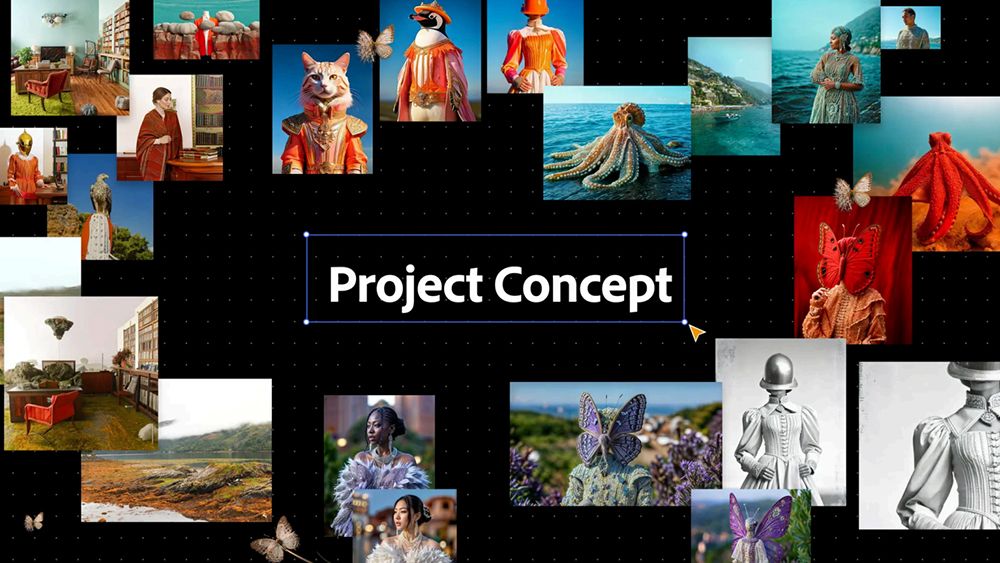
Adobe’s Project Concept: A New Era in AI-Powered Mood-Boarding and Ideation

What is Project Concept?

Adobe’s Project Concept is an AI-powered mood-boarding and ideation app that has gained attention for its non-linear, infinite canvas approach. Designed as a new Adobe product, rather than an add-on to existing software, Project Concept is aimed at a new generation of creatives who want to embrace generative AI and find the linear workflows of legacy software restrictive.

Key Features

  • Import or generate images using AI, and edit, remix, and organize them in a flexible way
  • Collaborate with others by sharing canvases and artboards
  • Simplified user interface with multiple input types, such as text prompts, images, or individual ingredients from images
  • Integration with Adobe Photoshop and Adobe Express for seamless asset import
  • Content Credentials for recognizing image sources, respecting generative AI usage, and promoting transparency

Feedback and Development

Project Concept was first introduced at Adobe MAX in October, and since then, Adobe has been inviting select artists to test the product, incorporating their feedback into the development process. The latest updates include the addition of shareable canvases and artboards, as well as the ability to import, share, and remix work.

Industry Impact

According to Shona Dutta Charlton, who used Project Concept to develop the visual direction of a short film, "Concept…helped me rapidly visualize images for my team when we were incredibly pushed for time. We could get the set built and costs estimated with quick tweaks to the brief. In an industry where time is money and when producers have way too much on our plate, it’s becoming an essential planning tool."

Comparison to Other Tools

While Project Concept is not entirely novel, with AI-heavy unlimited canvas mood-boarding tools already available in Recraft and Kaiber’s Superstudio, Adobe’s industry clout and integration with industry-standard tools are likely to give it an edge.

Conclusion

Project Concept is a game-changer in the world of AI-powered mood-boarding and ideation. With its non-linear, infinite canvas approach and seamless integration with Adobe software, it has the potential to revolutionize the way creatives work. By opening access to more creatives and moving into private beta, Adobe is inviting feedback and refining the product to meet the needs of its users.

Frequently Asked Questions

Q: What is Project Concept?
A: Project Concept is an AI-powered mood-boarding and ideation app designed to help creatives visualize and develop ideas in a flexible and collaborative way.

Q: What are the key features of Project Concept?
A: Key features include the ability to import or generate images using AI, edit, remix, and organize them in a flexible way, collaborate with others, and integrate with Adobe Photoshop and Adobe Express.

Q: How does Project Concept differ from other AI-powered mood-boarding tools?
A: While Project Concept is not entirely novel, its integration with Adobe software and industry clout are likely to give it an edge over other tools.

Q: Can I sign up for the waiting list for Project Concept?
A: Yes, you can learn more and sign up for the waiting list at Adobe.

GitHub Copilot’s AI: Terrible at Writing Code?

The Thing I Find Most Baffling About the Programming Tests I’ve Been Running

The thing I find most baffling about the programming tests I’ve been running is that tools based on the same large language model tend to perform quite differently.

The Best AI for Coding in 2025 (and What Not to Use)

For example, ChatGPT, Perplexity, and GitHub Copilot are all based on the GPT-4 model from OpenAI. But, as I’ll show you below, while ChatGPT and Perplexity’s pro plans performed excellently, GitHub Copilot failed as often as it succeeded.

Testing GitHub Copilot

I tested GitHub Copilot embedded inside a VS Code instance. I’ll explain how to set that up and use GitHub Copilot in an upcoming step-by-step article. But first, let’s run through the tests.

Test 1: Writing a WordPress Plugin

So, this failed miserably. This was my first test, so I can’t tell yet whether GitHub Copilot is terrible at writing code or whether the context in which one interacts with it is limiting to the point where it can’t meet this requirement.

Test 2: Rewriting a String Function

This test is fairly simple. I wrote a function that was supposed to test for dollars and cents but wound up only testing for integers (dollars). The test asks the AI to fix the code.

Test 3: Finding an Annoying Bug

GitHub Copilot got this right. This is another test pulled from my real-life coding escapades. What made this bug so annoying (and difficult to figure out) is that the error message isn’t directly related to the actual problem.

Test 4: Writing a Script

Here, too, GitHub Copilot succeeded where Microsoft Copilot failed. The challenge here is that I’m testing the AI’s ability to create a script that knows about coding in AppleScript, the Chrome object model, and a little Mac-only third-party coding utility called Keyboard Maestro.

Final Thoughts

Given that GitHub Copilot uses GPT-4, I find the fact that it failed half of the tests discouraging. GitHub is just about the most popular source management environment on the planet, and one would hope that the AI coding support was reasonably reliable.

Conclusion

As with all things AI, I’m sure performance will get better. Let’s stay tuned and check back in a few months to see if the AI is more effective at that time.

Frequently Asked Questions

Q: Do you use an AI to help with coding? What AI do you prefer? Have you tried GitHub Copilot?
A: We’d love to hear your thoughts! Share your experiences with AI-powered coding tools in the comments below.

Q: How do you stay up-to-date with the latest developments in AI-powered coding?
A: Follow our AI and coding coverage, and stay tuned for more updates on the latest AI-powered coding tools and services.

ChatGPT’s mobile users are 85% male

0

The AI Bubble Hasn’t Bursted Yet

AI App Spending on the Rise

Led by OpenAI’s ChatGPT, overall spending on AI apps jumped to $1.42 billion in 2024, according to app analytics firm Appfigures. This marks a 274% increase from 2023, the year the app was launched. Among tens of thousands of competitor apps, ChatGPT is so dominant that it has consistently earned more than the aggregate revenue of other top AI assistant apps.

Revenue and Demographics

The success of these apps is also a boon for Apple and Google, which retain about 30% of revenue from in-app purchases. Overall, mobile AI apps constitute a $2 billion market, according to Appfigures. ChatGPT has been downloaded 353 million times to date, but the demographics that use the app are skewed. Over half of ChatGPT’s mobile users are under the age of 25, indicating that perhaps young people are more open to experimenting with new technology or may be using the app for homework, as the Pew Research Center estimates that a quarter of U.S. teens have used ChatGPT for schoolwork, which has doubled from 2023.

Age and Gender Demographics

However, users between the ages of 50 and 64 make up the second-largest age demographic, with 20.2% of users. The gender gap among ChatGPT users is even more significant, with Appfigures estimating that across age groups, men make up 84.5% of all users.

The Gender Gap and AI

Women hold prominent roles in the AI industry, but a Pew report from 2022 indicates that women tend to be more skeptical about AI than men. An Axios poll found that 53% of women surveyed would not allow their children to use AI at all, compared to 26% of men. Meanwhile, McKinsey estimates that women will be more likely to lose their jobs to automation than their male counterparts, which could drive further resistance. Women may also be less enthusiastic about the mass adoption of consumer AI products because they are particularly vulnerable to the most sinister impacts of this technology, such as sexually explicit deepfake images.

Competition in the AI App Market

ChatGPT is solidly winning the lion’s share of AI app spending, but with DeepSeek coming on the market as a free, open-source alternative, the OpenAI app may see slight headwinds. DeepSeek has already dethroned OpenAI as the top app in the App Store, but maintaining its current level of hype could be a challenge for the Chinese AI app.

Conclusion

The AI bubble has not burst yet, and consumer spending on AI apps continues to grow. While there are concerns about the potential implications of AI on society, the data suggests that consumers are enthusiastic about the technology. As the market continues to evolve, it will be important to consider the potential consequences of AI adoption and to ensure that the benefits of this technology are accessible to all.

FAQs

Q: What is the current state of AI app spending?
A: According to Appfigures, overall spending on AI apps jumped to $1.42 billion in 2024, a 274% increase from 2023.

Q: What is the demographic breakdown of ChatGPT users?
A: Over half of ChatGPT’s mobile users are under the age of 25, and 20.2% are between the ages of 50 and 64. Men make up 84.5% of all users.

Q: What is the gender gap in AI adoption?
A: Women tend to be more skeptical about AI than men, with 53% of women surveyed saying they would not allow their children to use AI at all, compared to 26% of men.

Q: What is the potential impact of AI on the workforce?
A: McKinsey estimates that women will be more likely to lose their jobs to automation than their male counterparts, which could drive further resistance to AI adoption.

Mazda’s New Logo

0

A New Era for Mazda: Logo Redesign Aims to Capture Modern Appeal

In July last year, Mazda subtly filed a trademark for a slick new logo, breaking the mould of its dated 3D design. The contemporary revamp is yet to launch officially, but its sleek new look is a huge leap for the brand, following the decline of skeuomorphic design across many of the modern car logos on the road today.

A Welcome Evolution

As we saw with the new Jaguar logo recently, redesigning a car brand emblem can be controversial, yet Mazda’s simple yet contemporary upgrade was well received by many. A welcome evolution that was long overdue, the new Mazda emblem proves that subtle tweaks can make an outstanding difference to a well-loved logo.

An Overview of the New Logo Design

Multiple Japanese news outlets have confirmed the new design is official. As of now, it’s unclear whether the old logo will still be used alongside the contemporary design, but a formal announcement is expected in the coming days – potentially on the brand’s 105th anniversary on 30 January. A closer inspection of the new Mazda logo reveals why it was so well received, with a simple yet striking black outline giving it a much-needed modern upgrade.

The signature ‘M’ shaped wings have been refined for a sharper, more graphic appeal while the surrounding circular frame has been reshaped for a rounded, harmonious appearance. According to Car Scoops, Mazda claims that the redesign was created in part to appear more legible on smartphones and laptop screens, prioritizing bold modern precision over an elaborate redesign.

A Design Revamp for a New Generation

Mazda’s logo has remained unchanged since 1997, so a contemporary refresh was naturally on the cards to appeal to a new generation. The minimalist look may not be the most flashy revamp, but its simple unfussy design is what makes it so strong (there’s always the danger of overcomplicating it and ending up amongst the ranks of the worst car logo redesigns).

Conclusion

Mazda’s redesign is a well-received breath of fresh air for the brand, showcasing that sometimes, the simplest changes can make the greatest impact. Only time will tell if the company will continue this modern design route, but as it stands, the new Mazda logo is set to make its mark on the automotive world.

FAQs
  1. When is the new logo expected to officially launch? The date of the launch is still unconfirmed, but it is anticipated to be released in the coming days, possibly on Mazda’s 105th anniversary on January 30th.
  2. Will the old logo still be used alongside the new design? It remains unclear whether both logos will coexist, with a formal announcement expected in the near future.
  3. What design principles guided Mazda’s logo revamp? The design was created with the goal of making the logo more legible on digital platforms, prioritizing bold modern precision over elaborate detail.