Home Blog Page 372

The New Status Symbol

Unlock the White House Watch newsletter for free

A New Superpower Status Symbol: Data Centres

Almost a hundred years ago, New York’s skyline became the scene of a bitter battle. The prize: displacing the Woolworth Building as the world’s tallest property. Such superlatives mattered to a growing, industrialised nation keen to flex its dominance. The winner was 40 Wall Street, swiftly pipped by the Chrysler Building, which in turn lost the title to the Empire State Building.

Today, there is a new superpower status symbol: data centres. The latest bid for digital supremacy is Stargate. This mammoth project led by artificial intelligence company OpenAI, and announced by US President Donald Trump, pledges to spend up to $500bn over four years to construct world-changing AI infrastructure — basically warehouses filled with clusters of microchips — on an unprecedented scale.

Trump’s endorsement, with a reassurance that no government money is involved, shows data-centre dominion is now a national priority. That is no surprise. New regimes love big gestures. Think of the “10 great buildings” with which Chairman Mao peppered Beijing in 1959, or The Line, a 106-mile sliver of a city under construction at the behest of Saudi Arabia’s Crown Prince Mohammed Bin-Salman.

Stargate: A Trophy and an Arms Race

Stargate is a trophy too. But it is also an arms race, because OpenAI is in effect building a weapon. Co-founder Sam Altman’s goal is to achieve “artificial general intelligence”, the kind that outflanks human beings. That this is now a White House-backed initiative reflects a superpower reality: whichever country reaches AGI first poses a significant threat, commercially and militarily, to the rest.

What Does $500bn Buy?

What does $500bn buy? First, assume the money can actually be raised; departed OpenAI co-founder and Tesla head Elon Musk is sceptical. The latest Blackwell chips from Nvidia could cost about $50,000 apiece, suggesting Altman’s budget could cover 10mn of them. The biggest AI supercomputer in the world today, Musk’s Colossus, has about 100,000. Size alone does not guarantee AGI success, but it is an important factor.

A Hyperscaler in the Making?

At its most mundane, OpenAI is following other big technology firms. So-called hyperscalers Amazon, Meta Platforms, Microsoft and Alphabet are collectively on course to invest $260bn in capital expenditure next year, according to Visible Alpha. Stargate’s plan of an average $125bn a year is big, but not substantially greater than theirs.

But Altman’s scheme is undeniably different. Alphabet, Microsoft, Meta and Amazon are building computing power customers can use, with a path to sizeable near-term revenue. OpenAI’s foray is more of a moonshot. Succeed, and vast profit awaits. Fail, and a surfeit of servers could push down prices and profit for the whole industry.

A New Era of Competition

In the real world, meanwhile, traditional projections of power remain in fashion. China is planning 118 skyscrapers higher than London’s Shard, to add to the 100 or so it already has, according to the Council on Tall Buildings and Urban Habitat. Saudi Arabia, keen to be an AI hub, is also eyeing what will be the world’s tallest building, the Jeddah Tower. It’s just that in the AI age, there are more ways to reach for the heavens.

Conclusion

The Stargate project represents a new era of competition in the pursuit of technological supremacy. While traditional measures of power remain important, the ability to develop and deploy artificial intelligence will become increasingly crucial in the years to come.

FAQs

Q: What is the Stargate project?
A: The Stargate project is a massive initiative led by OpenAI to construct world-changing AI infrastructure, with a budget of up to $500bn over four years.

Q: What is the goal of the Stargate project?
A: The goal is to achieve “artificial general intelligence”, the kind that outflanks human beings.

Q: Is the Stargate project backed by the US government?
A: According to President Donald Trump, no government money is involved in the project.

Q: What is the significance of the Stargate project?
A: The project represents a new era of competition in the pursuit of technological supremacy, with significant implications for commercial and military power.
Sonic: Evolution of Character Design

0

Sonic’s Evolution: From Classic to Modern

Sonic is everywhere at the moment thanks to the success of Sonic the Hedgehog 3 on the big screen. But our favourite spiny blue mammal has appeared in many guises over the years, from the video games to IDW’s comic series.

A Look at Sonic’s Design Evolution

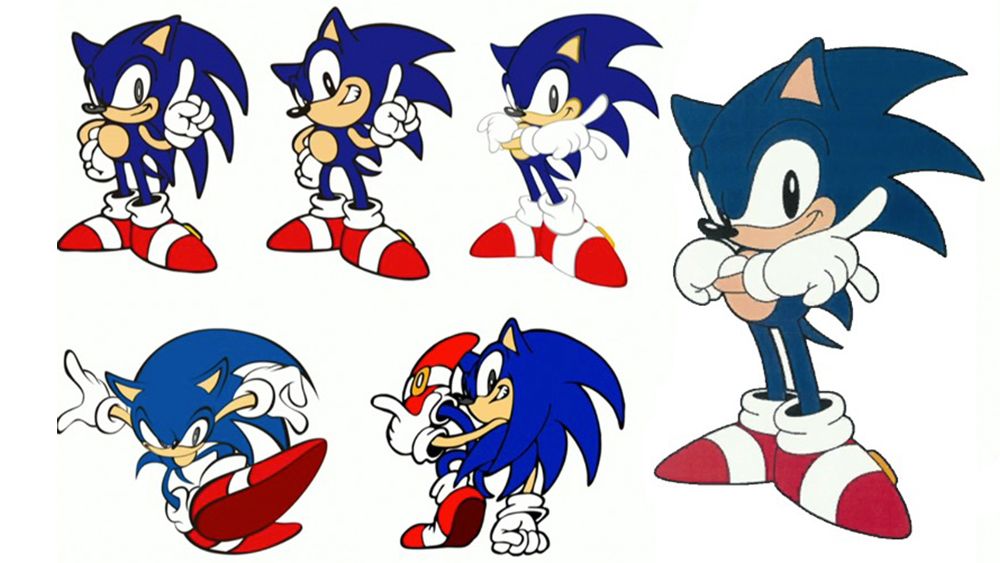
Sonic’s appearance has evolved over the years with various artists applying their own stamp (see our character design tips for inspiration for your own work). A thread on X provides a great overview of how the design has changed.

Setting the Standard: Yuji Uekawa and Satoshi Okano

Yuji Uekawa defined the look of the modern Sonic we know for the Sonic Adventure series, launched in 1998. The illustrator left behind the more childlike appearance of previous outings in favour of a taller, meaner and cooler hedgehog fit for a new era. Satoshi Okano’s contributions to the modern Sonic should also be acknowledged.

A Range of Interpretations

As the illustrator Fronkus notes on X, artists like Aaron Hammerstrom and Tyson Hesse gave their interpretations of Sonic their own mark while respecting the work of Yuji and Satoshi to ensure that subsequent Sonics felt like the same character while also having personality of their own. There’s now something of a debate among fans about how much each artist should diverge from the standard that Yuji set.

The Debate Among Fans

For some fans, only artists who mimic Yuji Uekawa’s style are considered to be doing Sonic justice, while others argue that artists should be allowed to bring their own unique identity to the character.

Conclusion

In conclusion, Sonic’s design has undergone significant changes over the years, with various artists contributing their own unique style while respecting the core elements of the character. Whether you’re a fan of the classic or modern Sonic, there’s no denying the blue hedgehog’s enduring appeal.

FAQs

Q: Who designed the modern Sonic?

A: Yuji Uekawa and Satoshi Okano are credited with defining the look of the modern Sonic for the Sonic Adventure series.

Q: Have other artists deviated from Yuji’s design?

A: Yes, artists like Aaron Hammerstrom and Tyson Hesse have given their own interpretations of Sonic while still respecting the core elements of the character.

Q: Is it acceptable for artists to diverge from Yuji’s design?

A: This is a topic of debate among fans, with some arguing that only artists who mimic Yuji’s style are doing Sonic justice, while others believe that artists should be allowed to bring their own unique identity to the character.

Q: What is the significance of Sonic’s design evolution?

A: Sonic’s design evolution reflects the character’s growth and adaptation to new eras and mediums, ensuring that the blue hedgehog remains relevant and appealing to fans of all ages.

DeepSeek’s Model Rivals OpenAI

0

A Young Group of Geniuses Eager to Prove Themselves

According to Liang, when he put together DeepSeek’s research team, he was not looking for experienced engineers to build a consumer-facing product. Instead, he focused on PhD students from China’s top universities, including Peking University and Tsinghua University, who were eager to prove themselves. Many had been published in top journals and won awards at international academic conferences, but lacked industry experience, according to the Chinese tech publication QBitAI.

“Our core technical positions are mostly filled by people who graduated this year or in the past one or two years,” Liang told 36Kr in 2023. The hiring strategy helped create a collaborative company culture where people were free to use ample computing resources to pursue unorthodox research projects. It’s a starkly different way of operating from established internet companies in China, where teams are often competing for resources.

The Advantage of Youth

Liang said that students can be a better fit for high-investment, low-profit research. “Most people, when they are young, can devote themselves completely to a mission without utilitarian considerations,” he explained. His pitch to prospective hires is that DeepSeek was created to “solve the hardest questions in the world.”

The fact that these young researchers are almost entirely educated in China adds to their drive, experts say. “This younger generation also embodies a sense of patriotism, particularly as they navigate US restrictions and choke points in critical hardware and software technologies,” explains Zhang. “Their determination to overcome these barriers reflects not only personal ambition but also a broader commitment to advancing China’s position as a global innovation leader.”

Innovation Born out of a Crisis

In October 2022, the US government started putting together export controls that severely restricted Chinese AI companies from accessing cutting-edge chips like Nvidia’s H100. The move presented a problem for DeepSeek. The firm had started out with a stockpile of 10,000 H100’s, but it needed more to compete with firms like OpenAI and Meta.

DeepSeek had to come up with more efficient methods to train its models. “They optimized their model architecture using a battery of engineering tricks—custom communication schemes between chips, reducing the size of fields to save memory, and innovative use of the mix-of-models approach,” says Wendy Chang, a software engineer turned policy analyst at the Mercator Institute for China Studies.

DeepSeek has also made significant progress on Multi-head Latent Attention (MLA) and Mixture-of-Experts, two technical designs that make DeepSeek models more cost-effective by requiring fewer computing resources to train. In fact, DeepSeek’s latest model is so efficient that it required one-tenth the computing power of Meta’s comparable Llama 3.1 model to train, according to the research institution Epoch AI.

The Impact of Open Source Models

DeepSeek’s willingness to share these innovations with the public has earned it considerable goodwill within the global AI research community. For many Chinese AI companies, developing open source models is the only way to play catch-up with their Western counterparts, because it attracts more users and contributors, which in turn help the models grow.

“They’ve now demonstrated that cutting-edge models can be built using less, though still a lot of, money and that the current norms of model-building leave plenty of room for optimization,” Chang says. “We are sure to see a lot more attempts in this direction going forward.”

Conclusion

DeepSeek’s innovative approach to AI research, coupled with its commitment to open source models, has earned it a reputation as a leader in the field. Despite the challenges posed by US export controls, the company has demonstrated that it is possible to build cutting-edge models using fewer resources. As the global AI research community continues to evolve, DeepSeek is likely to remain at the forefront, pushing the boundaries of what is possible.

FAQs

Q: What is DeepSeek’s approach to AI research?
A: DeepSeek’s approach to AI research focuses on hiring young PhD students from top universities in China and providing them with ample computing resources to pursue unorthodox research projects.

Q: How has DeepSeek overcome the challenges posed by US export controls?
A: DeepSeek has overcome the challenges posed by US export controls by optimizing its model architecture and developing more efficient methods to train its models.

Q: What is the impact of DeepSeek’s open source models?
A: DeepSeek’s open source models have earned the company considerable goodwill within the global AI research community and have demonstrated that cutting-edge models can be built using fewer resources.

Q: What is the future outlook for DeepSeek?
A: As the global AI research community continues to evolve, DeepSeek is likely to remain at the forefront, pushing the boundaries of what is possible.

The Best Typography of the 1930s

0

Here is the rewritten article:

  1. Times New Roman

(Image credit: The Times)

Chris Page, founder of design agency Jelly and head of the company’s type department, calls this first typeface “the daddy of modern serif fonts” and “a font so ubiquitous that it feels almost above design”. “Times New Roman began as a challenge, when type designer Stanley Morrison criticised The Times for being out-of-touch with modern typographical trends. So, The Times dared him to create something better,” Chris says. “Morrison enlisted the help of draftsman Victor Lardent and began conceptualising a new typeface with two goals in mind: efficiency – maximising the amount of type that would fit on a line and thus on a page – and readability.”

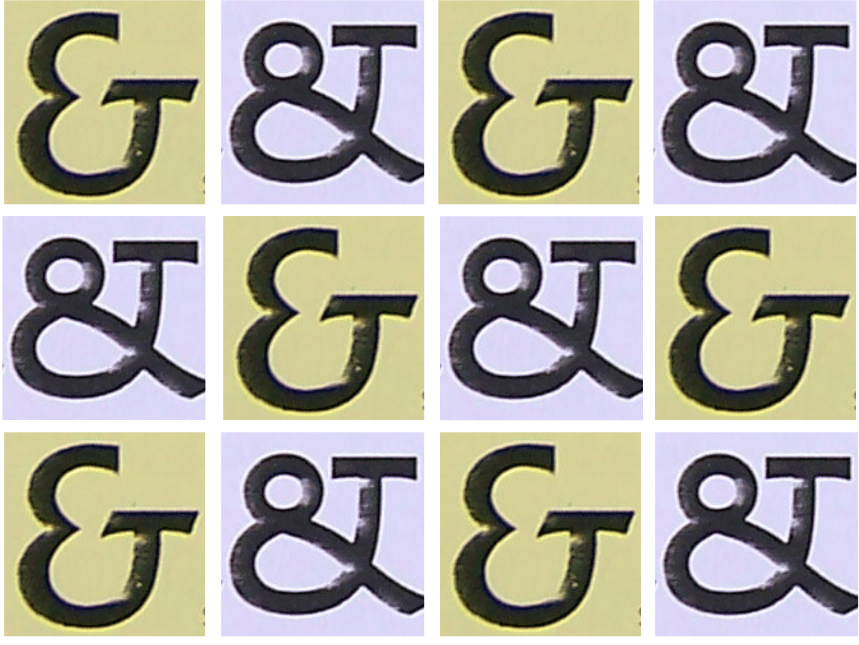
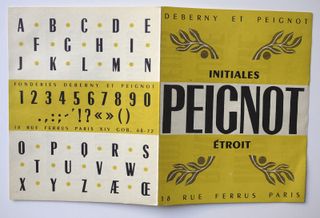
02. Peignot

Peignot specimen by A M Cassandre

(Image credit: A M Cassandre)

“Personally, I love feeling cultural influences in typographic work, whether it’s technical innovations, art movements or historical events, and the 1930s were an exceptional crossroads in that respect,” says Marie Boulanger, design team lead at Monotype. “For me, the quintessential 1930s European typeface is Peignot.”

07. Perpetua

Perpetua specimen, 1930

(Image credit: Eric Gill)

“I was not aware that Gill had designed this lovely serif font. I have always been a fan of serif fonts. Perpetua was designed during the end of the 1920s and beginning of the 1930s. The 1930s was a decade in which many believe Modern Design started and has continued today. Gill had designed Gill Sans that same decade. The two are definitely opposites.”

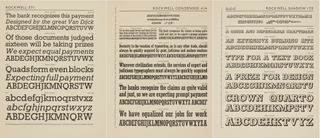
08. Rockwell

Rockwell typeface original specimen

(Image credit: Monotype)

“Rockwell has some quirky design choices, such as a two-story ‘a’ and a bit more thick to thin in its stroke weights than, say, Memphis, from the same period. That’s probably what makes it so timeless,” Josh says. “I mean, it works just as well for Arby’s ‘We have the meats’ tagline as it does on the poster for 2024’s critically acclaimed film Challengers. What else can you say about a font that has equal success for such seemingly different uses as those, except that it’s a classic?”

**Conclusion**

The 1930s were a transformative period in the history

Samsung Unpacked 2025: S25 Edge and AR glasses

Samsung Unveils Three New Galaxy S Models with Subtle but Meaningful Upgrades

Design and Colors

Like past January Unpacked events, Samsung released three new Galaxy S models, with the base models getting some subtle but meaningful upgrades, including a thinner and lighter design. Additionally, the company introduced new colors, including Icyblue, Navy, Mint, Silver Shadow, as well as online-only exclusive colors like Blueblack, Coralred, and Pinkgold. The vibrance of the Coralred colorway stands out amongst the rest of the lineup’s more muted finishes, and made a splash among reporters at Unpacked.

Performance and AI Features

At the heart of the devices is the newly launched Qualcomm Snapdragon 8 Elite for Galaxy. According to Samsung, the chipset will be dramatically different than the variants found on competing Android phones. For example, Samsung claims it delivers a performance boost of 40% in NPU, 37% in CPU, and 30% in GPU compared to the Galaxy S24 Ultra. Beyond AI, the chipset will help provide a smoother experience when gaming, equipped with Vulkan Engine, a high-performing graphics platform, and improved Ray Tracing.

Camera and Software Upgrades

Other specs remain the same as last year’s model, such as its 6.2-inch and 6.7-inch display, 4,000mAh and 4,900mAh batteries, 120Hz Adaptive Refresh Rate, 50 MP main lens, a 12MP ultrawide, a 10 MP telephoto, and a 12MP selfie camera. Despite the camera hardware remaining the same, the software upgrades should significantly improve the experience. For example, 10-bit HDR recording is now applied by default, allowing users to capture better detail, and a new Galaxy Virtual Aperture, integrated into the Expert RAW app, gives users better depth-of-field control, similar to when using a DSLR.

Pricing and Availability

Galaxy S25 and S25 Plus feature advanced AI image processing with ProScaler, which, like Samsung TVs, uses AI to digitally enhance the resolution of videos. Just know that the phones need to be set to QHD+ resolution to take advantage of the feature.

Pricing for the Galaxy S25 and S25 Plus starts at $799 and $999, respectively. That’s the same as past years’ retail price, which is good to see, provided you’re getting improvements – some in hardware and more in software.

Conclusion

Samsung’s new Galaxy S models offer a range of subtle but meaningful upgrades, including a thinner and lighter design, new colors, and improved performance and camera capabilities. With the same pricing as previous years, these new devices are a great option for those looking for a high-end Android experience.

FAQs

Q: What are the main upgrades in the new Galaxy S models?
A: The new Galaxy S models feature a thinner and lighter design, new colors, improved performance with the Qualcomm Snapdragon 8 Elite for Galaxy, and software upgrades to the camera.

Q: Are the camera specs the same as last year’s model?
A: Yes, the camera hardware remains the same, but software upgrades should significantly improve the camera experience.

Q: What is the price of the new Galaxy S models?
A: The Galaxy S25 and S25 Plus start at $799 and $999, respectively.

Q: What is ProScaler, and how does it work?
A: ProScaler is a feature that uses AI to digitally enhance the resolution of videos, similar to Samsung TVs. It requires the phone to be set to QHD+ resolution to take advantage of the feature.

Best animation Oscar 2025: Disney gets snubbed for the third year in a row

0

Oscars 2025: Best Animated Feature, Short, and Visual Effects Nominations

There was a time when it was hard to imagine the Oscars animation categories without at least a nomination for Disney. The studio has won Best Animated Feature four times and has been nominated 13 times (not including Pixar films). But the 2025 Oscars will be the third year in a row that it’s been snubbed.

Disney subsidiary Pixar’s Inside Out 2 is on the shortlist, but there’s no space for Disney’s own Moana 2. And that’s no bad thing. The animation giant’s absence in recent years has led to a more diverse range of contenders, with Guillermo del Toro’s Pinocchio winning in 2023 and Hayao Miyazaki’s The Boy and the Heron in 2024.

Oscars 2025: Best Animated Feature Nominations

  • Flow (Janus Films/Sideshow, director: Gints Zilbalodis)
  • Inside Out 2 (Disney/Pixar, director: Kelsey Mann)
  • Memoir of a Snail (IFC Films, director: Adam Elliot)
  • Wallace & Gromit: Vengeance Most Fowl (Aardman Animations, directors: Nick Park and Merlin Crossingham)
  • The Wild Robot (Universal/DreamWorks, director: Chris Sanders)

Oscars 2025: Best Animated Short Nominations

  • Beautiful Men (Nicolas Keppens)
  • In the Shadow of the Cypress (Hossein Molayemi, Shirin Sohani)
  • Magic Candies (Daisuke Nishio)
  • Wander to Wonder (Nina Gantz)
  • Yuck! (Loïc Espuche)

Oscars 2025: Best Visual Effects Nominations

  • Alien: Romulus (20th Century – Eric Barba, Nelson Sepulveda-Fauser, Daniel Macarin, Shane Mahan)
  • Better Man (Paramount – Luke Millar, David Clayton, Keith Herft, Peter Stubbs)
  • Dune, Part Two (Warner Bros – Paul Lambert, Stephen James, Rhys Salcombe, Gerd Nefzer)
  • Kingdom of the Planet of the Apes (20th Century – Erik Winquist, Stephen Unterfranz, Paul Story, Rodney Burke)
  • Wicked (Universal – Pablo Helman, Jonathan Fawkner, David Shirk, Paul Corbould)

Conclusion

The 97th edition of the Academy Awards will take place on Sunday 2 March at the Dolby Theatre at Hollywood & Highland Center in Hollywood. You can see the nominations in the other categories at the Oscars website. If you’re looking for kit for your own animation work, see our guide to the best animation software and the best laptop for animation.

FAQs

Q: What is the date of the 2025 Oscars?
A: The 97th Academy Awards will take place on Sunday 2 March.

Q: What are the Best Animated Feature nominations?
A: The nominees are Flow, Inside Out 2, Memoir of a Snail, Wallace & Gromit: Vengeance Most Fowl, and The Wild Robot.

Q: What are the Best Animated Short nominations?
A: The nominees are Beautiful Men, In the Shadow of the Cypress, Magic Candies, Wander to Wonder, and Yuck!.

Q: What are the Best Visual Effects nominations?
A: The nominees are Alien: Romulus, Better Man, Dune, Part Two, Kingdom of the Planet of the Apes, and Wicked.

Trump’s $500 Billion AI Investment Sparks Concern Among Graphic Designers

0

AI Concerns in Graphic Design: A Debate Amongst Professionals

Donald Trump recently announced a $500 billion investment in the brand new Stargate Project – a joint venture with the leaders of Softbank Group, OpenAI, and Oracle – set to be “the largest AI infrastructure project by far in history.” In the creative industries, AI is the centre of constant ethical debate and it seems graphic designers are among the many debating the future of their careers. For some it’s a matter of adapting, while others are considering jumping ship, seeing the AI evolution as the beginning of the end.

A Mixed Response from the Design Community

Over on the r/graphic_design subreddit, u/Ok_Willingness4612 questioned: “As somebody who is quite literally about to go to college to major in graphic design and industrial/product design, is this concerning?” Response was mixed, with many designers suggesting broadening their skillset and having back up career options, while some outright suggested pursuing more ‘dependable’ careers in STEM.

Concerns and Cautions

“Learn a trade that needs your hands. You can learn graphic design online without the schooling, you can’t learn high level electrician and be qualified and certified as easy,” one user suggested in response.

“My opinion is that AI is going to have a drastic impact on this industry. While there will still be design opportunity, I think it is going to continue to domino in the direction it is currently going where designers must wear multiple hats in addition to standard design expectations. As AI continues to take projects away from traditional designers, additional roles/facets a designer will have to handle will only increase,” another added.

Optimism and Adaptation

Others weren’t quite so cynical, with some encouraging them to be led by passion, but remain adaptable. “AI doesn’t invalidate the field. Examine how it might impact it and shift how you specialize within it. Learn how to use generative AI to make your work easier. Develop new ways of using it to do things that have never been done before. Look for the opportunity in a changing landscape,” one user advised.

A Conclusion

While times are uncertain, it seems that the majority of graphic designers still see a future for the job, albeit an adapted one. The nature of the industry is constantly in flux as demand changes and tools advance – AI just happens to be one of many. While Trump’s investment in AI might seem like a threat, evolution is inevitable across all industries – being flexible and open-minded to build diverse skills is an invaluable trait.

FAQs

Q: Will AI replace graphic designers?

A: While AI will certainly change the industry, it’s unlikely to replace graphic designers entirely. AI will augment human capabilities, freeing up designers to focus on higher-level creative tasks.

Q: Should I still pursue a degree in graphic design?

A: Yes, if you’re passionate about design, it’s still a worthwhile career path. The rise of AI will impact every industry, and being adaptable and open-minded will be key to success.

Q: What skills should I develop to stay ahead in the industry?

A: Develop skills that complement AI, such as data analysis, programming, and creative problem-solving. Stay up-to-date with industry trends and be willing to learn new tools and technologies.

Q: Is AI a threat to the creative industries?

A: AI is a tool that can augment human creativity, but it’s not a replacement for human imagination and creativity. The value of design lies in its ability to evoke emotions, tell stories, and connect with people – AI can’t replicate that.

One Thing Holds It Back

Perplexity AI is Going Mobile with a New Digital Assistant for Android Phones

Perplexity AI has announced the release of its new digital assistant for Android phones, allowing users to access its advanced features and functionality on-the-go. This new assistant is free and doesn’t require a Pro subscription, unlike some of its competitors.

What Can Perplexity Do on Your Android Phone?

Perplexity’s phone assistant can perform a wide range of tasks, including:

  • Playing media, such as music and videos
  • Setting reminders and sending texts and emails
  • Booking rides and making reservations
  • Using your camera to identify objects and learn more about them
  • And more

The assistant can also chain commands together, allowing you to perform complex tasks with ease. For example, you can ask it to "Play the most popular songs from the 1960s" and it will bring up Spotify and start playing the songs.

What Perplexity Can’t Do (Yet)

While Perplexity’s phone assistant is impressive, there are a few things it can’t do yet. For example, it can’t access sensitive information, such as bank account balances, and it can’t directly access calendar events. However, you can set events and reminders directly through the Perplexity assistant.

My Experience with Perplexity’s Phone Assistant

I decided to try out Perplexity’s phone assistant and made it my default assistant. I was impressed with its ease of use and its ability to perform a wide range of tasks. However, one thing is keeping me from sticking with it for good: its current lack of integration with my calendar.

Conclusion

Perplexity’s phone assistant is an exciting new development in the world of digital assistants. While it’s not perfect, it has a lot to offer. If Perplexity can address its limitations, I may just switch to it for good.

FAQs

Q: Is Perplexity’s phone assistant available for iOS?
A: No, it is currently only available for Android devices.

Q: Is Perplexity’s phone assistant free?
A: Yes, the free version of the app is all you need to get started.

Q: What permissions does the Perplexity app require?
A: The app requires microphone and camera permissions, as well as permissions for the services you attempt to connect.

Q: How do I set Perplexity as my default digital assistant app?
A: Go to your phone’s digital assistant settings, select "Default digital assistant app," and choose Perplexity from the list.

Spectre Gets AI Afterlife

0

HP OmniBook Ultra Flip 14 Review

Key Specifications

  • CPU: Intel Core Ultra 7 258V
  • NPU: Intel AI Boost
  • Graphics: Intel Arc Graphics 140V
  • Memory: 32GB LPDDR5x
  • Storage: 2TB SSD
  • Screen size: 14in
  • Screen type: OLED touchscreen
  • Resolution: 2880×1800
  • Refresh rate: variable, 120Hz max
  • Colour gamut (measured): 99% DCI-P3
  • Brightness (measured): 375 nits
  • Ports: 2x Thunderbolt 4, 1x USB Type-C 10Gbps, 1x 3.5mm audio
  • Wireless connectivity: Wi-Fi 7, Bluetooth 5.4
  • Dimensions: 31.37 x 21.62 x 1.49 cm
  • Weight: 1.34kg

Design, Build and Display

  • Good size for travelling
  • Angled corners look good
  • Screen bezel nice and slim
  • The Spectre, now the OmniBook Ultra Flip, is a successful laptop design because, along with making it reasonably thin and light, someone in the machining department slipped one day and cut the corners off. Rather than fess up to it and start again, they ran with the idea and produced the distinctive look, then leaned into it further by placing ports on the sliced-off corners.

Performance

  • The Intel Core Ultra 7 258V in the OmniBook can improve on its endurance.
  • We squeezed an extra few hours out of the Omnibook in testing, for a very respectable 12 hours of constant use with the screen on.
  • The rest of the scores go to show how Intel has drifted away from sheer power in its processors to embrace efficiency, but are by no means poor: a Geekbench score of 11,000 puts it between the M2 and M3 MacBook Airs, for example, neither of which you could call a slow laptop.
  • The only thing holding the Core Ultra 7 285V back is its GPU, and it’s not bad as far as integrated graphics chips go.

Price

  • The HP OmniBook Ultra Flip 14 costs £1,899 (with 32GB RAM) in the UK and $1,599.99 (with 16GB RAM) in the States at the time of writing.
  • For about the same price as the 14in Omnibook you could get a similarly sized M4 MacBook Pro, though if you spec the Mac up to 32GB of RAM to match the HP it comes in higher, at £2,200.

Who is it for?

  • The HP OmniBook Ultra Flip 14 is an immensely portable and convenient laptop, and one that has had a lot of thought put into how easy it is to use.
  • It’s a laptop for everyday use and light creative work, rather than being a rendering powerhouse, and that’s OK – we all need to use office apps sometimes – but the excellent screen and bang-up-to-date AI integration mean it remains an attractive proposition if you don’t need the big GPU.

Scorecard

Attributes Notes Rating
Design Slim, light and looks great 5/5
Features Thunderbolt 4 and an excellent webcam 4/5
Performance Lags behind in graphics tasks, but battery life is good 3/5
Value There’s a lot of competition in this sector 3/5

Buy it if…

  • You want the latest Intel tech
  • The 2-in-1 design appeals
  • You can use the Thunderbolt ports’ speed

Don’t buy it if…

  • Something cheaper would suffice
  • You need a faster graphics chip
  • Only the Copilot+ badge will do

Also consider

  • Lenovo Yoga Slim 7x
  • Apple MacBook Air
  • Dell XPS 13

Conclusion

The HP OmniBook Ultra Flip 14 is a great option for those who want a portable and convenient laptop with the latest Intel tech. Its 2-in-1 design and excellent screen make it a great choice for everyday use and light creative work. However, its performance may not be the best for those who need a faster graphics chip.

FAQs

Q: What is the CPU of the HP OmniBook Ultra Flip 14?
A: The CPU is the Intel Core Ultra 7 258V.

Q: What is the NPU of the HP OmniBook Ultra Flip 14?
A: The NPU is the Intel AI Boost.

Q: What is the graphics chip of the HP OmniBook Ultra Flip 14?
A: The graphics chip is the Intel Arc Graphics 140V.

Q: What is the storage capacity of the HP OmniBook Ultra Flip 14?
A: The storage capacity is 2TB SSD.

Q: What is the price of the HP OmniBook Ultra Flip 14?
A: The price is £1,899 (with 32GB RAM) in the UK and $1,599.99 (with 16GB RAM) in the States at the time of writing.

Revolutionize Your Workflow with a Powerful Screenshot API

Capturing Website Screenshots with Ease: A Game-Changer for Developers, Designers, and Marketers

Capturing website screenshots has never been more straightforward or efficient. With the introduction of this API, you can generate sharp, pixel-perfect screenshots in seconds without worrying about browser configurations or additional setups. The API is engineered to remove distractions automatically, such as GDPR banners, ads, and pop-ups, delivering clean and professional screenshots tailored to your requirements. For more polished results, chat widgets and support boxes can also be hidden to keep your visuals uncluttered.

Extensive Customization Options

This tool offers extensive customization options to match your unique needs. Users can switch to dark mode, reduce animations, or automate specific page interactions with simple parameters. For even greater flexibility, you can add your own JavaScript and CSS to enhance functionality further. Screenshots can be optimized for any screen size, with the API supporting Retina Display and other high-resolution formats to ensure exceptional clarity. Additionally, users can capture full-page views with lazy loading for seamless rendering of entire web pages.

Streamlined Process

Whether you’re a developer, designer, or marketer, this API streamlines the process of capturing screenshots for any use case. Start today for free – no payment required, no strings attached.

Get Started

Try now at https://screenshotsapi.dev/

Conclusion

This API is a game-changer for anyone who needs to capture high-quality website screenshots. With its ease of use, extensive customization options, and seamless integration, it simplifies the process, saving time and effort. Whether you’re a professional or an individual, this API is the perfect solution for capturing precise and professional-looking screenshots.

FAQs
Q: Is the API free to use?

A: Yes, the API is free to use, with no payment required or strings attached.

Q: What are the benefits of using this API?

A: The API removes distractions, such as GDPR banners, ads, and pop-ups, and offers extensive customization options, including dark mode, reduced animations, and automated page interactions.

Q: Can I add my own JavaScript and CSS to enhance functionality?

A: Yes, you can add your own JavaScript and CSS to further customize the API’s functionality.

Q: Is the API compatible with high-resolution formats?

A: Yes, the API supports Retina Display and other high-resolution formats, ensuring exceptional clarity and quality.