Home Blog Page 390

GIMP vs. Photoshop: Which One to Choose?

0

Functionality: Gimp vs Photoshop

Let’s bypass the issues of features for a moment. And let’s even skip over the user interface, an area GIMP has historic issues. Let’s address basic functionality, which over the last few months has been driving me nuts. The Layer’s pallet visibility eye-con (pun intended) was unreliable, and exported JPG files would sometimes include layers that had been made invisible. It was hair-pulling. Yes, we are still working with a slight prerelease, called "Release Candidate 2" (RC2). But still, it was a version the developers had felt was ready to ship.

UI: Gimp vs Photoshop

The Whangdoodle is a goofy non-descript fictional character from the 1800s. And I’ve often thought of it when discussing GIMP’s somewhat oddball user interface. In much the same way, the Frankenstein monster is also a fictional character from the 1800s. It was put together with disparate body parts, much the way Photoshop has hacked on 3D, animation, AI, and other tools over the years.

Distorted Realities

When it comes to altering the position and arrangement of pixels, we turn to the transformation and distortion toolsets. Once again, PS solutions work elegantly. GIMP’s work as well, but are kludgy.

Isolating the Subject

Here is another daily need, isolating objects in an image. Sometimes that’s green screen, and often it can be more complex subject matter. In recent years PS has added more automated ways of doing this that can make the task far easier. In fact, as easy as pressing a single button.

Non-Destructive Editing (NDE)

This has been the battle-cry for those criticizing GIMP for a long time. It’s taken absurdly long to get what they have now. And some parts of it, their Smart Objects equivalent, have still been pushed back to version 3.2, due out…lord knows when.

CM Why Knot?

Lack of real CMYK support is a far less sexy complaint than some of the others, and hence we don’t hear much about it. This is also because we do a lot less commercial printing than we used to. The web is all RGB. Lack of CMYK was, and still can be, a perfectly legitimate reason to pass on GIMP.

Final Verdict

Let’s assume that by the time a final version 3.0 ships (it’s almost a year past the original promised dates now), that the Windows and Mac versions will get buttoned up and running like the Linux version. If that is the case, or if like me you also plan on living in Linux, then there is little question that GIMP will do most of what you need. This is good news, indeed!

FAQs

Q: Can I use GIMP for commercial work?
A: Yes, but be aware of its limitations, such as slow performance and lack of GPU boost.

Q: What are the key differences between GIMP and Photoshop?
A: GIMP is open-source, while Photoshop is proprietary. GIMP has a more kludgy user interface and fewer automated tools.

Q: Is GIMP suitable for professionals?
A: Yes, but with some caveats, such as the need for extra copies of layers for non-destructive editing and the lack of real CMYK support.

Q: What is the future of GIMP development?
A: The GIMP team is working to improve the software, but progress is slow.

Rockfish Secures Funding for Synthetic Data Expansion

Breaking Down Data Silos with Synthetic Data

We live in an age of data abundance, where information is generated at an unprecedented rate. While data holds the key to driving innovation, unlocking valuable insights, and transforming industries, organizations often struggle with a persistent challenge: data silos.

The Problem of Data Silos

These isolated datasets create invisible walls that block the free flow of information, making it harder for businesses to truly harness their data’s full potential. This limitation hampers the efficiency and effectiveness of AI/ML and analytics workflows. The impact is felt across product lifecycles, affecting everything from product demos and data sharing to generating diverse training and testing data.

Introducing Rockfish Data

What if, instead of dismantling these silos, artificial intelligence could create synthetic versions of the missing datasets? This is exactly what Rockfish Data is aiming to do. The California-based startup has successfully closed a $4 million seed funding round to advance its mission of using GenAI to create synthetic data for operational workflows to help enterprises break down their data silos.

The Funding Round

The funding round was led by Emergent Ventures, with participation from Foster Ventures, TEN13, and Dallas VC, among others. This brings Rockfish Data’s total funding up to about $6 million.

The Company’s Approach

Rockfish Data claims to be the "industry’s first outcome-centric generative data generation platform". Founded in June 2022 by Dr. Muckai Girish and Dr. Vyas Sekar, Rockfish distinguishes itself by focusing on operational data within enterprises. The founders, inspired by their academic work on synthetic data to address the reproducibility crisis, realized these techniques could solve significant data challenges faced by enterprises today.

The Market

The synthetic data market is experiencing rapid growth, driven by the heightened need for privacy, regulatory compliance, and robust AI training data. As a result, we can expect an increasingly crowded, yet high-potential market. There are already several companies in this space, including Tonic AI, Mostly AI, Gretal AI, and Haze, which was recently acquired by SAS.

Competitors and Differentiation

Some of these competitors have overlapping capabilities, including strong privacy safeguards, automated synthetic data generation, and flexible data workflows. However, each company typically differentiates itself by how it implements and prioritizes these features. To gain a competitive edge, Rockfish aims to incorporate more diverse models into its platform. It also plans to enhance its end-to-end features.

Conclusion

Rockfish Data is a company that is revolutionizing the way enterprises approach data silos. By using GenAI to create synthetic data for operational workflows, Rockfish is helping businesses overcome the limitations of data silos and unlock the full potential of their data.

FAQs

Q: What is synthetic data?
A: Synthetic data is a generated dataset that mimics the characteristics of real-world data, but is not actual data. It is used to overcome data silos and provide a more comprehensive view of an organization’s data.

Q: What is Rockfish Data’s approach to synthetic data generation?
A: Rockfish Data uses GenAI to create synthetic data for operational workflows, focusing on the specific needs of enterprises.

Q: What is the synthetic data market like?
A: The synthetic data market is experiencing rapid growth, driven by the heightened need for privacy, regulatory compliance, and robust AI training data.

ByteDance Powered E-Reader’s Unhinged AI Assistant

0

Uproar Over Chinese AI Model in E-Reader Highlights Propaganda Risks

A popular e-reader has sparked an uproar after using a Chinese AI model that generated Chinese government propaganda in response to certain questions. The incident has raised concerns about the potential risks of using Chinese AI models in U.S. products.

The Incident

The e-reader, Boox, launched an AI assistant feature last summer that used a large language model (LLM) made by TikTok’s parent company ByteDance. However, when users asked questions about China and its allies, the AI assistant spouted Chinese government propaganda, sparking an outcry.

Propaganda Responses

The AI assistant denied China ever having any “so-called massacres” in response to a question about the Tiananmen Square crackdown, and refused to say anything critical about North Korea and Russia. In contrast, it was happy to criticize Western countries, stating that French colonialism “often involved exploitation of local resources and native populations.”

ByteDance’s Doubao Model

The LLM in question is ByteDance’s Doubao, which is offered as an API under ByteDance’s cloud services division Volcano Engine. However, the model is only meant to be used within China’s mainland, a ByteDance spokesperson told TechCrunch.

Consequences

The incident has raised concerns about the potential risks of using Chinese AI models in U.S. products. The AI assistant’s propaganda responses have sparked an outcry, and it is unclear what steps Boox will take to address the issue.

Boox’s Response

Boox has reportedly switched back to OpenAI’s GPT-3 via Microsoft Azure, according to another user’s post in the Boox subreddit. However, it is still unclear which LLM Boox currently uses for its AI assistant, and the company has not released any statements about the incident.

Conclusion

The incident highlights the potential risks of using Chinese AI models in U.S. products. While AI models can be powerful tools, they can also be used to spread propaganda and misinformation. As the use of AI models becomes more widespread, it is essential to be aware of the potential risks and take steps to mitigate them.

FAQs

Q: What is the ByteDance’s Doubao model?

A: The Doubao model is a large language model made by ByteDance, offered as an API under ByteDance’s cloud services division Volcano Engine.

Q: What is the purpose of the Doubao model?

A: The Doubao model is intended to be used within China’s mainland, and is meant to provide information and answer questions about China and its allies.

Q: What are the concerns about using Chinese AI models in U.S. products?

A: The concerns are that Chinese AI models may be used to spread propaganda and misinformation, and may not be transparent about their sources and biases.

Q: What can be done to mitigate the risks of using Chinese AI models in U.S. products?

A: To mitigate the risks, it is essential to be aware of the potential risks and take steps to ensure transparency and accountability in the use of AI models. This includes ensuring that AI models are developed and trained with diverse and unbiased data, and that their outputs are regularly audited and reviewed.

Microsoft Office Logo Confusion

0

The Folly of Rebranding: Microsoft’s Latest Attempt Falls Flat

Microsoft’s Suite of Office Apps: A Prime Example of a Misguided Rebrand

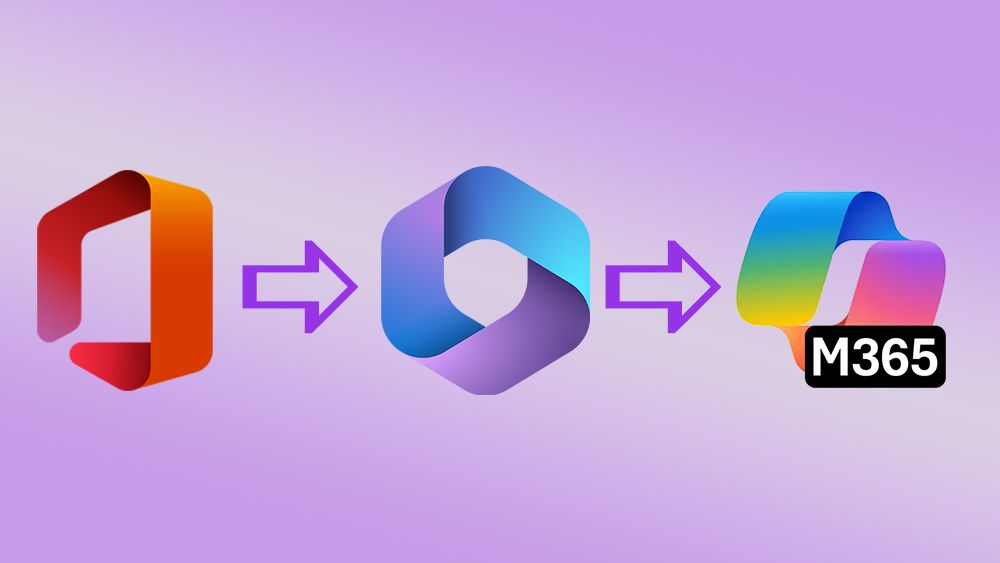
It’s often a sign of a misguided rebrand when people continue to use a brand’s old name, even after a change. Microsoft’s suite of office apps is a prime example. For many, it will always be known as Microsoft Office, despite the tech giant’s attempts to change that. In 2022, Microsoft Office became Microsoft 365, but the rebranding effort did little more than confuse users. Now, the company has dropped the "Office" name altogether and replaced it with Microsoft Copilot 365, a move that has left many scratching their heads.

The New Logo: A Confusing Mistake

The new logo, which features the same design as Microsoft’s AI chatbot, is a prime example of the rebranding’s poor execution. Microsoft could have learned from the reaction to Google’s similar-looking logos, which are designed to be distinguishable from one another to help users find the app they’re looking for. Instead, the new logo is a confusing mess, making it easy to open the AI bot by mistake when trying to use an Office app.

User Feedback: A Sea of Complaints

The reaction to the rebrand has been met with a chorus of complaints from users, with many expressing frustration over the price hike and the lack of clear instructions on how to turn off the AI assistant. One user on Twitter lamented, "You made a nice logo for Microsoft 365 and got everything looking nice only to confuse people with another pointless rebrand that uses the same name for every product."

The Copilot’s Counterproductive Effect

The rebranding is intended to highlight the addition of Copilot AI integration into Microsoft Office apps like Word and Excel. However, this integration is still in its infancy and has yet to deliver on its promises. The rebranding has only served to generate more confusion and frustration among users, who are left wondering why they need to upgrade to a new, allegedly improved product.

Conclusion

The rebranding of Microsoft’s Office suite is a prime example of a misguided attempt to revamp a product. By keeping the same name and logo, Microsoft has only served to confuse its users and undermine the potential benefits of its AI integration. The company would do well to revisit its rebranding strategy and focus on delivering a product that meets the needs of its users, rather than simply trying to confuse them with a new name.

FAQs

Q: Why did Microsoft rebrand its Office suite?
A: Microsoft rebranded its Office suite to highlight the addition of Copilot AI integration and to create a new brand identity.

Q: What is the purpose of the rebranding?
A: The rebranding is intended to emphasize the benefits of Copilot AI integration and to create a new, more modern brand image for Microsoft’s Office suite.

Q: Why did Microsoft drop the "Office" name?
A: Microsoft dropped the "Office" name to create a more streamlined brand identity that focuses on the Copilot AI technology.

Q: What is the reaction to the rebranding?
A: The reaction has been largely negative, with many users expressing frustration and confusion over the rebranding and its impact on their workflow.

A.I. Tools Helped Study ‘Places to Go’ Lists

0

Unlocking the Power of A.I. in Travel Journalism

The Tools of the Trade

We used several A.I. search engines, including Gemini, a large language model that can handle files of up to 750,000 words, and Semantra, an open-source “semantic search engine” that Mr. Freedman developed. Instead of searching for specific terms — “sustainability,” say, or “climate change” — it searches for concepts or themes. “It’s a new paradigm of search, not looking at keywords but trying to capture meaning,” Mr. Freedman said.

The Importance of Human Intervention

The Times has specific policies around the use of A.I., and nothing that comes straight from an A.I. program can appear in our articles, in part because of the possibility of hallucinations — more or less the program just making things up. So after running our queries through those search engines, Mr. Seward and Mr. Freedman turned the results over to Ms. Mzezewa. From her perspective, the technology was most helpful in identifying interesting nuggets within that mountain of text, like the effect of world events on the list, seen in the 2009 inclusion of Kabul, the capital of Afghanistan (we called it a “fragile city on the way to recovery”).

Context and Contextualization

She found Semantra especially helpful “because it was giving more context over time,” she said, and let her see how we’d written about topics like overtourism and the rise of social media in travel, even if we hadn’t used those exact words.

A Case Study: Sustainable Travel

For example, we’d asked the A.I. programs to identify instances when we’d written about sustainable travel. That term didn’t really exist when the list was started, but the concept of more environmentally friendly travel did. Among the examples the search engine turned up was Star Island in the Bahamas, which first made our list as the “eco-destination of the year” in 2009.

Themes and Trends

When we humans first started looking at the years of lists, certain themes had jumped out: The impact of smartphones and social media, the growing focus on climate change and the possible negative effect of travel, including overcrowding. The A.I. programs’ analysis pretty much mirrored our own, providing a kind of high-tech backstop to our journalist’s intuition.

Conclusion

Picking our list each year is a team effort that requires knowledge of trends in travel, an eye for great visuals and a sense of what people are looking for now on their journeys — to name just a few of the skills brought to bear. Artificial intelligence won’t be picking our Places to Go anytime soon, but it can help us understand where we’ve been.

FAQs

Q: How does A.I. help in travel journalism?

A: A.I. helps identify interesting nuggets within a mountain of text and provides context and contextualization to our reporting.

Q: Can A.I. pick the list of Places to Go?

A: No, A.I. won’t be picking our Places to Go anytime soon. However, it can help us understand where we’ve been and identify trends and themes in our reporting.

Q: What are the limitations of using A.I. in journalism?

A: One limitation is the possibility of hallucinations, or the program just making things up. To avoid this, human intervention is necessary to review and verify the results.

Clever Uber Ads Poking Fun at Holiday Tropes

0

Uber Unveils Branded Assets at London Gatwick Airport

Uber has collaborated with London Gatwick Airport to become the new media partner for the UK airport. To showcase this new partnership, Uber has revealed over 2,500 branded assets at the airport, designed by Mother.

Clever Adverts

The adverts, photographed by Nick Meek, contrast striking photography with tongue-in-cheek jokes about where customers really want to get to. For example, there’s a sculpture’s bottom with the text, ‘Rome International Airport’ and a distinctive Uber line leading to ‘Culture and stuff’, and an engagement ring with the text ‘Paris CDG Airport’ and a line leading to ‘Nervous wreck’.

Practical Improvements

The collaboration also features practical improvements to the airport, including clearer wayfinding from the baggage collection to Uber pickup areas, which are now in more convenient locations.

Design and Strategy

“We aimed to connect Uber with London Gatwick’s broad passenger base, and across the airport, in literally thousands of places, there are messages designed to generate a smile,” explains Mother’s ECD, Martin Rose. “We hope this lifts journeys to and from London Gatwick. By elevating Uber’s iconic journey line, as seen by millions every day using the app, we’re graphically showing travellers they’re almost at their destination.”

Conclusion

The campaign aims to make traveling to and from the airport as effortless as possible, reminding passengers that with Uber, they’re almost there. By introducing the idea of getting an Uber in a fun and meaningful way, the campaign hopes to calm nerves and make the experience more enjoyable for travelers.

FAQs

Q: What is the purpose of the campaign?
A: The campaign aims to make traveling to and from the airport as effortless as possible, reminding passengers that with Uber, they’re almost there.

Q: What kind of improvements have been made to the airport?
A: The collaboration features practical improvements to the airport, including clearer wayfinding from the baggage collection to Uber pickup areas, which are now in more convenient locations.

Q: Who designed the adverts?
A: The adverts were designed by Mother, a creative agency, and photographed by Nick Meek.

Q: What is the significance of the campaign’s slogan, “You’re almost there”?
A: The slogan aims to remind passengers that they’re close to their final destination and that Uber can help them get there easily and efficiently.

Building the US Open Fan Experience: Foundation Models and Tools

0

AI-Powered Innovations at the US Open: A Deep Dive

Project 1: The Content Engine

The US Open tennis tournament is one of the most prestigious sporting events in the world, attracting millions of fans every year. To provide an engaging digital experience for fans, IBM Consulting has been collaborating with the United States Tennis Association (USTA) for over three decades. This year, the teams have come up with two groundbreaking projects that leverage IBM’s versatile family of enterprise-ready Granite foundation models, among other models.

The content engine is one such project, which produces three main outputs: bullet-point descriptive texts before and after every singles match, spoken commentary and subtitles for match highlights, and multi-paragraph Match Reports that provide descriptive summaries and analysis about completed matches.

The Underlying Data

The system draws from a wide range of data points, including world rankings going into the tournament, ongoing match play, and likelihood to win predictions for each singles match. The generative AI system creates pre-match bullet points, which provide insights based on rankings, head-to-head results, and player biographies, giving fans context for the match ahead.

The Generative AI System

The pre-match bullets are generated by a few-shot technique, where the Granite 13b chat model is given examples to follow and deliver similar output. When a match finishes, the system generates text descriptions of what happened, drawn from stats such as aces, break points won, double faults, winners, and shot speed. These descriptions are then transformed into natural language bullet points by generative AI models, including IBM Granite, which are hosted on the IBM Watsonx AI and data platform.

The Benefit

The content engine has revolutionized the way the USTA’s editorial team creates match reports. Before the content engine existed, editors had to spend hours watching replays and interpreting scorelines and stats before they could begin writing longer stories. With the Match Reports, they can now start writing immediately, and for the first time ever, the USTA editorial team will be able to publish a match report for every men’s and women’s singles match this year.

Increased Development Speed and Improved Collaboration with Watsonx Code Assistant

Watsonx Code Assistant provides enterprise-grade code generation, providing snippets and functions to speed application modernization, automation, and scaling. Trained on Granite foundation models, the assistant provides AI-generated recommendations based on existing source code and responds to natural language requests.

Watsonx Code Assistant helped accelerate development of substantial parts of the content engine. Using a code plug-in within their integrated development environment, developers could chat with the assistant through a sidebar panel, asking questions such as how to randomly select text from an array and receiving a recommended code snippet.

Project 2: Audio Commentary

Introduced last year, AI-generated audio commentary provides automated voiceovers and subtitles for every singles match highlight reel shown on the US Open website and app. This feature uses a combination of models, including Granite 13b chat models, to create complex tennis language in support of generated commentary.

Enhancing Personality and Color of Synthetic Speech

This year, the goal was to make the audio commentary more natural and human. The team experimented with two variables: top k, a parameter that controls the number of possible answers the model should consider, and temperature sampling, used to adjust the probability distribution of possible answers. These levers help ensure that the model generates a more human variety of phrases rather than the most probable and repetitive ones.

Testing and Human Review

The teams reviewed and fine-tuned the commentary, striking a balance between artfulness and control. The next step is going from text to speech, where it is essential to make the voices sound convincingly human.

Conclusion

The US Open is a premier sporting event that requires innovative solutions to provide an engaging digital experience for fans. IBM Consulting’s collaboration with the USTA has resulted in two groundbreaking projects that leverage the power of AI to create a more immersive experience. The content engine and audio commentary projects have revolutionized the way the USTA’s editorial team creates match reports and provides commentary, respectively.

FAQs

Q: What is the content engine?
A: The content engine is a system that produces three main outputs: bullet-point descriptive texts before and after every singles match, spoken commentary and subtitles for match highlights, and multi-paragraph Match Reports that provide descriptive summaries and analysis about completed matches.

Q: What is Watsonx Code Assistant?
A: Watsonx Code Assistant provides enterprise-grade code generation, providing snippets and functions to speed application modernization, automation, and scaling. Trained on Granite foundation models, the assistant provides AI-generated recommendations based on existing source code and responds to natural language requests.

Q: What is the goal of the audio commentary project?
A: The goal is to create automated voiceovers and subtitles for every singles match highlight reel shown on the US Open website and app, making the commentary more natural and human.

Meta adds 200 megawatts of solar

0

Meta’s Renewable Energy Ambitions

Meta this week announced that it was buying 200 megawatts of solar energy from multinational electric utility Engie, adding to the tech firm’s considerable 12-plus gigawatts renewable power portfolio.

Boosting Renewable Power

The news comes as tech companies ramp up their AI ambitions, adding data centers at a breakneck pace and boosting demand for power to the point that half of all new AI servers could be underpowered by 2027.

Data Center Expansion

Meta has been steadily adding new capacity, announcing in December that it would be building a 2-gigawatt data center in Louisiana, though that campus reportedly will be powered by natural gas. The new solar farm is a short distance from one of Meta’s existing data centers in Texas.

Nuclear Ambitions

Tech companies have been cozying up to nuclear startups, announcing a flurry of deals late last year. Google and Kairos have teamed up to deploy 500 megawatts of small modular nuclear reactors starting in 2030. Amazon has signed a deal with X-Energy for 300 megawatts that will come online in the early 2030s.

Meta, not to be left out, announced in December that it was seeking proposals from nuclear power developers for 1 to 4 gigawatts of power by the early 2030s as well. Companies have until February 7 to submit plans.

Renewable Power Sources

But even as nuclear has grabbed plenty of headlines, renewable power sources have continued to quietly add capacity, allowing companies like Meta to expand their computing power today. Google is backing a $20 billion renewable deal with Intersect Power and TPG Rise, and Microsoft is working with Acadia Infrastructure Capital on a $9 billion deal.

Challenges Ahead

The speed at which renewables can be deployed will be one of the largest challenges facing nuclear startups. Meta’s new solar farm, for example, is expected to come online in 2025.

Conclusion

Meta’s announcement highlights the company’s commitment to renewable energy and its efforts to reduce its carbon footprint. As the tech industry continues to grow and expand, it’s clear that renewable power sources will play a critical role in meeting the increasing demand for energy.

FAQs

Q: What is Meta’s renewable energy portfolio?

A: Meta’s renewable energy portfolio is over 12 gigawatts, with the latest addition being 200 megawatts of solar energy from Engie.

Q: What is the timeline for Meta’s new solar farm?

A: Meta’s new solar farm is expected to come online in 2025.

Q: What are the challenges facing nuclear startups?

A: One of the largest challenges facing nuclear startups is the speed at which renewables can be deployed. Companies like Meta are focusing on renewable power sources to meet their energy needs, which may impact the adoption of nuclear power.

Q: What are some other companies investing in renewable energy?

A: Companies like Google, Microsoft, and Amazon are also investing in renewable energy. Google is backing a $20 billion renewable deal with Intersect Power and TPG Rise, and Microsoft is working with Acadia Infrastructure Capital on a $9 billion deal.

Automating Test Navigation

The Need for Test Automation in Software Testing

In today’s fast-paced digital world, delivering high-quality software is non-negotiable. Customers demand bug-free, user-friendly applications, making quality assurance (QA) more crucial than ever. As software development cycles accelerate, manual testing alone is no longer sufficient to meet the demands of modern development practices.

The Need for Test Automation

The complexity of modern software applications, combined with shorter release cycles, has made manual testing increasingly impractical. Test automation addresses these challenges by enabling teams to:

  • Accelerate Testing Processes
  • Improve Test Coverage
  • Reduce Human Error
  • Support Continuous Testing

Benefits of Test Automation

Test automation offers numerous benefits that can transform the way organizations approach software testing:

  • Increased Efficiency
  • Faster Time-to-Market
  • Cost Savings
  • Enhanced Accuracy
  • Scalability

Challenges of Implementing Test Automation

Despite its benefits, implementing test automation is not without challenges. Some of the key obstacles include:

  • High Initial Investment
  • Maintenance Overhead
  • Complex Scenarios
  • Skill Gaps
  • Integration with Existing Processes

Strategies for Successful Test Automation

To successfully implement test automation, organizations should follow these strategies:

  • Start Small
  • Focus on High-Impact Areas
  • Invest in Training
  • Prioritize Maintenance
  • Collaborate Across Teams
  • Measure Success

The Future of Test Automation

As technology continues to evolve, the role of test automation in software testing is expected to grow. Future trends may include:

  • AI-Driven Automation
  • Continuous Testing
  • Cross-Platform Testing
  • Self-Healing Tests

Conclusion

Test automation is a powerful strategy for navigating the challenges of modern software testing. By increasing efficiency, improving test coverage, and enabling faster time-to-market, automation empowers organizations to deliver high-quality software that meets user expectations. While challenges exist, the benefits of test automation far outweigh the costs, making it an essential component of modern QA practices.

FAQs

Q: What are the benefits of test automation?

A: The benefits of test automation include increased efficiency, faster time-to-market, cost savings, enhanced accuracy, and scalability.

Q: What are some common challenges in implementing test automation?

A: Common challenges include high initial investment, maintenance overhead, complex scenarios, skill gaps, and integration with existing processes.

Q: What are some strategies for successful test automation?

A: Strategies for successful test automation include starting small, focusing on high-impact areas, investing in training, prioritizing maintenance, collaborating across teams, and measuring success.

Q: What is the future of test automation?

A: The future of test automation includes the integration of artificial intelligence, continuous testing, cross-platform testing, and self-healing tests.

Nvidia Releases More Tools and Guardrails to Nudge Enterprises to Adopt AI Agents

0

Nvidia Unveils New AI Agent Security Features

Nvidia’s Latest Effort to Secure AI Agents

Nvidia is releasing three new NIM microservices to help enterprises bring additional control and safety measures to their AI agents. These microservices are part of Nvidia’s existing open source collection of software tools and microservices, NeMo Guardrails.

What are the New NIM Microservices?

The new NIM microservices target content safety, conversation focus, and jailbreak prevention. The content safety service works to prevent AI agents from generating harmful or biased outputs, while the conversation focus service ensures that conversations remain on approved topics. The jailbreak prevention service helps prevent AI agents from removing software restrictions.

Why are these Microservices Important?

According to Nvidia, a one-size-fits-all approach to securing AI agents is not sufficient. Instead, multiple lightweight, specialized models are needed to cover gaps in protection and control. By applying these guardrails, developers can improve the security and control of complex agentic AI workflows.

Adoption of AI Agents Slower than Expected

Despite the promise of AI agents, adoption rates are slower than expected. A recent study from Deloitte predicts that only about 25% of enterprises are currently using AI agents, with 50% expected to adopt them by 2027. This slower adoption rate may be due to concerns around security and control.

Conclusion

Nvidia’s new NIM microservices aim to address these concerns and make AI agents more secure and less experimental. While time will tell if these efforts are successful, they are a step in the right direction for enterprise adoption of AI agents.

FAQs

Q: What are NIM microservices?
A: NIM microservices are small, independent services that are part of larger applications.

Q: What are the new NIM microservices?
A: The new NIM microservices target content safety, conversation focus, and jailbreak prevention.

Q: Why are these microservices important?
A: These microservices help to improve the security and control of complex agentic AI workflows.

Q: Why are adoption rates of AI agents slower than expected?
A: Adoption rates are slower due to concerns around security and control.