Home Blog Page 400

Porsche X Honor smartphone collab validates unexpected tech trend

0

Porsche Design’s Vision for the Honor Magic 7 RSR Smartphone

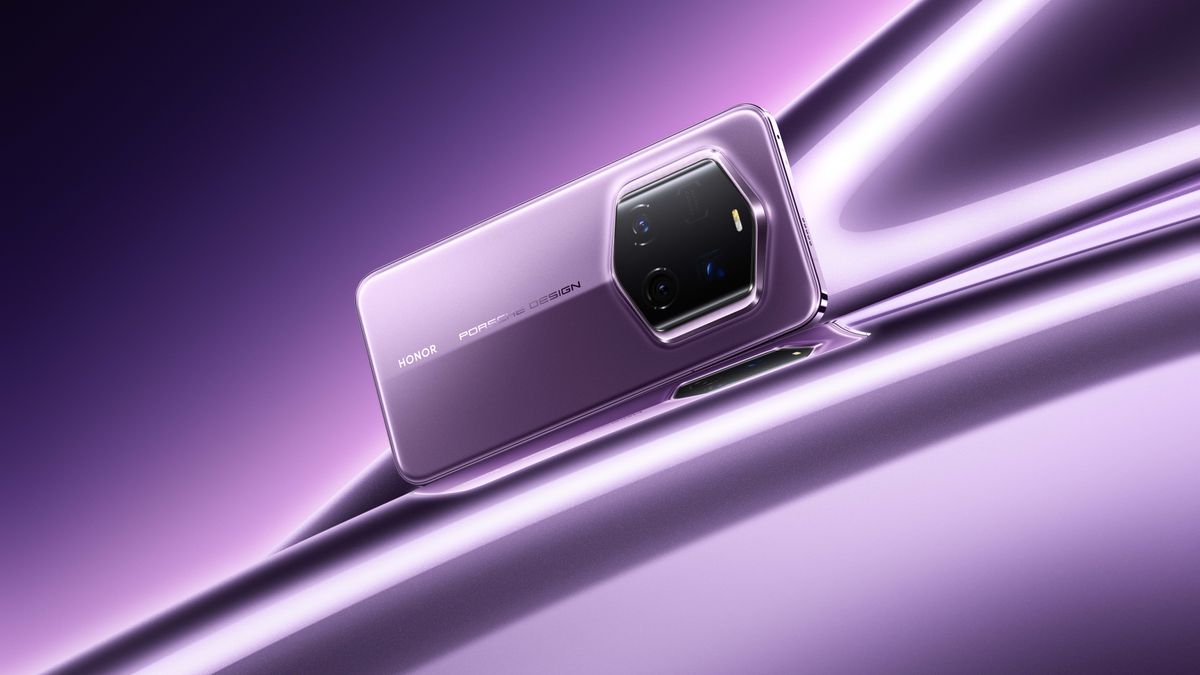
Tobias Hüttl, Head of Design Studio at Porsche, sat down with me to discuss the latest collaboration between Honor and Porsche, the Magic 7 RSR smartphone. This ultra-premium device takes the iconic hexagonal camera design to new levels, blending the best of automotive design with the latest tech.

A Conversation with Tobias Hüttl

I asked Tobias about his favorite aspect of the RSR 7 phone, and he replied, "I like the fact that you can hold it in your hand and it feels premium and special, right? Without needing a visual of it. So I think that’s very nice." He also praised the sharp edges around the camera unit, saying, "I think that’s adding this very central quality that helps people appreciate the project."

Colors of the Honor Magic7 RSR Porsche Design

Tobias discussed the two colors available for the RSR 7: Agate Grey and Provence. "We have tried different directions, and then the choice finally fell on the Provence," he explained. "We think it’s a bit of a mystery color, and it’s something that’s still subtle, but at the same time, I think that’s something we like a lot about it. It’s not resembling a super strong race car color or anything. It’s elegant still, even though it’s something that people can recognize and see as something special."

Why Not Turbonite?

I inquired about the decision not to opt for turbonite, a popular grey Pantone hue exclusive to Porsche’s turbo collection. "So the turbonite is interesting because it’s dedicated to Porsche’s turbo collection, right? So with our phone not being a turbo phone, it wouldn’t have been a very consistent story."

Balancing Design and Functionality

I asked how Porsche Design worked with Honor to make design decisions, such as color, material, and form. "In the beginning, with the ideation phase, we’re very broad. So we are looking into all different kinds of directions and ideas, but then there are certain colors which work in certain settings and maybe not in others. Some things make sense with the design of the car but not so much within the phone world."

Feedback and Restrictions

Tobias shared that they received input from customers and fans of the brand, as well as market inputs. "There’s lots of input from all kinds of dimensions. So there are customer inputs, and there’s also market inputs that we have within our broader corporation, but eventually, we made a decision with what color to go with on an informed basis."

Conclusion

The Honor Magic7 RSR smartphone is a testament to the fusion of automotive design and global fashion trends. With a focus on aesthetics, functionality, and user experience, this ultra-premium device is sure to impress.

FAQs

Q: What are the available colors for the Honor Magic7 RSR?
A: Agate Grey and Provence are the two colors available for the RSR 7.

Q: Why did you choose not to use turbonite?
A: The turbonite is exclusive to Porsche’s turbo collection, and the RSR 7 is not a turbo phone, so it wouldn’t be a consistent story.

Q: How did you work with Honor to make design decisions?
A: We worked together to find the right colors, materials, and form. We considered different directions and ideas, but also had to consider the design of the car and the phone world.

Q: Did you receive feedback from customers and fans of the brand?
A: Yes, we received input from customers and fans of the brand, as well as market inputs.

Breathe: AI-ARTS

0

Lisa Shalom Ai

About the Artist

Lisa Shalom Ai is a multi-talented individual who combines her passions for art, photography, and technology to create unique and captivating pieces. With a background in tech, Lisa recently discovered the world of AI and has been experimenting with it using Bing’s partnered AI tool, Dall-e.

Inspiration and Style

Lisa’s artistic style is deeply rooted in her love for disco balls, neon lights, and pastel colors. These elements are woven throughout her work, giving each piece a distinct and eye-catching quality. Her use of vibrant colors and bold shapes creates a sense of energy and playfulness, drawing the viewer in and refusing to let go.

Exploring AI in Art

Lisa’s recent foray into AI has allowed her to push the boundaries of her creativity even further. Using Dall-e, she has been able to generate unique and imaginative pieces that blend her artistic style with the capabilities of AI. This fusion of human creativity and machine learning has resulted in truly innovative and captivating works of art.

Instagram and Social Media

Lisa shares her artistic journey and latest creations on her Instagram account, @lisashalom.ai. Here, she showcases her process, from concept to completion, and engages with her followers by sharing behind-the-scenes glimpses and insights into her creative process.

Conclusion

Lisa Shalom Ai’s unique blend of art, technology, and creativity has resulted in a distinctive and captivating style that is sure to inspire and delight. As she continues to explore the possibilities of AI in art, we can expect to see even more innovative and imaginative works from this talented artist.

FAQs

Q: What inspired you to get into AI in art?
A: I’ve always been fascinated by the potential of AI to enhance and transform art. The possibilities seemed endless, and I couldn’t wait to dive in and explore.
Q: How do you incorporate your passions for disco balls, neon, and pastel colors into your work?
A: These elements are woven throughout my art, giving each piece a distinct and eye-catching quality. I love experimenting with different colors and shapes to create a sense of energy and playfulness.
Q: What’s your favorite part about using Dall-e?
A: I love the sense of surprise and discovery that comes with using Dall-e. The tool is capable of generating truly unique and imaginative pieces, and it’s amazing to see how it can interpret and enhance my ideas.
Q: Where can we find your art and follow your creative journey?
A: You can find my art and follow my creative journey on Instagram, @lisashalom.ai. I share my process, from concept to completion, and engage with my followers by sharing behind-the-scenes glimpses and insights into my creative process.

Power Surge

Stay Informed with Free Updates

The Energy Demands of Artificial Intelligence

Informed readers already know that lots of energy will be needed to fuel hoped-for progress in machine learning, large language models and various other stuff that tech-industry salesmen classify as “artificial intelligence”.

Data Centre Energy Consumption

Barclays has a nice summary out today about AI’s energy demand:

Most of the world’s more than 11,000 registered data centres are not yet involved in any kind of AI-related activity. Combined, their consumption of electricity (excluding cryptocurrencies) is about 1.0%-1.5% of the world’s total, according to a mid-2024 report from the IEA2.

Future Energy Demands

However, data centres’ energy demands could change dramatically in coming years, thanks to the dissemination of AI.

According to a June 2024 analysis from Barclays Research — which uses a bottom-up approach based on utilities’ forward-looking supply contracts — annual demand to power data centres in the US could grow by a range of 14%-21% every year through 2030. That would imply US data-centre demand roughly tripling by 2030, from 150-175 terawatt hours (TWh) in 2023 to as much as 560 TWh — equivalent to 13% of current US electricity demand.

Regional Energy Supply Challenges

It’s notable that the data-centre boom came at a very convenient time for the commercial real estate market, but that’s perhaps a different story. From the bank:

Nuclear Energy – A Solution?

Headlines out of Virginia have already shown how “bottlenecks” can arise in energy supply, especially as data-centre construction tends to cluster in certain crucial regions.

And the only energy source that really meets the demand? It seems that’s mainly nuclear energy:

Conclusion

If the internet has to be flooded with AI slop, we might as well get some clean energy out of it.

FAQs

Q: What is the current energy consumption of data centres?

A: According to the IEA2, data centres consume about 1.0%-1.5% of the world’s total electricity consumption, excluding cryptocurrencies.

Q: How will data centre energy demands change in the future?

A: According to Barclays Research, annual demand to power data centres in the US could grow by 14%-21% every year through 2030.

Q: What is the potential impact on global energy demand?

A: If the projected growth in data centre energy demand is realized, it could imply US data-centre demand roughly tripling by 2030, from 150-175 TWh in 2023 to as much as 560 TWh — equivalent to 13% of current US electricity demand.

Microsoft Patches Windows to Eliminate Secure Boot Bypass Threat

Exploit Vulnerability in Windows Firmware Security

For the past seven months—and likely longer—an industry-wide standard that protects Windows devices from firmware infections could be bypassed using a simple technique. On Tuesday, Microsoft finally patched the vulnerability. The status of Linux systems is still unclear.

The Vulnerability: CVE-2024-7344

Tracked as CVE-2024-7344, the vulnerability made it possible for attackers who had already gained privileged access to a device to run malicious firmware during bootup. These types of attacks can be particularly pernicious because infections hide inside the firmware that runs at an early stage, before even Windows or Linux has loaded. This strategic position allows the malware to evade defenses installed by the OS and gives it the ability to survive even after hard drives have been reformatted. From then on, the resulting "bootkit" controls the operating system start.

Secure Boot: A Chain-of-Trust

In place since 2012, Secure Boot is designed to prevent these types of attacks by creating a chain-of-trust linking each file that gets loaded. Each time a device boots, Secure Boot verifies that each firmware component is digitally signed before it’s allowed to run. It then checks the OS bootloader’s digital signature to ensure that it’s trusted by the Secure Boot policy and hasn’t been tampered with. Secure Boot is built into the UEFI—the successor to the BIOS that’s responsible for booting modern Windows and Linux devices.

An Unsigned UEFI App Lurks

Last year, researcher Martin Smolár with security firm ESET noticed something curious about SysReturn, a real-time system recovery software suite available from Howyar Technologies. Buried deep inside was an XOR-encoded UEFI application named reloader.efi, which was digitally signed after somehow passing Microsoft’s internal review process for third-party UEFI apps.

Custom PE Loader

Rather than invoking the UEFI functions LoadImage and StartImage for performing the Secure Boot process, reloader.efi used a custom PE loader. This custom loader didn’t perform the required checks. As Smolár dug further, he found that reloader.efi was present not only in Howyar’s SysReturn, but also in recovery software from six other suppliers. The complete list is:

  • Howyar Technologies
  • Acronis
  • EaseUS
  • Paragon
  • Kaspersky
  • Avast
  • AVG

Conclusion

The discovery of this vulnerability highlights the importance of regularly updating firmware and UEFI applications to ensure the security of Windows devices. Microsoft’s patching of the vulnerability is a step in the right direction, but Linux users should remain vigilant and ensure their systems are up-to-date to prevent potential attacks.

Frequently Asked Questions

Q: What is the CVE-2024-7344 vulnerability?
A: The CVE-2024-7344 vulnerability is a firmware security exploit that allows attackers to run malicious firmware during bootup, potentially evading defenses installed by the OS.

Q: What is Secure Boot?
A: Secure Boot is a chain-of-trust mechanism that verifies each firmware component is digitally signed before it’s allowed to run, ensuring the OS bootloader hasn’t been tampered with.

Q: What is the impact of this vulnerability?
A: The vulnerability allows attackers to evade defenses installed by the OS, potentially surviving even after hard drives have been reformatted, and giving them control over the operating system start.

Q: How can I protect my Windows device from this vulnerability?
A: Ensure your device is up-to-date with the latest firmware and UEFI applications, and regularly update your operating system to prevent potential attacks.

Reaching All of America

0

The Washington Post Aims to Reach 200 Million Users

Ambitious Goal

The Washington Post has set an ambitious target of reaching 200 million users, a goal that compares favorably with the efforts to land a man on the moon. Currently, the Post has fewer than three million digital subscribers, while The Times has roughly 11 million total subscribers. The Post’s peer group falls well short of reaching 200 million people, with most publications generating fewer than 100 million monthly total viewers.

New Strategy

The Post’s new target specifically mentions "users," not "subscribers," suggesting that the company may pursue different ways of getting payments from readers. Internal data shows that the newspaper reaches many millions of consumers on platforms such as Apple News, social media, and podcasts. These audiences tend to be younger, but they are also much harder to make money from, since the bulk of advertising dollars and subscriber fees go to other platforms.

Expanding Audience

This is not the first time in recent years that The Post has set out to expand its audience. Shortly after Jeff Bezos bought the newspaper in 2013, he told the Post staff to take advantage of "the gifts of the internet," such as global reach, to grow its readership. Thereafter, The Post debuted a section called "Morning Mix," featuring clickable stories from around the world that proved popular with readers.

Key Enablers

The slide deck presented by Ms. Watford describes artificial intelligence as a key enabler of The Post’s success. It describes The Post as "an A.I.-fueled platform for news" that delivers "vital news, ideas, and insights for all Americans where, how, and when they want it." The slide deck also lays out three pillars of The Post’s overall plan: "great journalism," "happy customers," and "make money." The Post lost roughly $77 million in 2023.

Timeless Principles

But many aspects of The Post’s new mission have nothing to do with emerging technology. The slide deck includes a list of seven principles first articulated by Eugene Meyer, an influential Post owner, in 1935. Among them: "the newspaper shall tell all the truth" and "the newspaper’s duty is to its readers and to the public at large, and not to the private interests of its owners."

Conclusion

The Washington Post’s ambitious goal of reaching 200 million users is a bold move to expand its audience and increase its revenue. While the company faces significant challenges, its commitment to great journalism and customer satisfaction will be key to its success. With the use of artificial intelligence and a focus on timeless principles, The Post is well-positioned to achieve its goal and become a leading global news organization.

Frequently Asked Questions

Q: What is the Washington Post’s goal?
A: The Post aims to reach 200 million users.

Q: How many digital subscribers does the Post currently have?
A: The Post has fewer than three million digital subscribers.

Q: What are the key enablers of the Post’s success?
A: Artificial intelligence is a key enabler, as described in the slide deck.

Q: What are the three pillars of the Post’s overall plan?
A: The pillars are "great journalism," "happy customers," and "make money."

When You Turn Your Life Over to an AI Assistant

0

Personal Experience with Gemini’s Bodyweight Exercises and Recipes

Introduction to Gemini’s Content

In a recent experience, I, Michael Calore, used Gemini’s archival audio content to explore bodyweight exercises and recipes. The content was presented in a straightforward manner, with videos and text-based instructions. In this article, I will share my experience with Gemini’s content and discuss the pros and cons of relying on unverified sources for fitness and nutrition advice.

Fitness Routine with Gemini

Gemini’s workout routine consisted of squats, lunges, planks, and glute bridges. I found the exercises to be effective, and the videos provided a clear demonstration of proper form. However, I was disappointed to find that the content lacked proper sourcing, with no clear indication of where the information was obtained.

Recipe Content

The recipe content, including a quinoa salad, was also presented without proper sourcing. As someone with extensive experience in cooking, I was skeptical of the recipe’s origin and accuracy.

Concerns about Unverified Sources

As a user of Gemini’s content, I was concerned about the lack of transparency regarding the sources of the information. This lack of transparency can lead to inaccuracies and potential harm to users.

Conclusion

In conclusion, while Gemini’s content may provide some useful information, the lack of proper sourcing and transparency is a significant concern. As a user, it is essential to be aware of the potential risks associated with relying on unverified sources for fitness and nutrition advice.

FAQs

Q: Can I trust Gemini’s content?
A: No, as the content lacks proper sourcing and transparency, it is essential to be cautious when using Gemini’s content.

Q: Is Gemini’s workout routine effective?
A: The workout routine presented by Gemini may be effective, but it is crucial to verify the information through other reputable sources to ensure accuracy.

Q: Are Gemini’s recipes reliable?
A: No, the recipe content presented by Gemini lacks proper sourcing and transparency, making it difficult to trust the accuracy of the information.

The Australian Open’s ingenious animated avatars are better than the real thing

0

Australian Open’s Animated Players: A Creative Workaround for Licensing Conflicts

The Solution: Animated Players

The Australian Open has found an ingenious way to overcome licensing conflicts on its YouTube livestream. The solution? Animated players. The tennis tournament has replaced iconic sports stars with custom avatars that mimic their movements using motion capture (mocap) technology.

A Playful Approach

While it may seem a little silly, the animated character design has a certain charm to it. The avatars are reminiscent of Wii Sports Tennis: Pro Edition. The use of animated players is a playful way to make the game accessible to viewers across the world.

Medvedev Takes Anger Out on the Net

As seen in a tweet from January 14, 2025, Medvedev takes his anger out on the net, with the animated player’s reaction adding a humorous touch to the scene.

The Technology Behind the Animation

Director of innovation at Tennis Australia, Machar Reid, explained the complexity of the technology to The Guardian. "Limb tracking is complex, you’ve got 12 cameras trying to process the silhouette of the human in real time, and stitch that together across 29 points in the skeleton." While the animation may not be seamless, the somewhat rudimentary style adds to the appeal.

A Creative Solution

The technology is not only innovative but also avoids broadcast licensing conflicts. It demonstrates Tennis Australia’s creativity in making the sport more accessible. For more animation news, check out how Evgeniy Khapugin created the John Wick-inspired mocap for SPINE and take a look at Robbie Williams’ CGI monkey biopic.

Conclusion

The Australian Open’s use of animated players is a creative workaround for licensing conflicts. While it may not be perfect, it adds a playful touch to the game and makes it more accessible to viewers around the world.

Frequently Asked Questions

Q: What is motion capture (mocap) technology?
A: Motion capture technology is a process that records the movement of an object or person and translates it into digital data.

Q: Why did the Australian Open use animated players?
A: The Australian Open used animated players to avoid broadcast licensing conflicts and make the game more accessible to viewers around the world.

Q: How does the animation work?
A: The animation uses 12 cameras to track the movement of the players and stitches the data together to create the animated characters.

Q: Will the animated players be used in future tournaments?
A: While the technology is innovative, it is unclear if the animated players will be used in future tournaments.

NVIDIA Releases NIM Microservices for Agentic AI

AI Agents to Transform Productivity with Knowledge Robots

AI agents are poised to transform productivity for the world’s billion knowledge workers with "knowledge robots" that can accomplish a variety of tasks. To develop AI agents, enterprises need to address critical concerns like trust, safety, security, and compliance.

NVIDIA NIM Microservices for AI Guardrails

New NVIDIA NIM microservices for AI guardrails – part of the NVIDIA NeMo Guardrails collection of software tools – are portable, optimized inference microservices that help companies improve the safety, precision, and scalability of their generative AI applications.

Central to the Orchestration of the Microservices

Central to the orchestration of the microservices is NeMo Guardrails, part of the NVIDIA NeMo platform for curating, customizing, and guardrailing AI. NeMo Guardrails helps developers integrate and manage AI guardrails in large language model (LLM) applications. Industry leaders Amdocs, Cerence AI, and Lowe’s are among those using NeMo Guardrails to safeguard AI applications.

Deployed in Customer Service

Developers can use the NIM microservices to build more secure, trustworthy AI agents that provide safe, appropriate responses within context-specific guidelines and are bolstered against jailbreak attempts. Deployed in customer service across industries like automotive, finance, healthcare, manufacturing, and retail, the agents can boost customer satisfaction and trust.

One of the New Microservices

One of the new microservices, built for moderating content safety, was trained using the Aegis Content Safety Dataset – one of the highest-quality, human-annotated data sources in its category. Curated and owned by NVIDIA, the dataset is publicly available on Hugging Face and includes over 35,000 human-annotated data samples flagged for AI safety and jailbreak attempts to bypass system restrictions.

NVIDIA NeMo Guardrails Keeps AI Agents on Track

AI is rapidly boosting productivity for a broad range of business processes. In customer service, it’s helping resolve customer issues up to 40% faster. However, scaling AI for customer service and other AI agents requires secure models that prevent harmful or inappropriate outputs and ensure the AI application behaves within defined parameters.

Industry Leaders and Partners Safeguard AI

NeMo Guardrails, available to the open-source community, helps developers orchestrate multiple AI software policies – called rails – to enhance LLM application security and control. It works with NVIDIA NIM microservices to offer a robust framework for building AI systems that can be deployed at scale without compromising on safety or performance.

Conclusion

NeMo Guardrails is open and extensible, offering integration with a robust ecosystem of leading AI safety model and guardrail providers, as well as AI observability and development tools. It supports integration with ActiveFence’s ActiveScore, which filters harmful or inappropriate content in conversational AI applications, and provides visibility, analytics, and monitoring.

FAQs

Q: What are NVIDIA NeMo Guardrails?
A: NVIDIA NeMo Guardrails is a collection of software tools for curating, customizing, and guardrailing AI, including NIM microservices that help companies improve the safety, precision, and scalability of their generative AI applications.

Q: What is the purpose of NeMo Guardrails?
A: The purpose of NeMo Guardrails is to help developers integrate and manage AI guardrails in large language model (LLM) applications, ensuring safe, appropriate, and trustworthy AI agents.

Q: Who is using NeMo Guardrails?
A: Industry leaders Amdocs, Cerence AI, and Lowe’s are among those using NeMo Guardrails to safeguard AI applications.

Q: What is NVIDIA Garak?
A: NVIDIA Garak is an open-source toolkit for LLM and application vulnerability scanning developed by the NVIDIA Research team.

Q: Where can I learn more about NeMo Guardrails?
A: Developers can get started building AI safeguards into AI agents for customer service using NeMo Guardrails with this tutorial.

FramePainter

0

The Power of HTML Tags: Understanding

and

What is

?

The HTML paragraph tag, denoted by

, is used to define a paragraph of text within an HTML document. It is one of the most commonly used tags in HTML, and is used to wrap a block of text that forms a coherent thought or idea.

What is
?

The HTML line break tag, denoted by
, is used to insert a line break within a paragraph of text. It is often used to separate lines of text, or to create a visual break between paragraphs.

Using

and
Together

When used together,

and
can be used to create a more visually appealing and readable format for your text. For example, you can use

to define a paragraph, and then use
to insert a line break within the paragraph to separate lines of text.

Best Practices for Using

and

Here are some best practices to keep in mind when using

and
:

  • Use

    to define a paragraph of text, and then use
    to insert line breaks within the paragraph as needed.

  • Avoid using
    at the end of a paragraph, as this can create a blank line that is not intended.
  • Use

    and
    consistently throughout your HTML document to maintain a consistent format.

Conclusion

In conclusion,

and
are two essential HTML tags that can be used together to create a visually appealing and readable format for your text. By following the best practices outlined above, you can ensure that your HTML document is well-formatted and easy to read.

Frequently Asked Questions
Q: What is the difference between

and
?

A:

is used to define a paragraph of text, while
is used to insert a line break within a paragraph.

Q: Can I use
at the end of a paragraph?

A: No, it is generally recommended to avoid using
at the end of a paragraph, as this can create a blank line that is not intended.

Q: How do I use

and
together?

A: You can use

to define a paragraph, and then use
to insert line breaks within the paragraph as needed.

Designing Intelligent Learning Spaces

Avoiding or Banning AI in the Classroom Does Students a Dismervice

Key Points:

  • AI literacy is a professional development must-have for teachers, not just students.
  • Preventing students from using AI can limit their abilities and potential for success.
  • AI is not about getting answers, but about thinking critically and collaborating with AI tools.
  • Educators must understand the different AI models and their limitations to effectively use them in the classroom.

The Importance of AI in Education

According to Holly Clark, an AI education strategist and author, avoiding or banning AI in the classroom does students a disservice. Clark emphasized that AI literacy is not just for students, but also for teachers, who must be familiar with AI tools and how to use them. By incorporating AI into instruction, educators can help students develop critical thinking skills, work collaboratively, and achieve their full potential.

The Benefits of AI in the Classroom

Clark highlighted several benefits of using AI in the classroom, including:

  • Translating learning materials for English Language Learners (ELLs)
  • Customizing approaches for students with disabilities, such as dyslexia
  • Providing instant feedback and instant feedback, allowing students to reflect and improve their work

Best Practices for an AI-Infused Classroom

Clark provided several best practices for educators to consider when incorporating AI into their instruction:

  • Understanding Models and Limitations: Educators must understand the different AI models and what they do. Many teachers only know ChatGPT, but others exist.
  • Student Agency: Students should be able to use a topic they’re interested in and apply it to assignments, reducing the likelihood of relying on AI to do the work for them.
  • Feedback: Students should be able to evaluate and think critically about their work and improve upon it based on real-time feedback.

Collaboration with AI

Clark emphasized that collaboration with AI is not about cheating or doing tasks, but about thought partnership. She recommended several AI tools for this purpose, including SchoolAi, Snorkl, and Curipod.

Preparing Schools for AI

To prepare schools for AI, Clark suggested the following steps:

  • Community: Help parents and students understand the collaborative power of AI and how to use it ethically and effectively.
  • Ethical Guides: Provide guidance on the ethical use of AI, including privacy and data security considerations.
  • Instructional Design: Help teachers understand how to design activities that incorporate AI to enhance student learning.

Conclusion

In conclusion, AI literacy is a critical component of education in the 21st century. By understanding AI tools, educators can help students develop critical thinking skills, work collaboratively, and achieve their full potential. By incorporating AI into their instruction, educators can prepare students for success in a rapidly evolving world.

Frequently Asked Questions

Q: Why is AI literacy important for teachers?
A: AI literacy is a professional development must-have for teachers, enabling them to effectively use AI tools to enhance student learning.

Q: How can AI be used in the classroom?
A: AI can be used to translate learning materials, provide instant feedback, and customize approaches for students with disabilities.

Q: What are some best practices for using AI in the classroom?
A: Educators should understand AI models and limitations, provide student agency, and use AI for thought partnership rather than obtaining answers.