Home Blog Page 481

1-Click FLUX LORA Training

0

Train the Flux Model LoRa for Stunning Image Generation

In this video, I’ll show you how to train the Flux Model LoRa for stunning, hyper-realistic image generation – all with just ONE click! 🤯

Make Your Flux LoRa More Flexible

I share my tricks on how to make your Flux LoRa more flexible, allowing it to adapt to different artistic styles 🎭🖌️

Get a 50% Discount on All Plans

💾 GET A 50% Discount right now on all Plans:
https://openart.ai/

Join the AI Revolution

🔔 Subscribe for more AI image generation tutorials, tips, and tools!
#### Join and Support me ####
Buy me a Coffee: https://www.buymeacoffee.com/oliviotutorials
Join my Facebook Group: https://www.facebook.com/groups/theairevolution
Joint my Discord Group: https://discord.gg/XKAk7GUzAW
AI Newsletter: https://oliviotutorials.podia.com/newsletter
Support me on Patreon: https://www.patreon.com/sarikas

Source

Conclusion

In this article, we have seen how to train the Flux Model LoRa for stunning, hyper-realistic image generation with just one click. Additionally, we have shared tricks on how to make your Flux LoRa more flexible and adaptable to different artistic styles. We have also provided links to get a 50% discount on all plans and to join the AI revolution.

FAQs

Q: What is the Flux Model LoRa?
A: The Flux Model LoRa is a machine learning model designed for image generation.

Q: How do I train the Flux Model LoRa?
A: You can train the Flux Model LoRa by following the tutorial in this video.

Q: What are the benefits of making my Flux LoRa more flexible?
A: Making your Flux LoRa more flexible allows it to adapt to different artistic styles, giving you more creative control over the image generation process.

Q: Where can I get a 50% discount on all plans?
A: You can get a 50% discount on all plans by visiting the link provided in the article.

Q: How can I support the author of this article?
A: You can support the author by buying them a coffee, joining their Facebook group, Discord group, or Patreon, or subscribing to their AI newsletter.

AI’s Next Frontier

0

Artificial Intelligence and Its Tools: A Live Stream

Introduction

Watch the livestream here: https://www.youtube.com/watch?v=4R9kaZAtxlE&t=6644s

About the Speaker

The livestream features [Speaker’s Name], a renowned expert in the field of Artificial Intelligence (AI) and its tools. With years of experience in the industry, [Speaker’s Name] has gained a deep understanding of the applications and potential of AI in various sectors.

Artificial Intelligence and Its Tools

AI has become a buzzword in the tech industry, and for good reason. With its ability to analyze vast amounts of data, learn from it, and make decisions, AI has the potential to revolutionize the way we live and work. However, the term "AI" is often used interchangeably with "machine learning," which is a subset of AI. In this livestream, [Speaker’s Name] will delve into the world of AI and its tools, exploring what they are, how they work, and their practical applications.

Key Takeaways

  • AI is a form of machine learning that enables machines to perform tasks that typically require human intelligence.
  • AI has many applications, including natural language processing, computer vision, and robotics.
  • AI can be used for image recognition, speech recognition, and predictive analytics.

Conclusion

As the world becomes increasingly dependent on technology, it’s essential to understand the role of AI and its tools in our daily lives. [Speaker’s Name] has provided a comprehensive overview of the subject, highlighting its potential and limitations. By watching this livestream, viewers will gain a deeper understanding of the world of AI and its tools, as well as their practical applications.

Frequently Asked Questions

Q: What is the difference between AI and machine learning?
A: AI is a broader term that encompasses machine learning, which is a subset of AI that involves training machines to perform specific tasks.

Q: What are some of the applications of AI?
A: Some of the applications of AI include natural language processing, computer vision, and robotics, among others.

Q: Is AI limited to specific industries?
A: No, AI is not limited to specific industries. It has the potential to be applied across various sectors, including healthcare, finance, and education.

Q: How do I get started with AI?
A: To get started with AI, you can start by exploring online courses and tutorials, as well as experimenting with AI-powered tools and platforms.

Follow me on X: https://x.com/mreflow

#AINews #AITools #ArtificialIntelligence

AI Search & SEO: A Candid Assessment

0

An SEO School Shuts Down

1. Google Updates

Google Updates is one of the reasons cited for the decline of the content site model. Here’s the candid part: If the Google updates killed your publishing site, that’s kind of the red flag that there’s something about the SEO that needs examination.

2. AI Content

The other reason cited by the SEO school is the "AI content tsunami." I’m not sure what they mean by that because the phrase can mean a lot of things. Does it refer to Google getting overwhelmed by AI content spam? There’s been a lot of that in the early part of 2024 and the latter part of 2023.

3. Dramatic Changes To The SERPs

The third reason for the decline of the content model is the dramatic changes to Search Engine Results Pages (SERPs). Now this, this is a valid reason, but not for the reasons most SEOs think.

Dramatic Change Is The Status Quo

This is what I mean when I say that when you’ve been doing SEO as long as I have then you come to expect change and roll with them. The problem is that the SEO industry tends to settle into a specific way of doing things and search engines pass them by and that’s when SEOs say things like, "I’m doing everything right but Google isn’t ranking me anymore, it’s unfair."

SEO Is Now AEO?

Someone started a discussion with two sentences that said AEO is the new SEO and that ChatGPT was quickly becoming the leading search engine, inspiring well over a hundred responses. The discussion is in a private Facebook group called AI/ChatGPT Prompts for Entrepreneurs.

Conclusion

The truth is that dramatic change is the status quo in the world of search engine optimization. The most successful SEOs are those who are able to adapt to these changes quickly and effectively.

FAQs

Q: What is AEO?
A: AEO stands for Answer Engine Optimization, which is a new term for AI-based search optimization.

Q: Is AEO a thing?
A: No, AEO is not a thing, according to the discussion in the private Facebook group. Many observed that ChatGPT uses Bing’s index, so if you’re doing "AEO" for ChatGPT, you’re actually just doing SEO for Bing.

Q: What is the future of SEO?
A: The future of SEO is in adapting to the changes in search engine algorithms and user behavior, particularly the rise of AI-powered search engines.

Q: What are the key takeaways from this article?
A: The key takeaways are that dramatic change is the status quo in the world of SEO, and that SEOs need to adapt to these changes quickly and effectively to remain successful.

Google Reveals AI Reasoning Model

0

Google’s Gemini Flash 2.0 Model: A Step Towards Faster and More Reasoning

Google DeepMind chief scientist Jeff Dean recently shared a post on X, shedding light on the capabilities of the Gemini Flash 2.0 model. This model is designed to process information faster and more effectively, thanks to its advanced reasoning capabilities.

A New Level of Reasoning

Dean explained that the Gemini 2.0 Flash Thinking model is “trained to use thoughts to strengthen its reasoning.” This means the model is capable of breaking down complex problems into smaller, more manageable tasks. By doing so, it can produce stronger outcomes than traditional machine learning models.

The Demo

Dean shared a demo of the Gemini 2.0 Flash Thinking model in action, tackling a physics problem. The model demonstrated its ability to “think” through a series of steps before providing a solution. This ability to reason through problems sets the Gemini 2.0 model apart from its predecessors.

Not Human-Like Reasoning

However, it’s important to note that the Gemini 2.0 model’s reasoning capabilities are not comparable to those of humans. While it can break down complex problems, it is still a machine and its reasoning is based on a set of predetermined rules and algorithms.

Conclusion

The Gemini 2.0 model represents a significant step forward in the development of AI. Its ability to process information faster and more effectively, combined with its reasoning capabilities, make it an exciting technology to watch.

FAQs

What is the Gemini 2.0 model?

The Gemini 2.0 model is a machine learning model designed to process information faster and more effectively than traditional models. It is trained to use thoughts to strengthen its reasoning and can break down complex problems into smaller tasks.

How does the Gemini 2.0 model reason?

The Gemini 2.0 model reasons by breaking down complex problems into smaller, more manageable tasks. It then uses these tasks to produce a solution. While it is able to reason through problems, its reasoning capabilities are still based on a set of predetermined rules and algorithms.

Is the Gemini 2.0 model human-like?

No, the Gemini 2.0 model’s reasoning capabilities are not comparable to those of humans. While it can break down complex problems, it is still a machine and its reasoning is based on a set of predetermined rules and algorithms.

What are the potential applications of the Gemini 2.0 model?

The Gemini 2.0 model has a wide range of potential applications, from scientific research to business operations. Its ability to process information faster and more effectively makes it an exciting technology to watch.

When can we expect to see the Gemini 2.0 model in use?

The Gemini 2.0 model is currently being tested and refined. While there is no official release date yet, it is expected to be available in the near future.

Vibrant Horizon

0

Breaking the Mold: The Early Days of Color Photography

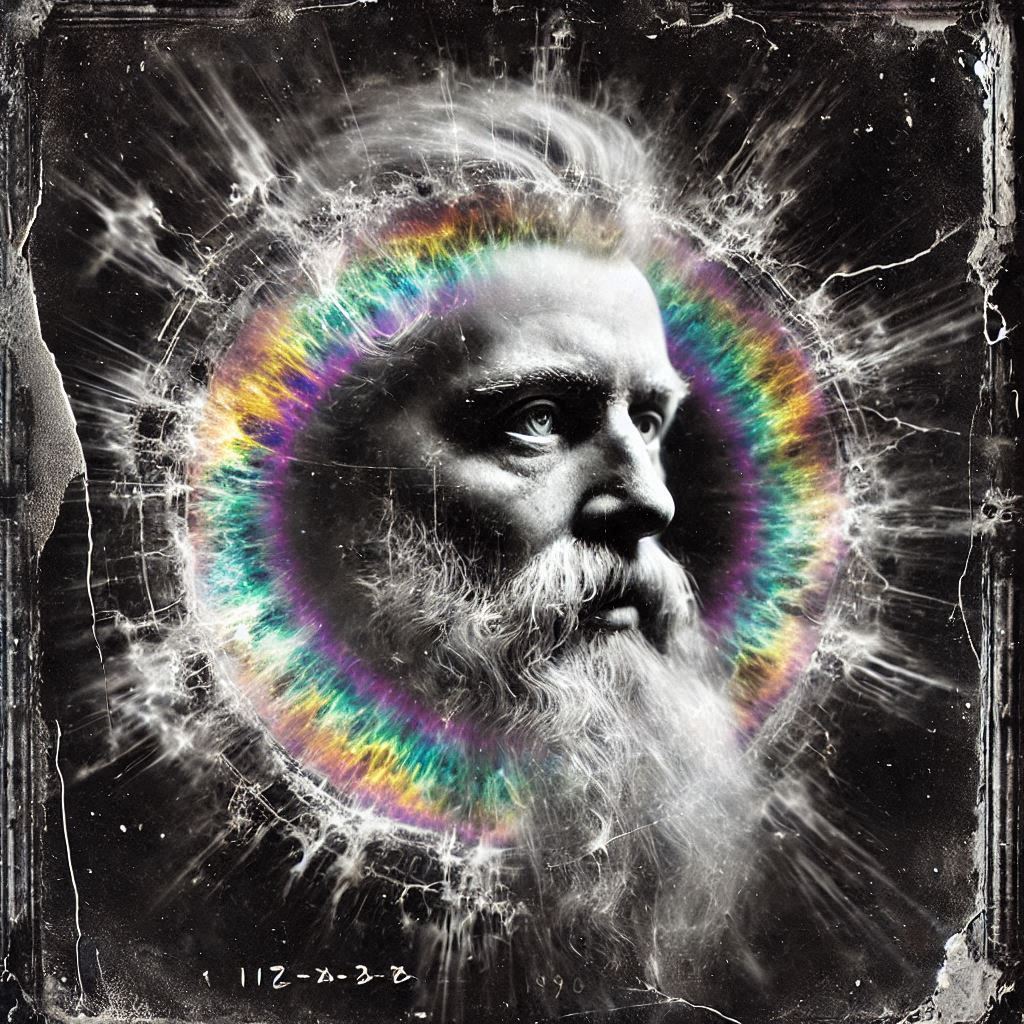
In the beginning of photography, everything was black and white. But in 1890, French photographer and inventor Henri Chromzac, using a special chemical photographic plate, managed to capture traces of the color dimension long before color photography was mastered. This is his story.

The Pioneering Work of Henri Chromzac

Henri Chromzac was a true pioneer in the field of photography. Born in France in the mid-19th century, he was known for his innovative spirit and passion for experimentation. His work was characterized by a relentless pursuit of perfection, and he was not afraid to take risks and push the boundaries of what was thought possible.

The First Steps towards Color Photography

In the late 1800s, Chromzac began experimenting with the concept of color photography. He was fascinated by the idea of capturing the vibrancy of the world around him, rather than simply recording it in shades of gray. Using a special chemical photographic plate, he managed to capture the faint outlines of color, a major breakthrough in the development of color photography.

The Chemical Process

Chromzac’s process involved using a special combination of chemicals to create the color effect. He would coat the photographic plate with a layer of silver bromide, which would then be treated with a special dye to create the color. This process was time-consuming and required great skill, but the results were well worth the effort.

The First Color Photographs

Chromzac’s early color photographs were met with amazement and awe. The world had never seen anything like it before. The vibrant colors, the level of detail, and the sheer beauty of the images left people breathless. His work was met with international acclaim, and he was hailed as a genius in the field of photography.

A Legacy That Lives On

Today, Henri Chromzac’s work is remembered as a major milestone in the development of color photography. His pioneering spirit and innovative approach paved the way for future generations of photographers, who would go on to perfect the art of color photography. Though his work may be largely forgotten, his legacy lives on, inspiring new generations of photographers to push the boundaries of what is possible.

Frequently Asked Questions

Q: What was Henri Chromzac’s most famous work?

A: Chromzac’s most famous work is his collection of color photographs, which are considered some of the earliest examples of color photography.

Q: How did Chromzac achieve color photography?

A: Chromzac achieved color photography by using a special chemical photographic plate and a combination of dyes to create the color effect.

Q: What was the impact of Chromzac’s work?

A: Chromzac’s work had a major impact on the development of color photography, paving the way for future generations of photographers to perfect the art of color photography.

Q: Is Henri Chromzac still remembered today?

A: Yes, Henri Chromzac is still remembered today as a pioneer in the field of photography, and his work continues to inspire new generations of photographers and artists.

Big bets on AI mark shift for venture capital

The Venture Capital Boom in AI: A Critical Moment for the Industry

A New Era of Investment

Roula Khalaf, Editor of the FT, selects her favourite stories in this weekly newsletter.

The venture capital (VC) industry has been experiencing a significant boom in the past few years, with many companies, particularly those involved in artificial intelligence (AI), receiving massive investments. The latest evidence of this trend came with the news that Databricks, a provider of software to gather and analyze large volumes of data, has raised another $10bn, one of the largest private investment rounds ever.

The AI Boom

The willingness of investors to put up large amounts of money, once the domain of Wall Street, shows how some of the biggest venture investors are navigating the AI boom with a distinct swagger. In recent years, start-up investors have backed AI to the hilt, with many companies in this space receiving significant investments. The latest evidence of this trend came with the news that Databricks, a provider of software to gather and analyze large volumes of data, has raised another $10bn, one of the largest private investment rounds ever.

The Problem of Overinvestment

However, this boom has coincided with a period of severe indigestion for the world of start-up investing at large. The industry has barely begun to work its way through an immense overhang of investments from the Zirp era, the period from 2019 to 2021 when a zero-interest rate policy brought a flood of capital into tech start-ups.

The Consequences of Overinvestment

This has left about $2.5tn trapped in private unicorns, or companies with a valuation of $1bn or more. At least, that’s the combined value these companies claimed after their last fundraisings, according to PitchBook. When it comes to actually trying to cash in these chips through initial public offerings or the M&A market, the returns are likely to be a lot less. How much of the venture business will be left standing after the eventual reckoning is hard to tell.

The Future of Venture Capital

First, consider the scale of the bet on AI. Databricks set out to raise $3bn-$4bn in its latest round, but chief executive Ali Ghodsi said that investors had offered $19bn (he decided to roughly split the difference). Given the overwhelming level of demand, Databricks’ latest valuation doesn’t look outlandish. At $52bn before the addition of the new cash, it was up from $43bn 15 months before and roughly equivalent to 17 times its annualised revenue run-rate — hardly outrageous for a business growing at 60 per cent a year.

Conclusion

The venture capital industry is at a critical moment, with the boom in AI investments coinciding with a period of severe indigestion for the industry. While some investors are making massive bets on AI, others are struggling to work through the overhang of investments from the Zirp era. The future of the venture capital business will depend on how investors navigate this challenging environment.

FAQs

Q: What is the scale of the bet on AI?
A: Databricks set out to raise $3bn-$4bn in its latest round, but investors offered $19bn.

Q: How much is trapped in private unicorns?
A: About $2.5tn, according to PitchBook.

Q: How much will the venture capital business be left standing after the eventual reckoning?
A: It’s hard to tell, but the returns are likely to be a lot less than expected.

Q: What is the future of venture capital?
A: The industry is at a critical moment, with the boom in AI investments coinciding with a period of severe indigestion for the industry.

Zenless Zone Zero

0

Stuck in a gaming rut? Get out of the loop this GFN Thursday with four new games joining the GeForce NOW library of over 2,000 supported games.

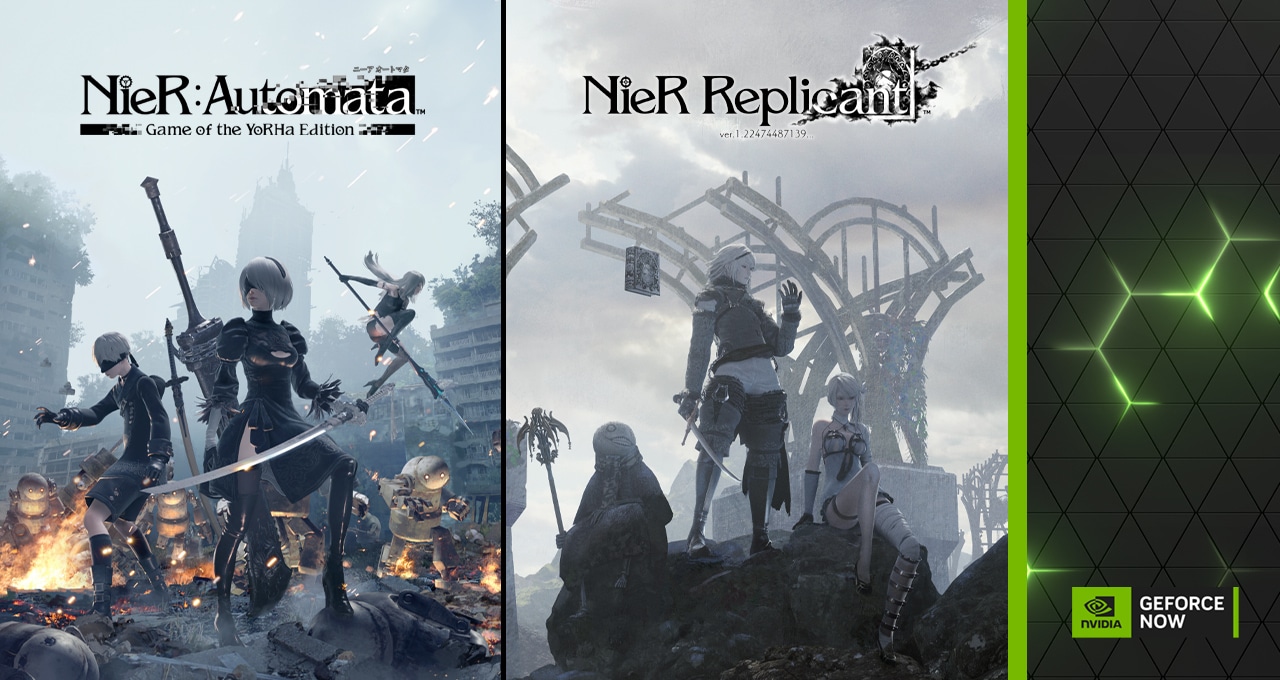
Dive into Square Enix’s mind-bending action role-playing games (RPGs) NieR:Automata and NieR Replicant ver.1.22474487139…, now streaming in the cloud. Plus, explore HoYoverse’s Zenless Zone Zero for an adrenaline-packed adventure, just in time for its 1.4 update.

Check out GeForce Greats, which offers a look back at the biggest and best moments of PC gaming, from the launch of the GeForce 256 graphics card to the modern era. Follow the GeForce, GeForce NOW, NVIDIA Studio and NVIDIA AI PC channels on X, as well as #GeForceGreats, to join in on the nostalgic journey. Plus, participate in the GeForce LAN Missions from the cloud with GeForce NOW starting on Saturday, Jan. 4, for a chance to win in-game rewards, first come, first served.

GeForce NOW members will also be able to launch a virtual stadium for a front-row seat to the CES opening keynote, to be delivered by NVIDIA founder and CEO Jensen Huang on Monday, Jan. 6. Stay tuned to GFN Thursday for more details.

A Tale of Two NieRs

NieR:Automata and NieR Replicant ver.1.22474487139… — two captivating action RPGs from Square Enix — delve into profound existential themes and are set in a distant, postapocalyptic future.

Existence is futile, except in the cloud.

Control androids 2B, 9S and A2 as they battle machine life-forms in a proxy war for human survival in NieR:Automata. The game explores complex philosophical concepts through its multiple endings and perspective shifts, blurring the lines between man and machine. It seamlessly mixes stylish and exhilarating combat with open-world exploration for a diverse gameplay experience.

Find Zen in the Cloud

Dive into the Hollows.

Zenless Zone Zero, the free-to-play action role-playing game from HoYoverse, is set in the post-apocalyptic metropolis of New Eridu. Take on the role of a “Proxy” and guide others through dangerous alternate dimensions to confront an interdimensional threat. The game features a fast-paced, combo-oriented combat system and offers a mix of intense action, character-driven storytelling and exploration of a unique futuristic world.

The title comes to the cloud in time for the version 1.4 update, A Storm of Falling Stars, bringing additions to the game for new and experienced players alike. Joining the roster of playable characters are Frost Anomaly agent Hoshimi Miyabi and Electric Attack agent Asaba Harumasa. Plus, the revamped Decibel system allows individual characters to collect and use Decibels instead of sharing across the squad, offering a new layer of strategy. Explore two new areas, Port Elpis and Reverb Arena, and try out the new “Hollow Zero-Lost Void” mode.

Fresh Arrivals

Look for the following games available to stream in the cloud this week:

  • NieR:Automata (Steam)
  • NieR Replicant ver.1.22474487139… (Steam)
  • Replikant Chat (Steam)
  • Zenless Zone Zero v1.4 (HoYoverse)

Conclusion

Get ready to experience the thrill of NieR:Automata and NieR Replicant ver.1.22474487139…, as well as the action-packed adventure of Zenless Zone Zero, all in the cloud. With GeForce NOW, you can play these games without the need for high-end hardware, and with extended gaming sessions for Performance and Ultimate members.

FAQs

Q: What are the new games available on GeForce NOW this week?
A: NieR:Automata, NieR Replicant ver.1.22474487139…, Replikant Chat, and Zenless Zone Zero v1.4 are the new games available on GeForce NOW this week.

Q: What is the version 1.4 update for Zenless Zone Zero?
A: The version 1.4 update, A Storm of Falling Stars, brings new playable characters, a revamped Decibel system, and new areas to explore.

Q: How can I participate in the GeForce LAN Missions?
A: GeForce NOW members can participate in the GeForce LAN Missions starting on Saturday, Jan. 4, for a chance to win in-game rewards, first come, first served.

Q: How can I get in-game loot for Zenless Zone Zero?
A: Follow the GeForce NOW social channels (X, Facebook, Instagram, Threads) and be on the lookout for a limited-quantity redemption code for a free reward package.

Creative Consequences of Omnicom/IPG Merger

0

Understanding Advertising Holding Companies

Many people’s vision of an ad agency is stuck in 1965. We can blame TV shows like Mad Men for this vision of Madison Avenue creatives working shoulder-to-shoulder late into the night, to make their clients millions. Those days are long gone (even though they produced some of the best ads ever). It’s all far more corporate and data-driven today.

The Rise of Holding Companies

For decades, large agencies have been swallowing up small ones. Then both large and small shops were acquired by what are known as “holding companies”. These are massive companies that now own all advertising across the globe. The “Big Six” of holding companies are Omnicom, Interpublic Group (IPG), Publicis, Dentsu, Havas and WPP, which is currently the largest.

The Results of Mergers

When ad agencies merge, the result is always redundancy. Employees hope nobody will realize there are 12 of you in a department when 3 would suffice. Sitting quietly at your desk with your head down is no protection from that pink slip. During a merger, thousands of square feet of office space are returned to landlords. Both jobs and entire departments are let go.

Big Kid on the Block

As mentioned, WPP is the largest holding company. They employ over 120,000 people. By comparison, the two companies that will merge, Omnicom and IPG, employ 76,000 and just under 60,000 people, respectively. So prior to any redundancy firings, the merged company, that will operate under the Omnicom name, will have around 136,000 employees. This surpasses WPP, making them the new big kid on the block.

Technology and the Future of Advertising

This was to be expected. But of course, it goes beyond traditional layoffs. We are in an age where our jobs are now, in real-time, being replaced by computer technology. Yes, now is the day when white-collar workers are feeling the sting of technology that blue-collar factory workers felt 50 years ago, when machines took over the assembly lines.

A New Era for Creatives

There was a day when agencies would, much like sports teams still do today, pay numbingly high salaries to the top talent. The future of advertising appears to be lean and mean, and the big dollars are going to the best technologies. No longer the best creatives.

Conclusion

The future of advertising is clear: technology is the direction and emphasis is on innovation. The days of high-paying jobs for top talent are behind us. The future of advertising is lean and mean, and the big dollars are going to the best technologies. For ad inspiration from the Mad Men era, see our list of the best 1950s ads.

FAQs

Q: What is an advertising holding company?
A: An advertising holding company is a massive company that owns all advertising across the globe.

Q: Who are the “Big Six” of holding companies?
A: The “Big Six” of holding companies are Omnicom, Interpublic Group (IPG), Publicis, Dentsu, Havas, and WPP.

Q: What is the result of ad agency mergers?
A: The result of ad agency mergers is always redundancy, with thousands of square feet of office space returned to landlords and both jobs and entire departments let go.

Q: What is the future of the creative industry in advertising?
A: The future of the creative industry in advertising is lean and mean, with the big dollars going to the best technologies, not the best creatives.

Analyzing Emerging Global Regulations

0

Governments Scramble to Regulate AI, Citing Concerns Over Data Privacy, Bias, Safety

The boom of the AI industry has sparked a need for regulatory frameworks to ensure the safe and ethical deployment of artificial intelligence.

Regions Diverge in Regulatory Strategy

Governments worldwide are taking various approaches to regulate AI, with some opting for unified, centralised frameworks while others have chosen a phased-out or piecemeal approach.

"More rigid regulatory frameworks may impose compliance costs for businesses in the AI field and stifle competitiveness and innovation. On the other hand, they bring the benefits of protecting consumers and adhering to certain ethical norms," explains Nerijus Šveistys, Senior Legal Counsel at Oxylabs.

Balance Innovation and Safety

Striking a balance between AI innovation and safety is the key challenge ahead. Any regulatory framework must ensure it does not stifle competitiveness and innovation while also promoting ethical adherence and consumer protection.

"The main difference we can see is the comparative quickness with which the EU has released a uniform regulation to govern the use of all types of AI," says Šveistys.

Copyright Battles and Legal Precedents

The implications of AI regulation are also being played out on a broader legal stage, particularly in cases involving generative AI tools.

"These cases are pivotal in determining the legal boundaries of using copyrighted material for AI development and establishing legal precedents for protecting intellectual property in the digital age," said Šveistys.

Impact on Related Industries

One industry that is heavily intertwined with AI developments is web scraping.

"…there is a lot of potential for AI to massively improve the efficiency, accuracy, and adaptability of web scraping operations," explains Šveistys.

Conclusion

The rush to establish regulatory frameworks is a natural response to the rapid development of AI technologies. Governments must strike the right balance between innovation, safety, and ethics in their regulatory approaches. Continuous monitoring and adaptation of AI usage are crucial in these rapidly evolving times.

FAQs

Q: Is the EU’s AI regulation comprehensive?
A: The EU’s AI Act sets out to regulate the entire AI sector, covering everything from facial recognition to autonomous decision-making systems.

Q: How are other regions tackling AI regulation?
A: China has opted for a phased-out approach, issuing regulations on specific AI technologies as they emerge. In the US, efforts remain mostly at the state level, with no unified, federal regulation in place.

Get Unlimited Midjourney for $10

0

The Power of

and
: A Guide to HTML Elements

What is

?

The HTML element

is used to define a paragraph of text in an HTML document. It is one of the most basic and widely used elements in HTML, and it plays a crucial role in structuring and formatting content on the web.

What is
?

is an HTML element that is used to insert a line break in the content. It is often used to separate lines of text, create whitespace, or to add a visual break between elements on a page.

Using

and
Together

When used together,

and
can be used to create a range of effects, from simple formatting to complex layouts. Here are a few examples:

  • Creating a paragraph with a line break:

    This is a paragraph of text
    with a line break.

  • Separating lines of text:

    This is the first line of text
    This is the second line of text.

  • Creating a multi-column layout:

    This is the first column

    This is the second column.

Best Practices for Using

and

When using

and
, it’s important to follow best practices to ensure that your content is displayed correctly and consistently across different devices and browsers:

  • Use

    to define paragraphs of text, and use
    to separate lines of text.

  • Use

    to create a logical break in the content, and use
    to create a visual break.

  • Avoid using
    to create extra whitespace or to separate unrelated content.
Conclusion

In conclusion,

and
are two fundamental HTML elements that play a crucial role in structuring and formatting content on the web. By using them correctly, you can create a range of effects and improve the readability and usability of your content.

Frequently Asked Questions
Q: What is the difference between

and
?

A:

is used to define a paragraph of text, while
is used to insert a line break in the content.

Q: Can I use
instead of

?

A: No, it’s not recommended to use
instead of

.

is used to define a logical break in the content, while
is used to create a visual break.

Q: Can I use both

and
together?

A: Yes, you can use both

and
together to create a range of effects, from simple formatting to complex layouts.