Home Blog Page 547

Fantastic Christmas Gift

0

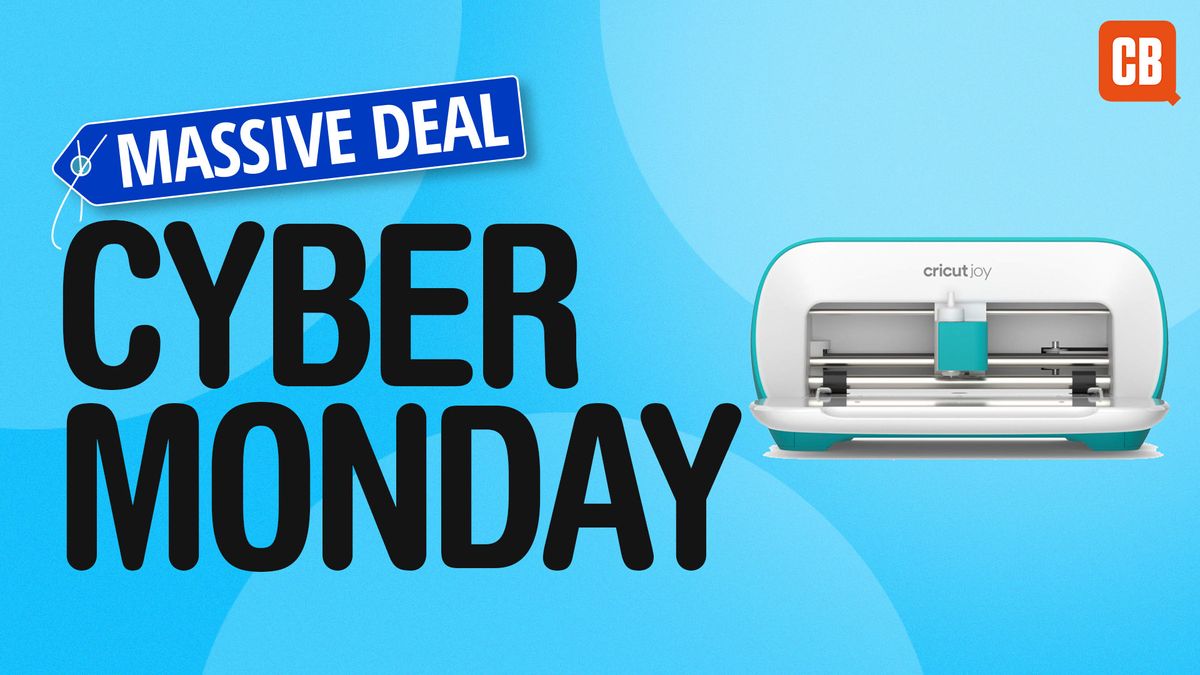
Cricut Joy Cyber Monday Deal: Save $50 on Digital Crafting Machine

The Cricut Joy is a portable digital crafting machine that’s ideal for creating cards, labels, and decals. And on Cyber Monday, it’s available for $99 at Amazon as part of a digital content library that includes 30 images in the Design Space app. That’s a $50 or 34% saving.

What is the Cricut Joy?

I tried the Cricut Joy a couple of years ago and found it really easy to use. After I’d downloaded the app, I chose a design and the Cricut Joy cut it out for me, ready for me to use it in my Christmas cards. The Cricut Joy is also a must-have if you want to use one of Cricut’s other machines, like the Mug Press for example.

Cyber Monday Deals

There are also offers available on Cricut Joy bundles as well as a range of other Cricut machines and accessories. Explore the Cyber Monday Cricut deals on Amazon or Cricut.com.

Why Choose the Cricut Joy?

To learn more about why we rate the Cricut Joy, see our Cricut Joy review. And get inspired for crafting with these Cricut Christmas ideas.

Looking for More Deals?

Looking for a slightly different machine or deal? Check out our automatic deals checker below.

Upgrade Your Setup for Less

We curate the best offers on creative kit and give our expert recommendations to save you time this Black Friday. Upgrade your setup for less with Creative Bloq.

Conclusion

The Cricut Joy is a fantastic digital crafting machine that’s perfect for creating cards, labels, and decals. With its ease of use and affordability, it’s a great addition to any craft room. And with the Cyber Monday deal, you can save $50 on the machine and get access to a digital content library with 30 images.

FAQs

Q: What is the Cricut Joy?
A: The Cricut Joy is a portable digital crafting machine that’s ideal for creating cards, labels, and decals.

Q: What is included in the Cyber Monday deal?
A: The Cyber Monday deal includes the Cricut Joy machine and a digital content library with 30 images in the Design Space app.

Q: Can I use the Cricut Joy with other Cricut machines?
A: Yes, the Cricut Joy is compatible with other Cricut machines, such as the Mug Press.

Q: Where can I find more Cricut deals?
A: You can find more Cricut deals on Amazon or Cricut.com.

AI is Making Us Smarter

The Deep Language Revolution

From a long perspective of working in the trenches of machine learning, Terry Sejnowski has been an enthusiastic advocate for the positive impact of artificial intelligence (AI). In 2018, he wrote in the book The Deep Learning Revolution that "AI will make you smarter."

The Rise of Large Language Models

Things move fast in AI time. Since 2018, generative AI (Gen AI) has invaded our lives. In his latest book, ChatGPT and the Future of AI: The Deep Language Revolution, published last month by MIT Press, Sejnowski reviews the rise of large language models (LLMs) and concludes that "AI is indeed making us smarter."

Measuring Smarter

But how do we measure smarter? What exactly does that mean?

"What is intelligence? Intelligence is really about problem-solving," Sejnowski told ZDNET in an interview. With ChatGPT, and programs like it, "I am able to get up to speed faster, but, also, it leads me to things that I might never have even thought of or explored; it’s opening up doors."

The Tool-Using Stage

Like a shovel, argued Sejnowski, the large language tool is helping us do things better than we could with our bare hands. He said writers are getting better with ChatGPT because "it helps them through mental blocks."

The Book’s Focus

Written with the same engaging voice and authoritative knowledge of AI, the new book is very different from the previous one. In 2018, Sejnowski gave a history lesson. In the new Revolution, Sejnowski is interested in where these tools are headed and how they’re changing our notions of thought and how we regard ourselves.

The Virtuous Cycle

AI is, for example, revealing aspects of the brain to neuroscientists, and neuroscience is in turn opening up new possibilities for AI, he argues, in a kind of virtuous cycle.

The Book’s Weak Spot

One thing ChatGPT doesn’t do is write anywhere nearly as well as Sejnowski. Throughout the book, he offers ChatGPT-generated summaries of chapters, hoping they may be "easier to follow than the text." In fact, the summaries are banal, much like a lot of GPT-generated prose, and seem like mostly a gimmick. It is the book’s only weak spot and a small enough transgression to be forgiven in what is otherwise a masterly and thoroughly engrossing read.

The Book’s Strengths

Lest you think the book is a love letter to ChatGPT, the deeper element of the book, taking up most of its pages, is an analysis of how generative AI affects science, and vice versa.

The Cross-Pollination of Efforts

The book’s most fascinating aspect, highlighting how much is left to be understood in both camps. LLMs have an underlying structure that AI researchers are only just beginning to understand. Sejnowski predicts that unfolding that mystery could lead to new forms of mathematics, which, in turn, could dramatically advance AI.

Conclusion

The mirror effect leads to a tantalizing prospect: we are not going to achieve "artificial general intelligence", the holy grail of AI, in the cliche, sci-fi form of a life-like humanoid that walks and talks like us. Rather, we will shift our understanding of what we think we know about intelligence. It is beyond mere tool use, but we don’t yet have an expression for what that something else might be.

FAQs

Q: What is the main focus of the book?
A: The book focuses on the rise of large language models (LLMs) and their impact on our understanding of intelligence and thought.

Q: What does Sejnowski mean by "AI is making us smarter"?
A: Sejnowski believes that AI is helping us solve problems faster and opening up new doors of exploration and discovery.

Q: What is the virtuous cycle that Sejnowski discusses in the book?
A: The virtuous cycle refers to the way AI is revealing aspects of the brain to neuroscientists, and neuroscience is in turn opening up new possibilities for AI.

Q: What is the book’s weak spot?
A: The book’s weak spot is the use of ChatGPT-generated summaries, which are banal and seem like a gimmick.

Q: What is the book’s strength?
A: The book’s strength is its analysis of how generative AI affects science, and vice versa, and its exploration of the underlying structure of LLMs.

This Website Shows What Google’s AI Can Glean From Your Photos

0

A Former Google Engineer’s Quest for a More Private Photo-Sharing Service

A Conscientious Decision

Software engineer Vishnu Mohandas decided to quit Google in more ways than one when he learned that the tech giant had briefly helped the US military develop AI to study drone footage. In 2020, he left his job working on Google Assistant and also stopped backing up all of his images to Google Photos. He feared that his content could be used to train AI systems, even if they weren’t specifically tied to the Pentagon project. "I don’t control any of the future outcomes that this will enable," Mohandas thought. "So now, shouldn’t I be more responsible?"

The Birth of Ente

Mohandas, who taught himself programming and is based in Bengaluru, India, decided he wanted to develop an alternative service for storing and sharing photos that is open source and end-to-end encrypted. Something "more private, wholesome, and trustworthy," he says. The paid service he designed, Ente, is profitable and says it has over 100,000 users, many of whom are already part of the privacy-obsessed crowd. But Mohandas struggled to articulate to wider audiences why they should reconsider relying on Google Photos, despite all the conveniences it offers.

A Marketing Stunt to Show the Power of Google’s AI

Then one weekend in May, an intern at Ente came up with an idea: Give people a sense of what some of Google’s AI models can learn from studying images. Last month, Ente launched https://Theyseeyourphotos.com, a website and marketing stunt designed to turn Google’s technology against itself. People can upload any photo they want to the website, which is then sent to a Google Cloud computer vision program that writes a startlingly thorough three-paragraph description of it.

A Stinging Demonstration of Google’s AI

One of the first photos Mohandas tried uploading was a selfie with his wife and daughter in front of a temple in Indonesia. Google’s analysis was exhaustive, even documenting the specific watch model that his wife was wearing, a Casio F-91W. But then, Mohandas says, the AI did something strange: It noted that Casio F-91W watches are commonly associated with Islamic extremists. "We had to tweak the prompts to make it slightly more wholesome but still spooky," Mohandas says. Ente started asking the model to produce short, objective outputs—nothing dark.

The Results: A More Limited, but Still Intrusive, Description

The same family photo uploaded to Theyseeyourphotos now returns a more generic result that includes the name of the temple and the "partly cloudy sky and lush greenery" surrounding it. But the AI still makes a number of assumptions about Mohandas and his family, like that their faces are expressing "joint contentment" and the "parents are likely of South Asian descent, middle class." It judges their clothing ("appropriate for sightseeing") and notes that "the woman’s watch displays a time as approximately 2 pm, which corroborates with the image metadata."

Google’s Response

Google spokesperson Colin Smith declined to comment directly on Ente’s project. He directed WIRED to support pages that state uploads to Google Photos are only used to train generative AI models that help people manage their image libraries, like those that analyze the age and location of photo subjects. The company says it doesn’t sell the content stored in Google Photos to third parties or use it for advertising purposes. Users can turn off some of the analysis features in Photos, but they can’t prevent Google from accessing their images entirely because the data are not end-to-end encrypted.

Conclusion

Ente’s project highlights the concerns surrounding Google’s use of user content to train its AI models. While Google claims to use this data for beneficial purposes, critics argue that the company’s lack of end-to-end encryption and its willingness to share user data with third parties pose significant risks to user privacy.

FAQs

Q: What is Ente?
A: Ente is a paid photo-sharing service that is open source and end-to-end encrypted.

Q: Why did Vishnu Mohandas leave Google?
A: Mohandas left Google after learning that the company had helped the US military develop AI to study drone footage.

Q: What is Theyseeyourphotos.com?
A: Theyseeyourphotos.com is a website that uses Google’s AI models to analyze uploaded images and provide a detailed description of them.

Q: Does Google sell user data to third parties?
A: According to Google, no, it does not sell user data to third parties. However, users can still turn off some analysis features in Photos, but they can’t prevent Google from accessing their images entirely because the data are not end-to-end encrypted.

I Just Bought the Best Reviewed, Best Value TV I’ve Ever Seen

0

Amazon Fire Omni TV: A Great Deal for the Budget-Conscious

Ever since my darling two-year-old threw something hard at the TV, sending it straight to the TV graveyard, I’ve been on the look out for a great TV deal. Turns out my boy has impeccable timing, as right now you can get the Amazon Fire Omni TV down from £649 to £379 over at Amazon. So I did!

A Great Price for a Great TV

In the US, it’s down from $529 to $389 at Amazon.

Picture Quality and Intuitive UX

I’m excited to get hold of this TV (it arrives this Friday). In all the reviews I’ve read – especially on Creative Bloq’s sister sites Tech Radar and T3 – it’s described as one of the best budget TVs out there, punching well above its weight in picture quality and intuitive UX. There are notes that other TVs are brighter, but then with everything factored in – especially the record low Cyber Monday price – this seemed like a perfect option.

Other Deals and Options

Want a smaller display? We’re also hunting for all the best Cyber Monday iPad deals, live! And if you’re an art lover, see our list of the best Frame TVs out there.

Global Prices

Here is a range of the best prices on the Amazon Fire TV, wherever you are in the world:

Conclusion

With its record-low price and excellent picture quality, the Amazon Fire Omni TV is a great option for anyone in the market for a new TV. Don’t miss out on this amazing deal – grab yours today!

FAQs

Q: What is the original price of the Amazon Fire Omni TV?
A: The original price of the Amazon Fire Omni TV is £649 (or $529 in the US).

Q: How much is the Amazon Fire Omni TV discounted for Cyber Monday?
A: The Amazon Fire Omni TV is discounted from £649 to £379 (or from $529 to $389 in the US) for Cyber Monday.

Q: Is the Amazon Fire Omni TV a good option for a budget-conscious buyer?
A: Yes, the Amazon Fire Omni TV is considered one of the best budget TVs on the market, offering excellent picture quality and intuitive UX at an affordable price.

Q: When will I receive my Amazon Fire Omni TV if I order it today?
A: If you order the Amazon Fire Omni TV today, it will arrive on Friday (subject to delivery times and locations).

Adversarial Examples Are Not Bugs, They Are Features

Response to Commenters

We want to thank all the commenters for the discussion and for spending time designing experiments, analyzing, replicating, and expanding upon our results. These comments helped us further refine our understanding of adversarial examples (e.g., by visualizing useful non-robust features or illustrating how robust models are successful at downstream tasks), but also highlighted aspects of our exposition that could be made more clear and explicit.

Organization of This Response

Our response is organized as follows: we first recap the key takeaways from our paper, followed by some clarifications that this discussion brought to light. We then address each comment individually, prefacing each longer response with a quick summary.

Terminology and Notation

We also recall some terminology from our paper that features in our responses:

  • Dataset: Our experiments involve the following variants of the given dataset DD (consists of sample-label pairs (xx, yy)) The exact details for construction of the datasets can be found in our paper, and the datasets themselves can be downloaded at http://git.io/adv-datasets :
  • D^R\widehat{\mathcal{D}}_{R}
  • D^NR\widehat{\mathcal{D}}_{NR}

Adobe’s Huge Half-Price Deal

0

Panic and Relief: Adobe Cyber Monday Deal Extended!

Panic Suddenly Set In This Morning

I intended to dedicate the weekend to finally signing up for Adobe Creative Cloud’s All Apps plan, and I forgot completely. But I’m saved! The Adobe Cyber Monday deal has been extended until next Sunday!

The Adobe Cyber Monday Deal

Get the entire Creative Cloud suite of apps for half price for a year (and 70% off if you’re a student!). That means a subscription in the US is reduced from $59.99 to $29.99 per month – a saving of $299 over a year. Equivalent discounts are available in other countries.

What’s Included in the Adobe Creative Cloud Suite?

The Adobe Creative Cloud suite contains many of the most-used programs in the creative industries, including:

  • Photoshop for digital art and image editing
  • Premiere Pro and After Effects for video and motion design
  • Illustrator for vector art
  • Firefly for AI tools
  • Adobe Fonts, Adobe Portfolio, Adobe Stock, and cloud storage space for storing creations

Who Can Get the Adobe Cyber Monday Deal?

The Adobe Black Friday deal applies only to new subscribers for their first year. After 12 months, your subscription charge will increase to the standard price, although you can always cancel at that point and see if Adobe offers a discount.

When Does the Adobe Cyber Monday Sale End?

Adobe says its 2024 Cyber Monday Creative Cloud deal will now end on Sunday, December 8, making it more of a Cyber Week deal, which means we still have time to sign up for the biggest discount of the year.

Why is Adobe Creative Cloud so Popular?

Adobe’s Creative Cloud apps are popular partly because many creatives simply have to use them since they’re the programs most used in their fields. However, in most cases, Adobe’s software is simply the best on the market. Every year, it introduces new features to improve the apps, keeping them ahead of the competition – most recently with many generative AI tools. As a subscriber, you automatically get access to all new features as soon as they’re released (or even before the full releases if you install the beta versions).

Conclusion

Don’t miss out on this amazing opportunity to get the Adobe Creative Cloud suite of apps for half price! Sign up now and experience the power of Adobe’s Creative Cloud for yourself.

Frequently Asked Questions

Q: Who can get the Adobe Cyber Monday deal?
A: New subscribers for their first year.

Q: How long does the Adobe Cyber Monday sale end?
A: The sale will end on Sunday, December 8.

Q: What’s included in the Adobe Creative Cloud suite?
A: See the list above.

Q: Can I cancel my subscription after 12 months?
A: Yes, you can cancel at any time and see if Adobe offers a discount.

Q: Are there any other deals available?
A: Yes, there are Black Friday deals for students and teams, but the All-Apps plan is the only one with a discount.

OFFF’s Bold Rebrand

0

OFFF Rebranding: A New Era for the Iconic Design Festival

A New Chapter for OFFF

OFFF is one of our favorite international design festivals, and it’s become an important fixture on the calendar for the global creative community since its inception back in 2001. It’s long been one of the best places to discover new trends, new talent, and new approaches, but now OFFF is more than just an iconic festival: it’s an iconic brand too.

A Sleek Rebrand

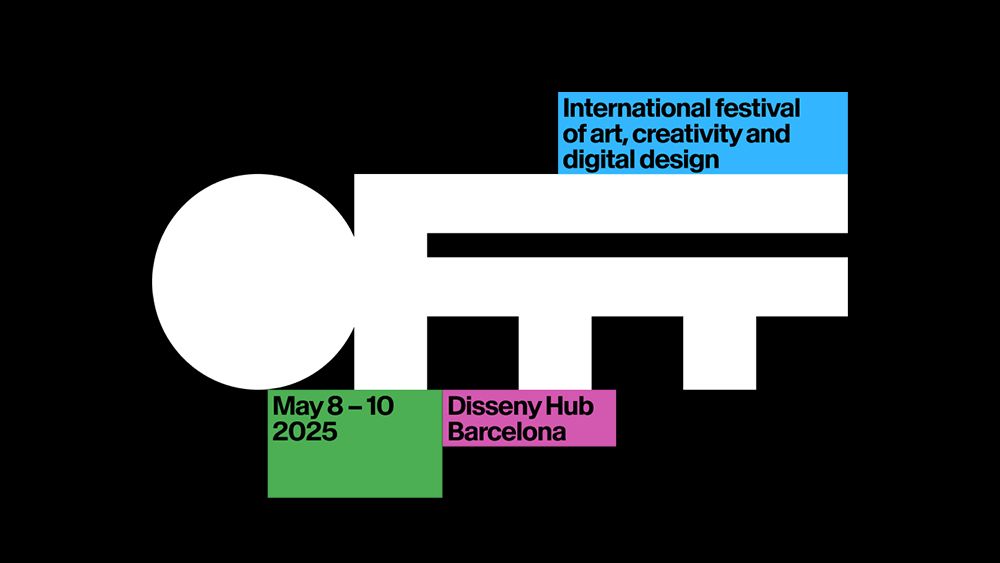
That’s thanks to a sleek rebrand that asserts OFFF’s position at the center of creative culture. The rebrand, crafted by design company COLLINS, comprises a new logo, color palette, typography, and a new website, all inspired by the concept of "Centre OFFF Gravity". This concept refers to OFFF’s position at the center of the international creative community, attracting and projecting, and seeking to catalyze and expand ideas and knowledge.

The Design

The design is described as being inspired by "magnetic forces" as OFFF both attracts and projects. In terms of attraction, it’s a meeting point for diverse minds and visions, while it also projects in that it seeks to catalyze and expand ideas and knowledge.

A New Era for OFFF

"Twenty-five years of OFFF Festival have been an incredible journey," says Pep Salazar, director of OFFF. "As a community and a space for discovering new visual trends where inspiration flows freely, we now reignite our imagination to usher in a new era of OFFF – one focused on moving forward and creating."

A Community-Driven Approach

Brian Collins of COLLINS added: "For a quarter-century, the remarkable people at OFFF have not only redefined the conversation about creativity for each of us as individuals, artists, and designers, but they have built a real and welcoming international community, enabling people to support each other in ways none of us could never do alone."

Conclusion

The rebrand marks a new era for OFFF, one that will continue to inspire and unite the creative community. With its new visual identity, OFFF is poised to continue its mission of fostering creativity, innovation, and collaboration.

FAQs

Q: What is the new OFFF rebrand all about?
A: The rebrand is inspired by the concept of "Centre OFFF Gravity", which refers to OFFF’s position at the center of the international creative community, attracting and projecting, and seeking to catalyze and expand ideas and knowledge.

Q: What is the new logo and color palette like?
A: The new logo and color palette are part of the rebrand, crafted by design company COLLINS, and are designed to be modern, sleek, and bold.

Q: What is the significance of the rebrand?
A: The rebrand marks a new era for OFFF, one that will continue to inspire and unite the creative community, and asserts OFFF’s position at the center of creative culture.

Q: When will OFFF 2025 be held?
A: Details of OFFF 2025 will be announced in February.

Assemble Your AI Dream Team

The Dream Team: Assembling the Right People for Your GenAI Project

So the decision has been made to upgrade your business using generative AI technology. Great! But now comes the hard part: Figuring out how to transform that aspiration into action, and it all starts with people.

The First Move: Assembling the Team

The first move you’ll make in your GenAI journey is assembling the group of folks who will design, build, test, and deploy your GenAI applications. While these projects often involve automating work done by humans, GenAI development is very much a people-centric journey.

Technical Roles

Technical roles are critical in GenAI application development. Depending on whether you’re building your own AI model (unlikely), fine-tuning an existing model (a little more likely), or adopting a pre-built AI model with prompt engineering and RAG (most likely), your GenAI team will require a mix of data scientists, AI engineers, data engineers, and application developers.

Non-Technical Roles

But GenAI is not the exclusive domain of the techies. In fact, compared to classical machine learning projects, the role played by non-technical practitioners is even greater.

You won’t get far without the necessary technical expertise in GenAI. However, when using GenAI to modify core company functions, you’ll need the input from line-of-business experts, such as the head of customer support or the director of warehouse management, to ensure that your GenAI product is a good match to how they see customers and employees interacting with your brand.

The Rule of Three

EPAM, a consulting firm that helps clients build GenAI solutions, uses a rule of three in constructing GenAI teams. The teams are built out following a general rule:

"One is a product manager or business leader who decides what is the prioritization of the backlog," says Pierre Samec, EPAM’s SVP of Enterprise AI Solutions. "One is a subject matter expert. And subject matter expertise is really fundamental in the GenAI space because if you don’t speak the language, it doesn’t work.

The Two-Pizza Team

EPAM currently maintains 13 different pods that attack nine industry verticals and four horizontal organizations. Each individual team usually contains between four and 10 team members, he says.

"It’s somewhere between a one- and a two-pizza team," he says.

The Full-Stack CEO

GenAI tech is evolving at a furious clip, which is good news for your GenAI prospects. Tech giants like Google and Meta have gifted the world pre-trained large language models (LLMs) – you just need to tap into them and use them in a way that’s productive and profitable for your business, without sacrificing security and ethics along the way.

Conclusion

Assembling the right team is crucial for successful GenAI projects. Whether you’re building, fine-tuning, or adopting pre-built AI models, you’ll need a mix of technical and non-technical expertise. Don’t be afraid to tap outside experts or tech consultants to help you build out your team.

Frequently Asked Questions

Q: What role do non-technical practitioners play in GenAI development?
A: Non-technical practitioners, such as line-of-business experts, play a critical role in ensuring that GenAI products align with company values and customer interactions.

Q: What is the rule of three in constructing GenAI teams?
A: EPAM uses a rule of three, consisting of a product manager or business leader, a subject matter expert, and a GenAI builder.

Q: What is the ideal team size for GenAI projects?
A: EPAM recommends teams with between four and 10 members, or somewhere between a one- and a two-pizza team.

Epic Cyber Monday Software Deals

0

Best Creative Software Deals for Cyber Monday

Adobe Creative Cloud: Half Price for a Year

Cyber Monday is here, and it’s the perfect opportunity to get your hands on the best creative software deals of the year. For a limited time, you can get access to Adobe’s industry-leading programs with Adobe Creative Cloud at half price for a year. This is a fantastic chance to upgrade your creative workflow and take advantage of the latest features and tools.

Affinity and Corel: Big Discounts on One-Off Subscriptions

If you don’t need a subscription, Adobe’s biggest rivals, Affinity and Corel, are also offering big discounts on their software. You can get access to their vector art and design tools at a fraction of the cost.

Best Deals on Creative Software

Here are the best deals on creative software, all of which we’ve tested ourselves and feature in our buying guides:

Adobe Software Deals

  • Photoshop: Get a 20% discount on a one-year subscription to Adobe Photoshop, now just $19.99/month (usually $24.99/month).
  • Illustrator: Get a 25% discount on a one-year subscription to Adobe Illustrator, now just $21.25/month (usually $28.75/month).
  • Premiere Pro: Get a 30% discount on a one-year subscription to Adobe Premiere Pro, now just $19.95/month (usually $28.95/month).

Frequently Asked Questions

Q: What is Adobe Creative Cloud?
A: Adobe Creative Cloud is a subscription-based service that gives you access to a suite of creative apps, including Photoshop, Illustrator, Premiere Pro, and more.

Q: How long is the promotional period for the Adobe Creative Cloud deal?
A: The promotional period is for one year, after which the regular price will apply.

Q: Can I cancel my subscription if I’m not satisfied?
A: Yes, you can cancel your subscription at any time.

Q: Are there any other deals available?
A: Yes, check our roundup of the best iPad Cyber Monday deals for more savings on hardware.

Accelerated Drug Discovery with AI

0

The Integration of AI in Drug Discovery: Revolutionizing the Way We Find New Treatments

Challenges of Traditional Drug Discovery

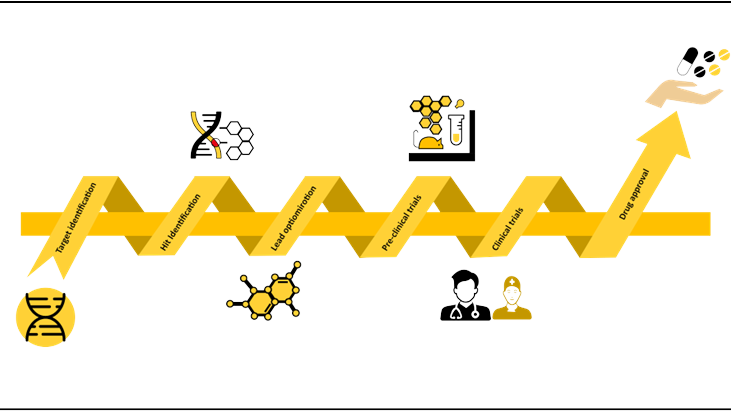
In conventional drug discovery workflows, researchers first identify a biological target, such as a protein involved in disease progression, and then search for molecules that can modulate this target. The complexity of biological systems, combined with the vast number of potential chemical structures, estimated at 10^60, makes this a daunting task. Traditional computer-aided drug discovery (CADD) methods often rely on simplified models and assumptions that fail to capture the intricacies of drug-target interactions, leading to high attrition rates in clinical trials.

An AI-Driven Approach to Virtual Screening

Innoplexus, a registered NVIDIA Inception startup, has developed a proprietary deep learning method that uses NVIDIA NIM microservices to streamline the drug discovery process. This approach is informed by the NVIDIA NIM Agent Blueprint for generative virtual screening, which enables the rapid, AI-driven generation of novel molecular structures for accelerated molecular simulations and docking with NIM microservices.

Innoplexus’s Deep Learning Method

Innoplexus’ method employs custom-designed artificial neural networks (ANNs) for protein target prediction, trained on large-scale datasets of protein sequences, structural information, and molecular interactions.

AlphaFold2 for Protein Structure Prediction

A protein sequence provided by the user is processed through the AlphaFold2 NIM microservice, which accurately determines the 3D structure of the target protein. This step involves aligning the sequence with known proteins, offering multiple alignment configurations for improved accuracy.

MolMIM for Optimized Lead Generation

An initial chemical structure is passed through the MolMIM NIM microservice, which generates new molecular structures optimized for specific properties such as drug-likeness (QED), solubility (penalized log P), and molecular similarity. The generated molecules are iteratively optimized in multiple cycles, depending on your requirements.

DiffDock for Molecular Docking

Molecular docking helps determine the optimum site on the target protein where the drug binds. The optimized molecules and the target protein structure are processed by DiffDock, which predicts the binding poses of the molecules to the protein. You can define the number of poses and other docking constraints, enabling a comprehensive analysis of potential drug-target interactions.

Post-Processing ADMET Pipeline

After DiffDock, the top 1K small molecules are further screened using the proprietary ADMET (Absorption, Distribution, Metabolism, Excretion, and Toxicity) pipeline, which assesses the pharmacokinetic and pharmacodynamic properties of the molecules.

Innoplexus ADMET Model

The ADMET model is a custom-designed neural network that uses a large dataset of molecular structures and their corresponding ADMET properties.

Workflow Optimization

The pipeline is optimized for performance using various techniques:

  • Data parallelism: Distributed training and inference across multiple GPUs and nodes.
  • Model parallelism: Splitting large models across multiple GPUs and nodes.
  • Pipeline parallelism: Overlapping computation and communication between pipeline stages.

Real-World Applications and Implications

Rapid compound identification with Innoplexus’ AI-driven pipeline powered with NVIDIA H100 clusters accelerates virtual screening of generated molecules in addition to molecular docking up to 10x, enabling researchers to perform the following tasks:

  • Screen 5.8M small molecules in 5–8 hours duration.
  • Identify the top 1% of compounds with high therapeutic potential from ADMET profiling in a few hours for a million compounds.
  • Optimize lead compounds with 90% accuracy.

Get Started

AI and high-performance computing are set to transform the field of drug discovery, enabling faster, more accurate identification of potential drug candidates. By combining cutting-edge neural network algorithms, generative models, and advanced molecular docking techniques, the Innoplexus virtual screening pipeline offers a powerful tool for accelerating the discovery of new drugs, ultimately improving patient outcomes and reducing the cost and time associated with bringing new therapies to market. Get started with the NVIDIA NIM Agent Blueprint for generative virtual screening and learn more about Innoplexus.

FAQs

Q: What is the benefit of using AI in drug discovery?
A: AI can accelerate the identification of potential drug candidates, reducing the time and cost associated with bringing new therapies to market.

Q: How does Innoplexus’ AI-driven pipeline work?
A: Innoplexus’ pipeline uses custom-designed artificial neural networks for protein target prediction, trained on large-scale datasets of protein sequences, structural information, and molecular interactions.

Q: What is the advantage of using NVIDIA H100 clusters in the pipeline?
A: NVIDIA H100 clusters enable fast, efficient compute-intensive operations, accelerating virtual screening of generated molecules in addition to molecular docking up to 10x.

Q: How does the post-processing ADMET pipeline work?
A: The post-processing ADMET pipeline assesses the pharmacokinetic and pharmacodynamic properties of the molecules, filtering and ranking them based on their predicted ADMET properties.