Home Blog Page 576

AI Analyzes Google Docs

0

Anthropic’s Claude AI Just Got a Whole Lot More Powerful

Add Google Docs to Claude AI for Enhanced Conversations

Starting today, you can add a file from Google Docs to your Claude AI chat or project, giving you more context to your conversations. This new feature allows you to ask the chatbot questions about the document, such as asking for a summary of the content, as shown in the below screenshot.

How to Add a Google Docs Document to Claude

To add a Google Docs document to Claude, follow these steps:

  • Hover over the paperclip icon in the lower right corner of the chat interface.
  • Click the Google Drive icon. If this is your first time doing this, you’ll log in to your Google account.
  • Search through your recently accessed documents or paste your document’s URL. You can add multiple Docs at once.
  • Send your message. Claude will access and process your document in response to your question.

Caveats

There are a few things to keep in mind when using this feature:

  • Claude can only extract text from a document. It cannot interpret images, comments, or suggestions.
  • You can only sync documents that you have permission to view in Google Drive. If you lose access to a document while chatting with Claude, you won’t be able to view its contents, but you will see those conversations.
  • Google Docs added to chats and Project knowledge sync directly from Google Drive, meaning Claude will always have access to the latest version of the document.

Comparison to Other AIs

This new feature brings Claude in line with other AIs, such as Gemini and ChatGPT, which offer similar capabilities through extensions and connections.

Conclusion

With this new feature, Claude AI is now more powerful and versatile, allowing users to incorporate Google Docs into their conversations and gain more insights from their documents. This is a significant step forward for the AI, making it more competitive in the market.

Frequently Asked Questions

Q: What is the purpose of adding Google Docs to Claude AI?
A: This feature allows users to incorporate Google Docs into their conversations, giving them more context and insights from their documents.

Q: Can I add multiple Google Docs at once?
A: Yes, you can add multiple Google Docs at once by searching through your recently accessed documents or pasting the URL of each document.

Q: Can I view images, comments, or suggestions in my Google Docs?
A: No, Claude can only extract text from a document and cannot interpret images, comments, or suggestions.

Q: Can I still access a document if I lose permission to view it?
A: No, if you lose access to a document, you won’t be able to view its contents, but you will still see those conversations.
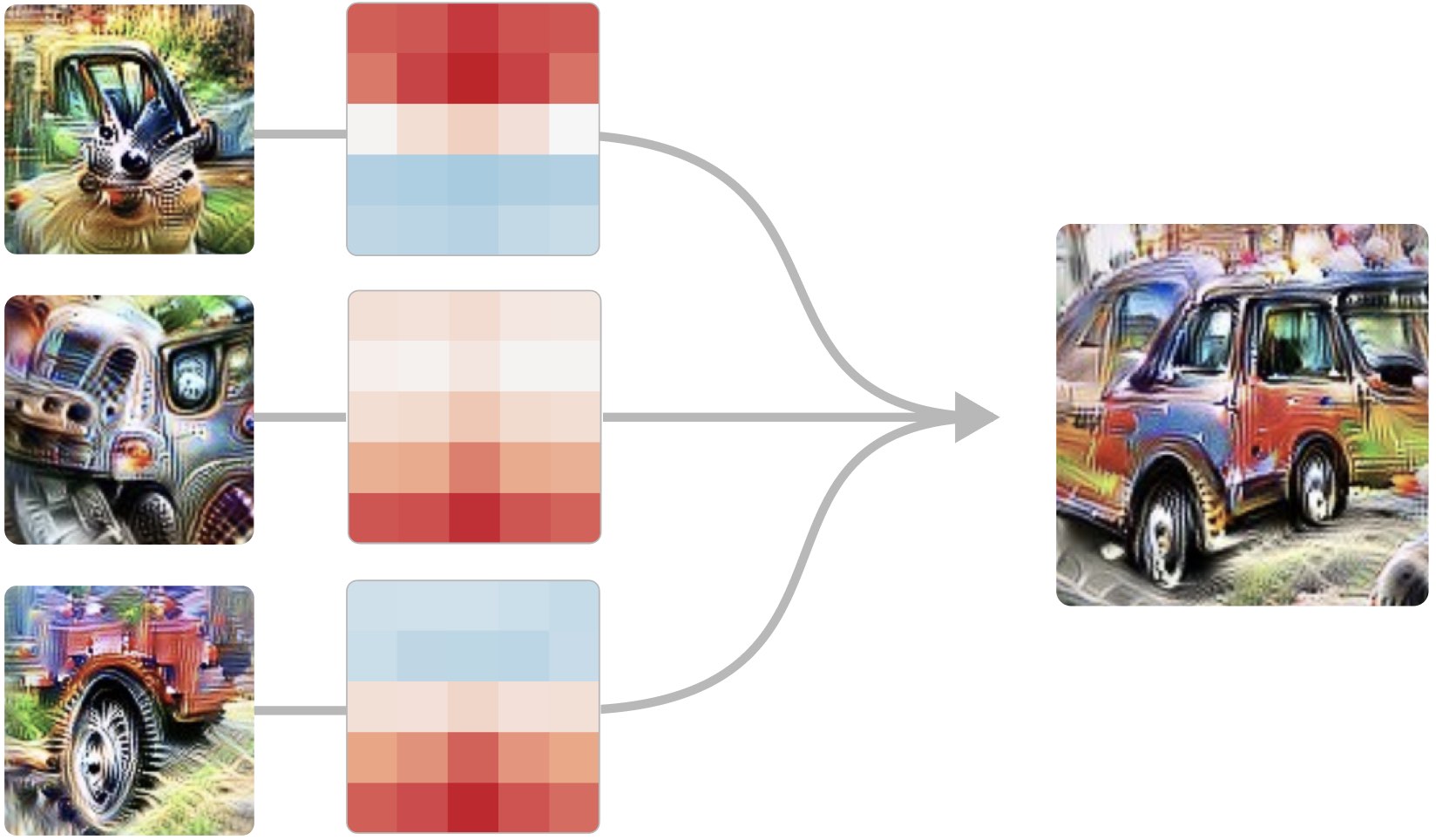

Circuit Analysis Fundamentals

0

Circuits: A Living Document

Introduction

In the original narrative of deep learning, each neuron builds progressively more abstract, meaningful features by composing features in the preceding layer. In recent years, there has been some skepticism about this view, but what happens if you take it seriously?

The Circuits Thread

The Circuits thread is a collection of short articles, experiments, and critical commentary around a narrow or unusual research topic, along with a slack channel for real-time discussion and collaboration. It is intended to be an earlier stage than a full Distill paper, allowing for more fluid publishing, feedback, and discussion.

Articles and Comments

The natural unit of publication for investigating circuits seems to be short papers on individual circuits or small families of features. Compared to normal machine learning papers, this is a small and unusual topic for a paper.

Zoom In: An Introduction to Circuits

Does it make sense to treat individual neurons and the connections between them as a serious object of study? This essay proposes three claims which, if true, might justify serious inquiry into them: the existence of meaningful features, the existence of meaningful circuits between features, and the universality of those features and circuits.

An Overview of Early Vision in InceptionV1

An overview of all the neurons in the first five layers of InceptionV1, organized into a taxonomy of "neuron groups." This article sets the stage for future deep dives into particular aspects of early vision.

Curve Detectors

Every vision model we’ve explored in detail contains neurons which detect curves. Curve detectors is the first in a series of three articles exploring this neuron family in detail.

Naturally Occurring Equivariance in Neural Networks

Neural networks naturally learn many transformed copies of the same feature, connected by symmetric weights.

High-Low Frequency Detectors

A family of early-vision neurons reacting to directional transitions from high to low spatial frequency.

Curve Circuits

We reverse-engineer a non-trivial learned algorithm from the weights of a neural network and use its core ideas to craft an artificial neural network from scratch that reimplements it.

Visualizing Weights

We present techniques for visualizing, contextualizing, and understanding neural network weights.

Branch Specialization

When a neural network layer is divided into multiple branches, neurons self-organize into coherent groupings.

Weight Banding

Weights in the final layer of common visual models appear as horizontal bands. We investigate how and why.

Get Involved

The Circuits thread is open to articles exploring individual features, circuits, and their organization within neural networks. Critical commentary and discussion of existing articles is also welcome. The thread is organized through the open #circuits channel on the Distill slack.

About the Thread Format

Part of Distill’s mandate is to experiment with new forms of scientific publishing. We believe that reconciling faster and more continuous approaches to publication with review and discussion is an important open problem in scientific publishing.

Citation Information

If you wish to cite this thread as a whole, citation information can be found below. The author order is all participants in the thread in alphabetical order. Since this is a living document, the citation may add additional authors as it evolves. You can also cite individual articles using the citation information provided at the bottom of the corresponding article.

Updates and Corrections

If you see mistakes or want to suggest changes, please create an issue on GitHub.

Reuse

Diagrams and text are licensed under Creative Commons Attribution CC-BY 4.0 with the source available on GitHub, unless noted otherwise. The figures that have been reused from other sources don’t fall under this license and can be recognized by a note in their caption: "Figure from …".

Citation

For attribution in academic contexts, please cite this work as:

Cammarata, et al., "Thread: Circuits", Distill, 2020.

BibTeX citation:

@article{cammarata2020thread:,
author = {Cammarata, Nick and Carter, Shan and Goh, Gabriel and Olah, Chris and Petrov, Michael and Schubert, Ludwig and Voss, Chelsea and Egan, Ben and Lim, Swee Kiat},
title = {Thread: Circuits},
journal = {Distill},
year = {2020},
note = {https://distill.pub/2020/circuits},
doi = {10.23915/distill.00024}
}

Metrics Determine Who Gains from AI’s Productivity

The Three Trends to Watch as Generative AI Changes Education

Key points:

  • Generative AI (GenAI) is poised to transform education, with potential efficiencies and innovations in learning and teaching.
  • However, the path GenAI takes will depend on the model wrapped around the technology, and how it is implemented.
  • Here are three trends to watch as GenAI changes education:

Educator Capacity: Freeing up time to connect… or giving space to breathe?

  • GenAI has the potential to free up educator and staff time, potentially allowing them to focus on more meaningful activities.
  • However, this assumes that schools are designed to optimize for connection, which is not always the case.
  • Instead, AI may lead to a more sustainable work environment, reducing burnout and attracting more educators to the profession.

Student Support: Fixing broken systems… or upholding them?

  • AI is streamlining student support, particularly in higher education, by automating administrative tasks and providing chatbots.
  • However, this could lead to the perpetuation of a broken system, rather than a student-centered approach.
  • The most effective AI-enabled student support models will use technology to streamline the system and make it more student-centered.

Social Connectedness: Cutting costs… or costing us connections?

  • As AI becomes more prevalent in education, it is crucial to consider the potential impact on social connectedness.
  • If AI is used primarily to cut costs, it could lead to a loss of human connection and pro-social behaviors.
  • On the other hand, if AI is used to augment human connection, it could lead to more meaningful relationships and social networks.

Conclusion:

The future of education is uncertain, and the path GenAI takes will depend on how it is implemented. It is crucial to consider the potential impact on educator capacity, student support, and social connectedness.

FAQs:

Q: What is Generative AI (GenAI)?
A: GenAI is a type of artificial intelligence that can generate new content, such as text, images, or music, in response to a prompt or input.

Q: How will GenAI change education?
A: GenAI has the potential to transform education by streamlining administrative tasks, providing personalized learning experiences, and improving student outcomes.

Q: What are the potential benefits of GenAI in education?
A: The potential benefits of GenAI in education include increased efficiency, improved student outcomes, and better use of resources.

Q: What are the potential drawbacks of GenAI in education?
A: The potential drawbacks of GenAI in education include the loss of human connection, the perpetuation of a broken system, and the potential for biased or inaccurate data.

Q: How can educators prepare for the impact of GenAI on their work?
A: Educators can prepare for the impact of GenAI by developing new skills, such as data analysis and programming, and by staying up-to-date on the latest research and best practices in the field.

Flux Redux

0

The Power of REDUX Advanced: A Game-Changer for Creative Freedom

Unleashing the Full Potential of Creative Expression

REDUX Advanced is a powerful tool that has taken the world of creative design by storm. With its vast capabilities, you can unleash your imagination and bring your ideas to life like never before. In this article, we’ll delve into the features that make REDUX Advanced a game-changer for creative professionals.

Style and Flexibility: The Perfect Combination

One of the standout features of REDUX Advanced is its ability to combine style and images in a seamless manner. Whether you’re working on a logo, icon, or graphic, you can now do so with ease and precision. The tool’s advanced features allow you to customize every aspect of your design, from colors and typography to shapes and effects.

A World of Possibilities

With REDUX Advanced, the possibilities are endless. You can create intricate designs, complex patterns, and even interactive experiences. The tool’s intuitive interface makes it easy to experiment and iterate, allowing you to bring your ideas to life quickly and efficiently.

The Benefits of REDUX Advanced

So, what are the benefits of using REDUX Advanced? For one, it offers unparalleled creative freedom, allowing you to express yourself in ways that were previously impossible. Additionally, the tool’s efficiency and ease of use save time and reduce the risk of errors, making it an ideal choice for both beginners and experienced designers.

FAQs

Q: What is REDUX Advanced?
A: REDUX Advanced is a powerful design tool that allows you to combine style and images in a seamless manner, offering unparalleled creative freedom.

Q: What are the benefits of using REDUX Advanced?
A: REDUX Advanced offers creative freedom, efficiency, and reduced risk of errors, making it an ideal choice for both beginners and experienced designers.

Q: Is REDUX Advanced easy to use?
A: Yes, REDUX Advanced features an intuitive interface that makes it easy to experiment and iterate on your designs.

Conclusion

In conclusion, REDUX Advanced is a game-changing tool that offers a world of possibilities for creative professionals. With its ability to combine style and images, it’s the perfect choice for anyone looking to unleash their imagination and bring their ideas to life. Whether you’re a seasoned designer or just starting out, REDUX Advanced is an essential tool that’s sure to take your creative endeavors to the next level.

Hymba Hybrid-Head Architecture Boosts Small Language Model Performance

0

Transformers and the Emergence of Hymba: A Hybrid-Head Architecture for Efficient and Accurate Language Models

Introduction

Transformers, with their attention-based architecture, have become the dominant choice for language models (LMs) due to their strong performance, parallelization capabilities, and long-term recall through key-value (KV) caches. However, their quadratic computational cost and high memory demands pose efficiency challenges. In contrast, state space models (SSMs) like Mamba and Mamba-2 offer constant complexity and efficient hardware optimization but struggle with memory recall tasks, affecting their performance on general benchmarks.

Hymba: A Hybrid-Head Architecture

NVIDIA researchers recently proposed Hymba, a family of small language models (SLMs) featuring a hybrid-head parallel architecture that integrates transformer attention mechanisms with SSMs to achieve both enhanced efficiency and improved performance. In Hymba, attention heads provide high-resolution recall, while SSM heads enable efficient context summarization.

Design Insights

The novel architecture of Hymba reveals several insights:

  1. Overhead in attention: Over 50% of attention computation can be replaced by cheaper SSM computation.
  2. Local attention dominance: Most global attention can be replaced by local attention without sacrificing performance on general and recall-intensive tasks, thanks to the global information summarized by SSM heads.
  3. KV cache redundancy: Key-value cache is highly correlated across heads and layers, so it can be shared across heads (group query attention) and layers (cross-layer KV cache sharing).
  4. Softmax attention limitation: Attention mechanisms are constrained to sum to one, limiting sparsity and flexibility. We introduce learnable meta-tokens that are prepended to prompts, storing critical information and alleviating the "forced-to-attend" burden associated with attention mechanisms.

Hymba 1.5B Performance

This post shows that Hymba 1.5B performs favorably against state-of-the-art open-source models of similar size, including Llama 3.2 1B, OpenELM 1B, Phi 1.5, SmolLM2 1.7B, Danube2 1.8B, and Qwen2.5 1.5B. Compared to Transformer models of similar size, Hymba also achieves higher throughput and requires 10x less memory to store cache.

Hymba 1.5B Model Design

Table 1 presents the design roadmap of the Hymba model, highlighting the importance of attention and SSM heads, as well as the benefits of meta-tokens and cross-layer KV cache sharing.

Fused Hybrid Modules

Fusing attention and SSM heads in parallel within a hybrid-head module outperforms sequential stacking, as shown in the ablation study.

Efficiency and KV Cache Optimization

While attention heads improve task performance, they increase KV cache requirements and reduce throughput. To mitigate this, Hymba optimizes the hybrid-head module by combining local and global attention and employing cross-layer KV cache sharing, improving throughput by 3x and reducing cache by almost 4x without sacrificing performance.

Meta-Tokens

A set of 128 pre-trained embeddings prepended to inputs, functioning as learned cache initialization to enhance focus on relevant information. These tokens serve a dual purpose:

  1. Mitigating attention drain: Acting as backstop tokens, redistributing attention effectively.
  2. Encapsulating compressed world knowledge

Model Analysis

This section presents an apples-to-apples comparison across different architectures under the same training settings, visualizing attention maps, and performing head importance analysis for Hymba. All analyses illustrate how and why the design choices for Hymba are effective.

Attention Map Visualization

We categorized elements in the attention map into four types:

  • Meta: Attention scores from all real tokens to meta-tokens.
  • Self: Attention scores from real tokens to themselves.
  • Cross: Attention scores from real tokens to other tokens.
  • BOS: Attention scores from real tokens to BOS tokens.

Heads Importance Analysis

We analyzed the relative importance of attention and SSM heads in each layer by removing them and recording the final accuracy. Our analysis reveals that:

  1. Input-adaptive relative importance: The relative importance of attention/SSM heads in the same layer varies across tasks, suggesting they can serve different roles when handling various inputs.
  2. Critical SSM head: The SSM head in the first layer is critical for language modeling, and removing it causes a substantial accuracy drop to random guess levels.

Model Architecture and Training Best Practices

This section outlines key architectural decisions and training methodologies for Hymba 1.5B Base and Hymba 1.5B Instruct.

Conclusion

The Hymba family of small LMs features a hybrid-head architecture that combines the high-resolution recall capabilities of attention heads with the efficient context summarization of SSM heads. Through the roadmap of Hymba, comprehensive evaluations, and ablation studies, Hymba sets new state-of-the-art performance across a wide range of tasks, achieving superior results in both accuracy and efficiency. Additionally, this work provides valuable insights into the advantages of hybrid-head architectures, offering a promising direction for future research in efficient LMs.

FAQs

Q: What is the key innovation in Hymba?
A: The hybrid-head architecture that combines transformer attention mechanisms with state space models (SSMs) to achieve both enhanced efficiency and improved performance.

Q: How does Hymba differ from other language models?
A: Hymba’s hybrid-head architecture, learnable meta-tokens, and cross-layer KV cache sharing set it apart from other language models.

Q: What are the benefits of Hymba?
A: Hymba achieves state-of-the-art performance, improved efficiency, and reduced memory requirements, making it an attractive choice for language models.

AI Takes the Track

Formula One and Artificial Intelligence: A Perfect Union

The Future of Racing

Formula One is widely regarded as the world’s most technologically advanced sport. For over a century, it has been an incubator of future technologies for the automotive, oil, and tire industries. With the rapid evolution of artificial intelligence (AI), it’s no surprise that the sport is now attracting companies working in AI.

Processing Huge Amounts of Data

Each F1 car is fitted with 300 sensors, generating 1.1 million data points per second on the track. The key to improving the performance of the car and driver is to process this huge volume of information as quickly as possible – a task that AI makes easier.

Tanuja Randery, managing director of Amazon Web Services Europe, a partner of F1 and Scuderia Ferrari, explains that the sport is the perfect environment for the new technology. "We give them data to be able to improve their techniques and performance," she says. "Given the billions of data points generated here, the ability for us to do something with F1 is significant."

James Vowles, Williams Racing team principal, who has recruited a team to work on AI and machine learning, notes that the technology could not have come sooner. "Data is growing exponentially, so it’s already at the point where humans can’t ingest all the data coming in from one car," he says.

AI in Racing Strategy

AI has also played a prominent role in shaping F1’s technical regulations, introduced in 2022. Rules are changed every three to five years for sporting and environmental reasons, and the latest set were a response to calls from fans for close racing and more overtaking.

F1’s technical department and the Fédération Internationale de l’Automobile, motorsport’s governing body, have long been able to simulate lap performance but were unable to model every aspect of racing, such as the effect of aerodynamic wake generated by a car on the one behind. So, engineers combined AI with computational fluid dynamics (CFD) to produce better simulations, resulting in a 30% increase in overtaking.

The Future of F1

Vowles believes AI will become core to race car design. "Do I see a car being designed, or at least bits of the car being designed with AI technology? Yes, but many, many years from now," he says. "The one bit of it that I don’t want to see change is drivers. I’m here because we have some of the most incredible elite athletes in the world pushing themselves and the car to the limits."

Abu Dhabi Autonomous Racing League

However, the Abu Dhabi Autonomous Racing League (A2RL) has already held an inaugural race in April, featuring driverless cars packed with sensors and actuators. "Take the split-second decisions a human driver makes each lap to stay on the limit of grip and performance," says Stephane Timpano, chief executive of Aspire, the UAE government agency managing A2RL. "Consider doing that through AI – where cameras, sensors, computers, and actuators must navigate with speed, precision, and, most importantly, reliability."

Conclusion

F1 will never get rid of the human factor. "AI will never drive the car," says Tanuja Randery. "What it will do is make the drivers just way better."

FAQs

Q: What is the role of AI in F1?
A: AI is used to process huge amounts of data generated by the car’s 300 sensors, making it possible to improve the performance of the car and driver.

Q: How does AI impact F1 racing strategy?
A: AI helps teams make informed decisions on pit-stop timing and tyre selection, which can win or lose races.

Q: Will AI replace human drivers?
A: No, AI will make drivers better, but human drivers will always be part of F1.

Q: What is the role of Amazon Web Services in F1?
A: Amazon Web Services provides data analysis and processing capabilities to F1 teams, helping them improve their performance.

Instant AI Video Backgrounds

0

YouTube’s New AI-Powered Tool to Solve Background Woes

Introduction

Have you ever had the perfect video idea but couldn’t shoot it because your background was messy, not what you wanted, or couldn’t be added to the video? YouTube just introduced a new AI-powered tool to help solve your background woes.

What is Dream Screen?

On Thursday, YouTube launched Dream Screen, an experimental AI-generated feature that allows users to add images or videos to the background of their YouTube Shorts using text-to-image prompts. As seen in the video below, users have the option to choose a style in addition to entering a prompt.

How to Use Dream Screen

To access Dream Screen, open the YouTube app, click Create, tap Dream Screen, and select the pink sparkle icon pictured in the video above. Then, you can enter a prompt you’d like to see generated in English and click Create, which will present you with multiple image options. Once you pick the image you want generated, you can use it or make it a video and use it as the background.

Safeguards and Limitations

YouTube has incorporated safeguards to prevent the creation of inappropriate, harmful, or sensitive topics, such as photorealistic images of identifiable people. Prompts that violate YouTube’s Community Guidelines will be blocked. The company also warns that, like any other AI model, Dream Screen may be prone to hallucinations.

Availability and Limitations

Dream Screen is available to users in the US, Canada, Australia, and New Zealand.

Conclusion

YouTube’s Dream Screen is a powerful tool that can help content creators solve their background woes. With its AI-generated feature, users can create visually appealing and engaging videos with ease. While there are some limitations and safeguards in place, it is an exciting development in the world of video creation.

Frequently Asked Questions

Q: What is Dream Screen?

A: Dream Screen is a new AI-powered feature on YouTube that allows users to add images or videos to the background of their YouTube Shorts using text-to-image prompts.

Q: How do I access Dream Screen?

A: To access Dream Screen, open the YouTube app, click Create, tap Dream Screen, and select the pink sparkle icon.

Q: What are the safeguards in place?

A: YouTube has incorporated safeguards to prevent the creation of inappropriate, harmful, or sensitive topics, such as photorealistic images of identifiable people. Prompts that violate YouTube’s Community Guidelines will be blocked.

Q: Is Dream Screen available worldwide?

A: No, Dream Screen is currently available to users in the US, Canada, Australia, and New Zealand.

Add a Video of Yourself Speaking in Google Slides

0

Sharing Presentations with Colleagues through Recording

In my opinion, the most helpful use case for this feature would be to share it with your colleagues so they can watch it asynchronously while still having the opportunity to watch you present.

Recording Presentations

Fortunately, you are able to do so with the “Rec” button, found in the top right corner of the toolbar.

How to Record a New Video

Once you click on it, you can click “record a new video,” which will bring you to a new page where you can:

  • Click through your presentation
  • See yourself in the upper right-hand corner
  • Click Record to start

You can click through your slides, change your background, pause, and more. There is a 30-minute limit.

Conclusion

The ability to record presentations with the “Rec” button can be a valuable tool for sharing information with colleagues, especially when it is not possible to present in person. By following the steps outlined above, you can create a video of your presentation and share it with your team.

FAQs

Q: What is the limit on recording time?

A: The recording time is limited to 30 minutes.

Q: Can I pause and resume recording?

A: Yes, you can pause and resume recording as needed.

Q: Can I change my background while recording?

A: Yes, you can change your background while recording.

Q: Can I see myself while recording?

A: Yes, you can see yourself in the upper right-hand corner of the screen while recording.

5 Critical Priorities for AI in Education

Key Points

Address the Ethical and Privacy Implications of AI First

The Southern Regional Education Board (SREB) Commission on AI in Education held its second meeting to refine its mission and explore priorities for AI in learning. Commission members emphasized the need to create guidelines that protect student privacy, maintain AI equity, and inform K-12 educators and students of the potential risks and benefits of AI.

Build a Comprehensive AI Framework for K-12 Educators and Administrators

The SREB region should work to clearly define AI literacy, establish best practices, and create resources for training and support to ensure consistency. Adequate professional development and support are necessary to ensure that teachers can effectively use AI tools in the classroom.

Integrate AI Through All School Disciplines

Preparing students for the future workforce involves teaching them how to use AI tools effectively. Commission members stressed that AI should be integrated across all subject areas, not just computer science. An interdisciplinary approach ensures that students develop a broad understanding of AI and can apply it in various contexts to enhance problem-solving and critical thinking skills.

Collaborate with Industry and Deliver Students Prepared with Success Skills

Collaboration with industry partners is essential to ensure that the skills taught in schools align with the needs of the workforce. Industry feedback provides real-world context for students. Preparing students by developing "durable" or "soft" skills such as critical thinking, creativity, and ethical reasoning is essential to prepare them for an AI-driven workplace.

Develop Clear AI in Education Policy

State and district policies play a vital role in shaping AI integration in education. Clear policies and guidance can help educators and administrators navigate the complexities of AI, set expectations, and ensure consistent implementation across different areas of a state.

Conclusion

The SREB Commission on AI in Education is working to provide leadership to education and the workforce, ensuring that they are thoughtful, strategic, and practical. The commission’s approach is to provide a comprehensive framework for AI in education, focusing on ethics, policy, and industry collaboration.

FAQs

Q: What is the Southern Regional Education Board (SREB) Commission on AI in Education?
A: The SREB Commission on AI in Education is a two-year commission comprising policymakers, education leaders, business leaders, and education stakeholders from 16 states, tasked with reviewing research and industry data and hearing from experts to develop recommendations for Southern states.

Q: What are the commission’s goals?
A: The commission’s goals are to use AI in teaching and learning, K-12 and postsecondary, develop related policies in K-12 schools, colleges, and universities, and prepare students for careers in AI.

Q: How can educators and administrators navigate the complexities of AI?
A: Educators and administrators can navigate the complexities of AI by developing a comprehensive framework for AI in education, focusing on ethics, policy, and industry collaboration.

Top AI Search Engines to Try Right Now

0

AI-Powered Search Engines: A Game-Changer in the Search Industry

Brave AI Search

Brave is a privacy-first AI search engine that offers a clean and uncluttered user interface. Using the AI search engine is easy: simply type the query and a drop-down navigation prompt will appear, allowing you to choose an AI search result that offers a useful and comprehensive summary of the answer.

Brave AI Technology

Brave uses the open-source Metas Llama 3 and Mistral AI Mixtral large language models (LLMs). The Brave Browser offers the ability to toggle Claude Instant from Anthropic. The open-source LLMs are self-hosted, and all user IP information is blocked from the LLM infrastructure and all search query information is immediately erased after a chat session is ended.

Andi Search

Andi Search is a privacy-first AI search engine that offers an ad-free search experience. A recent benchmark called Talc AI SearchBench ranked Andi Search over You.com, Google Gemini, ChatGPT, and Perplexity.

Andi Search Features

  • Andi is a true AI search engine throughout the entire search results, not just at the top of the page like Bing and Google AIO.
  • Images, summaries, and options are offered in a way that makes sense contextually.
  • All on-page elements work together to communicate the information users are seeking.

Perplexity AI

Perplexity is a natural language conversational search engine that uses both traditional search with LLMs, built on the Azure infrastructure and relies on GPT-3.

Perplexity Features

  • Perplexity offers a clean user interface that is better than Andi AI.
  • Perplexity is not self-described as a privacy-first search engine, stores user data as long as an account is active, and will remove personal data 30 days after account deletion.

Phind

Phind is a self-described "answer engine for developers" but it’s also useful as an AI search engine, offering an attractive user interface with search results that are likewise a pleasure to read.

Phind Features

  • Phind accepts natural language search queries and provides lightning-fast comprehensive answers in the form of a summary and links to web sources for the provided information.
  • A drop-down menu allows paid Pro users to select more advanced LLMs like GPT 4o, Claude Sonnet & Opus.

YOU AI Search Engine

YOU is an AI search engine that combines a large language model with up-to-date citations to websites, making it more than just a search engine.

YOU AI Search Engine Features

  • YOU offers four AI Modes: Smart Mode, Genius Mode, Research Mode, and Create Mode.
  • YouChat can respond to the latest news and recent events.
  • YouChat can write code, summarize complex topics, generate images, write code, and create content (in any language).

Conclusion

AI-powered search engines have made significant strides in the past year, not only comparing favorably to mainstream search engines like Google and Bing. Leveraging sophisticated open-source language models, today’s AI search engines offer high-quality search experiences, innovative user interfaces, and robust privacy features that many users will find attractive.

FAQs

Q: What is Brave AI Search?
A: Brave is a privacy-first AI search engine that offers a clean and uncluttered user interface.

Q: What is Andi Search?
A: Andi Search is a privacy-first AI search engine that offers an ad-free search experience.

Q: What is Perplexity AI?
A: Perplexity is a natural language conversational search engine that uses both traditional search with LLMs, built on the Azure infrastructure and relies on GPT-3.

Q: What is Phind?
A: Phind is a self-described "answer engine for developers" but it’s also useful as an AI search engine, offering an attractive user interface with search results that are likewise a pleasure to read.

Q: What is YOU AI Search Engine?
A: YOU is an AI search engine that combines a large language model with up-to-date citations to websites, making it more than just a search engine.

Q: Are these search engines free?
A: Yes, most of the search engines mentioned are free, although some may offer premium versions or paid features.