Home Blog Page 590

NVIDIA Dominates World’s Supercomputers

0

Starting with the release of CUDA in 2006, NVIDIA has driven advancements in AI and accelerated computing — and the most recent TOP500 list of the world’s most powerful supercomputers highlights the culmination of the company’s achievements in the field.

This year, 384 systems on the TOP500 list are powered by NVIDIA technologies. Among the 53 new to the list, 87% — 46 systems — are accelerated. Of those accelerated systems, 85% use NVIDIA Hopper GPUs, driving advancements in areas like climate forecasting, drug discovery, and quantum simulation.

Accelerated computing is much more than floating point operations per second (FLOPS). It requires full-stack, application-specific optimization. At SC24 this week, NVIDIA announced the release of cuPyNumeric, an NVIDIA CUDA-X library that enables over 5 million developers to seamlessly scale to powerful computing clusters without modifying their Python code.

NVIDIA also revealed significant updates to the NVIDIA CUDA-Q development platform, which empowers quantum researchers to simulate quantum devices at a scale previously thought computationally impossible.

And, NVIDIA received nearly a dozen HPCwire Readers’ and Editors’ Choice awards across a variety of categories, marking its 20th consecutive year of recognition.

A New Era of Scientific Discovery With Mixed Precision and AI

Mixed-precision floating-point operations and AI have become the tools of choice for researchers grappling with the complexities of modern science. They offer greater speed, efficiency, and adaptability than traditional methods, without compromising accuracy.

This shift isn’t just theoretical — it’s already happening. At SC24, two Gordon Bell finalist projects revealed how using AI and mixed precision helped advance genomics and protein design.

Accelerated Computing Is Sustainable Computing

As the demand for computational capacity grows, so does the need for sustainability.

In the Green500 list of the world’s most energy-efficient supercomputers, systems with NVIDIA accelerated computing rank among eight of the top 10. The JEDI system at EuroHPC/FZJ, for example, achieves a staggering 72.7 gigaflops per watt, setting a benchmark for what’s possible when performance and sustainability align.

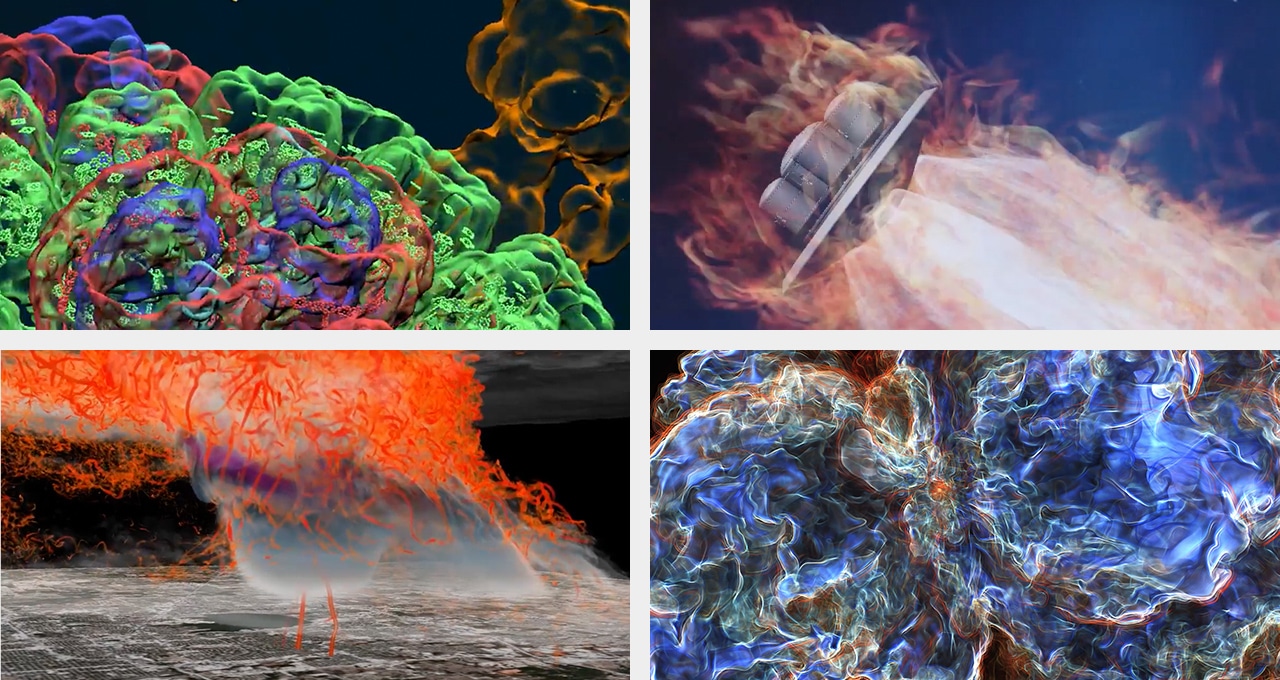
For climate forecasting, NVIDIA announced at SC24 two new NVIDIA NIM microservices for NVIDIA Earth-2, a digital twin platform for simulating and visualizing weather and climate conditions. The CorrDiff NIM and FourCastNet NIM microservices can accelerate climate change modeling and simulation results by up to 500x.

Supercomputing Community Embraces NVIDIA

The 11 HPCwire Readers’ Choice and Editors’ Choice awards NVIDIA received represent the work of the entire scientific community of engineers, developers, researchers, partners, customers, and more.

The awards include:

* Readers’ Choice: Best AI Product or Technology – NVIDIA GH200 Grace Hopper Superchip
* Readers’ Choice: Best HPC Interconnect Product or Technology – NVIDIA Quantum-X800
* Readers’ Choice: Best HPC Server Product or Technology – NVIDIA Grace CPU Superchip
* Readers’ Choice: Top 5 New Products or Technologies to Watch – NVIDIA Quantum-X800
* Readers’ Choice: Top 5 New Products or Technologies to Watch – NVIDIA Spectrum-X
* Readers’ and Editors’ Choice: Top 5 New Products or Technologies to Watch – NVIDIA Blackwell GPU
* Editors’ Choice: Top 5 New Products or Technologies to Watch – NVIDIA CUDA-Q
* Readers’ Choice: Top 5 Vendors to Watch – NVIDIA
* Readers’ Choice: Best HPC Response to Societal Plight – NVIDIA Earth-2
* Editors’ Choice: Best Use of HPC in Energy (one of two named contributors) – Real-time simulation of CO2 plume migration in carbon capture and storage
* Readers’ Choice Award: Best HPC Collaboration (one of 11 named contributors) – National Artificial Intelligence Research Resource Pilot

Conclusion

NVIDIA has made significant advancements in AI and accelerated computing, and the recent TOP500 list highlights the company’s achievements in the field. With the widespread use of AI and mixed-precision floating-point operations, researchers are able to accelerate scientific discoveries and drive innovation. NVIDIA’s commitment to sustainability and energy efficiency is also evident, with systems powered by NVIDIA technologies ranking among the top 10 in the Green500 list.

FAQs

Q: What is NVIDIA CUDA-X?
A: NVIDIA CUDA-X is a library that enables developers to seamlessly scale to powerful computing clusters without modifying their Python code.

Q: What is NVIDIA CUDA-Q?
A: NVIDIA CUDA-Q is a development platform that empowers quantum researchers to simulate quantum devices at a scale previously thought computationally impossible.

Q: What is NVIDIA BioNeMo?
A: NVIDIA BioNeMo is a powerful tool designed specifically for pharmaceutical applications, enabling researchers to accelerate AI model creation, customization, and deployment for drug discovery and molecular design.

Q: What is NVIDIA Earth-2?
A: NVIDIA Earth-2 is a digital twin platform for simulating and visualizing weather and climate conditions, enabling researchers to accelerate climate change modeling and simulation results by up to 500x.


Preparing for Tomorrow’s AI Regulations

0

AI is rapidly becoming ubiquitous across business systems and IT ecosystems, with adoption and development racing faster than anyone could have expected. Today it seems that everywhere we turn, software engineers are building custom models and integrating AI into their products, as business leaders incorporate AI-powered solutions in their working environments.

Map out AI usage in your wider ecosystem

You can’t manage your team’s AI use unless you know about it, but that alone can be a significant challenge. Shadow IT is already the scourge of cybersecurity teams: Employees sign up for SaaS tools without the knowledge of IT departments, leaving an unknown number of solutions and platforms with access to business data and/or systems.

Now security teams also have to grapple with shadow AI. Many apps, chatbots, and other tools incorporate AI, machine learning (ML), or natural language programming (NLP), without such solutions necessarily being obvious AI solutions. When employees log into these solutions without official approval, they bring AI into your systems without your knowledge.

As Opice Blum’s data privacy expert Henrique Fabretti Moraes explained, “Mapping the tools in use – or those intended for use – is crucial for understanding and fine-tuning acceptable use policies and potential mitigation measures to decrease the risks involved in their utilisation.”

Verify data governance

Data privacy and security are core concerns for all AI regulations, both those already in place and those on the brink of approval.

Your AI use already needs to comply with existing privacy laws like GDPR and CCPR, which require you to know what data your AI can access and what it does with the data, and for you to demonstrate guardrails to protect the data AI uses.

To ensure compliance, you need to put robust data governance rules into place in your organisation, managed by a defined team, and backed up by regular audits. Your policies should include due diligence to evaluate data security and sources of all your tools, including those that use AI, to identify areas of potential bias and privacy risk.

Establish continuous monitoring for your AI systems

Effective monitoring is crucial for managing any area of your business. When it comes to AI, as with other areas of cybersecurity, you need continuous monitoring to ensure that you know what your AI tools are doing, how they are behaving, and what data they are accessing. You also need to audit them regularly to keep on top of AI use in your organisation.

Use risk assessments as your guidelines

It’s vital to know which of your AI tools are high risk, medium risk, and low risk – for compliance with external regulations, for internal business risk management, and for improving software development workflows. High risk use cases will need more safeguards and evaluation before deployment.

Proactively set AI ethics governance

You don’t need to wait for AI regulations to set up ethical AI policies. Allocate responsibility for ethical AI considerations, put together teams, and draw up policies for ethical AI use that include cybersecurity, model validation, transparency, data privacy, and incident reporting.

Don’t let fear of AI regulation hold you back

AI regulations are still evolving and emerging, creating uncertainty for businesses and developers. But don’t let the fluid situation stop you from benefiting from AI. By proactively implementing policies, workflows, and tools that align with the principles of data privacy, transparency, and ethical use, you can prepare for AI regulations and take advantage of AI-powered possibilities.

Conclusion:

AI regulations may be uncertain, but proactively implementing policies, workflows, and tools that align with the principles of data privacy, transparency, and ethical use can help prepare for future regulations. Don’t let fear of regulation hold you back – start mapping your AI usage, verifying data governance, and establishing continuous monitoring to get ahead of the curve.

FAQs:

Q: Why is mapping AI usage in my ecosystem important?
A: Mapping AI usage in your ecosystem is crucial to understanding and managing AI use in your organisation.

Q: What are the key concerns for AI regulations?
A: Data privacy and security are core concerns for all AI regulations.

Q: How can I ensure compliance with AI regulations?
A: To ensure compliance, you need to put robust data governance rules into place, managed by a defined team, and backed up by regular audits.

Q: What is shadow AI and why is it a problem?
A: Shadow AI refers to AI solutions and tools that are used without official approval, creating potential risks for data security and privacy.

Q: Can I use AI to monitor and regulate other AI systems?
A: Yes, techniques like machine learning models that predict other models’ behaviors (meta-models) are employed to monitor AI.

Q: Why is continuous monitoring important for AI systems?
A: Continuous monitoring is crucial to ensure that you know what your AI tools are doing, how they are behaving, and what data they are accessing.

MacBook Black Friday Deals Flooding

0

Refresh

Black Friday Laptops Deals

UK readers might also want to consider other options, though. While we’re big fans of Apple’s laptops, Amazon UK has some great early Black Friday laptop deals on some very capable Windows alternatives, including a couple that can easily outpower Macs, like the mighty MSI Stealth 16 AI laptop with no less than the best GPU in history, the Nvidia RTX 4090. It’s still massively expensive, but there’s now over £1,700 off, which makes it cheaper than the highest-spec configurations of the new MacBook Pros.

Check out our roundup of the best deals.

Early Black Friday MacBook Deals

It’s not unheard of for Amazon US to drop deals on new MacBooks soon after launch, but in ten years of tracking prices I’ve rarely seen a significant saving in the UK in the first month. But for once, UK readers don’t need to miss out! Right now Amazon UK has £149 off the new M4 MacBook Pro 14 and £219.03 of the new M4-Pro chipped MacBook Pro 16.

How to Choose a MacBook

Surely the most surprising early Black Friday MacBook deals are Amazon’s discounts on the brand-new M4 MacBook Pros, and they just got better! Amazon already had $200 off the entry-level M4 MacBook Pro 14 – reduced from $1,599 to $1,399. Now it also has $250 off the M4 Pro MacBook Pro 16. That includes the extra $49.01 off if you click the box to apply the coupon before checkout.

Track Price History

It’s hard to know if a deal is really worth buying, because the prices are fluctuating all the time. We use a clever price comparison tool to check price history, called The Camelizer. It tracks prices on Amazon so you can see if a product has been lower before. If it has fallen lower, it’s likely it will become lower again over Black Friday and then it’s worth waiting to buy.

It only works on Amazon unfortunately, but to be honest that is where we tend to see the lowest prices.

Conclusion

We hope you found our Black Friday MacBook deals update informative and helpful. Our expert advice will guide you in choosing the right MacBook that suits your needs, budget, and preferences.


Frequently Asked Questions

Q: How can I track price history?
A: We recommend using a price comparison tool called The Camelizer to check price history on Amazon.

Q: Are Black Friday laptop deals available only on Apple laptops?
A: No, Amazon UK also offers deals on Windows laptops from various brands, such as MSI.

Q: Will there be more MacBook deals in the future?
A: Yes, it’s possible that more MacBook deals may become available in the future. Stay tuned to our updates for more information.

Artificial Intelligence Fuels Robotics Revolution

The Future of Robotics: A Glimpse into the World of AI-Powered Machines

Introduction

The world of robotics has undergone significant transformations in recent years, with advancements in artificial intelligence (AI) and machine learning enabling the creation of sophisticated machines that can perform complex tasks with unprecedented precision. In this article, we will explore the latest developments in the field of robotics, featuring images and video provided by top institutions and organizations.

Advances in Robot Design and Functionality

Robot design has evolved significantly, with modern robots featuring advanced sensors, actuation systems, and AI-powered control systems. These advancements have enabled robots to perform tasks that were previously the realm of humans, such as assembly, welding, and precision placement.

Robot Vision: The Key to Advanced Performance

One of the most significant breakthroughs in robotics is the development of advanced vision systems. These systems enable robots to interpret and understand their surroundings, allowing them to adapt to new situations and make decisions without human intervention. This technology has far-reaching implications for industries such as manufacturing, healthcare, and logistics.

Humanoid Robotics: The Future of Service and Assistance

Humanoid robots are designed to mimic human appearance and movements, allowing them to interact with humans in a more natural and intuitive way. These robots are being developed for service and assistance applications, such as customer service, healthcare, and education.

Autonomous Systems: Taking Control of the Future

Autonomous systems are designed to operate independently, making decisions and taking actions without human intervention. These systems are being developed for applications such as self-driving cars, drones, and warehouse management.

Robotics in Industry and Healthcare

Robots are being increasingly used in industry and healthcare to improve efficiency, reduce costs, and enhance patient care. From assembly lines to surgical procedures, robots are revolutionizing the way we work and live.

Conclusion

The future of robotics is exciting and rapidly evolving, with advancements in AI, machine learning, and computer vision enabling the creation of sophisticated machines that can perform complex tasks with precision and accuracy. As we continue to push the boundaries of what is possible, we can expect to see even more innovative applications of robotics in various fields.

FAQs

Q: What are the benefits of using robots in industry?
A: Robots can improve efficiency, reduce costs, and enhance product quality.

Q: How do robots learn and adapt?
A: Robots learn and adapt through machine learning and AI-powered algorithms.

Q: What are the potential applications of humanoid robots?
A: Humanoid robots can be used for service and assistance applications, such as customer service, healthcare, and education.

Q: How do autonomous systems work?
A: Autonomous systems use sensors, GPS, and AI-powered algorithms to make decisions and take actions without human intervention.

Q: What are the potential risks and challenges of developing and using robots?
A: Potential risks and challenges include job displacement, data security, and social acceptability.

Xbox Black Friday Deal: Series X Savings

0

Black Friday Xbox Deals: Microsoft Kicks Off Early with Up to 55% Off Select Games and Consoles

Black Friday Sales Start Early

Black Friday is almost here, but many retailers don’t seem to care that there’s still over a week until the official date, and have already kickstarted major Black Friday sales. The latest retailer to launch Black Friday gaming deals is Microsoft, with its Black Friday Xbox promotion.

Xbox Series X and Series S Deals

The best Xbox Black Friday deal so far (at least we think so) is $50 off the Xbox Series X model, now only $449.99 down from $499.99 directly from Microsoft as well as other retailers like Amazon, Target, and GameStop.

Xbox Series S Deal

According to Microsoft, the Xbox Series S will also be getting the same $50 price cut starting tomorrow (Nov 21) up until December 2 – so keep an eye out for deals popping up on some of the best games consoles as we near Black Friday.

The Best Xbox Black Friday Deal Today

Below you’ll find the best deals and lowest prices on the Xbox Series X in your region and worldwide, using our clever deals widget updating 24/7.

Conclusion

Microsoft’s early Black Friday sales offer some fantastic deals on Xbox games and consoles. If you’re in the market for a new Xbox, now is a great time to make a purchase. With prices dropping on the Xbox Series X and Series S, you can get a great gaming experience without breaking the bank.

Frequently Asked Questions

Q: When does the Xbox Series S price cut start?
A: The Xbox Series S price cut starts tomorrow (Nov 21) and will last until December 2.

Q: Where can I find the best Xbox Black Friday deals?
A: You can find the best Xbox Black Friday deals on Microsoft’s official website, as well as other retailers like Amazon, Target, and GameStop.

Q: Are there any other Xbox Black Friday deals available?
A: Yes, Microsoft is offering up to 55% off select Xbox games, as well as free engravings on Design Lab controllers.

Unlocking Tutor Excellence

Leveraging Artificial Intelligence to Enhance Tutoring and Student Learning

Key Points

  • Artificial intelligence (AI) is being used to develop a tool that provides tutors with a summary of their session, tips for improvement, and training recommendations.
  • The tool is designed to analyze the interactions between tutors and students, identifying what works well and what can be improved.
  • AI can help scale high-impact tutoring programs, making it possible to reach more students and accelerate educational equity.

What AI’s Telling Us about Tutoring’s Successful Components

American students in grades six through nine often become disengaged in math and feel like it’s "not for them." Tutoring has been shown to be effective in combating and reversing this disengagement, but the exact reasons why it works for some students and not others have been unclear.

Research to Practice

Tutors, coaches, and districts are now opting to record and transcribe tutoring sessions, and AI-powered analysis is being used to assess the transcripts. This analysis can support human analysis and create leading indicators that predict the effectiveness of tutoring program implementations.

The Innovative Potential

The potential of AI in education is unlocking a deeper understanding of what makes certain types of human-led instruction effective, and helping to deliver this most human-centric of interventions at scale.

Conclusion

The use of AI in tutoring has the potential to revolutionize the way we approach education. By leveraging AI to analyze the interactions between tutors and students, we can identify what works well and what can be improved, and provide personalized support to students. This can help to accelerate educational equity and ensure that all students have access to the resources they need to succeed.

Frequently Asked Questions

Q: What is the goal of using AI in tutoring?
A: The goal is to provide tutors with a tool that helps them understand what works well and what can be improved, and to use this information to provide personalized support to students.

Q: How does AI-powered analysis work?
A: AI-powered analysis uses machine learning algorithms to analyze the transcripts of tutoring sessions, identifying patterns and trends that can inform tutor training and student support.

Q: What are the benefits of using AI in tutoring?
A: The benefits include improved tutor training, increased student engagement, and more effective support for students who are struggling.

Q: How can AI help to scale high-impact tutoring programs?
A: AI can help to scale high-impact tutoring programs by providing a tool that can be used to analyze and improve tutoring sessions at scale, and by helping to identify the most effective tutoring practices and strategies.

Q: What are the limitations of AI-powered analysis?
A: The limitations of AI-powered analysis include the need for high-quality data, the potential for bias in the algorithms used, and the need for human oversight and review of the analysis.

Star Trek: The Farewell We Always Wanted

0

A Reunion That Feels Right

For decades, the friendship between Captain Kirk and Mr. Spock symbolized Star Trek’s core message of unity and hope. But for fans like me, their story felt unfinished — until now.

A Lifelong Fan’s Wish

As a lifelong Star Trek fan, I have always cherished the bond between Kirk and Spock. Their friendship was the heartbeat of the original series, embodying humanity’s best ideals by transcending logic and emotion. This is why Star Trek: Generations  (incidentally, the movie my future wife and I saw on our first date) left me with bittersweet closure 30 years ago. While Kirk’s death was undeniably heroic, sharing his final moments with Captain Picard felt incomplete because Spock wasn’t there. I have always wished for a different ending where Kirk and Spock could share a final farewell.

The Roddenberry Archive’s Gift

When Leonard Nimoy passed away in 2015, that dream seemed impossible. But thanks to the Roddenberry Archive, that longing has been addressed. Their new short film, 765874 — Unification, brings together William Shatner’s Kirk and Leonard Nimoy’s Spock in a deeply emotional farewell that left me in tears. Directed by Carlos Baena and enhanced by advanced AI and deepfake technology from the cloud graphics firm OTOY, the film bridges a decades-old gap in the Star Trek universe and provides the moment of closure that fans like me have been craving for years.

The Film

Watching Kirk and Spock share the screen again feels like reconnecting with an old friend. The film imagines Kirk leaving the Nexus, where he existed outside of time after Generations, to visit Spock in his final moments. This profoundly emotional encounter blends nostalgia with raw poignancy. For fans who grew up with these characters, it feels like both a farewell and a celebration of their bond.

Technology Meets Emotion

The performance is a testament to the care and artistry behind the production. Actor Lawrence Selleck portrays Spock’s physical presence, while advanced CGI and deepfake technology restore Nimoy’s unmistakable features. The result is a seamless blend of old and new, preserving Spock’s essence in a way that feels authentic. Every expression and nuance — from his calm demeanor to the famous eyebrow raise — reflects the Spock we know and love.

The Legacy of Resurrections

Hollywood has often used AI and CGI to resurrect iconic characters, from Star Wars recreating Leia and Tarkin to Star Trek: Picard reviving Commander Data. What distinguishes Unification is its focus on relationships. The film doesn’t simply revive Spock and Kirk; it honors their bond, which has always been central to Star Trek’s enduring appeal.

Ethical Frontier

As much as Unification moved me, it also raised questions about the ethical implications of AI in entertainment. Leonard Nimoy’s family ensured his portrayal was handled respectfully, but future projects may not always follow this standard. Will studios recreate actors without consent or prioritize profits over legacy?

Conclusion

Ultimately, 765874 – Unification isn’t just a film; it’s a gift to Star Trek fans. It’s a chance to see Kirk and Spock together again, saying the goodbye they were never allowed to share. It reminds us why we fell in love with these characters — and why their friendship continues to inspire us.

FAQs

Q: What technology was used to create the film?
A: The film used advanced AI and deepfake technology to recreate Leonard Nimoy’s face and voice.

Q: Was Leonard Nimoy’s family involved in the production?
A: Yes, Nimoy’s family ensured that his portrayal was handled respectfully and that the film was a fitting tribute to his legacy.

Q: Will this technology be used in future productions?
A: Yes, this technology has the potential to be used in future productions to recreate iconic characters and provide closure for fans.

Q: Are there any concerns about the ethical implications of using AI in entertainment?
A: Yes, there are concerns about the potential misuse of AI in entertainment, such as recreating actors without consent or prioritizing profits over legacy.

Tottenham Hotspur’s Retro Revival

0

Tottenham Hotspur Unveils Revitalised Brand Identity

A New Era for the Club

English football club Tottenham Hotspur has unveiled a sleek new brand identity steeped in its rich sporting history. Bolder than ever, the revitalised identity marks a new era for the club in a sleek evolution, celebrating its multigenerational fans and innovative future.

The Spurs Logo: A Timeless Classic

The Spurs logo stands as one of the best sports logos out there, instantly recognisable for its authoritative cockerel design. With refined design tweaks to the classic logo and the reintroduction of Spurs’ iconic 1950s monogram, the new branding is a strong remastered identity with heritage at its heart.

A Robust Design Process

The new brand identity was informed by 300 players, staff, and fans over an intensive 9-month process. "Designing any sports club brand is a tricky journey – as there are so many stakeholders involved and so many people that feel so incredibly passionate about it," says Terry Stephens, co-founder of Studio Nomad. "We made sure the journey was robust and included a huge cross section of players, employees, and fans to gather insight and steer," he adds.

The New Brand Logo

At the core of the remastered visual identity is the new brand logo created to support the existing club badge that will remain pride of place on players’ shirts. "The brand logo is a more robust version, able to scale smaller and be more legible across digital touchpoints," Terry says. "We worked with icon specialist, Chris Mitchell, to draw the new version – the same illustrator that created the original 18 years ago," he continues.

Reviving the 1950s Monogram

In keeping with the heritage themes of the new identity, Nomad revived Spurs’ fan-favourite 1950s THFC monogram. "As a kid, I absolutely loved the version used throughout the 80s, so it was a labour of love to redraw it and a great feeling to be able to reintroduce it to the fans. COYS!" Terry says. Working with Miles Newlyn, the reimagined monogram is designed to work as a secondary piece of IP. "It reduces the strain on the core logos and offers a wealth of opportunity in merchandise – a vital revenue stream for the Club," Terry adds.

A Dynamic Type Family

Working with F37 Foundry, Nomad transformed Spurs’ iconic single-weight capital letter display font into a variable family of fonts with a dynamic appeal. "The new type is based on the custom face created in 2007 by Dalton Maag. Edgier and more dynamic, it’s been specifically redrawn to home (and away) harder," Terry explains.

Conclusion

The new brand identity for Tottenham Hotspur is a testament to the club’s commitment to its rich history and its fans. With a bold and sleek design, the club is poised to take on the future with confidence and style.

FAQs

Q: What was the design process like for the new brand identity?
A: The design process was an intensive 9-month journey that involved 300 players, staff, and fans.

Q: What is the significance of the 1950s monogram?
A: The 1950s monogram is a fan-favourite design that has been revived as a secondary piece of IP to reduce the strain on the core logos and offer a wealth of opportunity in merchandise.

Q: What is the new type family based on?
A: The new type family is based on the custom face created in 2007 by Dalton Maag, with a more dynamic and edgy design.

Processing Vietnamese Language Data with NVIDIA NeMo

0

Open-source large language models (LLMs) excel in English but struggle with other languages, especially the languages of Southeast Asia. This is primarily due to a lack of training data in these languages, limited understanding of local cultures, and insufficient tokens to capture unique linguistic structures and expressions.

To fully meet customer needs, enterprises in non-English-speaking countries must go beyond generic models and customize them to capture the nuances of their local languages, ensuring a seamless and impactful customer experience.

In this blog post, we explore how Viettel Solutions, a fast-growing subsidiary of Viettel Corporation, has leveraged NVIDIA NeMo Curator to process high-quality Vietnamese data for training Llama 3 ViettelSolution 8B, a state-of-the-art LLM that now ranks among the top of the VMLU leaderboard. NeMo Curator is a GPU-accelerated data-curation tool that enables large-scale, high-quality datasets for pretraining LLMs.

Prerequisites and Environment Setup

To follow along with the steps presented in this post, make sure you have the following set up:

  • Installation
    • Install NeMo Curator by following the instructions to install the CPU and CUDA-accelerated modules in the README file of the NeMo Curator repository.
    • Install the datasets and jsonlines packages, which will be needed later.
  • pip install datasets
  • pip install jsonlines
  • To proceed with data processing requires setting up a Dask environment. Dask is a flexible, open-source library that enables parallel and distributed computing in Python, which enables you to scale computations across multiple cores or even clusters. By distributing tasks, Dask makes the data handling process significantly faster and more efficient.
  • We ran this experiment on an NVIDIA DGX A100 with a 128-core CPU and 2TB of RAM to handle the dataset size. Depending on your dataset and computing resources, you may need to adjust the Dask worker configuration accordingly. You can start a Dask cluster using the following commands:
    import nemo_curator
    from dask.distributed import Client, LocalCluster
    # Start a Dask cluster with 12 workers, each limited at 64GB of memory.  You might need to adjust these numbers according to your computing resources
    cluster = LocalCluster(n_workers=12, processes=True, memory_limit= '64GB')
    client = Client(cluster)

Data Processing Pipeline Overview

The data curation pipeline includes the following key steps:

  • Download and Sharding: The datasets are downloaded from various sources, then combined and sharded for efficient distributed processing.
  • Unicode Reformatting: Texts are standardized into a consistent Unicode format.
  • Exact Deduplication: Removes exact duplicates to reduce redundancy.
  • Quality Filtering
    • Heuristic Filtering: Applies rules-based filters to remove low-quality content.
    • Classifier-based Filtering: Uses machine learning to classify and filter documents based on quality.

Data Collecting

We sourced content from multiple datasets to enrich the diversity and volume of our training data for LLMs. These datasets include:

  • The Vietnamese subset of the C4 dataset, a large and diverse collection of web-crawled text data.
  • The Vietnamese subset of the OSCAR dataset, version 23.01, an aggregation of web-crawled data.
  • Wikipedia’s Vietnamese articles, providing well-structured and informative content.
  • A Vietnamese news corpus, offering locally relevant news articles.

Conclusion

This blog post showcases the data curation pipeline Viettel Solutions used for Vietnamese text data, along with an analysis to explore how each stage of the curation process impacts the dataset. The pipeline uses NVIDIA NeMo Curator, a valuable tool for preparing large datasets for pretraining language models, focusing on quality, efficiency, and scalability. It offers a range of significant advantages in the data curation process, including:

  • Improving dataset quality by removing noise and harmful content using heuristic and classifier-based filters.
  • Preserving the essential structure of the dataset, ensuring that the core characteristics remain intact post-curation.
  • Adapting to different datasets, providing a tailored approach that meets the specific needs of each corpus.

FAQs

Q: What is the main challenge in training large language models for non-English languages?
A: The main challenge is the lack of training data, limited understanding of local cultures, and insufficient tokens to capture unique linguistic structures and expressions.

Q: Why is data curation important for language models?
A: Data curation is important because it enables the creation of high-quality datasets that can be used to train accurate and effective language models.

Q: What is NVIDIA NeMo Curator, and how does it help with data curation?
A: NVIDIA NeMo Curator is a GPU-accelerated data-curation tool that enables large-scale, high-quality datasets for pretraining LLMs. It helps with data curation by providing a range of features, including exact and fuzzy deduplication, heuristic and classifier-based filtering, and more.

Q: How does Viettel Solutions use NVIDIA NeMo Curator for Vietnamese text data?
A: Viettel Solutions uses NVIDIA NeMo Curator to process high-quality Vietnamese data for training Llama 3 ViettelSolution 8B, a state-of-the-art LLM that now ranks among the top of the VMLU leaderboard.

EBay’s Interface Update is a Much Needed Glow-Up

0

eBay Unveils New Brand and Design System Evo

A Fresh and Dynamic UI Evolution

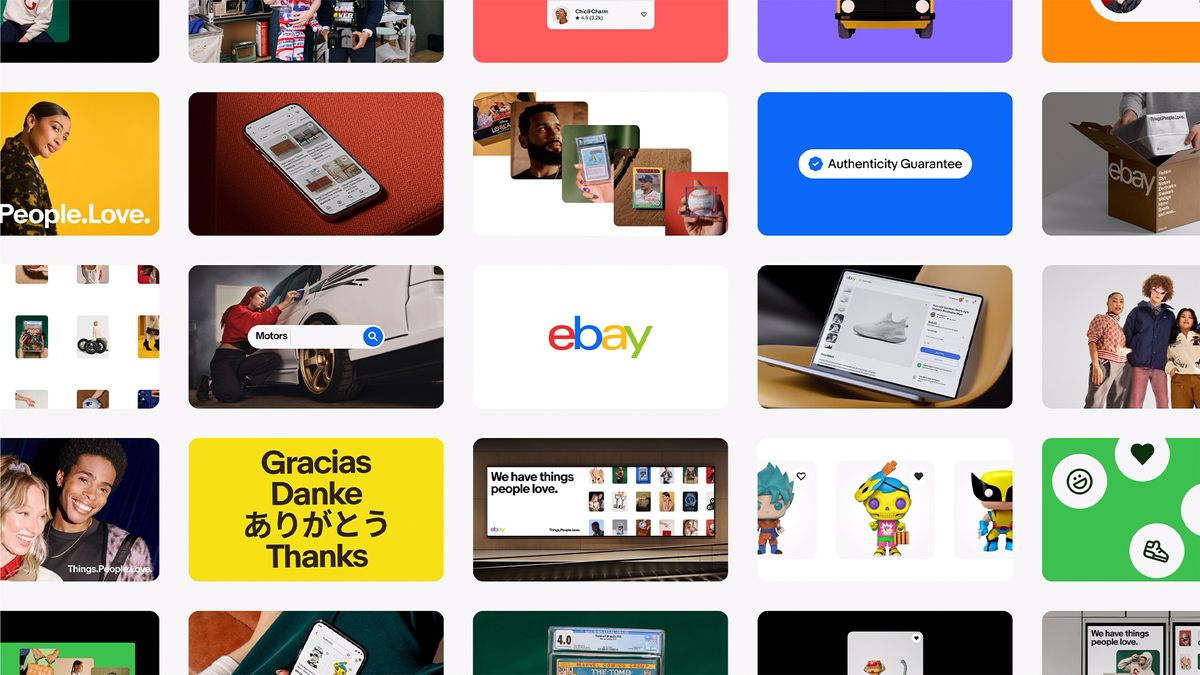
Online marketplace eBay has unveiled its new evolved brand and design system, Evo, a simple and stylized UI evolution that places the customer experience at its core. Giving eBay’s old website design a much-needed revamp, the fresh and dynamic appeal of Evo revitalizes the sales platform for a new generation of users.

Effective and Accessible Design

While there are no hard and fast rules to successful UI design, eBay demonstrates how effective accessible and user-friendly design can be both functionally and aesthetically. Modernizing eBay’s approach, Evo is a welcome innovation that brings the promise of a flexible and human-centered platform, putting ‘Things.People.Love.’ first.

The Design Process

Created by the in-house team, eBay Evo places evolution at its core, continuously adapting to keep "placing people and their passion" at the root of its experience. "Evo embodies the radical improvements we’ve made and the innovation to come—humanizing and simplifying in service of our community and their treasures," says eBay’s head of design, Aaron Carámbula.

Visual Identity

Evo’s visual identity is a welcome evolution of eBay’s identity, integrating immersive UI and an expanded color palette to usher in a new era of simplistic style. Card stack motion design reflects the platform’s sleek shopping experience while UI elements take inspiration from interactions like "searching, saving an item or highlighting a deal," putting the customer at the root of the experience.

Accessibility and Inclusive Design

At the center of the brand evolution is the principle of accessibility, demonstrated by the brand’s integration of the Include Accessibility annotations Figma plug-in. eBay’s commitment to inclusive design runs through its new practice, ensuring that developments are created through an inclusive lens.

The eBay Playbook

As part of the brand evolution, a custom playbook has been created to aid internal teams and agency partners in bringing the new system to life. Acting as a central resource, the "eBay Playbook" is a beautiful, highly functional digital tool that inspires each of our diverse disciplines with tailored guidance," says Ryan Tinsley, eBay’s staff product designer.

Conclusion

eBay’s new brand and design system, Evo, is a significant step forward in the company’s commitment to customer experience and accessibility. By putting the customer at the center of its design, eBay has created a platform that is both functional and aesthetically pleasing.

FAQs

Q: What is eBay’s new design system called?
A: eBay’s new design system is called Evo.

Q: What is the main focus of eBay’s new design system?
A: The main focus of eBay’s new design system is the customer experience.

Q: What is the principle of accessibility in eBay’s new design system?
A: The principle of accessibility in eBay’s new design system is demonstrated by the brand’s integration of the Include Accessibility annotations Figma plug-in.

Q: What is the eBay Playbook?
A: The eBay Playbook is a custom playbook created to aid internal teams and agency partners in bringing the new system to life.