Home Blog Page 634

Suspect Arrested in Snowflake Data-Theft Attacks

0

Snowflake Customers Targeted by UNC5537 Attack Path

Massive Data Breaches: 165 Snowflake Customers Affected

Attack Path UNC5537 has been used in attacks against as many as 165 Snowflake customers, revealing a significant scale of data breaches. Mandiant, a cybersecurity firm, has identified the threat group behind the breaches as UNC5537, also known as ShinyHunters.

Lack of Multifactor Authentication Contributed to Breaches

None of the affected accounts used multifactor authentication (MFA), which requires users to provide a one-time password or additional means of authentication besides a password. This lack of security measure contributed to the breaches. After the revelations, Snowflake enforced mandatory MFA for accounts and required that passwords be at least 14 characters long.

UNC5537’s Campaign of Compromise

Mandiant stated that UNC5537 has proven to be one of the most consequential threat actors of 2024. The group launched a campaign in April, systematically compromising misconfigured SaaS instances across over a hundred organizations. The operation highlighted the alarming scale of harm an individual can cause using off-the-shelf tools.

Co-Conspirator Arrested

A co-conspirator, John Binns, was arrested in June, but the status of his case remains unknown.

Other Customers Impacted

Besides Ticketmaster, other customers known to have been breached include AT&T, Santander, Pure Storage, Advance Auto Parts, Los Angeles Unified School District, QuoteWizard/LendingTree, Neiman Marcus, Anheuser-Busch, Allstate, Mitsubishi, and State Farm.

Moucka Named in Multiple Charging Documents

KrebsOnSecurity reported that Moucka has been named in multiple charging documents filed by US federal prosecutors. However, specific charges and allegations are unknown because the cases remain sealed.

Conclusion

The Snowflake breaches highlight the importance of robust security measures, including the use of multifactor authentication, to protect sensitive customer data. As the frequency and impact of data breaches continue to grow, organizations must remain vigilant and proactive in defending against cyber threats.

FAQs

Q: How many Snowflake customers were affected by the UNC5537 attack path?
A: As many as 165 Snowflake customers were affected by the breach.

Q: What is the name of the threat group behind the breaches?
A: The threat group is identified as UNC5537, also known as ShinyHunters.

Q: What security measure did Snowflake enforce after the breaches?
A: Snowflake enforced mandatory multifactor authentication (MFA) for accounts and required that passwords be at least 14 characters long.

Q: Who was arrested in connection with the breaches?
A: John Binns, a co-conspirator of Moucka, was arrested in June.

Q: Are the specific charges and allegations against Moucka known?
A: No, the specific charges and allegations against Moucka are unknown because the cases remain sealed.

AI-Powered Team Collaboration

AI Assistant for Human-Robot Collaboration

On a research cruise around Hawaii in 2018, Yuening Zhang SM ’19, PhD ’24 saw how difficult it was to keep a tight ship. The careful coordination required to map underwater terrain could sometimes lead to a stressful environment for team members, who might have different understandings of which tasks must be completed in spontaneously changing conditions. During these trips, Zhang considered how a robotic companion could have helped her and her crewmates achieve their goals more efficiently.

Developing an AI Assistant

Six years later, as a research assistant in the MIT Computer Science and Artificial Intelligence Laboratory (CSAIL), Zhang developed what could be considered a missing piece: an AI assistant that communicates with team members to align roles and accomplish a common goal. In a paper presented at the International Conference on Robotics and Automation (ICRA) and published on IEEE Xplore on Aug. 8, she and her colleagues present a system that can oversee a team of both human and AI agents, intervening when needed to potentially increase teamwork effectiveness in domains like search-and-rescue missions, medical procedures, and strategy video games.

Theory of Mind Model

The CSAIL-led group has developed a theory of mind model for AI agents, which represents how humans think and understand each other’s possible plan of action when they cooperate in a task. By observing the actions of its fellow agents, this new team coordinator can infer their plans and their understanding of each other from a prior set of beliefs. When their plans are incompatible, the AI helper intervenes by aligning their beliefs about each other, instructing their actions, as well as asking questions when needed.

Applications

For example, when a team of rescue workers is out in the field to triage victims, they must make decisions based on their beliefs about each other’s roles and progress. This type of epistemic planning could be improved by CSAIL’s software, which can send messages about what each agent intends to do or has done to ensure task completion and avoid duplicate efforts. In this instance, the AI helper may intervene to communicate that an agent has already proceeded to a certain room, or that none of the agents are covering a certain area with potential victims.

Conclusion

The researchers’ method incorporates probabilistic reasoning with recursive mental modeling of the agents, allowing the AI assistant to make risk-bounded decisions. The AI assistant currently infers agents’ beliefs based on a given prior of possible beliefs, but the MIT group envisions applying machine learning techniques to generate new hypotheses on the fly. To apply this counterpart to real-life tasks, they also aim to consider richer plan representations in their work and reduce computation costs further.

FAQs

Q: What is the purpose of the AI assistant?
A: The AI assistant is designed to communicate with team members to align roles and accomplish a common goal, increasing teamwork effectiveness in domains like search-and-rescue missions, medical procedures, and strategy video games.

Q: How does the AI assistant work?
A: The AI assistant uses a theory of mind model to infer the plans and understanding of its fellow agents, intervening when needed to align their beliefs about each other and instruct their actions.

Q: What are the potential applications of the AI assistant?
A: The AI assistant could be used in search-and-rescue missions, medical procedures, and strategy video games, among other domains where teamwork is essential.

Q: How does the AI assistant make decisions?
A: The AI assistant uses probabilistic reasoning with recursive mental modeling of the agents, allowing it to make risk-bounded decisions.

Spotify’s AI is No Match for a Real DJ

0

The AI DJ: A Glimpse into the Future of Music Curation

A Hazard of the Job

At the risk of stating the obvious, AI is absolutely everywhere lately. There’s AI in your car, AI in your messaging app, AI in your glasses. I’ve gotten pretty desensitized to it all as a hazard of the job, but it was Spotify’s AI DJ that actually got my attention.

A Familiar Concept

I’ve listened to a top 40 radio station in the past two decades, so I’m familiar with the concept of a robot picking music for me. In that context, an AI DJ doesn’t seem like much of a stretch. But after using it on and off for a week, I’m convinced it’s the perfect analogy for our AI-everything moment.

The Real Thing

See, here in Seattle, we’re extremely spoiled. In between the robot-programmed, conglomerate-owned stations, we have a real honest-to-god independent station on our radio dials: 90.3, to be precise. I started listening to KEXP through their online stream years before I moved to Seattle. Being a local has only made me more of a fan; I celebrated the opening of the “new” KEXP location in 2016 and saw one of my favorite bands play a free in-studio show there not long before they broke up.

The Friday Song

It’s not that I like everything that I hear on KEXP. “The Friday song” is banned in my house because my husband and I are both so sick of it. And as much as I’ve tried, I can’t get into Wet Leg. It’s a me problem. But that’s kind of the point of a radio station, isn’t it? You hear some stuff you like and some stuff you’re not as into. Maybe you hear a song you forgot about but love or a band you dig that you’ve never heard before. It’s a well-rounded meal, while an AI-curated set feels like a dessert buffet. It’s all the stuff you love, and it’s great at first, but then it gives you a stomach ache after a while.

The Connection

It hits different than when it comes from an algorithm. When a real human plays a song you really like because they really like it, too, it hits different than when it comes from an algorithm.

A Way of Connection

Being on air and sharing music is “a way of connection with thousands of people across the world,” says Evie Stokes, DJ and host of KEXP’s Drive Time. “It’s a great way for me to be honest and have accountability and community that I think we so desperately need.”

A Podcast is Just Humans Talking to Each Other

Does anyone actually want an AI DJ calling them by name? Does anybody want an AI-generated DM from their favorite creator? Does anyone want to have a Zoom meeting with your AI avatar? Maybe, but I think the tech executives pushing for more of this stuff are vastly overestimating this demand and underestimating the value that a real human brings to an exchange. People want to listen to podcasts, for Christ’s sake. A podcast is just humans talking to each other. Conceptually, listening to a podcast is about as advanced as gathering round the radio for your favorite program like people did a hundred years ago. Some things are constants.

Conclusion

The AI DJ is a kind of totem of the particular AI moment we’re in. Generative AI is buzzy, and tech companies are busy shoving it into every corner of every product they make, whether it has any business being there or not. There’s plenty of stuff AI can do and probably will do for us in the near future. But standing in for a real human, especially in creative applications, isn’t one of them.

FAQs

Q: What is the Spotify AI DJ?
A: The Spotify AI DJ is a feature that uses AI to curate music playlists for users.

Q: Is the AI DJ better than human DJs?
A: No, the AI DJ is not better than human DJs. Human DJs bring a personal touch and connection to their listeners that AI cannot replicate.

Q: Can AI replace human DJs?
A: No, AI cannot replace human DJs. Human DJs are essential to the music industry and provide a unique experience for listeners.

Q: What is the value of human DJs?
A: The value of human DJs lies in their ability to connect with listeners, provide a personal touch, and bring a unique perspective to their music curation.

AI Support for Student Mental Health

Untreated Mental Health Issues Hurt Student Outcomes and Educator Morale

Schools continue to face a mounting mental health crisis. Today’s students are experiencing increased anxiety, depression, and related mental health challenges that impact learning and overall educational outcomes.

To understand the gravity of this situation, consider Maslow’s Hierarchy of Needs. Maslow’s theory suggests that basic needs must be met before individuals can focus on higher-level growth and learning. Mental health challenges can severely disrupt this hierarchy, negatively impacting cognitive function and social development, ultimately increasing absenteeism and lowering graduation rates.

When student mental health issues go untreated, the effects are felt by teachers. They often manifest as behavioral problems, which complicate classroom dynamics and impede instruction.

With student mental health resources in short supply, many teachers also find themselves on the front lines of student mental health support. Lacking the expertise and capacity needed to fill this role, educators’ morale deteriorates as they struggle to prioritize their own mental health and manage burnout.

How AI Helps Schools Support Student Mental Health

Technology has undoubtedly introduced new challenges for children. Like many aspects of modern life, though, technology’s impact depends largely on its application. It can be either a source of difficulties or a valuable resource. Here’s how AI can be a resource for schools to more effectively support student mental health.

Early Detection

Students’ online searches and activities can contain early indicators of issues like bullying, depression, violence, self-harm, and suicide. AI-powered student wellness monitoring software like Securly Aware analyzes students’ online interactions for these signs of distress—including self-harm, suicide, bullying/cyberbullying, and violence. When risk signals are detected, school personnel are alerted so they can investigate quickly and intervene if warranted.

By relying on AI to detect early signs that a student is struggling, they’re able to proactively investigate before the situation escalates. The insight student wellness monitoring provides can be particularly vital for hard-to-reach students and those who are suffering in silence. To learn more about AI-powered student wellness monitoring, read this blog.

Triage and Resource Allocation

School counselors, psychologists, and social workers are often responsible for hundreds of students each. Lacking enough time in the day to check in with every student, they can unknowingly miss critical opportunities for support.

Acting like an extra set of eyes and ears, Securly Aware analyzes students’ online activities and behaviors using a sophisticated and highly trained AI analysis engine. Each student is assigned a Wellness Level based on their interactions, ranging from all clear to critical. Student support staff can easily see how many students are at each level. They can also drill down to see the students in each level and access additional insights to understand the risks involved.

With Wellness Levels, student services teams know what students demonstrate the most serious risks, so they can focus their attention where it’s needed most. They’re also able to gain early insight into students who are trending negatively, so they can take proactive measures to investigate before issues escalate. To learn more about wellness levels, read the blog.

Multi-Tiered Supports

Multi-Tiered System of Supports (MTSS) and Positive Behavioral Interventions and Supports (PBIS) are evidence-based frameworks that schools can use to support students’ mental health and wellbeing. MTSS focuses more on academic and social-emotional supports, while PBIS provides strategies for creating a positive school climate and managing student behavior.

To use these tools to their full advantage, though, school districts need access to current and actionable data to identify student needs, monitor student progress, and dynamically adapt interventions and supports. This reliance on data has traditionally been an obstacle. But AI helps schools overcome this so they can realize the potential of these frameworks to more efficiently and effectively support diverse student needs.

Securly Discern is a revolutionary AI that automates the collection and analysis of data needed for MTSS and PBIS, as well as CASEL, school climate assessment, and more. Data analysis that used to take months is complete in mere minutes. With always-on access to real-time data, school teams can easily identify intervention needs and be highly responsive to the unique circumstances and backgrounds of each student. To learn more about using AI to automate data collection and analysis, read the blog.

Conclusion

AI is a powerful tool that can augment resource-constrained student support teams, giving them critical insights to support their students. By leveraging AI to help identify and triage student needs, as well as implement multi-tiered supports, K-12 administrators can feel confident they’re prioritizing their students’ mental health, even if their human resources are limited.

Frequently Asked Questions

Q: How does AI support student mental health?
A: AI-powered student wellness monitoring software like Securly Aware analyzes students’ online interactions for signs of distress, including self-harm, suicide, bullying/cyberbullying, and violence. This early detection enables proactive investigation and intervention.

Q: What are the benefits of AI-powered student wellness monitoring?
A: AI-powered student wellness monitoring provides real-time insights into students’ online activities and behaviors, enabling early detection of issues and proactive intervention. It also helps school personnel allocate resources more effectively and efficiently.

Q: How can AI support multi-tiered supports in schools?
A: AI can automate the collection and analysis of data needed for MTSS and PBIS, as well as CASEL, school climate assessment, and more. This enables school teams to identify intervention needs and be highly responsive to the unique circumstances and backgrounds of each student.

Engineering and matters of the heart | MIT News

0

Before she had even earned her bachelor’s degree, MIT professor and biomedical engineer Ellen Roche was gaining research experience in the medical device industry. In her third year at the National University of Ireland at Galway, Roche participated in a biomedical engineering program in which students worked at companies developing new devices for patient care.

“I worked on cardiovascular implants during my placement and loved it,” says Roche, an associate professor at MIT’s Institute for Medical Engineering and Science (IMES) and Department of Mechanical Engineering. “For me, early experience in the medical device industry was very influential because it showed me the elaborate process of what happens from the time a technology is designed at the bench, as it is developed into a meticulously tested and reliable device that will actually be implanted in a human.”

In graduate school, a similar program led Roche first to Mednova Ltd. in Galway and then to its sister company, Abbott Vascular in California, initially for a six-month stay. Roche enjoyed the work so much that she ended up staying three and a half years. While at Mednova and Abbott, she worked on a carotid artery filter designed to prevent stroke during the procedure when a stent is implanted. She also investigated coating parts of the stents with drugs that prevent arteries from becoming occluded.

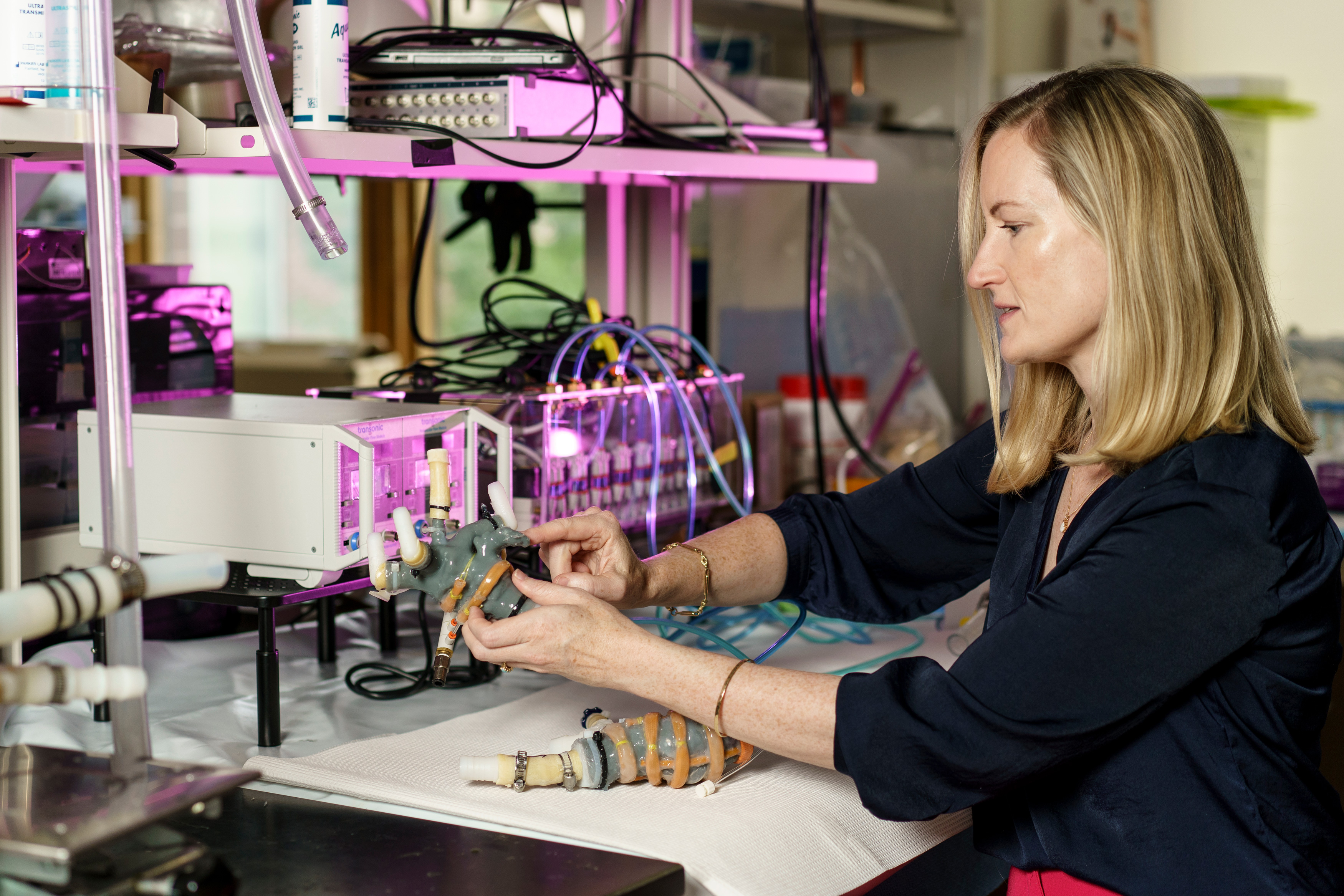
Roche, who earned tenure at MIT in July 2023, directs the Therapeutic Technology Design and Development Lab, which incorporates soft robotics, advanced fabrication methods, and computational analysis tools to develop novel devices that help to heal the heart, lungs, and other tissues. Some of the devices her team designs are intended for implantation into patients, such as a soft robotic ventilator, while others, such as a 3D-printed replica of a patient’s heart, enable research and testing of other therapies.

She encourages her students to find ways to collaborate and be flexible — and to get some kind of industry experience while still in school. She says she tells them, “Be open to accepting good opportunities as they arise, work with like-minded people, and work hard at what you are doing, but readapt when you need to.”

“There’s so much that’s very hard to even imagine until you spend some time in industry, including regulatory submissions, quality control, clinical studies, manufacturing considerations, sterilization, reliability, packaging, labeling, distribution, and sales. It really is a concerted effort of many teams with many skills to get a device to first-in-human studies,” Roche says. “Having said that, it’s one of the most rewarding.”

Born in Galway, the daughter of a civil engineer father and a mother who was a radiographer, Roche always loved math, science, and building things, and was drawn to medicine as well. She says she chose biomedical engineering because of its interdisciplinary nature and its potential for impacting society.

Roche says her mother had a “huge influence” on her career choices.

“She brought me to the hospital to meet with people using various medical devices, and introduced me to one of my mentors in industry,” she says. “She had taught herself, as the local girls’ school she attended did not teach advanced (or honors) math.”

After working at Abbott, Roche says she found she wanted to expand her studies and learn new technologies that could be applied to medical devices. She returned to school, enrolling in a bioengineering master’s program at Trinity College in Dublin. While earning her degree, she also worked at Medtronic, where she helped develop a replacement valve for the aorta that was brought all the way from conception to clinical application in humans, a process she says she was fortunate to experience firsthand.

She also studied medicine at the Royal College of Surgeons in Ireland before being awarded at Fulbright Scholarship to pursue her PhD.

“Receiving the Fulbright Science and Technology award solidified my plans to pursue graduate study in the U.S.,” she says. She chose as PhD advisors David Mooney, a professor of bioengineering, and Conor Walsh, a professor of engineering and applied sciences, at Harvard University. “They were (and still are) amazingly supportive of my personal and professional development,” she says.

Roche has worked on a number of medical devices, including the soft, implantable ventilator; a mechanism that prevents the buildup of scar tissue; and the robotic heart, created by using 3D printing. For the robotic heart, Roche and her team start with an MRI scan of a patient’s heart and, using a soft material, print a replica of the heart, matching the anatomy, including any defects. With such a realistic model, the researchers can then apply different treatments, such as prosthetic valves or other implantable devices, in order to test them and learn more about the biomechanics that are involved.

“We can look at various devices and tune the heart, depending on what we’re trying to test,” Roche said in the “Curiosity Unbounded” podcast with MIT President Sally Kornbluth.

The 3D-printed heart, and other medical simulators Roche has worked on, greatly facilitate and improve the testing of patient interventions — and may one day also be used as implantable devices in humans.

“You can envision the people who are at end-stage heart failure, who are waiting for a transplant and on these long lists, could actually have a printed, entirely synthetic, beating heart,” Roche told Kornbluth.

Roche’s work has garnered many awards, including a National Science Foundation CAREER award in 2019, and boosts to her entrepreneurship. Her medical device startup, Spheric Bio, which is developing a minimally invasive heart implant aimed at preventing strokes, won the Faculty Founders Initiative Grand Prize in 2022 and the Lab Central Ignite Golden Ticket, which supports startup founders from traditionally underrepresented groups in biotechnology.

Meanwhile, in a dual faculty appointment in mechanical and medical engineering, Roche won the Thomas McMahon Mentoring Award in 2020, which each year goes to a person who “through the warmth of their personality, inspires and nurtures [Harvard-MIT Program in Health Sciences and Technology] students in their scientific and personal growth.” She also received the Harold E. Edgerton Faculty Achievement Award in 2023, in recognition of exceptional teaching, research, and service.

The current research advances that excite Roche most, she says, include treatments and devices that can be customized to be patient-specific, such as in silico trials and digital twins where computational approaches can facilitate the investigation various interventions and prediction of their outcomes.

Roche’s expanding research on physical biorobotic simulators and computational models has attracted interest from industry and clinical teams. She was recently approached by a local hospital to build models for training heart surgeons on how to select which pump or ventricular assist device to use depending on a patient’s particular case. The models allow the surgeons to explore the efficacy of the assist devices at work.

Roche has three young daughters, whom she often brings to work, where “they love the environment, the students, and the lab,” she says.

Somehow, she also finds time to do triathlons, travel, and sample some of the local brews of New England. She’s currently planning to participate in a triathlon with her two PhD co-advisors, Mooney and Walsh. Luckily, she says she does her best thinking while running, biking, or swimming — or late at night.

Active and successful in so many realms, Roche provides seemingly simple advice to her students who want to have an impact on the world: “Find a way to combine what you love, what you are good at, and what will help others.”


Build a Video Search Summarization Agent with NVIDIA AI

0

Building Visual AI Agents for Video Search and Summarization

Introduction

Traditional video analytics applications and their development workflow are typically built on fixed-function, limited models that are designed to detect and identify only a select set of predefined objects. However, with the advent of generative AI, NVIDIA NIM microservices, and foundation models, you can now build applications with fewer models that have broad perception and rich contextual understanding.

Building a Visual AI Agent for Video Search and Summarization

The NVIDIA AI Blueprint for Video Search and Summarization accelerates the development of visual AI agents by providing a recipe for long-form video understanding using VLMs, LLMs, and the latest RAG techniques. This blueprint is powered by NVIDIA NIM, a set of microservices that includes industry-standard APIs, domain-specific code, optimized inference engines, and enterprise runtime.

Components of the Blueprint

The blueprint consists of the following components:

  • Stream handler: Manages the interaction and synchronization with other components, such as NeMo Guardrails, CA-RAG, the VLM pipeline, chunking, and the Milvus Vector DB.
  • NeMo Guardrails: Filters out invalid user prompts. It makes use of the REST API of an LLM NIM microservice.
  • VLM pipeline: Decodes video chunks generated by the stream handler, generates embeddings for the video chunks using an NVIDIA Tensor RT-based visual encoder model, and then uses a VLM to generate per-chunk responses for the user query. It is based on the NVIDIA DeepStream SDK.
  • VectorDB: Stores the intermediate per-chunk VLM response.
  • CA-RAG module: Extracts useful information from the per-chunk VLM response and aggregates it to generate a single unified summary. CA-RAG (Context-Aware-Retrieval-Augmented Generation) uses the REST API of an LLM NIM microservice.
  • Graph-RAG module: Captures the complex relationships present in the video and stores important information in a graph database as sets of nodes and edges. This is then queried by an LLM for interactive Q&A.

Video Ingestion and Retrieval Pipeline

To summarize a video or perform Q&A, a comprehensive index of the video must be built that captures all the important information. This is done by combining VLMs and LLMs to produce dense captions and metadata to build a knowledge graph of the video. This video ingestion pipeline is GPU-accelerated and scales with more GPUs to lower processing time.

Knowledge Graph and Graph-RAG Module

To capture the complex information produced by the VLM, a knowledge graph is built and stored during video ingestion. Use an LLM to convert the dense captions into a set of nodes, edges, and associated properties. This knowledge graph is stored in a graph database. By using Graph-RAG techniques, an LLM can access this information to extract key insights for summarization, Q&A, and alerts and go beyond what VLMs are capable of on their own.

Video Retrieval

When the video has been ingested, the databases behind the CA-RAG and Graph-RAG modules contain an immense amount of information about the objects, events, and descriptions of what occurred in the video. This information can be queried and consumed by an LLM for several tasks, including summarization, Q&A, and alerts.

Summarization

When a video file has been uploaded to the agent through the APIs, call the summarize endpoint to get a summary of the video. The blueprint takes care of all the heavy lifting while providing a lot of configurable parameters.

Q&A

The knowledge graph built during video ingestion can be queried by an LLM to provide a natural language interface into the video. This enables users to ask open-ended questions over the input video and have a chatbot experience.

Alerts

In addition to video files, the blueprint can also accept a video live stream as input. For live streaming use cases, it is often critical to know when certain events take place in near real-time. To accomplish this, the blueprint enables live streams to be registered and alert rules can be set to monitor the stream. These alert rules are in natural language and are used to trigger notifications when user-defined events occur.

Conclusion

The NVIDIA AI Blueprint for Video Search and Summarization provides a powerful framework for building visual AI agents that can understand long-form videos and provide valuable insights. With its ability to combine VLMs, LLMs, and RAG techniques, this blueprint enables the development of applications that can perform video summarization, Q&A, and alerts over live streams and long videos.

Frequently Asked Questions

Q: What is the NVIDIA AI Blueprint for Video Search and Summarization?
A: The NVIDIA AI Blueprint for Video Search and Summarization is a reference workflow for building visual AI agents that can understand long-form videos and provide valuable insights.

Q: What are the components of the blueprint?
A: The blueprint consists of the following components: stream handler, NeMo Guardrails, VLM pipeline, VectorDB, CA-RAG module, and Graph-RAG module.

Q: How does the blueprint work?
A: The blueprint works by combining VLMs and LLMs to produce dense captions and metadata to build a knowledge graph of the video. This video ingestion pipeline is GPU-accelerated and scales with more GPUs to lower processing time.

Q: What are the benefits of using the NVIDIA AI Blueprint for Video Search and Summarization?
A: The benefits of using the NVIDIA AI Blueprint for Video Search and Summarization include the ability to build powerful VLM-based AI agents, ease of integration with existing customer applications, and the ability to provide valuable insights from long-form videos.

Best AI Search Engines of 2024

0

The Best AI Search Engines for 2024

When ChatGPT launched in late 2022, it quickly gained popularity due to its ability to respond to any question with conversational and concise answers. However, one major feature was missing – access to current information. To fill this gap, AI-powered search engines emerged, infusing generative AI into their platforms. In this article, we’ll explore the best AI search engines of 2024, including Perplexity AI, ChatGPT, Microsoft Bing, Google, You.com, and Brave Search.

Perplexity AI: The Best AI Search Engine Overall

Perplexity AI has been built from scratch as an AI search engine, offering a unique interface that blends the best features of AI chatbots and search engines. Upon entering a search query, the results page provides several links at the top, which is helpful if you use Perplexity as a search engine to find the most relevant website. The results include conversational, concise, bulleted AI-generated answers with footnotes and website links. Additionally, the "related" section encourages discovery, making it a great option for users who want to explore related topics.

ChatGPT: A Great Option for Those Familiar with ChatGPT

If you’re already familiar with ChatGPT, you’ll appreciate its search feature, which keeps all the standout ChatGPT features, including speed, accuracy, and UI. The search feature allows you to enter your sentence as your thoughts unfold, and the tool will understand the meaning of your query by leveraging its NLP capabilities. However, you’ll need a ChatGPT Plus subscription, which costs $20 monthly. OpenAI plans to make this feature available to free users in the coming months.

Microsoft Bing: A Great Integration of AI into an Existing Search Engine

Microsoft infused its Bing search engine with its AI chatbot, Copilot, resulting in a significant increase in daily active users, with over 40 million new users during the past year. In my testing, Copilot has proven to be an extremely competitive chatbot, offering features that make it a more attractive option than ChatGPT. The integration of Copilot in Bing allows users to experience high-quality responses when searching for anything through the box at the top of the search page results.

Google: A Great Option for Google Users

If you’re a loyal Google user, you’ll appreciate Google’s Search Generative Experience (SGE), which offers AI-generated insights at the top of your search results. This means that when you type a search query into Google that could be optimized by AI overviews (which isn’t every entry), Google will automatically show you the AI insights.

You.com: A Great Option for Those Who Want Variety in LLMs

You.com offers a conversational response with added footnotes that users can click on to verify the source and visit the website. The tool also includes a "People also ask" section underneath its response and a "private mode", similar to Google’s incognito mode. One of the standout features is the ability to toggle between the most popular AI models on the market using the Custom Model Selector, including GPT-4 Turbo, Anthropic’s Claude, and more.

Brave Search: A Great Option for Those Who Value Privacy

Brave Search’s appeal comes from its increased privacy and security features, including blocking trackers and ads on websites, which also helps improve device battery life and browsing speeds. Recently, Brave added an "Answer with AI" feature that infuses generative AI into the search engine, offering an experience nearly identical to those in the tools above while keeping the security features users enjoy.

Comparison and Conclusion

I tested every AI search engine on the list across factors critical to users, including price, quality of AI-enabled insights, user interface, and LLM. Ultimately, I picked Perplexity AI as the best AI search engine overall due to its unique interface and features that most users can benefit from. However, you can choose from many AI search engines that might be better suited to your specific needs. For example, if you’re a loyal Google user, Google’s Search Generative Experience might be your best option.

Frequently Asked Questions

Q: What is an AI search engine?
An AI search engine is a search engine that uses generative AI to provide AI-enabled insights in its search results.

Q: What is the difference between an AI chatbot and an AI search engine?
An AI chatbot is an application that uses generative AI to process a user’s input and provide a conversational response. An AI search engine produces similar output but is also connected to the internet.

Q: Are all AI search engines free to use?
Yes, all the AI search engines listed above are free to use. However, some offer premium subscription upgrades for more advanced LLMs.

Mercedes-Benz Trials Humanoid Robots for Car Manufacturing

0

Mercedes-Benz, renowned for its commitment to innovation, has joined forces with Apptronik to integrate humanoid robots into its manufacturing processes. This collaboration marks a significant leap forward in automotive production, heralding a new era of efficiency and automation.

Also Read: Volkswagen’s AI Lab Paves the Way for Automotive Revolution

A Leap into Automation

Mercedes-Benz, in partnership with Apptronik, embarks on a pioneering journey to incorporate humanoid robots, specifically the Apollo models, into its manufacturing facilities. This strategic move underscores Mercedes-Benz’s dedication to embracing cutting-edge technology to streamline its operations.

Revolutionizing Manufacturing Tasks

The deployment of Apollo humanoid robots aims to revolutionize traditional manufacturing tasks, particularly those categorized as low-skill, physically demanding, and repetitive. These robots are designed to operate seamlessly alongside human workers. They will undertake essential logistics operations such as delivering parts to the production line and conducting component inspections.

Also Read: Addverb Launches India’s First Assistive Dog Robot

Enhancing Workforce Dynamics

Jörg Burzer, a key figure within Mercedes-Benz, emphasizes the significance of robotics and AI in augmenting the capabilities of the existing workforce. By leveraging humanoid robots for mundane and physically challenging tasks, Mercedes-Benz aims to empower its skilled workforce, allowing them to focus on more intricate aspects of automotive manufacturing.

Mercedes-Benz partners with Apptronik for manufacturing automation.

Shaping the Future of Automotive Production

The collaboration between Mercedes-Benz and Apptronik not only signifies a pivotal moment in automotive manufacturing but also reflects broader industry trends. As the demand for automation rises, humanoid robots emerge as indispensable assets in reshaping the future of production lines. This is further fueled by labor shortages and the pursuit of operational excellence.

Also Read: Jarvis is Here! Meet Figure One, the Next Generation Humanoid Robot Powered by OpenAI

Our Say

The integration of humanoid robots into Mercedes-Benz’s manufacturing facilities represents a convergence of technological prowess and industrial innovation. In today’s transformative era, it is imperative for automotive manufacturers to embrace such advancements to drive efficiency and competitiveness.

Follow us on Google News to stay updated with the latest innovations in the world of AI, Data Science, & GenAI.

K.C. Sabreena Basheer

Sabreena Basheer is an architect-turned-writer who’s passionate about documenting anything that interests her. She’s currently exploring the world of AI and Data Science as a Content Manager at Analytics Vidhya.

RAG-based Solutions: A Fleeting Fad

0


What is RAG?

Retrieval-Augmented Generation (RAG) is an architecture that combines the strengths of information retrieval with generative AI models. Traditional generative models, such as GPT or BERT, generate responses based solely on the data they were trained on. However, these models often lack up-to-date information or struggle with accuracy in certain contexts. RAG solves this by introducing a retrieval component that pulls relevant, real-time information from external databases or the web, which is then used to generate more accurate and contextually relevant responses.

Key Components of RAG

  • Retrieval Module: This component searches through a vast corpus of data to retrieve relevant information based on the input query.
  • Generation Module: Once the relevant data is retrieved, the generative model processes it to create a coherent and contextually relevant output.

The Rise of RAG-based Solutions

Addressing the Limitations of Traditional Generative AI

Generative AI models, while powerful, have certain inherent limitations. One of the primary challenges is their reliance on static training data, which can become outdated. For instance, a model trained on data up until 2021 will not have knowledge of events or developments beyond that period. Additionally, generative models can sometimes produce outputs that are factually incorrect or misleading, as they lack the ability to verify information in real-time.

Industry Adoption and Use Cases

The initial success of RAG-based solutions was driven by their applicability across various industries:

  • Financial Services: RAG models were adopted to provide real-time insights into market trends, regulatory changes, and risk management. The ability to retrieve up-to-date information and generate accurate reports made RAG highly valuable in this sector.
  • Healthcare: In medical research and diagnostics, RAG systems could pull the latest studies, clinical trials, and patient data to assist in generating diagnostic reports or treatment plans.
  • Legal Services: RAG was used to sift through vast legal databases to retrieve relevant case laws, statutes, and regulations, enabling lawyers to generate more informed legal opinions.

Strengths of RAG

  1. Real-Time Information: Unlike traditional generative models, RAG systems can access and incorporate the latest information, ensuring that outputs are always up-to-date.
  2. Improved Accuracy: By retrieving relevant data from trusted sources, RAG systems reduce the likelihood of generating incorrect or misleading information.
  3. Versatility: RAG models are highly versatile and can be applied across various industries, from finance to healthcare, where accuracy and timeliness are critical.
  4. Data Efficiency: RAG systems do not require constant retraining on new datasets, as the retrieval component allows them to access new information without modifying the underlying model.

The Fall: Challenges and Limitations of RAG

Complexity and Cost of Implementation

One of the primary challenges with RAG systems is their complexity. Implementing a RAG architecture requires integrating both retrieval and generative components, which can be technically demanding. For many organizations, the cost of setting up and maintaining RAG systems outweighs the benefits, especially when simpler AI models may suffice for their needs.

Naive RAG Systems and Performance Issues

Naive implementations of RAG systems, where the retrieval mechanism is not carefully optimized, can lead to performance issues. For example, if the retrieval process pulls irrelevant or low-quality data, the generated output may be inaccurate or incoherent. This undermines the very purpose of RAG, which is to enhance the accuracy and relevance of generative models.

The Future of RAG: Is There Hope?

While RAG-based solutions have faced significant challenges, there is still potential for growth, particularly if the current limitations can be addressed. Several strategies could help revive interest in RAG:

  1. Optimizing Retrieval Mechanisms: By improving the retrieval process and ensuring that only high-quality, relevant data is retrieved, RAG systems can become more reliable and accurate. This would help address the performance issues that have plagued naive RAG implementations.
  2. Focusing on Niche Applications: Rather than trying to apply RAG across all industries, focusing on specific use cases where its strengths are most evident, such as real-time financial analysis or legal research, could lead to more successful implementations.
  3. Enhancing Data Privacy Protections: By developing more robust privacy and security protocols, RAG systems could become more viable in industries with strict data protection requirements.
  4. Incorporating Case Studies: Providing more real-world examples of successful RAG implementations could help build confidence in the technology and encourage more organizations to adopt it.

Conclusion

The rise of RAG-based solutions was driven by the need to enhance the accuracy and relevance of generative AI models. By combining information retrieval with generation, RAG systems promised to solve many of the shortcomings of traditional AI. However, the complexity, cost, and challenges associated with implementing RAG have led to a decline in its adoption. While there is still potential for RAG to play a role in specific industries, its future will depend on addressing the current limitations and providing more concrete examples of its success.

FAQs

Q: What is RAG?
A: RAG (Retrieval-Augmented Generation) is an architecture that combines information retrieval with generative AI models.

Q: What are the strengths of RAG?
A: RAG systems can access real-time information, improve accuracy, be versatile, and efficient in data processing.

Q: What are the challenges of RAG?
A: RAG systems face complexity, cost, and performance issues, as well as data privacy and security concerns.

Q: Is RAG still relevant?
A: While RAG has faced challenges, there is still potential for growth if the current limitations can be addressed.

AI Groups Redesign Model Testing, Create New Benchmarks

Tech Groups Rush to Redesign AI Model Evaluations

Current Benchmarks Becoming Obsolete

Tech groups are rushing to redesign how they test and evaluate their artificial intelligence (AI) models, as the fast-advancing technology surpasses current benchmarks. OpenAI, Microsoft, Meta, and Anthropic have all recently announced plans to build AI agents that can execute tasks for humans autonomously on their behalf. To do this effectively, the systems must be able to perform increasingly complex actions, using reasoning and planning.

Need for New Benchmarks

Companies conduct "evaluations" of AI models by teams of staff and outside researchers. These are standardized tests, known as benchmarks, that assess models’ abilities and the performance of different groups’ systems or older versions. However, recent advances in AI technology have meant many of the newest models have been able to get close to or above 90 per cent accuracy on existing tests, highlighting the need for new benchmarks.

Internal Benchmarks and Concerns

To deal with this issue, several tech groups including Meta, OpenAI, and Microsoft have created their own internal benchmarks and tests for intelligence. However, this has raised concerns within the industry over the ability to compare the technology in the absence of public tests.

Public Benchmarks

Current public benchmarks, such as Hellaswag and MMLU, use multiple-choice questions to assess common sense and knowledge across various topics. However, researchers argue this method is now becoming redundant and models need more complex problems.

New Benchmarks and Evaluations

One public benchmark, SWE-bench Verified, was updated in August to better evaluate autonomous systems based on feedback from companies, including OpenAI. It uses real-world software problems sourced from the developer platform GitHub and involves supplying the AI agent with a code repository and an engineering issue, asking them to fix it. The tasks require reasoning to complete.

Reasoning and Planning

The ability to reason and plan is critical to unlocking the potential of AI agents that can conduct tasks over multiple steps and applications, and correct themselves. "We are discovering new ways of measuring these systems and of course one of those is reasoning, which is an important frontier," said Ece Kamar, VP and lab director of AI Frontiers at Microsoft research.

Challenges and Debates

Some, including researchers from Apple, have questioned whether current large language models are "reasoning" or purely "pattern matching" the closest similar data seen in their training. "In the narrower domains [that] enterprises care about, they do reason," said Ruchir Puri, chief scientist at IBM Research. "[The debate is around] this broader concept of reasoning at a human level, that would almost put it in the context of artificial general intelligence. Do they really reason, or are they parroting?"

Conclusion

The need for new benchmarks has led to efforts by external organizations. In September, the start-up Scale AI and Hendryks announced a project called "Humanity’s Last Exam", which crowdsourced complex questions from experts across different disciplines that required abstract reasoning to complete. Another example is FrontierMath, a novel benchmark released this week, created by expert mathematicians. Based on this test, the most advanced models can complete less than 2 per cent of questions.

FAQs

Q: Why are current benchmarks becoming obsolete?
A: Recent advances in AI technology have meant many of the newest models have been able to get close to or above 90 per cent accuracy on existing tests, highlighting the need for new benchmarks.

Q: What are internal benchmarks and how do they differ from public benchmarks?
A: Internal benchmarks are created by companies themselves to evaluate their own AI models, while public benchmarks are standardized tests that can be used to compare different models.

Q: What is the importance of reasoning and planning in AI agents?
A: The ability to reason and plan is critical to unlocking the potential of AI agents that can conduct tasks over multiple steps and applications, and correct themselves.

Q: Are current large language models truly "reasoning" or just "pattern matching"?
A: The debate is ongoing, with some arguing that current models are not truly reasoning, while others argue that they do reason, but in a limited sense.