Home Blog Page 707

Constructing safer dialogue brokers – Google DeepMind

0


Analysis

Printed
Authors

The Sparrow staff

Coaching an AI to speak in a manner that’s extra useful, right, and innocent

In recent times, giant language fashions (LLMs) have achieved success at a variety of duties equivalent to query answering, summarisation, and dialogue. Dialogue is a very fascinating activity as a result of it options versatile and interactive communication. Nonetheless, dialogue brokers powered by LLMs can specific inaccurate or invented info, use discriminatory language, or encourage unsafe behaviour.

To create safer dialogue brokers, we’d like to have the ability to study from human suggestions. Making use of reinforcement studying primarily based on enter from analysis members, we discover new strategies for coaching dialogue brokers that present promise for a safer system.

In our newest paper, we introduce Sparrow – a dialogue agent that’s helpful and reduces the chance of unsafe and inappropriate solutions. Our agent is designed to speak with a consumer, reply questions, and search the web utilizing Google when it’s useful to search for proof to tell its responses.

Our new conversational AI mannequin replies by itself to an preliminary human immediate.

Sparrow is a analysis mannequin and proof of idea, designed with the purpose of coaching dialogue brokers to be extra useful, right, and innocent. By studying these qualities in a common dialogue setting, Sparrow advances our understanding of how we are able to practice brokers to be safer and extra helpful – and finally, to assist construct safer and extra helpful synthetic common intelligence (AGI).

Sparrow declining to reply a probably dangerous query.

How Sparrow works

Coaching a conversational AI is an particularly difficult downside as a result of it’s troublesome to pinpoint what makes a dialogue profitable. To handle this downside, we flip to a type of reinforcement studying (RL) primarily based on folks’s suggestions, utilizing the research members’ choice suggestions to coach a mannequin of how helpful a solution is.

To get this knowledge, we present our members a number of mannequin solutions to the identical query and ask them which reply they like essentially the most. As a result of we present solutions with and with out proof retrieved from the web, this mannequin also can decide when a solution ought to be supported with proof.

We ask research members to guage and work together with Sparrow both naturally or adversarially, regularly increasing the dataset used to coach Sparrow.

However growing usefulness is barely a part of the story. To ensure that the mannequin’s behaviour is secure, we should constrain its behaviour. And so, we decide an preliminary easy algorithm for the mannequin, equivalent to “do not make threatening statements” and “do not make hateful or insulting feedback”.

We additionally present guidelines round probably dangerous recommendation and never claiming to be an individual. These guidelines have been knowledgeable by finding out current work on language harms and consulting with specialists. We then ask our research members to speak to our system, with the goal of tricking it into breaking the foundations. These conversations then allow us to practice a separate ‘rule mannequin’ that signifies when Sparrow’s behaviour breaks any of the foundations.

In the direction of higher AI and higher judgments

Verifying Sparrow’s solutions for correctness is troublesome even for specialists. As an alternative, we ask our members to find out whether or not Sparrow’s solutions are believable and whether or not the proof Sparrow gives really helps the reply. In keeping with our members, Sparrow gives a believable reply and helps it with proof 78% of the time when requested a factual query. This can be a huge enchancment over our baseline fashions. Nonetheless, Sparrow is not immune to creating errors, like hallucinating information and giving solutions which can be off-topic typically.

Sparrow additionally has room for enhancing its rule-following. After coaching, members have been nonetheless capable of trick it into breaking our guidelines 8% of the time, however in comparison with easier approaches, Sparrow is healthier at following our guidelines underneath adversarial probing. As an example, our unique dialogue mannequin broke guidelines roughly 3x extra typically than Sparrow when our members tried to trick it into doing so.

Sparrow solutions a query and follow-up query utilizing proof, then follows the “Don’t faux to have a human identification” rule when requested a private query (pattern from 9 September, 2022).

Our purpose with Sparrow was to construct versatile equipment to implement guidelines and norms in dialogue brokers, however the explicit guidelines we use are preliminary. Creating a greater and extra full algorithm would require each skilled enter on many matters (together with coverage makers, social scientists, and ethicists) and participatory enter from a various array of customers and affected teams. We consider our strategies will nonetheless apply for a extra rigorous rule set.

Sparrow is a big step ahead in understanding the way to practice dialogue brokers to be extra helpful and safer. Nonetheless, profitable communication between folks and dialogue brokers mustn’t solely keep away from hurt however be aligned with human values for efficient and useful communication, as mentioned in latest work on aligning language fashions with human values.

We additionally emphasise {that a} good agent will nonetheless decline to reply questions in contexts the place it’s acceptable to defer to people or the place this has the potential to discourage dangerous behaviour. Lastly, our preliminary analysis centered on an English-speaking agent, and additional work is required to make sure related outcomes throughout different languages and cultural contexts.

Sooner or later, we hope conversations between people and machines can result in higher judgments of AI behaviour, permitting folks to align and enhance methods that could be too complicated to know with out machine assist.

Desirous to discover a conversational path to secure AGI? We’re at present hiring analysis scientists for our Scalable Alignment staff.

At this time’s ‘Wordle’ #1230 Hints, Clues And Reply For Thursday, October thirty first

0


On the lookout for Wednesday’s Wordle hints, clues and reply? You could find them right here:

ForbesAt this time’s ‘Wordle’ #1229 Hints, Clues And Reply For Wednesday, October thirtieth

Not solely is it the final day of the month, it’s Halloween. Pleased Halloween you marvelous Wordlers! I hope you’re doing one thing enjoyable. I’m dressing up as The Dude from The Large Lebowski. I’ll most likely simply sit round and hand out sweet and drink espresso by the fireplace. That sounds fairly good. The youngsters might be occupied with their mates and no matter shenanigans they stand up to. My daughter is 17 this 12 months, and a senior in highschool, so that is type of a serious Halloween for us—theoretically her final one earlier than leaving the nest. Gulp.

Yesterday was Wordle Wednesday and this was the riddle I gave you:

I can begin a struggle or finish one. I can provide the power of heroes or go away you powerless. I could be snared with a look, however no drive can compel me to remain. What am I?

Kudos to these of you who solved it. The reply is love.

Let’s resolve this Wordle!


How To Remedy At this time’s Wordle

The Trace: Unusual.

The Clue: This Wordle has two vowels in a row and two consonants in a row.

Okay, spoilers under!

.

.

.

The Reply:

Wordle Evaluation

Daily I verify Wordle Bot to assist analyze my guessing recreation. You possibly can verify your Wordles with Wordle Bot proper right here.

Are you able to resolve as we speak’s phrase?


SHALE ended up being a awful opening guess as we speak regardless of being a fairly good one usually. One yellow field and (I’d study later) 405 remaining options! Ouch! I went with TRIED for my second guess, and this was completely as near good as you could possibly get with out guessing the Wordle. Just one potential phrase remained: WEIRD for the win! Huzzah!

Aggressive Wordle Rating

I get 1 level for guessing in three and one other for beating the Wordle Bot, who took 4 tries as we speak. 2 factors for me! Suck on that, Wordle Bot! Ha! I’m the king of the world!


How To Play Aggressive Wordle

  • Guessing in 1 is price 3 factors; guessing in 2 is price 2 factors; guessing in 3 is price 1 level; guessing in 4 is price 0 factors; guessing in 5 is -1 factors; guessing in 6 is -2 factors and lacking the Wordle is -3 factors.
  • If you happen to beat your opponent you get 1 level. If you happen to tie, you get 0 factors. And should you lose to your opponent, you get -1 level. Add it as much as get your rating. Hold a day by day operating rating or simply play for a brand new rating every day.
  • Fridays are 2XP, that means you double your factors—optimistic or unfavourable.
  • You possibly can maintain a operating tally or simply play day-by-day. Get pleasure from!

At this time’s Wordle Etymology

At this time’s etymology within the type of a Halloween rhyme:

In instances of previous, in tales feared,

A phrase arose, the traditional bizarre.

From Outdated English wyrd, a fated thread,

The facility to form what lies forward.

Three sisters spun, in delusion and lore,

The Fates, the Norns, of historical yore.

They wove unusual paths, unseen, unclear,

And from their craft, bizarre the seer.

As soon as fate-bound, destined, threads entwined,

However Shakespeare’s witches redefined—

The phrase grew eerie, unusual, and darkish,

A haunting chill, a spectral mark.

So now on nights of ghouls and ghosts,

We are saying “how bizarre,” and lift a toast,

To shadows unusual, and tales untold,

The odd, weird and bizarre unfold.


Let me understand how you fared along with your Wordle as we speak on Twitter, Instagram or Fb. Additionally make sure to subscribe to my YouTube channel and comply with me right here on this weblog the place I write about video games, TV reveals and films once I’m not writing puzzle guides. Join my publication for extra critiques and commentary on leisure and tradition.


Ubisoft is likely to be having a nasty patch, however hey – it is received a brand new NFT sport

0


The enormous sport developer Ubisoft has had a tough few months, and no finish of controversy lately. It is disbanded its Prince of Persia group, had delayed Murderer’s Creed Shadows till 2025, and Star Wars Outlaws flopped. However hey, it is received a brand new NFT sport.

Champions Techniques: Grimoria Chronicles is a “aggressive multiplayer turn-based RPG. Principally, you acquire character collectible figurines to place into squads to combat towards different gamers. Yep, it is like Prime Trumps however much less instructional – and the procedurally generated collectible figurines can price as a lot as $63,000 (Misplaced? see our piece on What are NFTs?)


Researchers Uncover Python Bundle Focusing on Crypto Wallets with Malicious Code

0


Oct 30, 2024Ravie LakshmananCybercrim / Cryptocurrency

Cybersecurity researchers have found a brand new malicious Python bundle that masquerades as a cryptocurrency buying and selling instrument however harbors performance designed to steal delicate information and drain property from victims’ crypto wallets.

The bundle, named “CryptoAITools,” is claimed to have been distributed through each Python Bundle Index (PyPI) and bogus GitHub repositories. It was downloaded over 1,300 occasions earlier than being taken down on PyPI.

“The malware activated robotically upon set up, focusing on each Home windows and macOS working methods,” Checkmarx mentioned in a brand new report shared with The Hacker Information. “A misleading graphical consumer interface (GUI) was used to distract vic4ms whereas the malware carried out its malicious ac4vi4es within the background.”

The bundle is designed to unleash its malicious conduct instantly after set up via code injected into its “__init__.py” file that first determines if the goal system is Home windows or macOS to be able to execute the suitable model of the malware.

Cybersecurity

Current inside the code is a helper performance that is liable for downloading and executing further payloads, thereby kicking-off a multi-stage an infection course of.

Particularly, the payloads are downloaded from a pretend web site (“coinsw[.]app“) that advertises a cryptocurrency buying and selling bot service, however is in reality an try to present the area a veneer of legitimacy ought to a developer determine to navigate to it instantly on an online browser.

This method not solely helps the menace actor evade detection, but additionally permits them to increase the malware’s capabilities at will by merely modifying the payloads hosted on the legitimate-looking web site.

A notable facet of the an infection course of is the incorporation of a GUI part that serves to distract the victims by way of a pretend setup course of whereas the malware is covertly harvesting delicate information from the methods.

Python Package

“The CryptoAITools malware conducts an in depth information theft operation, focusing on a variety of delicate info on the contaminated system,” Checkmarx mentioned. “The first aim is to assemble any information that might help the attacker in stealing cryptocurrency property.”

This consists of information from cryptocurrency wallets (Bitcoin, Ethereum, Exodus, Atomic, Electrum, and many others.), saved passwords, cookies, searching historical past, cryptocurrency extensions, SSH keys, recordsdata saved in Downloads, Paperwork, Desktop directories that reference cryptocurrencies, passwords, and monetary info, and Telegram.

On Apple macOS machines, the stealer additionally takes the step of gathering information from Apple Notes and Stickies apps. The gathered info is in the end uploaded to the gofile[.]io file switch service, after which the native copy is deleted.

Checkmarx mentioned it additionally found the menace actor distributing the identical stealer malware via a GitHub repository named Meme Token Hunter Bot that claims to be “an AI-powered buying and selling bot that lists all meme tokens on the Solana community and performs real-time trades as soon as they’re deemed secure.”

Cybersecurity

This means that the marketing campaign can also be focusing on cryptocurrency customers who choose to clone and run the code instantly from GitHub. The repository, which continues to be lively as of writing, has been forked as soon as and starred 10 occasions.

Additionally managed by the operators is a Telegram channel that promotes the aforementioned GitHub repository, in addition to presents month-to-month subscriptions and technical help.

“This multi-platform method permits the attacker to forged a large internet, doubtlessly reaching victims who may be cautious about one platform however belief one other,” Checkmarx mentioned.

“The CryptoAITools malware marketing campaign has extreme penalties for victims and the broader cryptocurrency group. Customers who starred or forked the malicious ‘Meme-Token-Hunter-Bot’ repository are potential victims, considerably increasing the assault’s attain.”

Discovered this text attention-grabbing? Comply with us on Twitter and LinkedIn to learn extra unique content material we put up.


How risk-averse are people when interacting with robots?

0


How do individuals prefer to work together with robots when navigating a crowded surroundings? And what algorithms ought to roboticists use to program robots to work together with people?

These are the questions {that a} group of mechanical engineers and pc scientists on the College of California San Diego sought to reply in a examine offered not too long ago on the ICRA 2024 convention in Japan.

“To our information, that is the primary examine investigating robots that infer human notion of threat for clever decision-making in on a regular basis settings,” mentioned Aamodh Suresh, first writer of the examine, who earned his Ph.D. within the analysis group of Professor Sonia Martinez Diaz within the UC San Diego Division of Mechanical and Aerospace Engineering. He’s now a postdoctoral researcher for the U.S. Military Analysis Lab.

“We wished to create a framework that may assist us perceive how risk-averse people are-or not-when interacting with robots,” mentioned Angelique Taylor, second writer of the examine, who earned her Ph.D. within the Division of Laptop Science and Engineering at UC San Diego within the analysis group of Professor Laurel Riek. Taylor is now on school at Cornell Tech in New York.

The group turned to fashions from behavioral economics. However they wished to know which of them to make use of. The examine came about in the course of the pandemic, so the researchers needed to design a web based experiment to get their reply.

Topics-largely STEM undergraduate and graduate students-played a recreation, by which they acted as Instacart customers. They’d a alternative between three totally different paths to achieve the milk aisle in a grocery retailer. Every path might take anyplace from 5 to twenty minutes. Some paths would take them close to individuals with COVID, together with one with a extreme case. The paths additionally had totally different threat ranges for getting coughed on by somebody with COVID. The shortest path put topics in touch with essentially the most sick individuals. However the customers had been rewarded for reaching their purpose shortly.

The researchers had been stunned to see that folks persistently underestimated of their survey solutions indicating their willingness to take dangers of being in shut proximity to customers contaminated with COVID-19. “If there’s a reward in it, individuals do not thoughts taking dangers,” mentioned Suresh.

Consequently, to program robots to work together with people, researchers determined to depend on prospect concept, a behavioral economics mannequin developed by Daniel Kahneman, who gained the Nobel Prize in economics for his work in 2002. The idea holds that folks weigh losses and features in contrast to a degree of reference. On this framework, individuals really feel losses greater than they really feel features. So for instance, individuals will select to get $450 relatively than betting on one thing that has a 50% likelihood of profitable them $1100. So topics within the examine centered on getting the reward for finishing the duty shortly, which was sure, as a substitute of weighing the potential threat of contracting COVID.

Researchers additionally requested individuals how they want robots to speak their intentions. The responses included speech, gestures, and contact screens.

Subsequent, researchers hope to conduct an in-person examine with a extra numerous group of topics.

QXR Quarterly Actions Report for Interval Ended 30 September 2024

0


Perth, Australia (ABN Newswire) – QX Sources Restricted (ASX:QXR) can verify that the Liberty Lithium brine challenge in California, USA, is a big brine basin with quite a few brine aquifers, proven in downhole sampling and geophysics within the second gap of the Firm’s two-hole diamond drill program (Desk 1*).

– Drilling and geophysics point out the existence of a giant brine basin at Liberty Lithium Brine Undertaking USA, with brine intersected over 400 m vertically.

o Geological similarities confirmed with the close by Silver Peak lithium brine producer Albemarle, in Clayton Valley Nevada, with encouraging preliminary lithium assay outcomes, aquifers and salinity.

– Lithium brine specialists have proposed extra drilling to intersect deep lithium brines within the centre of the basin, in a extra beneficial setting, additional west of current drilling.

– Discussions proceed with varied USA based mostly battery provide individuals who’re eager to work with potential new lithium builders throughout the USA, together with with Stardust who purpose to IPO in June.

– QXR and IG Lithium Possibility Agreements are being amended to facilitate enterprise additional drilling.

– QXR goals to supply an replace quickly on progress with gold exploration in Queensland.

Porous conglomerates saturated with brines had been intersected beneath wonderful grained lake sediments with sandy layers. The geology intersected may be very encouraging as it’s just like the manufacturing sequences of Clayton Valley Nevada, the place Albemarle’s producing lithium brine deposit is situated. Detailed downhole geophysics along with preliminary downhole brine sampling (packer sampling) exhibits growing salinity with depth, along with giant brine volumes, each encouraging for locating a doubtlessly financial lithium brine deposit within the properties.

Though the utmost lithium assay values had been 50mg/l Li over 15 metres close to the bottom of gap #2 (Desk 2*), the salinity and conductivity elevated with depth, at ranges just like recognized producers. Ingress of recent water into the aquifers might clarify the decrease lithium values in drill holes #1 and #2 being situated near a spread entrance fault on the sting of the basin. These preliminary holes had been situated close to the sting of the basin partially for logistics and entry causes in addition to the floor lithium anomaly.

Gap #2 additionally intersected thick porous brine horizons – crucial for future success- which is taken into account encouraging, along with the geological similarity to Clayton Valley NV (Albemarle’s Silver Peak mine). These similarities embody basal porous conglomerate models containing brine beneath finer grained lake sediments.

Nonetheless, the very best producing horizons at Clayton Valley are tuff models throughout the sediment bundle which haven’t been intersected in drillholes up to now, however which outcrop 4km to the southwest of gap #2 (Determine 4*).

Outcomes had been analysed by exterior lithium brine specialists to supply interpretations, together with the globally recognised Hydrominex Geoscience Consulting. Lithium brine specialists have suggested extra drilling is required to doubtlessly intersect deep lithium brines within the centre of the basin, additional west of drilling undertaken by QXR, based mostly on lab outcomes up to now.

QXR Managing Director, Stephen Promnitz, stated: “QXR has outlined a brand new giant scale brine basin, saturated with brines, on the Liberty Lithium Brine Undertaking. A big near-surface brine area with lithium potential is uncommon up to now within the USA. The geological setting, with conglomerates loaded with brines, is just like Albemarle’s producing deposit. We’re but to seek out tuff horizons just like Clayton Valley, that are the very best brine aquifers – though they do outcrop close by, suggesting they might exist throughout the basin. Floor and downhole geophysics make it compelling for additional drilling to the west, within the centre of the basin beneath deeper sediments, which can intersect greater grade lithium brine, in comparison with the drilling up to now.”

Subsequent Steps

Functions for additional drillholes had been submitted a while in the past. To supply operational flexibility, an amended drill program has been submitted to regulators for approval. Bulk volumes of brine might be submitted for testwork with chosen direct lithium extraction (DLE) suppliers, in addition to with lithium refiner Stardust Energy Inc, with whom QXR holds at Letter of Intent (ASX announcement 29 Feb 2024). Stardust expects to record on NASDAQ in June through a c.US$490m deal after which plans to construct a lithium refinery in Oklahoma.

Discussions proceed with varied USA based mostly battery provide individuals who’re eager to work with potential new lithium builders throughout the USA.

QXR and IG Lithium are presently discussing amendments to the Possibility Agreements to facilitate the enterprise of additional drilling.

Background

The Liberty Lithium Brine Undertaking, situated in SaltFire Flat, California, covers contiguous claims over 102km2 (25,300 acres), being one of many largest single lithium brine initiatives within the USA (Determine 1*). The Firm entered an Choice to Buy Settlement and an Working Settlement (Possibility Agreements) to earn a 75% curiosity within the giant scale Liberty Lithium brine challenge in California, USA, from vendor IG Lithium LLC (ASX announcement 5 October 2023). Based mostly on outcomes acquired up to now, the Firm is presently in dialogue with IG Lithium concerning potential renegotiation of the Possibility Agreements to permit an extended time frame to conduct extra drilling previous to any future commitments.

Two vertical diamond drill holes had been accomplished (369m & 443 metres depth), spaced 4km aside (Determine 2, 3*).

Holes had been centred over an in depth lithium brine floor anomaly and vital MT geophysical goal, interpreted as a collection of conductive brine bearing aquifers at depth. Brine horizons had been intersected in each holes with quite a few brine aquifers intersected in drillhole #2 (ASX announcement 8 Feb 2024).

QXR entered right into a Letter of Intent with Stardust Energy Inc., a growth stage American producer of battery-grade lithium merchandise, to evaluate the lithium brines from the Liberty Lithium Brine Undertaking. The events intend to guage choices to doubtlessly provide Stardust Energy with lithium brine merchandise, depending on outcomes, on a non-exclusive foundation for processing into battery-grade lithium supplies for electrical automobiles (ASX announcement 29 Feb 2024). The Firm plans to share the outcomes of the 2 gap drill program with Stardust as a part of ongoing discussions.

Drillholes

Drillhole #1 (LLD23001) was accomplished at 369 metres depth. Goal horizons had been intersected at 49m depth and 329m depth. Nice grained sediments, gravels and coarse alluvial fan materials had been intersected down the size of the opening. An interpretation is that the drillhole went via the vary entrance fault at 249m depth.

Drillhole #2 (LLD24002) was accomplished at 433 metres depth, situated 4km to the south of drillhole #1. Each drillholes had been centred over vital MT geophysical targets interpreted as a collection of conductive brine bearing aquifers at depth. Each holes had been positioned inside an in depth lithium brine floor anomaly of over 10km outlined in auger samples. An interpretation is that the drillhole went via the vary entrance fault at 370m depth.

Figures 5 exhibits the rise in lithium and chloride focus in brine with growing depth. Figures 6-8* present interpretations of the potential geology on MT geophysical traces and the placement of proposed drill holes.

The situation of the proposed drill holes can also be proven in Determine 9*.

Suggestions

Outcomes had been analysed by exterior lithium brine specialists to supply interpretations, together with the globally recognised Hydrominex Geoscience Consulting, and others who’ve carefully reviewed the geological setting of Albemarle’s Silver Peak lithium brine producer in Clayton Valley, Nevada. Their suggestions included extra drilling additional west of drilling undertaken by QXR, to doubtlessly intersect deep lithium brines within the centre of the basin, based mostly on lab outcomes up to now. Floor and downhole geophysics means that the basin is angled to the west with deeper sediments and brines to the west of current drilling. Additional, the geochemistry of the brine samples might recommend an ingress of recent water into the aquifers, leading to decrease lithium grade within the two holes drilled up to now, because the holes had been drilled adjoining to a spread entrance fault with vital recent water inflows into the basin, alongside the basin edge.

*To view tables and figures, please go to:
https://abnnewswire.web/lnk/C58T0H5U

About QX Sources Ltd:  

QX Sources Restricted (ASX:QXR) is targeted on exploration and growth of battery minerals, with onerous rock lithium belongings in a chief location of Western Australia (WA), and gold belongings in Queensland. The purpose is to attach finish customers (battery, cathode and automobile makers) with QXR, an skilled explorer/developer of battery minerals, with an increasing mineral exploration challenge portfolio and strong monetary help.

Lithium portfolio: QXR’s lithium technique is centred round WA’s prolific Pilbara province, the place it has acquired a controlling curiosity in 4 initiatives via focused M&A – all of which sit in strategic proximity to a few of Australia’s largest lithium deposits and mines. Throughout the Pilbara, QXR’s regional lithium tenement bundle (each granted or beneath software) now spans greater than 350 km2.

Gold portfolio: QXR can also be growing two Central Queensland gold initiatives – Fortunate Break and Belyando – via an earn-in settlement with Zamia Sources Pty Ltd. Each gold initiatives are strategically situated throughout the Drummond Basin, a area that has a >6.5moz gold endowment.


Create and fine-tune sentence transformers for enhanced classification accuracy

0


Sentence transformers are highly effective deep studying fashions that convert sentences into high-quality, fixed-length embeddings, capturing their semantic which means. These embeddings are helpful for varied pure language processing (NLP) duties reminiscent of textual content classification, clustering, semantic search, and knowledge retrieval.

On this submit, we showcase the right way to fine-tune a sentence transformer particularly for classifying an Amazon product into its product class (reminiscent of toys or sporting items). We showcase two totally different sentence transformers, paraphrase-MiniLM-L6-v2 and a proprietary Amazon giant language mannequin (LLM) known as M5_ASIN_SMALL_V2.0, and examine their outcomes. M5 LLMS are BERT-based LLMs fine-tuned on inner Amazon product catalog knowledge utilizing product title, bullet factors, description, and extra. They’re presently getting used to be used circumstances reminiscent of automated product classification and related product suggestions. Our speculation is that M5_ASIN_SMALL_V2.0 will carry out higher for the use case of Amazon product class classification as a consequence of it being fine-tuned with Amazon product knowledge. We show this speculation within the following experiment illustrated on this submit.

Answer overview

On this submit, we exhibit the right way to fine-tune a sentence transformer with Amazon product knowledge and the right way to use the ensuing sentence transformer to enhance classification accuracy of product classes utilizing an XGBoost choice tree. For this demonstration, we use a public Amazon product dataset known as Amazon Product Dataset 2020 from a kaggle competitors. This dataset accommodates the next attributes and fields:

  • Area title – amazon.com
  • Date vary – January 1, 2020, by January 31, 2020
  • File extension – CSV
  • Obtainable fields – Uniq Id, Product Identify, Model Identify, Asin, Class, Upc Ean Code, Listing Worth, Promoting Worth, Amount, Mannequin Quantity, About Product, Product Specification, Technical Particulars, Transport Weight, Product Dimensions, Picture, Variants, SKU, Product Url, Inventory, Product Particulars, Dimensions, Colour, Substances, Course To Use, Is Amazon Vendor, Measurement Amount Variant, and Product Description
  • Label area – Class

Conditions

Earlier than you start, set up the next packages. You are able to do this in both an Amazon SageMaker pocket book or your native Jupyter pocket book by working the next instructions:

!pip set up sentencepiece --quiet
!pip set up sentence_transformers --quiet
!pip set up xgboost –-quiet
!pip set up scikit-learn –-quiet/

Preprocess the info

Step one wanted for fine-tuning a sentence transformer is to preprocess the Amazon product knowledge for the sentence transformer to have the ability to devour the info and fine-tune successfully. It includes normalizing the textual content knowledge, defining the product’s essential class by extracting the primary class from the Class area, and choosing an important fields from the dataset that contribute to classifying the product’s essential class precisely. We use the next code for preprocessing:

import pandas as pd
from sklearn.preprocessing import LabelEncoder

knowledge = pd.read_csv('marketing_sample_for_amazon_com-ecommerce__20200101_20200131__10k_data.csv')
knowledge.columns = knowledge.columns.str.decrease().str.change(' ', '_')
knowledge['main_category'] = knowledge['category'].str.cut up("|").str[0]
knowledge["all_text"] = knowledge.apply(
    lambda r: " ".be a part of(
        [
            str(r["product_name"]) if pd.notnull(r["product_name"]) else "",
            str(r["about_product"]) if pd.notnull(r["about_product"]) else "",
            str(r["product_specification"]) if pd.notnull(r["product_specification"]) else "",
            str(r["technical_details"]) if pd.notnull(r["technical_details"]) else ""
        ]
    ),
    axis=1
)
label_encoder = LabelEncoder()
labels_transform = label_encoder.fit_transform(knowledge['main_category'])
knowledge['label']=labels_transform
knowledge[['all_text','label']]

The next screenshot reveals an instance of what our dataset appears to be like like after it has been preprocessed.

High quality-tune the sentence transformer paraphrase-MiniLM-L6-v2

The primary sentence transformer we fine-tune known as paraphrase-MiniLM-L6-v2. It makes use of the favored BERT mannequin as its underlying structure to remodel product description textual content right into a 384-dimensional dense vector embedding that will probably be consumed by our XGBoost classifier for product class classification. We use the next code to fine-tune paraphrase-MiniLM-L6-v2 utilizing the preprocessed Amazon product knowledge:

from sentence_transformers import SentenceTransformer
model_name="paraphrase-MiniLM-L6-v2"
mannequin = SentenceTransformer(model_name)

Step one is to outline a classification head that represents the 24 product classes that an Amazon product may be labeled into. This classification head will probably be used to coach the sentence transformer particularly to be simpler at remodeling product descriptions based on the 24 product classes. The concept is that every one product descriptions which are throughout the similar class ought to be remodeled right into a vector embedding that’s nearer in distance in comparison with product descriptions that belong in several classes.

 The next code is for fine-tuning sentence transformer 1:

import torch.nn as nn

# Outline classification head
class ClassificationHead(nn.Module):
    def __init__(self, embedding_dim, num_classes):
        tremendous(ClassificationHead, self).__init__()
        self.linear = nn.Linear(embedding_dim, num_classes)

    def ahead(self, options):
        x = options['sentence_embedding']
        x = self.linear(x)
        return x

# Outline the variety of courses for a classification activity.
num_classes = 24
print('class quantity:', num_classes)
classification_head = ClassificationHead(mannequin.get_sentence_embedding_dimension(), num_classes)

# Mix SentenceTransformer mannequin and classification head."
class SentenceTransformerWithHead(nn.Module):
    def __init__(self, transformer, head):
        tremendous(SentenceTransformerWithHead, self).__init__()
        self.transformer = transformer
        self.head = head

    def ahead(self, enter):
        options = self.transformer(enter)
        logits = self.head(options)
        return logits

model_with_head = SentenceTransformerWithHead(mannequin, classification_head)

We then set the fine-tuning parameters. For this submit, we practice on 5 epochs, optimize for cross-entropy loss, and use the AdamW optimization technique. We selected epoch 5 as a result of, after testing varied epoch values, we noticed that the loss minimized at epoch 5. This made it the optimum variety of coaching iterations for attaining the very best classification outcomes.

The next code is for fine-tuning sentence transformer 2:

import os
os.environ["TORCH_USE_CUDA_DSA"] = "1"
os.environ["CUDA_LAUNCH_BLOCKING"] = "1"

from sentence_transformers import SentenceTransformer, InputExample, LoggingHandler
import torch
from torch.utils.knowledge import DataLoader
from transformers import AdamW, get_linear_schedule_with_warmup

train_sentences = knowledge['all_text']
train_labels = knowledge['label']
# coaching parameters
num_epochs = 5
batch_size = 2
learning_rate = 2e-5

# Convert the dataset to PyTorch tensors.
train_examples = [InputExample(texts=[s], label=l) for s, l in zip(train_sentences, train_labels)]

# Customise collate_fn to transform InputExample objects into tensors.
def collate_fn(batch):
    texts = [example.texts[0] for instance in batch]
    labels = torch.tensor([example.label for example in batch])
    return texts, labels

train_dataloader = DataLoader(train_examples, shuffle=True, batch_size=batch_size, collate_fn=collate_fn)

# Outline the loss operate, optimizer, and studying price scheduler.
criterion = nn.CrossEntropyLoss()
optimizer = AdamW(model_with_head.parameters(), lr=learning_rate)
total_steps = len(train_dataloader) * num_epochs
scheduler = get_linear_schedule_with_warmup(optimizer, num_warmup_steps=0, num_training_steps=total_steps)

# Coaching loop
loss_list=[]
for epoch in vary(num_epochs):
    model_with_head.practice()
    for step, (texts, labels) in enumerate(train_dataloader):
        labels = labels.to(mannequin.gadget)
        optimizer.zero_grad()

        # Encode textual content and cross by classification head.
        inputs = mannequin.tokenize(texts)
        input_ids = inputs['input_ids'].to(mannequin.gadget)
        input_attention_mask = inputs['attention_mask'].to(mannequin.gadget)
        inputs_final = {'input_ids': input_ids, 'attention_mask': input_attention_mask}
        
        # transfer model_with_head to the identical gadget
        model_with_head = model_with_head.to(mannequin.gadget)
        logits = model_with_head(inputs_final)
        
        loss = criterion(logits, labels)
        loss.backward()
        optimizer.step()
        scheduler.step()
        if step % 100 == 0:
            print(f"Epoch {epoch}, Step {step}, Loss: {loss.merchandise()}")

    print(f'Epoch {epoch+1}/{num_epochs}, Loss: {loss.merchandise()}')
    model_save_path = f'./intermediate-output/epoch-{epoch}'
    mannequin.save(model_save_path)
    loss_list.append(loss.merchandise())
# Save the ultimate mannequin
model_final_save_path="st_ft_epoch_5"
mannequin.save(model_final_save_path)

To look at whether or not our ensuing fine-tuned sentence transformer improves our product class classification accuracy, we use it as our textual content embedder within the XGBoost classifier within the subsequent step.

XGBoost classification

XGBoost (Excessive Gradient Boosting) classification is a machine studying method used for classification duties. It’s an implementation of the gradient boosting framework designed to be environment friendly, versatile, and moveable. For this submit, we have now XGBoost devour the product description textual content embedding output of our sentence transformers and observe product class classification accuracy. We use the next code to make use of the usual paraphrase-MiniLM-L6-v2 sentence transformer earlier than it was fine-tuned to categorise Amazon merchandise to their respective classes:

from sklearn.model_selection import train_test_split
import xgboost as xgb
from sklearn.metrics import accuracy_score

mannequin = SentenceTransformer('paraphrase-MiniLM-L6-v2')  
knowledge['text_embedding'] = knowledge['all_text'].apply(lambda x: mannequin.encode(str(x)))
text_embeddings = pd.DataFrame(knowledge['text_embedding'].tolist(), index=knowledge.index, dtype=float)

# Convert numeric columns saved as strings to floats
numeric_columns = ['selling_price', 'shipping_weight', 'product_dimensions']  # Add extra columns as wanted
for col in numeric_columns:
    knowledge[col] = pd.to_numeric(knowledge[col], errors="coerce")

# Convert categorical columns to class kind
categorical_columns = ['model_number', 'is_amazon_seller']  # Add extra columns as wanted
for col in categorical_columns:
    knowledge[col] = knowledge[col].astype('class')
    
X_0 = knowledge[['selling_price','model_number','is_amazon_seller']]
X = pd.concat([X_0, text_embeddings], axis=1)
label_encoder = LabelEncoder()
knowledge['main_category_encoded'] = label_encoder.fit_transform(knowledge['main_category'])
y = knowledge['main_category_encoded']
X_train, X_test, y_train, y_test = train_test_split(X, y, test_size=0.2, random_state=42)

# Re-encode the labels to make sure they're consecutive integers ranging from 0
unique_labels = sorted(set(y_train) | set(y_test))
label_mapping = {label: idx for idx, label in enumerate(unique_labels)}

y_train = y_train.map(label_mapping)
y_test = y_test.map(label_mapping)

# Allow categorical help for XGBoost
dtrain = xgb.DMatrix(X_train, label=y_train, enable_categorical=True)
dtest = xgb.DMatrix(X_test, label=y_test, enable_categorical=True)

param = {
    'max_depth': 6,
    'eta': 0.3,
    'goal': 'multi:softmax',
    'num_class': len(label_mapping),
    'eval_metric': 'mlogloss'
}

num_round = 100
bst = xgb.practice(param, dtrain, num_round)

# Consider the mannequin
y_pred = bst.predict(dtest)
accuracy = accuracy_score(y_test, y_pred)
print(f'Accuracy: {accuracy:.2f}')

Accuracy: 0.78

We observe a 78% accuracy utilizing the inventory paraphrase-MiniLM-L6-v2 sentence transformer. To look at the outcomes of the fine-tuned paraphrase-MiniLM-L6-v2 sentence transformer, we have to replace the start of the code as follows. All different code stays the identical.

mannequin = SentenceTransformer('st_ft_epoch_5')  
knowledge['text_embedding_miniLM_ft10'] = knowledge['all_text'].apply(lambda x: mannequin.encode(str(x)))
text_embeddings = pd.DataFrame(knowledge['text_embedding_finetuned'].tolist(), index=knowledge.index, dtype=float)
X_pa_finetuned = pd.concat([X_0, text_embeddings], axis=1)
X_train, X_test, y_train, y_test = train_test_split(X_pa_finetuned, y, test_size=0.2, random_state=42)

# Re-encode the labels to make sure they're consecutive integers ranging from 0
unique_labels = sorted(set(y_train) | set(y_test))
label_mapping = {label: idx for idx, label in enumerate(unique_labels)}

y_train = y_train.map(label_mapping)
y_test = y_test.map(label_mapping)

# Construct and practice the XGBoost mannequin
# Allow categorical help for XGBoost
dtrain = xgb.DMatrix(X_train, label=y_train, enable_categorical=True)
dtest = xgb.DMatrix(X_test, label=y_test, enable_categorical=True)

param = {
    'max_depth': 6,
    'eta': 0.3,
    'goal': 'multi:softmax',
    'num_class': len(label_mapping),
    'eval_metric': 'mlogloss'
}

num_round = 100
bst = xgb.practice(param, dtrain, num_round)

y_pred = bst.predict(dtest)
accuracy = accuracy_score(y_test, y_pred)
print(f'Accuracy: {accuracy:.2f}')

# Optionally, convert the expected labels again to the unique class labels
inverse_label_mapping = {idx: label for label, idx in label_mapping.gadgets()}
y_pred_labels = pd.Sequence(y_pred).map(inverse_label_mapping)

Accuracy: 0.94

With the fine-tuned paraphrase-MiniLM-L6-v2 sentence transformer, we observe a 94% accuracy, a 16% improve from the baseline of 78% accuracy. From this statement, we conclude that fine-tuning paraphrase-MiniLM-L6-v2 is efficient for classifying Amazon product knowledge into product classes.

High quality-tune the sentence transformer M5_ASIN_SMALL_V20

Now we create a sentence transformer from a BERT-based mannequin known as M5_ASIN_SMALL_V2.0. It’s a 40-million-parameter BERT-based mannequin educated at M5, an inner staff at Amazon specializing in fine-tuning LLMs utilizing Amazon product knowledge. It was distilled from a bigger trainer mannequin (roughly 5 billion parameters), which was pre-trained on a considerable amount of unlabeled ASIN knowledge and pre-fine-tuned on a set of Amazon supervised studying duties (multi-task pre-fine-tuning). It’s a multi-task, multi-lingual, multi-locale, and multi-modal BERT-based encoder-only mannequin educated on textual content and structured knowledge enter. Its neural community architectural particulars are as follows:

Mannequin spine:
 Hidden dimension: 384
 Variety of hidden layers: 24
 Variety of consideration heads: 16
 Intermediate dimension: 1536
 Vocabulary dimension: 256,035
Variety of spine parameters: 42,587,904
Variety of phrase embedding parameters (bert.embedding.*): 98,517,504
Complete variety of parameters: 141,259,023

As a result of M5_ASIN_SMALL_V20 was pre-trained on Amazon product knowledge particularly, we hypothesize that constructing a sentence transformer from it’s going to improve the accuracy of product class classification. We full the next steps to construct a sentence transformer from M5_ASIN_SMALL_V20, fine-tune it, and enter it into an XGBoost classifier to watch accuracy influence:

  1. Load a pre-trained M5 mannequin that you simply need to use as the bottom encoder.
  2. Use the M5 mannequin throughout the SentenceTransformer framework to create a sentence transformer.
  3. Add a pooling layer to create fixed-size sentence embeddings from the variable-length output of the BERT mannequin.
  4. Mix the M5 mannequin and pooling layer right into a single mannequin.
  5. High quality-tune the mannequin on a related dataset.

See the next code for Steps 1–3:

from sentence_transformers import fashions 
from transformers import AutoTokenizer

# Step 1: Load Pre-trained M5 Mannequin
model_path="M5_ASIN_SMALL_V20"  # or your customized mannequin path
transformer_model = fashions.Transformer(model_path)
tokenizer = AutoTokenizer.from_pretrained(model_path)

# Step 2: Outline Pooling Layer
pooling_model = fashions.Pooling(transformer_model.get_word_embedding_dimension(),
                               pooling_mode_mean_tokens=True)

# Step 3: Create SentenceTransformer Mannequin
model_mean_m5_base = SentenceTransformer(modules=[transformer_model, pooling_model])

The remainder of the code stays the identical as fine-tuning for the paraphrase-MiniLM-L6-v2 sentence transformer, besides that we use the fine-tuned M5 sentence transformer as a substitute to create embeddings for the texts within the dataset:

loaded_model = SentenceTransformer('m5_ft_epoch_5_mean')
knowledge['text_embedding_m5'] = knowledge['all_text'].apply(lambda x: loaded_model.encode(str(x)))

Outcome

We observe related outcomes to paraphrase-MiniLM-L6-v2 when accuracy earlier than fine-tuning, observing a 78% accuracy for M5_ASIN_SMALL_V20. Nonetheless, we observe that the fine-tuned M5_ASIN_SMALL_V20 sentence transformer performs higher than the fine-tuned paraphrase-MiniLM-L6-v2. Its accuracy is 98%, in comparison with 94% for the fine-tuned paraphrase-MiniLM-L6-v2. We fine-tuned the sentence transformers for five epochs, as a result of experiments confirmed this was the optimum quantity to reduce loss. The next graph summarizes our observations of accuracy enchancment with fine-tuning for five epochs in a single comparability chart.

Clear up

We suggest utilizing GPUs to fine-tune the sentence transformers, for instance, ml.g5.4xlarge or ml.g4dn.16xlarge. Make sure to clear up sources to keep away from incurring further prices.

When you’re utilizing a SageMaker pocket book occasion, seek advice from Clear up Amazon SageMaker pocket book occasion sources. When you’re utilizing Amazon SageMaker Studio, seek advice from Delete or cease your Studio working cases, purposes, and areas.

Conclusion

On this submit, we explored sentence transformers and the right way to use them successfully for textual content classification duties. We dived deep into the sentence transformer paraphrase-MiniLM-L6-v2, demonstrated the right way to use a BERT-based mannequin like M5_ASIN_SMALL_V20 to create a sentence transformer, confirmed the right way to fine-tune sentence transformers, and confirmed the accuracy results of fine-tuning sentence transformers.

High quality-tuning sentence transformers has confirmed to be extremely efficient for classifying product descriptions into classes, considerably enhancing prediction accuracy. As a subsequent step, we encourage you to discover totally different sentence transformers from Hugging Face.

Lastly, if you wish to discover M5, be aware that it’s proprietary to Amazon and you’ll solely entry it as an Amazon associate or buyer as of the time of this publication. Join together with your Amazon level of contact should you’re an Amazon associate or buyer wanting to make use of M5, and they’ll information you thru M5’s choices and the way it may be used in your use case.


In regards to the Authors

Kara Yang is a Information Scientist at AWS Skilled Providers within the San Francisco Bay Space, with in depth expertise in AI/ML. She makes a speciality of leveraging cloud computing, machine studying, and Generative AI to assist prospects deal with advanced enterprise challenges throughout varied industries. Kara is enthusiastic about innovation and steady studying.

Farshad Harirchi is a Principal Information Scientist at AWS Skilled Providers. He helps prospects throughout industries, from retail to industrial and monetary providers, with the design and growth of generative AI and machine studying options. Farshad brings in depth expertise in all the machine studying and MLOps stack. Outdoors of labor, he enjoys touring, enjoying outside sports activities, and exploring board video games.

James Poquiz is a Information Scientist with AWS Skilled Providers based mostly in Orange County, California. He has a BS in Laptop Science from the College of California, Irvine and has a number of years of expertise working within the knowledge area having performed many alternative roles. At this time he works on implementing and deploying scalable ML options to attain enterprise outcomes for AWS purchasers.

Utilizing a Conventional Machine Studying strategy for Predictive Upkeep

0


How good would it not be if your organization might foresee any tools breakdown prematurely and react correctly? Predictive upkeep (PdM) is a good proactive upkeep technique that enables enterprise leaders to detect a possible upkeep problem and resolve it earlier than it really happens. This fashion, you carry out upkeep at your personal manufacturing schedules, keep away from surprising downtimes, and improve the lifespan of your equipment.

Predictive upkeep utilizing machine studying (ML) techniques are each efficient and dependable. Primarily based on the historic knowledge inputs, this answer is all the time “studying” and evolving, realizing in regards to the tiniest modifications within the “regular” habits of your tools. Within the article beneath, we’re telling you about conventional ML strategies used to unravel a upkeep downside.

Supervised vs unsupervised studying in predictive upkeep

Primarily based on the info collected, knowledge scientists can handle the upkeep downside utilizing one of many two strategies:

  • Supervised studying if labeled failure occasions are current within the firm’s dataset
  • Unsupervised studying if no labeled failure occasions can be found within the dataset

In fact, this wholly relies on the corporate’s upkeep coverage — some companies might not be used to accumulating any upkeep knowledge in any respect. This makes it unimaginable for them to implement a supervised-based PdM answer sooner or later. Nonetheless, if the corporate has collected at the least some uncooked knowledge from the tools sensors, it’d profit the corporate to construct a strong PdM answer if utilizing this knowledge by taking a combined strategy of supervised and unsupervised studying.

Supervised Studying based mostly Predictive Upkeep

The standard of information issues probably the most in large knowledge evaluation and constructing a top-performing and sturdy PdM answer. So, if the corporate has sufficient upkeep data and, what’s essential, high quality knowledge, going with supervised machine studying is an efficient start line. Right here we also needs to bear in mind the division of supervised ML issues into regression (the duty of predicting a steady amount) and classification (the duty of predicting a discrete class label) issues.

However what knowledge precisely would the corporate must get began with a supervised learning-based predictive upkeep system?

  • The entire fault historical past, which ought to vary from the conventional tools operation to its state throughout failures. The ML mannequin ought to be capable to comply with the entire path from the conventional working state to the machine breakdown and practice on each sorts of knowledge to have the ability to make environment friendly predictions sooner or later.
  • The detailed historical past of upkeep and repairs, which can present sufficient upkeep knowledge for coaching the PdM mannequin. This might embody the details about changed parts in addition to when and the way the tools or its parts had been fastened.
  • Machine situations, such because the details about the growing old patterns and anomalies which have led to decreased efficiency. We perceive that each piece of kit has a restricted machine lifetime. Nonetheless, we will prolong its uptime if monitoring the well being standing of the tools and taking proactive measures earlier than the tools failure really occurs.

Unsupervised Studying based mostly Predictive Upkeep

Even when the corporate doesn’t have any essential upkeep data mirrored in its historic knowledge, proficient knowledge engineers can nonetheless construct a PdM answer utilizing unsupervised ML strategies used for anomaly detection of kit habits. As stated, the principle distinction right here is that unsupervised learning-based options might use unlabelled or uncooked knowledge in distinction to the dependency of supervised studying on labeled knowledge for coaching.


Each conventional ML strategies and deep studying algorithms are used to handle a predictive upkeep downside, relying on the complexity of the ML process. Beneath we’re speaking about conventional ML approaches, that are good to begin with when planning to implement a PdM answer.

Conventional Machine Studying strategies to construct a Predictive Upkeep answer

Choice bushes

Utilizing a Conventional Machine Studying strategy for Predictive Upkeep

This can be a supervised studying methodology steadily used for classification issues. The construction of this algorithm resembles a tree, which really explains its title. Exactly, every inside node marks a check on an attribute; a department is related to the results of the check; and a leaf be aware (a terminal be aware) stands for a category label.

To construct a choice tree, a knowledge engineer would want to divide a supply set into subsets, rooting from the attribute worth check. The identical motion will get repeated for every derived subset in a recursive method. That is the method often known as recursive partitioning. The info engineer considers the recursion as full when the subset at a node equals the worth of the goal obtainable or in case the splitting doesn’t profit the forecasts anymore.

Use of choice bushes in PdM

There are many use instances of how this algorithm may very well be utilized in predictive upkeep. We think about one in all them, associated to figuring out the remaining helpful life (RUL) of Lithium-ion batteries.

An essential factor about these batteries is their use in particular situations and the necessity for a battery administration system (BMS) to observe the battery state and, this fashion, guarantee its security. Many ML strategies had been utilized to unravel the RUL problem, although they confronted the subsequent limitations:

  • The information hidden within the historic degradation standing wasn’t mirrored within the extracted options
  • Lack of precision or low accuracy of RUL prediction brought on by nonlinearity

What really labored as an answer was the mixture of the time window (TW) and Gradient Boosting Choice Timber (GBDT). On this state of affairs,

  • The power and fluctuation index of voltage indicators had been being verified and chosen as options
  • Then options had been extracted from the historic discharge course of with using a TW-based strategy
  • Lastly, GBDT was adopted for modeling the relation of options and the RUL of Lithium-ion batteries

Professionals and cons of choice bushes

Professionals Cons
Straightforward knowledge preparation throughout pre-processing Lack of stability — the smallest change in knowledge ends in main modifications within the choice tree construction
No want for knowledge normalization and knowledge scaling Wants actually advanced calculations in some instances
Lacking values don’t create any impediment to utilizing the algorithm Costly and time-consuming in coaching

Assist Vector Machines (SVM)

This algorithm is extensively used to handle each classification and regression issues. The thought behind SVM is to create a line or a hyperplane in N-dimensional house (the place N stands for the variety of options) that distinctly classifies the info factors and separates them into two lessons.

A variety of doable hyperplanes will be chosen among the many two lessons of information factors. Knowledge engineers are in search of a hyperplane with a most margin, i.e. the utmost distance between knowledge factors of each lessons. This enables us to categorise the info factors with extra confidence sooner or later.

Use of SVM in PdM

Let’s think about the case of fault detection and prognosis (FDD) of chillers for instance of how SVM is utilized in PdM. As extremely energy-consuming tools, chillers present cooling in buildings and must be optimized of their utilization.

The Least Squares Assist Vector Machine (LS-SVM) mannequin was created and optimized by cross-validation to leverage FDD on a 90-ton centrifugal chiller. This was achieved in three steps:

  • The evaluation of three system-level and 4 component-level faults
  • Validation and employment of eight fault-indicative options extracted from the unique 64 parameters
  • Selection of the LS-SVM mannequin based mostly on its higher ends in total diagnostics, detection fee, and false alarm fee as in comparison with different ML strategies used

The info engineers that labored on the mission had been impressed with the prediction precision:

  • 99.59% for refrigerant leak/undercharge
  • 99.26% for refrigerant overcharge
  • 99.38% for extreme oil

Professionals and cons of SVM

Professionals Cons
Fits greatest for unstructured and semi-structured knowledge No probabilistic clarification for classification
Low threat of overfitting An absent customary for selecting the kernel operate
Good to make use of when there’s a clear margin of separation between lessons Works dangerous with large datasets
More practical in high-dimensional areas Not appropriate when there may be a lot noise in knowledge or goal lessons are overlapping

Ok-Nearest Neighbors algorithm (KNN)

That is another supervised ML algorithm that fits effectively for each classification and regression issues. The thought of this algorithm lies in similarity (proximity), which means that comparable knowledge factors keep shut to one another. The algorithm checks the gap between a question and the examples within the knowledge after which chooses a sure variety of examples (Ok) which might be the closest to the question. Then, if this can be a classification downside, the algorithm votes for probably the most frequent label. Within the case of a regression downside, the averages of labels get calculated.

As soon as the brand new knowledge seems, it’s assigned to one of many classes based mostly on the bulk votes of its neighbors. It goes to the category most typical among the many Ok nearest neighbors, measured by a distance operate.

Use of KNN in PdM

The case examine on the prognosis of electrical traction motors exemplifies a large utility of KNN in predictive upkeep. A number of operational situations, comparable to variable load or rotational pace, characterize how the sort of motor works. The range of those elements complicates diagnosing the bearing defects, together with detecting the onset of degradation, isolating the degrading bearing, and classifying defect sorts.

This classification downside was but addressed by constructing a diagnostic system based mostly on a hierarchical construction of the KNN classifiers. Knowledge scientists used beforehand measured vibration indicators as enter, whereas the event of the bearing diagnostic system mixed using Multi-Goal (MO) optimization and the combination of Binary Differential Evolution (BDE) with KNN. Though this strategy was used with the experimental datasets, the outcomes had been promising sufficient to make use of in a real-life atmosphere.

Professionals and cons of KNN

Professionals Cons
Zero time for coaching — the algorithm has storage of coaching datasets and learns solely from making real-time predictions Not the best choice for big datasets and a number of dimensions, in addition to elevated sensitivity to unbalanced datasets, lacking values, outliers, and noisy knowledge
Alternative so as to add knowledge simply, and this received’t have an effect on the general accuracy “Ok” within the algorithm must be decided prematurely
Straightforward implementation Wants characteristic scaling

Wrap up

Within the article, we mentioned the three hottest machine studying algorithms which might be used to unravel a predictive upkeep downside throughout completely different industries. For positive, there’s a no fit-it-all algorithm that would match any answer whatever the state of affairs. As a substitute, knowledge engineers ought to select the algorithm very fastidiously and step-by-step to attain efficient outcomes sooner or later.

In case you’re questioning methods to get began with predictive upkeep and methods to construct an ML experience in your group, we suggest you to learn extra in a 21-page white paper on predictive upkeep. We hope you discover this studying insightful, and it’ll enable your organization to scale back downtime and optimize enterprise operations.

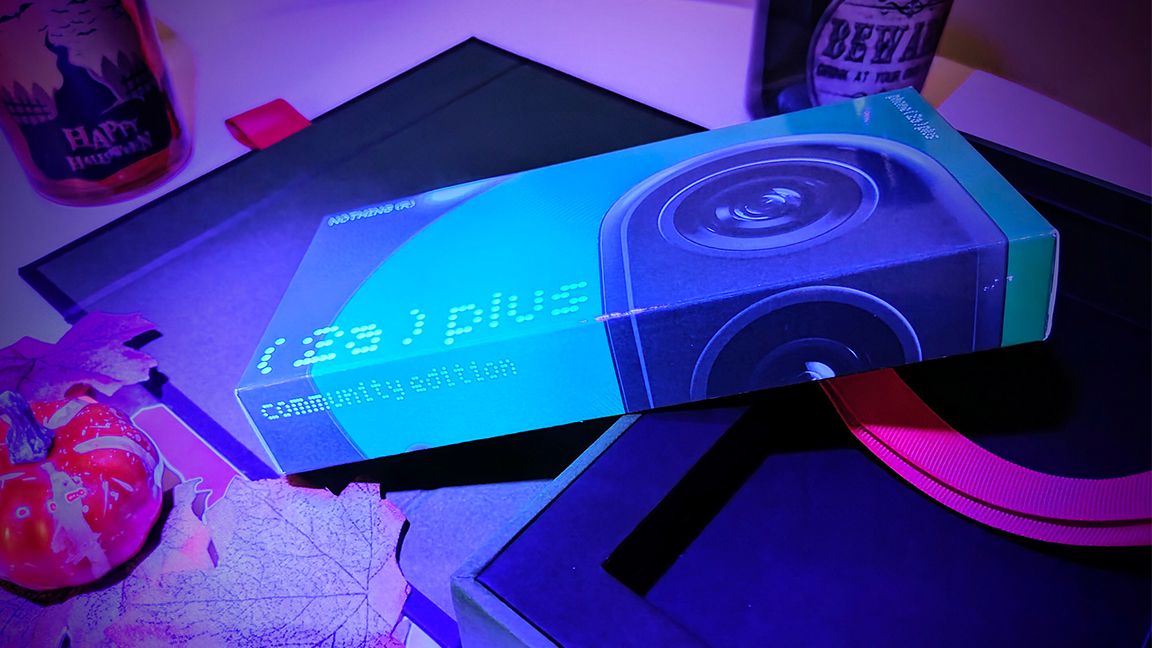
“Originality and taking dangers repay” – the secrets and techniques behind Nothing’s Telephone (2a) Plus Neighborhood Version

0


Nothing Telephones are a little bit completely different, and the most recent launch is an trade first. The Telephone (2a) Plus Neighborhood Version is the primary smartphone designed by the group. It is also a glow-in-the-dark inexperienced slab of enjoyable, that is very best for Halloween (I’ve an early launch mannequin, and it is undoubtedly distinctive). It is taken six months and consists of 4 winners throughout {hardware}, wallpaper, packaging and advertising design.

I’ve reviewed all the Nothing telephones, together with the brand new Telephone (2a) Plus, which is an iterative launch and an excellent budget-priced smartphone. However like all Nothing merchandise, it is the design that jumps out and the brand new Neighborhood Version proudly faucets into the skills of the model’s personal group for inspiration.

Generative AI is reshaping safety danger. Zero Belief may also help handle it

0


AI adoption is accelerating quickly, and safety is racing to maintain up with the adjustments it introduces.

Whereas AI can rework worker productiveness and office effectivity, it additionally amplifies current information safety challenges (which have typically been deferred or uncared for) and introduces some new ones.

Generative AI functions aren’t like conventional ‘deterministic’ functions that do the very same factor each time you run them. Asking Generative AI picture era fashions to repeatedly “draw an image of a kitten in a safety guard uniform” is unlikely to generate the very same image twice (although they’ll all be comparable).

This dynamism creates new worth for companies. Nonetheless, it additionally introduces new varieties of safety dangers and makes current static safety controls much less efficient towards this AI era of functions.

This text will discover how organizations can leverage the symbiotic relationship between Zero Belief and AI to mitigate evolving safety dangers whereas nonetheless responsibly reaping the advantages of AI-powered innovation.

Generative AI-driven shifts

As extra organizations work with Generative AI and check its boundaries, we’ve uncovered these key learnings:

  1. AI amplifies current information governance challenges and will increase the worth of knowledge: Generative AI amplifies the precedence of knowledge safety and governance wants, which have typically been beforehand deferred or uncared for in favor of different priorities like endpoint, identification, community, safety operations tooling, and extra. Specifically, organizations typically discover that they haven’t correctly categorised, recognized, or tagged their information. This makes it onerous to deploy Generative AI options as a result of there’s no technique to keep away from by chance coaching Generative AI methods on delicate or confidential information.

On the similar time, Generative AI additionally will increase the worth of knowledge due to its skill to generate invaluable insights from advanced information units. Whereas that is nice for organizations looking for to operationalize and monetize their information, it additionally will increase the chance of cyber attackers focusing on information for exploitation.

  1. Designing, implementing, and securing AI is a shared duty mannequin: Very like the cloud, Generative AI operates underneath a shared duty mannequin between AI suppliers and AI customers. Relying on the mannequin of the appliance, both the group, the AI supplier, and even the group’s clients could also be liable for securing the AI platform, utility, and utilization.
  2. You will need to construct guardrails for Generative AI fashions: Generative AI fashions by themselves typically have few built-in controls, so it’s essential to fastidiously take into account what information these fashions are skilled on and may entry. You will need to additionally fastidiously plan utility controls to drive safe and dependable outcomes. For instance, Microsoft Copilot implements utility controls that respect your group’s identification mannequin and permissions, inherit your sensitivity labels, applies your retention insurance policies, help auditing of interactions, and comply with your administrative settings.
  3. Generative AI has wonderful potential, however capabilities and safety controls are nonetheless in early days: We needs to be optimistic of Generative AI’s potential but additionally be practical on what the expertise can do at present. Beneath at present’s Generative AI chat mannequin, customers can leverage pure language interfaces to speed up productiveness and achieve many superior duties with no need particular expertise or coaching. This doesn’t imply that AI can do every thing a human professional can do or that it’s going to do these duties completely, although.

In Microsoft’s expertise with launching and scaling Safety Copilot throughout buyer environments, we’ve discovered that Generative AI excels at particular Safety Operations (SecOps/SOC) duties like guiding incident responders, writing up incident standing/experiences, analyzing incident impacts, automating duties, and reverse engineering attacker scripts.

Finally, these learnings underscore how AI introduces each highly effective alternatives and challenges that must be managed. It’s vital to undertake a considerate strategy to safety technique and controls to make sure organizations can safely leverage the transformative energy of AI.

How Zero Belief addresses AI challenges

As soon as organizations notice {that a} community safety perimeter can’t defend their property towards at present’s attackers, Zero Belief acts as a principle-driven strategy that guides organizations via the advanced safety challenges that comply with. Zero Belief requirements and steering have been printed by NIST, The Open Group, Microsoft, and others to information organizations on this journey.

This strategy works because of the symbiotic relationship between Zero Belief and AI. Zero Belief secures AI functions and their underlying information utilizing an asset-centric and data-centric strategy. In the meantime, AI accelerates Zero Belief safety modernization by enhancing safety automation, providing deep insights, offering on-demand experience, dashing up human studying, and extra.

This relationship between AI and Zero Belief isn’t just about enhancing safety; it’s about enabling innovation and agility in a quickly evolving digital panorama. Safety leaders and groups should present calm, vital considering to stability the exuberance of AI initiatives. Nonetheless, it’s equally vital to collaboratively discover a technique to safely say ‘sure’ to those enterprise initiatives.

To be taught extra about you may create an agile safety strategy that dynamically adapts to altering threats and protects individuals, units, apps, and information wherever they’re positioned, go to Microsoft’s Zero Belief web page.