Home Blog Page 84

Unlocking Human Potential in the Supply Chain

0

The Future of Supply Chain: How AI is Revolutionizing Operations

Transforming the Supply Chain through AI

The supply chain is undergoing a significant transformation, driven by the adoption of Artificial Intelligence (AI) technology. AI has been instrumental in making supply chains more efficient, resilient, and responsive, enabling organizations to become more efficient and strategic in their growth. Despite the benefits, many businesses are slow to adopt AI, with only one in ten small and medium-sized enterprises (SMEs) regularly using AI technology.

The Potential of AI in Supply Chain

The potential of AI in supply chain is vast, with some estimates suggesting that AI can help businesses reduce logistics costs by 15%, reduce inventory levels by 35%, and raise service levels by 65%. On the other hand, failure to implement AI tools can lead to unmotivated employees, poor supply chain performance, and weak staff retention.

Automating the Supply Chain and Harnessing the Power of AI for Resilience

AI can help tackle supply chain challenges by automating time-consuming manual processes, reducing errors, and freeing up employees to focus on strategic initiatives. AI can also enhance resilience by providing real-time data analysis, enabling businesses to make informed decisions quickly and respond to disruptions. With AI, businesses can:

  • Automate data-logging and reduce errors
  • Free up employees to focus on strategic initiatives
  • Enhance visibility and monitoring of warehouse operations
  • Enable real-time data analysis and insights
  • Foster seamless collaboration between stakeholders

Human Expertise with Robot Precision

The next wave of AI innovation will see robots becoming collaborative partners to human workers, equipped with groundbreaking sensor technologies that enable them to navigate, adapt, and work with other machinery and people in busy environments. This will result in faster data acquisition and decision-making, redefining what humans and machines can accomplish together.

What’s Next for the Industry?

Implementing AI and advanced technology in the supply chain has the potential to bring significant benefits. However, widespread adoption is necessary to see substantial results. Those that delay starting their AI journeys risk being left behind.

Conclusion

The future of supply chain is here, and it’s driven by AI. By automating the supply chain and using data to fuel predictions, businesses can gain a competitive edge, enhance resilience, and drive growth. It’s time for organizations to start using AI in their supply chains to truly enhance operations.

FAQs

Q: What are the benefits of AI in supply chain?
A: AI can help reduce logistics costs by 15%, reduce inventory levels by 35%, and raise service levels by 65%.

Q: How can AI enhance resilience in supply chain?
A: AI can provide real-time data analysis, enabling businesses to make informed decisions quickly and respond to disruptions.

Q: What’s the future of human-robot collaboration in supply chain?
A: Robots will become collaborative partners to human workers, equipped with sensor technologies that enable them to navigate, adapt, and work with other machinery and people in busy environments.

Q: What’s the impact of delaying AI adoption in supply chain?
A: Delaying AI adoption can result in being left behind by competitors who have already implemented AI and advanced technology in their supply chains.

Rapid Development with Faster Than Express

Fastify with TypeScript: Performance, Typing, and Productivity in the Backend

Introduction

In recent years, TypeScript has become a popular choice for building robust and maintainable backend applications. When combined with Fastify, a fast and lightweight Node.js framework, developers can create high-performance applications with strong typing and improved productivity. In this article, we will explore the benefits of using Fastify with TypeScript and provide tips on how to get the most out of this powerful combination.

Performance

One of the primary benefits of using Fastify with TypeScript is improved performance. Fastify is designed to be fast and lightweight, with a focus on delivering high-performance applications. When combined with TypeScript, developers can take advantage of TypeScript’s static type checking to catch errors early and prevent runtime errors.

Benefits of static type checking

Static type checking provides several benefits, including:

* Improved code quality: By catching errors early, developers can ensure that their code is of high quality and free of errors.
* Reduced debugging time: With type checking, developers can quickly identify and fix errors, reducing debugging time and increasing productivity.
* Better code maintainability: Strongly typed code is easier to maintain and understand, making it easier for developers to update and modify existing codebases.

Typing

TypeScript provides a number of features that make it easy to add strong typing to Fastify applications. These features include:

* Interfaces: TypeScript interfaces allow developers to define the shape of objects and ensure that they conform to a specific structure.
* Classes: TypeScript classes provide a way to define custom classes and ensure that they are used correctly.
* Type annotations: TypeScript type annotations allow developers to add type information to variables, functions, and other code elements.

Benefits of strong typing

Strong typing provides several benefits, including:

* Improved code readability: With strong typing, developers can quickly understand the structure and behavior of their code.
* Better code maintainability: Strongly typed code is easier to maintain and understand, making it easier for developers to update and modify existing codebases.
* Reduced errors: By ensuring that code conforms to a specific structure, developers can reduce the risk of errors and improve code reliability.

Productivity

Fastify with TypeScript also provides a number of features that improve productivity. These features include:

* Auto-completion: Many IDEs and code editors provide auto-completion features that work with TypeScript, allowing developers to quickly complete code elements and improve productivity.
* Code refactoring: TypeScript provides a number of features that make it easy to refactor code, including rename, extract, and move.
* Error reporting: TypeScript provides detailed error reporting, making it easier for developers to identify and fix errors.

Conclusion

Fastify with TypeScript is a powerful combination that provides improved performance, strong typing, and increased productivity. By taking advantage of TypeScript’s features and benefits, developers can create robust and maintainable backend applications that are fast, reliable, and easy to maintain.

FAQs
Q: What is the difference between Fastify and Express?

A: Fastify is a lightweight and fast Node.js framework that provides a number of features and benefits, including strong typing and improved performance. Express is a popular Node.js framework that provides a number of features and benefits, including routing and middleware support.

Q: Can I use Fastify with JavaScript?

A: Yes, you can use Fastify with JavaScript. However, Fastify is designed to work with TypeScript and provides a number of features and benefits that are specifically designed for use with TypeScript.

Q: What are the benefits of using TypeScript with Fastify?

A: The benefits of using TypeScript with Fastify include improved performance, strong typing, and increased productivity. TypeScript provides a number of features and benefits that make it easy to add strong typing to Fastify applications, including interfaces, classes, and type annotations.

Q: Can I use Fastify with other frameworks?

A: Yes, you can use Fastify with other frameworks and libraries. However, Fastify is designed to work specifically with TypeScript and provides a number of features and benefits that are specifically designed for use with TypeScript.

Dremio Boosts AI and BI Performance

Dremio Unveils Across-the-Board Improvements to Data Lakehouse Platform

Dremio used today’s Iceberg Summit as the venue to unleash across-the-board improvements to its data lakehouse platform, including enhancements for data management that will resonate with organizations pursuing anything from analytics to generative AI.

Intelligent Data Lakehouse Platform

Dremio has morphed over the years from a developer of an open source SQL query engine to a full-stack provider of a data lakehouse. Its Intelligent Data Lakehouse Platform combines its query engine with a data storage environment based on Apache Iceberg, the innovative open table format developed at Netflix and Apple to solve data consistency issues in Hadoop clusters.

New Capabilities

The enhancements that Dremio unveiled today with its Spring 2025 release address several issues and use cases that are impacting its customers, ranging from data management and SQL analytics to ensuring performance of AI applications.

  • Autonomous Reflections: A new capability that will function as a materialized cache that is always kept up-to-date with the latest data. Dremio says this cache will provide sub-second queries for AI and SQL queries and eliminate the need for manual performance tuning while cutting compute costs.
  • Iceberg Clustering: Automatically delivers optimized data layouts for Iceberg lakehouses. Iceberg Clustering will improve query speeds while eliminating the need to partition tables, the company says.

AI and Data Management

Kevin Petrie, vice president of research at BARC US, says Dremio’s moves will help customers’ AI projects.

"Many popular AI use cases, including chatbots, recommendation engines and anomaly detection, require simple real-time access to structured or semi-structured data," Petrie said. "Dremio gets positive reviews for meeting these requirements for ease of use and performance, and this announcement further strengthens those capabilities."

Metadata Catalog

Dremio’s Spring 2025 release also introduces support for Apache Polaris, the open source metadata catalog introduced by Snowflake last year, in Dremio’s enterprise metadata catalog offering.

Polaris, which is currently incubating at the Apache Software Foundation, provides fine-grained data access controls and data lineage-tracking capabilities for Iceberg tables, and serves as the interface for query engines that want to access Iceberg data in lakehouses. Dremio says it is the first vendor to provide a Polaris-powered metadata catalog that can run in any cloud or on-premise environments.

Semantic Search

Dremio also launched a new AI-enabled semantic search capability that it says will reduce data discovery time from days to just seconds. It says the new search function will eliminate the need for technical skills or advanced SQL knowledge to discover existing data, either by humans or AI agents.

Conclusion

Dremio’s Spring 2025 release resolves the paradox of AI demanding massive amounts of high-quality data while teams are being asked to do more with less. By eliminating the bottlenecks slowing teams down, Dremio is transforming how enterprises deliver data for AI initiatives.

FAQs

Q: What are the new capabilities introduced by Dremio’s Spring 2025 release?

A: The new capabilities include Autonomous Reflections, Iceberg Clustering, support for Apache Polaris metadata catalog, and AI-enabled semantic search.

Q: How will Autonomous Reflections benefit AI and SQL queries?

A: Autonomous Reflections will provide sub-second queries for AI and SQL queries and eliminate the need for manual performance tuning while cutting compute costs.

Q: What is Apache Polaris metadata catalog?

A: Apache Polaris metadata catalog is an open source metadata catalog introduced by Snowflake last year, which provides fine-grained data access controls and data lineage-tracking capabilities for Iceberg tables.

Q: How will Dremio’s metadata catalog support Apache Polaris?

A: Dremio’s metadata catalog will support Apache Polaris, making it the first vendor to provide a Polaris-powered metadata catalog that can run in any cloud or on-premise environments.

From Clippy to Copilot

0

Celebrating 50 Years of Technological Ingenuity

Microsoft Launches Campaign to Honor Its Past and Invite Its Future

Celebrating 50 years of technological ingenuity, Microsoft has launched a brand new campaign as a heartfelt homage to its past and an invitation to its innovative future. Founded in 1975 by Bill Gates and Paul Allen, Microsoft has evolved into a household name, weaving itself into the fabric of the tech world – now, 50 years on, the company still maintains its founding pioneering spirit and optimism.

Capturing a Sense of Nostalgia

Microsoft’s anniversary celebration spotlights the "dreamers, builders, and changemakers" that built it to inspire a new generation of thinkers. With immersive motion design, playful graphics, and a vibrant color palette, the new campaign evokes a sense of joy – a wholesome tribute to the people central to its 50-year success.

Rooted in the Sentiment "Change Needs Makers"

Created by brand and digital agency Koto, Microsoft’s 50th Anniversary campaign is rooted in the sentiment that “change needs makers.” With an empowering visual language, the campaign centers around Microsoft’s history and the people who shaped it, hinging on the themes of "Worlds", "Iconic Moments", and "Then & Now". More than a mere empty homage, the new campaign is a "visual conversation about progress, impact, and the endless potential ahead."

Design Motif and Typography

Artifacts tell the story of Microsoft’s evolution, featuring early UI to today’s Copilot AI (and of course, a cameo from Clippy). This design motif is reflected in the campaign’s central artifact – the 50th Anniversary logo inspired by the original OG Windows design. Pairing retro aesthetics with contemporary motion graphics, the design embodies the campaign’s dual spirit of celebration and forward-thinking.

The campaign’s typography is a nod to Microsoft’s heritage while capturing a modern feel, featuring Segoe Sans Display. Paired with a collection of six heritage-inspired gradient backgrounds, the visuals unite Microsoft’s identity across the campaign’s touch points, "injecting warmth, optimism, and continuity."

Conclusion

Microsoft’s 50th Anniversary campaign is a testament to the company’s commitment to innovation and its spirit of continuous evolution. By honoring its past and inviting its future, the campaign serves as a catalyst for creativity, innovation, and achievement, inspiring a new generation of thinkers and makers.

Frequently Asked Questions

Q: What is the main theme of Microsoft’s 50th Anniversary campaign?
A: The main theme is "Change Needs Makers", highlighting the people who have shaped Microsoft’s history and inspiring a new generation of thinkers.

Q: Who created the campaign?
A: The campaign was created by brand and digital agency Koto.

Q: What is the design motif of the campaign?
A: The design motif features early UI to today’s Copilot AI, with a central artifact being the 50th Anniversary logo inspired by the original OG Windows design.

Q: What is the typography used in the campaign?
A: The campaign features Segoe Sans Display typography, a nod to Microsoft’s heritage while capturing a modern feel.

Q: What is the main objective of the campaign?
A: The main objective is to inspire a new generation of thinkers and makers, while honoring Microsoft’s past and inviting its future.

Volunteer your time for a free ticket to Sessions: AI

0

Join the Excitement of TechCrunch Sessions: AI as a Volunteer

Opportunity Awaits at UC Berkeley’s Zellerbach Hall on June 5

Join us for an unforgettable experience at TechCrunch Sessions: AI, taking place at UC Berkeley’s Zellerbach Hall on June 5. The event is looking for enthusiastic volunteers to be part of this exciting event. If you’ve ever wondered what goes into the making of tech gatherings, now’s your chance to find out firsthand. Apply here by May 22.

What You’ll Gain by Volunteering

By volunteering, you’ll dive into the inner workings of event production while earning a free ticket to experience TC Sessions: AI before or after your shift. Plus, you’ll receive a complimentary pass to Disrupt 2025, happening on October 27-29 in San Francisco. Whether your aspirations lie in founding a startup, marketing, or event management, this is your backstage pass to a world-class startup event. Immerse yourself in expert-led sessions covering AI topics, all while contributing your time as a volunteer.

Your Role as a Volunteer

With an anticipated crowd of over 1,000 attendees, volunteers will tackle various tasks to ensure a seamless experience for all. From assisting with registration to managing speakers and directing guests, there’s a role for everyone.

Why Apply by May 22?

Don’t miss out on this chance to gain invaluable event experience while soaking up the energy of TC Sessions: AI. Apply by May 22 to secure your volunteer spot!

For Companies Interested in Sponsoring or Exhibiting

If your company is interested in sponsoring or exhibiting at TC Sessions: AI, reach out to our sponsorship sales team by completing this form.

Conclusion

TechCrunch Sessions: AI is an unparalleled opportunity for those looking to dive into the world of tech events. By volunteering, you’ll not only gain valuable experience but also be part of an exciting event that brings together experts and enthusiasts alike. Apply now and be a part of this unforgettable experience.

Frequently Asked Questions

Q: What are the benefits of volunteering at TechCrunch Sessions: AI?
A: By volunteering, you’ll earn a free ticket to experience TC Sessions: AI before or after your shift and receive a complimentary pass to Disrupt 2025.

Q: What kind of tasks will volunteers be responsible for?
A: Volunteers will assist with various tasks such as registration, managing speakers, and directing guests.

Q: How do I apply to be a volunteer?
A: Apply by May 22 by following the link provided in the event announcement.

Q: Is this opportunity available to companies as well?
A: Yes, companies interested in sponsoring or exhibiting at TC Sessions: AI can reach out to our sponsorship sales team by completing a form.

Adobe Drops 1,500 New Fonts

0

Adobe’s Biggest Font Expansion in Five Years

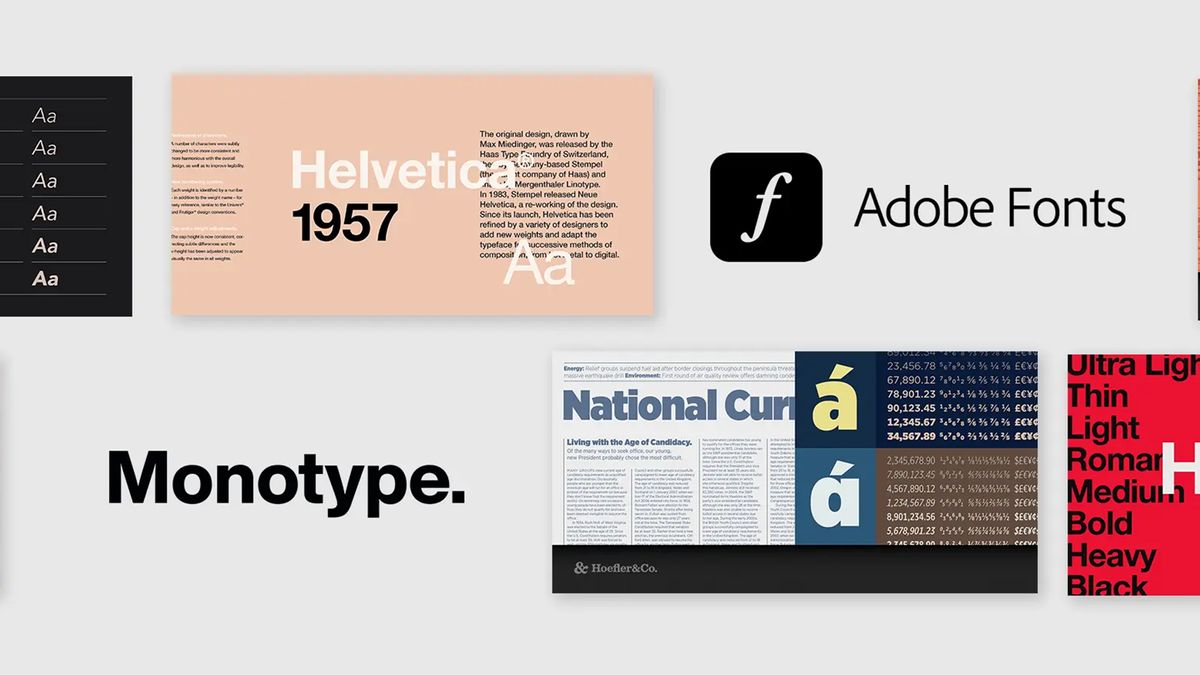
Adobe has announced its biggest font expansion in five years, introducing 1,500 new fonts to its Creative Cloud applications. The new drop includes some iconic favourites from the typographical legends at Monotype, alongside a diverse selection of project-ready typefaces to suit a range of creative work.

A Smooth Creative Experience

While you can scour the web for the best free fonts, the convenience of Adobe’s in-application fonts makes for a seamless creative experience. By improving choice, consistency, and creative freedom, Adobe’s expansion is a welcome development that puts polished and professional design at our fingertips.

A Glimpse into the New Fonts

(Image credit: Adobe)

Joining over 30,000 fonts already included in Adobe’s collection, the new fonts are ready to use in Adobe Express, Adobe Photoshop, Adobe Illustrator, Adobe InDesign, and more. Among the ranks are iconic typefaces like Helvetica, Gotham, Times New Roman, and Arial, as well as unique fonts perfect for a range of projects, from business reports to editorial design.

No More Missing Fonts

For those who work across Adobe’s applications, the expansion ensures a seamless transition, while on a practical level, it’s a godsend for designers fed up with those annoying missing font pop-ups. You now can browse the collection on Adobe Fonts and if you’re looking for more typographical inspiration take a look at our ultimate guide to font pairing.

Conclusion

In conclusion, Adobe’s font expansion is a significant development that will make a significant difference in the creative workflow. With a vast selection of fonts at your fingertips, you’ll be able to produce professional and polished designs with ease.

FAQs

Q: What is the total number of fonts included in the expansion?
A: The expansion includes 1,500 new fonts, adding to the existing collection of over 30,000 fonts.

Q: Which Adobe applications are the new fonts available in?
A: The new fonts are available in Adobe Express, Adobe Photoshop, Adobe Illustrator, Adobe InDesign, and more.

Q: Can I browse the collection of new fonts on Adobe Fonts?
A: Yes, you can browse the collection of new fonts on Adobe Fonts and use them in your creative projects.

Q: Are there any iconic typefaces included in the expansion?
A: Yes, the expansion includes iconic typefaces like Helvetica, Gotham, Times New Roman, and Arial, alongside unique fonts perfect for a range of projects.

Robot Vacuum Innovation to Leave Carpet and Upholstery Lovers Drooling

Eufy’s Omni E28 Robot Vacuum and Mop: A Game-Changer in Cleaning Technology

Robot vacuum manufacturers are constantly trying to outdo one another. One company develops a detachable cordless vacuum for the robot’s dock, and the next makes the robot’s dustbin a detachable cordless vacuum. Now Eufy is upping the ante with the first robot vacuum to also have a detachable spot cleaner for carpet and upholstery.

The Eufy Omni E28: A Robot Vacuum and Mop with a Portable Spot Cleaner

The Eufy Omni E28 is a robot vacuum and mop with a portable spot cleaner for carpets and upholstery. You can run your robot vacuum as you would any other, but you can also pick up the top with a built-in retractable handle and do some deep cleaning on carpets, rugs, or upholstery.

Deep Cleaning with the Portable Spot Cleaner

Essentially, the deep cleaner you carry is the Omni station’s clean and dirty water tank, so it’s where the robot autonomously sources clean water for its mop when it’s at the dock. The deep cleaner has a handle for spot-cleaning with a hose, so you can set it down near where you want to clean and plug it in without holding it as you clean.

Other Key Features

Aside from detachable cordless vacuums, a mop roller system is another big thing for robot vacuums; many makers, including SwitchBot, Yeedi, and Ecovacs, are moving away from detachable rotating mop pads and using mop rollers instead. Eufy’s also done this before with the flagship S1 Pro.

Mop Roller System

The Omni E28 also has a mop roller, which looks similar to the S1 Pro but not identical. The S1 Pro is unequivocally the best mopping robot vacuum I’ve ever tested, so I was pretty excited to see the new Omni E28 feature the same system.

Availability and Pricing

The Eufy Omni E28 is now available for pre-sale on Eufy’s website, but it will be available for retail sale on April 23 on Amazon for $999. I’ll be testing this robot vacuum over the next couple of weeks and will report on its performance.

The Eufy E25 robot vacuum and mop will be available in June for $799.

Conclusion

The Eufy Omni E28 is a revolutionary robot vacuum and mop that takes cleaning to the next level with its detachable spot cleaner and mop roller system. With its powerful suction and advanced cleaning technology, it’s sure to make a big impact in the world of cleaning.

FAQs

Q: What makes the Eufy Omni E28 unique?

A: The Eufy Omni E28 is the first robot vacuum to also have a detachable spot cleaner for carpet and upholstery, making it a game-changer in the world of cleaning technology.

Q: What kind of suction power does the Eufy Omni E28 have?

A: The Eufy Omni E28 has 20,000Pa of suction power, making it capable of picking up dirt and debris with ease.

Q: Is the Eufy Omni E28 self-emptying?

A: Yes, the Eufy Omni E28 is a self-emptying robot vacuum, meaning it can empty its dustbin without needing to be emptied manually.

Q: When will the Eufy Omni E28 be available for purchase?

A: The Eufy Omni E28 will be available for pre-sale on Eufy’s website starting now, and for retail sale on Amazon on April 23 for $999.

Q: What is the price of the Eufy E25 robot vacuum and mop?

A: The Eufy E25 robot vacuum and mop will be available in June for $799.

Microsoft Starts Testing Copilot Vision

0

Microsoft Tests Copilot App Update with Screen Sharing and AI-Assisted File Search

Microsoft has started testing a new update to its Copilot app on Windows, which will allow users to share their screen or apps with the AI assistant. The update, known as Copilot Vision, was originally limited to Microsoft’s Edge browser but is now extending to any app on a user’s PC.

Copilot Vision: A New Way to Interact with AI

Copilot Vision will be able to do things like coach users through using Adobe Photoshop features, or analyze the photos and webpages they’re looking at. The feature will also be able to highlight parts of a user’s screen to guide them through apps, similar to how it currently works in Microsoft Teams. However, the initial beta version of Copilot Vision will not have this feature enabled yet.

Testing the Waters

Microsoft is limiting the experience to US testers only through the Insider beta, and the company has not announced a broader rollout schedule yet. However, the update is expected to be available to all Windows 11 users in the coming weeks or months.

File Search: A New Way to Find Files

In addition to Copilot Vision, Microsoft has also started testing file search in Copilot on Windows. This feature allows users to ask the AI assistant about the contents of a file on their PC, making it easier to find documents and files. The feature currently supports.docx,.xlsx,.pptx,.txt,.pdf, and.json files.

Getting Started

To use Copilot Vision and file search, users will need the Copilot app on their Windows device. The app is currently available on Windows 11, and users can also use Copilot Vision on iOS and Android devices.

Conclusion

The new update to Copilot on Windows brings a range of new features to the table, including screen sharing and AI-assisted file search. These features have the potential to greatly enhance the user experience, making it easier to get things done and stay organized. With the update still in testing, it’s likely that Microsoft will continue to refine and improve the features before they are available to all users.

FAQs

Q: What is Copilot Vision?
A: Copilot Vision is a new feature in the Copilot app on Windows that allows users to share their screen or apps with the AI assistant.

Q: What can I use Copilot Vision for?
A: Copilot Vision can be used to coach users through using Adobe Photoshop features, analyze photos and webpages, and highlight parts of a user’s screen to guide them through apps.

Q: Is Copilot Vision available on all devices?
A: Copilot Vision is currently available on Windows 11, iOS, and Android devices.

Q: Can I use file search in Copilot on Windows?
A: Yes, file search is a new feature in Copilot on Windows that allows users to ask the AI assistant about the contents of a file on their PC.

AI Revolutionizes OSS and BSS in Telecom

Modernizing OSS and BSS: From Reactive to Agentic AI

What are OSS and BSS?

OSS (Operations Support Systems) and BSS (Business Support Systems) have long been the operational and commercial backbone of telecoms. OSS manages network operations, such as provisioning, inventory, and fault detection, while BSS handles transactional functions like billing and customer management. Traditionally, these environments have remained fragmented, hindering a unified view spanning the customer, the network, and the business.

Modernizing OSS and BSS: From Reactive to Agentic AI

Thanks to advances in data management, AI, and generative AI, these systems can now move beyond reactive troubleshooting to automated, predictive, and even more significant agentic solutions, where AI autonomously orchestrates tasks end-to-end. Agentic AI promises unprecedented cost mitigation, efficiency, and agility.

The Importance of Unified Data Accessibility

Effectively harnessing the proactive benefits of agentic AI requires telecom providers to establish a unified source of data truth through seamless data accessibility, rather than trying to consolidate all data onto a single platform. By enabling unified access to network, operational, and business data through a singular data catalog, telecoms ensure AI-powered insights are accurate and comprehensive.

Agentic AI in Action: From Insight to Autonomous Operations

Agentic AI can proactively respond to service degradations, autonomously manage resolving customer issues, and ensure unprecedented cost mitigation, efficiency, and agility. Telecoms can accelerate their transformation by leveraging cloud-native OSS and BSS, which enables autonomous decision-making and rapid deployment of new services.

Faster Time-to-Market for New Services

Launching a new offering in telecom can take weeks or even months. In a cloud-native environment, operators can test, iterate, and deploy new products in days or hours. This speed is a game-changer for operators transitioning from ‘telcos’ to ‘tech-cos,’ where continuous experimentation and rapid scaling of successful pilots are essential to staying competitive.

Achieving Scale with Cloud-Native AI

A robust, cloud-native foundation is essential for scaling AI across complex telecommunication environments. Containerized microservices, DevOps practices, and serverless compute reduce operational overhead, allowing teams to focus on innovating rather than managing infrastructure.

Positioning for Revenue Impact and the Autonomous Future

When OSS and BSS data are unified and AI-powered processes take over routine tasks, telecoms can prioritize innovation that directly impacts the bottom line. Whether rolling out new network services or offering real-time network slicing for enterprise customers, the ability to act on consolidated data in an autonomous fashion sets operators apart in a hyper-competitive market.

Conclusion

The industry is moving beyond point solutions toward a future where agentic AI and unified data estates power autonomous operations. For telecom leaders, now is the time to ensure OSS and BSS modernization strategies align with open standards, prioritize data consolidation, and prepare for the emergence of fully autonomous networks.

FAQs

Q: What are OSS and BSS?
A: OSS manages network operations, such as provisioning, inventory, and fault detection, while BSS handles transactional functions like billing and customer management.

Q: What is agentic AI?
A: Agentic AI is a type of AI that autonomously orchestrates tasks end-to-end, enabling unprecedented cost mitigation, efficiency, and agility.

Q: Why is unified data accessibility important?
A: Unified data accessibility is crucial for ensuring AI-powered insights are accurate and comprehensive, enabling agentic AI to make proactive decisions.

Q: What are the benefits of cloud-native OSS and BSS?
A: Cloud-native OSS and BSS enable autonomous decision-making and rapid deployment of new services, accelerating transformation and staying competitive in a hyper-competitive market.

Q: What is the importance of open standards in OSS and BSS modernization?
A: Open standards ensure compatibility, interoperability, and flexibility, allowing operators to adopt AI without overhauling existing infrastructure or incurring vendor lock-in.

Q: What is the role of Microsoft in OSS and BSS modernization?
A: Microsoft provides a cloud-native, modular approach, fully aligned with ODA, and offers a partner-centric approach with end-to-end technology solutions to help telecoms realize AI-powered OSS and BSS at scale.

IKEA’s Recipe for a Happy Home

0

IKEA’s Democratic Design at Milan Design Week

IKEA’s offering is always a highlight of Milan Design Week, and in celebration of its 30th year at the event, the brand has launched its most ambitious show yet. Translating the findings of IKEA’s annual Life at Home Report into an interactive installation, Democratic Design highlights what the report found to be three essential elements that contribute to a feeling of joy at home. We visited the exhibition this week to see the results.

What is the IKEA Life at Home Report?

The IKEA Life at Home Report is an annual study that explores how people live, think, and feel about their homes. The report provides insights into the challenges and opportunities that shape the way people design, use, and experience their living spaces.

The Three Essential Elements of Joy

According to the report, the three essential elements that contribute to a feeling of joy at home are:

Food

The ‘food’ section of the show features a large communal table at which visitors can eat. “Food brings people together. Tuesday night dinner. A big birthday. A bowl of ice cream on the sofa. A meal can be everything from a celebration to comfort food. And it makes everyday life at home a little bit better,” IKEA says.

Nature

Meanwhile, the ‘nature’ area is, naturally, awash with green. “Bringing nature into our homes creates a sense of balance and wellbeing. Plants. Natural materials. Fresh air. Nature boosts our mental health and simply makes home a more calming and relaxed place to be.”

Play

And the ‘play’ area is filled with retro games machines and football tables. “Play isn’t just for kids. It’s a mindset. Getting lost in a hobby. Playing a game. Dancing-with the blinds up! It brings a sense of fun and creativity. But more than that, it brings joy into life at home.”

Observations and Absences

While the three elements from the report aren’t particularly surprising, also notable are the absences. In our world of ‘smart homes’, note that there’s no ‘tech’ section here – the focus is decidedly on natural and harmonious qualities.

Conclusion

IKEA’s Democratic Design exhibit is a thought-provoking and engaging exploration of the elements that contribute to a feeling of joy at home. By highlighting the importance of food, nature, and play, the exhibit encourages visitors to rethink their relationship with their living spaces and to prioritize the things that bring them happiness.

FAQs

Q: What is the IKEA Life at Home Report?
A: The IKEA Life at Home Report is an annual study that explores how people live, think, and feel about their homes.

Q: What are the three essential elements of joy at home?
A: The three essential elements of joy at home are food, nature, and play.

Q: Is there a ‘tech’ section at the IKEA exhibit?
A: No, the focus of the exhibit is on natural and harmonious qualities, rather than technology.