Deep Cogito Emerges from Stealth with Hybrid AI Models
Overview
A new company, Deep Cogito, has emerged from stealth with a family of openly available AI models that can be switched between “reasoning” and non-reasoning modes. This innovative approach allows for more flexibility in AI applications, enabling hybrid models to quickly answer simple questions while dedicating additional time to more complex queries.
Reasoning vs. Hybrid Models
Reasoning models, such as OpenAI’s o1, have shown great promise in domains like math and physics by effectively fact-checking themselves through complex problems step-by-step. However, this reasoning comes at a cost, including higher computing and latency. To overcome these limitations, labs like Anthropic are pursuing "hybrid" model architectures that combine reasoning components with standard, non-reasoning elements.
Deep Cogito’s Approach
All of Deep Cogito’s models, called Cogito 1, are hybrid models. Cogito claims that they outperform the best open models of the same size, including models from Meta and Chinese AI startup DeepSeek. Each model can answer directly or self-reflect before answering (like reasoning models), and all were developed by a small team in approximately 75 days.
Model Parameters and Availability
The Cogito 1 models range from 3 billion parameters to 70 billion parameters, with larger models generally having better problem-solving skills. Cogito says that models ranging up to 671 billion parameters will join them in the coming weeks and months. Every Cogito 1 model is available for download or use via APIs on cloud providers Fireworks AI and Together AI.
Performance and Comparison
According to the results of Cogito’s internal benchmarking, the largest Cogito 1 model, Cogito 70B, with reasoning outperforms DeepSeek’s R1 reasoning model on a few mathematics and language evaluations. Cogito 70B with reasoning disabled also eclipses Meta’s recently released Llama 4 Scout model on LiveBench, a general-purpose AI test.
Founders and Funding
Deep Cogito was founded in June 2024 by Drishan Arora and Dhruv Malhotra. Malhotra was previously a product manager at Google AI lab DeepMind, where he worked on generative search technology. Arora was a senior software engineer at Google. The company’s backers include South Park Commons, according to PitchBook, and ambitiously aims to build "general superintelligence."
Conclusion
Deep Cogito’s emergence from stealth with hybrid AI models marks an exciting development in the field of AI. By offering a flexible and powerful tool, Cogito 1 models have the potential to revolutionize the way we interact with AI systems.
FAQs
Q: What is Deep Cogito?
A: Deep Cogito is a new company that has emerged from stealth with a family of openly available AI models that can be switched between “reasoning” and non-reasoning modes.
Q: What is the difference between reasoning and hybrid models?
A: Reasoning models, such as OpenAI’s o1, can effectively fact-check themselves through complex problems step-by-step, but come at a cost, including higher computing and latency. Hybrid models, like Cogito 1, combine reasoning components with standard, non-reasoning elements.
Q: How do Cogito 1 models perform compared to other popular models?
A: Cogito 1 models outperform the best open models of the same size, including models from Meta and Chinese AI startup DeepSeek.
Q: How can I access Cogito 1 models?
A: Every Cogito 1 model is available for download or use via APIs on cloud providers Fireworks AI and Together AI.
Q: What are the goals of Deep Cogito?
A: Deep Cogito ambitiously aims to build "general superintelligence," meaning AI that can perform tasks better than most humans and "uncover entirely new capabilities we have yet to imagine."
Customizing and Evaluating Embedding Models for Retrieval-Augmented Generation (RAG) Pipelines
As large language models (LLM) gain popularity in various question-answering systems, retrieval-augmented generation (RAG) pipelines have become a focal point. RAG pipelines combine the generation power of LLMs with external data sources and retrieval mechanisms, enabling models to access domain-specific information that may not have existed during fine-tuning.
Challenges in Customizing and Evaluating Embedding Models
Embedding models play a critical role in RAG systems by converting both the document corpus and user queries into dense numerical vectors. However, pretrained embedding models often fail to capture the nuances of domain-specific data, leading to unreliable search results, missed connections, and poor RAG performance.
Creating Evaluation and Customization Data for Embedding Models is Challenging
Publicly available datasets often lack relevance when applied to enterprise-specific data. Creating human-annotated enterprise-specific datasets is both expensive and time-consuming, requiring domain experts to label large volumes of data.
Generating High-Quality Synthetic Data with NVIDIA NeMo Curator
NVIDIA NeMo Curator improves generative AI model accuracy by processing text, image, and video data at scale for training and customization. It also provides prebuilt pipelines for generating synthetic data to customize and evaluate embedding models.
The SDG pipeline for generating RAG evaluation data consists of three key components:
QA Pair-Generating LLM: This component uses an NVIDIA NIM LLM to generate QA pairs from seed documents, with optimized system prompts that guide the LLM to create more context-aware and relevant questions.
Embedding Model-as-a-Judge for Question Easiness: This component evaluates and ranks the complexity of each question using an embedding model, filtering out generated questions based on their cosine similarity with context documents.
Answerability Filter for Grounding: This component ensures that each generated question is directly grounded in the seed document, preventing irrelevant or hallucinated questions from being included in the dataset.
Understanding Hard-Negative Mining
Hard negatives play a crucial role in enhancing the performance of contrastive learning for embedding models. By incorporating hard negatives, models are forced to learn more discriminative features, improving their ability to differentiate between similar yet distinct data points.
Hard-Negative Mining Methods
There are three methods for generating hard negatives:
Top-K Selection: The system identifies the top K negative documents that have the highest cosine similarity to the question.
Threshold-Based Selection: An alternative approach is to set minimum and maximum thresholds for cosine similarity between negatives and the question and select the top K negative documents that lie within these thresholds.
Positive-Aware Mining: This method uses the positive relevance score as an anchor to more effectively remove false negatives.
Summary
In this post, we discussed how the SDG pipelines from NeMo Curator simplify generating high-quality datasets, enabling the precise evaluation and customization of text embedding models. With these enhanced datasets, you can effectively evaluate and fine-tune RAG performance, gaining insights into how well your retriever systems perform and identifying ways to improve accuracy and relevance.
Conclusion
Customizing and evaluating embedding models for RAG pipelines is a critical step in achieving accurate and relevant results. By using NVIDIA NeMo Curator’s SDG pipelines, you can generate high-quality datasets and optimize your RAG applications at scale with significantly lower costs.
Frequently Asked Questions
Q: What is Retrieval-Augmented Generation (RAG) pipeline?
A: RAG pipeline combines the generation power of large language models (LLMs) with external data sources and retrieval mechanisms, enabling models to access domain-specific information that may not have existed during fine-tuning.
Q: What is the role of embedding models in RAG pipelines?
A: Embedding models convert both the document corpus and user queries into dense numerical vectors, enabling efficient retrieval of relevant documents.
Q: Why do pretrained embedding models fail to capture domain-specific data?
A: Pretrained embedding models often fail to capture the nuances of domain-specific data, leading to unreliable search results, missed connections, and poor RAG performance.
Q: How can I generate high-quality synthetic data for customizing and evaluating embedding models?
A: You can use NVIDIA NeMo Curator’s SDG pipeline, which consists of three key components: QA pair-generating LLM, embedding model-as-a-judge for question easiness, and answerability filter for grounding.
Q: What is hard-negative mining?
A: Hard negatives play a crucial role in enhancing the performance of contrastive learning for embedding models, forcing them to learn more discriminative features and improve their ability to differentiate between similar yet distinct data points.
Q: How can I generate hard negatives?
A: You can use one of three methods: Top-K selection, threshold-based selection, or positive-aware mining.
Samsung’s SmartThings Now Compatible with Matter 1.4, Adds New Features
SmartThings and Matter 1.4
Samsung’s smart home platform, SmartThings, has added support for Matter 1.4, the latest version of the interoperable smart home standard. This update brings compatibility with a wide range of devices, including water heaters, heat pumps, and solar panels that use the Matter 1.4 specification.
What is Matter 1.4?
Matter 1.4 is an update to the Matter 1.3 standard, which added support for controlling robot vacuums. The new version makes it easier to use one device with multiple platforms at once, and also adds more granular control. With Matter 1.4, smart home platforms can now direct devices to perform specific tasks, such as cleaning a specific room.
New Features and Devices
Along with the Matter update, Samsung has introduced new smart home automation triggers, as well as a broadcast feature for SmartThings-connected speakers. The broadcast feature allows users to send voice messages through their SmartThings-connected speakers from the SmartThings app, whether they are in or out of their home.
SmartThings Routines
Samsung has also updated SmartThings routines, allowing users to trigger events based on recurring events, such as a smart bulb changing colors on someone’s birthday. Additionally, SmartThings can now automatically perform tasks such as turning off lights or opening curtains based on a user’s actual sleep and wake times, if they have a paired Galaxy Watch or Galaxy Ring.
Energy Management Devices
The latest version of the Matter standard includes a wide range of energy management devices, such as:
Water heater
Heat pump
Solar power device
Battery storage device
Mounted on/off control switch
Mounted dimmable load control device
Conclusion
The latest update to SmartThings brings a range of new features and devices to the platform, making it easier to control and automate your smart home. With the addition of Matter 1.4, users can now enjoy more granular control and compatibility with a wider range of devices.
FAQs
Q: What is Matter 1.4?
A: Matter 1.4 is the latest version of the interoperable smart home standard, which adds more granular control and compatibility with a wider range of devices.
Q: What devices are compatible with Matter 1.4?
A: Samsung’s SmartThings platform is now compatible with devices such as water heaters, heat pumps, and solar panels that use the Matter 1.4 specification.
Q: What are the new features in SmartThings?
A: The latest update to SmartThings includes new smart home automation triggers, a broadcast feature for SmartThings-connected speakers, and updated routines that allow users to trigger events based on recurring events.
Q: Can I use SmartThings with my Galaxy Watch or Galaxy Ring?
A: Yes, SmartThings can now automatically perform tasks such as turning off lights or opening curtains based on your actual sleep and wake times, if you have a paired Galaxy Watch or Galaxy Ring.
In a recent episode of my weekly podcast DisrupTV, Constellation Research’s R "Ray" Wang and I had the privilege of hosting two remarkable visionaries who have shaped our digital landscape: Dr. Vinton G. Cerf, vice president and chief internet evangelist at Google, and Dr. David Bray, distinguished chair of the accelerator at the Henry L. Stimson Center and Principal/CEO of LeadDoAdapt Ventures, Inc.
The Evolution of the Internet
Cerf reflected on the remarkable journey from the early days of ARPANET to today’s global network connecting 5.6 billion people. Looking to the internet’s future, he highlighted increasing capacity, expanding accessibility, and going off-planet. Since 1998, Cerf has worked at the Jet Propulsion Lab on developing an "interplanetary internet backbone." Cerf also emphasized how AI is becoming an increasingly powerful tool, noting that approximately 25% of Google’s software is now being generated through AI-based tools. He sees us "entering into a period of abundance of computing and communication capability that will enable some amazing accomplishments."
Leadership Lessons from Decades of Tech Innovation
When asked about leadership insights from his illustrious career, Cerf offered several practical principles:
Seek collaboration: "If you want to do anything big, get help."
Learn to sell your ideas: "Make sure you learn how to sell your ideas to other people so they want to help you do what you want to do."
Maintain curiosity: "I hope I never grow up. I want to stay the same curious person I was when I was 10 years old."
Value mentorship: Cerf credited mentors like Bob Kahn and Steve Crocker, who "helped to keep my curiosity vibrating and have helped to feed my interests."
Building People-Centered Internet and AI
Both leaders stressed the need for technology to serve humanity rather than vice versa. Cerf noted that while the internet allows like-minded people to discover each other, "like-minded doesn’t necessarily mean people who have your best interests in mind." For Cerf, this highlights the need for accountability, responsibility, and ethics — issues that "technology cannot solve. These are things that only social constructs, social norms, maybe laws and law enforcement can solve."
Leadership Advice for Today’s Leaders
For executives navigating digital transformation and AI integration, Cerf and Bray offer seven key takeaways:
Revisit the social contract: As Cerf put it, "It’s time for us to revisit the social contract… accountability has to go along with agency."
Prioritize human connection: Bray emphasized creating spaces where people can engage meaningfully across differences, comparing it to "electronic agoras" where diverse perspectives can be shared.
Balance innovation with responsibility: Both Cerf and Bray stressed that technological advancement must be paired with ethical considerations and societal impact assessments.
Embrace collaboration across disciplines: The challenges ahead require collaboration among technologists, social scientists, ethicists, policymakers, and community leaders.
Lead with empathy: Empathetic leadership is not just nice to have; it’s essential for navigating complex change. You need to understand how changes affect different stakeholders and address their concerns authentically.
Create psychological safety: "Innovation," said Bray, "requires an environment where people feel safe to take risks. If your team is afraid to fail, they’ll never try anything truly innovative. Create a culture where calculated risks are encouraged, and failures are treated as learning opportunities."
Think exponentially: Both Cerf and Bray believe leaders need to anticipate exponential changes and prepare their organizations accordingly.
Conclusion
As we stand at the intersection of the internet age and the AI revolution, these insights from two pioneers who have shaped our digital world offer a roadmap for leaders seeking to harness technology’s potential while ensuring it serves humanity’s best interests. They envision a future where thoughtful leadership, inclusive dialogue, and a commitment to human dignity — even amid advances in technological and data capabilities — help guide our collective journey forward.
Frequently Asked Questions
Q: What are the key takeaways from Cerf and Bray’s leadership insights?
A: The key takeaways are the importance of collaboration, empathy, and responsibility in leadership, as well as the need for technological advancement to be paired with ethical considerations and societal impact assessments.
Q: How can leaders prioritize human connection in the age of AI?
A: Leaders can prioritize human connection by creating spaces where people can engage meaningfully across differences, and by fostering a culture of psychological safety where people feel comfortable sharing their perspectives and taking risks.
Q: What is the role of accountability in the digital age?
A: Accountability is essential in the digital age, as technology has the potential to amplify both positive and negative impacts. Leaders must be accountable for the consequences of their actions and decisions, and must prioritize transparency and ethics in their decision-making processes.
The Gas Turbine Shortage: A Challenge for the Electric Power Industry
A New Era for Natural Gas?
To hear Trump administration officials and many energy executives tell it, the United States is on the precipice of a new golden age for natural gas that will be driven in large part by the voracious power needs of data centers. However, turning natural gas into electricity requires giant metal turbines that are increasingly difficult to secure.
The Challenges of Securing Gas Turbines
Companies that haven’t already reserved this equipment, which can weigh as much as a large airplane and cost hundreds of millions of dollars, are facing waits of three or four years, about twice as long as just a year earlier. The cost of building gas power plants has also soared — so much so that in some parts of the country, solar panels and batteries are likely to be cheaper, energy executives and consultants said.
Impact on the Electric Power Industry
The challenge of securing enough gas turbines is one of the clearest examples of how booming investment in artificial intelligence is reshaping the electric power industry, overwhelming suppliers and upending longstanding notions of what makes sense financially. It’s also a reminder of the gap that often exists between the plans and goals of politicians and executives and the reality on the ground.
GE Vernova and the Future of Gas Power
GE Vernova, the biggest manufacturer of large gas turbines in the world, is among those betting that the recent flurry of interest in gas power will last. The company is spending more than $160 million to overhaul its gas turbine plant on the edge of Greenville, S.C. By the end of next year, the 1.5-million-square-foot factory is expected to churn out about 35 percent more gas turbines.
The Role of Data Centers in the Gas Boom
Tech giants like Microsoft and Google pledged years ago to lower their emissions. But as it has become clearer how much and how quickly their energy needs will grow, companies have turned to gas. When burned, natural gas produces carbon dioxide, the leading cause of climate change. But gas plants can be built faster than nuclear power plants and operate all day, unlike wind and solar energy.
Conclusion
The challenges posed by the gas turbine shortage highlight the complexities of the electric power industry and the need for careful planning and investment in the face of rapid technological change. While some executives remain optimistic about the future of gas power, others are more cautious, and the debate is likely to continue as the industry adapts to the demands of a rapidly changing world.
FAQs
Q: Can the gas turbine shortage be resolved by increasing manufacturing capacity?
A: Yes, increasing manufacturing capacity could help alleviate the shortage, but it would also require significant investment and time.
Q: How does the gas turbine shortage impact the cost of building gas power plants?
A: The shortage has led to significant increases in the cost of building gas power plants, making them less competitive with solar panels and batteries in some parts of the country.
Q: What is the role of data centers in the gas boom?
A: Data centers are driving the increasing demand for natural gas, as companies seek to power their operations with reliable and efficient energy sources.
Q: Can the gas turbine shortage be overcome by invoking the Defense Production Act?
A: The Defense Production Act could potentially be used to encourage companies to produce critical equipment, but it would require careful consideration of the potential impact on the industry and the broader economy.
In this month’s issue, we have a broad range of content, with a particular focus on the world of comic art, an area that so many artists dip into or make a career out of. There’s expert advice from comic pros, plus a deep dive into how some truly iconic characters were recreated for video game Marvel Rivals, which has become wildly popular since its December release.
Also in This Issue
Get Yours Now!
To bag your own copy, head over to magazines direct, where you can pick up single issues, save some money on a subscription, and fill in the blanks in your collection with back issues.
Don’t Forget!
If you buy a subscription, you get access to our digital back catalogue too!
Artist in Residence
Renowned comic artist Lee Carter takes us on a tour of his trinket-filled studio in our regular artist in residence slot this issue.
Workshop – Learn to Draw Like Jamie Hewlitt
Discover key tips to create stunning art in the style of Tank Girl and Gorillaz artist Jamie Hewlitt.
News Story
ImagineFX 252: Discover the comic art coming from Africa. With nods to African heritage, comic art from this region is booming, so we take a good look at some of the success stories from this inspiring comic culture.
Conclusion
In this issue, we’ve explored the world of comic art, from expert advice to iconic character recreations and inspiring success stories. Whether you’re a seasoned artist or just starting out, we hope you’ve enjoyed this month’s content.
FAQs
Q: What is the focus of this month’s issue?
A: The focus of this month’s issue is comic art, with expert advice, iconic character recreations, and inspiring success stories.
Q: How can I get my copy of this issue?
A: You can get your copy by heading over to magazines direct, where you can pick up single issues, save some money on a subscription, and fill in the blanks in your collection with back issues.
Q: What do I get with a subscription?
A: With a subscription, you get access to our digital back catalogue too!
Q: Who is the artist in residence this issue?
A: Renowned comic artist Lee Carter is the artist in residence this issue.
Computer-aided design, or CAD, began in the late 1960s and early in the 1970s and was developed internally by big aerospace and car companies to automate repetitive tasks. It has evolved considerably since those early days, becoming more powerful and more accessible as both computer hardware and software design has improved.
2D CAD
An example of 2D CAD drafting in M4 (Image credit: CAD Schroer GmbH)
Originally, CAD was all in 2D, making use of geometric shapes like lines, rectangles, arcs, and circles to create flat drawings. This approach is still used today, often including annotations on drawings using text, dimensions and tables.
2.5D CAD
You may also hear the term 2.5D CAD. This refers to computer-aided design that still displays the depth of objects in geometric shapes like with 2D CAD but applies contour maps to visualise height at different points. Its most common use is in computer numerical control (CNC) machining since it can simplify the manufacture of parts that have several flat surfaces of different depths.
3D CAD
An example of 3D CAD in SolidWorks (Image credit: SolidWorks)
Finally, in 3D CAD, software is used to create a more lifelike model of an object in 3D space. These three-dimensional models include width, height, and depth.
Types of CAD: direct modelling vs parametric modelling
In direct modelling, designers manipulate 3D geometry directly, without relying on predefined features or parametric relationships by pushing, pulling, or twisting faces, edges, or vertices. This allows quick, intuitive changes for rapid prototyping.
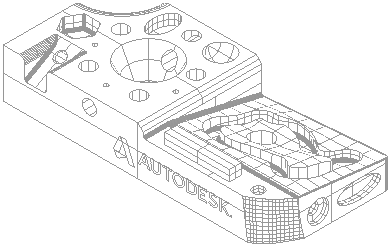
Types of CAD geometric modelling
Wireframe modelling in AutoCAD (Image credit: Autodesk)
Geometric modelling is a key technique in CAD that uses mathematical formulas to describe an object’s geometry. This allows designers to create and manipulate 3D models. After creating the initial model, designers can conduct element analysis.
Conclusion
In conclusion, CAD is a broad term that encompasses various types of design, including 2D, 2.5D, and 3D, as well as different modelling techniques such as direct, parametric, surface, and solid modeling. Understanding the different types of CAD and their applications can help designers and engineers create more accurate and efficient designs, and ultimately, improve the quality of their work.
FAQs
Q: What are the main types of CAD?
A: The main types of CAD are 2D, 2.5D, and 3D, with each type having its own strengths and applications.
Generative AI Tech Demo Advances, but Practical Applications Remain Limited
A Slight Advance from WHAM
The current generative Quake II demo represents a slight advancement from Microsoft’s previous generative AI gaming model (confusingly titled “WHAM” with only one “M”) we covered in February. That earlier model, while showing progress in generating interactive gameplay footage, operated at 300×180 resolution at 10 frames per second—far below practical modern gaming standards. The new WHAMM demonstration doubles the resolution to 640×360. However, both remain well below what gamers expect from a functional video game in almost every conceivable way. It truly is an AI tech demo.
Limitations and Challenges
For example, the technology faces substantial challenges beyond just performance metrics. Microsoft acknowledges several limitations, including poor enemy interactions, a short context length of just 0.9 seconds (meaning the system forgets objects outside its view), and unreliable numerical tracking for game elements like health values.
Marketing vs. Reality
Which brings us to another point: A significant gap persists between the technology’s marketing portrayal and its practical applications. While industry veterans like Carmack and Sweeney view AI as another tool in the development arsenal, demonstrations like the Quake II instance may create inflated expectations about AI’s current capabilities for complete game generation.
Potential Applications
The most realistic near-term application of generative AI technology remains as coding assistants and perhaps rapid prototyping tools for developers, rather than a drop-in replacement for traditional game development pipelines. The technology’s current limitations suggest that human developers will remain essential for creating compelling, polished game experiences for now. But given the general pace of progress, that might be small comfort for those who worry about losing jobs to AI in the near-term.
Industry Insights
Sweeney says not to worry: “There’s always a fear that automation will lead companies to make the same old products while employing fewer people to do it,” Sweeney wrote in a follow-up post on X. “But competition will ultimately lead to companies producing the best work they’re capable of given the new tools, and that tends to mean more jobs.”
Carmack’s Perspective
Carmack closed with this: “Will there be more or less game developer jobs? That is an open question. It could go the way of farming, where labor-saving technology allow a tiny fraction of the previous workforce to satisfy everyone, or it could be like social media, where creative entrepreneurship has flourished at many different scales. Regardless, “don’t use power tools because they take people’s jobs” is not a winning strategy.”
Conclusion
In conclusion, while the generative AI tech demo has shown some progress, it still faces numerous limitations and challenges. The technology is not yet ready for practical application in the gaming industry, and human developers will continue to play a crucial role in creating engaging game experiences. As the industry continues to evolve, it will be important to keep a level head and focus on the potential benefits that AI can bring, rather than getting caught up in inflated expectations.
FAQs
Q: What is the current resolution of the WHAMM demonstration?
A: The current resolution of the WHAMM demonstration is 640×360.
Q: What are some of the limitations of the generative AI technology?
A: Some of the limitations include poor enemy interactions, a short context length, and unreliable numerical tracking for game elements like health values.
Q: What are the potential applications of generative AI technology in the gaming industry?
A: The most realistic near-term application is as coding assistants and rapid prototyping tools for developers, rather than a drop-in replacement for traditional game development pipelines.
Q: Will AI replace human game developers?
A: Industry veterans like Carmack and Sweeney believe that AI will become another tool in the development arsenal, but human developers will still be essential for creating compelling, polished game experiences.
In earlier issues, we covered the essentials of building a Solana sniper bot, SPL tokens, Solana DEX platforms, Telegram Bot, etc. Along the way, we built four core scripts:
SOL transfers between Wallet A and Wallet B
SPL token transfers between the same wallets
A swap (buy/sell) script for Token A ↔ Token B
Telegram Bot script with Sniping features
Now it’s time to explore the most important part of developing a Solana Sniper bot.
As I mentioned before, sniper bots on Solana are automated programs designed to execute token purchases at the most opportune moments, often within milliseconds of a token’s launch or a market-moving event. To maximize profits and minimize risks, we need to understand the optimal timing, strategies, tools, and risks involved.
In this issue, I’ll cover when sniper bots should buy tokens on Solana in detail. I will also demonstrate a script that listen for pump.fun migrations to Raydium for real-world coding examples.
Also, in the last part of this issue, I will introduce the integrated Solana Trading Bot platform developed by our team.
1. The Best Times for Sniper Bots to Buy
1.1 During Token Launches (Liquidity Sniping)
The most profitable and strategically critical window for sniper bot activity occurs precisely when a new token launches and initial liquidity is injected into the market. This phase represents the golden opportunity for bots to secure positions at the absolute lowest prices before any significant price appreciation occurs. Below, we’ll explore this process in exhaustive detail, covering every nuanced aspect that determines success or failure in liquidity sniping.
1.1.1 Detecting New Liquidity Pools
How Sniper Bots Identify Launching Tokens
Sniper bots employ sophisticated monitoring systems that continuously scan all major Solana decentralized exchanges (DEXs) including:
Raydium (Primary launchpad for new Solana tokens), which serves as the primary launchpad and most critical trading venue for new Solana token launches, where approximately 78% of all new SPL tokens first gain liquidity through its automated market maker (AMM) infrastructure and where the most lucrative early-stage opportunities typically emerge within the first 30 seconds of trading.
Orca (Significant secondary market with new pool creations), functioning as a significant secondary market that sees substantial new pool creations daily, particularly for mid-stage projects that have survived beyond initial launch, with its concentrated liquidity features often revealing important patterns about emerging token viability through its unique whirlpool dynamics and trading volume metrics.
Jupiter (Aggregator that often reveals new tokens first), the leading aggregator that frequently reveals new tokens first through its route optimization algorithms before they appear on individual DEX interfaces, acting as an early warning system for sniper bots due to its comprehensive scanning of all possible liquidity sources across the Solana ecosystem, including smaller, less-monitored trading venues.
Metis (Emerging DEX with early-stage launches), an emerging but increasingly important DEX that has become notable for early-stage launches due to its lower fees and less crowded trading environment, where new tokens sometimes appear several blocks before hitting larger exchanges, presenting unique arbitrage opportunities for well-equipped bots.
These bots implement real-time blockchain parsing to detect:
New token mint transactions (Identifying freshly created SPL tokens), where the bots analyze the Solana Program Library (SPL) token creation events down to the individual instruction level, identifying freshly created tokens through a combination of signature analysis, creator wallet profiling, and mint authority patterns that help distinguish legitimate launches from test deployments or scam attempts.
Initial liquidity pair creations (SOL/token or USDC/token pools), where the systems monitor for specific transaction patterns involving SOL/token or USDC/token pool formations across all major AMM protocols, tracking not just the liquidity amount but also analyzing the wallet histories of liquidity providers to assess launch legitimacy and potential for price manipulation.
First swap transactions (Indicating active trading beginning), which serve as the definitive signal that active trading has begun, with bots employing machine learning models to interpret these initial market movements – distinguishing between organic trading, bot activity, and potential wash trading patterns – all within the first few blocks of a token’s trading existence to make millisecond-level entry decisions.
Critical Monitoring Tools for Pool Detection
Professional sniper setups utilize multiple data sources simultaneously:
Primary Detection Tools
DexScreener (Most reliable for real-time new pair alerts with customizable filters)
Birdeye (Excellent for tracking sudden volume spikes in new markets)
DexLab (Specialized in identifying pre-launch token deployments)
Solscan Token Explorer (Raw blockchain data for earliest possible detection)
A sudden spike in watchers, searches, or volume means a token is about to move.
Example: If a token gets 1,000+ new DexScreener watchers in 5 minutes, bots buy before the crowd.
Many pump groups and influencers coordinate buys.
Bots scrape Telegram channels for keywords like “loading“, “entry“, or “gem“.
The Milliseconds That Matter: Execution Timing
1.1.2 Front-Running Social Hype – Predicting the Pump Before It Happens
The Social Media Catalyst Effect
Statistical analysis shows that 87% of successful meme coins experience their first major price movement within 15-45 minutes of coordinated social media promotion. Sniper bots capitalize on this through:
Historical Case Studies
$BONK: Bots detected 12 minutes before major Twitter shilling began
$WIF: Early buys at $0.01
$MYRO: 87% of initial buys were bots before retail entry
Advanced Predictive Modeling
Cutting-edge sniper systems now incorporate:
Natural Language Processing (NLP) to score hype potential
Wallet clustering algorithms to detect influencer accumulation
Image recognition to analyze trending meme formats
Solana’s network performance is notoriously variable, with transaction processing speeds fluctuating dramatically based on global usage patterns, validator node performance, and overall network demand. When the blockchain becomes congested—a frequent occurrence during periods of intense trading activity or popular NFT mints—transactions can fail entirely or experience dangerous delays of 30 seconds or more, completely destroying the profitability potential for time-sensitive sniper bot operations. Understanding these congestion patterns and optimizing for network conditions is absolutely critical for successful sniping.
1.2.1 Best Timeframes for Fast Execution – Strategic Timing Analysis
Optimal Low-Traffic Windows
The most reliable timeframes for smooth, low-competition execution consistently occur during early morning UTC hours (12 AM – 4 AM) when:
North American traders are asleep (EST/PST timezones)
European markets haven’t yet begun daytime trading
Asian markets are wrapping up their activity
Overall network activity drops by 40-60% compared to peak hours
Statistical analysis of Solana’s historical congestion patterns shows these hours experience:
78% lower transaction failure rates
55% faster average block confirmation times
92% reduction in priority fee bidding wars
High-Risk Congestion Periods to Avoid
The most dangerous periods for sniper operations align with peak U.S. market hours (2 PM – 8 PM UTC) when:
Wall Street trading overlaps with crypto market activity
Major NFT drops and token launches are scheduled
Retail trader participation spikes dramatically
During these windows, the network regularly experiences:
Transaction failure rates exceeding 35%
Priority fees spiking to 50x normal levels
Confirmation delays of 15+ blocks
RPC node response times degrading by 400-800ms
Advanced Network Monitoring Techniques
Professional sniper operators implement multi-layered monitoring:
Real-time TPS tracking via Solana Beach/Explorer (sub-2,000 TPS = safe)
Mempool depth analysis to predict coming congestion
Validator health metrics to identify network stress points
Historical pattern recognition of recurring congestion events
To combat latency, professional operations deploy:
Private RPC Nodes (Helius/QuickNode/Triton/Shyft)
Geographically distributed endpoints
Load-balanced configurations
Dedicated validator connections
Transaction Processing Clusters
Pre-signed TX pools
Parallel submission systems
Failover mechanisms
Network-Level Optimizations
Kernel-level TCP tuning
Sub-1ms latency fiber routes
Colocated server deployments
The Milliseconds War – Execution Optimization
The Dark Forest of Solana Understanding the bot hierarchy:
First-layer snipers (0-100ms execution)
Second-wave arbitrageurs (100-500ms)
Retail-frontrunners (1-3 second latency)
Manual traders (10+ seconds – already too late)
1.3 Risks & How to Mitigate Them
Before diving into the parameters of the Solana Sniper Bot, it’s crucial to recognize that no configuration can fully eliminate risk. Whether through rug pulls, exploits, or other malicious tactics, you’ll always be navigating dangerous waters. Here’s a breakdown of the key threats—and how you can mitigate them.
1.3.1 Rug Pulls & Honeypots
A rug pull occurs when a liquidity pool is launched without burning the liquidity tokens, allowing the creator to withdraw funds at any time. Even if you use filters to check for burned liquidity, you’re still vulnerable to exploits.
A more sophisticated version—the honeypot—occurs when the creator launches a pool without revoking freeze authority (possible in Raydium V3). They can freeze the token immediately after launch, trapping your sniper bot’s purchases with no way to sell.
Mitigation
1.3.2 Exploits via Bundle Sniping
Some creators use bundle sniping, adding liquidity and buying in the same transaction to ensure they’re first. Even if liquidity tokens are burned, they control the initial price action—meaning a quick sell-off can mimic a rug pull.
Mitigation
1.3.3 Bot Competition (Gas Wars)
When too many bots compete for the same trade, the Solana network can become congested, leading to failed transactions, skyrocketing priority fees, or even front-running by more aggressive bots. Since sniping relies on speed and precision, heavy competition can drastically reduce your success rate—or make sniping entirely unprofitable due to excessive gas costs.
Mitigation
Use Private RPCs: Public RPC endpoints often suffer from latency and rate limits, making private RPCs essential for reducing delays.
Dynamic Gas Adjustment: Instead of using a fixed priority fee, implement an algorithm that adjusts gas based on real-time network congestion and competing bot activity.
Transaction Simulation: Before sending a full snipe, simulate the transaction to estimate success probability and optimal gas settings.
Avoid Peak Times: Monitor historical Solana congestion patterns and avoid sniping during high-traffic periods (e.g., major token launches).
1.3.4 Solana Network Failures
Solana’s network is known for occasional congestion, outages, or degraded performance—especially during high-demand periods. If the network slows down or halts, your sniper bot may fail to execute trades, miss opportunities, or even get stuck in limbo with pending transactions.
Mitigation
Fallback RPC Endpoints: Maintain multiple RPC providers (e.g., private, premium, and backup public RPCs) to switch automatically if one fails.
Real-Time Network Monitoring: Use tools like Solana Beach, Solscan, or custom scripts to detect network slowdowns and pause operations if necessary.
Transaction Retry Logic: Implement smart retries with exponential backoff to handle temporary failures without spamming the network.
Local Validator Node (Advanced): For maximum reliability, running your own Solana validator node ensures minimal latency and no dependency on third-party RPCs.
1.3.5 Token Blacklists & Anti-Bot Measures
Many token creators actively blacklist known bot wallets or implement mechanisms to block automated snipers. Some projects even freeze tokens or apply transfer restrictions after launch, trapping bot-purchased tokens with no way to sell.
Mitigation
Fresh Wallets for Each Snipe: Avoid reusing wallets; generate new addresses for each trade to evade detection.
Decentralized Identity (DID) Spoofing: Some advanced bots rotate IPs and modify transaction fingerprints to appear as different users.
Pre-Snipe Token Analysis: Before executing a snipe, check if the token contract has:
Revoked freeze authority (prevents honeypots).
No blacklist function (ensures you can sell).
No hidden owner privileges (reduces rug pull risk).
Small Test Transactions: Before a full snipe, buy and sell a tiny amount to confirm the token isn’t locked.
Even with above mitigation strategies risk remains unavoidable. The best snipers combine automated checks with manual review—never fully trust a bot. Always assume every new token could be a scam, and never invest more than you can afford to lose.
2. Listening to pump.fun migrations to Raydium
Understanding pump.fun token migration
Tokens on pump.fun start trading against a bonding curve—a mathematical formula that determines the token’s price based on supply and demand. However, once certain conditions are met, the token “graduates” and migrates its liquidity to Raydium DEX.
A token migrates to Raydium when:
The bonding curve reaches completion status (tracked by the complete flag in the curve’s state)
The token has accumulated sufficient liquidity and trading volume
The migration transaction is executed by the protocol
After migration, trading moves from the bonding curve mechanism to
Raydium’s traditional AMM (Automated Market Maker) model. This transition is significant because:
Trading mechanics change from bonding curve to AMM
Liquidity becomes more flexible and can be added/removed by users
The token becomes accessible to the broader Raydium ecosystem
TLDR:
pump.fun tokens start on a bonding curve and later migrate to Raydium for traditional AMM trading.
Use the check_boding_curve_status.py script to see if a token’s curve is still active or completed.
Use the listen_to_raydium_migration.py script to track live migration events by decoding relevant on-chain transactions.
These tools help you adapt trading strategies when tokens move from pump.fun’s bonding curve to Raydium liquidity pools.
Step 1: Setup Environment
Let’s develop our own code using VS Code. Let’s assume that you have installed Python (version 3.8 or later).
Provide the node HTTP and WebSocket endpoints in config.py
Step 2: Main code
There are 2 main files for listening to pump.fun migrations to Raydium.
– check_boding_curve_status.py file
importargparseimportasyncioimportosimportstructimportsysfromtypingimportFinalfromconstructimportFlag,Int64ul,Structfromsolana.rpc.async_apiimportAsyncClientfromsolders.pubkeyimportPubkeysys.path.append(os.path.abspath(os.path.join(os.path.dirname(__file__),"..")))fromcore.pubkeysimportPumpAddresses# Constants
EXPECTED_DISCRIMINATOR:Final[bytes]=struct.pack("",6966180631402821399)RPC_ENDPOINT=os.environ.get("SOLANA_NODE_RPC_ENDPOINT")classBondingCurveState:_STRUCT=Struct("virtual_token_reserves"/Int64ul,"virtual_sol_reserves"/Int64ul,"real_token_reserves"/Int64ul,"real_sol_reserves"/Int64ul,"token_total_supply"/Int64ul,"complete"/Flag,)def__init__(self,data:bytes)->None:parsed=self._STRUCT.parse(data[8:])self.__dict__.update(parsed)defget_associated_bonding_curve_address(mint:Pubkey,program_id:Pubkey)->tuple[Pubkey,int]:"""
Derives the associated bonding curve address for a given mint
"""returnPubkey.find_program_address([b"bonding-curve",bytes(mint)],program_id)asyncdefget_bonding_curve_state(conn:AsyncClient,curve_address:Pubkey)->BondingCurveState:response=awaitconn.get_account_info(curve_address,encoding="base64")ifnotresponse.valueornotresponse.value.data:raiseValueError("Invalid curve state: No data")data=response.value.dataifdata[:8]!=EXPECTED_DISCRIMINATOR:raiseValueError("Invalid curve state discriminator")returnBondingCurveState(data)asyncdefcheck_token_status(mint_address:str)->None:try:mint=Pubkey.from_string(mint_address)# Get the associated bonding curve address
bonding_curve_address,bump=get_associated_bonding_curve_address(mint,PumpAddresses.PROGRAM)print("\nToken Status:")print("-"*50)print(f"Token Mint: {mint}")print(f"Associated Bonding Curve: {bonding_curve_address}")print(f"Bump Seed: {bump}")print("-"*50)# Check completion status
asyncwithAsyncClient(RPC_ENDPOINT)asclient:try:curve_state=awaitget_bonding_curve_state(client,bonding_curve_address)print("\nBonding Curve Status:")print("-"*50)print(f"Completion Status: {'Completed'ifcurve_state.completeelse'Not Completed'}")ifcurve_state.complete:print("\nNote: This bonding curve has completed and liquidity has been migrated to Raydium.")print("-"*50)exceptValueErrorase:print(f"\nError accessing bonding curve: {e}")exceptValueErrorase:print(f"\nError: Invalid address format - {e}")exceptExceptionase:print(f"\nUnexpected error: {e}")defmain():parser=argparse.ArgumentParser(description="Check token bonding curve status")parser.add_argument("mint_address",help="The token mint address")args=parser.parse_args()asyncio.run(check_token_status(args.mint_address))if__name__=="__main__":main()
In terminal, run this command:
python check_boding_curve_status.py TOKEN_ADDRESS
Replace TOKEN_ADDRESS with the Solana address of the token you want to check. The script derives the associated bonding curve address from the token address that you provide and then makes a getAccountInfo call to the bonding curve.
– listen_to_raydium_migration.py file
importasyncioimportjsonimportosimportsysimportwebsocketssys.path.append(os.path.abspath(os.path.join(os.path.dirname(__file__),"..")))fromcore.pubkeysimportPumpAddressesWSS_ENDPOINT=os.environ.get("SOLANA_NODE_WSS_ENDPOINT")defprocess_initialize2_transaction(data):"""Process and decode an initialize2 transaction"""try:signature=data["transaction"]["signatures"][0]account_keys=data["transaction"]["message"]["accountKeys"]# Check raydium_amm_idl.json for the account keys
# The token address is typically the 19th account (index 18)
# The liquidity pool address is typically the 3rd account (index 2)
iflen(account_keys)>18:token_address=account_keys[18]liquidity_address=account_keys[2]print(f"\nSignature: {signature}")print(f"Token Address: {token_address}")print(f"Liquidity Address: {liquidity_address}")print("="*50)else:print(f"\nError: Not enough account keys (found {len(account_keys)})")exceptExceptionase:print(f"\nError: {e!s}")asyncdeflisten_for_events():whileTrue:try:asyncwithwebsockets.connect(WSS_ENDPOINT)aswebsocket:subscription_message=json.dumps({"jsonrpc":"2.0","id":1,"method":"blockSubscribe","params":[{"mentionsAccountOrProgram":str(PumpAddresses.LIQUIDITY_MIGRATOR)},{"commitment":"confirmed","encoding":"json","showRewards":False,"transactionDetails":"full","maxSupportedTransactionVersion":0,},],})awaitwebsocket.send(subscription_message)response=awaitwebsocket.recv()print(f"Subscription response: {response}")print("\nListening for Raydium pool initialization events...")whileTrue:try:response=awaitasyncio.wait_for(websocket.recv(),timeout=30)data=json.loads(response)if"method"indataanddata["method"]=="blockNotification":if"params"indataand"result"indata["params"]:block_data=data["params"]["result"]if ("value"inblock_dataand"block"inblock_data["value"]):block=block_data["value"]["block"]if"transactions"inblock:fortxinblock["transactions"]:logs=tx.get("meta",{}).get("logMessages",[])# Check for initialize2 instruction
forloginlogs:if ("Program log: initialize2: InitializeInstruction2"inlog):print("Found initialize2 instruction!")process_initialize2_transaction(tx)breakexceptTimeoutError:print("\nChecking connection...")print("Connection alive")continueexceptExceptionase:print(f"\nConnection error: {e!s}")print("Retrying in 5 seconds...")awaitasyncio.sleep(5)if__name__=="__main__":asyncio.run(listen_for_events())
The listen_to_raydium_migration.py script uses WebSocket subscriptions to monitor real-time migrations of tokens from pump.fun to Raydium DEX.
This is the account that—on the token bonding curve completion status—adds the token to a Raydium’s AMM pool with the token’s liquidity. This essentially constitutes token migration from pump.fun to Raydium.
This script uses the blockSubscribe | Solana method over WebSocket by listening to all the transactions involving the migration account 39azUYFWPz3VHgKCf3VChUwbpURdCHRxjWVowf5jUJjg, then decodes the transactions using the Raydium IDL raydium_amm_idl.json that’s also in the repository. After decoding the data, it prints what we actually need—the address of the pump.fun token that migrated and the new liquidity pool address for this token on Raydium.
Comprised of skilled and seasoned developers, we’ve developed multiple high-performance trading bots and showed them through a unified platform—enhancing both their technical capabilities and user accessibility.
While this project is still in its early stages, I’m eager to share it with readers who have followed my work over the past five articles. Your feedback, insights, and constructive critiques are invaluable as we refine and evolve this platform.
If you like my article, please follow me on Github.
.Organize the content with appropriate headings and subheadings ( h2, h3, h4, h5, h6). Include conclusion section and FAQs section with Proper questions and answers at the end. do not include the title. it must return only article i dont want any extra information or introductory text with article e.g: ” Here is rewritten article:” or “Here is the rewritten content:”
Alibaba Cloud has expanded its AI portfolio for global customers with a raft of new models, platform enhancements, and Software-as-a-Service (SaaS) tools.
Alibaba Expands Access to Foundational AI Models
Central to the announcement is the broadened availability of Alibaba Cloud’s proprietary Qwen large language model (LLM) series for international clients, initially accessible via its Singapore availability zones. This includes several specialized models:
Qwen-Max: A large-scale Mixture of Experts (MoE) model.
QwQ-Plus: An advanced reasoning model designed for complex analytical tasks, sophisticated question answering, and expert-level mathematical problem-solving.
QVQ-Max: A visual reasoning model capable of handling complex multimodal problems, supporting visual input and chain-of-thought output for enhanced accuracy.
Qwen2.5-Omni-7b: An end-to-end multimodal model.
These additions provide international businesses with more powerful and diverse tools for developing sophisticated AI applications.
Platform Enhancements Power AI Scale
To support these advanced models, Alibaba Cloud’s Platform for AI (PAI) received significant upgrades aimed at delivering scalable, cost-effective, and user-friendly generative AI solutions. Key enhancements include:
Introduction of distributed inference capabilities within the PAI-Elastic Algorithm Service (EAS).
Prefill-decode disaggregation function designed to boost performance and reduce operational costs.
Refreshed PAI-Model Gallery, now offering nearly 300 open-source models, including the complete range of Alibaba Cloud’s own open-source Qwen and Wan series.
Alibaba Integrates AI into Data Management
Alibaba Cloud’s flagship cloud-native relational database, PolarDB, now incorporates native AI inference powered by Qwen. This eliminates the need to move data for inference workflows, significantly cutting processing latency while improving efficiency and data security.
Additionally, the company’s data warehouse, AnalyticDB, is now integrated into Alibaba Cloud’s generative AI development platform Model Studio.
New SaaS Tools for Industry Transformation
Beyond infrastructure and platform layers, Alibaba Cloud introduced two new SaaS AI tools:
AI Doc: An intelligent document processing tool using LLMs to parse diverse documents (reports, forms, manuals) efficiently.
Smart Studio: An AI-powered content creation platform supporting text-to-image, image-to-image, and text-to-video generation.
Conclusion
Alibaba Cloud’s latest announcements underscore its drive to accelerate AI innovation and adoption on a global scale. With its expanded AI portfolio, platform enhancements, and SaaS tools, the company is well-positioned to support businesses in their digital transformation journeys.
FAQs
Q: What are the new AI models introduced by Alibaba Cloud?
A: Alibaba Cloud introduced four new AI models: Qwen-Max, QwQ-Plus, QVQ-Max, and Qwen2.5-Omni-7b.
Q: What are the key enhancements to Alibaba Cloud’s Platform for AI (PAI)?
A: The key enhancements include distributed inference capabilities, prefill-decode disaggregation function, and a refreshed PAI-Model Gallery.
Q: How does Alibaba Cloud’s PolarDB database support AI inference?
A: PolarDB now incorporates native AI inference powered by Qwen, eliminating the need to move data for inference workflows and significantly improving efficiency and data security.
Q: What are the new SaaS AI tools introduced by Alibaba Cloud?
A: The new SaaS AI tools are AI Doc, an intelligent document processing tool, and Smart Studio, an AI-powered content creation platform.