Home Blog Page 88

Bungie’s Art Director on Marathon’s Controversial Style

0

Art Direction of Bungie’s New Marathon Game Causes Controversy

As we reported yesterday, the bold art direction for Bungie’s new Marathon game is causing some controversy. The vibrant palette and glitchy UI design influences are dividing opinion among fans.

What’s Behind the Art Style?

Art director Joseph Cross has already explained his approach in a social media post, where he described the new Marathon art style as "Graphic Realism". In a post on X written back in 2023 during development of the game, Joseph says of the style: "On one side, it’s about a simplified/deconstructed universal design language, strong graphic design and color statements, and limited materials. The other side is about realistic proportions & scale, implied functional & detail, and a generally grounded world."

"We’re focused on creating visual ‘brand’ of science fiction, that (hopefully) feels fresh and stands the test of time," he adds.

Influences and Inspiration

Joseph cites influences like Metal Gear Solid 2 and the hugely influential Wipeout alongside more recent titles Death Stranding, God of War and The Last of Us. He also name checks Mirrors Edge, Aeon Flux, Ghost in the Shell, Otomo, Koji Morimoto, The Designers Republic, Chris Cunningham as part of the "stew".

Other Inspirations

The work of Alberto Mielgo and the affect Into The Spiderverse had on Blockbuster animation has given us a ton of strength and confidence to take more visual & creative risks. There are also a ton of influences outside of games. Product and apparel design, photography, science, conceptual art, cinematography, sports like Formula 1 and MotoGp etc. are all big sources of inspiration.

Gameplay Trailer and Release Information

A Marathon gameplay trailer will be released on Saturday 12 April at 10am Pacific time. There’s no news yet on the possible release date or price. The game will be released for PlayStation, XBox and Windows but not Mac this time around.

Conclusion

The art direction of Bungie’s new Marathon game is a bold and innovative approach that is sure to spark debate among fans. With its vibrant palette and glitchy UI design influences, the game is shaping up to be a unique and exciting experience.

FAQs

Q: What is the art style of Bungie’s new Marathon game?
A: The art style is described as "Graphic Realism" and combines elements of futuristic and sci-fi design with a focus on realistic proportions and scale.

Q: What influences did the art director draw from?
A: The art director drew inspiration from games like Metal Gear Solid 2, Wipeout, Death Stranding, God of War, and The Last of Us, as well as movies, TV shows, and other forms of media.

Q: When will the gameplay trailer be released?
A: The gameplay trailer will be released on Saturday 12 April at 10am Pacific time.

Q: Will the game be released on Mac?
A: No, the game will not be released on Mac this time around.

Instax’s Ugly Camera Conundrum

0

The New Era of Instant Cameras: A Game-Changer from Instax

A New Era of Instant Cameras

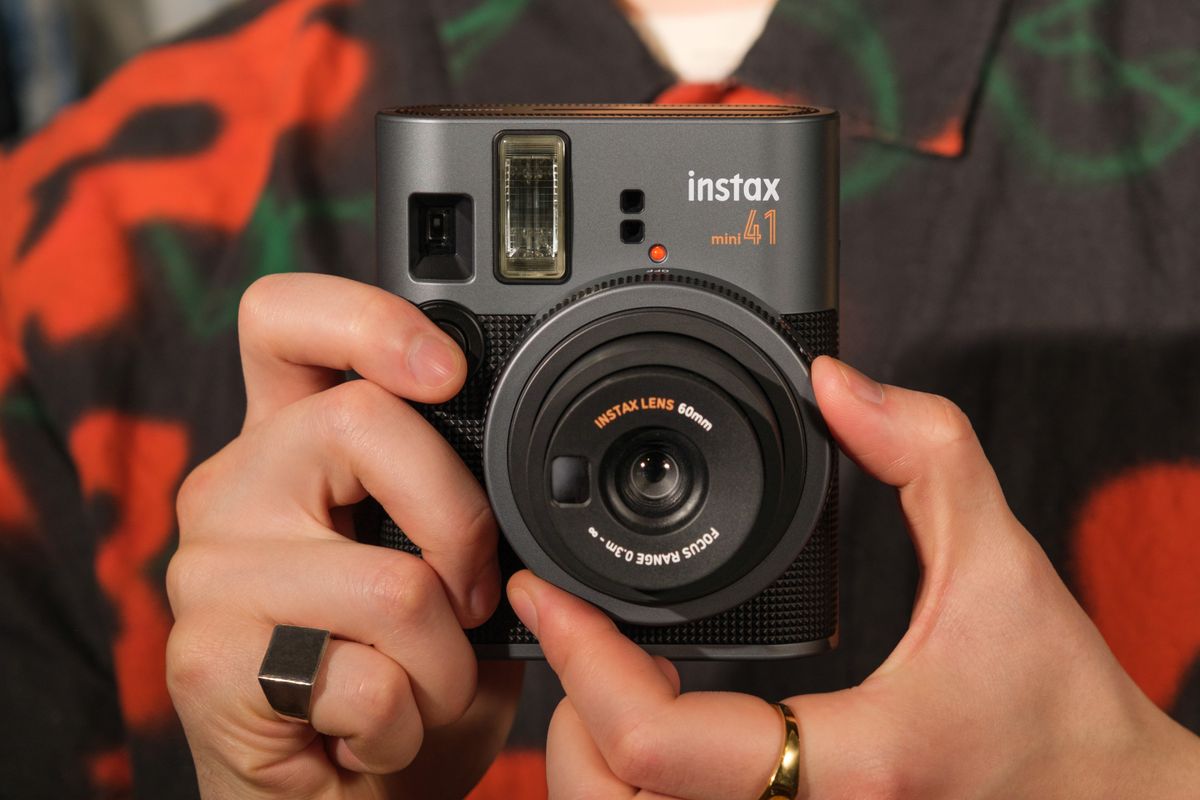
I’m thrilled to report that Instax has finally started making beautiful instant cameras, and I’m absolutely in love with them. The latest addition to the Instax family is the new Instax Mini 41, replacing my favorite Instax camera – the Mini 40 – with an updated textured design and close-up mode with parallax correction.

A Shift in Design Aesthetic

I must admit, I despised the bubblegum pop aesthetic of Instax’s older Mini 11 and Mini 12 camera models, and it only got slightly better with the Instax Wide 400 which sports a camo green casing (yet still looks like a kid’s camera). And let’s not even talk about the Instax Pal released back in 2023, which I thought was the ugliest camera Instax has ever made (I still think it looks like Mike Wasowski).

A New Era of Sleek and Modern Designs

Thankfully, those days of ugly instant camera designs from Instax seem to be behind us (has Instax been reading my articles?) and we’ve entered a new era of stunning cameras that are elegant, sleek, modern, and most importantly dark. There’s nothing wrong with a bit of color, of course. But in the age of professional cameras, I think that there’s nothing more classy than an all-black design, especially for weddings and events. Take a look at my picks of the best Instax film designs.

The Instax Mini 41: A Game-Changer

Even though I own one of the best camera phones, which as a photographer is something very important to me, there’s something so special about the analogue element of instant cameras, and holding the physical photo in your hands. It takes me away from the digital side of photography for a brief moment and you can’t put a price on that, as cheesy as it sounds.

Other Notable Instax Cameras

This dark camera trend from Instax seems to be at least a year in the making and kicked off with the launch of the Instax Mini 99 instant camera in March 2024. I love everything about this camera, especially its design, plus the advanced features that blend the best aspects of instant cameras with digital photography.

Back in February, Instax also released its new Instax WIDE Evo model, which is a strikingly beautiful black hybrid instant camera, that combines digital processing with the instant experience that we all love. I got very excited when I had the opportunity to hold the WIDE Evo in my hands on a recent visit to Birmingham, and I honestly believe the two-tone monochrome design makes all the difference.

Pricing and Availability

This model is a lot more premium than the Mini 41 announced today, and I can’t quite justify the price ($349.95 / £319.99) right now to warrant adding it to my instant camera collection, as much as I want to. But with that said, the new Instax Mini 41 is priced at a much more reasonable $99.99 / £94.99, which could definitely sway me towards buying it next payday.

Conclusion

I really hope that Instax continues making modern and innovative instant cameras with tech upgrades, but most of all, I beg that it doesn’t revert back to its old aesthetic. Stick with the black and grey please Instax, it really works for you.

Frequently Asked Questions

Q: What is the new Instax Mini 41?
A: The Instax Mini 41 is the latest addition to the Instax family, featuring an updated textured design and close-up mode with parallax correction.

Q: What is the design aesthetic of the new Instax cameras?
A: The new Instax cameras have a sleek, modern, and dark design aesthetic, which is a departure from the bubblegum pop aesthetic of older models.

Q: Is the Instax WIDE Evo a hybrid camera?
A: Yes, the Instax WIDE Evo is a hybrid instant camera that combines digital processing with the instant experience.

Q: What is the price of the Instax Mini 41?
A: The Instax Mini 41 is priced at $99.99 / £94.99.

Q: Will Instax continue to make modern and innovative instant cameras?
A: I hope so! I would love to see Instax continue to innovate and improve its instant camera designs.

AI Tariff Report

In a week that saw nearly $10 trillion wiped from global markets, AI finds itself caught up in the most intense economic storm of living memory.

Since Trump presented his cardboard placard of tariffs last week, the market reaction has been brutal, and tech stocks are bearing the brunt.

Apple shares have fallen nearly 20% since the tariff announcement, with the company heavily exposed to Chinese manufacturing. Tesla dropped another 5% on Monday alone, and NVIDIA similarly, now trading at 25% lower than the beginning of the year.

AI’s spectacular rise has been built on the foundation of a borderless economy. The industry thrives on global supply chains – Taiwanese chips, Chinese assembly, European research centers, and American venture capital – all working in relative harmony.

Taiwan has been hit particularly hard, slapped with a 32% tariff that sent its stock market into its worst nosedive ever, plunging nearly 10% in days. By Tuesday, Taiwan’s Foreign Minister Lin Chia-lung was scrambling to arrange negotiations with the US, telling reporters they’re “ready for talks at any time.”

It’s not just about semiconductors, which received a temporary reprieve from tariffs. The massive data centers powering ChatGPT and other AI services rely on a global supply network for everything from cooling systems to power equipment to construction materials – all primarily now subject to tariffs.

Non-semiconductor components represent up to one-third of data center costs, Gil Luria of D.A. Davidson & Co. explained to Fortune, adding ominously that the semiconductor exemption “was not meant to be permanent.”

China, meanwhile, has retaliated with its own tariffs while its state media produces AI-generated videos mocking Trump’s economic policies.

Did ChatGPT design Trump’s tariffs?

Here’s where the story takes a bizarre turn. Shortly after Trump unveiled his tariffs, economist James Surowiecki noticed something peculiar: the formula behind the tariff calculations looked strangely familiar.

As it turns out, if you ask ChatGPT, Claude, Gemini, or Grok for “an easy way to solve trade deficits,” they all recommend essentially the same method – to divide a country’s trade deficit with the US by their exports to the US. That’s remarkably similar to what the White House appears to have done.

“Just figured out where these fake tariff rates come from. They didn’t actually calculate tariff rates + non-tariff barriers, as they say they did. Instead, for every country, they just took our trade deficit with that country and divided it by the country’s exports to us.”

— James Surowiecki (@JamesSurowiecki) April 2, 2025

“This is extraordinary nonsense,” Surowiecki noted, with other economists quickly piling on criticism of what appears to be overly primitive calculations.

Shifting the blame to China

As markets tanked, Treasury Secretary Scott Bessent told Tucker Carlson it wasn’t the tariffs causing the market crash, but China’s DeepSeek AI platform.

“For everyone who thinks these market declines are all based on the President’s economic policies, I can tell you that this market decline started with the Chinese AI announcement of DeepSeek,” Bessent claimed. “It’s more a Mag 7 problem, not a MAGA problem.”

When Bessent refers to the “Mag 7,” he’s talking about the “Magnificent Seven,” Apple, Microsoft, Alphabet, Amazon, Meta, Nvidia, and Tesla, which have collectively driven much of the market’s recent gains.

The timeline, however, tells a different story. Global markets were relatively stable until Trump’s tariff announcement on Wednesday, after which they immediately plunged across the board. DeepSeek’s latest version was released in January, months before the current crisis began, and markets showed no comparable reaction at that time.

Market figures from other industries also undermine Bessent’s claim. The Dow Jones dropped 1,679 points in a single day following Trump’s tariff announcement – the largest single-day point drop since 2020. The timing and magnitude of the decline leave little doubt about the primary catalyst.

What comes next?

Despite the market meltdown, Trump shows no signs of backing down. When asked about pausing the tariffs, he said bluntly, “We’re not looking at that.”

Not everyone believes AI will suffer long-term damage, with some claiming AI is virtually ‘tariff-proof’ due to its inherently borderless nature and long-term strategic importance.

However, today’s frontier models run on warehouse-sized data centers filled with specialized chips, cooling systems, and power equipment sourced from all over the world. Plus, despite years of talk about reshoring semiconductor production, the US remains heavily dependent on foreign chip manufacturing.

The CHIPS Act was supposed to change that, but new domestic fabs are still years away from meaningful production, a warning sign that re-shoring is famously slow and painful.

Conclusion

The AI industry – and virtually every other – watches and waits, hoping that market turmoil will be temporary and continuity in some form will eventually prevail.

FAQs

Q: What are the implications of the tariffs on the AI industry?
A: The tariffs have caused a significant decline in the value of tech stocks, including those of companies heavily exposed to Chinese manufacturing, such as Apple and NVIDIA. The AI industry relies on global supply chains, and the tariffs have disrupted this delicate balance.

Q: Did ChatGPT design Trump’s tariffs?
A: No, the formula behind the tariff calculations appears to be based on a simple division of a country’s trade deficit with the US by their exports to the US, a method recommended by several AI models, including ChatGPT.

Q: Is AI ‘tariff-proof’?
A: Not entirely. While AI is inherently borderless and has long-term strategic importance, the industry still relies on global supply chains and specialized equipment, which are subject to tariffs.

Q: What is the current state of reshoring semiconductor production in the US?
A: Despite years of talk, the US is still heavily dependent on foreign chip manufacturing. The CHIPS Act was intended to change this, but new domestic fabs are still years away from meaningful production, highlighting the challenges of re-shoring.

Courting Trump Has Yet to Pay Off

0

The Tech Industry’s Big Bet on Trump

The biggest technology companies and their chief executives donated millions to President Trump’s inauguration, hosted black-tie parties and dinners in his honor, and allowed him to announce and take credit for new multibillion-dollar manufacturing projects. However, less than three months into the president’s second term, Mr. Trump has hardly returned their lavish gestures with favors.

The Backlash

The sweeping tariffs he imposed last week will squeeze Apple’s iPhone supply chain and make it much more expensive for Amazon, Meta, Google, and Microsoft to build supercomputers to power artificial intelligence. The president has slashed federal funding for research into emerging technologies like A.I. and quantum computing. His immigration clampdown has incited fears that he will cut off pipelines for tech talent.

Regulatory Pressure

The Trump administration has also signaled that it will continue an aggressive regulatory stance on reining in the power of the biggest tech companies. Beginning next week, a landmark antitrust trial will be held to break up Meta, the owner of Facebook, Instagram, and WhatsApp.

Market Performance

Since the inauguration, the combined market value of Amazon, Apple, Google, Meta, and Microsoft has fallen 22 percent to $10 trillion. The tech-heavy Nasdaq index is down 21 percent.

The Shift in Tone

The relationship that tech executives have with the president has been a "one-way street," said Gigi Sohn, a former senior adviser to the Federal Communications Commission under the Biden administration. "They give him everything, and he promises nothing, which in this case is a good thing."

Despite the efforts to court Mr. Trump, the tech industry’s public tone toward him abruptly shifted last year after he was wounded in an assassination attempt. In the aftermath, Mr. Zuckerberg called him a "badass," and Jeff Bezos, the founder of Amazon, commended Mr. Trump for "grace under fire."

Benefits and Drawbacks

There have been some benefits, including Mr. Musk being a close adviser to the president and the president signing executive orders delaying a sale or ban of TikTok, as mandated by a law passed last year over security concerns about the app’s Chinese parent company, ByteDance. Despite slashing its federal funding, Mr. Trump has opened the door to a continued light regulatory touch on A.I., which he has declared his top priority to beat China in a race for global tech leadership.

However, tech companies still face intensifying pressures under the current Trump administration. The new leaders appointed to the Justice Department and the F.T.C. have shown no signs of backing down on a series of antitrust suits filed against Google, Meta, Amazon, and Apple.

Conclusion

The tech industry’s big bet on Trump has not yielded the expected returns. Despite the efforts to court the president, the industry faces regulatory pressure, market volatility, and uncertainty about the future of emerging technologies. As the Trump administration continues to push for antitrust action and tariffs, the tech industry will need to adapt and find new ways to navigate the changing landscape.

FAQs

Q: What are the implications of the tariffs imposed by the Trump administration on the tech industry?
A: The tariffs will make it more expensive for companies like Apple, Amazon, and Google to build and sell products, potentially leading to price increases and decreased competitiveness.

Q: What is the current state of the relationship between the tech industry and the Trump administration?
A: The relationship has been a "one-way street," with tech executives donating and courting the president, but receiving little in return.

Q: How has the Trump administration approached the tech industry in terms of regulation?
A: The administration has taken a tough stance on antitrust issues, filing lawsuits against companies like Google and Meta, and signaling a continued focus on regulating the industry.

Q: What are the benefits of the Trump administration’s policies for the tech industry?
A: While limited, some benefits include a continued light regulatory touch on A.I. and the potential for increased investment in emerging technologies.

Decluttering for Focus: Kanso in Your Home Office

0

Breaking News: Marie Kondo Returns with Tips on Decluttering Your Home and Workspace

A Collaboration with Epson

Breaking news: Marie Kondo is back! In a new collaboration with Epson, the world-renowned tidying expert and best-selling author has returned to doing what she does best: sharing her top tips on decluttering our homes and workspaces by embracing the philosophy of "kanso," achieving simplicity and clarity.

The Problem with Clutter

As a tech journalist, disorganized clutter is something I struggle with immensely. If it isn’t a tangled mess of wires under my desk, then it’s boxes of chargers, batteries, phones, headsets – you name it. My biggest issue at the moment seems to be spools of plastic material for my 3D printer, and yes, it does all bring me immense joy so I’m not throwing it out. I also have one of the best art printers for photography work, and this takes up a large chunk of space in my home office.

The Benefits of Decluttering

I’m not alone in enduring a messy workspace, and according to Epson’s research, 60% of 2,000 Brits surveyed feel that decluttering their homes provides them with an inner sense of peace and calm, while 35% said their homes would feel more peaceful if their tech was more organized. If it’s true comfort that you seek, take a look at our guide to the best office chairs for back pain, or keep reading for Marie Kondo’s expert advice on how to embrace Kanso in your home.

Marie Kondo’s Top 5 Tips for Decluttering Your Spaces

Tip 1: Keep What Sparks Joy

Marie believes in what is known as the KonMari Method, which encourages practitioners to make space for things that spark joy and to let go of things that don’t. The process of letting go is essential to creating a home that allows you to live fully, and Marie advises that the best way to start is by discarding unused tech devices and excess wires and by bringing the philosophy of Kanso into your home.


(Image credit: Marie Kondo / Epson)

### Tip 2: Form Follows Function

On the topic of home offices, Marie suggests that the concept of whether something sparks joy won’t always apply. In this instance, you should consider if the object makes your life easier (and, therefore, more joyful). When objects serve a practical purpose and simplify our lives, then according to Marie, they are a welcome addition to any space.

It’s wise to consider tidier alternatives for the tech appliances that you can’t live without, such as some of the best monitors for working from home, for example. Marie advises switching your bulky desktop computer for a laptop that can be stowed away, or replacing your TV with a sleek and portable projector.

### Tip 3: Welcome Empty Space

If you’ve let go of clutter that doesn’t spark joy or fulfil a purpose, then the next step is to embrace open spaces to promote tranquillity and avoid the temptation to overfill these tidy spaces with new and unnecessary items. Marie says that space is a key element of kanso, and when the eye rests on an empty space, the mind feels a sense of calm and simplicity — a welcome pause from the commotion of everyday life.

Marie Kondo X Epson
(Image credit: Marie Kondo / Epson)

### Tip 4: Give Everything a Home

I think this next tip from Marie is super useful. She advises that every item in your home or office space should have a designated place to create a true feeling of simplicity and spaciousness.

Once everything has a home, there is no question of randomly leaving it on a tabletop. If you organise items by category, this will also help to maintain order, such as keeping all batteries in one place and writing supplies in another.

### Tip 5: Embrace Imperfection

Marie suggests that wabi-sabi (the act of experiencing beauty in simplicity and calmness) celebrates imperfection. She states that no two homes will ever look the same – or embrace Kanso in the same way – because no two people have the same definition of joy and what matters to them.

You should always ask yourself what you need most from your home, and embrace it. In other words, Marie’s advice is to personalise your home based on what brings you joy, rather than striving for perfection.

## Conclusion

By embracing the philosophy of Kanso, you can create a home that is clutter-free, peaceful, and simple. Marie Kondo’s top 5 tips provide a practical guide to achieving this goal, and by following her advice, you can create a space that sparks joy and promotes a sense of calm.

## FAQs

### Q: What is the KonMari Method?
A: The KonMari Method is a decluttering method that encourages practitioners to make space for things that spark joy and to let go of things that don’t.

### Q: What is Kanso?
A: Kanso is one of the seven principles of wabi-sabi, and when roughly translated, it means “simplicity” or “clarity”.

### Q: How can I get started with decluttering my space?
A: Start by discarding unused tech devices and excess wires, and bring the philosophy of Kanso into your home.

### Q: What is the difference between clutter and clutter-free space?
A: A clutter-free space is a space that is free from unnecessary items and promotes a sense of calm and simplicity.

Bizarre Chicken Rating Game

0

At Times, the Internet Can Feel Like an Endless Void of Soulless Doomscrolling…

At times the internet can feel like an endless void of soulless doomscrolling and often I find myself yearning for a little online palette cleanser. Yes, I could venture outside and touch grass but when that’s not an option I’ve found the next best thing – Clickens.

What is Clickens?

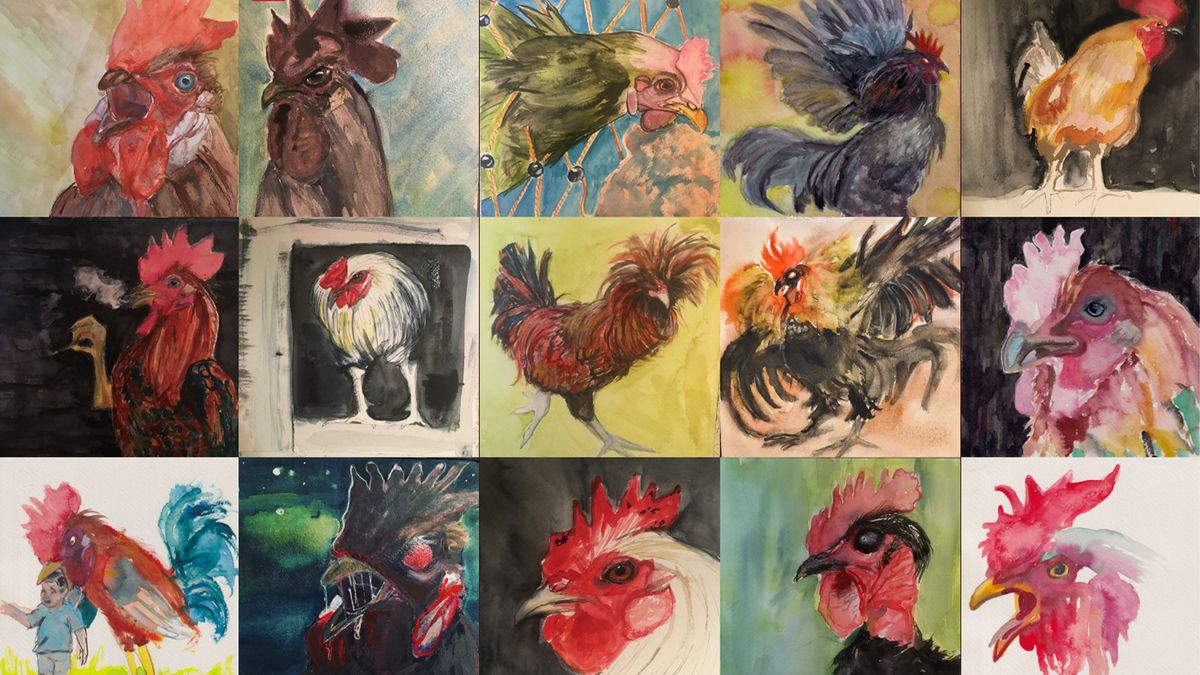
Created by artist Erika Hall, Clickens is an interactive chicken rating game where players pick between two fowls based on an oftentimes obscure adjective. It features over 200 abstract prompts along with 200 unique paintings. So get your dictionary ready and prepare to virtually detox with some intense poulet picking – but be warned, it’s deceptively addictive.

The Game

With prompts asking which bird is more "even-keeled", "pugnacious" "haunted", and more, the abstract nature of the rating system makes for a surprisingly thought-provoking play experience. Ranging from bizarre to brilliant, the diversity of Erika’s paintings makes the game all the more fun, capturing a playfulness that’s delightfully refreshing amidst the online chaos.

Behind the Game

In the corner of Erika Hall’s kitchen is a place affectionately named ‘Chicken Town’ – a dedicated space to house her countless poultry portraits. Finding a creative way to share her art, Erika compiled the paintings into an interactive game with the help of coder Jeff Wishnie, inviting players to rate the chicken’s unique auras.

Conclusion

Clickens is a refreshing online escape from the chaos of the internet. With its abstract prompts and unique paintings, it’s a game that will keep you engaged and entertained. So if you’re looking for a break from doomscrolling, give Clickens a try and experience the joy of virtually rating chickens.

FAQs

Q: What is Clickens?
A: Clickens is an interactive chicken rating game created by artist Erika Hall.

Q: What is the game about?
A: The game features over 200 abstract prompts and 200 unique paintings, where players pick between two fowls based on an oftentimes obscure adjective.

Q: Is the game addictive?
A: Yes, the game is deceptively addictive, so be warned!

Q: Where can I find more of Erika’s work?
A: You can find more of Erika’s work at chicken.pics.

AI Dominates the Narrative in 2025

AI Innovations: A Look into the Future

AI innovations have taken the world by storm since ChatGPT’s debut in November 2022. We’ve seen more organisations integrate AI into their workflows: a recent survey by McKinsey revealed that 78% of the respondents work in organisations that use AI in at least one business function.

Key Indicators of the AI Trend

Why the AI Trend Will Continue

While we may witness a period of slowed growth in the medium term, there are several reasons why the AI trend will likely continue much longer. Here are four key signals that point to this likelihood:

High Adoption Rate of New AI Tech

ChatGPT set the record for the fastest growing user base in the tech sector, eclipsing the 100 million user mark two months after its launch data. Today, there are over 400 million ChatGPT users weekly.

ChatGPT’s latest image generation feature has witnessed massive demand, with users coming to the platform to create Ghibli-style AI: “It’s super fun seeing people love images in ChatGPT, but our GPUs are melting,” said Altman in an X post.

While there have been criticisms about copyright issues, what’s worth noting is the rate at which the world is experimenting with AI innovations. Gone are the days when AI was a niche carved out for tech bros; AI is mainstream.

Advances in Digital Human Innovations

Imagine a digital doppelgänger that can interact with other internet users on your behalf at the same level of personalisation you would. This has long been a dream for many AI enthusiasts and it may finally be becoming a reality.

It is possible to create a hyper-realistic and intelligent digital twin through an AI-powered SaaS platform like Antix. Unlike conventional avatars which lack human qualities, Antix’s digital humans offer a new level of digital interaction. They are designed to deliver realistic interactions, letting users engage in more meaningful and profound ways.

This advance in digital human innovation may transform today’s digital landscape. For the first time, it will be possible for internet users anywhere to create or acquire a digital twin that can evolve or hold conversations according to a user’s preferences and personality. For example, Antix’s digital humans give the flexibility to customise key human attributes, including style, appearance, emotions and voice.

Increased Funding in the AI Space

According to Statista, global funding in AI startups hit a new high of $100 billion in 2024. The trend will likely continue in 2025 as more countries allocate funding to AI innovations. Here are two key developments this year:

  • President Trump recently announced a $500 billion private sector investment in funding AI infrastructure. The goal is to make the US a leading contender in the AI race.
  • China has allocated $8.2 billion into a new AI fund following a move by the US to go ahead with additional chip export restrictions, targeting Chinese firms.
Accelerated Global AI Race

A global AI race has been brewing between the US and China. While it may seem like negative engagement, a competitive ecosystem is exactly what the AI space needs for growth.

For example, China’s DeepSeek R1 model was developed at only $6 million, a fraction of the cost to train models like Google’s Gemini and ChatGPT. While some critics have argued it couldn’t have cost that little, the Chinese model has challenged its Western counterparts to be leaner in their AI development processes.

We’re also seeing the likes of Open AI stepping up to roll out more advanced features such as the image generator currently making waves.

Conclusion

AI is one of the four industrial technologies that have gained traction recently. While there are a number of issues yet to be ironed out, including ethical concerns, it is evident that the AI narrative will be a while in fading away. The four factors above are a glimpse of what might sustain this narrative. As of writing, there are more AI innovations than most of us or regulators can keep up with. That alone should be a signal that the nascent industry is just getting started.

FAQs

Q: What is driving the high adoption rate of new AI tech?

A: The high adoption rate of new AI tech can be attributed to the rapid growth and success of platforms like ChatGPT, which has set a record for the fastest growing user base in the tech sector.

Q: What are the implications of advances in digital human innovations?

A: Advances in digital human innovations have the potential to transform the digital landscape by enabling the creation of hyper-realistic and intelligent digital twins that can interact with other internet users on behalf of individuals.

Q: What is driving the increased funding in the AI space?

A: The increased funding in the AI space can be attributed to the growing recognition of the importance of AI in driving economic growth and innovation, as well as the competitive nature of the global AI race between the US and China.

Q: What is the significance of the accelerated global AI race?

A: The accelerated global AI race is significant because it drives innovation and competition, leading to advancements in AI technology and its applications.

Here is the title: Know the Risks

0

ChatGPT’s Ghibli-Inspired AI Art Sparks Controversy

Following the release of ChatGPT’s new image-generation tool, user activity has surged; millions of people have been drawn to a trend whereby uploaded images are inspired by the unique visual style of Studio Ghibli.

The spike in interest contributed to record use levels for the chatbot and strained OpenAI’s infrastructure temporarily.

Social media platforms were soon flooded with AI-generated images styled after work by the renowned Japanese animation studio, known for titles like Spirited Away and My Neighbor Totoro. According to Similarweb, weekly active ChatGPT users passed 150 million for the first time this year.

OpenAI CEO Sam Altman said the chatbot gained one million users in a single hour in early April – matching the numbers the text-centric ChatGPT reached over five days when it first launched.

SensorTower data shows the company also recorded a jump in app activity. Weekly active users, downloads, and in-app revenue all hit record levels last week, following the update to GPT-4o that enabled new image-generation features. Compared to late March, downloads rose by 11%, active users grew 5%, and revenue increased by 6%.

The new tool’s popularity caused service slowdowns and intermittent outages. OpenAI acknowledged the increased load, with Altman saying that users should expect delays in feature roll-outs and occasional service disruption as capacity issues are settled.

Legal questions surface around ChatGPT’s Ghibli-style AI art

The viral use of Studio Ghibli-inspired AI imagery from OpenAI’s ChatGPT has raised concerns about copyright. Legal experts point out that while artistic styles themselves may not always be protected, closely mimicking a well-known look could fall into a legal grey area.

"The legal landscape of AI-generated images mimicking Studio Ghibli’s distinctive style is an uncertain terrain. Copyright law has generally protected only specific expressions rather than artistic styles themselves," said Evan Brown, partner at law firm Neal & McDevitt.

Miyazaki’s past comments have also resurfaced. In 2016, the Studio Ghibli co-founder responded to early AI-generated artwork by saying, "I am utterly disgusted. I would never wish to incorporate this technology into my work at all."

OpenAI has not commented on whether the model used for its image generation was trained on content similar to Ghibli’s animation.

Data privacy and personal risk

The trend has also drawn attention to user privacy and data security. Christoph C. Cemper, founder of AI prompt management firm AIPRM, cautioned that uploading a photo for artistic transformation may come with more risks than many users realise.

"When you upload a photo to an AI art generator, you’re giving away your biometric data (your face). Some AI tools store that data, use it to train future models, or even sell it to third parties – none of which you may be fully aware of unless you read the fine print," Cemper said.

OpenAI’s privacy policy confirms that it collects both personal information and use data, including images and content submitted by users. Unless users opt out of training data collection or request deletion via their settings, content will be retained and used to improve future AI models.

Cemper said that once a facial image is uploaded, it becomes vulnerable to misuse. That data could be scraped, leaked, or used in identity theft, deepfake content, or other impersonation scams. He also pointed to prior incidents where private images were found in public AI datasets like LAION-5B, which are used to train various tools like Stable Diffusion.

Copyright and licensing considerations

There are also concerns that AI-generated content styled after recognisable artistic brands could cross into copyright infringement. While creating art in the style of Studio Ghibli, Disney, or Pixar might seem harmless, legal experts warn that such works may be considered derivative, especially if the mimicry is too close.

In 2022, several artists filed a class-action lawsuit against AI companies, claiming their models were trained on original artwork without consent. The cases reflect the broader conversation around how to balance innovation with creators’ rights as generative AI becomes more widely used.

Cemper also advised users to review carefully the terms of service on AI platforms. Many contain licensing clauses with language like "transferable rights," "non-exclusive," or "irrevocable licence," which allow platforms to reproduce, modify, or distribute submitted content – even after the app is deleted.

Conclusion

The rapid pace of AI development has led to unprecedented capabilities, but it also raises significant concerns about privacy, copyright, and data use. As AI image tools get more advanced and accessible, users may want to think twice before uploading personal images, especially if they’re not sure where the data may ultimately end up.

FAQs

Q: What is the legal status of AI-generated images mimicking Studio Ghibli’s style?
A: The legal landscape is uncertain, and closely mimicking a well-known look could fall into a legal grey area.

Q: Has OpenAI commented on whether the model used for its image generation was trained on content similar to Ghibli’s animation?
A: No, OpenAI has not commented on this.

Q: What are the risks of uploading a photo for artistic transformation?
A: Users may be giving away their biometric data, which could be stored, used to train future models, or sold to third parties.

Q: How does OpenAI handle user data and content submitted by users?
A: OpenAI collects both personal information and use data, including images and content submitted by users, unless users opt out of training data collection or request deletion via their settings.

Nintendo Sparks Wild Fan Theories

0

Article

New Donkey Kong Game Announced: DK Bananza

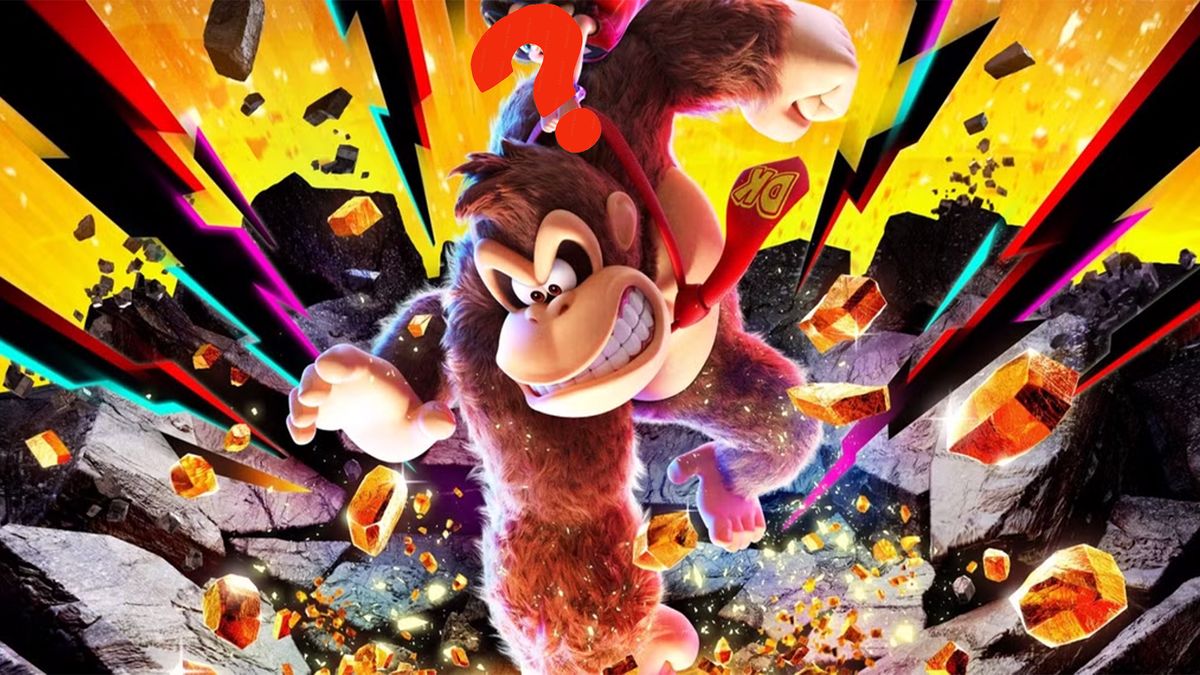
During last week’s Nintendo Direct event, a brand new Donkey Kong game was announced much to the delight of OG Nintendo fans. DK Bananza is set to be an exciting new era for the beloved ape, blending modern 3D platforming with retro 2D gameplay for a welcome sprinkle of nostalgia – a crowd-pleaser for Nintendo fans new and old.

New Character Design Leak

While the action-packed trailer gave us a flavor of what’s to come, a new character design leak from Nintendo Korea could hint at an alternative sidekick (and the return of a retro fan favorite). Here’s your final warning: spoilers ahead.

Alternative Poster Art

Posted to the Nintendo Korea website, the alternative Donkey Kong Bananza art was quickly redacted, but not before fans got hold of it. In place of the trailer’s stony purple sidekick, Odd Rock, the alternative poster features a female character who looks strikingly similar to Pauline – Mario’s OG love interest in Donkey Kong 1981. While the trailer doesn’t give a lot of the plotline away, that didn’t stop fans from sharing their theories.

Fan Theories

"I see she’s wearing the purple bracelet, which is the same color as the odd rock dude, that partners with DK. Maybe the odd rock can transform into characters, but a mini version of them," one fan suggested on the r/NintendoSwitch subreddit. "New theory. This is young Pauline. They were friends. This is a prequel to the original Donkey Kong. It was all a misunderstanding, DK never kidnapped her. Mario just assumed. Mario is the final boss. Let me dream," another joked.

Conclusion

The upcoming Donkey Kong Bananza game is shaping up to be an exciting new chapter in the franchise, blending modern and retro gameplay elements. The alternative poster art leak has sparked a lot of speculation among fans, and it will be interesting to see how the game’s story and characters develop.

FAQs

Q: What is Donkey Kong Bananza?
A: Donkey Kong Bananza is a new game in the Donkey Kong franchise, announced during the Nintendo Direct event.

Q: What kind of gameplay can we expect from Donkey Kong Bananza?
A: The game will blend modern 3D platforming with retro 2D gameplay.

Q: Who is the alternative sidekick in the leaked poster art?
A: The alternative sidekick appears to be a female character who looks similar to Pauline, Mario’s OG love interest in Donkey Kong 1981.

Q: What is the plot of Donkey Kong Bananza?
A: The trailer doesn’t give a lot of the plotline away, but fans have been sharing their theories about the game’s story and characters.

AI Tools 2025: Next-Gen Innovations

The ZDNET Index of AI Tool Popularity

Popularity in the tech world is hard to measure. I’ve talked at length about this in my discussions of programming language popularity. It really comes down to what you use to measure popularity — and how available those metrics are to those doing the analysis.

Aggregating Multiple Data Sources

To create the ZDNET Index of AI Tool Popularity, we aggregated data from four sources: Exploding Topics, AI Tools, World Bank Group, and TechRadar Survey. Each source provided a unique perspective on AI tool popularity, and we weighted them accordingly to account for their strengths and weaknesses.

  • Exploding Topics (Weight 32%, ID XPT): Exploding Topics analyzes trends based on web searches, conversations, and mentions. Their data is mostly derived from web analytics platforms.
  • AI Tools (Weight 32%, ID AIT): AI Tools is an AI tools directory that catalogs over 10,000 AI tools, each categorized into one of 171 individual categories. Their data is derived from traffic analysis platforms.
  • World Bank Group (Weight 22%, ID WBG): The World Bank Group published a policy research paper in March 2024, which included a ranking of generative AI tools based on traffic.
  • TechRadar Survey (Weight 14% ID TRS): TechRadar conducted a survey in 2024, which they published in 2025, providing an overall ranking for both the US and UK.

Aggregated Tool List

We took the top 20 tools from each source and created an aggregated tool list. Some tools, such as ChatGPT, are represented in all four sources’ rankings, while others are only represented in one or two source lists.

Weighted Ranking for Each Source

We took the share representation of each tool and put it on a row in the spreadsheet. We then pulled in the raw percentage ranking from each source, leaving cells blank where there was no data. Once that was done, we built up the next section of the analysis, which was the weighted ranking for each source. We totaled up the values of the four weighted rankings, which gave us our aggregated ranking.

What’s it All Mean?

Before discussing the rankings, I’d like to mention that I did the whole analysis by hand, using the technology of caffeine to aid me. As popular as these many tools are, they’re tools. They’re sometimes helpful and sometimes stubborn. If you’re going to use them, you’re going to have to be able, constantly, to determine when the tool is the fastest path and when the old school way will get you there either faster or more reliably, or both.

Conclusion

ChatGPT leads the pack, followed closely by Canva. DeepL outperformed Google Translate as an AI tool, but this may be because most people don’t think of Google Translate as an AI tool. When it comes to chatbots, Gemini and Copilot, along with Perplexity and Claude, have a long way to go to catch up with ChatGPT. Apple and Facebook/Meta were missing from the table, which can’t be good.

FAQs

  1. What is the ZDNET Index of AI Tool Popularity?
    • The ZDNET Index of AI Tool Popularity is a measure of the popularity of AI tools based on aggregated data from four sources: Exploding Topics, AI Tools, World Bank Group, and TechRadar Survey.
  2. How was the data aggregated?
    • We took the top 20 tools from each source and created an aggregated tool list. We then weighted the tools based on their share representation, raw percentage ranking, and traffic quantity.
  3. What is the purpose of the ZDNET Index of AI Tool Popularity?
    • The ZDNET Index of AI Tool Popularity aims to provide insight into where users are putting their attention when it comes to AI tools.
  4. Which AI tools are missing from the table?
    • Apple and Facebook/Meta were missing from the table.
  5. How does the ZDNET Index of AI Tool Popularity measure popularity?
    • We used a weighted ranking system, taking into account the share representation, raw percentage ranking, and traffic quantity of each tool.