Home Blog Page 93

AI Images & Video

0

Why you can trust Creative Bloq
Our expert reviewers spend hours testing and comparing products and services so you can choose the best for you. Find out more about how we test.

The stock image service has been a staple of creative workflows all the way back to when Fleet Street was still on Fleet Street, and the ability to obtain illustrative images of just about any subject you can think of has saved many a project from looking dismal.

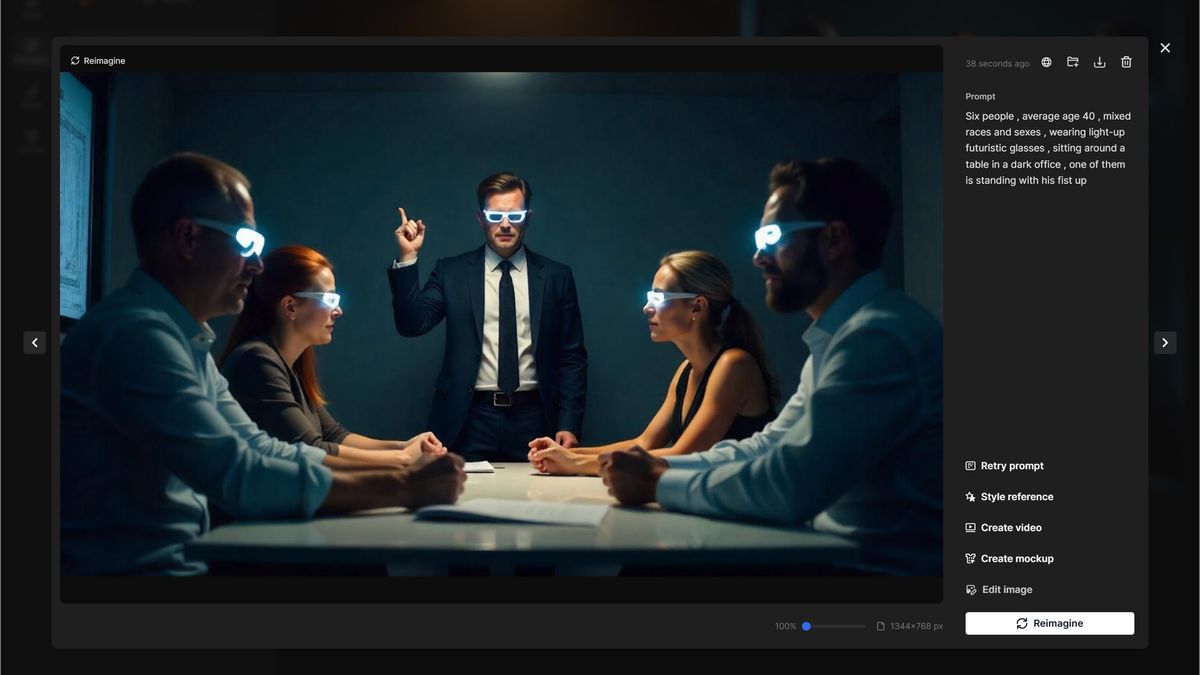
The coming together of stock images and AI image generators was, perhaps, inevitable, and so now we have Freepik. It’s a site that, for a monthly fee (though there are free resources), will offer you the ability to generate pictures and videos from text prompts (and you can even expand the prompts with AI too) then generate the results in the cloud before expanding, reimagining, resizing and even relighting, before downloading it to your machine to use in your creative projects. It’s not really photo editing software, but a stock site that will always have photos and videos to your specifications.

Freepik Pricing

• Essential: £4.50/month
• Premium: £8.75/month
• Premium+: £19.50/month

Setup and getting started

• Create an account and you’re in
• Requires a subscription

As Freepik is a web service that runs in the cloud and which you access through your browser, there’s no setup involved beyond creating an account. Ours was upgraded to Premium+ by Freepik for the purposes of this review, but there’s a simple enough interface for choosing the level that suits you.

Features

• Images, video and more
• Generate from reference images

The stock photos are all very nice, but without doubt the major selling point of Freepik is its AI system, which can generate still images and video. The workflow starts with a text prompt, but you can upload a reference image and ask Freepik to incorporate it into your creations too.

User experience

• Slick web interface
• Quick cloud processing

Despite the huge amount of complexity going on behind the scenes, Freepik manages to keep a clean user interface. It’s not exactly simple – there are too many options available for that – and it’s going to take some time to generate exactly what you want, largely because you’ll start changing your mind as the breadth of what the system can do becomes apparent.

Video tools

• Videos up to eight seconds long
• Results can be uncannily good

We’ve had AI image generation for some time, and it’s now capable of making images containing people with the correct number of fingers and teeth most of the time. Video is a different prospect, as it involves a lot more work. Freepik incorporates the Google Veo 2 model for video generation, and is limited to eight-second clips at the time of writing.

Who’s it for?

Freepik is an absolutely enormous service that’s got a lot to offer if you’re prepared to pay the subscription. Its image and video creation tools, along with the reimagining and retouching, are remarkable. The thing is, what you get at the end is an AI-created image or video, no matter how much time you spend refining it, and it’s going to have the problems that always accompany such things.

Scorecard

Section Score
Setup and getting started 4/5
Features 4/5
User experience 3/5
Video tools 4/5

Buy it if…

• You need custom images and videos quickly
• You don’t mind the ‘AI look’
• You can pay another subscription

Don’t buy it if…

• You’d prefer the real thing
Secrets Watchdog

What I Built

Meet Catherine, a Senior Project Manager at a growing tech startup. She created a Telegram group with her interns to collaborate better. However, there’s a big problem that makes Catherine anxious: occasionally, one of the interns accidentally posts a secret in the group.

How does this work?

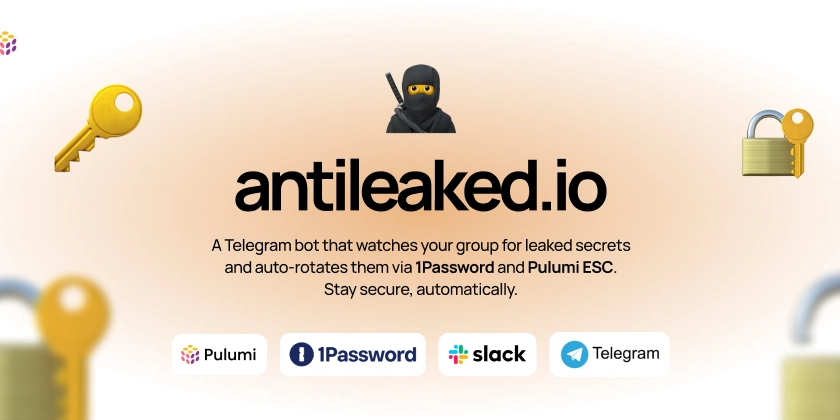
To solve this issue, Catherine uses antileaked.io, a smart Telegram bot that watches all messages in the group, detects any leaked tokens or passwords, and checks if the leaked secret matches something stored in 1Password. If it does, the bot automatically rotates the secret and sends a notification to a special channel for Catherine (as the team lead).

Live Demo Link

You can try joining the group Catherine has created: https://t.me/+oC7v4e-DWSg0NzBl. The group is monitored by a bot Catherine has built (@Bridge4Buildbot). Once you’re in, you can try sending a message that contains a secret key – Catherine has prepared some examples below.

Project Repo

You can find the project repo on GitHub: https://github.com/diosamuel/antileaked.io.

My Journey

1. Setup

The first step is to gather all secret keys into a 1Password vault. We can use either the 1Password desktop app or the CLI – in this case, I’m using the desktop app for convenience.

Set Pulumi Slack Webhook

Let’s create a notification to Slack to monitor changes – we can leverage the Pulumi webhook to achieve this on this website.

Using Pulumi ESC on-the-go

After creating a Pulumi ESC environment, the next step is to initialize the ESC environment in our project using the ESC CLI and add each environment variable into the ESC environment.

Telegram Bot Watcher + 1Password + Pulumi

To automate the process, we can use a Telegram bot watcher that monitors the group for any leaks and automatically updates the 1Password vault and Pulumi ESC environment.

Conclusion

In this article, we’ve seen how to securely sync community feedback from Telegram to Slack and back using Pulumi ESC. We’ve also learned how to set up a Pulumi Slack Webhook and use Pulumi ESC on-the-go.

FAQs

Q: What is Pulumi ESC?
A: Pulumi ESC is a service that allows you to manage and secure your environment variables and secrets.

Q: How does the Telegram bot watcher work?
A: The Telegram bot watcher monitors the group for any leaks and automatically updates the 1Password vault and Pulumi ESC environment.

Q: Can I use this solution for my own project?
A: Yes, you can modify this solution to fit your own project needs.

The Eternaut

0

El Eternauta is a post-apocalyptic sci-fi comic written by Héctor Germán Oesterheld and illustrated by Francisco Solano López. It was first published in serial form in the seminal Argentine anthology series Hora Cero between 1957 and 1959.

The story is told by a survivor named Juan Salvo, who would later become known as The Eternaut, and it focuses on his battle to survive the snow, the anarchy that breaks out in its wake, and whatever’s behind it.

Netflix is bringing the original story to the screen with K&S Films in an adaptation directed by Bruno Stagnaro, with Oesterheld’s grandson, the filmmaker Martín Oesterheld, as a consultant and Buenos Aires-based Boat Media on VFX duties.

There have been attempts to bring the comic to screen before, both as an animated series and a live-action production. Plans in the 1960s for a rotoscoped animation to be presented by Oesterheld himself were dropped after a pilot.

Directors as varied as Fernando ‘Pino’ Solanas, Gustavo Mosquera, Adolfo Aristarain and Álex de la Iglesia have expressed interest in making a live-action adaption over the years. But it usually turned out to be too costly to bring the comic to life convincingly, or else there was pressure to relocate the story and use English-speaking actors to get funding. Some proposals failed to get approval from Oesterheld’s estate.

Now, it’s finally happening, and Netflix has agreed to film in Buenos Aires in Spanish, and rather than tap into the current retro-futurist trend, it’s opted to set the story in the present rather than the late 1950s.

Why is The Eternaut so popular?

Oesterheld was a key figure in the golden age of Argentine comics along with the Venice Group of Mario Faustinelli, Hugo Pratt, Ivo Pavone, and Dino Battaglia. The Eternaut became a landmark that would influence comics right up to the recent Metro series.

Part of the reason The Eternaut became so popular in Argentina was the familiarity of its setting. It features many well-known Buenos Aires landmarks, such as the stadium of football team River Plate, depicted in beautiful detail in a post-apocalyptic setting by Solano.

But the comic also became a hit elsewhere due to its eternal themes. It portrays one man’s fight to survive in the tradition of Robinson Crusoe, but with a philosophical twist that emphasises collaboration over individualism and touches on themes of social struggle.

That message becomes all the more poignant considering Oesterheld’s own fate. He and his four daughters are believed to have been kidnapped and murdered by Argentina’s military dictatorship in the late 1970s. Their bodies were never found.

The Eternaut will be on Netflix from 30 April. I just hope it doesn’t use any dodgy AI art for this one.

Conclusion

The Eternaut is a significant and iconic comic book series that has captured the hearts of many readers around the world. The upcoming Netflix adaptation promises to bring the story to life in a new and exciting way, and fans of the comic are eagerly awaiting its release.

Q: What is The Eternaut?

A: The Eternaut is a post-apocalyptic sci-fi comic book series written by Héctor Germán Oesterheld and illustrated by Francisco Solano López.

Q: When is the Netflix series releasing?

A: The Eternaut series will be released on Netflix from 30 April.

Q: Who is directing the Netflix series?

A: Bruno Stagnaro is directing the Netflix series.

Q: What is the story of The Eternaut?

A: The story of The Eternaut follows Juan Salvo, a survivor of a deadly snowstorm in Buenos Aires, as he battles to survive and uncover the truth behind the disaster.

Q: Why is The Eternaut popular?

A: The Eternaut is popular due to its eternal themes, which emphasize collaboration over individualism and touch on themes of social struggle. The comic also features beautiful illustrations and a familiar setting, with many well-known Buenos Aires landmarks depicted in a post-apocalyptic setting.

A&O Shearman Unveils AI Tool

Unlocking the Power of Artificial Intelligence in the Legal Industry

A&O Shearman’s Latest Innovation

A&O Shearman has created an artificial intelligence tool to accelerate work performed by more senior lawyers, aiming to generate revenue from the disruption of the legal industry. The tool, developed in collaboration with AI start-up Harvey, focuses on time-intensive, low-billing tasks in areas such as antitrust and fund formation that require senior associate or partner input and oversight.

The AI Tool

The antitrust element of the model uses a company’s financial information to assess which jurisdictions a client might need to make a regulatory filing in for a merger. It then identifies what data is missing and drafts the information requests for each party. This exercise often takes hours of associate time and input from more senior lawyers, but the new tool aims to reduce this time and increase margins on such work.

The Benefits

The tool is designed to target more sophisticated legal work that requires the time and attention of senior lawyers. David Wakeling, global head of AI advisory and the markets innovation group at A&O Shearman, believes that the technology will not lead to job losses, as senior lawyers with freed-up time will be redeployed elsewhere. "We believe that AI will ultimately be transformative for our firm and we can actually create revenues from being part of that change," Wakeling said.

The Training Process

The AI model was trained by senior lawyers at A&O Shearman to solve problems in the way they do. The engineers then instructed the model to copy these processes and asked the lawyers to assess whether the AI model’s answers were acceptable or not. "The training is teaching [the AI model] how to think and how to reason" like a partner, said Winston Weinberg, chief executive and co-founder of Harvey.

The Company’s Goal

A&O Shearman aims to have hundreds of companies subscribed to the tool by the end of 2024. Currently, the firm has more than 40 large organizations signed up, including companies such as investment group Prosus, Japanese energy group Jera, and Dutch wind turbine company Sif-group.

Conclusion

A&O Shearman’s latest innovation demonstrates the potential of artificial intelligence in the legal industry. By leveraging the latest generation of OpenAI’s reasoning models, the firm is able to simplify processes and make junior tasks more efficient. The tool’s ability to think and reason like a partner indicates a significant step forward in the development of AI in the legal sector.

Frequently Asked Questions

Q: What is the main focus of the AI tool?
A: The tool focuses on time-intensive, low-billing tasks in areas such as antitrust and fund formation that require senior associate or partner input and oversight.

Q: How does the tool work?
A: The tool uses a company’s financial information to assess which jurisdictions a client might need to make a regulatory filing in for a merger, identifying what data is missing and drafting the information requests for each party.

Q: Will the tool lead to job losses?
A: According to David Wakeling, global head of AI advisory and the markets innovation group at A&O Shearman, the technology will not lead to job losses, as senior lawyers with freed-up time will be redeployed elsewhere.

Q: Who is behind the tool’s development?
A: The tool was developed in collaboration with AI start-up Harvey, with A&O Shearman being the first law firm to work with the company when it was founded three years ago.

Q: How many companies are currently signed up for the tool?
A: A&O Shearman has more than 40 large organizations signed up for the tool, including companies such as investment group Prosus, Japanese energy group Jera, and Dutch wind turbine company Sif-group.

Wi-Fi Backward Compatibility Success Story

0

The Unbroken Line of Wi-Fi Interoperability

My home network is a small miracle of backward compatibility, slinging data across 60-plus devices that span five generations of Wi-Fi. Everything on it, from my iPhone 15 Pro all the way down to my Nintendo Wii, manages to connect to the internet, most of it wirelessly through my router, with shockingly few issues. That’s possible because of Wi-Fi’s essentially unbroken line of interoperability that stretches from its 1999 introduction in consumer products through today.

The Shapeshifters of Wi-Fi

Wi-Fi devices do this by being shapeshifters. When two of them connect, the one using the newest generation of the standard will automatically switch to the highest Wi-Fi version the other one is equipped for. Making sure that works means lots of testing for compatibility, maintaining old parts of the standard, and coming up with new ways to make existing tech more viable. That approach has led to a level of backward compatibility and long-term device support that few gadgets or standards in the tech world can match.

The Glacial Transitions

One reason Wi-Fi operates this way is the glacial transitions between generations of the standard. It can take a long time for a new version to proliferate — see the 2022 Apple HomePod and its use of Wi-Fi 4, which debuted in 2009. And even when new products move forward old tech still lingers in homes and businesses everywhere.

The Importance of Backward Compatibility

Netgear’s VP of product management, Sandeep Harpalani, says backward compatibility is “intrinsic” to Wi-Fi — products that hew closely to the spec should have it by design. But they still need to be tested to make sure things work. In many cases, that’s done by the Wi-Fi Alliance.

The Wi-Fi Certified Logo

As of early 2024, the Wi-Fi Alliance was made up of more than 900 member companies, many of which submit their products to be tested and certified by independent, Wi-Fi Alliance-trained testing labs. According to a 2020 Wi-Fi Alliance testing guide, products that pass get a certificate that “assures the end customer of interoperability with other standards-compatible networking equipment that also bears the Wi-Fi CERTIFIED logo.” Basically, if you see that logo on a package, the product should work with any other Wi-Fi Certified device.

Maintaining Support

Given that the Wi-Fi Alliance, formed in 1999 as the Wireless Ethernet Compatibility Alliance, has been certifying products for Wi-Fi interoperability since 2000, that’s a long list of devices. Initial certification is optional, but once a product has been certified, the Wi-Fi Alliance enforces that certification by requiring that each product be retested after any changes are made that affect Wi-Fi functionality. Otherwise, the product risks losing its badge.

The Challenges of Compatibility

The certification process takes time, though, so some companies will forego the badge altogether. Amazon-owned mesh router company Eero is among those that skip the certification. Eero CEO Nick Weaver says that the company has a “rigorous internal certification process” and that it doesn’t want to wait for external approval to ship its products.

The Future of Wi-Fi

Part of Eero’s process is checking connections to outdated devices or emulating large numbers of gadgets connecting at once to make sure its routers can handle it. Similar to the Wi-Fi Alliance’s certification process, Weaver says Eero repeats its tests for every firmware update, too. When there are compatibility issues, it usually comes down to the manufacturer of a given device, according to Maureen Gallagher, VP of marketing at the Wi-Fi Alliance. Gallagher says that, most often, if an older device won’t connect, it’s not due to any disparity in Wi-Fi version. Instead, they’re usually uncertified devices that don’t properly implement the Wi-Fi standard or use proprietary features that don’t play well with other versions of Wi-Fi.

Conclusion

That all adds up to Wi-Fi continuing to be the rare technology without major compatibility issues. Your new phone will work with your old router. And when you eventually upgrade that router to something better, all your devices will come along with it.

Frequently Asked Questions

Q: What is backward compatibility in Wi-Fi?
A: Backward compatibility in Wi-Fi refers to the ability of newer devices to work with older devices and equipment.

Q: Why is backward compatibility important?
A: Backward compatibility is important because it ensures that older devices and equipment can still work with newer devices and equipment, reducing the need for costly upgrades and replacements.

Q: How does Wi-Fi achieve backward compatibility?
A: Wi-Fi achieves backward compatibility by automatically switching to the highest Wi-Fi version that the other device is equipped for when they connect.

Q: What is the Wi-Fi Certified logo?
A: The Wi-Fi Certified logo is an interoperability guarantee that ensures a product will work with other standards-compatible networking equipment that also bears the Wi-Fi CERTIFIED logo.

Q: Why do some companies choose not to get their products certified by the Wi-Fi Alliance?
A: Some companies, like Eero, choose not to get their products certified by the Wi-Fi Alliance because they have their own internal certification process and don’t want to wait for external approval to ship their products.

BBC Seeks More Prominent Credit in Apple and Google News

0

BBC Files Complaint with UK Antitrust Regulator Over Credit for Featured Stories

Background

The British Broadcasting Corporation (BBC) has filed a complaint with the UK’s Competition and Markets Authority (CMA) alleging that aggregators like Apple News and Google News minimize credit for the stories they feature.

Complaint Details

According to Apple Insider, the BBC is requesting that the CMA require Apple and Google to prominently credit news sources. If the CMA agrees to the complaint, any changes made by the aggregators would presumably affect other publishers as well.

Reasons for the Complaint

The BBC argues that if audiences derive value from its content and services but attribute that value to gatekeepers instead of the BBC, it undermines the perceived value of the BBC. The broadcaster relies heavily on a licence fee paid by British households for funding, and it is essential that its work is visible and valued to maintain support for the fee.

Recent Development

Apple recently paused its AI news summaries after complaints of inaccuracy from the BBC and other publishers.

Conclusion

The BBC’s complaint highlights the importance of fair credit and attribution for news sources. As the BBC relies heavily on its licence fee, it is crucial that its work is recognized and valued by the public. The outcome of the complaint could have significant implications for the media industry as a whole.

FAQs

Q: What is the BBC’s complaint about?
A: The BBC is complaining that aggregators like Apple News and Google News do not provide sufficient credit for the stories they feature.

Q: What is the BBC asking for?
A: The BBC is asking the CMA to require Apple and Google to prominently credit news sources.

Q: Why is this important to the BBC?
A: The BBC relies heavily on a licence fee paid by British households for funding, and it is essential that its work is visible and valued to maintain support for the fee.

Q: What does this mean for other publishers?
A: If the CMA agrees to the complaint, any changes made by the aggregators would presumably affect other publishers as well.

Intel and TSMC Launch Joint Chipmaking Venture

0

Semiconductor Giants Intel and TSMC Reportedly Teaming Up

Joint Venture in the Works

Intel and TSMC, two of the biggest players in the semiconductor industry, are reportedly teaming up to create a joint venture. According to The Information, the two firms have reached a tentative agreement to operate Intel’s chipmaking facilities through a new joint venture. TSMC will have a 20% stake in the new venture.

How the Joint Venture Will Work

Instead of funding its stake with capital, TSMC will share some of its chipmaking practices with Intel employees and train them. This move is part of the agreement, as reported by The Information.

Background on Intel’s Turnaround Efforts

Intel executives are reportedly concerned about mass layoffs, which is why the Trump administration is believed to have kindled the discussions that led to this joint venture. The development comes less than a month after investor and entrepreneur Lip-Bu Tan was appointed CEO of Intel, with a mandate to make sweeping changes at the company.

Reaction from the Companies Involved

TSMC has declined to comment on the joint venture. TechCrunch reached out to Intel for comment, but the company has not yet responded.

Conclusion

The joint venture between Intel and TSMC is a significant development in the semiconductor industry. With TSMC’s expertise in chipmaking and Intel’s resources, the partnership has the potential to drive innovation and growth in the sector.

Frequently Asked Questions

Q: What is the nature of the joint venture between Intel and TSMC?

A: The joint venture will operate Intel’s chipmaking facilities, with TSMC having a 20% stake.

Q: How will TSMC fund its stake in the joint venture?

A: TSMC will not fund its stake with capital. Instead, it will share its chipmaking practices with Intel employees and train them.

Q: What is the background behind the joint venture?

A: The joint venture was reportedly sparked by concerns about mass layoffs at Intel, which was kindled by the Trump administration.

Q: Who is the new CEO of Intel?

A: Lip-Bu Tan, an investor and entrepreneur, was appointed CEO of Intel less than a month ago, with a mandate to make sweeping changes at the company.

DOGE to Host IRS ‘Hackathon’

0

Elon Musk’s Department of Government Efficiency Plans Hackathon to Create Mega API for IRS Data

Elon Musk’s Department of Government Efficiency (DOGE) is planning to hold a “hackathon” next week to create a “mega API” for accessing Internal Revenue Service (IRS) data, reports Wired.

Objective of the API

The API would be used to move the data into a cloud platform — potentially a third-party one — to serve as the “read center” of the agency’s systems.

DOGE’s Hackathon Plan

DOGE’s hackathon plan includes pulling together “dozens” of IRS engineers in DC to build the API, writes Wired. Among the third-party providers the department has reportedly discussed involving is Palantir, a company known for its vast data collection and government surveillance and analysis work.

Timelines and Concerns

DOGE is aiming to finish the API work in 30 days, a timeline one IRS employee told Wired is “not technically possible” and would “cripple” the IRS.

Organizers of the Project

Wired says the DOGE operatives orchestrating the project are 25-year-old Gavin Kliger and health-tech CEO Sam Corcos. On March 1st, The Washington Post reported that Corcos had pushed the agency to lift restrictions it had placed on Kliger’s access to its systems, and proposed an agreement to share IRS data across the government.

Resistance from the IRS and Congressional Concerns

A March 14th letter to the IRS from Senator Ron Wyden and others suggests the agency didn’t relent, as it praises their “rightful rejection” of DOGE’s requests. It goes on to cite another later Post story suggesting that Trump administration officials want to use IRS data “to power their immigration crackdown and government efficiency campaign.”

Concerns from IRS Employees

One of the sources Wired spoke with said that “schematizing” and understanding the IRS data DOGE is after “would take years” and that “these people have no experience, not only in government, but in the IRS or with taxes or anything else.”

Conclusion

The planned hackathon by DOGE to create a mega API for IRS data raises concerns about the potential misuse of sensitive tax information and the feasibility of the project. The tight timeline and lack of experience of the project organizers have sparked criticism from IRS employees and congressional officials.

FAQs

Q: What is the purpose of the mega API?

A: The API would be used to move IRS data into a cloud platform, potentially a third-party one, to serve as the “read center” of the agency’s systems.

Q: Who is involved in the project?

A: DOGE operatives Gavin Kliger and Sam Corcos are leading the project, and Palantir is reportedly being considered as a third-party provider.

Q: What are the concerns about the project?

A: IRS employees have raised concerns about the feasibility of the project, citing a lack of experience and a tight timeline. Congressional officials have also expressed concerns about the potential misuse of sensitive tax information.

Q: What is the current status of the project?

A: The project is currently planned to start next week, with a 30-day timeline to complete the API work. However, the feasibility and potential impact of the project remain uncertain.

Australia Taps Medibank’s Amplar Health for Virtual Aged Care Nursing Trial

Amplar Health Tapped as Key Partner for Australian Government’s Virtual Aged Care Nursing Trial

Key Partner Selected

Amplar Health, a healthcare service group under ASX-listed private insurer Medibank, has been chosen as a key partner to the Australian government’s virtual aged care nursing trial. The Department of Health and Aged Care selected the provider group to deliver a telehealth solution underpinning the virtual nursing trial project involving 30 unnamed residential aged care homes.

Why it Matters

From March 2025 to June 2027, the trial will focus on extending virtual nursing care to rural and remote areas and facilities supporting the elderly of First Nations and culturally and linguistically diverse backgrounds. The aim is to evaluate the feasibility of integrating telehealth into aged care homes and how it can provide critical support to on-site staff and access to personalized care.

"Our virtual nursing team will act as an extension to on-ground care teams. They will participate in routine care, consult with families, and provide specialist support in areas such as wound care, dementia, and more," shared Amplar Health chief executive Robert Read.

The Larger Context

The Australian government has been working towards digital transformation in the aged care sector, with initiatives such as the five-year Aged Care Data and Digital Strategy and accompanying action plan, which includes virtual nursing. The strategy is expected to pilot AI and virtual reality technologies.

Another initiative contributing to the digital transformation of the Australian aged care sector is a free telehealth training package by a consortium of Primary Health Networks. The training package for residential aged care staff covers topics such as best practices in end-of-life care delivery and technology troubleshooting, and choosing the right location and device.

Recent Development

In other related news, Amplar Health’s parent, Medibank, acquired the telehealth company Medinet last month. It has yet to be revealed if the newly bought company will be part of Amplar Health.

Conclusion

The partnership between Amplar Health and the Australian government demonstrates the growing importance of telehealth in the aged care sector. As the industry continues to evolve, it is essential to prioritize the provision of quality care for the elderly, particularly in rural and remote areas. The virtual nursing trial aims to achieve this goal and set a precedent for future digital healthcare initiatives.

Frequently Asked Questions

Q: What is the scope of the virtual aged care nursing trial?
A: The trial will involve 30 unnamed residential aged care homes and focus on extending virtual nursing care to rural and remote areas and facilities supporting the elderly of First Nations and culturally and linguistically diverse backgrounds.

Q: What is the purpose of the trial?
A: The aim of the trial is to evaluate the feasibility of integrating telehealth into aged care homes and how it can provide critical support to on-site staff and access to personalized care.

Q: What kind of services will Amplar Health’s virtual nursing team provide?
A: Amplar Health’s virtual nursing team will participate in routine care, consult with families, and provide specialist support in areas such as wound care, dementia, and more.

Q: What is the timeline for the trial?
A: The trial will run from March 2025 to June 2027.

Microsoft Offers Free AI Skills Training

Microsoft’s AI Skills Fest: A World Record Attempt with Free AI Training

I know you’ve heard of gamification, but have you ever heard of festification? That’s what Microsoft will be doing in April and May, with the Microsoft AI Skills Fest. It’s a little odd, but it also looks like it might be a heck of a lot of fun.

Going for a Guinness World Record

Microsoft is serious about this, too. It involved the actual Guinness World Records organization in its plans. As it turns out, you can get a world record for almost anything. Sure, you can get a world record for the most spoons balanced on a body, the fastest 100-meter sprint on all fours, being the world’s tallest man, and having the most apples held in your own mouth and cut by a chainsaw.

Free AI Training for Everyone

Microsoft’s attempt to win bragging rights benefits you and me because we get some free AI training out of the deal. The multi-level quest involves sequential stages, ranging from an introduction to AI, core concepts like machine learning, computer vision, and natural language processing, to practical tools (Azure and Copilot, ‘natch), and building some apps on your own.

Lessons and Courses

Lessons are available in multiple languages, including Albanian, Arabic, Brazilian Portuguese, Bulgarian, Catalan, Chinese, Croatian, Czech, Danish, Dutch, English, Estonian, Finnish, French, German, Global, Greek, Hebrew, Hindi, Indonesian, Italian, Japanese, Korean, Macedonian, Mandarin Chinese, Norwegian, Polish, Portuguese, Romanian, Russian, Serbian, Simplified Chinese, Slovenian, Spanish, Swedish, Thai, Turkish, Ukrainian, and Vietnamese.

Prizes, Discounts, and Participation Awards

If you don’t want to pay for certifications, you may be in luck. If you enter the Microsoft AI Skills Fest Challenge Sweepstakes, you may be able to win one of 50,000 free certification vouchers awarded during weekly drawings. GitHub is offering a 50% discount code for GitHub’s newest certification exam, GitHub Copilot.

The Challenge

If you register and complete a training within the 24-hour period of the Guinness World Record challenge on April 7-8, 2025, you will receive a participation badge. Yes, you too could be tangentially awesome, you Guinness World Record holder enabler participant, you!

Register Now

I’m going to do it. I registered at the Microsoft AI Skills Fest registration page. I told them I’m over 18 (if not emotionally, at least physically). I checked the statement that made it all seem oh-so-real: "If I participate in the Al Skills Fest Event world record attempt, I hereby authorize Microsoft to act as my representative and to enter into the applicable agreement with Guinness World Records on my behalf and I acknowledge that I have reviewed the applicable terms of the Guinness World Records Terms and Conditions."

Conclusion

Microsoft’s AI Skills Fest is a unique opportunity to learn about AI and potentially help the company win a Guinness World Record. The free training and courses are available in multiple languages, and there are even prizes and discounts to be won. So, what are you waiting for? Register now and join the AI Skills Fest!

Frequently Asked Questions

Q: What is the Microsoft AI Skills Fest?
A: The Microsoft AI Skills Fest is a free online training event that offers a series of AI courses and challenges, with the goal of setting a Guinness World Record for the most users to complete an online multi-level AI lesson in 24 hours.

Q: What kind of courses are available?
A: The courses cover a range of AI topics, from introductory concepts to practical tools and applications.

Q: Are the courses available in multiple languages?
A: Yes, the courses are available in multiple languages, including Albanian, Arabic, Brazilian Portuguese, Bulgarian, Catalan, Chinese, Croatian, Czech, Danish, Dutch, English, Estonian, Finnish, French, German, Global, Greek, Hebrew, Hindi, Indonesian, Italian, Japanese, Korean, Macedonian, Mandarin Chinese, Norwegian, Polish, Portuguese, Romanian, Russian, Serbian, Simplified Chinese, Slovenian, Spanish, Swedish, Thai, Turkish, Ukrainian, and Vietnamese.

Q: What kind of prizes and discounts are available?
A: There are 50,000 free certification vouchers available through the Microsoft AI Skills Fest Challenge Sweepstakes, and a 50% discount code for GitHub’s newest certification exam, GitHub Copilot.

Q: What is the Guinness World Record attempt?
A: The Guinness World Record attempt is for the most users to complete an online multi-level AI lesson in 24 hours. To participate, users must register and complete a training within the 24-hour period on April 7-8, 2025.