Home Blog Page 95

Minty Fresh Retro Gaming

0

Our pick of the best retro games consoles provides plenty of options for anyone feeling the nostalgia for the video games of yore in these days of ray tracing and DLSS. But there’s also always the option of getting hands-on and making your own.

Retro Games Console in an Altoids Tin

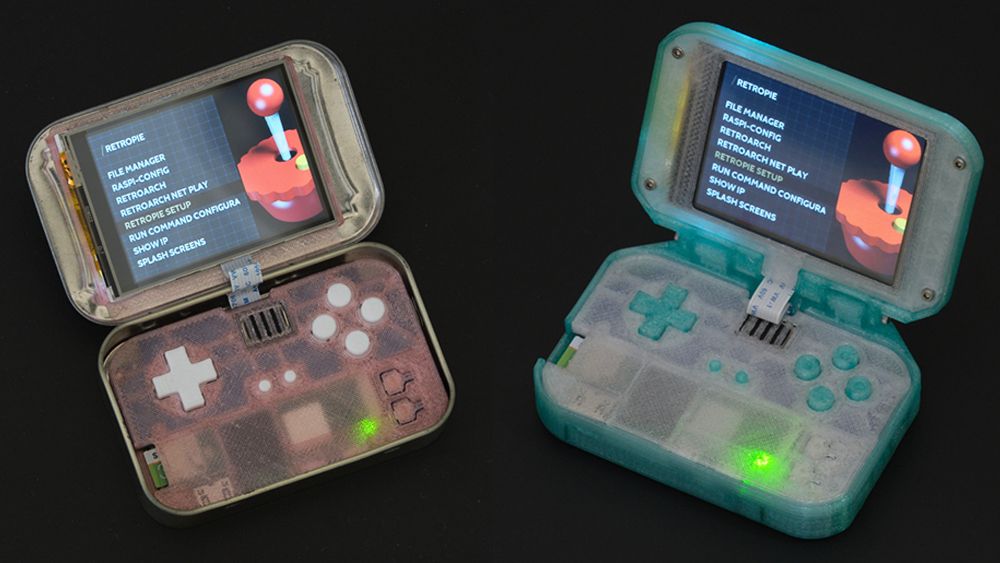
We’ve seen some ingenious DIY console designs over the years, and yes, we’ve seen people run Doom to run on pretty much any electronic device. But a Raspberry Pi-powered retro games console small enough to fit in an Altoids mints tin could be just the solution for all those who think the new Nintendo Switch 2 is too big.

The Pi Tin

Dubbed the Pi Tin, the device makes use of a Raspberry Pi Zero 2 W and a 2.8-inch TFT display, and it supports emulation for SNES, GBA, PS1, Genesis, Megadrive, and some N64 games.

Components and Assembly

You’ll need two custom PCBs, some 3D printed parts, and a few other components easily available from distributors. The PCBs can be manufactured at a low cost but require advanced soldering skills and ideally a hot plate and hot air station to put them together by hand, but Alley Cat plans to make assembled kits available to purchase.

The gamepad has Alps tactile switches and an elastomer membrane – components used in the Game Boy Advance SP and DSi. There’s a soft power button, and the device can be used while charging. It’s compatible with USB-C and can apparently run for up to five hours on a 2,000mAh battery.

Case Options

If you don’t have an Altoids tin, you can 3D print a clamshell case. Alley Cat note that the 3D printed version is easier to assemble, requiring fewer tools, while also providing more battery capacity. The Altoids tin option requires three neodymium magnets.

Assembly Instructions

Builders will need to place four rear buttons in the housing and secure the components with six screws and tape to hold the battery and foam tape to center the PCB. The full instructions for both versions are available open-source via GitHub.

Conclusion

The Pi Tin is an innovative and compact retro games console that can be built using a Raspberry Pi and a few other components. With its support for multiple emulators and battery life of up to five hours, it’s a great option for those looking for a portable retro gaming experience.

FAQs

Q: What components do I need to build the Pi Tin?
A: You’ll need a Raspberry Pi Zero 2 W, two custom PCBs, some 3D printed parts, and a few other components easily available from distributors.

Q: Can I assemble the kit myself?
A: Yes, but it requires advanced soldering skills and ideally a hot plate and hot air station. Alley Cat plans to make assembled kits available to purchase.

Q: How long does the battery last?
A: The device can apparently run for up to five hours on a 2,000mAh battery.

Q: Can I use a different case?
A: Yes, you can 3D print a clamshell case or use an Altoids tin. The 3D printed version is easier to assemble and provides more battery capacity.

Designing on a Budget: The Best MacBook Options for Designers

0

Things to Consider

When choosing a MacBook for design-based projects, consider the following factors:

  • Software: The type of software you’ll be using, such as 3D modeling, video editing, or graphic design
  • Storage: Your storage needs, including the amount of local storage and cloud storage
  • Portability: The importance of a portable device, especially if you’ll be working on the go
  • Display: The type of display you need, including resolution, screen size, and color accuracy
  • Budget: Your budget and the trade-off between cost and performance

What Matters Most for Designers When Choosing a MacBook?

When choosing a MacBook, consider the following:

  • Software: Look for a MacBook that can handle your specific software needs, such as 3D modeling or video editing
  • Storage: Ensure the MacBook has sufficient storage capacity to handle your files and projects
  • CPU and RAM: Prioritize the CPU and RAM capacity for graphic design and UI/UX projects
  • GPU: Consider a MacBook with a powerful GPU for 3D modeling and video editing

Top MacBook Picks for Designers

Here are some top MacBook picks for designers:

  • MacBook Pro M1 13-inch 8GB RAM, 512 GB SSD: A budget-friendly option with surprising power and ideal for graphic design, web design, and lighter creative work
  • MacBook Air M4 15-inch, 16GB RAM, 256GB SSD: A performance-driven option with a large screen and ideal for motion graphics, video editing, and multitasking
  • MacBook Pro M4 Pro 14-inch, 24GB RAM, 1 TB SSD: A balance of power and portability with extra RAM to handle large projects and complex multitasking
  • MacBook Pro M4 Max 16-inch, 36GB RAM, 1TB SSD: An absolute powerhouse with a large, stunning display and ideal for 3D modeling, animation, and high-res video production

Mac Upgrades to Consider

Consider the following upgrades to enhance your MacBook’s performance:

  • Nano-texture Glass: Improved color accuracy and glare reduction
  • Extra RAM: Essential for multitasking and handling large projects
  • Additional Storage: Future-proofs your machine, especially if you work with large files

Tips for Longevity: Make Your MacBook Last

To extend the lifespan of your MacBook:

  1. Optimize Battery Health: Avoid keeping your MacBook plugged in all the time and let the battery drain to around 20% before recharging
  2. Use a Cooling Pad: Prevent overheating and improve performance with a cooling pad
  3. Regular Maintenance: Clean the keyboard and vents to avoid overheating and dust buildup
  4. Keep Your Software Updated: Apple optimizes performance with each update
  5. Manage Storage: Offload large files to external drives to prevent "scratch disks are full" errors

Frequently Asked Questions

  • What is the best MacBook for designers?
    • The best MacBook for designers depends on their specific needs and budget. Consider factors like software, storage, portability, display, and budget when choosing a MacBook.
  • What are the key specifications to consider when choosing a MacBook?
    • Key specifications to consider include software, storage, CPU and RAM, GPU, and display.
  • Can I upgrade my MacBook’s RAM or storage?
    • Yes, you can upgrade your MacBook’s RAM and storage, but be aware that some upgrades may not be possible or may require professional assistance.
  • How can I extend the lifespan of my MacBook?
    • To extend the lifespan of your MacBook, optimize battery health, use a cooling pad, perform regular maintenance, keep your software updated, and manage your storage.

Boost Your DEV Community

Article

Convergence Chaos: HPC and AI Collide

HPC Users’ Reactions to the Convergence of HPC and AI

Welcome to the third entry in this series on AI. The first one was an introduction and series overview, and the next discussed the aspirational goal of artificial general intelligence, AGI. Now it’s time to zero in on another timely topic—HPC users’ reactions to the convergence of HPC and AI.

AI Relies Heavily on HPC Infrastructure and Talent

HPC and AI are symbiotes, creations locked in a tight, mutually beneficial relationship. Both live on a similar, HPC-derived infrastructure and continually exchange advances—siblings maintaining close contact.

  • HPC infrastructure enables the AI community to develop sophisticated algorithms and models, accelerate training and perform rapid analysis in solo and collaborative environments.
  • Shared infrastructure elements originating in HPC include standards-based clusters, message-passing (MPI and derivatives), high-radix networking technologies, storage and cooling technologies, to name a few.
  • MPI "forks" used in AI (e.g., MPI-Bcst, MPIAllreduce, MPI_Scatterv/Gatherv) provide useful functions well beyond basic interprocessor communication.

HPC and Hyperscale AI: The Data Difference

Social media giants and other hyperscalers were in a natural position to get the AI ball rolling in a serious way. They had lots of readily available customer data for exploiting AI. In sharp contrast, some economically important HPC domains, such as healthcare, still struggle to collect enough usable, high-quality data to train large language models and extract new insights.

Addressing the Data Shortage

The HPC-AI community is working to remedy the data shortage in multiple ways:

  • A growing ecosystem of organizations is creating realistic synthetic data, which promises to expand data availability while providing better privacy protection and avoidance of bias.
  • The community is developing better inferencing—guessing ability. Bigger inferencing "brains" should produce desired models and solutions with less training data.
  • The recent DeepSeek news showed, among other things, that impressive AI results can be achieved with smaller, less-generalized (more domain-specific) models that require less training data—along with less time, money, and energy use.

Beneficial Convergence or Scary Collision?

Attitudes of HPC center directors and leading users toward the HPC-AI convergence differ greatly. All expect mainstream AI to have a powerful impact on HPC, but expectations range from confident optimism to varying degrees of pessimism.

Concerns That May Keep Optimists and Pessimists Up at Night

Here are things in the HPC-AI convergence that seem to concern optimists and pessimists alike:

  • Inadequate access to GPUs. GPUs have been in short supply. A concern is that the superior purchasing power of hyperscalers—the biggest customers for GPUs—may make it difficult for Nvidia, AMD, and others to justify accepting orders from the HPC community.
  • Pressure to Overbuy GPUs. Some HPC data center directors, especially in the government sector, told us that AI "hype" is so strong that their proposals for next-generation supercomputers had to be replete with mentions of AI. This later forced them to follow through and buy more GPUs—and fewer CPUs—that their user community needed.
  • Difficulty Negotiating System Prices. More than one HPC data center director reported that, given the GPU shortage and the superior purchasing power of hyperscalers, vendors of GPU-centric HPC systems have become reluctant to enter into customary price negotiations with them.
  • Continuing Availability of FP64. Some HPC data center directors say they’ve been unable to get assurance that FP64 units will be available for their next supercomputers several years from now.

Preliminary Conclusion

It’s early in the game and already clear that AI is here to stay—not another "AI winter." Similarly, nothing is going to stop the HPC-AI convergence. Even pessimists foresee strong benefits for the HPC community from this powerful trend. HPC users in government and academic settings are moving full speed ahead with AI research and innovation, while HPC-reliant industrial firms are predictably more cautious but already have applications in mind.

FAQs

Q: What are the benefits of the HPC-AI convergence?
A: The HPC-AI convergence brings together the strengths of both communities, enabling the development of sophisticated algorithms and models, accelerating training, and performing rapid analysis in solo and collaborative environments.

Q: What are the concerns surrounding the HPC-AI convergence?
A: Concerns include inadequate access to GPUs, pressure to overbuy GPUs, difficulty negotiating system prices, and the continuing availability of FP64.

Q: How will the HPC community adapt to the HPC-AI convergence?
A: The HPC community will adapt to the HPC-AI convergence by leveraging the strengths of both communities, developing new applications, and innovating in areas such as realistic synthetic data and better inferencing.

Risky Business: Why AI Ethics Matter

Company Values

ZDNET: How do you define ethical AI, and why is it critical for businesses today?

Kiran Minnasandram: Ethical AI not only complies with the law but is also aligned with the value we hold dear at Wipro. Everything we do is rooted in four pillars. AI must be aligned with our values around the individual (privacy and dignity), society (fairness, transparency, and human agency), and the environment. The fourth pillar is technical robustness that encompasses legal compliance, safety, and robustness.

AI Adoption and Sustainability

ZDNET: How does AI adoption impact corporate sustainability goals, both positively and negatively?

Kiran Minnasandram: AI adoption has and will have a significant impact on corporate sustainability goals. On the positive side, AI can enhance operational efficiency by optimizing supply chains and improving resource management through more precise monitoring of energy and carbon consumption, as well as improving data collection processes for regulatory reporting.

Environmental Impact

ZDNET: How should enterprises balance the drive for AI innovation with environmental responsibility?

Kiran Minnasandram: As a starting point, enterprises will need to establish clear policies, principles, and guidelines on the sustainable use of AI. This creates a baseline for decisions around AI innovation and enables teams to make the right choices around the type of AI infrastructure, models, and algorithms they will adopt. Additionally, enterprises need to establish systems to effectively track, measure, and monitor environmental impact from AI usage and demand this from their service providers.

Biggest Misconception

ZDNET: What are the biggest misconceptions about AI ethics and sustainability, and how can businesses overcome them?

Kiran Minnasandram: The biggest misconception is that it is challenging to bring innovation and responsibility together. The reality is that responsible AI is the key to unlocking AI progress as it provides long-term sustainable innovation.

Leveraging the Cloud

ZDNET: How can cloud infrastructure be leveraged to embed ethical considerations into AI development?

Kiran Minnasandram: Cloud infrastructure offers powerful tools to help embed ethical considerations into AI development. Built-in AI ethics toolkits can support bias detection and fairness testing by identifying imbalances in training data and models. Cloud platforms also offer diversity-aware training tools to help ensure datasets are representative and inclusive, which is critical for developing responsible AI systems.

Measuring Sustainability

ZDNET: Why do some organizations struggle to measure AI’s sustainability impact, and how can cloud-based tools help?

Kiran Minnasandram: Many organizations struggle to measure AI’s sustainability impact due to the absence of standard metrics. Without a universal framework to quantify environmental effects, it becomes difficult to benchmark progress or compare across initiatives. Cloud-based tools can help bridge this gap by offering customizable dashboards and models that track carbon output across the AI lifecycle, from development through deployment.

Conducting AI Impact Assessments

ZDNET: What governance strategies should enterprises implement to ensure responsible AI usage?

Kiran Minnasandram: The most important thing is to have a governance framework. Some organizations may have a separate AI governance structure, while others (like ours) have embedded it within our existing governance construct. It is very important to involve every corner of the organization. AI impact assessments are useful tools to embed legal protection, privacy, and robustness in the deployment of AI from the inception stage.

Conclusion

In conclusion, the interview with Kiran Minnasandram, VP and CTO of Wipro FullStride Cloud, highlights the importance of ethical AI and sustainability in the development and deployment of AI systems. The company values at Wipro, such as privacy, dignity, fairness, transparency, and human agency, serve as a foundation for responsible AI development. The interview also emphasizes the need for enterprises to establish clear policies, principles, and guidelines on the sustainable use of AI and to track, measure, and monitor environmental impact from AI usage.

Frequently Asked Questions

Q: What are the biggest misconceptions about AI ethics and sustainability?
A: The biggest misconception is that it is challenging to bring innovation and responsibility together. The reality is that responsible AI is the key to unlocking AI progress as it provides long-term sustainable innovation.

Q: How can cloud infrastructure be leveraged to embed ethical considerations into AI development?
A: Cloud infrastructure offers powerful tools to help embed ethical considerations into AI development. Built-in AI ethics toolkits can support bias detection and fairness testing by identifying imbalances in training data and models.

Q: Why do some organizations struggle to measure AI’s sustainability impact?
A: Many organizations struggle to measure AI’s sustainability impact due to the absence of standard metrics. Without a universal framework to quantify environmental effects, it becomes difficult to benchmark progress or compare across initiatives.

Q: What governance strategies should enterprises implement to ensure responsible AI usage?
A: The most important thing is to have a governance framework. Some organizations may have a separate AI governance structure, while others (like ours) have embedded it within our existing governance construct.

OpenAI Delays GPT-5

0

OpenAI Reverses Course on o3 Release, Aims to Launch o3 and o4-mini in Coming Weeks

Update on OpenAI’s AI Models

After effectively canceling the consumer launch of its o3 reasoning model in February, OpenAI now says it aims to release both o3 and a next-gen successor, o4-mini, in "a couple of weeks."

Reason Behind the Reversal

In a post on X on Friday, OpenAI CEO Sam Altman said the reversal in course is related to OpenAI’s upcoming GPT-5, which the company has previously said will be a unified model incorporating reasoning capabilities.

“[W]e are going to be able to make GPT-5 much better than we originally thought,” Altman wrote. “[W]e also found it harder than we thought it was going to be to smoothly integrate everything. [A]nd we want to make sure we have enough capacity to support what we expect to be unprecedented demand.”

GPT-5 and its Expected Release

Altman added that OpenAI expects to roll out GPT-5 "in a few months" – later than originally anticipated.

Features of GPT-5

To the extent that OpenAI has published details about GPT-5, the company has said it intends to offer unlimited chat access to GPT-5 at the "standard intelligence setting" subject to "abuse thresholds." ChatGPT Plus customers will be able to run GPT-5 at a "higher level of intelligence," while subscribers to OpenAI’s ChatGPT Pro plan will be able to run GPT-5 at an "even higher level of intelligence."

“[GPT-5] will incorporate voice, Canvas, search, deep research, and more,” Altman wrote in an X post early this year, referring to a range of features OpenAI has launched in ChatGPT over the past several months. “[A] top goal for us is to unify [our] models by creating systems that can use all our tools, know when to think for a long time or not, and generally be useful for a very wide range of tasks.”

OpenAI’s Strategy Under Scrutiny

OpenAI is facing increasing pressure from rivals such as Chinese AI lab DeepSeek that have adopted an "open" approach to launching models. In contrast to OpenAI’s strategy, these "open" competitors make their models available to the AI community for experimentation and, in some cases, commercialization.

Upcoming Models

In addition to o3, an "o3 pro" model, o4-mini, and GPT-5, OpenAI plans to debut its first open language model since GPT-2 in the coming months. This model will have reasoning capabilities, Altman said earlier this week, and will be subject to additional safety evaluations.

Conclusion

OpenAI’s recent reversal on the release of o3 and the upcoming launch of GPT-5 demonstrate the company’s commitment to advancing the field of artificial intelligence. While the company’s approach may be different from that of its competitors, its goal remains the same – to create AI models that are useful for a wide range of tasks.

Frequently Asked Questions

Q: What is the current status of o3 and o4-mini?

A: OpenAI plans to release both o3 and o4-mini in "a couple of weeks."

Q: What is the reason behind the reversal on the release of o3?

A: The reversal is related to the upcoming GPT-5 model, which will incorporate reasoning capabilities and is expected to be released in a few months.

Q: What are the features of GPT-5?

A: GPT-5 will incorporate voice, Canvas, search, deep research, and more. It will be available at different levels of intelligence depending on the user’s subscription plan.

Q: Why is OpenAI facing pressure from competitors?

A: OpenAI is facing pressure from competitors that have adopted an "open" approach to launching models, making them available to the AI community for experimentation and commercialization.

The Poo Emoji Grows Booty

0

Veganism Promoted through Unconventional Animated Ad

A Surprising Approach to Promoting Veganism

Adverts to promote veganism can sometimes be preachy or militant, or just too dry, but not this surprising animated advert from PETA. Quite the contrary, the animal rights nonprofit is out to show that veganism can deliver a moist stool that’s as regular as a Japanese train.

Bringing Feces to Life

It’s brought one of our favourite emoji’s to life in a surreal ad that shows piles of feces skateboarding, scratching, playing keytar, shaking their booty and generally living it up thanks to a plant-based diet.

The Ad and its Inspiration

Watch On

The ad features a chorus of poos singing about how happy they are in a blissful world populated by toilet-themed characters, including dancing rolls of toilet paper. There’s even a catchy song. Conceived by Samy Alliance and produced by the Buenos Aires-based character animation studio Flamboyant Paradise, directed by Javier Lourenço and Alvarez Ortega Bianchi, it could be an animation from Adult Swim.

The Research Behind the Ad

But despite the irreverent tone, the inspiration came from serious research, which suggests that many people suffer from constipation and other digestive problems due to a lack of plants in their diet.

PETA’s Plan for the Ad

PETA plans to use the animation on social media channels as well as in an out of home campaign and Spotify, all directing to a campaign page that provides details of the benefits of a vegan diet.

Conclusion

The ad is a surprising change of direction from the usual focus on ethical arguments for a plant-based diet. That could partly be recognition that people need a selfish motive to commit to a major lifestyle change, but it’s also much more attention-grabbing, and fun too, making the ad more likely to stand out on social media.

Frequently Asked Questions

Q: What is the purpose of the ad?
A: The ad aims to promote the benefits of a vegan diet, specifically highlighting the benefits for digestive health.

Q: Who created the ad?
A: The ad was created by Samy Alliance and produced by Flamboyant Paradise, a Buenos Aires-based animation studio.

Q: What inspired the ad’s tone and style?
A: The ad’s tone and style were inspired by research suggesting that many people suffer from constipation and other digestive problems due to a lack of plants in their diet.

Q: Where can I see the ad?
A: The ad will be released on social media channels, in an out of home campaign, and on Spotify, directing to a campaign page with more information on the benefits of a vegan diet.

Brand Beef

0

A Little Bit of Brand Warfare

01. Pepsi vs Coca-Cola

This clever clapback from Pepsi was the perfect response to Coca-Cola taking the cola brand crown after it announced it sold four times as much as Pepsi back in 2001. Featuring a young boy at a vending machine, we see the kid purchase two Coca-Cola’s, only to use them as a step up to snag a coveted Pepsi can.

While it’s always a risky strategy to feature your competitor in ads, Pepsi demonstrates how subverting expectations and playfully poking fun at rival brands can be a golden marketing technique. With no dialogue and a simple storyline, this ad shines in its simplicity, making it a prime example of a clever brand war.

02. Adidas vs Nike

This Adidas ad is pretty typical of a 90s/00s sports brand ad, with glossy action shots of an athlete running through desolate terrain. As the protagonist plunges through desert landscapes the narrator informs us "This man wears Nike" before quickly breaking the fourth wall, claiming "The man carrying the 50 lb camera wears Adidas."

Simple yet effective, this ad is another prime example of subverting expectations. While typically sports branding ads sell us the fantasy of the immaculate athlete, Adidas invites us to peek behind the curtain, proving the practicality and durability of its products.

03. McDonald’s vs Burger King

Ah, McDonald’s vs Burger King – it’s a brand beef as old as time. While the brand war may be getting a little stale nowadays, back in 2013 these playful shady ads were a golden marketing move on both sides.

Featuring a young boy eating a McDonald’s meal, we quickly see him becoming swamped with ‘friends’ who want to grab a bite. In the next shot, he’s seen eating a Burger King meal uninterrupted. The shady ad is one of the more brutal examples of brand war advertising, yet the playful nature of fast food advertising makes it a fitting way to tease the competition. (Don’t worry, Burger King has since got its own back).

04. Apple vs Android

Back in 2017, Apple released an ingenious campaign which put ‘your phone’ (Android) against the iPhone. Featuring a simple split screen motif, the clever ads featured examples of Apple’s superiority when it came to speed, privacy, photos, security and more – basically anything Android does, Apple apparently does better.

Short, concise and consistent, these clever ads are a great example of indirectly addressing the competition. Focussing on real-world consumer issues and offering a practical solution, these ads use the power of suggestion to win the brand war.

Conclusion

Brand warfare can be a fun and effective way to build brand awareness and prove your brand has a sense of humour. By subverting expectations, poking fun at rival brands, and offering practical solutions, brands can create clever and effective ads that leave a lasting impression.

FAQs

Q: What is brand warfare?
A: Brand warfare refers to the marketing strategy of competing brands engaging in playful and humorous competition to promote their products or services.

Q: Is brand warfare effective?
A: Yes, brand warfare can be an effective way to build brand awareness and create memorable advertising campaigns.

Q: What are some examples of successful brand warfare ads?
A: The ads featured in this article, such as Pepsi vs Coca-Cola, Adidas vs Nike, McDonald’s vs Burger King, and Apple vs Android, are all great examples of successful brand warfare ads.

Tron: Ares

0

Tron: Ares Trailer Released, Teasing a Dark and Moody Sequel

Introduction

Disney has finally released the first trailer for Tron: Ares, the long-awaited sequel to the 2010 movie Tron: Legacy. The minute-and-a-half trailer gives us a glimpse into the movie’s visuals, which are dark, moody, and filled with the series’ signature light trails.

The Trailer’s Visuals and Plot

The trailer opens in the physical world at night, showing Jared Leto’s Ares, a Program made physical, fleeing from police on a light cycle, slicing one in half using his light trail as a weapon. The shots that follow show:

  • A massive airship hovering over the real-world city, visible only by the red light strips on its outside.
  • People looking on in horror at the airship.
  • Dogfights between human aircraft and fighters from the Tron digital world.
  • A clip of Ares being given his physical body.

The trailer is set to the music of Nine Inch Nails, which is handling the soundtrack this time around. It ends with a voiceover from Jeff Bridges, reprising his role as Kevin Flynn, saying, "Ready? There’s no going back."

Soundtrack and Release Date

Disney included the poster above in an email to The Verge announcing the trailer’s release. The movie, directed by Joachim Rønning, is scheduled to hit theaters on October 10th.

Cast and Crew

In a YouTube video from Thursday’s CinemaCon presentation about Ares, Leto said his character is "a highly advanced program" who has entered the real world on a "do-or-die mission to fulfill his directive." The movie also stars Gillian Anderson, Greta Lee, Evan Peters, Hasan Minhaj, Jodie Turner-Smith, Arturo Castro, and Cameron Monaghan, in addition to Leto and Bridges.

Conclusion

The trailer for Tron: Ares has generated excitement among fans, showcasing the movie’s dark and moody visuals. With its talented cast and crew, the movie is expected to be a thrilling sequel to the Tron franchise.

Frequently Asked Questions

Q: Who stars in Tron: Ares?

A: The movie features Jared Leto, Jeff Bridges, Gillian Anderson, Greta Lee, Evan Peters, Hasan Minhaj, Jodie Turner-Smith, Arturo Castro, and Cameron Monaghan.

Q: Who is directing Tron: Ares?

A: The movie is directed by Joachim Rønning.

Q: What is the release date of Tron: Ares?

A: The movie is scheduled to hit theaters on October 10th.

Q: What is the soundtrack for Tron: Ares?

A: The soundtrack is being handled by Nine Inch Nails.

Sketchbook of Valerya Milovanova

0

Valerya Milovanova’s Sketchbook Routine and Illustration Process

Combining Traditional and Digital Media

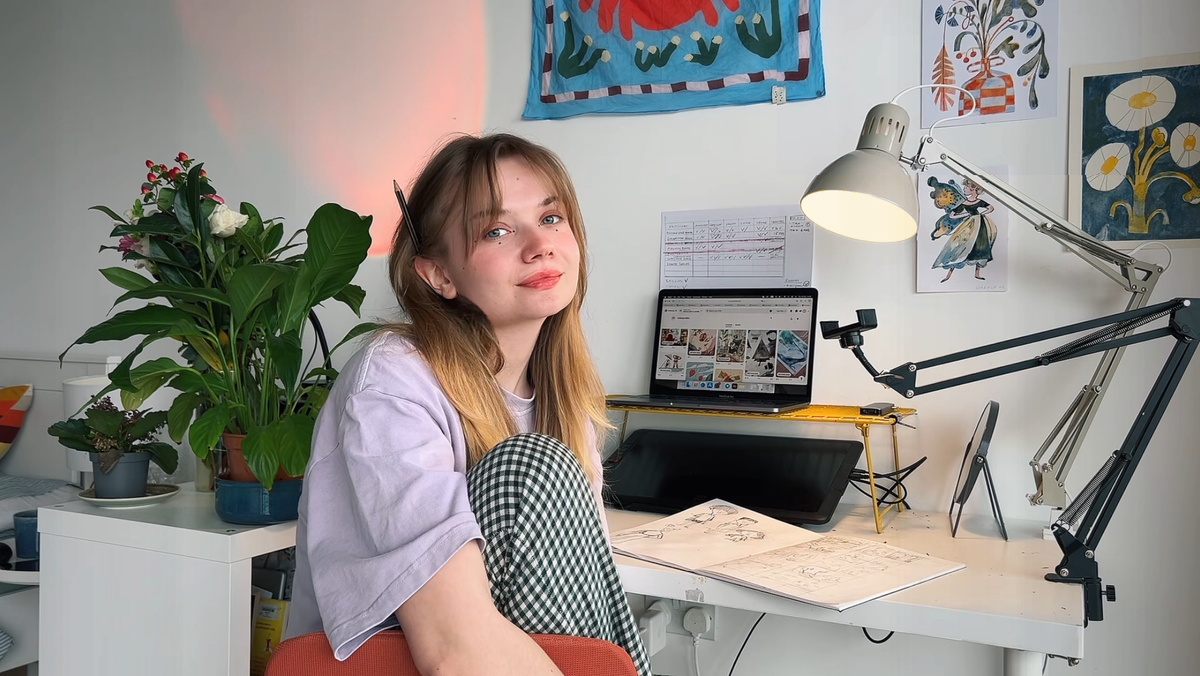
Valerya Milovanova is a UK-based illustrator who combines traditional materials with digital media like Procreate to make fun and heartwarming illustrations. She also loves screen printing, monoprinting, and RISO techniques to enhance her storytelling.

Starting with Sketchbooks

Before we go on, and if you’re inspired by Valerya, then read our list of Procreate tutorials to get started in this app, and our guide to the best iPads for drawing. Read our xTool Screen Printer review too, for a device to get started in this craft.

Valerya uses her sketchbooks in an "unconventional" way. They’re more of a tool to achieve unique and unexpected textures and brushstrokes that are then transferred to the Procreate app. All her illustrations begin on paper, where she feels more free to experiment and assist happy accidents.

Traditional Process

I graduated from the University of Hertfordshire’s Illustration course in 2023 and applied to several picturebook illustration agencies seeking representation. Advocate Art has responded quite promptly and I have been working with them for almost two years since," shares Valerya. Take a look at Valerya’s work on her website.

She adds: "I have also participated in several illustration competitions during my studies, such as the Batsford Prize, and later that year the Unpublished Picturebook showcase. Being shortlisted for those awards helped me kickstart my career and opened a path for new opportunities."

Digital Process

"I usually start with a physical drawing on paper with watercolour, gouache, charcoal pencils, and sometimes ink," she says.

She continues: "The digital process for me consists of colour editing (through curves and colour balance in Procreate) and then I draw over the painting with digital brushes. And if I start with a black and white ink painting, I first colour it to achieve the desired look with Multiply and Overlay layers."

Texture and Media

Since texture is very important for Valerya, I ask her what combination of tools and media allows her to achieve it, and she replies, "Watercolour, ink, charcoal, coloured pencils, and gouache (still testing it out)."

Sketchbook Routine

I ask Valerya how did you develop a sketchbook routine and how do you manage to stay consistent?

"I do carry a small sketchbook with me everywhere, but I still don’t use it every time. It’s nice to have it and draw on the way home after meeting with friends, or while waiting for a coffee and a bun, or at the busy London pub where people won’t notice you are spying on them," she says.

She then adds: "I think I can work on being more consistent with my sketchbook practice, as sometimes I just don’t have the energy to create after working on books."

Inspirations and Goals

I ask Valerya to point out her favorite pages, ”Definitely the most spontaneous ones, where I drew quickly, trying to grasp the form and the character of a person," she says.

She continues: "I think I managed to capture the essence of the flowers without overworking them, love the looseness and textures!"

Multiple Sketchbooks

Artists usually have more than one sketchbook so I want to know how many sketchbooks Valerya uses at a time. And which are the goals for each of them?

"I currently have two main sketchbooks," Valerya says, then adds: "One is a tiny A6 book with thinner paper that I take everywhere. It is mainly for the people watching in the underground, at the cafe, or during art fairs. It also sometimes works for testing the materials."

Sketchbook Challenges

There are many sketchbook challenges going on on social media at the moment, so I’m curious to know if she took part in any of these.

"I have participated in a few of them over the years. But I think I have only finished one – the Inktober. I guess working with ink and B&W materials has its own limitations, and having those limitations helps overcome the fear of imperfection."

Skills Improved

I ask Valerya what skills she has improved the most by practicing consistently in her sketchbook?

"Line confidence and the ability to observe and capture shapes quickly are the biggest skills I’ve improved the most. The more I sketch, the less hesitant my strokes are. I’ve learned to trust my hand and commit to marks without overthinking."

Conclusion

Valerya Milovanova’s sketchbook routine is a unique and inspiring blend of traditional and digital media. Her use of watercolour, ink, charcoal, and gouache allows her to achieve unique textures and brushstrokes, which she then transfers to her digital illustrations. With a consistent routine and a willingness to experiment, Valerya has developed her skills and improved her line confidence and ability to observe and capture shapes quickly.

FAQs

Q: How do you stay consistent with your sketchbook practice?
A: I try to carry a small sketchbook with me everywhere and draw on the way home after meeting with friends, or while waiting for a coffee and a bun, or at the busy London pub where people won’t notice you are spying on them.

Q: What inspires your illustrations?
A: It could be something I saw on my walk, a picture I took, a film, or a book.

Q: How do you manage your time between illustration work and sketchbook practice?
A: Sometimes I just don’t have the energy to create after working on books, but I try to make time for my sketchbook practice when I can.

Q: What skills have you improved the most by practicing consistently in your sketchbook?
A: Line confidence and the ability to observe and capture shapes quickly are the biggest skills I’ve improved the most.

Q: Do you participate in sketchbook challenges?
A: I have participated in a few of them over the years, but I think I have only finished one – the Inktober.