
By John P. Desmond, AI Tendencies Editor
Two experiences of how AI builders throughout the federal authorities are pursuing AI accountability practices had been outlined on the AI World Authorities occasion held just about and in-person this week in Alexandria, Va.
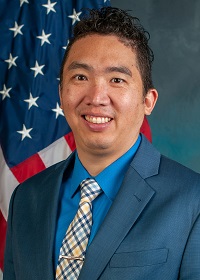
Taka Ariga, chief knowledge scientist and director on the US Authorities Accountability Workplace, described an AI accountability framework he makes use of inside his company and plans to make out there to others.
And Bryce Goodman, chief strategist for AI and machine studying on the Protection Innovation Unit (DIU), a unit of the Division of Protection based to assist the US army make sooner use of rising business applied sciences, described work in his unit to use rules of AI growth to terminology that an engineer can apply.
Ariga, the primary chief knowledge scientist appointed to the US Authorities Accountability Workplace and director of the GAO’s Innovation Lab, mentioned an AI Accountability Framework he helped to develop by convening a discussion board of specialists within the authorities, business, nonprofits, in addition to federal inspector common officers and AI specialists.
“We’re adopting an auditor’s perspective on the AI accountability framework,” Ariga mentioned. “GAO is within the enterprise of verification.”
The trouble to provide a proper framework started in September 2020 and included 60% girls, 40% of whom had been underrepresented minorities, to debate over two days. The trouble was spurred by a want to floor the AI accountability framework within the actuality of an engineer’s day-to-day work. The ensuing framework was first printed in June as what Ariga described as “model 1.0.”
In search of to Deliver a “Excessive-Altitude Posture” All the way down to Earth
“We discovered the AI accountability framework had a really high-altitude posture,” Ariga mentioned. “These are laudable beliefs and aspirations, however what do they imply to the day-to-day AI practitioner? There’s a hole, whereas we see AI proliferating throughout the federal government.”
“We landed on a lifecycle method,” which steps via levels of design, growth, deployment and steady monitoring. The event effort stands on 4 “pillars” of Governance, Information, Monitoring and Efficiency.
Governance opinions what the group has put in place to supervise the AI efforts. “The chief AI officer may be in place, however what does it imply? Can the particular person make adjustments? Is it multidisciplinary?” At a system degree inside this pillar, the workforce will evaluate particular person AI fashions to see in the event that they had been “purposely deliberated.”
For the Information pillar, his workforce will study how the coaching knowledge was evaluated, how consultant it’s, and is it functioning as supposed.
For the Efficiency pillar, the workforce will take into account the “societal influence” the AI system could have in deployment, together with whether or not it dangers a violation of the Civil Rights Act. “Auditors have a long-standing observe file of evaluating fairness. We grounded the analysis of AI to a confirmed system,” Ariga mentioned.
Emphasizing the significance of steady monitoring, he mentioned, “AI just isn’t a expertise you deploy and overlook.” he mentioned. “We’re getting ready to repeatedly monitor for mannequin drift and the fragility of algorithms, and we’re scaling the AI appropriately.” The evaluations will decide whether or not the AI system continues to fulfill the necessity “or whether or not a sundown is extra acceptable,” Ariga mentioned.
He’s a part of the dialogue with NIST on an general authorities AI accountability framework. “We don’t need an ecosystem of confusion,” Ariga mentioned. “We would like a whole-government method. We really feel that this can be a helpful first step in pushing high-level concepts right down to an altitude significant to the practitioners of AI.”
DIU Assesses Whether or not Proposed Tasks Meet Moral AI Pointers

On the DIU, Goodman is concerned in an analogous effort to develop tips for builders of AI tasks throughout the authorities.
Tasks Goodman has been concerned with implementation of AI for humanitarian help and catastrophe response, predictive upkeep, to counter-disinformation, and predictive well being. He heads the Accountable AI Working Group. He’s a college member of Singularity College, has a variety of consulting purchasers from inside and out of doors the federal government, and holds a PhD in AI and Philosophy from the College of Oxford.
The DOD in February 2020 adopted 5 areas of Moral Ideas for AI after 15 months of consulting with AI specialists in business business, authorities academia and the American public. These areas are: Accountable, Equitable, Traceable, Dependable and Governable.
“These are well-conceived, however it’s not apparent to an engineer the best way to translate them into a selected challenge requirement,” Good mentioned in a presentation on Accountable AI Pointers on the AI World Authorities occasion. “That’s the hole we are attempting to fill.”
Earlier than the DIU even considers a challenge, they run via the moral rules to see if it passes muster. Not all tasks do. “There must be an choice to say the expertise just isn’t there or the issue just isn’t appropriate with AI,” he mentioned.
All challenge stakeholders, together with from business distributors and throughout the authorities, want to have the ability to check and validate and transcend minimal authorized necessities to fulfill the rules. “The regulation just isn’t transferring as quick as AI, which is why these rules are vital,” he mentioned.
Additionally, collaboration is occurring throughout the federal government to make sure values are being preserved and maintained. “Our intention with these tips is to not attempt to obtain perfection, however to keep away from catastrophic penalties,” Goodman mentioned. “It may be troublesome to get a gaggle to agree on what the most effective consequence is, however it’s simpler to get the group to agree on what the worst-case consequence is.”
The DIU tips together with case research and supplemental supplies will probably be printed on the DIU web site “quickly,” Goodman mentioned, to assist others leverage the expertise.
Listed below are Questions DIU Asks Earlier than Improvement Begins
Step one within the tips is to outline the duty. “That’s the one most vital query,” he mentioned. “Provided that there is a bonus, do you have to use AI.”
Subsequent is a benchmark, which must be arrange entrance to know if the challenge has delivered.
Subsequent, he evaluates possession of the candidate knowledge. “Information is important to the AI system and is the place the place loads of issues can exist.” Goodman mentioned. “We’d like a sure contract on who owns the information. If ambiguous, this will result in issues.”
Subsequent, Goodman’s workforce desires a pattern of knowledge to guage. Then, they should know the way and why the data was collected. “If consent was given for one objective, we can’t use it for an additional objective with out re-obtaining consent,” he mentioned.
Subsequent, the workforce asks if the accountable stakeholders are recognized, equivalent to pilots who may very well be affected if a part fails.
Subsequent, the accountable mission-holders have to be recognized. “We’d like a single particular person for this,” Goodman mentioned. “Usually we’ve got a tradeoff between the efficiency of an algorithm and its explainability. We’d must resolve between the 2. These varieties of choices have an moral part and an operational part. So we have to have somebody who’s accountable for these choices, which is in line with the chain of command within the DOD.”
Lastly, the DIU workforce requires a course of for rolling again if issues go mistaken. “We have to be cautious about abandoning the earlier system,” he mentioned.
As soon as all these questions are answered in a passable manner, the workforce strikes on to the event section.
In classes discovered, Goodman mentioned, “Metrics are key. And easily measuring accuracy may not be ample. We’d like to have the ability to measure success.”
Additionally, match the expertise to the duty. “Excessive danger functions require low-risk expertise. And when potential hurt is critical, we have to have excessive confidence within the expertise,” he mentioned.
One other lesson discovered is to set expectations with business distributors. “We’d like distributors to be clear,” he mentioned. ”When somebody says they’ve a proprietary algorithm they can not inform us about, we’re very cautious. We view the connection as a collaboration. It’s the one manner we are able to guarantee that the AI is developed responsibly.”
Lastly, “AI just isn’t magic. It won’t remedy every little thing. It ought to solely be used when needed and solely after we can show it can present a bonus.”
Be taught extra at AI World Authorities, on the Authorities Accountability Workplace, on the AI Accountability Framework and on the Protection Innovation Unit web site.


