
Branding is a difficult enterprise. On the one hand, you spend years, many years even, establishing your model within the public thoughts. On the opposite, in case your model appears too outdated, individuals might drift away, and in direction of the brand new shiny factor. Which is precisely the place the perfect rebrands are available.
Rebranding has the ability to breathe new life into established names, reposition it inside the present zeitgeist, and entice contemporary, youthful audiences with out alienating or dropping present followers. Over the many years, iconic manufacturers starting from Pepsi to Apple have all managed to redefine themselves on this approach; whether or not by reinventing their logos, updating their visible aesthetics, crafting new messaging methods, or a mix of all three.
On this article, we glance again at the perfect rebrands of all time, exploring the inventive methods behind every transformation, their cultural impression, and the teachings they provide for manufacturers navigating a quickly altering market at the moment.
01. Kodak (1971)
To some kids at the moment, the concept of capturing photos on bodily movie is a hipster novelty. However for everything of the twentieth century, it was the principle recreation on the town, and Kodak, based in 1892, was as synonymous with images as Coke was for comfortable drinks and McDonald’s was from quick meals.
And but even essentially the most ubiquitous of manufacturers cannot relaxation on its laurels. And it was a serious rebrand in 1971 that actually helped Kodak imprint itself on the camera-carrying consciousness. Central to this reinvention was the distinctive Kodak ‘Okay’ emblem within the now-famous yellow and pink color scheme.
This new visible identification went on to have exceptional endurance. The advertising supplies created throughout this period, characterised by their daring geometric shapes, clear strains and placing yellow-red color palette, have a recent really feel even by at the moment’s requirements.
02. Pepsi (1973)

The Cola Wars of the Seventies marked a pivotal interval of fierce rivalry between Pepsi and Coca-Cola, one which’s continued unabated to this very day. Pepsi was just about lagging behind, however a defining second got here in 1973 when it underwent a transformative rebrand by Lippincott & Margulies.
Day by day design information, evaluations, how-tos and extra, as picked by the editors.
This strategic design shift deserted Pepsi’s conventional script emblem, overlaid onto a literal illustration of a bottle cap, in favour of a daring, modernised ‘Pepsi Globe’ image.
This confidence and bold new look helped usher in a brand new, youthful viewers whereas signaling their aspirations for international market dominance; a big transfer within the ongoing competitors between the 2 beverage giants.
03. NASA (1975)

Spearheaded by Richard Danne and Bruce Blackburn as a part of the US Federal Design Enchancment Program, the NASA rebrand of 1975 centred round a minimalist, futuristic emblem nicknamed “The Worm”; a particular pink wordmark with curved strains that embodied NASA’s revolutionary spirit.
Notable for its unconventional option to omit cross-strokes within the letter A, the design required cautious negotiation with NASA directors. To make sure consistency throughout all NASA purposes, from uniforms to automobiles, an in depth requirements guide was developed which has grow to be one thing of a design trade traditional, and has been republished a number of occasions since.
The Worm served as NASA’s official emblem for 17 years (1975-1992) earlier than being changed by the unique “meatball” emblem, a choice that generated controversy within the design group. The Worm’s affect has endured, although, regardless of its official retirement. Its timeless, subtle design continued to garner admiration amongst design professionals, and the emblem skilled a revival in 2020 when it appeared on a SpaceX rocket.
04. British Airways (1982)

In 1974 British Airways was created because of the merger of two state-owned airways, BOAC and BEA. However it didn’t get its popularity for luxurious journey till a pivotal transformation in 1982. On this yr Landor Associates gave British Airways a brand new identification that includes refined typography (a marked enchancment on the earlier mixed-case styling), a brand new emblem, and a fastidiously chosen color scheme that conveyed velocity and class.
This subtle but understated design method helped place the airline as a premium model in worldwide aviation, making a legacy of status that continues to affect its identification and operation at the moment.
05. Apple (1984)

Within the early Eighties, Apple confronted an unsure future as a desktop pc producer. However looking back, the 1984 launch of the Macintosh proved to be a defining second, revolutionising private computing with its groundbreaking graphical consumer interface, that includes home windows, icons and mouse performance.
The accompanying rebrand by Regis McKenna performed an important function in shifting public notion of computer systems from advanced scientific instruments to accessible client units. The marketing campaign’s centrepiece was the legendary 1984 industrial – quantity 8 on our checklist of the perfect adverts of all time – which portrayed Apple as a revolutionary power difficult technological conformity.
This strategic rebranding effort not solely established Apple’s identification as a pioneer in user-friendly know-how but additionally laid the inspiration for its enduring model identification, which continues to form the tech trade 4 many years later.
06. Champions League (1992)

The UEFA Champions League underwent a big transformation in 1992, evolving from its 1955 origins because the European Cup (formally Coupe des Golf equipment Champions Européens). To characterize this transformation, UEFA labored with Tv Occasion and Media Advertising and marketing (TEAM) to develop a brand new model identification.
The rebrand launched a number of components that stay synonymous with the match at the moment: the black and white/silver color scheme, a brand new emblem, the ‘starball’ image created by Phil Clements of Design Bridge, and a signature anthem. All of those components appeared constantly throughout all venues and broadcasts, whether or not matches have been held in Moscow or Milan.
These standardised components, which additionally included stadium dressing and the ceremonial ‘starball’ centre circle presentation, helped set up the Champions League as a premium international sporting model.
07. FedEx

Based in in 1971, Federal Categorical supplied individuals an revolutionary mannequin based mostly on centralising bundle sorting in Memphis, Tennessee for next-day supply. Nonetheless, for a very long time the corporate confronted a branding problem: its title labored towards its core worth proposition of velocity and effectivity. The phrase ‘Federal’ inadvertently related it with authorities forms and slowness; the antithesis of their precise providing.
Consequently, the corporate underwent a strategic rebrand in 1994, simplifying its title to FedEx. Landor Associates created an revolutionary emblem design that includes a cleverly hid arrow between the ‘E’ and ‘x’, symbolising ahead momentum and precision (it is primary on our checklist of greatest logos of all time). In addition they created a brand new tagline, ‘The World On Time’, which succinctly captured the corporate’s mission and international ambitions.
This redesign has since grow to be a benchmark in branding excellence, praised for its daring design and flexibility throughout completely different enterprise divisions whereas sustaining model consistency.
08. Uniqlo (2005-6)

First established in 1984, Japanese clothes retailer Uniqlo was standard at dwelling, however within the 2000s was experiencing combined success in its worldwide enlargement. This was regardless of the Western fascination with Japanese popular culture, which was exploding on the time as a result of international rise of manga, anime and video video games.
This all modified, although, after Uniqlo underwent a big rebrand in 2005-6 beneath inventive director Kashiwa Sato. This repositioned the model’s focus from trend-driven style to high-quality primary clothes.
A brand new emblem was designed too, with a extra vibrant pink color, reflecting the color of the Japanese flag. This was built-in throughout varied touchpoints together with building panels and taxi roofs, even earlier than shops reopened, to construct model consciousness. One other key factor was the addition of a model of the emblem within the Japanese Katakana script, which is particularly used for international phrases. General, the redesign did a fantastic job of reflecting Uniqlo’s Asian heritage whereas interesting to a global viewers.
09. Pantone (2006)

Pantone established itself as a world authority on color within the early 2000s with a number of landmark initiatives, together with the annual Color of the 12 months announcement and creating its first trademarked color for Tiffany & Co. The corporate then underwent a notable rebrand in 2006, executed by G2, Gray World Group’s branding division.
This rebrand remodeled Pantone’s emblem from a wordmark with fanned-out color swatches to an easier design, that includes a window-like factor with the wordmark positioned on the backside. This was accompanied by the tagline ‘The color of concepts’. This new design proved extremely versatile and efficient, notably in product purposes the place completely different Pantone colors could possibly be showcased inside the window factor.
10. Outdated Spice (2010)
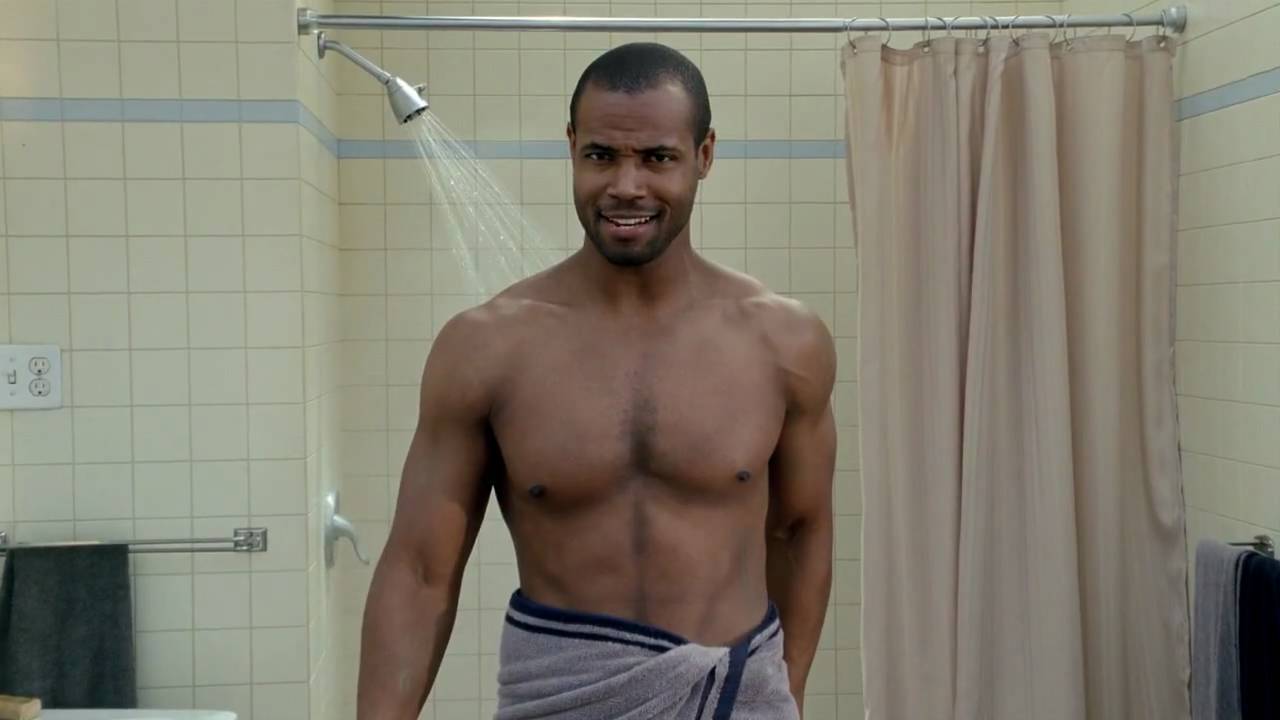
Outdated Spice, a male grooming model based in 1937, had loved many years of success. However each its lengthy pedigree and having the phrase ‘Outdated’ in its title have been limiting its means to draw youthful shoppers.
So in 2012, the model adopted a radically contemporary voice, humorously difficult conventional masculinity by a enjoyable marketing campaign that includes actor and former sports activities star Isaiah Mustafa titled ‘The Man Your Man May Odor Like’. The quirky, assured model tone was bolstered by daring pink packaging and a contemporary design.
This revolutionary method remodeled Outdated Spice from a declining concern right into a multi-billion-dollar international success, making it one of the vital commercially profitable rebrands in latest historical past.
11. Oatly (2014)

Initially based within the Nineties, oat milk model Oatly grew to become standard within the 2010s as shoppers started fascinated about plant-based dairy alternate options. In 2014, a daring new rebrand beneath the route of CEO Toni Petersson helped remodel it from a distinct segment product right into a mainstream one.
The core of this rebrand concerned defying conventional branding norms, critiquing the dairy trade, and embracing a playful, irreverent model. Its irregular emblem, quirky packaging and enormous street-art model adverts all helped Oatly stand out in a sea of opponents. A sequence of unconventional ways, resembling sharing a vital buyer assessment (‘It tastes like sh*t’) on packs and in adverts, and turning a lawsuit with the dairy foyer right into a badge of honour, additional helped solidify its enchantment.
These strikes helped Oatly double its gross sales by the tip of the last decade, and but even because the model gained mainstream recognition, it retained an genuine, edgy voice that continues to interact audiences at the moment.
12. Budweiser (2016)

Many rebrands have to drag off a difficult steadiness, between respecting a model’s heritage whereas making it look contemporary and trendy. The 2016 Budweiser rebrand is a superb instance of do it proper.
Initially based in 1876, Budweiser was going through an rising problem from the rise of craft breweries and microbreweries. Its redesign returned the model to its roots whereas incorporating a contemporary edge. This was achieved by a mix of elevated and refreshed heritage design components, with key iconography hand-recreated to keep up a way of expertise.
The wealthy pink backdrop prolonged past the packaging, making a full-bleed impact, whereas the long-lasting pink, white, and blue color scheme was preserved. This method concerned stripping away pointless components to retain the essence of the model, balancing conventional iconography with daring trendy undertones. The design was cropped on the prime and backside for a contemporary look, which stood out towards prevailing design tendencies of the time.
13. Premier League (2016)

For the 2016/17 season, the Premier League – the top-level English skilled soccer affiliation – launched a reimagined model identification, that includes a modernised lion icon and vivid colors designed for digital and broadcast environments.
Created by DesignStudio with Robin Model Consultants, the rebrand emphasised a versatile, casual design system and marked a shift away from heavy gradients and metallic aesthetics in favour of a clear, crisp look.
This modification mirrored a broader pattern in sports activities branding, mixing heritage with a recent method to enchantment to the evolving media panorama.
14. Tiffany (2021)

Earlier than its $16.2 billion acquisition by LVMH in 2021, the long-lasting jewelry model Tiffany & Co. starting to really feel fairly outdated. LVMH’s rebrand helped flip that round. The design made a daring assertion, introducing a brand new home color, Tiffany Yellow, which was initially met with skepticism however created important buzz on social media.
Following this, the ‘Not Your Mom’s Tiffany’s’ marketing campaign pushed the model additional into modern relevance, utilizing playful, confrontational messaging that referenced Tiffany’s previous whereas inviting a youthful viewers.
This marketing campaign aimed to dispel the notion of Tiffany’s as overly delicate and conventional, positioning it as each culturally related and aspirational. The rebrand was profitable in revitalising Tiffany’s picture, integrating it into trendy luxurious and boosting gross sales.
15. Channel 4 (2023)

Channel 4 is an odd entity. Based in 1982, it is owned by the UK authorities however not like the BBC will get no subsidy and is run as a commerical entity. Within the years main as much as 2023, controversial plans to privatise it have been being hotly debated, however these have been formally referred to as off in the beginning of the yr. Lastly, after years of uncertainty, the channel may now confidently concentrate on the futuere.
Consequently a brand new rebrand, led by Pentagram, revitalised the channel’s rebellious and daring identification, unifying all sub-brands beneath an acid inexperienced rework of its unique emblem. The refreshed look featured vivid gradients, summary idents, and intelligent use of iconography impressed by emojis, making the channel visually distinctive and conversational.
Designed to enchantment to each new and youthful audiences, the rebrand balanced Channel 4’s historic character with a contemporary, trendy aesthetic, capturing consideration with dynamic display screen layouts and a playful, partaking tone.


