Home Blog Page 102

NVIDIA AI Blueprint for Cost-Efficient LLM Routing

0

Accelerating Large Language Models with the NVIDIA AI Blueprint for LLM Router

Introduction

Since the release of ChatGPT in November 2022, the capabilities of large language models (LLMs) have surged, and the number of available models has grown exponentially. With this expansion, LLMs now vary widely in cost, performance, and specialization. For AI developers and MLOps teams, the challenge lies in selecting the right model for each prompt—balancing accuracy, performance, and cost.

The Challenge of Model Selection

A one-size-fits-all approach is inefficient, leading to either unnecessary expenses or suboptimal results. To solve this, the NVIDIA AI Blueprint for an LLM router provides an accelerated, cost-optimized framework for multi-LLM routing. It seamlessly integrates NVIDIA tools and workflows to dynamically route prompts to the most suitable LLM, offering a powerful foundation for enterprise-scale LLM operations.

Key Features of the LLM Router

  • Configurable: Easily integrates with foundational models, including NVIDIA NIM and third-party LLMs.
  • High-performance: Built with Rust and powered by NVIDIA Triton Inference Server, ensuring minimal latency compared to direct model queries.
  • OpenAI API-compliant: Acts as a drop-in replacement for existing OpenAI API-based applications.
  • Flexible: Includes default routing behavior and enables fine-tuning based on business needs.

Prerequisites

To deploy the LLM router, ensure your system meets the following requirements:

  • Operating System: Linux (Ubuntu 22.04 or later)
  • Hardware: NVIDIA V100 GPU (or newer) with 4 GB of memory
  • Software:
    • CUDA and NVIDIA Container Toolkits
    • Docker and Docker Compose
    • Python
  • API keys:
    • NVIDIA NGC API key
    • NVIDIA API catalog key

Deploying and Managing the LLM Router

  1. Deploy the LLM router
    Follow the blueprint notebook to install the necessary dependencies and run the LLM router services using Docker Compose.
  2. Test the routing behavior
    Make a request to the LLM router using the sample Python code or the sample web application. The LLM router handles the request by acting as a reverse proxy:

    • LLM router receives the request and parses the payload
    • LLM router forwards the parsed payload to a classification model
    • Model returns a classification
    • LLM router forwards the payload to a LLM based on the classification
    • LLM router proxies the results from the LLM back to the user

Customizing the Router

Follow the instructions in the blueprint to change the routing policy and LLMs. By default, the blueprint includes examples for routing based on task classification or complexity classification. Fine-tuning a custom classification model is demonstrated in the customization template notebooks.

Monitoring Performance

Run a load test by following the instructions in the blueprint’s load test demonstration. The router captures metrics that can be viewed in a Grafana dashboard.

Multiturn Routing Example

One of the key capabilities of the LLM router is the ability to handle multiturn conversations by sending each new query to the best LLM. This ensures that each request is handled optimally while maintaining context across different types of tasks. An example is outlined below:

  1. User Prompt 1: "A farmer needs to transport a wolf, a goat, and a cabbage across a river. The boat can only carry one item at a time. If left alone together, the wolf will eat the goat, and the goat will eat the cabbage. How can the farmer safely transport all three items across the river?"
    Complexity Router → Chosen Classifier: Reasoning
  2. User Prompt 2: "Resolve this problem using graph theory. Define nodes as valid states (for example, FWGC-left) and edges as permissible boat movements. Formalize the solution as a shortest-path algorithm."
    Complexity Router → Chosen Classifier: Domain-Knowledge
  3. User Prompt 3: "Analyze how Step 2 in your solution specifically prevents the wolf-cabbage conflict you mentioned in Step 4. Use your original step numbering to trace dependencies between these actions."
    Complexity Router → Chosen Classifier: Constraint
  4. User Prompt 4: "Based on the above, write a scientific fiction story."
    Complexity Router → Chosen Classifier: Creativity
  5. User Prompt 5: "Now summarize the above in a short and concise manner."
    Task Router → Chosen Classifier: Summarization

Conclusion

Implementing the NVIDIA AI Blueprint for an LLM router enables organizations to ensure high performance and accuracy in responses to specific user intents while maintaining the flexibility of plug-and-play model scaling. Cost savings are also achieved compared to the baseline approach of routing all requests to the most sophisticated model.

Reducing Costs

By matching simple tasks with smaller, more efficient models, you significantly reduce operational costs while maintaining fast response times.

Boosting Performance

More complex queries are routed to the best-fit models, ensuring the highest accuracy and efficiency.

Scaling Seamlessly

Whether you need open-source models, closed-source models, or a mix of both, the blueprint provides the flexibility to scale and adapt to your organization’s needs.

Get Started

Experience this blueprint now through NVIDIA Launchables. View the full source code in the NVIDIA-AI-Blueprints/llm-router GitHub repo. To learn more about router classification models, read about the NVIDIA NeMo Curator Prompt Task and Complexity Classifier.

FAQs

  • Q: What are the system requirements for deploying the LLM router?
    A: The system requires a Linux operating system (Ubuntu 22.04 or later), an NVIDIA V100 GPU (or newer) with 4 GB of memory, CUDA and NVIDIA Container Toolkits, Docker and Docker Compose, Python, an NVIDIA NGC API key, and an NVIDIA API catalog key.
  • Q: How does the LLM router handle multiturn conversations?
    A: The LLM router sends each new query to the best LLM, ensuring that each request is handled optimally while maintaining context across different types of tasks.
  • Q: Can I customize the routing policy and LLMs?
    A: Yes, follow the instructions in the blueprint to change the routing policy and LLMs. By default, the blueprint includes examples for routing based on task classification or complexity classification.

Skin Deep Proves Doom 3 Engine’s Relevance

0

The Pros of Using Old Tech

Unreal Engine and Unity may be the most popular engines for game developers today, but there are still some who try to go against the grain, such as Wax Heads using Godot. But Skin Deep is even more radical, as it’s a new game made using Id Tech 4 – more popularly referred to as the Doom 3 engine – which is now more than 20 years old.

Having traditionally made its engines open-source, this was the last open-source engine from id Software before it was bought by Bethesda, which still has a passionate community, although Skin Deep is a rare example of the old tech being used for a commercial release, the other being developer Blendo Games’ 2016 cyberpunk adventure game Quadilateral Cowboy.

"I’ve been using various iterations of the Id Tech engines since the late ’90s, so I’m just very comfortable with knowing the ins and outs of it," Blendo founder and creative director Brendon Chung tells me. "The Id Tech engines, generally speaking, are made just for first-person games and not really anything else. which I think is great. I think there’s something really nice about using a very small sharp tool that’s great for doing one thing really well."

The Beauty of Open Source

Whereas Epic and Unity continue iterating and updating their engines, which can come with its own issues of optimisation, the fact that the Doom 3 engine is so old means it’s solid and stable. The downside is that it lacks the accessible features and documentation of a modern engine, perhaps not a huge issue when you’re largely a solo developer with expertise on it already.

Fortunately, joining the team was Suzanne Will, responsible for the level and systems design, art, and programming, who at the time had been making maps in Half-Life, which uses Valve’s Source engine, itself based on a heavily modified version of the Quake engine. "The Source Engine and the Doom 3 engine are kind of both different offshoots of similar ancestral technology, so adjusting from one to the other wasn’t too bad," she explains.

The Challenges of Using Old Tech

As they’re making an immersive sim, it was also beneficial that one of the most significant mods made with id Tech 4’s open-source license was The Dark Mod, a fan-made take on the Thief games, one of the earliest examples of the genre. "A lot of our documentation and even some of our tools and code is thanks to The Dark Mod, which has a really good community," Will adds.

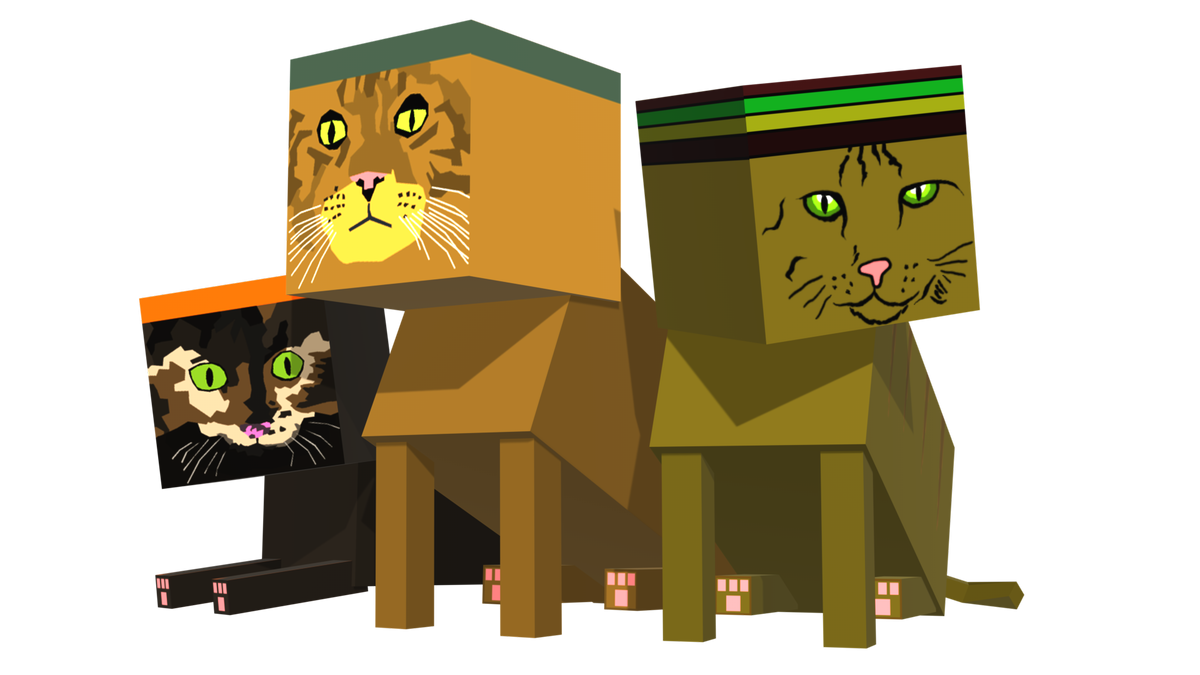
Skin Deep also makes use of id Tech 4’s unique features, such as its implementation of GUI where you can interact with a computer terminal and seamlessly move its cursor while reading an email. Aesthetically however, Skin Deep couldn’t be more different from the dark and gritty look of Doom 3, opting for something more colourful and stylised. This is after all a game where you are rescuing talking cuboid cats, while it also makes use of jump-cuts previously employed in Blendo’s short heist adventure Thirty Flights of Loving.

Conclusion

In conclusion, Skin Deep’s use of the Doom 3 engine shows that even old tech can be used to create something new and exciting. The game’s unique blend of immersive sim gameplay and stylised visuals is a testament to the creativity and expertise of the development team. As Chung concludes, "Our team has put a pretty wild amount of stuff in it to update it to the year 2025, so we’re secretly hoping that more people take this tech and make other cool stuff with it."

FAQs

Q: Why use an old engine like Doom 3?
A: The Doom 3 engine is solid and stable, and the team behind Skin Deep is comfortable with its functionality.

Q: What are the benefits of using an open-source engine?
A: The open-source license allows for community involvement and the sharing of knowledge and resources.

Q: How did the team adapt to using the Doom 3 engine?
A: Suzanne Will, who joined the team, had experience with the Source Engine and was able to adjust to using the Doom 3 engine.

Q: What are the challenges of using an old engine?
A: The engine may lack accessible features and documentation of a modern engine, and may require creative solutions to adapt to modern game development.

The Meta AI Button

0

Meta AI Button in WhatsApp: What It Does and How to Remove It

Meta has recently expanded its implementation of Meta AI into new markets, including the UK, Australia, New Zealand, South Africa, and India. The artificial-intelligence-based chatbot is rolling out across the entire Meta ecosystem, including Messenger and Instagram, and provides a few basic features like answering questions, generating text, or creating content.

What Does the Meta AI Button in WhatsApp Do?

The new button on WhatsApp appears above the icon to start a new chat in Android and in the bottom-right corner in iOS. It allows users to interact directly with the Meta AI assistant. Users can also tag @Meta AI in their chats to ask it questions, and it will appear in their personal contact lists.

The chatbot is based on Meta’s large and open source language model Llama 3.2. As was the case with ChatGPT when it first arrived on WhatsApp, Meta AI has started with a smaller number of features based on what it believes users want most, helping them generate and improve text or to search the web for answers to questions. More features are expected to roll out later.

What Happens with Your Data?

Meta says its assistant can’t access or read the content of your messages unless you ask it for help, but even then the content of your messages remain end-to-end encrypted, and any details will not be linked with other Meta accounts, like Facebook or Instagram.

It’s an important distinction to note that while the content of private messages are encrypted, interactions with Meta AI are not. Meta warns that anything you send to Meta may be used to improve its AI models, so users shouldn’t “send messages … with information you don’t want it to know.” It does promise to make chats with Meta AI “visually distinct” so users can easily tell the difference.

How to Remove Meta AI on WhatsApp

So, what if you are not interested in this feature? At the moment there is no way to disable or delete Meta AI from WhatsApp. You can ignore it and choose not to use it, but the button will stay in the app.

If you have used it but prefer you hadn’t, you can, however, reset Meta AI at an individual chat level or across the board. Deleting a chat with Meta AI will not be enough to do this, you will need to use the reset commands below.

Frequently Asked Questions

Q: Can I disable or delete Meta AI from WhatsApp?

A: No, there is no way to disable or delete Meta AI from WhatsApp at the moment.

Q: What happens to my data when I interact with Meta AI?

A: Meta says its assistant can’t access or read the content of your messages unless you ask it for help, but even then the content of your messages remain end-to-end encrypted, and any details will not be linked with other Meta accounts, like Facebook or Instagram.

Q: Can I reset Meta AI?

A: Yes, you can reset Meta AI at an individual chat level or across the board by using the reset commands.

Conclusion

Meta AI is a new feature in WhatsApp that allows users to interact with Meta’s artificial-intelligence-based chatbot. While it provides some basic features, it has raised privacy concerns and questions about whether it can be turned off. For now, there is no way to disable or delete Meta AI from WhatsApp, but users can reset it at an individual chat level or across the board.

Rise of the Tech Giant

0

The Evolution of the Microsoft Brand

Today is the 50th anniversary of one of the world’s biggest brands, Microsoft. How was this computing firm born? Inspiration struck when Bill Gates and Paul Allen saw the magazine cover of Popular Electronics, featuring the Altair 8800 – the first microcomputer.

From there, they set out on a mission to write software for it and any future versions. As a result, on 4 April 1975, Microsoft was born.

The Evolution of the Microsoft Brand

Microsoft hasn’t simply jumped on trends; it has fundamentally adapted its business model to grow alongside the needs of its customers and the world. From its origin story of microcomputing and software – hence the name ‘Microsoft’ – the brand has evolved significantly over the last 50 years. It has expanded into entirely new areas while also staying at the forefront of trends, societal change, and other external factors.

This adaptability is one of the reasons it has not only maintained its position among the Big Five (Alphabet, Amazon, Apple, Meta, and Microsoft) but is also the longest-running brand in the ranking.

Becoming a Part of Everyday Life

Over the past 50 years, Microsoft has developed its offering to become a fundamental part of daily life. More than 1 billion people use its operating system, Windows; around 400 million use Outlook every day; and Microsoft Office has 1.2 billion users worldwide. Each product offers a unique purpose and benefit, but integrates seamlessly into the ideal productivity ecosystem – the perfect hub that fits together like pieces of a jigsaw puzzle.

Microsoft’s influence extends beyond productivity into gaming and social media. In 2001, it took on gaming with Xbox, which now has over 200 million active users and is a cornerstone of the industry. Meanwhile, LinkedIn, the world’s largest professional network, connects 1 billion users worldwide, establishing Microsoft’s presence in recruitment and professional networking.

Staying Relevant

Beyond becoming essential to our daily lives, Microsoft has remained relevant in the minds of customers. As soon as a brand starts to become outdated, newer, more agile competitors start to look more appealing.

For example, in the race to utilise generative AI after the introduction of ChatGPT, Microsoft integrated the technology into its search engine Bing, revolutionising AI-powered search. (Of course, Microsoft is also one of OpenAI’s biggest investors.) Take its Xbox collaborations too. Over the last few years, Microsoft has partnered with OPI to release a range of gamer-themed nail polish and designed vibrant Switch consoles inspired by Fanta drinks. Over a decade ago, it led the way in moving games consoles to entertainment platforms, introducing original branded TV content to create a compelling experience for Xbox users and fostering the strong community we see today.

Conclusion

There is no denying that Microsoft deserves its place among the world’s most valuable brands. Considering it was founded during the earliest days of personal computers – before the technology behind its current core product suite even existed – one can only imagine what it will make possible in the next 50 years.

FAQs

Q: How was Microsoft founded?
A: Microsoft was founded in 1975 by Bill Gates and Paul Allen, who saw the magazine cover of Popular Electronics featuring the Altair 8800 – the first microcomputer.

Q: What was Microsoft’s first product?
A: Microsoft’s first product was a version of the programming language BASIC for the Altair 8800.

Q: What is Microsoft’s current focus?
A: Microsoft is currently focused on cloud computing, artificial intelligence, and gaming, among other areas.

Q: What is Microsoft’s goal for the environment?
A: Microsoft plans to be carbon negative by 2030 and has committed to removing all the carbon it has emitted into the environment since its founding by 2050.

Q: What is the Xbox Adaptive Joystick?
A: The Xbox Adaptive Joystick is a customisable gaming controller designed for gamers with limited mobility, featuring 3D-printable accessories to enhance usability and accessibility.

Artistic Fusions: Blurring Boundaries

0

Where and When to Experience Asses.Masses

Visit the asses.masses website to find out about upcoming performances. The next shows are:

  • 2025.03.29 | PAMCUT + Risk/Reward, Portland, USA (EN)
  • 2025.04.05 | Bradford UK City of Culture, Bradford, UK (EN)
  • 2025.04.12-13 | Battersea Arts Centre + London Games Festival, London, UK (EN)
  • 2025.05.18 | auawirleben, Bern, CH (EN)
  • 2025.05.24 | The Theatre Centre, CA (EN)
  • 2025.05.25 | The Theatre Centre, CA (ES)

About Asses.Masses

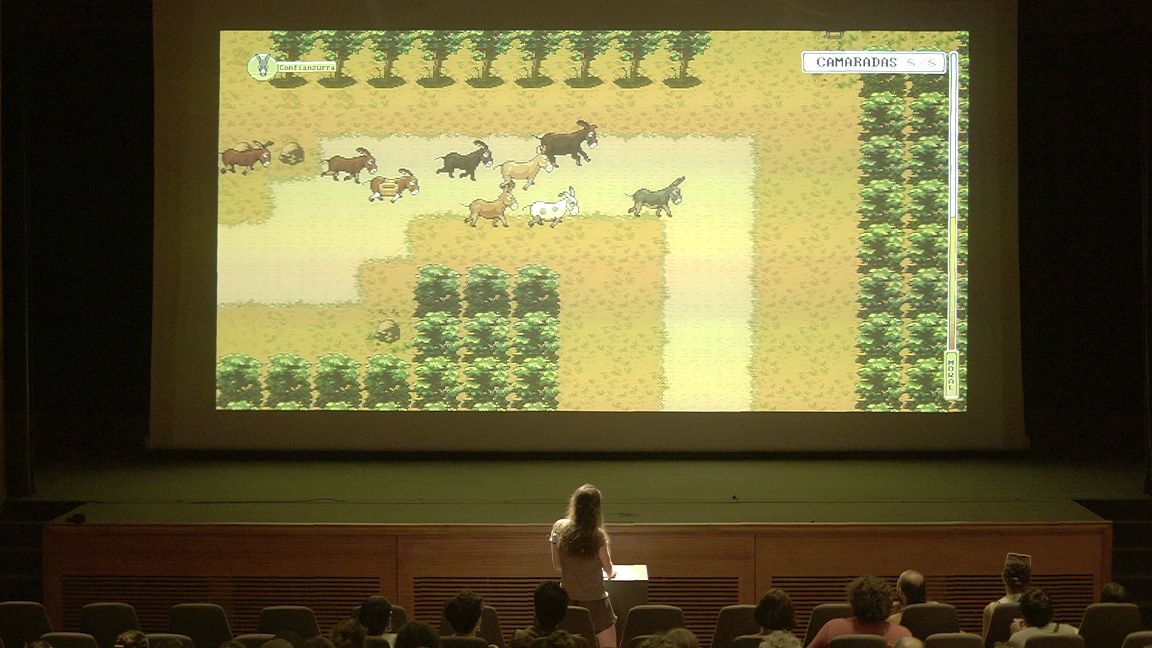
Asses.Masses is a collectively played video game designed by Patrick Blenkarn and Milton Lim. It begins with the audience being handed popcorn, which is the first sign this isn’t a typical type of theatre. Then, a spotlight comes up on a single game controller.

According to Patrick, it’s entirely up to the audience to decide what happens next. “When the audience self-elects – somehow, at some point – a person to step out of that crowd and pick up the controller, the game starts. And what ensues is an eight-ish hour adventure of a herd of donkeys trying to get their jobs back from a world that is more interested in machines.”

The Game’s Narrative

The game’s narrative covers various different angles. “We have many different perspectives on being pro-technology, anti-technology, being for the herd, for the individual. And we wanted to do that because it’s not one player playing this video game: we wanted to encourage the fact that there’s going to be multiple perspectives in the room.”

The game evolves through various different genres, like RPGs, racing games, and platformers, with the material world being represented in 2D, while segments set in the astral plane are in 3D. Each episode focuses on a different topic and a different donkey protagonist.

The Creative Process

Patrick and Milton come from an arts and theatre background, and they previously collaborated on the collectible trading card game and live art performance project culturecapital. However, they had no programming experience, so creating asses.masses in Unity involved a steep learning curve.

“We learned how to make video games in the process,” says Milton. “I will say first and foremost, kudos to Patrick, who became the programmer of the whole show and learned from scratch how to code.”

Conclusion

Asses.Masses is a unique and thought-provoking experience that combines gaming and theatre. The game’s narrative and design encourage audience participation and collaboration, making it a truly immersive experience. If you’re interested in experiencing asses.Masses for yourself, be sure to check the website for upcoming performances.

FAQs

Q: What is Asses.Masses?

A: Asses.Masses is a collectively played video game designed by Patrick Blenkarn and Milton Lim.

Q: How does the game work?

A: The game begins with the audience being handed popcorn, and then a spotlight comes up on a single game controller. The audience decides what happens next by self-electing a person to pick up the controller.

Q: What is the game’s narrative about?

A: The game’s narrative covers various different angles, including being pro-technology, anti-technology, and perspectives on individual and collective identity.

Q: Will Asses.Masses be released on Steam?

A: No, Patrick and Milton have no plans to release Asses.Masses on Steam. They want to uphold the integrity of the artistic gesture by keeping the game in a social setting.

Instant Kindle Recap

Amazon Introduces Kindle Recaps to Help You Remember Book Series

If you’ve ever picked up the latest book in a series and couldn’t remember characters or what happened in the last book, Amazon has a new feature that might help you.

How it Works

Starting today, your Kindle is getting "Kindle Recaps," something Amazon says is similar to the "Previously on…" segment before a TV show. For certain books, Kindle Recaps make it easier to dive right back in, Amazon says, by giving a quick refresher on storylines and character arcs. Recaps are available for both books you’ve purchased and books you’ve borrowed.

How to Find Recaps

If you want to find Recaps, you’ll need the latest version of the Kindle software. You can download it yourself or wait until you receive it through an over-the-air update within the next several weeks. Once you have that software, look for the "View Recaps" button in the series page in your Kindle Library or the "View Recaps" item within the series grouping three-dot menu. Amazon says the feature will soon be available on the Kindle app for iOS.

How it’s Created

Amazon did not say how it chooses which books will get Recaps, but it is only for books in a series for now. It does not appear to be only for new books, as the press release shows the feature working for the Oz series of books by L. Frank Baum, published over 100 years ago. The press release about Kindle Recaps did not mention this fact, but Amazon confirmed to TechCrunch that the summaries are written by AI (just like the site’s review summaries), explaining: "We use technology, including GenAI and Amazon moderators, to create short recaps of books that accurately reflect book content."

Conclusion

Kindle Recaps is a new feature that aims to make it easier for readers to dive back into a book series by providing a quick refresher on storylines and character arcs. With the help of AI, Amazon is able to provide accurate summaries of books, giving readers a better understanding of the series. This feature is available now for Kindle devices and will soon be available on the Kindle app for iOS.

FAQs

Q: What is Kindle Recaps?
A: Kindle Recaps is a new feature that provides a quick refresher on storylines and character arcs for books in a series.

Q: How do I find Kindle Recaps?
A: You can find Kindle Recaps by looking for the "View Recaps" button in the series page in your Kindle Library or the "View Recaps" item within the series grouping three-dot menu.

Q: Is Kindle Recaps only for new books?
A: No, Kindle Recaps is available for books in a series, regardless of their publication date.

Q: How are Kindle Recaps created?
A: Kindle Recaps are written by AI, with the help of Amazon moderators, to ensure accuracy and reflect the content of the books.

Q: Will Kindle Recaps be available on the Kindle app for iOS?
A: Yes, Kindle Recaps will soon be available on the Kindle app for iOS.

Midjourney V7

Midjourney Unveils V7 Image Generation Model for AI Community

Midjourney has announced the alpha release of its V7 image generation model for testing by the AI community. The new model boasts improvements in text prompt understanding, image quality, and feature coherence.

Key Features of V7

  • Personalisation: A key innovation in V7 is the default activation of model personalisation. Users must initially unlock this feature, a process that takes approximately five minutes. This personalisation can be toggled on or off at any time and is intended to significantly improve the AI’s ability to interpret user desires and aesthetic preferences.
  • Draft Mode: Midjourney is introducing a feature alongside the V7 image generation model called ‘Draft Mode,’ which promises to generate images ten times faster and at half the cost. This increased speed has enabled Midjourney to implement a unique “conversational mode” on its web interface.
  • Conversational Mode: Users can now instruct the system to make changes, such as replacing a cat with an owl or altering the time of day to nighttime, and the AI will automatically adjust the prompt and initiate a new image generation task.

Improved Features with V7

  • Better Image Quality: Midjourney explains that V7 has noticeably higher image quality with beautiful textures and bodies, hands, and objects of all kinds have significantly better coherence on all details.
  • Voice Input Functionality: Draft Mode also incorporates voice input functionality. By pressing the microphone button, users can verbally articulate their ideas and observe the images as they are generated in near real-time.

Upcoming Features and Schedule

  • New Features: Users can expect new features every one to two weeks for the next 60 days. A significant upcoming feature will be a new V7 character and object reference capability.
  • Optimisation of V6 Model: Midjourney clarifies that features such as upscaling, editing, and retexturing will initially revert to using the V6 model, with updates planned for the future.

V7 Speed Modes and Pricing

  • Speed Modes: The V7 image generation model from Midjourney will initially be available in two speed modes: Turbo and Relax. The standard speed mode is currently undergoing further optimisation and is expected to be released shortly.
  • Pricing: Midjourney has clarified that Turbo jobs will cost twice as much as a standard job, while draft jobs will cost half the amount.

Conclusion

Midjourney’s V7 image generation model is a significant step forward in AI image generation. With its improved text prompt understanding, image quality, and feature coherence, it has the potential to revolutionise the creative industry. The introduction of Draft Mode and conversational mode also offers a new way for users to refine their creative concepts. As Midjourney continues to update and improve its model, it will be exciting to see the impact it has on the AI community.

Frequently Asked Questions

Q: What is the V7 image generation model from Midjourney?
A: The V7 image generation model is a new model announced by Midjourney for testing by the AI community, boasting improvements in text prompt understanding, image quality, and feature coherence.

Q: What are the key features of V7?
A: Key features of V7 include personalisation, Draft Mode, and conversational mode.

Q: What is Draft Mode?
A: Draft Mode is a feature in V7 that promises to generate images ten times faster and at half the cost.

Q: What is conversational mode?
A: Conversational mode is a unique feature that allows users to instruct the system to make changes, such as replacing a cat with an owl or altering the time of day to nighttime.

Q: How long will the V7 model be available in two speed modes?
A: The V7 model will initially be available in two speed modes: Turbo and Relax. The standard speed mode is currently undergoing further optimisation and is expected to be released shortly.

Q: How much will Turbo jobs cost compared to standard jobs?
A: Midjourney has clarified that Turbo jobs will cost twice as much as a standard job, while draft jobs will cost half the amount.

Gemini 2.5 Pro: Google’s Most Expensive AI Model Yet

0

Google Releases API Pricing for Gemini 2.5 Pro

Pricing Details

On Friday, Google released API pricing for Gemini 2.5 Pro, an AI reasoning model with industry-leading performance on several benchmarks measuring coding, reasoning, and math. For prompts up to 200,000 tokens, Gemini 2.5 Pro costs $1.25 per million input tokens (roughly 750,000 words, longer than the entire “Lord of The Rings” series) and $10 per million output tokens. For prompts greater than 200,000 tokens (which most of Google’s competitors don’t support), Gemini 2.5 Pro costs $2.50 per million input tokens, and $15 per million output tokens.

Comparison to Other AI Models

That pricing makes Gemini 2.5 Pro more expensive for developers than any other AI model currently offered by Google, including Gemini 2.0 Flash ($0.10/M input tokens, $0.40/M output tokens). It also makes Gemini 2.5 Pro more expensive than several other frontier AI models, such as OpenAI’s o3-mini ($1.10/M input tokens, $4.40/M output tokens) and DeepSeek’s R1 ($0.55/M input tokens, $2.19/M output tokens).

Affordability and Industry Reaction

To be fair, Gemini 2.5 Pro, which is available for free with strict rate limits, comes in cheaper than some other highly competitive models, including Anthropic’s Claude 3.7 Sonnet ($3/M input tokens, $15/M output tokens) and OpenAI’s GPT-4.5 ($75/M input tokens, $150/M output tokens). The tech industry’s initial reaction has been largely positive, with developers praising what they perceive to be sensible rates.

Upward Pressure on Pricing

However, there seems to be some upward pressure on pricing for flagship models. The cost of recent top-of-the-line releases from labs like Google, OpenAI, and Anthropic has been going up, not down. See, for example, OpenAI’s recently launched o1-pro, which is the company’s most expensive API offering yet at $150/M input tokens and $600/M output tokens.

Driving the Trend

It could be that high demand and computing costs are driving the trend. According to Google CEO Sundar Pichai, Gemini 2.5 Pro is the company’s most in-demand AI model among developers, leading to an 80% increase in usage in Google’s AI Studio platform and the Gemini API this month alone.

Conclusion

Google’s release of API pricing for Gemini 2.5 Pro marks a significant milestone in the development of AI reasoning models. While the pricing may be higher than some developers are accustomed to, it is still considered reasonable by many in the industry. With the trend of upward pressure on pricing for flagship models, it will be interesting to see how the AI landscape evolves in the coming months.

FAQs

Q: What is the pricing for Gemini 2.5 Pro?
A: For prompts up to 200,000 tokens, Gemini 2.5 Pro costs $1.25 per million input tokens and $10 per million output tokens. For prompts greater than 200,000 tokens, Gemini 2.5 Pro costs $2.50 per million input tokens, and $15 per million output tokens.

Q: Is Gemini 2.5 Pro more expensive than other AI models?
A: Yes, Gemini 2.5 Pro is more expensive than other AI models currently offered by Google, including Gemini 2.0 Flash, as well as several other frontier AI models.

Q: Is there a free version of Gemini 2.5 Pro?
A: Yes, Gemini 2.5 Pro is available for free with strict rate limits.

Q: What is driving the trend of upward pressure on pricing for flagship AI models?
A: High demand and computing costs may be driving the trend.

The Legend of Zelda

0

What was the most influential video game in history? Super Mario Bros? Doom? Minecraft? Nope, according to a recent poll by BAFTA, it was Sega’s 1999 action-adventure game Shenmue.

BAFTA’s Poll Results

BAFTA’s public poll placed Shenmue as the most influential game ever, followed by Doom in second place and Super Mario Bros in third. Other notable mentions include Half-Life, The Legend of Zelda: Ocarina of Time, and Minecraft.

Shenmue’s Influence

BAFTA notes that Shenmue was instrumental in the development of open-world gameplay and cinematic storytelling, popularising the use of Quick Time Events (QTEs). It also immersed players in a living, reactive world with dynamic day-night and weather cycles, as well as non-playable characters (NPCs) with seemingly unique routines.

A Different Perspective

However, many people may be surprised by the result, and it’s hard to be objective when considering a game’s influence. In a public poll, people may vote for their favorite game rather than one that has necessarily shaped the medium.

Kingdom Come: Deliverance 2

For example, Kingdom Come: Deliverance 2 is in seventh place, but can it really be considered one of the most influential games in history after just two months? It’s a question that raises the bar for what constitutes influence in the gaming world.

Other Influential Games

Other games on the list make sense too. In eighth place, Super Mario 64 was the first 3D open-world game in the Mario series. It’s followed by hits like Half-Life 2 and The Sims. Tetris failed to make it to the top ten, but came in eleventh place, while Tomb Raider, a landmark game in the evolution of western game development, came in behind it in 12th position. Pong, Metal Gear Solid, and World of Warcraft complete the top 15.

Conclusion

The results of BAFTA’s poll raise interesting questions about what constitutes influence in the gaming world. While Shenmue may be a groundbreaking game, other games like Doom and Super Mario Bros have had a significant impact on the industry as well. Ultimately, the question of the most influential video game of all time is a subjective one that sparks debate and discussion.

FAQs

Q: Why did Shenmue win the poll?
A: According to BAFTA, Shenmue was instrumental in the development of open-world gameplay and cinematic storytelling, popularising the use of Quick Time Events (QTEs).

Q: Is Kingdom Come: Deliverance 2 really influential?
A: While Kingdom Come: Deliverance 2 is a highly-regarded game, it’s hard to say whether it’s truly influential after just two months. Influence in the gaming world often takes time to develop and be recognized.

Q: What do you think is the most influential video game of all time?
A: This is a subjective question that sparks debate and discussion. Opinions on the most influential game vary, but games like Doom, Super Mario Bros, and Half-Life have had a significant impact on the industry.

Gmail’s AI-Powered Search Update Impacts Influencer Marketing

How Gmail’s AI search update enhances influencer outreach

Gmail has recently released an AI-powered update to its search functionality, which sees the email app move away from the chronological display of search results to a new relevance-based ordering of results. The built-in AI engine analyzes emails based on factors like recency, most-clicked emails, and frequent contacts, to display conversations users are likely to be looking for.

Source: Google blog

Prioritising important responses

Influencer marketing relies heavily on engagement, and prompt responses are important to create and maintain partnerships. Gmail’s AI-driven search ensures that emails from influencers and other collaborators you’ve interacted with are displayed first.

Andrea Noureddine, AWISEE’s Influencer Marketing Coordinator, said, “New relationships are also given a priority as the AI can analyze content in emails and understand its relevance in future communications. If you are in a critical stage like negotiation with an influencer, you’ll see the communication at the top of the results.”

Streamlining follow-ups

Maintaining partnerships and ensuring that a brand’s marketing goals are met needs timely follow-ups. Before Google released Gmail’s latest update, marketers had to sift through pages of emails to find the latest correspondence with a specific influencer. Now, the email interface brings up the most relevant conversations.

Andrea said, “If a marketer needs to reach out to an influencer to enquire about various deliverables, they’ll have an easier time as Gmail will give priority to conversations that need a follow-up.”

Enhanced organisation for large-scale outreach

Part of influencer marketing is reaching out to many brands, agencies, and dozens – if not hundreds – of influencers. This can easily become challenging when an organisation isn’t efficient, and Gmail’s traditional chronological search order certainly didn’t help. An important conversation could be buried under tens of others that aren’t relevant.

Now that message sorting is based on AI, marketers have an easier time focusing on priority interactions. “What this means is that outreach emails that received a response, ongoing collaborations, and messages from the influencers you often work with are easier to locate,” Andrea said.

Using AI for data-driven influencer strategies

According to AWISEE, marketing relies on data, which makes AI an integral part of all strategies. Data focus goes beyond email management and requires that marketing agencies adopt advanced AI tools for analyzing influencer profiles, assessing engagement authenticity, and refining campaign targeting.

Gmail’s AI search integration aligns perfectly with this data-driven approach to ensure a more streamlined and efficient workflow.

The future of influencer marketing in the age of AI

Gmail’s latest search update is just one example of the increasingly important role that AI plays in influencer marketing. As the technology evolves, it will become increasingly more influential in how brands and agencies identify, engage, and collaborate with influencers.

Hyper-personalised influencer outreach

AI can analyze huge amounts of data about a brand, influencer, and customers, so we can expect outreach strategies to become more tailored. Instead of sending generic pitch emails, brands and agencies can use AI to create personalized messages based on an influencer’s past collaboration, content style, demographics, and engagement trends.

Predictive analytics for campaign performance

Beyond improving outreach, AI plays an important role in marketing decision-making. It can analyze historical campaign data to help predict which influencers can drive the highest engagement and conversions for a particular brand. Agencies and brands can use this information to create more impactful campaigns by reducing guesswork.

Smarter campaign optimisation

AI can track the performance of different influencer campaigns in real-time, offering actionable insights into what’s working and what’s not. This gives brands and agencies metrics like engagement rates, audience sentiment, and conversation rates, which can be used to know whether a campaign needs tweaking.

Gmail’s recent update aligns with this goal, as all parties involved can look up past correspondence easily, quickly identifying strategies that aren’t working.

Conclusion

Gmail’s AI-powered search update is a significant step forward in the evolution of influencer marketing. By prioritizing important responses, streamlining follow-ups, and enhancing organization for large-scale outreach, the update makes it easier for marketers to manage their influencer relationships and achieve their marketing goals.

FAQ

Q: What is Gmail’s AI-powered search update?
A: The update sees Gmail move away from chronological search results to a new relevance-based ordering of results, analyzed by an AI engine.

Q: How does the update enhance influencer outreach?
A: The update prioritizes important responses, streamlines follow-ups, and enhances organization for large-scale outreach, making it easier for marketers to manage their influencer relationships.

Q: What is the future of influencer marketing in the age of AI?
A: AI will play an increasingly important role in influencer marketing, enabling hyper-personalized outreach, predictive analytics for campaign performance, and smarter campaign optimization.

Q: How can AI be used for data-driven influencer strategies?
A: AI can be used to analyze influencer profiles, assess engagement authenticity, and refine campaign targeting, aligning with a data-driven approach to ensure a more streamlined and efficient workflow.