Home Blog Page 120

McDonald’s Falls Flat with Lackluster Ghibli-Inspired AI Promotion

0

McDonald’s Mexico in Hot Water Over Unapproved AI Art Campaign

Unwise Jump into AI Art Trend

McDonald’s Mexico is currently under fire for its recent AI art campaign, which has sparked widespread criticism and negative backlash on social media. The chain’s decision to jump on the AI art trend, which involves creating art in the style of Studio Ghibli, a renowned Japanese animation studio, has been met with disapproval from fans and artists alike.

The Campaign

The campaign, which features a family and individuals enjoying McDonald’s food in a Studio Ghibli-style setting, has garnered hundreds of disparaging comments calling out the chain for stealing Studio Ghibli’s intellectual property (IP) and using AI to create art. The post, which is still live on Facebook, has sparked a heated debate about whether an artist can sue someone for basing AI work on their art style.

The Backlash

The reaction to the campaign has been overwhelmingly negative, with many users expressing their disappointment and frustration on social media. One user commented, "What happened McDonald’s? Isn’t it enough to pay a real artist?" Another user reflected, "Unbelievable, one thing is one person uses it but a multi-billion dollar company?"

The Debate

The debate sparked by the campaign has highlighted the ongoing issue of artists’ works being emulated via AI art generators. The question remains whether an artist can sue someone for basing AI work on their art style, and the answer depends on the country. In the EU/UK, copyright protects art but not style. If an artist can prove an AI model was trained on their artwork, copyright could kick in.

Conclusion

McDonald’s Mexico’s unapproved AI art campaign has sent a negative message to fans and artists alike, and has sparked a heated debate about the use of AI art generators. As a global fast food giant, McDonald’s has a responsibility to respect the intellectual property of others and to create original content. The campaign has fallen short of this standard, and it remains to be seen whether the chain will take steps to address the backlash and improve its creative approach in the future.

FAQs

Q: Is the campaign still live on Facebook?
A: Yes, the campaign is still live on Facebook, despite the overwhelmingly negative response.

Q: Has McDonald’s Japan collaborated with Studio Ghibli in the past?
A: Yes, McDonald’s Japan has collaborated with Studio Ghibli in the past, with the Kiki’s Delivery Service-themed campaign last year.

Q: Can an artist sue someone for basing AI work on their art style?
A: The answer depends on the country. In the EU/UK, copyright protects art but not style. If an artist can prove an AI model was trained on their artwork, copyright could kick in.

Q: What is the best digital art software to use?
A: The best digital art software to use depends on the individual’s skills and preferences. However, using the best digital art software to make something more reputable is a good way to avoid controversy.


Apple Rolls Out Priority Notifications

0

Apple Intelligence Updates Roll Out with New Features and Languages

Apple Intelligence, the iPhone maker’s suite of AI-powered tools and features, is gaining new features. Most notably, the company on Monday announced that Apple device owners will now be able to take advantage of Priority Notifcations, which allows Apple’s AI to highlight your most time-sensitive notifications in a new format.

New Features and Updates

Other updates are coming to the Image Playground app and the Mac. Plus, Apple Intelligence is now available to iPhone and iPad users in the EU and on the Apple Vision Pro headset in U.S. English.

Localization and Language Support

Apple notes that its AI features are also available in a number of new languages, including French, German, Italian, Portuguese (Brazil), Spanish, Japanese, Korean, and Chinese (simplified). Localized English has also been added for both Singapore and India.

A Slow and Steady Rollout

Though Apple Intelligence was introduced at the company’s Worldwide Developer Conference last year as its new generative AI offering, the reality is that Apple was not prepared to release all its AI-powered features at once. That’s led to a slow and steady rollout of numerous AI updates since the release of iOS 18.1 where Apple Intelligence first went live.

Priority Notifications: A Game-Changer

Among the new additions coming Monday, Priority Notifications may be the most useful if successfully implemented. Now, instead of having to dig for important updates across all your notifications — which often include nonessential updates and other marketing messages from apps — you’ll be able to see those that deserve attention appear at the top of the stack.

New Emojis and Features

Other Apple Intelligence improvements arriving today include the ability to create a “memory movie” on Mac by typing a description, and an added Sketch style in Apple’s AI image generation app, Image Playground, for the creation of academic and detailed sketches.

Conclusion

The latest updates to Apple Intelligence, including Priority Notifications, Image Playground, and localized language support, demonstrate the company’s commitment to refining its AI-powered features. With the slow and steady rollout of AI updates, users can expect to see more innovative and useful features emerge in the coming months.

FAQs

Q: What is Apple Intelligence?

A: Apple Intelligence is a suite of AI-powered tools and features developed by Apple.

Q: What are the new features of Apple Intelligence?

A: The new features include Priority Notifications, Image Playground, and localized language support.

Q: When are these updates available?

A: The updates are available with the release of Apple software, iOS 18.4, iPadOS 18.4, and macOS Sequoia 15.4.

Q: What languages are supported by Apple Intelligence?

A: Apple Intelligence is available in a number of new languages, including French, German, Italian, Portuguese (Brazil), Spanish, Japanese, Korean, and Chinese (simplified). Localized English has also been added for both Singapore and India.

Mr. Chicken’s Chemistry Set

0

Steam’s Most Popular Game

Indie games are going head-to-head with AAA titles and winning, if Steam’s confirmed ‘most popular indie game of 2025’ is anything to go by. Created by solo developer TVGS, Schedule I has sold an estimated two million copies on Steam.

The Success of Schedule I

These figures put the drug kingpin sim in the same revered company as Assassin’s Creed Shadows, and even beating Stalker 2: Heart of Chornobyl, which has sold around one million copies. In fact, peak player numbers on Steam put Schedule I ahead of many AAA games in terms of popularity, including Sid Meier’s Civilization VII, Kingdom Come: Deliverance II, and the incredible Split Fiction.

What Makes Schedule I So Addictive?

The success comes down to the accessible and ironically addictive mini-games mixed with a co-op mode that enables one player to be the cook and the other the street dealer; be Walter White or Jesse Pinkman. The game’s quirky charm and addictive gameplay have made it a hit with players, with many reporting playing sessions that last well into the early hours of the morning.

Get Started in Game Dev

Schedule I is the goal for many indie devs channelling creativity to make the dream of releasing a successful game. If you want to read more inspirational insights on creating video games, read our interviewers with the devs and artists behind Wax Heads, Wanderstop and the Houdini-made Wheel World.

Conclusion

The success of Schedule I is a testament to the power of indie game development and the creativity of solo developers. With its addictive gameplay and quirky charm, Schedule I is a must-play for fans of the simulation genre.

Frequently Asked Questions

Q: What is Schedule I?
A: Schedule I is a drug kingpin simulation game developed by TVGS.

Q: How many copies has Schedule I sold on Steam?
A: Schedule I has sold an estimated two million copies on Steam.

Q: How does Schedule I compare to other popular games?
A: Schedule I has sold more copies than many AAA games, including Assassin’s Creed Shadows and Stalker 2: Heart of Chornobyl.

Q: What makes Schedule I so addictive?
A: The game’s accessible and ironically addictive mini-games, mixed with its co-op mode, make it a hit with players.

Isomorphic Labs, Google’s A.I. Drug Business, Raises Money From Thrive

0

Google’s Isomorphic Labs Raises $600 Million to Accelerate Drug Discovery

A Breakthrough in Mimicking Human Biology

Over the last 12 months, Google’s efforts to use artificial intelligence to accelerate drug design have achieved breakthroughs in mimicking human biology and won its top scientists the Nobel Prize in Chemistry.

A New Chapter for Isomorphic Labs

Now, Isomorphic Labs, the division within the software giant meant to develop and commercialize the technology, is taking another big step: raising money from an outside investor.

A $600 Million Investment

Isomorphic plans to announce on Monday that it has raised $600 million, led by Thrive Capital, the venture capital firm that has bet big on A.I. companies including OpenAI. GV, Google’s venture capital arm, and Alphabet, Google’s parent company, also invested.

The Ambition of Isomorphic

The announcement underscores Google’s ambitions for Isomorphic, which was spun out of the company’s DeepMind lab to focus on drug discovery. It is built on software that DeepMind, a central intelligence lab in London, has developed. That includes AlphaFold, which can predict the structure of millions of proteins and more.

The Promise of AlphaFold

AlphaFold, which now in its third iteration can predict the complex behavior of DNA and RNA, has promised to slash the development time of new drugs. Such is its promise that Demis Hassabis, a co-founder of Isomorphic and DeepMind, and John M. Jumper, a DeepMind researcher, shared half of the Nobel in chemistry last year.

The Goal of Isomorphic

The goal, according to Mr. Hassabis, is to eventually conduct most of the drug discovery process via computers, rather than traditional labs that require biological materials, strict safety requirements — and lots of time.

The Mission of Isomorphic

"Our mission, one day, is to solve all disease" with A.I., Mr. Hassabis said in an interview.

Research Partnerships

Isomorphic is researching potential treatments, including those focused on cancer and immune disorders. Last year, it signed research partnerships with two major drug makers, Eli Lilly and Novartis, that could yield billions in payouts via promising drugs breakthroughs.

The Future of Isomorphic

The additional money will help Isomorphic expand its stable of research models like Alphafold, as well as recruit top talent across scientific disciplines.

Conclusion

Isomorphic’s $600 million fundraising is a major bet on the company’s potential to revolutionize the drug discovery process. With this investment, Isomorphic is poised to become a major player in the life sciences industry, and its ambition to "solve all disease" with A.I. may not be far-fetched.

FAQs

Q: What is Isomorphic Labs?
A: Isomorphic Labs is a division within Google’s software giant, focused on developing and commercializing technology to accelerate drug discovery.

Q: What is AlphaFold?
A: AlphaFold is a software developed by DeepMind, a central intelligence lab in London, which can predict the structure of millions of proteins and more.

Q: What is the goal of Isomorphic Labs?
A: The goal of Isomorphic Labs is to eventually conduct most of the drug discovery process via computers, rather than traditional labs that require biological materials, strict safety requirements — and lots of time.

Q: What is the mission of Isomorphic Labs?
A: The mission of Isomorphic Labs is to solve all disease with A.I.

Q: What is the future of Isomorphic Labs?
A: The future of Isomorphic Labs is to become a major player in the life sciences industry, and its ambition to "solve all disease" with A.I. may not be far-fetched.

Apple ‘Selling’ Severance’s Lumon Terminal Pro is an ingenious branding move

0

Apple Ties in with Severance’s Popularity

Lumon Terminal Pro: A Seamless Integration

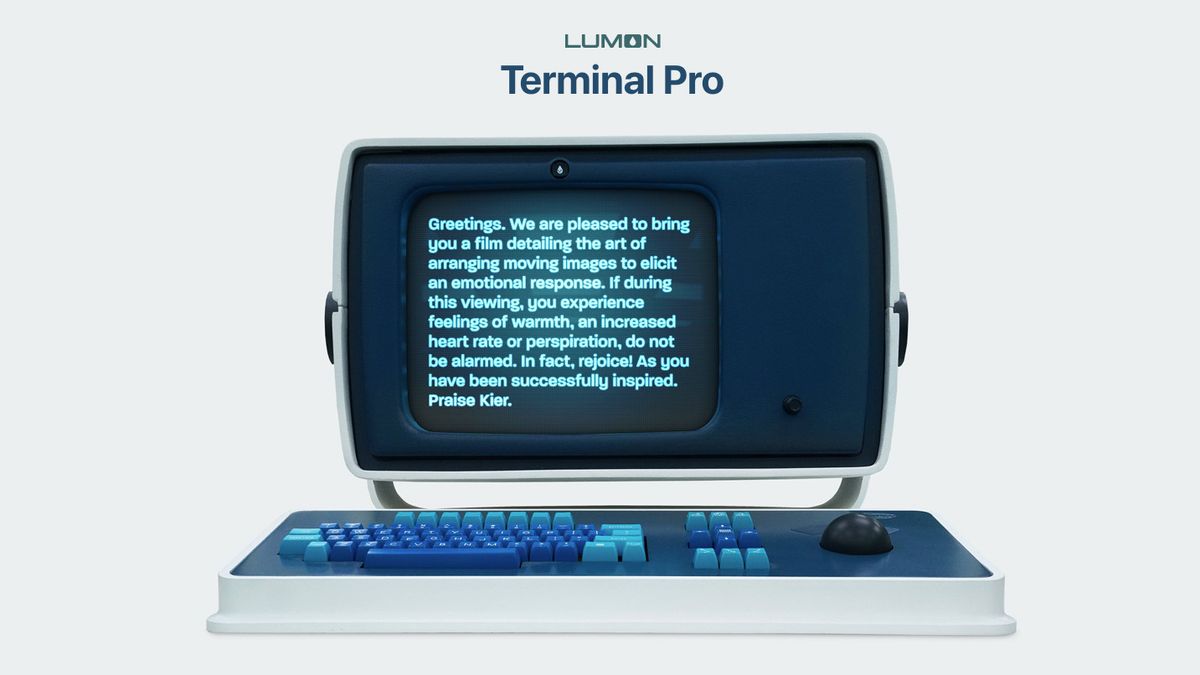
Apple TV’s Severance recently finished its second season, and the series has really got people talking. To capitalize on the show’s popularity, Apple is including the computers that appear in the Lumon workplace in the show on its website, and their integration is seamless.

It looks like it’s a parody or maybe even a mistake to see ‘Lumon Terminal Pro’ with a ‘New’ sticker next to it on the Apple Store, right next to the MacBook Air (also new). But it’s real, though you can’t actually buy it. And while the Lumon Terminal Pro might not be one of the best computers for graphic design, this is the kind of tie-in that reminds viewers who made the show, without shoving it in their faces.

A Sneak Peek into the Editing Process

When you click on Lumon Terminal Pro (note that it isn’t showing up for all users, so use the link if you can’t see it), you get the following text on the screen of the computer: "Greetings. We are pleased to bring you a film detailing the art of arranging moving images to elicit an emotional response. If during this viewing you experience feelings of warmth, an increased heart rate, or perspiration, do not be alarmed. In fact, rejoice! As you have been successfully inspired. Praise Kier."

Behind the Mac: Editing Severance

Below that is the link to a film about how Severance was edited on a Mac, which contains spoilers (I haven’t finished the series yet so am too scared to click but other sources say it’s an interesting dive into how the film was edited), as well as a reminder of Apple’s latest offer – buy a new Mac and get three months of Apple TV+ for free. This is another piece of marketing brilliance that makes people feel they are part of a whole ecosystem when they buy into Apple.

Conclusion

Apple’s tie-in with Severance is a clever move that showcases the company’s commitment to integrating its products with popular culture. By including the Lumon Terminal Pro on its website and promoting the film about the editing process, Apple is able to subtly remind viewers of its brand while also providing a unique experience for fans of the show.

FAQs

Q: What is the Lumon Terminal Pro?
A: The Lumon Terminal Pro is a fictional computer that appears in the TV series Severance.

Q: Can I buy the Lumon Terminal Pro?
A: No, the Lumon Terminal Pro is not available for purchase.

Q: What is the film about the editing process of Severance?
A: The film is a behind-the-scenes look at how the TV series Severance was edited on a Mac, and contains spoilers for the show.

Q: What is the offer from Apple to buy a new Mac?
A: Apple is currently offering three months of Apple TV+ for free when you buy a new Mac.

Industrial Ecosystem Adopts Mega NVIDIA Omniverse Blueprint

Advances in Physical AI Enable Embodied AI Across Industrial Operations

Advances in physical AI are enabling organizations to embrace embodied AI across their operations, bringing unprecedented intelligence, automation, and productivity to the world’s factories, warehouses, and industrial facilities.

Humanoid Robots, Autonomous Mobile Robots, and Intelligent Cameras

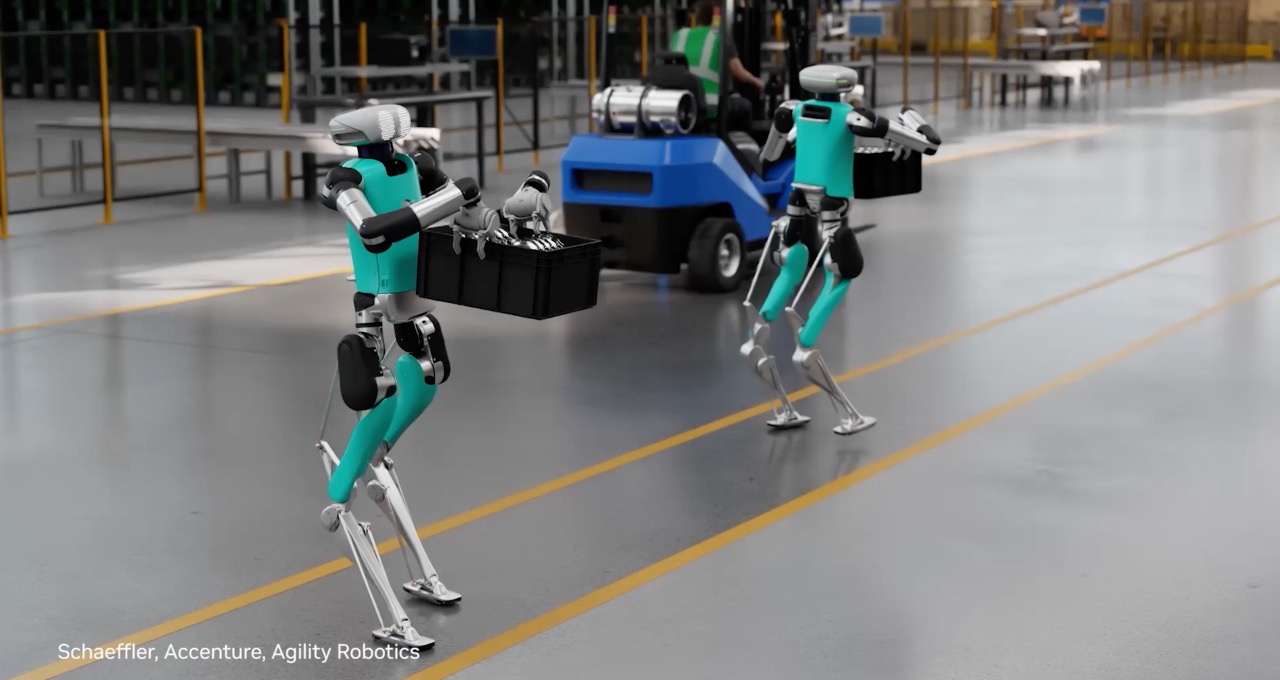
Humanoid robots can work alongside human teams, autonomous mobile robots (AMRs) can navigate complex warehouse environments, and intelligent cameras and visual AI agents can monitor and optimize entire facilities. In these ways, physical AI is becoming integral to today’s industrial operations.

Mega NVIDIA Omniverse Blueprint for Testing Multi-Robot Fleets

Helping industrial enterprises accelerate the development, testing, and deployment of physical AI, the Mega NVIDIA Omniverse Blueprint for testing multi-robot fleets in digital twins is now available in preview on build.nvidia.com.

Hannover Messe: Showcasing Industrial AI and Digital Twins

At Hannover Messe, manufacturing, warehousing, and supply chain leaders such as Accenture and Schaeffler are showcasing their adoption of the blueprint to simulate Digit, a humanoid robot from Agility Robotics, and discussing how they use industrial AI and digital twins to optimize facility layouts, material flow, and collaboration between humans and robots inside complex production environments.

Digital Twins: The Training Ground for Physical AI

Industrial facility digital twins are physically accurate virtual replicas of real-world facilities that serve as critical testing grounds for simulating and validating physical AI and how robots and autonomous fleets interact, collaborate, and tackle complex tasks before deployment.

Built for a Diversity of Robots and AI Agents

The Mega blueprint equips industrial enterprises with a reference workflow for combining sensor simulation and synthetic data generation to simulate complex human-robot interactions and verify the performance of autonomous systems in industrial digital twins.

Transforming Industrial Operations with Visual AI Agents

In addition to AMRs and humanoid robots, advanced visual AI agents extract information from live and recorded video data, enabling new levels of intelligence and automation. These visual AI agents bring real-time contextual awareness to robots and help to improve worker safety, maintain warehouse compliance, support visual inspection, and maximize space utilization.

Accelerating Industrial Digitalization

The industrial world is now experiencing its software-defined moment, with visual AI agents and digital twins as the training ground for physical AI.

Conclusion

The Mega NVIDIA Omniverse Blueprint is a game-changer for industrial enterprises, enabling them to accelerate the development, testing, and deployment of physical AI. By leveraging digital twins and visual AI agents, organizations can transform their operations and unlock unprecedented levels of intelligence, automation, and productivity.

FAQs

Q: What is the Mega NVIDIA Omniverse Blueprint?
A: The Mega NVIDIA Omniverse Blueprint is a reference workflow for combining sensor simulation and synthetic data generation to simulate complex human-robot interactions and verify the performance of autonomous systems in industrial digital twins.

Q: What is the purpose of digital twins in industrial operations?
A: Digital twins serve as critical testing grounds for simulating and validating physical AI and how robots and autonomous fleets interact, collaborate, and tackle complex tasks before deployment.

Q: What are visual AI agents, and how do they benefit industrial operations?
A: Visual AI agents extract information from live and recorded video data, enabling new levels of intelligence and automation. They bring real-time contextual awareness to robots and help to improve worker safety, maintain warehouse compliance, support visual inspection, and maximize space utilization.

Q: How can I get started with the Mega NVIDIA Omniverse Blueprint?
A: The Mega NVIDIA Omniverse Blueprint is available in preview on build.nvidia.com. You can also explore the new self-paced Learn OpenUSD training curriculum and free NVIDIA Deep Learning Institute courses for 3D practitioners and developers.

Squaring Up: Choosing the Best E-commerce Platform for Your Creative Work

0

Interface & Features

Squarespace remains my favorite design-focused website builder, blending intuitive drag-and-drop editing with AI-powered Blueprint templates and Fluid Engine grids for pixel-perfect control. Its latest updates prioritize visual storytelling, such as dark mode aesthetics, scroll-triggered animations, and seamless integrations for portfolios, client galleries, or freelance services. It’s a playground for UI/UX pros, while still offering enough ecommerce features to monetize your art.

Squarespace’s Strengths

Squarespace’s strengths lie in its ability to create beautiful websites with minimal coding. The Fluid Engine grids and Blueprint AI-enabled templates provide pixel-perfect precision, so you can create stunning websites with ease. For artists, the design-centric philosophy carries a huge draw, with native support for portfolios, galleries, and artistic showcases.

Shopify’s Strengths

Shopify, on the other hand, is my go-to recommendation for creatives side hustles. New 2025 themes like Broadcast and Lumin cater to digital artists and model designers, offering dynamic product galleries and "buy now, pay later" options. Its entry-level plan comes with social media selling, while advanced tiers support global payments, print-on-demand workflows, and app-like mobile experiences. For those blending artistry with entrepreneurship, Shopify’s powerful ecosystem makes monetization frictionless.

Performance

Squarespace offers reliable performance, but its speed can vary depending on the specific use case. Shopify, on the other hand, ensures lightning-fast load times averaging 1.2 seconds – far surpassing competitors like WooCommerce and BigCommerce.

Pricing and Plans

Squarespace has four plans in 2025. The Personal plan costs $16 per month billed annually, with standard features for individuals and small companies. The Core plan at $23 per month (annual) provides additional analytics and marketing features. For larger businesses, the Plus plan at $39 per month provides additional ecommerce features and additional storage. The Advanced plan at $99 per month offers unlimited storage and professional features for established companies.

Shopify’s Pricing Scheme

Shopify’s 2025 pricing scheme is focused on businesses of all sizes and growth stages. The Starter plan priced at $5 per month is ideal for side ventures and sales on social media. Then there’s the Basic Shopify plan priced at $39 per month (or $29 per year), which offers basic functions for small businesses looking to establish an online presence. The standard Shopify plan is priced at $105 per month (or $79 per year), ideal for expanding businesses with additional features and lower transaction fees. Large operations can use the Advanced Shopify plan, priced at $399 per month (or $299 per year), with advanced reporting and shipping features.

Verdict

In the end, use case will decide between the two. If you wish to build sites that will be utilized primarily as an online store, then Shopify is where you want to go. But for a vast number of other use cases, such as portfolios and creative showcases, then Squarespace is the solution.

Frequently Asked Questions

Q: What are the key differences between Squarespace and Shopify?
A: Squarespace is a design-focused website builder, while Shopify is an ecommerce platform.

Q: Which platform is best for creatives?
A: Squarespace is ideal for creatives who care about looks, seamless portfolio integration, and simple content management.

Q: Which platform is best for e-commerce?
A: Shopify is ideal for creatives who want to scale online stores, manage rich product catalogs, or expand to multi-channel selling.

Q: What are the pricing options for Squarespace and Shopify?
A: Squarespace has four plans, ranging from $16 to $99 per month. Shopify has five plans, ranging from $5 to $399 per month.

Amazon’s AGI Lab Reveals Its First Work: Advanced AI Agents

0

Amazon Quietly Creates AI Lab, Surpassing Rivals in Performance

Amazon’s AGI SF Lab: A New Frontier in AI Research

Amazon’s AGI SF Lab, located in San Francisco, has been working on building artificial general intelligence (AI) that surpasses human capabilities. The lab has recently revealed the first fruits of its work: a new AI model capable of powering some of the most advanced AI agents available anywhere.

Amazon Nova Act: A New Standard in AI Performance

The new model, called Amazon Nova Act, outperforms ones from OpenAI and Anthropic on several benchmarks designed to gauge the intelligence and aptitude of AI agents. On the benchmarks GroundUI Web and ScreenSpot, Amazon Nova Act performs better than Claude 3.7 Sonnet and OpenAI Computer Use Agent.

The Future of AI: Building Dependable Agents

"I believe that the basic atomic unit of computing in the future is going to be a call to a giant [AI] agent," says David Luan, who leads Amazon’s AGI SF Lab. He emphasizes the importance of building AI agents that are dependable rather than flashy. The thing holding agents back is not the need for "more cool demos of interesting capabilities that work 60 percent of the time, it’s the Waymo problem," he says, referring to how self-driving cars needed to be trained to deal with unusual edge cases before they could take to the streets unsupervised.

Overcoming the Limitations of Current AI Agents

Many so-called agents are built by combining large language models with multiple human-written rules that are designed to prevent them from veering off course. However, this approach makes their behavior brittle. Amazon Nova Act is a version of the company’s most powerful homegrown model Amazon Nova that has received additional training to help it make decisions about what actions to take and at what time. In general, AI models struggle to decide when they should intervene in a task.

The Power of Reinforcement Learning

To improve Nova’s agential abilities, Amazon is using reinforcement learning, a method that has helped other AI models better simulate reasoning.

Conclusion

Amazon’s AGI SF Lab is making significant strides in the development of advanced artificial intelligence. The company’s focus on building dependable AI agents is a key factor in its success. With the release of Amazon Nova Act, Amazon is poised to take a leading role in the AI market.

Frequently Asked Questions

Q: What is the main goal of Amazon’s AGI SF Lab?
A: The main goal of Amazon’s AGI SF Lab is to build artificial general intelligence (AI) that surpasses human capabilities.

Q: What is the new AI model, Amazon Nova Act, capable of?
A: Amazon Nova Act is capable of powering some of the most advanced AI agents available anywhere, outperforming ones from OpenAI and Anthropic on several benchmarks.

Q: What is the significance of Amazon’s focus on building dependable AI agents?
A: Amazon’s focus on building dependable AI agents is a key factor in its success, as it addresses the limitations of current AI agents and enables them to make more accurate decisions.

Q: What is reinforcement learning, and how is it used to improve AI models?
A: Reinforcement learning is a method that helps AI models better simulate reasoning. Amazon is using reinforcement learning to improve the agential abilities of its AI model, Amazon Nova Act.

Mastering Hand Drawing: Harnessing Negative Space

0

Understanding Negative Space

When simplifying a three-dimensional object into a two-dimensional drawing, you’re essentially mapping its shape on the surface of the page. Sometimes you might find it helpful to stop focusing on the ‘positive’ shape of your subject and instead look at the shapes surrounding it; these are the negative spaces. Sometimes these shapes will have boundaries on all sides – this is what we mean by trapped shapes – and sometimes you’ll need to create boundaries for them.

Making the Underdrawing

Pose your hand, or ask your model to hold a position, and start your drawing off with a loose, light, intuitive sketch in HB pencil. Simply look and draw what you see in less than a minute, keeping your marks energetic and allowing yourself time to look over your subject without agonising over the specific proportions.

Setting Your Limits

Using the initial sketch as a rough guide, mark out the top, bottom, left and right limits to your drawing. This will ensure that you don’t lose your drawing off the edge of the page and also help you to better establish a sense of scale within the image.

Drawing Out a Box

Use these new limits to construct a box around your subject. Imagine your subject within a box: what dimension would that box be? Short and squat or long and thin? Would it be in portrait or landscape format?

Carving Big Shapes

Now look for the big shapes that make up your hand, keeping your marks rough and angular. Work as if you were carving the hand out of wood, making straight cuts to rough out the form of your subject before carving in the detail.

Inserting Negative Spaces

Maintaining your simple marks, draw the triangular wedges of negative space between the fingers. Try not to draw the fingers at all, just concentrate on the shapes themselves and let the rough shapes of the digits appear as you draw.

Erasing the Outline

Once you have a rough, angular drawing established on the page in HB pencil, use your eraser to lightly rub out the lines of your drawing, leaving them only faintly visible to guide you as you draw.

Redrawing the Hand

Using the faint underdrawing as a guide, redraw the hand from observation in 3B pencil. As you draw, use the negative spaces to check the proportion of your evolving image. Do the negative spaces in your drawing look the same shape as the spaces between the fingers of the hand you’re drawing? Think of the spaces like jigsaw puzzle pieces: they should fit with the positive space to make the final, resolved image.

Elaborating the Lines

Next we’ll refine the drawing, using a lighter, more playful line to delineate the shapes within the hand and reaffirming the outline of the fingers. Think about how you might capture the tension within the hand, or suggest pressure where the fingertips are pressed up against surfaces.

Conclusion

By following these steps, you can create a detailed and accurate drawing of a hand. Remember to focus on the core shapes and movement, and don’t be afraid to simplify and refine your drawing as you go along.

FAQs

Q: What is negative space?
A: Negative space refers to the areas around and between objects that are not filled by the object itself.

Q: Why is it important to use negative space in drawing?
A: Using negative space can help you create a more accurate and detailed drawing by allowing you to focus on the shapes and proportions of the object, rather than just drawing the object itself.

Q: How can I use negative space in my drawing?
A: You can use negative space by drawing the areas around and between objects, and by paying attention to the shapes and proportions of the objects themselves.

Q: What is the difference between a rough sketch and a refined drawing?
A: A rough sketch is a quick and simple drawing that is used to get an idea of the overall shape and proportions of the object, while a refined drawing is a more detailed and accurate drawing that is used to capture the subtle shapes and details of the object.

Rog Ally: A Gaming Powerhouse for 3D Art

0

Write an article about

ASUS ROG Ally is one of the best PC gaming handhelds, and seen by many as the best Steam Deck alternative. But one 3D artist has proved this device is so much more than a games console.

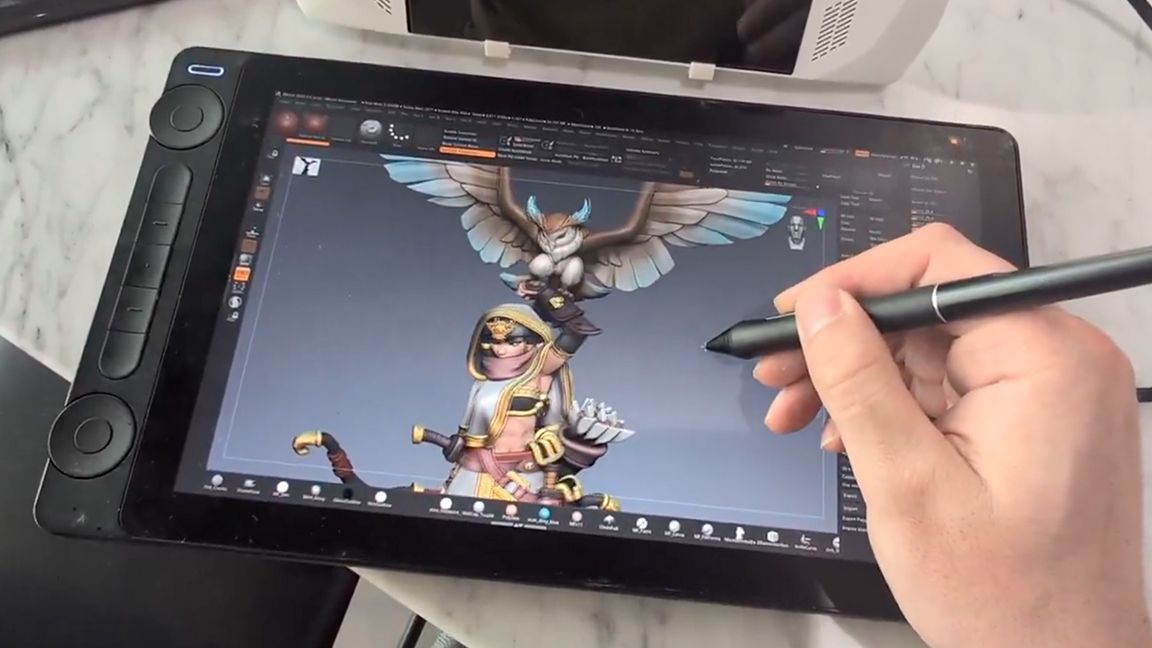
3D artist Gaz Minis plugged in their Huion Kamvas 13 Gen 3 drawing tablet, installed ZBrush and set about working on a detailed 30-million polygon sculpt. The artist took to X (Twitter) to reveal the setup, saying the ROG Ally was primarily a gaming console but became an ideal “holiday setup” for running ZBrush. He says wrote, “Honestly crazy impressive, highly recommend”.

Got a ROG ally for some gaming, but also to run Zbrush on a holiday setup. Current sculpt is 30mil polys Honestly crazy impressive, highly recommend. #zbrush #3d pic.twitter.com/1KshpAFq4GMarch 26, 2025

.Organize the content with appropriate headings and subheadings ( h2, h3, h4, h5, h6). Include conclusion section and FAQs section with Proper questions and answers at the end. do not include the title. it must return only article i dont want any extra information or introductory text with article e.g: ” Here is rewritten article:” or “Here is the rewritten content:”