Home Blog Page 124

Japanese Gaming: A Success Story

0

The Rise of Japanese Game Development

Until the mid-1990s, Japanese game developers were leading the way. With console makers Nintendo and Sega, and later Sony, acting as gatekeepers, they were often more successful than their Western counterparts, with franchises like Mario, Sonic, and Zelda standing out.

A Shift in the Tides

However, the late 1990s saw a leap in Western game development, with first-person shooters like Doom and Quake, and sports games, ultimately giving rise to successful Western IPs like Grand Theft Auto and Call of Duty. But some are now suggesting that the tide is turning back.

A New Era of Japanese Game Development

As noticed by 80 Level, industry analyst Dr. Serkan Toto from the consultancy Kantan Games touched on the subject in a blog post. He mentions that at GDC 2025, many conversations revolved around the gloom and doom in AAA gaming, particularly in the West. However, he notes that the mood is different in Japan, where the share prices of publicly traded AAA game companies like Sony, Nintendo, Konami, Capcom, and Bandai Namco have been hitting record highs.

Japanese Developers are Thriving

"The mass layoffs and studio closures in North America and Europe really have not spilled over to Japan, apart from isolated exceptions that are a drop in the ocean compared to the storm the industry is seeing in the West currently," Dr. Toto writes.

Indeed, he says Japanese developers are actually getting stronger. "The magnificent 8 Japanese AAA studios are (generally) still hiring and are even raising salaries," he says, although he notes that salaries in gaming in Japan are "still terrible."

What are Japanese Developers Doing Right?

So what are Japanese developers doing right? Are we back to the 1990s when Japanese devs were seen as more creative? Is it nostalgia as 90s games get remade? Some suggest that Japanese developers shifting to make games available on Steam was a pivotal moment. But some people have a different theory.

A Shift Back to Japanese Roots

Western and Japanese devs traditionally had differences in approach. Japanese developers taking a more stylized approach and focused on unique characters and worlds while Western games aimed for realism, action, and immersive gameplay. But developers on both sides of the Pacific have since taken inspiration from each other.

The Benefits of Being "Japanese"

Some believe that where things went wrong for Japanese developers is when they started trying to emulate Western-style games, and that things got better when they started ‘being Japanese again.’ As noted by Genki on X, Shuhei Yoshida, president of SIE Worldwide Studios for Sony Interactive Entertainment from 2008 to 2019, has suggested that 2017’s NieR: Automata was the game that revived the Japanese games industry after it "struggled chasing overseas trends in the PS3 era."

Conclusion

In conclusion, it seems that Japanese game development is experiencing a resurgence, with developers returning to their roots and focusing on their unique style and culture. This shift away from trying to emulate Western-style games and back to being "Japanese" again may be the key to their success.

Frequently Asked Questions

Q: What are the benefits of Japanese game development?
A: Japanese game development is known for its unique style, focus on character and world design, and attention to detail.

Q: What is the difference between Western and Japanese game development?
A: Western game development tends to focus on realism, action, and immersive gameplay, while Japanese game development focuses on stylized graphics, unique characters, and worlds.

Q: Why did Japanese developers struggle in the early 2000s?
A: Japanese developers struggled in the early 2000s as they tried to emulate Western-style games, leading to a loss of their unique identity and a decline in their market share.

Q: What is the current state of Japanese game development?
A: The current state of Japanese game development is thriving, with many successful titles and a resurgence in the industry’s popularity.

How Stack Overflow is Adding Value to Human Answers in the Age of AI

Write an article about

Stack Overflow CEO Prashanth Chandrasekar.

Tiernan Ray

The question-and-answer site Stack Overflow was founded 17 years ago to allow programmers — human programmers — to post questions about programming problems and get answers from a community of like-minded individuals. 

Since its founding, the world has become enamored with how ChatGPT and other generative AI programs can not only supply answers but even perform the work itself, handing you your own custom code.

How should a community of people sharing knowledge respond to the sudden appeal of AI automation?

Stack Overflow’s CEO, Prashanth Chandrasekar, has been running the company for almost six years — and he has a plan. I sat down with him this month to learn how that plan is coming together.

Also: What is Stack Overflow? A forum for all who code

“Things have changed; we want to change with the times,” Chandrasekar told me. “We wanted to go with the direction of the flow of the river.”

The rise of ChatGPT

He didn’t really have a choice. Starting in 2022, the rise of ChatGPT had an immediate impact on Stack Overflow’s public site traffic, which delivers the advertising that accounts for a large portion of its revenue. 

A primary way in which people came to Stack Overflow was always a Google search. Paid search on Google was the “user interface to Stack Overflow,” as Chandrasekar puts it.

Being able to ask a chatbot instead of searching quickly cut into those Google queries, and traffic began to decline. 

Chandrasekar arrived at a broad philosophical conclusion about not just AI and automation but also the internet.

“Our view is that the nature of the internet has changed,” he said. It’s no longer mostly about paid search from human queries driving site traffic. “The user interface has changed to be Gen AI tools,” he observed.

“And, so, we’re having to sort of be as responsive to that industry change as possible. We need to also diversify” as a property.

Also: Stack Overflow joins Reddit and Twitter in charging AI companies for training data

Chandrasekar and team realized there is a lot of value in Stack Overflow’s 60 million answers to address the shortcomings of generative AI. One option was to sue OpenAI and other makers of AI foundation models. The “pre-trained” large language models include Stack Overflow conversations, which are legally the property of Stack Overflow.

“If you’re building a chat bot or whatever, you have to work with us. Let’s have a fair business agreement.”

“We said, OK, we could do that, or we could do something a little bit more, let’s say, novel, relative to what everybody else was doing.” 

Instead of filing suit, Stack Overflow installed code to block scraping of the public website, “and then we said, ‘if you’re building a chat bot or whatever, you have to work with us. Let’s have a fair business agreement.'”

Knowledge as a service 

On top of advertising and the paid enterprise version of Stack Overflow, called Teams, Chandrasekar is building out a third source of revenue known as knowledge solutions — or, knowledge-as-a-service.

Chandrasekar has been signing deals to license Stack Overflow’s content, first with Google and OpenAI. 

In the past 18 months, he’s also been busy signing “all the cloud hyperscalers, I can’t name them, but you know them,” he said. “We are in the process of doing many more.”

Those deals include integration with Microsoft’s Visual Studio Code tool, GitHub CoPilot, and Google Gemini Code Assist — to get answers right inside the programming environment.

“All these companies are taking, are leveraging an official licensed version of our dataset to train their models for pre-training to do things like RAG and indexing in some cases.”

Also: AI bots scraping your data? This free tool gives those pesky crawlers the run-around

Answers get surfaced on ChatGPT or other LLMs, with a credit and a link back to Stack Overflow. “The goal is to actually recapture the traffic that people gave to our website directly,” he said. “We are becoming more of a headless website: if people are spending all their time in gen AI bots, that’s also fine.”

Of course, there’s the risk of not having direct relationships with the end user if they are not actually on the Stack Overflow site. Chandrasekar said the company has various agreements to get pertinent information from OpenAI and others about things such as the prompt that the chatbot user is using. 

“There are a lot of subtleties in the engagement between the partner and us,” he told me. “We are working through each scenario,” he said, such as how much of an LLM’s “context window” (the recent memory of chats) is shared with Stack Overflow.

AI’s shortcomings

Chandrasekar said that Stack Overflow is fixing three major shortcomings of the technology for OpenAI and the other giants.

Also: Why scaling agentic AI is a marathon, not a sprint

One shortcoming is what he calls the trust point. “You don’t trust what’s coming out of it,” alluding to the infamous LLM hallucinations and confabulations. 

The second shortcoming is LLM brain drain. “If you don’t generate new information, these LLMs are not going to progress in their intelligence level,” as is clear from the controversies over so-called synthetic data that can pollute LLMs.

“The answers coming out of the gen AI are not knowledge. This…really needs to have the rich context of Stack Overflow.”

Last, and perhaps most important, “the answers coming out of the gen AI are actually not knowledge,” said Chandrasekar. “There may be an answer, but they may be tapped out on complexity because this is too complicated of a set of circumstances,” and therefore, really needs to have the rich context of Stack Overflow, he said. 

Teams integration 

At the same time that he has inked deals with the giants for the public Stack Overflow, Chandrasekar has begun a second part of the knowledge solutions business. Stack Overflow is integrating its public content into the Teams product for corporations that want to expand their internal knowledge resources for the purpose of agentic AI.

The Teams product was introduced because companies said they wanted their own version of Stack Overflow as a repository not for general programming knowledge but for their particular corporate processes. Now, said Chandrasekar, the same companies want to expand that information pool because they want to develop AI agents that do a lot more than programming.

“We have companies like Uber who have actually done this with us already, where they’ve built an AI chatbot that’s called an assistant, or, in a very generous sense, agent because it’s all about performing the action. But that agent is leveraging the Teams data for something like, ‘How do we actually do this’ inside Uber? The bot serves up an automatic answer inside a corporate chat. “The bot has all the knowledge from the team, so it’s surfacing the right information at the right time.”

Also: Stack Overflow CTO: From bootstrapped to scaling one of the Web’s biggest properties

In other words, agentic AI automates what employees traditionally do with Teams. “We noticed this because our APIs are red-hot; our APIs are being hit constantly by the bot.”

Given that trend, Chandrasekar is adding a new element to Teams, licensing the entire Stack Overflow public site data to the same Teams customers.

“We said, ‘Why don’t we take our knowledge solutions product, our public platform data, and also present that to companies alongside Teams data?’ An agent then can have the knowledge from 60 million questions and answers, and also all the knowledge specific to the company, and then it’s even more armed with the right answer at the right time.”

The Teams product, like the large licensing deals, is integrated into various products, such as Atlassian’s JIRA IT ticketing system.

Stack Overflow is negotiating licensing terms with enterprise Teams users. Chandrasekar declined to discuss pricing details other than to say, “It’s a value-based pricing model.” 

Also: 10 professional developers on vibe coding’s true promise and peril

“It’s early stages,” he said, in determining what the market will allow for such content licensing. 

Website enhancements

 At the same time as knowledge solutions are being developed, the public Stack Overflow site is receiving some fairly significant enhancements. 

The company is still “working our way back” to the level of traffic prior to ChatGPT, said Chandrasekar, without disclosing traffic numbers, adding the site “has not yet fully” made it back to the pre-ChatGPT level.

Chandrasekar is building out the functionality of the public site to make it more real-time. 

The traditional mode of Stack Overflow is one person posting a question and then others posting their suggested answers. 

Two other forms of exchange are buried deep within the site — chats and discussions. Chandrasekar describes these as “swim lane” modes of interaction that don’t provide the perfection of the main stack — overflow answers — but can get a response to someone much more quickly.

Chandrasekar’s philosophy is that “we want to provide multiple form factors and project types for technologists of different kinds.”

“We really want to go from being a knowledge base into much more of a community site.”  

The company is also thinking about adding instructional video content from users. “There’s a lot of great content,” he observed. “Imagine if somebody is testing DeepSeek and we are able to able to, let’s say, live stream that and capture it and somebody else can learn from that experience. We really want to go from being a knowledge base into much more of a community site.” 

If this sounds to you like Reddit, Chandrasekar said he gets that a lot. The difference, he noted, is that “we are obviously a very specialized audience; we are not trying to be all things to all people.” He admires the larger social site. “I know them very well, and they’ve been great. They are very much a close cousin to us, or, maybe, a bigger brother.”

He observed that Reddit’s licensing deals with OpenAI helped pave the way for the knowledge solutions business.

There is always the danger in expanding a successful property that one can spread one’s efforts too thin. How does Stack Overflow place its bets?

“We want to pick the ones that resonate the most with our users,” he said. “I talk to the community a lot, basically engage with them to understand which ones to double down on. We are literally going and running tests on which ones actually make a difference.”

Also: Chatbots are distorting news – even for paid users

The relationship internally with gen AI has also changed. Early on, when ChatGPT came public, some users of Stack Overflow were grabbing ready-made answers from the bot. The site responded by banning the cut-and-paste replies. 

“But then, we said, let’s talk to the community and see how they wanted to do things,” he said. “One thing that became obvious is that people still found it to be fairly rough to just engage human to humans on asking questions.”

Traditionally, human moderation on the site might lead to moderators scolding repetitive or newbie questions. “If you’re asking a question about a technical subject, if someone had answered before, somebody would tell you, that’s a wrong question. Go search before you ask.”

There came “a huge opportunity to use AI.” 

The site recently went live with “Gemini-powered” answers. Now, “Gemini is giving you a prompting it’s all been asked and answered ” and taking you to the relevant listing, “all in a private window of just you and the AI,” so there’s no shame in your newbie inquiry. 

The changes to Stack Overflow’s public site are the most recent initiative, but the licensing deals and the additions to Teams seem to be helping the business already. 

Going forward

“We’re growing as a company,” said Chandrasekar, while declining to disclose financials. Stack Overflow is owned by European investment giant Prosus NV of The Netherlands, which acquired it four years ago for $1.8 billion. 

“Look, we’re not like any other site out there, but we don’t take donations.”   

Prosus is publicly listed, so the company may disclose actual financial information about Stack Overflow when it announces its full fiscal year report, which it usually does toward the end of June every year.

The knowledge solutions part of the business has become Stack Overflow’s fastest-growing business, followed by the Teams sales, and the advertising business, which is a “very steady” business because of the constant demand to advertise to programmers where they spend time. Each of the three is a third of revenue, roughly, said Chandrasekar.

Perhaps the stickiest part of this is how the community handles it. There was pushback when the company first approached Google and OpenAI about data licensing — not surprising, as the community considers the 60 million questions their community property in a sense, even if it is legally the property of the Stack Overflow corporation.

There was so much pushback that some users said they were banned from the site if they caused a stir over the licensing deals.

Without getting into the details of past conflicts, said Chandrasekar, at this point, Stack Overflow users have come to realize that the company is not a not-for-profit and that it needs to make an income to serve its purpose. 

Also: Stack Overflow could suspend your account if you change a post to protest OpenAI’s deal

“I did an AMA two weeks ago,” an “Ask Me Anything” with users on Stack Overflow, he recalled. “I said, look, we’re not like any other site out there, but we don’t take donations. You have a business that supports the site, and one way to drive a business is to leverage what you have that’s useful to add value in the ecosystem.”

The result, he said, is that “they realized this is a good thing for Stack, and for them, because by not doing this, we are actually not capturing the revenue that we need to be able to invest back into the community, to build the moderator tools that they need. So, the community understands it now, slowly.”

Want more stories about AI? Sign up for Innovation, our weekly newsletter.

.Organize the content with appropriate headings and subheadings ( h2, h3, h4, h5, h6). Include conclusion section and FAQs section with Proper questions and answers at the end. do not include the title. it must return only article i dont want any extra information or introductory text with article e.g: ” Here is rewritten article:” or “Here is the rewritten content:”


With The Studio and Side Quest, Apple TV Plus is on a hot streak.

0

Article

Welcome to Installer No. 77!

Hi, friends! Welcome to Installer No. 77, your guide to the best and Verge-iest stuff in the world. If you’re new here, welcome, don’t forget to make your Venmo private, and also you can read all the old editions at the Installer homepage.

This Week’s Highlights

I’ve been reading about RISC and Ben Affleck and Google’s new search boss, installing a SodaStream because my can situation is getting out of control, binge-watching How I Met Your Mother along with the new rewatch pod, watching Dead Talents Society after my colleagues raved about it, reliving a decade of great music through one Benny Blanco interview, enjoying a huge uptick in new friends on Signal, and doing a lot of retro racing in New Star GP.

New Apple TV Plus Show

I also have for you a terrific new Apple TV Plus show, a deep dive into fax machines, the internet’s favorite new AI plaything, and much more. Kind of a light week this week, honestly, but still lots to dig into. Let’s do it.

Get in Touch

As always, the best part of Installer is your ideas and tips. What do you want to know more about? What awesome tricks do you know that everyone else should? What app should everyone be using? Tell me everything: installer@theverge.com. And if you know someone else who might enjoy Installer, tell them to subscribe here.

Recommendations of the Week

  • The Studio: I’ve been excited for this show — a comedy with Seth Rogen as a Hollywood exec who wants to make cool things but also doesn’t want to get fired — since I saw the first trailer. The first episode is excellent, and the reviews have been glowing. All the numbers say nobody watches Apple TV Plus, but it keeps having great stuff.
  • Images in ChatGPT: This feature has made the internet super weird all week. I’ve seen and made some really cool, beautiful stuff, and also horrors I hoped to never encounter. This feels like a step beyond any image generation stuff I’ve seen before.
  • The Twelve South AirFly Pro 2: This is one of those accessories that shouldn’t need to exist, but I’m glad it does — a dongle for connecting Bluetooth headphones to seat-back screens, old-school audio systems, and more. The new model has better sound and faster pairing, which almost makes the $59.99 price tag tolerable.
  • “Beyond ‘I’m Back’: How the Fax Machine Sent Sports to the Future”: This is a really fun blast from the past about how fax machines intersected with some of the biggest moments in the history of sports, and how a now-quaint technology was, for so many years, a huge leap forward. The nostalgia is off the charts.
  • Vivaldi: An excellent browser with a great new feature: a built-in VPN courtesy of Proton. It’s never super difficult to get a VPN, but baking this in for free and as part of your browser account makes things easy. One to keep installed, even if it’s not your daily driver.
  • Paul American: I cannot, in good conscience, tell you it’s a good idea to watch an eight-episode Max documentary about the Paul brothers that almost seems like a parody of itself. All I can tell you is that I will watch every single second of it.
  • Side Quest: Now this I can happily recommend! Mythic Quest is one of my favorite comedies (another win for Apple TV Plus, somehow) and has always been at its best doing one-off bottle episodes. This is just that, but even more, and takes place in part inside the world of the games we’ve been hearing about all these episodes.
  • Atomfall: A postapocalyptic survival game set in some extremely British locales, with a big world and a big story? I don’t always love a wander-around game, but this sounds like my kind of wandering.

Marina Galperina’s Homescreen with… Death

Marina Galperina joined The Verge a few weeks ago as a senior tech editor and immediately started asking extremely fun questions. Questions like, “shouldn’t we do a thing about bird flu?” And “did you know that I once sold a Vine at an art fair?” (And “David, why are all your sentences so bad?”) What I’m saying is, she fit right in.

Marina’s been covering tech and science for a while, but I wasn’t sure if she was a true gadget-head or not. So I asked Marina to share her homescreen with… death. Here’s what it looks like:

[Insert image]

What the Installer Community is Into This Week

Here’s what the Installer community is into this week. I want to know what you’re into right now as well! Email installer@theverge.com or message me on Signal — @davidpierce.11 — with your recommendations for anything and everything, and we’ll feature some of our favorites here every week. For more great recommendations, check out the replies to this post on Bluesky and this post on Threads.

Recommendations of the Week

  • MultiViewer: It enables you to use multiple streams and get live timing and tons of other data in real time. An F1 T V subscription is needed, and it also works for IndyCar, NASCAR, and WEC. – David
  • GetInvoice: A tool that extracts invoices and receipts from your emails and web portals. Has saved our company a huge amount of time for tax season. – Miki
  • Amazon’s lockdown of book downloads convinced me to download all my books from various services and put them on a self-hosted server, accessible from my Kobo. So thanks for the nudge, Bezos! – Dan
  • Lunatask: A platform for life tracking. It works cross-platform, and it is end-to-end encrypted. It has already replaced Todoist for me, but that’s not all: it also has a Notes tab, which can be connected to your calendar or tasks. – Matin
  • Khakee: The Bengal Chapter: A very good movie. – Rahul
  • Journal: A reflection on my day every day. I don’t write, like, an actual diary, but more looking back at the day to see how productive I am or if I did everything from my to-do list. So far, it helps a lot! – Colin
  • Healthy Minds Program: A meditation app made by actual scientists and pretty customizable. You can pick your own meditation time for any specific lesson, for example. And it’s completely free. – Liviu
  • ModRetro Chromatic: Besides the official games (my favorites are Dragonyhm and Hermano so far), there are a ton of polished games on itch.io and from other publishers. I had no idea. – Justin
  • Runna: To train for a local marathon and was impressed with its commitment to training plans. It gives off a far more serious vibe than Runkeeper (my previous favorite) or the Nike Run app, but it comes with a serious price tag. So far, I’m digging it — but skeptical it’s worth the $ – Tyler

Conclusion

I talk a lot in this newsletter about some of the things I care too much about. Note-taking apps, for one. Bad shows and movies about cool spies, to name another. But there’s one I don’t talk about much here, and that is my deep and abiding obsession with snacks. Like, I’m the guy who combs the blogs looking for the best finds at Trader Joe’s (Unexpected Cheddar Cheese Spread and the Elote Corn Chip Dippers, you’re welcome), and who will happily try any weird variety of Goldfish or Oreo just in case it’s amazing.

I say this because, one, I want you to send me snack recommendations, and two, I discovered Cabel Sasser’s annual snack roundups and, through them, have both found a ton of good snacks and a new love for snack-related content. Maybe Installer will one day just be about snacks. Or maybe I’m just hungry. Either way, I’m here for all of the internet’s snack content.

Frequently Asked Questions

Q: What is Installer?
A: Installer is a newsletter that covers the best and Verge-iest stuff in the world.

Q: How do I get in touch with you?
A: You can email installer@theverge.com or message me on Signal — @davidpierce.11 — with your recommendations for anything and everything, and we’ll feature some of our favorites here every week.

Q: Can I suggest a new show or movie?
A: Absolutely! We love hearing about new shows and movies, and we’d be happy to feature some of our favorites here every week.

Q: Can I recommend a new app or game?
A: Yes! We love hearing about new apps and games, and we’d be happy to feature some of our favorites here every week.

Q: How do I get involved in the Installer community?
A: You can email installer@theverge.com or message me on Signal — @davidpierce.11 — with your recommendations for anything and everything, and we’ll feature some of our favorites here every week.

Find out how this 3D artist created his mysterious masterpiece ‘Summoning’ using Blender

0

Concept Artist Andis Reinbergs’ 3D Masterpiece: "Summoning"

Inspiration Behind the Piece

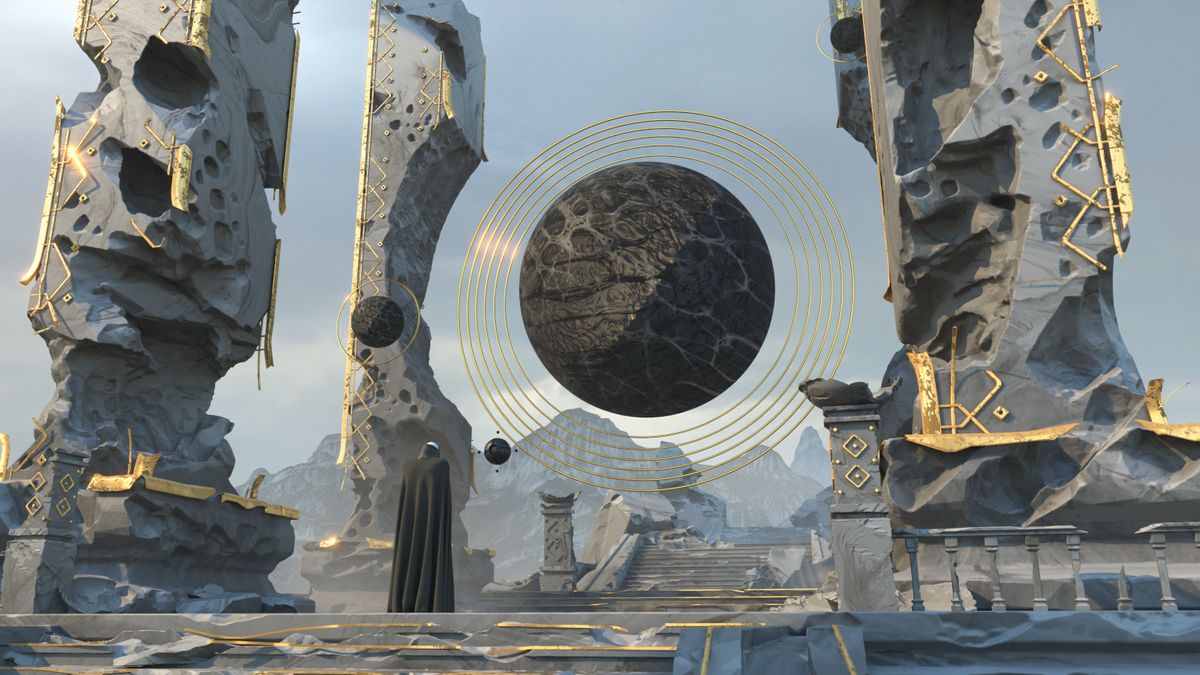
Andis Reinbergs, a concept artist, illustrator, and art director based in Hilversum, the Netherlands, has created a stunning 3D artwork titled "Summoning". The inspiration behind this piece stems from old, mysterious, and atmospheric locations in films, books, and games. Reinbergs often explores such worlds in his personal art, finding it a fun way to practice new skills.

Creating the Masterpiece

For "Summoning", the goal was to rely less on paintovers and make most of the work in 3D, allowing the scene to be used for cinematic shots. Reinbergs started by creating pencil sketches, which he finds the most liberating way to explore ideas.

Tools and Techniques Used

Reinbergs used Medium by Adobe to create the ruins, as he had a specific look in mind for the damage on them. He found sculpting such elements in VR to be fast and intuitive, allowing him to feel the scale of the scene. The rest of the work was done in Blender, where he was able to achieve his desired results with minimal or no paintovers.

Conclusion

Andis Reinbergs’ "Summoning" is a testament to the power of 3D art and the creative process. By combining traditional techniques with modern tools, Reinbergs was able to bring his vision to life, showcasing the beauty and potential of 3D art.

Frequently Asked Questions

Q: What inspired Andis Reinbergs to create "Summoning"?
A: Old, mysterious, and atmospheric locations in films, books, and games.

Q: What tools and techniques did Andis Reinbergs use to create "Summoning"?
A: Medium by Adobe and Blender.

Q: What was the goal of creating "Summoning"?
A: To rely less on paintovers and make most of the work in 3D, allowing the scene to be used for cinematic shots.

Q: Where can I see more of Andis Reinbergs’ work?
A: At his Artstation page.

I Created an Entire Galaxy and Used it in Her Irises

0

Sun Wenjun’s 3D Art of the Week: Evangelion’s Asuka

Introduction

Sun Wenjun, also known as FHNT, is a 3D character artist from Chengdu, China. She used ZBrush for the modeling and Blender for the final renders, with an assist from Photoshop. In this article, we will look at her work and learn a little about her process.

The Art

Sun Wenjun has created a stunning 3D art piece of Asuka from the Evangelion franchise. The image showcases her attention to detail and skill in creating intricate textures and structures. The character’s hair is particularly noteworthy, with a intricate texture that adds depth to the overall image.

The Process

In an interview, Sun Wenjun explained her creative process: "I enjoy challenging myself, so this time I wanted to try combining non-photorealistic rendering (NPR) with physically based rendering (PBR) in a new style. I wanted to blend the characteristics of both, with the intricate PBR structure complementing the specular effect of NPR."

Eye Effects

For the eye effects, Sun Wenjun created an entire galaxy and used it in Asuka’s irises, making her eyes deeper and more suitable to match up with the story. Blender is an excellent software that helped her to perfectly realise everything that she envisioned before setting off on this piece.

Conclusion

Sun Wenjun’s 3D art piece of Asuka is a testament to her skill and creativity as a 3D character artist. Her attention to detail and ability to combine different rendering techniques has resulted in a stunning image that is sure to impress.

FAQs

Q: What software did Sun Wenjun use to create the art piece?
A: Sun Wenjun used ZBrush for the modeling and Blender for the final renders, with an assist from Photoshop.

Q: What was the inspiration behind Sun Wenjun’s art piece?
A: Sun Wenjun was inspired to create a 3D art piece of Asuka from the Evangelion franchise, which has always been one of her favorite anime characters.

Q: What was the most challenging part of the process for Sun Wenjun?
A: Sun Wenjun mentioned that the most challenging part of the process was combining non-photorealistic rendering (NPR) with physically based rendering (PBR) in a new style, which required her to think creatively and outside the box.

Budget-Friendly Video Doorbell

ZDNET’s Key Takeaways

  • The Eufy Security Video Doorbell E340 is available for $180 but is currently on sale.
  • This doorbell features two cameras to give you complete visibility of the person at your door and any packages left on your porch, all with no monthly fees.
  • Although the doorbell comes with 8GB of built-in local storage (enough for up to 60 days of event recordings), you need to add a Eufy Security HomeBase to get the most out of it.

The Eufy Security Video Doorbell E340: A Reliable Video Doorbell

The Eufy Security Video Doorbell E340 is on sale for $115 at Amazon during the Big Spring Sale. That’s 36% off.

If you’re looking for a reliable video doorbell that can help protect your home and packages and offers local storage, let me introduce you to the Eufy Security Video Doorbell E340.

Key Features

  • Two cameras: One camera gives you the traditional visibility of who’s at your front door, and another is pointed downwards to let you know when a package has been delivered.
  • Real-time notifications to your mobile device when a person is detected and a package is delivered.
  • Option to use two-way talk to communicate with whoever is at the door from your mobile phone or quick replies to automatically respond when they ring the doorbell.
  • 2K-resolution video recording.
  • 8GB of local storage (enough for up to 60 days of event recordings).
  • Color night vision with a clear viewing distance of up to 16ft.
  • No monthly fees.

Improved Night Vision Recordings

The biggest improvement I’ve seen after replacing my old Eufy Security video doorbell with this dual E340, aside from the package detection, is night vision recordings. The doorbell can correctly determine what motion is a person, animal, vehicle, or just the wind, with very few false alerts.

Adding the HomeBase 3

Add the HomeBase 3 and the E340 dual doorbell, which can also confidently identify who’s at the door by name. This is powered by AI technology within the HomeBase 3 that allows users to name the faces the camera detects to let you know when "Maria" is detected at the front door instead of just "a person."

Eufy’s Delivery Guard Technology

Eufy’s Delivery Guard technology notifies you when packages are delivered and picked up and lets you set up zone restrictions to avoid false alerts. You can also set up the Eufy video doorbell E340 to trigger an alarm – a siren or a voice response – when someone approaches a package at your door, with the option to activate it at custom times.

Local Storage and HomeBase 3

The doorbell’s local storage means you don’t have to pay cloud storage fees and can easily access your video recordings. With the addition of a HomeBase 3, you could expand that storage by 16GB and later add SSDs to expand that to 16TB if that’s more your speed.

ZDNET’s Buying Advice

You can get the Eufy Security Video Doorbell E340 for $120 at the time of writing. It features 2K-resolution video recording, 8GB of local storage, color night vision with a clear viewing distance of up to 16ft, and, my personal favorite, no monthly fees. The video doorbell E340 is perfect for anyone who wants a doorbell camera to be on the alert when any visitors arrive and one to help protect their packages.

Conclusion

The Eufy Security Video Doorbell E340 is a reliable and feature-packed doorbell camera that offers local storage and no monthly fees. With its two cameras, real-time notifications, and color night vision, it’s perfect for anyone who wants to stay on top of who’s at their door and what’s happening on their porch.

FAQs

Q: What is the Eufy Security Video Doorbell E340?
A: The Eufy Security Video Doorbell E340 is a reliable video doorbell that can help protect your home and packages and offers local storage.

Q: What are the key features of the Eufy Security Video Doorbell E340?
A: The key features of the Eufy Security Video Doorbell E340 include two cameras, real-time notifications, option to use two-way talk, 2K-resolution video recording, 8GB of local storage, color night vision, and no monthly fees.

Q: What is Eufy’s Delivery Guard technology?
A: Eufy’s Delivery Guard technology notifies you when packages are delivered and picked up and lets you set up zone restrictions to avoid false alerts.

Q: What is the HomeBase 3?
A: The HomeBase 3 is a device that allows you to expand the storage of the Eufy Security Video Doorbell E340 and add SSDs to expand that to 16TB if that’s more your speed.

Can a Chatbot Help You Get Over Your Grief?

0

The Rise of AI-Powered Grief

The Desire to Bridge Life and Death

The desire to bridge life and death is innately human. For millennia, religion and mysticism have offered pathways for this – blurring the lines of logic in favor of the belief in eternal life. Technology has its own, relatively recent, history of attempting to link the living and the dead.

A Brief History of Techno-Spiritualism

A little over a century ago, Thomas Edison announced that he had been trying to invent an "apparatus" that would permit "personalities which have left this earth to communicate with us." Known for his contributions to the telegraph, the incandescent lightbulb, and the motion picture, Edison told The American Magazine that this device would function not by any "occult" or "weird means" but instead by "scientific methods."

The Rise of AI-Powered Avatars

Today, we’re entering a new age of techno-spiritualism. Machines already mediate much of our lives and dictate many of our decisions. Algorithms serve us news and music. Targeted ads predict our desires. Sleep-tracking apps and smartwatches gamify our physical fitness. But until recently, grief and death remained among the few aspects of modern life not totally subsumed by the steady societal drumbeat of optimization, efficiency, and productivity.

The Impact on Grief

A.I. used for psychological well-being is already relatively mainstream. These tend to come in the form of mental health chatbots or "companions," like Replika, which some people use to create avatars on which they rely for emotional support. This latest wave of technology, however, has grief and loss specifically in its cross hairs.

The Potential Risks

Many of the companies producing A.I. avatars and chatbots have adopted the language of optimization, suggesting that their tools can help people "ease grief" or otherwise better process loss by providing a chance for postmortem conversations and closure. Such claims play into the faulty but mainstream notion that grief moves linearly or in discrete stages through which one can predictably and cleanly progress.

The Dangers of AI-Powered Grief

The potential risks of A.I. tools for grieving are significant, not least because the companies producing them are driven by profit – incentivized to exploit desires and delusions that may be unhealthy for their users. A recent study from the University of Cambridge, for instance, evaluated the ethics of "the digital afterlife industry" and posited that these businesses may soon realize there’s even more money to be made by requiring people to pay subscription fees or watch advertisements in order to continue interacting with their dead loved ones’ avatars, especially after hooking them on the ability to converse.

Conclusion

As we enter a new era of techno-spiritualism, the question will not be when optimization culture will come for grief, but rather how we will choose to grapple with it when it inevitably does.

FAQs

Q: What is the purpose of A.I.-powered avatars?
A: A.I.-powered avatars are designed to provide a means of communication with the deceased, allowing users to process their grief and come to terms with loss.

Q: Are A.I.-powered avatars a threat to the grieving process?
A: Yes, A.I.-powered avatars have the potential to be a threat to the grieving process if they are used as a means of avoidance rather than a means of processing and coming to terms with loss.

Q: How do A.I.-powered avatars work?
A: A.I.-powered avatars use artificial intelligence to create a lifelike representation of the deceased, allowing users to interact with them in a way that is similar to real-life interaction.

Q: Are A.I.-powered avatars available for use?
A: Yes, A.I.-powered avatars are available for use and can be accessed through various platforms and devices.

Q: What are the potential risks of A.I.-powered avatars?
A: The potential risks of A.I.-powered avatars include the exploitation of users’ desires and delusions, the creation of unrealistic expectations, and the potential for harm or distress.

Sculpting a Diablo Miniature in ZBrush in 9 Steps

0

Here is the rewritten article:

01. Building a Pre-Blockout for Your Concept

Applying a key light, a fill light, and a backlight to create depth and details, and adjusting the intensity and direction for the desired effect. In a three-point lighting setup, the key light directs and casts sharp shadows, while the fill light softens shadows and adds details while also balancing dark areas. Finally, the backlight helps enhance the sense of depth by highlighting the character from the background. Choose a suitable HDRI image to generate realistic reflections to enhance the final render.

07. Bringing in Materials

Experiment with different material settings to achieve the effect you want. Adjust textures, reflections, and transparencies to bring your model to life realistically. Test various options until you discover the perfect combination that highlights the details and conveys the desired feeling. Just like the lighting, practice and experimentation are essential to master the art of configuring materials in KeyShot.

08. Preparing Your Final Render

After setting up the lighting and materials in KeyShot, the final render is the next important stage. Ensure that every detail is highlighted and the atmosphere you want is conveyed. Adjust the render settings for the best visual quality possible and experiment with different camera angles to capture the model’s essence. Also, remember to consider the composition and harmony of the scene. By combining technical precision with artistic vision, you’ll be able to produce a final render that effectively communicates your concept.

09. Post-Production in Photoshop

The post-production is where you can unleash your creativity to enhance the final image by adjusting colors and contrast, and adding elements to highlight details. This stage is crucial for creating captivating presentation, boosting the model’s quality and visual impact. Play around with different techniques and filters to get the desired effect that makes your image stand out and leaves a lasting impression.

Conclusion

In this tutorial, we’ve explored the process of creating a 3D miniature figurine of King Leoric using ZBrush and KeyShot. From building a pre-blockout to post-production in Photoshop, we’ve covered the essential steps for bringing your concept to life. Remember to be patient and persistent, as mastering these techniques takes time and practice. With the right tools and techniques, you can create stunning 3D art that showcases your skills and creativity.

FAQs

Q: What is the best way to set up lighting in KeyShot?
A: Apply a key light, a fill light, and a backlight to create depth and details, and adjust the intensity and direction for the desired effect.

Q: How do I achieve realistic reflections in my render?
A: Choose a suitable HDRI image to generate realistic reflections to enhance the final render.

Q: What is the importance of post-production in Photoshop?
A: The post-production is where you can unleash your creativity to enhance the final image by adjusting colors and contrast, and adding elements to highlight details, creating captivating presentation and boosting the model’s quality and visual impact.

Unlocking Video Generation: VBench-2.0’s Game-Changing Framework

Evaluation Framework for Video Generation Technologies: VBench-2.0

Introduction
In a world where video content reigns supreme, the challenge of generating high-quality, engaging videos can feel overwhelming. Are you struggling to keep pace with the rapid evolution of video technology? Do you find yourself lost in a sea of tools and frameworks that promise results but deliver frustration instead? Enter VBench-2.0—a revolutionary evaluation framework designed to transform your approach to video generation.

Key Features
VBench-2.0 is a cutting-edge benchmark suite specifically crafted for evaluating the intrinsic faithfulness of video generative models. Unlike traditional benchmarks that often focus on superficial metrics, VBench-2.0 delves into critical dimensions such as Human Fidelity, Controllability, Creativity, Physics, and Commonsense reasoning. This comprehensive evaluation framework aims to ensure that generated videos are not only visually appealing but also adhere to real-world principles essential for applications like AI-assisted filmmaking and simulated world modeling.

Evaluation Dimensions
The evaluation process incorporates innovative methods including text description alignment and video-based multi-question answering to assess model performance across various aspects such as human anatomy consistency and creativity in storytelling. By focusing on specialized dimensions like physics adherence and commonsense reasoning—evaluated through Motion Rationality and Instance Preservation—VBench-2.0 provides an unparalleled depth of analysis for next-generation video generation technologies.

Comprehensive Evaluation Dimensions
The inclusion of specialized metrics allows VBench-2.0 to assess complex aspects of video generation accurately. For instance, evaluating Motion Rationality ensures generated motions are physically plausible while Instance Preservation guarantees consistent object counts throughout videos. Furthermore, the focus on controllability evaluates how well models respond to intricate prompts and simulate dynamic changes in scenes—critical for applications like AI-assisted filmmaking or virtual world modeling.

Revolutionizing Video Generation
VBench-2.0 revolutionizes video generation by establishing a benchmark suite that evaluates the intrinsic faithfulness of generative models across multiple dimensions, including Human Fidelity, Controllability, and Creativity. Unlike traditional benchmarks that focus solely on superficial metrics, VBench-2.0 emphasizes real-world principles essential for applications such as AI-assisted filmmaking and simulated world modeling.

Real-World Applications and Use Cases
VBench-2.0 serves as a pivotal tool in evaluating video generative models, with significant implications across various industries. In AI-assisted filmmaking, it enhances the creative process by ensuring that generated content adheres to human fidelity and commonsense reasoning, allowing filmmakers to produce more relatable narratives. Additionally, simulated world modeling benefits from VBench-2.0’s focus on physics and controllability; this enables developers to create immersive environments that respond realistically to user interactions.

Enhancing Content Creation
The structured evaluation methods of VBench-2.0 facilitate innovative approaches in content creation across media formats—be it blogs or interactive videos—by providing insights into effective storytelling techniques through prompt engineering and comprehensive assessments of model outputs. This ensures high-quality content production tailored for diverse audiences while pushing the boundaries of what automated systems can achieve in generating compelling narratives.

Conclusion
VBench-2.0 represents a significant advancement in the realm of video generation technology, offering an innovative evaluation framework that enhances both efficiency and creativity in content creation. Its key features streamline the assessment process, allowing developers to focus on refining their models while ensuring high-quality outputs.

Frequently Asked Questions

  1. What is VBench-2.0?
    VBench-2.0 is an advanced evaluation framework designed to enhance video generation technologies.

  2. What are the key features of the VBench-2.0 evaluation framework?
    The key features of VBench-2.0 include comprehensive metrics for evaluating video quality, user-friendly interfaces for easy integration, support for multiple video generation models, and robust benchmarking capabilities that allow users to compare different systems effectively.

  3. How does VBench-2.0 transform video generation?
    VBench-2.0 transforms video generation by providing standardized benchmarks that help developers identify strengths and weaknesses in their models quickly. This leads to improved model optimization and ultimately results in higher-quality generated videos that better meet user expectations.

  4. What are some real-world applications of VBench-2.0?
    Real-world applications of VBench-2.0 span various industries including entertainment (for movie production), education (for creating instructional videos), marketing (for generating promotional content), and gaming (for developing dynamic game environments).

  5. How can I get started with using VBench-2.0?
    To get started with VBench-2.0, you can visit its official website where you’ll find documentation on installation procedures, tutorials on how to use its features effectively, and community forums where you can seek assistance from other users or contribute your insights regarding best practices in video generation technology.

CoreWeave chief tests market faith in AI hype

CoreWeave’s Unconventional Rise to AI Giant

A Deal Born from Necessity

In the summer of 2023, CoreWeave chief executive Michael Intrator and executives at private equity giant Blackstone gathered at a WeWork in Brooklyn to discuss the terms of a large and unusual loan. This initial deal would lead to one of the largest private financings in US corporate history, Blackstone’s biggest single loan commitment, and transform a seven-year-old start-up into an artificial intelligence infrastructure behemoth.

A IPO with a Twist

On Friday, CoreWeave became the largest tech company to publicly list its shares in 18 months. The initial public offering was far smaller than planned, raising about half of what its bankers asked investors for last week at a market valuation of $23bn — about $10bn less than initially hoped. This fall reflected doubts over the company’s massive huge debt burden, complex financial structure, close relationship with chipmaker Nvidia, and high customer concentration risk.

The Rise of CoreWeave

Michael Intrator, 55, has grown CoreWeave from a small crypto-mining business to an AI computing giant in a market dominated by hyperscalers such as Microsoft and Amazon. His appetite for extreme leverage and risky decision-making has led to a series of bold moves, including the purchase of tens of thousands of GPUs from Nvidia, which has become the hottest commodity for companies building AI systems.

A Deal Born from Foresight

The deal, agreed in July 2023, meant Blackstone would lead a $2.3bn debt financing to CoreWeave, whose revenue was just $16mn at the time. Blackstone’s exuberance was a sign of the times. Months earlier, OpenAI had released ChatGPT, and investors were racing for access to AI deals. Barely a year later, Blackstone signed a second debt deal with CoreWeave worth $7.6bn.

Conclusion

CoreWeave’s listing is a landmark moment for Intrator, whose stake in the company is worth about $3bn. His bold moves have transformed the company into an AI computing giant, but the listing also raises concerns about the company’s massive debt burden and complex financial structure. As CoreWeave navigates the public markets, it remains to be seen whether investors will come to understand its business model.

Frequently Asked Questions

Q: What is CoreWeave’s business model?
A: CoreWeave is an AI computing giant that provides infrastructure for companies to build and deploy AI models.

Q: What is the company’s revenue structure?
A: CoreWeave’s revenue is primarily generated through leasing computing power to Big Tech companies, including Microsoft.

Q: What is the company’s relationship with Nvidia?
A: CoreWeave has a close relationship with Nvidia, which has become a key supplier of GPUs and has invested $100mn in the company, owning about 6 per cent.

Q: What is the company’s plan for the future?
A: CoreWeave plans to continue to invest in its AI infrastructure and expand its customer base, but the company’s massive debt burden and complex financial structure remain concerns for investors.