Home Blog Page 125

A look at Intel Capital before the 34-year-old firm strikes out on its own

0

Intel Capital’s Spinout: A New Era for the Venture Capital Firm

A Brief History

When Intel Capital announced its plans to spin out from semiconductor giant Intel in January, it came as a bit of a shock considering the firm has been operating as Intel’s venture investment arm since 1991. In many ways, this decision marks the end of an era for what’s considered by some to be the first corporate venture capital firm of all time.

A New Opportunity

For Mark Rostick, vice president and senior managing director at Intel Capital, the transition represents a new opportunity for the VC while allowing the firm to keep many of the benefits it had as a CVC. Rostick has stuck around for over two decades and seen the firm invest more than $20 billion across more than 1,800 companies while racking up more than 700 startup exits.

The Decision to Spin Out

The thought of Intel Capital spinning out from its parent company was not a new one, Rostick said, and had been discussed multiple times in the past. The debate always centered on the pros and cons of how the firm would be able to move faster, or be more nimble, on its own but also how much the firm would have to give up without a parent company. However, these conversations started to get more serious at the beginning of 2024 and became concrete last fall.

The Timing

The success of Astera Lab’s exit last year helped with their timing. Intel Capital initially backed Astera Labs in 2018. The semiconductor company went public in March 2024 with a $5.5 billion valuation. Astera Labs one year later has an $9.8 billion market cap, making it one of the most successful venture-backed exits of 2024. This success may have also shown potential LPs that Intel Capital was a firm that was making the right bets and seeing capital returns at a time with very few venture-backed exits.

Challenges Ahead

It isn’t 100% clear that everyone at Intel Capital was actually on board with the change. At the managing director level alone, there have been multiple departures since these spinoff talks would have started getting serious, including: Mark Lydon, Arun Chetty, Sean Doyle, and Tammi Smorynski, all of whom had been at the firm for more than 20 years. An Intel Capital spokesperson said the recent departures weren’t tied to the news of the firm spinning out.

The Future of Intel Capital

The firm expects to be fully independent sometime in the third quarter of 2025, Rostick said. The new yet-to-be-named firm will look very similar to Intel Capital now, he added. The firm will keep Intel as an anchor investor and will still invest in early-stage startups in the same areas: AI, cloud, devices, and frontier tech, among others. The firm will likely fundraise shortly after the formal spinout.

Conclusion

The success of this new solo firm will be up for the market to decide. But in the meantime, despite everything else, Rostick said the firm largely continues to operate as business as usual.

Frequently Asked Questions

Q: What is the timeline for Intel Capital’s spinout?
A: The firm expects to be fully independent sometime in the third quarter of 2025.

Q: What will change for Intel Capital after the spinout?
A: The firm will keep Intel as an anchor investor and will still invest in early-stage startups in the same areas: AI, cloud, devices, and frontier tech, among others.

Q: Will Intel Capital continue to operate as business as usual?
A: Yes, the firm largely continues to operate as business as usual, investing in new opportunities, maintaining the portfolio, and managing portfolio exits.
Smashing Social Media with Duolingo’s Viral Ashton Hall Parody

0

The Art of Social Media Marketing: Lessons from Duolingo’s Duo

The Power of Trend-Hopping

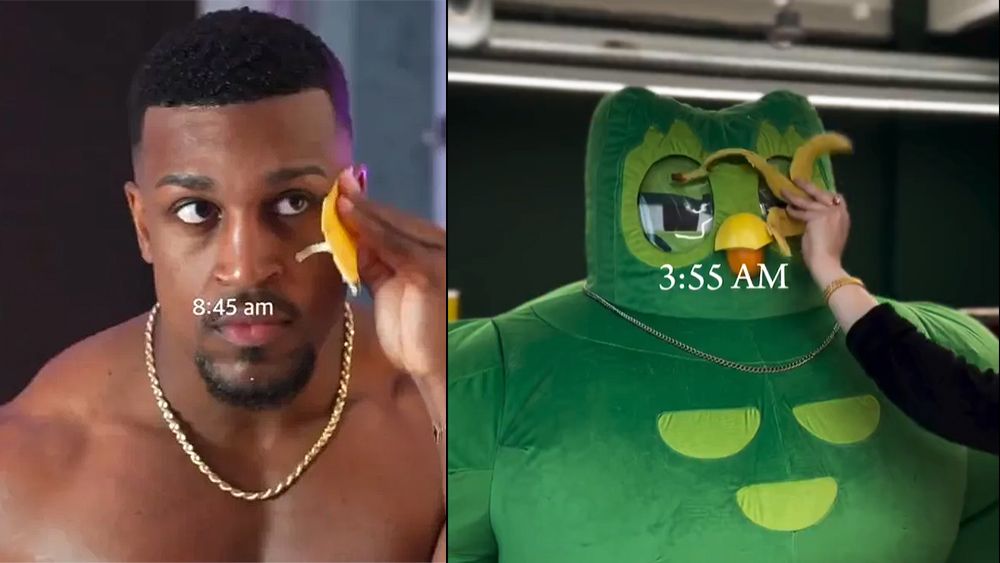
The report of Duo the Owl’s death was an exaggeration, Mark Twain might have said. Duolingo’s brand mascot has made a remarkable recovery, and it seems it may all be thanks to Ashton Hall’s morning routine.

For those not plugged into social media 24/7, I’ll explain. Ashton Hall is a former American footballer turned online fitness influencer who caused much hilarity with a video of a five-hour morning routine that included rubbing banana skin on his face. Duo is a green owl who promotes the language-learning app Duolingo and recently faked his own death.

The Secret to Social Media Success

Despite his supposed demise, Duo is still outclassing pretty much any other brand when it comes to social media marketing, showing how to take advantage of viral trends in order to keep the brand visible and relevant. But how hard can that be – and why do so many other brands get it so wrong?

The Importance of Timeliness

We’ve seen lots of brands still struggling to find their way in social media marketing, which can require masses of engaging content and interaction with customers. Lots of brands have tried to adopt a more casual, cheeky, even flippant tone to connect with young audiences. Some, like Duolingo and Aldi, get it right. Some, like Ryanair take it too far, and others, like Adidas, just get it all wrong.

Duolingo’s Winning Formula

Part of Duolingo’s success is how quickly it moves, jumping on trends while they’re still hot, and going all-in rather than merely dropping a half-hearted reference. It tapped into the popularity of Apple TV’s Severance with a series of pitch-perfect deadpan recreations of moments from the series with complete recognisable sets, props and graphic design.

The Art of Mocking Other Brands

Duo’s not afraid of mocking other brands that try to jump on its wave either. The bright green owl even joined in with the surge in anti-Tesla sentiment by suggesting that both he and Larry the Twitter bird were "killed by a Cybertruck" after X tried to jump on the publicity caused by Duo’s death. Again, the tone was right: it not so harsh to upset Elon Musk fanboys but enough to leave everyone else in hysterics.

The Risks of Trend-Hopping

But jumping on viral trends is a risky business. The toughest decision is which ones to embrace and which ones to avoid. The other big viral trend this week was the use of OpenAI’s new AI image generator to apply a Studio Ghibli art style to images and memes.

Conclusion

To respond successfully to trends on social media, marketing teams need to act quickly, but they need to think quickly too. A structure needs to be in place to allow them to analyse and decide if a trend is relevant to the brand, if it’s something their audience will relate to, and if it’s potentially controversial or harmful.

FAQs

Q: What is the key to Duolingo’s social media success?
A: Duolingo’s success is due to its ability to quickly jump on trends and go all-in, rather than just dropping a half-hearted reference.

Q: Why do many other brands get social media marketing wrong?
A: Many other brands struggle to find their tone and style, often trying to be too casual or flippant, and failing to connect with their audience.

Q: What is the risk of trend-hopping on social media?
A: The risk is that brands may jump on a trend too late, or choose the wrong one, which can lead to backlash and loss of followers.

My Go-To Indoor Motion Tracking Security Camera is Adorable

ZDNET’s Key Takeaways

  • The Eufy Security Indoor Cam S350 is available for purchase at $130.
  • The camera has a dual-camera head, with a telephoto and wide-angle camera, and motion tracking abilities with a 360-degree motion rate.
  • The only drawback is that it does not have a button to engage privacy mode manually, but it can be scheduled as needed on the app.

The Eufy Security Indoor Cam S350: A Game-Changer in Home Security

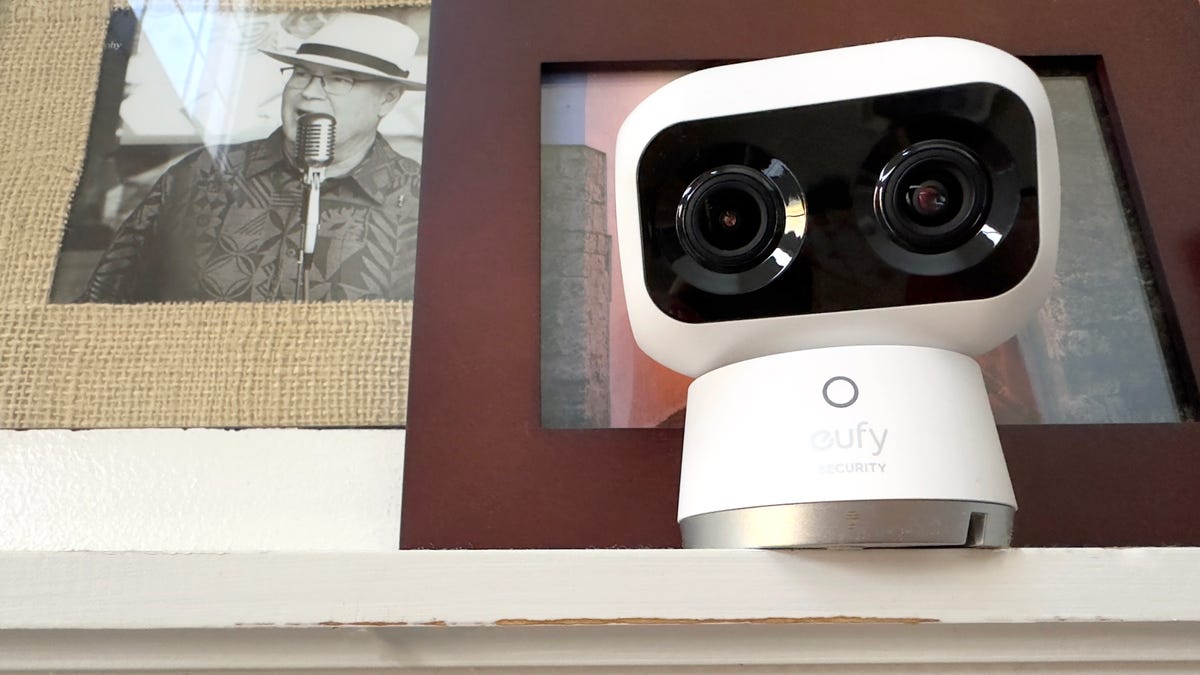
The Eufy Security Indoor Cam S350 is a revolutionary indoor security camera that has become indispensable in my home. Its unique feature is that it houses two cameras in one body; one with a wide-angle lens and the other with a telephoto lens. The wide-angle lens camera has a 130-degree field of view when static and records in 4K, while the telephoto lens camera records in 2K with 3x optical zoom and 8x digital zoom.

Motion Tracking and Local Storage

The device can pan, tilt, and swivel in any direction smoothly, giving you a full view of its surroundings. The Eufy Cam S350 smoothly tracks people in motion, keeping the target in view with no staggering, and the Local AI in the HomeBase 3 can distinguish humans and pets. The camera also comes with the option for local storage, so you don’t have to pay monthly fees.

Pairing with the HomeBase 3

We paired this camera with our HomeBase 3, which we had at home and use for the rest of our Eufy security system. The HomeBase 3 retails for $150; it’s a hub for Eufy security devices that supports local storage for its cameras, so we can enjoy the full benefit of a security camera without monthly fees. However, you don’t need to buy a HomeBase 3 to use this camera.

ZDNET’s Buying Advice

The Eufy Security Indoor Cam S350 works seamlessly each time motion is detected. It doesn’t get distracted by false alerts often, notifications appear quickly on my mobile device when triggered, and it can quickly hide its lenses when privacy mode is turned on. I love to schedule when the camera goes to privacy mode; I set a schedule to have it automatically guard each night at bedtime and stop watching during the day. I only wish it had a button to manually engage privacy mode, so the camera can stop capturing motion when I press it.

Conclusion

The Eufy Security Indoor Cam S350 is a top-notch indoor security camera that has proven itself to be capable of performing its tasks with clear, high-resolution images. Its unique features, such as the dual-camera head and motion tracking abilities, make it an excellent choice for anyone looking for an indoor security camera, pet cam, or baby monitor camera.

FAQs

Q: What is the price of the Eufy Security Indoor Cam S350?
A: The Eufy Security Indoor Cam S350 is available for purchase at $130.

Q: What are the features of the Eufy Security Indoor Cam S350?
A: The camera has a dual-camera head, with a telephoto and wide-angle camera, and motion tracking abilities with a 360-degree motion rate.

Q: Is the Eufy Security Indoor Cam S350 compatible with the HomeBase 3?
A: Yes, the Eufy Security Indoor Cam S350 is compatible with the HomeBase 3, which is a hub for Eufy security devices that supports local storage for its cameras.

Q: Can I use the Eufy Security Indoor Cam S350 without the HomeBase 3?
A: Yes, you can use the Eufy Security Indoor Cam S350 without the HomeBase 3, but it will not have the option for local storage.

Maximizing AI Agent Performance with Data Flywheels on NVIDIA NeMo Microservices

0

Need for an AI Data Flywheel

AI agents, unlike traditional systems, operate autonomously, reason through complex scenarios, and make decisions in dynamic environments. As these systems evolve and enterprises begin to build multi-agent systems, where AI agents integrate across platforms and collaborate with human teams to enhance operations, it becomes increasingly challenging to keep the entire system up-to-date to remain relevant and effective.

The solution lies in adopting a data flywheel strategy, where each model powering every agent is continuously adapted by learning from feedback on its interactions. A data flywheel is a self-reinforcing loop in which data from human feedback, real-world, and AI interactions continuously enhances the system, enabling it to adapt and refine decision-making (Figure 1).

Figure 1. Data flywheel example architecture

Develop and Deploy AI Agents with NVIDIA NeMo Microservices

NVIDIA NeMo microservices are an end-to-end, fully-accelerated platform for building data flywheels. You can simplify the development and deployment of agentic systems using industry-standard APIs and Helm charts. You can also set up data flywheels that continuously update your AI agents with the latest information, all while retaining full control over proprietary data.

Simplify AI Data Flywheels with NeMo Microservices

NeMo microservices offers the following set of powerful tools to manage the entire lifecycle of an AI agent and build efficient data flywheels to constantly improve the underlying models with fresh, relevant data to enable continuous improvement, adaptability, and compounding value in AI-driven systems:

  • NeMo Curator: GPU-accelerated modules for curating high-quality, multi-modal training data.
  • NeMo Customizer: High-performance, scalable microservice that simplifies the fine-tuning of large language models (LLMs) for downstream tasks.
  • NeMo Evaluator: Automated evaluation of custom AI models using academic and custom benchmarks.
  • NeMo Retriever: Fine-tuned microservices to build AI query engines with scalable document extraction and advanced retrieval-augmented generation (RAG) for multimodal datasets.
  • NeMo Guardrails: Seamless orchestrator for building robust safety layers to ensure accurate, appropriate, and secure agentic interactions.
  • NIM Operator: Kubernetes Operator that is designed to facilitate the deployment, management, and scaling of NeMo and NIM microservices on Kubernetes clusters.

NeMo Guardrails

With AI agents driving critical business operations including decision making and customer interactions, ensuring that AI models remain safe and aligned with organizational policies is essential.

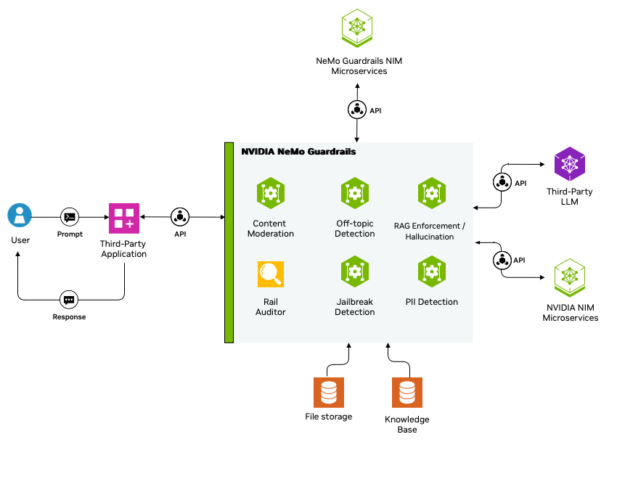
NeMo Guardrails lets you easily define, orchestrate and enforce AI guardrails in agentic AI applications, detecting up to 99% of policy violations with only a sub-second latency trade-off. It enforces various safety measures such as content moderation, off-topic dialogue moderation, hallucination reduction, jailbreak detection, and protection of personally identifiable information (PII).

NeMo Guardrails enables the addition of programmable safety layers throughout the AI interaction process, making it easy to integrate these controls into applications, including input, dialog, retrieval, execution, and output rails to ensure alignment with safety expectations and policies.

NeMo Guardrails scales seamlessly to support multiple applications with diverse guardrail configurations. It integrates with third-party and community safety models as well as the NemoGuard JailbreakDetect, Llama 3.1 NemoGuard 8B ContentSafety, and Llama 3.1 NemoGuard 8B TopicControl NVIDIA models for highly specialized, robust protections..

A diagram shows NeMo Guardrails architecture, highlighting content moderation, dialog management, and integration with third-party models and NIM safeguards.Figure 8. NVIDIA NeMo Guardrails usage architecture and capabilities

NIM Operator

NeMo and NIM microservices can be deployed individually using containerized Kubernetes distributions and Helm charts. However, when multiple NIM and NeMo microservices are combined to create sophisticated agentic systems, such as the NVInfo Bot, managing the end-to-end lifecycle of these microservices can present major challenges for cluster administrators and developers.

The NVIDIA NIM Operator streamlines AI inference workflow orchestration with Kubernetes-native Operators and Custom Resource Definitions (CRDs), enabling automated deployment, lifecycle management, intelligent model pre-caching for reduced latency, and simplified auto-scaling. By eliminating infrastructure complexities, it enables you to focus on innovation.

Get Started with NeMo Microservices

As AI continues to transform industries, the importance of keeping AI agents updated and effective will only increase. NVIDIA NeMo

We went to 10 anti-Tesla protests — and a couple counter protests, too

0

Thousands of Anti-Tesla Protesters Take to the Streets

Global Day of Action Sees Protests Targeting Hundreds of Tesla Locations

In a culmination of nearly two months of steady, almost daily demonstrations, thousands of anti-Tesla protesters took to the streets on Saturday, March 29th, in opposition to Elon Musk’s efforts to eliminate humanitarian aid, close federal agencies, and fire government workers. The day was billed as a "Global Day of Action," with protests targeting hundreds of Tesla locations in the US, Canada, and Europe.

Protesters’ Concerns and Demands

The Verge wanted to check the temperature and see how these protesters were thinking about this current moment, and whether they felt their boycott was having its desired effect. Tesla sales have slid significantly since the protests started, and its stock has shed a lot of its value. But Musk shows no signs of being deterred, as he ramps up his threats to sic the government on anti-Tesla forces.

Rallies and Demonstrations Across the Globe

We fanned out across the globe, from London to New York to Washington, DC to Los Angeles — and Paramus, NJ and Akron, Ohio too — to observe the movement as it unfolded. In London, protesters gathered outside a Tesla dealership, holding signs with slogans like "Strike down Darth Ketamine, Congress must!!!" and "Burn A Tesla Save Democracy."

New York City Protests

In New York City, the scene was similar, with a larger turnout of about three times the size of the previous week’s protest. Protesters chanted slogans and held signs, with some even engaging with two men holding out microphones and asking questions. In one instance, police that were surrounding the building came over to prevent one of these interviewers from engaging with the protesters. The man being escorted out of the crowd still held a microphone, walked backwards smiling, and said "crackhead, come here" gesturing towards one of the protesters for an interview.

Organizers’ Plans and Future Actions

As the protest neared its end, there were chants of "we’ll be back" from the crowd, indicating their readiness to continue their fight against Tesla. When asked about their plans and future actions, the organizers remained tight-lipped, saying only that they would continue to mobilize and make their voices heard.

Conclusion

The anti-Tesla protests have gained momentum, with thousands of people across the globe taking to the streets to express their opposition to Elon Musk’s actions. While the outcome of these protests is uncertain, one thing is clear: the movement has galvanized a sense of urgency and concern among its supporters, who are determined to make their voices heard.

FAQs

Q: What is the purpose of the anti-Tesla protests?
A: The protests aim to express opposition to Elon Musk’s efforts to eliminate humanitarian aid, close federal agencies, and fire government workers.

Q: How many protests took place on Saturday, March 29th?
A: Thousands of protests took place across the globe, targeting hundreds of Tesla locations in the US, Canada, and Europe.

Q: What is the current state of Tesla’s sales and stock?
A: Tesla sales have slid significantly since the protests started, and its stock has shed a lot of its value.

Q: What is the response from Elon Musk and Tesla?
A: Musk has shown no signs of being deterred, as he ramps up his threats to sic the government on anti-Tesla forces.

The Tablet That Solved My Biggest Problem

ZDNET’s Key Takeaways

  • Amazon sells the Echo Hub for $180.
  • The Echo Hub gives Alexa the place it has earned in the smart home market: A control panel to easily access smart devices, no ads, and no unnecessary fluff.
  • The smart display can be slow and buggy, especially while loading multiple camera views.

More Buying Choices

The Amazon Echo Hub is now on sale at 28% off, available for only $130, during the Amazon Big Spring Sale.

Also: The 155+ Best Amazon Spring Sale Tech Deals Live Now

Many smart home enthusiasts, myself included, are tired of juggling dozens of apps on their phones to control the smart devices in their homes. While the release of Matter alleviates this hassle, the new smart home connectivity standard has yet to get enough support to eliminate the challenge.

Smart Home Control Centers

These devices always have their drawbacks. Amazon’s Echo Hub is designed to fill a gap in the smart home controller market by being what these devices are not: a smart home controller and only that.

No Frills, Just a Smart Home Hub

There are no frills with the Echo Hub. There’s no spatial audio speaker attached to its base, no ultra-high definition for streaming, and no ads to display while in standby mode. It doesn’t serve any purpose besides being a smart home hub and controller.

Testing the Echo Hub

Testing the Echo Hub for the past few months has been a refreshing experience. Its navigation is sorted into categories and widgets. At a glance, the Echo Hub displays your widgets on about two-thirds of the screen, with your routines and rooms on the left side and device categories at the bottom. You can customize the widgets and download more from the widgets store.

The Echo Hub: A Smart Home Control Panel

The Echo Hub can get a bit laggy when you pull up your security camera feeds.

Conclusion

The Echo Hub is a smart home control panel with the Alexa voice assistant. It also works to connect Wi-Fi, Bluetooth, Zigbee, Matter, Thread, and Sidewalk smart devices. As its name indicates, the Echo Hub is a smart home control panel with the Alexa voice assistant.

Frequently Asked Questions

Q: What is the Echo Hub?
A: The Echo Hub is a smart home control panel with the Alexa voice assistant.

Q: What devices can the Echo Hub connect?
A: The Echo Hub can connect Wi-Fi, Bluetooth, Zigbee, Matter, Thread, and Sidewalk smart devices.

Q: Is the Echo Hub a smart speaker?
A: No, the Echo Hub is not a smart speaker. It’s a smart home control panel that can control smart devices.

Q: Can I customize the Echo Hub?
A: Yes, you can customize the Echo Hub by downloading more widgets from the widgets store.

Q: Is the Echo Hub available for purchase?
A: Yes, the Echo Hub is available for purchase on Amazon for $180, or 28% off at $130 during the Amazon Big Spring Sale.

CoreWeave Disappoints on Opening of Trading

0

CoreWeave’s Disappointing IPO Debut

Stock Market Concerns and Uncertainty

Shares of CoreWeave, the first artificial intelligence start-up to go public, finished its first day of trading at $40.01 a share, one penny above the disappointing initial public offering price the company had set a day earlier. The company’s share price, trading under the ticker symbol CRWV, signaled concern among Wall Street investors about the economy and CoreWeave’s business model.

Slumping Stock Market and Inflation Uncertainty

The faltering day of trading came amid a slumping stock market and uncertainty around inflation and President Trump’s tariffs. The S&P 500 dropped 2 percent on Friday, one of its worst days since Mr. Trump’s election.

Reduced IPO Price and Lower-than-Expected Revenue

The listing’s reduced price — CoreWeave estimated a range of $47 to $55 in earlier filings — already reflected skepticism from investors compared with a month ago. The company’s trading opened at $39 a share on Friday, even after CoreWeave dropped the size and value of its I.P.O. The company also raised just $1.5 billion in the offering, compared with the $4 billion that analysts had anticipated.

CEO’s Response to Disappointing IPO Debut

In an interview on Friday, Michael Intrator, CoreWeave’s chief executive, said that concerns about the stock market and the A.I. industry had caused the company to reduce its listing, but that the timing of its offering would still benefit the company in the long run. "This is just a day, and we’ll get through this day, and we’ll keep moving," Mr. Intrator said. "Getting into the public markets is what matters for us."

Impact on Future IPOs

It is unclear if the stock’s performance will signal the start of the I.P.O. parade that some investors hoped it would. Among the companies watching CoreWeave’s public debut on Friday were Klarna, the online lending service, and StubHub, the ticketing company, which are both anticipating public listings this year.

Analyst’s Insights

"This is not an easy I.P.O. market," said Samuel Kerr, the head equity capital market analyst at Mergermarket, a financial insights firm. "It shows you that the U.S. I.P.O. market is not as strong as perhaps even CoreWeave thought it was going to be at the beginning of the year."

Company’s Financials and Future Prospects

CoreWeave was founded as a cryptocurrency mining start-up in 2017, but it shifted to using its powerful Nvidia chips for A.I. development after OpenAI released the ChatGPT chatbot in 2022. The company’s revenue jumped to $1.9 billion last year from $229 million a year earlier, but it lost $863 million after spending nearly $1 billion to finance its debt.

Conclusion

CoreWeave’s disappointing IPO debut raises concerns about the company’s business model and the current state of the I.P.O. market. With a reduced IPO price and lower-than-expected revenue, the company’s future prospects remain uncertain. As the company continues to navigate the challenges of the I.P.O. market, it will be important to monitor its financials and performance to determine its long-term success.

FAQs

Q: What was CoreWeave’s IPO price?
A: CoreWeave’s IPO price was $40.01 a share, one penny above the disappointing initial public offering price the company had set a day earlier.

Q: What was the company’s revenue in 2022?
A: The company’s revenue jumped to $1.9 billion last year from $229 million a year earlier.

Q: What is CoreWeave’s main investor?
A: CoreWeave’s main investor is Microsoft, which accounted for most of its revenue last year.

Q: What is the company’s debt profile?
A: The company has a high debt profile, with a loss of $863 million after spending nearly $1 billion to finance its debt.

Q: What is the company’s future prospects?
A: The company’s future prospects remain uncertain, as its disappointing IPO debut raises concerns about its business model and the current state of the I.P.O. market.

CoreWeave co-founder explains how a closet of crypto-mining GPUs led to a $1.5B IPO

0

CoreWeave’s Wild Ride: From Crypto Miners to AI Training Infrastructure

A Lukewarm IPO Debut

CoreWeave began trading on Friday with more of a shrug than a war cry. The company priced at $40 on Thursday, below the $47- $50 price range announced. It also trimmed the number of shares offered. All told, CoreWeave raised $1.5 billion and nabbed a $14 billion market cap on Day 1, instead of a hoped-for $3 billion+ raise and a much higher valuation. Shares also opened at $39 (ouch!), and closed at $40. A lukewarm reception.

The Largest AI-Related Listing to Date

Still, the company’s IPO lands as the largest AI-related listing to date, and the biggest U.S. tech IPO since the heady days of 2021.

A Chance Meeting

Sitting in an ordinary white hoodie in a bland conference room, and talking with a detectable Jersey accent, Chief Strategy Officer Brian Venturo told TechCrunch that he feels very lucky. That’s because it all started when he and his hedge fund friends had some extra time on their hands after their last venture together went south.

The Early Days

He had been working as portfolio manager for the energy industry hedge fund, Hudson Ridge, founded by CoreWeave cofounder and CEO Michael Intrator. They had built an ML model to help them pick investments in the data-heavy energy industry. There they met their cofounder, Brannin McBee, who ran the data firm they used. But after the U.S. veered into its fracking boom era, they closed Hudson Ridge, leaving "a lot of time on our hands," Venturo says.

The Crypto Era

Next up: crypto. The wanted to get in, but first "wanted to understand from the commodity side, how is this made," Venturo said. "So we started doing mining on the pool table in our Manhattan office."

Thousands of GPUs in a Warehouse

Like eating potato chips, one GPU turned into 10. Ten turned into 1,000. The rigs moved from pool table to closet. "Next thing we knew, we were in the most cliche place possible. We were in my grandfather’s garage in New Jersey," he joked. Then their friends in finance wanted in so they bought more.

The Largest Ethereum Miner in the World

"We were the largest Ethereum miner in the world for like two and a half years," he says. "At one point, we had 50,000 Nvidia consumer GPUs." These were chips meant for playing video games on consumer PCs, not running 24/7 in "a warehouse with no air conditioning or no ventilation," he said.

From Miners to AI Trainers

The team knew they wanted to use their GPU empire for other things, like maybe AI training. But they also needed to learn how. So they connected with EleutherAI, an open source group working on an LLM. CoreWeave offered access to their GPUs in exchange for help learning about AI training and announced a partnership in 2022.

Open Source Paves the Way

OpenAI learned of CoreWeave through its work with the open source community. And Microsoft learned of the company through OpenAI. Microsoft became its biggest customer because it was OpenAI’s biggest investor and sole cloud provider at the time.

Today’s CoreWeave

Today CoreWeave has 32 data centers and 250,000 GPUs, including Nvidia’s difficult to obtain Blackwell chips, which supports AI reasoning, the company says.

Structuring Customer Deals

Venturo acknowledges that much has been made about CoreWeave’s jaw-dropping $7.6 billion in debt, much of it due to be repaid in two years, FT reports. Against CoreWeave’s $1.9 billion in revenues (even with, it says, $15 billion under contract), the debt is a big reason why investors have been cautious. However, Venturo insisted that CoreWeave has structured each customer deal to cover the debt used to buy the GPUs needed.

Conclusion

As CoreWeave’s Chief Strategy Officer Brian Venturo puts it, "There’s so many pieces of luck along the way, it’s crazy." With its wild ride from crypto miners to AI training infrastructure, CoreWeave has certainly been the beneficiary of a lot of good fortune.

Frequently Asked Questions

Q: What was CoreWeave’s initial public offering price?
A: $40

Q: What was the initial public offering size?
A: $1.5 billion

Q: What is CoreWeave’s current market capitalization?
A: $14 billion

Q: What is the company’s largest customer?
A: OpenAI

Q: What is the company’s debt situation?
A: $7.6 billion in debt, much of it due to be repaid in two years.

The Best Alexa Smart Speaker I’ve Tested Isn’t an Echo

ZDNET’s Key Takeaways

  • The Sonos Era 100 is a $249 smart speaker that I recommend to most people, audiophile or not.
  • In addition to a full, booming sound, the Sonos speaker produces crystal-clear vocals that enhance any song and has hands-free Alexa for voice control.
  • Since the Era 100 is built for smaller spaces, it doesn’t support spatial audio or Dolby Atmos like its larger sibling, the Era 300.
  • The Sonos Era 100 speaker is on sale for $199, $50 off its retail price as part of the Amazon Big Spring Sale.

Unboxing Experience

The clean aesthetics of the Sonos packaging alone are captivating. Sonos is committed to environmental sustainability, from manufacturing to packaging design. The Era 100 speaker incorporates recycled materials, and Sonos is switching to 100% paper packaging by 2025, so the unboxing experience was like opening a present.

What’s New with the Sonos Era 100

The Era 100 features touch controls at the top of the speaker, which I’ve found very intuitive. These controls can be used to adjust the volume, play, pause, skip, and replay. There’s also a Bluetooth button on the back. Yes, you read that right: The smart speaker has Bluetooth connectivity, a feature that the Sonos One lacked.

How Does the Era 100 Sound?

The Era 100 is the best speaker of its size that I’ve ever tested. It is an improvement from the Sonos One, which was already considered the best-sounding smart speaker, but it also sounds better than the improved Amazon Echo Studio and, naturally, blows all other compact smart speakers out of the water.

ZDNET’s Buying Advice

The Era 100 has raised the bar for compact, high-quality speakers. In addition to a full, booming sound, the Sonos speaker puts out crystal-clear vocals at the forefront of any song. It’s also extremely powerful, yet it doesn’t lose sound quality at full volume, and the deep bass doesn’t rattle, even at its highest setting.

Conclusion

The Sonos Era 100 is an outstanding smart speaker that produces a full, booming sound with crystal-clear vocals. Its compact size and powerful sound make it an excellent choice for small to medium-sized spaces. With its affordable price tag and impressive performance, the Sonos Era 100 is a great option for anyone looking for a high-quality smart speaker.

FAQs

Q: What is the price of the Sonos Era 100?
A: The Sonos Era 100 is priced at $249.

Q: What are the key features of the Sonos Era 100?
A: The key features of the Sonos Era 100 include its compact size, powerful sound, and crystal-clear vocals, as well as its touch controls and Bluetooth connectivity.

Q: Is the Sonos Era 100 available for purchase?
A: Yes, the Sonos Era 100 is available for purchase, and it’s currently on sale for $199, $50 off its retail price as part of the Amazon Big Spring Sale.

Sam Altman Firing Drama Detailed in New Book

0

OpenAI’s Turmoil: A Glimpse into the Board’s Decision to Fire CEO Sam Altman

The Background

An excerpt from the upcoming book "The Optimist: Sam Altman, OpenAI, and the Race to Invent the Future" offers new details about why OpenAI’s board briefly fired CEO Sam Altman back in 2023. Written by Wall Street Journal reporter Keach Hagey, the book claims the nonprofit’s board members became increasingly concerned after learning about various issues.

The Issues

One of the key concerns was an OpenAI Startup Fund that was actually personally owned by Altman. This led to allegations of a conflict of interest, which further strained the relationship between Altman and the board. Additionally, co-founder Ilya Sutskever and CTO Mira Murati were collecting evidence of what they saw as Altman’s toxic and dishonest behavior, including screenshots from Murati’s Slack channel.

The Evidence

According to the book, the evidence provided by Sutskever to the board members included claims by Altman that the company’s legal department had said GPT-4 Turbo didn’t need to be reviewed by the joint safety board. However, the company’s top lawyer denied making such a statement. This discrepancy allegedly raised serious concerns among the board members, leading to a decision to oust Altman and appoint Murati as interim CEO.

The Consequences

However, this decision backfired, with OpenAI employees, including Sutskever and Murati, signing a letter demanding Altman’s return. He soon did, and Sutskever and Murati subsequently left to launch startups of their own.

Conclusion

The excerpt from "The Optimist" provides a glimpse into the complex and tumultuous period in OpenAI’s history. The decisions made by the board, despite their intentions, ultimately had unintended consequences. This episode serves as a reminder of the importance of transparency, accountability, and effective communication in the development of cutting-edge technology.

Frequently Asked Questions

Q: What was the primary reason for OpenAI’s board to fire CEO Sam Altman?
A: The board members became concerned about issues such as the OpenAI Startup Fund, which was personally owned by Altman, and allegations of toxic and dishonest behavior.

Q: What evidence did co-founder Ilya Sutskever provide to the board members?
A: Sutskever provided evidence of Altman’s alleged toxic and dishonest behavior, including screenshots from Mira Murati’s Slack channel.

Q: What was the outcome of the decision to oust Altman and appoint Murati as interim CEO?
A: The decision backfired, with OpenAI employees signing a letter demanding Altman’s return, and Sutskever and Murati leaving to launch their own startups.