Home Blog Page 158

Unlocking Digital Healthcare Transformations at HIMSS25 Europe

Insights into Key Topics at HIMSS25 Europe

European legislation, workforce trends, women’s health, AI implementations, and more will be in the spotlight at HIMSS25 Europe at the Palais des Congrès de Paris, France on 10-12 June 2025.

Full Coverage: HIMSS24 European Health Conference & Exhibition

Overcoming Barriers in Digital Health Procurement for Smaller Countries

Joint procurement initiatives can help smaller countries increase their bargaining power and gain better access to digital health technologies. By HIMSS TV | March 14, 2025

The Future of Care: Nurses in 2030

With the increasing shortage of medical professionals, care delivery and roles will need to evolve. By Aline Noizet | March 11, 2025

Simplifying the Path to Digital Maturity

For many healthcare organisations, the path forward on their digital transformation journey can be complex and challenging. By Maja Dragovic | February 28, 2025

Cybersecurity Requires New Approaches, Where All Stakeholders Contribute

As cyberthreats against healthcare surge, a new EU cybersecurity Action Plan emphasizes proactive cooperation between all stakeholders. By Maja Dragovic | February 10, 2025

Health Tech Pathways: Can We Make Regulatory Processes Faster to Accelerate Market Access?

One of the biggest challenges to building a healthcare startup is understanding and complying with regulatory processes. By Aline Noizet | February 03, 2025

An Economic Imperative to Invest in Women’s Health

Investing in women’s health is not just a matter of improving healthcare outcomes – it has economic and societal benefits. By Maja Dragovic | January 29, 2025

Hal Wolf Announces Paris to Host HIMSS25 Europe

Learning from each other and the exchange of ideas happening in Rome during HIMSS24 Europe is crucial for the success of HIMSS25 Europe. By HIMSS TV | May 31, 2024

Conclusion

HIMSS25 Europe will bring together healthcare leaders to share knowledge, network, and discuss the latest trends and innovations in the industry. With a focus on European legislation, workforce trends, women’s health, AI implementations, and more, this event is a must-attend for anyone working in the healthcare industry.

FAQs

  • What is HIMSS25 Europe?
    HIMSS25 Europe is a healthcare conference and exhibition that will take place in Paris, France from 10-12 June 2025.
  • What are the key topics to be covered at HIMSS25 Europe?
    European legislation, workforce trends, women’s health, AI implementations, and more will be in the spotlight at HIMSS25 Europe.
  • How can I attend HIMSS25 Europe?
    Registration details for HIMSS25 Europe will be available on the official website.
Embracing AI: A Guide to Preparing Your Business for Success

Why AI Adoption Is No Longer Optional

Is your business ready for AI in 2025? Many businesses hesitate to bring AI into their operations, but the change is happening fast. Right now, only 6.8% of U.S. businesses use AI. However, in just six months, this number is expected to reach 9.3%. This means more companies are starting to see the benefits of AI business integration.

Integrating AI into business can help with customer service, marketing, data analysis, and more. But making AI work for your business is not just about using the latest tools. You need a plan to get the best results. Understanding AI, training your team, and setting clear goals will help you stay ahead.

This guide will show you how to prepare your business for AI adoption in 2025. Take the right steps today so you don’t fall behind tomorrow.

Plan now to integrate AI smoothly and prepare your business for optimization! Get started now!

Why AI Adoption Is No Longer Optional

The global AI market is growing rapidly, with expected growth of up to 27.67% by 2030, which is $826.73bn. Companies that adopt AI now will be the leaders of tomorrow. It’s clear: integrating AI into business is no longer an option but a necessity to stay competitive.

Companies like Amazon, Netflix, and Apple already use AI to improve their services and stay ahead of others. They use AI for recommendations, customer support, and automation. Their success shows that AI adoption can help companies grow and work better. Businesses that ignore AI risk falling behind.

One way to start is by using AI tools like ChatGPT for customer service or Google Cloud AI for data analysis. These tools help businesses respond faster to customers and make better decisions. 

Another option is IBM Watson, which helps companies understand data and improve operations. AI can also help with marketing, sales, and inventory management.

By choosing the right tools and training employees, businesses can make AI a part of their daily work. The sooner companies start, the better prepared they will be for the future.

Here’s why AI adoption is critical for your business:

  • AI business integration boosts efficiency and reduces costs.
  • Integrating AI into business enhances customer experiences.
  • AI integration in business helps make data-driven decisions.

Key Steps to Prepare for AI Adoption

Many companies struggle with AI adoption challenges, such as a lack of skilled employees, poor data quality, and unclear goals. AI also needs the right infrastructure to work well. Companies that rush into AI without proper planning often face issues like wasted money and failed projects.

Step 1: Assess Your Business Needs and Goals

Before adopting AI, businesses must understand their specific needs. How to incorporate AI is not a one-time setup. It needs updates, maintenance, and adjustments over time. Many businesses forget this, leading to AI tools that stop working properly.

Why Does AI Need Ongoing Maintenance?

  • AI learns over time – It must be updated to stay accurate.
  • Technology changes – New AI tools replace old ones.
  • Businesses need to evolve – AI must be adjusted as businesses grow.

Companies should set a schedule for reviewing and updating AI. They should also assign a team to handle AI improvements. Without maintenance, AI can become outdated and unreliable.

Step 9: Measure AI Success and Improve

Once AI is running, businesses must track its performance. What AI measures success? AI integration examples show that successful companies constantly improve their AI.

Key Performance Indicators (KPIs) to Track

Time Saved How much work AI automates for employees
Cost Reduction How much money AI helps the business save
Customer Satisfaction Whether AI improves customer service
Accuracy How correct AI predictions and decisions are

Businesses should set clear goals and regularly check if AI meets them. If AI is not improving business performance, adjustments are needed.

Final Thoughts

Preparing your business for AI adoption involves assessing your business needs, building a data-driven foundation, upskilling your workforce, starting with small pilot projects, and partnering with AI experts. These steps are essential for successful AI business integration and ensuring that your business stays competitive. 

If you’re wondering how to incorporate AI into your business or seeking AI integration examples, now is the time to start. Don’t wait; prepare today for the future. Contact our experts to explore tailored AI data integration solutions for your business.

FAQs

What is AI business integration?

AI business integration is the process of incorporating AI technologies into various business functions to improve efficiency and decision-making. 

What is a critical factor in the successful adoption of AI in business?

A critical factor in the successful adoption of AI in business is ensuring a clear alignment between AI initiatives and business goals.

What is an essential principle when integrating AI into business processes?

An essential principle when integrating AI into business processes is to ensure data quality and accessibility for accurate AI insights.

How to incorporate AI into your business?

To incorporate AI into your business, start by identifying key areas where AI can add value and build a strong data foundation.

What are AI integration examples?

AI integration examples include using AI for customer support chatbots, personalized recommendations, and predictive analytics.

Meta has revenue sharing agreements with Llama AI model hosts, filing reveals

0

Meta’s Llama AI Models Generate Revenue through Revenue-Sharing Agreements

Meta’s Business Model Contradicts Public Statements

A recent court filing has revealed that Meta, through its Llama AI models, generates revenue through revenue-sharing agreements with companies hosting its models. This contradicts Mark Zuckerberg’s statement in July that "selling access" to Llama AI models "isn’t [Meta’s] business model."

Revenue-Sharing Agreements

According to the court filing, Meta shares a percentage of the revenue generated by companies hosting its Llama models. The filing does not specify which companies pay Meta, but Meta has listed several host partners, including AWS, Nvidia, Databricks, Groq, Dell, Azure, Google Cloud, and Snowflake.

Licensing and Hosting

Developers can download, fine-tune, and run Llama models on their own hardware, but many hosts provide additional services and tooling to simplify the process. Meta’s Llama models can be used for a range of applications, including natural language processing, computer vision, and more.

Zuckerberg’s Comments on Monetization

During an earnings call in April, Zuckerberg mentioned the possibility of licensing access to Llama models and monetizing them through business messaging services and ads in "AI interactions." He also stated that Meta intends to make deals with large hosts, such as Microsoft, Amazon, and Google, to share revenue.

Value Generation

Zuckerberg has emphasized that most of the value Meta derives from Llama comes from improvements to the models from the AI research community. Meta uses Llama models to power its products across its platforms, including its AI assistant, Meta AI.

Court Case and Controversy

The revelation of revenue-sharing agreements comes as Meta is facing a copyright lawsuit, Kadrey v. Meta, which alleges that the company trained its Llama models on hundreds of terabytes of pirated e-books and facilitated infringement by seeding and sharing these works.

Future Plans and Investments

Meta plans to invest heavily in AI, with a projected $60 billion-$80 billion in capital expenditures in 2025, primarily on data centers and growing its AI development teams. The company is also considering launching a subscription service for Meta AI, which will add unspecified capabilities to the assistant.

Conclusion

The revelation of revenue-sharing agreements between Meta and its host partners contradicts the company’s public statements on its business model. As Meta continues to invest heavily in AI, it will be important to monitor the company’s financial dealings and the implications for its users and the broader tech industry.

FAQs

Q: What is Llama AI?
A: Llama is a language model developed by Meta that can be used for a range of applications, including natural language processing and computer vision.

Q: How does Meta generate revenue from Llama AI?
A: Meta generates revenue from Llama AI through revenue-sharing agreements with companies hosting its models.

Q: What companies are hosting Llama AI models?
A: Meta has listed several host partners, including AWS, Nvidia, Databricks, Groq, Dell, Azure, Google Cloud, and Snowflake.

Q: How will Meta use the revenue generated from Llama AI?
A: Meta plans to use the revenue generated from Llama AI to fuel its investments in AI, including data centers and growing its AI development teams.

Cloudflare’s Endless Labyrinth of Irrelevant Facts

AI Labyrinth: A New Approach to Thwarting Unauthorized AI Data Scraping

Cloudflare’s Innovative Solution

On Wednesday, web infrastructure provider Cloudflare announced a new feature called "AI Labyrinth" that aims to combat unauthorized AI data scraping by serving fake AI-generated content to bots. The tool will attempt to thwart AI companies that crawl websites without permission to collect training data for large language models that power AI assistants like ChatGPT.

A Shift in Approach

Cloudflare, founded in 2009, is probably best known as a company that provides infrastructure and security services for websites, particularly protection against distributed denial-of-service (DDoS) attacks and other malicious traffic. Instead of simply blocking bots, Cloudflare’s new system lures them into a "maze" of realistic-looking but irrelevant pages, wasting the crawler’s computing resources. This approach is a notable shift from the standard block-and-defend strategy used by most website protection services.

How AI Labyrinth Works

"When we detect unauthorized crawling, rather than blocking the request, we will link to a series of AI-generated pages that are convincing enough to entice a crawler to traverse them," writes Cloudflare. "But while real looking, this content is not actually the content of the site we are protecting, so the crawler wastes time and resources." The company says the content served to bots is deliberately irrelevant to the website being crawled, but it is carefully sourced or generated using real scientific facts – such as neutral information about biology, physics, or mathematics – to avoid spreading misinformation.

A Smarter Honeypot

AI Labyrinth functions as what Cloudflare calls a "next-generation honeypot." Traditional honeypots are invisible links that human visitors can’t see but bots parsing HTML code might follow. But Cloudflare says modern bots have become adept at spotting these simple traps, necessitating more sophisticated deception. The false links contain appropriate meta directives to prevent search engine indexing while remaining attractive to data-scraping bots.

Conclusion

Cloudflare’s AI Labyrinth is a innovative approach to combating unauthorized AI data scraping. By serving fake AI-generated content to bots, the company aims to thwart AI companies that crawl websites without permission. This new feature demonstrates Cloudflare’s commitment to protecting its customers’ websites from malicious activity and ensuring the integrity of the web.

FAQs

Q: How does AI Labyrinth work?
A: AI Labyrinth serves fake AI-generated content to bots, wasting their computing resources and time.

Q: Is the content served to bots relevant to the website being crawled?
A: No, the content is deliberately irrelevant, but it is carefully sourced or generated using real scientific facts to avoid spreading misinformation.

Q: Is AI Labyrinth effective in preventing misinformation?
A: The effectiveness of AI Labyrinth in preventing misinformation is still unproven.

Q: Can regular visitors access the trap pages?
A: No, the trap pages and links are designed to remain invisible and inaccessible to regular visitors.

No DEI allowed for US mergers and acquisitions, says the new FCC chair

0

FCC Chair Warns of Regulatory Action Against Companies with DEI Discrimination

FCC Takes a Stance on Invidious Forms of DEI Discrimination

Federal Communications Commission (FCC) chair Brendan Carr has made it clear that companies seeking regulatory approval must "get busy ending any sort of their invidious forms of DEI discrimination." In an interview with Bloomberg, Carr highlighted several potential deals that could be affected by this stance, including Paramount’s merger with Skydance, Verizon’s purchase of Frontier Communications, and T-Mobile’s plans to acquire most of US Cellular.

Regulatory Approval Hinges on Public Interest

Carr emphasized that the FCC can only move forward with approving a transaction if it finds that doing so serves the public interest. "If there’s businesses out there that are still promoting invidious forms of DEI discrimination, I really don’t see a path forward where the FCC could reach the conclusion that approving the transaction is going to be in the public interest," he said.

FCC to Investigate Chinese Companies

In addition to taking action against companies with DEI policies, Carr announced a "sweeping investigation" into the US operations of China-based companies previously placed on the FCC’s "Covered List," including Huawei, ZTE, and China Telecom. The FCC will examine each company’s "current levels of operations" in the US, as Carr believes that some or all of these companies may be attempting to circumvent FCC prohibitions by continuing to do business in America on a private or "unregulated" basis.

Conclusion

The FCC’s stance on DEI discrimination and its investigation into Chinese companies highlight the agency’s commitment to ensuring that businesses operate in a way that is in the public interest. As the FCC continues to monitor and regulate the telecommunications industry, companies can expect increased scrutiny of their policies and practices.

Frequently Asked Questions

Q: What is DEI discrimination?
A: DEI stands for diversity, equity, and inclusion. Invidious forms of DEI discrimination refer to practices that discriminate against certain groups or individuals based on their race, gender, sexual orientation, or other characteristics.

Q: What companies are affected by the FCC’s stance on DEI discrimination?
A: Companies seeking regulatory approval, such as Paramount, Verizon, and T-Mobile, may be affected by the FCC’s stance on DEI discrimination.

Q: What is the purpose of the FCC’s investigation into Chinese companies?
A: The FCC is investigating Chinese companies to determine if they are complying with FCC regulations and to ensure that they are not attempting to circumvent these regulations by operating in the US on a private or "unregulated" basis.

AI Agents Redefine Work with NVIDIA AI Enterprise

AI Agents: Revolutionizing Work and Delivering Time and Cost Savings

AI Agents Enable Growth and Education

AI can instantly translate, summarize, and process multimodal content in hundreds of languages. Integrated into agentic systems, the technology enables international organizations to engage and educate global stakeholders more efficiently. The United Nations (UN) is working with Accenture to develop a multilingual research agent to support over 150 languages to promote local economic sustainability. The agent will act like a researcher, answering questions about the UN’s Sustainable Development Goals and fostering awareness and engagement toward its agenda of global peace and prosperity.

Mercy Corps, in collaboration with Cloudera, has deployed an AI-driven Methods Matcher tool that supports humanitarian aid experts in more than 40 countries by providing research, summaries, best-practice guidelines, and data-driven crisis responses, providing faster aid delivery in disaster situations. Wikimedia Deutschland, using the DataStax AI Platform, built with NVIDIA AI, can process and embed 10 million Wikidata items in just three days, with 30x faster ingestion performance.

AI Agents Provide Tailored Customer Service Across Industries

Agentic AI enhances customer service with real-time, highly accurate insights for more effective user experiences. AI agents provide 24/7 support, handling common inquiries with more personalized responses while freeing human agents to address more complex issues. Intelligent-routing capabilities categorize and prioritize requests so customers can be quickly directed to the right specialists. Plus, AI agents’ predictive-analytics capabilities enable proactive support by anticipating issues and empowering human agents with data-driven insights.

Companies across industries, including telecommunications, finance, healthcare, and sports, are already tapping into AI agents to achieve massive benefits. AT&T, in collaboration with Quantiphi, developed and deployed a new Ask AT&T AI agent to its call center, leading to an 84% decrease in call center analytics costs. Southern California Edison, working with WWT, is driving Project Orca to enhance data processing and predictions for 100,000+ network assets using agents to reduce downtime, enhance network reliability, and enable faster, more efficient ticket resolution.

The Ottawa Hospital, working with Deloitte, deployed a team of 24/7 patient-care agents to provide preoperative support and answer patient questions regarding upcoming procedures for over 1.2 million people in eastern Ontario, Canada. The National Hockey League can unlock over 550,000 hours of historical game footage with the VAST Data Platform, supporting sponsorship analysis, helping video producers quickly create broadcast clips, and enhancing personalized fan content.

State-of-the-Art AI Agents Built with NVIDIA AI Enterprise

AI agents have emerged as versatile tools that can be adapted and adopted across a wide range of industries. These agents connect to organizational knowledge bases to understand the business context they’re deployed in. Their core functionalities – such as question-answering, translation, data processing, predictive analytics, and automation – can be tailored to improve productivity and save time and costs, by any organization, in any industry.

NVIDIA AI Enterprise provides the building blocks for enterprise AI agents. It includes NVIDIA NIM microservices for efficient inference of state-of-the-art models – including the new NVIDIA Llama Nemotron reasoning model family – and NVIDIA NeMo tools to streamline data processing, model customization, system evaluation, retrieval-augmented generation, and guardrailing.

Conclusion

AI agents are transforming work, delivering time and cost savings by helping people resolve complex challenges in new ways. By leveraging AI agents, organizations can improve productivity, reduce costs, and enhance customer experiences. With the NVIDIA AI Enterprise software platform, organizations can build and deploy AI agents that can be tailored to their specific needs, industries, and goals.

Frequently Asked Questions

Q: What are AI agents?
A: AI agents are software programs that can perform tasks autonomously, making decisions, and taking actions based on their training and programming.

Q: How do AI agents work?
A: AI agents work by analyzing data, processing information, and making predictions or decisions based on that information.

Q: What are some examples of AI agents?
A: Examples of AI agents include chatbots, virtual assistants, and software programs that can perform tasks such as customer service, data analysis, and predictive modeling.

Q: What is the NVIDIA AI Enterprise software platform?
A: NVIDIA AI Enterprise is a software platform that provides the building blocks for building and deploying AI agents, including NVIDIA NIM microservices and NVIDIA NeMo tools.

Stitch Wreaks Havoc on Disney Classics

0

Disney’s Lilo & Stitch Crossover Posters: A Nostalgic Treat for Fans

Disney’s Lilo & Stitch Crossover Posters

Disney’s Lilo & Stitch has been subject to some controversy since its announcement in 2022, so it came as a surprise when the new trailer turned out to be a hit with fans. Continuing to build the hype, Disney has released a series of playful crossover posters playing on some of its classic animated movies.

Embracing Nostalgia

Disney is known for its Lilo & Stitch crossovers, and it’s quite a treat to see these poster designs put a new spin on the trend. Embracing Stitch’s chaotic (albeit adorable) charm, the posters have won the hearts of fans, proving that nostalgia is a great way to win back some well-needed brownie points.

Posters: A Closer Look

The posters feature Stitch cheekily messing with iconic props from the films such as Snow White’s apple and Cinderella’s glass slipper. Each design pays homage to Aladdin, Beauty and the Beast, Cinderella, and Snow White. Here are a few of the posters:

[Image 1: Stitch is seen with a spinning teapot from Beauty and the Beast]
[Image 2: Stitch is seen with a magic carpet from Aladdin]
[Image 3: Stitch is seen with a glass slipper from Cinderella]
[Image 4: Stitch is seen with a poisoned apple from Snow White]

Fan Reaction

Fans have been raving about the posters, with many praising the creative and playful approach. "The marketing around Lilo and Stitch has been on a roll," one fan said. "He looks so adorable," another said. "The expectations are high for this one. Can’t wait to watch it."

Conclusion

The Lilo & Stitch crossover posters are a great example of Disney’s ability to tap into fans’ nostalgia and create a buzz around their new films. By embracing the beloved characters and storylines of classic animated movies, Disney has managed to win over fans and generate excitement for the upcoming film.

FAQs

Q: What is the plot of the new Lilo & Stitch film?
A: The plot of the new Lilo & Stitch film is not yet publicly disclosed, but it is expected to be a live-action adaptation of the original animated film.

Q: When is the new Lilo & Stitch film releasing?
A: The release date of the new Lilo & Stitch film has not been announced yet, but it is expected to be released in 2023.

Q: What are the expectations for the new Lilo & Stitch film?
A: Fans are eagerly anticipating the new Lilo & Stitch film, with many expressing high expectations. The film’s successful marketing campaign, including the playful crossover posters, has generated significant buzz and excitement among fans.

SmartThings Blog

0

Are you looking to save money, energy, and earn rewards automatically?

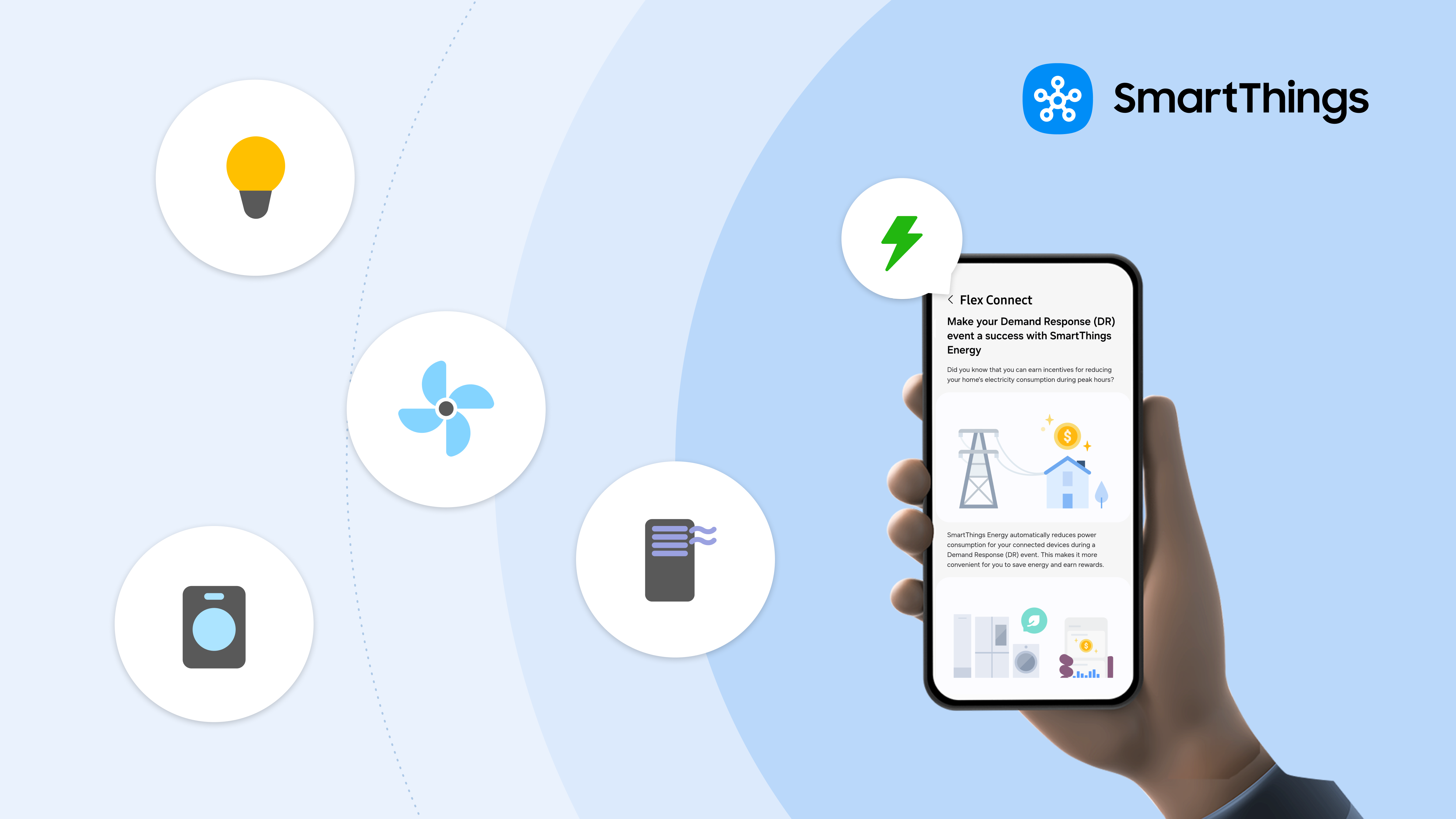
Who isn’t! With Samsung’s Demand Response (DR) Program, Flex Connect – available directly within the SmartThings app – eligible users can automatically reduce energy consumption by switching devices to power-saving mode during peak grid demand.

What is Flex Connect?

Flex Connect allows Samsung appliances, TVs, and other connected devices to adjust their
energy usage during peak demand peak demand times, using a feature called DR Energy Mode,
built into the app to give users the ability to reduce energy use when the grid is under strain,
helping to balance the grid while reducing costs at home.

Samsung’s Flex Connect program became available to eligible users in California and New York in June of 2024, to eligible users in Texas in December of 2024 and is now available to users across the Mid-Atlantic and greater Chicago.

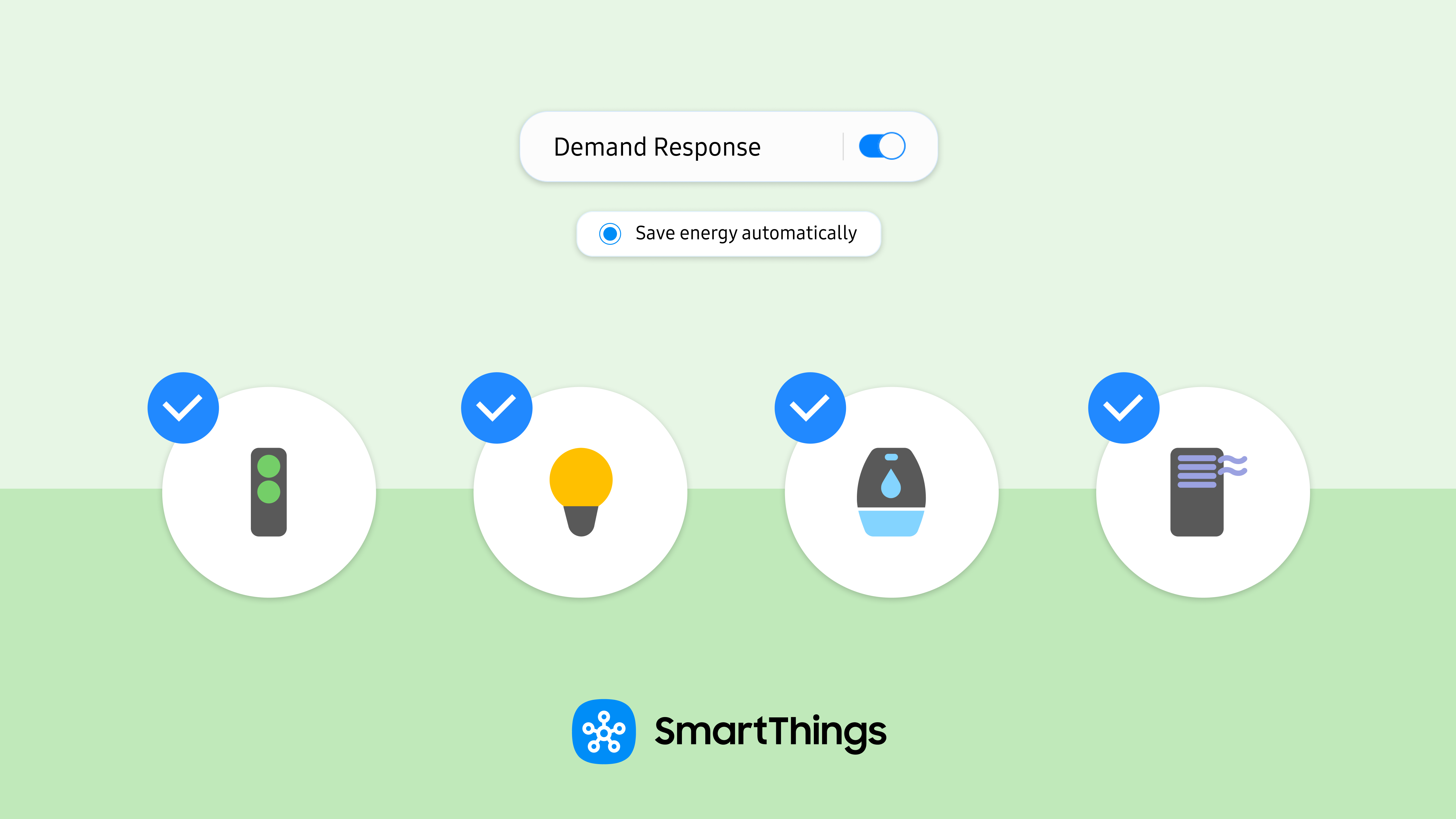
Signing up for Flex Connect means when an energy event occurs, SmartThings automatically
optimizes energy consumption across opted-in devices for users who have enabled DR Energy
Mode in the app. This activation not only helps users save energy during crucial times, it also
triggers a $50 Flex Connect reward – directly into the user’s Samsung account!

Flex Connect works with a variety of energy-saving devices, from thermostats to Samsung
washers, dryers, and more – intelligently adjusting the device’s settings based on the weather
and grid, ensuring efficient energy use while keeping your home comfortable. It’s energy saved
– automatically!

Together, Flex Connect users contribute meaningful energy reductions that help balance the
grid during peak demand, reducing the risk of blackouts and lowering overall grid emissions. It’s
good for the grid, good for sustainability, and good for your wallet!

Check out the Works With SmartThings page for a full list of eligible devices.

How do I get the $50 in Samsung Rewards Points?

The reward is distributed after you are approved in the Flex Connect program and after one or
more of your connected devices participate in an energy event. Then, you’ll receive a notification in the SmartThings app letting you know your $50 in Samsung Rewards Points is available. Simply tap ‘Claim’ in the app, and the Samsung Rewards Points will be added to your Samsung.com account.

You have 30 days to claim your points once the notification appears, but after claiming the
points, they won’t expire. The frequency and timing of energy events vary based on location
and season, so keep an eye on your SmartThings app for updates.

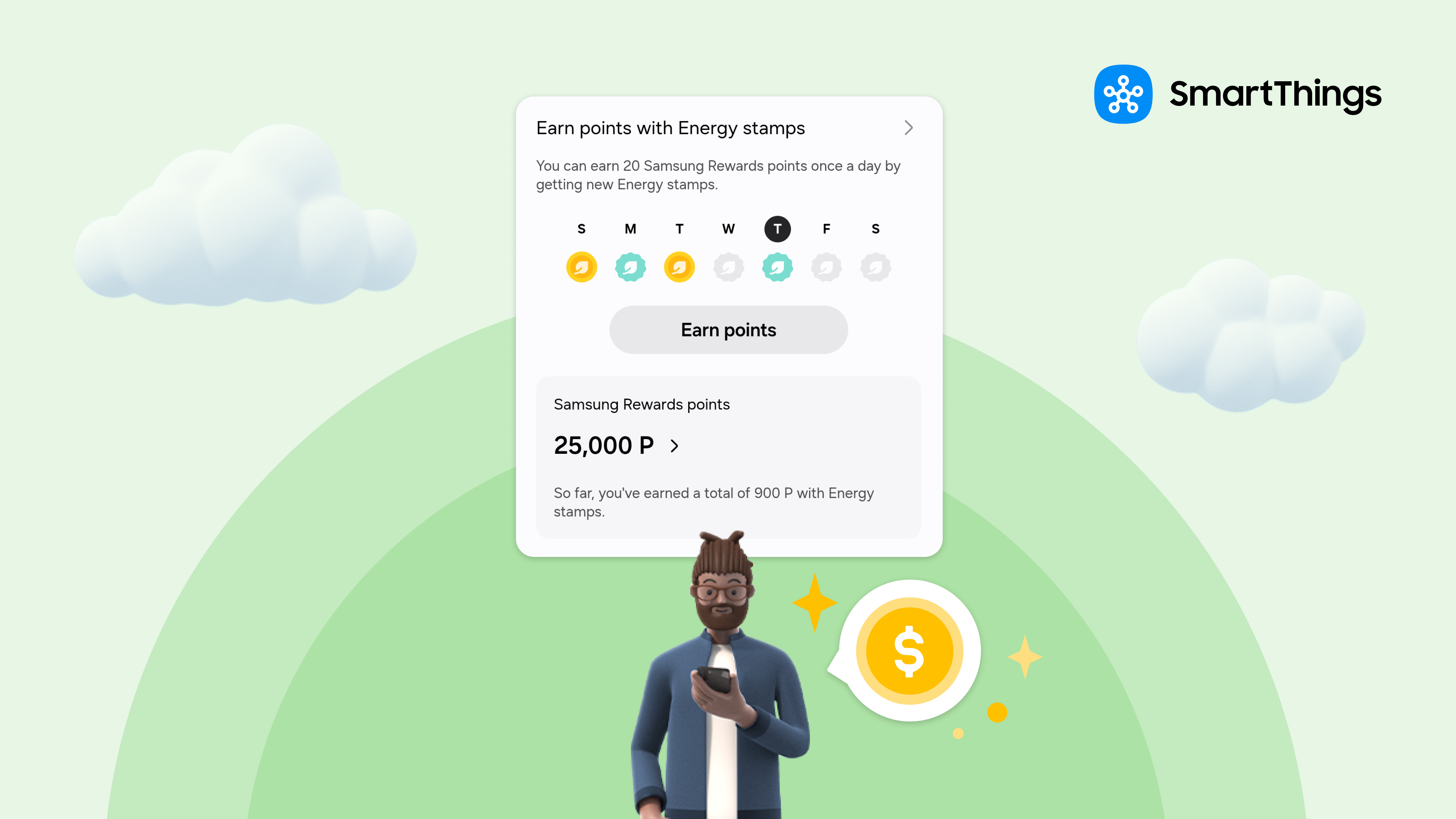
Earning Even More: About SmartThings Energy Stamps

A $50 Flex Connect reward is just the start of what you can earn! (Not to mention the energy
you’re saving automatically, often leading to a reduction in monthly energy bills.)

By using additional SmartThings Energy features, you can maximize energy savings and earn
even more rewards. Features such as AI Energy Mode, Optimal Charging, and Optimal
Scheduling are available to all users—and when activated, trigger the accrual of Energy Stamps,
which convert to dollars that can be spent on Samsung.com!

Ready to take control of your energy usage? 

It’s quick and easy to connect your devices to the SmartThings app:

  1. Open the SmartThings app and tap the ‘Devices’ tab.
  2. Tap the ‘Home’ icon and select your device’s location.
  3. Tap the ‘Add’ (+) button and choose ‘Add Device.’
  4. For Bluetooth devices, tap ‘Scan Nearby’ or manually add your device.
  5. Follow the on-screen instructions, and you’re good to go!

Download the SmartThings app in the Google Play or Apple Store to activate SmartThings Energy, and enter your ZIP code in SmartThings Energy to check your eligibility today. To learn more about Flex Connect and how you can save energy for rewards, visit https://partners.smartthings.com/energy-rewards. 

A.I. Discovers New Uses for Old Drugs

0

A Little Over a Year Ago, a Man Was Told He Had Only Two Options: Die at Home or in the Hospital

Joseph Coates, then 37 and living in Renton, Wash., was barely conscious. He had been battling a rare blood disorder called POEMS syndrome, which had left him with numb hands and feet, an enlarged heart, and failing kidneys. Every few days, doctors needed to drain liters of fluid from his abdomen. He became too sick to receive a stem cell transplant, one of the only treatments that could have put him into remission.

"I gave up," he said. "I just thought the end was inevitable."

But Coates’s girlfriend, Tara Theobald, wasn’t ready to quit. So she sent an email begging for help to a doctor in Philadelphia named David Fajgenbaum, whom the couple had met a year earlier at a rare disease summit.

Finding Clues in Old Research

Repurposing is fairly common in pharmaceuticals: Minoxidil, developed as a blood pressure medication, has been repurposed to treat hair loss. Viagra, originally marketed to treat a cardiac condition, is now used as an erectile dysfunction drug. Semaglutide, a diabetes drug, has become best known for its ability to help people lose weight.

The first time Dr. Fajgenbaum repurposed a drug, it was in an attempt to save his own life. At 25, while in medical school, he was diagnosed with a rare subtype of a disorder called Castleman disease, which led to an immune system reaction that landed him in the intensive care unit.

There is no one way to treat Castleman disease, and some people don’t respond to any of the available treatments. Dr. Fajgenbaum was among them. Between hospitalizations and rounds of chemo that temporarily helped, Dr. Fajgenbaum spent weeks running tests on his own blood, poring over medical literature, and trying unconventional treatments.

The Power of Artificial Intelligence

Dr. Fajgenbaum’s lab had some early successes, including finding that a novel cancer drug helped another Castleman patient. But the process was laborious, requiring his team to examine "one drug and one disease at a time," he said. Dr. Fajgenbaum decided he needed to speed up the project. In 2022, he established a nonprofit called Every Cure, aimed at using machine learning to compare thousands of drugs and diseases all at once.

Conclusion

The use of artificial intelligence to repurpose existing drugs has the potential to revolutionize the way we approach rare diseases. By analyzing vast amounts of data and identifying patterns, AI models can quickly pinpoint potential treatments that might have otherwise gone unnoticed. This approach has already led to successful treatments for patients with a range of conditions, from Castleman disease to chronic vomiting.

As we move forward, it’s essential to continue developing and refining these AI models, ensuring that they are able to identify the most promising potential treatments for patients in need.

Frequently Asked Questions

Q: How does the AI model work?
A: The AI model uses machine learning algorithms to analyze vast amounts of data, including existing medical literature, to identify potential treatments for rare diseases.

Q: How accurate is the AI model?
A: The AI model is not infallible, and its predictions may not always be 100% accurate. However, it can still provide valuable insights and suggestions for further investigation.

Q: How does the AI model prioritize potential treatments?
A: The AI model prioritizes potential treatments based on their likelihood of success, as well as the strength of the evidence supporting their use.

Q: How does the AI model take into account the complexity of rare diseases?
A: The AI model is designed to account for the complexity of rare diseases, including the many variables that can influence their progression and treatment.

Aston Martin’s Stunning Unreal Engine CGI Car Adverts

0

Car Advertising Gets a Boost with Aston Martin’s Unreal Engine 5 Ads

The Ultimate Test for CGI Workflows

Car advertising is a challenging task that requires precision and attention to detail. With the rise of computer-generated imagery (CGI), car manufacturers are pushing the boundaries of what is possible in advertising. Aston Martin has recently demonstrated the potential of CGI with two stunning new ads created in Unreal Engine 5, showcasing the company’s new 2025 F1 challenger car, AMR25, and the new Aston Martin Vantage Roadster.

Unreal Engine 5: A Game-Changer in Advertising and Filmmaking

Epic Games’ Unreal Engine is primarily known for its capabilities in game development, but it’s also transforming the advertising and filmmaking industries, offering a powerful platform for CGI and effects work. The results of Aston Martin’s partnership with Fuze Studios and Outrun Films are nothing short of breathtaking.

The Making of the Ads

The ads were directed by Alistair Clark, with additional animation by postprocessed, a renowned automotive CGI and Unreal Engine effects artist, and environmental work from Snezhananyc. According to Alistair, this project allowed him to "build whatever my mind could come up with," giving him the freedom to focus on creating something truly unique. He even hid a few Easter eggs in the final product, including a "traditional dinosaur roar" and a "super old school pickup sound from a certain Doom predecessor."

Technical Challenges and Achievements

The creation of the ads presented numerous technical challenges, particularly in the Vantage Roadster piece. The open roof and mid-day sun required the use of complex materials and detailed alpine landscapes, making it difficult to hide any imperfections. The result is a stunning CGI car finished in satin Iridium Sapphire paint, with a brake caliper shot that is sure to impress.

Conclusion

Aston Martin’s Unreal Engine 5 ads set a new standard for car advertising, showcasing the potential of CGI in the industry. By partnering with Fuze Studios and Outrun Films, the company has created two breathtaking pieces that demonstrate the power of Unreal Engine 5. As the automotive industry continues to evolve, it will be exciting to see how other manufacturers follow in Aston Martin’s footsteps.

Frequently Asked Questions

Q: What is Unreal Engine 5?
A: Unreal Engine 5 is a game engine developed by Epic Games, primarily used for creating AAA games, but also transforming the advertising and filmmaking industries.

Q: What is the significance of Aston Martin’s Unreal Engine 5 ads?
A: Aston Martin’s ads demonstrate the potential of CGI in car advertising, showcasing the company’s new 2025 F1 challenger car and the new Aston Martin Vantage Roadster, setting a new standard for the industry.

Q: Who were involved in the creation of the ads?
A: The ads were created by Fuze Studios and Outrun Films, directed by Alistair Clark, with additional animation by postprocessed and environmental work from Snezhananyc.