Home Blog Page 159

The Future of Logistics: Harnessing AI’s Power for Efficiency and Innovation

The Logistics Industry: Embracing AI to Overcome Challenges and Thrive

The logistics industry has been the backbone of global trade, but it has been facing a growing list of challenges: economic uncertainty, supply chain disruptions, rising costs, and increasingly complex regulatory requirements are putting pressure on businesses. At the same time, operations remain highly fragmented, making it difficult for companies to maintain efficiency and agility.

Historically, logistics has lagged other industries in digital transformation. More than 75% of industry leaders acknowledge that their sector has been slow to embrace digital innovation. Instead of prioritizing digital transformation, companies have traditionally focused on incremental improvements in operational processes. However, in today’s fast-moving market, this approach is no longer enough, as customer expectations have evolved dramatically. A staggering 91% of logistics firms report that their clients now demand seamless, end-to-end logistics services from a single provider.

AI has become a game-changer for the industry to help overcome challenges and fulfill customer expectations. From enhancing customer experiences, such as shipment planning and service requests, to driving productivity in core supply chain operations and demand forecasting, AI presents a massive opportunity. AI can also improve safety, sustainability, and workforce reskilling, giving employees more time to focus on customers. The numbers speak for themselves: AI-powered innovations could reduce logistics costs by 15%, optimize inventory levels by 35%, and boost service levels by 65%. Over the next two decades, AI adoption in logistics could generate between $1.3 trillion and $2 trillion per year in economic value.

The AI revolution in logistics is already underway, and Microsoft is at the forefront, empowering businesses with Azure’s cloud capabilities and cutting-edge AI solutions.

The Use Cases

What are the use cases that AI can impact in logistics? The answer is simple: almost everywhere along the value chain. This covers inbound logistics and outbound logistics as well as supporting activities, as seen in the overview below:

Inbound Logistics

One of the most critical use cases in supply chain optimization is demand forecasting. Accurate predictions by AI can serve as the foundation for downstream activities—driving efficiency and enhancing overall optimization. For example, precise demand forecasts play a key role in inventory management and storage optimization within warehouse management systems.

SPAR Austria, a leading food retailer with over 1,500 stores, has significantly improved its demand forecasting capabilities through AI-powered solutions built on Microsoft Azure in collaboration with Microsoft partner Paiqo. This advanced implementation has achieved more than 90% forecast accuracy, leading to a 15% reduction in costs by minimizing waste.

Outbound Logistics

AI and robotics play a crucial role in optimizing picking and packing processes. Additionally, advancements in technology enhance order processing and returns management—streamlining operations and driving cost reductions.

Cutting-edge technologies like natural language processing (NLP) and machine learning are transforming customer interactions by reducing handling times and associated costs. With the deployment of virtual assistants, companies can provide customers with personalized support and improved experiences.

Conclusion

The logistics industry is at a crossroads, with AI offering a beacon of hope for overcoming the challenges it faces. As the industry continues to evolve, companies must prioritize digital transformation to remain competitive. By embracing AI, logistics companies can improve efficiency, reduce costs, and enhance customer experiences. Microsoft is committed to empowering businesses to achieve this goal, and we are excited to share our latest innovations and solutions with the industry.

Frequently Asked Questions

Q: What are the challenges facing the logistics industry today?
A: The logistics industry is facing a range of challenges, including economic uncertainty, supply chain disruptions, rising costs, and increasingly complex regulatory requirements.

Q: How can AI help overcome these challenges?
A: AI can help overcome these challenges by enhancing customer experiences, driving productivity in core supply chain operations, and improving safety, sustainability, and workforce reskilling.

Q: What are the potential benefits of AI adoption in logistics?
A: AI adoption in logistics could reduce costs by 15%, optimize inventory levels by 35%, and boost service levels by 65%, generating between $1.3 trillion and $2 trillion per year in economic value over the next two decades.

Q: What is Microsoft’s role in the AI revolution in logistics?
A: Microsoft is at the forefront of the AI revolution in logistics, empowering businesses with Azure’s cloud capabilities and cutting-edge AI solutions.


Mastering 3D Modelling on iPad with Pro Artist Glen Southern

0

Polygon Modelling and 3D Sculpting: A Comprehensive Guide

Polygon Modelling and 3D Sculpting: What’s the Difference?

Polygon modelling and 3D sculpting are two techniques used to create 3D models, each serving distinct purposes and suited to different stages of the 3D design process. While polygon modelling involves defining and manipulating individual polygons, edges, and vertices in 3D space, 3D sculpting is akin to working with clay in the digital environment. This guide will explore the basics of polygon modelling and 3D sculpting, as well as provide tips and tricks for using Valence 3D, a new app for 3D modelling on iPad.

Polygon Modelling: The Basics

Polygon modelling is a method where an artist creates a model by defining and manipulating individual polygons, edges, and vertices in 3D space. This technique is fundamental in creating structured and optimized models for various applications, particularly where a lower polygon count is beneficial. It often starts with a simple geometric shape, such as a box, that’s then refined by adding, deleting, subdividing, and merging individual components. This offers high control over the shape and topology of the model, making it ideal for creating mechanical objects or models where specific dimensions and shapes are required.

3D Sculpting: A More Artistic Approach

3D sculpting is a technique that allows artists to work with complex, organic forms, such as human figures, animals, and fantastical creatures. This method is favored for its intuitive approach to shaping and refining digital objects. It typically begins with a basic form, which is then dynamically subdivided and detailed as needed. This technique enables artists to work in a more artistically expressive and less technically restrictive manner, achieving high-resolution details, textures, and realism with ease, especially with tools that support dynamic tessellation and high polygon counts.

Why Both Techniques are Essential

Both polygon modelling and 3D sculpting are essential tools in the creative arsenal of 3D artists and designers. Different projects require different techniques. For instance, a video game character might start as a sculpt for the organic parts, such as the face and hands, and then use polygon modelling for the gear and weapons. High-detail sculpts can be used to generate Normal maps for lower-polygon versions of the model, allowing for highly detailed models to be efficiently used in performance-sensitive platforms.

Tips and Tricks for Using Valence 3D

Here are some tips for using Valence 3D:

01. Using the Basic Tools

  • Use the buttons at the top of the screen to select and manipulate individual components.
  • Use the buttons down the left-hand side to scale, rotate, and move selected items as needed.

02. Using Subdivision

  • Use the red button on the right side of the interface to activate subdivision and round off complex parts that may have ended up looking blocky.
  • Turn on and off to check the result.

03. Finding Image References

  • Use the green button at the bottom of the interface to look for an image you’ve saved, move it around as needed, and even lock it to prevent accidental selection.

04. Render Styles

  • Use the various render modes, including Diffuse, Wireframe, X-Ray, PBR, and Path-Traced, to adjust the appearance of your model.

Conclusion

Polygon modelling and 3D sculpting are two powerful techniques that can be used together to create complex and detailed 3D models. By understanding the basics of each technique and how to use them effectively, artists and designers can bring their ideas to life in a variety of applications, from video games to film and animation. With the increasing availability of 3D modelling apps on mobile devices, such as Valence 3D, the possibilities for creative expression and innovation are endless.

FAQs

Q: What is the difference between polygon modelling and 3D sculpting?
A: Polygon modelling involves defining and manipulating individual polygons, edges, and vertices in 3D space, while 3D sculpting is a more artistic technique that allows for the creation of complex, organic forms.

Q: What is the best way to use Valence 3D?
A: Valence 3D is a powerful tool that offers a range of features and techniques. Start by using the basic tools, then experiment with subdivision, finding image references, and adjusting render styles to achieve the desired results.

Yahoo Is Still Here—and It Has Big Plans for AI

0

Jim Lanzone’s Challenge: Revitalizing Yahoo

The New CEO Takes the Reins

In September 2021, Jim Lanzone took over as the CEO of Yahoo, a company that was once a symbol of the internet’s go-go spirit but had lost its way over the years. With the new private-equity owner Apollo Global Management, Lanzone set out to revitalize the company.

A Turnaround Expert

Lanzone’s résumé shows that he has a track record of success in turnarounds. He took over a struggling search engine called AskJeeves in 2001 and built it back up to a $1.85 billion acquisition by IAC Corp. He also led CBS Interactive and CBS’s chief digital office, transforming the network into the streaming age.

A New Vision for Yahoo

Yahoo, now celebrating its 30th anniversary, is Lanzone’s biggest challenge yet. The company’s history is marked by missed opportunities, including the famous rejection of Google’s acquisition offer and the loss of talented founders like WhatsApp. Yahoo was eventually sold to Verizon, but Lanzone believes there’s still value in the brand.

A Fresh Approach

Lanzone’s approach is to focus on improving what Yahoo does well, rather than dwelling on past mistakes. He has eliminated unprofitable units, like ad tech divisions, and made strategic acquisitions, such as Wagr, a sports betting app, to boost Yahoo Sports. He has also brought in capable executives, like Ryan Spoon, to head Yahoo Sports.

Boosting Profits and Growth

Under Lanzone’s leadership, Yahoo has seen significant growth and increased profits. According to a lengthy document provided by Yahoo’s comms team, the company has made significant strides in various categories, including news, finance, and sports. Comscore ranks Yahoo as the number one source for news, finance, and sports, and the second-largest email provider in the US, with hundreds of millions of users.

Seizing the Moment with AI

The rise of AI has posed a challenge for many companies, but Lanzone believes Yahoo can adapt. He has in-house machine-learning talent and partners with AI technology companies, such as Sierra, for customer service agents. His most significant AI move was acquiring Artifact, an AI-powered news aggregator created by Instagram cofounders Kevin Systrom and Mike Krieger. Lanzone has incorporated Artifact’s technology into Yahoo News, which was relaunched earlier this year.

Conclusion

Jim Lanzone’s challenge in reviving Yahoo has been significant, but he has shown a track record of success in turnarounds. By focusing on improving what Yahoo does well and adapting to new technologies, Lanzone believes the company can regain its former glory.

Frequently Asked Questions

Q: What is Jim Lanzone’s background?
A: Lanzone is a turnaround expert with a track record of success in leading struggling companies back to profitability.

Q: What is Yahoo’s history?
A: Yahoo was once a leading search engine and internet company, but it has struggled in recent years, missing opportunities and losing talent.

Q: How is Jim Lanzone approaching the challenge of reviving Yahoo?
A: Lanzone is focusing on improving what Yahoo does well, eliminating unprofitable units, and making strategic acquisitions to boost the company’s performance.

Q: What is Yahoo’s current position in the market?
A: According to Comscore, Yahoo is the number one source for news, finance, and sports, and the second-largest email provider in the US, with hundreds of millions of users.

AlexNet, the AI model that started it all

The Birth of AlexNet: Revolutionizing Artificial Intelligence

The Power of Deep Learning

In 2012, a neural network called AlexNet made a significant breakthrough in computer vision, demonstrating a huge jump in a computer’s ability to recognize images. This achievement marked a turning point in the field of artificial intelligence, paving the way for future innovations.

The Source Code is Released

Recently, the Computer History Museum (CHM) and Google released the AlexNet source code written by University of Toronto graduate student Alex Krizhevsky, making it available on GitHub for the public to access and download. The code, which weighs in at a scant 200KB, combines Nvidia CUDA code, Python script, and C++ to describe how to make a convolutional neural network parse and categorize image files.

The Story Behind AlexNet

Krizhevsky’s creation was the result of a collaborative effort between Krizhevsky, Ilya Sutskever, and Geoffrey Hinton, a Nobel Prize-winning AI scientist. Sutskever, a graduate student under Hinton, urged Krizhevsky to pursue the project. Hsu quotes Hinton, "Ilya thought we should do it, Alex made it work, and I got the Nobel Prize."

A Breakthrough in Computer Vision

Until AlexNet, deep learning had failed to demonstrate meaningful results. The convolutional neural network (CNN) had shown promising starts in performing tasks such as recognizing hand-written digits, but it had not transformed any industries until then. Hinton and others had toiled for years to prove that "deep learning" collections of artificial neurons could learn patterns in data.

The Power of Large Neural Networks

Sutskever had the insight that the theoretical work could be scaled up to a much larger neural network given enough horsepower and training data. As he told Nvidia co-founder and CEO Jensen Huang, "People weren’t looking at large neural networks" in 2012. "People were just training on neural networks with 50, 100 neurons," rather than the millions and billions that later became standard.

Conclusion

The release of AlexNet’s source code is a significant milestone in the history of artificial intelligence. It marks the beginning of a new era of innovation, as the field has continued to evolve and transform industries. The story of AlexNet serves as a reminder of the power of collaboration, perseverance, and the importance of pushing the boundaries of what is thought possible.

FAQs

Q: What is AlexNet?
A: AlexNet is a neural network that made a significant breakthrough in computer vision, demonstrating a huge jump in a computer’s ability to recognize images.

Q: Who developed AlexNet?
A: Alex Krizhevsky, Ilya Sutskever, and Geoffrey Hinton developed AlexNet.

Q: What is the significance of AlexNet’s release?
A: The release of AlexNet’s source code marks a significant milestone in the history of artificial intelligence, as it enables the public to access and build upon the breakthroughs made possible by this technology.

Q: What is the impact of AlexNet on the field of AI?
A: AlexNet’s breakthrough has led to a flood of innovation in the years that followed, with the development of large-scale neural networks and the ability to recognize patterns in data.

Anthropic Closes Gap with ChatGPT in Web Search Capabilities

0

Introduction

Anthropic’s AI assistant Claude has recently received a significant upgrade, allowing it to search the web for up-to-date information and provide source citations for fact-checking. This feature is currently available to paid US users, marking a significant milestone in the development of Claude’s capabilities.

Key Takeaways

  • Claude can now search the web for up-to-date information.
  • The feature provides source citations for fact-checking.
  • Web search is only available to paid US users currently.

How it Works

Claude uses its advanced natural language processing capabilities to scour the web for relevant and reliable information on a given topic. The AI assistant then provides users with a list of credible sources, along with a brief summary of the information found. This feature is designed to help users quickly and easily find the most up-to-date information on a topic, while also ensuring the accuracy of the information through the use of source citations.

Benefits

The addition of web search capabilities to Claude’s repertoire of features provides several benefits to users. Firstly, it allows them to access a vast amount of information on a given topic, quickly and easily. Secondly, the inclusion of source citations ensures that users can verify the accuracy of the information, giving them confidence in the quality of the results.

Conclusion

The integration of web search capabilities into Claude’s feature set marks a significant step forward in the development of AI-powered research assistants. This feature is a testament to the power and potential of AI technology, and its ability to revolutionize the way we access and use information.

FAQs

Q: What is the purpose of the new web search feature?

A: The purpose of the new web search feature is to provide users with access to up-to-date information on a given topic, while also ensuring the accuracy of the information through the use of source citations.

Q: Is the web search feature available to all users?

A: No, the web search feature is currently only available to paid US users.

Q: How does Claude’s web search feature differ from other search engines?

A: Claude’s web search feature is designed to provide users with reliable and accurate information, while also providing source citations for fact-checking. This sets it apart from other search engines, which may prioritize speed and breadth of results over accuracy.

Painkiller Reborn

0

Painkiller Remake Announced: A Darker and Bloodier Take on the Classic

A New Era for Painkiller

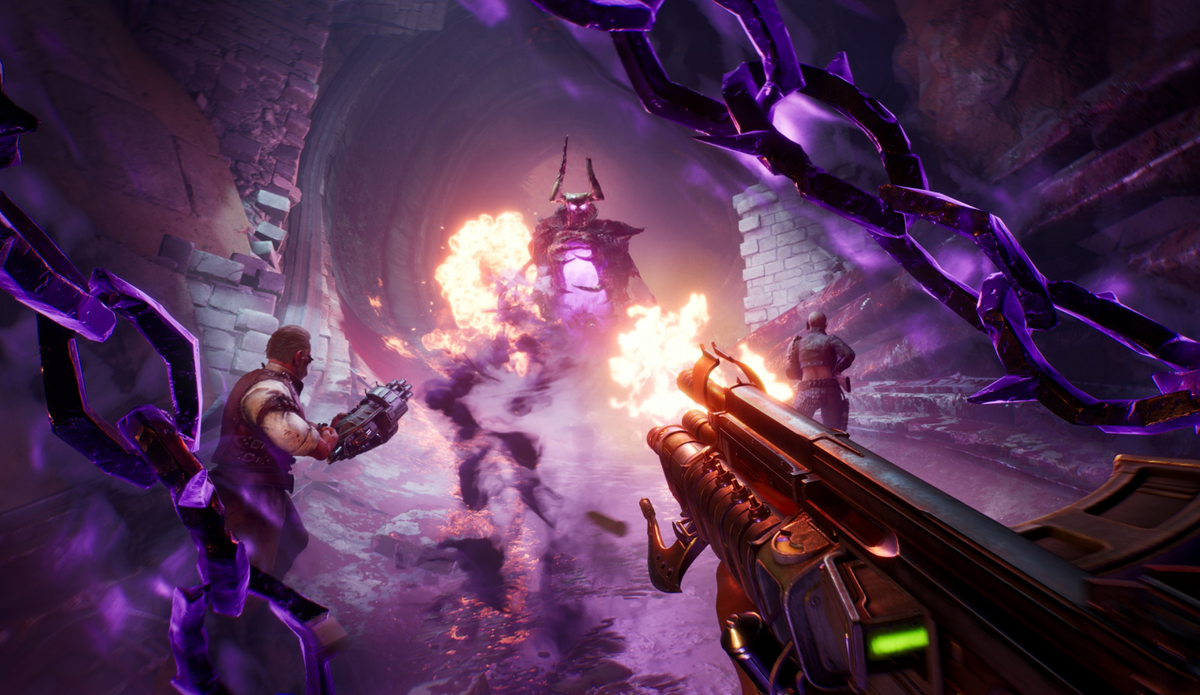
Over a decade has passed since the release of the classic demon-shooter, Painkiller. But, in 2025, we’ll get to relive the experience with a remake. And surprisingly, it’s looking darker and bloodier than ever. The new Painkiller remake, developed by Anshar Studios, is coming soon, and we can’t wait to dive back into the world of demon-slaying action.

Co-op Mode and New Features

One of the most exciting aspects of the remake is the introduction of co-op mode, allowing players to team up with up to two friends. The game will feature four characters with unique abilities: Ink, Void, Sol, and Roch. A new tarot card system will also be introduced, allowing players to enhance their abilities and combine them with other players.

A Bloody and Fast-Paced Combat

Saber, the publisher of the game, promises a "bloody, fast-paced combat with a host of new and classic Painkiller weapons." Players will be able to jump, dash, and hook across vast, spine-chilling biomes while fighting nightmarish enemies. The game will also feature online multiplayer for up to two friends or offline play with bots, allowing players to explore diverse locations, uncover secrets, and face off against terrifying enemies.

Developer Background

Anshar Studios, the developer behind the game, has an impressive portfolio, having worked on titles such as Bloober Team’s survival horror Layers of Fear and its cyberpunk thriller Observer: System Redux, as well as Larian Studios’ Baldur’s Gate 3 and Divinity Original Sin 2.

Release and Platforms

The new Painkiller remake is set to release for Steam, PlayStation 5, and Xbox Series X/S. Players can already wishlist the game on Steam.

Conclusion

The Painkiller remake is shaping up to be a thrilling experience, offering a darker and bloodier take on the classic. With co-op mode, new characters, and a tarot card system, this game is sure to be a hit among fans of the original. Don’t miss out on this opportunity to relive the action-packed demon-slaying fun.

FAQs

Q: What is the release date of the Painkiller remake?
A: The game is set to release in fall 2025.

Q: What platforms will the game be available on?
A: The game will be available on Steam, PlayStation 5, and Xbox Series X/S.

Q: Can I play the game online with friends?
A: Yes, the game will feature online co-op mode for up to two players.

Q: What is the new tarot card system?
A: The tarot card system allows players to enhance their abilities and combine them with other players.

This INIU Power Bank

0

The Best Budget Power Bank Deal Today

A Great Option for On-the-Go Creatives

Content creators, this one is for you. Keeping your devices juiced up while shooting and filming during a busy day isn’t always easy, especially when you throw social media scheduling into the mix too. I’ve spotted a great deal on this INIU Power Bank (10000mAh) for only $15.99 over at Amazon, down from $24.99, which I think is a great option for on-the-go creatives.

Why This Power Bank Stands Out

This specific INIU model is number two on our list of the best power banks and portable chargers for creative pros. We’ve also picked out this power bank thanks to its compatibility with some of the best camera phones on the market, including flagship Samsung and Apple devices thanks to the INIU power bank’s high-speed USB-C input and output.

Regional Deals

If you’re based in the UK – you can also bag a deal on this power bank reduced to £15.16 at Amazon, however, always keep an eye out for those sneaky hidden voucher discounts, as you can save an extra 20% on this power bank when checking out your Amazon basket, making the price only £12.13 after the discount has been applied.

The Best Budget Power Bank Deal Today

Below you’ll find the best deals and lowest prices on INIU Power Banks in your region and worldwide, using our clever deals widget updating 24/7.

Frequently Asked Questions

Q: What is the capacity of this power bank?
A: The INIU Power Bank (10000mAh) has a capacity of 10,000mAh.

Q: Is this power bank compatible with my device?
A: Yes, this power bank is compatible with flagship Samsung and Apple devices, thanks to its high-speed USB-C input and output.

Q: Can I use this power bank to charge my device while on the go?
A: Yes, this power bank is designed to be portable and can be easily carried in a bag or backpack to keep your devices charged on the go.

Q: How long will it take to fully charge this power bank?
A: The INIU Power Bank (10000mAh) can be fully charged in approximately 5 hours using a standard charger.

Honeywell to power Corvus Robotics drones to automate inventory tracking in warehouses

0

Honeywell has launched its SwiftDecoder barcode-decoding software will be integrated into Corvus Robotics’ self-flying inventory drones.

This pioneering solution will be used within warehouses and distribution centers (DCs) to make the process of tracking rapidly changing inventory quicker and more accurate for retailers, distributors and manufacturers at the case – and pallet-level.

Honeywell’s creation of supply chain solutions that can automate processes for greater accuracy and more efficient use of scarce labor resources supports its alignment of its portfolio with several compelling megatrends including automation.

Jackie Wu, CEO at Corvus Robotics, says: “We selected Honeywell’s SwiftDecoder software for our cutting-edge drones due to the company’s long-standing expertise in the warehousing sector and the software’s ability to efficiently and reliably acquire data, even in complex and fast-moving DC environments.

“With Honeywell’s software and our in-house proprietary case counting AI technology, we can quickly decode many cases in one location, all at once.

“Together, Corvus Robotics and Honeywell are empowering warehouses and distribution centers to better manage inventory, reduce operational expenses and streamline the overall flow of goods throughout the supply chain.”

The Corvus One Autonomous Inventory Management System, equipped with SwiftDecoder software, is able to fly through DCs to conduct inventory audits.

It can accomplish this task more quickly than a human could in vast warehouse spaces that often have very high shelves, hard-to-reach racks or products and low-light conditions that can make traditional scanning a challenge.

By using computer vision to navigate, scan, map and count inventory in real time, the drones are able to operate without GPS, human operators, Wi-Fi or wireless beacons.

This system not only helps ensure warehouses have an accurate picture of inventory, but it also enables companies to deploy limited labor resources in other ways that add greater value to the business.

David Barker, president of Honeywell Productivity Solutions and Services, says: “As the labor shortage continues to plague the supply chain, we know that companies are looking for solutions to supplement their human workforce.

“By automating inventory counting and providing real-time data, the Honeywell-Corvus Robotics solution will help retailers keep up with growing demand and complexity, reduce inventory discrepancies and errors and improve overall supply chain performance.”

Honeywell’s SwiftDecoder software can batch scan to capture many barcodes at the same time, making it optimal for integrating with autonomous drones for rapid inventory counting.

This capability, coupled with Corvus One’s proprietary onboard sensors and cameras, equips the Corvus One Autonomous Inventory Management System with the ability to count the number of individual cartons in a single location.

The real-time data that is captured and processed with the combined Honeywell-Corvus Robotics solution allows for immediate insights into stock levels and case counts, which helps businesses make informed decisions quickly, respond proactively to any supply chain disruptions and maintain operational continuity.

Wayve CEO shares his key ingredients for scaling autonomous driving tech

0

Wayve’s Strategy for Autonomous Vehicle Technology

A New Approach to Autonomous Driving

Wayve co-founder and CEO Alex Kendall believes that the key to bringing his company’s autonomous vehicle technology to market lies in its strategy of ensuring that its automated driving software is cheap to run, hardware agnostic, and can be applied to advanced driver assistance systems, robotaxis, and even robotics.

End-to-End Data-Driven Learning Approach

The company’s approach begins with an end-to-end data-driven learning approach, where what the system "sees" through various sensors (such as cameras) directly translates into how it drives (like deciding to brake or turn left). This means that the system doesn’t need to rely on HD maps or rules-based software, as earlier versions of AV tech have.

Attracting Investors

The approach has attracted investors, with Wayve raising over $1.3 billion in the past two years. The company plans to license its self-driving software to automotive and fleet partners, such as Uber.

Partnerships and Future Plans

While the company hasn’t announced any automotive partnerships, a spokesperson told TechCrunch that Wayve is in "strong discussions" with multiple OEMs to integrate its software into a range of different vehicle types.

Silicon-Agnostic and Cheap-to-Run Software

The company’s cheap-to-run software pitch is crucial to clinching those deals. Kendall explained that OEMs putting Wayve’s advanced driver assistance system (ADAS) into new production vehicles don’t need to invest anything into additional hardware because the technology can work with existing sensors, which usually consist of surround cameras and some radar. Wayve is also "silicon-agnostic," meaning it can run its software on whatever GPU its OEM partners already have in their vehicles.

Commercialization Strategy

Wayve plans to commercialize its system at an ADAS level first. The company designed the AI driver to work without lidar, which most companies developing Level 4 technology consider to be an essential sensor.

Comparison with Tesla

Wayve’s approach to autonomy is similar to Tesla’s, which is also working on an end-to-end deep learning model to power its system and continuously improve its self-driving software. Both companies hope to leverage a widespread rollout of ADAS to collect data that will help their system reach full autonomy.

GAIA-2: A New Generative World Model

Kendall also teased GAIA-2, Wayve’s latest generative world model tailored to autonomous driving that trains its driver on vast amounts of both real-world and synthetic data across a broad range of tasks. The model processes video, text, and other actions together, which Kendall says allows Wayve’s AI driver to be more adaptive and human-like in its driving behavior.

Conclusion

Wayve’s strategy for autonomous vehicle technology focuses on ensuring that its software is cheap to run, hardware agnostic, and can be applied to various applications. The company’s end-to-end data-driven learning approach and cheap-to-run software pitch have attracted investors and put it in a strong position to license its technology to automotive and fleet partners.

FAQs

  • What is Wayve’s strategy for autonomous vehicle technology?
    • Wayve’s strategy is to ensure that its automated driving software is cheap to run, hardware agnostic, and can be applied to advanced driver assistance systems, robotaxis, and even robotics.
  • How does Wayve’s approach differ from Tesla’s?
    • Wayve’s approach is similar to Tesla’s in that it uses an end-to-end deep learning model, but Wayve is happy to incorporate lidar to reach near-term full autonomy, whereas Tesla only relies on cameras.
  • What is Wayve’s commercialization strategy?
    • Wayve plans to commercialize its system at an ADAS level first, with the goal of building a sustainable business and scaling its technology through partnerships with OEMs.

SimpleQL

The Challenge of Dynamic Queries

Working with user-provided filtering in Go applications presents several challenges:

  1. Dynamically building SQL queries based on user input
  2. Preventing SQL injection while handling user filters
  3. Creating an approachable query interface for various users
  4. Validating input against defined schemas
  5. Maintaining consistency between database queries and in-memory filtering

How DumbQL Works

DumbQL implements a straightforward query syntax that’s converted to SQL or used for in-memory filtering:

status:pending and period_months < 4 and (title:"hello world" or name:"John Doe")

Core Functionality

Query Syntax

DumbQL supports various expressions:

  • Field expressions: age >= 18, name:"John"
  • Boolean expressions: verified and premium
  • One-of expressions: status:[active, pending]
  • Boolean field shorthand: is_active (equivalent to is_active:true)

Schema Validation

DumbQL includes built-in schema validation:

schm := schema.Schema{
  "status": schema.Field{
    "type": "string",
    "enum": []string{"pending", "approved", "rejected"},
  },
  "period_months": schema.Field{
    "type": "int64",
    "min": 1,
    "max": 12,
  },
  "title": schema.Field{
    "type": "string",
    "min": 1,
    "max": 100,
  },
}

Implementation Contexts

DumbQL can be useful in several scenarios:

  1. Admin interfaces with filtering capabilities
  2. API endpoints with query parameters for filtering
  3. Condition-based alerts or notifications
  4. Report generation with user-defined filters
  5. Search functionality with complex conditions

Usage Basics

To use DumbQL in your project:

go get go.tomakado.io/dumbql

Performance Considerations

For struct matching, DumbQL provides two options:

  1. Reflection-based matching (works immediately but has runtime overhead)
  2. Code generation via the dumbqlgen tool (eliminates reflection overhead)

Conclusion

DumbQL provides a lightweight query language for Go applications that can simplify filtering logic. It bridges the gap between user-friendly query syntax and database operations while offering features like schema validation and struct matching.

FAQs

Q: What is DumbQL?

A: DumbQL is a lightweight query language for Go applications that simplifies filtering logic.

Q: How does DumbQL work?

A: DumbQL implements a straightforward query syntax that’s converted to SQL or used for in-memory filtering.

Q: What are the benefits of using DumbQL?

A: DumbQL simplifies filtering logic, provides schema validation, and eliminates SQL injection risks.

Q: How do I get started with DumbQL?

A: You can get started with DumbQL by installing the package using go get go.tomakado.io/dumbql.