Home Blog Page 172

3D printing approach strings together dynamic objects for you | MIT News

0

It’s difficult to build devices that replicate the fluid, precise motion of humans, but that might change if we could pull a few (literal) strings.

At least, that’s the idea behind “cable-driven” mechanisms in which running a string through an object generates streamlined movement across an object’s different parts. Take a robotic finger, for example: You could embed a cable through the palm to the fingertip of this object and then pull it to create a curling motion.

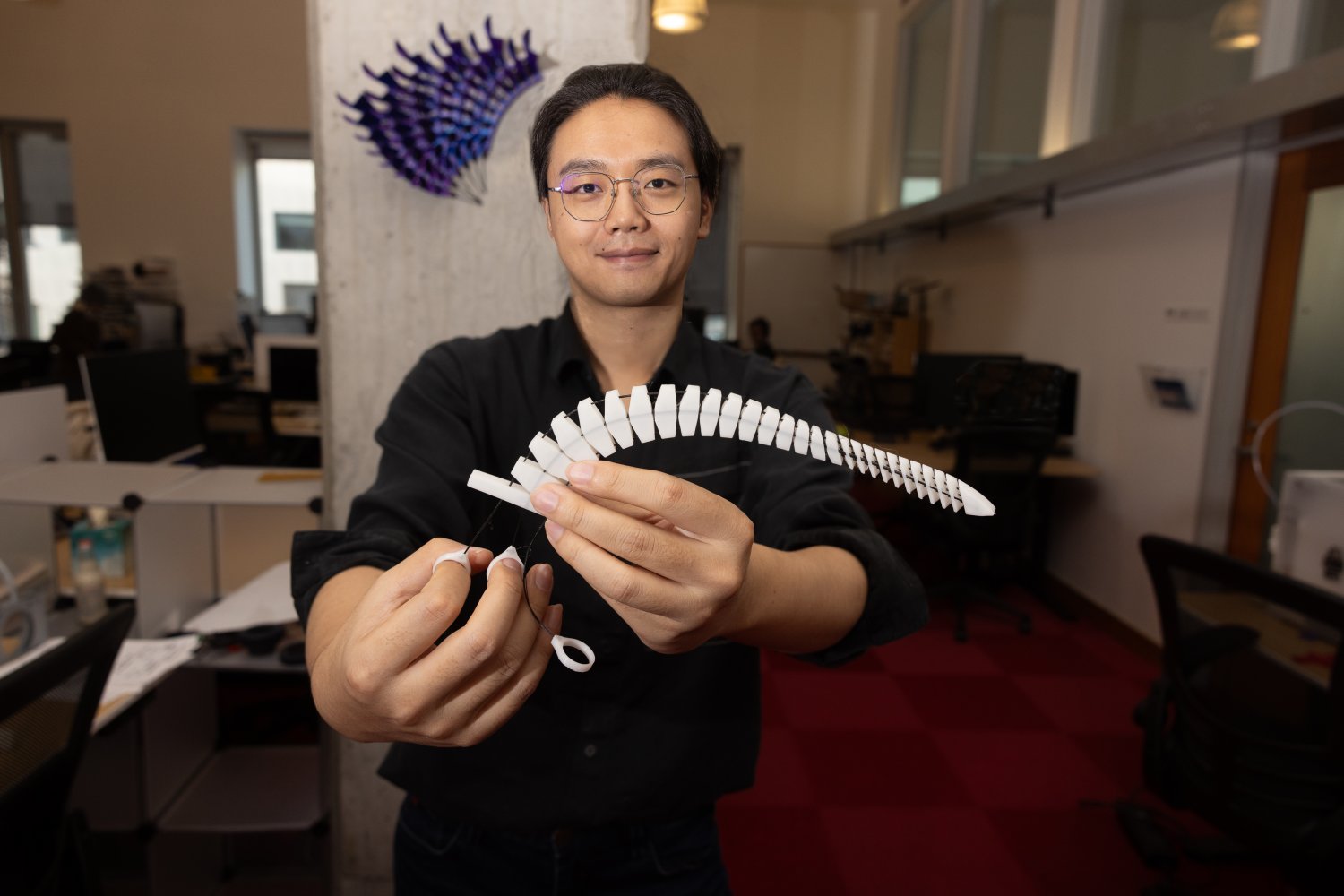
While cable-driven mechanisms can create real-time motion to make an object bend, twist, or fold, they can be complicated and time-consuming to assemble by hand. To automate the process, researchers from MIT’s Computer Science and Artificial Intelligence Laboratory (CSAIL) have developed an all-in-one 3D printing approach called “Xstrings.” Part design tool, part fabrication method, Xstrings can embed all the pieces together and produce a cable-driven device, saving time when assembling bionic robots, creating art installations, or working on dynamic fashion designs.

Play video

3D printing approach strings together cable-driven mechanisms for you
Video: MIT CSAIL

In a paper to be presented at the 2025 Conference on Human Factors in Computing Systems (CHI2025), the researchers used Xstrings to print a range of colorful and unique objects that included a red walking lizard robot, a purple wall sculpture that can open and close like a peacock’s tail, a white tentacle that curls around items, and a white claw that can ball up into a fist to grab objects.

To fabricate these eye-catching mechanisms, Xstrings allows users to fully customize their designs in a software program, sending them to a multi-material 3D printer to bring that creation to life. You can automatically print all the device’s parts in their desired locations in one step, including the cables running through it and the joints that enable its intended motion.

MIT CSAIL postdoc and lead author Jiaji Li says that Xstrings can save engineers time and energy, reducing 40 percent of total production time compared to doing things manually. “Our innovative method can help anyone design and fabricate cable-driven products with a desktop bi-material 3D printer,” says Li.

A new twist on cable-driven fabrication

To use the Xstrings program, users first input a design with specific dimensions, like a rectangular cube divided into smaller pieces with a hole in the middle of each one. You can then choose which way its parts move by selecting different “primitives:” bending, coiling (like a spring), twisting (like a screw), or compressing — and the angle of these motions.

For even more elaborate creations, users can incorporate multiple primitives to create intriguing combinations of motions. If you wanted to make a toy snake, you could include several twists to create a “series” combo, in which a single cord drives a sequence of motions. To create the robot claw, the team embedded multiple cables into a “parallel” combination, where several strings are embedded, to enable each finger to close up into a fist.

Beyond fine-tuning the way cable-driven mechanisms move, Xstrings also facilitates how cables are integrated into the object. Users can choose exactly how the strings are secured, in terms of where the “anchor” (endpoint), “threaded areas” (or holes within the structure that the cord passes through), and “exposed point” (where you’d pull to operate the device) are located. With a robot finger, for instance, you could choose the anchor to be located at the fingertip, with a cable running through the finger and a pull tag exposed at the other end.

Xstrings also supports diverse joint designs by automatically placing components that are elastic, compliant, or mechanical. This allows the cable to turn as needed as it completes the device’s intended motion.

Driving unique designs across robotics, art, and beyond

Once users have simulated their digital blueprint for a cable-driven item, they can bring it to life via fabrication. Xstrings can send your design to a fused deposition modeling 3D printer, where plastic is melted down into a nozzle before the filaments are poured out to build structures up layer by layer.

Xstrings uses this technique to lay out cables horizontally and build around them. To ensure their method would successfully print cable-driven mechanisms, the researchers carefully tested their materials and printing conditions.

For example, the researchers found that their strings only broke after being pulled up and down by a mechanical device more than 60,000 times. In another test, the team discovered that printing at 260 degrees Celsius with a speed of 10-20 millimeters per second was ideal for producing their many creative items.

“The Xstrings software can bring a variety of ideas to life,” says Li. “It enables you to produce a bionic robot device like a human hand, mimicking our own gripping capabilities. You can also create interactive art pieces, like a cable-driven sculpture with unique geometries, and clothes with adjustable flaps. One day, this technology could enable the rapid, one-step creation of cable-driven robots in outer space, even within highly confined environments such as space stations or extraterrestrial bases.”

The team’s approach offers plenty of flexibility and a noticeable speed boost to fabricating cable-driven objects. It creates objects that are rigid on the outside, but soft and flexible on the inside; in the future, they may look to develop objects that are soft externally but rigid internally, much like humans’ skin and bones. They’re also considering using more resilient cables, and, instead of just printing strings horizontally, embedding ones that are angled or even vertical.

Li wrote the paper with Zhejiang University master’s student Shuyue Feng; Tsinghua University master’s student Yujia Liu; Zhejiang University assistant professor and former MIT Media Lab visiting researcher Guanyun Wang; and three CSAIL members: Maxine Perroni-Scharf, an MIT PhD student in electrical engineering and computer science; Emily Guan, a visiting researcher; and senior author Stefanie Mueller, the TIBCO Career Development Associate Professor in the MIT departments of Electrical Engineering and Computer Science and Mechanical Engineering, and leader of the HCI Engineering Group.

This research was supported, in part, by a postdoctoral research fellowship from Zhejiang University, and the MIT-GIST Program.

An AI Model from Over a Decade Ago Sparked Nvidia’s Investment in Autonomous Vehicles

0

Nvidia’s CEO Highlights the Impact of AlexNet on the Development of Autonomous Vehicles

Nvidia CEO Jensen Huang’s keynote at the company’s GTC 2025 conference was chock full of announcements, but he also took a moment to reflect on the company’s history.

AlexNet: A Turning Point in AI Research

During the automotive portion of his speech, Huang referred to AlexNet, a neural network architecture that gained widespread attention in 2012 when it won a computer image recognition contest. Designed by computer scientist Alex Krizhevsky in collaboration with Ilya Sutskever and AI researcher Geoffrey Hinton, AlexNet achieved 84.7% accuracy in an academic competition called ImageNET.

The Resurgence of Deep Learning

The breakthrough result led to a resurgence of interest in deep learning, a subset of machine learning that leverages neural networks.

Nvidia’s Decision to Focus on Autonomous Vehicles

Turns out, AlexNet spurred Nvidia to go “all in” on autonomous vehicles, according to Huang. “The moment I saw AlexNet — and we’ve been working on computer vision for a long time — the moment I saw AlexNet was such an inspiring moment, such an exciting moment,” he said on stage. “It caused us to decide to go all in on building self-driving cars. So we’ve been working on self-driving cars now for over a decade. We build technology that almost every single self-driving car company uses.”

Nvidia’s Partnerships and Products

Nvidia has notched partnerships with numerous automakers, automotive suppliers, and tech companies developing autonomous vehicles. Its latest, an expanded collaboration with GM, was announced this afternoon.

Automakers like Tesla and autonomous vehicle developers Wayve and Waymo use Nvidia GPUs for data centers. Other companies tap Nvidia’s Omniverse product to build “digital twins” of factories to virtually test production processes and design vehicles. Meanwhile, Mercedes, Volvo, Toyota, and Zoox have used Nvidia’s Drive Orin computer system-on-chip, which is based on the chipmaker’s Nvidia Ampere supercomputing architecture. Toyota and others are also employing Nvidia’s safety-focused operating system, DriveOS.

The Impact of Nvidia’s Technology

The upshot: Nvidia DNA is embedded in the automotive — and more specifically, the automated driving — industry.

Conclusion

In conclusion, Nvidia’s journey to become a leader in the autonomous vehicle industry was sparked by the success of AlexNet. The company’s technology is now widely used across the industry, from automakers to tech companies developing self-driving cars.

FAQs

Q: What is AlexNet?

A: AlexNet is a neural network architecture that gained widespread attention in 2012 when it won a computer image recognition contest.

Q: What is deep learning?

A: Deep learning is a subset of machine learning that leverages neural networks.

Q: What is Nvidia’s role in the development of autonomous vehicles?

A: Nvidia has notched partnerships with numerous automakers, automotive suppliers, and tech companies developing autonomous vehicles, and its technology is widely used across the industry.

Q: What is Nvidia’s Drive Orin computer system-on-chip?

A: Nvidia’s Drive Orin computer system-on-chip is based on the chipmaker’s Nvidia Ampere supercomputing architecture and is used by companies like Mercedes, Volvo, Toyota, and Zoox for developing autonomous vehicles.

Leveraging Cardiac Data via RPM: Overcoming Clinical Challenges

The Challenge of Patient Retention in Healthcare

Challenges in Patient Retention

Health systems are facing increasing pressure to retain patients, who have a variety of care options to choose from, both in-person and virtual. At the same time, inpatient capacity is limited, and hospital care teams face a lot of strain.

The Role of Cardiac Data in Ambulatory Care

By using cardiac data gathered through remote devices, ambulatory care is helping these facilities preserve and care for patients within the health system, but not always in the hospital.

Philips’ Insights on Leveraging Cardiac Data

Philips is one company that plays in this arena, and has insights on what facilities should know about leveraging this data to better work within their existing capacity and retain patients.

Interview with Julia Strandberg, Chief Business Leader for Connected Care at Philips

Healthcare IT News spoke recently with Julia Strandberg to talk about some of the challenges hospitals and health systems face with patient retention. She also discussed capacity issues, how leveraging cardiac data via remote patient monitoring technologies can help overcome them – and what it will take for more healthcare organizations to adopt remote patient monitoring technologies.

Challenges in Patient Retention

  • Impactful patient care in and out of the hospital is a non-negotiable – it’s what patients require and desire. However, ongoing clinical staffing shortages and the complexities brought on by siloed hospital data often lead to longer wait times and delays in care.
  • As patient volumes grow and cases become more complex, fragmented data poses a significant challenge for hospitals and health systems. When clinicians lack a comprehensive, holistic view of a patient’s health, it can add unnecessary roadblocks to determining a diagnosis and necessary treatment.

Challenges in Capacity

  • Health systems nationwide continue to struggle with overwhelming patient volumes and staffing shortages. These issues will only worsen as the population ages, and simultaneously, patients have become more complex, their conditions more acute.
  • One of the growing challenges healthcare professionals are facing, however, is they are overwhelmed by the volume of data generated. Almost 4 in 10 healthcare leaders (38%) say staff lose precious time pulling patient data together, leaving less time to care for patients.

Leveraging Cardiac Data via Remote Patient Monitoring Technologies

  • Remote patient monitoring technologies, paired with advanced data analytics, are game changers when it comes to alleviating capacity bottlenecks.
  • Consider this scenario: a patient arrives at the ED following syncope, a fainting episode. While historically, this patient may have been admitted for observation, remote monitoring technology – in this case, a mobile cardiac telemetry device – can allow them to safely return home while their cardiac rhythms are monitored in real-time.

Conclusion

Patient retention is a significant challenge in healthcare, with limited inpatient capacity and staff strain exacerbating the issue. Leveraging cardiac data via remote patient monitoring technologies can help overcome these challenges by reducing overcrowding, freeing up staff to focus on more complex cases, and improving patient outcomes. To achieve this, healthcare organizations must prioritize interoperability, partner with technology vendors that prioritize interoperability, and adopt a mindset shift that recognizes the evolving care delivery model.

FAQs

Q: What are the challenges hospitals and health systems face with patient retention?
A: Impactful patient care in and out of the hospital is a non-negotiable, but ongoing clinical staffing shortages and siloed hospital data lead to longer wait times and delays in care.

Q: What are the challenges hospitals face regarding capacity?
A: Health systems nationwide struggle with overwhelming patient volumes and staffing shortages, which will only worsen as the population ages and patients become more complex.

Q: How can leveraging cardiac data via remote patient monitoring technologies help overcome these challenges?
A: Remote patient monitoring technologies, paired with advanced data analytics, can alleviate capacity bottlenecks by reducing overcrowding and freeing up staff to focus on more complex cases.

Q: What will it take for more hospitals and health systems to adopt remote patient monitoring technologies?
A: We need to recognize the evolving care delivery model, prioritize interoperability, and partner with technology vendors that prioritize interoperability. A mindset shift is necessary to recognize the potential of remote patient monitoring technologies in improving patient outcomes and reducing the strain on healthcare facilities.

Badass Logo Alert: PlayStation Launches New Studio Dark Outlaw Games

0

PlayStation’s New First-Party Game Development Studio, Dark Outlaw Games

New Beginnings for Sony

PlayStation has announced its new first-party game development studio, Dark Outlaw Games, fronted by Call of Duty lead Jason Blundell. This new studio is an offshoot of PlayStation Studios under the Sony brand, shrouded in mystery.

The Slick New Logo

The Dark Outlaw Games logo features a minimalist design of a mysterious trench-coated man standing in an ominous doorway, paired with bold sans-serif typography. This design has an authoritative feel with the stylistic flair of an indie studio, leaving fans excited about the possibilities.

Jason Blundell’s Insights

In a podcast episode with Jeff Gerstmann, Jason Blundell explained, "We’ve been working away in the shadows for a while, when we’ve got something to talk about, we’ll step out into the light." He also described his experience working with Sony as "humbling" and a "privilege," emphasizing the studio’s main priority is "staffing up" to build a harmonious team that "gets the ideas clicking."

The Road Ahead

While details about Dark Outlaw Games are sparse, fans can rest assured that the studio is working diligently to build a team and bring exciting new games to the market. As Blundell hinted, the studio will reveal its plans when the time is right.

Conclusion

The announcement of Dark Outlaw Games is an exciting development for the gaming community, with Jason Blundell at the helm. While the studio’s plans are still under wraps, the promise of new games from a seasoned developer like Blundell is enough to get fans excited. As the studio continues to build its team and develop its games, fans can look forward to a bright future for Dark Outlaw Games.

Frequently Asked Questions

Q: What is Dark Outlaw Games?

A: Dark Outlaw Games is a new first-party game development studio announced by PlayStation, led by Jason Blundell.

Q: Who is Jason Blundell?

A: Jason Blundell is the lead of Call of Duty and the new head of Dark Outlaw Games.

Q: What is the focus of Dark Outlaw Games?

A: The studio’s main priority is "staffing up" to build a harmonious team that "gets the ideas clicking."

Q: When can we expect to hear more about Dark Outlaw Games?

A: According to Jason Blundell, the studio will reveal its plans when the time is right.

Chip race: Microsoft, Meta, Google, and Nvidia battle it out for AI chip supremacy

0

Nvidia’s AI-Fueled Profit Streak Continues

A Profit of $2,300 Every Second

Nvidia, a leader in the graphics processing unit (GPU) market, has made a staggering profit of $2,300 every second, thanks to the rapid growth of the AI revolution. This significant profit is largely attributed to its data center business, which has become so massive that even its networking hardware now generates more revenue than its gaming GPUs.

Introducing the New AI GPUs

To further solidify its position in the market, Nvidia has announced the launch of new AI GPUs, which are expected to extend its commanding lead. The new GPUs, dubbed Blackwell Ultra GB300, Vera Rubin, and Rubin Ultra, will start shipping in the second half of this year, 2024, and 2027, respectively.

Blackwell Ultra: A New Standard in AI Processing

The Blackwell Ultra, the first of the new GPUs, is not what was originally expected. Last year, Nvidia announced that it would start producing new AI chips on a yearly cadence, faster than ever before. However, the company quickly moved on to reveal its next architecture, the Vera Rubin, which offers 3.3x the performance of a comparable Blackwell Ultra unit.

Vera Rubin: The Future of AI Processing

The Vera Rubin architecture is expected to offer a significant boost in performance, with full rack capabilities that will surpass those of a comparable Blackwell Ultra unit. This marks a significant step forward in the evolution of AI processing and solidifies Nvidia’s position as a leader in the field.

Conclusion

Nvidia’s success is a testament to its ability to adapt to the rapidly changing landscape of AI and its applications. With the launch of the new AI GPUs, the company is poised to continue its dominance in the market. As the demand for AI processing continues to grow, Nvidia’s commitment to innovation and leadership will be crucial in shaping the future of this technology.

FAQs

Q: What is the release date for the Blackwell Ultra GPU?
A: The Blackwell Ultra GPU is expected to ship in the second half of 2023.

Q: What is the performance boost offered by the Vera Rubin architecture?
A: The Vera Rubin architecture offers 3.3x the performance of a comparable Blackwell Ultra unit.

Q: What is the expected release date for the Rubin Ultra GPU?
A: The Rubin Ultra GPU is expected to ship in the second half of 2027.

Feudal Japan at its most beautiful

0

How We Test

Our expert reviewers spend hours testing and comparing products and services so you can choose the best for you. Find out more about how we test.

Assassin’s Creed Shadows

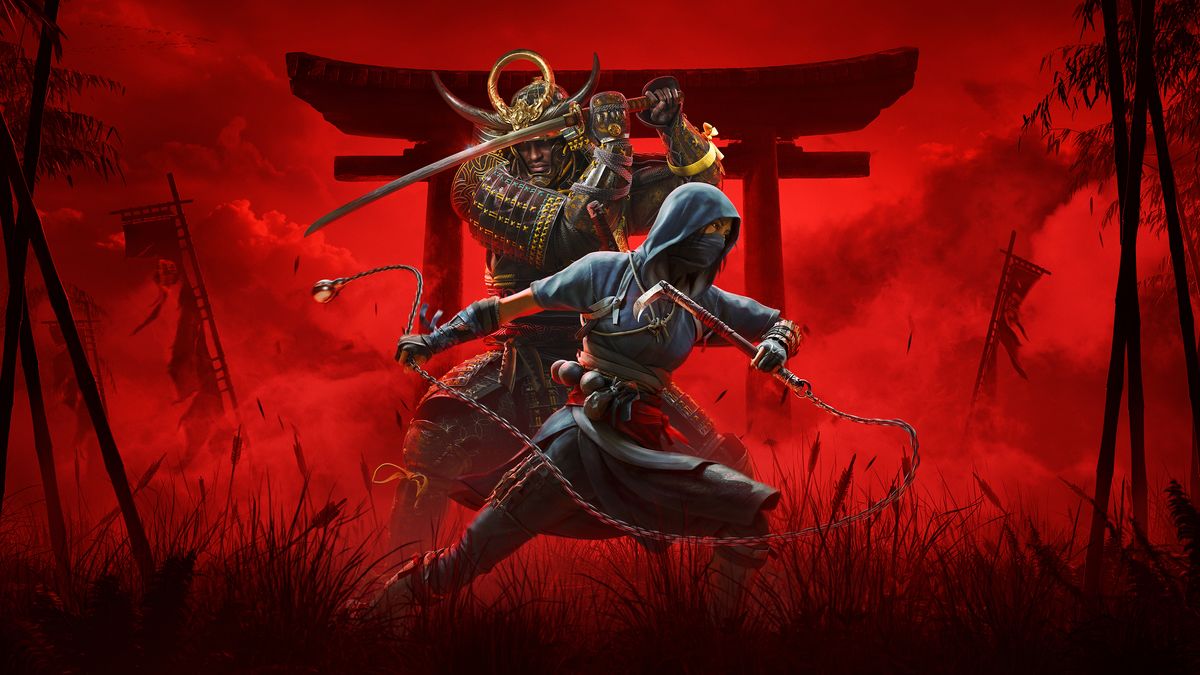
Feudal Japan has long been the most requested setting from Assassin’s Creed fans. Yet while the likes of Ghost of Tsushima and Rise of the Ronin have already had their time in the sun, Assassin’s Creed Shadows nonetheless comes at a time when interest in and appreciation of Japanese culture is at an all-time high, as also seen with the Emmy-winning hit Shogun.

Stick to the Shadows

Yasuke should arguably be the most intriguing character, and Shadows would seem to agree since you start the game from his perspective, his dark skin an immediate fascination to everyone, including the ruthless warlord Oda Nobunaga. Yet serving as a samurai on the side of someone who has no qualms torching villages and murdering thousands of innocent people hardly puts him in a very rootable position, which is probably why when you switch over to Naoe, you actually stick with her for around 10 hours before the two’s paths finally intertwine.

Parkour Life

The diversity of the environments are four-fold thanks to a dynamic seasons system that moves as you progress through the story and other quests. You might wish for it to be spring all year round so you can always appreciate those gorgeous cherry blossoms, but you also get the benefits of different gameplay features besides aesthetics, such as more long grass to hide in during summer, or snow in winter that also softens your footsteps.

Assassin’s Creed Shadows Verdict

Ubisoft Quebec renders feudal Japan with breathtaking detail and sets up two fascinating leads to experience its warring period with, but the trade-offs between the dual playstyles and frustrating control issues will likely test your patience during this epic journey.

FAQs

Q: What is Assassin’s Creed Shadows?
A: Assassin’s Creed Shadows is an open-world action-adventure game set in feudal Japan, developed by Ubisoft Quebec.

Q: What are the main characters in Assassin’s Creed Shadows?
A: The main characters in Assassin’s Creed Shadows are Yasuke, a samurai, and Naoe, a shinobi.

Q: What is the dynamic seasons system in Assassin’s Creed Shadows?
A: The dynamic seasons system in Assassin’s Creed Shadows changes the environment and gameplay based on the season, with different features and challenges in each season.

Q: What are the control issues in Assassin’s Creed Shadows?
A: The control issues in Assassin’s Creed Shadows refer to the frustrating parkour and stealth mechanics, which can sometimes feel clunky and unresponsive.

Q: Is Assassin’s Creed Shadows a fun game to play?
A: While Assassin’s Creed Shadows has its flaws, it can still be an enjoyable game to play, especially for fans of the series or those interested in its historical setting. However, the control issues and dual playstyles may test some players’ patience.

NVIDIA Blackwell Delivers World-Record DeepSeek-R1 Inference Performance

0

NVIDIA Announces World-Record DeepSeek-R1 Inference Performance

NVIDIA announced world-record DeepSeek-R1 inference performance at NVIDIA GTC 2025. A single NVIDIA DGX system with eight NVIDIA Blackwell GPUs can achieve over 250 tokens per second per user or a maximum throughput of over 30,000 tokens per second on the massive, state-of-the-art 671 billion parameter DeepSeek-R1 model. These rapid advancements in performance at both ends of the performance spectrum were made possible by improvements to the NVIDIA open ecosystem of inference developer tools, now optimized for the NVIDIA Blackwell architecture.

These performance records will improve as the NVIDIA platform continues to push the limits of inference on the latest NVIDIA Blackwell Ultra GPUs and NVIDIA Blackwell GPUs.

Figure 1: NVIDIA B200 GPUs in an NVL8 configuration, running TensorRT-LLM software, deliver the highest published tokens per second per user on the full DeepSeek-R1 671B model

Crafting High-Performance Blackwell Kernels with CUTLASS

CUTLASS, since its 2017 debut, has been instrumental for researchers and developers implementing high-performance CUDA kernels on NVIDIA GPUs. By providing developers with comprehensive tools to design custom operations, such as GEMMs and Convolutions, targeting NVIDIA Tensor Cores, it has been critical for the development of hardware-aware algorithms, powering breakthroughs like FlashAttention and establishing itself as a cornerstone for GPU-accelerated computing.

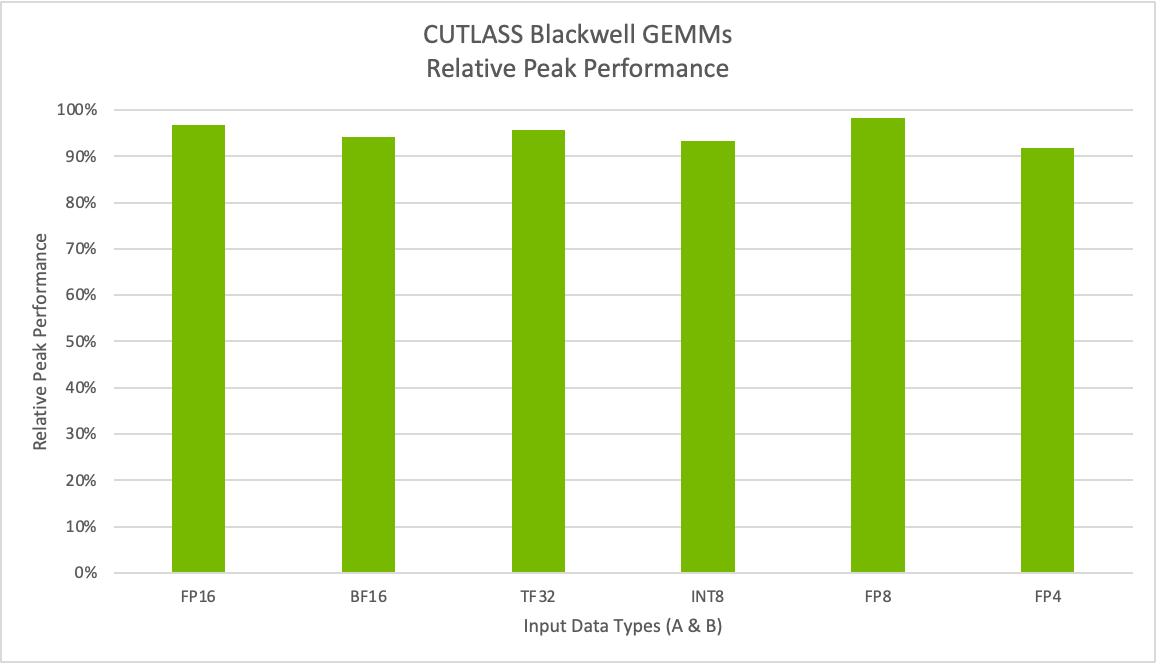
With the release of CUTLASS 3.8, we’re extending support to NVIDIA Blackwell architecture, enabling developers to harness next-generation Tensor Cores with support for all new data types. This includes the new narrow precision MX formats and NVIDIA’s own FP4, empowering developers to optimize custom algorithms and production workloads with the latest innovations in accelerated computing. Figure 7 shows that we are able to achieve up to 98% relative peak performance for Tensor Core operations.

Diagram showing performance comparisons between FP16, BF16, TF32, INT8, FP8, and FP4 for CUTLASS Blackwell GEMMs.

Benchmarks were performed on a B200 system. M=K=16384 and N=17290.

OpenAI Triton Support for Blackwell

OpenAI Triton compiler also now supports Blackwell, enabling developers and researchers to leverage the latest Blackwell architecture features with a Python-based compiler. OpenAI Triton can now take advantage of the latest architectural innovations in the Blackwell architecture and can achieve near-optimal performance on several critical use cases. To learn more, see OpenAI Triton on NVIDIA Blackwell Boosts AI Performance and Programmability, co-authored by NVIDIA and OpenAI.

Summary

NVIDIA Blackwell architecture incorporates many breakthrough capabilities that help accelerate generative AI inference, including second-generation Transformer Engine with FP4 Tensor Cores and fifth-generation NVLink with NVLink Switch. NVIDIA announced world-record DeepSeek-R1 inference performance at NVIDIA GTC 2025. A single NVIDIA DGX system with eight NVIDIA Blackwell GPUs can achieve over 250 tokens per second per user or a maximum throughput of over 30,000 tokens per second on the massive, state-of-the-art 671 billion parameter DeepSeek-R1 model.

A rich suite of libraries, now optimized for NVIDIA Blackwell, will enable developers to achieve significant increases in inference performance for both today’s AI models and tomorrow’s evolving landscape. Learn more about the NVIDIA AI Inference platform and stay informed about the latest AI inference performance updates.

Acknowledgements

This work would not have been possible without the exceptional contributions of many, including Matthew Nicely, Nick Comly, Gunjan Mehta, Rajeev Rao, Dave Michael, Yiheng Zhang, Brian Nguyen, Asfiya Baig, Akhil Goel, Paulius Micikevicius, June Yang, Alex Settle, Kai Xu, Zhiyu Cheng, and Chenjie Luo.

Frequently Asked Questions

Q1: What is NVIDIA Blackwell?

A: NVIDIA Blackwell is a new

New Omniverse Blueprint Advances AI Factory Design and Simulation

AI Factories: A New Era of Engineering and Innovation

AI is Now Mainstream

AI is now mainstream and driving unprecedented demand for AI factories — purpose-built infrastructure dedicated to AI training and inference — and the production of intelligence.

Building AI Factories

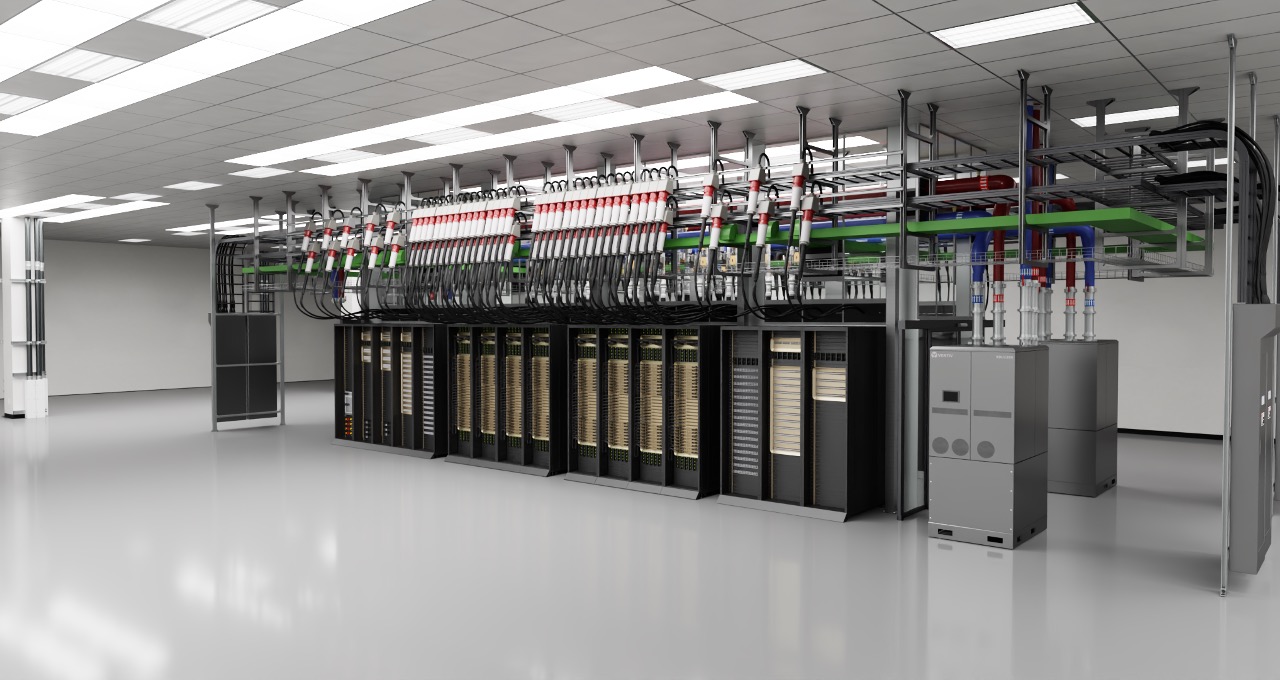
Many of these AI factories will be gigawatt-scale. Bringing up a single gigawatt AI factory is an extraordinary act of engineering and logistics — requiring tens of thousands of workers across suppliers, architects, contractors, and engineers to build, ship, and assemble nearly 5 billion components and over 210,000 miles of fiber cable.

Introducing the NVIDIA Omniverse Blueprint for AI Factory Design and Operations

To help design and optimize these AI factories, NVIDIA today unveiled the NVIDIA Omniverse Blueprint for AI factory design and operations. During his GTC keynote, NVIDIA founder and CEO Jensen Huang showcased how NVIDIA’s data center engineering team developed an application on the Omniverse Blueprint to plan, optimize, and simulate a 1 gigawatt AI factory.

Engineering AI Factories: A Simulation-First Approach

The NVIDIA Omniverse Blueprint for AI factory design and operations uses OpenUSD libraries that enable developers to aggregate 3D data from disparate sources such as the building itself, NVIDIA accelerated computing systems, and power or cooling units from providers such as Schneider Electric and Vertiv.

Challenges in AI Factory Construction

The blueprint helps engineers address complex challenges like:

  • Component integration and space optimization — Unifying the design and simulation of NVIDIA DGX SuperPODs, GB300 NVL72 systems, and their 5 billion components.
  • Cooling system performance and efficiency — Using Cadence Reality Digital Twin Platform, accelerated by NVIDIA CUDA and Omniverse libraries, to simulate and evaluate hybrid air- and liquid-cooling solutions from Vertiv and Schneider Electric.
  • Power distribution and reliability — Designing scalable, redundant electrical systems with ETAP to simulate power-block efficiency and reliability.
  • Networking topology and logic — Fine-tuning high-bandwidth infrastructure with NVIDIA Spectrum-X networking and the NVIDIA Air platform.

Breaking Down Engineering Silos with Omniverse

One of the biggest challenges in AI factory construction is that different teams — power, cooling, and networking — operate in silos, leading to inefficiencies and potential failures. Using the blueprint, engineers can now:

  • Collaborate in full context — Multiple disciplines can iterate in parallel, sharing live simulations that reveal how changes in one domain affect another.
  • Optimize energy usage — Real-time simulation updates enable teams to find the most efficient designs for AI workloads.
  • Eliminate failure points — By validating redundancy configurations before deployment, organizations reduce the risk of costly downtime.
  • Model real-world conditions — Predict and test how different AI workloads will impact cooling, power stability, and network congestion.

Real-Time Simulations for Faster Decision-Making

In Huang’s demo, engineers adjust AI factory configurations in real-time — and instantly see the impact. For example, a small tweak in cooling layout significantly improved efficiency — a detail that could have been missed on paper. And instead of waiting hours for simulation results, teams could test and refine strategies in just seconds.

Future-Proofing AI Factories

AI workloads aren’t static. The next wave of AI applications will push power, cooling, and networking demands even further. The Omniverse Blueprint for AI factory design and operations helps ensure AI factories are ready by offering:

  • Workload-aware simulation — Predict how changes in AI workloads will affect power and cooling at data center scale.
  • Failure scenario testing — Model grid failures, cooling leaks, and power spikes to ensure resilience.
  • Scalable upgrades — Plan for AI factory expansions and estimate infrastructure needs years ahead.

Road to Agentic AI for AI Factory Operation

NVIDIA is working on the next evolution of the blueprint to expand into AI-enabled operations, working with key companies such as Vertech and Phaidra.

Conclusion

The NVIDIA Omniverse Blueprint for AI factory design and operations is poised to help NVIDIA and its ecosystem of partners lead this transformation — letting AI factory operators stay ahead of ever-evolving AI workloads, minimize downtime, and maximize efficiency.

Frequently Asked Questions

Q: What is the NVIDIA Omniverse Blueprint for AI factory design and operations?
A: It is a simulation-based platform that enables engineers to design, optimize, and simulate AI factories.

Q: What are the key challenges in AI factory construction?
A: Component integration and space optimization, cooling system performance and efficiency, power distribution and reliability, and networking topology and logic.

Q: How does the Omniverse Blueprint help address these challenges?
A: It enables engineers to work together in full context, optimize energy usage, eliminate failure points, and model real-world conditions.

Q: What is the future of AI factories?
A: AI workloads will continue to push power, cooling, and networking demands. The Omniverse Blueprint helps ensure AI factories are ready for the future by offering workload-aware simulation, failure scenario testing, and scalable upgrades.

Best Buy’s Tech Fest Sale

0

Best Buy Tech Fest Sale: Top Smartphone Deals

Best Deals and Lowest Prices on Popular Smartphones

Best Buy is currently hosting a major Tech Fest Sale, and this is the perfect opportunity to treat yourself to a new gadget this Spring. While Best Buy is slashing prices on everything from TVs to home appliances, I’ve been scouring specifically for worthy camera phone deals for creatives, and I haven’t been left disappointed.

Standout Deals

  • $700 off the Motorola Razr flip phone, now only $299.99 at Best Buy with a free Xbox Game Pass Ultimate 1 Month Membership included. This is an excellent phone for gaming.
  • $400 off a Google Pixel 9 Pro.
  • $50 off selected iPhone models.

Budget Camera Phone Options for Creatives

Some of the best camera phones on the market are infused with AI tools and fancy displays making them super appealing to content creators, but did you know that there are also some incredible budget camera phone options out there for creatives too? Not all budget smartphones are low-performing (we’ve tested plenty of them), but I also suggest taking a look at my recent Camera Phone Shootout series if you’re after a smartphone with a powerful camera unit.

Best Buy Tech Fest Sale: Top Smartphone Deals

Below you can find the best deals and lowest prices on popular smartphones in your region and worldwide using our clever deals widget.

FAQs

Q: What is the Best Buy Tech Fest Sale?
A: The Best Buy Tech Fest Sale is a major sale event where Best Buy is slashing prices on a wide range of products, including smartphones, TVs, and home appliances.

Q: What are the standout deals for creatives?
A: The standout deals for creatives are the $700 off the Motorola Razr flip phone, $400 off a Google Pixel 9 Pro, and $50 off selected iPhone models.

Q: Are there budget options for creatives?
A: Yes, there are budget options for creatives, including budget camera phones that are infused with AI tools and fancy displays, and also some incredible budget camera phone options out there for creatives too.

Q: How long does the Best Buy Tech Fest Sale last?
A: The Best Buy Tech Fest Sale lasts until Sunday (March 23rd).

Nvidia Is Hosting the Super Bowl of A.I.

0

Nvidia’s Rise to Prominence in the World of Artificial Intelligence

From a Small Developer Conference to a Global Phenomenon

In 2009, Nvidia held its first developer conference, which was a small, academic event with a handful of attendees. Fast forward to today, and the company’s developer conference, known as Nvidia GTC, is one of the most anticipated events in the tech industry, attracting over 25,000 attendees from around the world.

The A.I. Revolution

The transformation of Nvidia’s conference from a niche event to a global phenomenon is a reflection of the company’s metamorphosis. As artificial intelligence (A.I.) has become mainstream, customers have clamored for Nvidia’s graphics processing units (GPUs), which are essential for creating A.I. technology. This has propelled the company to a nearly $3 trillion valuation, up from $8 billion in 2009.

The Road to Success

Jensen Huang, Nvidia’s CEO, is a key player in the company’s success. He has been nicknamed "A.I. Jesus" for his role in popularizing A.I. technology. This year, he will deliver a speech about the future of A.I. to a packed crowd at the GTC event.

Industry Leaders Attend

The conference will feature a who’s who of industry leaders, including Michael Dell, CEO of Dell Technologies; Jeffrey Katzenberg, co-founder of DreamWorks and WndrCo; and Bill McDermott, CEO of ServiceNow.

Challenges Ahead

Despite Nvidia’s success, the company faces challenges as its customers, including Amazon, Google, and Meta, make their own A.I. chips. Additionally, the company must adapt to the changing landscape of A.I. technology.

The Future of A.I.

In his speech, Huang is expected to elaborate on how A.I. systems are providing services that people will want to pay for, such as A.I. agents that can autonomously perform tasks like shopping for groceries. He will also discuss more futuristic uses for A.I., including the development of human-size robots that can walk and pick up objects.

The Next Generation of A.I. Chips

Huang is also expected to talk about Nvidia’s next generation of A.I. chips, called Rubin, which may deliver up to 30 times faster performance.

Conclusion

Nvidia’s rise to prominence in the world of A.I. is a testament to the company’s ability to adapt and innovate. As the company continues to push the boundaries of A.I. technology, it will be interesting to see how it addresses the challenges ahead.

Frequently Asked Questions

Q: What is Nvidia’s developer conference?
A: Nvidia’s developer conference is an annual event that brings together industry leaders and experts to discuss the latest advancements in A.I. and other technologies.

Q: Who is Jensen Huang?
A: Jensen Huang is the CEO of Nvidia and is known for his role in popularizing A.I. technology.

Q: What is the future of A.I.?
A: The future of A.I. is expected to be shaped by advancements in areas such as natural language processing, computer vision, and robotics.

Q: What is the next generation of A.I. chips?
A: Nvidia’s next generation of A.I. chips, called Rubin, is expected to deliver up to 30 times faster performance.