Home Blog Page 171

Google’s Pixel Tablet is $120 off ahead of Amazon’s spring sales event.

0

Discount Alert: Get the Best Android Tablet on Sale

Google Pixel Tablet: A Great Option for Streaming, Browsing, and Gaming

The bulk of the discounts we’ve seen thus far are pretty ho-hum — that is, aside from the current promo on Google’s Pixel Tablet, which is on sale at Amazon with its speaker dock starting at $399 ($100 off) or without the magnetic dock for an all-time low of $279 ($120 off). If you prefer a retailer other than Amazon, you can also grab the base-model tablet from Best Buy and Google for the same price.

Why the Pixel Tablet Stands Out

Despite having launched in 2023, Google’s latest slate is still arguably the best Android tablet available. Google’s app ecosystem isn’t as robust or as optimized for larger screens as Apple’s, but the Pixel tablet is still a great device for:

  • Streaming
  • Browsing the web
  • Light gaming

Key Features and Benefits

The Google-made Tensor G2 processor is speedy and reliable, and thanks to the tablet’s four-speaker sound array, you actually get some decent stereo separation. The optional dock charging dock provides even fuller sound while allowing the tablet to function as an ad hoc smart display, which is handy if you want to control your smart home devices via Google Assistant or the tablet’s 11-inch LCD display.

Conclusion

If you’re in the market for a new Android tablet, the Google Pixel Tablet is definitely worth considering. With its impressive performance, great sound quality, and affordable price tag, it’s a great option for anyone looking for a reliable device for streaming, browsing, and some light gaming.

Frequently Asked Questions

Q: What are the key features of the Google Pixel Tablet?
A: The Pixel Tablet features a 11-inch LCD display, four-speaker sound array, and a Google-made Tensor G2 processor.

Q: Is the Pixel Tablet available at a discounted price?
A: Yes, the Pixel Tablet is currently on sale at Amazon and Best Buy for $399 with its speaker dock or $279 without the magnetic dock.

Q: Is the Pixel Tablet suitable for gaming?
A: The Pixel Tablet is suitable for light gaming, but may not be the best option for more demanding games.

Q: Can I use the Pixel Tablet as a smart display?
A: Yes, the Pixel Tablet can be used as a smart display with the optional dock charging dock, allowing you to control your smart home devices via Google Assistant or the tablet’s display.

Revolutionizing Clinical Trials with Voice and AI

0

Innovative Technologies Revolutionizing Healthcare: Combining Audio-to-Text Translation and Large Language Models

In the rapidly evolving healthcare landscape, patients often find themselves navigating a maze of complex medical information, seeking answers to their questions and concerns. However, accessing accurate and comprehensible information can be a daunting task, leading to confusion and frustration. This is where the integration of cutting-edge technologies, such as audio-to-text translation and large language models (LLMs), holds the potential to revolutionize the way patients receive, process, and act on vital medical information.

Use Cases Overview

As the healthcare industry continues to embrace digital transformation, solutions that combine advanced technologies like audio-to-text translation and LLMs will become increasingly valuable in addressing key challenges, such as patient education, engagement, and empowerment. By leveraging these innovative technologies, healthcare providers can deliver more personalized, efficient, and effective care, ultimately improving patient outcomes and driving progress in the life sciences domain.

Use Case 1: Audio-to-Text Translation and LLM Integration for Clinical Trial Patient Interactions

In the domain of clinical trials, effective communication between patients and physicians is crucial for gathering accurate data, enforcing patient adherence, and maintaining study integrity. This use case demonstrates how audio-to-text translation combined with LLM capabilities can streamline and enhance the process of capturing and analyzing patient-physician interactions during clinical trial visits and telemedicine sessions.

Process Flow

The process flow consists of the following steps:

  1. Audio Capture – During patient visits or telemedicine sessions, the audio of the patient-physician interaction is recorded securely, with appropriate consent and privacy measures in place.
  2. Audio-to-Text Translation – The recorded audio is processed through an advanced speech recognition (ASR) system, which converts the audio into text transcripts. This step provides an accurate and efficient conversion of spoken words into a format suitable for further analysis.
  3. Text Preprocessing – The transcribed text undergoes preprocessing steps, such as removing identifying information, formatting the data, and enforcing compliance with relevant data privacy regulations.
  4. LLM Integration – The preprocessed text is fed into a powerful LLM tailored for the healthcare and life sciences (HCLS) domain. The LLM analyzes the text, identifying key information relevant to the clinical trial, such as patient symptoms, adverse events, medication adherence, and treatment responses.
  5. Intelligent Insights and Recommendations – Using its large knowledge base and advanced natural language processing (NLP) capabilities, the LLM provides intelligent insights and recommendations based on the analyzed patient-physician interaction. These insights can include:
    • Potential adverse event detection and reporting.
    • Identification of protocol deviations or non-compliance.
    • Recommendations for personalized patient care or adjustments to treatment regimens.
    • Extraction of relevant data points for electronic health records (EHRs) and clinical trial databases.

Data Integration and Reporting

The extracted insights and recommendations are integrated into the relevant clinical trial management systems, EHRs, and reporting mechanisms. This streamlines the process of data collection, analysis, and decision-making for clinical trial stakeholders, including investigators, sponsors, and regulatory authorities.

Conclusion

Healthcare patients often find themselves in need of reliable information about their conditions, clinical trials, or treatment options. However, accessing accurate and up-to-date medical knowledge can be a daunting task. Our innovative solution integrates cutting-edge audio-to-text translation and LLM capabilities to revolutionize how patients receive vital healthcare information. By using speech recognition technology, we can accurately transcribe patients’ spoken queries, allowing our LLM to comprehend the context and provide personalized, evidence-based responses tailored to their specific needs. This empowers patients to make informed decisions, enhances accessibility for those with disabilities or preferences for verbal communication, and alleviates the workload on healthcare professionals, ultimately improving patient outcomes and driving progress in the HCLS domain.

FAQs

Q: What is the purpose of combining audio-to-text translation and LLMs in healthcare?
A: The integration of these technologies enables accurate and efficient communication between patients and healthcare providers, providing patients with reliable and personalized information about their conditions, clinical trials, and treatment options.

Q: How does the LLM analyze patient-physician interactions in clinical trials?
A: The LLM analyzes the transcribed text, identifying key information relevant to the clinical trial, such as patient symptoms, adverse events, medication adherence, and treatment responses.

Q: What are the potential benefits of this solution?
A: The solution offers several benefits, including patient empowerment, improved accessibility, and enhanced efficiency in clinical trial data collection and analysis.

How CoreWeave Went from Crypto Mining to Wall Street’s A.I. Bellwether

0

CoreWeave’s Rise to Prominence in the AI Space

From Cryptocurrency Mining to AI Empowerment

In 2016, three New York commodities traders – Michael Intrator, Brian Venturo, and Brannin McBee – fell in love with cryptocurrencies. They were using Bitcoin to bet on pool games and fantasy football and were captivated by its wild swings in price. The trio soon decided to create more digital currencies through a process called "mining," which requires a lot of computing power. They logged on to Amazon and ordered two Nvidia graphics processing units, or GPUs, powerful chips that can run calculations and analyze enormous amounts of data.

The Birth of CoreWeave

In 2017, Mr. Intrator, Mr. Venturo, and Mr. McBee started the company Atlantic Crypto to mine cryptocurrencies. When crypto prices cratered two years later, they renamed the business CoreWeave and raised money to buy as many GPUs from distressed crypto miners as possible. Their bet was that the chips would eventually feed the development of artificial intelligence, whose creation also requires substantial computing power.

A.I. Frenzy and CoreWeave’s Rise

When OpenAI released the ChatGPT chatbot in 2022 and unleashed an A.I. frenzy, the demand for computing power exploded – and CoreWeave was in the sweet spot. "We assumed this was going to happen," Mr. Intrator said in a 2023 interview with The New York Times. "We were well positioned for this transition."

I.P.O. and the Future of A.I.

CoreWeave is now set to find out whether it is in the sweet spot again – this time with Wall Street. This month, the tech company filed paperwork for a public listing. If its initial public offering of stock goes as planned, it will be the first prominent A.I. start-up to reach the stock market. And it would test investor appetite at a time when the market has slipped into a correction, which could delay an offering.

The Competition and the Road Ahead

CoreWeave faces stiff competition from Amazon, Microsoft, and Google, which also provide computing power. Its business is heavily dependent on a single customer – Microsoft, which generated 60% of CoreWeave’s revenue last year. However, the company has diversified its customer base by acquiring Weights & Biases, an A.I. software start-up that helps companies manage A.I. tools.

Conclusion

CoreWeave’s journey from cryptocurrency mining to A.I. empowerment is a testament to the power of innovation and adaptability. As the company prepares for its I.P.O., it is poised to become the first prominent A.I. start-up to reach the stock market, offering investors a direct taste of the A.I. boom.

Frequently Asked Questions

Q: What is CoreWeave?
A: CoreWeave is a tech company that specializes in providing computing power for artificial intelligence (A.I.) applications.

Q: How did CoreWeave get started?
A: CoreWeave was founded in 2017 by Michael Intrator, Brian Venturo, and Brannin McBee, who were former commodities traders.

Q: What is the company’s current valuation?
A: CoreWeave’s current valuation is around $35 billion.

Q: Who are the company’s major shareholders?
A: The major shareholders of CoreWeave include Michael Intrator, Brian Venturo, and Brannin McBee, who own around 30% of the company. Magnetar, a hedge fund, is the company’s single largest shareholder, with a 25% stake.

Q: What are the company’s plans for its I.P.O.?
A: CoreWeave plans to list its stock on the public market through an initial public offering (I.P.O.), which is expected to raise around $4 billion.

New Zealand to Launch 24/7 Telehealth Service

New Zealand Introduces 24/7 Telehealth Service to Combat Overcrowding in Emergency Departments

New Initiative to Expand Access to Primary Care

New Zealand Health Minister Simeon Brown has announced a new 24/7 telehealth service to expand access to primary care, amid concerns over the overcrowding of emergency departments. The government will invest in the new service, which is expected to provide all New Zealanders with better access to video consultations with New Zealand-registered clinicians, such as GPs and nurse practitioners.

Features of the New Telehealth Service

The new service will enable GPs and nurses to issue prescriptions and make referrals for laboratory tests. According to Te Whatu Ora, the 24/7 telehealth service is set for launch in July.

The Larger Context

Minister Brown revealed the new digital healthcare service alongside the announcement of various initiatives to expand primary care access, including a NZ$285 million ($163 million) investment in general practice over three years, placement of overseas doctors, and incentives for primary care providers to recruit nurses. The Health minister noted, "We are already investing record funding into healthcare, but many New Zealanders are still finding it too hard to get an appointment with their GP, which is putting pressure on our emergency departments."

Challenges and Controversies

The upcoming launch of the new telehealth service comes as New Zealand’s Health Quality and Safety Commission recently concluded that telehealth has not yet proven to be a sustainable solution to care access in the country. In its investigation into the quality and safety implications of telehealth, the commission found that the digital service never became popular in New Zealand in the first place, even during the pandemic. Prior to the release of the commission’s report, the government had pulled funding for some free telehealth services, including COVID-19, as part of changes to the pandemic response and cost-cutting measures.

Conclusion

The new 24/7 telehealth service is a significant step towards addressing the issue of overcrowding in emergency departments and improving access to primary care in New Zealand. However, the service’s success will depend on various factors, including its popularity and sustainability.

FAQs

Q: When is the 24/7 telehealth service expected to launch?
A: The service is set to launch in July.

Q: What features will the new telehealth service offer?
A: The service will enable GPs and nurses to issue prescriptions and make referrals for laboratory tests.

Q: Why is the new telehealth service necessary?
A: The service is necessary to address the issue of overcrowding in emergency departments and improve access to primary care in New Zealand.

Q: What are the challenges facing the new telehealth service?
A: The service faces challenges in terms of popularity and sustainability, as well as concerns over its effectiveness in addressing the issues it aims to solve.

Nvidia to Boost DeepSeek AI Speed by 30 Times

Nvidia Seeks to Capitalize on Cheaper AI with New Software and Hardware

In January, the emergence of DeepSeek’s R1 artificial intelligence program prompted a stock market selloff. Seven weeks later, chip giant Nvidia, the dominant force in AI processing, seeks to place itself squarely in the middle of the dramatic economics of cheaper AI that DeepSeek represents.

Accelerating DeepSeek R1 with Blackwell Chips

On Tuesday, at the SAP Center in San Jose, Calif., Nvidia co-founder and CEO Jensen Huang discussed how the company’s Blackwell chips can dramatically accelerate DeepSeek R1. Nvidia claims that its GPU chips can process 30 times the throughput that DeepSeek R1 would normally have in a data center, measured by the number of tokens per second, using new open-source software called Nvidia Dynamo.

Dynamo Software

Dynamo can capture that benefit and deliver 30 times more performance in the same number of GPUs in the same architecture for reasoning models like DeepSeek, said Ian Buck, Nvidia’s head of hyperscale and high-performance computing, in a media briefing before Huang’s keynote at the company’s GTC conference.

The Dynamo software, available today on GitHub, distributes inference work across as many as 1,000 Nvidia GPU chips. More work can be accomplished per second of machine time by breaking up the work to run in parallel.

Premium Services

The result: For an inference task priced at $1 per million tokens, more of the tokens can be run each second, boosting revenue per second for services providing the GPUs. Service providers can then decide to run more customer queries on DeepSeek or devote more processing to a single user to charge more for a "premium" service.

AI Factories

"AI factories can offer a higher premium service at premium dollar per million tokens," said Buck, "and also increase the total token volume of their whole factory." The term "AI factory" is Nvidia’s coinage for large-scale services that run a heavy volume of AI work using the company’s chips, software, and rack-based equipment.

New Software and Hardware Announcements

The prospect of using more chips to increase throughput (and therefore business) for AI inference is Nvidia’s answer to investor concerns that less computing would be used overall because DeepSeek can cut the amount of processing needed for each query.

By using Dynamo with Blackwell, the current model of Nvidia’s flagship AI GPU, the Dynamo software can make such AI data centers produce 50 times as much revenue as with the older model, Hopper, said Buck.

Additional Announcements

Nvidia has posted its own tweaked version of DeepSeek R1 on HuggingFace. The Nvidia version reduces the number of bits used by R1 to manipulate variables to what’s known as "FP4," or floating-point four bits, which is a fraction of the computing needed for the standard floating-point 32 or B-float 16.

Conclusion

Nvidia’s announcements at the GTC conference aim to position the company as a leader in the rapidly evolving AI landscape, with new software and hardware offerings that can help accelerate the development and deployment of AI applications.

Frequently Asked Questions

Q: What is Nvidia’s response to the emergence of DeepSeek’s R1 AI program?
A: Nvidia is positioning itself as a leader in the rapidly evolving AI landscape, with new software and hardware offerings that can help accelerate the development and deployment of AI applications.

Q: How does Nvidia’s Blackwell chip accelerate DeepSeek R1?
A: Nvidia’s GPU chips can process 30 times the throughput that DeepSeek R1 would normally have in a data center, using new open-source software called Nvidia Dynamo.

Q: What is Dynamo software?
A: Dynamo software distributes inference work across as many as 1,000 Nvidia GPU chips, allowing for more work to be accomplished per second of machine time by breaking up the work to run in parallel.

Stadia’s Revenge: Savage GDC 2025

0

Game Developers Take Aim at Controversial Figure with Cheeky Billboard at GDC 2025

GDC 2025: A Platform for Game Developers to Showcase Upcoming Games

With GDC 2025 underway in San Francisco, game developers are taking the opportunity to promote their upcoming games. One team, Raccoon Logic, has sparked curiosity with a cheeky billboard directed at a controversial figure.

A Satirical Billboard

Placed in San Francisco’s Union Square, the billboard features the enlarged head of Gunther Harrison, CEO of Alta Interglobal in the upcoming game Revenge of the Savage Planet. However, the ad’s message appears to be a satirical reference to a different Harrison. The billboard asks, "Have YOU been fired by this man?! We know how it feels. So we took out a billboard in downtown San Francisco."

A Personal Connection to the Controversial Figure

Those in town for GDC 2025 will likely recall Phil Harrison, the former head of Google’s Stadia cloud gaming service. He was responsible for many layoffs, including the Savage Planet team, when he shut down Stadia Games & Entertainment in 2021. The moment was particularly cutting for the devs at Typhoon Games, which Google bought in 2019. They found themselves out of work on the very same day that their game, Journey to the Savage Planet, launched as an exclusive game for Stadia.

The Story Behind the Billboard

After leaving Stadia, Typhoon Games became Raccoon Logic with the help of investment from China’s Tencent, and it bought back the Savage Planet rights. The upcoming Revenge of the Savage Planet suggests they haven’t forgiven Harrison, who left Google in 2023 after the complete closure of Stadia in 2022.

The Billboard’s Message and Promotional Site

The billboard includes a QR code that leads to a promotional site for the game, displaying the message, "We got fired by him as well!" The site pledges to make a donation to the Canadian Mental Health Association for every person who scans the billboard and visits the site.

Conclusion

Raccoon Logic’s cheeky billboard at GDC 2025 has sparked curiosity among game developers and attendees alike. The satirical reference to Phil Harrison and the personal connection to the controversy surrounding Stadia’s closure has generated a lot of buzz around the upcoming game, Revenge of the Savage Planet.

Frequently Asked Questions

Q: Who is Phil Harrison?
A: Phil Harrison is the former head of Google’s Stadia cloud gaming service, responsible for many layoffs, including the Savage Planet team.

Q: What is the connection between Raccoon Logic and Phil Harrison?
A: Raccoon Logic, the developer of Revenge of the Savage Planet, was once Typhoon Games, which was acquired by Google in 2019. They were laid off when Stadia Games & Entertainment was shut down in 2021.

Q: What is the release date for Revenge of the Savage Planet?
A: Revenge of the Savage Planet will be released on May 8th.

Q: What is the purpose of the billboard and promotional site?
A: The billboard and promotional site are designed to generate buzz around the game and raise awareness about the struggles faced by game developers, including layoffs and career changes.

Installing Postman on Fedora 41 Standalone

Postman Installation on Fedora 41

Step 1: Download Postman

Download the standalone version of Postman from its official page: https://www.postman.com/downloads/

Step 2: Extract and Move Postman to /opt/

Open a terminal and navigate to the directory where you downloaded the .tar.gz file. Execute the following command to extract the contents of the compressed file and move the Postman folder to /opt/:

sudo tar -xzf postman-linux-x64.tar.gz -C /opt/

Step 3: Create a Symbolic Link to Execute from Anywhere

Execute the following command to create a symbolic link, which allows you to open Postman from any terminal by typing postman:

sudo ln -s /opt/Postman/Postman /usr/local/bin/postman

Step 4: Create an Application Menu Shortcut

To add Postman to the application menu, create a file named postman.desktop in /usr/share/applications/:

sudo nvim /usr/share/applications/postman.desktop

Add the following content and save the file:

[Desktop Entry]
Name=Postman
Comment=API Development Environment
Exec=/opt/Postman/Postman
Icon=/opt/Postman/app/icons/icon_128x128.png
Terminal=false
Type=Application
Categories=Development;Network;

Step 5: Update Postman (Standalone Version)

Since you installed the standalone version of Postman, updates are not automatic. You will need to perform the process manually when a new version is available.

Recommendations to Keep Postman Updated:

  • Periodically visit the official Postman download page (https://www.postman.com/downloads/) to check if a new version is available.
  • You can also check within the Postman application itself, in the settings menu.
  • If there is an update, download the latest standalone version for Linux .tar.gz file.
  • Before proceeding, it is recommended to make a backup of your current Postman directory in /opt/Postman. This will allow you to revert to the previous version if something goes wrong.

How to Update Postman:

  1. Extract the New Version:
    • Open a terminal and navigate to the directory where you downloaded the .tar.gz file with the new version.
    • Execute the following command to extract the new version to the /opt/ directory, replacing the previous version:
sudo tar -xzf postman-linux-x64.tar.gz -C /opt/
  1. Verify the Symbolic Link and Shortcut:
    • Make sure that the symbolic link in /usr/local/bin/postman still points to the new version of Postman. If the path has changed, update the symbolic link with the command:
sudo ln -sf /opt/Postman/Postman /usr/local/bin/postman

Conclusion

By following these steps, you can successfully install Postman on Fedora 41 and have it available in your application menu. Remember to keep your Postman version up-to-date to ensure you have access to the latest features and improvements.

FAQs

Q: How do I keep Postman updated?
A: You can check for updates on the official Postman download page or within the Postman application itself.

Q: What happens if I encounter issues after updating Postman?
A: If you encounter issues after updating Postman, try reverting to the previous version and then re-updating to the latest version.

Q: Can I delete the previous version of Postman after updating?
A: Yes, if you have verified that the new version works correctly, you can delete the previous version’s folder.

The Independent Launches ‘Inews’ News Service Powered by Google AI

The Independent Launches AI-Generated News Summaries with Human Oversight

New Service Aims to Provide "Trusted, Verified Journalism"

The Independent is launching a news service using Google AI tools to provide summaries of its articles, overseen by its journalists. The platform, called Bulletin, will be launched later this month and will be sponsored by WeAre8, a social media platform backed by ex-footballer Rio Ferdinand.

AI-Generated Summaries with Human Oversight

The service will use Google’s Gemini AI model to provide summaries of its stories, which will be edited by journalists. Christian Broughton, chief executive of The Independent, said the service would provide "trusted, verified journalism for those times when you are in a hurry".

Addressing Concerns about AI-Generated News

The move comes as newsrooms around the world grapple with how to benefit from AI, amid fears that the new technology could be used to scrape and replicate news media without permission, and risk serious errors. Broughton addressed these concerns, saying that the service had been developed by and would be led by journalists, and that the summaries would be approved by the journalists responsible for the longer-form articles.

No Scraping or Disruptions

The service’s summaries will also be approved by the journalists responsible for the longer-form articles on which the shorter, AI-generated posts will be based. Broughton emphasized that there would be "no scraping [and] no disruptions" risked by AI-only news services, adding: "There are lots of bad uses of AI."

Partnership with WeAre8

WeAre8 will sponsor the platform and help to distribute it. The service will be launched first via The Independent’s website and then with its own website, and will use Google’s Gemini AI model to provide summaries of its stories, which will be edited by journalists.

Future Plans

The service will initially offer news summaries for its existing readership, but the group plans to launch its own website and app, and use the platform to distribute audio content as well. The service will be free, but readers will be asked to register for the updates in the future, with tools to be introduced to allow greater personalization of the news feed.

Conclusion

The Independent’s new service, Bulletin, aims to provide "trusted, verified journalism" to its readers, with AI-generated summaries overseen by human journalists. With the rise of AI-generated news feeds and summaries, this new service addresses concerns about accuracy and reliability, providing a platform for readers to access essential news briefings.

FAQs

Q: What is Bulletin?
A: Bulletin is a new news service from The Independent, using Google AI tools to provide summaries of its articles, overseen by its journalists.

Q: Who is sponsoring the platform?
A: WeAre8, a social media platform backed by ex-footballer Rio Ferdinand, is sponsoring the platform and helping to distribute it.

Q: How will the summaries be approved?
A: The summaries will be approved by the journalists responsible for the longer-form articles on which the shorter, AI-generated posts will be based.

Q: Will the service be free?
A: Yes, the service will be free, but readers will be asked to register for the updates in the future, with tools to be introduced to allow greater personalization of the news feed.

FTC Removes Posts Critical of Amazon, Microsoft, and AI Companies

0

Federal Trade Commission Removes Business Guidance Blogs, Raising Concerns and Questions

Removal of Important Consumer Protection Information

The Trump administration’s Federal Trade Commission (FTC) has removed over 300 business guidance blogs, including important consumer protection information related to artificial intelligence and the agency’s landmark privacy lawsuits against companies like Amazon and Microsoft. The removal of these blogs has sparked concerns and questions about the motivations behind the decision, particularly in light of the FTC’s new leadership under Chair Andrew Ferguson.

Guidance on Artificial Intelligence and Children’s Online Privacy

The removed blogs included guidance on how big tech companies could avoid violating consumer protection laws. For example, one now deleted blog, titled "Hey, Alexa! What are you doing with my data?", explained how Amazon and its Ring security camera products allegedly leveraged sensitive consumer data to train their algorithms. Another post, titled "$20 million FTC settlement addresses Microsoft Xbox illegal collection of kids’ data: A game changer for COPPA compliance", instructed tech companies on how to abide by the Children’s Online Privacy Protection Act by using the 2023 Microsoft settlement as an example.

Eradication of Compliance Expectations

A source familiar with the matter stated, "In terms of the message to industry on what our compliance expectations were, which is in some ways the most important part of enforcement action, they are trying to just erase those from history." This raises concerns about the impact on businesses that relied on these guidance to operate in compliance with consumer protection laws.

Ties to the Tech Industry

The Trump administration has received broad support from the tech industry, with big tech companies like Amazon and Meta, as well as tech entrepreneurs like OpenAI CEO Sam Altman, donating to Trump’s inauguration fund. Additionally, Silicon Valley leaders like Elon Musk and David Sacks are officially advising the administration. The removal of these blogs may be seen as a way to benefit these companies, particularly in terms of data collection and use.

Compliance Concerns and the Federal Records Act

Removing these blogs raises serious compliance concerns under the Federal Records Act and the Open Government Data Act, according to a former FTC official. During the Biden administration, FTC leadership would place "warning" labels above previous administrations’ public decisions they no longer agreed with, fearing that removal would violate the law.

Conclusion

The removal of these blogs by the FTC has sparked concerns about the motivations behind the decision, particularly in light of the agency’s new leadership under Chair Andrew Ferguson. The impact on businesses that relied on this guidance to operate in compliance with consumer protection laws is also a cause for concern. As the FTC continues to navigate its role in regulating the tech industry, it is essential to ensure that the public’s interests are protected.

FAQs

Q: Why did the FTC remove these blogs?
A: The motivations behind the removal are unclear, but it is believed to be related to the new leadership under Chair Andrew Ferguson.

Q: What impact will this have on businesses?
A: Businesses that relied on this guidance to operate in compliance with consumer protection laws may face difficulties in navigating the regulatory landscape.

Q: Is this a move to benefit the tech industry?
A: Yes, the removal of these blogs may benefit the tech industry, particularly in terms of data collection and use.

Q: Are there any compliance concerns?
A: Yes, the removal of these blogs raises serious compliance concerns under the Federal Records Act and the Open Government Data Act.

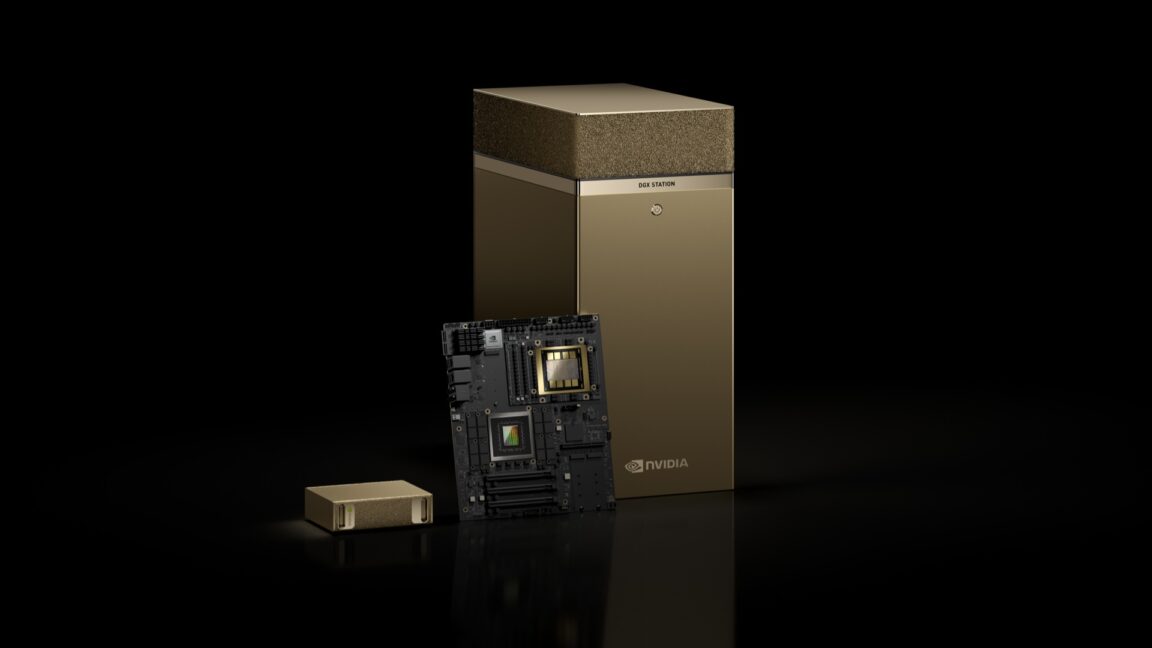
Nvidia Announces DGX Desktop “Personal AI Supercomputers”

Nvidia Unveils "Personal AI Supercomputers" for Developers and Researchers

Introducing DGX Spark and DGX Station

During Tuesday’s Nvidia GTX keynote, CEO Jensen Huang unveiled two "personal AI supercomputers" called DGX Spark and DGX Station, both powered by the Grace Blackwell platform. In a way, they are a new type of AI PC architecture specifically built for running neural networks, and five major PC manufacturers will build the supercomputers.

Design and Features

These desktop systems, first previewed as "Project DIGITS" in January, aim to bring AI capabilities to developers, researchers, and data scientists who need to prototype, fine-tune, and run large AI models locally. DGX systems can serve as standalone desktop AI labs or "bridge systems" that allow AI developers to move their models from desktops to DGX Cloud or any AI cloud infrastructure with few code changes.

Key Specifications

  • DGX Spark features the GB10 Grace Blackwell Superchip with Blackwell GPU and fifth-generation Tensor Cores, delivering up to 1,000 trillion operations per second for AI.
  • DGX Station includes the GB300 Grace Blackwell Ultra Desktop Superchip with 784GB of coherent memory and the ConnectX-8 SuperNIC supporting networking speeds up to 800Gb/s.

Manufacturing Partners

The DGX architecture serves as a prototype that other manufacturers can produce. Asus, Dell, HP, and Lenovo will develop and sell both DGX systems, with DGX Spark reservations opening today and DGX Station expected later in 2025. Additional manufacturing partners for the DGX Station include BOXX, Lambda, and Supermicro, with systems expected to be available later this year.

Pricing and Availability

Nvidia did not mention pricing for the units. However, in January, Nvidia mentioned that the base-level configuration for a DGX Spark-like computer would retail for around $3,000.

Conclusion

The DGX Spark and DGX Station are designed to revolutionize the way AI developers and researchers work, providing a new class of computers optimized for AI-native developers and applications. With the collaboration of five major PC manufacturers, these systems are expected to be widely available in the market.

Frequently Asked Questions

Q: What are DGX Spark and DGX Station?
A: DGX Spark and DGX Station are "personal AI supercomputers" designed for developers, researchers, and data scientists to prototype, fine-tune, and run large AI models locally.

Q: What are the key features of DGX Spark and DGX Station?
A: DGX Spark features the GB10 Grace Blackwell Superchip, while DGX Station includes the GB300 Grace Blackwell Ultra Desktop Superchip.

Q: Who will manufacture DGX Spark and DGX Station?
A: Asus, Dell, HP, and Lenovo will develop and sell both DGX systems, with additional partners including BOXX, Lambda, and Supermicro for DGX Station.

Q: What is the expected pricing for DGX Spark and DGX Station?
A: Nvidia did not mention pricing for the units, but a base-level configuration for a DGX Spark-like computer is expected to retail for around $3,000.