Home Blog Page 183

Data-Driven Insights Over Profit

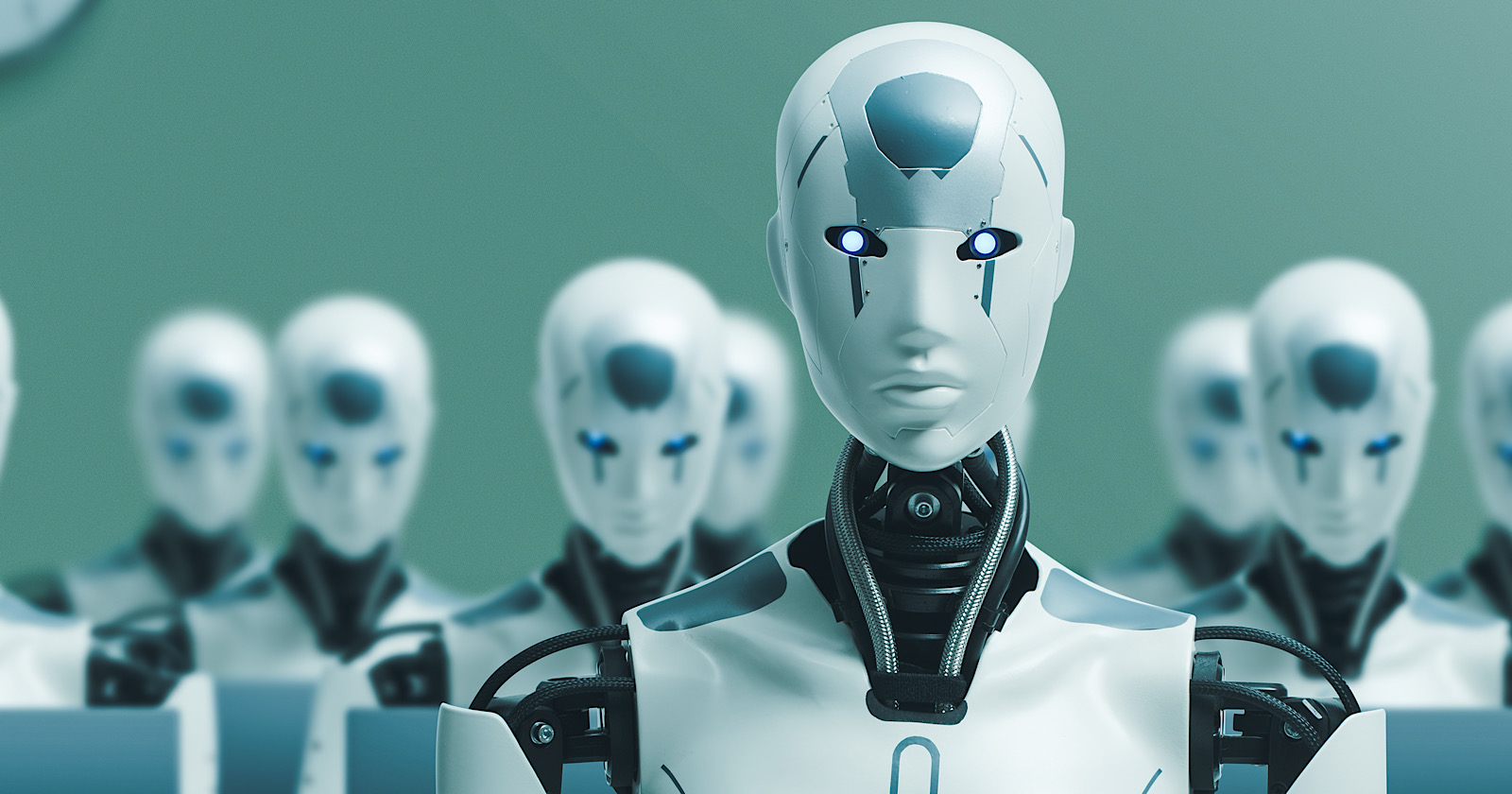
Artificial Intelligence in China: The Rise of Humanlike Machines

Introduction to the Chinese Start-up

China has been at the forefront of artificial intelligence (AI) research and development in recent years, with a number of start-ups and established companies working on cutting-edge projects to create machines with humanlike cognitive capabilities. In this article, we will explore the efforts of one such Chinese start-up, [Start-up Name], and their mission to create intelligent machines that can think and learn like humans.

The Vision of [Start-up Name]

[Start-up Name] was founded by a team of researchers and engineers who were passionate about creating machines that could rival human intelligence. Their vision is to create machines that can learn, reason, and make decisions like humans, and to use these machines to revolutionize industries such as healthcare, finance, and education.

The Technology Behind Humanlike Machines

To achieve this vision, [Start-up Name] is using a range of advanced technologies, including deep learning, natural language processing, and computer vision. These technologies allow the company to create machines that can process and analyze vast amounts of data, make decisions, and interact with humans in a more natural and intuitive way.

The Applications of Humanlike Machines

The potential applications of humanlike machines are vast and varied. In the healthcare industry, for example, these machines could be used to analyze medical images and diagnose diseases more accurately than human doctors. In finance, they could be used to analyze complex financial data and make more informed investment decisions. In education, they could be used to create personalized learning systems that adapt to the needs of individual students.

The Challenges of Creating Humanlike Machines

While the potential benefits of humanlike machines are significant, there are also a number of challenges that need to be overcome. These include the need for massive amounts of data, the need for advanced algorithms and processing power, and the need for careful testing and validation to ensure that the machines are safe and reliable.
The Future of Humanlike Machines

Despite the challenges, [Start-up Name] is confident that their machines will have a profound impact on a wide range of industries. In the future, we can expect to see humanlike machines being used in a variety of applications, from healthcare to finance to education. As the technology continues to evolve, we can expect to see even more advanced applications, such as autonomous vehicles and robots.

Conclusion

In conclusion, [Start-up Name] is a pioneering start-up that is working to create machines with humanlike cognitive capabilities. With their advanced technology and vision, they are well-positioned to make a significant impact on a wide range of industries. As the technology continues to evolve, we can expect to see even more exciting developments in the future.

FAQs

Q: What is the mission of [Start-up Name]?
A: The mission of [Start-up Name] is to create machines that can think and learn like humans, and to use these machines to revolutionize industries such as healthcare, finance, and education.

Q: What technologies does [Start-up Name] use to create humanlike machines?
A: [Start-up Name] uses a range of advanced technologies, including deep learning, natural language processing, and computer vision.

Q: What are the potential applications of humanlike machines?
A: The potential applications of humanlike machines are vast and varied, and include industries such as healthcare, finance, and education.

Q: What are the challenges of creating humanlike machines?
A: The challenges of creating humanlike machines include the need for massive amounts of data, the need for advanced algorithms and processing power, and the need for careful testing and validation to ensure that the machines are safe and reliable.

Crafting the Visions of Apple TV’s Best Series

0

Article

01. Lumon Incentives in Severance

Ms Cobel uses a Lumon fingertrap in Severance

To define Severance’s look, production designer Jeremy Hindle took inspiration from the mid-century quest for the "perfect workplace." He’s mentioned Eero Saarinen and Kevin Roche’s modernist John Deere Headquarters in Illinois as an influence, and the series finally used the same architects’ Bell Labs building as the Lumon headquarters.

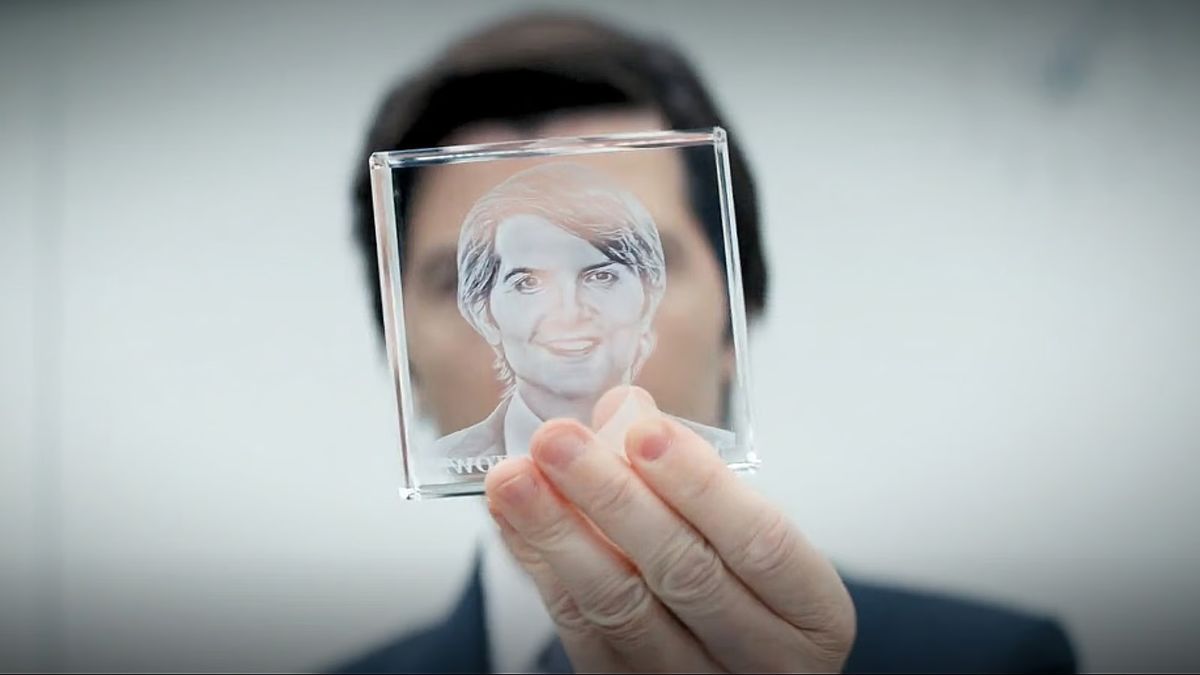
That vision of the ideal modern workplace extends to the interiors and the smallest details: the perfect paperclip, the perfect pen, and Innies receive absurd incentives, from finger traps to carved watermelons and glass cubes with their own portraits. Since the omnipresent Lumon manufactures everything, prop designers wanted to make every item unique and branded, so even the infantilising incentives use a Lumon powder blue palette, adding to the sterile feel of the offices.

02. Lumon Industries WoeMeter

Many props were created by prop master Cat Miller and her team, but some jobs were contracted out. The Lumon WoeMeter, which appears in Season 2, was created by Make3 in less than six weeks based on concept renders from the production designers. It’s typical of the often anachronistic tech at Lumon, which seems to have developed at a pace of its own, and it was made fully functional so actors could use it convincingly.

Make3 began by 3D modeling the machine’s components before before parametrically designing the entire machine. The main body was then milled from aluminum and side caps were made from solid titanium. The designers say they took the knobs from an early ’90s Nagra tape recorder and added meters powered by stepper motors and a series of LED displays controlled by an ESP-32 microcontroller on a custom-designed circuit board.

03. The MDR Terminals

Severance set director Andrew Baseman has said that the team realised early on that they couldn’t use real-world brands that viewers would recognise (hence why Severance escapes the blatant product placement of other Apple TV shows like Ted Lasso). This extends to the MDR terminals, which reinforce the retro-futurist aesthetic. Contradictory design features – a cathode-ray tube but also a touchscreen, a trackball for input – add to the enigma of what the data refiners are anyway doing.

The terminals look like toys more than high-tech computers by today’s standard, but they look like they must have been inspired by the 1977 Data General 6053, also known as the Dasher D2. Note that the Lumon keyboards have no escape key – a little Easter egg like that shows how much attention was dedicated to Severance’s prop design, even making meta references to the series’ themes.

04. Lumon Minicassette Recorder

Despite its advanced severance tech, Lumon still uses dictaphones from the 1960s

While everything in the Severed workspace is Lumon made, not all of the Severance props were created from scratch. That perfect-looking Lumon minicassette player? It appears to be a Philips LFH0085 from the later 1960s with the Philips logo removed and the Lumon logo added. It seems part of it may have been repainted. If you want your own, there are plenty on eBay. Prop master Cat Miller also tracked down genuine vintage erasers, which were stamped with the Lumon logo.

05. The Kier Paintings

One aspect of Severance’s design seems out of place with the rest of the visual style: the strange paintings celebrating Lumon’s founder Kier Eagan. Most of the pieces are pastiches of real-world works from different eras and styles, from Renaissance-era biblical imagery to Goya in the portrayal of an attack on MDR by Optics and Design and David Friedrich’s Wanderer Above the Sea of Fog in ‘Kier Invites You to Drink of His Water’.

Digital artist Hugh Sicotte planned how each painting would look based on references in the script, and the actor Marc Geller was hired to pose as Kier in different positions. The artist Danny Aviles, who also worked on storyboards for Severance, shared his iterations for the painting ‘Kier Pardons his Betrayers’ in the Instagram post above.

Conclusion

Severance’s prop design is a crucial aspect of its unique aesthetic, and the series has set a new standard for visual storytelling. From the retro-futuristic tech to the eerie corporate art, every detail is meticulously crafted to create a world that is both familiar and unsettling.

FAQs

Q: What is the significance of the Lumon Incentives in Severance?
A: The Lumon Incentives are a key aspect of the series’ visual style, reflecting the company’s emphasis on control and manipulation.

Q: Who designed the Lumon WoeMeter?
A: The Lumon WoeMeter was designed by Make3 in less than six weeks based on concept renders from the production designers.

Q: What inspired the MDR terminals?
A: The MDR terminals were inspired by the 1977 Data General 6053, also known as the Dasher D2.

Q: Why did the prop designers use vintage erasers in the series?
A: The prop designers used vintage erasers to add to the series’ retro-futuristic aesthetic and to create a sense of nostalgia.

Open AI model licenses often carry concerning restrictions

0

The Restrictive Landscape of AI Model Licensing

Confusion and Uncertainty in the AI Ecosystem

This week, Google released a family of open AI models, Gemma 3, which quickly garnered praise for their impressive efficiency. However, as a number of developers lamented on X, Gemma 3’s license makes commercial use of the models a risky proposition.

A Pattern of Restrictive Licensing

It’s not a problem unique to Gemma 3. Companies like Meta also apply custom, non-standard licensing terms to their openly available models, and the terms present legal challenges for companies. Some firms, especially smaller operations, worry that Google and others could "pull the rug" on their business by asserting the more onerous clauses.

The Open Source Initiative’s Concerns

"The restrictive and inconsistent licensing of so-called ‘open’ AI models is creating significant uncertainty, particularly for commercial adoption," said Nick Vidal, head of community at the Open Source Initiative, a long-running institution aiming to define and "steward" all things open source. "While these models are marketed as open, the actual terms impose various legal and practical hurdles that deter businesses from integrating them into their products or services."

Reasons for Restrictive Licensing

Open model developers have their reasons for releasing models under proprietary licenses as opposed to industry-standard options like Apache and MIT. AI startup Cohere, for example, has been clear about its intent to support scientific — but not commercial — work on top of its models.

Gemma and Meta’s Licenses

Gemma and Meta’s Llama licenses, in particular, have restrictions that limit the ways companies can use the models without fear of legal reprisal. Meta, for instance, prohibits developers from using the "output or results" of Llama 3 models to improve any model besides Llama 3 or "derivative works." It also prevents companies with over 700 million monthly active users from deploying Llama models without first obtaining a special, additional license.

Gemma’s License

Gemma’s license is generally less burdensome. However, it grants Google the right to "restrict (remotely or otherwise) usage" of Gemma that Google believes is in violation of the company’s prohibited use policy or "applicable laws and regulations."

Consequences for the AI Ecosystem

These terms don’t just apply to the original Llama and Gemma models. Models based on Llama or Gemma must also adhere to the Llama and Gemma licenses, respectively. In Gemma’s case, that includes models trained on synthetic data generated by Gemma.

A Call to Action

"Most companies have a set of approved licenses, such as Apache 2.0, so any custom license is a lot of trouble and money," said Florian Brand, a research assistant at the German Research Center for Artificial Intelligence. "Small companies without legal teams or money for lawyers will stick to models with standard licenses."

Conclusion

The current landscape of AI model licensing is riddled with confusion, restrictive terms, and misleading claims of openness. The AI industry should align with established open source principles to create a truly open ecosystem.

FAQs

Q: What are the concerns with Gemma 3’s license?
A: Gemma 3’s license limits the ways companies can use the models without fear of legal reprisal, making commercial use a risky proposition.

Q: What about Meta’s Llama license?
A: Meta’s Llama license prohibits developers from using the "output or results" of Llama 3 models to improve any model besides Llama 3 or "derivative works."

Q: Who is concerned about these restrictive licenses?
A: Companies like Moody’s, Gretel, and the Open Source Initiative are concerned about the impact of these licenses on the AI ecosystem.

Q: What is the solution?
A: The AI industry should align with established open source principles to create a truly open ecosystem.

Google Gemini Just Made Two of Its Best Features Available for Free

Google Makes Two of Its Most Powerful AI Features Available to Free Users

Google has gone from being a dark horse in the AI space to a frontrunner with its Gemini offerings. To keep up that momentum, Google is announcing a slew of Gemini updates that will enhance the AI assistant’s overall experience — including for free users.

Deep Research

Deep Research is an agentic feature that can conduct thorough research on your behalf by creating a multi-step research plan, browsing the web extensively for you for a couple of minutes, and then creating a comprehensive report. It is a powerful tool for research because it can complete in-depth research in minutes that could otherwise take users hours. To build on the already powerful experience even further, Google upgraded Deep Research with Gemini 2.0 Flash Thinking Experimental, which should result in even higher-quality, multi-page reports.

Gems

Gems in Gemini allows users to create their own personalized AI experts on any topic by customizing AI chatbots for their specific needs without extensive coding or machine learning training skills. The feature was only available to Google One AI Premium Plan subscribers when launched. Now, Gems is beginning to roll out for free to everyone in the Gemini app.

Updates and Launches

To set up a Gem, a user simply has to give it an instruction, name it, and use it when needed to perform a specific function. Some use cases for Gems are personalizing them to tackle repetitive tasks such as being a coding partner, writing editor, or learning coach. The feature is nearly identical to ChatGPT’s custom GPTs, which can also be instructed to perform a function, be named, and shared with others.

Conclusion

Google’s decision to make these features available to free users is a significant step forward in making AI more accessible and user-friendly. With the addition of Deep Research and Gems, users will be able to unlock a new level of assistance from Gemini, making it an even more powerful tool for research and personal productivity.

FAQs

  • Q: What is Deep Research?
    A: Deep Research is an agentic feature that can conduct thorough research on your behalf by creating a multi-step research plan, browsing the web extensively for you for a couple of minutes, and then creating a comprehensive report.
  • Q: What is Gems?
    A: Gems in Gemini allows users to create their own personalized AI experts on any topic by customizing AI chatbots for their specific needs without extensive coding or machine learning training skills.
  • Q: How do I set up a Gem?
    A: To set up a Gem, a user simply has to give it an instruction, name it, and use it when needed to perform a specific function.
  • Q: What are some use cases for Gems?
    A: Some use cases for Gems are personalizing them to tackle repetitive tasks such as being a coding partner, writing editor, or learning coach.

Joby and Virgin Atlantic to Launch UK Air Taxi Service

0

Air Taxis: The Future of Urban Travel?

Joby Aviation and Virgin Atlantic Announce Partnership for Electric Air Taxi Service in the UK

Virgin Atlantic has announced a partnership with California-based Joby Aviation to launch an air taxi service in the UK, marking the latest move in the growing trend of electric aircraft vying to become the taxis of the sky. The partnership will allow customers to book a seat in one of Joby’s multi-rotor aircraft through the Virgin Atlantic website and app, with the vehicles featuring both companies’ logos.

How it Works

Joby’s all-electric aircraft has six rotors and seats five, including the pilot. The vehicle can take off vertically, like a helicopter, and then shift into forward flight using tilt rotors. According to Joby, the aircraft can reach a top speed of 200mph, travel 150 miles on a single battery charge, and is 100 times quieter than a conventional aircraft.

Regulatory Hurdles

Air taxi operators face several hurdles before they can become a reality, including safety regulations and airport designs. The UK’s Civil Aviation Authority has started looking into how airports would need to be reevaluated for air taxi flights, including charging and air space.

Future of Air Taxis

Joby and Virgin Atlantic envision 15-minute flights from Manchester Airport to Leeds, or 8-minute journeys from Heathrow Airport to Canary Wharf. Joby is planning a network of landing locations around the UK, and expects to offer prices that are comparable with "existing premium ground ridesharing options at launch."

The Competition

Air taxis, sometimes misidentified by the mainstream media as "flying cars," are essentially helicopters without the noisy, polluting gas motors (though they certainly have their own unique noise profile). In addition to Joby, companies like Archer Aviation, Volocopter, and Beta Technologies have claimed they are on the cusp of launching services that will eventually scale up nationwide. However, others have floundered; German company Lilium recently said that two of its subsidiaries were insolvent and could cease operations.

Joby’s Progress

Joby has made significant progress in completing four of the five stages required for commercial passenger service in the US, and expects to carry its first passengers late this year or early next. The company has also recently delivered a second aircraft to the US Air Force as part of a testing partnership.

Conclusion

The partnership between Joby and Virgin Atlantic marks an exciting step forward in the development of air taxis, but there are still many regulatory hurdles to overcome. As the industry continues to evolve, it will be important to closely monitor the progress of companies like Joby and others, as they work to bring this innovative mode of transportation to the masses.

Frequently Asked Questions

Q: What is an air taxi?
A: An air taxi is a type of electric aircraft that can take off and land vertically, like a helicopter, and then shift into forward flight using tilt rotors.

Q: How do air taxis work?
A: Air taxis use electric motors to power their rotors, which can take off and land vertically, and then shift into forward flight using tilt rotors.

Q: How fast can air taxis go?
A: Air taxis can reach speeds of up to 200mph, depending on the model and design.

Q: How far can air taxis travel on a single charge?
A: Air taxis can travel up to 150 miles on a single battery charge, depending on the model and design.

Q: Are air taxis safe?
A: Air taxis are designed to meet strict safety standards, and are subject to rigorous testing and regulation before they can carry passengers.

Nvidia GTC 2025

0

Nvidia’s GTC Conference: What to Expect

Keynote Address

CEO Jensen Huang will give a keynote address at the SAP Center on Tuesday at 10 a.m. Pacific, focusing on AI and accelerating computing technologies, according to Nvidia. The company is also teasing reveals related to robotics, sovereign AI, AI agents, and automotive.

GPU-related Announcements

Nvidia typically reserves a big chunk of the conference for GPU-related debuts. A new, upgraded iteration of the company’s Blackwell chip lineup seems likely. The Blackwell B300 series, codenamed Blackwell Ultra, is slated for release in the second half of this year. It packs more memory (288GB), an attractive feature for customers looking to run and train memory-hungry AI models.

The next-gen GPU series, Rubin, is also expected to get a mention at GTC alongside Blackwell Ultra. Due out in 2026, Rubin promises to deliver a "big, big, huge step up" in computing power. Huang has also hinted that he’ll talk about post-Rubin products at GTC, which could include Rubin Ultra GPUs or the GPU architecture that will come after the Rubin family.

Quantum Computing Advances

Nvidia has scheduled a "quantum day" for GTC, during which it will host execs from prominent companies in the space to "map the path toward useful quantum applications."

Overcoming Challenges

One thing’s for sure: Nvidia could use a win. Early Blackwell cards reportedly suffered from severe overheating issues, causing customers to cut their orders. U.S. export controls and fears of tariffs have also depressed Nvidia’s stock price in recent months. The success of Chinese AI lab DeepSeek has further raised concerns about the demand for powerful GPUs like Blackwell.

However, Huang has asserted that DeepSeek’s rise to prominence will in fact be a net positive for Nvidia, as it will accelerate the broader adoption of AI technology. He has also pointed to the growth of power-hungry "reasoning" models like OpenAI’s o1 as Nvidia’s next mountain to climb.

Conclusion

Nvidia’s GTC conference is expected to be a significant event, with a keynote address, GPU-related announcements, and discussions on quantum computing and AI. While the company faces challenges, it remains a dominant player in the GPU market, with an estimated 82% market share.

Frequently Asked Questions

Q: What is Nvidia’s GTC conference?
A: GTC (GPU Technology Conference) is Nvidia’s biggest conference of the year, featuring keynote addresses, GPU-related announcements, and discussions on AI and quantum computing.

Q: What will Jensen Huang discuss in his keynote address?
A: Huang will focus on AI and accelerating computing technologies, as well as reveals related to robotics, sovereign AI, AI agents, and automotive.

Q: What new GPU series can I expect to be announced at GTC?
A: Nvidia is expected to announce the Blackwell B300 series, codenamed Blackwell Ultra, and the next-gen GPU series, Rubin, which promises to deliver a "big, big, huge step up" in computing power.

Q: Will Nvidia discuss quantum computing at GTC?
A: Yes, Nvidia has scheduled a "quantum day" to host execs from prominent companies in the space to "map the path toward useful quantum applications."

Top Media Generation Options

0

Text Generation Trends

A Two-Way Race

The study shows that among Poe subscribers, Anthropic models are quickly becoming as popular as OpenAI, especially after the release of Claude 3.5 Sonnet. The usage of text models from both providers is now almost evenly split.

Rapid Adoption of New Releases

Poe users often switch to the latest models, even if loyal to a specific brand. For example, people rapidly move from OpenAI’s GPT-4 to GPT-4o or from Claude 3 to Claude 3.5.

Emerging Players

DeepSeek’s R1 and V3 have captured about 7% of the messages on Poe. Google’s Gemini family has seen a slight decline in use among Poe subscribers but remains a key player.

Image Generation Trends

Market Share of Early Movers

DALL-E-3 and StableDiffusion were once leaders in image generation, but their shares have dropped by about 80%. This decline occurred as the number of image generation models increased from three to around 25.

Leading Models

The FLUX family from BlackForestLabs is now the leading image model, holding a nearly 40% share, while Google’s Imagen3 family has about a 30% share.

Smaller Models

Smaller image providers like Playground and Ideogram update their services frequently, which helps them maintain a loyal user base. However, they only account for about 10% of Poe’s image generation usage.

Video Generation Trends

An Emerging Industry

Video generation was almost nonexistent on Poe until late 2024, but it has quickly grown in popularity. Now, at least eight providers offer this ability.

Runway: Most Used Model

Runway’s single video model handles 30–50% of video generation requests. Although its usage is lower than it used to be, many people still choose this brand.

New Player: Veo-2

Since launching on Poe, Google’s Veo-2 has gained about 40% of the market, showing how quickly customer preferences can change. Other new models, such as Kling-Pro v1.5, Hailuo-AI, HunyuanVideo, and Wan-2.1, have captured around 15% of the market.

Key Takeaway & Looking Ahead

The data shows a clear pattern of newer models replacing older ones in user preference. If you want the best performance, use the latest version rather than stick with familiar but outdated models.

Whether these usage patterns will hold steady or continue to shift remains to be seen. At some point, cost will be a barrier to adoption, as new models tend to get more expensive with every release.

In future reports, Poe plans to share insights on how different models fit various tasks and price points.

FAQs

Q: Which models are most popular for text generation?
A: The study shows a two-way race between Anthropic and OpenAI models, with both providers having an almost even split in usage.

Q: How quickly do users adopt new models?
A: Poe users tend to rapidly move to the latest models, even if loyal to a specific brand.

Q: Who are the emerging players in image generation?
A: DeepSeek’s R1 and V3, and Google’s Gemini family, are among the emerging players in image generation.

Q: What is the current state of video generation?
A: Video generation is an emerging industry, with at least eight providers offering this ability, and Runway’s single video model holding a significant market share.

Google Launches Gemini with Personalization

Google Unveils Gemini with Personalization: A Conversational AI Assistant That Understands You Better

How it Works

Google has introduced an experimental feature, Gemini with Personalization, which allows users to connect their Search history to better inform the assistant’s responses. This feature is powered by an experimental Gemini 2.0 Flash Thinking model, which analyzes Search history to see if it can add context to the answer. Users must manually turn on the feature by going to Gemini Apps and selecting the "Personalization (experimental)" model from the drop-down menu.

Privacy Concerns

Google has addressed privacy concerns by giving users control over their data. When using the experiment, Gemini will display a clear banner with a link to disconnect from Search history at any time. Users can also edit their Search history as they normally would, adding another layer of control.

Who Can Access

Gemini with Personalization is available as an experimental feature to Gemini and Gemini Advanced subscribers on the web, with a gradual rollout planned for mobile. The feature is unavailable to users under 18, Google Workspace, and Education users.

Conclusion

The introduction of Gemini with Personalization marks a significant step forward in the development of conversational AI assistants. By understanding users’ needs conversationally and having access to their Search history, Gemini can provide more accurate and personalized responses. While privacy concerns are understandable, Google has taken steps to address these concerns by giving users control over their data.

Frequently Asked Questions

  • What is Gemini with Personalization?
    Gemini with Personalization is an experimental feature that allows users to connect their Search history to better inform the assistant’s responses.
  • How do I turn on Gemini with Personalization?
    Users must go to Gemini Apps and select the "Personalization (experimental)" model from the drop-down menu.
  • How do I disconnect from Search history?
    Gemini will display a clear banner with a link to disconnect from Search history at any time.
  • What if I’m not comfortable with Gemini accessing my Search history?
    You can choose not to connect Gemini to your Search history at any time.
  • Will Google use my Search history without my permission?
    No, Google will only use your Search history if it can add context to the answer, and you will be asked for permission before connecting to apps or your Search history.

Air Taxis: The Latest on the Flying Electric Cars Bringing the Jetsons’ Dream to Life

0

The Future of Air Travel: A Glimmer of Reality

A Decade of Progress towards Instant Air Transportation

There’s a future where we don’t need roads and regular folks like you and me can jump into a boat-sized electric pod and just fly anywhere on a whim. While we’ve been perfecting the miracle of human flight for more than a century, instant air transportation has long been relegated to science fiction.

Companies Taking to the Skies

But in the last decade, many companies have stepped up to help get flying cars and air taxis out of the Hollywood movie magic bubble. Startups like Joby Aviation and Archer are building electric vertical take-off and landing (eVTOL) aircraft that can taxi several people around in the sky without burning nasty fuel. The air taxi dream is already passing some regulatory milestones: the FAA has now established rules.

A Growing Industry with Big Players

Although these vehicles aren’t exactly the "flying cars" we’ve imagined, this is a rapidly growing new field with big established automakers like Toyota, Hyundai, Stellantis, and others either bankrolling their own ventures or one of the dozens of startups. And there’s a whole lot of drama and unpredictability in this new industry, from fighting over "stolen" patents to the companies that’ve failed to survive, like Lilium and the Larry Page-funded Kitty Hawk.

The Road Ahead

As the air taxi industry continues to evolve, we can expect to see more advancements in technology, infrastructure, and regulations. With big players investing in this space, it’s likely that we’ll see more innovations and breakthroughs in the coming years. Whether you’re a thrill-seeker or just someone looking for a more convenient way to get around, the future of air travel is exciting and promising.

Frequently Asked Questions

Q: What is an eVTOL aircraft?
A: eVTOL stands for electric vertical take-off and landing, which means these aircraft can take off and land vertically like a helicopter, but fly like an airplane.

Q: Is this the same as a flying car?
A: No, these vehicles are not exactly the "flying cars" we’ve imagined, but rather a new type of aircraft designed for short-distance, on-demand air travel.

Q: How many companies are working on air taxis?
A: There are dozens of startups and established companies working on air taxi technology, including Joby Aviation, Archer, Toyota, Hyundai, Stellantis, and more.

Q: How fast will air taxis be?
A: Air taxis are expected to be fast, with some prototypes reaching speeds of up to 150 mph (241 km/h).

Navigating AI-Powered Cyber Threats: 4 Expert Security Tips for Businesses

Why AI Cyber Security Threats are Different

Cybercriminals are weaponizing artificial intelligence (AI) across every attack phase. Large language models (LLMs) craft hyper-personalized phishing emails by scraping targets’ social media profiles and professional networks. Generative adversarial networks (GAN) produce deepfake audio and video to bypass multi-factor authentication. Automated tools like WormGPT enable script kiddies to launch polymorphic malware that evolves to evade signature-based detection.

Why AI Cyber Security Threats are Different

AI provides malicious actors with sophisticated tools that make cyber attacks more precise, persuasive, and challenging to detect. For example, modern generative AI systems can analyze vast datasets of personal information, corporate communications, and social media activity to craft hyper-targeted phishing campaigns that convincingly mimic trusted contacts and legitimate organizations. This capability, combined with automated malware that adapts to defensive measures in real-time, has dramatically increased both the scale and success rate of attacks.

Implementing Zero-Trust Architecture

The traditional security perimeter is no longer sufficient in the face of AI-enhanced threats. A zero-trust architecture operates on a "never trust, always verify" principle, ensuring that every user, device, and application is authenticated and authorized before gaining access to resources. This approach minimizes the risk of unauthorized access, even if an attacker manages to breach the network.

Educating and Training Employees on AI-Driven Threats

Organizations can reduce the risk of internal vulnerabilities by fostering a culture of security awareness and providing clear guidelines on using AI tools. Humans are complex, so simple solutions are often the best.

Monitoring and Regulating Employee AI Use

The accessibility of AI technologies has led to widespread adoption across various business functions. However, unsanctioned or unmonitored use of AI — often called "shadow AI" — can introduce significant security risks. Employees may inadvertently use AI applications that lack proper security measures, leading to potential data leaks or compliance issues.

Collaborating with AI and Cybersecurity Experts

The complexity of AI-driven threats necessitates collaboration with experts specializing in AI and cybersecurity. Partnering with external firms can provide organizations access to the latest threat intelligence, advanced defensive technologies, and specialized skills that may not be available in-house.

Conclusion

AI-enhanced cyber threats require a comprehensive approach to security, incorporating zero-trust architecture, employee education and training, and monitoring and regulation of AI use. By integrating AI into their security infrastructure, organizations can enhance their ability to detect and respond to incidents swiftly, reducing the window of opportunity for attackers.

Frequently Asked Questions

Q: What is the primary concern in the age of AI-enhanced cyber threats?
A: The primary concern is the ability of AI to craft hyper-personalized phishing emails and produce deepfake audio and video to bypass multi-factor authentication.

Q: What is the best course of action to take against AI-enhanced cyber threats?
A: Implementing a zero-trust architecture and verifying every user, device, and application before granting access to resources is the best course of action.

Q: How can organizations reduce the risk of internal vulnerabilities?
A: Fostering a culture of security awareness and providing clear guidelines on using AI tools can help reduce the risk of internal vulnerabilities.

Q: What is the importance of collaboration with AI and cybersecurity experts?
A: Collaboration with experts specializing in AI and cybersecurity is crucial in providing access to the latest threat intelligence, advanced defensive technologies, and specialized skills that may not be available in-house.