Home Blog Page 216

Facing the Looming Threat of A.I.

0

The Rise of the Open Social Web

A New Era in Online Communication

A tech industry veteran, Mike McCue, is challenging the dominance of social media’s automated grip on our attention, betting that humans, not machines, should curate online experiences. As the CEO of Flipboard, McCue is positioning his company’s new Surf browser as part of a growing community of decentralized social media options, alongside emerging platforms like Bluesky and Mastodon.

A Decentralized Future

The timing could be fortuitous, as online publishers struggle with an old problem and a new threat. For years, they have worried that the internet’s middlemen, huge platforms like Facebook and TikTok, have weakened their ties with the people who read or view their material. Now, publishers face another issue: New A.I. systems that could completely eliminate those fraying links with their audiences.

The Power of ActivityPub

With the aid of several internet technical standards that encourage the growth of a new kind of social media, McCue has created a potential path where media companies can build direct relationships with readers. One of these new standards is ActivityPub, a protocol that allows social media platforms to talk to one another, allowing users on different networks to interact seamlessly – similar to how email works across different providers.

A New Era of Advertising

The most significant potential of the open social web is that it will permit companies to step away from invasive advertising, McCue said. He describes the alternative as "contextual" advertising to particular interests rather than individuals. For example, ads can be posted to web feeds focused on topics such as backpacking or fashion.

The Future of Online Publishing

In addition to Meta’s decision to base Threads on ActivityPub, news organizations like Bloomberg and the BBC have begun experimenting with the technology, as have blogging platforms such as Medium, WordPress, and Ghost. ActivityPub has also led to a wave of start-up efforts such as Mastodon, a microblogging service that now has more than 14 million accounts connected by a network of over 14,000 host computers.

Conclusion

The transition from centralized to decentralized models will require a cultural shift among both publishers and audiences. While there are significant product questions to solve, such as how to handle moderation and content discovery in a decentralized environment, the early adopters remind some internet pioneers of the first few years of the World Wide Web – a time when anything seemed possible, and innovation was around every corner.

FAQs

Q: What is the open social web?
A: The open social web is a decentralized social media platform that allows users to communicate and share information without relying on a single centralized service.

Q: What is ActivityPub?
A: ActivityPub is a protocol that allows social media platforms to talk to one another, allowing users on different networks to interact seamlessly – similar to how email works across different providers.

Q: What are the benefits of the open social web?
A: The open social web allows for more direct and meaningful engagement between publishers and their audience, as well as a shift away from invasive advertising and towards contextual advertising.

Critics Have Missed the Point of the WTA’s “Generic” Rebrand

0

The WTA’s New Visual Identity: A Bold New Era for Women’s Tennis

The WTA recently debuted its new visual identity, marking a refreshingly bold era for women’s tennis. The new logo design has been met with criticism from some, but I believe they’re missing the point. The WTA’s new look is not just about aesthetics; it’s about establishing an empowering message to inspire future generations and "rally the world" behind the sport.

A Minimalist Yet Bold Design

The new logo features an upgraded font with a more athletic feel, reminiscent of the bold, italicized design of the EA logo. The "Heritage Purple" color scheme brings a rich sense of identity to the brand, while subtle flourishes like the curved bar of the ‘A’ evoke the sport itself, mimicking the arch of a bouncing ball.

Criticism and Controversy

Not everyone has been pleased with the new logo design. Grand Slam champion Kristina Mladenovic questioned, "What does it represent?" and added that the "Previous logo was so much better." However, this criticism overlooks the fact that the new logo is just one part of a multifaceted rebrand.

Rally the World: A New Campaign

The new identity was created by ChapterX and Nomad Studio, and it’s a future-proof brand that spotlights the WTA’s most important asset – its players. The accompanying ‘Rally the World’ campaign highlights individual success stories, repositioning the court as a global stage to inspire a new generation of fans. According to WTA CEO Portia Archer, "This bold new brand provides a distinct and powerful voice to tell our stories and showcase the WTA as the global sports and entertainment brand where women’s tennis shines."

A Strong Brand Ethos

While it’s easy to get lost in aesthetics, sometimes stripped-back branding is merely a complementary tool to carry a wider message, allowing us to focus on what really matters. The WTA’s new identity is an authoritative, fuss-free identity that symbolizes strength in women’s sport – contemporary and bold, it’s not weighed down by over-engineered design and tired ‘female empowerment’ branding. The players are the brand, and their talent speaks for itself.

Conclusion

The WTA’s rebrand is an authoritative, bold, and refreshing change for the sport. It’s not just about design; it’s about establishing a strong brand ethos that will stand the test of time. By focusing on the players and their stories, the WTA is poised to inspire a new generation of fans and cement its place as a leading global sports brand.

FAQs

Q: What is the WTA’s new visual identity?
A: The WTA has introduced a new logo design, font, and color scheme, featuring a more athletic feel and a bold, italicized design.

Q: What is the purpose of the new identity?
A: The new identity is part of a multifaceted rebrand aimed at establishing an empowering message and "rallying the world" behind women’s tennis.

Q: What is the ‘Rally the World’ campaign?
A: The ‘Rally the World’ campaign is a new initiative that spotlights individual success stories and repositions the court as a global stage to inspire a new generation of fans.

Apple Intelligence’s true potential lies in third-party apps

Apple’s AI Ambitions: How Third-Party Integrations Elevate Apple Intelligence Features

Apple is gradually upgrading its device lineup to adopt its artificial intelligence features under the Apple Intelligence umbrella. While progress is underway, the pace is slow, with the newest iPad base model excluded from AI features entirely. However, the company is emphasizing its focus on third-party integrations with Apple Intelligence.

Simple, Yet Effective: Apple Intelligence in Third-Party Apps

The current state of Apple Intelligence is limited to basic, entry-level features, such as Writing Tools for text generation and summarization, and AI tools for art generation. While these offerings are expected to expand with future updates, you can now use these tools in third-party apps, elevating their power.

Real-World Applications

For example, you can use Image Playground, Apple’s generative art tool, to generate images within a Final Cut Pro project and then drop these images into the timeline to create a shot list or AI-generated storyboard. This can be done on an iPad, MacBook, or Mac compatible with Apple Intelligence.

iPad-specific Features

For the iPad, you can use your Apple Pencil or Apple Pencil Pro to integrate live drawings and scribbles into third-party apps. The Notability app for iPad has Apple Intelligence integrations that allow you to use text generation and image generation features within your notes, Apple Pencil or not. Similarly, the Bear notes app supports Apple Intelligence features almost as natively as the Apple Notes app, with some exceptions.

Designers’ Delight

Morpholio Trace, a designer app for creative professionals, features integrations powered by AI and the neural engine necessary to support Apple Intelligence. You can run the app on an iPad Air with an M3 processor and enjoy the ease of removing an image’s background with a couple of taps and real-time rendering of complex graphics.

Apple’s Expanded Graphics Capabilities

The new MacBook Air with the Apple M4 chip, iPad Air with the M3 chip, Mac Studio with an M4 Max chip, and M3 Ultra support all advanced graphics architectures. These devices are also a great way to test the neural engine’s capabilities with Apple Intelligence. These tools are more accessible than ever on midrange and high-end Apple devices, making it easier for students, small business owners, creators, and independent contractors to keep their AI running on-device and secure Apple servers.

What’s Next?

Apple has already released many of its promised AI features, but we’re looking forward to the iOS 18.5 drop to see what makes Apple Intelligence stand out. The 18.5 update is a few months from general release, with the iOS 18.4 update only in beta testing. iOS 18.5 is expected to bring the more attention-grabbing Siri updates that Apple showcased during its last WWDC event last summer. This is where you’ll be able to use Siri’s touted on-screen awareness, integrations with various native and third-party apps, and a more natural, conversational style that maintains the context of your preferences.

FAQs

  • What is Apple Intelligence?
    • Apple Intelligence is Apple’s artificial intelligence feature that enables AI-powered capabilities on Apple devices.
  • What are the current features of Apple Intelligence?
    • The current features of Apple Intelligence include Writing Tools for text generation and summarization, and AI tools for art generation.
  • Can I use Apple Intelligence in third-party apps?
    • Yes, you can use Apple Intelligence features in third-party apps, elevating their power.
  • What devices support Apple Intelligence?
    • The new MacBook Air with the Apple M4 chip, iPad Air with the M3 chip, Mac Studio with an M4 Max chip, and M3 Ultra support all advanced graphics architectures and are a great way to test the neural engine’s capabilities with Apple Intelligence.

CodeIgniter Form Validation 2025

Why is Form Validation Important?

Form validation is vital for maintaining data integrity, enhancing security, and providing a better user experience. It prevents incorrect data entries, sanitizes inputs to protect against SQL injection, and informs users of any input errors.

Setting Up CodeIgniter for Form Validation

To begin with form validation in CodeIgniter, ensure you have a working installation of CodeIgniter 4. If you’re starting from scratch, you can set it up by following the official installation guide.

Step 1: Create a Controller

First, create a controller where you will define the methods to handle form data and validation.

namespace App\Controllers;

use CodeIgniter\Controller;

class FormController extends Controller
{
    public function index()
    {
        return view('form_view');
    }

    public function submit()
    {
        $validation = \Config\Services::validation();

        $validation->setRules([
            'username' => 'required|min_length[5]',
            'email' => 'required|valid_email',
            'password' => 'required|min_length[8]'
        ]);

        if ($validation->withRequest($this->request)->run() == FALSE) {
            echo view('form_view', ['validation' => $validation]);
        } else {
            // Process validated data
        }
    }
}

Step 2: Create a View

Next, create a view for the form.

<!DOCTYPE html>
<html lang="en">
<head>
    <meta charset="UTF-8">
    <title>Form Validation Example</title>
</head>
<body>
    <form action="" method="post">
        <label for="username">Username:</label>
        <input type="text" id="username" name="username"><br><br>
        <label for="email">Email:</label>
        <input type="email" id="email" name="email"><br><br>
        <label for="password">Password:</label>
        <input type="password" id="password" name="password"><br><br>
        <input type="submit" value="Submit">
    </form>
</body>
</html>

Best Practices for Form Validation in 2025

  • Real-Time Validation: Implement real-time form validation using AJAX to enhance user experience.
  • Custom Validation Rules: CodeIgniter allows the creation of custom validation rules for specific needs. This is essential for complex form validation.
  • Security First: Always sanitize and validate user input to guard against attacks such as SQL injection and XSS.
  • User-Friendly Feedback: Provide clear and concise feedback to users regarding validation errors.

Related Topics

Handling form validation in CodeIgniter is a crucial skill for keeping your web applications robust and user-friendly in 2025. By following the steps and best practices outlined in this article, you can ensure secure and effective form processing in your projects.

Conclusion

In conclusion, form validation is a vital aspect of web development, and CodeIgniter provides a robust framework for handling form data and validation. By following the steps outlined in this article, you can ensure that your forms are secure, user-friendly, and effective.

FAQs

Q: What is form validation?
A: Form validation is the process of ensuring that user input is valid and meets the requirements of a form.

Q: Why is form validation important?
A: Form validation is important for maintaining data integrity, enhancing security, and providing a better user experience.

Q: How can I implement form validation in CodeIgniter?
A: You can implement form validation in CodeIgniter by creating a controller to handle form data and validation, and a view to display the form.

Q: What are the best practices for form validation in 2025?
A: The best practices for form validation in 2025 include implementing real-time validation, custom validation rules, security first, and user-friendly feedback.

Google Launches Data Science Agent for Colab

Getting Started with Data Science and AI: The New Data Science Agent

Simplifying Data Analysis with AI

Getting started with data science and AI often means spending a lot of time setting things up – loading libraries, organizing data, and setting environments. This tedious work can often take away focus from tasks that truly matter, such as data exploration and deriving insights from data.

Introducing the Data Science Agent

Recent AI advancements are helping make it easier to skip the setup phase. What if there is an agent specifically designed for data analysis? Could it help analyze, sort, and draw insights from vast volumes of data? This is exactly what Google aims to do with a new Data Science Agent for Google Colab, which is the company’s free cloud-hosted Jupyter Notebook tool for coding, data science, and AI.

How Does it Work?

The tech giant is addressing several pain points in data science and AI model development with the new agent. Not only does the tool reduce setup time, but it can also lower the barrier to entry by enabling less technical users to generate complete Colab notebooks from natural language descriptions. With Google Colab, users can write and run Python code directly in their browser. The new agent minimizes the need for complex setups, making data science and AI development more accessible. Users can also process data, identify patterns through visualizations, and extract meaningful insights, according to the company.

Key Features

  • Reduces setup time
  • Lowers the barrier to entry
  • Enables less technical users to generate complete Colab notebooks from natural language descriptions
  • Minimizes the need for complex setups
  • Enables data processing, pattern identification, and insight extraction

Feedback from Early Users

The Data Science Agent is powered by Google’s most advanced large language model, the Gemini 2.0. Initially launched as a stand-alone project, Google decided to integrate it into Colab, enabling users to access the agent directly from a Colab notebook. The tool is available for free to users aged 18-plus in select countries and languages.

According to Google, the initial testing and feedback have been promising. Reportedly, early users of the tool include researchers at Lawrence Berkeley National Laboratory, who have reported significant time savings. One scientist at the lab working on tropical wetland methane emissions reported a reduction in data processing time from one week to just five minutes using the Data Science Agent.

Challenges and Limitations

While the tool may help simplify data analysis with AI, users on the free tier may face session timeouts or resource restrictions. They may have to upgrade to one of the paid plans. Other potential challenges include AI-generated code inaccuracies, which may require manual debugging, and data privacy concerns, as Google stores anonymized prompts and generated code. Users might have to be careful about sharing sensitive information.

Conclusion

The introduction of the Data Science Agent and the upgraded Vertex AI Search reflect Google’s strategic focus on using AI to improve data accessibility and analysis across sectors. It also aligns with industry trends toward AI-driven automation, catering to the growing demand for smarter data processing.

Frequently Asked Questions

Q: What is the Data Science Agent?
A: The Data Science Agent is a new tool designed to help users analyze, sort, and draw insights from vast volumes of data.

Q: How does it work?
A: The agent is powered by Google’s most advanced large language model, the Gemini 2.0, and can help users process data, identify patterns, and extract meaningful insights.

Q: Is the Data Science Agent available for free?
A: Yes, the tool is available for free to users aged 18-plus in select countries and languages.

Q: What are the challenges and limitations of the Data Science Agent?
A: Users on the free tier may face session timeouts or resource restrictions, and there may be AI-generated code inaccuracies and data privacy concerns.

Celebrate Mario Day with New Nintendo Switch OLED Bundle

0

The Best Nintendo Switch OLED Deal Today

What’s Special About March 10th?

This coming Monday, March 10th, is officially Mario Day! If you’re wondering what’s so special about this date, you can cleverly spell Mario’s name (kind of) using a combination of the month and date like this – MAR10, get it?

A Special Deal for Mario Day

To celebrate this day and this incredibly iconic video game character, Nintendo has dropped a new bundle deal on its popular Switch OLED console. This bundle includes a digital copy of Super Mario Bros. Wonder for the very first time, plus a 3-month subscription to Nintendo Switch Online (worth $7.99). You can get this deal over at Best Buy and Walmart in the US for $349 in total.

Is This the Best Price?

I’ll be honest, this isn’t the best price we’ve seen on a Nintendo Switch OLED console, as during seasonal sales such as Black Friday, we’ve seen Switch OLED bundles sell for as low as $299.99 in the US ($264 for an imported model), and as low as £228 in the UK. However, I think it’s going to be a while before we see the Switch OLED drop to these low prices again, and it certainly won’t be before the Nintendo Switch 2 is released. So, if you’re in need of a Switch OLED now, then this is a great deal.

Not Sure if the Nintendo Switch OLED is Right for You?

Take a look at our Nintendo Switch vs Switch OLED explainer for some guidance.

The Best Deals on Nintendo Switch OLED

Below you’ll find the best deals and lowest prices on the Nintendo Switch OLED model in your region and worldwide, using our clever deals widget updating 24/7.

Conclusion

If you’re looking for a new console, the Nintendo Switch OLED bundle deal is a great option. While it’s not the cheapest, it’s a great opportunity to get a digital copy of Super Mario Bros. Wonder and a 3-month subscription to Nintendo Switch Online. Don’t miss out on this deal!

FAQs

Q: What’s the best price for a Nintendo Switch OLED console?
A: The best price for a Nintendo Switch OLED console varies depending on the region and sales. However, during seasonal sales, we’ve seen prices as low as $299.99 in the US and £228 in the UK.

Q: Is the Nintendo Switch OLED worth the price?
A: The Nintendo Switch OLED is a great console, and the bundle deal is a great opportunity to get a digital copy of Super Mario Bros. Wonder and a 3-month subscription to Nintendo Switch Online. However, if you’re looking for a cheaper option, you might want to wait for a sale.

Q: Can I get the deal at other retailers?
A: Yes, you can get the deal at Best Buy and Walmart in the US, but check other retailers like Amazon, GameStop, and more to see if they offer the same deal.

The US Army Is Using ‘CamoGPT’ to Purge DEI From Training Materials

0

The US Army’s Use of AI to Identify and Remove DEIA References

Background

In January 2021, President Donald Trump signed an executive order titled "Restoring America’s Fighting Force," which directed the Defense Secretary to eliminate all Pentagon policies promoting "un-American, divisive, discriminatory, radical, extremist, and irrational theories" regarding race and gender.

The Use of CamoGPT

To carry out this directive, the Army’s Training and Doctrine Command (TRADOC) is employing a prototype generative artificial intelligence tool called CamoGPT. CamoGPT is a language model designed to review policies, programs, publications, and initiatives for references to diversity, equity, inclusion, and accessibility (DEIA) and report findings.

How CamoGPT Works

According to Captain Aidan Doyle, a CamoGPT data engineer, the tool can be used to search through documents and identify specific concepts within them. "I would take all the documentation you want to examine, order it all in a collection on CamoGPT, and then ask questions about the documents," he explained. "The way retrieval-augmented generation works is that the more specific your question is to the concepts inside the document, the more detailed information the model will provide back."

Implementation

TRADOC is currently using CamoGPT to review and identify DEIA references in various documents, including policies, programs, publications, and initiatives. The goal is to ensure that all materials are in line with the executive order.

Impact

The use of CamoGPT is expected to result in a rapid change to the US Army’s documentation, with Captain Doyle stating, "We’re competing with ‘control+F’ in Adobe Acrobat."

Conclusion

The US Army’s use of CamoGPT to identify and remove DEIA references is a significant development in the implementation of the executive order. The tool’s ability to rapidly scan and identify specific concepts within documents will likely lead to a significant overhaul of the Army’s documentation.

Frequently Asked Questions

Q: What is CamoGPT?
A: CamoGPT is a prototype generative artificial intelligence tool designed to review policies, programs, publications, and initiatives for references to diversity, equity, inclusion, and accessibility (DEIA) and report findings.

Q: How does CamoGPT work?
A: CamoGPT uses retrieval-augmented generation to search through documents and identify specific concepts within them.

Q: How is TRADOC using CamoGPT?
A: TRADOC is using CamoGPT to review and identify DEIA references in various documents, including policies, programs, publications, and initiatives.

Q: What is the goal of using CamoGPT?
A: The goal is to ensure that all materials are in line with the executive order.

Everyone Loves to Hate Meghan Markle’s Branding

0

Meghan Markle’s Netflix Lifestyle Show and Branding Criticism

A Fresh Perspective on the Criticism

Of course, Meghan Markle is attracting criticism for her Netflix lifestyle show – along with the series of branding missteps she’s made along the way. Criticism ranges from her resolution to put herself at the center of her brand, to copycat logo design. But while the critics are as impassioned as ever when talking about the ex-royal, they’re missing the key positive element of her branding – consistency of design and approach.

Consistency is Key

It’s brave of Meghan to put herself at the center of a lifestyle brand, when she is such a magnet for vitriolic criticism. And she isn’t just starring in the content itself, it’s also her use of design that reflects ‘her’ – using her own handwriting for multiple iterations of wordmark and logo, for example, and with the handcrafted feel of the designs. Sure, they may not be in contention for the best logo award, but the designs are pretty, geared well towards her target market and have personal elements running through them, like the hummingbirds in the As Ever logo.

Authenticity in Design

She knows what she’s selling, and she’s packaging it well – if you’re into it, great, if not then move along. Putting your own handwriting on your brand shows your intention to make it authentic, that you believe in what you’re doing and that you think people will identify with the ‘you’-ness of what you’re selling. It’s also worth noting that Meghan did do a job in which she used her calligraphy skills, so there’s authenticity there, too.

The Importance of Consistency

Meghan clearly thinks she has supporters out there that this approach will resonate with – and she absolutely does, she just has an equal amount of very noisy naysayers. For those criticizing her decisions to make herself the brand, it’s worth remembering that the pair signed a deal with Netflix and they need to return on the streamer’s weighty investment. They could try to make the kinds of worthy documentaries they feel passionate about, but they won’t attract the same kind of numbers as Harry & Meghan, which was Netflix’s biggest ever documentary debut, attracting 81.5 million hours worth of views in the first week. So it’s totally logical that Netflix, and Meghan, thinks people want to hear about her.

Conclusion

In conclusion, while Meghan Markle’s Netflix lifestyle show and branding may not be perfect, her consistency of design and approach is a key positive element of her branding. Her use of her own handwriting and handcrafted designs reflects her intention to make the brand authentic and personal, and her target market seems to appreciate this approach.

Frequently Asked Questions

Q: What is the purpose of Meghan Markle’s Netflix lifestyle show?
A: The purpose of the show is to showcase Meghan’s life and experiences, as well as to share her passion for lifestyle and wellness.

Q: Why is there criticism of Meghan’s branding?
A: The criticism is due to perceived missteps, such as her resolution to put herself at the center of her brand, and her use of a logo that is similar to an existing design.

Q: What are the benefits of Meghan’s branding approach?
A: The benefits include consistency of design and approach, authenticity in design, and a clear understanding of her target market.

How to Prevent Employee Turnover & Keep Your Best Talent

0

The growing challenge of employee turnover

Organizations in all industries are grappling with the harsh reality of employee turnover. Even though it’s easier to hire right now, companies can’t afford to ignore the risks of losing employees. Every business has roles and talent that are hard to replace. But managing turnover often feels overwhelming, especially without the correct data. 

Many companies struggle to keep their top performers and employees in specialized, expensive-to-replace roles regardless of market conditions. Strategic HR leaders see this challenge clearly and know they must stop relying on reactive retention strategies. They must actively seek out and nurture their essential talent.

As companies adjust to the growing power of employers in the job market, don’t forget how important it is to keep employees on board. Losing valuable team members has a ripple effect throughout you organization, so staying alert is key. It can hurt productivity, make it harder to share knowledge, disrupt team dynamics, and chip away at your competitive edge.

You must adopt a proactive mindset and genuinely invest in strategies to retain your most valuable asset: your employees. Making sure you have the tools to assess, analyze, and act on turnover risk will help you mitigate risk to your teams and business and set you up for long-term stability and success.


Move from reactive to proactive: retention with intention >>


The cost of employee attrition

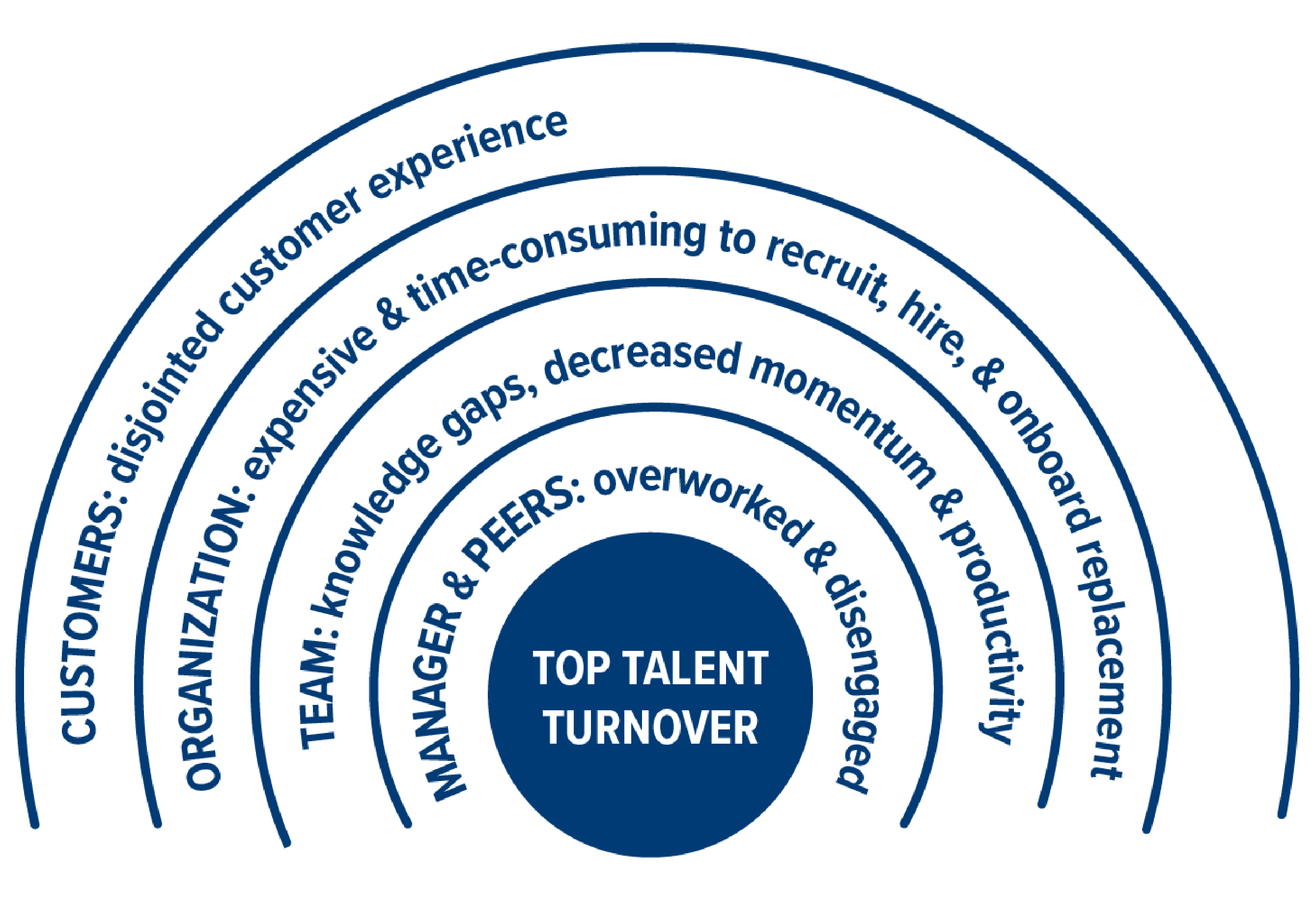
Now’s the time to talk about the actual price tag of employee turnover, which is more significant than most leaders realize. While it’s easy to focus on apparent costs like recruiting and training, the actual impact cuts much deeper into organizational success. 

Consider this: replacing just one employee typically costs half to double their annual salary. And that’s only half the story. When key talent walks out the door, they take away far more than their skills. Instead, they carry valuable institutional knowledge, customer relationships, and team dynamics built off years of history.  

Calculate the ROI of investing in retentions strategies >>

Team performance takes a hit.

When key team members leave, the whole group feels the impact. It shakes up established workflows, disrupts communication, and alters relationships developed over time. This can temporarily decrease productivity and morale, especially in close-knit teams that have worked hard to build strong connections. The bonds and understanding created start to shift, making it challenging to keep everything running smoothly.

Innovation & competitive edge slow.

When essential team members leave, it impacts efficiency and stifles innovation. They bring valuable insights, relationships, and a deep understanding of how an organization operates with them. Rebuilding that knowledge takes a lot of time and effort, which can create a competitive disadvantage. 

Unwanted turnover can lead to unexpected costs that hurt an organization’s performance and competitive edge. Losing knowledge, disrupting team dynamics, and losing valuable expertise can significantly impact an organization. This is especially true for high-performing individuals or those in specialized roles, as their contributions are often hard to replace.

Customer relationships suffer.

Frequent employee turnover disrupts customer relationships, leading to inconsistent service, lost institutional knowledge, and weakened trust. When key employees leave, customers may struggle to get the same level of support, experience delays, or feel disconnected from the company. Retaining top talent ensures continuity, strengthens customer loyalty, and maintains the high-quality service that sets organizations apart.


Understanding employee turnover

Employee turnover goes beyond who’s coming and going. Instead, it’s about understanding which departures genuinely impact an organization. While many leaders take a broad approach to reducing turnover across the board, the more thoughtful approach distinguishes between strategic and regrettable losses. 

EMPLOYEE RETENTION QUIZ (2)


How strong are your employee retention strategies? Take our 5-minute quiz >>


Strategic vs. regrettable turnover

When low performers or cultural detractors choose to leave, this healthy turnover benefits an organization. However, when high performers leave, and knowledge and culture walks out the door with them, that regrettable turnover demands immediate attention. The key is knowing the difference and acting accordingly. 

Voluntary vs. involuntary turnover 

Voluntary turnover happens when employees choose to leave. They may seek better opportunities, work-life balance, or cultural fit elsewhere. Not all voluntary turnover hurts an organization equally. For example, losing top talent hurts far more than seeing chronic under-performers move on. 

Involuntary turnover comes through terminations, layoffs, or performance issues. While sometimes necessary, consistently high involuntary turnover often points to deeper problems in hiring, development, or management practices. 

Industry turnover benchmarks

Industry benchmarks for most sector turnover range from 12% to 20% on average. Some industries, such as retail, hospitality, and call centers, experience significantly higher turnover. Excessive turnover—above 25%—creates significant operational and cultural challenges.

Specific industries often face unique turnover challenges. Tech companies struggle to retain top talent lured by lucrative, hard-to-turn-down opportunities. Healthcare professionals grapple with burnout and work-life balance. Retail and hospitality frequently battle high churn due to low wages and a seasonal or transient workforce.

The key is to focus retention efforts on where they matter most—high performers and culture carriers who drive an organization forward. Rather than trying to keep everyone, you need tools and data that help you:

  • Identify key talent
  • Understand what matters to them
  • Take targeted action to keep them engaged and committed. 


Is employee turnover preventable?

Employees wave red flags long before they pack up their desks. But who’s catching these signals? Key talent doesn’t have to walk out the door if you know what to watch for and take targeted action. 

The good news is—most staff turnover is preventable. In fact, 1 in 3 employees say their departure could have been prevented. But in order to do that, you need systems in place that help you capture feedback, predict employee flight risk, and take swift and targeted action. 

Think of employee feedback as an early warning system. Through ongoing employee listening strategies , employers can spot the warning signs of disengagement before they lead to resignations.

The best employee retention survey questions to ask >>

Remember that every employee’s story is different. The sales team’s frustration may look nothing like an engineering team’s concerns. One-size-fits-all approaches don’t work, especially for retention.

Instead, tailor approaches to address each employee group’s needs, motivations, and challenges. Personalizing retention strategies shows employees a level of understanding not previously felt. 
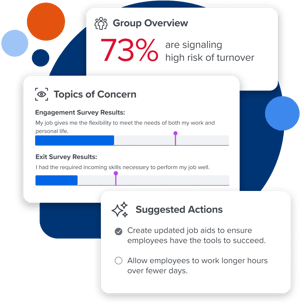
Retention Radar employee retention software


Detect, analyze, and act on turnover risk with Retention Radar >>


Turn employee feedback into retention action

Stop guessing why employees leave. Instead, start listening to what they’re saying. Here’s a complete roadmap to spotting turnover before it happens, and actionable tips for prevention. 

Listen continuously, not just annually

Employees share feedback every day. And what’s true in your annual employee engagement survey is likely not the same just a few months later. To get a more holistic pulse on your workforce, combine regular pulse surveys with meaningful one-on-one conversations and always-on feedback channels. The key is creating multiple touch-points where employees feel safe sharing honest thoughts about their experience. 

Assess flight risks early 

Watch for warning signs that signal an employee has one foot out the door: 

  • Sudden drops in performance or engagement
  • Withdrawal from team activities and long-term projects
  • Changes in work patterns (arriving late, leaving early)
  • Declining to participate in meetings and initiatives

Focus primarily on key talent, as these departures will impact organizations the most.
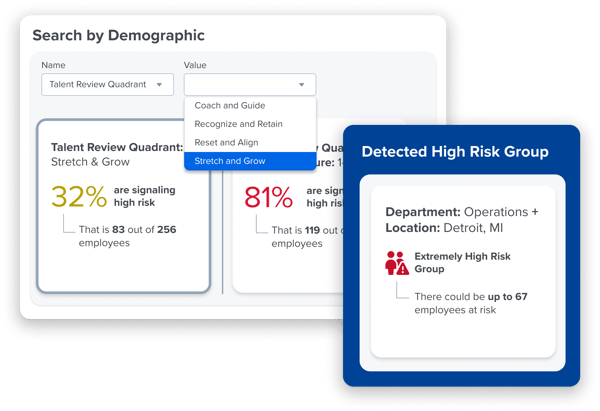
Retention Radar detected high risk groups


Analyze root causes

Don’t simply spot employee flight risks. Understand what’s driving them. Combine employee listening data with powerful employee retention analytics to uncover: 

  • Which teams or departments face the highest turnover risk
  • What factors are pushing top performers to consider leaving
  • Where retention strategies are working (and where they’re falling short)
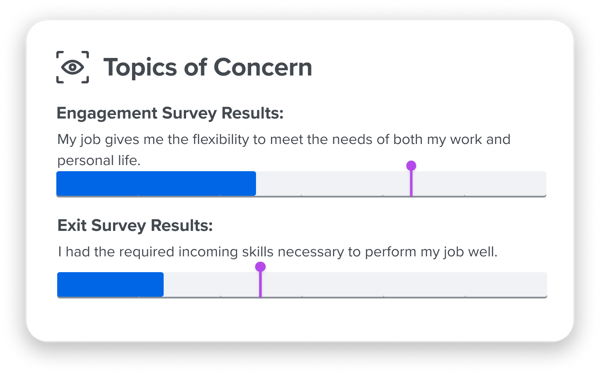
Retention Radar topics of concern

Act with speed and precision

Armed with actual data about why employees might leave ensures the use of targeted retention strategies that work. Use solutions like Quantum Workplace’s Retention Radar to: 

  • Predict turnover risks at hand 
  • Build customized retention plans for different employee groups
  • Track efficacy of retention initiatives
  • Stay ahead of emerging retention challenges 

    Retention Radar 1.4 - Suggested Actions

Assess, analyze, and act on turnover risk with Retention Radar

Retention Radar employee retention software and analytics


Retention Radar analyzes turnover risk by aggregating and analyzing various data points, such as employee survey responses, feedback, and other data signals.

Advanced machine learning algorithms enable our AI models to identify correlations and risk factors that signal an employee’s likelihood of leaving the organization. You can see:


  • High-risk employee groups. Our AI model analyzes employee voice and people data to identify employee groups at heightened turnover risk. 
  • Turnover driver analysis. Pinpoint the root causes of turnover, such as compensation issues, a lack of growth opportunities, or poor manager relationships.
  • AI-powered actionable recommendations. AI provides tailored recommendations for targeted retention initiatives based on identified risk factors. 
  • Real-time monitoring. Continuous tracking of employee data to know when turnover risks escalate, enabling swift intervention. 

Remember – employees discuss what they need to stay engaged and committed. An employer’s job is to listen, understand, and take meaningful action before it’s too late. 

Get a personalized demo of Retention Radar >>


Examples of how to prevent employee turnover

Here are some examples of how a tool like Retention Radar can help you become more reactive with your retention strategies and retain key talent.

Example #1: Preventing a department-wide exodus


The Challenge

Your software development team starts showing signs of disengagement. Several key players have left, and engagement scores continue plummeting. Is it burnout? Leadership issues? Career stagnation? 

How Retention Radar can help:

  • Spot the pattern. Detect declining sentiment scores among engineers, particularly around workload and growth opportunities. 
  • Uncover root causes. Analyze survey responses and feedback to reveal frustration with limited career advancement and overwhelming project demands. 
  • Guide action. Prompt development team leadership to redistribute workloads, launch a technical mentorship program, and create clear engineering career development paths. 
  • Ensure results. Stabilize the team and prevent further departures by addressing core issues before they trigger more resignations. 

Example #2: Retaining working parents


The Challenge

Data shows rising turnover risk among caregivers, particularly among mothers in middle management roles. Traditional flex policies aren’t cutting it anymore. 

How Retention Radar can help:

  • Identify the trend. Flag declining engagement among parent employees, especially those managing young teams and who have young children. 
  • Analyze feedback. Surface specific pain points around meeting schedules, workload compression, and career impact fears. 
  • Recommend solutions. Suggested targeted interventions, including core collaboration hours, backup care benefits, and return-minded programs. 
  • Ensure results. Improve key talent retention while strengthening the company’s brand as a family-friendly employer. 

Example #3: Intervening at a high-risk location


The Challenge

A sudden spike in turnover at a high-performing regional office raises alarms. Local markets are competitive and rife with local talent, but is that the whole story? 

How Retention Radar can help:

  • Detect the risk. Highlight concerning patterns in engagement scores specific to this location,
  • Dig deeper. Reveal perceptions of compensation gaps not in line with local market rates and limited advancement opportunities compared to corporate offices. 
  • Drive action. Prompt HR to explore market-based pay adjustments, remote leadership opportunities, and cross-location mentorship. 
  • Ensure results. Reverse turnover trends and create a more equitable experience spanning locations. 

The key takeaway? When combining real-time insights with targeted action, turnover can be proactively managed before it’s too late. Retention Radar empowers employers to move beyond guesswork and build data-driven retention strategies that work. Retention strategies aren’t one-size-fits-all; they’re tailored responses to specific challenges. 

Retain your best talent with the right solutions.

Organizations must embrace intelligent strategies integrating AI and analytics to effectively retain critical top talent. By transforming data into actionable insights, they can proactively address their employees’ needs and enhance engagement.

As the workforce evolves and competition increases, investing in advanced retention capabilities secures a stable workforce and drives organizational success. Companies that actively leverage these tools distinguish themselves by fostering an environment where their most valuable resource can thrive. 

Assess the strength of your retention strategies

EMPLOYEE RETENTION QUIZ (2)
Your most valuable employees are sending you signals long before they leave. Are you listening? 

Take this five-minute quiz to assess your retention strategy, identify gaps, and get expert guidance on how to retain your most critical talent.

Take me to the assessment! >>

Employee turnover & retention FAQs


How much does employee turnover cost my organization? 

Employee turnover can strain finances more than the obvious costs. Replacing an employee, it usually costs about half to twice their annual salary. These expenses include direct costs like recruiting and training, but there’s more to it than that. When key team members leave, they take essential knowledge with them. Team dynamics start to feel off and customer relationships can waver. Losing specialized talent or top performers can hurt productivity, stifle innovation, and put you at a disadvantage compared to your competitors. 

What’s the difference between voluntary and involuntary turnover?

In the instance of voluntary turnover, employees often leave their jobs for better opportunities because they feel there’s not enough room for growth, they aren’t being compensated fairly, they struggle to balance work and life, or they just don’t fit in with the company culture. On the other hand, companies sometimes have to let employees go involuntarily due to layoffs, performance issues, or misconduct.

How can I identify employees at risk of leaving? 

Spot potential employee flight risks by tapping into various data sources and using innovative detection tools. Analyze engagement survey results to uncover declining scores or troubling feedback patterns. Monitor performance metrics to catch unexpected drops in productivity or quality. Implement regular pulse surveys to gather real-time feedback and stay in tune with employee sentiment. 

What are the most common signs an employee plans to leave? 

Several indicators often signal when an employee intends to leave. You should watch for decreased engagement in meetings and team activities, employees pulling away from colleagues, changes in work schedules, or reluctance to commit to future projects. You should also look for productivity drops, work quality, or goal achievement. Sudden changes in attitude, increased absenteeism, or disengagement from company initiatives can also indicate that someone is considering leaving. 

How can predictive analytics help manage the risks of turnover?

Predictive analytics in employee retention use a wealth of employee data to provide valuable insight into turnover risks. By examining patterns in engagement surveys, performance metrics, tenure data, and other workforce information, you can pinpoint teams considering a departure, and take proactive steps to remedy the risk before unwanted turnover happens. 

What’s the ROI associated with a retention strategy? 

Retention strategies offer a solid return on investment by helping companies avoid costs and boost performance. When companies gain insights into turnover risk, they save a lot on recruitment and training expenses while keeping valuable knowledge in-house and strengthening team dynamics. A strong retention strategy increases productivity, ensures consistent customer service, and helps companies maintain their competitive edge. 

What role do managers play in employee retention? 

Managers are crucial in keeping turnover rates low by directly impacting employee engagement, alignment, and retention. Employees often look for better opportunities when they have a poor relationship with their managers (due to micromanagement, a lack of support, or negative communication). Great managers take the time to connect with their team members through regular coaching conversations, open discussions about career development, and honest dialogues about their future. Doing so creates a supportive environment that encourages employees to stay and grow. 

What employee retention metrics should we track? 

Predictive analytics can identify at-risk employees early, helping organizations prevent turnover. Track overall turnover rates, especially among top performers, and measure the cost of turnover, including hiring expenses and lost productivity. Engagement scores and manager effectiveness often signal retention risks, while participation in development programs reflects long-term commitment. Monitoring these key metrics ensures you catch warning signs early and take proactive action.

How can AI help prevent the risk of turnover? 

Retention Radar helps organizations by processing large amounts of workforce data to spot turnover risks before they happen and effectively manage these risks. The tools closely examine employee voice and people data to identify employee groups at risk of leaving. Through AI, we identify groups of employees at high risk, understand what might be driving their desire to go, and showcase real-time data in the dashboard. Plus, our technology offers personalized recommendations for retention strategies based on the risks we’ve found, helping you take quick and focused action to keep your talent. 

What’s the relationship between engagement and turnover?

Employee engagement is a key factor that can indicate turnover risk. When employees feel disengaged, they disconnect from their work and lose motivation and commitment to the organization. This lack of engagement can lead to them choosing to leave. On the other hand, high levels of engagement are linked to better retention rates, showing that keeping employees engaged is vital for the company’s success.

 

Sonic Propels Sega to the Top

0

Metacritic’s Game Publisher Ranking 2025: Sega Retakes the Top Spot

Sega Jumps to the Top

The review aggregator Metacritic has published its Game Publisher Ranking 2025 based on the scores from reviews of games released in 2024. The results may be a surprise for some, as Sega jumped from number 9 to retake the top spot, which it last held in 2021.

Capcom and Aksys Games Follow

Capcom, last year’s number 1, slipped to second position, and Aksys Games jumped from 7 to third place. Sony, which held the top spot in 2023, came in at number 4 based on reviews from last year.

Sega’s Success

Sega came in as the top game studio in the Metacritic ranking thanks to an Average Metascore of 82.9 and three ‘great’ games: JRPG Metaphor: ReFantazio, which Metacritic praises as a rare all-new IP in a sea of remakes, ports, and sequels, alongside Shin Megami Tensei V: Vengeance and Like a Dragon: Infinite Wealth. Its only generally poor reviews were for Demon Slayer Kimetsu no Yaiba.

Other Notable Titles

Other titles contributing to Sega’s strong reviews in 2024 included Sonic X Shadow Generations and Yakuza Hawaii, which had an average metascore of 80, and Yakuza Kiwami for Switch.

How Metacritic’s Ranking Works

Metacritic’s ranking is based on critic’s reviews, not on sales or player scores. Each studio’s place in the list is determined by a points system based on the average Metascore for all the games they released in the year and the proportion of titles that received positive and negative reviews. This can lead to some surprising results. For example, Ubisoft comes in at number 18 out of 37, which is ahead of Konami, Nintendo, Electronic Arts, Bandai Namco, and Plaion.

Sonic the Hedgehog News

Meanwhile, in more Sonic the Hedgehog news, one of the best Sonic games has just quietly found its way to PlayStation Plus in remastered form. Sonic Colors: Ultimate is an upgraded version of the original Nintendo Wii game with improved visuals and gameplay and new power-ups and features, including a Rival Rush mode where you can race Metal Sonic.

Sega’s Priorities

Sega has said Sonic is a priority for new investment. This year we expect the releases of Sonic Racing Crossworlds and Sonic Rumble.

Conclusion

In conclusion, Sega’s success in the Metacritic ranking is a testament to its ability to produce high-quality games that are well-received by critics. The company’s focus on new IPs and innovative game design has paid off, and it will be interesting to see how it continues to perform in the coming years.

FAQs

  • What is the Metacritic ranking based on?
    • The ranking is based on critic’s reviews, not on sales or player scores.
  • How is each studio’s place in the list determined?
    • Each studio’s place is determined by a points system based on the average Metascore for all the games they released in the year and the proportion of titles that received positive and negative reviews.
  • What is the average Metascore for Sega’s top 3 games?
    • The average Metascore for Sega’s top 3 games is 82.9.