Home Blog Page 231

Wildlife Conservation Unites with AI

From Seattle, Washington, to Cape Town, South Africa — and everywhere around and between — AI is helping conserve the wild plants and animals that make up the intricate web of life on Earth.

Critical Work

It’s critical work that sustains ecosystems and supports biodiversity at a time when the United Nations estimates over 1 million species are threatened with extinction.

World Wildlife Day

World Wildlife Day, a UN initiative, is celebrated every March 3 to recognize the unique contributions wild animals and plants have on people and the planet — and vice versa.

Learn More About Leading Nonprofits and Startups Using NVIDIA AI and Accelerated Computing to Protect Wildlife and Natural Habitats, Today and Every Day:

Ai2’s EarthRanger Offers World’s Largest Elephant Database

Seattle-based nonprofit AI research institute Ai2 offers EarthRanger, a software platform that helps protected-area managers, ecologists, and wildlife biologists make more informed operational decisions for wildlife conservation in real-time, whether preventing poaching, spotting ill or injured animals, or studying animal behavior.

Rouxcel Technology Saves Rhinos with AI

South African startup Rouxcel Technology’s AI-based RhinoWatches, tapping into EarthRanger, learn endangered black and white rhinos’ behaviors, then alert authorities in real-time of any detected abnormalities. These abnormalities can include straying from typical habitats, territorial fighting with other animals, and other potentially life-threatening situations.

OroraTech Monitors Wildfires and Poaching with NVIDIA CUDA, Jetson

OroraTech — a member of the NVIDIA Inception program for cutting-edge startups — uses the EarthRanger platform to protect wildlife in a different way, offering a wildfire detection and monitoring service that fuses satellite imagery and AI to safeguard the environment and prevent poaching.

Wildlife Protection Solutions (WPS) Help Preserve Endangered Species

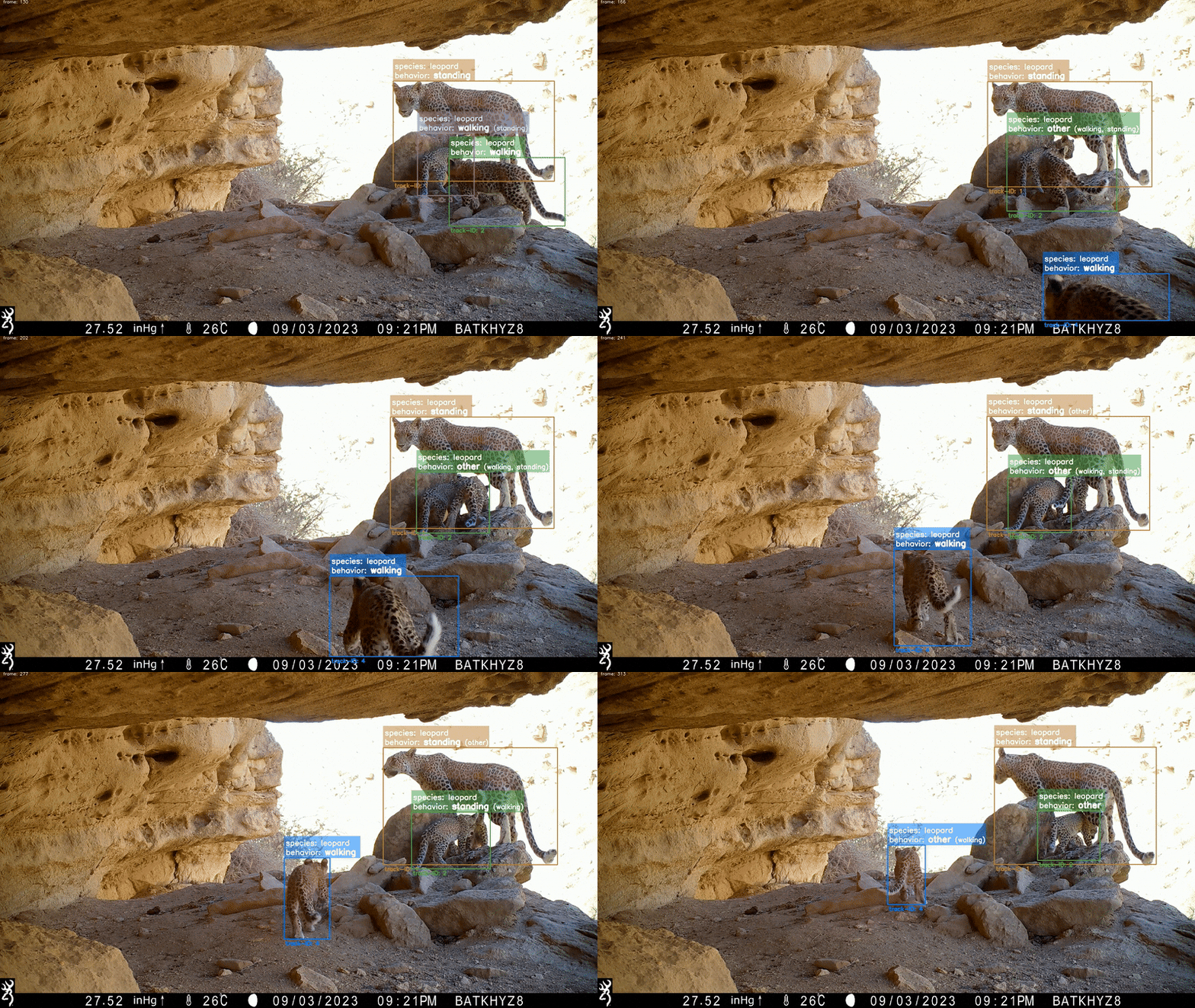
International nonprofit Wildlife Protection Solutions (WPS) supports more than 250 conservation projects in 50+ countries. Its remote cameras — about 3,000 deployed across the globe — using AI models provide real-time monitoring of animals and poachers, alerting rangers to intercede before wildlife is harmed.

Conservation X Labs Identifies Species from Crowdsourced Images

Seattle-based Conservation X Labs — which is on a mission to prevent the sixth mass extinction, or the dying out of a high percentage of the world’s biodiversity due to natural phenomena and human activity — also uses EarthRanger, including for its Wild Me solution: open-source AI software for the conservation research community.

Conclusion

In conclusion, AI is playing a crucial role in the conservation of wildlife and natural habitats around the world. From predicting elephant movements to monitoring wildfires, from identifying endangered species to protecting rhinos, AI is helping to make a positive impact on the environment and support biodiversity.

Frequently Asked Questions

Q: What is World Wildlife Day?
A: World Wildlife Day is a UN initiative celebrated every March 3 to recognize the unique contributions wild animals and plants have on people and the planet — and vice versa.

Q: What is EarthRanger?
A: EarthRanger is a software platform offered by Ai2 that helps protected-area managers, ecologists, and wildlife biologists make more informed operational decisions for wildlife conservation in real-time.

Q: How is AI being used to protect wildlife?
A: AI is being used in various ways to protect wildlife, including predicting elephant movements, monitoring wildfires, identifying endangered species, and protecting rhinos.

Q: What is the goal of Conservation X Labs?
A: The goal of Conservation X Labs is to prevent the sixth mass extinction, or the dying out of a high percentage of the world’s biodiversity due to natural phenomena and human activity.

Stability AI Optimized Its Audio Generation Model to Run on Arm Chips

0

AI Startup Teams Up with Chipmaker Arm to Bring AI-Powered Audio Generation to Mobile Devices

AI-Powered Audio Generation

AI startup Stability has teamed up with chipmaker Arm to bring its AI model, Stable Audio Open, to mobile devices running Arm chips. This move enables the generation of audio, including sound effects, on mobile devices.

Limitations of Current AI-Powered Audio Generation

While several AI-powered apps can generate audio, most rely on cloud processing, making them unavailable offline. Additionally, some audio generation models were trained on copyrighted content, posing an intellectual property risk. Stability claims that its Stable Audio Open’s training set is composed entirely of royalty-free audio and songs.

Optimized Stable Audio Open Model

Stable Audio Open, running on Arm chips, can generate a sound from a text description like, "Gentle ocean waves at sunset." Stability says that it worked with Arm to optimize and "distill" Stable Audio Open, speeding up generation times by 30x. Generating a single 11-second audio sample takes around 8 seconds on an Armv9 CPU.

Availability and Future Plans

The optimized Stable Audio Open model is not available for download yet. However, in a statement, Stability CEO Prem Akkaraju hinted that Stability will work to bring its models, including Stable Audio Open, to consumer apps and devices in the future.

Collaboration with Arm

Stability is collaborating with Arm to further optimize and fine-tune Stable Audio Open for mobile devices.

Company Background

Stability, the company behind the popular image generation model Stable Diffusion, raised new cash last year as investors, including Eric Schmidt and Napster founder Sean Parker, sought to turn the business around. The company has since hired a new CEO and appointed Titanic director James Cameron to its board of directors, and has released several new image generation models.

Conclusion

The partnership between Stability and Arm brings AI-powered audio generation to mobile devices, offering a more accessible and convenient way to create high-quality audio content. With its optimized Stable Audio Open model, Stability is poised to revolutionize the way we experience audio on the go.

Frequently Asked Questions

Q: What is Stable Audio Open?
A: Stable Audio Open is an AI model that can generate audio, including sound effects, from a text description.

Q: What is the training set of Stable Audio Open composed of?
A: The training set of Stable Audio Open is made up entirely of royalty-free audio and songs.

Q: How fast is the optimized Stable Audio Open model?
A: The optimized Stable Audio Open model can generate a single 11-second audio sample in around 8 seconds on an Armv9 CPU.

Q: When will the optimized Stable Audio Open model be available for download?
A: The optimized Stable Audio Open model is not available for download yet, but Stability plans to bring its models to consumer apps and devices in the future.

Any kid now has tools to make Academy Award-winning films

0

Strong Year for Best Animated Feature Oscar Nominations

It was a strong year for Best Animated Feature Oscar nominations, and an underdog triumphed. At the 97th annual Academy Awards at Ovation Hollywood in Los Angeles last night, Flow beat competition from Pixar’s Inside Out 2, Dreamworks’ The Wild Robot and Aardman’s Wallace & Gromit: Vengeance Most Fowl.

Underdog Story

Gints Zilbalodis’ tale about a cat in a flooded world missed out on the Oscar for Best International Feature Film but still became Latvia’s first Oscar win. And it was surely also the first Oscar winner to be made entirely in the free 3D modelling software Blender, cementing the open-source program’s place among the best animation software.

The Film

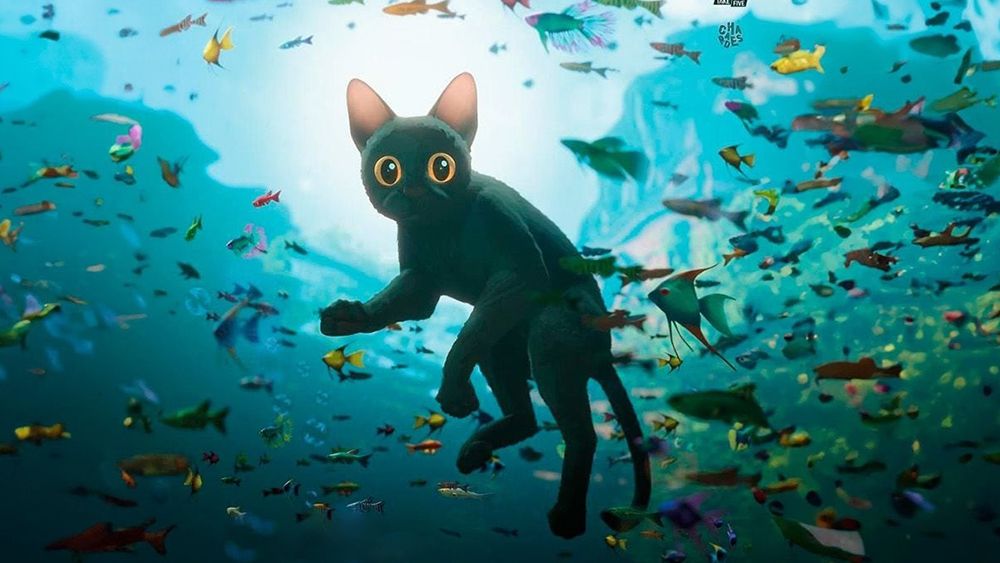
Flow is a surprisingly peaceful post-apocalyptic tale about a black cat, dog, capybara, ring-tailed lemur, and secretary bird trying to survive a flood. It has no dialogue, instead allowing its expressive artistic style to do the talking, and the almost painterly style of animation is beautiful.

The Team’s Achievement

Flow was one of our highlights of Annecy 2024, and it still seems incredible that it was made by a small team using Blender alone. It was rendered in EEVEE, Blender’s real-time render engine.

The Director’s Reaction

Gints thanked Blender when accepting the award. Speaking to press afterwards, he said: "Any kid now has tools that are used to make now Academy Award-winning films, so I think we’re going to see all kinds of exciting films being made from kids who might not have had a chance to do this before. And it’s a great tool. It’s not in any way a compromise. It’s as good as anything else out there, and we’re going to use it for my next film."

Conclusion

Flow’s victory continues a trend for more interesting and diverse animation Oscar wins in recent years. It follows on the heels of Guillermo del Toro’s Pinocchio in 2023 and Hayao Miyazaki’s The Boy and the Heron in 2024. Another underdog, the stop-motion film Memoir of a Snail, was the fifth title in this year’s list of nominations.

FAQs

Q: What is Flow about?
A: Flow is a post-apocalyptic tale about a black cat, dog, capybara, ring-tailed lemur, and secretary bird trying to survive a flood.

Q: How was Flow made?
A: Flow was made using the free 3D modelling software Blender, rendering in EEVEE, Blender’s real-time render engine.

Q: Who won the Oscar for Best Animated Feature?
A: Gints Zilbalodis’ Flow won the Oscar for Best Animated Feature.

Q: Who won the Oscar for Best Animated Short?
A: Iranian filmmakers Shirin Sohani and Hossein Molayemi earned the Oscar for Best Animated Short with In the Shadow of the Cypress.

WordPress vs Wix

0

Features

Wix is a well-known website builder with two products: Wix Classic and Wix Studio. Both products offer similar features, including a comprehensive suite of eCommerce features, CMS features, form features, and support features. They also provide templates to choose from and the ability to generate websites using AI. On the administrative side, features include SEO, marketing, analytics, and design systems. Wix Studio also offers real-time collaboration, allowing entire teams to work on a website simultaneously.

Performance

The performance of Wix Classic and Wix Studio differs in terms of generative AI. Wix Classic generates the entire website, while Wix Studio allows users to choose between a sitemap (pages and sections only) and wireframes (pages, sections, elements, content, and layout), leaving the aesthetics entirely up to the user. Wix Studio also offers more control over design, with precise values, alignments, grids, padding, and even advanced responsive design settings.

Support

Both Wix Classic and Wix Studio offer 24/7 customer support, including an AI chatbot. However, Wix Studio offers priority support on the plus, elite, and enterprise plans, which enables users to skip the queue and get dedicated assistance. Wix also provides self-help resources, including a help center, guides, courses, webinars, resource centers, blogs, podcasts, and newsletters, as well as a forum and Discord community for third-party help.

Pricing and Plans

Wix Classic and Wix Studio offer similar pricing plans, ranging from £9 to £119 per month (excluding VAT). Both products offer a free domain for one year and free hosting. The main difference is that Wix Studio has a limit on CMS items (starting from 1,500 on the most basic plan), while Wix Classic does not. Wix Studio also has an enterprise plan, which requires a demo to learn the cost.

Verdict

Wix Classic’s clunky drag-and-drop movements are no match for Wix Studio’s granular controls, which even first-time website builders can operate. In terms of pricing and user-facing features, both products offer the same thing, making Wix Studio the clear winner.

FAQs

Q: What are the main differences between Wix Classic and Wix Studio?
A: Wix Classic generates entire websites using AI, while Wix Studio allows users to choose between a sitemap and wireframes, with more control over design.

Q: What are the pricing plans for Wix Classic and Wix Studio?
A: Both products offer similar pricing plans, ranging from £9 to £119 per month (excluding VAT).

Q: What is the difference in support between Wix Classic and Wix Studio?
A: Wix Studio offers priority support on the plus, elite, and enterprise plans, while Wix Classic does not.

Driverless racecar sets a new autonomous speed record

0

New Fastest Robot in the World: Maserati MC20 Coupe Sets Land Speed Record for Autonomous Vehicles

A New Era in Autonomous Driving

A Maserati MC20 Coupe with no one in the driver seat has set a new land speed record for autonomous vehicles, reaching 197.7 mph (318 km/h) during an automotive event at the Kennedy Space Center last week. This achievement is a milestone in the development of autonomous driving technology, pushing the boundaries of what is possible with self-driving cars.

The Maserati MC20 Coupe: A High-Performance Vehicle

The Maserati MC20 is a stylish and expensive choice for the autonomous run, retailing for at least $239,000. The race car sports a mid-mounted, twin-turbocharged 3.0-liter V-6 that Maserati calls the Nettuno. The engine makes serious power: 621 horsepower and 538 lb-ft of torque, which is sent through an eight-speed dual-clutch automatic transmission to the rear wheels.

Autonomous Software: The Key to Success

The Maserati was running self-driving software developed by Politecnico di Milano, Italy’s largest scientific-technological university. The team also worked with the Indy Autonomous Challenge, which most recently ran at the Las Vegas Motor Speedway during CES 2025. The achievement is noteworthy, and not just because an autonomous race car went faster than any other self-driving vehicle before it. It’s partly about stress-testing the reliability of the algorithms that undergird the autonomous driving system, determining how they manage extreme speeds.

Improving Safety Through Innovation

The team overseeing the record-breaking event hopes to improve safety by applying their learnings to autonomous road vehicles operating on local roads. By pushing the boundaries, they are helping to transition the learnings of autonomous racing to enable safe, secure, sustainable, high-speed autonomous mobility on highways.

A New Era in Autonomous Driving: Conclusion

The Maserati MC20 Coupe’s record-breaking run is a significant step forward in the development of autonomous driving technology. By achieving a new land speed record for autonomous vehicles, the team has demonstrated the reliability and capability of the technology, paving the way for widespread adoption on public roads.

Frequently Asked Questions

Q: What is the Maserati MC20 Coupe?
A: The Maserati MC20 Coupe is a high-performance vehicle with a mid-mounted, twin-turbocharged 3.0-liter V-6 engine that makes 621 horsepower and 538 lb-ft of torque.

Q: What is the significance of the record-breaking run?
A: The record-breaking run demonstrates the reliability and capability of autonomous driving technology, pushing the boundaries of what is possible with self-driving cars.

Q: How does this achievement impact the future of autonomous driving?
A: The achievement is helping to transition the learnings of autonomous racing to enable safe, secure, sustainable, high-speed autonomous mobility on highways.

Mastering Color and Light with Procreate

0

Designing a Conveyor Hall and Hive Setting in Alien: Romulus

01. The importance of finding good references

When designing a feature-film set, it’s crucial to have a solid understanding of the overall aesthetic and atmosphere the director and production team are aiming for. For the conveyor hall and hive setting in Alien: Romulus, I relied heavily on references from the second film in the Alien series, Aliens. Screen grabs from the film provided valuable insights into the shapes, angles, lighting, and materiality used in the colony hallways, which I drew inspiration from to create a dark, industrial, and ominous atmosphere.

02. Sketch out a cross-section

To get started, I sketched out a cross-section of the corridor, focusing on the overall shape and feel of the space. I wanted to create a sense of tension and discomfort, so I opted for a tall, narrow space with dramatic angles and a sense of weight and oppression.

03. Create a floor plan

Next, I created a floor plan of the corridor, using the sketch as a guide. This helped me to visualize the layout and ensure that the design was functional and logical.

04. Block out in Blender

I then blocked out the design in Blender, using the 3D software to create a basic shape and structure for the corridor. This allowed me to experiment with different shapes and angles, and to get a sense of the overall scale and proportions of the space.

05. Add details, lighting, and materials

With the basic shape and structure in place, I added details, lighting, and materials to the design. I used a combination of 3D modeling and texturing to create a sense of depth and realism, and to bring the space to life.

06. Paint over the render

Finally, I painted over the render to add additional details, atmosphere, and texture to the design. I used a combination of brushes and filters to create a sense of grit and grime, and to add depth and dimension to the image.

07. Bring in glow and dust, and place a character

To enhance the atmosphere of the design, I added a range of elements, including glow and dust particles, and placed a character (Kay) within the scene. This helped to create a sense of scale and to add a sense of drama and tension to the design.

08. Head over to Photoshop and complete the scene

I then exported the image and took it into Photoshop for final touches, adding a Levels adjustment layer to increase the contrast and drama of the image. I also added a 50% grey layer with a Noise filter to create a sense of texture and depth.

09. Write up notes and present the concept

Finally, I wrote up notes capturing the key ideas and design decisions, and presented the concept to the production team. This helped to ensure that everyone was on the same page, and that the design met the expectations of the director and production team.

Conclusion

Designing a conveyor hall and hive setting for Alien: Romulus required a thorough understanding of the overall aesthetic and atmosphere of the film, as well as a range of technical skills and tools. By following a structured approach, from researching references to painting over the render, I was able to create a design that met the expectations of the director and production team, and that brought the world of Alien to life.

FAQs

Q: How did you approach the design of the conveyor hall and hive setting?
A: I approached the design by researching references from the second film in the Alien series, Aliens, and using those references to inform my design decisions. I also used a combination of skills and tools, including 3D modeling and texturing, to create a sense of depth and realism.

Q: What were some of the key challenges you faced during the design process?
A: Some of the key challenges I faced included creating a sense of tension and discomfort in the design, while also ensuring that the space was functional and logical. I also had to balance the need for detail and realism with the need for a sense of scale and drama.

Q: How did you ensure that your design met the expectations of the director and production team?
A: I ensured that my design met the expectations of the director and production team by being open to feedback and suggestions, and by presenting my design in a clear and concise manner. I also provided detailed notes and concept art to help illustrate my design decisions and ensure that everyone was on the same page.

Accelerating Time to Agentic AI Value

Accelerating the Adoption of AI Agents: Removing Data Silos and Unlocking Productivity

A recent survey of 1,050 CIOs revealed that 93% of IT leaders will implement AI agents in the next two years, with IT leaders working to implement the technology by focusing on removing data silos. This is a significant shift, as the average number of apps used by respondents was 897, with 45% reporting using 1,000 applications or more, hindering IT teams’ ability to build a unified experience. Only 29% of enterprise apps are integrated and share information across the business.

What are AI Agents?

AI agents are poised to accelerate the adoption of digital applications and create an epochal shift in human-computer interaction. According to ARK Invest, AI agents will:

  • Understand intent through natural language
  • Plan using reasoning and appropriate context
  • Take action using tools to accomplish the intent
  • Improve through iteration and continuous learning

Accelerating the Time to Value from Agentic AI

To accelerate the time to value from agentic AI, businesses can focus on removing data silos and leveraging a platform optimized for agentic AI development. According to Valoir, agentic AI promises to deliver exponential benefits from AI by automating complex tasks and interactions without human intervention. Valoir has defined seven phases of agentic development:

Phases of Agentic Development

  1. Model setup
  2. Data and application integration
  3. Prompt engineering
  4. AI guardrails and security
  5. User interface and workflow/application development
  6. Tuning
  7. Data accuracy

DiY vs. Deeply Integrated Platform

Valoir found significant differences between a Do-it-Yourself (DIY) approach and a deeply integrated platform with embedded agentic AI capabilities. Organizations taking a DIY approach use pre-built models, requiring three to 12 months to set up, while a deeply integrated platform like Agentforce requires little to no set up time, with an average of 7.5 times faster model setup.

Data Accuracy and Time to Value

Data accuracy is a key factor in time to value, the time needed to build and train AI agents to deliver acceptable levels of correct response. Valoir found that organizations using a DIY approach had accuracy rates of 50% for simple tasks and 40% for complex tasks, while a deeply integrated platform like Agentforce achieved accuracy rates of 95% for both simple and complex tasks.

Conclusion

In conclusion, the adoption of AI agents is poised to revolutionize the way we work, and businesses must prioritize removing data silos and leveraging a platform optimized for agentic AI development to accelerate the time to value. By understanding the phases of agentic development and the differences between a DIY approach and a deeply integrated platform, organizations can unlock the full potential of agentic AI and drive exponential benefits from AI.

Frequently Asked Questions

Q: What is the average number of apps used by respondents?
A: The average number of apps used by respondents was 897, with 45% reporting using 1,000 applications or more.

Q: What is the percentage of enterprise apps that are integrated and share information across the business?
A: Only 29% of enterprise apps are integrated and share information across the business.

Q: What is the average time needed to set up a DIY agentic AI project?
A: The average time needed to set up a DIY project is 75.5 months.

Q: What is the average time needed to set up an Agentforce project?
A: The average time needed to set up an Agentforce project is 4.8 months.

10 Stop-Motion Animation Masterpieces

0

The Best Stop-Motion Animated Films

The best stop-motion animated films bring something purely imagined to vivid life in a way that other animation techniques can’t. While stop-motion animation is regarded as the easiest way into this medium, the films on my list elevate animation to an art form.

The Best Stop-Motion Movies

  1. Coraline
    Did you know? Rapid prototyping 3D printing was first developed at the LAIKA Studio for Coraline (2009), and later ParaNorman (2012) and The Boxtrolls (2014).

Studio: LAIKA
Release date: 2009

Based on an imaginative story by Neil Gaiman, Coraline is about a girl who discovers a secret door leading to a parallel world where her ‘mirror family’ wants her to stay. The film’s stop-motion animation technique is used to great effect to create vivid, contrasting worlds that enhance the eerie atmosphere.

Where to watch: Coraline is available to watch on Amazon Prime

  1. Pinocchio
    Did you know? Guillermo Del Toro and his co-director Mark Gustafson worked on the film for 15 years.

Studios: Netflix Animation, The Jim Henson Company and ShadowMachine
Release date: 2022

Pinocchio is a visually stunning stop-motion adaptation of the classic tale, reimagined with dark fantasy elements. Co-directed by Guillermo del Toro and Mark Gustafson, the film’s story is set in Fascist Italy, and explores themes of mortality, identity, and love. With breathtaking handcrafted animation and a rich emotional depth, it offers a poignant take on Pinocchio’s journey.

  1. The House
    Did you know? The House is an off-beat 2022 British stop-motion adult animated anthology television special that features three tales set in the same mysterious house across different time periods.

Studio: Nexus Studios
Release date: 2022

The House is an off-beat 2022 British stop-motion adult animated anthology television special that features three tales set in the same mysterious house across different time periods. Directed by Emma de Swaef, Marc James Roels, Niki Lindroth von Bahr, and Paloma Baeza, the film blends surreal horror with dark comedy. Each segment explores themes of obsession, transformation, and decay, brought to life with intricate stop-motion animation. With its unsettling atmosphere and unique storytelling, The House is a haunting and visually stunning exploration of human nature.

  1. ParaNorman
    Did you know? ParaNorman was the first stop-motion movie to utilize a 3D Colour Printer to create replacement faces for its puppets in a process called ‘Rapid Prototyping’.

Studio: LAIKA
Release date: 2012

Following LAIKA’s groundbreaking Academy Award-nominated animated feature Coraline, ParaNorman is a 2012 American stop-motion animated comedy horror film directed by Sam Fell and Chris Butler, and written by Butler.

  1. The Adventures of Prince Achmed
    Did you know? The Adventures of Prince Achmed premiered in Germany in 1926 and was immediately hailed as the world’s first feature-length animated film.

Studio: Comenius-Film GmbH
Release date: 1926

The Adventures of Prince Achmed is a 1926 German animated fairytale film by Lotte Reiniger and is considered to be the oldest surviving animated feature film.

Conclusion

Stop-motion animation has come a long way since its humble beginnings in the early 20th century. With its unique blend of artistry and technology, stop-motion animation has given us a wide range of captivating and often haunting films that continue to captivate audiences around the world.

FAQs

Q: What is stop-motion animation?
A: Stop-motion animation is a technique used to create the illusion of movement by physically manipulating objects, puppets, or clay, and taking photographs of them in small increments, creating the illusion of movement when played back.

Q: What is the history of stop-motion animation?
A: The history of stop-motion animation dates back to the early 20th century, with the first stop-motion animated feature film, The Adventures of Prince Achmed, being released in 1926.

Q: How do I get started with stop-motion animation?
A: With a smartphone and a sturdy stand, you can get started with stop-motion animation. You can use a variety of software and apps to create your own stop-motion animations.

Beyond Adspower? Is There More?

Adspower: Know This First

Adspower is a popular anti-detect browser used by marketers, e-commerce sellers, and crypto traders to manage multiple accounts securely. However, it might not be the best choice for everyone due to pricing, features, or ease of use. Many users are searching for an Adspower alternative that better suits their needs. In this article, we’ll explore the best alternatives and how they compare.

Adspower: What’s Next?

Before selecting an alternative, consider these essential factors:

  • Security & Anonymity – Ability to mask browser fingerprints and avoid detection.
  • Account Management – Easily create, store, and run multiple profiles.
  • Automation Support – Integration with APIs, RPA tools, or No-Code Automation.
  • Affordability – Competitive pricing for long-term use.
  • User Experience – Smooth interface and reliable performance.

Practical Applications of Adspower Alternatives

1. CPA Marketing & Affiliate Advertising

Run multiple accounts on Google Ads, Facebook Ads safely.
Use proxies to prevent IP tracking and bans.

2. Dropshipping & E-commerce

Manage multiple stores on Amazon, eBay, and Etsy without detection.
Automate order processing with No-Code Automation tools.

3. Social Media & Advertising

Operate multiple accounts on Facebook, TikTok, and Instagram.
Reduce the risk of detection and avoid account suspension.

4. Crypto & NFT Management

Create and manage multiple wallets safely.
Maintain privacy and avoid unnecessary KYC verification.

Adspower Or Else?

  • Same segment but with more powerful features, Hidemyacc is not bad
  • For large teams, Multilogin offers enterprise-level solutions.
  • If you prefer a free option, Incogniton or GoLogin are worth considering.

So
Choosing the best Adspower alternative depends on your specific needs. If you prioritize affordability and automation, Hidemyacc is an excellent choice. Multilogin is ideal for large teams, while Incogniton and GoLogin are great for those seeking a free or beginner-friendly solution. Evaluate your options and select the one that helps you manage multiple accounts effectively.

Conclusion

Before selecting an Adspower alternative, consider your specific needs and evaluate the available options. Different alternatives cater to various use cases, so it’s essential to choose the one that best suits your requirements.

FAQs

Q: What are the key factors to consider when choosing an Adspower alternative?
A: Security & Anonymity, Account Management, Automation Support, Affordability, and User Experience.

Q: What are the main use cases for Adspower alternatives?
A: CPA Marketing & Affiliate Advertising, Dropshipping & E-commerce, Social Media & Advertising, and Crypto & NFT Management.

Q: What are some popular Adspower alternatives?
A: Hidemyacc, Multilogin, Incogniton, and GoLogin.

Q: How do I choose the best Adspower alternative for my needs?
A: Evaluate your specific needs and consider the factors mentioned above to select the best alternative for you.

One in Five Businesses Lack Data Governance for AI Success

The Importance of Governance, Compliance, and Alignment in AI-Driven Businesses

AI is only as powerful as the foundation it’s built on, yet many businesses are moving forward without the necessary governance, compliance, and strategic alignment. As regulatory landscapes evolve and compliance grows more complex, organizations face mounting risks in the form of flawed AI decisions, data breaches, and eroded customer trust.

The Challenges of AI Adoption

Many organizations prioritize regulatory compliance, yet only 42% make it a key focus. Even fewer (26%) embed it within their data teams. This disconnect creates blind spots that lead to risks and inefficiency. While 55% of organizations feel current regulations are too restrictive, only 2% believe they stifle innovation, underscoring the complexity and urgency of these challenges. Even more alarming is that 20% of organizations operate without governance frameworks, increasing their exposure to risk.

The Path Ahead

According to Ataccama’s Data Trust Report 2025, organizations face three paths: absorb the risk by accepting the fines and reputational damage, do the bare minimum and risk falling behind the AI race, or tackle the challenges head-on.

Ataccama’s Recommendations

As a data management company specializing in AI-powered data quality, data governance, and master data management (MDM) solutions, Ataccama recommends taking a proactive approach. According to Ataccama CEO Mike McKee, trusted data isn’t just a compliance requirement; it’s a competitive advantage. "Compliance built on high-quality, trusted data is the foundation for transparency, and it should be regarded as more than a tick-box exercise," McKee emphasized. "Tackling this with a scalable solution embedded with AI-enabled automation will unlock a competitive advantage for initiatives such as customer expansion and personalized experiences. The business leaders that understand this and instill the same mindset throughout their companies will be the ones setting the pace in the future."

The Role of Automation and Leadership Alignment

The report underscores that automation is the engine of sustainable risk mitigation. It states that automation is not just about efficiency, but it serves as the backbone of scalable risk mitigation. Companies that can automate data validation, integrate automated audit trails for AI models, and embed automation into workflows will unlock a key competitive advantage over those that cling to manual processes.

Equally important is leadership alignment, according to Ataccama. The survey findings reveal that 32% of respondents cite leadership misalignment as a major blocker to responsible AI adoption. The evolution of AI far outpaces historical transformations such as cloud adoption. As a result, AI is evolving faster than leadership can adapt to it.

Conclusion

In conclusion, the path to responsible AI adoption is clear: organizations must prioritize governance, compliance, and alignment. By doing so, they can unlock a competitive advantage, mitigate risks, and achieve transparency. As Ataccama’s report suggests, automation and leadership alignment are crucial components of this journey. By embracing these recommendations, businesses can thrive in the AI-driven landscape and set themselves up for long-term success.

FAQs

Q: Why is governance, compliance, and alignment crucial in AI-driven businesses?
A: Governance, compliance, and alignment are crucial in AI-driven businesses because they help mitigate risks, ensure transparency, and unlock a competitive advantage.

Q: What are the three paths organizations face in terms of AI adoption?
A: Organizations face three paths: absorb the risk by accepting the fines and reputational damage, do the bare minimum and risk falling behind the AI race, or tackle the challenges head-on.

Q: What is the role of automation in sustainable risk mitigation?
A: Automation is the engine of sustainable risk mitigation, serving as the backbone of scalable risk mitigation.

Q: What percentage of organizations feel current regulations are too restrictive?
A: 55% of organizations feel current regulations are too restrictive.